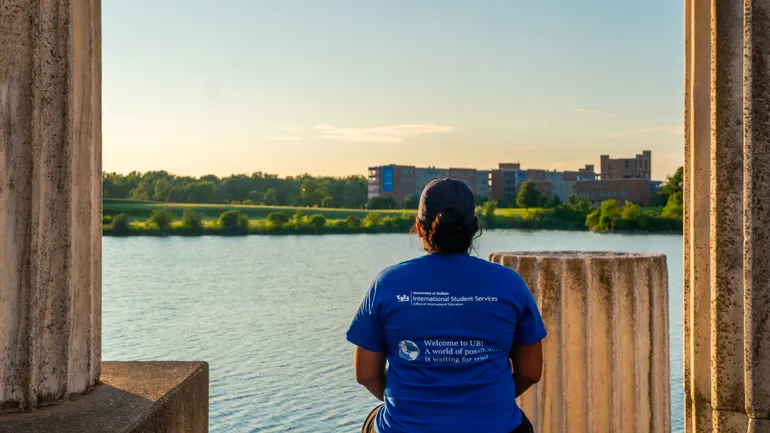
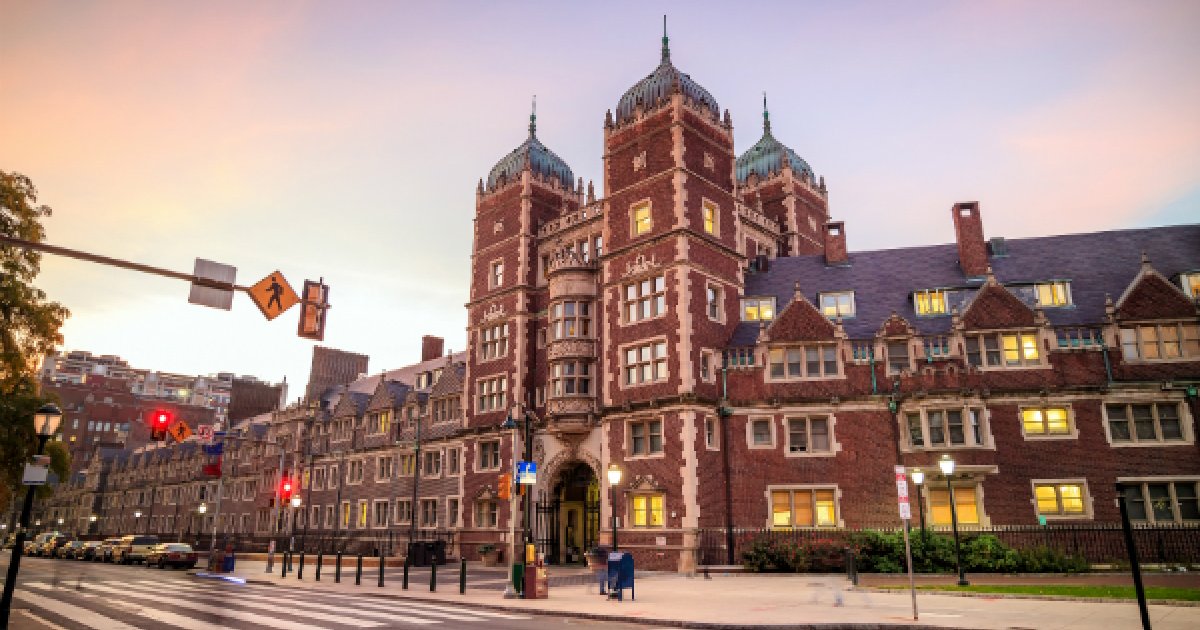
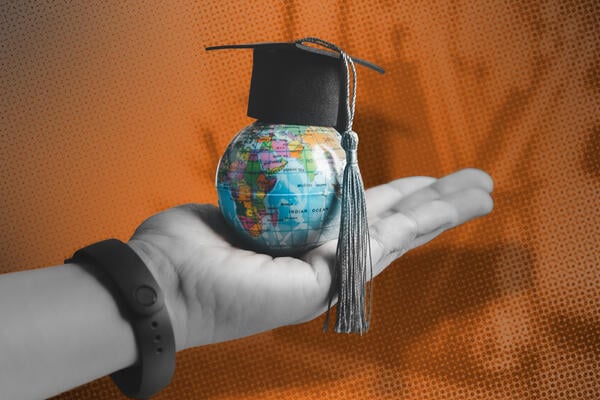
International students see American life portrayed in movies and on TikTok; U.S. universities have built global brands, helped along by Hollywood and merchandising. When it comes time to apply, international students can readily imagine a U.S. college experience, starting with seeing themselves in a crimson sweatshirt studying on a grassy quad flanked by ivy-covered buildings.
And as the U.S.’s hold on cutting-edge science and innovation slips away to China, and other destinations with more welcoming visa policies offer lower-cost degrees and jobs, soft power might be the only edge American universities have left.
The desire is about more than bricks and mortarboards. Students from other countries have long sought out American values of academic freedom and open discourse. They are excited by ideas and experiences that are as emblematic of the American way of life as tailgating on game day: criticizing the government, discussing LGBTQ+ rights or learning about the Tiananmen Square massacre in China, the Armenian genocide in Turkey or the comfort women victimized by the Imperial Japanese Army.
But in 2025, those freedoms are at risk of becoming strictly theoretical. Anti-DEI laws in Utah led to Weber State University asking researchers to remove the words “diversity,” “equity” and “inclusion” from their slides before presenting at a—wait for it—conference on navigating the complexities of censorship. Conference organizers canceled the event after other presenters pulled out in protest.
University leaders in Texas and Florida are refusing to put in writing policies that prohibit faculty from talking about transgender identity or diversity, equity and inclusion in classrooms, sowing fear and confusion across their campuses. A secret recording of a Texas A&M professor talking about gender in her class led to a successful campaign by a state representative to get her fired and forced a former four-star general to resign as university president.
This weekend, students at Towson University moved their No Kings rally off campus after school officials told them their speakers’ names would be run through a federal government database. They changed locations out of fear the speakers would be targeted by the Trump administration.
Meanwhile, dozens of faculty are still out of jobs after being fired for posting comments online about the murder of Charlie Kirk. Repressing free speech on social media is also what the Chinese government does to political dissenters.
It’s true that colleges are exercising American values by following laws passed by democratically elected legislators. And presidents say they will follow the rule of law without compromising their missions, but overcompliance with vague legislation and policies is incompatible with this aim.
International students who care about more than a name brand may find the erosion of the country’s global reputation as a democratic stronghold a reason to look elsewhere. That means billions of dollars are also at stake if international students no longer trust in America’s values and choose to stay away. Modeling from NAFSA: Association of International Educators projected a 30 to 40 percent drop in international students this fall that would result in $7 billion in lost revenue and more than 60,000 fewer jobs across the country. Records from August suggest a similar outlook: 19 percent fewer students arrived in the U.S. compared to August 2024.
International students bring more than just valuable tuition dollars to American campuses. They contribute global perspectives to their less traveled American peers and build relationships that could turn into partnerships when they go home and become entrepreneurs or political leaders.
Higher ed can track the number of international student visas issued, students who enroll and the economic contributions of these students, but they can’t quantify what it means when a student in Shanghai stops imagining America as a place where all ideas can be expressed and explored. It’s taken decades for this country to build power based on free expression and open discourse, but by the time the loss of students starts to register in economic data and visa applications, the decline may be too late to reverse.
In the late 1990s, a group of commuters would board the early-morning Amtrak train from Philadelphia to Washington, D.C. They’d sit in the first car behind the locomotive, enjoying communal, consensual silence. Eventually and with the conductor’s help, their car was officially designated as a noise-free zone. Soon after, Denise LaBencki-Fullmer, an Amtrak manager, recognized the value of a peaceful ride and institutionalized the program as the quiet car. At the request of passengers, it soon spread to a number of other commuter services.
The educational technology sector has something to learn from the Amtrak commuters’ deliberate design of their environment. Learning requires the ability to concentrate. You need a space where you are allowed to process information, recall facts, analyze complex questions and think creatively about ideas, problems and solutions. Learning is not a smooth and easy process—in fact, it is desirable that it’s a bit difficult, because that is how we actually learn. Getting someone to do learning tasks for you, as tempting or comfortable as that might be, won’t work.
A great deal of learning still happens online, even at colleges that value in-person teaching as much as Princeton University does. The learning management system is where our students find readings, review lecture slides and practice their skills and comprehension on homework assignments. It is also where many instructors administer assessments, both low-stakes quizzes and high-stakes exams.
Last month, Google launched a feature called “Homework help” in Chrome—a shiny blue button right in the address bar. By engaging it, a student could prompt Google Gemini to summarize a reading or solve a quiz question in a matter of seconds. It thereby robbed the student of the learning activity that they were there to do. A few weeks later Google repositioned the feature so it is a bit less obvious (at least for now), but the question remains: What kind of AI tools should we make available to our students in learning management systems and assessment platforms?
You might be thinking that this is a pointless question: AI is going to be everywhere—it already is. And sure, that is true. Also, if a student wants to use AI, it is easy enough to open another browser tab and ask an LLM for help. But installing the AI right in the environment in which the student is trying to learn is equivalent to sitting next to the most obnoxious cell yeller on your train ride: You can’t think your own thoughts, because the distraction is so big.
Just as there are quiet cars on trains, there can be quiet areas of the internet. Learning management systems and assessment platforms should be one such area. That doesn’t mean that there can’t be good uses of AI in learning. Our students should know how to use AI responsibly, thoughtfully and critically, as should the faculty who teach them (I sometimes use AI in my own teaching, for instance). But we should also ask that the companies that provide us with learning technologies think critically and carefully about whether AI aids the difficult, careful work that learning requires or, in fact, removes the opportunity for it. AI is inevitable, but that doesn’t mean we can’t be intentional about how, why and where we implement it.
I have spent the last few weeks talking with colleagues at other colleges and universities and with the partners that provide our educational technology. Everyone I have spoken with cares about education, and none of them think it’s a good idea that we implement AI in a way that so clearly pulls students out of the learning process. It is actually not unrealistic that people in the tech industry and education sector come together to make the same kind of pact that the train commuters made some 25 years ago and declare our online learning systems an AI quiet zone. We would be doing the right thing by our students if we did.
Mona Fixdal provides strategic planning and pedagogical leadership for Princeton University’s suite of teaching and learning technologies as well its online learning program. She has a Ph.D. in political science from the University of Oslo and is the author of Just Peace: How Wars Should End and a number of chapters and articles on postwar justice and third-party mediation.
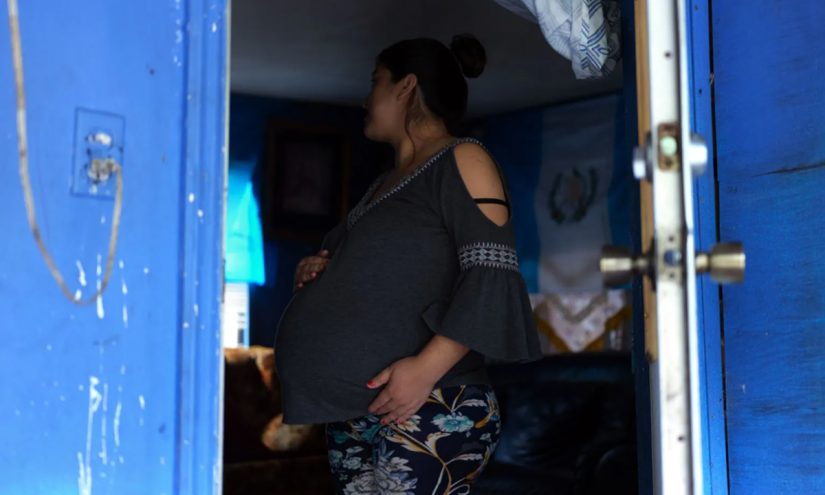
In the lead up to her son’s birth, Jacqueline made plans to call 911 for an ambulance to pick her up from her North Florida home and transport her to a hospital about an hour away.
The second-time mom and Guatemalan immigrant, who has lived in the country for a decade, would have relied on her husband to drive her to the hospital. But a few months ago he was deported, leaving Jacqueline and her daughter without the family’s primary source of income, transportation and support.
One morning in March, Jacqueline said, her partner was pulled over on his way to work when law enforcement officials discovered he didn’t have a valid driver’s license. Jacqueline’s pregnancy was in its early stages. Her husband fought his case from detention for three months before U.S. Immigration and Customs Enforcement (ICE) removed him to Guatemala.
“He was deported and I was left behind, thinking, ‘What am I going to do?’” said Jacqueline, who requested that her last name not be published because she lacks permanent legal status. The couple shares an 8-year-old daughter who was born in, and is a citizen of, the United States.
This summer, as she entered the later stages of this pregnancy amid the Trump administration’s turbocharged immigration enforcement, Jacqueline found herself so fearful of being detained that she avoided leaving her home. Her husband’s car sits in the driveway, but there are no signs of him in the small room Jacqueline shares with her daughter. His belongings — tools, clothes, even personal photos — are with him in Guatemala. The only family pictures Jacqueline has are on her phone.
Her partner was the family’s main provider, rotating between picking strawberries or watermelon and packing pine needles for mulch, depending on the season.
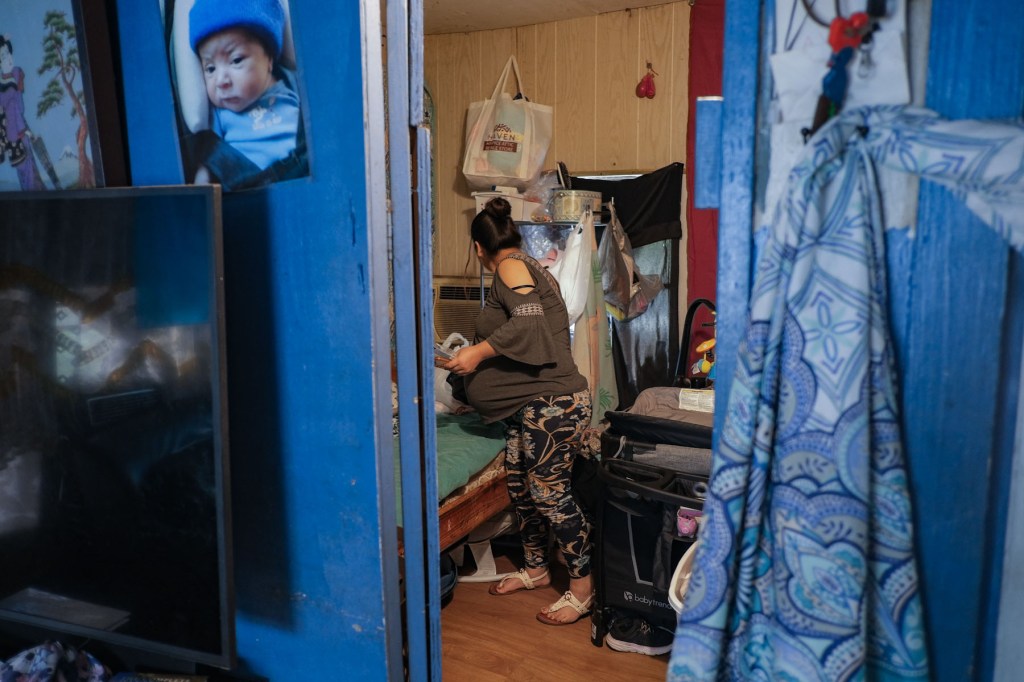
Jacqueline struggled to get the most basic items to welcome a baby: Someone gifted her a used carseat and crib, which sit in the packed room along with onesies and other clothing items she’s collected inside a large plastic bag. She’s hoping that a federal assistance program will cover the cost of formula. A baby tub is still on her list.
Medical care in her rural area has been possible only because a small nonprofit organization nearby that provides prenatal care services offered to pay for Ubers so she could continue regular check-ups. Even if she wasn’t behind the wheel, Jacqueline says that just the act of leaving her home feels risky since her husband’s deportation.
“Things got really complicated. He paid our rent — he paid for everything,” she said. “Now, I’m always worried.”
At her home in North Florida, Jacqueline looks at a photo of her husband and daughter on her phone. The only family pictures she has are on her phone; her husband’s belongings — tools, clothes, even personal photos — are with him in Guatemala. (Michelle Bruzzese for The 19th)
Medical care and support essential to a healthy pregnancy have become harder for people like Jacqueline to obtain following President Donald Trump’s inauguration. Many patients — nervous about encountering immigration officials if they leave their homes, drive on public roads or visit a medical clinic — are skipping virtually all of their pregnancy-related health care. Some are opting to give birth at home with the help of midwives because of the possible presence of ICE at hospitals.
Across the country, medical providers who serve immigrant communities said fewer patients are coming in for prenatal or other pregnancy-related care. As a result, patients are experiencing dangerous complications, advocates and health care providers told The 19th.
“Fear of ICE is pushing my patients and their families away from the very systems meant to protect their health and their pregnancies,” said Dr. Josie Urbina, an OB-GYN in San Francisco.
In January, Trump rescinded a federal policy that protected designated areas including hospitals, health clinics and doctors’ offices from immigration raids. ICE has recently targeted patients in hospital maternity wards and on their way home from prenatal visits.
A majority of Americans believe ICE should not be carrying out immigration enforcement at health centers. A new poll from The 19th and SurveyMonkey conducted in mid-September found that most Americans don’t think ICE should be allowed to detain immigrants at hospitals, their workplace, domestic violence shelters, schools or churches.
Women are more likely to oppose enforcement in these spaces than men. More than two-thirds of women said ICE shouldn’t be allowed to detain immigrants in hospital settings.
Enforcement is only expected to grow as the administration works to meet its ambitious deportation goals. The federal government is pouring more than $170 billion over the next four years into expanding immigration enforcement, the result of Trump’s signature tax-and-spending bill. About $45 billion has been directed to expanding detention facilities; $29.9 billion is to increase ICE activity.
That expansion could put even more births at risk. Approximately 250,000 babies are born every year to immigrants without permanent legal status. Already, research has shown these immigrants, who have higher uninsured rates, are less likely to seek prenatal care and are at risk of worse birth outcomes.
Major medical groups, including the American College of Obstetrics and Gynecologists, World Health Organization and the Centers for Disease Control and Prevention (CDC) recommend regular prenatal and postpartum care as a key tool to combat pregnancy-related death and infant mortality.
According to the federal Office of Women’s Health, infants born to parents who received no prenatal care are three times more likely to have a low birth weight and five times more likely to die than those born to parents who received regular care.
A CDC analysis published last year found infant mortality rates went up the later families began prenatal care: 4.54 deaths per 100,000 live births for families whose prenatal care began in the first trimester, compared with 10.75 in families whose prenatal care began in the third trimester or who did not receive any at all.
“A lot of patients aren’t going to get help,” said Yenny James, the founder and CEO of Paradigm Doulas in the Dallas-Fort Worth metro.
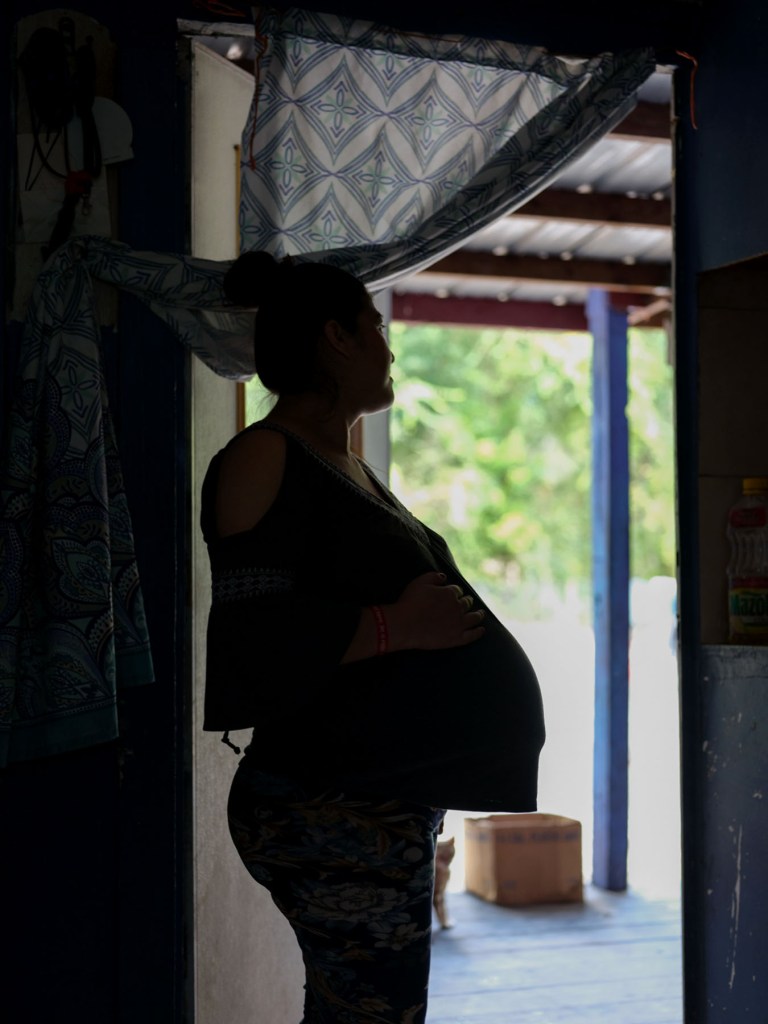
After her husband’s deportation, Jacqueline became so fearful of being detained that she avoided leaving her home. “He was deported and I was left behind, thinking, ‘What am I going to do?’” she said. (Michelle Bruzzese for The 19th)
James said she’s seeing an increasing number of emergency cesarean sections because of untreated gestational diabetes, or preeclampsia — a deadly pregnancy complication — that went unnoticed because of lacking prenatal care.
In Denver, OB-GYN Dr. Rebecca Cohen has delivered multiple babies this year for women who have told her that, because they fear endangering themselves or their families, they have received no prenatal care. Several have given birth to babies with fatal fetal anomalies that were never diagnosed because the women did not receive prenatal ultrasounds.
“They were willing to forgo care — their own health care — but to find out that something was devastatingly wrong with their child is when they feel like maybe they should have risked it,” Cohen said. “There’s a sound of a mother’s wail that anybody who has worked labor and delivery has known, and it will haunt you for the rest of your life. To hear that when it could have been prevented, it is just absolutely devastating.”
Early in her pregnancy, Jacqueline received free care at a local clinic. Shortly after her husband’s detention, she called the office to let them know she likely wouldn’t make her next appointment.
“I told them that I probably wouldn’t be able to make my appointments anymore, well, because I’m really afraid given what happened to my husband. And they offered to help,” she said.
Jacqueline and the nonprofit clinic worked out an arrangement: The day of her appointments, someone at the clinic called an Uber to her home, paid for by the clinic, and let her know when it would arrive so she could be ready.
Many people in her small town have come to rely on a single person who does have a valid driver’s license for transportation. That driver recently brought Jacqueline to an appointment with the local office that manages the Special Supplemental Nutrition Program for Women, Infants and Children (WIC), which she is relying on for baby formula and food. There were no guarantees that this driver would be available to take her in whenever she goes into labor.
The Biden administration directed ICE not to detain, arrest or take into custody pregnant, postpartum or breastfeeding people simply for breaking immigration laws, except under “exceptional circumstances.” The Trump administration has not formally reversed that policy. But despite the directive, reports from across the country confirm that ICE has detained numerous pregnant immigrants since Trump took office.
James said that until the Biden guidance is formally rescinded, she will continue to encourage pregnant immigrants to print it out and carry it with them.
“I told my doulas — have them print out this ICE directive, have them keep it with them, so that they know and these agents know that we know our rights, our clients know their rights,” James said.
Jacqueline prepares for the birth of her second child in the room she shares with her daughter. Someone gifted her a used car seat and crib, which sit among the few items she’s collected inside a plastic bag to welcome the baby. (Michelle Bruzzese for The 19th)
It’s unclear exactly how many pregnant immigrants are being detained by ICE, or have been arrested by the agency. A May report from the office of Democratic Sen. Dick Durbin found 14 pregnant women in a single Louisiana detention facility at the time of staff’s visit.
Another report out of the office of Democratic Sen. Jon Ossoff published in late July found 14 credible reports of mistreatment of pregnant women in immigrant detention. The report cited an anonymous agency official who said they saw pregnant women sleeping on floors in overcrowded intake cells. The partner of a pregnant woman in federal custody said that she bled for days before she was taken to a hospital, where she miscarried alone. A pregnant detainee who spoke to Ossoff’s office said she repeatedly asked for medical attention and was told to “just drink water.” The office received several reports of clients waiting weeks to see a doctor, and that sometimes scheduled appointments were canceled. ICE has disputed the report.
“Pregnant women receive regular prenatal visits, mental health services, nutritional support, and accommodations aligned with community standards of care. Detention of pregnant women is rare and has elevated oversight and review. No pregnant woman has been forced to sleep on the floor,” ICE said in a statement posted on their website.
ICE did not respond to a request for comment.
Fear of being detained is a major contributor of stress for pregnant immigrants. Research shows that even when pregnant patients do receive medical care, prenatal stress puts many at greater risk of complicated births and poor outcomes, including premature birth and low infant birth weight. Babies born after an immigration raid are at a 24 percent higher risk of low birth weight, according to one study.
Monica, 38, is expecting her fourth child in November. The Tucson resident, who requested that her last name not be published out of fear of being detained, has lived in the United States for two decades but has no legal immigration status.
This pregnancy has been unlike the others, she said: While Monica has continued with her prenatal care appointments, her anxiety levels about her immigration situation have colored her experience. Her other children, who are in their teens, are U.S. citizens but grappling with the stress of their parents’ situation. Her husband also doesn’t have authorization to live in the country.
“We try to be out and about much less, and to take precautions,” she said. “Whenever we do leave the house, we have it in the back of our minds.”
Monica said she has seen reports of ICE being allowed inside hospitals, and she is worried about facing immigration officers while or following her birth. Her plan is to have her partner and a group of friends at the hospital to make sure she’s never alone.
“My biggest fear is going to the hospital,” she said.
Stress like Monica’s makes pregnancy more dangerous.
Jacqueline holds a bottle of prenatal vitamins at her home in North Florida. A small nonprofit clinic nearby has been paying for Ubers so she can continue her prenatal check-ups. (Michelle Bruzzese for The 19th)
“In our hospital, every doctor I’ve talked to — and these are doctors that have been there 20 years — all are saying these past six months they’ve seen worse obstetrics outcomes than ever in their career,” Dr. Parker Duncan Diaz, a family physician in Santa Rosa, California, whose clinic mostly cares for Latinx patients. That’s included more preterm labor and more pregnant patients with severe hypertension.
“I don’t know what’s causing it, but my bias is that it is the impact of this horribly toxic stress environment,” he added, specifically noting the stress caused by the threat of immigration enforcement.
In recent months, Dr. Caitlin Bernard, an Indiana-based OB-GYN, has seen a number of pregnant patients seeking emergency attention who have not received any prenatal health care. One was 31 weeks, approaching the end of her pregnancy. Another was more than 20 weeks pregnant when she came to Bernard’s office, having developed complications from a molar pregnancy — a rare condition that means a healthy birth is impossible and that without early treatment can result in vaginal bleeding, thyroid problems and even cancer.
“Anytime you’re not able to access that early prenatal care, we do see complications with that,” she said. “And many of these things can absolutely be life-threatening for both the moms and the babies.”
Dr. Daisy Leon-Martinez, a maternal-fetal medicine specialist in San Francisco, said she now regularly cares for patients in her labor and delivery ward who have been transferred to her hospital because of newly developed pregnancy complications. These are often their first doctors’ visits since becoming pregnant. Many of those patients have told her that they did not want to seek prenatal care for fear of encountering immigration officials.
During regular visits, she added, she has advised people with pregnancy complications that they would be best served by a hospital stay — only to be told that her patients no longer feel safe going to the hospital.
The current enforcement environment is challenging immigrant advocates, who are continuing to encourage immigrants to seek appropriate medical care while acknowledging that doing so is increasingly risky.
Lupe Rodríguez, the executive director of the National Latina Institute for Reproductive Justice, said her organization is urging pregnant immigrants to seek the health care that they need, and to be proactive about making plans for themselves and their families in the event that they are detained.
“We can’t know for certain about any given [health care center] whether or not it’s going to be safe. One of the things that we’ve been seeing is leadership at some of these health centers — big hospitals and clinics — have said that they will provide the kind of protection that folks need, that they don’t want folks to be afraid of care,” Rodriguez said.
While those statements signal the intentions of a hospital’s leadership, Rodriguez said, “we still know that there are individuals within some of those care centers that are part of the reporting mechanism or are intimidating people.”
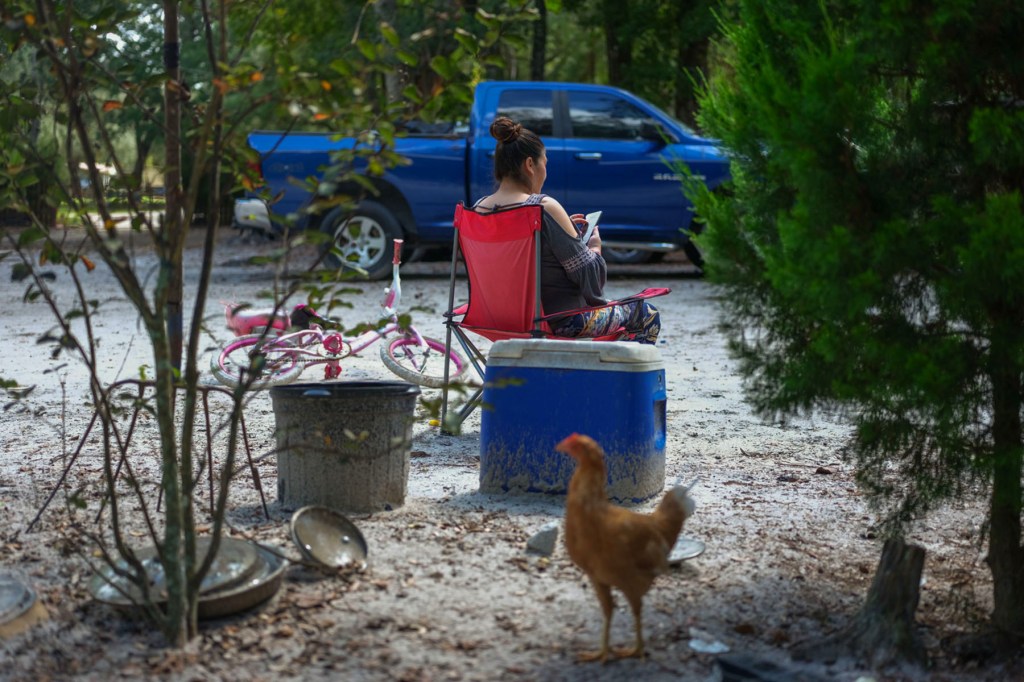
Outside her home in North Florida, Jacqueline sits in a red chair as a chicken wanders nearby. (Michelle Bruzzese for The 19th)
Jacqueline approached the last days of her pregnancy hopeful that the place she had chosen — a large university hospital that workers at her local clinic recommended — would be a safe place for her to give birth.
One night at the end of September, when labor pains grew too intense, she called for an ambulance and made it to the hospital. When she got there, she asked her providers if there were any ICE agents near the building. She had heard of a man at a local hospital being detained after having surgery. They told her there were none they were aware of.
She went on to deliver her baby under general anesthesia after a long, difficult labor. “I didn’t even hear him cry when they pulled him out,” she said. Her only relative left in the area was taking care of her daughter, so she recovered alone at the hospital for five days before heading home in an Uber that a social worker procured for her and her son.
“If my husband was here, he would have been there with me at the hospital,” Jacqueline said while recovering at home. “He would be here taking care of me, of us. I wouldn’t be worried about the things I still want to get for the baby.”
This story was originally reported by Mel Leonor Barclay and Shefali Luthra of The 19th. Meet Mel and Shefali and read more of their reporting on gender, politics and policy.
It’s 2029. The international student fee levy is finally in place, after a complicated legislative passage, further consultation, and squabbles over implementation.
Still riding high in the polls, though with an eye to accusations of unfunded spending commitments, Reform’s manifesto promises to jack up the levy to 40 per cent, explicitly labelling it a lever to cut net migration and unsurprisingly deaf to its effects on university balance sheets (as well as to arguments that this could in fact reduce the overall take – they have modelling which says it won’t).
After all, the primary legislation to operationalise the government top-slice of universities’ student income leaves the exact amount of the levy to the discretion of the Secretary of State. It will be a relatively simple laying of regulations to have the new percentage in place by autumn.
Scratch that – it’s 2032. The Conservatives are back in power (somehow). The industrial strategy has been binned, and with it the underpinnings of the “priority subject areas” that have determined which students and which courses are eligible for maintenance grants. With the pretext that those who benefit from higher education should in later life foot the bill – and the entirely accurate observation that whether maintenance is in the form of of grant or loan doesn’t actually affect whether students are “working every hour God sends” to support themselves while studying – the Conservative government decides to end the confusing patchwork of targeted grants it has inherited and (once again) shift student support over to maintenance loans. (Oh and the levy income will instead be used to plug the growing apprenticeship overspend.)
Now when the act passed there was nothing that made a cast-iron link between grants and the fee levy – indeed, there’s not a single mention of how the funds should be spent on the face of the bill, because that’s not the kind of thing you can practically legislate for. Backbenchers flagged this, ministers said it was a commitment and they would stick to it, and Labour’s majority held up.
This hypothetical Tory Treasury is still antsy about expanding the loan book – gilts are still high, the era of rock-bottom interest rates seems a distant memory – and the price of raising borrowing for maintenance is the announcement of a multi-year freeze on tuition fees. Here we go again.
How about this one: it’s halfway through Labour’s second term in office, and it’s becoming clear that the modular LLE hasn’t really taken off. The demand for several thousand pounds of plan 5 loan debt in return for a short course has, shockingly, not materialised. As happened with the pilot exercise, DfE tries to tempt learners in with student support grants, rather than chunked up maintenance loans. When this doesn’t bear much fruit, as with the modular acceleration programme the next play is to entirely waive tuition fees for technical courses, just deducting them from LLE entitlement instead.
Despite low demand, the need to keep finding little pots of cash to spend for the incentivising of modular provision has stretched DfE’s willingness to let too much of the levy income go towards maintenance grants for full degrees (especially as, to the surprise of few, the department was never intending to allocate the whole haul to maintenance grants).
Maybe there’s a damning National Audit Office report. Maybe there are anecdotal reports of spotty financial controls and agents encouraging students onto certain newly launched courses to get access to lump sums of maintenance, rather than for genuine study. With an eye on the next election and the 10-year NHS workforce plan’s final year looming, the thought pops up – wouldn’t it be politically expedient to just bring back grants for nursing students rather than fiddling around with all these industrial strategy bits and pieces?
Final one. It’s 2038 or something, and the Office for National Statistics is finally approaching the end of its review of the classification of higher education in the national accounts which it began in 2017. To be fair to the beleaguered stats body, each UK nation has either made large changes to its higher education system in the interim, or announced wholesale reviews which have then not led to much change, leading to one pause after another. Finally though, the ONS is in a position to weigh up all the dimensions of the government’s oversight and control of the English higher education sector, which now includes the ability to skim off a set percentage of all international student income – and decides on classification within the public sector.
All the sector submissions and parliamentary interventions which tried to advocate against the levy on these very grounds – the scare stories of controls on borrowing, limits on senior staff pay, and changes to how accounts are managed – are vindicated. (However, as Julian Gravatt has pointed out in the definitive article on the topic, the government of the day then carefully takes steps to address just enough of the specifics of the ONS’ decision and thus move universities back out of the public sector. It doesn’t want to lose out on the income the levy brings, so instead it makes changes elsewhere, to regulation perhaps, or pensions. It’s all a bit of a mess.)
Through the trapdoor
However the government decides to legislate for the fee levy – it might be a standalone bill, or wrapped up in a larger HE Act – it’s going to be a complicated process. Labour backbenchers have been expressing concerns since it was first mooted, but the grafting on of maintenance grants means that it will be harder for MPs to vote against.
The sector has largely marshalled two arguments against it: that it will enormously destabilise finances, and that it’s unfair and risky to further cross-subsidise home students with international income. On the first, it’s clear that the government is not convinced that there isn’t a bit more to be squeezed, especially as it has seen much of the sector impose year after year of inflation-busting increases to overseas fee sticker prices – it’s probably no surprise that the white paper modelling saw the cost of the levy passed on, even though some universities will be unable to achieve this in practice. It’s still a sensible argument to make, though until we see to what extent the government is slow-rolling a wider package of tuition fee increases it’s hard to know whether it can gain traction.
Equally, the argument about cross-subsidy is proving and will continue to prove ineffective, given that DfE has hinted its intention to claim that this helps higher education make the case for international student recruitment to the wider public on exactly those grounds.
But there’s a larger, longer-term case to be made to ministers and parliamentarians, that considers the enormous unintended consequences and political risks that prising open HE balance sheets in this way will enable. Once the backdoor has been installed, it’s there for hostile actors to take advantage of, and for user error to compound the problems. It is verging on a certainty that the legislation will neither restrict the level the levy is set at nor ringfence how its takings are used.
Now the announcement has been made it’s almost certainly too late, but the need for the government to legislate to make this a reality points to missed opportunities around cooperation on access – a sector-owned and co-funded pot of money for student support and, yes, redistribution would have been far more effective at staying out of the political fray. This levy will be square in the middle of it, for many years to come.
According to reports, a brief note issued by the Department of Home Affairs through the Provider Registration and International Student Management System (PRISMS), which oversees international student data, confirms that evidence levels have been updated.
“The September 2025 evidence level update for countries and education providers (based on student visa outcome data from 1 July 2024 to 30 June 2025) has taken place, effective for applications lodged on or after 30 September 2025,” read a statement by the DHA on the PRISMS website.
Consultants and universities in Australia are able to work out these levels through the government’s document checklist tool, which reveals a provider’s risk standing based on the requirements triggered when paired with a student’s country of origin.
Reports suggest that level 1 (lowest risk) includes Bangladesh and Sri Lanka; level 2 (moderate risk) includes India, Bhutan, Vietnam, China, and Nepal; and level 3 (highest risk) includes Fiji, the Philippines, Pakistan, and Colombia.
Although India and Vietnam, both prominent source markets for Australia, improved from level 3 to level 2 on the back of stronger grant rates, China slipped from level 1 to level 2, possibly due to a surge in asylum applications from Chinese nationals, particularly students, as some reports suggest.
While education providers in Australia registered under CRICOS (Commonwealth Register of Institutions and Courses for Overseas Students) are assigned an evidence level, each country is also given one based on its past performance with student visas, particularly visa refusals, asylum applications, and breaches of conditions.
Are there not more Indians applying for protection visas? Hasn’t Nepal followed Sri Lanka and Bangladesh in political turmoil, where the economy has suffered? This has raised concerns around students meeting GS requirements Ravi Lochan Singh, Global Reach
The combination of provider and country levels determines the documents required for an international student’s visa application.
Stakeholders have highlighted the lack of transparency in assessing country risk levels, particularly as students from countries with reduced risk ratings may still arrive in Australia under precarious conditions.
“Are there not more Indians applying for protection visas? Hasn’t Nepal followed Sri Lanka and Bangladesh in political turmoil, where the economy has suffered? This has raised concerns around students meeting GS requirements. There are also whispers that certain operators may encourage students to apply for protection visas,” stated Ravi Lochan Singh, managing director, Global Reach.
Visa prioritisation is already tied to intended caps, with applications processed on a first-in, first-out basis until a provider reaches 80% of its allocation, explained Singh.
With almost all universities now streamlined for visas and the majority promoted from level 2 to level 1, lowest risk, and almost none remaining in level 3, the evidence-level system appears unnecessary to some.
“The concept of ‘streamlining’ (and then the development later of the SSVF) took place at a time where there was a whole-of-government focus on growing international student numbers and increasing the value, while maintaining integrity, of the highly important international education sector,” shared Mike Ferguson, pro vice-chancellor of Charles Sturt University.
According to Ferguson, a former DHA official, “English and financial requirements were streamlined as part of the visa process, based on a risk assessment, given the other safeguards in place – obligations enforced by TEQSA and ASQA in terms of providers ensuring students have sufficient English proficiency and the use of the GTE requirement to consider a student’s holistic economic circumstances.”
However, with international student numbers rising since the early 2010s, “times have changed” and the focus has shifted to managing enrolments and ensuring sustainable growth, explained Ferguson.
“My view is that all students should provide evidence of funds and English with the visa process. That would align with community expectations, support enhanced integrity and potentially help to some degree with some of the course hopping behaviour we are seeing (though the latter requires a range of measures),” he contineud.
“DHA could still determine the degree to which they scrutinise the funds submitted but that would be based on a more holistic and granular risk assessment – not just based on country and provider.”
Evidence levels of select Australian institutions, showing whether they have remained steady, been upgraded, or downgraded, as shared by Ravi Lochan Singh. Correction: Deakin University was previously categorized under risk level 2 (not 1) and has since been upgraded to 1.
Singh further stated that concerns around visa hopping and attrition could be exacerbated, as international students may now enter Australia through universities and then transition to higher-risk, non-university sectors without needing new visa applications, especially since Australia has yet to mandate linking study visas to the institution of initial enrolment, unlike neighbouring New Zealand.
Moreover, Singh pointed out that when students arrive without adequate financial backing, it can increase visa misuse, which may lead authorities to tighten risk classifications again.
“The document checklist tool provides a clear framework for assessing the risk level of a university. However, it raises concerns about the recent trend of promoting the application of visas without financial funds, as suggested by the document checklist tools. While these visas may be approved, this approach could potentially lead to the return of the country to risk level 3 in the future,” stated Singh.
“For instance, if a country’s risk level is 3 (such as Pakistan), and Home Affairs requires financial and English requirements to be attached to the visa application, the university’s risk level is inferred to be 2. If the Home Affairs tool waives this requirement, the risk level is reduced to 1.”
The PIE has requested comment from the DHA and is awaiting a response.
Australia’s reported changes to country evidence levels come just a month after the government announced an additional 25,000 international student places for next year, raising the cap to 295,000.
This audio is auto-generated. Please let us know if you have feedback.
A loss of international students due to restrictive federal policies could disproportionately harm small private colleges that have specialized focuses or are affiliated with Christian churches, according to a recent report from the Brookings Institution.
Many public institutions that charge much higher tuition for international and out-of-state students could also face serious financial hits, said the report’s author, Dick Startz, an economics professorat the University of California, Santa Barbara.
In his analysis, Startz looked at the common traits of colleges where international students made up at least 30% of enrollment. He found that all of those colleges were private, tended to be small, and have a special focus like business or arts.
They were also disproportionately Christian colleges. According to the report, Christian institutions represent 34.3% of colleges and universities where international students comprise more than 30% of total enrollment.
“Perhaps the importance of international students to Christian schools should not be so surprising,” the report said. “Many Christian schools are affiliated with evangelical beliefs, spreading their faith globally.”
Many small private and religious colleges in the U.S. have closed in recent years amid enrollment losses.For such institutions, a sudden loss of 30% of their student population could be a “disaster,” the report warned.
“The majority of schools will see very little effect,” said Startz. “But there are a small number of schools — private schools that are not very large — and 30% of their budget could disappear. It could be devastating.”
In June, the U.S. Department of State reopened consular interviews for foreign studentslooking to apply or renew their student visas after freezing the process the month prior.The State Department, however, now requires those students to unlock their social media accounts so consular officers can review whether they consider their posts hostile to the U.S. or to its culture and founding principles, The Associated Press reported.
International students who were previously in the country with active visas are less likely to be affected, said Startz. But first-year students, new graduate students, or some students who need to renew their visas will be impacted, he said.
It’s unclear how much those policies will affect international student enrollment or when colleges may start seeing significant impacts, said Startz. But some major colleges and university systems are already beginning to report a major drop in international student enrollment.
Over the summer, NASFSA: Association of International Educators projected international enrollment at U.S. colleges could decline by as much as 150,000 students this semester if the federal government did not start ramping up efforts to issue visas.
International freshmen enrollment at elite institutions like Princeton University and Columbia University remained steady heading into fall, The New York Times reported. However, other institutions, such as the University at Buffalo, are reportedly experiencing significant declines in international student enrollment, NPR reported.
Affecting the economy, affecting colleges
Volatility in international student levels could affect nearly every college in the country that enrolls foreign students, the Brookings report stated. But not every college — even the ones with large foreign student enrollments — would be affected equally.
Colleges such as the University of California, Santa Barbara — where international students make up 9% of enrollment — could face serious financial threats. That’s because those students pay triple the tuition paid by in-state students at UC Santa Barbara, the report stated.
Institutions such as New York University, Northeastern University and Arizona State University also enroll a lot of international students — but compared to their total student population, it’s “not overwhelmingly high,” said Startz.
And prestigious institutions could probably fill those students’ slots regardless, he said.
A loss in international enrollment could also impact the economies of college towns — hurting landlords and local businesses like pizza shops and bars, said Startz.
Democratic-leaning states, such as Massachusetts, could be disproportionately affected economically, the report stated. But there could also be repercussions for the U.S. in general, as many international students eventually work at high-tech firms and in university labs conducting major medical and science research, Startz added.
International students often attend U.S. colleges because they want to be taught in English, said Startz. As such, the U.S. might lose many of those students to Australia, Canada, the United Kingdom, Hong Kong and Singapore, he said.
That could affect the U.S. politically. International students often return home with a positive view of America and Americans and go on to help lead their country in politics or business, Startz said. That includes prime ministers, such as the heads of Canada, Singapore and Botswana, he said.
“There’s certainly a concern that we’re just making students feel unwelcome,” said Startz. “If they choose either not to come or they come and actually have a bad experience, way down the road that’s a really bad thing.”
Nearly two years ago, the Hamas-led October 7 attacks on Israel and Israel’s subsequent invasion of Gaza sparked intense debate and demonstrations on American campuses.
Many schools responded by attempting to censor controversial but protected speech in the name of combating antisemitism. But in testimony before Congress on Dec. 5, 2023, University of Pennsylvania’s then-President Liz Magill initially declined to follow suit. She explained that “calling for genocide” does not always violate Penn’s rules. Instead, she correctly labeled this a “context-dependent decision,” recognizing that rhetoric some find deeply offensive can still be protected speech. This assertion was in line with Penn’s longstanding — but oftenignored — commitment to tracking the First Amendment in its own policies.
Unfortunately, Magill quickly backtracked in the face of public criticism, including from Pennsylvania Gov. Josh Shapiro. The governor said publicly that Magill needed to “give a one-word answer” and that her testimony demonstrated a “failure of leadership.”
As it turns out, the governor’s response was not limited to his public comments. Recent reporting by The Chronicle of Higher Education reveals how Gov. Shapiro’s office enmeshed itself in this controversy and in Penn’s response to antisemitism on campus in the months and semester that followed October 7.
Seizing on a rarely used provision of the Penn Statutes of the Trustees that establishes the governor as a trustee ex officio, Gov. Shapiro appointed Philadelphia lawyer Robb Fox as his observer to the board of trustees. Gov. Shapiro’s director of external affairs Amanda Warren explained in a then-private email that Fox would be “integrated into all future board meetings, as well as ongoing antisemitism work, on behalf of the Governor.” Fox was previously part of the governor’s transition team in 2022 and serves as his appointee on the board of SEPTA, Philadelphia’s transit authority.
Per the Chronicle, Fox “quickly immersed himself in Penn’s affairs — arguing technicalities of the board of trustee’s rules, liaising with students, faculty, and administrators, and contributing to Penn’s task force on antisemitism.” He began corresponding with Marc Rowan, who serves as chair of the Penn Wharton School’s board of advisors and was an early critic of both Magill and Bok. And in one early email regarding a proposed statement from the board, Fox said he would tell them “enough with the statements” and that they needed “a vote on board chair [Scott Bok] and president remaining.”
Days later, Magill and Bok resigned. A member of Penn’s School of Arts and Sciences’ board later thanked Fox for this early engagement, saying the trustees were able to oust Magill and Bok “with the governor’s nudge and with his support.”
All of this broke with precedent. Historically, Penn did not allow designees to attend board meetings in the governor’s place. The university only broke with this tradition after “many conversations between the Governor, President Magill, Board leadership, and staff.”
Fox’s influence reportedly expanded in the months that followed. Penn’s then-interim President Larry Jameson intervened to add Fox to the university’s antisemitism task force. One member of the task force told the Chronicle that Fox frequently said he was trying to represent the governor’s position. And when Fox got the impression that the task force was trying to treat him as a mere spectator, he reached out to Warren and declared that he would “not be an observer.”
Throughout all this, Fox and Warren frequently acted as a team. She connected him with Rowan in the early days of his appointment, and later connected him with the Penn Israel Public Affairs Committee. Fox and Warren were both part of an email exchange with Penn’s new board chair that sought information about the burgeoning encampment. And when Fox considered bypassing the task force on antisemitism and going directly to President Jameson to address an Instagram post by a pro-Palestine student organization, he first emailed Warren to discuss the issue with her.
Neither Penn nor Gov. Shapiro’s office deny any of this involvement. Indeed, both parties acknowledged their relationship in comments to the Chronicle, with Gov. Shapiro’s spokesperson explaining that they and Fox intervened in order to combat hate and antisemitism.
State pressure on private universities can be a dangerous backdoor to censorship
Combating unlawful antisemitic harassment is a noble goal, but when powerful public officials wield their influence to regulate speech at private universities, they’re playing a dangerous game. We saw this play out recently at Columbia University, where university leaders responded to the Trump administration’s unlawful funding freeze (purportedly a response to campus antisemitism) by capitulating to demands that will chill protected speech.
Columbia incorporated the International Holocaust Remembrance Association’s overbroad definition of antisemitism, which the Trump administration had earlier demanded, into its own definition. Later, in a settlement agreement it signed to restore government funding, Columbia required students to commit to vague goals like “equality and respect” that leave far too much room for abuse, much like the DEI statements, civility oaths, and other types of compelled speech FIRE has long opposed.
Gov. Shapiro’s intervention here is not nearly as heavy-handed, but it is still cause for concern. If the Chronicle’s reporting is accurate, then he and his office must act with greater restraint given the state’s influence over Penn, a private institution, and the potential for overreach.
The Chronicle notes that when President Jameson took office, Penn was working to reclaim $31 million in funding for its veterinary school and $1.8 million designated for the Penn Medicine Division of Infectious Diseases that had been withheld by the Pennsylvania legislature over antisemitism concerns. When faced with the loss of so much funding, many institutions, even those as wealthy as Penn, will be quick to fall in line with the state’s demands.
This backdoor approach to regulating speech, known as jawboning, is both incredibly powerful and uniquely dangerous. The First Amendment only protects against state censorship, not private regulation of speech, so when the state pressures private institutions into censoring disfavored speech, it blurs the legal line between unconstitutional state action and protected private conduct. The Supreme Court unanimously condemned this practice in NRA v. Vullo, reaffirming its 60-year-old ruling that governments cannot use third parties to censor speech they disfavor. The Court explained that this practice would allow a government official to “do indirectly what she is barred from doing directly.”
Jawboning’s chilling effects go beyond the pressured institution itself. For example, Gov. Shapiro’s close involvement at Penn incentivizes campus leaders to over-enforce their anti-discrimination and harassment policies in ways that prohibit or chill what would otherwise be lawful speech. Rather than risk state interference, many institutions will censor first and ask questions later.
None of this is to say that Penn has a sterling history when it comes to managing speech controversies on its own. In fact, Penn finished second to last in FIRE’s 2023 campus free speech rankings. But the situation is likely to get worse, not better, when the government amplifies the impulse to censor.
Transparency limitations at private universities amplify the risks of state involvement
Private universities are not subject to open-records laws like many public universities. At a public university, it is often possible to obtain records that reveal how or why the school changed a speech policy or engaged in censorship. By contrast, at a private university there is no formal way (besides the costly process of litigation) to request records that reveal the basis for such actions, including the extent to which they were the result of state pressure.
For example, after Penn’s tumultuous 2024 spring semester, the university adopted a vague and overbroad events and demonstrations policy. This policy prohibits “advocat[ing] violence” in all circumstances, even when it doesn’t cross the line into unprotected and unlawful conduct or speech, like incitement or true threats. Moreover, the policy fails to define “advocat[ing] violence.” This leaves students guessing and will lead to administrative abuse and uneven enforcement. Is the common but controversial slogan “from the river to the sea, Palestine will be free” a call for violence in Israel or a call for political change? Calling for U.S. bombing of terrorist groups like ISIS or Al-Qaeda is explicitly advocating violence. Is that prohibited? Under Penn’s new policy, that’s left to administrators to decide.
FIRE criticized this policy at the time and expressed concern that it was driven in part by viewpoint discrimination. But at a private university like Penn, there is no public records mechanism for the public to scrutinize how or why the policy was adopted. And although private universities are generally well within their rights to keep these decisions private, this arrangement becomes more troublesome when the state gets involved.
Private universities have their own free speech rights
Private universities themselves have free speech rights. A federal district court recently reiterated as much, explaining that the Trump administration violated the First Amendment when it conditioned funding to Harvard on the university “realigning its campus to better reflect a viewpoint favored by the government.”
Harvard, like Columbia and many other institutions, has been the target of a federal pressure campaign purportedly aimed at combatting antisemitism. But unlike Columbia, Harvard chose to defend its rights in court. This stand is praiseworthy, and the district court’s decision shows that private institutions stand on solid legal ground when they resist unlawful government pressure. Unfortunately, not every institution will be bold enough, or sufficiently well resourced, to fight the state in court.
State actors should protect students by enforcing the law, not by censoring protected speech
Given these dangers, Gov. Shapiro and other government actors seeking to combat discrimination must act through the proper legal channels. In the federal context, this means following the procedures laid out by Title VI and binding federal regulations. In its ruling for Harvard, the district court explained that this process is designed to ensure that recipients of federal funding “are shielded against being labeled with the ‘irreversible stigma’ of ‘discriminator’ until a certain level of agency process has determined that there was misconduct that warranted termination.” In other words, this process is a check on government overreach and all the harms that entails. The same principle applies to states trying to combat discrimination within their borders.
Enforcing valid anti-discrimination laws is important. But there’s a significant danger when state actors attempt to use the rationale of anti-discrimination to regulate speech at private universities. If left unchecked, this backdoor regulation risks turning private universities into de facto extensions of the state — undermining both academic freedom and the First Amendment itself.
This story was reported by and originally published by APM Reports in connection with its podcast Sold a Story: How Teach Kids to Read Went So Wrong.
When voters elected Donald Trump in November, most people who worked at the U.S. Department of Education weren’t scared for their jobs. They had been through a Trump presidency before, and they hadn’t seen big changes in their department then. They saw their work as essential, mandated by law, nonpartisan and, as a result, insulated from politics.
Then, in early February, the Department of Government Efficiency showed up. Led at the time by billionaire CEO Elon Musk, and known by the cheeky acronym DOGE, it gutted the Department of Education’s Institute of Education Sciences, posting on X that the effort would ferret out “waste, fraud and abuse.”
DOGE is looking for help from the general public!
Please DM insight for reducing waste, fraud, and abuse, along with any helpful insights or awesome ideas, to the relevant DOGE affiliates (found on the Affiliates tab). For example, @DOGE_USDA, @DOGE_SSA, etc. We will add…
A post from the Department of Government Efficiency.
When it was done, DOGE had cut approximately $900 million in research contracts and more than 90 percent of the institute’s workforce had been laid off. (The current value of the contracts was closer to $820 million, data compiled by APM Reports shows, and the actual savings to the government was substantially less, because in some cases large amounts of money had been spent already.)
Among staff cast aside were those who worked on the National Assessment of Educational Progress — also known as the Nation’s Report Card — which is one of the few federal education initiatives the Trump administration says it sees as valuable and wants to preserve.
The assessment is a series of tests administered nearly every year to a national sample of more than 10,000 students in grades 4, 8 and 12. The tests regularly measure what students across the country know in reading, math and other subjects. They allow the government to track how well America’s students are learning overall. Researchers can also combine the national data with the results of tests administered by states to draw comparisons between schools and districts in different states.
The assessment is “something we absolutely need to keep,” Education Secretary Linda McMahon said at an education and technology summit in San Diego earlier this year. “If we don’t, states can be a little manipulative with their own results and their own testing. I think it’s a way that we keep everybody honest.”
But researchers and former Department of Education employees say they worry that the test will become less and less reliable over time, because the deep cuts will cause its quality to slip — and some already see signs of trouble.
“The main indication is that there just aren’t the staff,” said Sean Reardon, a Stanford University professor who uses the testing data to research gaps in learning between students of different income levels.
All but one of the experts who make sure the questions in the assessment are fair and accurate — called psychometricians — have been laid off from the National Center for Education Statistics. These specialists play a key role in updating the test and making sure it accurately measures what students know.
“These are extremely sophisticated test assessments that required a team of researchers to make them as good as they are,” said Mark Seidenberg, a researcher known for his significant contributions to the science of reading. Seidenberg added that “a half-baked” assessment would undermine public confidence in the results, which he described as “essentially another way of killing” the assessment.
The Department of Education defended its management of the assessment in an email: “Every member of the team is working toward the same goal of maintaining NAEP’s gold-standard status,” it read in part.
The National Assessment Governing Board, which sets policies for the national test, said in a statement that it had temporarily assigned “five staff members who have appropriate technical expertise (in psychometrics, assessment operations, and statistics) and federal contract management experience” to work at the National Center for Education Statistics. No one from DOGE responded to a request for comment.
Harvard education professor Andrew Ho, a former member of the governing board, said the remaining staff are capable, but he’s concerned that there aren’t enough of them to prevent errors.
“In order to put a good product up, you need a certain number of person-hours, and a certain amount of continuity and experience doing exactly this kind of job, and that’s what we lost,” Ho said.
The Trump administration has already delayed the release of some testing data following the cutbacks. The Department of Education had previously planned to announce the results of the tests for 8th grade science, 12th grade math and 12th grade reading this summer; now that won’t happen until September. The board voted earlier this year to eliminate more than a dozen tests over the next seven years, including fourth grade science in 2028 and U.S. history for 12th graders in 2030. The governing board has also asked Congress to postpone the 2028 tests to 2029, citing a desire to avoid releasing test results in an election year.
“Today’s actions reflect what assessments the Governing Board believes are most valuable to stakeholders and can be best assessed by NAEP at this time, given the imperative for cost efficiencies,” board chair and former North Carolina Gov. Bev Perdue said earlier this year in a press release.
The National Assessment Governing Board canceled more than a dozen tests when it revised the schedule for the National Assessment of Educational Progress in April. This annotated version of the previous schedule, adopted in 2023, shows which tests were canceled. Topics shown in all caps were scheduled for a potential overhaul; those annotated with a red star are no longer scheduled for such a revision.
Recent estimates peg the annual cost to keep the national assessment running at about $190 million per year, a fraction of the department’s 2025 budget of approximately $195 billion.
Adam Gamoran, president of the William T. Grant Foundation, said multiple contracts with private firms — overseen by Department of Education staff with “substantial expertise” — are the backbone of the national test.
“You need a staff,” said Gamoran, who was nominated last year to lead the Institute of Education Sciences. He was never confirmed by the Senate. “The fact that NCES now only has three employees indicates that they can’t possibly implement NAEP at a high level of quality, because they lack the in-house expertise to oversee that work. So that is deeply troubling.”
The cutbacks were widespread — and far outside of what most former employees had expected under the new administration.
“I don’t think any of us imagined this in our worst nightmares,” said a former Education Department employee, who spoke on condition of anonymity for fear of retaliation by the Trump administration. “We weren’t concerned about the utter destruction of this national resource of data.”
“At what point does it break?” the former employee asked.
Every state has its own test for reading, math and other subjects. But state tests vary in difficulty and content, which makes it tricky to compare results in Minnesota to Mississippi or Montana.
“They’re totally different tests with different scales,” Reardon said. “So NAEP is the Rosetta stone that lets them all be connected.”
Reardon and his team at Stanford used statistical techniques to combine the federal assessment results with state test scores and other data sets to create the Educational Opportunity Project. The project, first released in 2016 and updated periodically in the years that followed, shows which schools and districts are getting the best results — especially for kids from poor families. Since the project’s release, Reardon said, the data has been downloaded 50,000 times and is used by researchers, teachers, parents, school boards and state education leaders to inform their decisions.
For instance, the U.S. military used the data to measure school quality when weighing base closures, and superintendents used it to find demographically similar but higher-performing districts to learn from, Reardon said.
If the quality of the data slips, those comparisons will be more difficult to make.
“My worry is we just have less-good information on which to base educational decisions at the district, state and school level,” Reardon said. “We would be in the position of trying to improve the education system with no information. Sort of like, ‘Well, let’s hope this works. We won’t know, but it sounds like a good idea.’”
Seidenberg, the reading researcher, said the national assessment “provided extraordinarily important, reliable information about how we’re doing in terms of teaching kids to read and how literacy is faring in the culture at large.”
Producing a test without keeping the quality up, Seidenberg said, “would be almost as bad as not collecting the data at all.”
The Hechinger Report provides in-depth, fact-based, unbiased reporting on education that is free to all readers. But that doesn’t mean it’s free to produce. Our work keeps educators and the public informed about pressing issues at schools and on campuses throughout the country. We tell the whole story, even when the details are inconvenient. Help us keep doing that.
Standing on the charred remains of his hut in a village near Assam’s Morigaon district in South India, Shafik Ahmed clutched a worn folder of papers: land deeds, ration cards and a laminated voter ID, all declaring the 68-year-old bicycle repairman an Indian citizen.
None of it mattered when bulldozers rolled into his neighbourhood in June 2025, demolishing 17 homes, all belonging to Bengali-speaking Muslims.
“I was born here, voted here, paid taxes here,” Ahmed said. “Still, they told me I am a foreigner. They dumped us near the border like we are cattle.”
Ahmed is among the hundreds of Muslims who say they were pushed across India’s eastern border into Bangladesh in recent months, as part of what human rights lawyers say is a rapidly intensifying campaign of ethnic targeting in Assam, a region famous across the world for the quality of tea it produces.
The drive has escalated in the run-up to the 2026 state elections, with Chief Minister Himanta Biswa Sarma branding undocumented Muslims as “infiltrators” and vowing to “protect the culture of Assam.”
Islamophobia is a global concern.
The expulsions, many executed without due legal process, have sparked concern far beyond India’s borders. As the United Nations warns of a global surge in anti-Muslim bigotry, activists say Assam’s campaign fits a broader pattern of Islamophobia playing out across continents.
“They call it pushback,” Ahmed said. “We call it expulsion.”
Across Assam, particularly in Muslim-majority districts like Dhubri, Barpeta and Goalpara, families wake up to midnight police knocks, arbitrary detentions and the looming threat of forced deportation.
Rubina Khatun, 53, said she was taken without explanation from her home In May 2025, driven 200km to the Matia detention centre and later left in the no-man’s land near the India-Bangladesh border along with other women and children.
“The soldiers shouted at us: ‘You’re not Indian anymore. Go to your country’,” she said. “But I have never been to Bangladesh. We spent hours in the swamp. No food, no water. It felt like we were being erased.”
Applying old laws to new intolerance
Human rights lawyer Hameed Laskar, who represents several families appealing the orders by the Foreigners Tribunals, says the government is misusing a 1950 law meant for undocumented immigrants.
“These people have lived in Assam for generations,” Laskar said. “Some even appear on the National Register of Citizens. But a misspelled name or a missing land receipt from 1970 is enough to be declared a foreigner. It’s not legal enforcement. It’s engineered exclusion.”
The targeting of Muslims in Assam is not new. But since the conservative Bharatiya Janata Party came to power in India in 2014, the rhetoric has hardened and the policies have sharpened.
In 2019, the national registry process excluded nearly 2 million people, most of them Muslims. That has left families in limbo. While Hindus excluded from the list can claim citizenship under India’s 2019 Citizenship Amendment Act, there is no such provision for Muslims.
The wife of Parvez Alam, a schoolteacher in the city of Barpeta, Aswas recently declared a foreigner despite having a birth certificate and electoral record.
“Muslims now need 20 documents to prove their Indian-ness. Hindus only need to declare it,” Alam said.
Ping-ponging people across borders
According to a June statement from Chief Minister Sarma in the state assembly, more than 300 “illegal Bangladeshis” have been expelled since May. Local media and community groups put the number closer to 500, including at least 120 women.
But the Bangladeshi government has rejected many of these returnees, saying they have no proof of origin. Several have been stranded in border areas, caught in a bureaucratic tug-of-war.
In one incident that drew widespread attention, 60-year-old Salim Uddin, a retired truck driver from Golaghat, was found wandering along the India-Bangladesh border after his family saw a viral video showing him being handed over to Bangladesh’s border guards.
His son, Rashid, later confirmed that Uddin had served in the Assam Police for nearly three decades.
“How can the son of a state police officer be declared Bangladeshi?” Rashid asked. “Had my grandfather been alive, it would have broken his heart.”
A pattern of prejudice
The Assam government has denied that the crackdown is communal, insisting it targets only “illegal foreigners.” But the pattern tells a different story. A recent report by a coalition of civil society groups found that over 95% of those detained or expelled this year were Bengali-speaking Muslims.
The fear gripping Assam’s Muslims mirrors rising Islamophobia globally. From bans on hijabsin French schools to mosque attacks in the United Kingdom, Muslims across continents are facing what the United Nations calls a “widening wave of intolerance.”
On March 15, UN Secretary-General António Guterres marked the International Day to Combat Islamophobia by warning of a disturbing rise in anti-Muslim bigotry. “This is part of a wider scourge of extremist ideologies and attacks on religious groups,” Guterres said in a video address. “Governments must foster social cohesion and protect religious freedom.”
He called on online platforms to curb hate speech, and on leaders to avoid rhetoric that demonizes communities. Muslim civil rights groups in Europe and North America have echoed those concerns.
A spread of intolerance across the globe
A recent report by the Council on American-Islamic Relations documented a record 8,658 anti-Muslim incidents in 2024 alone.
In the UK, advocacy group Tell MAMA has reported a 30% increase in Islamophobic hate crimes since October 2023, including attacks on mosques, verbal abuse and discrimination in housing and employment.
Dr. Arshiya Khan, a political sociologist based in London, said these patterns are not isolated. “They’re interlinked,” Khan said. “What starts as state policy in one country often emboldens vigilante behaviour in others.”
In Assam’s tea belt, the fear is palpable. In several villages, Muslim residents say they have stopped going to police stations or even hospitals, afraid they might be detained. In one case, a 27-year-old man who went to register a land dispute at a local police station was declared a foreigner after a routine ID check.
“We don’t know who is next,” said Shahina Begum, a mother of three. “They say we don’t belong here. But where do we go?”
Fighting back
At least four petitions have been filed in the Assam High Court since June by families who say their relatives disappeared after being taken by police. Most had no ongoing legal cases against them.
“They’re being disappeared without a trace,” said Laskar. “This is not law enforcement, it’s ethnic cleansing in slow motion.”
Back in Morigaon, Shafik Ahmed said he has no plans to leave, even as bulldozers return to neighbouring villages.
“This land is all I know. If they push me out again, I’ll come back again,” he said, eyes fixed on the debris of his former home.
But for those like Rubina Khatun the trauma is lasting. “We’re citizens,” she said. “We have documents. We were born here. But in their eyes, we will never be Indian enough.”
As global attention briefly turns to Assam, with international bodies urging India to uphold human rights, residents say they don’t expect justice, only survival.
“Every day we live feels like another test to prove we exist,” Ahmed said.
Questions to consider
1. Why do Muslim citizens of Assam India believe that their government treats them differently than non-Muslims?
2. Should religion be a factor in determining whether someone should get national citizenship?
3. Should a government be concerned about the religions of its citizens?
For 67 years, the Department of Education has administered grants to universities to create centers devoted to foreign languages and area studies, a field focused on the study of the culture of a particular area or region. Now, those centers are under fire by the Trump administration, which has not released the funding the grantees expected to receive in July.
The grants support what are known as National Resource Centers, which were originally developed as a national security tool to help the U.S. increase its international expertise in the midst of the Cold War and the aftermath of Soviet Union’s 1957 launch of Sputnik. Since then, their purpose has shifted with the times, now focusing not only on producing scholars but also on community outreach and collaboration with K–12 schools.
The office responsible for administering the grants—International and Foreign Language Education—was dissolved and its entire staff laid off as part of the March reduction in force at the Department of Education. But it seemed IFLE’s programs, which were authorized under Title VI of the Higher Education Act of 1965, would live on; they were moved under the ED’s Office of Higher Education Programs, according to an internal communication shared with Inside Higher Ed at the time.
Since then, funding has come through “in fits and starts,” Halina Goldberg, the director of Indiana University’s Robert F. Byrnes Russian and East European Institute (REEI), told Inside Higher Ed in an email, though ultimately, the center received all its promised funds for fiscal year 2024–25. REEI was part of the first cohort of NRCs and has been continuously funded by the program since then.
But NRC directors, including Goldberg, are concerned the funds for the upcoming year—the final year of the program’s four-year cycle—may not come through, and that the Trump administration may be planning to demolish the program altogether. NRC leaders have received no notice from ED about whether or when the funds are coming, and some say their contacts at the department have expressed uncertainty about the program’s future.
The funding cuts appear to be caused by the Office of Management and Budget; records show that the agency has not approved appropriations for programs formerly housed in IFLE, including the NRC program, as well as the Foreign Language and Area Studies fellowships, which fund scholarships and stipends for undergraduate and graduate students studying these disciplines. In total, about $85 million was appropriated for IFLE programs for FY 2025–26, including $60 million for NRCs and FLAS.
“We’re just kind of in this holding pattern to learn whether our funds are going to be released or not. And there is some time pressure, because if that fiscal year 2025 funding is not allocated by Sept. 30, which is when the fiscal year, the government fiscal year ends, then it’s gone and we’re without funding,” said Kasia Szremski, associate director for the Center for Latin American and Caribbean Studies at the University of Illinois at Urbana-Champaign.
A Discipline in Crisis
NRC grant recipients worry about what the funding freeze and potential elimination of the program will mean for the disciplines of foreign language and area studies, which have already taken a beating in recent years; many colleges have eliminated such programs as cost-saving measures— including West Virginia University, which gutted nearly all of its language programs in 2023. More recently, the University of Chicago has paused admissions to all its humanities Ph.D. programs, including a slew of language programs, for the coming academic year.
Emanuel Rota, a professor in the Department of French and Italian at Urbana-Champaign who leads the university’s European Union Center, said he was already worried about the future of area studies and foreign language education, but “now I’m terribly scared.”
“I think this seems to be, at this point, slightly part of a trend to provincialize the United States in a way that is troubling for the future of this generation of students, who are, at this point, used to learning from other experiences around the world; knowing about ways of teaching, other ways of learning; establishing collaborations early on; and being able to be multicultural and multilinguistic like their peers around the world,” he said. “And all of a sudden they are told, ‘You only speak one language, you only know one culture and you only know your local environment, and you have to live with that.’”
It also comes amid efforts to quash other forms of cultural education and intercultural exchange. OMB also recently cut funding from a number of State Department exchange programs, according to Mark Overmann, executive director of the Alliance for International Exchange, which represents organizations that administer such programs.
Larger entities like the Fulbright program are being spared, he said, but the cuts include critical programming aiming at increasing STEM education access for girls around the world, fostering intercultural exchange with students in the Middle East, bolstering the study of foreign affairs in the U.S. and more.
International students and immigration broadly are also being targeted by the Trump administration, which has recently revoked thousands of student visas and increased barriers for overseas students studying in the U.S.
“I think international exchange programs, mobility, the presence of international students on our campuses have long been something that is supported in a bipartisan way, and that has been played out for decades in tangible ways,” Overmann said. “One would be increases in funding in both Democrat and Republican administrations, as well as Congresses. This is something we have seen transcend party lines and those across the political spectrum see that the mobility of our students, of our young professionals—both Americans going abroad and international students and professionals coming here—is something that supports our national security, our diplomatic interests, our influence around the world and our economy, down to very local levels.”
This isn’t the first time Trump has targeted NRCs. In 2018, during his first administration, ED criticized a Middle Eastern studies consortium at Duke University and the University of North Carolina for delivering programs it alleged had “little or no relevance to Title VI.” The programs under scrutiny included a conference about “Love and Desire in Modern Iran” and another focused on film criticism in the Middle East.
“It was probably a harbinger of what’s happening now,” said Brian Cwiek, a former IFLE program officer who lost his job when the office was dissolved. “I think that’s really where a lot of the same folks became intent on shutting down this same program.”
“Congress should wind down so-called ‘area studies’ programs at universities (Title VI of the HEA), which, although intended to serve American interests, sometimes fund programs that run counter to those interests,” Project 2025 reads. “In the meantime, the next Administration should promulgate a new regulation to require the Secretary of Education to allocate at least 40 percent of funding to international business programs that teach about free markets and economics and require institutions, faculty, and fellowship recipients to certify that they intend to further the stated statutory goals of serving American interests.”
Outreach at Risk
Although funding may still come through before the September cutoff date, some centers are already feeling the pressure.
At the Mario Einaudi Center for International Studies at Cornell University, which is home to two National Resource Centers, Kathi Colen Peck was responsible for administering an NRC-funded program focused on providing faculty development to professors at community colleges in upstate New York. Although the center has funding sources outside of ED, the community college program was almost entirely funded by an NRC grant.
The program involved bringing international speakers—a dance instructor from Benin, for example—to give workshops in community college classrooms, as well as administering a fellowship for community college professors to create curricular projects.
Once it became clear this year’s funding wasn’t going to become available when expected, Peck was laid off and the partnerships with community colleges for the upcoming academic year had to be discontinued.
“The intention of [the outreach program] is really to sort of bridge resources and help the community college faculty have connections to the area studies expertise at, for example, Cornell. They’re able to leverage resources at Cornell where they wouldn’t necessarily have access to that in any other circumstances,” she said. “It’s really about trying to help the community college faculty internationalize their curricula.”
At other campuses, cultural events and educational programs that NRC leaders say are immensely valuable to their communities could be on the chopping block. Hilary V. Finchum-Sung, the executive director of the Association for Asian Studies, said that the University of Michigan’s Korean Studies center, for example, hosts a free Korean film series at an off-campus theater that is open to members of the public. It’s an opportunity for members of the Ann Arbor community to see a film they likely never would otherwise—and to glean something new about a culture that they might be unfamiliar with.
On the flip side, NRC programs can sometimes give immigrants a rare chance to connect with their culture on American soil. Szremski, of UIUC’s Center for Latin American and Caribbean Studies, said the center has partnered with local libraries to hold a Latin American Story Time Program for about 15 years. At these events, they read children’s stories in English and Spanish, but also in other Latin American languages including Portuguese, Guaraní, Q’anjob’al, and Quechua.
“This is particularly important in Champaign and Urbana, because even though we’re in central Illinois, we have a very large and very vibrant Latino community, many of whom are native speakers of Indigenous languages,” she said.
Once, after a Latin American Story Time event, a library worker once told her, an older woman “came up to her in tears because she was a native Guaraní speaker and had never thought [she would] hear her native language again, really, now that she was living in the United States.”
Cwiek noted that some faculty positions may also be at risk without NRC funding; though the grants usually cover only a small portion of a professor’s salary, that portion may be the difference that allows a college to offer certain world languages.
Scholarship Uncertainty
Students are also in imminent danger of losing scholarships due to the funding pause. Graduate students relying on Foreign Language and Area Studies Fellowships to fund their education in the new academic year still don’t know whether they will receive that money. Szremski said on Friday that one incoming fellow recently made the choice to withdraw from UIUC and instead study in Colombia for the upcoming academic year due to funding fears. With UIUC’s academic year beginning this week, others were forced to make the decision about whether to come to campus without knowing if they would receive the scholarships they’d been promised. Across the university’s NRCs, 53 students are awaiting FLAS funds.
Other universities are in a similar position. At Cornell, 18 students will be impacted if the money doesn’t come through, according to Ellen Lust, the director of the Einaudi Center for International Studies and a government professor.
These fellowships provide the cultural awareness, understanding and skills that the U.S. “has relied on to be a world leader. Students who benefited from NRC support have gone on to join the US Foreign Service, engage in international business, and educate new generations of global citizens. They have conducted international collaborations and research that that ultimately benefit Americans,” she wrote in an email to Inside Higher Ed.
While the stipends allocated to undergraduate students are not as sizable as those for graduate students, Szremski said those recipients have told her they may have to take out private loans or start part-time jobs to fill the gap created by the missing FLAS money.
The future of these grants remains unclear. The Senate’s appropriations bill maintains funding for IFLE programs, so even if the funding doesn’t come through this year, the program may be able to resume the following year.
But if the NRC and FLAS programs are shuttered permanently, the effects will “be felt for generations to come,” wrote Lust.
“Our current and future students are the foreign service officers, intelligence analysts and CEOs of the future,” she wrote. “Within a generation, US citizens will be ill-equipped to live, work and lead in a global world. They will be outmatched by those from other countries, who speak multiple languages, understand diverse cultures and have built relationships across borders. Ultimately, these policies weaken the US’ global position and will make America less secure and prosperous.”