Tag: risk

  • How to offer academic asylum to scholars at risk

    How to offer academic asylum to scholars at risk

    Since President Trump rolled out executive orders to eliminate DEI programmes and began to unpick the funding infrastructure of American research, a number of countries have offered safe haven to academics currently working in the USA.

    As rector of Vrije Universiteit Brussel, Jan Danckaert, noted:

    American universities and their researchers are the biggest victims of this political and ideological interference. They’re seeing millions in research funding disappear for ideological reasons.

    From Singapore and Australia to Norway and Belgium, governments and individual universities around the globe are seizing the opportunity to attract the top American minds. For scholars fearful of their government’s policy direction on academic freedom, such as those working in gender studies, on vaccine research or climate change, the situation is urgent.

    At risk academics

    Yet this is nothing new. The Council for At-Risk Academics (CARA) has helped researchers escape persecution and conflict for almost a century, bringing the likes of Nikolaus Pevsner, Max Born and Albie Sachs to safety in Britain. Conceived in response to the Nazi assault on universities, CARA drove Britain’s scholarly rescue mission in the 1930s. At the same time, a parallel movement began in the USA. The Institute for Advanced Study was created at Princeton, with Albert Einstein appointed as the first Fellow in 1932. Other European academics such as Paul Dirac and Emmy Noether soon followed.

    Just as German scientists sought academic freedom in the USA and UK in the 1930s, now American scholars are beginning to cross the Atlantic in the other direction. In France, Aix-Marseille University received around 300 applications for its Safe Place for Science initiative, which aims to offer 15 million Euro to support research across the next three years. The first eight researchers arrived in France in June, with up to 20 expected by the beginning of the new academic year.

    The UK’s universities meanwhile seem mired in a funding crisis due to financial models all too dependent on precarious markets of international students, leading to shrinking budgets, staff layoffs and even the looming possibility of full-blown bankruptcy. Offering cash and “academic asylum” to any foreign academics in these straitened circumstances is unlikely to be seen as a priority. And yet Institutes for Advanced Study, or IASs, already provide the necessary infrastructure and perhaps the fastest means of response.

    What is an Institute for Advanced Study?

    Princeton’s Institute remains remarkable: since its inception, visitors have been selected solely on the basis of academic ability, regardless of gender, race or religion; its mission of Advanced Study centres the “curiosity-driven pursuit of knowledge” as a good in itself, with no view to practical application or the expectation of meeting predetermined goals. This approach, and the inherent interdisciplinarity of bringing together researchers across the sciences, arts and humanities, inspired counterparts around the world, including the UK’s first IAS at the University of Edinburgh in 1969. Other UK universities with an IAS now include Warwick, Loughborough, Durham, Stirling, UCL and Birmingham.

    These Institutes vary in size and scope but all share Princeton’s founding mission of untrammelled academic freedom for blue-sky thinking. Interdisciplinarity is the scholarly keystone of Advanced Study. Researchers from diverse disciplines and career stages form a community of practice, which may also encompass artists, journalists, community activists and others who likewise benefit from a reflective, supportive, non-hierarchical environment in which to work. Conversations and serendipitous encounters in such an environment can be the “source from which undreamed-of utility is derived” in the words of Abraham Flexner, founder of Princeton’s IAS.

    What can these institutes offer?

    Amid difficult economic times, approaches to knowledge production have become ever more instrumental, with research increasingly valorised for its capacity to be commercialised or to have some form of impact beyond the academy. However, an overemphasis on applied research risks circumscribing the conceptual imagination that underscores so many scientific advances. The curiosity-driven IAS approach can be a necessary corrective to instrumentalism, bolstering a healthy research culture.

    From their inception in the 1930s, IASs have also always had a moral mission to support colleagues around the world when threatened by conflict, displacement or, in the case of the new wave of populist governments, by illiberalism. For those escaping war and trauma, such institutes form quiet places of refuge, rehabilitation and recovery. A small institute can be agile enough to respond to urgent need when research is threatened, where a whole department is less able to pivot. It is worth noting that recent programmes for Ukrainian scholars and their families have tended to emerge from IASs, along with bespoke schemes for researchers from Palestine, Syria, Hungary or Türkiye – and now perhaps America.

    Lastly, opportunities for career advancement have reduced across the whole university sector, nationally and internationally. Early-career scholars in particular face an impossibly precarious work environment, and staff development programmes are often the first casualty of cuts to expenditure. Whilst contracted research – as PDRA on a senior scholar’s project – can be an important stepping stone in the early stages of an academic career, there is a need for more funded opportunities to support independent research at postdoctoral level. IASs are one of very few means by which such research can flourish. Each year, hundreds of global scholars are appointed to IAS Fellowships at postdoctoral and more senior levels.

    Given the polycrises facing the sector, turning us inward, perhaps it is necessary to reconsider higher education as a global commons. In doing so, universities must embrace their particular responsibilities as places of sanctuary, of fundamental knowledge production and as incubators for the next generation of scholarship. The concept of Advanced Study was created to foster innovation across all these areas in a time of persecution.

    Now more than ever, Institutes devoted to that transformative potential could be the vehicle for promoting the highest standards of international collaboration, extending a hand to academics at risk in the global south and north, including our American counterparts.

    Source link

  • 3 risk factors making states vulnerable to federal funding cuts

    3 risk factors making states vulnerable to federal funding cuts

    This audio is auto-generated. Please let us know if you have feedback.

    A dozen states and their school districts are more vulnerable to federal funding rollbacks than others in K-12 because of their higher proportions of high-need districts and students living in poverty, according to an analysis from nonprofit group Education Resource Strategies.

    Another risk factor for the 12 states is their higher dependency on federal funding: 16% of Alaska’s total education revenue, for example, came from the federal government in 2021-22. Nationally, 13.7% of public school funding came from the federal government that school year, according to USA Facts.

    According to ERS, there are 12 states that meet all three risk factors: Alabama, Arkansas, Kentucky, Louisiana, Mississippi, New Mexico, North Carolina, Oklahoma, South Carolina, Tennessee, Texas and West Virginia. 

    In addition to the three risk factors reviewed by ERS, states and public schools are facing myriad other funding pressures, including federal fiscal delays and cutbacks, the end of COVID-19 emergency aid and competition from school choice options. 

    Although most funding for public schools comes from local and state coffers, reductions in federal revenue could lead to school-level impacts, including staff reductions or program cancellations, ERS said.

    3 risk factors

    In its analysis, ERS considered three risk factors that would make states more vulnerable to federal funding cuts. The first is a higher reliance on federal funds as a percentage of total education revenue. 

    While federal funding has an impact on all states, those where federal funds exceed 10% of total K-12 revenue could be more vulnerable, ERS analysts said.

    The analysis considered all federal funding directed to public K-12 districts, including Medicaid reimbursements and Supplemental Nutrition Assistance Program benefits. The analysis did not consider federal pandemic emergency funding.

    The second risk factor is the percentage of districts in a state serving students living in poverty. 

    Districts serving a high proportion of students living in poverty rely the most on federal funding, as federal grants support low income students and districts. 

    The ERS analysis said states that have more than 30% of districts defined as “high-need” means that many districts would be impacted by reductions or disruptions in federal funding. A high-need district is one in which more than 20% of students live in poverty.

    In Louisiana, for example, 81% of the state’s 69 public school districts qualify as high-need, which could be a challenge for Louisiana should Congress reduce federal funding for FY 2026, ERS said.

    The third risk factor is the percentage of students attending a high-need district. The analysis measured this as a risk factor if more than 20% of a state’s students attend a high-need district. For those states, many families would be impacted by any federal budget reductions, even if a family is not low income.

    ERS points out, however, that even if a state has a lower number of high-need districts, those few districts could be serving a large number of students. For example, only 12% of New York’s districts are considered high-need, but because New York City — a high-need district — serves more than 1 million students, 52% of the state’s students are served by a high-need district.

    An ‘unprecedented level of uncertainty’

    “It’s important for stakeholders to understand the challenges that schools and districts might face if federal funding cuts do happen, and to recognize that the impact will be different” depending on the risk factors, said Betty Chang, managing partner at ERS.

    “Districts are facing a pretty unprecedented level of uncertainty when it comes to their financial forecast,” Chang added. 

    Source link

  • Why College Deferred Maintenance Is a Growing Risk

    Why College Deferred Maintenance Is a Growing Risk

    Declining student numbers, funding reductions, rising personnel costs and policy changes at the state and federal level pose the biggest financial risks to institutions, according to Inside Higher Ed’s recent annual survey of chief business officers with Hanover Research. Those issues are consistent with an overall threat to higher education: that federal policy and economic uncertainty are stressing a sector already teetering on enrollment and demand cliffs.

    Yet underneath those challenges lies another, less headline-grabbing danger: delayed upkeep and repairs to infrastructure and assets.

    More on the Survey

    Inside Higher Ed’s 15th annual Survey of College and University Chief Business Officers was conducted by Hanover Research. The survey included 169 chief business officers, mostly from public and private nonprofit institutions, for a margin of error of 7 percent. The response rate was 7 percent. A copy of the free report can be downloaded here.

    On Wednesday, Aug. 20, at 2 p.m. Eastern, Inside Higher Ed will present a free webcast to discuss the results of the survey, with experts who can answer your most pressing questions about higher education finance—including how to plan effectively amid the current financial and policy uncertainty. Register here.

    One in three surveyed CBOs (36 percent) identified infrastructure/deferred maintenance costs as a top financial risk to their institution, just behind state and/or federal policy changes—and ahead of options such as technology investment requirements, increased market competition (including from alternative credential providers), potential changes to international student enrollment and changes in student athletics revenue and name, image and likeness deals.

    Most CBOs also say they’re at least moderately concerned about their institution’s ability to fund deferred maintenance and facility needs, with 11 percent extremely concerned and another quarter (25 percent) very concerned.

    How bad is the problem? Just 1 percent of institutions represented were on track to fund no deferred maintenance in the then-current fiscal year (the survey was live in April and May). But another 63 percent were only poised to fund up to a quarter of identified needs. This is consistent across public and private nonprofit institutions.

    By institution type, public doctoral university CBOs were most likely to report funding a quarter or less, at 89 percent. Community college CBOs were least likely to report this, at 44 percent. Still, just about a third of community college CBOs expected their institution to fund more than half of identified needs.

    Across higher education, deferred maintenance needs span aging HVAC systems, roofs and dorms; buildings in need of rewiring; and more. Technical deferred maintenance, such as addressing choppy Wi-Fi, is another concern. These aren’t the flashy projects that attract donors or drive capital campaigns (exceptions notwithstanding). But they matter in terms of curb appeal and functionality. Prospective students notice the state of facilities. Dingy classrooms and buildings are current students’ learning and living conditions, and employees’ working conditions. Deferred maintenance may translate to safety or accessibility issues (think sidewalks and elevators). And problems only compound over time, meaning deferred maintenance can—and does—escalate to larger, costlier repairs.

    Richard G. Mills Jr., president and CEO of United Educators, a liability insurance and risk management services provider, said that underfunding depreciation has “long been in the bag of tools that institutions will turn to in times of financial stress.” It’s never been a “great practice,” he continued, “but I understand why it happens, and there is even an argument that in the past era of growth—in endowments, tuition, philanthropy and student population—it wasn’t an outlandish way to approach what were largely temporary downturns.”

    Now all that has changed, said Mills, a former college chief administrative, business and operating officer: “The forward environment is unlikely to be one of growth,” with philanthropy, tuition revenue and student populations “certain to remain flat or decline for some time.”

    In this light, using deferred maintenance as a tool is simply delaying an expense whose cost is likely to compound at a significant rate, he added.

    Ruth Johnston, vice president of consulting for the National Association of College and University Business Officers, agreed that deferred maintenance “is a very big and growing issue for universities and colleges and has been for many years.”

    Public colleges and universities are often hardest hit, Johnston said, as state legislators “prefer to fund new capital projects over providing funds for the less glamorous options of deferred maintenance.” And unless universities and colleges “intentionally create budgets, and consistently add funds to them, they don’t prioritize deferred maintenance and often only pay for emergency needs.”

    The shiny-object phenomenon isn’t exclusive to public institutions. Mills recalled, for example, how a dean at a private institution once said he wasn’t worried about underfunding because when major renewal was required, “he would simply run a capital campaign to build a new building.”

    In addition to the findings on deferred maintenance, the survey also suggests that some institutions are rethinking their physical campuses amid shifting enrollment and study trends. About two in five respondents (41 percent) report that their institution is retaining its current physical campus footprint but investing in renovations. Another 34 percent report targeted expansion, or moderate growth in specific areas. But relatively few CBOs report either strategic downsizing or significant expansion.

    Deferred maintenance expenses can sometimes be bundled into other project budgets. But uncertainty and other factors are slowing or halting even capital spending on many campuses—even if strategic downsizing isn’t yet a major trend.

    Seth Odell, founder of Kanahoma, an education marketing agency, underscored the gravity of the deferred maintenance backlog, saying it “feels like it’s a part of a broader death spiral many institutions have found themselves in.”

    “We often treat deferred maintenance as a facilities or finance issue, but it’s increasingly a strategic enrollment risk—and one that’s compounding year over year,” he said. “I’ve worked with institutions where students are literally walking past shuttered buildings on campus tours, or sweating through admitted-student events due to outdated HVAC systems. In a competitive enrollment environment, these realities are no longer just aesthetic. They’re affecting yield.”

    Compounding Problems, (Radical) Solutions

    Even before it downgraded its higher education outlook in March due to federal policy uncertainty, Moody’s Ratings had warned that a “large and growing backlog of capital needs posed a significant credit risk for the higher education sector.” In a report last summer, Moody’s said that $750 billion to $950 billion of spending would be needed over the next decade for just its approximately 500 rated colleges and universities to make “significant headway toward reducing deferred maintenance, upgrading facilities and building the new projects that are critical to strategic positioning.”

    “Colleges and universities that are unable to offer updated facilities, advanced technology and an attractive physical environment risk losing competitive standing,” Moody’s said at the time.

    Construction cost data firm Gordian documented in its most recent “State of Facilities in Higher Education” report “ongoing curtailment of campus expansions as institutions take stock of what they will really need to own and operate,” plus shortfalls in the funding of needed campus renewal investments of more than 32 percent. It valued the backlog of capital renewal needs at over $140 per gross square foot.

    The situation isn’t likely to improve anytime soon. Emily Raimes, associate managing director at Moody’s, told Inside Higher Ed that amid growing economic and policy uncertainty, “many institutions are adopting a more cautious approach to financial planning. This shift in strategy may lead to a deceleration or postponement of capital investment initiatives.”

    Shrinking the footprint of a college campus is a real opportunity for colleges and universities to move forward and save money.”

    —Consultant John Woell

    F. King Alexander, who served as president of Louisiana State University from 2013 to 2020, said that deferred maintenance needs increased $30 million per year at the Baton Rouge campus alone during his tenure. The university “cobbled” together only about $8 to $10 million annually to address emergency issues, he said, so the problem still grew by about $20 million annually “despite what we were able to do.”

    “We used a lot of duct tape,” he said.

    Louisiana last year passed legislation designed to fund deferred maintenance and capital improvements at state institutions. It will take years and consistent support to tackle the state’s $2 billion backlog.

    Alexander, now a professor of educational leadership at Florida Gulf Coast University, is currently involved in an ongoing national study that draws on the insights of chief community college financial officers. Based on that research, completed with colleagues at the University of Alabama’s Education Policy Center, only “marginal” progress has been made in facilities since 2007, as institutions “still have the same needs, the same backlogs, the same increases in maintenance and the same lack of planning,” he said. In 2024, the largest areas of deferred maintenance and facility problems for community colleges included science labs, classroom spaces and computer labs.

    “States have consistently shifted their deferred maintenance costs from state government to the public colleges and universities over the last three decades,” Alexander said. “In other words, to student tuition and fees.”  

    Odell described deferred maintenance as “both a symptom and an accelerant of the bigger financial reckoning” now facing higher education.

    For tuition-dependent institutions especially, he added, “it’s a vicious cycle. Declining enrollment leads to reduced revenue, which leads to deferred investments, which in turn erode the very experience that drives enrollment.”

    Odell did note some “success stories,” including Southern New Hampshire University, which has been able to work somewhat in reverse, “using surplus generated from online enrollment growth to completely revamp and reimagine their campus experience.”

    Among other strategies, the consultancy EAB recommends that campus leaders create maintenance endowments that will support a building’s “true needs” across its life cycle—not just construction.

    John Woell, principal at Manitou Passage Consultancy, offered his own suite of suggestions—some of them unconventional: replacing faculty and staff offices with more flexible workspace arrangements, known as “hoteling”; being clear about needs, including how each campus space supports the college’s mission; and ending gifts in perpetuity by pivoting to “sponsorships.” 

    “If a gift pays to build a space that has a likely useful life span of 50 years, allow renaming at the end of the 50 years.”

    Bigger picture, Woell said, “Shrinking the footprint of a college campus is a real opportunity for colleges and universities to move forward and save money.”

    Alexander agreed that campus-based solutions such as rethinking physical spaces and even downsizing make sense where enrollment is not growing. But he stressed the importance of public investment in higher education—including more reliable state funding for deferred maintenance expenses at public institutions.

    “This is a huge issue that presidents have to deal with that nobody’s talking about.”

    Source link

  • Education at Risk: The Fallout from the Trump Administration’s Education Cuts

    Education at Risk: The Fallout from the Trump Administration’s Education Cuts

    A new report from Sen. Elizabeth Warren’s (D-MA) office outlines the far-reaching consequences of the Trump administration’s efforts to defund and dismantle the U.S. Department of Education.

    Education at Risk: Frontline Impacts of Trump’s War on Students draws on responses from 12 national education organizations—including the American Council on Education—to paint an unsettling picture of disrupted services, rising costs for students, and weakened civil rights enforcement.

    Among the report’s key findings:

    • Federal student aid operations are faltering. Layoffs at the Education Department’s (ED) office of Federal Student Aid have caused website outages, delayed financial aid, and left thousands of borrower complaints unanswered. ACE warned that such disruptions can prevent students from enrolling or staying in college, increasing the likelihood they’ll take on more debt to finish their degrees.
    • Graduate and low-income students are being squeezed. The administration’s “Big Beautiful Bill” eliminates Grad PLUS loans, caps borrowing for parents, and replaces income-driven repayment plans with costlier alternatives, which is expected to reduce access and increase hardship for first-generation and financially vulnerable students.
    • Civil rights enforcement is eroding. ED’s Office for Civil Rights has lost nearly half its staff and closed seven regional offices. With over 22,000 complaints filed in 2024 alone, remaining staff are overwhelmed, and students facing discrimination are left without a path to resolution. ACE and others note the long-term danger of weakened oversight, especially for students with disabilities.
    • Essential education data are disappearing. The National Center for Education Statistics now has just three employees. Longstanding surveys like the Integrated Postsecondary Education Data System (IPEDS) and College Scorecard are at risk, threatening everything from institutional benchmarking to accreditation.
    • Programs for students with disabilities are being dismantled. Key oversight and transition programs have been cut or reassigned to agencies like the departments of Health and Human Services and Labor, which lack educational expertise. Advocates warn this could roll back decades of progress toward inclusive education.
    • Education functions are being scattered across agencies. Proposals to move federal student loans to the Small Business Administration or Department of the Treasury and civil rights enforcement to the Department of Justice raise serious concerns about cost, efficiency, and legal access. As ACE noted, scattering the department’s core responsibilities could reintroduce the very fragmentation ED was created to fix.

    The report concludes that the cumulative effect of these actions threatens to leave millions of students without access to basic services, data, and legal protections at a time when they need them most.

    Read the full report here.


    If you have any questions or comments about this blog post, please contact us.

    Source link

  • Drops in International Student Tuition Could Pose Credit Risk

    Drops in International Student Tuition Could Pose Credit Risk

    Photo illustration by Justin Morrison/Inside Higher Ed | skynesher/E+/Getty Images

    Colleges and universities with a high percentage of international students face a credit risk as the federal government continues to target international students, according to a new report from Moody’s Ratings.

    Those most at risk include the 11 percent of American institutions where international students make up more than 20 percent of the student body, the ratings agency said, as well as institutions that are already struggling financially. (In total, 6 percent of students at U.S. institutions come from other countries.)

    “The reduction in international students presents a credit risk for universities heavily reliant on this demographic because of potential declines in tuition income, as international students typically pay full tuition fees,” the report states. “Additionally, with declining numbers of high school students over the next several years in the U.S. leading to fewer domestic students, universities intending to fill the gap with more international students may fall short.”

    The report follows the Trump administration’s months-long attack on immigrants and international students specifically, which began with the sudden removal of thousands of students from the Student Exchange and Visitor Information System, putting their legal status at risk. Since then, the administration has implemented a travel ban that includes 12 countries, prohibiting students from those countries from studying in the United States, and has targeted international students at Harvard University specifically, attempting to end the university’s ability to host international students. The State Department has also increased scrutiny into student visa applicants’ social media presences.

    It’s unclear as of yet how those factors will impact international enrollment in the fall. According to a recent report by the Institute of International Education, an approximately equal number of colleges and universities said they expected their international enrollment in the 2025–26 academic year to increase (32 percent), decrease (35 percent) and stay the same (32 percent) from this year’s numbers. But the percentage who expect a decrease was much higher than last year, when only 17 percent of institutions thought they might lose international students.

    The hit to the sector may not be as significant as it would be in countries like the United Kingdom and Australia, where about 25 percent of all students are international, Moody’s reported. Still, if the U.S. lost 15 percent of its international student population, a substantial number of colleges could experience at least moderate financial repercussions, according to one projection.

    About one in five colleges’ and universities’ EBIDA (earnings before interest, depreciation and amortization) margins would shrink by 0.5 to two percentage points, according to the ratings agency’s calculations.

    “For entities that already are under fiscal stress and have low EBIDA margins (the median EBIDA for private nonprofit colleges and universities was 11.7 percent in fiscal 2024 and 10.7 percent for publics), a change of one or two percentage points could push them into negative territory, especially if they are heavily discounting domestic tuition or losing enrollment because of demographic shifts,” according to the report. “Also, many small private schools may need to contend with federal changes to student loan and aid programs, further depressing domestic enrollment prospects and stressing budgets, especially for those with low liquidity.”

    The report stresses that this model does not account for any steps the institutions might take to mitigate those losses—especially at wealthier institutions. (Fifty-four percent of institutions with at least 15 percent international students are highly selective, while 25 percent are nonselective.)

    “Institutions that are highly selective, or those with considerable reserves, may better absorb the impacts by adjusting operations or increasing domestic enrollment,” it states. “Some elite institutions are less reliant on tuition, deriving income from endowments, fundraising or research, thereby mitigating the financial impact.”

    Source link

  • Universities “At Risk of Overassessing” in Response to AI

    Universities “At Risk of Overassessing” in Response to AI

    The number of assessments set by universities is steadily rising, but there are worries this could result in student burnout and prove counteractive if implemented without centering learning.

    recent report by the U.K.-based Higher Education Policy Institute (Hepi) and Advance HE found that assessments at U.K. institutions have risen to 5.8 summative assignments and 4.1 formative assignments per semester in 2025, compared to five summative assessments and 2.5 formative assessments in 2020.

    Josh Freeman, policy manager at Hepi and co-author of the report, said the advent of AI is “reducing the accuracy of assessments as a measure of students’ performance,” prompting universities to re-evaluate their examination methods.

    “It’s possible that course organizers are assessing students more to improve the confidence they have in their assessments,” he said.

    “It’s also possible that, as they redo assessment models, which may have remained the same for a long time, they are switching to alternative models of assessment—for example, those that assess students on an ongoing basis, rather than simply once at the end of the year.”

    However, rising numbers of exams risks universities “overassessing” students, he added, as “students now face an intense battle over their time,” noting that the number of hours that students spend studying has fallen.

    “[Many are making] sacrifices around social activities, sports and societies. These ‘extra’ activities are the first to go when students are squeezed and would probably be cut further if the academic elements of university become more demanding.”

    Some 68 percent of students in the U.K. are now undertaking part-time work during term time, a record high, largely in response to cost-of-living pressures.

    Michael Draper, a professor in legal education at Swansea University and chair of the university’s academic regulations and student cases board, said that some universities have begun supplementing assessments with “some form of in-person assessment” to counteract AI “credibility concerns.” But “that of course does lead to perhaps overassessment or more assessments than were in place before.”

    “Students have got so many competing claims on their time, not just in relation to work, but care responsibilities and work responsibilities, that you run the risk of student burnout,” he continued.

    “That is not a position you actually want to be in. You want to make sure that students have got a fair opportunity to work consistently and get the best grade possible. You want students to have a chance to reflect upon their feedback and then to demonstrate that in other assessments, but if they’re being continuously assessed, it’s very difficult to have that reflection time.”

    However, Thomas Lancaster, principal teaching fellow in the Department of Computing at Imperial College London, speculated that a rise in the number of exams could be a sign that assessments are being “split into smaller stages,” with more continuous feedback throughout the process, which could also simultaneously have benefits for counteracting AI use.

    “This is something I’ve long recommended in response to contract cheating, where it’s good practice to see the process, not just the final product. So I do hope that the revised assessment schedules are being put in place to benefit the students, rather than purely as a response to AI.”

    While breaking assessments down could prove beneficial to student learning, Drew Whitworth, reader at the Manchester Institute of Education, questioned, “How does one count what constitutes ‘separate’ assessments?”

    “If a grade is given partway through this process … this is actually quite helpful for students, answering the question ‘How am I doing?’ and giving them a pragmatic reason to show [their work and that they are working] in the first place.

    “But does this count as a separate assessment or just part of a dialogue taking place that helps students develop better work in response to a single assessment?”

    Source link

  • The risk of unrepresentative REF returns hasn’t gone away

    The risk of unrepresentative REF returns hasn’t gone away

    The much awaited Contributions to Knowledge and Understanding (CKU) guidance for REF 2029 is out, and finally higher education institutions know how the next REF will work for the outputs component of the assessment. Or do they?

    Two of us have written previously about the so-called portability issue, where if a researcher moves to a new institution, it is the new institution to which the research outputs are credited and potentially future REF-derived funding flows.

    We and others have argued that this portability supports the mobility of staff at the beginning of their careers and the mobility of staff that are facing redundancy. We believe that this is an important principle, which should be protected in the design of the current REF. If we believe that the higher education system should nurture talent, then the incentive structure underpinning the REF should align with this principle.

    We maintain that the research, its excellence, and the integrity with which it is performed depends upon the people that undertake it. Therefore, we continue to support some degree of portability as per REF 2021, acknowledging that the situation is complex and that this support of individual careers can come at the expense of the decoupling and the emerging focus on institutions. The exceptions delineated around “longform and/or long process outputs” in the CKU guidance are welcome – the devil will lie in the detail.

    Who the return represents

    Leaving aside portability, the decoupling of outputs from individuals has also resulted in a risk to the diversity of the return, especially in subject areas where the total number of eligible outputs is very high.

    In previous REF exercises the rules were such that the number of outputs any one researcher could return to the department/unit’s submission was restricted (four in REF 2014 and five in REF 2021). This restriction ensured that each unit’s return comprised a diversity of authors, a diversity of subdisciplines and diversity of emerging ideas.

    We recognise that one could argue the REF is an excellence framework, not a diversity framework. However – like many – we believe that REF also has a role to play in supporting the inclusive research community we all wish to champion. REF is also about a diversity – of approaches, of methodologies, of research areas – research needs diversity to ensure the effective teams are in place to deliver on the research questions. What would the impact be on research strategies if individual units increasingly are dominated by a small number of authors?

    How the system plays out

    Of course, the lack of restriction on output numbers does not preclude units from creating a diverse return. However, especially in this time of sector-wide financial pressures, those in charge of a submission may feel they have no option other than to select outputs to maximise the unit score and hence future funding.

    This unbounded selection process will likely lead to intra-unit discord. Even in an ideal case will result in the focus being on outputs covering a subset of hot topics, or worse, subset of perceived high-quality journals. The unintended consequence of this focus could place undue importance on the large research groups led by previously labelled “research stars”. For large HEIs with large units including several of these “stars”, the unit return might still appear superficially diverse, but the underlying return might be remarkably narrow.

    While respecting fully the contribution made by these traditional leaders, we think the health of our research future critically depends upon the championing of the next and diverse generation of researchers and their ideas too. We maintain the limits imposed in previous exercises did this, even if that was not their primary intent.

    Some might, for a myriad of reasons, think that our concerns are misplaced. The publication of the guidance suggest that we have not managed to land these important points around diversity and fairness.

    However, we are sure that many of those who have these views wish to see a diverse REF return too. If we have not persuaded Research England and the other funding councils to reimpose output limits, we urge them at least to ensure that the data is collected as part of the process such that the impact upon the diversity of this unrestricted return can be monitored and hence that future REF exercises can be appropriately informed. This will then allow DSIT and institutions to consider whether the REF process needs to be adjusted in future.

    Our people, their excellence and their diversity, we would argue, matter.

    Source link

  • Juggling risk and convenience in cross border payments

    Juggling risk and convenience in cross border payments

    The globalised education landscape continues to grow. According to ICEF Monitor, the volume of students studying abroad is expected to reach more than 9 million by the year 2030. And for education sectors around the world, international students are a major financial pillar. For example, in the 2021/22 academic year, non-EU students generated almost £9bn in tuition for UK universities.

    Pursuing academic goals abroad is an exciting prospect for students. However, the financial intricacies of international tuition payments can quickly turn to stress in the face of unpredictable currency fluctuations, communication hurdles, and complex administrative procedures. Meanwhile, for education institutions there is a fine art to balancing the need for secure and compliant cross-border transactions, with demand from students, their families, and agents for a seamless, user-friendly payments experience.

    The risks behind international tuition payments

    Handling cross border payments can be a tightrope walk for education institutions. When it comes to Gen Z and Gen Alpha, there’s an expectation that any sort of payment will be digital first, and seamless. However, there are several inherent risks to cross border transactions that finance teams can’t ignore.

    Topping the list would be payments fraud and scams. From phishing to fake agents, students are susceptible to schemes that lead to misdirected funds and enrolment issues – a threat that continues to escalate in the age of AI deepfakes.

    Currency volatility can surprise students and institutions alike. In the time between a student calculating their fees, and initiating a payment, the whims of the market can increase costs. For the institution, this can equate to payments arriving short, especially if intermediaries have deducted fees along the way.

    The challenge of managing international anti-money laundering (AML) and know your customer (KYC) regulations is another consideration. Plus, manual process for reconciliation and other administrative tasks can lead to errors, delays and financial discrepancies. The headaches for students and finance teams are real.

    Digital natives want seamless experiences

    Today’s international students expect cross-border payments to mirror modern eCommerce platforms. They want to make a payment online, from any device in a their method of choice, from bank transfers to e-wallets.

    Fast processing and real-time tracking are critical. For many international students, tuition fees are a major investment, and they want to see their funds are on track to reach their destination on time.

    Handling cross border payments can be a tightrope walk for education institutions

    Most of all, international payments should look and feel like local transactions. Payment platforms should accommodate diverse backgrounds for clear communication and support multiple currencies so students and their families know exactly how much their payment will cost. Even better if they get real-time rates.

    Failure to meet these demands can have real repercussions. Students are an institution’s greatest ambassador, and any negative experience can tarnish reputation and influence enrolment decisions.

    Find balance with the right payment provider

    Harmony between risk management and user convenience is increasingly critical for education institutions, and the best place to start is by partnering with a payment provider you can trust. Experienced international payments specialists offer robust fraud detection and compliance support, instilling confidence in students and institutions alike.

    Platforms that offer clear, up-front information about fees, exchange rates, and payments processes goes a long way towards building trust with students and their families. Combine this with advanced technology that delivers real-time tracking, and integration with financial systems for automated reconciliation, and your institution is well positioned to succeed in the digital age.

    To discover how Convera can help you offer a seamless payment experience for your international students, and reduce administrative burden for your teams, please get in touch here.

    About the author: Joanne McChrystal, originally from Ireland, is an alumna of Sheffield Hallam University, UK and the University of Economics in Vienna, Austria. With nearly three decades in financial services and a deep expertise in international payments, she has lived and worked across four European countries. Now, as the global head of education at Convera, Joanne drives forward initiatives that support educational institutions and their partners globally. She is fervently committed to facilitating seamless student journeys through innovative technology and robust partnerships.

    Source link

  • As Recession Risk Rises, Don’t Expect 2008 Repeat (opinion)

    As Recession Risk Rises, Don’t Expect 2008 Repeat (opinion)

    Months into the second Trump administration, clear trends are reshaping the higher education landscape. Economic uncertainty stemming from inconsistent tariff policies has left businesses and consumers grappling with unpredictability. Meanwhile, efforts by the administration and congressional leadership to overhaul federal funding for higher education, including cuts to research grants and proposed cuts to Pell Grants and student loans, have created significant challenges for the sector.

    The U.S. economy contracted slightly in the first quarter of 2025, with the administration’s erratic and unpredictable policies amplifying recession risks. These fluctuations have led some to draw comparisons to the 2008 Great Recession, particularly regarding public higher education. While some lessons of that recession for higher education, such as those related to state appropriations, remain relevant, others may not apply due to the administration’s unique policies and priorities.

    Since the 1980s, economic downturns have increasingly impacted public higher education, primarily due to state budget cuts. During the 1980 recession, state educational appropriations per full-time-equivalent student dropped by 6 percent but recovered to pre-recession levels by 1985. In contrast, during the 2008 Great Recession, funding fell by nearly 26 percent, and most states never fully restored funding to pre-recession levels before the COVID-19 pandemic once again disrupted budgets in 2020. This prolonged recovery left public institutions financially weakened, with reduced capacity to support students.

    More than a decade after the Great Recession, public institutions were struggling to regain the level of state funding they once received. This prolonged recovery significantly affected student loan borrowing. The Great Recession weakened higher education systems as states shifted funds to mandatory expenses and relied on the federal student loan system and Pell Grants to cover a growing share of students’ educational costs. As a result, when states reduce funding, students and their families shoulder more financial responsibility, leading to greater student loan debt.

    During the Great Recession, public institutions were operating with reduced funding and downsizing, even as rising joblessness drove more people to enroll in college. Before 2008, total enrollment in degree-granting institutions was about 18.3 million, but by 2011–12, it exceeded 21 million. This period marked the emergence of the modern student loan crisis. Public institutions, already strained by reduced funding, faced the dual challenge of accommodating more students while maintaining quality. For many students, especially those pursuing graduate degrees, borrowing became a necessity. The economic downturn exacerbated these trends, further entrenching reliance on debt to finance education.

    A future recession could have an even more pronounced impact on public higher education, particularly in terms of state funding. The recently passed House budget bill, which proposes substantial cuts to higher education and Medicaid, exacerbates this risk by forcing states to prioritize addressing these funding shortfalls. Consequently, as legislatures shift resources to more immediate needs, both states and students may find themselves unable to rely on federal aid to support education. Long-standing research indicates that states will prioritize health-care funding over higher education. This pattern suggests that recent state investments in higher education could be rolled back or significantly reduced, even before a recession takes hold.

    The financial pressures on public institutions are already evident. Some systems are considering closing branch campuses, while others are cutting programs, laying off staff or grappling with declining enrollments. In addition, public regional institutions are particularly at risk, as they depend heavily on state funding and serve many of the students most vulnerable to financial challenges. If a recession occurs, these institutions may face severe and rapid downsizing.

    Following downsizing, a key consideration is whether a future recession will lead to an enrollment rebound similar to that seen during the Great Recession. This issue can be analyzed through two key factors: (1) the severity of joblessness and (2) the availability of grants, scholarships and loans, as well as the repayment structures of those loans.

    During the 2008 crisis, unemployment peaked at 10 percent, double the pre-recession rate, with a loss of 8.6 million jobs. Higher unemployment historically benefits higher education as individuals seek to retool their skills during economic downturns. Economists predict that under the current administration, unemployment could rise from 4.1 percent to between 4.7 percent and 7.5 percent, though projections are uncertain due to volatile policies. While higher unemployment might lead more people to consider enrolling in college, proposed changes to financial aid policies could significantly dampen such trends.

    The House’s One Big Beautiful Bill Act introduces stricter eligibility requirements for Pell Grants, such as tying awards to minimum credit-hour thresholds. Students would need to enroll in at least 30 credit hours per year for maximum awards and at least 15 credit hours per year to qualify at all. Furthermore, the bill eliminates subsidized student loans, meaning students would accrue interest while still in school. This change could add an estimated $6,000 in debt per undergraduate borrower, increasing the financial burden on students and potentially deterring enrollment.

    On the repayment side, the proposed Repayment Assistance Plan would replace existing income-driven repayment options. Unlike current plans, RAP bases payments on adjusted gross income rather than discretionary income, resulting in higher monthly payments for lower-income borrowers. Although RAP ensures borrowers do not face negative amortization—which is important for borrowers’ financial and mental distress—the 30-year forgiveness timeline is longer than that of current IDR plans, and the lack of inflation adjustments makes it less appealing than current IDR plans. Together, these changes could discourage potential students, particularly those from low-income or disadvantaged backgrounds, and depress graduate student enrollment.

    The bill also introduces a risk-sharing framework that requires institutions to repay the federal government for a portion of unpaid student loans. This framework, based on factors such as student retention and default rates, could influence enrollment decisions. Institutions might avoid admitting students who pose financial risks, such as those from low-income backgrounds, with lower precollege performance or nonwhite students, thereby restricting access and perpetuating inequities. Alternatively, some institutions may opt out of the student loan system entirely, further limiting opportunities for those who rely on federal aid.

    Recent executive actions pausing international student visa interviews will hinder the ability to recruit international students and eliminate the potential for these students to help subsidize low-income domestic students. As a result, institutions have fewer resources to support key groups in the administration’s electoral base without burdening American taxpayers. These actions not only increase the cost of higher education but also appear inconsistent with a fiscally conservative ideology.

    Mass layoffs in the Department of Education have delayed financial aid processing and compliance and hindered institutions’ ability to support more low-income students during an economic downturn. These personnel play a critical role in ensuring that state higher education systems receive the funding needed to expand access for low-income students. During the last recession, their efforts were essential to fostering student success, but under the current administration, the federal government continues to be an unreliable partner.

    While lessons from the Great Recession may offer some insight for public higher education during a future recession, the financial context and the priorities of the administration and congressional majority leadership differ significantly. Unlike the Great Recession, the next economic downturn may not lead to a surge in higher education enrollment. Without proactive measures to protect funding, expand financial aid and increase opportunity, public higher education risks reduced capacity and declining student outcomes. These changes will likely undermine higher education’s role as a pathway to economic mobility and societal progress.

    Daniel A. Collier is an assistant professor of higher and adult education at the University of Memphis. His work focuses on higher education policy, leadership and issues like student loan debt and financial aid; recent work has focused on Public Service Loan Forgiveness. Connect with Daniel on Bluesky at @dcollier74.bsky.social.

    Michael Kofoed is an assistant professor of economics at the University of Tennessee, Knoxville. His research interests include the economics of education, higher education finance and the economics of financial aid; recent work has focused on online learning during COVID. Connect with Mike on X at @mikekofoed.

    Source link

  • How Oversight Failures in VA-Approved Education Programs Put Thousands at Risk (Michael S. Hainline)

    How Oversight Failures in VA-Approved Education Programs Put Thousands at Risk (Michael S. Hainline)

    I know this all too well. As a former military police officer who trained as a truck driver in 2016 under a VA-approved program, I was exposed to dangerous, poorly maintained equipment that ultimately caused me to lose the use of my right arm for over a year, a disability I will carry for life. 

    Despite repeated complaints to the program staff and the assigned State Approving Agency (SAA), the official body responsible for oversight, my concerns were dismissed, and no corrective action was taken until years later — and only after significant evidence surfaced.

    Unsafe Equipment Ignored

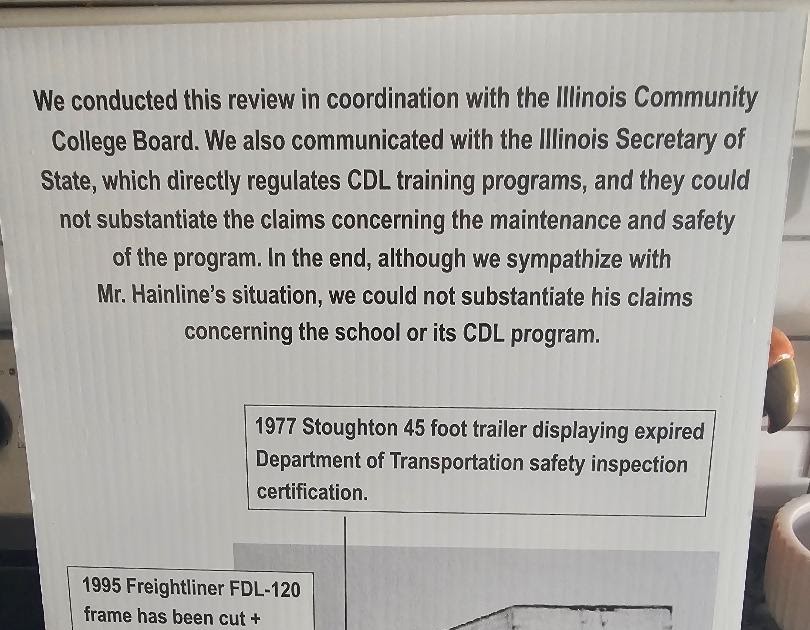
    During my class, veteran student Mike and I, and non-veteran students Dustin & Richard, discovered that the landing gear on the 1977 Stoughton trailer assigned for training was missing an axle and four wheels. I reported this to the staff, who admitted the equipment was faulty but took no timely corrective action. A veteran student later informed me that the school replaced the landing gear on a similar 1987 Great Dane trailer sometime after our class ended, contradicting official reports submitted to the VA and state approving agencies that claimed no issues existed.

    To confirm these claims, I located the trailer used in program advertising and compared photos taken during and after our training. The landing gear had indeed been replaced—freshly painted and altered, as confirmed by Great Dane Trailers’ manufacturer. 

    The trucks used for training showed similar problems. According to Vehicle Identification Numbers, three trucks had modifications—such as frame cutting between tandem axles—that Daimler Trucks North America (the manufacturer) neither recommended nor approved. Federal Motor Carrier Safety Administration guidelines were not followed, creating additional safety concerns, per conversations with the Federal Motor Carrier Safety Administration. 

    Systemic Oversight Failures

    These issues highlight a broader problem: the State Approving Agencies, under contract with the VA, are failing to provide adequate oversight and ensure program quality. The VA Office of Inspector General’s 2018 report (OIG Report #16-00862-179) found that 86% of SAAs did not sufficiently oversee educational programs to ensure only eligible, high-quality programs were approved. The report estimated that without reforms, the VA could improperly pay out $2.3 billion over five years to subpar or fraudulent institutions.

    Alarmingly, the VA Veterans Benefits Administration (VBA) is restricted in its ability to question or audit the reports submitted by SAAs. There is no mechanism for veterans to challenge or appeal SAA findings, effectively leaving veterans powerless within a system that is supposed to protect them.

    Veteran Service Organizations’ Silence

    I sought help from veteran service organizations but found little interest in addressing these critical problems. The American Legion initially responded to my outreach in 2017, engaging in conversations and phone calls. However, within months, communication ceased without explanation. Attempts to meet with American Legion leadership and their legislative contacts, including Dr. Joe Wescott—an influential consultant on veterans’ education—were unsuccessful. Dr. Wescott dismissed concerns about the integrity of the SAA’s targeted risk-based reviews, citing that schools typically fix problems before SAAs visit, and failed to investigate conflicts of interest between report authors and SAA officials.

    At the 2024 American Legion convention, a planned meeting between a fellow veteran and Legion leadership was abruptly canceled. Meanwhile, other veteran groups such as Veterans of Foreign Wars (VFW), Disabled American Veterans (DAV), and Veterans Education Success (VES) showed engagement, but the American Legion and Student Veterans of America remained unresponsive.

    The American Legion’s own 2016 Resolution #304 warned of the exact issues I and countless other veterans have endured: deceptive practices by some education providers, poor accreditation standards, and underfunded and understaffed SAAs unable to enforce proper oversight.

    A Cycle of Scandal

    Congressional staff admitted privately that veterans’ education legislation rarely progresses without support from key players like Dr. Wescott and the National Association of State Approving Agencies (NASAA), whose leaders have repeatedly declined to meet with veterans raising concerns. These complex relationships between SAAs, VA officials, veteran groups, and legislators perpetuate a “cycle of scandal” that leaves veterans vulnerable and taxpayers footing the bill.

    In 2023, a combat veteran attending the same program I did reported similar frustrations: only one of three trucks was roadworthy, severely limiting practical training time for a full class of students. Despite numerous documented complaints, the NASAA president refused to meet or discuss these issues.

    The Human Cost

    Beyond financial waste and bureaucratic failures, real human harm occurs. My injury, caused by training on unsafe equipment, robbed me of a year of mobility and continues to affect my life. Thousands of veterans have lost their G.I. Bill benefits, incurred debt for worthless or limited degrees, or been misled about their job prospects after completing programs approved by the very agencies meant to protect them.

    The internet is rife with investigative reports exposing waste, fraud, and abuse in VA-approved programs. Headlines like “School Scammers Are Robbing Veterans and the Government Blind” and “For-Profit Colleges Exploit Veterans’ G.I. Bill Benefits” are far too common.

    A Call for Reform

    Despite these glaring failures, meaningful reform remains elusive. The VA OIG report and numerous investigations call for increased accountability, transparency, and cooperation between the VBA, SAAs, veteran service organizations, and Congress. Veterans deserve a system that genuinely safeguards their education and wellbeing.

    My fellow former veteran students and I have organized online and turned to media outlets to break the silence. It’s time for the public and policymakers to hear our stories—not just slogans and “catchy” legislative titles that fail to restore lost benefits or improve program quality.

    We veterans demand change—because we have earned more than empty promises and a broken system that leaves us behind.


    Michael S. Hainline is a veteran and advocate living in Pensacola, Florida. He served in active duty and reserve military components and now works to expose the failures of oversight in VA-approved education and job training programs. He can be reached at [email protected].

    Source link