Tag: Robert

  • Join Robert Reich for a free live watchalong of The Last Class (Elliot Kirschner and Heather Lofthouse)

    Join Robert Reich for a free live watchalong of The Last Class (Elliot Kirschner and Heather Lofthouse)

    Dear friends,

    The Last Class continues to be shown across the country with people watching it in person, in community, and in theaters. It’s being shown on screens in 47 states and in Canada! By January we will be in all 50 states, thanks to you!

    So, we’re excited to offer a one-time-only live online watchalong of the film — Monday, December 8 at 5:30 pm PT / 8:30 pm ET — with Prof. Reich joining us to speak before and after the film, and provide some commentary while it plays.

    If you haven’t already seen The Last Class, the illuminating film about Robert Reich’s final semester of teaching (or even if you have), gather with friends for this special one-of-a-kind event!

    Sign up for the watchalong now here, or by clicking this orange button:

    Sign Up For The Watchalong Here

    We continue to prioritize in-person screenings, thrilled that the film is bringing people together. Later next year, we plan to offer the film online via “video on demand” and hopefully a streaming service.

    Here’s what you need to know:

    • The watchalong is Monday, December 8 at 5:30 pm PT / 8:30 pm ET.

    • When you sign up you will be added to a special watchalong email list.

    • The morning of Monday, December 8, you will receive an email with a YouTube link.

    • At 5:30 pm PT/ 8:30 pm ET this link will go live with Prof. Reich, Heather, and Elliot.

    • Bob, Heather, and Elliot will offer some live commentary during the film (71 mins).

    • short Q&A will follow.

    • When the event ends, the link for the film will no longer be watchable.

    • Signing up for the watchalong is FREE. But for those that can afford it, we will offer the opportunity to donate so that the film can be shared more widely.

    Additional information: This is a LIVE event, so there will be no ability to pause or rewind the film while watching, sort of like television was in the olden days. If you sign up within an hour of the start time, your confirmation email will redirect you to the live YouTube link. The RSVP page will close 15 minutes after the film starts (5:45 pm PT), but the YouTube link will be live and accessible the whole time.

    Please share this email or the signup link with others. There is no cap on total viewers and we hope to see as many of you as possible.

    If you want us to answer a specific question about the film during the watchalong, you can start by adding your thoughts to the comments section below.

    Sign Up For The Watchalong Here

    Hope to see you on December 8th,
    Elliot and Heather

    Source link

  • Examining the Debt and Earnings of “Professional” Programs (Robert Kelchen)

    Examining the Debt and Earnings of “Professional” Programs (Robert Kelchen)

    Negotiated rulemaking, in which the federal government convenes representatives of affected parties before implementing major policy changes, is one of the wonkier topics in higher education. (I cannot recommend enough Rebecca Natow’s book on the topic.) Negotiated rulemaking has been in the news quite a bit lately as the Department of Education works to implement changes to federal student loan borrowing limits passed in this summer’s budget reconciliation law.

    Since 2006, students attending graduate and professional programs have been able to borrow up to the cost of attendance. But the reconciliation law limited graduate programs to $100,000 and professional programs to $200,000, setting off negotiations on which programs counted as “professional” (and thus received higher loan limits). The Department of Education started with ten programs and the list eventually went to eleven with the addition of clinical psychology.

    In this short post, I take a look at the debt and earnings of these programs that meet ED’s definition of “professional,” along with a few other programs that could be considered professional but were not.

    Data and Methods

    I used program-level College Scorecard data, focusing on debt data from 2019 and five-year earnings data from 2020. (These are the most recent data points available, as the Scorecard has not been meaningfully updated during the second Trump administration. Five-year earnings get students in health fields beyond medical residencies. I pulled all doctoral/first professional fields from the data by four-digit Classification of Instructional Programs codes, as well as master’s degrees in theology to meet the listed criteria.

    Nine of the eleven programs had enough graduates with debt and earnings to report data; osteopathic medicine and podiatry did not. There were five other fields of study with at least 14 programs reporting data: education, educational administration, rehabilitation, nursing, and business administration. All of these clearly prepare people for employment in a profession, but are not currently recognized as “professional.”

    Key takeaways

    Below is a summary table of debt and earnings for professional programs, including the number of programs above the $100,000 (graduate) and $200,000 (professional) thresholds. Dentistry, pharmacy, and medicine have a sizable share of programs above the $100,000 threshold, while law (the largest field) has only four of 195 programs over $200,000. Theology is the only one of the nine “professional” programs with sufficient data that has higher five-year earnings than debt, suggesting that students in other programs may have a hard time accessing the private market to fill the gap between $200,000 and the full cost of attendance.

    On the other hand, four of the five programs not included as “professional” have higher earnings than debt, with nursing and educational administration being the only programs with sufficient data that had debt levels below 60% of earnings. More than one-third of rehabilitation programs had debt over the new $100,000 cap, while few programs in other fields had that high of a debt level. (Education looks pretty good now, doesn’t it?)

    I expect the debate over what counts as “professional” to end up in courts and to possibly make its way into a future budget reconciliation bill (about the only way Congress passes legislation at this point). Until then, I will be hoping for newer and more granular data about affected programs.

    Source link

  • The accidental facility manager: Robert Alemany

    The accidental facility manager: Robert Alemany

    This audio is auto-generated. Please let us know if you have feedback.

    Relationship building is the most important skill Robert Alemany says he brings to his role as director of facilities at The Buckley School, a private K-9 school in New York City.

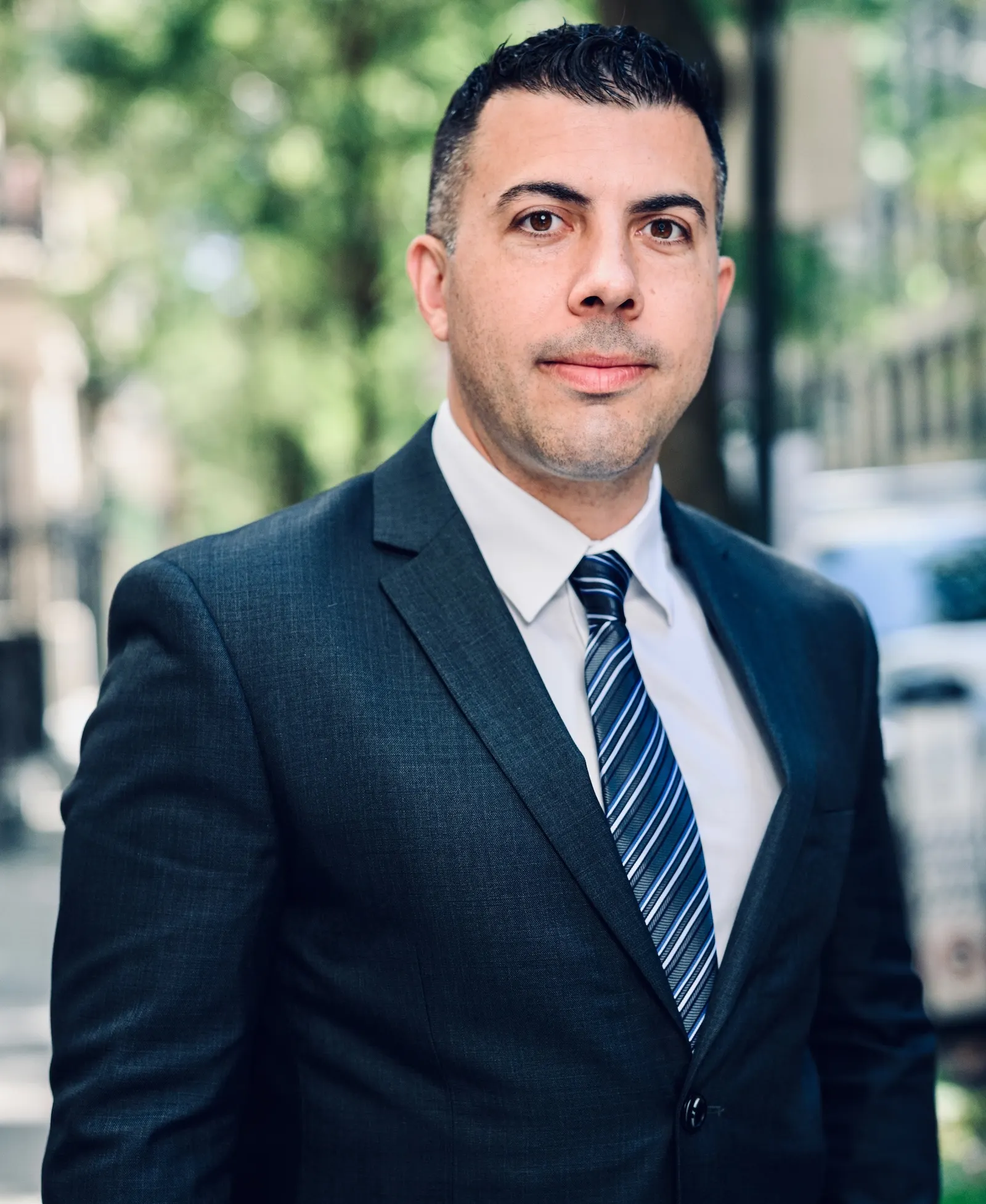
    Headshot of Robert Alemany, director of facilities at The Buckley School, NYC.

    Robert Alemany

    Permission granted by The Buckley School, NYC


    With a background in teaching and business management, he had to learn the technical side of facility management from scratch when he shifted to that line of work about five years ago. Yet it’s people management that he relies on most to succeed in his role overseeing a four-building campus of close to 400 students, he says.

    Among his big challenges this year is meeting the energy efficiency goals under New York City’s Local Law 97. One of the school’s older buildings needs upgrades if it’s to meet the city’s tough building performance standards. To learn about his career path and how he’s tackling the challenges that come with the job, Facilities Dive sat down with Alemany for a short conversation.

    The following Q&A has been edited for clarity and length. 

    FACILITIES DIVE: How did you become involved in facilities management?

    ROBERT ALEMANY: It was accidental. I started out teaching at public schools in different roles. I decided I didn’t want to be a teacher forever and got an MBA. I thought I’d go work in finance, but I kept getting these managerial roles at educational places, then got a job at a church in New York City. The church bought a parking garage, gutted it and turned it into this really contemporary facility. They decided that Monday through Saturday they would rent it out as space and just use it for church on Sundays. They used the income from the event space to pay off the mortgage. 

    I ran operations there for a while. They had somebody taking care of the building [who departed, then they] said, “Why don’t you step into this role?” I was like, “I really appreciate it, but I don’t know which way to hold a screwdriver, so I don’t think I’m your guy.” And they said, “We appreciate your management skills and the kind of person you are. You can get the skills to excel in this role,” and they gave me a shot. I started cold calling facilities managers in similar roles, getting books and doing online courses and just loved it. 

    A few years down the line, a position opened up at the school I’m at now and I thought it was a perfect fit; I had these newly acquired facility skills and I’d been a teacher. I know what they experience every day. That led me to where I am now.

    Talk about your training. 

    ALEMANY: I continue to build off what I learned and got my real estate license. I still talk to people in the field, invest in books and do online courses whenever I can. You just never stop talking to people. Even when we have vendors come in, I ask, “Why? What kind of stuff are you doing here?” 

    What’s the most important skill the job requires?

    ALEMANY: People management, which is not something that [typically] comes to mind. When people think of facilities, they think of pipes and HVAC systems and all that. But there are people that are involved in maintaining and repairing that equipment. So it’s about building relationships, especially in a city as busy as New York City. To get emergency service here, for example, relationships make a difference. We might not be on the top of the list of a company. We’re just a small fish in the pond. But by building relationships, we become a priority for others. And when you have to negotiate contracts and work through different things, people skills are at the top.

    Are there laws or regulations that cause you the most challenge? How do you manage compliance? 

    ALEMANY: Here in New York City, it’s Local Law 97 which is the law that’s governing carbon emissions. One of the buildings was last renovated in 1974. We’re fine for this year, but by 2030 we’re not going to meet the threshold that they’ve set. We’re going to be fined about $35,000 or something like that. So we’re undergoing a renovation project and engaging architects and some engineers to help us with that to reduce our carbon footprint. 

    As it relates to school buildings, some of it is health department stuff because we’ve got a nurse here. So, it’s making sure that chemical cleaners are away and out of reach of kids. We also face a lot of the regulations that other buildings do, but when they come in and do their inspections, they’re a lot stricter with us because we’re a school.

    What keeps you up at night? 

    ALEMANY: Just the idea that every facilities manager has: that something weird is going to go wrong, where you forgot if you did something or forgot to talk to someone. The unexpected. But that comes with the role. There’s a level of unpredictability, but it drives you to be as well organized as you can and think through things. Even if something doesn’t happen, you think through multiple steps and say, “Okay, if it did, what would I do? How would I respond?”  

    What advice do you have for someone who’s interested in becoming a facility manager?

    ALEMANY: Be humble, ask questions and learn from those around you. There are a lot of people that have done this before, and it’s not just facility managers, but those that have worked in the trades that love to share their passion for what they do. Don’t try to re-create the wheel. Absorb knowledge and create friendships and relationships. If anybody would want to pursue the career, I would encourage them to do it, because it really is a great career.  

    Did you have a unique journey into facilities management? Are you managing through challenges others could benefit from learning about? If you’re interested in sharing your story with others in your field, Facilities Dive would appreciate hearing from you. Send an email to [email protected]

    Correction: We have updated this story to correct the number of students at the school and clarify Alemany’s remarks about the age and condition of one building and his career path.


    Source link

  • Public Higher Education is Splitting in Two (Robert Kelchen)

    Public Higher Education is Splitting in Two (Robert Kelchen)

    Even though there have been longstanding ideological differences across states, higher education leadership was largely insulated against these differences over the last half-century. Yes, they popped up in meaningful ways on topics such as South African divestment, affirmative action, and antiwar protests, but it was possible for university leaders to move from red states to blue states and vice versa. It helped to share the state’s political leanings, but it was generally not a requirement.

    The last month has clearly shown that potential presidents now must pass an ideological litmus test in order to gain the favor of governing boards and state policymakers. Here are three examples:

    • Santa Ono’s hiring at Florida was rejected by the system board (after being approved by the campus board) due to his previous positions in favor of diversity initiatives and vaccine mandates. He tried to pivot his views, but it was not enough for Republican appointments on the board.
    • Six red states, led by Florida and North Carolina, are seeking to launch a new accreditor to break free from their longtime accreditor (which was the only major institutional accreditor to never have a DEI requirement, although their diversity page is now blank). Florida Governor Ron DeSantis used his press conference to go on a tirade against higher education, but the North Carolina system’s statement was more cautious, focused on academic quality.
    • The Trump administration’s Justice Department effectively forced out University of Virginia president James Ryan over his alleged noncompliance in removing diversity initiatives from campus. This effort was successful because Virginia’s Republican governor also supported removal and has the ability to push the institution’s governing board to take action.

    While there has been a long history of politicians across the ideological spectrum leading universities (such as Mitch Daniels at Purdue, John King at the State University of New York, and Dannel Molloy at Maine), these politicians have generally set aside most of their ideological priors that are not directly related to running an institution of higher education. But now a growing number of states are expecting their campus presidents to be politicians that are perfectly aligned with their values.

    There are two clear takeaways from recent events. The first is that college presidents are now political appointments in the same way that a commissioner of education or a state treasurer would be in many states. Many boards will be instructed (or decide by themselves) to only hire people who are ideologically aligned to lead colleges—and to clean house whenever a new governor comes into power. The median tenure of a college president is rapidly declining, and expect that to continue as more leaders get forced out. Notably, by threatening to withhold funding, governors do not even have to wait for the composition of the board to change before forcing a change in leadership. New presidents will respond by requesting higher salaries to account for that risk.  

    Second, do not expect many prominent college presidents to switch from red states to blue states or vice versa. (It may still happen among community colleges, but even that will be more difficult). The expectations of the positions are rapidly diverging, and potential leaders are going to have to choose where they want to be. Given the politics of higher education employees, blue-state jobs may be seen as more desirable. But these positions often face more financial constraints due to declining enrollments and tight state budgets, in addition to whatever else comes from Washington. Red-state jobs may come with more resources, but they also are likely to come with more strings attached.

    It is also worth noting that even vice president and dean positions are likely to face these same two challenges due to presidential transitions and the desire of some states to clean house within higher education. That makes the future of the administrative pipeline even more challenging.  

    [This article first appeared at the Robert Kelchen blog.]

    Source link

  • Trump’s giant budget-busting, Medicaid-shattering, shafting-the-poor-and-working-class, making-the-rich-even richer bill is a travesty. (Robert Reich)

    Trump’s giant budget-busting, Medicaid-shattering, shafting-the-poor-and-working-class, making-the-rich-even richer bill is a travesty. (Robert Reich)

    Friends,

    One of my objectives in this daily letter is to equip you with the facts you need. As the Senate approaches a vote on Trump’s giant “big beautiful” tax and budget bill, I want to be as clear as possible about it.

    First, it will cost a budget-busting $3.3 trillion. According to new estimates by the nonpartisan Congressional Budget Office, the Senate bill would add at least $3.3 trillion to the already out-of-control national debt over a decade. That’s nearly $1 trillion more than the House-passed version.

    Second, it will cause 11.8 million Americans to lose their health coverage. The Senate version would result in even deeper cuts in federal support for health insurance, and more Americans losing coverage, than the House version. Federal spending on Medicaid, Medicare, and Obamacare would be reduced by more than $1.1 trillion over that period — with more than $1 trillion of those cuts coming from Medicaid alone.

    All told, this will leave 11.8 million more Americans uninsured by 2034.

    Third, it will cut food stamps and other nutrition assistance for lower-income Americans. According to the CBO, the legislation will not only cut Medicaid by about 18 percent, it will cut Supplemental Nutrition Assistance Program (food stamps) by roughly 20 percent. These cuts will constitute the most dramatic reductions in safety net spending in modern U.S. history.

    Fourth, it will overwhelmingly benefit the rich and big corporations. The CBO projects that those in the bottom tenth of the income distribution will end up poorer, while the top tenth will be substantially richer.

    The bill also makes permanent the business tax cuts from the 2017 legislation, further benefiting the largest corporations.

    Finally, it will not help the economy. Trickle-down economics has proven to be a cruel hoax. Over the last 50 years, Congress has passed four major bills that cut taxes: the 1981 Reagan tax cuts; the 2001 and 2003 George W. Bush tax cuts; and the 2017 Trump tax cuts. Each time, the same three arguments were made in favor of the tax cuts: (1) They’d pay for themselves. (2) They’d supercharge economic growth. (3) They’d benefit everyone.

    All have been proven wrong. Here’s what in fact happened:

    (1) Did the tax cuts pay for themselves?

    No. Rather than paying for themselves, the Reagan, Bush, and Trump tax cuts each significantly increased the federal deficit. In total, those tax cuts have added over $10.4 trillion to the federal deficit since 1981 compared to the Congressional Budget Office’s baseline projections.

    (2) Did the tax cuts supercharge economic growth, create millions of jobs, and raise wages?

    Absolutely not. Rather than growing, the economy shrank after passage of the Reagan tax cuts. And unemployment surged to over 10 percent. Following the enactment of the Bush and Trump tax cuts, the economy did grow a bit, but at rates much lower than their supporters predicted.

    (3) Did the tax cuts benefit everyone?

    Heavens, no. Rather than benefiting everyone, the savings from the Reagan, Bush, and Trump tax cuts flowed mainly to the richest Americans. The average tax cut for households in the top 1 percent under the Reagan tax cut ($47,147) was 68 times larger than the average tax cut for middle-class households ($695). The Bush tax cut for households in the top 1 percent was 16 times larger than the average tax cut for the middle class. The 2017 Trump tax cut for households in the top 1 percent was 36 times larger than for middle-class households.

    Summary: If the bill now being considered by the Senate is enacted, 11.8 million Americans will lose their health insurance, millions will fall into poverty, and the national debt will increase by $3.3 trillion, all to provide a major tax cut mainly to the rich and big corporations. There is no justification for this.

    Never before in the history of this nation has such a large redistribution of income been directed upward, for no reason at all. It comes at a time of near-record inequalities of income and wealth.

    What you can do: Call your senators and tell them to vote “no” on this calamitous tax and budget bill. Congressional switchboard: (202) 224-3121.

    Beyond this, help ensure that senators who vote in favor of this monstrosity are booted out of the Senate as soon as they’re up for reelection.

    Share

    Source link

  • The Last Class with Robert Reich (Inequality Media Civic Action)

    The Last Class with Robert Reich (Inequality Media Civic Action)

    Former Secretary of Labor Robert Reich might be famous for his public service, best-selling books, and viral social media posts, but he always considered teaching his true calling. The Last Class captures a master educator wrestling with the dual realities of his own aging and his students inheriting a world out of balance. Reich confronts the impending finality with unflinching candor, humor, introspection, and a rawness of emotion he has never shared publicly before.

    One thousand students fill the biggest lecture hall on campus—the last class to receive Reich’s wisdom and exhortations not to accept that society has to stay the way it is. His final assignment: Who will be the teachers of tomorrow?

    Source link

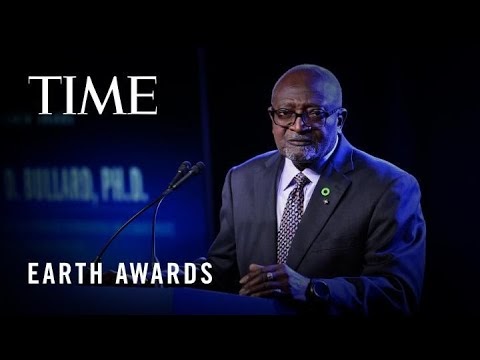
  • ‘Father of Environmental Justice’ Robert Bullard on the Work Behind a Movement (Time)

    ‘Father of Environmental Justice’ Robert Bullard on the Work Behind a Movement (Time)


    Higher Education Inquirer : ‘Father of Environmental Justice’ Robert Bullard on the Work Behind a Movement (Time)


    ‘Father of Environmental Justice’ Robert Bullard on the Work Behind a Movement (Time)


    “This
    isn’t happenstance,” remarked
    Gloria Walton, former TIME Earth Award
    honoree, on the environmental justice movement being recognized as a
    powerful force.

    “It is a reality created by the energy and love of frontline communities
    and grassroots organizations who have worked for decades,” Walton said,
    as she presented an Earth Award to the man known as the “Father of
    Environmental Justice,” Robert Bullard.

    Bullard, who was appointed to the White House Environmental Justice
    Advisory Council in 2021, spoke of the long fight he’s waged for
    environmental justice in his acceptance speech. He discussed the
    challenges that he faced in 1979, when he conducted a study in support
    of the landmark case Bean v. Southwestern Waste Management Corps.— the
    first lawsuit to challenge environmental racism in the United States.

    “I am a sociologist and my sociology has taught me that it is not enough
    to gather the data, do the science and write the books,” he said. “In
    order for us to solve this kind of crisis, we must do our science, we
    must gather our data, we must collect our facts, and we must marry those
    facts with action.”


    Source link

  • Top 10 U.S. Higher Ed Stories of 2024 with Robert Kelchen

    Top 10 U.S. Higher Ed Stories of 2024 with Robert Kelchen

    Robert Kelchen is a prolific higher education researcher and also the head of the University of Tennessee at Knoxville’s Department of Educational Leadership and Policy Studies. He is also a pretty steady blogger on higher education, but he doesn’t have the time to post quite as much as he did before he took on all those extra admin duties. One of the casualties of his reduced blogging schedule is that he no longer posts his regular “top ten” stories of the year in US higher education, which I, as an outsider, always used to find a handy way to keep track of what mattered over the long term in the US.

    But last year, Robert agreed to reprise his role of summarizer-in chief for us on the year’s final pod, and reaction was so positive, we thought we would have him on again for our final podcast of 2024. As always, Robert is sharp, succinct, and not one to shy away from unconventional calls. And so, without further ado, let’s hear Robert’s Top Ten.


    The World of Higher Education Podcast
    Episode 3.14 | Top 10 U.S. Higher Ed Stories of 2024 with Robert Kelchen

    Transcript

    Alex Usher (AU): Robert, let’s start things off. What’s your number 10 story this year?

    Robert Kelchen (RK): Number 10 out of the U.S. is more changes to big-time college athletics. It seems like things cannot stay stable, and that’s in part because there is so much money involved. So, the big changes this year are more teams changing athletic conferences. Everyone is trying to jockey for position in big-time college athletics to be on the right side of TV contracts. Never mind that the next round of TV contracts may look very different with people cutting the cord from cable. The other big piece is a landmark settlement with former athletes. That requires a financial settlement and then also athletes going forward are going to get about 20 percent or so of all revenue.

    AU: Gross revenue?

    RK: Yeah. So, this also affects the number of scholarships that programs can offer. Previously for big-time athletics, that number was limited. Now, it’s not limited. They focus more on roster sizes instead. This means colleges have some really tough financial choices to make. Because they have to pay athletes, and if they want programs to be competitive, they need to offer more scholarships. That means what will probably happen is some colleges are going to look at dropping sports to club status so they don’t have to pay for scholarships. While also keeping in mind they can’t just drop the women’s sports, at least under Title IX regulations. Although, who knows what’s going to happen for regulations.

    AU: We’ll get to that. We’ll get to that. Let’s move along to number nine.

    RK: Number nine is college closures. It always seems to hang on the list because we continue to see closures. We had a really chaotic closure in early June with the University of the Arts in Philadelphia. I don’t think they were on anyone’s radar for closing.

    Their public financials at the time looked decent, but then their accreditor stepped in, saying, “We’re going to shut you down,” and it happened within a week.

    It was apparently for financial reasons. And it wasn’t immediately obvious from the financial statements from, say, a year and a half ago, what was going on. But it seems like they just ran out of cash very quickly. And it got to the point where, with a week’s notice, students couldn’t finish, faculty couldn’t find jobs, and staff couldn’t find jobs. It was just the absolute worst way to do things.

    AU: Has the number of closures actually ticked up—I mean, you’ve made the point on many occasions that there are always program closures.

    RK: Yeah, you know, there are always program closures. They really did try to push a lot of the low-performing for-profits out, and there just aren’t as many now.

    But I think the big piece that’s coming now is not college closures as much as program closures and academic restructuring. It’s a great time to be a consultant in this industry. Because consultants are the ones brought in to help do the studies on this, identify programs that may need to be closed, and institutional leaders like it because someone else is making the tough calls.

    AU: What about number eight?

    RK: Does anyone want international student? They’ve been a cash cow for many institutions for a while now but that’s beginning to change. Australia’s gotten the majority of the global news coverage on this, with their efforts to try to cap enrollment, which is really divisive there, especially among the more rural institutions that would like more international students. You’re seeing it in Canada, the UK, and the US looking to move in that direction. That potentially creates opportunities in Southeast Asia or in Europe.

    Another wildcard in international students is what’s going to happen with both China and India? Where China is always at risk of having a major policy change, and there seems to be a fair amount of instability in India right now.

    AU: Number seven?

    RK: Number seven is state funding for higher education. There’s been a lot made in the U.S. about disinvestment in public higher education, but over the last decade or so, state funding for higher education in most states has been pretty strong. The states where it’s been the weakest are often the more politically liberal states, and that’s basically because they’ve had more longstanding budget issues. But a number of the more conservative states have funded pretty well, and state funding is at a two-decade high right now.

    I have a hard time seeing that continuing because state budgets have largely flatlined for the upcoming fiscal year. There have been some states that have gone down the route of tax cuts from post-pandemic money that’s starting to come due. But also, there’s just more skepticism about the value of public higher education. And there are states like Utah where enrollment is up substantially. But they’re looking at cutting funding and telling universities and colleges to expect less in the way of enrollment. This really creates the haves and have-nots in public higher education. The big-name public universities are growing like crazy. The regionally focused colleges are struggling mightily.

    AU: You’ve talked about a flight to quality among students. Is it likely that state funding starts to follow into the flagships more than it used to?

    RK: It depends in part on the funding model. If it’s an enrollment or performance funding type model, then that will happen. But also, states don’t want to see regional institutions fail. So they need to have some kind of capacity there.

    The big question that states have to wrestle with is how big they want their flagship institution to be. Do they want to push students to regional institutions? In some states, they have the governance structure in place to do that, even though it’s extremely politically painful. And in other states, there’s no centralization whatsoever, so there’s really nothing they can do about it.

    AU: What about number six?

    RK: Number six is the protests about the war in Gaza and the fall of several Ivy League presidents. I did some analysis back in the spring, and it was really only at a fairly small number of colleges, these protests. But they happened at the institutions that policymakers care about — the super-elite private colleges and some of the big public flagships. Congressional Republicans found that hauling in college presidents — especially women of color — plays really well to their base. And I think that was one of the reasons behind republican elector success.

    AU: That appearance in front of Congress by the presidents of Penn, MIT, and Harvard really was kind of the flashpoint of the year, wasn’t it? I mean, two of them were out within a month of that appearance. It’s another example of Americans assuming that what happens at a very small handful of prominent private institutions is actually reflective of something bigger, isn’t it?

    RK: That’s exactly it. And one of the big reasons is that so many of the policymakers and so many of the journalists — that is their sphere, that’s what they know. We’re also seeing a really interesting dichotomy as President-elect Trump announces his key political appointments. He’s abolishing the Department of Education, reforming higher education, but at the same time, all his press releases highlight the colleges these people went to. So, he’s saying, “They went to NYU, they went to Penn,” while simultaneously dumping on them.

    AU: Robert, what about number five?

    RK: Number five is the increased political realignment by educational attainment. It used to be that if people had a bachelor’s degree, there was a pretty good chance they were pro-business Republicans. That was a substantial part of the base — part of what really kept the party going post-Reagan through the George W. Bush years.

    Then, I think we saw a bit of this starting with Obama, and then it really moved forward. The Democrats made substantial gains among college-educated individuals, especially those with postgraduate degrees. Then Trump came in 2016 and really accelerated the realignment, where college-educated individuals shifted to the Democratic Party, while non-college-educated individuals moved toward the Republican Party.

    That is a sea change to where pollsters now are focusing on weighting polls based on education instead of race or gender. There are still divides in those areas, of course. But what this means for higher ed is that higher education has long been relatively apolitical in the U.S. — probably had a 50-year run that way. But that has started to change dramatically, and that change threatens higher education enrollment as well as public support for the sector.

    AU: It’s tough for a public university. I mean, it’s like saying hospitals are Democrats, right? Or K-12 schools are Republican. It’s weird for a public institution to be identified as partisan. It can’t be easy for public university presidents to be in that position. What can they do? What are they doing to try to reverse that trend?

    RK: One piece of it is who becomes a president of a university or system. We’re seeing more politicians take on those roles. Some of them are unsuccessful, but some of them are very successful as they try to be the bridge between academics and the legislature.

    The other big piece is focusing on outreach and the public mission. Public higher education has two main advantages: one is community outreach, which includes things like agricultural extension classes and community programming. The other is athletics like football, it’s a big driver of public support.

    AU: Okay, what about number four?

    RK: Number four is accreditation. It’s a topic that’s deep in the weeds for a lot of people, but it’s in the political spotlight right now.

    Two big examples stand out. One is the toughest accreditation job in the U.S., which is at the Southern Association of Colleges and Schools (SACS). We no longer have truly regional accreditation in the U.S. — that went away under the first Trump administration. But SACS is still largely focused on conservative southern states, and those states are not happy with accreditation. In Florida, for instance, they decided you have to switch accreditors every cycle. SACS President Belle Whelan is retiring, and I have no idea who in the world would want that job. That is probably the most difficult job in American higher education.

    AU: What’s the potential impact of accreditation becoming more politicized?

    RK: Some of it is just administrative burden for higher ed. If institutions are expected to switch accreditors or if accreditation standards change constantly, that’s a lot of administrative cost.

    But the bigger issue is, will accreditors uphold basic standards? They’ve largely punted on academic standards because every time they try, they get sued. They often win those cases, but it’s expensive. So, accreditors have largely focused on finance. But, the perception is that they’re focused too much on diversity, equity, and inclusion. SACS is actually the only major accreditor that does not require that.

    Another big pressure on accreditation is that several accreditors are now trying to push for shorter bachelor’s degrees. The U.S. traditionally has 120-credit bachelor’s degrees, but there’s a push for 90-credit degrees — shorter, faster, cheaper, better. There’s a strong rationale for it, but also concerns about educational quality. This could completely upend the higher ed finance system. If you get less revenue per student and you eliminate some of the upper-level courses, that might work. But it seems like they’re taking away more of the lower-level general education courses, and those courses subsidize other parts of the system.

    AU: Interesting. Okay, I think DEI has something to do with number three as well.

    RK: Yes. State governments are pushing higher education hard on more of these social issues. Texas and Florida have taken the lead on trying to ban any mention of diversity, equity, and inclusion. In a lot of conservative states — including mine — DEI is now known as “access and engagement” or “access and belonging” or something else. They don’t want to use those words because people expect emails and course syllabi to be searched for those terms.

    At the University of North Texas, for example, the new leader, who came from the Texas Higher Education Coordinating Board, required that all mentions of DEI be eliminated. They focused on the education school, which is also searching for a new dean.

    AU: But it’s gone beyond just excising words or renaming units. If I recall correctly, at North Texas, they were even getting rid of words like “racism” from course syllabi, which makes it hard to teach U.S. history, doesn’t it?

    RK: It does. There was a round of this about a half dozen years ago where the response was to get rid of the words and do the same thing, the legislatures did not like that so now they’re trying to go back and root all of these out.

    AU: Alright, let’s move on. What’s number two? We’ve got to be coming pretty soon to the election, right?

    RK: We are. But I actually don’t think the election is number one this year. The election of Trump is a big deal, and it will have large effects on American higher education. Will the U.S. Department of Education go away? I’m still extremely skeptical of that. Every Republican since 1979 has said they want to abolish it, but it’s difficult to get rid of an agency. And also, Republicans may have unified control in Washington, D.C., but it’s by the skin of their teeth. They can afford to lose, I think, only two votes in the House of Representatives, and it’s a fractured caucus. They’ve got a lot of other priorities, too.

    Plus, you have members looking ahead to 2026 and wondering if they can get re-elected when the majority party typically loses seats in a midterm election. So, it’s going to be a very unsettled, interesting time. But I don’t see the Department of Education going away.

    The bigger question is, what can sneak its way onto that one bill each year that can be passed completely on a partisan basis? The U.S. has a mechanism called reconciliation, where anything with a budgetary impact can go through the Senate with just 50 votes instead of 60. So, that’s where the action will be.

    If they wanted to make changes to student loans, for example, that would have a direct budgetary impact, so it could be part of a reconciliation bill. The challenge is then uniting the Republican caucus. They’re not always well-aligned. And they’ll have to figure out their priorities. Is it immigration? Is it tax cuts, since the Trump tax cuts are set to expire at the end of 2025?

    And even within education, how big is their focus going to be on K-12 education versus higher education? If history is any guide, K-12 will get most of the attention.

    AU: We also have a new Secretary of Education. She seems quite different from Betsy DeVos. What do you expect from her?

    RK: Yeah, she’s definitely different. Her name’s Jovita Carranza. She ran the Small Business Administration, and by all accounts, she got fairly good marks from employees over there. She’s actually one of the few high-level Trump appointees who did not go to an elite institution. She got a teaching certificate and a French degree from East Carolina University. I just found that fascinating. But I think it’s part of the strategy — put the person with a teaching credential in charge of the Department of Education. From a management perspective, she seems competent. From a policy perspective, it’s a little less clear.

    The stated goal is still to get rid of the Department of Education. But even if that’s their goal, actually pulling it off is another story. There’s legislation to basically break apart the department and shuffle its components into other federal agencies. But that’s a long, complicated process. I’d probably say the chances of it happening are maybe 5 to 10 percent at best.

    AU: Yeah, that sounds about right. Okay, bring us to number one.

    RK: Number one doesn’t come from the White House this year — it comes from the U.S. Supreme Court. And it’s a big one. The Supreme Court decision in Loper Bright overturned a 40-year-old precedent called Chevron. The Chevron doctrine gave federal agencies broad discretion to interpret laws where the statute was vague, and courts would generally defer to the agency’s interpretation. It was seen as a major source of power for the so-called “administrative state.”

    But conservatives have wanted to get rid of Chevron for years. They saw it as giving too much power to unelected bureaucrats. Well, they finally got what they wanted. The Supreme Court’s ruling says, “No more deference to agencies. If the statute isn’t clear, it’s Congress’s job to fix it.”

    AU: So why is that such a big deal for higher ed?

    RK: It’s a big deal because so much of higher education policy in the U.S. happens through administrative rulemaking. Look, the Higher Education Act hasn’t been reauthorized since 2008. Congress hasn’t done anything. So everything that’s happened since then — like changes to student loans, Title IX rules, and accreditation requirements — has been done through executive action or rulemaking by the Department of Education.

    With Loper Bright, that power is now significantly reduced. Agencies can no longer just “interpret” laws as they see fit. They need clear statutory authority from Congress.

    So, here’s the twist. Loper Bright was something conservatives pushed for because they didn’t like how Democratic administrations used Chevron to expand regulations on, say, environmental protection or labor standards. But now, with a Republican administration on the way, they’ve tied their own hands.

    If Trump wants to make big changes to higher education — like dismantling the Department of Education, reforming student loans, or changing Title IX — he’s going to have a harder time doing it through executive action. He’s going to need Congress, and Congress isn’t exactly known for its efficiency.

    AU: So, to summarize, when Democrats were in power, Chevron was seen as a bad thing because it gave them more power. But now, with a Republican in power, they’ve realized that Chevron would’ve been useful for them, too.

    RK: That’s it. It’s ironic, right? They dismantled their own ability to govern. And I think the Trump administration learned a lot the first time about how to effectively use executive authority. They were pretty bad at it in the early years, but they figured it out by the end. Well, now their hands are tied in some crucial areas.

    AU: So, in the end, the impact of the Trump presidency might be a lot less than people think because he won’t be able to wield executive power in the same way.

    RK: That’s quite possible.

    AU: Fascinating. Well, Robert, thank you so much for being with us today. It’s been a great ride, as always. We’ll see you back here in 12 months, and we’ll see how much has changed by the end of 2025.

    RK: Probably quite a bit.

    AU: Yeah, no doubt. Thanks, Robert. And it just remains for me to thank our excellent producers, Tiffany MacLennan and Sam Pufek, and of course, you — our listeners — for tuning in. If you have any questions or comments about today’s episode, feel free to reach out to us at [email protected]. And don’t forget to subscribe to our YouTube channel so you never miss an episode of The World of Higher Education.

    We’ll be back on January 9th with our first episode of the new year. Our guest is a mystery for now — you’ll just have to wait and see. Stay well, have a good holiday season, and bye for now.

    *This podcast transcript was generated using an AI transcription service with limited editing. Please forgive any errors made through this service.


    Source link