Tag: Robert F. Kennedy Jr.

  • All Eyes on Florida As State Gets One Step Closer to Nixing Vaccine Mandates – The 74

    All Eyes on Florida As State Gets One Step Closer to Nixing Vaccine Mandates – The 74


    Get stories like this delivered straight to your inbox. Sign up for The 74 Newsletter

    A week after Florida health officials brought the state one step closer to abolishing childhood vaccine mandates, pediatricians, parents and advocates are expressing alarm over the ramifications. 

    If such a change goes into effect, “pediatric hospitals will be overwhelmed with [childhood] infections that have virtually been non-existent for the last 40 years,” said Florida-based infectious disease specialist Frederick Southwick. Southwick attended a Dec. 12 public comment workshop on the issue hosted by the Florida Department of Health. 

    “We’re in trouble right now,” he added, pointing to falling vaccine rates and the likelihood that some diseases could become endemic. “We’re getting there, and this [ending the mandate] would just do-in little kids.”

    The session delved into the proposed language the department has drafted for a rule change that would do away with vaccine mandates for four key immunizations: varicella, more commonly known as chickenpox; hepatitis B, pneumococcal bacteria and Haemophilus influenzae type B, or HiB. Currently, children cannot attend school in Florida without proof of these four immunizations, among others, including the measles, mumps and rubella vaccine. 

    Although Florida is not considering removing the mandate for the MMR vaccine, health experts see the move it is contemplating as eroding childhood immunization generally. It comes when more than 300 people are being quarantined in South Carolina because of a burgeoning measles outbreak.

    Rana Alissa is the president of the Florida Chapter of the American Academy of Pediatrics. (American Academy of Pediatrics)

    Rana Alissa, president of the Florida Chapter of the American Academy of Pediatrics, was also in attendance to express her concerns. She told The 74 this week that thanks to the success of vaccines, she’s never had to treat some of these “horrible diseases,” including HiB, which can lead to meningitis.

    “Don’t make our kids — Florida’s kids — guinea pigs to teach me and my classmates and other pediatricians how to manage these diseases,” she implored.

    Tallahassee parent Cathy Mayfield lost her 18-year-old daughter, Lawson, to meningitis in 2009, a few months before she was supposed to leave for college and just before she was due for a booster shot. (At the time, the booster was not recommended until college, according to Mayfield.)

    “You just don’t realize until it happens to you,” she said.

    She hopes others will learn the importance of vaccinating their own kids from her family’s story. 
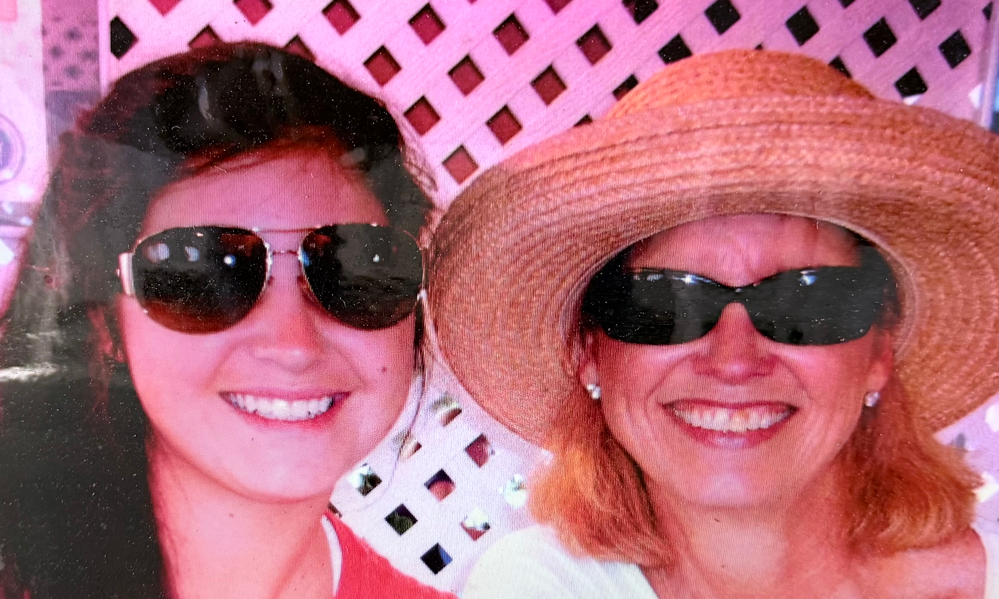
    Cathy Mayfield, and her daughter, Lawson, who died in 2009 from meningitis. (Cathy Mayfield)

    “All the information I learned through our tragedy about vaccinations made me very supportive of the safeguards [they] offer,” she said.

    “You’ve also got to realize,” Mayfield added, “that your decisions affect your community, and that’s something I think has gotten lost in … all this conversation and hesitancy about vaccinations.”

    Equating vaccine mandates to slavery

    The workshop, which was announced the day before Thanksgiving, was held in Panama City Beach, in the Florida Panhandle, far from the state’s main population centers. About 100 people showed up to the session, which was characterized by attendees as heated but civil. Northe Saunders, president of the pro-vaccine advocacy organization American Families for Vaccines and who was there, estimated that about 30 people spoke in favor of keeping the current vaccine mandates, while approximately 20 spoke in opposition.

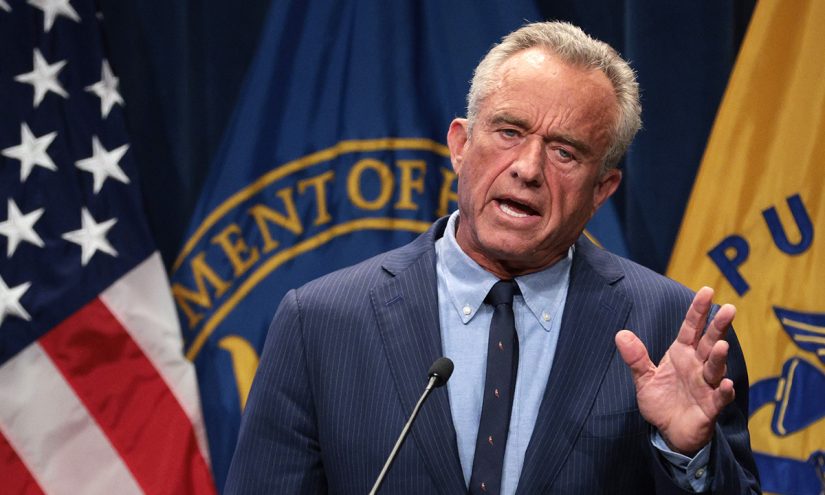
    Some speakers opposed to vaccine mandates included conspiracy theories in their arguments, according to news reports and numerous people present at the workshop, echoing language heard from the federal government since Secretary Robert F. Kennedy Jr., a long-time vaccine skeptic, took over the Department of Health and Human Services.

    One attendee argued that giving children multiple jabs in a 30-day period “accounts to attempted murder,” according to NBC News. A number of others questioned if this year’s reported measles outbreaks, which resulted in the deaths of two school-age, unvaccinated children in Texas, had actually occurred.

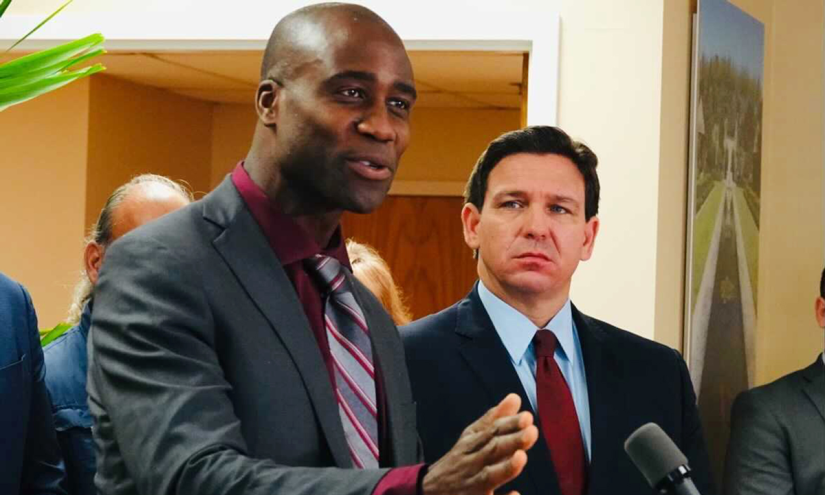
    Florida leaders’ desire to become the first state to end all vaccine mandates was announced in September by its surgeon general, Joseph A. Ladapo, standing beside Gov. Ron DeSantis in the gym of a private Christian high school. In sharing their plan, Ladapo claimed that “every last [mandate] is wrong and drips with disdain and slavery.” 

    Only four vaccines are mandated through a Department of Health rule and are therefore under Lapado’s purview. The remaining nine, which in addition to the MMR shot include polio, are part of state law and can only be changed through legislative action. 

    Experts told The 74 this is a much more difficult feat, one that state legislators — even conservative ones — don’t seem to have an appetite for. Richard Hughes, a George Washington University law professor and leading vaccine law expert, said such a legislative attempt would “warrant legal action.”

    ‘We really need to turn this around’ 

    The debate in Florida and other states over mandatory childhood immunization comes as the country teeters on the edge of losing its measles elimination status. This year alone has seen nearly 2,000 confirmed cases, the most since 2000, when measles was declared eliminated in the U.S. by the World Health Organization. Just over 10% of cases have led to hospitalization. The current South Carolina outbreak has infected at least 138 people, and among those forced to quarantine are students from nine schools. 

    Significant educational implications from the outbreaks emerged in a new study by the Annenberg Institute at Brown University, which found that absences increased 41% in a school district at the center of the West Texas outbreak, with larger effects among younger students.
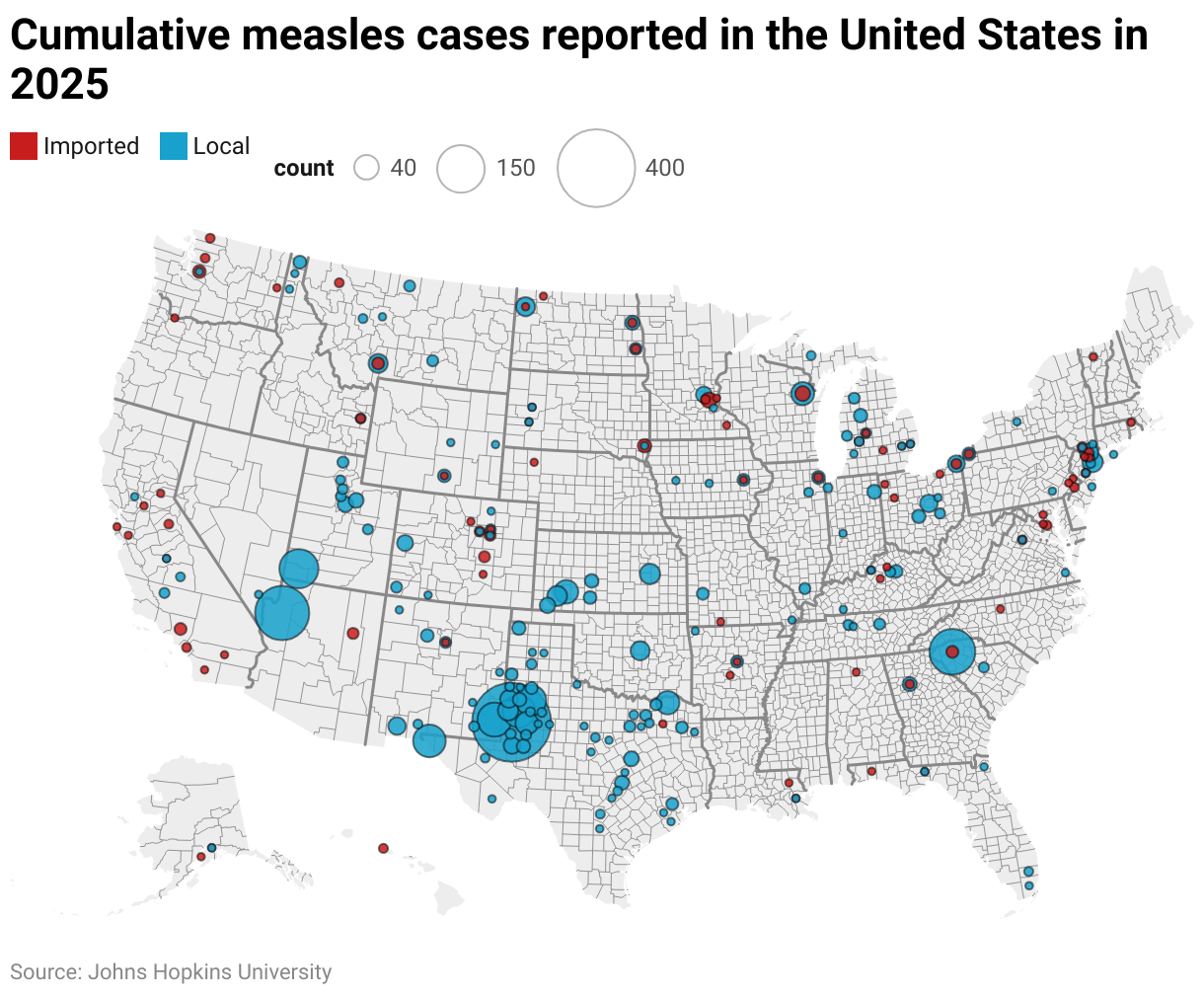
    The spread of measles is also a warning of the ramifications of dropping vaccine rates, according to William Moss, executive director at Johns Hopkins’ International Vaccine Access Center.

    “Measles often serves as what we [call] the canary in the coal mine,” he said. “It really identifies weaknesses in the immunization system and programs, because of its high contagiousness.”

    “Unfortunately, I see a perfect storm brewing for the resurgence of vaccine preventable diseases,” he added, “… We really need to turn this around.”

    Earlier this week, the Centers for Disease Control and Prevention got rid of a recommendation that all newborns receive the hepatitis B vaccine, and in the preceding months changed policies surrounding the measles, mumps, rubella and varicella (chickenpox) combination vaccine and this year’s COVID 19 booster — all based on recommendations from an advisory committee hand-picked by Kennedy. The universal birth dose of the hepatitis B vaccine, in place for decades, was credited with nearly eliminating the highly contagious and dangerous virus in infants.

    Lynn Nelson, the president of the National Association of School Nurses, fears that other, more conservative states will now look to Florida as an example.

    “We already have seen outbreaks all over, and they’re only going to escalate if you have an area of the country whose herd immunity levels slip down further than they already are, which I think will happen if those [anti-mandate rules] come into effect,” she said. “That, in combination with some of the other misinformation that’s coming out, people will feel validated in decisions not to immunize their children.”

    Florida’s Department of Health appears to be moving ahead to end requirements for the four vaccines it controls, despite a recent poll indicating nearly two-thirds of Floridians oppose the action. Proposed draft language presented at the Dec. 12 workshop would also allow parents to opt their kids out of the state’s immunization registry, Florida SHOTS, and expand exemptions. 

    Currently, all 50 states have vaccine requirements for children entering child care and schools. Parents across the country are able to apply for exemptions if their child is unable to get vaccinated for medical reasons and most states — including Florida — also have religious exemptions. Part of the proposed changes presented at the Dec. 12 meeting would add Florida to the 20 states that additionally have some form of personal belief exemptions, further widening parents’ ability to opt their kids out of routine vaccines. 

    The public comment period remains open through Dec. 22, after which the department will decide whether or not to move forward with the rule change. In the interim, advocates are pushing state health officials to conduct epidemiological research around the impact of removing the vaccine mandates and studies on the potential economic costs. Florida is heavily reliant on tourism and out-of-state visitors. 

    Without that information, pro-vaccine advocate Saunders said these critical public health care decisions will be made “at the whim of an appointed official.” 

    “The nation,” he added, “is looking at Florida.”


    Did you use this article in your work?

    We’d love to hear how The 74’s reporting is helping educators, researchers, and policymakers. Tell us how
    Source link

  • CDC Advisory Committee Votes to Overturn Decades-Old Hep B Vax Recommendations – The 74

    CDC Advisory Committee Votes to Overturn Decades-Old Hep B Vax Recommendations – The 74


    Get stories like this delivered straight to your inbox. Sign up for The 74 Newsletter

    The committee that advises on national vaccine policy today overturned a decades-long recommendation that newborns be immunized for hepatitis B, a policy credited with nearly eliminating the highly contagious and dangerous virus in infants. 

    The decision came in an 8-3 vote from the committee that has been handpicked by Health and Human Service Secretary Robert F. Kennedy Jr., a long-time vaccine skeptic. It followed three previous failed attempts to vote on the measure and two days of contentious, confused hearings that further undermined the group’s credibility.

    Amy Middleman, a longtime committee liaison and a University of Oklahoma pediatrics professor, said it was the first time the committee “is voting on a policy that, based on all of the available and credible evidence … actually puts children in this country at higher risk — rather than lower risk — of disease and death.”

    Susan J. Kressly, the president of the American Academy of Pediatrics, which is continuing to recommend the hepatitis B vaccine at birth, called the committee’s guidance “irresponsible and purposely misleading” and said that it will bring about more infections in infants and children.

    “This is the result of a deliberate strategy to sow fear and distrust among families” she said.

    The members of the Advisory Committee on Immunization Practices, known as ACIP, who voted in favor of the new guidance said the universal birth dose, first introduced in 1991, had likely played a small role in the reduction of acute cases and noted that the country’s policy was an outlier when compared to those of peer nations, which have more targeted approaches. They also raised concerns about the safety of the vaccine, arguing there were insufficient trials done, a claim that has been widely debunked.

    The committee’s new recommendations still include a dose of the vaccine within the first 24 hours of life for infants born to hepatitis B-positive mothers. But for those born to mothers testing negative, they recommend “individual-based decision-making, in consultation with a health care provider” to decide “when or if” to give the vaccine. 

    Removing the universal birth dose “has a great potential to cause harm,” dissenting committee member Joseph Hibbeln said, “and I simply hope that the committee will accept its responsibility when this harm is caused.”

    The committee also voted to upend the rest of the schedule for the hepatitis B vaccine, which is required for school attendance in the vast majority of states and historically included three doses in an infant’s first year. Now, after the first dose, parents will be encouraged to ask their doctors to check infants for a sufficient immune response before proceeding with any future doses, a practice that currently lacks any scientific evidence, according to vaccine experts.

    The recommendation now heads to Jim O’Neill, the acting head of the Centers for Disease Control and Prevention, newly installed after September’s ousting of the previously confirmed director, who said she resisted Kennedy Jr.’s demands to pre-approve vaccine recommendations and fire career scientists. 

    O’Neill’s decision could impact not only the vaccine’s availability, but also its accessibility, since both public and private health insurers look to these policies to determine coverage. 

    “The American people have benefited from the committee’s well-informed, rigorous discussion about the appropriateness of a vaccination in the first few hours of life,” O’Neill said in a statement Friday.

    Rochelle Walensky is the former CDC director and is now a Harvard University medical professor. (Harvard T.H. Chan School of Public Health)

    Former CDC director Rochelle Walensky, now a Harvard University medical professor who recently co-authored a paper on the importance of the hepatitis B birth dose, projected that eliminating it for infants whose mothers test negative will raise the number of newborn hepatitis B cases by 8% each year.

    “We rely on an infrastructure of vaccines not only to protect ourselves and our children, but to protect our communities and one another,” Walensky said. “Today’s meeting was just another one of those chisels in the infrastructure.”

    Paul Offit, the director of the Vaccine Education Center and an attending physician in the Division of Infectious Diseases at Children’s Hospital of Philadelphia, referred to the committee as “a clown show” in an interview on CNN Friday morning.

    “Honestly, it’s a parody of what this committee used to be,” he said. “It’s hard to watch, and for those of us who care about children, it’s especially hard to watch.”

    Offit said he doubted that the committee understood how hepatitis B was transmitted in young children — half the time through the mother during childbirth but just as often through casual contact with someone who was chronically infected and didn’t know it. About 50% of the millions of Americans infected with hepatitis B are unaware of it.

    “By loosening the [immunization] reins, you are just putting children in harm’s way,” Offit said.

    The hepatitis B vaccine was first recommended by ACIP in 1982. Before that point, an estimated 200,000 to 300,000 people, including about 20,000 children, were infected with the highly contagious virus each year. 

    This was particularly dangerous for infants who have a 90% chance of developing liver cancer or chronic liver disease, if they contract the virus. For 4- and 5-year-olds, that chance remains high at 30-40%.

    Committee members argued the guidance change reflected a return to pre-1990s policies that focused on a targeted approach, rather than a universal one. A number of them said that these earlier practices were successful and sufficient in cutting hepatitis B rates, a claim other experts — including those at the CDC — refuted. 

    In a departure from typical practices, presentations on disease rates and safety concerns at the hearing were not given by CDC subject-matter experts, but instead were led by a climate researcher and a known anti-vaccine activist, who authored a since-retracted paper on the impact of rising autism rates. 

    Amy Middleman, a pediatrics professor at the University of Oklahoma. (University of Oklahoma)

    When one CDC hepatitis B expert was invited to weigh in during a question-and-answer period, he expressed concern about the presented research and emphasized the lack of evidence to support the committee’s changes. Middleman jumped in at one point to correct the committee when it misinterpreted “the conclusions of my own study.”

    Throughout the meeting, Kennedy Jr.’s appointees spoke about the importance of protecting parents’ rights, seemingly pitting this against public health policy. 

    “My personal bias is to err on the side of enabling individual decision making and individual rights over the right [of] the collective,” said Robert Malone, the committee’s vice chair who led the meeting since newly appointed chair Kirk Milhoan, a cardiologist and critic of the COVID vaccine for children, was unavailable to attend in person.

    Earlier this year, the committee also voted to change policies surrounding the measles, mumps, rubella and varicella (chickenpox) combination vaccine and this year’s COVID 19 booster.

    Historically, committee members were highly qualified medical professionals, vetted for months to years before serving. But, in an unprecedented upheaval in June, Kennedy Jr. fired all 17 existing advisory members via a Wall Street Journal op-ed — after promising he would leave the committee’s recommendations intact — and hastily replaced them. 

    Many of the new members have espoused anti-vaccine rhetoric and other scientific misinformation and a number of them do not have medical degrees or significant experience in the field. 

    Cody Meissner, a professor at Dartmouth’s Geisel School of Medicine and the only committee member to have previously served, also opposed the guidance change.

    Cody Meissner is a professor at Dartmouth’s Geisel School of Medicine. (Dartmouth College)

     “We’ve heard ‘do no harm’ is a moral imperative,” he said. “We are doing harm by changing this wording, and I vote no.”

    The committee vote was the latest in a wave of policy changes, firings and general chaos at the CDC and HHS that have alarmed experts since Kennedy Jr. took charge almost a year ago. 

    Last week, the Food and Drug Administration’s chief medical and scientific officer released an unsupported memo claiming COVID-19 vaccinations had contributed to the deaths of at least 10 children. Last month, Kennedy Jr. ordered CDC staff to change information on their website to promote a link between vaccines and autism, a widely discredited theory that he has promoted for years.

    According to Offit, the negative impacts are already being seen: This year tallied the greatest number of measles cases (1,828) since it was declared eliminated in 2000, the majority of which were in unvaccinated children, two of whom died. It marked the first pediatric measles deaths since 2003.

    There have also been nearly 300 childhood flu deaths — among predominantly unvaccinated kids — the most seen since the country’s last flu pandemic and whooping cough cases are surging in some states. The highly contagious respiratory infection, prevented through the DTaP vaccine, has killed three unvaccinated infants in Kentucky.


    Did you use this article in your work?

    We’d love to hear how The 74’s reporting is helping educators, researchers, and policymakers. Tell us how
    Source link

  • Amazon Doc Probes Student Surveillance Harms – The 74

    Amazon Doc Probes Student Surveillance Harms – The 74

    School (in)Security is our biweekly briefing on the latest school safety news, vetted by Mark KeierleberSubscribe here.

    It all began when school officials mistook a blurry image of a Mike and Ike candy for pills. 

    Pennsylvania teenager Blake Robbins found himself at the center of a digital surveillance controversy that gave rise to student privacy debates amid schools’ growing reliance on ed tech. 

    Spy High, a four-part documentary series streaming now on Amazon Prime, puts the focus on a lawsuit filed in 2010 after Robbins’ affluent Pennsylvania school district accused him of dealing drugs — a conclusion officials reached after they surreptitiously snapped a photo of him at home with the chewy candy in hand. 

    Blake Robbins, then a high school student in Pennsylvania’s affluent Lower Merion School District, speaks to the press about his 2010 lawsuit alleging covert digital surveillance by educators. (Unrealistic Ideas)

    The moment had been captured on the webcam of his school-issued laptop — one of some 66,000 covert student images collected by the district, including one of Robbins asleep in his bed. 

    I caught up with Spy High Director Jody McVeigh-Schultz to discuss why the 15-year-old case offers cautionary lessons about student surveillance gone awry and how it informs contemporary student privacy debates. 

    How student surveillance plays out today: Meet the gatekeepers of students’ private lives. | The 74


    In the news

    Courts block DEI directive: Three federal courts ordered temporary halts on Thursday to Trump’s efforts to cancel student diversity initiatives — and demands for states to pledge allegiance to the administration’s interpretation of civil rights laws. | The 74

    President Donald Trump signed an executive order Wednesday that called for school discipline models “rooted in American values and traditional virtues,” taking aim at Obama- and Biden-era efforts to reduce racial disparities in suspensions and expulsions. | Politico

    U.S. Secretary of Health and Human Services Robert F. Kennedy Jr. speaks about a new autism study during a news conference on April 16, 2025. (Getty Images)

    ‘The history there is deeply, deeply disturbed’: Disability-rights advocates have decried plans at the National Institutes of Health to compile Amerians’ private medical records in a “disease registry” to track children and other people with autism. | The 74

    • Health and Human Services Secretary Robert F. Kennedy Jr., faced criticism for recent comments that many kids “were fully functional and regressed because of some environmental exposure into autism when they’re 2 years old.” | ABC News

    A new lawsuit filed by students at military-run schools accuses the Defense Department of harming their learning opportunities by banning books related to “gender ideology” or “divisive equity ideology,” including texts that refer to slavery and sexual harassment prevention. | Military Times

    Sign-up for the School (in)Security newsletter.

    Get the most critical news and information about students’ rights, safety and well-being delivered straight to your inbox.

    California lawmakers are demanding answers after Department of Homeland Security agents visited two Los Angeles elementary schools and asked to speak with five students who the federal agency said “arrived unaccompanied at the border.” | LAist

    ‘We all deserve reparations’: White House aide Stephen Miller said in an interview last week the country “used to have a functioning public school system” until it was destroyed by “open borders.” | The New Republic

    The Justice Department seized thousands of photos and videos in an investigation of a former University of Michigan assistant football coach who was indicted on allegations he hacked into student athletes’ private accounts to steal intimate images. | CBS Sports

    A 48-year-old mother was arrested and accused of bringing a gun to her daughter’s Indiana elementary school and threatening the girl’s teacher over a classroom assignment about flags. While discussing flags, the teacher reportedly referred to a rainbow flag in the classroom with the words “be kind.” | NBC News

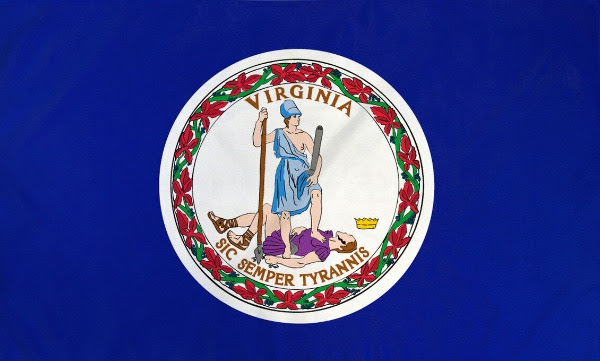
    Banning ‘frontal nudity’: A Texas school district has removed lessons on Virginia history from an online learning platform for elementary school students because the commonwealth’s flag depicts the Roman goddess Virtus with an exposed breast. | Axios

    The Supreme Court will hear oral arguments next month to weigh Trump’s executive order eliminating birthright citizenship, bringing into question a 127-year-old court precedent. | NPR

    A class-action lawsuit accuses tech giant Google of amassing “thousands of data points that span a child’s life” without the consent of students or their parents. | Bloomberg Law

    A Florida teacher is out of a job after she called a student by their preferred name, allegedly violating a 2023 Florida law that requires schools to receive parental permission to refer to students by anything other than their legal names. | Click Orlando

    The vice president of the Buffalo, New York, chapter of Bikers Against Child Abuse was arrested and accused of sex crimes against children. | WIVB


    ICYMI @The74

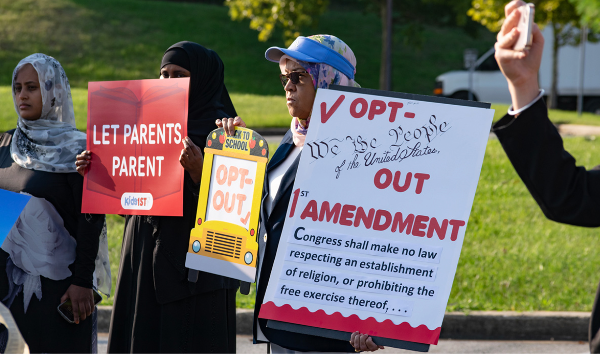
    Supreme Court Shows Support for Parents Who Want Opt-Outs from LGBTQ Storybooks

    ‘There Goes My Son’s Help:’ Wave of Washington Head Starts Shut Down as Chaos Engulfs Federal Program

    State Officials Sue Trump Administration for Halting COVID School Aid

    Protecting Children Online Takes Technology, Human Oversight and Accountability


    Emotional Support

    Don’t even think about touching Matilda’s cactus.


    Get stories like these delivered straight to your inbox. Sign up for The 74 Newsletter

    Source link