Tag: Rochester

  • University of Rochester student expelled after speaking out about harassment will lead orchestra in concert to affirm free expression

    University of Rochester student expelled after speaking out about harassment will lead orchestra in concert to affirm free expression

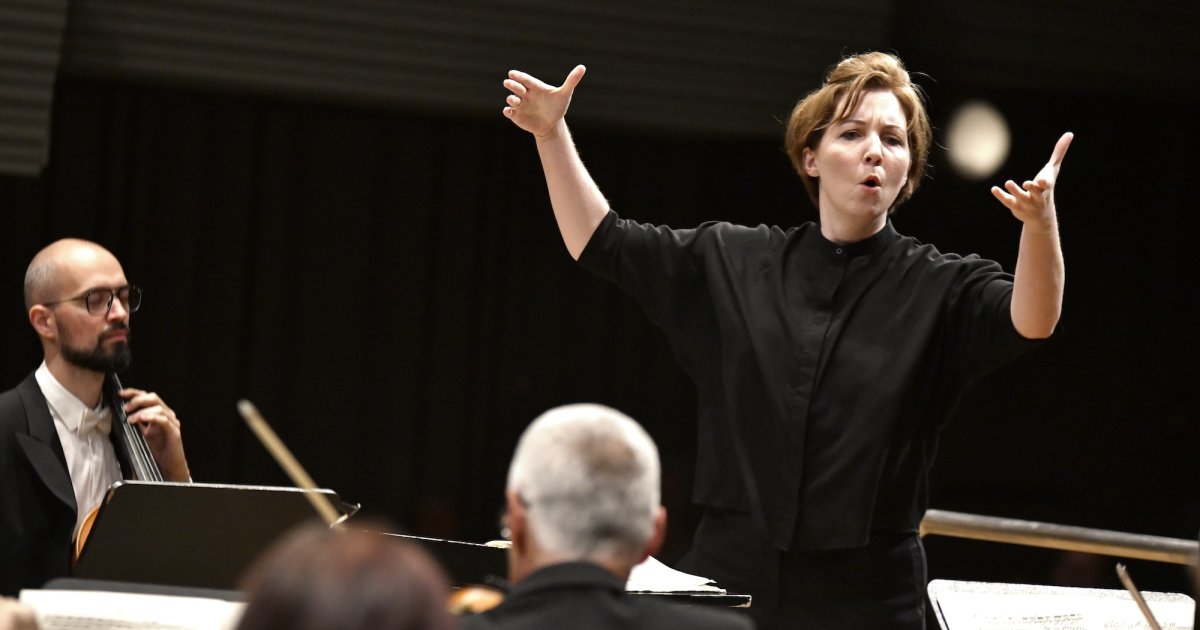
    ROCHESTER, N.Y., Oct. 20, 2025 — A former doctoral conducting student at the Eastman School of Music who was silenced after reporting harassment by a faculty member is standing up for herself in the way she knows best — by conducting a classical music concert in support of free expression. 

    Rebecca Bryant Novak will conduct a volunteer orchestra at the Hochstein School of Music Performance Hall in Rochester, N.Y., on Thursday, Nov. 20, in a concert sponsored by the Foundation for Individual Rights and Expression, our first-ever classical music concert in support of free speech. The evening will feature Beethoven’s Fidelio Overture and selections from Shostakovich’s Symphony No. 5 — two works that faced censorial pressure in their own time and which emphasize the timeless connection between civil liberties and artistic expression. 

    The event will also feature internationally acclaimed violinist Lara St. John, praised by The New York Times as “a high-powered soloist.” 

    For Bryant Novak, who was expelled from the University of Rochester earlier this year after filing a complaint against one of her professors at Eastman, the evening will provide her not only with an opportunity to create wonderful music but to send a message to the school that she will not be intimidated into silence.

    “All I’ve wanted since I came to Eastman was to become a conductor and share my appreciation for great music with others,” Bryant Novak said. “I’m looking forward to doing so this evening — while reminding Eastman that I’m not going away.”

    Shortly into her first semester as a doctoral student in fall 2023, Bryant Novak complained about behavior by a professor who she said made sexist comments.

    After a yearlong investigation, a panel of faculty and administrators agreed that the professor had indeed violated Rochester’s harassment policy and that Eastman’s Title IX coordinator had mishandled her complaint.

    Despite all this, Eastman allowed the same school authorities to retain oversight of Bryant Novak’s academic trajectory — with one official telling her that the school restricted her performance times because of her complaint against the professor. 

    When Bryant Novak complained, Eastman did nothing. As a result of the alleged retaliation, Rochester opened a second investigation into Eastman’s mishandling of the situation in December 2024, and Bryant Novak publicly disclosed the university’s new investigation in a Substack article on Feb. 10.

    Two weeks later, Eastman abruptly expelled Bryant Novak, citing a failure to make academic progress, even though the school never showed that she met that criteria. In doing so, the school ignored its written policy that calls for students to be given ample notice if they are in danger of falling short of academic standards.

    FIRE is calling on Rochester President Sarah C. Mangelsdorf to immediately reinstate Bryant Novak and ensure that she is able to complete her doctorate under the oversight of Eastman faculty and officials who are not already subject to investigation for misconduct in her case. And we’re not alone. Over 800 members of the public have signed on to our Take Action campaign telling Mangelsdorf to heed the call.

    In any case, Bryant Novak won’t be banished from the conductor’s podium. We hope to have you join us for “Outspoken: Music for Free Speech,” an evening championing the right to free expression — hers and yours.

    The concert is free and open to the public. To attend, RSVP here to reserve your spot.

    The Foundation for Individual Rights and Expression (FIRE) is a nonpartisan, nonprofit organization dedicated to defending and sustaining the individual rights of all Americans to free speech and free thought—the most essential qualities of liberty. FIRE educates Americans about the importance of these inalienable rights, promotes a culture of respect for these rights, and provides the means to preserve them.

    CONTACT
    Karl de Vries, Director of Media Relations, FIRE: 215-717-3473; [email protected]
    Source link

  • Strike Failed to Pressure Rochester Into Non-NLRB Election

    Strike Failed to Pressure Rochester Into Non-NLRB Election

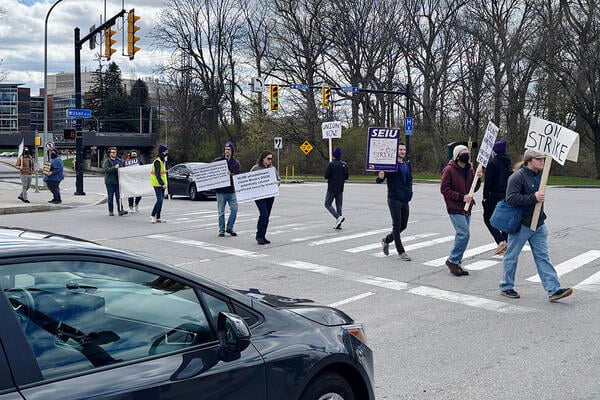
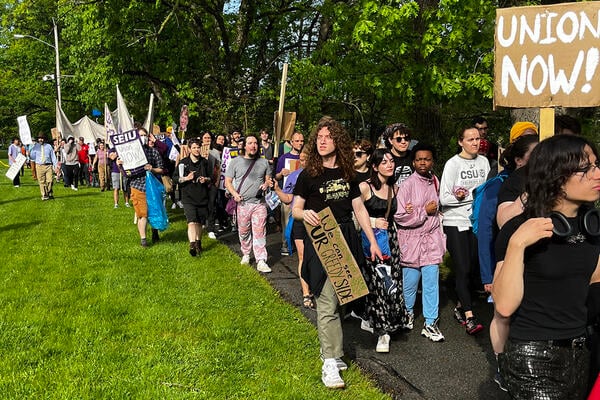
    For a month this spring, the University of Rochester Graduate Labor Union, a group of Ph.D. student workers, staged a strike. Workers walked off the job, demanding that the university host a private unionization election so they could vote and win recognition of the union—all without having to go through the Trump-era National Labor Relations Board.

    But after workers protested during the May 16 commencement ceremony, GLU representatives told them that organizing committee members had voted unanimously to “pause” the strike. And, with fall semester classes starting Monday, the organizers say they have no plans to rekindle it.

    “We didn’t achieve what we wanted, which was them giving us a fair process for an election,” said Katie Gregory, a seventh-year environmental sciences Ph.D. worker. But, she said, “none of us consider the fight here to be over in terms of support for a union.”

    George Elkind, a fourth-year visual and cultural studies Ph.D. worker, said, “We intend to continue fighting for a fair election process.”

    The strike was both a carryover from an intense period of grad student union activity during the Biden administration—roughly 38 percent of grad student workers are unionized, according to a report from last August—and an indication of how President Trump’s return to the White House has raised concerns that the NLRB has become less favorable to unions.

    Last year, during Biden’s presidency, University of Rochester officials and GLU organizers discussed plans for a private election, which both parties were amenable to. If they had reached an agreement, the NLRB—which usually handles unionization votes at private nonprofit institutions such as Rochester—wouldn’t have been involved.

    But after Trump retook the White House in January—and fired a Democratic NLRB member and the agency’s general counsel—the university changed its tune. In February, a university lawyer told student organizers the institution no longer wanted a private election, citing multiple reasons, according to a document that Ph.D. student workers provided to Inside Higher Ed. Instead, the lawyer wrote, they could pursue an election with the Trump-era NLRB.

    Taking that route would be risky—not just for their own prospective union’s chances of winning recognition, but also for the continued rights of grad workers across the country to unionize. Some union supporters worry an NLRB dominated by Trump appointees might use a grad student unionization case such as Rochester’s to overturn the 2016 Columbia University precedent establishing that private nonprofit university grad workers can unionize through the NLRB.

    If that precedent were overturned, student workers could continue to unionize at public universities in the states that allow such action, but those at private institutions would have no other path than to seek voluntary recognition from their universities.

    So far, GLU hasn’t succeeded in pressuring the University of Rochester once again to back a private union vote that would circumvent the NLRB. Gregory and Elkind both said the outcome of the strike might have been different if more Ph.D. workers had withheld their labor.

    The union would have represented more than 1,400 students, Elkind said. About 300 withheld at least a day of work, Gregory said, but having 1,000 strike on day one would’ve sent a very different message.

    Elkind said a “more sweeping strike with bigger numbers … would have had [university leaders] at the table within days.”

    Both said the Trump administration’s attempts to remove international students from the U.S. had a “chilling effect” on strike participation. Elkind, who said about half of grad students at the university are international, called it “a horror show of a national environment.”

    They also pointed to the university’s announcement of “attestation” forms that asked workers to indicate how much they were working—allowing the university to cut off pay for strikers if it wished.

    “Clearly, a tactic to impact the strike participation,” Gregory said. The university didn’t move forward with requiring the forms; in an email, Sara Miller, a university spokesperson, said it “never implemented an attestation form and denies any allegation of ‘scare tactics.’”

    University representatives also “refused to acknowledge the union as an entity,” Gregory said. For instance, they responded to organizing committee members’ communications as if they were merely students, offering them help with issues such as registration.

    “It was a real slap in the face,” she said.

    In their May 18 email calling off the strike, GLU members noted the semester was ending, writing that “many grads only have 9-month stipends and do not have labor to withhold during the summer.”

    But Elkind and Gregory both said organizing is continuing. And the provost, in a Friday memo, announced new, universitywide minimum stipends for “full-time, full tuition remission PhD students”: $25,000 for nine-month stipends and $34,000 for yearlong stipends.

    “I think they’re trying to curb labor organizing and unrest,” Elkind said.

    Miller, the university spokesperson, wrote in an email that “the recent stipend update marks another step in implementing the University’s long-standing plans to enhance our graduate programs and was not related, in any way, to students’ prior organizing and/or protest activity.”

    In recent years, Miller said, Rochester has expanded support for full-time Ph.D. students to include “subsidized health, dental and vision insurance; childcare benefits; raising stipends, and enhanced access to mental wellbeing and counseling services.”

    And again, she said, “the students continue to have and have always had access to the National Labor Relations Board (NLRB).”

    Source link

  • University of Rochester student expelled after detailing school’s mishandling of harassment complaint on Substack

    University of Rochester student expelled after detailing school’s mishandling of harassment complaint on Substack

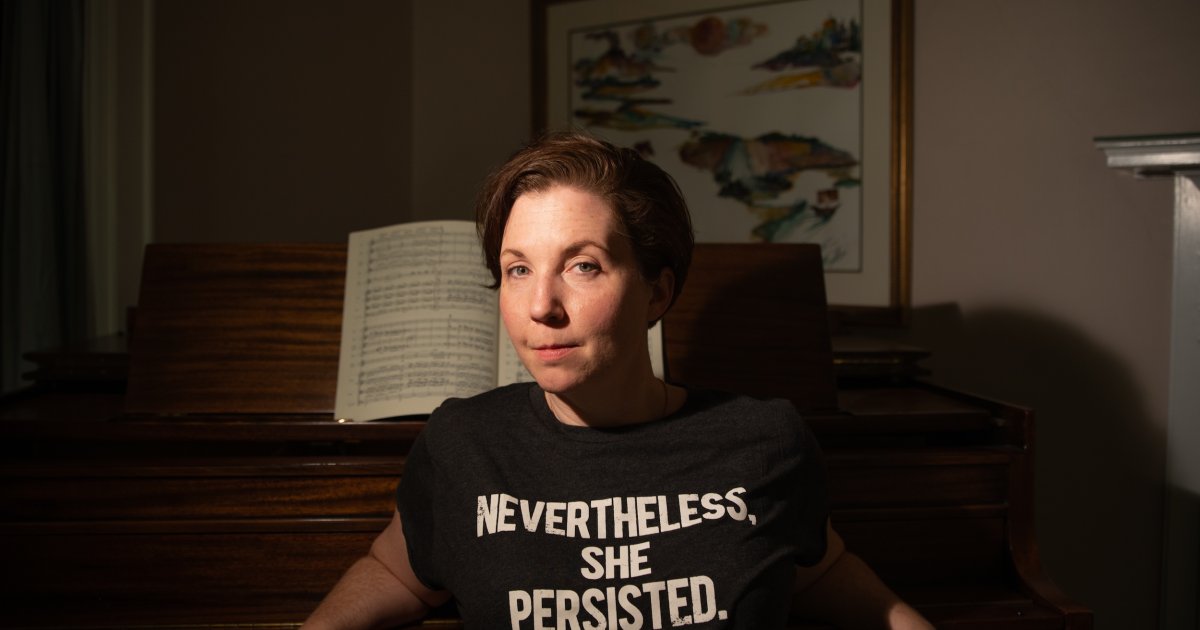
    ROCHESTER, N.Y., June 18, 2025 — The Foundation for Individual Rights and Expression is urging the University of Rochester to reinstate an Eastman School of Music student who was expelled after blowing the whistle on a professor who sexually harassed her.

    The case lays bare a university system that moved quickly to protect itself at the expense of a student’s right to voice criticisms — even though an internal investigation found the professor responsible for violating the harassment policy.

    TAKE ACTION: Tell Rochester to stop muzzling its students

    “There was no due process or hearing,” the student, Rebecca Bryant Novak, said. “The university’s administrators were more concerned about protecting the faculty than adhering to their own rules and addressing bad behavior. They basically tried to destroy my career beyond all comprehension.”

    Shortly into her first semester as a Ph.D. student in fall 2023, Bryant Novak complained about abusive behavior by a professor who she said would scream at students and make lewd, sexist comments.

    After a yearlong investigation, a panel of faculty and administrators agreed that the professor had indeed violated Rochester’s harassment policy and that Eastman’s Title IX coordinator had grossly mishandled her complaint.

    Despite all this, Eastman allowed the same school authorities to retain oversight of Bryant Novak’s academic trajectory — with one official telling her that the school restricted her performance times because of her complaint against the professor. 

    When Bryant Novak complained, Eastman did nothing. As a result of the alleged retaliation, Rochester opened a second investigation into Eastman’s mishandling of the situation in December 2024, and Bryant Novak publicly disclosed the university’s new investigation in a Substack article on Feb. 10.

    Tell Rochester to Stop Muzzling its Students

    Take Action

    Tell the University of Rochester: Reinstate Rebecca Bryant Novak, restore due process, and stop muzzling students into a culture of silence.


    Read More

    Two weeks later, Eastman abruptly expelled Bryant Novak, citing a failure to make academic progress. In doing so, the school ignored its written policy that calls for students to be given ample notice if they are in danger of falling short of academic standards.

    “Rebecca’s expulsion smacks of retaliation for speech that is explicitly protected by the university’s policy,” FIRE Program Counsel Jessie Appleby said. “This is a profound violation of her free speech rights and sends a chilling message to every student at Eastman.”

    FIRE is calling on university President Sarah C. Mangelsdorf to immediately reinstate Bryant Novak and ensure that she is able to complete her doctorate under the oversight of Eastman faculty and officials who are not already subject to investigation for misconduct in her case. 

    “I hope that by taking a stand here, I can help force Rochester to extend the kinds of protections to other students that were denied to me,” Bryant Novak said.


    The Foundation for Individual Rights and Expression (FIRE) is a nonpartisan, nonprofit organization dedicated to defending and sustaining the individual rights of all Americans to free speech and free thought — the most essential qualities of liberty. FIRE educates Americans about the importance of these inalienable rights, promotes a culture of respect for these rights, and provides the means to preserve them.

    CONTACT:

    Karl de Vries, Director of Media Relations, FIRE: 215-717-3473; [email protected]
    Source link

  • U Rochester Ph.D. Students Strike for a Non-NLRB Election

    U Rochester Ph.D. Students Strike for a Non-NLRB Election

    University of Rochester Ph.D. student workers began striking this week to pressure the institution to agree to what they call a “fair union election.” And for the process to be fair, they say, it can’t be handled by the Trump-era National Labor Relations Board.

    “We don’t see any kind of path through the NLRB at present,” said George Elkind, a Ph.D. student on the proposed UR Graduate Labor Union’s organizing committee.

    The strike began Monday and continued Tuesday. Elkind said it’s unclear how many of the more than 1,400 students who would likely be represented by the union are withholding their labor. The walkout is another example of labor agitation continuing into the Trump era.

    Roughly a year ago, university officials and the union organizers began discussing plans for a private election, which both parties were amenable to. If they had reached an agreement, the NLRB—which usually handles unionization votes at private nonprofit institutions such as UR—wouldn’t have been involved.

    However, in February, after Donald Trump retook the presidency and fired a Democratic NLRB member and the agency’s general counsel, a university lawyer told student organizers that UR no longer wanted a private election, according to a document union members provided Inside Higher Ed. Instead, the lawyer wrote that they could pursue an election with the Trump-era NLRB.

    Scott Phillipson, president of SEIU 200United, a multi-university union that’s helping to organize the students, said UR officials “simply do not want these employees to have a union. That is what is going on here.”

    Phillipson said university officials were being disingenuous in suggesting the students use the NLRB.

    “They know it’s not an option,” he said. “But it’s a better public messaging, frankly, than ‘Just go away.’”

    An NLRB spokesperson told Inside Higher Ed Tuesday that the agency’s “regional offices are functioning as normal” and can run elections. But any appeals of election results would go to the actual board for which the agency is named. And since Trump ousted the Democratic board member, Gwynne Wilcox, and has left previous vacancies unfilled, the panel now doesn’t have the minimum required number of members to make decisions.

    If Trump eventually does appoint his own members to the board, allowing it to operate again, some union supporters worry the NLRB might use a grad student unionization case such as Rochester’s to overturn the 2016 Columbia University case precedent establishing that private nonprofit university grad workers can unionize through the NLRB.

    Student workers could continue to unionize at public universities in the states that allow such action, but those at private institutions would be left with no other path than to seek voluntary recognition from their universities.

    Elkind said UR officials know that the NLRB “is defunct—and would be hostile if it weren’t.” He said they want grad workers to go to the NLRB and risk a ruling decertifying grad unions at private universities nationwide. He called this “an extreme anti-labor position.”

    ‘Unprecedented Times’

    In an email, William A. Herbert, executive director of the National Center for the Study of Collective Bargaining in Higher Education and the Professions, said the strike “to compel the university to agree to a non-NLRB election is a sign of these unprecedented times.

    “There is a growing distrust and frustration among unions and their members with NLRB procedures and remedies, both of which are also under constitutional attacks by employers like SpaceX, Amazon, and the University of Southern California,” said Herbert, whose center is at Hunter College. “The firing of NLRB Board member Gwynne Wilcox and the reported removal of sensitive labor data from the NLRB by Department of Government Efficiency [DOGE] staff has further undermined confidence in the agency.”

    The university, which didn’t provide an interview Tuesday, hasn’t said it abandoned the move toward a private election because it thinks grad workers would lose in front of the Trump-era NLRB. UR has cited other reasons, including a December court decision involving Vanderbilt University grad workers’ attempt to unionize.

    NLRB policy required Vanderbilt to reveal names, job classifications and other information about student workers whom the union might represent. But more than 100 students objected to sharing that, and Vanderbilt sued the NLRB and one of its regional directors, arguing that requiring students to turn over the information would violate their privacy under the Family Educational Rights and Privacy Act (FERPA).

    A judge in the U.S. District Court for the Middle District of Tennessee ruled that Vanderbilt was likely right and granted a preliminary injunction blocking the NLRB requirements. A UR lawyer wrote that this made the university concerned about being “seen as facilitating the dissemination of potentially protected student data to a third party” if it went forward with the private election.

    But the lawyer went beyond the Vanderbilt case, saying that not requiring a prospective union to go through the NLRB would be a “significant deviation from the university’s typical practice.” He also noted the recent “sweeping and still unclear changes in the federal government’s support for the university’s missions,” adding that the Trump administration’s upheaval “includes a likely reduction in federal funding.”

    In an emailed statement Tuesday, a university spokesperson said “contingency plans are in place to ensure minimal disruption to our academic mission— including teaching and research activities—during a strike. In the event of prolonged strike activity, University officials are confident that the academic enterprise will continue as normal without interruption.”

    The spokesperson said “we are steadfast in the belief that entering into a private election agreement at this time is not in the best interests of the University community.”

    Source link