Tag: rules

  • Treasurer tells big banks to ease HECS home loan rules

    Treasurer tells big banks to ease HECS home loan rules

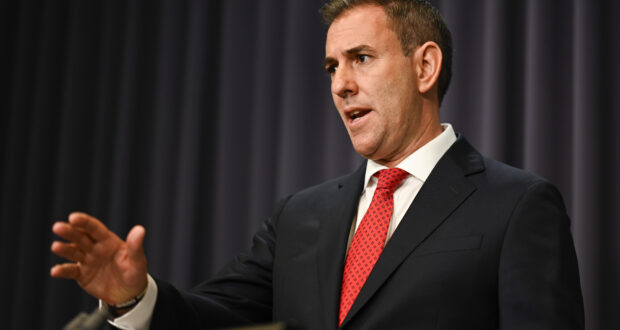
    Treasurer Jim Chalmers said he spoke to the banks on Tuesday night. Picture: Martin Ollman

    Big banks have agreed to review the impact of university debts for degrees on home loan approvals following an intervention by Treasurer Jim Chalmers.

    Please login below to view content or subscribe now.

    Membership Login

    Source link

  • UKVI is tightening the rules on international student attendance

    UKVI is tightening the rules on international student attendance

    Back in April you’ll recall that UKVI shared a draft “remote delivery” policy with higher education providers for consultation.

    That process is complete – and now it’s written to providers to confirm the detail of the new arrangements.

    Little has changed in the proposal from last Spring – there are some clarifications on how it will apply, but the main impact is going to be on providers and students who depend, one way or another, on some of their teaching not being accessed “in person”.

    The backstory here is that technically, all teaching for international students right now is supposed to be in-person. That was relaxed during the pandemic for obvious reasons – and since, the rapid innovations in students being able to access types of teaching (either synchronously or asynchronously) has raised questions about how realistic and desirable that position remains.

    Politics swirls around this too – the worry/allegation is that students arrive and then disappear, and with a mixture of relaxed attendance regulation (UKVI stopped demanding a specific number of contact points a few years ago for universities) and a worry that some students are faking or bypassing some of the attendance systems that are in place, the time has come, it seems, to tighten a little – “formalising the boundaries in which institutions can use online teaching methods to deliver courses to international students”, as UKVI puts it.

    Its recent burst of compliance monitoring (with now public naming and shaming of universities “subject to an action plan”) seems to have been a factor too – with tales reaching us of officials asking often quite difficult questions about both how many students a provider thinks are on campus, and then how many actually are, on a given day or across a week.

    The balance being struck is designed, says UKVI, to “empower the sector to utilise advances in education technology” by delivering elements of courses remotely whilst setting “necessary thresholds” to provide clarity and ensure there is “no compromise” of immigration control.

    Remote or “optional”?

    The policy that will be introduced is broadly as described back in April – first, that two types of “teaching delivery” are to be defined as follows:

    • Remote delivery is defined as “timetabled delivery of learning where there is no need for the student to attend the premises of the student sponsor or partner institution which would otherwise take place live in-person at the sponsor or partner institution site.
    • Face-to-face delivery is defined as “timetabled learning that takes place in-person and on the premises of the student sponsor or a partner institution.

    You’ll see that that difference isn’t (necessarily) between teaching designed as in-person or designed as remote – it’s between hours that a student is required to be on campus for, and hours that they either specifically aren’t expected to come in for, or have the option to not come in for. That’s an important distinction:

    Where the student has an option of online or in-person learning, this should count as a remote element for this purpose.

    Then with those definitions set, we get a ratio.

    As a baseline, providers (with a track record of compliance) will be allowed to deliver up to 20 per cent of the taught elements of any degree level and above course remotely.

    Then if a provider is able to demonstrate how the higher usage is consistent with the requirements of the relevant educational quality standards body (OfS in England, QAA in Wales and Scotland) and remains consistent with the principles of the student route, they’ll be able to have a different ratio – up to 40 per cent of the teaching will be allowed to be in that “remote” category.

    Providers keen to use that higher limit will need to apply to do so via the annual CAS allocation process – and almost by definition will attract additional scrutiny as a result, if only to monitor how the policy is panning out. They’ll also have to list all courses provided to sponsored students that include remote delivery within that higher band – and provide justification for the higher proportion of remote learning based on educational value.

    (For those not immersed in immigration compliance, a CAS (Confirmation of Acceptance for Studies) is an electronic document issued by a UK provider to an international student that serves as proof of admission, and is required when applying for a student visa. The CAS includes a unique reference number, details of the course, tuition fees, and the institution’s sponsorship license information – and will soon have to detail if an international agent is involved too.)

    One question plenty of people have asked is whether this changes things for disabled students – UKVI makes clear that by exception, remote delivery can permitted on courses of any academic level studied at a student sponsor in circumstances where requiring face to face delivery would constitute discrimination on the basis of a student’s protected characteristics under the Equality Act 2010.

    A concern about that was that providers might not know if a student needs that exception in advance – UKVI says that it will trust providers to judge individual student circumstances in cases of extenuating circumstances and justify them during audits. The requirement to state protected characteristics on the CAS will be withdrawn.

    Oh – and sponsors will also be permitted to use remote delivery where continuity of education provision would otherwise be interrupted by unforeseen circumstances – things like industrial action, extreme weather, periods of travel restriction and so on.

    Notably, courses at levels 4 and 5 won’t be able to offer “remote delivery” at all – UKVI reckons they are “more vulnerable to abuse” from “non-genuine students”, so it’s resolved to link the more limited freedoms provided by Band 1 of the existing academic engagement policy to this provision of “remote” elements – degree level and above.

    Yes but what is teaching?

    A head-scratcher when the draft went out for consultation was what “counts” as teaching. Some will still raise questions with the answer – but UKVI says that activities like writing dissertations, conducting research, undertaking fieldwork, carrying out work placements and sitting exams are not “taught elements” – and are not therefore in scope.

    Another way of looking at that is basically – if it’s timetabled, it probably counts.

    Some providers have also been confused about modules – given that students on most courses are able to routinely choose elective modules (which themselves might contain different percentages of teaching in the two categories) after the CAS is assigned.

    UKVI says that sponsors should calculate the remote delivery percentage on the assumption that the student will elect to attend all possible remote elements online. So where elective modules form part of the course delivery, the highest possible remote delivery percentage will have to be stated (!) And where hours in the timetable are optional, providers will have to calculate remote delivery by assuming that students will participate in all optional remote elements online.

    The good news when managing all of that is that the percentage won’t have to be calculated on the basis of module or year – it’s the entire course that counts. And where the course is a joint programme with a partner institution based overseas, only elements of the course taking place in the UK will be taken into account.

    What’s next

    There’s no specific date yet on implementation – IT changes to the sponsor management system are required, and new fields will be added to the CAS and annual CAS allocation request forms first. The “spring” is the target, and there’s also a commitment to reviewing the policy after 12 months.

    In any event, any university intending to utilise (any) remote delivery will need to have updated their internal academic engagement (ie attendance) policy ahead of submitting their next annual CAS allocation request – and UKVI may even require the policy to be submitted before deciding on the next CAS allocation request, and definitely by September 2025.

    During the consultation, a number of providers raised the issue of equity – how would one justify international and home students being treated differently? UKVI says that distinctions are reasonable because international students require permission to attend a course in the UK:

    If attendance is no longer necessary, the validity of holding such permission must be reassessed.

    There’s no doubt that – notwithstanding that providers are also under pressure to produce (in many cases for the first time) home student attendance policies because of concerns about attendance and student loan entitlements – the new policy will cause some equity issues between home and international students.

    In some cases those will be no different to the issues that exist now – some providers in some departments simply harmonise their requirements, some apply different regs by visa status, and some apply different rules for home students to different dept/courses depending on the relative proportion of international students in that basket. That may all have to be revisited.

    The big change – for some providers, but not all – is those definitions. The idea of a student never turning up for anything until they “cram” for their “finals” is built into many an apocryphal student life tale – that definitely won’t be allowed for international students, and it’s hard to see a provider getting away with that in their SFE/SFW/SAAS demanded home student policy either.

    Some providers won’t be keen to admit as such, but the idea of 100 per cent attendance to hours of teaching in that 80 per cent basket is going to cause a capacity problem in some lecture theatres and teaching spaces that will now need to be resolved. Module choice (and design) is also likely to need a careful look.

    And the wider questions of the way in which students use “optional” attendance and/or recorded lectures to manage their health and time – with all the challenges relating to part-time work and commuting/travelling in the mix – may result in a need to accelerate timetable reform to reduce the overall number of now very-much “required” visits to campus.

    One other thing not mentioned in here is the reality that UKVI is setting a percentage of a number of hours that is not specified – some providers could engage in reducing the number of taught hours altogether to make the percentages add up. Neither in the domestic version of this agenda nor in this international version do we have an attempt at defining what “full-time” really means in terms of overall taught hours – perhaps necessarily given programme diversity – but it’ll be a worry for some.

    Add all of this up – mixing in UKVI stepping up compliance monitoring and stories of students sharing QR codes for teaching rooms on WhatsApp to evade attendance monitoring systems – and for some providers and some students, the change will be quite dramatic.

    The consultation on the arrangements has been carried out quite confidentially so far – I’d tentatively suggest here that any revision to arrangements implemented locally should very much aim to switch that trend away from “UKVI said so” towards detailed discussion with (international) student representatives, with a consideration of wider timetabling, housing, travel and other support arrangements in the mix.

    Source link

  • Biden administration finalizes distance ed, TRIO rules

    Biden administration finalizes distance ed, TRIO rules

    The Biden administration’s regulations changing how colleges are held accountable and adding new requirements for institutions to access federal financial aid are now in place, though legal challenges loom. 

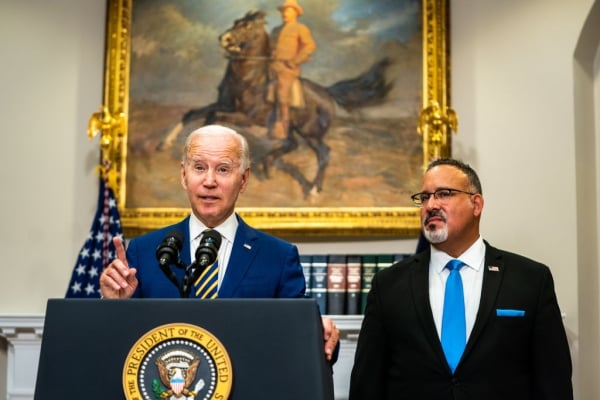
    Demetrius Freeman/The Washington Post/Getty Images

    Colleges will have to submit to the federal government new data on their distance education programs under a batch of new rules the Biden administration finalized Monday.

    The rules, which will take effect July 1, 2026, will likely be the president’s last package of new regulations for colleges and universities before Trump takes office Jan. 20.

    The new regulations carry out Biden’s plan to increase federal oversight of online programs, but the final version doesn’t go as far as the president initially intended After receiving significant pushback from online education lobbyists, the Education Department conceded, backing off a plan to  disallow asynchronous options for clock-hour courses or require colleges to take attendance in online classes.

    The package does, however, still include rules that require colleges to report more data on enrollment in distance education classes, which include those offered online or via correspondence. Higher ed institutions won’t have to begin submitting the data until July 1, 2027.

    “Online learning can reach more students and sometimes at a lower cost to students, but what we know about the outcomes of online education compared to traditional in-person instruction is woefully inadequate,” Under Secretary James Kvaal said in the release. “The new reporting in this final rule will help the department and the public better assess student outcomes at online programs and help students make informed choices.”

    The final rule also included technical changes to federal college prep programs known as TRIO. But the department decided not to move forward with a plan to open eligibility to some TRIO programs to undocumented students—a long-sought goal of some TRIO directors and advocates, as well as higher education associations. 

    Distance Education

    But one of the most controversial parts of the rule for colleges and universities was whether Biden would decide to end any asynchronous options for students in online clock-hour programs, which are typically short-term workforce training programs that lead to a certificate.

    A Trump-era rule allowed asynchronous learning activities—such as watching a prerecorded video—to count toward the required number of credits in short-term clock-hour programs. But the department said in its proposal that because of the hand-on nature of many clock-hour programs, the change often results in a “substandard education” that “puts students and taxpayers at risk.” 

    Hundreds of professors and higher education groups disagreed. Some, particularly those representing for-profit programs, argued in public comments that the proposal exceeded the department’s authority and would burden institutions. Others said the new rules reflected an antiquated mindset about college modality, arguing that disallowing asynchronous options could limit access for students who benefit from the flexibility that online education provides.

    While the department decided not to end asynchronous distance ed programs, the agency intends to keep a close eye on the courses. 

    “The department refined these final rules based upon extensive public comment on a notice of proposed rulemaking published over the summer,” department officials said in a news release. “However, we remind institutions that asynchronous clock hours cannot be used for homework and that there must be robust verification of regular and substantive interaction with an instructor.”  

    No Expanded TRIO

    Although the decision not to expand eligibility for TRIO has fewer implications for colleges, the move is a blow for the TRIO directors and immigration equity advocates who have been working for years to open up the program.

    Miriam Feldblum, executive director of the Presidents’ Alliance on Higher Education and Immigration, told Inside Higher Ed that nearly 100,000 undocumented students graduate from high school each year, many of whom could benefit from TRIO services. 

    But Republicans opposed the idea. Six GOP members of Congress, including Virginia Foxx, a North Carolinian and former chair of the House education committee, blasted the concept in a letter to Secretary Miguel Cardona in August.

    “The proposed expansion is a blatant attempt to provide additional taxpayer-funded services to those not seeking citizenship in the name of reducing ‘burden.’ The department’s proposed expansion will stretch funding thin and risk those currently eligible for TRIO,” they wrote.

    Some college administrators and TRIO directors in red states are worried about the potential political backlash Biden’s new regulation could cause for their programs.

    “The fighter in me thinks that this is a tough time to go to battle and have an unforced error or a target on our backs and [on] TRIO, given the contentious nature of immigration policy right now,” Geoffrey Garner, a TRIO program director from Oregon, said in at January 2024 advisory committee meeting. “We just think right now is not the best time for this proposal, as much as it breaks my heart to say that out loud.”

    That advisory committee ended up backing the changes to expand some TRIO programs to undocumented students.

    Education Department officials said its decision wasn’t due to political tensions. Rather, they said the proposal “was too narrow … in scope of additional populations to be served.”

    Under the department’s proposed rule, high school students who aren’t citizens or permanent residents could qualify for Upward Bound, Talent Search and Educational Opportunity Centers but not Student Support Services or the McNair Scholars Program.

    “An expansion of student eligibility under only certain TRIO programs would create confusion, as many grantees administer grants under more than one TRIO program,” officials wrote in the final rule. “Eligibility for only certain TRIO programs would increase administrative burden by requiring grantees to deny similarly situated noncitizens from participating under certain TRIO programs, but not others.”

    Source link

  • Overtime and Title IX Final Rules Targeted for Early 2024 Release in Fall Regulatory Agenda – CUPA-HR

    Overtime and Title IX Final Rules Targeted for Early 2024 Release in Fall Regulatory Agenda – CUPA-HR

    by CUPA-HR | December 12, 2023

    On December 6, the Biden administration released the Fall 2023 Unified Agenda of Regulatory and Deregulatory Actions, providing the public with an update on the regulatory and deregulatory activities under development across approximately 67 federal departments, agencies and commissions. This release is the second and final regulatory agenda for 2023, and it sets target dates for upcoming regulatory actions mainly for the first half of 2024.

    CUPA-HR has highlighted the following items from the Fall 2023 Regulatory Agenda for members to be aware of as we enter the new year. As a reminder, these target dates are not a guarantee, but they provide insight into when we can possibly expect the regulations to be published. CUPA-HR’s government relations team will continue to monitor for any updates on the following regulations and others that may impact the higher education space.

    Department of Labor

    Wage and Hour Division — Defining and Delimiting the Exemptions for Executive, Administrative, Professional, Outside Sales, and Computer Employees

    According to the Fall 2023 Regulatory Agenda, the Department of Labor (DOL)’s Wage and Hour Division (WHD) has targeted April 2024 for release of the final rule to update the Fair Labor Standards Act’s overtime pay regulations. The final rule seeks to increase the minimum salary threshold required for white-collar professionals to maintain exempt status under the FLSA.

    On September 8, WHD released a Notice of Proposed Rulemaking (NPRM) to update the salary threshold. The NPRM increases the minimum salary threshold from its current level of $35,568 per year ($684 per week) to $60,209 annually ($1,158 per week), which amounts to a nearly 70% increase.* Additionally, WHD proposes to automatically increase the salary level every three years by tying the threshold to the 35th percentile of full-time salaried wages in the lowest wage census region. DOL indicated in the proposed rule that it is considering implementing an effective date in the final rule that could come as soon as 60 days after the final rule is published to the public.

    CUPA-HR was joined by 49 other higher education associations in submitting comments in response to the NPRM. In our comments, we raised concerns with the timing of this increase, the size of the proposed increase, the implementation of automatic updates, and the timeline for regulatory compliance that WHD anticipates. Our comments were informed by a CUPA-HR member survey, in which over 300 members provided feedback on their concerns with and thoughts about the proposal. For ongoing updates, visit CUPA-HR’s FLSA Overtime page.

    Wage and Hour Division — Employee or Independent Contractor Classification under the Fair Labor Standards Act

    The Fall 2023 Regulatory Agenda indicates that WHD anticipated releasing the FLSA independent contractor rule in November 2023. The final rule has been at the White House Office of Information and Regulatory Affairs (OIRA) for review since September 28, 2023, and once the agency finishes its review, the rule will be published.

    On October 13, 2022, the DOL published an NPRM to rescind the current method for determining independent contractor status under the FLSA. The current test, finalized by the Trump administration in 2021, has two core factors of control and investment with three additional factors (integration, skill and permanency) that are relevant only if those core factors are in disagreement. The Biden rule proposes a return to a “totality-of-the-circumstances analysis” of multiple factors in an economic reality test, including the following six factors, which are equally weighted with no core provisions:

    • The extent to which the work is integral to the employer’s business.
    • The worker’s opportunity for profit or loss depending on managerial skill.
    • The investments made by the worker and the employer.
    • The worker’s use of skill and initiative.
    • The permanency of the work relationship.
    • The degree of control exercised or retained by the employer.

    Employment and Training Administration — Revising Schedule A to Include Updating Occupations in Science, Technology, Engineering, and Mathematics (STEM)

    The regulatory agenda indicates that DOL’s Employment and Training Administration (ETA) aimed to issue a Request for Information (RFI) in November 2023. According to the notice in the agenda, ETA is seeking input from the public “on whether Schedule A serves as an effective tool for addressing current labor shortages, and how the Department may create a timely, coherent and transparent methodology for identifying STEM occupations that are experiencing labor shortages in keeping with its requirements under the Immigration and Nationality Act … to ensure the employment of foreign nationals does not displace U.S. workers or adversely affect their wages and working conditions.”

    The RFI was sent to OIRA for review before publication on November 11, 2023, and will likely be released to the public soon.

    Equal Employment Opportunity Commission

    Regulations to Implement the Pregnant Workers Fairness Act

    In December 2023, the Equal Employment Opportunity Commission (EEOC) plans to issue a final rule to implement the Pregnant Workers Fairness Act (PWFA). The rule will create a framework for the EEOC on how to enforce protections granted to pregnant workers under the PWFA. For a detailed analysis of the proposed rule on implementing the PWFA, please see CUPA-HR’s blog post.

    In December 2022, the PWFA was signed into law through the Consolidated Appropriations Act of 2023. The law establishes employer obligations to provide reasonable accommodations to pregnant employees so long as such accommodations do not cause an undue hardship on the business, and makes it unlawful to take adverse action against a qualified employee requesting or using such reasonable accommodations. The requirements of the law apply only to businesses with 15 or more employees.

    Unlike the other regulations with target dates, the PWFA final rule has a statutory deadline for publication, which is December 29, 2023. Given this upcoming deadline, we will likely see the EEOC publish this rule soon.

    Department of Education

    Office for Civil Rights — Nondiscrimination on the Basis of Sex in Education Programs or Activities Receiving Federal Financial Assistance

    According to the regulatory agenda, the Department of Education (ED) anticipates releasing the highly anticipated Title IX final rule in March 2024. The rulemaking would finalize the June 2022 NPRM to roll back and replace the Trump administration’s 2020 regulations while simultaneously expanding protections against sex-based discrimination to cover sexual orientation, gender identity, and pregnancy or related conditions.

    CUPA-HR filed comments in September 2022 in response to the NPRM. In our comments, we brought attention to the possible impact the proposed regulations could have on how higher education institutions address employment discrimination.

    The new March target deadline marks the third time ED has delayed the issuance of the Title IX final rule. The rule was originally targeted for release in May 2023, but ED subsequently pushed the target date back to October 2023 via a blog post, when it became clear that the department would not meet the May timeline. Since ED missed the October timeline, they have faced increased pressure from Congressional Democrats and other advocacy groups to publish the final rule as soon as possible. While it’s not a guarantee ED will be able to publish the final rule in March 2024, the increased pressure will certainly motivate the department to move quickly.

    CUPA-HR plans to hold a webinar to inform members of the final rule’s new requirements once the final rule has been published. Details to come.

    Office for Civil Rights — Nondiscrimination on the Basis of Sex in Education Programs or Activities Receiving Federal Financial Assistance: Sex-Related Eligibility Criteria for Male and Female Athletic Teams

    Similar to the Title IX final rule above, ED plans to issue a final rule on student eligibility in athletic programs under Title IX in March 2024. The rule would finalize the NPRM that was released by the department in April 2023.

    Under the NPRM, schools that receive federal funding would not be permitted to adopt or apply a “one-size-fits-all” ban on transgender students participating on teams consistent with their gender identity. Instead, the proposal allows schools the flexibility to develop team eligibility criteria that serve important educational objectives, such as fairness in competition and preventing sports-related injuries. The department further explains that the eligibility criteria must take into account the sport, level of competition, and grade or education level of students participating, and the criteria would have to minimize harm to students whose opportunity to participate on a team consistent with their gender identity would be limited or denied.

    The NPRM received over 150,000 comments addressing support for and concerns with the proposal. ED must review all comments before issuing a final rule to implement these regulations, which is the likely cause of delay for both this rulemaking and the broader Title IX final rule.

    Department of Homeland Security

    U.S. Citizenship and Immigration Services — Modernizing H-1B Requirements and Oversight and Providing Flexibility in the F-1 Program

    On October 23, the Department of Homeland Security’s U.S. Citizenship and Immigration Services (USCIS) issued a proposed rule that aims to improve the H-1B program by simplifying the application process, increasing the program’s efficiency, offering more advantages and flexibilities to both petitioners and beneficiaries, and strengthening the program’s integrity measures.

    Prompted by challenges with the H-1B visa lottery, USCIS has prioritized a proposed rule to address the system’s integrity. The proposed rule is aimed at strengthening the lottery registration process and preventing fraud, and it makes critical revisions to underlying H-1B regulations. For a detailed summary of what the H-1B proposal includes, see CUPA-HR’s blog post.

    The NPRM is open for public comment until December 22, 2023. The Fall 2023 Regulatory Agenda included the regulations, but it did not provide a timeline for issuing the final rule, likely because the comment period is still open for the NPRM.

    U.S. Citizenship and Immigration Services — Fee Schedule and Changes to Certain Other Immigration Benefit Request Requirements

    In April 2024, USCIS anticipates issuing a final rule to adjust the fees charged by the agency for immigration and naturalization benefit requests.

    USCIS published an NPRM on this issue in January 2023. The comprehensive proposal has implications for both employment-based and family-based filings, but certain provisions would have significant impacts for higher education employers. Specifically, the proposed rule includes a provision to fund the Asylum Program with employer petition fees, which would be a $600 fee paid by any employers who file either a Form I-129, Petition for a Nonimmigrant Worker, or Form I-140, Immigrant Petition for Alien Worker. Additionally, the proposed rule seeks to increase almost all employment-based and employment-based “adjacent” filing fees. For more information on the details of this proposed rule, see CUPA-HR’s blog post.

    On March 13, 2023, CUPA-HR joined the American Council on Education’s comments in response to the NPRM. The comments address higher ed-specific concerns with the proposal to increase fees for immigration and naturalization benefit requests, including concerns about the impact the increased fees will have on international scholars and institutions’ ability to hire nonimmigrant workers, including H-1B workers.

    U.S. Citizenship and Immigration Services — Petition for Immigrant Worker Reforms

    The regulatory agenda shows that USCIS plans to issue an NPRM in August 2024 that will “amend its regulations governing employment-based immigrant petitions in the first, second and third preference classifications.” According to the posting, the proposed rule would “codify current policy guidance and implement administrative decisions regarding successorship-in-interest and ability to pay; update provisions governing extraordinary ability and outstanding professors and researchers; modernize outdated provisions for individuals of extraordinary ability and outstanding professors and researchers; … implement reforms to ensure the integrity of the I-140 program; and correct errors and omissions.”

    U.S. Citizenship and Immigration Services — Modernizing Regulations Governing Nonimmigrant Workers

    In October 2024, USCIS plans to issue an NPRM to update employment authorization rules for dependent spouses of certain nonimmigrants and to increase flexibilities for nonimmigrant workers. CUPA-HR plans to monitor for any updates to this rule as it may apply to H-1B or other relevant nonimmigrant visas used by institutions.

    Department of State

    Pilot Program to Resume Renewal of H-1B Nonimmigrant Visas in the United States for Certain Qualified Noncitizens

    In February 2024, the Department of State plans to begin a pilot program to “resume domestic visa renewal for qualified H-1B nonimmigrant visa applicants who meet certain requirements.” The department will issue a notice in the Federal Register that will describe pilot program participation requirements and will provide “information on how those falling within the bounds of the pilot program may apply for domestic visa renewal.” The pilot program has been at OIRA since October 17, meaning the pilot notice could be published sooner than anticipated.


    * The discrepancy between our figure of $60,209 and the DOL’s preamble figure of $55,068 arises from DOL’s own projections based on anticipated wage growth. The DOL’s proposed rule is rooted in 2022 data (yielding the $55,068 figure), but a footnote in the NPRM confirms that the salary threshold will definitely change by the time the final rule is issued to reflect the most recent data. Our comments, aiming to respond to the most probable salary threshold at the time a final rule is released, references the DOL’s projected figure for Q1 2024, which is $60,209. We do not believe DOL will be able to issue a final rule before Q1 2024, so we are incorporating this projected figure into our response to the NPRM. In essence, our goal is to provide members with a clearer picture of the likely salary figure when the final rule comes into play.


    Source link

  • Supreme Court Rules Against Affirmative Action – CUPA-HR

    Supreme Court Rules Against Affirmative Action – CUPA-HR

    by CUPA-HR | June 29, 2023

    This morning, the Supreme Court issued rulings for the cases Students for Fair Admissions v. Harvard and Students for Fair Admissions v. University of North Carolina (UNC), both of which concerned the use of race-based affirmative action in admissions decisions at colleges and universities. The court ruled in favor of Students for Fair Admissions, ultimately striking down the practice of race-conscious admissions decisions on campus.

    The Decision

    In a 6-3 decision written by Chief Justice John Roberts, the court held that Harvard’s and UNC’s admissions programs violate the equal protection clause of the Fourteenth Amendment. To summarize his arguments, Roberts noted that using a racial classification is only constitutionally permissible if doing furthers a “compelling governmental interest” and is “‘narrowly tai­lored’— meaning ‘necessary’— to achieve that interest.” He added that while “remediating specific, identified instances of past discrimination” can constitute a compelling interest that justifies race-based state action, “ameliorating societal discrimination does not.” Roberts continued by stating that “[u]niversity pro­grams must comply with strict scrutiny …  may never use race as a stereotype or negative, and — at some point — they must end.” He finished by stating the “respondents’ admissions systems — however well intentioned and implemented in good faith — fail each of these criteria [and] therefore [are invalid] under the Equal Protection Clause of the Fourteenth Amend­ment.”

    As an initial matter, Roberts noted that for universities to operate a “race-based admissions programs in a manner that” satisfies constitutional muster, it must be “‘sufficiently measurable to permit judicial [review].’” He found both universities failed to do so, stating:

    “Harvard identifies the following educational benefits that it is pursuing: (1) ‘training future leaders in the public and private sectors’; (2) preparing graduates to ‘adapt to an increasingly pluralistic society’; (3) ‘better educating its students through diversity’; and (4) ‘producing new knowledge stemming from diverse outlooks.’ (…) UNC points to similar benefits, namely, ‘(1) promoting the robust exchange of ideas; (2) broadening and refining understanding; (3) fostering innovation and problem-solving; (4) preparing engaged and productive citizens and leaders; [and] (5) enhancing appreciation, respect, and empathy, cross-racial understanding, and breaking down stereotypes.’ (…) Although these are commendable goals … it is unclear how courts are supposed to measure any of [them].”

    Secondarily, Roberts found the “respondents’ admissions programs fail to articulate a meaningful connection between the means they employ and the goals they pursue,” as well as “how assigning students to (…) racial categories and making admissions decisions based on them furthers the educational benefits that the universities claim to pursue.” Roberts states that “[r]acial classifications are simply too pernicious to permit any but the most exact connection between justification and classification.” On this point, Roberts concluded that the “categories [used by the universities] are themselves imprecise in many ways” and that institutions “would apparently prefer a class with 15% of students from Mexico over a class with 10% of students from several Latin American countries, simply because the former contains more Hispanic students than the latter.”

    Additionally, Roberts states that “race may never be used as a ‘negative’ and that it may not operate as a stereotype,” and he argues the universities’ admissions policies failed because they did both. With respect to the first item, Roberts said “the District Court observed that Harvard’s ‘policy of considering applicants’ race (…) overall results in fewer Asian American and white students being admitted.’” With respect to the stereotypes, he found the policies at issue allocated preference to those “who may have little in common with one another but the color of their skin [and that t]he entire point of the Equal Protection Clause is that treating someone differently because of their skin color is not like treating them differently because they are from a city or from a suburb, or because they play the violin poorly or well.”

    Finally, Roberts found that “admissions programs also lack a ‘logical end point,’ which the majority found was needed under the court’s jurisprudence.

    The chief justice closed his opinion by stating that colleges and universities are not prohibited from considering an applicant’s “discussion of how race affected his or her life, be it through discrimination, inspiration, or otherwise,” but institutions are banned from establishing admissions programs and practices that explicitly consider race. The opinion elaborates, “A benefit to a student who overcame racial discrimination, for example, must be tied to that student’s courage and determination. Or a benefit to a student whose heritage or culture motivated him or her to assume a leadership role or attain a particular goal must be tied to that student’s unique ability to contribute to the university. In other words, the student must be treated based on his or her experiences as an individual — not on the basis of race.”

    Justices Sonia Sotomayor, Elena Kagan and Ketanji Brown Jackson issued a dissenting opinion in both cases (To note: Jackson did not take part in considering the decision in the Harvard case due to her previous connection with Harvard College). Sotomayor wrote in the dissenting opinion that the court’s decision “rolls back decades of precedent and momentous progress” and that it “holds that race can no longer be used in a limited way in college admissions to achieve such critical benefits,” which “cements a superficial rule of colorblindness as a constitutional principle in an endemically segregated society where race has always mattered and continues to matter.”

    In August 2022, CUPA-HR joined the American Council on Education and others in filing an amicus brief in support of Harvard and UNC. The brief argued that the Supreme Court should rule in favor of preserving race-conscious affirmative action, as has been made precedent for decades. The brief highlights the value of considering race and ethnicity during the admissions process and the broader impact such initiatives have for institutions’ efforts to increase diversity on campus.

    The Decision

    Prior to the rule’s issuance, stakeholders also raised concerns with the impact the decision could have on employers’ hiring and employment decisions as well as any diversity, equity and inclusion (DEI) programs or initiatives. Today’s decision to strike down race-based affirmative action in admissions practices could leave employers open to future legal challenges against their hiring decisions and other diversity programs.

    CUPA-HR strongly supports the need to create and sustain diverse, inclusive college and university communities. We’re disappointed that the Supreme Court’s action has limited our efforts. CUPA-HR’s government relations team is further analyzing the decision and will keep members apprised of any additional updates as it relates to these cases.


    Source link