Safety response protocols are foundational to creating a culture of safety in schools. District leaders should adopt and implement response protocols that cover all types of emergencies. Schools should have building-level response protocols and protocols for incidents when first responders are needed. These practices are critical to keeping the community safe during emergencies.
When staff members are empowered to participate in emergency planning and response, their sense of safety is improved. Unfortunately, many staff members do not feel safe at school.
Thirty percent of K-12 staff think about their physical safety when at work every day, and 74 percent of K-12 staff said they do not feel supported by their employer to handle emergency situations at work.
Staff disempowerment is a “central problem” when it comes to district emergency planning, said Dr. Gabriella Durán Blakey, superintendent of Albuquerque Public Schools: “What does safety mean for educators to really be able to feel safe in their classroom, to impact student achievement, the well-being of students? And how does that anxiety play with how the students feel in the classroom?”
School leaders should implement response protocols that empower staff to understand and participate in emergency response using a two-tiered system of emergency response:
A building-level emergency planning and response team should develop an Emergency Operations Plan, which includes an emergency response protocol
Administrators should adopt protocols to follow when they need first responders to intervene
For guidance on crafting emergency response protocols and plans, click here.
Laura Ascione is the Editorial Director at eSchool Media. She is a graduate of the University of Maryland’s prestigious Philip Merrill College of Journalism.
Southern Illinois University in Carbondale is investing in a new dedicated team of first responders to provide care for students experiencing mental health challenges.
A $290,000 grant from the Illinois Board of Higher Education will fund training and support for a crisis response team to engage students during emergency calls. Student Health Services at SIU developed a response model based on best practices that ensures students, particularly those from vulnerable populations, receive immediate support and direct connection to appropriate treatment.
The grant is designed to expand and enhance the existing services mandated by the state’s 2020 Mental Health Early Action on Campus Act, which requires two- and four-year colleges to implement various preventative measures and clinical care services for student mental health, including increasing awareness of support services, creating partnerships for mental health services and implementing peer-support networks.
SIU leaders hope the new model, CAPS Plus, will both improve safety for students in critical moments and promote retention and success for students by connecting them with relevant support resources for ongoing care.
What’s the need: Rates of anxiety and depression, as self-reported by students, have grown over the past five years, with about one-third reporting moderate or severe anxiety or depression symptoms, according to the 2024 Healthy Minds study.
While a large number of college students experience poor mental health or have struggled with mental health challenges, connecting students with relevant resources when they need them remains an obstacle to timely care.
About one-third of college students say they don’t know where to seek help on campus if they or a friend are experiencing a mental health crisis, according to a spring 2023 Student Voice survey by Inside Higher Ed and College Pulse. Roughly one in five students said they have not received services for mental or emotional health because they prefer to deal with issues on their own or with support from friends and family, according to the 2023 Healthy Minds survey.
SIU’s Department of Public Safety responded to almost 50 mental health-related incidents in the past year. Student focus groups revealed that participants were aware of the ways encounters with law enforcement have escalated, sometimes resulting in death for the person in crisis. Similarly, past research shows that police involvement can exacerbate mental health challenges, and individuals from marginalized communities are less likely to trust the police.
“We recognize that those in crisis may benefit from intervention services not specifically provided by a law enforcement agency,” said Benjamin Newman, SIU’s director of public safety and chief of police, in an April press release.
A 2022 Student Voice survey by Inside Higher Ed found that about one-third of all respondents had “a great deal” of trust in campus safety officers, but only 19 percent of students who had negative interactions with police growing up said the same. Almost half (46 percent) of respondents said they felt safer with police on campus, but Black and Hispanic students were less likely to say they felt this way.
Over 38 percent of survey respondents also said they want colleges and universities to expand mental health supports to improve safety and security on campus, the most popular response.
Put in practice: The university’s Department of Public Safety and the Counseling and Psychological Services office created a collaborative response team to engage students who may need mental health support. Now, if an officer encounters a community member in crisis, a mental health professional is contacted to assist, Newman said.
The collaborative mental health response teams first started in February. The group includes the Department of Public Safety, Counseling and Psychological Services, clinicians, campus administrators, faculty members and external partners, including local emergency room staff.
Team members completed critical incident response and crisis intervention training, in which they learned to identify symptoms of mental illnesses, developmental disabilities, trauma, dementia and delirium as well as de-escalation techniques, intervention steps and transition to treatment services.
Additionally, dispatchers receive training on how to screen and de-escalate calls that could involve mental health concerns so they can effectively alert the crisis team.
In addition to using the grant funding, the university also implemented a mental health and wellness fee for the upcoming academic year to support continued access to services.
If your student success program has a unique feature or twist, we’d like to know about it. Click here to submit.
Abraham Maslow’s Hierarchy of Needs is a fundamental psychological theory that explains human motivation. At its base are physiological and safety needs, followed by love and belonging, esteem, and self-actualization at the peak. While this theory is universally recognized for understanding personal growth in human development, it can also be applied to an individual’s educational journey.
Had Maslow been an educator, he might have reconsidered the foundation of our education system to one that would align student aptitudes and interests to sustain the rapidly changing workforce. Consider the phrase, “If you give a man a fish, he will be hungry tomorrow. If you teach a man to fish, he will be richer forever.” It could be applied here, too. If we pair students’ strengths and aptitudes with in-demand careers through personalized learning, we are ensuring the success of our students and tomorrow’s workforce, thus realigning motivation and fulfilling the individuals Hierarchy of Needs.
States have begun investing in career-connected learning (CCL) to connect learning to career pathways as a means to boost employability and inevitably support businesses and the local economy.
Students are rarely guided toward career paths that match their aptitudes (or natural talents). But if our districts began doing so, we would likely see higher levels of employment and job satisfaction, and lower economic instability and gaps in the job market. This could ultimately impact our communities and the national economy at large.
While work is being done, there is still plenty to do as the career exposure gap grows, particularly in IT, manufacturing, finance, and more. It’s time for educational stakeholders–policy, K-12 decision makers, guidance counselors and parents alike–to rethink how we prepare young people for their futures.
The foundation: Addressing basic needs first
It has become ever so clear that every student, starting as early as junior high, should have the opportunity to take an aptitude assessment. Researchers have identified that students’ natural aptitudes solidify by age 14, forming the foundation for understanding what they’re inherently good at. If Maslow were designing today’s educational experience, this would be the starting point–helping students discover their strengths and setting the stage for growth.
Students’ ability to learn, and therefore their level of education, has always shown to have direct correlations to their physical well-being and sense of security. Often, students feel discouraged and unengaged in their coursework because it doesn’t connect to their innate strengths, making it harder to feel confident in their abilities and motivated to tap into potential future pathways for employment.
When these foundational supports are provided, students are likely to feel ready to explore career opportunities and develop the workplace-ready skills needed in today’s economy.
Building confidence: Belonging and self-esteem in education
Students thrive when they feel a sense of belonging–both in the classroom and in the broader community. They also need to build self-esteem by experiencing achievement, recognition, and purpose. Connecting education with natural aptitudes and real-world career experiences can foster this sense of belonging and achievement.
Encouraging students to participate in internships, apprenticeships, or mentorship programs can bridge the connection between their talents and real-world job opportunities. This fosters a sense of community and a personal identity tied to their future careers and success. CCL helps students understand that they have valuable contributions to make, both in school and beyond, which often leads to students taking ownership of their educational journeys.
Path to self-actualization: Unlocking career potential
At the pinnacle of Maslow’s hierarchy is self-actualization. Students are no longer just attending school to pass tests–they are actively seeking knowledge and skills to help them achieve their dreams. Students are often more motivated when they see the relevance of their learning, especially when they understand how it connects to their future aspirations.
Tech solutions have helped districts provide personalized career assessments and work-based learning experiences for students, which empowers them to explore their career interests in-depth. When we offer students opportunities for hands-on exploration and real-world application, they find greater fulfillment in their educational experiences and a stronger desire to achieve higher learning goals.
The crisis: How the current system is failing to meet Maslow’s vision
Most high school graduates (75 percent) do not feel prepared to make college or career decisions after graduation.
Simultaneously, 40 percent of employers stated that educational institutions do not sufficiently prepare students for their future careers, and 90 percent emphasized the need for stronger partnerships between K-12 schools and postsecondary institutions.
Despite the clear benefits of linking education to career pathways, more often schools solely focus on academic success, neglecting the broader skills students need to thrive in the workforce. And CCL is frequently seen as a nice-to-have, rather than an essential piece of education. The growing career exposure gap is evidence of this disconnect.
Closing this disconnect begins with helping people understand where to invest in their skills.
A new model: Career-connected learning as the solution
By ensuring basic needs are met, fostering belonging and esteem, and unlocking students’ potential, we equip students with the real-world skills they need to succeed. CCL benefits every student and should be seen as an essential part of education, not just a nice-to-have.
Personalized learning platforms, aptitude assessments, career identification, and skill-based learning tools provide the foundation for this transformation. But it’s the convergence among educators, employers, policymakers, and technology providers that will ultimately ensure that every student has the opportunity to realize their full potential.
My final thoughts: Maslow would remind us that education isn’t just about filling students’ heads with knowledge–it’s about inspiring them to dream, grow, and discover their limitless opportunities. This vision offers not just hope for individual students, but economic benefits for society as a whole.
Edson Barton, YouScience
Edson Barton is CEO and co-founder at YouScience, an education technology company transforming college and career readiness through its award-winning platform Brightpath.
Latest posts by eSchool Media Contributors (see all)
The Education Reporting Collaborative, a coalition of eight newsrooms, is investigating the unintended consequences of AI-powered surveillance at schools. Members of the Collaborative are AL.com, The Associated Press, The Christian Science Monitor, The Dallas Morning News, The Hechinger Report, Idaho Education News, The Post and Courier in South Carolina, and The Seattle Times.
RIGBY, Idaho — Four years ago, a sixth grader in Rigby, Idaho, shot and injured two peers and a custodian at a middle school. The tragedy prompted school officials to reimagine what threat prevention looks like in the approximately 6,500-student district.
Now, student-run Hope Squads in Rigby schools uplift peers with homemade cards and assemblies. Volunteer fathers patrol hallways as part of Dads on Duty. A team of district staff, counselors, social workers and probation officers gathers to discuss and support struggling students. Thanks to a new cellphone ban, students are off screens and talking to each other. The positive results of these combined efforts have been measurable.
“We’ve helped change … lives,”said Brianna Vasquez, a senior at Rigby Highand member of her school’s Hope Squad. “I’ve had friends who have been pulled out of the hole of depression and suicidal thoughts because of [the Hope Squad].”
School shootings like Rigby’s have driven America’s educatorstotry to prevent similar harm. Many districts in the U.S. have turned to technology — especially digital surveillance — as the antidote. Not everyone is sold on that approach, as there can be issues, including with privacy and security.Without broad agreement on which strategies do work best, some districts are trying a braided approach — using a combination of technology, on-the-ground threat assessment teams, and other mental health supports.
“If you’re sitting in the shoes of a district leader, taking a multi-pronged approach is probably very sensible,” said Jennifer DePaoli, a senior researcher at the Learning Policy Institute, who has studied school safety.
In Rigby, educators lean toward human interaction. Artificial intelligence and digital surveillance systems are perhapsless likely to identify who is eating alone at lunch or withdrawing from friends.
“It’s all about culture,” said Chad Martin, the superintendent of Jefferson County School District in Rigby. “It starts with that — just having a friend, having a group of friends, having a connection somewhere.”
Rigby school leaders use technology to detect threats, including an app, STOPit, which allows students to anonymously report safety concerns, and surveillance software that monitors students’ keystrokes and looks out for troubling terms. Martin said those are helpful, but must be used in concert with human-led initiatives.
The district’s version of a threat assessment team, which meets monthly, has been one of the most useful tools, Martin said. In those group conversations, school staff may realize that a student who’s been missing class has a parent who was recently arrested, for example.
“Everybody has a little piece of information,” Martin said. “So the goal is to put those people in the same room and be able to paint a picture that can help us support kids.”
Chad Martin, superintendent of Jefferson County School District, said student relationships remain the most powerful tool in keeping school safe. Credit: John Roark
A leading model,used by thousands of school districts, is the Comprehensive School Threat Assessment Guidelines (CSTAG). These were developed by forensic clinical psychologist Dewey Cornell after he spent years studying homicides committed by children or teens, including school shootings. He said digital surveillance technology can offer school districts “an illusion of safety and security.”
With CSTAG, school-based teams use a five-step process when threats emerge. The team includes a school administrator, a counselor or psychologist, a social worker, a staff member focused on special education, and a school resource officer. In serious situations, the group might suspend or move a student elsewhere while conducting mental health screenings,a law enforcement investigation, and development of a safety plan. Ultimately, that plan would be put into effect.
If implemented correctly, Cornell says, this type of approach is less punitive and more rooted in intervention. Instead of relying only on technology, Cornell and his threat assessment guidelines recommend adding humans who can make decisions with schools as situations emerge. He points to a recent study in Florida, one of the states where threat assessment teams are mandatory. Threats investigated by those teams “resulted in low rates of school removal and very low rates of law enforcement actions,” according to the report authored by Cornell and fellow University of Virginia researchers.
“If you’re a school counselor and you can work with a troubled kid and help get them on the right track, you’re not just preventing a school shooting, but you’re more likely to be preventing a shooting that would occur somewhere else and maybe years in the future,” he said.
Threat assessment teams — whether using the CSTAG model or another form — haven’t been immune from scrutiny. Complaints have emerged about them operating without student or parent knowledge, or without staff members to represent children with special needs. Criticism has also included concern about discrimination against Black and Hispanic students.
DePaoli, from the Learning Policy Institute, says more research is needed to determine whether they successfully identify threats and provide students with appropriate support. She suspects it boils down to implementation.
“If you are being required to do these, you need to be doing them with so much training and so much support,” she said.
The Jordan School District in Utah uses the CSTAG model. Travis Hamblin, director of student services, credits the “human connection” with strengthening the district’s approach to handling threats and, as a result, boosting student safety and well-being.
Earlier this school year, the district received an alert through Bark, a digital monitoring tool that scans students’ school-issued Google suite accounts. It flagged a middle schooler’s account, which contained a hand drawn picture of a gun that had been uploaded.
The notification mobilized the school’s threat assessment team. By using the CSTAG decision-making process, the team determined the student did not intend any harm, Hamblin says.
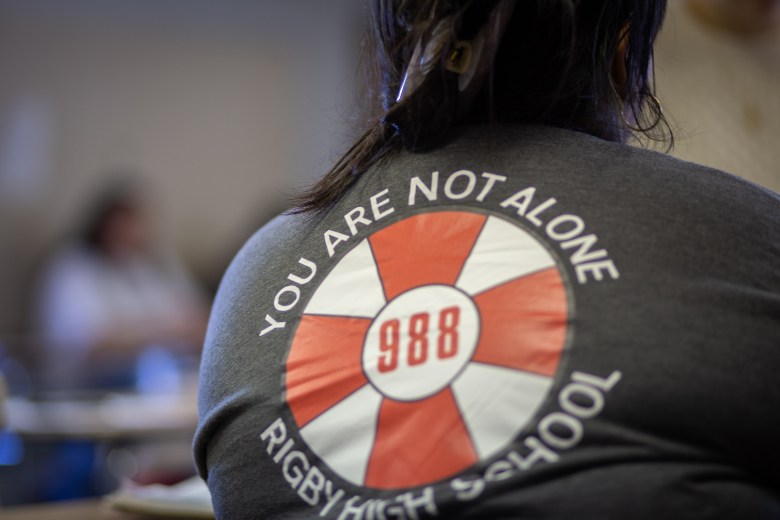
Rigby High’s Hope Squad — and those like it nationwide — aim to foster connection and reduce the risk of suicide. Credit: John Roark
The school leaders didn’t unnecessarily escalate the situation, he says. After their assessment, they chalked it up to middle school immaturity and asked the student to avoid such drawings in the future.
“When you say, ‘Why did you do that?’ And they say, ‘I don’t know.’ That’s the truth, right? That’s the gospel truth,” Hamblin said.
He shares this example to illustrate how the district marries technology-related monitoring with human-led threat assessment. The district employs someone — a former school administrator and counselor — to field the Bark alerts and communicate with school staff. And administrators from every school in the district have undergone threat assessment training, along with select members of their staff.
“A digital tool for us is a tool. It’s not the solution,” Hamblin said. “We believe that people are the solution.”
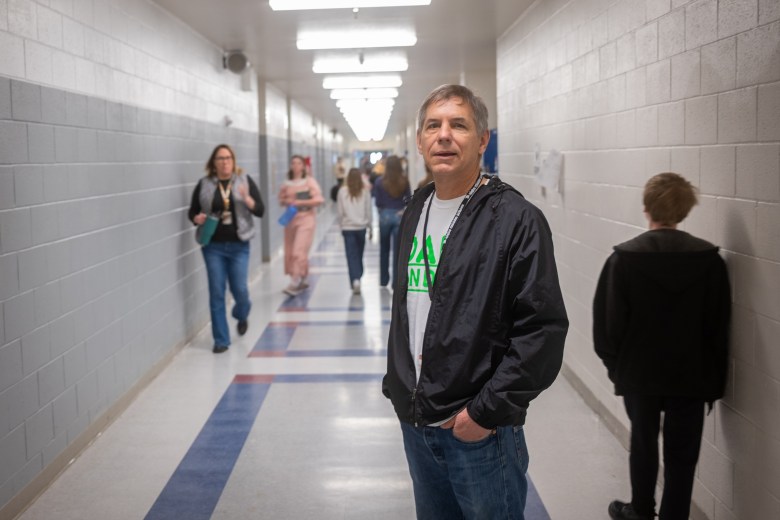
In Rigby, one of those solution people is Ernie Chavez, whose height makes him stick out in a hallway streaming with middle schoolers. He’s part of Dads on Duty, a program that brings in parents to help monitor and interact with students during passing periods and lunch.
Throughout the school, students reach out to Chavez for high-fives. On one February afternoon, he was greeted with applause and cheers. “I don’t know what that was about,” he said with a smile.
Similarly, the district’s Hope Squads, in place since 2021, have become an active presence inside the school.
The student-led coalitions aim to foster connection and reduce the risk of suicide. Thousands of schools across the United States and in Canada have implemented Hope Squads, but in Rigby, the mission of violence prevention has become personal.
Ernie Chavez monitors the hallways at Rigby Middle School on Feb. 5 for the Dads on Duty program. Credit: John Roark
“We refer … students every year to counselors, and those students go from some of the worst moments in their life (to getting help),” Vasquez said. “We build the connection between adults and faculty to the student.”
Members of the Hope Squad notice peers who seem down or isolated and reach out with a greeting, or sometimes a handmade card.
“We just reach out and let them know that people in the community are there for them, just to show them that we care and they’re not alone,” said Dallas Waldron, a Rigby High senior and Hope Squad member.
The groups also plan assemblies and special events, including, for example, a week of activities themed around mental health awareness.
Emilie Raymond, a sophomore at Rigby High, said the shooting made it clear “that people need to feel included and they need to find that hope.”
Another change at Rigby schools is a cell phone ban that was put in place this school year.
Before the ban,students were “sitting in the corners, isolated, staring at a screen,” said Ryan Erikson, Principal at Rigby Middle School. Now, “they’re playing games, they’re goofing off … they’re actually conversing.”
While Jefferson County School District’s approach to stemming violence is robust, “it’s not perfect,” Martin, the superintendent, said. “It’s still life. That’s just the reality of it, we’re still going to have things come up that we haven’t prepared for or weren’t on our radar. But we address them and just try to do whatever we can to support kids.”
Carly Flandro is a reporter with Idaho Education News. Jackie Valley is a reporter with The Christian Science Monitor.
Contact Hechinger managing editor Caroline Preston at 212-870-8965, on Signal at CarolineP.83 or via email at [email protected].
This story about school threat assessments was produced by the Education Reporting Collaborative, a coalition of eight newsrooms that includes AL.com, The Associated Press, The Christian Science Monitor, The Dallas Morning News, The Hechinger Report, Idaho Education News, The Post and Courier in South Carolina, and The Seattle Times.
The Hechinger Report provides in-depth, fact-based, unbiased reporting on education that is free to all readers. But that doesn’t mean it’s free to produce. Our work keeps educators and the public informed about pressing issues at schools and on campuses throughout the country. We tell the whole story, even when the details are inconvenient. Help us keep doing that.
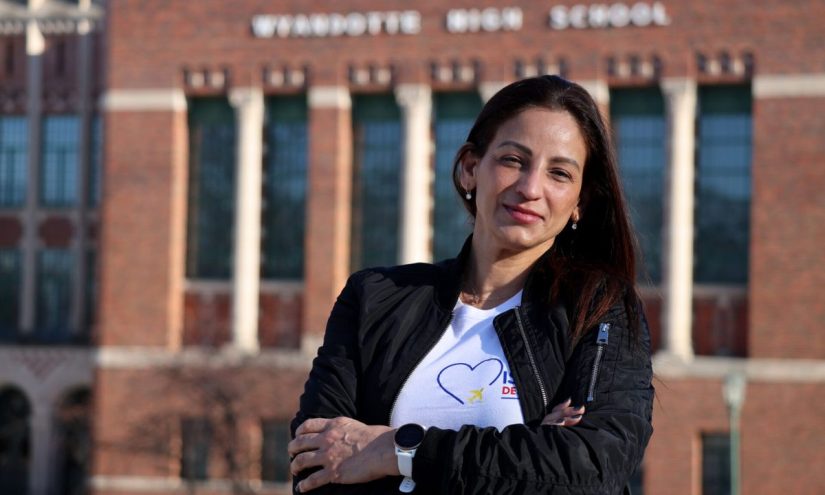
KANSAS CITY, Kan. — Marialexa Sanoja publicly quit her job as a Kansas City, Kansas, Public Schools police officer over concerns with the district’s handling of student safety needs and founded a nonprofit to help kids escape the challenges in Wyandotte County.
In the three-and-a-half months Sanoja was stationed at Wyandotte High School, the district’s largest school with 1900 students, Sanoja said she filed 140 incident reports and that in most instances the district failed to take action. The district, through its YouTube channel, disputed her figures and asserted it handled concerns responsibly.
“It didn’t take long for me to find out that the students were not in the best interest of anybody,” Sanoja said. “When the police officer becomes a safe space for students, there is something wrong with that.”
After her resignation in December 2023, Sanoja founded Missión Despegue, translated to “mission takeoff,” a nonprofit that helps parents and students document their grievances with the school district to hold the district accountable for its handling of safety issues.
Sanoja saw the district’s response to a sexual assault case and its communication as inadequate, and experts echo her concerns. Now, Sanoja works with current and former students to get their GED certificates, drivers licenses, mental health care and prevent substance abuse.
Sanoja’s concerns
Sanoja said much of the Latino community, which makes up 72% of Wyandotte High School, is afraid to complain or make a scene because many of them are new to the country. She aims to empower them, and help them achieve the “American dream.”
One reason Sanoja resigned — and a former student dropped out — was because of the district’s response to the former student’s experience of being sexually assaulted at school. Kansas Reflector doesn’t identify minors who have been sexually assaulted.
According to an incident report filed by Sanoja, the former student was a freshman and alone in the Wyandotte High School stairwell when a group of older boys groped her and made sexual remarks. She began recording the boys with her phone, which prompted them to leave, the report said.
Sanoja was off duty that day. The former student asked the on-duty officer to file a report, which Sanoja says she never saw. The day after, Sanoja and the former student said they filed an incident, criminal, and Title IX report. The former student wanted to press charges.
“After that, I just stopped going to school, because I didn’t feel safe,” the former student said in an interview with Kansas Reflector.
Sanoja said security camera footage and the former student’s video showed the boys’ faces. The former student said the district told her that because the boys never returned to school, it could not suspend them. However, the former student said she continued to see the boys on campus.
“Ultimately, the district didn’t do anything about it. We were asking, at least, for suspension. That didn’t happen,” Sanoja said.
A spokesperson from the district told Kansas Reflector it was unable to provide comment on the former student’s case, or the district’s responsibility to handle reports of sexual assault.
Sanoja publicly resigned with a letter that accused the district of failing to communicate with parents. She wrote that she was worried about instances where students brought guns to school property and all parents weren’t notified.
In a response video to Sanoja’s resignation, district superintendent Anna Stubblefield said “those incidents are not always relayed to all families. Not because we’re hiding anything, but because the impact is low and to protect the privacy of our students.”
A district spokesperson told Kansas Reflector the “administration is required to contact parents regarding student issues — such as absences, drug-related concerns, or fights — in accordance with the Student Code of Conduct.”
Expert opinions
Ken Trump, an expert in school safety communications who is not related to the president, said parental anxiety over school safety is rising nationwide.
“It’s very easy to get caught up if you’ve got a couple thousand kids in a school, dealing with incidents and other things. But you need to take a tactical pause in this, and go back to looking at the communications,” Trump said. “You can’t go back to the old-school mindset of if someone finds out about it we’ll talk. That doesn’t work anymore.”
Sanoja said that after a student overdosed at school and she contacted the parents directly, the high school principal told Sanoja to route all communication with parents through administration.
Sanoja said that she continues to receive videos of physical fights in the schools, totaling in the hundreds, since her resignation.
Michael Dorn, a school safety expert who assists schools after major acts of violence, said Sanoja’s allegations were concerning. He said he would have responded to her concerns differently than the school district did.
“I was a school district police chief for 10 years,” Dorn said. “If an officer in my department wrote that kind of resignation letter, I would request a state police investigation. I would ask for a polygraph test, and I would ask that she be polygraphed. I wouldn’t do anything like that, but if someone alleged that I did and I didn’t do it, I would request that to clear my name.”
Sanoja worked as a police officer in Lenexa before transitioning to the school district and said Wyandotte High School presented the most significant challenges she’s seen. She believes the problems are “within the culture” of the school.
“Everybody’s tired of the way the district is handling things,” Sanoja said. “They’ve been failing these kids for years.”
Fixing root causes
Through her nonprofit, Sanoja helps students who leave the district, like the former student who was sexually assaulted, earn their GED certificate.
When they’re out of the school environment, Sanoja said, they thrive.
Sanoja said most of the families she works with are immigrants, and the parents do not speak English.
“We face the daunting task of ending the stigma, shame and judgement that come with our culture,” Sanoja said.
Missión Despegue seeks to fix the root causes of the problems seen in school — like substance abuse, violence, bullying, and mental health issues. Sanoja said she sees these problems reflected in things like the graduation rate of the district. For the 2023-2024 school year it was 78.1%, which is 11.4 percentage points lower than the state average.
Through donations, Sanoja covers the cost of mental health appointments, DMV license and GED class registrations, and laptop purchases for students pursuing their GED certificate without one. In February, she began converting first-time offenders’ court fees, in hopes of reducing recidivism.
With the help of more than 100 volunteers, Sanoja has hosted events where she provides Narcan and educates parents about the dangers of substance abuse. She also guides volunteers to further training, like drug prevention and compassion fatigue workshops.
Sanoja said she doesn’t get paid for her work with Missión Despegue. She said she needs an assistant, because she has “a long list of people that need help.”
“I see something in them. I know they’re going to be successful,” Sanoja said. “I want that opportunity for every kid I have.”
Kansas Reflector is part of States Newsroom, a nonprofit news network supported by grants and a coalition of donors as a 501c(3) public charity. Kansas Reflector maintains editorial independence. Contact Editor Sherman Smith for questions: [email protected].
The first two months of 2025 have brought no shortage of change and uncertainty to higher ed institutions. Amid that uncertainty, you may find yourself not only navigating a wave of new compliance requirements, but also supporting employees who are feeling overwhelmed or worried. When change is happening at a rapid pace, it can be challenging to think strategically about how to manage emotional responses to change.
However, two approaches you probably honed during the COVID-19 pandemic — fostering resilience and psychological safety — can be particularly useful in times like these.
Resilience is a set of tools we use to regulate our response to stress. It’s what allows us to survive during moments of crisis and learn to grow. Psychological safety is a management approach that allows employees to thrive and adapt to stressful situations. We feel psychologically safe when we’re able to take risks knowing we’ll be supported.
Combined, these workplace strategies tap into emotional resources we already have and can further develop and strengthen.
Strengthening Internal Resilience
You may never have stopped to reflect on how you endured the pandemic, but it likely took a great deal of resilience. Learning to survive, and even flourish, in tough times calls for a store of personal resilience, which the American Psychological Association defines as “successfully adapting to difficult or challenging life experiences, especially through mental, emotional, and behavioral flexibility.”
Some people just appear to be more naturally resilient than others. Maybe they seem tougher or more inclined to go with the flow. But resilience isn’t an innate trait we’re born with. It’s a skill that can be learned and practiced.
In her Resilience in the Workplace webinar, Maureen De Armond, chief human resources officer at Des Moines University Medicine and Health Sciences, identified the four key factors that make up resilience:
Identifying your purpose and values
Gaining confidence
Seeking support from your networks
Learning adaptability
A Quick Resilience Exercise on Personal Values
Even a 15-minute resilience-building exercise can be effective, such as this brief reflection shared in the webinar.
First, write down a list of five answers to the question, “why is it worth it to persevere and get through this challenging time?” For example, do you want to model certain behavior for your children? Do you want to be compassionate to your coworkers? Do you want to steward your team through change? Do you want to support your friends and family?
Second, figure out the why behind each of these five answers by identifying the value behind each. Values can include achievement, compassion, economic security, humor, leadership, passion, etc. (Here’s a handy checklist.)
Finally, be proactive about reminding yourself of these values:
Display photos that represent your values so that you see them every day — a loved one, beloved pet, a favorite spot on a hike, a trip you’re planning, an inspirational public figure.
Place quotes that illustrate these values around your workspace.
Craft an inspiration board, either on a digital whiteboard or as a physical craft, that contains photos, symbols, images and words that demonstrate your values.
Get out of your office and take a walk. Especially if you work on campus, this can be a reminder of your community and of the student population the higher ed workforce serves.
Think of these proactive reminders as a “battery pack,” De Armond says, that will give you a boost or a nudge to get out of a negative head space. Helping employees tap into and strengthen their own resilience will equip them for whatever lies ahead.
The Role of Psychological Safety in Managing Uncertainty
While it’s natural for people to seek safety and solace in a time of upheaval, psychological safety isn’t about providing comfort or promoting kindness, as important as these are. Rather, it’s about candor, trust and accountability among teams. It allows team members to speak up about mistakes (including their own), tolerate risk, and embrace discomfort and change.
Amy Edmonson, an expert on team psychological safety in the workplace, defines psychological safety as “the shared belief that’s it’s okay to take risks, express ideas and concerns, speak up with questions, and admit mistakes without fear of negative consequences.”
For example, what happens when a team member goes to their supervisor with a question, admits a mistake, or notices a colleague’s error? If that supervisor gets angry or becomes dismissive, the employee may stay quiet in the future and even cover up mistakes to avoid that reaction again. But if the supervisor adopts some of the tips below, the team feels safe enough to take risks and can weather storms as a group.
Recommendations to Increase Psychological Safety
Encourage people to come to you with problemsand thank them for doing so. Also ask, “how can I help?”
Adopt a learning mindset. In the example above, an angry or dismissive supervisor also missed the chance to ask, “what did you learn?” As psychological safety experts know, “organizations characterized by a learning orientation focus on curiosity and continuous improvement, and they make it safe for organizational members to admit what they do not know or perhaps got wrong.” If you have a Learning and Development team, they can offer practices for adopting a learning mindset.
Listen rather than talk. Leaders are expected to have all the answers, but unless immediate action is needed, pausing and getting all the facts, and listening to feelings, can be an important leadership tool. Reflective listening — repeating or paraphrasing what’s said or reflecting a feeling that’s expressed — is a particularly useful skill for creating trust.
Say, “I don’t know.” Leaders modeling psychological safety admit when they don’t know something, allowing others in their organization to adopt a curious mindset. This is what Brené Brown calls “the courage to not know.”
Celebrate small wins. Appreciating your employees matters now more than ever.
Take care of yourself and your team. HR is often expected, fairly or not, to manage tension and conflicting emotions. How are you showing up for yourself and your team?
Giving grace to others during stressful and uncertain times can be a small but critical daily practice, one that builds compassion and trust. But we need to extend that same grace to ourselves. Set boundaries, take breaks, practice going slow, and share the load.
Related CUPA-HR Resources
Resilience in the Workplace — This CUPA-HR webinar, recorded in 2021, was designed to serve as resilience training for attendees, as well as a model that could easily be replicated at your institution for HR teams and other employees.
Trauma-Informed Leadership for Higher Education — This webinar explores how to develop a supportive leadership style and how to create a culture where team members can depend on each other for support during times of hardship.
These aren’t just random comments—they’re real voices from our latest research, and they stopped me cold.
For the past three years, RNL and ZeeMee have been diving deep into the emotional landscape of college planning. Our latest pulse survey (our third round!) reached over 2,600 high school seniors through the ZeeMee app, and their responses about safety concerns left me genuinely shaken.
Last year, we added a crucial question: we asked students who expressed worry about their safety in college to tell us, in their own words, what specifically scared them. Their candid responses paint a vivid— and sometimes heartbreaking—picture of what’s keeping our future college students up at night.
Here’s what they told us, unfiltered and unvarnished.
Understanding college safety concerns
Every night, a high school senior lies awake somewhere in America, staring at their college acceptance letter. But instead of dreaming about new friends and future possibilities, they’re wrestling with darker questions: “Will I be safe there? Will I belong? Will someone hurt me because of who I am?”
These aren’t just passing worries. They’re the heavy weight on students’ hearts as they contemplate their next big step. Through hundreds of candid conversations with students, we’ve uncovered the raw, unfiltered truth about what keeps them up at night. Their voices—brave, vulnerable, and achingly honest—paint a picture of what safety means to Generation Z and why traditional campus security measures are just the beginning of what they need to feel truly secure.
After analyzing hundreds of student comments about their safety concerns, 10 clear themes emerged, revealing how identity, background, and lived experience shape their fears. Understanding these concerns is crucial for colleges aiming to create safer, more supportive environments.
1. Personal safety and physical harm
Across all groups, students expressed anxiety about their physical safety on campus and in surrounding areas. Random attacks, mugging, and the general unpredictability of urban environments were frequent concerns.
“I’m worried about approximate safety, like the area’s crime rate or state. There’s always going to be dangers.” – First-Generation Male
“Being alone at night or generally in an open area with few people.” – First-Generation Female
Takeaway for institutions:
Provide real-time crime alerts and transparent reporting about campus safety statistics.
Partner with local authorities to increase security presence around campus.
Encourage students to use campus safety apps for safe travel between locations.
2. Sexual assault and gender-based violence
Female and non-binary students, regardless of generation status, are consistently worried about sexual assault, harassment, and gender-based violence. Parties, walking alone at night, and navigating unfamiliar environments amplified these fears.
“Rape culture is real. Parties can be dangerous, and not knowing who to trust makes it worse.” – Continuing-Generation Female
“I’m suicidal and afraid of being raped.” – First-Generation Non-Binary
Takeaway for institutions:
Expand bystander intervention training for all students.
Ensure that Title IX resources and reporting processes are well-publicized and easily accessible.
Provide self-defense classes and safe-ride programs for students traveling after dark.
3. Safety in new and urban environments
Moving to a new city or a high-crime area was a significant concern, particularly among first-generation students unfamiliar with city living.
“The area of the college I chose is notoriously dangerous.” – Continuing-Generation Female
“Since I’m out of state, I won’t know who to trust, especially in a big city.” – First-Generation Female
Takeaway for institutions:
Offer city orientation programs to help students identify safe routes, neighborhoods, and resources.
Highlight partnerships with local authorities and emergency services.
Make campus safety maps available, showing emergency call boxes and security patrol zones.
4. Racial and ethnic discrimination
Concerns about racism, hate crimes, and bias were prominent among students of color, especially first-generation and male students. Black, Muslim, and international students frequently mentioned fears of being targeted because of their identity.
“Since I’m African, racism and all that.” – First-Generation Male
“I’m a Black Muslim woman. Being assaulted, being hate-crimed, Islamophobia.” – First-Generation Female
Takeaway for institutions:
Create visible reporting channels for bias-related incidents.
Provide diversity and inclusion training for campus staff and students.
Ensure campus police and security are trained in cultural sensitivity.
5. Isolation and being alone
Being away from family and trusted support systems was a significant source of anxiety, especially for first-generation students. Women were more likely to express concerns about being alone while navigating new environments.
“I would be alone away from home. Just knowing that anything could happen and I wouldn’t have that support system to call on.” – First-Generation Female
“I’ve never lived away from home and don’t know if I’m ready to make safe decisions all the time.” – Continuing-Generation Male
Takeaway for institutions:
Establish peer mentorship programs to help new students build connections.
Promote campus counseling services, emphasizing their accessibility.
Encourage students to join student organizations for community-building.
6. Campus safety and security measures
Many students, regardless of gender or generation status, questioned whether campus safety protocols were robust enough to protect them.
“What if someone sneaks onto campus or tries to harm me?” – First-Generation Female
“Sometimes the safety measures that are there aren’t enough.” – Continuing-Generation Male
Takeaway for institutions:
Regularly assess and update campus security protocols.
Provide students with clear information about emergency procedures.
Ensure dormitories and common areas have secure access systems.
7. Substance use and peer pressure
Students were wary of the prevalence of drugs and alcohol on campus, especially in social settings where peer pressure could lead to unsafe situations.
“Narcotics float around campus daily, causing self-harm to other students.” – Continuing-Generation Male
“I’ve heard some college guys spike drinks, and it isn’t safe to go places alone.” – First-Generation Female
Takeaway for institutions:
Promote alcohol and drug education programs during orientation and throughout the year.
Partner with student organizations to create substance-free social events.
Ensure campus safety staff are trained to handle substance-related emergencies.
8. Mental health and well-being
Many students expressed worries about managing their mental health while adjusting to college life, especially those from first-generation backgrounds.
“I struggle with anxiety, and being in unpredictable places worries me.” – First-Generation Female
“Just any fighting or being depressed.” – Continuing-Generation Male
Takeaway for institutions:
Expand mental health resources, including counseling and peer support groups.
Train faculty and staff to recognize signs of mental health struggles.
Promote mindfulness and stress-relief programs on campus.
9. LGBTQ+ safety and acceptance
LGBTQ+ students are worried about harassment, discrimination, and feeling unsafe in gendered spaces.
“I’m trans and nowhere really feels safe to be trans.” – First-Generation Non-Binary
“I look like a cis male even though I am AFAB. I’m worried about my safety using the women’s bathroom.” – Continuing-Generation Non-Binary
Takeaway for institutions:
Ensure that gender-neutral restrooms are available across campus.
Promote LGBTQ+ resource centers and support groups.
Train campus staff on LGBTQ+ inclusivity and safety.
10. Gun violence and mass shootings
With the rise in school shootings, concerns about gun violence were prevalent across all demographics.
“The reality of increasing school shootings really scares me.” – First-Generation Female
“How easily accessible and concealable guns are.” – Continuing-Generation Male
Takeaway for institutions:
Conduct regular active shooter drills and safety trainings.
Ensure campus police are equipped to handle potential threats.
Promote anonymous reporting systems for suspicious activity.
Building safer campuses: Where do we go from here?
While each student’s experience is unique, the themes that emerge highlight common anxieties that colleges and universities must address. Institutions can make campuses feel safer by:
Improving transparency: Regularly update students on campus safety protocols and crime statistics.
Strengthening support systems: Expand counseling, mentorship, and peer support programs.
Enhancing security: Invest in access-controlled dorms, safe-ride programs, and emergency call boxes.
Promoting inclusivity: Ensure students from marginalized communities feel protected and respected.
Empowering students: Provide self-defense classes, bystander training, and safety resources.
Behind every statistic in this report is a student’s story – a first-generation student wondering if they’ll make it home safely from their late-night library sessions, a transgender student searching for a bathroom where they won’t be harassed, a young woman calculating the safest route back to her dorm. Their fears are real, their concerns valid, and their hopes for a safe campus environment are deeply personal.
The path forward isn’t just about adding more security cameras or emergency phones, though those matter. It’s about creating spaces where every student can exhale fully, knowing they’re physically safe and emotionally secure. Where belonging isn’t just a buzzword in a campus brochure but a lived experience. Safety means being free to focus on learning, growing, and becoming—without constantly looking over your shoulder.
This isn’t just a challenge for institutions—it’s a sacred responsibility. Because when we promise students a college education, we promise them a chance to transform their lives. And that transformation can only happen when they feel truly safe being themselves. The students have spoken. They’ve shared their fears, hopes, and dreams for safer campuses. Now it’s our turn to listen—and, more importantly, to act.
Read Enrollment and the Emotional Well-Being of Prospective Students
RNL and ZeeMee surveyed 8,600 12th-grade students to understand their anxieties and worries of students during the college search process. Download your free copy to learn:
The greatest challenges for 12th graders about the college planning process
The barriers keeping students from applying to college
The social fears of college that keep prospective students up at night
The top safety concerns of students
What excites and encourages students about the college journey
How students describe these anxieties, stresses, and fears in their own words
The doctorate is a subjective experience demanding the re-evaluation of ways of thinking, the navigation of intense emotions, and the adaptation of behaviours by the candidate to achieve new learning goals, transforming the candidate from a consumer to a creator of knowledge. Candidates often face uncertainty and enter a state of liminality during this process, feeling caught between old beliefs and new insights, which can lead to discomfort and feeling ‘stuck’. To navigate this liminal space, candidates benefit from a change in perspective supported by transformative learning. While much of the focus in doctoral support is on the candidate avoiding negative experiences during this process, there is limited attention given to the candidate’s role of self-awareness and self-management. Reflexivity provides one such option to consider.
Reflexivity is a cognitive, or thinking, process that enables individuals to move beyond simple reflection, fostering self-awareness and exploring different options for progress. While candidates have demonstrated its usefulness in understanding their doctoral journeys, further research is needed on initiating and sustaining this process independently. This ability to learn and develop autonomously is essential, as doctoral programs require candidates to show evidence of becoming independent researchers. In organisational literature, reflexivity has been demonstrated to enhance information processing, helping employees understand what, why, and how of learning and change. It enables adjustments in both task execution and personal approach. Moreover, team psychological safety has been demonstrated to be crucial for effective team reflexivity. However, variations in terminology and definitions related to psychological safety limit the extension of this construct beyond the organisational context.
A body of conceptual research adopting a Theoretical Integrated Review (TIR) approach was conducted, with findings highlighting historical use, providing theoretical insights, and clarifying a generalised definition of psychological safety with relevance beyond the organisational setting. Psychological safety is an internal process that helps individuals manage distress, influencing their thoughts, feelings, and actions. It plays a crucial role in growth and development by connecting motivation and goal-directed behaviour, providing the opportunity for a generalised definition:
Psychological safety is a dynamic intrapsychic construct drawn on by individuals to mitigate actual or foreseen distress. The presence or absence of psychological safety is influenced by context, the individual’s existing psychological frames of reference, and current and future motives relating to an endeavour.
This understanding allows the absence or presence of psychological safety to be considered in broader contexts, including independent learning settings like doctoral programs. To explore this potential, a body of qualitative research was conducted with six volunteer PhD candidates enrolled at a regional Australian university awaiting feedback on their theses.
Using the vignette methodology technique to present short fictional scenarios regarding experiences of doctoral knowledge uncertainty, the researcher conducted semi-structured interviews to understand how doctoral candidates deal with knowledge uncertainty. This approach encouraged interviewees to discuss their experiences without the pressure of direct questions, facilitating open discussions about managing uncertainty. At the end of the interviews, findings from the conceptual research were shared, and feedback was gathered on their benefit as a basis for candidate support. The interviews were recorded, transcribed, and thematically analysed.
All six interviewees described experiences with knowledge uncertainty and agreed that the conceptual research findings on psychological safety could improve opportunities for candidate support and warranted further investigation. The analysis of the interviews revealed that the interviewees’ experiences of uncertainty stemmed from intrapersonal, interpersonal, and university governance-level interactions. While similarities existed based on stages in the doctoral program, no strong recurring theme of uncertainty emerged. Notably, the differences lay in how the interviewees discussed their experiences of uncertainty.
Some interviewees emphasised the importance of interpersonal support to help them progress:
… the Confirmation panel Chairperson insisted that I rework my research question … I found it confusing. I felt that I must have grossly mistaken something …. my supervisor just said, okay, well, rebuild methodology … I felt uncertain. But she was very encouraging and supportive … I got through the second time, no questions asked … Interviewee Steve
… my methodology was underdeveloped … I was asked to resubmit this section to the confirmation panel … I was stressed about it having to be perfect because I thought failing would be the worst thing in the world. … I remember that being a big thing … I was embarrassed, … an extra hurdle because no one else I knew needed to resubmit … my supervisors were empowering … they both said, redo what you need to … You’ll get through. You’re going to be okay. Interviewee Amy
Other interviewees’ narratives shifted from reflection to reflexivity, demonstrating self-awareness and developing metacognitive strategies to navigate their uncertainties.
So yeah, it was an unhappy period. It was a couple of months of really hating what I was, what I’d done to myself in choosing this particular topic…I just had to ride that wave, you know, think it through, think, really think about what I was doing and why I was doing it, what the product was, what the process was and what the result needed to be in the end.
Interviewee Julie
… a big part of my uncertainty was about paradigms … I couldn’t write my methodology. … I was just not convinced … if I can’t believe in these views about knowledge and reality, I can’t write about this stuff. So that was a hurdle … I was sometimes reading without knowing what would come of it. … then it felt like, oh, this is it … what had been a major period of uncertainty had also been a cognitively shifting one that changed my perception of the world. Interviewee Jack
The extracts illustrate how interviewees navigated uncertainties and liminal spaces, utilising various strategies to move forward. Some narratives show less use of self-awareness, relying on interpersonal support, while others reflect and use reflexivity as a proactive, independent approach to managing uncertainty.
Understanding psychological safety as a multi-dimensional construct and appreciating its demonstrated moderating effect on reflexivity in the workplace provides an opportunity for further investigation. The differences in interviewees’ narratives offer valuable insights regarding reflexivity and the doctoral experience of uncertainty, collectively establishing a basis for exploring psychological safety in the doctoral context.
In the wake of the Great Resignation and talent recruitment challenges, heavy workloads have led to stress and burnout for some employees. One way higher ed HR pros can help identify sources of stress and mitigate burnout is by considering employees’ work environments. Are invisible pressures placed on employees, causing team members to downplay or hide their concerns about heavy workloads, or can employees be honest about their concerns and feel comfortable bringing their whole selves to work each day? How would employees describe the atmosphere where they work? Are levity and humor weaved into the workday, or is the lack of levity contributing to feelings of being overwhelmed?
In the recent CUPA-HR virtual workshop, How to Manage Unmanageable Workloads, presenter Jennifer Moss explained how building psychological safety and bringing the fun back to work can reduce the impact of overwork and burnout. So what is psychological safety, and how can HR integrate it and the elements of fun and play into the workplace?
Increase Psychological Safety
“Psychological safety is the ability to reveal one’s true self and opinions without fear that doing so will lead to negative repercussions in terms of reputation, career, status or relationships with others,” explains Why Psychological Safety Matters Now More Than Ever, an article in the Spring 2021 issue of Higher Ed HR Magazine. Teams with high psychological safety see more open conversations between team members and managers about their work. They feel comfortable sharing honestly because they know they won’t be punished simply for doing so.
Read the article to learn how HR pros can elevate psychological safety in the workplace by attending to systems and structures, supporting employees to forge connections, and fostering a learning orientation.
Bring Back the Fun
Although HR has much serious work to do, leaders can look for opportunities to incorporate fun, where appropriate. The application of fun and play has been shown to reduce stress and feelings of burnout while also improving creativity and productivity in working environments. Having fun at work has shown to have a positive impact on employee morale, engagement and camaraderie, all of which collectively have an influence on an organization’s culture. Here are some ideas to bring back the fun and stimulate play in the workplace.
Encourage Humor
Similar to incorporating more fun into the workplace, there are also plenty of benefits to weaving humor into the workplace. This element of work is sometimes considered non-essential but has many emotional and physical benefits that make us happier and healthier at work. Humor builds trust in relationships; a culture where it’s okay to admit failure; and happier, healthier employees. Learn how to conduct a humor audit to analyze where your workplace humor went right and ways to use it more effectively.