Tag: schedule

  • The 2026-27 FAFSA launches a week ahead of schedule

    The 2026-27 FAFSA launches a week ahead of schedule

    This audio is auto-generated. Please let us know if you have feedback.

    Dive Brief: 

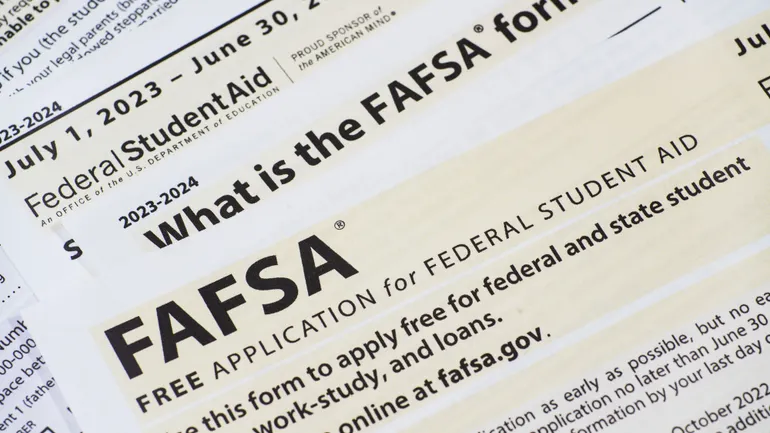
    • The U.S. Department of Education rolled out the 2026-27 Free Application for Federal Student Aid to all students Wednesday, about a week before the congressionally mandated deadline.  
    • Education Department officials billed the release as the “earliest launch in the program’s history.” The new form comes with several updates, including a redesigned process for inviting parents or other contributors to add information to the application and faster account verification for students and parents, according to the agency. 
    • The on-time FAFSA follows later than usual releases the past two years. In 2023, the Education Department didn’t roll out the FAFSA until the final days of December — nearly three months after students and their families usually can access the form. 

    Dive Insight: 

    Education Department officials praised the on-time release after two rocky financial aid cycles. 

    “No one would have thought this was possible after the Biden-Harris administration infamously botched FAFSA’s rollout two short years ago,” U.S. Education Secretary Linda McMahon said in a Wednesday statement. 

    In 2023, the Biden administration was responsible for carrying out the first major redesign of the FAFSA in over four decades, including by paring down the number of questions applicants must answer. However, even after the Education Department released the FAFSA in December that year, many students and families struggled to complete the form due to glitches and other technical issues. 

    Moreover, the Education Department didn’t begin sending FAFSA applicant data to colleges that financial aid cycle until March 2024, even though that information is typically available shortly after the form rolls out in October. Scores of colleges pushed back their traditional May 1 decision deadline as a result. 

    In response, congressional lawmakers passed a law in November 2024 mandating that the Education Department release the form by Oct. 1 each year. The statute also requires the U.S. education secretary to testify before Congress if the agency anticipates it will miss the deadline. 

    This year, the Education Department began beta testing the form in early August. During that period, students started nearly 44,000 FAFSA forms and submitted roughly 27,000 of them, according to the department. The agency has processed almost 24,000 FAFSA forms without rejection. 

    However, this financial aid cycle hasn’t come without criticism. A report earlier this month from the U.S. Government Accountability Office, a federal watchdog agency, raised questions about whether the Education Department was adequately overseeing contracted work on the new back-end system launched in 2023 for processing FAFSAs

    In September 2024, the Education Department told GAO officials that several functions required by a contract with a third-party vendor were not yet available, including the ability to make corrections to FAFSA applications and modify eligibility rules. At the time, the department said those functions would be available by 2026. 

    However, as of May 2025, the Education Department couldn’t provide an update on the system and said it was no longer tracking the contractual requirements, according to the GAO report. GAO recommended that Federal Student Aid’s chief operating officer take steps to improve contract monitoring. 

    The GAO’s report included a response from Aaron Lemon-Strauss, executive director of the FAFSA program, who pushed back on GAO’s framing. Lemon-Strauss wrote that some of its recommendations embrace a model that “assumes initial contracts can fully anticipate a system’s evolving needs.”

    Lemon-Strauss, who joined the department last year, said the agency has made changes to its FAFSA vendor contracts that allow it to adapt to user needs. For instance, after the 2024 FAFSA release, department officials identified that the FAFSA system still did not allow users to import their answers from the prior year to start their new forms — a contractually required feature. 

    “This is undoubtedly a helpful feature and one that should be included in the FAFSA,” Lemon-Strauss said to GAO. “Yet, rather than mechanically moving to implementing renewal capability, the team examined user data to determine where their next efforts would be maximally useful.”

    Internal data showed that some 5% of users were exiting the form and not returning once they needed to invite their parents or other contributors — such as a spouse or a parent’s spouse — to work on the application. In response, the Education Department decided to prioritize redesigning the process to invite outside contributors instead of focusing on the contractually required feature, Lemon-Strauss said.

    Source link

  • 2026–27 FAFSA Launched Ahead of Schedule

    2026–27 FAFSA Launched Ahead of Schedule

    The final version of this year’s Free Application for Federal Student Aid was made available to all students Wednesday—eight days ahead of schedule. This marks the application’s earliest launch date since it first transitioned to an online platform nearly two decades ago, according to the Department of Education.

    Education Secretary Linda McMahon used the announcement as an opportunity to criticize the Biden administration for its “infamously botched” rollout of an extensive FAFSA overhaul two years prior. 

    “I am extremely proud to announce the earliest launch of the FAFSA form in history, which ensures American students and families have access to critical resources as they begin or continue their postsecondary education journey,” she said in a news release. “Under President Trump’s leadership, our talented team has redesigned and streamlined the process so all American students can now successfully complete the form in minutes.” 

    There were limited changes to this year’s form, but to test the changes that were made, a beta version was first made available to a select number of students and families in early August. Then, last week, all students could access the test form. Over the course of those two months, more than 40,000 applications have been started, about 27,000 have been submitted and roughly 24,000 have been processed without rejection.

    Updates to this year’s form include a redesigned process for inviting parents to contribute to the form and a faster verification process for new accounts. And over all, the students who have tested the form so far have had a good experience, with 97 percent of respondents reporting satisfaction and 90 percent saying it took a reasonable amount of time to complete.

    Source link

  • Fired CDC director says RFK Jr. aims to change childhood vaccine schedule

    Fired CDC director says RFK Jr. aims to change childhood vaccine schedule

    This audio is auto-generated. Please let us know if you have feedback.

    Health secretary Robert F. Kennedy Jr. plans to soon make changes to the childhood vaccine schedule, according to former Centers for Disease Control and Prevention Director Susan Monarez, who Kennedy ousted from her role earlier this month.

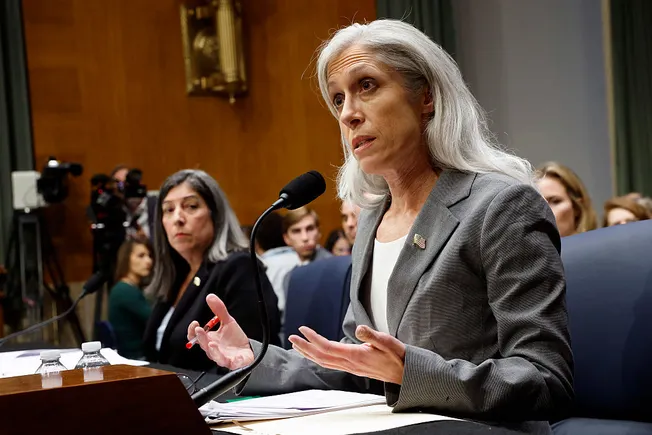
    Monarez informed U.S. lawmakers of Kennedy’s plans Wednesday during a hearing hosted by the Senate Health, Education, Labor and Pensions Committee. The hearing is the first public appearance by Monarez since her firing, which spurred several other high-ranking CDC officials to resign in protest.

    In a Sept. 4 op-ed in The Wall Street Journal and again Wednesday, Monarez said she was removed for refusing to rubber-stamp vaccine guidelines without supportive evidence.

    “He just wanted blanket approval,” Monarez said during the hearing, referring to Kennedy. “If I could not commit to an approval to each of the recommendations, I would need to resign.”

    Monarez said Kennedy plans to change recommendations for childhood vaccinations against COVID-19 and hepatitis B. Both shots will be discussed at a meeting this week of the CDC’s Advisory Committee on Immunization Practices, which is tasked with formulating guidelines.

    “In the first meeting [with Kennedy], he asked me to commit to firing scientists or resign. He asked me to pre-commit to signing off on each one of the forthcoming ACIP recommendations, regardless of whether or not there was scientific evidence.”

    Debra Houry, the CDC’s former chief medical officer who resigned after Monarez’s ouster, also testified at the hearing Wednesday.

    ACIP’s meeting, which will take place Thursday and Friday, will be closely watched. A draft agenda indicates the committee will discuss and vote on guidelines for vaccines against hepatitis B, COVID, and measles, mumps, rubella and varicella.

    Monarez and Houry told senators that they were not aware of any scientific evidence to support changing the age at which children can get those vaccines.

    Sen. Bill Cassidy, R-La, expressed support for the inclusion of the hepatitis B vaccine in the childhood immunization schedule. The shot is recommended for all infants.

    “That is an accomplishment to make America healthy again, and we should stand up and salute the people that made that decision, because there’s people who would otherwise be dead if those mothers were not given that option to have their child vaccinated,” Cassidy said.

    Since becoming head of HHS, Kennedy has remade ACIP, firing its previous 17 members and stacking it with seven advisers he picked. This week, just days ahead of the committee’s meeting, Kennedy added five new members, including individuals whose backgrounds are atypical for the panel. Now among the panel’s members are critics of COVID vaccine policies and skeptics of vaccine technologies like messenger RNA.

    At an earlier meeting in June, the seven advisers first chosen by Kennedy indicated they held doubts about the evidence supporting COVID vaccines and voted to remove a little-used, but controversial preservative that’s been targeted by anti-vaccine groups.

    Typically, CDC working groups prepare data in support of ACIP votes on guidelines. Houry said no working groups besides one for COVID have been convened ahead of this week’s meeting, however.

    Monarez indicated she would be open to changing the childhood vaccine schedules if there was supporting evidence to do so.

    “Kennedy responded that there was no science or evidence associated with the childhood vaccine schedule, and he elaborated that CDC had never collected the science or the data to make it available related to the safety and efficacy,” Monarez said.

    Studies supporting the vaccines included in the childhood immunization schedule are public, and the current schedule has been supported by medical associations.

    “I worry about our medical institutions having to take care of sick kids that could have been prevented by effective and safe vaccines,” Monarez said. “I worry about the future of trust in public health.”

    Source link

  • IPEDS Data Collection Schedule (US Department of Education)

    IPEDS Data Collection Schedule (US Department of Education)

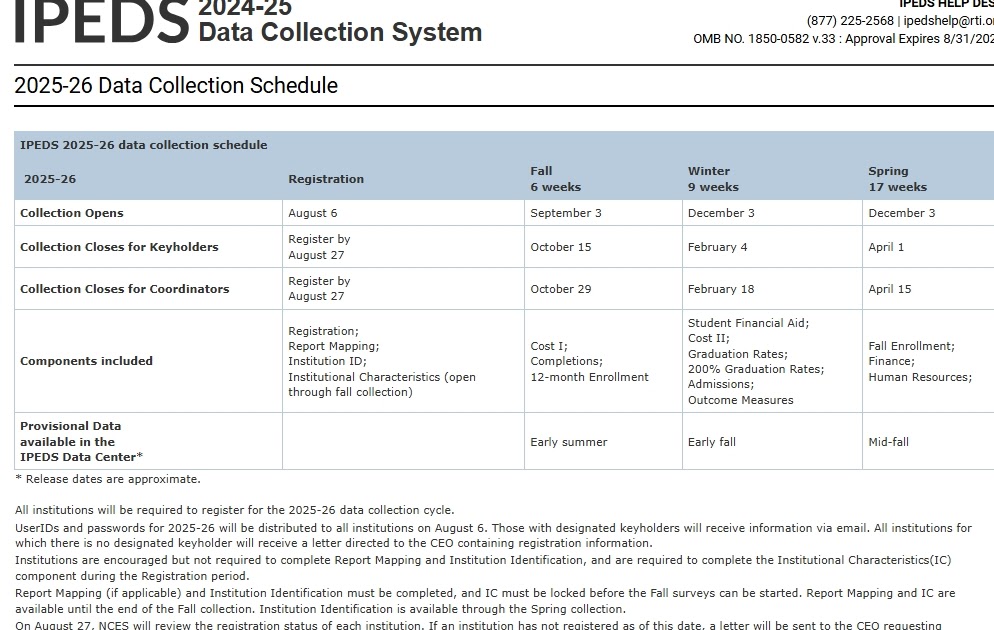
    The IPEDS data collection calendar for 2025-26 has now been posted and is available within the Data Collection System’s (DCS) Help menu, and on the DCS login page at: https://surveys.nces.ed.gov/ipeds/public/data-collection-schedule

    What is IPEDS?

    IPEDS is the Integrated Postsecondary Education Data System. It is a system of interrelated surveys conducted annually by the U.S. Department of Education’s National Center for Education Statistics (NCES). IPEDS gathers information from every college, university, and technical and vocational institution that participates in the federal student financial aid programs. The Higher Education Act of 1965, as amended, requires that institutions that participate in federal student aid programs report data on enrollments, program completions, graduation rates, faculty and staff, finances, institutional prices, and student financial aid. These data are made available to students and parents through the College Navigator college search Web site and to researchers and others through the IPEDS Data Center. To learn more about IPEDS Survey components, visit https://nces.ed.gov/Ipeds/use-the-data/survey-components.

    How is IPEDS Used?

    IPEDS provides basic data needed to describe — and analyze trends in — postsecondary education in the United States, in terms of the numbers of students enrolled, staff employed, dollars expended, and degrees earned. Congress, federal agencies, state governments, education providers, professional associations, private businesses, media, students and parents, and others rely on IPEDS data for this basic information on postsecondary institutions.

    IPEDS forms the institutional sampling frame for other NCES postsecondary surveys, such as the National Postsecondary Student Aid Study.

    Which Institutions Report to IPEDS?

    The completion of all IPEDS surveys is mandatory for institutions that participate in or are applicants for participation in any federal student financial aid program (such as Pell grants and federal student loans) authorized by Title IV of the Higher Education Act of 1965, as amended (20 USC 1094, Section 487(a)(17) and 34 CFR 668.14(b)(19)).

    Institutions that complete IPEDS surveys each year include research universities, state colleges and universities, private religious and liberal arts colleges, for-profit institutions, community and technical colleges, non-degree-granting institutions such as beauty colleges, and others.

    To find out if a particular institution reports to IPEDS, go to College Navigator and search by the institution name.

    What Data are Collected in IPEDS?

    IPEDS collects data on postsecondary education in the United States in eight areas: institutional characteristics; institutional prices; admissions; enrollment; student financial aid; degrees and certificates conferred; student persistence and success; and institutional resources including human, resources, finance, and academic libraries.

    Source link