Tag: scholarship

  • House Republicans Accuse Truman Scholarship of Liberal Bias

    House Republicans Accuse Truman Scholarship of Liberal Bias

    House Republicans held a hearing Wednesday broadcasting long-standing conservative allegations of a left-wing bias in the small, prestigious Truman Scholarship program. Witnesses called by the GOP said the winners disproportionately espouse causes such as promoting racial justice and fighting climate change—and wind up working for Democrats and left-leaning organizations—while few recipients profess interest in conservative aims.

    But rather than counter the allegations, Democrats and their invited witness largely called the proceedings a distraction from the issue of college unaffordability, which they accused the GOP of exacerbating.

    The Subcommittee on Higher Education and Workforce Development hearing reflected a trend in conservative criticism of higher ed: allegations of favoritism toward liberals and left-leaning thought within very exclusive programs, including certain Ivy League institutions. The Trump administration’s sweeping research funding cuts for particular universities—and the congressional grillings of university presidents during antisemitism hearings before Trump retook the White House—have targeted institutions that only a fraction of Americans attend.

    “The Truman Scholarship represents an appropriation of $3 million a year, and directly impacts just 50 to 60 students annually,” said Democratic witness Ashley Harrington, senior policy counsel for the NAACP Legal Defense Fund. “The cuts to the higher education safety net made in the One Big Beautiful Bill are of far greater consequence to the millions of Americans who have never even heard of the Truman Scholarship.”

    “I hope today’s conversation can shift toward making our entire higher education system more affordable and accessible for all students,” Harrington said, “instead of having a narrow, partisan dialogue about the very few who receive this elite scholarship.”

    Republicans and their witnesses—one from a conservative-leaning media outlet and two from conservative-leaning think tanks—didn’t take her up on that invitation. Jennifer Kabbany, editor in chief of The College Fix, said her outlet has been researching liberal bias in the Truman Scholarship for 10 years and argued that its recipients hold a lot of sway.

    “They’re lobbying, they’re working for lawmakers, they’re consulting, they’re working for very influential, liberal-leaning law firms,” Kabbany said. “And so they’re having a big influence on our nation’s conversation and what legislation is brought forth. This isn’t just a $3 million scholarship—this is the direction of our country.”

    The scholarship, which provides junior undergraduates up to $30,000 for a “public service–related” graduate degree, was founded as a memorial to the namesake Democratic president. Congress passed legislation creating it in 1974, and Republican president Gerald Ford signed the bill into law the next year.

    Lawmakers didn’t invite anyone from the Harry S. Truman Scholarship Foundation to testify. Rep. Burgess Owens, the Utah Republican who chairs the subcommittee, told Inside Higher Ed he didn’t know why no one from the foundation appeared. Audra McGeorge, communications director for the Education and Workforce Committee, said the full committee chooses witnesses.

    “We provided an opportunity for the Truman Scholarship program to respond to the Committee’s concerns” outlined in a letter last year citing a report on the program from the American Enterprise Institute, McGeorge said. “Since they chose not to engage with us on those issues, we did not see a productive path in repeating the outreach. So we sought out researchers who have examined this issue fairly.”

    The minority Democratic party gets to choose only one witness. Raiyana Malone, a spokesperson for the committee’s Democrats, said, “We really wanted to focus on the Big Ugly Bill cuts to higher education,” so they chose Harrington.

    The report from AEI, a conservative-leaning think tank, said that, of the 182 Truman winners between 2021 and 2023, just six espoused interest in a traditionally “conservative-leaning” cause. While numerous winners cited an interest in topics such as immigrants’ rights or racial justice, none professed interest in protecting the rights of the unborn or defending the Second Amendment, the report said.

    Frederick Hess, AEI’s director of education policy studies and co-author of the report, said the Truman Foundation began hiding past news releases and reduced the amount of biographical information on its website to prevent the replication of such studies. In an email, Tara Yglesias, the foundation’s deputy executive secretary, said its 2025 scholar listing had returned to a format used in the early 2000s partly because “scholars, particularly those working in national security and similar areas, had made requests that we not post their biographical information publicly. Additionally, significant staff time was required to keep the biographies current, even for the short time they were visible.”

    Rep. Suzanne Bonamici, an Oregon Democrat, criticized the fact that the report’s other author, Joe Pitts, didn’t disclose in the report that he was a failed applicant for the scholarship. Bonamici called Pitts “disgruntled,” which Pitts rebutted on X.

    The scholarship foundation didn’t provide Inside Higher Ed an interview Wednesday or answer some specific emailed questions. Terry Babcock-Lumish, its executive secretary, wrote in an email that while no one from the foundation was invited to testify, “We welcome Members of Congress’s assistance in raising awareness of our opportunity and hope they will encourage the colleges and universities in their districts to nominate qualified candidates.” She said it’s “a merit-based scholarship program committed to identifying aspiring leaders throughout the United States, regardless of ideology.”

    “Unless candidates apply, we cannot select them,” she wrote.

    While the Republican witnesses shared their specific issues with the program’s recruitment and selection process—including not seeking out candidates from traditionally conservative campuses—they and the Republican subcommittee members also traced the alleged liberal bias to the left-leaning nature of academe in general.

    “On the campus level, those that are deciding who gets put to the regional committees, I mean, they’re professors,” said Kabbany, of The College Fix. “And we all know, 30 to one, professors are liberals, so they’re obviously going to advance candidates who have beliefs and pet causes that they love … It’s really systemic.”

    A few Republicans, including Owens, said Congress should end the program.

    “The Truman committee and this entire process is anti-conservative,” Owens said in his closing remarks. He said, “This has been a pipeline for Democrats, no question about it … I don’t think it’s fixable.”

    Rep. Mark Harris, a North Carolina Republican, said, “It’s deeply ironic to me that taxpayers who also never attended college, just like [President] Truman himself, are now forced to fund elite postgraduate degrees for a handpicked few. In my opinion, the federal government has no business running a scholarship program at all.” (According to the Truman Library, Harry S. Truman attended a business college for one year before dropping out to help with his father’s business.)

    Two Republicans—current New York gubernatorial candidate Elise Stefanik and Rep. Randy Fine, a staunchly pro-Israel Florida Republican who has said, “We have a Muslim problem in America”—accused the program of fostering antisemitism. “This, to me, is beyond liberal bias,” Fine said. “This is a flat-out embrace of Muslim terror and [represents] the fact that U.S. taxpayer dollars are being used to fund terrorists.”

    Fine, who is Jewish, said, “I have zero desire to reform the Truman fellowship. I’m not interested in borrowing $3 million from my children and grandchildren to give it to people who would like to kill them, so I believe we should shut down the program.” (Fine also made a point to say he wasn’t asking questions of Adam Kissel, a Republican witness, because of Kissel’s connection to the Heritage Foundation, which many conservatives accuse of tolerating antisemitism.)

    Stefanik, who is on the scholarship foundation’s board, cited a 2025 Truman scholar who “publicly espoused support for Hamas,” adding, “We need to address this rise in antisemitism with some of the recipients.”

    Eva Frazier, the Truman recipient whom Stefanik has publicly named in the past, told Inside Higher Ed in an email, “Congresswoman Stefanik’s comments followed a long pattern of politicians attempting to scare students into silence for speaking out about the Palestinian cause, but we refuse to be intimidated by such attacks.”

    Rep. Tim Walberg, a Michigan Republican and chair of the Education and Workforce Committee, said the alleged Truman Scholarship issues are “illustrative of so much that goes on.”

    “We’re seeing a bias in opposition to the American idea,” he said. “That isn’t liberal or conservative—it’s American.”

    Source link

  • Public Scholarship with Drs. Ben Railton and Vaughn Joy

    Public Scholarship with Drs. Ben Railton and Vaughn Joy

    What is public scholarship? And, if it’s something you value as an academic, how do you house the resources you want to share online? Dr. Ben Railton and Dr. Vaughn Joy are featured in this episode of The Social Academic podcast. Jennifer van Alstyne asks them about their just-launched public website collaboration, Black and White and Read All Over.

    Who do you hope visits your website? How do you hope they engage with what you share with them? When this married couple wanted a permanent space for their public scholarship, they chose to create it together. A special thank you to Dr. Walter Greason for sharing #ScholarSunday would make for a great podcast episode! I’m delighted to have these two on the show for you just in time for the launch of their new website. Congratulations!

    This episode was broadcast live on September 29, 2025.

    This episode will be available on Spotify soon. English captions for the video and a full text transcription will be added for you in the next 1-2 weeks. Thank you.

    Visit their website
    Dr. Ben Railton during a talk or lecture

    Ben Railton is Professor of English Studies, Director of Graduate English, and Coordinator of American Studies at Fitchburg State University. He’s the author of six books, most recently Of Thee I Sing: The Contested History of American Patriotism (2021). He also contributes the bimonthly Considering History column to the Saturday Evening Post. He’s most proud to be Dad to two college student sons, Aidan and Kyle; and husband to his badass wife and website co-host Vaughn.

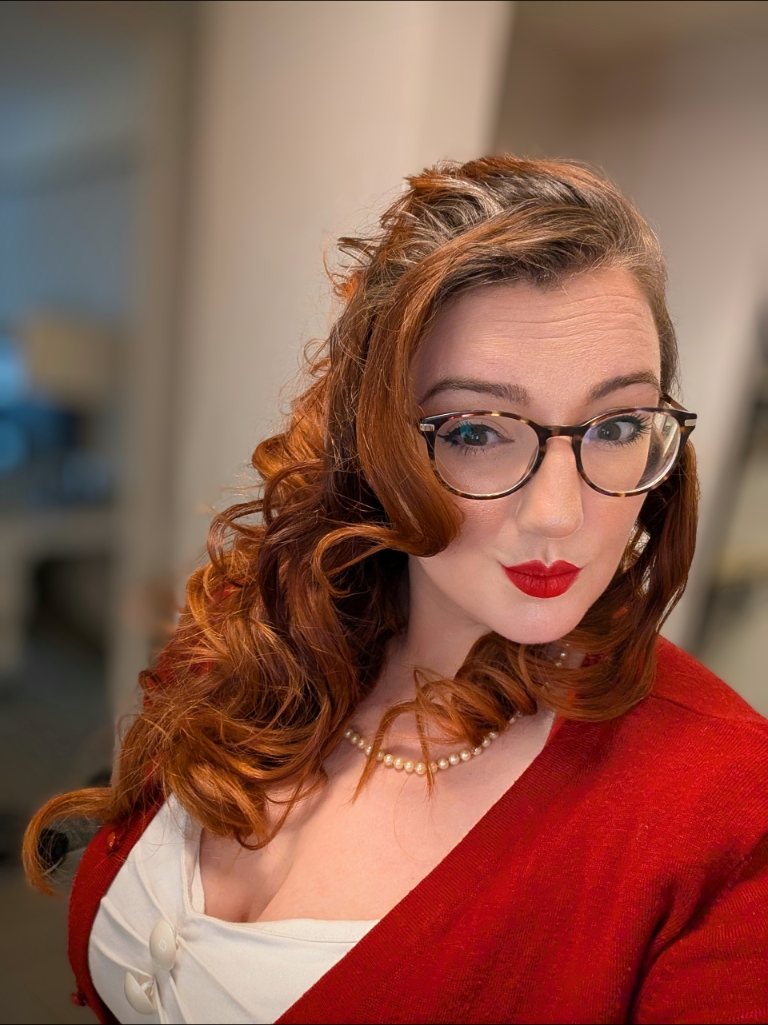
    Vaughn Joy is an independent researcher and recent graduate with a PhD in History from University College London. Her first book, Selling Out Santa: Hollywood Christmas Films in the Age of McCarthy, explores how Hollywood manipulated the American Christmas holiday for socially conservative ends in the post-war, early Cold War period in response to federal pressures on the motion picture industry. Her other work concerns McCarthyism, Hollywood business practices and politics, and media literacy of pop culture.

    Dr. Vaughn Joy wears a red sweater, red lipstick, and cute glasses

    Black and White and Read All Over

    Ben and Vaughn have recently launched a shared website that hosts Ben’s daily AmericanStudier blog and weekly round up of public scholarship in his #ScholarSunday threads, as well as Vaughn’s weekly film review newsletter, Review Roulette.

    The site, called Black and White and Read All Over, also welcomes announcements from other scholars to share their achievements, upcoming events, and forthcoming publications to promote academic pride and joy in our community.

    Ben Railton and Vaughn Joy cuddle, smiling close

    Source link

  • Scholarship, Not Ideology, Guides Civics Curricula

    Scholarship, Not Ideology, Guides Civics Curricula

    To the editor,

    I write in response to Ryan Quinn’s recent article (“The Battle for ‘Viewpoint Diversity’” Sept. 2, 2025) on the new civic center at Utah State University, which mandates general education courses on Western civilization. In his words: “Utah’s Legislature created a civic center at Utah State University committed to ‘viewpoint diversity and civil discourse’ … Those courses must include three that engage with ‘primary texts predominantly from Western civilization,’ such as ancient Israel, Greece or early Christianity. There’s no mention of Islam.”

    Well, there’s no mention of Shintoism, Confucianism or Buddhism, either, but I fail to see what’s puzzling about excluding Islam from a “Western civilization” curriculum. Islam’s primary texts played no part in the political construction of the West. Quinn’s implied request is analogous to demanding that a curriculum devoted to Aztec or Inca civilization include the Bible simply because Spain invaded, conquered, subjugated and colonized those societies. 

    As a matter of civics, the distinction between the Islamic world and the West is foundational and elementary. It is recognized historically and intellectually by all who have studied the West’s construction.

    Most Americans—and by extension, our education systems—naturally focus on their own historical and cultural heritage. We’re in the United States; courses here typically reflect what shaped this nation: Greco-Roman republicanism, state Christianity and Enlightenment ideals. People are curious how and why our country got to where it is. If we taught in Iran, China or elsewhere, the focus would reflect their heritage—not ours.

    This isn’t a value judgment. It’s just a fact. As odd as it sounds, the United States was conceived as a reactivation of the Roman Republic 1,800 years after it came to an abrupt halt. The Founders live action role played as ancient Romans in their writings. It’s strange, but that’s precisely why it fascinates students. So these texts are not political baggage; they’re intriguing questions of origin and identity.

     The question here isn’t moral judgment or wishful thinking. It’s scholarly clarity. Let’s demand substance, not ideology.

    Mike Fontaine is a professor of classics at Cornell University.

    Source link

  • Trump Hijacks American Science and Scholarship (opinion)

    Trump Hijacks American Science and Scholarship (opinion)

    In a nearly daily barrage, President Trump and his MAGA forces heave fireballs at science and higher education. In the last weeks alone, the administration has been busy hurling a demand for a billion dollars from the University of California, Los Angeles; axing proven mRNA vaccine research; and demanding colleges submit expanded sex and race data from student applications, among other startling detonations. Amid the onslaught of these unsettling developments, it would be easy to miss the decisive change in conventional scientific and scholarly practice, one so vast that it threatens to overturn our revered American research achievements.

    On Aug. 7, Trump issued an executive order that uproots more than a half century of peer review, the standard practice for funding federal scientific grants. Taking approval out of the hands of experts, the new rule makes grant approval contingent upon the assent of political puppets who will approve only those awards the president finds acceptable.

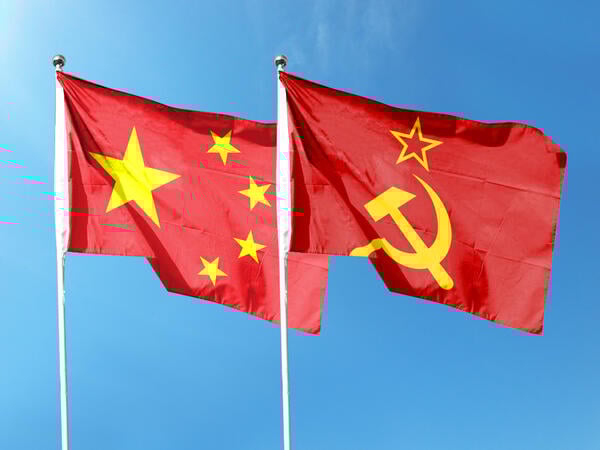
    When I first came upon the order, I was immediately struck by how closely it resembles the unquestioned authority granted to senior political appointees in Soviet Russia and Communist China. As if dictated by commissars, the new rule requires officials to fund only those proposals that advance presidential priorities. Cast aside, peer review is now merely advisory.

    It took my breath away, suddenly realizing how completely threatening the new order is to the very foundations of the democratic practice of research and scholarship. As Victor Ambros, Nobel laureate and co-discoverer of microRNA, aptly put it, the order constitutes a “a shameless, full-bore Soviet-style politicization of American science that will smother what until now has been the world’s pre-eminent scientific enterprise.”

    Decades ago, long before I entered higher ed, I worked at a small publishing company in New York that translated Russian scientific and technical books and journals into English. As head of translations, I’d travel once or twice a year over many years to Moscow and Leningrad (now, once again, St. Petersburg) to negotiate with Soviet publishers to obtain rights to our English translations.

    One evening in the late ’60s, I invited a distinguished physicist to join me for dinner at a Ukrainian restaurant not far from my hotel in Moscow. We talked for some time openly over a bottle of vodka about new trends in physics, among other themes. As dinner drew to a close, he let his guard down and whispered a confidence. Mournfully, he told me he’d just received an invitation to deliver the keynote address at a scientific conference in England, but the Party official at his institution wouldn’t permit him to travel. I still remember the sense of being privy to a deep and troubling secret, reflected in the silence that followed and the palpable unease at the table. Shame enveloped him.

    Over a couple of dozen years of frequent trips to the Soviet Union and Communist China, I never met a single Party official. My day-to-day interactions were with administrators, editors, researchers and faculty who managed scientific publishing or were involved in teaching, research or other routine matters. The Party secretary remained hidden behind a curtain of power as in The Wizard of Oz.

    On one rare occasion in the 2010s, at a graduation ceremony at a local technical university in Beijing where I ran a couple of online master’s degrees in partnership with Stevens Institute of Technology, a student seated next to me in the audience drew near and identified a well-dressed official several rows ahead of us up front. “The Party secretary,” he revealed in hushed tones. I saw the officer later at the reception, standing by himself with a dour expression, as faculty, students and family members bustled about at a distance.

    One afternoon at that university in Beijing, I came upon a huddle of faculty in a corner office. As they chatted quietly among themselves in Mandarin, I took a seat at the far end of the room to give them privacy. But I could make out that a man in the group was disturbed, his face flushed and his eyes close to tears. Later, I approached one of the faculty members in the group with whom I’d grown close and asked what had troubled his colleague.

    “Oh,” he replied. “He often gets upset when the Party secretary objects to something we’re doing. He worries that our joint program is in jeopardy.”

    These personal reflections, based on my limited encounters with scientists and faculty, do not reveal the full extent of the control over scientific research exerted by Party functionaries. But if you compare the president’s new order with that of the Party’s authority in Soviet Russia and Communist China, you’ll find they’re all out of the same playbook.

    The order’s demand for political appointee approval takes decisions out of the hands of apolitical, merit-based peer-review panels. In the Soviet Union and China, adherence to the Party line and loyalty to the regime was (or is) paramount, with grant funds being used to advance ideological or state power. Similarly, the president’s order establishes a party line, stating that federal money cannot be used to support racial preferences, “denial … of the sex binary in humans,” illegal immigration or initiatives deemed “anti-American.”

    Relegating peer review is no small matter. It is at the center of modern science, distributing responsibility for evaluating scholarly work among experts, rather than holding this responsibility in the fist of authority. Even though peer review is under criticism today for its anonymity and potential biases, among other perplexing features, when researchers referee proposals, they nevertheless participate in a stirring example of collaborative democracy, maintaining the quality and integrity of scholarship—characteristics anathema to far-right ideologues.

    Of all the blasts shattering American science and higher education since the president assumed office in January, this executive order may be the most devastating. It is not one of Trump’s random shots at research and scholarship, but an assault on democracy itself.

    Source link

  • House panel pushes colleges to cut ties with Chinese scholarship program

    House panel pushes colleges to cut ties with Chinese scholarship program

    This audio is auto-generated. Please let us know if you have feedback.

    Dive Brief:

    • A Republican-led House committee is pushing seven research universities to cut ties with a scholarship program sponsored by the Chinese government.
    • In four-page letters Tuesday, Republican Rep. John Moolenaar, chair of the Select Committee on the Chinese Communist Party, decried the China Scholarship Council as “one of the nefarious mechanisms” the Chinese government uses to advance its technologies and urged each college involved with the council to “reconsider its participation.”
    • Moolenaar further set a July 22 deadline for college leaders to provide his committee with extensive documentation on their institutions’ work with the council from May 2020 to May 2025.

    Dive Insight:

    The China Scholarship Council, a program funded by the Chinese Communist Party, partners with colleges in other countries and sponsors both Chinese students studying abroad and international students studying at Chinese universities.

    Participating Chinese students must return to China after graduating and work for at least two years.

    In Moolenaar’s letters to college officials Tuesday, he announced that the House committee on the Chinese government is conducting a “systematic review” of “the China Scholarship Council’s infiltration of U.S. colleges.” 

    “CSC purports to be a joint scholarship program between U.S. and Chinese institutions,” he said. “However, in reality it is a CCP-managed technology transfer effort that exploits U.S. institutions and directly supports China’s military and scientific growth.”

    About 7% of Chinese citizens studying abroad — some 65,000 students — are sponsored by the China Scholarship Council, according to a 2020 analysis by Georgetown University’s Center for Security and Emerging Technology.

    A relatively small minority of them end up in the U.S. In 2024, the council announced plans to sponsor up to 240 students to study at seven U.S. colleges this year, the South China Morning Post reported.

    The seven participating institutions, all of which received a letter from Moolenaar on Tuesday, are Dartmouth College, Temple University, the University of Tennessee, the University of Notre Dame and three campuses in the University of California system — Davis, Irvine and Riverside.

    The number of sponsored students and the length of their studies in the U.S. vary by college. For example, the University of California, Davis co-sponsors up to 10 Ph.D. candidates, while Temple co-sponsors up to 60 graduate students, according to Moolenaar’s letters. 

    However, a Dartmouth spokesperson said the college cut ties with China Scholarship Council well before receiving Moolenaar’s letter, making the decision last academic year, per the college’s student newspaper. The spokesperson told the publication that the college’s partnership with the council led to the enrollment of fewer than 10 participants over the last decade.

    Likewise, the University of Notre Dame this week told The Associated Press that it began to cut ties with the council earlier this year.

    Moolenaar noted that all the institutions rely on “significant federal funding” for their research, citing research funding levels from years before Trump retook office. And China has “a history of exploiting the openness of the American higher education and research system to enhance its technological competitiveness and military capabilities,” he said.

    A 2020 proclamation from President Donald Trump, made during his first term, restricted certain Chinese researchers and graduate students from gaining visas to study in the U.S. The goal, Trump wrote at the time, was to prevent Chinese nationals from attempting to “acquire and divert foreign technologies.”

    Several months after Trump issued the proclamation, the University of North Texas cut off ties with the China Scholarship Council, abruptly forcing more than a dozen Chinese researchers participating in the program to leave the country.

    Former President Joe Biden continued to enforce the proclamation during his term.

    “It is imperative to assess how the UCD-CSC joint scholarship program — explicitly designed to develop [Chinese] talent in cutting edge technology at graduate levels — serves U.S. interests,” Moolenaar said in his letter to the chancellor of the University of California, Davis. He echoed the line in his letters to the heads of the other six colleges.

    Among his document requests, Moolenaar called for colleges to list if any Chinese students participating in the program switched to a STEM major after initially declaring a non-STEM major and if any participating students worked on federally funded research. Officials should also justify how supporting the development of participating students advances U.S. interests, he said.

    Source link

  • Top govt figure in the dock for role in Kenyan scholarship scandal

    Top govt figure in the dock for role in Kenyan scholarship scandal

    Jonathan Bii, governor of Uasin Gishu, one of Kenya’s prominent counties, is now facing legal scrutiny over his alleged involvement in the controversial Uasin Gishu Finland/Canada Scholarship Program. 

    Bii, a member of the United Democratic Alliance, an affiliate of Kenya’s ruling coalition, is accused of supporting the scholarship scheme and requesting additional payments from students.

    As per media reports, he later distanced himself from the initiative amid allegations of misappropriation of over KSh 1.1 billion meant for scholarships.

    Individual accounts by parents of the students revealed that payments ranged from KSh 650,000 to over KSh 1.2 million (approximately USD$5,000–$9,230), with some families reportedly paying up to KSh 3 million (around USD$23,100). 

    These amounts covered expenses such as tuition, visa and insurance fees, and accommodation deposits.

    Kenyan news outlet Daily Nation reported that a key witness, Mitchelle Jeptanui, testified before senior principal magistrate Peter Ndege that in June 2023, Bii held a meeting with parents to assure them that the overseas trip would receive approval shortly.

    The parents, already anxious as their children had received admission letters from universities in Canada and Finland, were allegedly asked to pay an additional KSh 200,000 to KSh 300,000 (approximately USD$1,540 to $2,310) for accommodation fees. 

    However, despite the payments, none of the students were able to travel abroad.

    My son never travelled. I am still hoping either for a refund or support for him to go
    Benjamin Kibet, parent

    When parents once again demanded answers, Bii allegedly shifted the blame to his predecessor, Jackson Mandago, who initiated the program.  

    However, testimony from seven out of eight witnesses last week confirmed they made their payments after Bii assumed office.

    Benjamin Kibet, a parent of one of the affected student, told the court that he took out a loan of KSh 650,000 (around USD$5,000) to fund his son’s education at Stenberg College in Canada, after being introduced to the programme by Mandago and Bii.

    “My son never travelled. I am still hoping either for a refund or support for him to go,” Kibet told reporters. 

    As the case unfolds, Mandago, along with former county officials Meshack Rono and Joshua Lelei, is expected to face criminal charges related to the alleged misappropriation of the scholarship funds.

    Over the past two years, the scandal has shaken Kenya’s growing middle class, who have aspirations for overseas education.

     A 2020 survey had found that more than half of Kenyan students preferred studying at international universities over local institutions.

    Moreover, Kenya has been identified as a “high-growth potential” source market for international education.

    It ranked as the leading East African market for US universities, with enrolments rising by 45% in 2022 compared to 2019.

    Canadian institutions, a key draw for many of the students who ultimately became entangled in the scholarship scandal, also recorded a 12% rise in Kenyan student enrolments during the same period. 

    Kenyan parents have taken to the streets across Uasin Gishu County over the past few years, demanding answers, as the scandal has left over 300 students stranded at home.

    Many of them have reportedly been expelled from Finnish universities or deported, as previously reported by The PIE News. 

    Source link

  • Scholarship Thrives on Peripheral Vision (opinion)

    Scholarship Thrives on Peripheral Vision (opinion)

    The problem with scholarly focus is that it leads where you intend to go. And this is a problem because when you get there, you’re likely to find that your destination isn’t all that interesting. In practice, scholarship is not about effectively carrying out a plan but about exploring a terrain and developing the plan that is warranted by what you discover in that terrain.

    This issue with the act of scholarship in particular is really just an extension of what we know about the act of writing in general. Namely, writing is not the process of explaining the argument that is embedded in your outline but instead the process of finding out what that argument should be. If your paper follows your outline from beginning to end, it’s clear that you haven’t learned anything in the course of writing that paper. You found what you were looking for rather than what was actually out there waiting to be found.

    This reminds me of a question that my friend David Angus used to ask candidates for faculty positions at the University of Michigan College of Education: “Tell me about a time that your research forced you to give up an idea you really cared about.” If you discover something that upsets your thinking, that’s an indicator that you’re really learning something in the course of carrying out your study. This in turn suggests that the reader is likely to learn something from reading your paper on the subject, instead of just confirming a previous opinion.

    Scholars need an intellectual starting place for a piece of research—an established conceptual framework that provides us with a promising angle of approach into a complex intellectual problem space. But the danger is getting trapped within the confines of the conceptual framework in a manner that predetermines the conclusions we reach. Instead, we need to be open to the possibility that our favored framework needs to adapt to the demands of the data we encounter. Perhaps we need to add an additional perspective to this framework or adapt or even discard parts of the framework that don’t seem to be validated by the data at hand. After all, getting things wrong and then correcting them in light of evidence is at the heart of the discipline we call science.

    The need to open ourselves to perspectives that are beyond the scope of our established conceptual frameworks is what calls for us to deploy our peripheral vision. As I used to tell my students, the book you’re looking for may not be the one you need to read, which may be a few books down on the shelf. In this manner, scholarship becomes a process of continually evolving your conceptual framework over time, as each study nudges you in new directions. This is what can make academic pursuits so stimulating, as you bump into problems your current perspective can’t resolve and construct a new perspective that allows you to move forward in developing an argument. You can’t predict where you’re going to end up, but you’ll know that it’s going to be interesting—both for you and for your reader.

    David Labaree is a professor emeritus at Stanford Graduate School of Education. He blogs at davidlabaree.com and his recent books include Being a Scholar: Reflections on Doctoral Study, Scholarly Writing, and Academic Life (2023, Kindle Direct Publishing).

    Source link

  • WEEKEND READING: Matt Goodwin’s ‘Bad Education’ isn’t good scholarship, but does that matter?

    WEEKEND READING: Matt Goodwin’s ‘Bad Education’ isn’t good scholarship, but does that matter?

    • Steven Jones is Professor of Higher Education at the University of Manchester and his latest book is Universities Under Fire (2022). This review of Bad Education by Matt Goodwin has been written in a personal capacity.
    • HEPI’s other review of the Matt Goodwin’s book can be accessed here.

    In Bad Education, Matt Goodwin makes the argument that Western universities have moved ‘sharply and radically to the left’ (p.51) over the last six decades, to the extent that diversity is now deemed more important than merit. According to Goodwin, a woke orthodoxy has gripped the sector: free speech is stifled; non-authorised viewpoints are unwanted; and social justice trumps the pursuit of truth. Some minorities flourish within this culture, but other ‘political’ minorities – like the one to which Goodwin claims membership – are structurally disadvantaged. 

    To stand this argument up, Goodwin needs the reader to accept two fundamental premises. The first is that the author’s sense of victimhood is real, while others are imaginary or exaggerated. Goodwin achieves this by attributing his every professional setback – from having journal articles and funding bids declined to being overlooked for invited talks (p.47) – to his whiteness, his maleness, or his political positions, such as his refusal to participate in ‘cult-like worship of the EU on campus’ (p.44). No other explanation is countenanced. 

    The second premise is that the real power in universities is cultural, not economic, and therefore held by diversity champions and other woke activists. The evidence Goodwin offers here is underwhelming. Where academic scholarship is cited, the sources are mostly US-based, and the author shows no curiosity about the think-tanks and lobby groups that funded the surveys in which he places his faith. Critical higher educational research is studiously avoided, though Goodwin does turn to Elon Musk for a quote about the ‘woke mind virus’ (p.104). In places, Bad Education reads as a checklist of debunked myths and personal memoirs (‘as I’ve seen first-hand’ is a familiar clause). Yet in the final chapter, Goodwin addresses the reader directly to assert: ‘I’ve bombarded you at times with statistics and research because I wanted you to read it for yourself and make up your own mind’ (p.198). 

    I tried hard to make up my own mind, but it’s difficult to be persuaded by Goodwin’s case against universities when the bulk of empirical data point in an opposite direction. If recruitment practices are so diversity conscious, why were there only 25 Black British female professors in the UK as recently as 2019? If ‘reverse racism’ is such a problem, why did the awarding gap between White and Black students achieving high degrees stand at 18.4% in 2021? In my experience, and according to my research, minority groups are far from over-represented in senior levels of university management and governance, and board cultures tend to be driven by corporate principles, not woke ideologies. As for no-platforming, fewer than 0.8 per cent of university events or speaker invitations were cancelled in 2021-22. In other words, the truths that Goodwin is so boldly willing to speak may be his truths, but they are not universal.

    Among the fellow marginalised white men willing to support Goodwin is the University of Buckingham’s Eric Kaufmann, who is quoted extensively, and whose back-cover endorsement describes Bad Education as ‘deeply personal and impeccably researched.’ It’s certainly deeply personal. Take Goodwin’s indignation towards a lecturer who unfriended some Conservative voters on Facebook after the 2015 UK general election (p.89). The reader is not told what this incident is supposed to signify, let alone why Goodwin’s cherished free speech principles appear not to extend to academics’ private social media accounts.

    That’s not to say that the sector is always operating to the highest ethical standards. Goodwin is on firmest ground when highlighting human rights violations in China (p.90), and calling out universities for turning a blind eye. But rather than take this argument to its logical conclusion – by critiquing a fee model that leaves sectors reliant on income from overseas students – Goodwin pivots back into anger and anecdote, rebuking universities for being defensive about their historic links with the slave trade (p.91) and sharing stories about junior colleagues too scared to disclose their pro-Brexit leanings (p.94).

    Despite Goodwin’s stated aim to ‘push back against authoritarianism’ (p.208), there are echoes of Donald Trump’s playbook throughout Bad Education. The author’s anti-diversity bombast recalls the President’s recent claim that a fatal air crash near Washington DC was connected to DEI programmes in federal government. It’s not entirely clear to which level of institutional bureaucracy Goodwin is referring when he imagines a ‘hyper-political and highly activist managerial blob’ (p.157), but the language is redolent of that being deployed in the US to justify a purge of federal bureaucrats. According to Goodwin, this ‘managerial blob’ is defined by an insistence on rainbow lanyards and flags on campus, among other things. This is not a characterisation of senior leaders that most university staff would recognise. Could it be that the author is so distracted by empty performative gestures that he fails to see where power is really located?

    Goodwin has now left academia, a story he tells in most chapters, steadily elevating it to the level of Shakespearean tragedy: ‘my professorship – everything I had ever wanted, everything I had worked for – was over’ (p.195). At a time when 10,000 jobs are on the line at UK universities, such self-indulgence is unfortunate. Goodwin’s contrast between the ‘luxury beliefs’ of academics and the ‘real world’ he claims to inhabit (p.78) encapsulates what makes Bad Education read like a ‘prolonged gripe,’ as another reviewer put it. Paradoxically, Goodwin now enjoys a range of high-profile platforms from which to air his grievances about being no-platformed, regularly appearing on television to blame wokeism for various social ills. Why is it that only ‘cancelled’ academics seem to have media agents?

    Bad Education builds towards what Goodwin calls a ‘manifesto’ for universities (pp.217-19) that want to have ‘good, not bad, education’ (p.217). It’s a simplistic way to wrap up any book, comprising a bullet-pointed list of the same few complaints expressed in slightly different terms. Those of us in higher education will quickly recognise Bad Education’s distortions: universities haven’t lurched radically left and there’s no woke coup. But does that matter? Are we the target readership? Or is the book speaking to external audiences? What if a review like this merely confirms what Goodwin and his fellow academic outcasts have been saying all along?

    Since accepting the terms of the market, English universities have struggled to articulate their role in society. Academic expertise has been devalued and the status of higher education as a public good compromised, with universities increasingly embroiled in unwinnable culture wars. These are perfect conditions for someone like Goodwin to ‘blow up’ his own career (p.4), break the ‘secret code of silence’ (p.3) and position himself as the fearless ‘rogue professor’ (p.16). In such ways, important debates become framed by individuals with the shallowest insights but the deepest grudges. Bad Education does a passable job of confirming suspicions about what really goes on inside a secretive and often aloof sector, guiding its readers further down an anti-university, anti-expert rabbit hole. If we continue to leave vacuums in the discourse, then diversity-blaming narratives like Goodwin’s will continue to fill them.

    Source link

  • New accommodation scholarship for UK-bound Indian students

    New accommodation scholarship for UK-bound Indian students

    Student accommodation platform University Living and the National Indian Students and Alumni Union (NISAU) have launched the Living Scholarship – worth £12,000 (INR 13,10,832). 

    The scholarships will be provided to 10 “outstanding students” from India, who are planning to pursue higher education in the UK.

    “Accommodation is the second-largest expense after tuition for students studying abroad, and we believe financial challenges should not be a barrier to achieving academic dreams,” said Saurabh Arora, founder and CEO, University Living. 

    “Through this scholarship, we are committed to providing meaningful support to Indian students so they can focus on their education and future careers with greater confidence.”

    Beyond financial assistance, recipients will benefit from exclusive mentorship, participation in student ambassador programs, and access to internship opportunities, through the organisations, all aimed at fostering their professional growth and future career success.

    Accommodation is the second-largest expense after tuition for students studying abroad, and we believe financial challenges should not be a barrier to achieving academic dreams
    Saurabh Arora, University Living.

    NISAU has long worked to ensure Indian students in the UK are set up for success, and the Living Scholarship is a vital step in reducing financial stress for them,” said Sanam Arora, chairperson, NISAU UK. 

    “Together with University Living, we aim to empower students with not just financial aid but also networking and professional growth opportunities.”

    The Living Scholarship will open for applications on February 14, 2025, with more information available on www.universityliving.com.

    Indian students and alumni are recognised as an integral part of the UK higher education system, with organisations like NISAU celebrating their achievements annually through events such as the India-UK Achievers Honours and Conference, which took place in central London on January 13.

    Despite the UK emerging as one of the most sought after study destinations among students from India, in recent years poor job prospects, and stricter rules on students bringing dependents into the country with them have led to falling numbers. 

    As per a report by the Times of India, students from India have seen the largest drop, falling from nearly 140,000 in 2022/23 to 111,329 in 2023/24 – a decrease of over 20%. 

    Applications from other major sending countries such as Bangladesh and Nigeria have also fallen.

    However, new data from the UK Home Office reveals that 28,700 sponsored study visa applications were submitted in January 2025 – a 12.5% increase compared to the 25,500 applications recorded in January 2024.

    Though there are encouraging signs, Home Office data continues to show a broader downward trend over the past year with applications from main applicants totalling 411,100 in the year ending January 2025 – a 13% decrease compared to the previous year.

    Source link

  • Uni equity scholarship applications up 35%

    Uni equity scholarship applications up 35%


    The admissions centre that handles university applications in NSW and the ACT has said students applying for equity scholarships has surged more than 35 per cent this year.

    Please login below to view content or subscribe now.

    Membership Login

    Source link