Tag: school leaders

  • What school leaders need to know

    What school leaders need to know

    Key points:

    Special education is at a breaking point. Across the country, more children than ever are being referred for evaluations to determine whether they qualify for special education services. But there aren’t enough school psychologists or specialists on staff to help schools meet the demand, leaving some families with lengthy wait times for answers and children missing critical support. 

    The growing gap between need and capacity has inspired districts to get creative. One of the most debated solutions? Remote psychoeducational testing, or conducting evaluations virtually rather than face-to-face. 

    Can a remote evaluation accurately capture what a child needs? Will the results hold up if challenged in a legal dispute? Is remote assessment equivalent to in-person? 

    As a school psychologist and educational consultant, I hear these questions every week. And now, thanks to research and data released this summer, I can answer with confidence: Remote psychoeducational testing can produce equivalent results to traditional in-person assessment. 

    What the research shows

    In July 2025, a large-scale national study compared in-person and remote administration of the Woodcock-Johnson V Tests of Cognitive Abilities and Achievement (WJ V), the latest version of one of the most widely-used and comprehensive assessment systems for evaluating students’ intellectual abilities, academic achievement, and oral language skills. Using a matched case-control design with 300 participants and 44 licensed school psychologists from across the U.S., the study found no statistically or practically significant difference in student scores between in-person and remote formats. 

    In other words: When conducted with fidelity, remote WJ V testing produces equivalent results to traditional in-person assessment.

    This study builds on nearly a decade of prior research that also found score equivalency for remote administrations of the most widely used evaluations including WJ IV COG and ACH, RIAS-2, and WISC-V assessments, respectively. 

    The findings of the newest study are as important as they are urgent. They show remote testing isn’t just a novelty–it’s a practical, scalable solution that is rooted in evidence. 

    Why it matters now

    School psychology has been facing a workforce shortage for over a decade. A 2014 national study predicted this crunch, and today districts are relying on contracting agencies and remote service providers to stay afloat. At the same time, referrals for evaluations are climbing, driven by pandemic-related learning loss, growing behavioral challenges, and increased awareness of neurodiversity. 

    The result: More children and families waiting longer for answers, while school psychologists are facing mounting caseloads and experiencing burnout. 

    Remote testing offers a way out of this cycle and embraces changes. It allows districts to bring in licensed psychologists from outside their area, without relocating staff or asking families to travel. It helps schools move through backlogs more efficiently, ensuring students get the services they need sooner. And it gives on-site staff space to do the broader preventative work that too often gets sidelined. Additionally, it offers a way to support those students who are choosing alternate educational settings, such as virtual schools. 

    Addressing the concerns

    Skepticism remains, and that’s healthy. Leaders wonder: Will a hearing officer accept remote scores in a due process case? Are students disadvantaged by the digital format? Can we trust the results to guide placement and services?

    These are valid questions, but research shows that when remote testing is done right, the results are valid and reliable. 

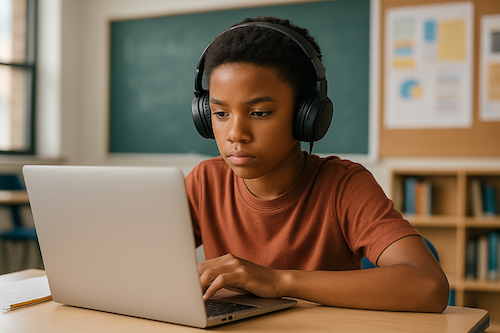
    Key phrase: Done right. Remote assessment isn’t just a Zoom call with a stopwatch. In the most recent study, the setup included specific safeguards:

    • Touchscreen laptops with screens 13” or larger; 
    • A secure platform with embedded digital materials;
    • Dual cameras to capture the student’s face and workspace;
    • A guided proctor in-room with the student; and
    • Standardized examiner and proctor training protocols.

    This carefully structured environment replicates traditional testing conditions as closely as possible. All four of the existing equivalency studies utilized the Presence Platform, as it already meets with established criteria.

    When those fidelity conditions are met, the results hold up. Findings showed p-values above .05 and effect sizes below .03 across all tested subtests, indicating statistical equivalence. This means schools can confidently use WJ V scores from remote testing, provided the setup adheres to best practices.

    What district leaders can do

    For remote testing to succeed, schools need to take a thoughtful, structured approach. Here are three steps districts can take now.

    1. Vet providers carefully. Ask about their platform, equipment, training, and how they align with published research standards. 
    2. Clarify device requirements. Ensure schools have the right technology in place before testing begins.
    3. Build clear policies. Set district-wide expectations for how remote testing should be conducted so everyone–staff and contractors alike–are on the same page. 

    A path forward

    Remote assessment won’t solve every challenge in special education, but it can close one critical gap: timely, accurate evaluations. For students in rural districts, schools with unfilled psychologist positions, virtual school settings, or families tired of waiting for answers, it can be a lifeline.

    The research is clear. Remote psychoeducational testing works when we treat it with the same care and rigor as in-person assessment. The opportunity now is to use this tool strategically–not as a last resort, but as part of a smarter, more sustainable approach to serving students. 

    At its best, remote testing is not a compromise; it’s a path toward expanded access and stronger support for the students who need it most.


    Latest posts by eSchool Media Contributors (see all)

    Source link

  • Navigating back-to-school anxiety: A K-12 success guide

    Navigating back-to-school anxiety: A K-12 success guide

    Key points:

    The anticipation of a new school year brings a complex mix of emotions for both students and teachers in K-12 education. As the 2025-2026 academic year approaches, experiencing anxiety about returning to the classroom is a natural response to change that affects everyone differently.

    From elementary students facing new classroom environments to high school teachers preparing for curriculum changes, these feelings manifest uniquely across age groups. Young children often worry about making new friends or adjusting to new teachers, while older students grapple with academic performance pressures and social dynamics. Teachers face their own challenges, including meeting diverse student needs, implementing new edtech tools and digital resources, and maintaining high academic standards while supporting student well-being.

    Early identification of anxiety symptoms is crucial for both educator and student success. Young children might express anxiety through behavioral changes, such as becoming more clingy or irritable, while older students might demonstrate procrastination or avoidance of school-related topics. Parents and educators should remain vigilant for signs like changes in sleeping patterns and/or eating habits, unusual irritability, or physical complaints. Schools must establish clear protocols for identifying and addressing anxiety-related concerns, including regular check-ins with students and staff and creating established pathways for accessing additional support when needed.

    Building strong support networks within the school community significantly reduces anxiety levels. Schools should foster an environment where students feel comfortable expressing concerns to teachers, counselors, or school psychologists. Regular check-ins, mentor programs, and peer support groups help create a supportive school environment where everyone feels valued and understood. Parent-teacher partnerships are essential for providing consistent support and understanding students’ needs, facilitated through regular communication channels, family engagement events, and resources that help parents support their children’s emotional well-being at home.

    Practical preparation serves as a crucial anxiety-reduction strategy. Teachers can minimize stress by organizing classrooms early, preparing initial lesson plans, and establishing routines before students arrive. Students can ease their transition by visiting the school beforehand, meeting teachers when possible, and organizing supplies. Parents contribute by establishing consistent routines at home, including regular sleep schedules and homework times, several weeks before school starts. Schools support this preparation through orientation events, virtual tours, welcome videos, and sharing detailed information about schedules and procedures well in advance.

    The importance of physical and emotional well-being cannot be overstated in managing school-related anxiety. Schools should prioritize regular physical activity through structured PE classes, recess, or movement breaks during lessons. Teaching age-appropriate stress-management techniques, such as deep breathing exercises for younger students or mindfulness practices for older ones, provides valuable tools for managing anxiety. Schools should implement comprehensive wellness programs addressing nutrition, sleep hygiene, and emotional regulation, while ensuring ready access to counselors and mental health professionals.

    Creating a positive classroom environment proves essential for reducing anxiety levels. Teachers can establish predictable routines, clear expectations, and open communication channels with students and parents. Regular class meetings or discussion times allow students to express concerns and help build community within the classroom. The physical space should consider lighting, noise levels, and seating arrangements that promote comfort and focus. Implementing classroom management strategies that emphasize positive reinforcement and restorative practices rather than punitive measures helps create a safe space where mistakes are viewed as learning opportunities.

    Technology integration requires careful consideration to prevent additional anxiety. Schools should provide adequate training and support for new educational technologies, introducing digital tools gradually while ensuring equitable access and understanding. Regular assessment of technology needs and challenges helps schools address barriers to effective use. Training should encompass basic operational skills, digital citizenship, online safety, and responsible social media use. Clear protocols for technology use and troubleshooting ensure that both students and teachers know where to turn for support when technical issues arise.

    Professional development for teachers should focus on managing both personal and student anxiety through trauma-informed teaching practices and social-emotional learning techniques. Schools must provide regular opportunities for skill enhancement throughout the year, incorporating both formal training sessions and informal peer learning opportunities. Creating professional learning communities allows teachers to share experiences, strategies, and support, while regular supervision and mentoring provide additional support layers.

    Long-term success requires commitment from all stakeholders–including administrators, teachers, support staff, students, and families–working together to create a supportive educational environment where everyone can thrive in the upcoming 2025-2026 school year.

    Latest posts by eSchool Media Contributors (see all)

    Source link

  • Leading (again) in uncertainty

    Leading (again) in uncertainty

    Key points:

    • Change has become the norm in our high-speed world
    • How school leaders can manage and control emotions
    • Em-pathy, not un-pathy, in school leadership
    • For more news on navigating change, visit eSN’s Educational Leadership hub

    We are again in uncertain times. We again find ourselves dealing with sudden changes and uncertainty. We seem to be in a state of constant change and ambiguity. The causes are different, but the feelings–and often our immediate reactions to these events–are the same.

    More News from eSchool News

    Teachers are superheroes. Every day, they rise to the challenge, pouring their hearts into shaping the future. They stay late to grade papers and show up early to tutor struggling students.

    In today’s evolving educational landscape, effective student assessment goes beyond multiple-choice tests and letter grades. According to a recent study, over 60 percent of educators believe traditional assessments fail to fully measure student understanding.

    Holden, my 21-month-old, has fallen in love.  His early morning snack and “couch time” includes a dose of “Tiger!”  This is toddler for, “Mom, turn on Daniel Tiger’s Neighborhood.”

    The COVID-19 pandemic left an indelible mark on K-12 education, placing immense pressure on teachers as they adapted, literally overnight, to new methods of instruction.

    Spring brings not only showers and flowers, but it also brings the opportunity to interview for new education positions. Preparing for an interview involves several key steps that can significantly impact the outcome.

    STEM careers are on the rise. According to the U.S. Bureau of Labor Statistics, employment in STEM occupations is expected to grow by 10.4 percent from 2023 to 2033, compared to just 3.6 percent for non-STEM occupations.

    The U.S. Department of Education is giving state education agencies 10 days to certify that their schools do not engage in any practices that the administration believes illegally promote diversity, equity, and inclusion.

    COVID had already killed thousands of people in other countries and was spreading in the United States when a top federal health official said schools should prepare to offer “internet-based teleschooling” in case they had to close for a period of time.

    More than half of educators (62 percent) are already making use of AI at school, with more than one-quarter using it daily for work purposes, according to a Twinkl survey of more than 3,500 U.S. teachers.

    Many math tasks involve reading, writing, speaking, and listening. These language demands can be particularly challenging for students whose primary language is not English.

    Want to share a great resource? Let us know at [email protected].

    Source link