This audio is auto-generated. Please let us know if you have feedback.
The U.S. Department of Education’s withholding of $6.2 billion in federal K-12 grants has local and state school systems scrambling to figure out how to make up for the budget shortages. It has also caused a swell of advocacy from families, lawmakers, educators and others across the nation.
The withheld funds for fiscal year 2025 were expected to be released by the Education Department July 1. Programs at risk due to the funding hold include English learner services, academic supports, after-school programming and professional development.
The frozen funds represent at least 10% or more of states’ overall K-12 federal revenues if the money is not distributed, according to the nonpartisan Learning Policy Institute.
At the local level, superintendents and principals are voicing concern about how the funding freeze will impact their school services, particularly those that serve English learners, homeless students and students from low-income families.
Chase Christensen, principal and superintendent of the 80-student Sheridan County School District #3 in rural Clearmont, Wyoming, said his district was expecting $30,000 in Title II and IV funding that is being withheld.
The district had nearly finalized its roughly $4 million budget for the upcoming school year when it learned of the federal funding freeze. It then adjusted the budget to remove those federal funds and is making up the difference by leaving a staffing position vacant.
Although the budget adjustment means student services under those title programs can continue, Christensen said “every dollar of federal funding for education is impactful” at the individual student level.
“When these funds are pulled, especially this late in the game for budget planning and everything else, students are going to be the ones that lose out,” Christensen said.
Nationally, bigger districts have the largest funding gaps, according to a New America analysis of data from 46 states that had available funding figures. Those districts include Los Angeles Unified School District ($82 million), Florida’s Dade County School District ($38 million), and Nevada’s Clark County School District ($22 million).
Advocacy groups and policymakers are calling on the Trump administration to restore the funds. The Boys and Girls Clubs of America, a nonprofit that supports afterschool programs, said the impact of the blocked funds will be “swift and devastating,” in a statement from President and CEO Jim Clark.
Clark said 926 Boys and Girls Clubs across the country could close, and 5,900 jobs would be lost if the funding is not released. “Afterschool and summer learning programs are cornerstones of academic success, public safety, and family stability for millions of young people — but right now, we stand at a dangerous tipping point,” Clark said.
The National English Learner Roundtable, a coalition of more than a dozen national and state-based organizations supportive of English learner services, said in a Thursday statement, “This unprecedented move by the Department has blindsided schools that have always been able to rely on these funds to support the start of the school year, and has created budgetary chaos for nearly every K-12 school district.”
On Thursday, 150 Democratic House lawmakers sent a letter to U.S. Education Secretary Linda McMahon and White House Office of Management and Budget Director Russell Vought demanding the title funds be released.
“This late-breaking decision, which provided no timeline for which states can expect a final decision, is leaving states financially vulnerable and forcing many to make last minute decisions about how to proceed with K12 education in this upcoming school year,” the letter said.
The funding hold has already led to staff layoffs, program delays and cancellations of services, the House members said.
Spending under review
The withheld funds were appropriated by Congress and approved by President Donald Trump earlier this year. States expected to gain access to the monies starting July 1, as routine. But the day before, on June 30, the Education Department told grantees not to expect the funds while it conducts a review and referred questions to OMB.
The specific grant funding being withheld includes:
Title II-A for professional development: $2.2 billion.
Title IV-A for student support and academic enrichment: $1.4 billion.
Title IV-B for 21st Century Community Learning Centers: $1.3 billion.
Title III-A for English-learner services: $890 million.
Title I-C for migrant education: $375 million.
On Thursday, in a statement to K-12 Dive, OMB said no funding decisions have been made and that it is conducting a “programmatic review of education funding.”
The office also said, “initial findings show that many of these grant programs have been grossly misused to subsidize a radical leftwing agenda.”
OMB and the Education Department have not indicated a timeframe for the review of the frozen federal funds.
The Trump administration has said it is scrutinizing spending across all federal agencies to ensure there is no waste, fraud or abuse of taxpayer dollars. Republican leaders have said they want to reduce the scope of the federal government to give states and districts more financial decision-making.
Additionally, since Trump’s inauguration in January, the Education Department has sought to lay off about half its staff, temporarily withheld federal COVID-19 emergency funding, scaled back education research, and promised to shut down the agency.
Supplement, not supplant concerns
All the turmoil is taking a toll on school and district education leaders, said the Center on Reinventing Public Education in a recent post. To support districts, CRPE recommends that state education agencies provide clarity about funding rules and help districts craft innovative solutions for budget shortages.
Finding funding efficiencies such as potential district consolidations may also need to be considered, CRPE said.
Christensen, the Wyoming principal and superintendent, said clarification and guidance from his superintendent networks and the National Association of Secondary School Principals has been helpful to him during this moment of funding uncertainty. Christensen was named Wyoming’s 2025 Secondary Principal of the Year by the Wyoming Association of Secondary School Principals earlier this year.
AASA, The School Superintendents Association, meanwhile, is telling its members that the “supplement, not supplant” rule for federal funding — the practice of using federal funds to replace state or local funds — should not be a concern at this time.
AASA points to a 2013 Education Department letter that said if a district needs to to use local dollars to make up for a funding shortfall in federal money, but then later receives the federal funding, this scenario would not trigger a “supplement, not supplant” concern because the local dollars were being loaned or fronted to fill that federal funding gap.
The 2013 letter also recommends districts document if they use local funds to fill in federal funding shortages.
Common Sense Media has released its first AI Toolkit for School Districts, which gives districts of all sizes a structured, action-oriented guide for implementing AI safely, responsibly, and effectively.
Common Sense Media research shows that 7 in 10 teens have used AI. As kids and teens increasingly use the technology for schoolwork, teachers and school district leaders have made it clear that they need practical, easy-to-use tools that support thoughtful AI planning, decision-making, and implementation.
Common Sense Media developed the AI Toolkit, which is available to educators free of charge, in direct response to district needs.
“As more and more kids use AI for everything from math homework to essays, they’re often doing so without clear expectations, safeguards, or support from educators,” said Yvette Renteria, Chief Program Officer of Common Sense Media.
“Our research shows that schools are struggling to keep up with the rise of AI–6 in 10 kids say their schools either lack clear AI rules or are unsure what those rules are. But schools shouldn’t have to navigate the AI paradigm shift on their own. Our AI Toolkit for School Districts will make sure every district has the guidance it needs to implement AI in a way that works best for its schools.”
The toolkit emphasizes practical tools, including templates, implementation guides, and customizable resources to support districts at various stages of AI exploration and adoption. These resources are designed to be flexible to ensure that each district can develop AI strategies that align with their unique missions, visions, and priorities.
In addition, the toolkit stresses the importance of a community-driven approach, recognizing that AI exploration and decision-making require input from all of the stakeholders in a school community.
By encouraging districts to give teachers, students, parents, and more a seat at the table, Common Sense Media’s new resources ensure that schools’ AI plans meet the needs of families and educators alike.
eSchool Media staff cover education technology in all its aspects–from legislation and litigation, to best practices, to lessons learned and new products. First published in March of 1998 as a monthly print and digital newspaper, eSchool Media provides the news and information necessary to help K-20 decision-makers successfully use technology and innovation to transform schools and colleges and achieve their educational goals.
Students need more support around education paths and career options, including hands-on experiences, according to a new nationwide survey from the nonprofit American Student Assistance.
The survey of more than of 3,000 students in grades 7-12 offers insights into teens’ plans after high school. The research, Next Steps: An Analysis of Teens’ Post-High School Plans, uncovers evolving trends in teenagers’ attitudes, perceptions, and decision-making about their post-high school plans.
“This analysis of teens’ post high school plans reveals shifts in students’ thinking and planning. We need to change the way we help young people navigate the complex and evolving landscape of education and career options,” said Julie Lammers, Executive Vice President of ASA. “Starting in middle school, our young people need early access to opportunities that empowers them to explore careers that match their interests and strengths; hands-on, skills-based experiences in high school; and information and resources to navigate their path to postsecondary education and career. All of this will enable them to graduate informed, confident, and empowered about what they want to do with their futures.”
The survey offers notable findings regarding parental influence on teens’ planning, perceptions of nondegree pathways like trade or technical school, apprenticeships, and certificate programs, and a continued drop-off in kids’ plans to go to college immediately after high school graduation.
Key findings include:
Teens’ interest in college is down while nondegree paths are on the rise. Nearly half of all students said they aren’t interested in going to college, with just 45 percent saying two- or four-year college was their most likely next step. Meanwhile 38 percent of teens said they were considering trade or technical schools, apprenticeships, and technical bootcamp programs, although only 14 percent say that such a path is their most likely next step.
Parents are one of teens’ biggest influencers—and they’re skeptical of nondegree options. A vast majority (82 percent) of teens said their parents agree with their plans to go to four-year college, while only 66 percent said parents supported plans to pursue a nondegree route. In fact, teens reported parents were actually more supportive (70 percent) of foregoing education altogether right after high school vs. pursuing a nondegree program.
A concerning number of young people don’t have plans for further education or training. Nearly one quarter (23 percent) said they have no immediate plans to continue formal education or training upon graduation. Teens not planning to continue education after high school indicated they were thinking of beginning full-time work, entering a family business, starting their own business, or joining the military.
Teens, and especially middle schoolers, are feeling better prepared to plan their futures. In recent years policymakers, educators, employers, and other stakeholders have pushed to make career-connected learning a more prominent feature of our education to workforce system. Survey results say it’s paying off. Agreement with the statement “my school provides me with the right resources to plan for my next steps after high school” grew from just 59 percent in 2018, to 63 percent in 2021, to 82 percent in 2024. Notably, the largest increase occurred at the middle school level, where confidence in in-school planning resources jumped from 60 percent in 2018 to 90 percent in 2024.
Girls are much more likely to plan to attend college than boys. Boys and girls are equally interested in college when they’re in middle school, but by high school, more than half (53 percent) of girls say they’re likely to attend college compared to just 39 percent of boys. The gender gap is smaller when it comes to nondegree pathways: 15 percent of high school boys say they will likely attend vocational/trade school, participate in an apprenticeship, or take a certificate program, compared to 10 percent of high school girls.
City kids aren’t as “into” college. Urban teens were least likely (39 percent) to say they plan to go to college. Suburban teens are much more likely to plan to attend a college program (64 percent) while 46 percent of rural students planned on college.
Students of color are college bound. More than half (54 percent) of Black teens and 51 percent of Hispanic youth are planning to go to college, compared to 42 percent of White teens.
eSchool Media staff cover education technology in all its aspects–from legislation and litigation, to best practices, to lessons learned and new products. First published in March of 1998 as a monthly print and digital newspaper, eSchool Media provides the news and information necessary to help K-20 decision-makers successfully use technology and innovation to transform schools and colleges and achieve their educational goals.
A group of Texas law school deans is urging the state Supreme Court to uphold American Bar Association accreditation standards for public law schools. The state’s highest court announced in April that it was considering dropping the ABA requirement for licensure, opening a public comment period on the matter that closed July 1.
“We strongly support continued reliance on ABA accreditation for Texas law schools and licensure eligibility,” the deans of eight of the state’s 10 ABA-accredited law schools wrote in a letter to the Texas Supreme Court. “ABA accreditation provides a nationally recognized framework for quality assurance and transparency; portability of licensure through recognition of ABA accreditation by all 50 states, which is critical for graduates’ career flexibility; consumer protections and public accountability through disclosure standards; and a baseline of educational quality that correlates with higher bar passage rates and better employment outcomes.”
Though the Texas justices did not say why they were reviewing ABA accreditation, the law deans’ letter noted that the body has already suspended its DEI standards—a move it announced in February and then extended in May through Aug. 31, 2026. That means “the language of the Standard can be revised in accordance with federal constitutional law and Texas state law that bar certain diversity, equity and inclusion practices at state universities,” the deans wrote.
Of the state’s ABA-accredited law schools’ deans, only Robert Chesney of the University of Texas and Robert Ahdieh of Texas A&M didn’t sign the letter, Reuters reported.
In his own nine-page letter to the state Supreme Court, Chesney urged the justices to look at “alternative” pathways for ensuring law school standards “to help pave the way for innovative, lower-cost approaches to legal education.”
Ahdieh told Reuters that whatever the court decides about ABA accreditation, it’s “critical” that law degrees earned in Texas remain portable.
HEPI Director, Nick Hillman, looks at the latest row on admissions to the University of Oxford.
In a speech on Friday, the Minister for Skills, Baroness Smith, strongly chastised her alma mater, the University of Oxford, for taking a third of their entrants from the 6% of kids that go to private schools.
In a section of the speech entitled ‘Challenging Oxford’, we were told the situation is ‘absurd’, ‘arcane’ and ‘can’t continue’:
Oxford recently released their state school admissions data for 2024.
And the results were poor.
66.2% – the lowest entry rate since 2019.
I want to be clear, speaking at an Oxford college today, that this is unacceptable.
The university must do better.
The independent sector educates around 6% of school children in the UK.
But they make-up 33.8% of Oxford entrants.
Do you really think you’re finding the cream of the crop, if a third of your students come from 6% of the population?
It’s absurd.
Arcane, even.
And it can’t continue.
It’s because I care about Oxford and I understand the difference that it can make to people’s lives that I’m challenging you to do better. But it certainly isn’t only Oxford that has much further to go in ensuring access.
This language reminded me of the Laura Spence affair, which produced so much heat and so little light in the Blair / Brown years and which may even have set back sensible conversations on broadening access to selective higher education.
I wrote in a blog over the weekend that the Government are at risk of forgetting the benefit of education for education’s sake. That represents a political hole that Ministers should do everything to avoid as it could come to define them. Ill-thought through attacks on the most elite universities for their finely-grained admissions decisions represent a similar hole best avoided. Just imagine if the Minister had set out plans to tackle a really big access problem, like boys’ educational underachievement, instead. The Trump/Harvard spat is something any progressive government should seek to avoid, not copy.
The latest chastisement is poorly formed for at least three specific reasons: the 6% is wrong in this context; the 33.8% number does not tell us what people tend to think it does; and Oxford’s current position of not closely monitoring the state/independent split is actually in line with the regulator’s guidance.
6% represents only half the proportion (12%) of school leavers educated at independent schools. In other words, the 6% number is a snapshot for the proportion of all young people in private schools right now; it tells us nothing about those at the end of their schooling and on the cusp of higher education.
The 33.8% number is unhelpful because 20%+ of Oxford’s new undergraduates hail from overseas and they are entirely ignored in the calculation. If you include the (over) one in five Oxford undergraduate entrants educated overseas, the proportion of Oxford’s intake that is made up of UK private school kids falls from from something like one-third to more like one-quarter. This matters in part because the number of international students at Oxford has grown, meaning there are fewer places for home students of all backgrounds. In 2024, Oxford admitted 100 more undergraduate students than in 2006, but there were 250 more international students – and consequently fewer Brits. We seem to be obsessed with the backgrounds of home students and, because we want their money, entirely uninterested in the backgrounds of international students.
The Office for Students dislikes the state/private metric. This is because of the differences within these two categories: in other words, there are high-performing state schools and less high-performing independent schools. Last year, when the University of Cambridge said they planned to move away from a simplistic state/independent school target, John Blake, the Director of Fair Access and Participation at the Office for Students, confirmed to the BBC, ‘we do not require a target on the proportion of pupils from state schools entering a particular university.’ So universities have typically shied away from this measure in recent times. If Ministers think it is a key metric after all and if they really do wish to condemn individual institutions for their state/independent split, it would have made sense to have had a conversation with the Office for Students and to have encouraged them to put out new guidance first. At the moment, the Minister and the regulator are saying different things on an important issue of high media attention.
Are independently educated pupils overrepresented at Oxbridge? Quite possibly, but the Minister’s stick/schtick, while at one with the Government’s wider negative approach to independent schools, seems a sub-optimal way to engineer a conversation on the issue. Perhaps Whitehall wanted a headline more than it wanted to get under the skin of the issue?
we do not require a target on the proportion of pupils from state schools entering a particular university
John Blake, Director for Fair access and participation
This audio is auto-generated. Please let us know if you have feedback.
The “One, Big, Beautiful Bill,” a major tax and spending package narrowly passed by Congress and signed by President Donald Trump on July 4, includes a Republican-led national school choice provision that public school advocates and some researchers say will disrupt the traditional public school K-12 model by driving more competition with public schools.
This controversial issue has been debated at the local, state and national levels for decades, but this is the first federally funded, nationwide private school choice program. While unknowns remain about how many students, schools and states will participate, reaction has been swift, with opponents calling the law harmful to public schools and supporters labeling it as a historic move for educational freedom.
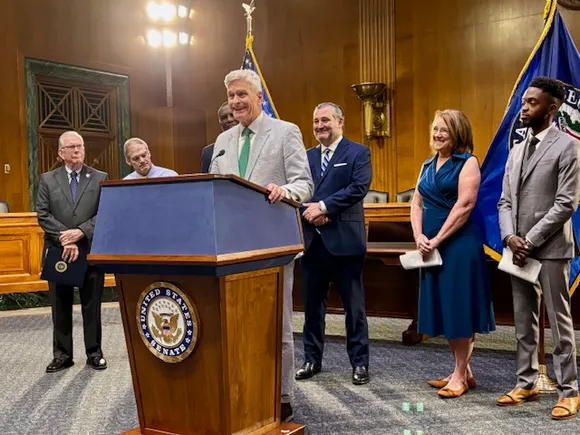
“Parents should decide where their kids go to school. This bill helps them do that,” said Sen. Bill Cassidy, R-La., author of the Educational Choice for Children Act included in the “One, Big, Beautiful Bill” and chair of the Senate Health, Education, Labor and Pensions Committee, in a Thursday statement.
Here’s what you need to know about the newly enacted measure:
What the new school choice provision says
The law provides a federal tax incentive to generate funds for families’ educational expenses, including private school tuition at secular and religious schools, as well as costs incurred for children at public and private schools such as fees, tutoring, educational therapies, transportation, technology and other expenses. It would also apply to homeschooling costs.
To be eligible, families’ household incomes must not exceed 300% of the median gross income for their locality. The means, for example, students in Memphis living in households with incomes of up to $364,400 could be eligible, based on a median family income of $91,100.
States, however, can opt out of participating, meaning none of the students in that state would be eligible for the program. It was not immediately clear which state agency or leader decides this.
Under the new school choice law, any taxpayer who donates up to $1,700 annually to a scholarship granting organization — a 501(c)(3) charity organization — would be eligible for a 100% federal income tax credit for their contribution, or the equal amount in a reduction of taxes owed. According to the Institute on Taxation and Economic Policy, there is no other charitable giving structure that allows this type of dollar-for-dollar tax incentive.
ITEP’s analysis of Internal Revenue Service data shows that more than 138 million people could use this tax credit in 2027 if they choose to. But some might not participate because of the paperwork involved or because they disagree with private school vouchers, ITEP said.
If 43% of taxpayers — which would be about 59 million people — participate, the cost to the federal government would be $101 billion per year, according to ITEP.
The law does not cap the program’s cost, despite earlier versions of the bill limiting it to $4 billion or $5 billion per year. In addition, the program is permanent with no expiration date.
The scholarship-granting organizations that will distribute tuition vouchers for education expenses must be independent entities and cannot be affiliated with a school, according to ACE Scholarships, a nonprofit scholarship-granting organization that has analyzed the law. The organization, in an FAQ, also said parents cannot direct their tax credit directly to their child’s education expenses.
Rather, the scholarship-granting organizations will be charged with independently determining students’ eligibility.
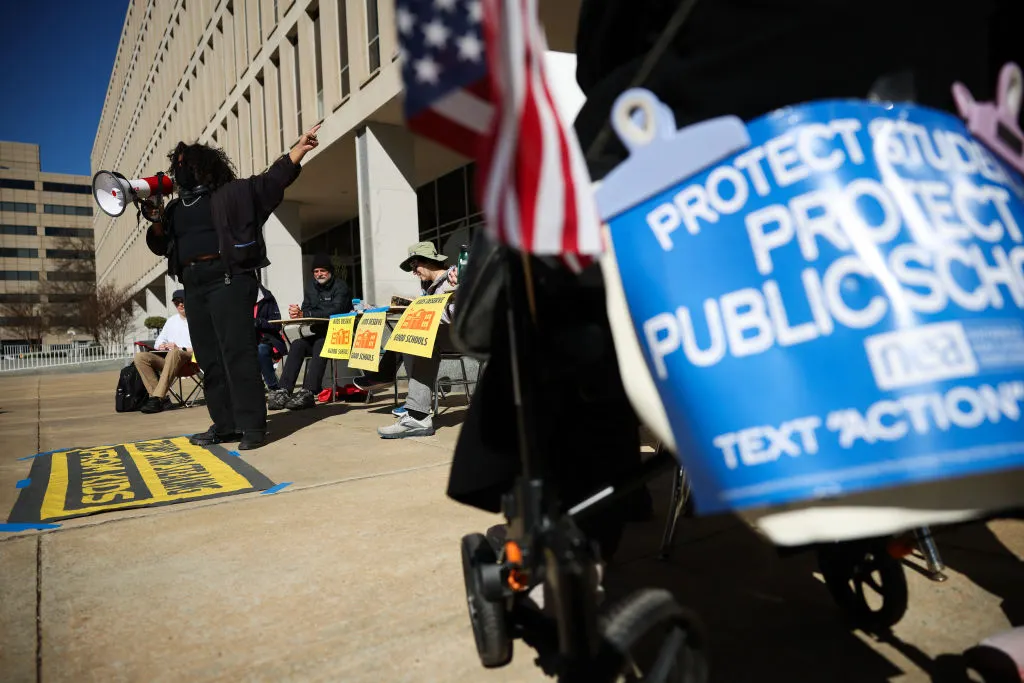
Protestors participate in a “study-in” in front of the U.S. Department of Education on March 21, 2025, in Washington, D.C.
Kayla Bartkowski via Getty Images
What people are saying
Reaction to the law was swift, with critics voicing concern about the impacts on public school budgets and supporters applauding what they call a significant step toward parental empowerment in K-12 education.
Robert Kim, executive director of the Education Law Center, blasted the new program. Studies have shown private school vouchers “sweep aside civil rights protections, support segregation, decimate public school budgets, and do not improve student outcomes,” Kim said in a statement.
He added, “Vouchers undermine public education, the cornerstone of our democracy, and have no place in federal policy.”
EdTrust, a nonprofit organization that works to improve outcomes for students of color, lambasted the law as an “extremely costly federal voucher program that will spend billions in public money to subsidize wealthy families accessing private schools.” and will operate with “little oversight.”
EdTrust has nicknamed the law the “Great American Heist” for its private school choice provision and changes to Medicaid, food stamps and college loan repayment programs. The law “would dismantle the very programs that make education and economic advancement possible for students of color, first-generation college students, and low- and middle-income families,” EdTrust’s statement said.
Rachel Laser, president and CEO of Americans United for Separation of Church and State, said in a statement that the school choice program “will divert billions of taxpayer dollars to private religious schools that indoctrinate and can discriminate against students and their families based on the schools’ beliefs.”
Supporters of private school choice, however, struck a different note. They said parents have become frustrated at disappointing student academic performances in public schools and want more options for their children.
“This is a huge victory for American families that have been praying and hoping for a financial lifeline to provide their children with the education they need to thrive,” said Anthony J. de Nicola, chairman of the board of Invest in Education Coalition, an organization that has promoted a federal school choice program, in a statement.
Tommy Schultz, CEO of the American Federation for Children, a school choice advocacy organization, said the law’s passage will “supercharge” school choice across the country.
“For a generation, our movement has fought to give all families, especially lower-income families, the freedom to choose the best K-12 education for their sons and daughters, and now President Trump has signed into law the single biggest advancement of that goal,” Schultz said in a statement.
Even with the praise, however, some supporters urged caution.
In an interview with Catholic News Agency published July 3, John DeJak, executive director of the Secretariat of Catholic Education for the U.S. Conference of Catholic Bishops, applauded the law’s passage but also pointed to “unknowns” like how the program would address religious liberty protections.
Success! Not only does the OBBB include historic tax cuts and cost savings for American families – the bill also
✅ Includes massive expansion in school choice
✅ Adds accountability measures for higher ed institutions
✅ Reduces federal student loan borrowing amounts to help…
— Secretary Linda McMahon (@EDSecMcMahon) July 3, 2025
What happens next
The tax incentive starts with the taxable years ending after Dec. 31, 2026, — and there’s a lot to work out before then.
For starters, the new law says that the U.S. secretary of education must draft regulations for how the program will operate, including recordkeeping and reporting, as well as enforcement of a state’s certification of scholarship-granting organizations.
The U.S. Department of Education did not provide a time frame for this by press time on Monday.
Details such as state participation and how the national private school choice program would operate in conjunction with state-level choice programs also need to be worked out. According to EdChoice, an organization that advocates for school choice, 35 states, the District of Columbia and Puerto Rico have private school choice programs that together serve nearly 1.3 million students.
It’s also unclear how this new school choice program will meld into Republican-led plans to close the Education Department.
In the meantime, school choice advocates and supporters of public schools vow to continue advocating for and against the controversial law.
DES MOINES, Iowa — Macon Smith stood in front of a nearly empty classroom 1,000 miles from home. He asked his opponent and the two judges in the room if they were ready to start, then he set a six-minute timer and took a deep breath.
“When tyranny becomes law, rebellion becomes duty,” he began.
In front of Macon, a 17-year-old high school junior, was a daunting task: to outline and defend the argument that violent revolution is a just response to political oppression.
In a few hours, Macon would stand in another classroom with new judges and a different opponent. He would break apart his entire argument and undo everything he had just said.
“An eye for an eye makes the whole world blind,” Macon started.
It doesn’t really matter what opinion Macon holds on violence or political oppression. In this moment in front of the judges, he believes what he’s saying. His job is to get the judges to believe with him.
Macon was one of more than 7,000 middle and high school students to compete in the National Speech and Debate Tournament this summer in Iowa, run by an organization that is celebrating a century in existence.
In that time, the National Speech and Debate Association has persevered through economic and social upheaval. It is entering its next era, one in which the very notion of engaging in informed and respectful debate seems impossible. The organizers of this event see the activity as even more important in a fracturing society.
“I don’t think there’s an activity in the world that develops empathy and listening skills like speech and debate,” said Scott Wunn, the organization’s president. “We’re continuing to create better citizens.”
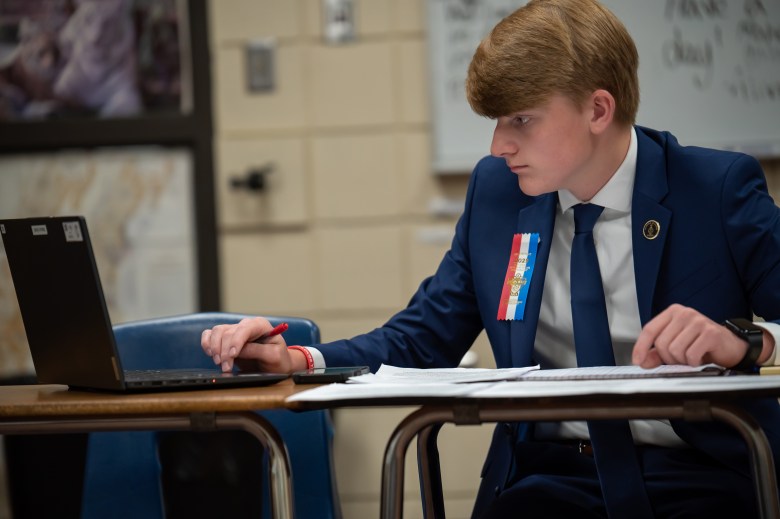
Macon Smith, a rising senior from Bob Jones Academy in South Carolina, competes in the third round of the Lincoln-Douglas Debate at the National Speech and Debate Tournament in Iowa this summer. Credit: Meenakshi Van Zee for The Hechinger Report
Though the tournament is held in different cities around the country, for the 100th anniversary, the organizers chose to host it in Des Moines, where the association’s headquarters is based.
Preparing for this competition was a year in the making for Macon, who will be a senior at Bob Jones Academy, a Christian school in Greenville, South Carolina, this fall. Students here compete in more than two dozen categories, such as Original Oratory, in which they write and recite their own 10-minute speeches, or Big Questions, where they attempt to argue broad, philosophical ideas.
Macon’s specialty, the Lincoln-Douglas Debate, is modeled after a series of public, three-hour debates between Abraham Lincoln and Sen. Stephen Douglas in 1858. In this event, two students have just 40 minutes to set up their arguments, cross-examine each other and sway the judges.
“Even if I don’t personally believe it, I can still look at the facts and determine, OK, this is a good fact, or it’s true, and argue for that side,” Macon said.
Debaters often have to tackle topics that are difficult, controversial and timely: Students in 1927 debated whether there was a need for a federal Department of Education. In 1987, they argued about mandatory AIDS testing. In 2004, they debated whether the United States was losing the war on terror. This year, in the Public Forum division, students debated whether the benefits of presidential executive orders outweigh the harms.
While the speech and debate students practiced for their national event, adults running the country screamed over each other during a congressional hearing on state sanctuary policies. A senator was thrown to the floor and handcuffed during a press conference on sending the National Guard to immigration enforcement protests in Los Angeles. Most Americans feel political discourse is moving in the wrong direction — both conservatives and progressives say talking politics with someone they disagree with has become increasingly stressful and frustrating.
Speech and debate club, though, is different.
“First of all, it gives a kid a place to speak out and have a voice,” said Gail Nicholas, who for 40 years has coached speech and debate at Bob Jones Academy alongside her husband, Chuck Nicholas, who is Macon’s coach. “But then also learn to talk to other people civilly, and I think that’s not what’s being modeled out there in the real world right now.”
Macon Smith, a rising senior from Bob Jones Academy in South Carolina, shows off the notes that he took during debates at the National Speech and Debate Tournament in Iowa. Credit: Meenakshi Van Zee for The Hechinger Report
On the second day of the competition in a school cafeteria in West Des Moines, Macon was anxiously refreshing the webpage that would show the results of his rounds to learn whether he would advance to semifinals.
For most of the school year, Macon spent two days a week practicing after school, researching and writing out his arguments. Like many competitors, he has found that it’s easy to make snap judgments when you don’t know much about an issue. Decisively defending that view, to yourself and to others, is much harder.
“I tend to go in with an opinion and lose my opinion as the topic goes on,” said Daphne DiFrancesco, a rising senior from Cary Academy in Cary, North Carolina.
Traveling for regional events throughout the school year means Macon has become friends with students who don’t always share his conservative views. He knows this because in debate, discussing politics and religion is almost unavoidable.
“It doesn’t make me uncomfortable at all,” Macon said. “You don’t want to burn down a bridge before you make it with other people. If you stop your connection with a person right at their political beliefs, you’re already cutting off half of the country. That’s not a good way to conduct yourself.”
Macon, and other students in the clubs, said participating has made them think more deeply about their own beliefs. Last year, Macon debated a bill that would defund Immigration and Customs Enforcement, an agency he supports. After listening to other students, he developed a more nuanced view of the organization.
“When you look at the principle of enforcing illegal immigration, that can still be upheld, but the agency that does so itself is flawed,” he said.
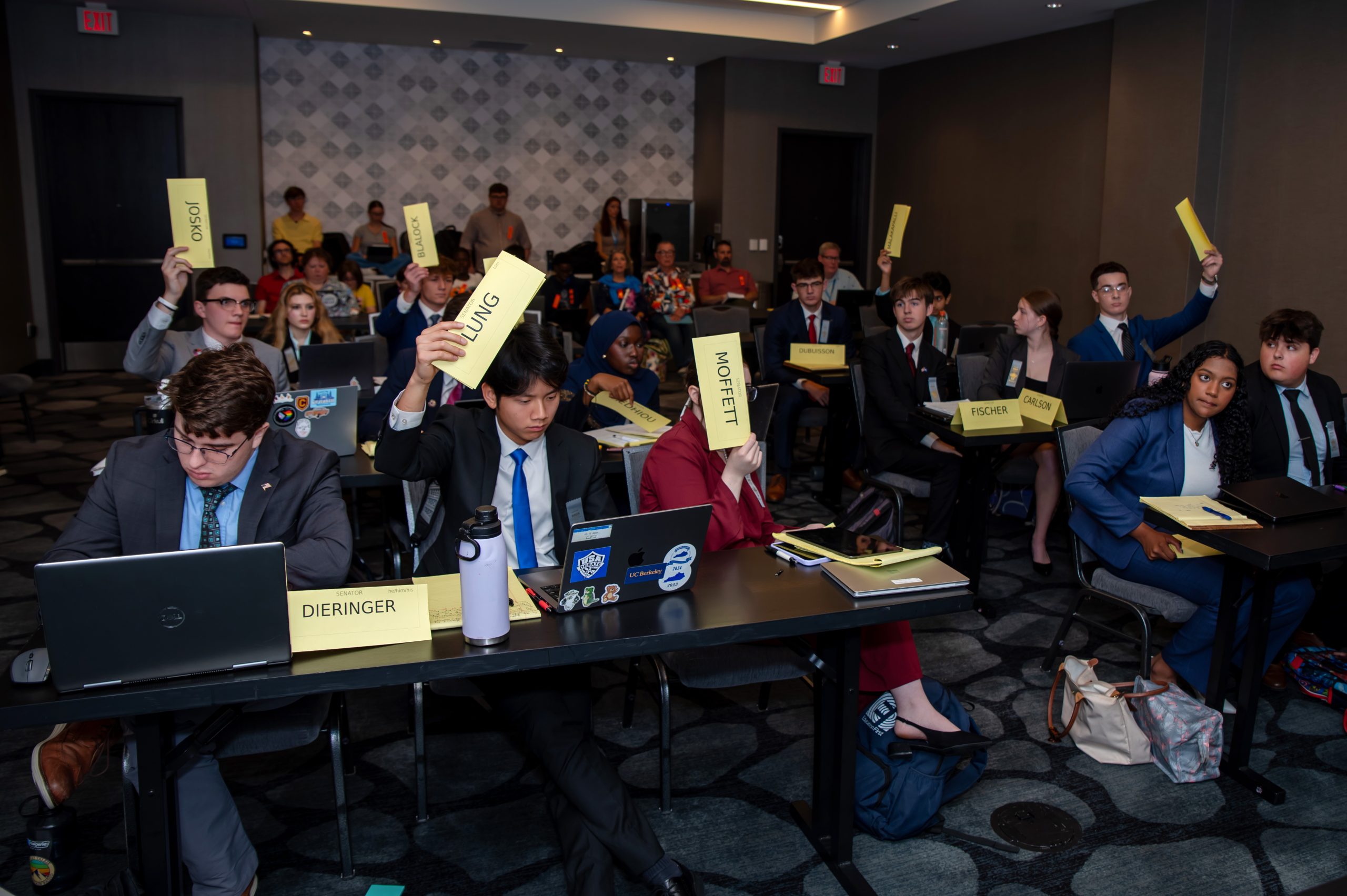
Henry Dieringer, a senior from L.C. Anderson High School in Austin, Texas, went into one competition thinking he would argue in favor of a bill that would provide work permits for immigrants, which he agrees with. Further research led him to oppose the idea of creating a federal database on immigrants.
“It made me think more about the way that public policy is so much more nuanced than what we believe,” Henry said.
On the afternoon of the second day of the national tournament, Macon learned he didn’t advance to the next round. What’s sad, he said, is he probably won’t have to think this hard about the justness of violent revolution ever again.
“There’s always next year,” Macon said.
Callista Martin, 16, a rising senior from Bainbridge High School in Washington state, also didn’t make the semifinals. Callista and Macon met online this year through speech and debate so they could scrimmage with someone they hadn’t practiced with before. It gave them the chance to debate someone with differing political views and argument styles.
Macon Smith, a rising senior from Bob Jones Academy in South Carolina, takes notes during a round of the Lincoln-Douglas Debate at the National Speech and Debate Tournament in Iowa. Credit: Meenakshi Van Zee for The Hechinger Report
“In the rounds, I’m an entirely different person. I’m pretty aggressive, my voice turns kind of mean,” Callista said. “But outside of the rounds, I always make sure to say hi to them before and after and say things I liked about their case, ask them about their school.”
Talking to her peers outside of rounds is perhaps the most important part of being in the club, Callista said. This summer, she will travel to meet with some of her closest friends, people she met at debate camps and tournaments in Washington.
Since Callista fell in love with speech and debate as a freshman, she has devoted herself to keeping it alive at her school. No teacher has volunteered to be a coach for the debate club, so the 16-year-old is coaching both her classmates and herself.
A lack of coaches is a common problem. Just under 3,800 public and private high schools and middle schools were members of the National Speech and Debate Association at the end of this past school year, just a fraction of the tens of thousands of secondary schools in the country. The organization would like to double its membership in the next five years.
That would mean recruiting more teachers to lead clubs, but neither educators nor schools are lining up to take on the responsibility, said David Yastremski, an English teacher at Ridge High School in New Jersey who has coached teams for about 30 years.
It’s a major time commitment for teachers to dedicate their evenings and weekends to the events with little supplemental pay or recognition. Also, it may seem like a risk to some teachers at a time when states such as Virginia and Louisiana have banned teachers from talking about what some call “divisive concepts,” to oversee a school activity where engaging with controversial topics is the point.
“I primarily teach and coach in a space where kids can still have those conversations,” Yastremski said. “I fear that in other parts of the country, that’s not the case.”
Dennis Philbert, a coach from Central High School in Newark, New Jersey, who had two students become finalists in the tournament’s Dramatic Interpretation category, said he fears for his profession because of the scrutiny educators are under. It takes the fun out of teaching, he said, but this club can reignite that passion.
“All of my assistant coaches are former members of my team,” Philbert said. “They love this activity [so much] that they came back to help younger students … to show that this is an activity that is needed.”
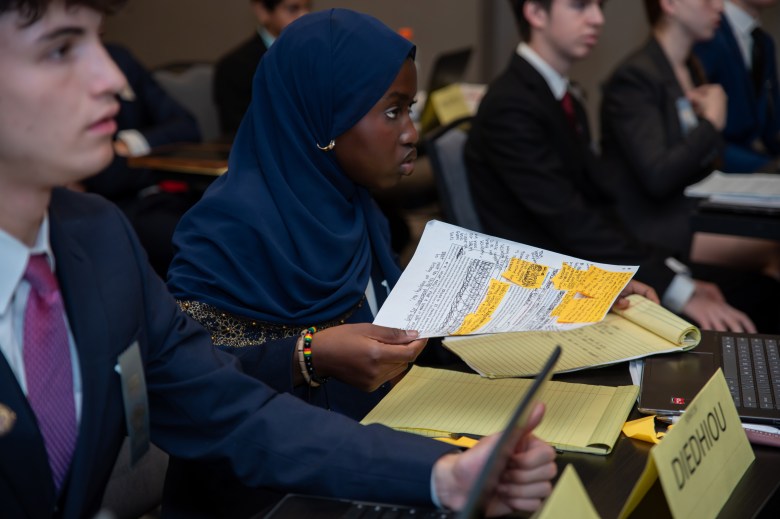
On the other side of Des Moines, Gagnado Diedhiou was competing in the Congressional Debate, a division of the tournament that mimics Congress and requires students to argue for or against bills modeled after current events. During one round, Gagnado spoke in favor of a bill to shift the country to use more nuclear energy, for a bill that would grant Puerto Rico statehood, and against legislation requiring hospitals to publicly post prices.
Gagnado Diedhiou, a senior from Eastside High School in South Carolina, competing in the first round of the Congressional Debate at the National Speech and Debate Tournament in Iowa in June. Credit: Meenakshi Van Zee for The Hechinger Report
Just like in Congress, boys outnumbered girls in this classroom. Gagnado was the only Black teenager and the only student wearing a hijab. The senior, who just graduated from Eastside High School in Greenville, South Carolina, is accustomed to being in rooms where nobody looks like her — it’s part of the reason she joined Equality in Forensics, a national student-led debate organization that provides free resources to schools and students across the country.
“It kind of makes you have to walk on eggshells a little bit. Especially because when you’re the only person in that room who looks like you, it makes you a lot more obvious to the judges,” said Gagnado, who won regional Student of the Year for speech and debate in her South Carolina district this year. “You stand out, and not always in a good way.”
Camille Fernandez, a rising junior at West Broward High School in Florida, said the competitions she has participated in have been dominated by male students. One opponent called her a vulgar and sexist slur after their round was over. Camille is a member of a student-led group — called Outreach Debate — trying to bridge inequities in the clubs.
“A lot of people think that debate should stay the same way that it’s always been, where it’s kind of just — and this is my personal bias — a lot of white men winning,” Camille said. “A lot of people think that should be changed, me included.”
Despite the challenges, Gagnado said her time in debate club has made her realize she could have an influence in the world.
“With my three-minute speech, I can convince a whole chamber, I can convince a judge to vote for this bill. I can advocate and make a difference with some legislation,” said Gagnado, who is bound for Yale.
About 10,000 people attended the National Speech and Debate Tournament in Iowa this June during the organization’s centennial anniversary. Credit: Meenakshi Van Zee for The Hechinger Report
A day before the national tournament’s concluding ceremony, a 22-year-old attendee rushed the stage at the Iowa Event Center in Des Moines during the final round of the Humorous Interpretation speech competition, scaring everyone in the audience. After he bent down to open his backpack, 3,000 people in the auditorium fled for the exits. The man was later charged with possession of a controlled substance and disorderly conduct. For a brief moment, it seemed like the angry discourse and extreme politics from outside of the competition had become a part of it.
In response, the speech and debate organization shifted the time of some events, limited entrances into the building and brought in metal detectors, police officers and counselors. Some students, Gagnado among them, chose not to return to the event.
Still, thousands of attendees stayed until the end to celebrate the national champions. During the awards ceremony, where therapy dogs roamed the grounds, Angad Singh, a student from Bellarmine College Preparatory in California competing in Original Oratory, took the national prize for his speech on his Sikh identity and the phrase “thoughts and prayers” commonly repeated by American leaders after a tragedy, titled “Living on a Prayer.”
“I’ve prayed for change,” Singh told the audience. “Then I joined speech and debate to use my voice and fight for it.”
The Hechinger Report provides in-depth, fact-based, unbiased reporting on education that is free to all readers. But that doesn’t mean it’s free to produce. Our work keeps educators and the public informed about pressing issues at schools and on campuses throughout the country. We tell the whole story, even when the details are inconvenient. Help us keep doing that.
As of 2023, more than 464 million people listen to podcasts regularly, and this number is growing each year. And with over 70% of parents listening with their children, podcasts are a communication channel your school can’t afford to overlook.
Why does this matter for education marketing?
Because parents, students, and alumni increasingly expect content that’s on demand, easy to consume, and aligned with how they already engage with other brands. A podcast offers exactly that. It provides a way to humanize your institution, give voice to your values, and build stronger relationships with your audience, all without requiring a massive budget or full production studio.
Is a school podcast worth the effort?
Here’s the reality: Schools that use podcasting strategically are finding new ways to connect with prospective families, boost engagement, and increase brand awareness. Whether you’re trying to showcase your faculty, highlight student achievements, or simply keep your community informed, a podcast gives you a direct line to your audience’s attention.
First things first, what is a podcast in school? A school podcast is an audio series created by educators, students, or staff to share news, stories, or educational content. It can highlight campus life, feature interviews, or support learning, helping schools connect with their communities in an accessible, on-demand format.
This blog post breaks down seven clear steps for launching a school podcast, from planning and production to promotion and measurement.
Struggling with enrollment?
Our Digital Marketing team can help you generate more leads!
Step 1: Define Your Podcast’s Purpose
Before you record a single second of audio, it’s important to answer one key question: Why are we starting this podcast?
A well-defined purpose ensures your content stays focused and impactful. Are you hoping to:
Attract and engage prospective families?
Showcase student life and culture?
Build thought leadership through staff and faculty interviews?
Strengthen alumni connections?
The most successful school podcasts have a clear audience and goal. For example, a private school may want to build trust with prospective families by featuring authentic stories from teachers and students. A language institute might use a podcast to demonstrate teaching methods or highlight student success stories. A university could aim to strengthen alumni ties through interviews and updates.
Whatever the goal, be specific. Broad intentions like “we want to communicate better” are too vague. Instead, anchor your podcast in a focused objective, be it enhancing recruitment, increasing transparency, or offering value-added resources to your community.
Once the purpose is clear, ensure leadership is aligned. Gaining buy-in from school administrators and relevant departments will give your project momentum, credibility, and cross-functional support.
Example: Yale University’s admissions office launched an official podcast called Inside the Yale Admissions Office to pull back the curtain on their application process. Their goal was to demystify college admissions for prospective students by sharing firsthand insights from actual admissions officers. Because the project aligned perfectly with Yale’s outreach goals, it had strong internal buy-in. Admissions staff themselves host the show, with support from the Dean.
Pro tip: Avoid trying to appeal to everyone. Tailor your podcast to a specific listener group and let that clarity shape your voice, content, and messaging.
Step 2: Choose the Right Format
The best podcast format is the one that plays to your strengths and fits your resources. You don’t need to copy what others are doing. What matters most is that your format fits your team and speaks to your audience.
Popular school-friendly formats include:
Interviews with staff, students, or alumni to spotlight personalities and accomplishments
Thematic episodes exploring topics like student life, curriculum innovations, or study tips.
Student-produced episodes that give learners ownership and boost engagement, or other types of user-generated content
Roundtable discussions where multiple voices weigh in on a key theme.
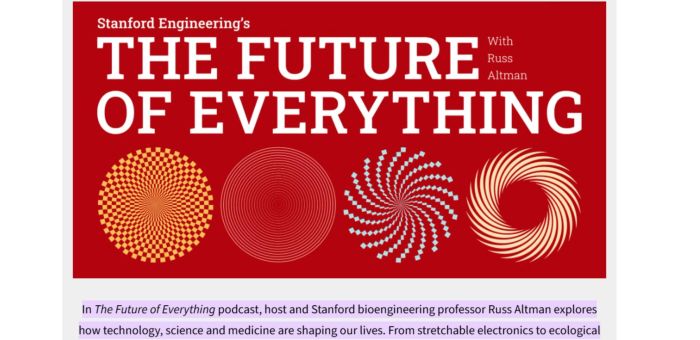
Example: A great illustration of a defined concept is Stanford University’s The Future of Everything podcast, produced by its School of Engineering. The show’s premise is crystal clear – each episode explores how technology, science, and medicine are shaping our lives and future. Hosted by a Stanford bioengineering professor, it follows an interview format where experts discuss innovations in fields from AI to health care. This distinctive theme and structure leverage Stanford’s academic strengths and consistently deliver on what the title promises.
Whatever you choose, aim for consistency in tone and structure. A 20-minute interview series sounds very different from a 10-minute solo voice memo, but either can be powerful if well-executed.
Remember: A podcast is more than a recording; it’s a conversation. Make space for authenticity and spontaneity to shine through.
Step 3: Build a Content Plan and Plan Episodes in Advance
Now that you’ve defined your purpose and format, it’s time to think long-term. One of the biggest mistakes new podcasters make is launching without a content roadmap. Jumping into production without a plan can lead to burnout or disjointed messaging.
Ask yourself:
What themes or topics will we cover across the season?
Which internal experts or guests should we feature?
Are there recurring segments that can anchor each episode?
A solid content calendar will help you avoid scrambling for ideas and ensure your messaging supports broader marketing campaigns (like admissions deadlines, open houses, or graduation season).
Here’s an example of a 6-episode launch plan for a K–12 school podcast:
Welcome from the Head of School
A Day in the Life of a Student
Meet Our Parent Community
Inside the Classroom: A Faculty Roundtable
From Our Alumni: Life After Graduation
How We Support Student Wellbeing
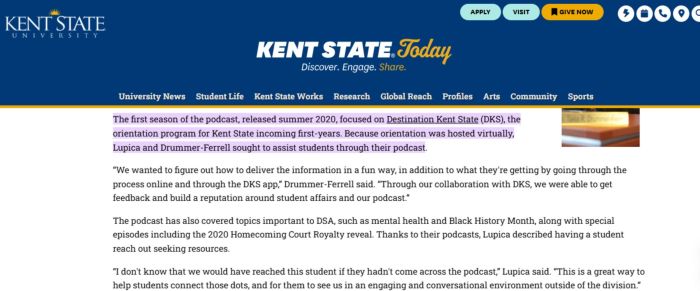
Example: At Kent State University, the Division of Student Affairs took a strategic approach when launching its podcast. They deliberately planned the first season of the podcast to coincide with the university’s virtual orientation program for new students. Because orientation had moved online (due to the pandemic), the podcast team organized a series of episodes addressing topics incoming freshmen needed, essentially turning the podcast into a fun, on-demand extension of orientation. They collaborated with the orientation staff (Destination Kent State) to ensure content was relevant and even gathered feedback from that partnership to improve the show.
Bonus tip: Batch-record your first few episodes in advance so you can launch with momentum and buffer time.
Step 4: Set Up Your Equipment and Software
Worried about needing a full recording studio? Don’t be. Getting started doesn’t require expensive equipment. Here’s a basic setup to launch your podcast with professional quality:
Essentials:
Microphone: A USB mic like the Blue Yeti or Samson Q2U delivers clear, studio-like audio.
Headphones: Avoid audio bleed and ensure consistent sound levels during editing.
Recording Software: Tools like Audacity (free) or Descript (freemium) let you easily record and edit.
Hosting Platform: Services like Buzzsprout, Podbean, or Anchor distribute your podcast to Spotify, Apple Podcasts, and Google Podcasts.
Tip for schools on a budget: Consider using your media or IT lab for recordings. You may already have access to podcast-friendly tools through student programs.
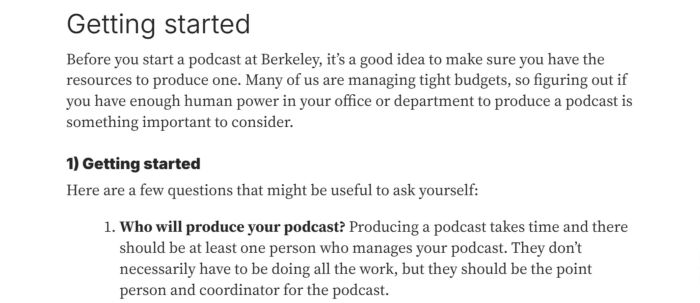
Example: At UC Berkeley, staff in the communications department use a variety of clever do-it-yourself strategies to produce high-quality podcasts on a tight budget, proving that high production value is possible even without a fancy studio or expensive equipment.
Step 5: Record and Edit With Your Audience in Mind
Now it’s time to hit “record.” As you begin, remember that quality matters, not just in audio clarity, but in tone, pacing, and structure.
Keep your episodes:
Concise. Aim for 15 to 30 minutes per episode. That’s long enough to deliver substance, but short enough to fit into a morning commute or lunchtime walk.
Focused. Each episode should revolve around a single topic or theme. If you have more to say, turn it into a two-part series.
Natural. Avoid reading from a script word-for-word. Outline your key points, then speak conversationally.
Editing is where your podcast becomes polished. Using editing software, you can tighten up the conversation, remove umms/uhs, add intro music or segues, and generally polish the recording. Aim to balance the sound levels between speakers and cut any extraneous digressions to keep the episode flowing. The goal is an episode that sounds natural but also stays on topic and within your desired length.
Don’t be discouraged if the first few recordings feel rough. Podcasting has a learning curve for everyone, and you’ll get more comfortable and skilled with each episode. Incorporate feedback from early listeners and continuously improve your technique.
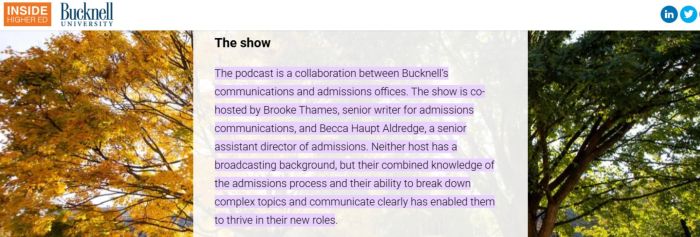
Example: The team behind Bucknell University, which produces the College Admissions Insider podcast, began with two co-hosts from the admissions office and communications staff who had no prior podcasting experience. They weren’t trained radio personalities, but their deep knowledge of the admissions process and ability to communicate enabled them to create engaging episodes from the get-go. In their case, the hosts’ confidence and skill grew quickly as they recorded more sessions. After the first few episodes, they found their rhythm in interviewing guests and editing the content into a polished final product.
Pro tip: If editing feels overwhelming, explore student help or freelance editors. Podcast production is a great opportunity for cross-department collaboration.
Step 6: Publish and Distribute Your Podcast
With a finished episode in hand, it’s time to share it with the world. This step involves uploading your episode to your chosen podcast hosting platform and ensuring it gets distributed to all the major listening apps. The good news: once set up, this process is straightforward.
Start by choosing a podcast hosting service (if you haven’t already). There are many options – from free platforms like Anchor (Spotify for Podcasters) to paid hosts like Libsyn, Podbean, or Buzzsprout. The host is essentially where your audio files live and where your podcast’s RSS feed is generated. When you upload a new episode, your host will update the RSS feed, which in turn notifies podcast directories (like Apple Podcasts) to pull the new content.
Upload your MP3 file to the host and fill in the episode details: title, description, episode number, season (if applicable), etc. Use this metadata to attract listeners – write a clear, engaging description and include relevant keywords (e.g., “STEM education chat with our Science Department” or “Tips for college admissions interviews”). Also, upload your cover art if you haven’t already, as it will display on players.
Next, distribute your podcast. Submit the RSS feed to major platforms such as Apple Podcasts, Spotify, Google Podcasts, and Amazon Music. Many hosts provide one-click distribution or guides to do this. Usually, you only need to do the submission once for each platform; after that, new episodes will appear automatically. Don’t forget any niche or regional platforms popular with your audience. Essentially, you want your school’s podcast to be available wherever listeners might look.
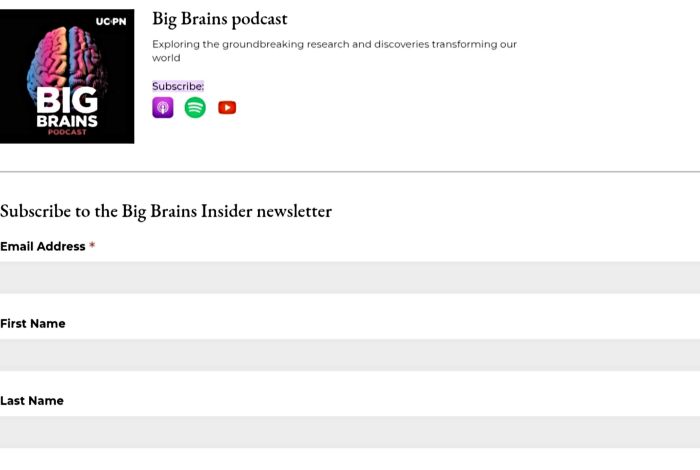
Example: The University of Chicago hosts its award-winning Big Brains podcast on a platform that syndicates it widely – on the official UChicago site, the podcast page prominently offers subscribe buttons for Apple Podcasts, Spotify, and even YouTube. Once UChicago uploaded episodes and submitted their feed, their content became available across all those apps. In practice, this means a parent commuting to work can pull up Apple Podcasts and find the school’s show, while a student on Android might use Spotify to listen – the experience is seamless.
“If you build it, they will come” doesn’t quite apply in podcasting. After creating a podcast for students and other members of your school’s community, you have to actively promote your school podcast so that your community (and beyond) know it exists. Promotion is an ongoing step, not a one-time task.
Here’s how to promote your school podcast effectively:
Website: Create a dedicated podcast page with episode archives and show notes.
Social Media: Share episode clips, quotes, or audiograms on social media platforms like Instagram, Facebook, and LinkedIn.
Email Marketing: Feature new episodes in newsletters or nurture campaigns.
Admissions Materials: Mention your podcast in brochures or application confirmation emails.
Student Portals and Alumni Networks: Make your episodes discoverable for internal and extended communities.
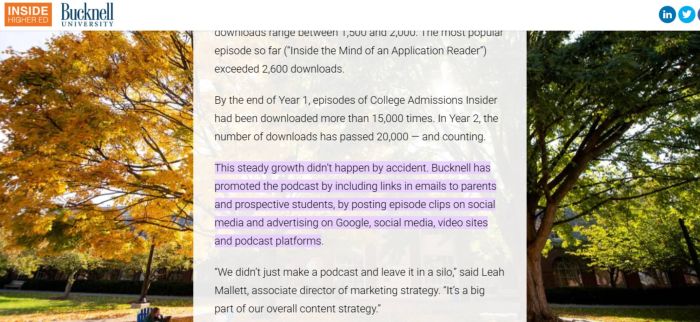
Example: Bucknell didn’t just publish episodes and hope people would find them. The university made the podcast an integral part of its outreach. They promoted it vigorously by including podcast links in emails to prospective students and parents, sharing episode clips on social media, and even running targeted online ads to reach more listeners.
Think beyond downloads: Use the podcast to reinforce messaging in other marketing assets like blog posts, webinars, or virtual tours.
Bonus Tip: Track Performance and Evolve
Like any marketing initiative, measurement is key. Use analytics tools (often provided by your podcast host) to track:
Number of downloads
Listener demographics
Episode drop-off points
Subscription growth
But don’t stop at the numbers. Solicit feedback from listeners. What do they want to hear more of? Which episodes resonated most?
Note: Your podcast will evolve. You might tweak your format, test new topics, or expand your production team. That’s a good thing. Podcasting, like all great content marketing, thrives on iteration.
Partner With HEM to Create an Authentic Podcast That Stands Out
Starting a school podcast isn’t about jumping on a trend. It’s about creating a platform to tell your school’s story in a compelling, authentic way.
Why are podcasts good for school?Podcasts are engaging, cost-effective, and easy to access. They help schools build trust, highlight culture, and communicate more personally with students, parents, and alumni, especially in today’s mobile-first world where audio content fits busy lifestyles.
In today’s crowded education market, families crave meaningful connections. They want to hear directly from your community, not just what you offer, but who you are. A podcast helps you do exactly that.
It’s a platform that humanizes your brand, showcases your values, and builds real relationships with your audience. In short, it allows your community to hear your voice, quite literally.
In a nutshell, the answer to the question “How do I make an academic podcast?” can be summed up in a few crucial steps. Start by defining your goal and audience. Choose a format, plan episodes, and use basic recording equipment or software. Feature faculty or students, keep episodes concise, edit for clarity, and publish on platforms like Spotify or Apple Podcasts. Promote it across your school’s channels.
Ready to bring your school’s story to life through podcasting? Start by defining your audience and recording a pilot episode. With each step, you’ll gain clarity and momentum.
If you’d like support planning your podcast strategy, identifying compelling topics, or aligning the content with your admissions goals, HEM is here to help.
Would you like to learn how to create a podcast for students?
Contact HEM for more information.
Struggling with enrollment?
Our Digital Marketing team can help you generate more leads!
Frequently Asked Questions
Question: What is a podcast in school? Answer: A school podcast is an audio series created by educators, students, or staff to share news, stories, or educational content. It can highlight campus life, feature interviews, or support learning, helping schools connect with their communities in an accessible, on-demand format.
Question: Why are podcasts good for school? Answer: Podcasts are engaging, cost-effective, and easy to access. They help schools build trust, highlight culture, and communicate more personally with students, parents, and alumni, especially in today’s mobile-first world where audio content fits busy lifestyles.
Question: How do I make an academic podcast? Answer: Start by defining your goal and audience. Choose a format, plan episodes, and use basic recording equipment or software. Feature faculty or students, keep episodes concise, edit for clarity, and publish on platforms like Spotify or Apple Podcasts. Promote it across your school’s channels.
CHAPPAQUA, NY, June 25, 2025 — The Foundation for Individual Rights and Expression agreed to drop its First Amendment lawsuit against Chappaqua Central School District after the district’s board of education adopted a robust First Amendment regulation that will protect the constitutional free speech rights of its students.
FIRE sued the district in 2024 on behalf of O.J., an LGBTQ+ student suspended for violating the district’s “hate speech” definition in its code of conduct because he used the words “faggot” and “twink” in a rap song recorded in his friend’s home after school. In the song, O.J. rapped the refrain, “faggot, fart, balls.” The song also included another person’s lyrics, which contained violent imagery. After O.J.’s friend uploaded the song to a music-sharing website, the school received three complaints and promptly suspended the student.
“In the Supreme Court’s decision inMahanoy Area School District v. B.L., the Court held that students’ off-campus, nondisruptive speech is protected by the First Amendment,” said FIRE attorney Colin McDonell. “That is true even when the speech receives criticism.”
In communications with the district, O.J.’s father cited Mahanoy and argued the school could not punish his son for his off-campus speech because it did not disrupt the educational environment. When this proved unsuccessful, O.J.’s father reached out to FIRE for assistance. On April 15, 2024, FIRE sued the district on behalf of O.J. and his father in the federal district court for the Southern District of New York.
After commencement of the lawsuit, FIRE and the district worked together to craft a First Amendment regulation that would protect its students’ rights to express themselves both on and off school campus, consistent with and reconciled with Mahanoy and the New York State Dignity for All Students Act and its regulations. The district’s insurer also agreed to pay $70,000 to FIRE, encompassing attorneys’ fees, and the district removed the disciplinary action based on the song from the student’s file.
“With its adoption of a First Amendment regulation, the board of education has affirmed the rights of its students to engage in protected speech on and off campus,” said FIRE Senior Attorney Greg H. Greubel. “We’re pleased that we could work with the board to avoid further litigation and turn this situation into a positive outcome for our client and all students in the district.”
The Foundation for Individual Rights and Expression (FIRE) is a nonpartisan, nonprofit organization dedicated to defending and sustaining the individual rights of all Americans to free speech and free thought — the most essential qualities of liberty. FIRE educates Americans about the importance of these inalienable rights, promotes a culture of respect for these rights, and provides the means to preserve them.
CONTACT:
Karl de Vries, Director of Media Relations, FIRE: 215-717-3473; [email protected]
A torrent of controversy has erupted over the Trump administration’s decision to shutter the federal Department of Education. Critics howl that it will destroy public education in America. Supporters insist it will somehow make things better.
The only thing that’s clear is that our public education system is broken. It’s time for politicians to stop using education as a political football, with blue and red teams competing for control rather than sharing the responsibility to prepare our children for their futures.
The resulting chaos and confusion and rigid policies choke the joy out of learning and of working in our schools. Insufficient attention by leaders to education culture can result in fear and distrust, turf wars and a tendency to blame and make excuses for a lack of progress.
Such behaviors produce a toxicity that disables learning and disempowers leadership. Instead of increasing our nation’s economic prosperity, we’re deepening inequality, limiting opportunity and sadly wasting the potential of many children, on whose ability to thrive our country depends.
Poor work conditions, insufficient support, inadequate pay and limited career opportunities are among some of the reasons teachers are leaving and schools are struggling to attract top talent. Reductions in funding from the Great Recession through the present render our facilities dangerous in some instances and unwelcoming in others. Would you buy a house with barbed wire fencing and unkempt grounds that make you wonder whether the aim is to keep something out or in?
What should we do to change what is going on inside our schools?
We must first of all start working together to make our public schools great places to teach and learn.
Great places to work and learn are places that are well led, fueled by purpose and guided by shared, positive behaviors that advance learning goals and serve as “rules of the road” for how employees and students are expected to behave.
In great schools, employees, students and families are respected and valued. Leaders in great schools inspire their employees — all of them — to do more than they think they can. Employees align behind the purpose of enabling learning, which creates momentum and camaraderie for what they are working to attain together.
In great schools, leaders inspire their communities to join them in cheering for and supporting kids’ future successes. Families, no matter their socioeconomic status, feel a sense of belonging.
Problems are perceived as opportunities to get better, not sources of indiscriminate blame. Solutions are found by looking in the mirror first. External threats to learning, such as poverty or parents’ underemployment, are acknowledged and addressed. Schools don’t dodge their responsibility to educate all kids.
In great schools, kids are known by caring employees; they feel seen and heard and are deeply engaged and invested in their learning.
Every employee working in a great school district feels responsible for achieving the district’s mission, no matter whether they work inside or outside of the classroom.
When kids return after being absent, employees welcome them back, tell them they were missed and focus on catching them up. They do not judge the constraints of their families’ lives or mete out punishment as though missing school is a crime.
Great places to learn must also be great places to work. We must reframe our concept of schools as not just places where kids learn. Great places to work care about the needs of all the human beings in their care, including and especially their employees.
“To win in the marketplace, you must first win in the workplace,” Douglas R. Conant, former Campbell Soup Company CEO famously said. He knew what is becoming clearer within our public school systems — that unhappy, unfulfilled employees lead to high turnover, disengagement by students and staff and disaffected families turning to alternative educational offerings.
It is no secret that attracting and retaining top talent to work in our schools is increasingly difficult as employees seek more stability. Attracting younger workers is even more difficult.
Many of those who currently work in schools, especially teachers, are stressed, burned out and dissatisfied. Being stressed and burned out is not a normative experience; it’s a symptom of a weak culture, and an organizational problem to be solved. And employee turnover is no longer limited to teachers. There are increasing vacancies among principals, bus drivers and food service and facilities staff.
The quality of the experiences of employees working in our schools must be higher. Every point along the employee experience continuum, from applying for a job to choosing to leave, is an opportunity to deepen employee engagement and commitment to being a high performer.
We can fix what we have broken. Thinking differently about making our public schools great places to work and learn is a good place to start. No policy changes are required to demonstrate concern for the human beings the system employs and seeks to educate.
Etienne R. LeGrand is a thought leader, writer and culture-shaping strategist and adviser at Vivify Performance.
This story about school culture was produced by The Hechinger Report, a nonprofit, independent news organization focused on inequality and innovation in education. Sign up for Hechinger’s weekly newsletter.
The Hechinger Report provides in-depth, fact-based, unbiased reporting on education that is free to all readers. But that doesn’t mean it’s free to produce. Our work keeps educators and the public informed about pressing issues at schools and on campuses throughout the country. We tell the whole story, even when the details are inconvenient. Help us keep doing that.