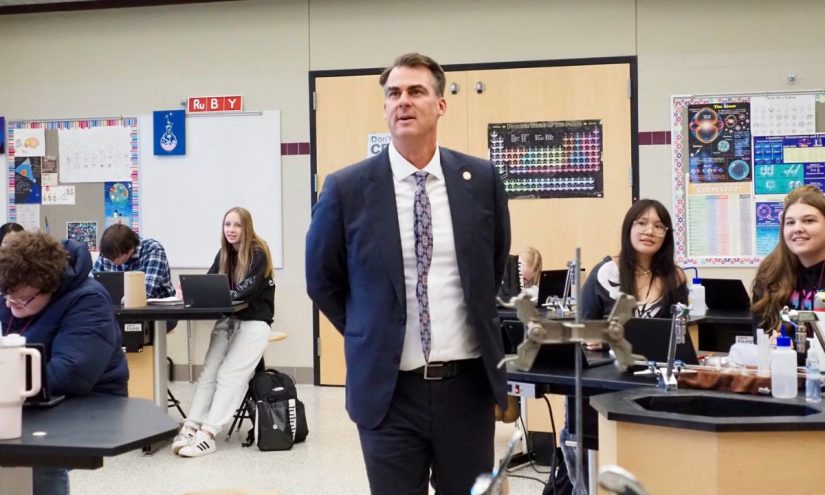
Stitt signed Senate Bill 139 on Monday to implement the “bell to bell” ban for the 2025-26 school year. The restriction becomes optional for districts in the 2026-27 school year and thereafter.
While the yearlong ban is in place, each district’s school board must adopt a policy restricting students from using cellphones, laptops, tablets, smart watches, smart headphones and smart glasses from the first bell ringing in the instructional day until final dismissal. The policy must outline disciplinary procedures for enforcing the rule.
School-issued or school-approved devices used for classroom instruction are still allowed under the law. Districts could permit cellphone use for emergencies and for students who need it to monitor a health issue.
Stitt previously urged public schools to find cost-neutral ways to make classrooms cellphone free to reverse a “worrying trend” of distraction, bullying and learning difficulties.
“We’re seeing classrooms across the country struggle with the influx of cellphone use by students,” Stitt said in a statement Tuesday. “That’s why I issued my cellphone free school challenge in the fall. We want kids to be focused and present while they’re with their teachers, and this legislation helps promote an environment conducive to learning.”
Before the 2025 legislative session began, state lawmakers met with mental health researchers who warned about the negative effect and addictive impact of digital media on youth. They also spoke with Oklahoma educators who said their schools saw better student behavior after banning cellphones.
Among the nation’s largest teachers union, 90% of members said they support cellphone restrictions during class time, and 83% favored prohibiting cellphone and personal device usage for the entire school day, according to a National Education Association survey.
U.S. adults reported broad support for classroom cellphone restrictions in middle and high schools, but only a third of American adults said they support extending these bans for the whole school day, the Pew Research Center found.
Support for SB 139 wasn’t overwhelming among Oklahoma lawmakers, either. The state Senate passed the bill with a 30-15 vote, and the House approved it 51-39.
The House also passed a similar school cellphone ban, House Bill 1276, that would allow districts to opt out of the policy. SB 139 allows no such option until after a year.
“This will allow teachers to focus entirely on educating our kids while students can concentrate on learning as much as possible,” an author of both bills, Sen. Ally Seifried, R-Claremore, said. “After two years of hard work on this issue, I’m thrilled to see this legislation become law, and I’m confident students, parents and teachers will see immediate benefits once the new school year begins.”
HB 1276 is unlikely to advance in the Senate now that SB 139 has the governor’s signature, Seifried said.
The bill’s House author, Rep. Chad Caldwell, R-Enid, called the measure a “try it before you buy it type of policy.”
“I appreciate Gov. Stitt signing SB 139 to remove the distractions of cellphones from our schools and give our kids their childhood back,” Caldwell said Tuesday.
The governor on Monday also signed into law a restriction on virtual school days. Senate Bill 758 will limit districts to using a maximum of two online instruction days per school year.
“Kids learn best in the classroom,” said Sen. Kristen Thompson, R-Edmond, who wrote the bill. “Virtual days have their place in emergencies, but we’ve seen them become a go-to solution in some districts — and that’s not fair to students or families. This bill strikes the right balance by preserving flexibility without compromising the quality of education.”
Oklahoma Voice is part of States Newsroom, a nonprofit news network supported by grants and a coalition of donors as a 501c(3) public charity. Oklahoma Voice maintains editorial independence. Contact Editor Janelle Stecklein for questions: [email protected].
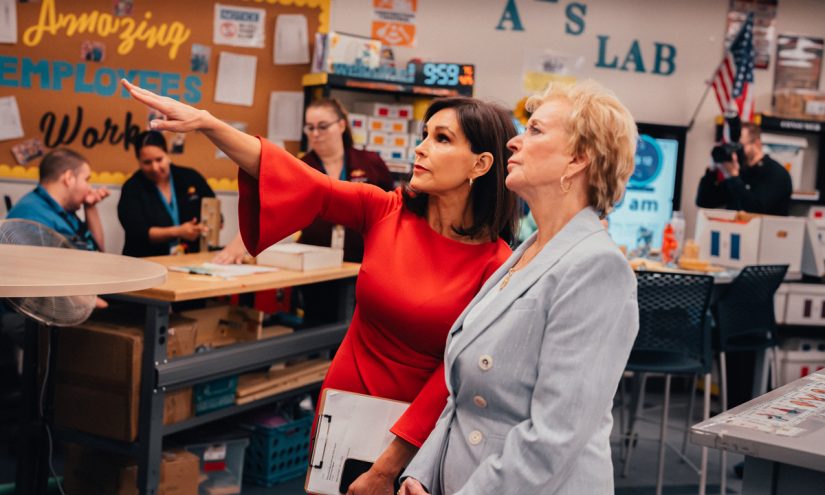
The founder and executive director of a network of Arizona charter schools serving autistic children has been named the U.S. Education Department’s deputy assistant secretary for special education and rehabilitative services. Education Secretary Linda McMahon made the announcement while touring the Arizona Autism Charter Schools’ Phoenix location.
Diana Diaz-Harrison, whose son is autistic, said that in her new job she hopes to continue her efforts to help others launch autism charter schools throughout the country. Her schools, she said in remarks captured on video by AZ Central, are a testament to what happens “when parents like me are empowered to create solutions.”
“My vision is to expand school choice for special needs families — whether through charter schools, private options, voucher programs, or other parent-empowered models,” she said in a statement to The 74. .
The five-school network uses a controversial intervention that attempts to train children to appear and behave like their neurotypical peers. Created by the researcher behind LGBTQ conversion therapy, applied behavior analysis, or ABA, is widely depicted as the gold standard despite scant independent evidence of its effectiveness and mounting research documenting its harms.
Diaz-Harrison opened the network’s first school in 2014 as a free, public alternative to private schools for autistic children, which are popular in Arizona but typically charge tens of thousands of dollars a year in tuition. Her Arizona charter schools are a 501(c)3 nonprofit financed by state and federal per-pupil funds. ABA is specifically endorsed by Arizona education officials as a strategy to use with autistic students.
In the time since those charters opened, ABA has grown to be a national, multi-billion-dollar industry, with for-profit companies tapping public and private insurance to pay for as much as 40 hours a week of one-on-one therapy. The intervention uses repeated, rapid-fire commands that bring rewards and punishments to change a child’s behavior and communication style.
A 74 investigation last year showed that most data supporting ABA’s effectiveness is drawn from research conducted by industry practitioners. Independent analyses, including a years-long U.S. Department of Defense review, found little evidence the intervention works. Former patients who underwent the therapy as children reported severe, lasting mental health effects, including PTSD.
Diaz-Harrison told The 74 the therapy is both valuable and sought-after. “For the autism community, specifically, many families seek schools that integrate positive behavioral strategies,” she says. “The evidence supporting behavioral therapy is extensive and well-established. It has been endorsed by the U.S. surgeon general and the American Academy of Pediatrics as an effective, research-backed approach for individuals with autism.”
During her visit, McMahon told students and staff she was eager to tell President Donald Trump about the schools. “He doesn’t believe any child, whether they have neuro-difficulties or any other problems, should be trapped in a school and not have the facilities that they need,” she said.
Since Trump’s second inauguration, he has issued numerous orders that have alarmed disability advocates and the autistic community. Though both edicts contradict longstanding federal laws, in March he ordered the closure of the Education Department and said responsibility for special education will be transferred to the U.S. Department of Health and Human Services.
About half of the Education Department’s staff has been fired, including most of the people responsible for investigating what had been a backlog of some 6,000 disability discrimination complaints. Though it’s unclear whether Trump and McMahon may legally disregard special education funding laws and allow states to spend federal dollars as they see fit, both have said they favor giving local officials as much decision-making power as possible.
Meanwhile, HHS Secretary Robert F. Kennedy Jr. has stoked fear in the autistic community by announcing a new effort to tie autism to vaccines or other “environmental toxins” — a hypothesis discredited by dozens of studies. The man he appointed to head the study has been cited for practicing medicine without a license and prescribing dangerous drugs to autistic children.
Last week, the new head of the National Institutes of Health announced that an unprecedented compilation of medical, pharmaceutical and insurance records would be used to create an autism “disease registry” — a kind of list historically used to sterilize, institutionalize and even “euthanize” autistic people. HHS later walked back the statement, saying the database under construction would have privacy guardrails.
Among other responsibilities, the offices Diaz-Harrison will head identify strategies for improving instruction for children with disabilities and ensure that as they grow up, they are able to be as independent as possible. The disability community has raised concerns that the administration is retreating from these goals.
Advocates have said they fear the changes pave the way for a return to the practice of separating students with disabilities in dedicated special ed classrooms rather than having them attend class with typically developing peers. The Individuals with Disabilities in Education Act guarantees special education students the right to instruction in the “least restrictive environment” possible.
Families’ preferences vary widely, with some parents of autistic children refusing any form of behavior therapy, while others want their kids in settings with children who share their needs. Many insist on grade-level instruction in general education classrooms
Diaz-Harrison has a master’s degree in education and worked as a bilingual teacher in California early in her career. From the late 1990s until she began supporting her son full time, she worked as a public relations strategist and a reporter and anchor for the Spanish-language broadcast network Univision.
In 2014, frustrated with her son’s school options, she organized a group of parents and ABA providers who applied for permission to open what was then a single K-5 school serving 90 children. The network now has about 1,000 students in all grades and features an online program.
At the end of the 2023-24 academic year, 9% of the network’s students scored proficient or highly proficient on Arizona’s annual reading exam, while 4% passed the math assessments.
In December 2022, the network won a $1 million Yass Prize, an award created by Jeff and Janine Yass. The billionaire investors have a long track record of donating to Republican political candidates and organizations that support school choice.
One of the award’s creators, Jeanne Allen, is CEO of the Center for Education Reform. The center nominated Diaz-Harrison for the federal role.
Yass award winners were featured at the 2023 meeting of the American Legislative Exchange Council, or ALEC, a conservative forum where state lawmakers are given model bills on education and other policies to introduce in their respective statehouses.
Diaz-Harrison has partnered with a Florida autism school to create a national charter school accelerator program to help people start schools like hers throughout the country. She told The 74 the effort has so far supported teams of hopeful school founders from Louisiana, Texas, Florida, Alabama and Nevada.
Parents of young autistic children and autistic adults often disagree about ABA. Told by their pediatrician or the person who diagnosed their child as autistic that they have a narrow window in which to intervene, families fight to get the therapy. Adults who have experienced it, however, report lasting trauma and have lobbied for research — much of it now at risk of being defunded by Kennedy — into more effective and humane alternatives.
A perfect storm of financial pressures, from declining enrollment to escalating economic uncertainty, are pushing K-12 school district budgets to their limits.
To adapt, districts nationwide are embracing innovative strategies to shore up budget stability. From reducing facility operational costs to forging strong community partnerships, school district leaders can learn from these proven examples to safeguard their financial stability and maintain funding for critical student programs.
Securing revenue, and finding new revenue streams
The post-COVID recovery era has been especially challenging for the majority of school districts whose budgets are based on per-pupil enrollment or attendance. Fortunately, there are many examples of school districts that have successfully combatted budget shortfalls through community-driven student engagement, retention and attendance programs. And with shifting populations and school choice schemes on the rise, school districts are also growing more adept at differentiating themselves through strong communications programs and visible investments into modern facilities. These strategies impact budgets by attracting new residents and strengthening student retention.
More districts are also looking to partnerships with local utility companies like utility rebates, net-metering programs, and demand response incentives. These programs reward smart energy management (i.e. energy efficiency upgrades, on-site renewables, and strategic energy usage) by offering direct cash infusions and bill credits that can improve a school’s budget health.
Richland County School District One in South Carolina, for example, was able to take advantage of a net-metering program with their local utility after installing nearly 9MW of rooftop solar across 15 campuses. These solar upgrades will save the district over $29 million in energy costs over the next 20 years, more than funding themselves while creating a new financial cash flow into the district’s budget. This project also enables new STEAM curriculum, engaging students in energy generation and conservation in hands-on learning labs.
Eliminating cost volatility and avoiding unexpected expenses
Most US school districts are grappling with a portfolio of facilities that are decades past their prime. Maintaining those aging facilities often becomes reactive rather than planned—leaving districts vulnerable to costly, disruptive emergencies. This cycle of crisis spending is unsustainable, driving up long-term costs. That’s one reason why, in their 2025 Infrastructure Report Card for America’s Schools, the ASCE calls to, “urge school districts to adopt life-cycle cost analysis principles in planning and design processes to evaluate the total cost of projects and achieve the lowest net present value cost, including life-cycle O&M, in addition to capital construction.”
Outdated HVAC systems, leaky building envelopes and inefficient lighting also strain budgets by consuming massive amounts of energy. With energy price volatility on the rise, inefficient energy usage can present a threat to predictable budgeting, particularly for public schools already navigating tight financial constraints.
School districts like Greene County Schools (GCS) in Tennessee are seeing big budget impacts from taking a proactive approach to facility and energy management. Facing a growing list of deferred maintenance projects, including more than 400 aging HVAC units, GCS turned to Schneider Electric to help design a comprehensive, long-term energy management strategy that allowed the district to reallocate savings toward deferred maintenance.
Support top-line priorities by capturing O&M cost savings
Operations and maintenance (O&M) represent the second-largest expenditure in most school districts, right after personnel. Unlike staffing, however, these costs can be reduced without sacrificing student outcomes. By investing in facility modernizations—like smart building controls, LED lighting, water conserving plumbing, and clean energy technologies—schools can dramatically lower their utility bills and maintenance costs. These savings, when captured strategically, can be diverted back into what matters most: academic programming, staffing, and student engagement.
Gilbert Public Schools (GPS) in Arizona discovered first-hand how energy improvements can be an excellent tool to achieve budget sustainability.GPS started by upgrading to high-efficiency LED lighting across the district’s gymnasiums, allowing them to turn a $257,000 initial investment into more than $1.2 million in lifecycle savings over the life of the project. Next, GPS made modernizations that reduced water usage and lowered maintenance costs, from which the district ultimately realized $12.9M in lifecycle savings.
Finding budget stability in times of uncertainty
Times are uncertain, but as these stories show, budget stability is still within reach. Through smart resource optimization and strong community partnerships, schools can safeguard funding for their top priorities.
Visit Schneider Electric’s K-12 Education Hub for more inspiring success stories and insights into our budget stability solutions tailored for schools.
In 2010, United States lawmakers passed the Healthy, Hunger-Free Kids Act, which aimed to tackle both childhood obesity and hunger by making school meals more nutritious. Two years later, the Department of Agriculture updated its guidance for schools participating in the National School Lunch Program, or NSLP, in accordance with the law. Whereas schools could previously serve fat-free, 1 percent, 2 percent, or whole milk and be eligible for federal reimbursement, now they could only recoup meal costs if they ditched 2 percent and whole milk, which were thought to be too high in saturated fat for kids.
Representative Glenn “G.T.” Thompson has been on a mission to change that. The Republican legislator representing Pennsylvania’s 15th congressional district believes the 2010 law sparked a decline in students drinking milk across the board. “We have lost a generation of milk drinkers since whole milk was demonized and removed from schools,” he told a local agribusiness group in 2021.
Between 2019 and 2023, Thompson introduced the Whole Milk for Healthy Kids Act — a bill that would allow schools to serve whole milk again under the NSLP — three times without success.
In January of this year, he reintroduced the bill once again — and inspired a group of animal welfare, environmental, and public health organizations to push for a vegan countermeasure. This month, a bipartisan group of legislators put forward the Freedom in School Cafeterias and Lunches, or FISCAL, Act, which would expand the definition of milk under the NSLP to include plant-based options. Currently, schools participating in the NSLP can offer milk substitutions to students with a note from a parent or doctor — but the FISCAL Act is promoting a world where vegan milks are offered freely, alongside cow’s milk.
If students end up replacing their daily cow’s milk with a plant-based alternative, this has the potential to bring down food-related greenhouse gas emissions. But you won’t hear supporters of the FISCAL Act talking up the climate benefits of plant-based milk in the halls of Congress. Instead, they’re focusing on the health benefits of soy, oat, and other vegan drinks for students who can’t digest or simply don’t want cow’s milk.
“Most of this nation’s children of color are lactose intolerant, and yet our school lunch program policy makes it difficult for these kids to access a nutritious fluid beverage that doesn’t make them sick,” said Senator Cory Booker, a Democratic co-sponsor of the bill. This focus on student health — and the absence of any environmental talking points — reflect the eternally tricky politics around milk in U.S. schools, which have become even more complicated in President Donald Trump’s second term.
Milk has a relatively low carbon footprint compared to other animal proteins, like beef, pork, poultry, and cheese. But dairy production still comes with considerable climate impacts — mainly from the food grown to feed cows, as well as methane emitted via cow burps and manure. In 2020, researchers at Pennsylvania State University found that a dairy cow can release 350 pounds of methane every year through their burps — meaning, all told, dairy cows are responsible for 2.7 percent of the U.S.’s total greenhouse gases.
Nondairy milks — fortified drinks like soy, almond, oat, and rice milk — have varying impacts on the environment and climate, but all of these plant-based alternatives use less land and water than cow’s milk to produce, and result in fewer emissions.
Under the NSLP, schools cannot be reimbursed for the cost of meals unless they offer students milk. The Center for a Humane Economy, an animal welfare and environmental group backing the FISCAL Act, calls this America’s “milk mandate.” In 2023, student Marielle Williamson sued her Los Angeles high school for not allowing her to set up an informational table about plant-based milk unless she also promoted dairy. Subsidized school lunches have been described as “a guaranteed market” for farmers’ products; this is all but acknowledged when legislators like Thompson blame school lunch for the decline of the dairy industry. Indeed, in a recent Senate agricultural committee hearing over the whole milk bill, Senator Amy Klobuchar, a Democrat, said, “Not only do school meal programs reduce hunger and promote learning, they also support our local farmers and ranchers at a time when it’s probably the very worst time I’ve seen in decades” for farmers.
The animal welfare groups backing the FISCAL Act argue schools need more flexibility to meet the needs of students with lactose intolerance. Consumption of milk has fallen consistently since the 1970s, according to the U.S. Department of Agriculture’s Economic Research Service. That change is thought to be the result of shifting diets, as well as perhaps a reflection of America’s growing racial and ethnic diversity. It is estimated that half of American adults have difficulty digesting lactose, the protein found in milk and many other dairy products. These rates are higher in Black, Asian American, Hispanic, Native American, and Jewish communities.
“We’ve had so much marketing to tell us that the milk of a cow is, you know, nature’s perfect food, and it clearly is not,” said Wayne Pacelle, the head of Animal Wellness Action, an advocacy group that opposes animal cruelty and supports the FISCAL Act.
Pacelle acknowledged the climate impact of the dairy industry: “It’s just a truth that cows are big contributors to greenhouse gas emissions.” But he noted that arguments related to the climate are unlikely to sway the debate over school lunch beverages. “The Republican Congress is not really so attuned to that,” he said.
As a result, his group and the others pushing for the FISCAL Act aren’t talking much about the environmental considerations of drinking cow’s milk. This aligns with a shift happening in the broader food industry under the second Trump administration, as producers and manufacturers figure out which talking points are most appealing to leaders like Health and Human Services Secretary Robert F. Kennedy, Jr., who has called for schools to start offering whole milk again.
The Republicans pushing for whole milk in schools are talking up the health and economic benefits of whole milk, an argument that came into sharp relief during a Senate agricultural committee hearing in early April. Senator Roger Marshall of Kansas, who drank from a tall glass of milk before addressing the committee, referenced the term “Make America Healthy Again,” or MAHA, when making his case. The movement, popularized by Robert F. Kennedy Jr., taps into wellness, environmental, and food safety concerns in the general public and offers solutions based in pseudoscience and conspiracy theories. Marshall, a co-sponsor of the whole milk bill in the Senate, said MAHA is “about whole foods, and I think we could categorize whole milk as part of” that framework.
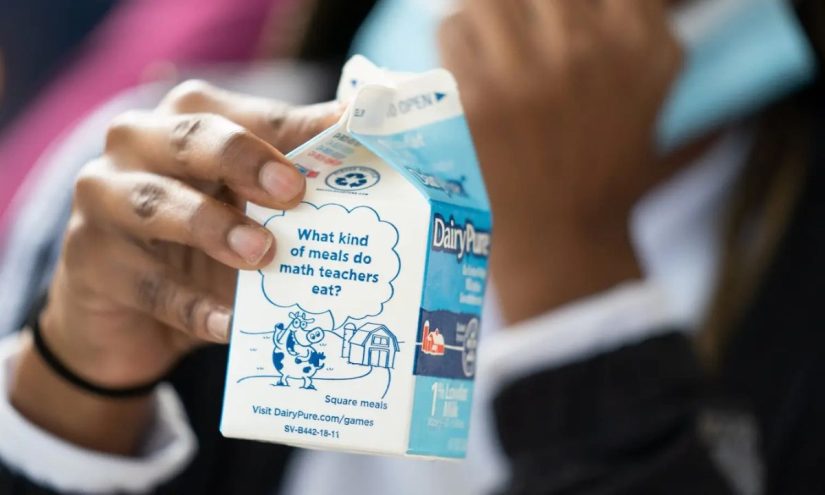
While Republicans and Democrats alike may be sidestepping the dairy industry’s environmental impact and spending more time talking about student health, there is one environmental consideration that’s caught the attention of advocates of both whole milk and plant-based milk. That’s food waste, a leading source of greenhouse gas emissions. Forty-five percent of the milk cartons offered at breakfast in schools are thrown out annually because students don’t take them. When students do grab milk at breakfast, a fourth of those cartons still wind up unopened in the trash.
Krista Byler, a food service director for the Union City Area School District in northwestern Pennsylvania, spoke at the Senate agricultural committee hearing and said serving whole milk in her schools helped milk consumption go up, ultimately reducing the amount of milk wasted.
“I hated seeing such an exorbitant amount of milk wasted daily in our small district and was hearing stories of even bigger waste ratios in larger districts,” Byler said in her written testimony.
A similar case has been made by Pacelle and other supporters of the FISCAL Act, who argue students will be more likely to drink — and finish — their beverage at school if they have the option to go plant-based.
Recently, the Whole Milk for Healthy Kids bill passed a House agriculture committee vote. If it passes a full House vote, it could then move on to the Senate. Meanwhile, the FISCAL Act is still in committee in both houses of Congress.
Pacelle said the best chance the FISCAL Act has of passing is if its provisions are included as an amendment to the whole milk bill — framing it not as a rival measure, but as a complementary effort to create more choice for students. “Moving it independently is unlikely because of the power of the dairy lobby,” said Pacelle, “and the G.T. Thompsons of the world.”
Attorneys representing a group of New Jersey parents and activist groups are asking a state appellate court to weigh in on a case that could reshape the state’s public education system.
At the center of the fight is whether New Jersey schools are unconstitutionally segregated by race and socioeconomic status. A lower court judge in October 2023 acknowledged the state’s public schools are segregated by race and that the state must act, but also found that the plaintiffs had failed to prove the entire system is segregated across all its districts.
“It is imperative that no more students be deprived of these rights by the trial court’s avoidance of the straightforward conclusion compelled by the facts and the law in this case — that the state defendants, who are legally obligated to take action to desegregate public schools regardless of the reasons for that segregation, have acted unconstitutionally by failing to do so,” the attorneys wrote in the filing.
Gov. Phil Murphy and the state Department of Education have until April 28 to respond to the plaintiffs’ new filing. A spokesman for the Murphy administration declined to comment.
The case dates to 2018, when the Latino Action Network, the NAACP New Jersey State Conference, and several other families and groups sued the state alleging New Jersey failed to address de facto segregation in public schools. The plaintiffs cited data showing that nearly half of all Black and Latino students in New Jersey attend schools that are more than 90% non-white, in districts that are often just blocks from predominantly white districts.
In New Jersey, students typically attend schools in the municipality where they live. Plaintiffs argued that long-standing housing policies that led to segregated residential neighborhoods led to segregated schools also. New Jersey is the seventh-most segregated state for Black and Latino students, the plaintiffs say.
In October 2023, after Superior Court Judge Robert Lougy issued his ruling that acknowledged racial segregation in New Jersey schools but said it was not widespread, both sides entered mediation talks in hopes it would resolve more quickly than continued litigation.
Attorneys for the parties said in February that it’s unlikely continuing the talks would “be constructive.”
The plaintiffs’ attorneys say the lower court’s October ruling should be reversed. They want a judge to review what they say are six errors in the 2023 order, like the fact that Lougy did not identify a disputed fact.
“Rather than reach the only logical conclusion that followed — that the state defendants violated plaintiffs’ constitutional rights — the trial court left the question of liability for another day,” the filing reads.
If the appellate court denies the motion, the case would return to the trial court, or could be appealed to the state Supreme Court.
New Jersey Monitor is part of States Newsroom, a nonprofit news network supported by grants and a coalition of donors as a 501c(3) public charity. New Jersey Monitor maintains editorial independence. Contact Editor Terrence T. McDonald for questions: [email protected].
School districts turn to AI to improve personalized education for students
With AI coaching, a math platform helps students tackle tough concepts
5 practical ways to integrate AI into high school science
For more news on AI in education, visit eSN’s Digital Learning hub
Simply put, AI can do a lot–it can personalize learning, help students expand on ideas for assignments, and reduce time spent on administrative tasks, freeing up educators to spend more time on instruction.
More News from eSchool News
A recent survey found that 88 percent of U.S. parents believe AI is essential to their children’s education, but most aren’t even sure whether the technology is being used in their child’s classroom.
As AI becomes more widespread in education, more than half of high school students (56 percent) polled think it can go a long way in reducing math anxiety, a new global survey shows.
Teachers often seem to have eyes in the back of their heads. They respond to a murmured question in a class full of conversation. They can tell if someone’s skipping class a floor away by reading faces in the room.
While digital literacy has become an aspirational cornerstone of modern education, the exponential growth of data-driven decision-making across industries reveals critical gaps that demand a stronger focus on data literacy.
Teaching K-12 coding without computers may seem like a daunting task, but it can be a powerful way to introduce students to the fundamental concepts of computer science and problem-solving without the distraction of technology.
The most effective way for students to learn career-ready skills in fields such as advanced manufacturing and robotics is by applying these skills in the context of authentic projects and real-world scenarios.
In the Future of Jobs 2025 report, the World Economic Forum predicts that 60 percent of jobs will require upskilling or retraining, or they’ll be threatened. The skills we have today may not keep us secure for long.
Middle and high school counselors juggle overwhelming caseloads, expanded mental health duties, and additional administrative burdens–all of which limit their ability to provide individualized support for students.
When Adrienne Staten’s fellow teachers first started talking about using artificial intelligence tools in their classrooms, Staten was not on board.
HVAC projects to improve indoor air quality. Tutoring programs for struggling students. Tuition support for young people who want to become teachers in their home communities.
This audio is auto-generated. Please let us know if you have feedback.
A new White House executive order calling for “common sense” in school discipline policies by removing practices based on “discriminatory equity ideology” will drive even wider racial disparities in discipline than currently exist, critics say.
Rather than being common sense, the directive would “permit school discipline practices that target and punish students of color and students with disabilities at disproportionate rates,” said Denise Forte, president and CEO of EdTrust, in a statement Thursday, a day after President Donald Trump signed the order. EdTrust, a nonprofit, works with school systems to close opportunity gaps for students of color and students from low-income backgrounds.
Additionally, EdTrust in a separate Thursday statement to K-12 Dive said, “When the dust settles from the education chaos being created by Trump administration, students — especially students from low-income backgrounds, students of color, students with disabilities, English learners, and students in rural areas — will be worse off, and the Trump administration wants to make sure we don’t have the data and research to prove it.”
Dan Losen, senior director of education at the National Center for Youth Law, said the Trump administration is creating a false dichotomy that schools either need harsh discipline practices or they deal with out-of-control and unsafe student behaviors.
The reality, Losen said, is that well-trained educators and administrators have many approaches to reducing student misconduct that are evidence-based. “Many schools and superintendents are aware that the best antidote to violence, to drug involvement, to gang involvement, is to try to find ways to keep more kids in school,” Losen said.
Closing racial gaps in school discipline has been a priority at the local, state and national levels for many years. Schools have also shunned strict zero-tolerance discipline policies in favor of responsive and restorative practices and other approaches that help students examine their behavior and make amends to those harmed.
Supporters of alternatives to suspending or expelling students — or what’s called “exclusionary discipline” — say those different approaches help keep students connected to school and reduce the school-to-prison pipeline. They also note that alternative strategies help reduce racial disparities in school discipline.
The U.S. Department of Education’s Civil Rights Data Collection found that even though Black students represented 15% of K-12 student enrollment in the 2021-22 school year, they accounted for 19% of students who were secluded and 26% who were physically restrained. And while Black children accounted for 18% of preschool enrollment, 38% received one or more out-of-school suspensions, and 33% were expelled.
In the years following the COVID-19 pandemic, schools have reported an uptick in mental health and disruptive behaviors in students. In fact, 68% of respondents said behavioral disruptions have increased since the 2019-20 school year in an EAB survey of school employees published in 2023.
At the same time, schools said they lack the funding and staffing to adequately address students’ mental health needs. Furthermore a 2024 Rand Corp. report found that challenging student behaviors contribute to teacher burnout.
On Thursday, the departments of Education, Homeland Security, Justice, and Health and Human Services issued a resource for K-12 threat assessment practices to help prevent school violence and create a safe school environment.
The order’s expectations
Student discipline policies are set at the school or district level. However, the federal government can issue guidance and hold schools accountable for discriminatory practices.
The executive order signed by President Donald Trump on Wednesday lays out a timeline of expectations for U.S. Education Secretary Linda McMahon. In one month, McMahon, along with the U.S. attorney general, is to issue school discipline guidance that reminds districts and states of their obligations under Title VI to protect students against racial discrimination. Title VI of the Civil Rights Act prohibits discrimination based on race, color or national origin in federally funded programs.
In two months, McMahon and the U.S. attorney general are required to begin working with states to prevent racial discrimination in school discipline. By late July, the U.S. Department of Defense is to issue a revised school discipline code to guide the school experiences of children from military-service families.
Lastly, by late August, McMahon, along with leaders from various federal agencies, is to submit a report on the “status of discriminatory-equity-ideology-based school discipline and behavior modification techniques in American public education.”
Rep. Tim Walberg, R-Mich., chair of the House Education and Workforce Committee, praised the executive order in a statement on Wednesday, “The Left’s fixation on ‘disparate impact’ has led to a profound failure in many schools to address disruptions or behavioral problems in the classroom, negatively impacting all students as a result.”
Walberg added, “The Trump administration is restoring common sense in schools by working to remove racialized notions of DEI and saying unequivocally: All students must be treated equally.”
Trump also signed a broader executive order on Wednesday, not restricted to education programs, that calls for the elimination of “disparate-impact liability in all contexts to the maximum degree possible.” The order says that the U.S. should be a “colorblind society” without “race- or sex-based favoritism.”
Washington, D.C.– CoSN today announced that the Mid-America Association for Computers in Education ( MACE) and the Nebraska Chapter of the Consortium for School Networking ( CoSNE) have been approved by the CoSN Board of Directors as official State Chapters. CoSN State Chapters play a crucial role in advancing the organization’s mission at the local level. These chapters provide a platform for education technology leaders to collaborate, share best practices and advocate for innovative solutions in their regions. Through networking events, professional development opportunities and policy influence, CoSN State Chapters empower members to drive impactful change in their school districts.
MACE is a nonprofit corporation dedicated to advancing educational technology by fostering collaboration, sharing best practices and supporting educators in the effective use of technology. The organization works to enhance education through responsible use of hardware and software, engage with industry partners to establish technical standards, and connect professionals in the field. CoSNE was established by the Nebraska Association of Technology Administrators ( NATA), along with a group of Nebraska K-12 chief technology officers, chief information officers and technology directors in smaller districts/regions — or not previously associated with NATA. CoSNE is advancing the focus on policy advocacy, professional development, and engagement with state and national entities to advance educational technology leadership and best practices for every K-12 technology leader across Nebraska.
More News from eSchool News
Simply put, AI can do a lot–it can personalize learning, help students expand on ideas for assignments, and reduce time spent on administrative tasks, freeing up educators to spend more time on instruction.
A recent survey found that 88 percent of U.S. parents believe AI is essential to their children’s education, but most aren’t even sure whether the technology is being used in their child’s classroom.
As AI becomes more widespread in education, more than half of high school students (56 percent) polled think it can go a long way in reducing math anxiety, a new global survey shows.
Teachers often seem to have eyes in the back of their heads. They respond to a murmured question in a class full of conversation. They can tell if someone’s skipping class a floor away by reading faces in the room.
While digital literacy has become an aspirational cornerstone of modern education, the exponential growth of data-driven decision-making across industries reveals critical gaps that demand a stronger focus on data literacy.
Teaching K-12 coding without computers may seem like a daunting task, but it can be a powerful way to introduce students to the fundamental concepts of computer science and problem-solving without the distraction of technology.
The most effective way for students to learn career-ready skills in fields such as advanced manufacturing and robotics is by applying these skills in the context of authentic projects and real-world scenarios.
In the Future of Jobs 2025 report, the World Economic Forum predicts that 60 percent of jobs will require upskilling or retraining, or they’ll be threatened. The skills we have today may not keep us secure for long.
Middle and high school counselors juggle overwhelming caseloads, expanded mental health duties, and additional administrative burdens–all of which limit their ability to provide individualized support for students.
When Adrienne Staten’s fellow teachers first started talking about using artificial intelligence tools in their classrooms, Staten was not on board.
To stand out amidst competition, private schools must ensure their online presence is strong enough to attract prospective students and parents. While traditional marketing methods such as word-of-mouth and print advertising still hold value, digital visibility has become crucial to school enrollment. Are you wondering how to market a private school to maximize visibility? Leveraging SEO effectively is the key to being discovered by your target audience online.
Search engine optimization (SEO) is pivotal in increasing online visibility, helping private schools rank higher on search engine results pages (SERPs) and ensuring they remain top-of-mind for potential applicants. However, using SEO for private school marketing has unique challenges, requiring a strategic and well-rounded approach. Keep reading to understand your unique SEO needs as a private educational institution and how to maximize your school’s SEO performance.
Struggling with enrollment?
Our expert digital marketing services can help you attract and enroll more students!
The Unique Challenges of Private School SEO
Private schools face a distinct set of Search engine optimization challenges that require tailored solutions – can you relate to any of these?
Competition: Private institutions must differentiate themselves from public schools, charter schools, and other private institutions in their region.
Broad Search Results: prospective students and parents may not be searching for a specific school name but rather for general terms such as “best private schools near me” or “top elementary schools in [city].” If a school’s website is not optimized for these search queries, it may struggle to appear in search results.
Balancing local and national SEO efforts: While private schools typically serve a local audience, some institutions attract students from other regions or even internationally. This means that their SEO strategy must account for both location-based searches and broader queries related to curriculum, extracurricular offerings, and student outcomes.
Keeping up with seasonal search trends: as interest in enrollment spikes at certain times of the year, requiring a dynamic and proactive approach to content updates and digital marketing efforts.
How can you create a strategy that offsets these unique challenges? Let’s explore the importance of SEO and how you can implement it effectively.
The Importance of SEO for Private School Marketing
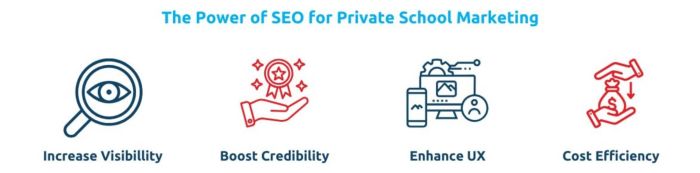
SEO is crucial for private education marketing because it directly impacts discoverability. Parents and students rely on search engines to research potential educational opportunities, and a well-optimized website ensures that a school is easily found.
A strong SEO strategy also helps build credibility and trust, as higher search rankings are often associated with authority and reliability. Moreover, SEO provides a cost-effective marketing strategy compared to traditional advertising, offering long-term benefits without the recurring costs of paid campaigns.
Beyond visibility, SEO enhances the user experience. A well-structured website that loads quickly, is easy to navigate, and contains high-quality content will rank better and engage visitors more effectively. This engagement translates to longer time spent on the site, higher conversion rates, and ultimately, more inquiries from prospective students and parents.
Best Practices for Optimizing SEO for Private Schools
The first step to reinventing your private school marketing plan is to assess your digital presence and set realistic goals. Understanding where your school stands in search rankings, what competitors are doing, and which areas need improvement will guide your SEO strategy effectively.
Start by analyzing website traffic using tools like Google Analytics, identifying which pages attract the most visitors, and pinpointing gaps where SEO enhancements can improve visibility. Additionally, schools should develop a content strategy that aligns with parent concerns, frequently asked questions and key search trends. By taking these preparatory steps, private schools can ensure their SEO efforts are targeted, strategic, and effective. Now, let’s explore some specific strategies!
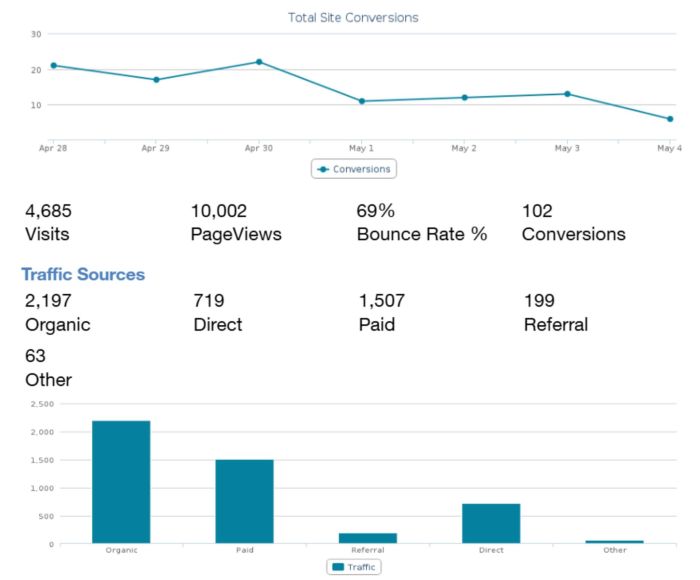
Example: What metrics should you evaluate before reinventing your private school SEO strategy? Take a look at the image below for some ideas. Using a tool like Google Analytics, determine how many total visits your site gets to understand your reach. Your page views will provide insight into site user engagement and what content is most popular.
Source: HEM
The bounce rate refers to the proportion of visitors who leave after viewing just one page. A high bounce rate (over 40%) can indicate a need for more relevant or compelling content. Finally, discovering which source of traffic gets you the most visits is valuable information when it comes to allocating funds. An SEO audit from a professional team is a great starting point if you’re looking for a preliminary view of your private school’s existing site performance.
1. Conduct Thorough Keyword Research
The foundation of any successful SEO strategy is understanding what prospective families are searching for. Private schools should conduct in-depth keyword research to identify high-value search terms related to education, admissions, and academic programs. Tools such as Google Keyword Planner, Ahrefs, and SEMrush can provide insights into relevant keywords and search volume.
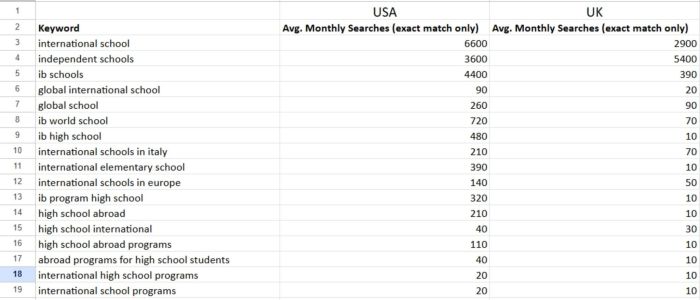
Schools should target both short-tail and long-tail keywords. For example, while “private school in Toronto” is a valuable keyword, more specific terms like “Montessori private school in Toronto with small class sizes” can help attract highly relevant traffic. Additionally, considering intent-based keywords such as “affordable private schools near me” or “best private schools with financial aid options” can attract parents who are actively researching enrollment options.
Example: This is what keyword research could look like. In the list below, you’ll see examples of both short and long-tail keywords. You’ll want to use a combination of keywords with a high search volume to reach a broader audience (like “international school” with 6600 searches) and longer, more detailed keywords to reach a specific audience (like abroad programs for international students with 40 searches).
Source: HEM
2. Optimize On-Page SEO Elements
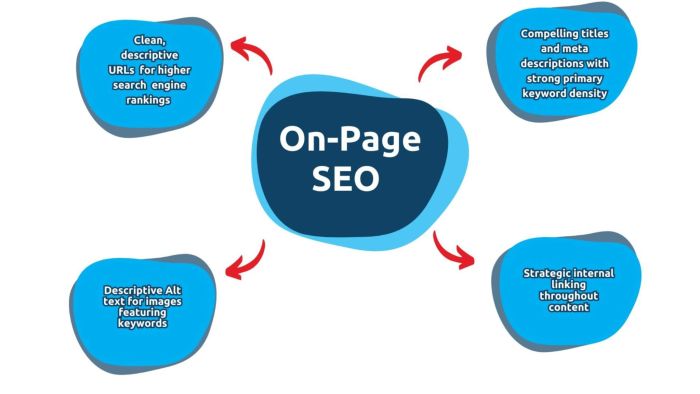
Once the right keywords have been identified, they should be strategically incorporated into website elements such as:
Title Tags and Meta Descriptions: These should include primary keywords while also being compelling enough to encourage clicks.
Header Tags (H1, H2, H3): Properly structured headers enhance readability and improve SEO rankings.
URL Structure: Clean and descriptive URLs (e.g., “yourschool.edu/admissions-process”) make it easier for search engines to understand page content.
Alt Text for Images: Adding descriptive alt text to images improves accessibility and helps search engines index visual content. Try to include keywords
Internal Linking: Strategically linking to other pages within the website helps distribute page authority and improves navigation, making it easier for users and search engines to explore content.
Source: HEM
3. Create High-Quality, Engaging Content
Content marketing is an essential component of SEO. Private schools should focus on producing valuable, informative, and engaging content that answers common questions and concerns of prospective families. This includes:
Blog posts on topics like “How to Choose the Right Private School for Your Child.”
Parent testimonials and student success stories.
Virtual campus tours and video interviews with faculty.
FAQs addressing tuition, admissions, and extracurricular activities.
In-depth guides on topics such as “How to Apply for Financial Aid at a Private School” or “What to Expect in Your Child’s First Year of Private School.”
Publishing fresh, relevant content regularly helps keep the website dynamic and signals to search engines that the site is actively maintained.
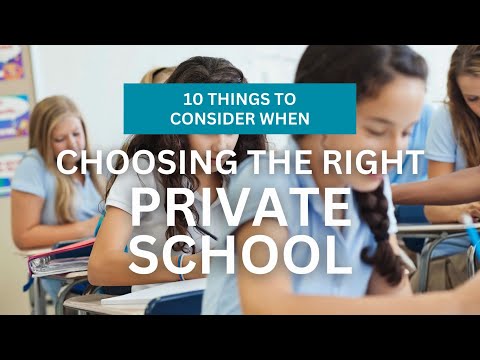
Example: This SEO- friendly video content covers a topic that many private school prospects are searching for. Don’t underestimate the value of optimizing your video content! With YouTube being the preferred video content platform as of 2024, Google is no longer the only online space where SEO matters.
Source: CTS College of Business & Computer Science
4. Implement a Local SEO Strategy
Since most private schools serve specific geographic areas, local SEO is critical. Schools should ensure their name, address, and phone number (NAP) are consistent across all online directories, including Google Business Profile, Yelp, and local education listings. Encouraging satisfied parents to leave positive reviews on Google can boost local search rankings.
Optimizing for location-based keywords, such as “best private middle school in Los Angeles,” helps schools appear in “near me” searches. Embedding a Google Map on the website’s contact page further improves local SEO. Schools should also engage in community outreach efforts that can generate local press mentions and backlinks, further strengthening their local search presence.
5. Enhance Website Performance and User Experience
Search engines prioritize websites that offer a seamless user experience. Private schools should ensure their websites are:
Fast-loading: Page speed impacts rankings, so schools should optimize images, leverage browser caching, and minimize code.
Mobile-friendly: With many parents researching schools via mobile devices, responsive design is essential.
Secure: HTTPS encryption builds trust and improves rankings.
Structured with Clear Calls-to-Action (CTAs): Encouraging prospective students and parents to schedule a visit, request information, or apply online enhances conversions.
A well-structured site with intuitive navigation reduces bounce rates and encourages visitors to explore more pages.
6. Build a Strong Backlink Profile
Backlinks, links from other reputable websites to a school’s site, signal authority to search engines. Schools can earn high-quality backlinks by:
Partnering with local businesses and educational organizations.
Contributing guest posts to education-related blogs.
Issuing press releases about notable achievements or events.
Getting listed in school directories, alumni association pages, and educational forums.
Additionally, ensuring the school is listed on authoritative education directories and accreditation bodies’ websites can further boost credibility.
7. Leverage Social Media for SEO
While social media does not directly impact search rankings, it enhances brand visibility and drives traffic to a school’s website. Are you wondering how to market your private school with social media? Maintain active profiles on platforms like Facebook, Instagram, and LinkedIn, regularly sharing engaging content and linking back to key web pages. Encouraging faculty, alumni, and students to share content can increase organic reach and generate social signals that indirectly benefit SEO.
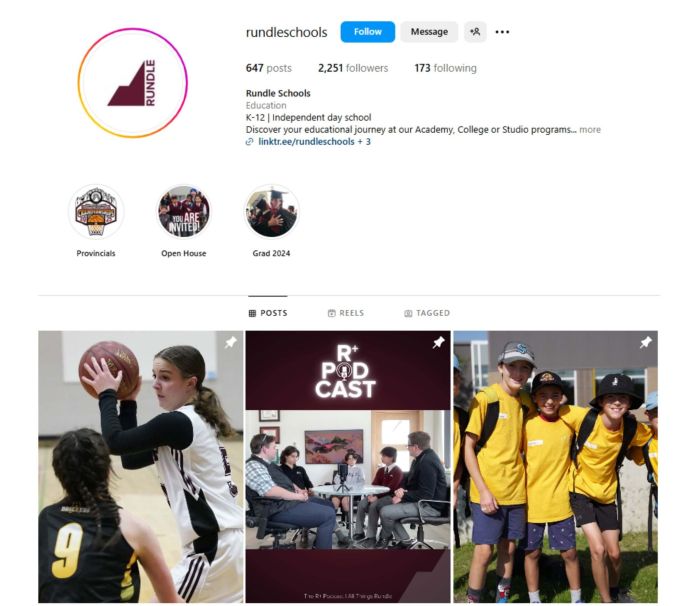
Example: Rundle Schools does a great job of optimizing its Instagram page to drive organic traffic to its site. Consider using a tool like Linktree to make it easy for prospects to find your site and other important profiles. Rundle Schools is committed to a multi-channel SEO content strategy as you can see in the centre post where they promote their podcast.
Source: Rundle Schools | Instagram
Get Support to Elevate Your Private Schools SEO Strategy
At Higher Education Marketing (HEM), we understand the unique challenges private schools face in improving their online visibility. From keyword research and content marketing to local SEO optimization and paid advertising, our team of education marketing experts tailors strategies to the specific needs of private schools.
At HEM, we’ve helped countless private schools boost their online visibility, attract more prospective families, and exceed their enrollment goals through proven results-driven SEO strategies. Ready to elevate your school’s digital presence? Let’s craft an SEO strategy that sets you apart, connect with HEM today!
Struggling with enrollment?
Our expert digital marketing services can help you attract and enroll more students!
Frequently Asked Questions
Question: How to market a private school?
Answer:Leveraging SEO effectively is the key to being discovered by your target audience online. Search engine optimization (SEO) is pivotal in increasing online visibility, helping private schools rank higher on search engine results pages (SERPs), and ensuring they remain top-of-mind for potential applicants.
Question: How to market your private school with social media?
Answer: Maintain active profiles on platforms like Facebook, Instagram, and LinkedIn, regularly sharing engaging content and linking back to key web pages. Encouraging faculty, alumni, and students to share content can increase organic reach and generate social signals that indirectly benefit SEO.