Many high school seniors are now focusing on what they will do once they graduate – or how they don’t at all know what is to come.
Families trying to guide and support these students at the juncture of a major life transition likely also feel nervous about the open-ended possibilities, from starting at a standard four-year college to not attending college at all.
Here are four tips to help make deciding what comes after high school a little easier for everyone involved:
1. Shadow someone with a job you might want
I have worked with many college students who are interested in a particular career path, but are not familiar with the job’s day-to-day workings.
A parent, teacher or another adult in this student’s life could connect them with someone they shadow at work, even for a day, so the student can better understand what the job entails.
High school students may also find that interviewing someone who works in a particular field is another helpful way to narrow down career path options, or finalize their college decisions.
Full-time students can pay anywhere from about US$4,000 for in-state tuition at a public state school per semester to just shy of $50,000 per semester at a private college or university. The average annual cost of tuition alone at a public college or university in 2025 is $10,340, while the average cost of a private school is $39,307.
Tuition continues to rise, though the rate of growth has slowed in the past few years.
About 56% of 2024 college graduates had taken out loans to pay for college.
Concerns about affording college often come up with clients who are deciding on whether or not to get a degree. Research has shown that financial stress and debt load are leading to an increase in students dropping out of college.
It can be helpful for some students to look at tuition costs and project what their monthly student loan payments would be like after graduation, given the expected salary range in particular careers. Financial planning could also help students consider the benefits and drawbacks of public, private, community colleges or vocational schools.
Even with planning, there is no guarantee that students will be able to get a job in their desired field, or quickly earn what they hope to make. No matter how prepared students might be, they should recognize that there are still factors outside their control.
3. Normalize other kinds of schools
I have found that some students feel they should go to a four-year college right after they graduate because it is what their families expect. Some students and parents see a four-year college as more prestigious than a two-year program, and believe it is more valuable in terms of long-term career growth.
That isn’t the right fit for everyone, though.
Enrollment at trade-focused schools increased almost 20% from the spring of 2020 through 2025, and now comprises 19.4% of public two-year college enrollment.
Going to a trade school or seeking a two-year associate’s degree can put students on a direct path to get a job in a technical area, such as becoming a registered nurse or electrician.
But there are also reasons for students to think carefully about trade schools.
Still, it is important for students to consider which path is personally best for them.
Research has shown that job satisfaction has a positive impact on mental health, and having a longer history with a career field leads to higher levels of job satisfaction.
4. Consider a gap year before shutting down the idea
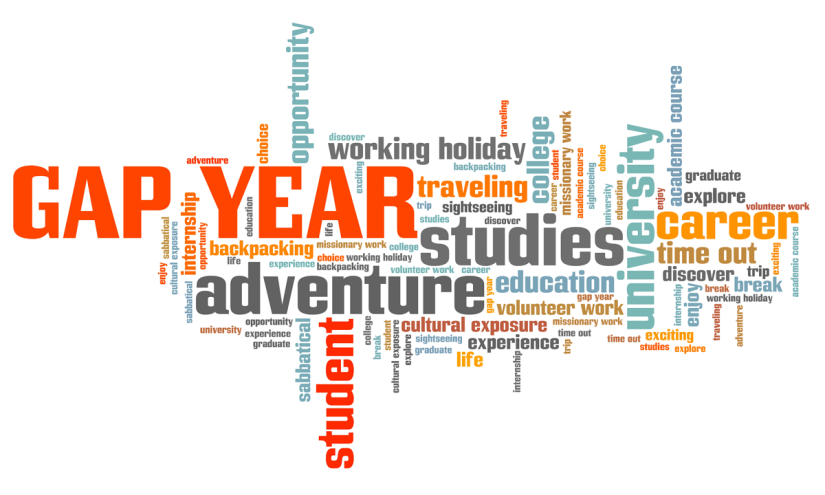
One strategy that high school graduates have used in recent years is taking a year off between high school and college in order to better determine what is the right fit for a student. Approximately 2% to 3% of high school graduates take a gap year – typically before going on to enroll in college.
Some young people may travel during a gap year, volunteer, or get a job in their hometown.
Whatever the reason students take gap years, I have seen that the time off can be beneficial in certain situations. Taking a year off before starting college has also been shown to lead to better academic performance in college.
This audio is auto-generated. Please let us know if you have feedback.
Some school boards have recently rejected their districts’ school closure plans at a time when declining student enrollment continues to plague district budgets nationwide. As districts push for closures amid the dwindling enrollment numbers and budget deficits, board members say they need more time to consider plans that would cause major disruptions to their communities.
In Pennsylvania, for instance, 6 of 9 board members at Pittsburgh Public Schools voted on Nov. 25 against the district’s proposal to close nine schools by the end of the 2027-28 school year. The vote came a day after the school board held a three-hour public hearing on the possible closures with a majority of speakers denouncing the district’s plan, according to CBS Pittsburgh.
Gene Walker, the board’s president, said during a Nov. 25 meeting that “in the short-term” he would vote against the closures after hearing public feedback on the issue. Walker added that he thinks the board will need more time to decide on closures, especially as several new board members were set to be sworn in the coming days.
“It’s my personal opinion that we are not in a space where we can properly support the superintendent and his team in this work,” Walker said.
The district recommended the school closures as it faces a projected budget deficit of nearly $11.4 million for the 2025-26 school year. Pittsburgh Public Schools also expects its total expenditures to continue to outpace its total revenue in the coming years. If the district closed the nine schools, Pittsburgh Public School administrators said it could have also saved nearly $103 million by 2031.
The district’s enrollment has steadily decreased over the past five years, dipping from 19,159 students to 17,937 between the 2021-22 and 2025-26 school years. Two decades ago, the number of enrolled students was much higher at 32,529, according to the Allegheny Institute, a nonprofit research and education organization.
Pittsburgh Public Schools Superintendent Wayne Walters said in a Wednesday statement to K-12 Dive that he does not fully agree with the “path” the district’s school board is on right now, but he respects its decision and is committed to finding a “responsible, equitable path forward” with board members.
“Without action, we remain a system unable to deliver the consistent academic and enrichment opportunities our children deserve — one where access too often depends on the building a student attends,” Walters said. “At the same time, our financial stability continues to decline as we stretch limited resources across too many buildings.”
Elsewhere, the school board for Alaska’s Anchorage School District rejected plans on Nov. 18 to close two elementary schools. In a board recap post, the district noted that it’s already had to close five schools since 2015 due to lowering student enrollment. While Anchorage School District has the capacity to serve 50,000 students, only 42,000 are currently enrolled, according to the district.
In Wisconsin, theEau Claire Area School Districtsaid in November that it was no longer considering a proposal to consolidate several elementary schools, according to WEAU 13 News.
The district said on its website that it was planning to consolidate the schools as it continues to see elementary enrollment decline because of lower birthrates and demographic shifts.That planning process began earlier this year. An October report from the district’s Superintendent Mike Johnson shows student enrollment has dropped from 10,267 to 9,910 students between the 2017-18 and 2025-26 school years.
Still, Johnson told WEAU 13 News that the enrollment challenges aren’t going away. “For next year, our second largest class in the district is our 5th grade class,” Johnson said. “If the trends occur the way they have been, when those students exit and go to middle school, we’ll be down 110 students.”
The changed course for Eau Claire Area School District came after families organized to push back against the proposed consolidation plans through a “Save Our Neighborhood Schools” campaign.
Under the district’s proposal, the campaign said the closing of a neighborhood school means children would be “split across multiple elementary schools,” families could no longer access a walkable, community school, and property values would drop because without “the appeal of top-tier schools.”
‘A consequence of not confronting the reality’
Closing underenrolled schools “is a deeply painful decision,” said Thomas Dee, a professor at Stanford University’s Graduate School of Education. These schools, in many ways, are “the fabric of communities who often have a kind of focal identity” around these places, he said.
But when underenrolled schools are kept open, Dee said that comes at a higher cost to the district and ultimately to students. By keeping under-capacity schools open, districts have to spend extra money per student to keep the buildings operating, he added. Those additional costs can then translate into less financial resources for other things students benefit from and need districtwide, such as school transportation, diverse course offerings, or smaller class sizes.
“Closing a school is highly visible and painful, but watching needed instructional supports disappear, or watching class sizes grow, watching fewer hours from a school nurse, all of that is less visible but can be a consequence of not confronting the reality,” Dee said.
It’s important that districts choosing to forego closures amid declining enrollment understand those difficult tradeoffs, and that it’s likely this enrollment challenge isn’t going away, he said.
Dee added that school districts could run the risk of a state takeover if they can’t get a hold of their finances. In the case of a state takeover, communities would no longer have agency over how their local schools run, he said.
“The only way to release that tension is for communities to increase their own property taxes or for states to increase aid through higher sales and income taxes,” Dee said.
As someone who’s dedicated my career to advancing the Science of Reading movement, I’ve seen firsthand what it takes to help every child become a strong, fluent reader. We’ve made incredible strides in shifting the conversation toward evidence-based instruction, but I know we’re at a critical inflection point. While we–obviously–continue our work helping schools and districts adopt SOR, there’s an issue that stands in the way of real, sustained, progress: the staffing crisis and leadership churn that are leaving our educators overwhelmed and skeptical toward “change.” Without addressing these deeper structural issues, we risk stalling the momentum we’ve worked so hard to build.
The hidden costs of constant turnover
The data on teacher and leader turnover is bleak, and I’ve seen how it undermines the long-term commitment needed for any meaningful change. Consider this: Roughly 1 in 6 teachers won’t return to the same classroom next year, and nearly half of new teachers leave within their first five years. This constant churn is a massive financial burden on districts, costing an estimated $20,000 per teacher to recruit, hire, and onboard. But the real cost is the human one. Every time a new leader or teacher steps in, the hard-won progress on a literacy initiative can be jeopardized.
I’ve watched districts spend years building momentum for the Science of Reading, providing extensive training and resources, only to see a new superintendent or principal arrive with a new set of priorities. This “leader wobble” can pull the rug out from under an initiative mid-stream. It’s especially frustrating when a new leader decides a program has had “plenty of professional learning” without taking the time to audit its impact. This lack of continuity completely disrupts the 3-5 years it takes for an initiative to truly take hold, especially because new teachers often arrive with a knowledge gap, as only about one-quarter of teacher preparation programs teach the Science of Reading. We can’t build on a foundation that’s constantly shifting.
Overwhelmed by “initiative fatigue”
I know what it feels like to have too much on your plate. Teachers, already juggling countless instructional materials, often see each new program not as a solution but as one more thing to learn, implement, and manage. Instead of excitement, there’s skepticism–this is initiative fatigue, and it can stall real progress. I’ve seen it firsthand; one large district I worked with rolled out new reading, math, and phonics resources all at once.
To prevent this, we need to follow the principle of “pull weeds to plant flowers.” Being critical, informed consumers of resources means choosing flowers (materials) that are:
• Supported by high-quality, third-party research • Aligned across all tiers of instruction • Versatile enough to meet varied student needs • Teacher-friendly, with clear guidance and instructional dialogue • Culturally relevant, reflecting the diverse backgrounds of students
Now, even when a resource meets these standards, adoption shouldn’t be additive. Teachers can’t layer new tools on top of old ones. To see real change, old resources must be replaced with better ones. Educators need solutions that provide a unified, research-backed framework across all tiers, giving teachers clarity, support, and a path to sustainable student progress.
Building a stable environment for sustained change
So, how do we create the stable environment needed to support our educators? It starts with leadership that is in it for the long game. We need to mitigate turnover by using data to understand why teachers are leaving and then acting on that feedback. Strengthening mentorship, clarifying career pathways, and improving school culture are all crucial steps.
Beyond just retaining staff, leaders must foster a culture of sustained commitment. It’s not enough to have a few “islands of excellence” where a handful of teachers are getting great results.
We need system-wide adoption. This requires strong leaders to balance support and accountability. I’ve seen how collaborative teams, engaged in problem-solving and data-based decision-making, can transform a school. When teachers see students as “our students” and not just “my students,” shared ownership grows.
A leader’s job is to protect and sustain this vision, making sure the essential supports–like collaborative planning time, ongoing professional development, and in-classroom coaching–are in place. But sustaining change goes beyond daily management; it requires building deep capacity so the work continues even if leadership shifts. This means hiring, training, and retaining strong educators, investing in future leaders, and ensuring committed advocates are part of the implementation team. It also requires creating a detailed, actionable roadmap, with budgets clearly allocated and accountability measures established, so that any initiative isn’t just a short-term priority but a long-term promise. By embedding these structures, leaders can secure continuity, maintain momentum, and ensure that every step forward in literacy translates into lasting gains for students.
With tuition costs on the rise, it’s only natural to question whether the time, money and effort of graduate school will pay off. So, how do you determine if it’s worth the investment?
There is no one answer to that question. Your path to grad school — and the value you gain from it — can vary greatly. You may be set on going to a prestigious or renowned school that may come with a high price tag, or you may choose a more economical option. You may be eligible for a scholarship, or maybe your employer will sponsor part of your schooling.
Before you make the big decision, ask yourself the following big questions to determine if your desired grad school program is worth the investment for you.
Questions to Ask Yourself Before Going to Grad School
Why do I want to go to grad school?
Start by clarifying your motivation and prioritizing your reasons for attending grad school. After all, it’s hard to assess the value of a degree if you don’t first determine what you want to get out of that degree. Are you hoping to boost your earnings, pivot careers, deepen expertise, or gain more personal fulfillment? Your “why” will help you evaluate whether the investment makes sense.
Grad school may also be a requirement for the career you’ve chosen — such as becoming a doctor, a dentist, or a lawyer. Chances are if you aim to have one of these careers, you will need to attend a graduate program to become certified or credentialed to pursue that career path.
What will I do with my degree?
It’s one thing to earn an advanced degree — it’s another to have it align with a career path that pays off. Research your field’s demand, salary potential and required credentials. Some master’s degrees raise earning potential substantially, while others may not. According to the U.S. Social Security Administration, men with graduate degrees earn $1.5 million more in median lifetime earnings than those with a high school diploma, and $620,000 more than those with a bachelor’s degree. Women with graduate degrees earn $1.1 million more in median lifetime earnings than their peers with a high school diploma, and $430,000 more than other women with just a bachelor’s degree.
What will grad school cost?
It’s easy to get sticker shock when looking at tuition costs for grad school, but before you panic, remember that you aren’t likely to have to pay full price for many schools. According to the National Center for Education Statistics (NCES), the average total cost of graduate school is roughly $43,620 per year. However, different programs could cost less or more depending on their specific requirements. Generally, dentistry programs will be more expensive than veterinary programs, for example.
Talk with the financial aid office at the university to see what they offer for scholarships, grants, and other “free” aid. Be sure to find out the criteria for maintaining that aid and whether that aid is renewable each year that you’re enrolled. Employer support may also be a viable option for paying for graduate school. Consider how long it takes to graduate, cost of living, and additional expenses you could incur during your time in grad school.
How soon do students graduate from my top school?
This will depend on what you’re attending grad school for. Medical school is typically four years, but you could be in a learning environment for longer if you pursue a specialization like surgery. On the other hand, an MBA program can typically be completed in two years. The time to graduation is determined by your program or field of study and your specific school. Check with specific grad schools you’re applying to about their program durations.
Is “prestige and fame” more important to me than a “good deal” when it comes to my grad school?
High price doesn’t always guarantee higher quality. Value can be found at less expensive schools, especially if they offer strong support, outcomes and networking. On the other hand, the reputation of the school may be more important to you. If you know what matters most to you personally, you can make the best decision for yourself.
What percentage of students are gainfully employed in their chosen field the year they graduate?
If you have student loans entering repayment, you may be especially interested in the job outcome rate of attending grad school. Each grad school should be able to provide some data on employment status and salaries for their graduates. These outcomes can help you evaluate return on investment.
What networks & connections will I gain through my time at the university?
Beyond coursework, your university’s reputation, alumni network, industry connections and experiential opportunities can make a big difference in how valuable your graduate degree and school of choice becomes.
When should I go to grad school?
Some choose to head straight into grad school after undergrad, while others recommend gaining a few years of professional experience first. Real-world work can make you a stronger applicant, help clarify your goals, and often enrich the value you’ll get from a program.
If you’re considering delaying graduate school, you might want to talk with the admissions counselor at the school you’re considering to discuss the pros and cons and think about when to apply. For example, there are some universities that will allow you to apply now and defer admission for one to two years.
The Value of Grad School Isn’t Just Financial
Getting a degree isn’t just about earning potential. Graduate school can deepen your intellectual curiosity, enhance personal growth, broaden your professional skills, and lead to greater satisfaction in your work and life.
In short: Make sure you’re clear on your goals, realistic about costs and outcomes, and attentive to both tangible and intangible benefits. If done thoughtfully, a graduate degree can absolutely be worth the investment — but it’s not guaranteed.
Ready to take the next step investing in grad school? If grad school feels like the right move, we can help you make it happen. Explore College Ave’s graduate student loans designed to fit your goals and budget — so you can focus on your future, not just the finances.
When Collegedale Academy, a PreK–8 school outside Chattanooga, Tennessee, needed a new elementary building, we faced a choice that many school leaders eventually confront: repair an aging facility or reimagine what learning spaces could be.
Our historic elementary school held decades of memories for families, including some who had once walked its halls as children themselves. But years of wear and the need for costly repairs made it clear that investing in the old building would only patch the problems rather than solve them. At the same time, Southern Adventist University–on whose land the school sat–needed the property for expansion.
Rather than cling to the past, we saw an opportunity. We could design a new, future-focused environment on our middle school campus–one that reflected how students learn today and how they will need to learn tomorrow.
Putting students first
As both a teacher and someone who helped design our middle school, I approached the project with one condition: every design choice had to prioritize students and teachers. That philosophy shaped everything that followed.
My search for student-centered design partners led us to MiEN. What impressed me most was that they weren’t simply selling furniture. They were invested in research–constantly asking what classrooms need to evolve and then designing for that reality. Every piece we chose was intentional, not about aesthetics alone, but about how it could empower learners and teachers.
Spaces that do more
From the beginning, our vision emphasized flexibility, belonging, and joy. Every area needed to “do more,” adapting seamlessly to different uses throughout the day. To achieve this, we focused on designing spaces that could shift in purpose while still sparking curiosity and connection.
Community hubs reimagined: Our cafeteria and media center now transform into classrooms, performance stages, or meeting spaces with minimal effort, maximizing every square foot.
Interactive, sensory-rich design: An interactive wall panel with a ball run, sensory boards, and flexible seating encourages students to collaborate and explore beyond traditional instruction.
Learning everywhere: Even hallways and lobbies have become extensions of the classroom. With mobile whiteboards, soft seating, and movable tables, these spaces host tutoring sessions, small groups, and parent meetings.
Outdoor classrooms: Students gather at the campus creek for science lessons, spread out at outdoor tables that double as project workspaces, and find joy in spaces designed for both inquiry and play. Walking into the building, students immediately understood it was made for them. They take pride in exploring, rearranging furniture, and claiming ownership of their environment. That sense of belonging is priceless and drives real engagement in the learning.
Supporting teachers through change
For teachers accustomed to traditional layouts, the shift to flexible spaces required trust and support. At first, some colleagues wondered how the new design would fit with their routines. But once they began teaching in the space, the transformation was rapid. Within weeks, they were moving furniture to match their themes, discovering new instructional strategies, and finding creative ways to engage students.
The beauty of this approach is that it doesn’t dictate a single method. Instead, it enables teachers to adapt the space to their vision. Watching colleagues gain confidence and joy in their teaching reinforced our original intent: create an environment that empowers educators as much as it excites students.
A partnership that mattered
No school leader undertakes a project like this alone. For us, partnership was everything. The team that supported our vision felt less like outside vendors and more like collaborators who shared our dream.
They weren’t just delivering products; they were helping us shape a culture. Their excitement matched ours at every step, and together, we turned ideas into realities that continue to inspire.
Immediate and lasting impact
The outcomes of the project were visible from day one. Students lit up as they explored the new features. Teachers discovered fresh energy in their classrooms. Parents, many of whom remembered the old building, were struck by how clearly the new design signaled a commitment to modern learning and to prioritizing their children’s futures.
Financially, the project was also a smart investment. Multi-purpose areas and durable, mobile furnishings mean that every dollar spent generates long-term value. And because the spaces were designed with flexibility in mind, they will remain relevant even as instructional practices evolve.
Looking ahead
The success of our elementary project has created momentum for what’s next. Collegedale is already planning high school renovations guided by the same student-first philosophy. The excitement is contagious, not just for our community but for how it models what schools can achieve when they align design with mission.
For me, this project was never just about furniture. It was about creating a culture where curiosity, creativity, and joy thrive every day. With the right partners and a clear vision, schools can build environments where students feel they belong and where teachers are empowered to do their best work.
As education leaders consider their own building projects, my advice is simple: design for the learners first. When students walk into a space and know, without a doubt, that it was built for them, everything else follows.
Beth Stone, Collegedale Academy
Beth Stone serves as a designer and visual arts teacher at Collegedale Academy in Chattanooga, TN.
Latest posts by eSchool Media Contributors (see all)
Two decades ago, Uncle Sam offered a helping hand for college graduates who desired careers that required advanced degrees by establishing a loan program known as Grad PLUS. That hand has now been withdrawn. Also known as Direct PLUS loans, this program allowed students to borrow beyond the $20,500 limit available through direct unsubsidized loans to cover their full cost of attendance. With the One Big Beautiful Bill Act signed into law last summer, Grad PLUS loans will no longer be an option for prospective graduate students after July 2026.
The question of whether colleges and universities raise their tuition prices as the availability of federal aid increases has been a hotly debated topic for more than four decades, with contradictory findings. One recent study found that institutions increased their tuition prices after the creation of Grad PLUS, and determined that the funds did not increase access (or completion) for graduate education in general or for underrepresented groups in particular. These findings echo previous studies that also support a positive relationship between government aid and college prices. In contrast, other studies and analyses at the undergraduate level, as well as for graduate business, medical and law programs, have found little evidence of nonprofit institutions increasing tuition in relation to government subsidies. (The for-profit sector is another story.)
In any case, the elimination of Grad PLUS is a new reality that incoming graduate students will have to face. Now, students in master’s and doctoral programs will only be able to borrow up to $20,500 annually (with a maximum of $100,000). Students in professional degree programs, like law and medicine, will have a higher cap of $50,000 annually (up to $200,000 total). Additionally, the maximum amount students can borrow from the federal government for their undergraduate and graduate studies combined is $257,500. Students who borrow beyond any of these limits annually will have to turn to private loans to finance the remaining costs, which are less accessible for low-income students (who have less credit) and often come with higher interest rates.
The specific impact of these new limits on students is not yet known, but if we look at data for borrowers from previous years, we see potential impacts. In 2019–20, approximately 38 percent of all graduate borrowers borrowed beyond these caps, according to an analysis by Jobs for the Future. When disaggregated by degree type, 41 percent of graduate borrowers pursuing master’s degrees, 37 percent pursuing Ph.D. degrees and 25 percent pursuing professional degrees borrowed beyond the loan caps set by OBBBA.
A recent analysis published by American University’s Postsecondary Education & Economics Research Center shows potential impacts not just by graduate degree type but also by specific field of study. For professional degrees (with the higher loan cap), more than half of borrowers for chiropractic, medicine, osteopathy and dentistry programs borrowed more than $200,000 for their degrees in recent years. Among the master’s programs reviewed, half or more of borrowers in programs including audiology/speech pathology, public health, nursing and school and mental health counseling, to name a few, borrowed beyond the new limits.
Based on these analyses, it is clear that many prospective graduate students will be impacted by the new loan caps, at least in the short term. The rationale for these loan caps is that graduate programs will lower their costs to make graduate education more affordable, although it is doubtful that colleges will decrease the costs of graduate programs within just a year. It should be noted that many students do not borrow at all to obtain their degrees. In 2019–20, approximately 40 percent of full-time domestic students enrolled in master’s degrees did not borrow.
For programs that attract students from high-income backgrounds (usually selective elite institutions), what incentive is there to decrease costs if enough students can pay out of pocket? For instance, between 2014 and 2019, medical school matriculants from high-income backgrounds (over $200,000) increased substantially. The number of students attending law schools from wealthy backgrounds has also increased in the past couple of decades, particularly at selective elite institutions. Graduate education, at least at elite schools, has become less accessible for many low-income students.
Without financial support, options for low-income students will become even more limited. These students will largely be relegated to less selective public universities, and the more elite private schools will become even less economically diverse than they already are. Financial aid offices will become the de facto second admissions office. Using Massachusetts as an example, our analysis found that the annual cost of attendance exceeded the annual loan limit of $50,000 in the case of every accredited law and medical school in the state, with the gap between the cost of attendance and the limit ranging from about $5,600 in the case of the lone public law school (the University of Massachusetts at Dartmouth), and $33,000 in the case of the only public medical school option (University of Massachusetts Chan), to as high as $71,000 for Harvard Law School and $64,000 for Harvard Medical School.
Amounts calculated based on current advertised rates for first-time (entering), full-time students enrolled in daytime, nine-month and on-campus programs.
Amounts calculated based on advertised rates for first-time (entering), full-time students enrolled in daytime, 10-month and on-campus programs.
This simple analysis, of course, does not take into account any institutional grants or scholarships students may be awarded, but those funds vary by institutional budgets.
What happens when a deserving medical school applicant gains admission and a financial aid offer, only to realize that they still have a balance of $40,000 after institutional and federal aid is applied? For students to turn to private lenders, they will likely need either good credit and a substantial income or a cosigner, which may not be an option for many students from underresourced backgrounds. Almost 93 percent of private student loans given last year had a cosigner. Almost 51 percent of individuals from low/moderate incomes have limited or poor to fair credit. Even if they are lucky to be offered loans, the interest rates will likely be much higher.
With Washington Out, States May Have to Intervene
With the recent federal cuts to Medicaid likely to lead to decreases in state funding for postsecondary education, states may be hesitant to award funds to support students pursuing graduate education—but there are frameworks to help states determine which graduate programs deserve state funding and which type of funding to provide students. Third Way recently produced a framework that categorizes programs by personal return on investment and social value. One possible solution would be to offer accessible loans and state subsidies based on how a state places certain programs in this model.
For programs that lead to high ROI and social value—for example, dentistry—states that are facing a shortage of dentists could offer accessible (and lower than market rate) loans in exchange for working in certain geographic areas in that state. Providing low-interest loans instead of grants would make sense for this category because dentists are more likely to have high enough earnings (postresidency) that they can repay their loans. Certain localities have set up zero-interest loans for students pursuing specific industries, such as a San Diego County program for aspiring behavioral health professionals (a type of pay-it-forward program).
Some states, such as Pennsylvania, do have loan repayment programs for certain health occupations in exchange for working in specific areas of their states. Offering this solution without providing accessible loans will only benefit students who come from wealthier families, as they are more likely to have good enough credit or relationships with creditworthy cosigners to access private loans in the first place.
For programs that are high in social value but low in personal ROI, such as teaching or social work, if a state determines this is an area of need, they can offer grants to lower the cost of attending these programs and minimize the amount of loans students will have to take out, in exchange for service in these fields for a specific period of time. Offering accessible, low-interest loans to students pursuing these careers could still be an option, but should be secondary, or supplemental to, grants.
In line with recommendations from a jointly authored report from the American Enterprise Institute, EducationCounsel and the Century Foundation, states can offer grants to graduate students who demonstrate financial need, in addition to targeted grant aid for certain programs. Already, certain states, such as Maryland, New Mexico, Virginia and Washington, offer grant aid to graduate students in specific fields or based on financial need. Massachusetts also offers a tuition waiver to incentivize students to enroll in graduate programs at its public universities.
Unfortunately, I was unable to find a single repository of state aid specifically for graduate students from various states. The closest I could find was a report released by the National Association of State Student Grant and Aid Programs for the 2023–24 academic year with data on state-funded expenditures for both undergraduate and graduate student aid. The report shows that only a handful of states allocated more than a million dollars to need-based graduate aid (Arizona, Colorado, Maryland, Minnesota, New Jersey, Texas and Virginia), but does not specify for which programs, nor does it detail how aid is awarded and to which institutions.
The Education Finance Council also maintains a list of nonprofit loan providers in different states that offer lower-interest or more accessible loans, many of which are state-administered, such as the Massachusetts Educational Financing Authority. States that already administer conditional loans, scholarships, grants or loan forgiveness programs at the undergraduate level should consider expanding these programs to high- demand industries that require postbaccalaureate credentials if they have not already.
What Can Institutions Do?
Institutions are the closest to students, and they can play a role as well. Beyond offering need-based grants/scholarships to lower the cost of attendance, institutions can also guide students in the lending process, such as by publishing preferred lenders on financial aid websites. These lenders should have a good reputation with borrowers and offer low interest rates. Examples of institutions that advertise preferred lenders include Baylor University, the University of Iowa and the University of Central Missouri.
Institutions with more financial resources can either directly partner with lenders to offer lower fixed interest rates through risk sharing or provide loans themselves. Harvard Law School makes loans available to graduate students through a partnership with the Harvard Federal Credit Union. Some private loan providers looking to get into the graduate lending space are now in conversations with institutions about developing new risk-sharing models.
Many occupations that typically require graduate degrees, such as teaching, nursing and medicine, will face steep shortages in the coming years. States should align aid programs with current and future workforce shortages, determine which graduate programs will exceed federal loan caps and by how much, offer targeted grants for high-social-value but low-earning fields where costs exceed caps, and provide below-market or zero-interest (and accessible) loans for high-social-value, high-earning fields.
Institutions must act urgently by partnering with accessible, ethical lenders; increasing need-based aid for students who need it most; and protecting students from predatory options. At the very least, institutions can advertise the upcoming student loan changes on their websites. With OBBBA loan caps, Washington is stepping back. Will states and institutions be able to step forward and lead the way in preserving access and promoting economic mobility? Only 2026 will tell.
Josh Farris is research and policy specialist and Derrick Young Jr. is cofounder and executive director at Leadership Brainery, a nonprofit organization focused on improving access to graduate education for students from limited-access backgrounds.
by Maxwell Fjeld, The Hechinger Report December 1, 2025
Earning an associate degree alongside my high school diploma was an ambitious goal that turned into a positive high school experience for me. By taking on the responsibilities of a college student, I further prepared myself for life after high school.
I needed to plan out my own days. I needed to keep myself on task. I needed to learn how to monitor and juggle due dates, lecture times and exams while ensuring that my extracurricular activities did not create conflicts.
All of this was life-changing for a rural Minnesota high school student. Dual enrollment through Minnesota’s PSEO program saved me time and money and helped me explore my interests and narrow my focus to business management. After three years of earning dual credits as a high school student, I graduated from community college and was the student speaker at the commencement earlier this year in May — one month before graduating from high school.
As a student earning college credits while still in high school, I gained exposure to different career fields and developed a passion for civic engagement. At the beginning of my senior year, while taking courses at the local community and technical college, I was elected to serve as that school’s first cross-campus student body president.
While most states have dual-enrollment programs, Minnesota’s support for its PSEO students stands out. As policymakers consider legislative and funding initiatives to strengthen dual enrollment in other states, I believe that three features of our program could provide a blueprint for states that want to do more.
First, the college credits I earned are transferable and meet degree requirements.
Second, the PSEO program permitted me to take enough credits each semester to earn my associate degree. While the number of dual-enrollment credits high school students can earn varies by state and program, when strict limitations are set on those numbers, the program can become a barrier to higher education instead of an alternate pathway.
Third, Minnesota’s PSEO program limits the cost burden placed on students. With rising costs and logistical challenges to pursuing higher education credentials, the head start that students can create for themselves via loosened restrictions on dual-enrollment credits can make a real financial impact, especially for students like me from small towns.
Dual-enrollment costs vary significantly from state to state, with some programs charging for tuition, fees, textbooks and other college costs.In Minnesota, those costs are covered by the Department of Education. In addition, if families meet income requirements, the expenses incurred by students for education-related transportation are also covered.
If I did not have state support, I would not have been able to participate in the program. Financial support is a crucial component to being a successful dual-enrollment student. When the barrier of cost is removed, American families benefit, especially students from low-income, rural and farming backgrounds.
Early exposure to college helped me choose my major by taking college classes to experiment — for free. When I first started, I was interested in computer science as a major. After taking a computer science class and then an economics class the following semester, I chose business as my major.
The ability to explore different fields of study was cost-saving and game-changing for me and is an opportunity that could be just as beneficial for other students.
Targeted investments in programs like this have benefited many students, including my father in the 1990s. His dual-enrollment experience allowed him to get a head start on his education and gain valuable life skills at a young age and is a great example of dual enrollment’s potential generational impact.
When dual-enrollment students receive guidance and support, it can be transformational. Early exposure to college introduced me to college-level opportunities. As student government president, I went to Washington, D.C., to attend a national student summit. I was able to meet with congressional office staffers and advocate for today’s students and for federal investment in dual-enrollment programs, explaining my story and raising awareness.
The daily life of high school is draining for some and can be devastating for others. I had many friends who came to believe that the bullying, peer-pressure and culture they experienced in high school would continue in college, so they deemed higher education “not worth it.”
Through dual enrollment, I saw the difference in culture; students who face burnout from daily high school life can refocus and feel good about their futures again.
Congress can help state legislatures by establishing strong dual-enrollment programs nationwide. With adequate government support, dual-enrollment programs can help students from all walks of life and increase college graduation rates. If all states offer access to the same opportunities that I had in high school, our next generation will be better prepared for the workforce and more successful.
Maxwell Fjeld is pursuing his bachelor’s degree at the University of Minnesota Twin Cities’ Carlson School of Management after earning an associate degree upon high school graduation through dual enrollment. He is also a student ambassador fellow at Today’s Students Coalition.
This <a target=”_blank” href=”https://hechingerreport.org/student-voice-i-earned-my-associate-degree-while-still-in-high-school-and-it-changed-my-life/”>article</a> first appeared on <a target=”_blank” href=”https://hechingerreport.org”>The Hechinger Report</a> and is republished here under a <a target=”_blank” href=”https://creativecommons.org/licenses/by-nc-nd/4.0/”>Creative Commons Attribution-NonCommercial-NoDerivatives 4.0 International License</a>.<img src=”https://i0.wp.com/hechingerreport.org/wp-content/uploads/2018/06/cropped-favicon.jpg?fit=150%2C150&ssl=1″ style=”width:1em;height:1em;margin-left:10px;”>
A few factors have made selecting an elementary school particularly challenging in recent years. For one, there are simply more schools for parents to pick from over the past few decades, ranging from traditional public and private to a growing number of magnet and charter programs. There are also new policies in some places, such as New York City, that allow parents to select not just their closest neighborhood public school but schools across and outside of the districts where they live.
Some parents experience this pressure a bit more acutely than others.
Women often see their choice of school as a reflection of whether they are good moms, my interviews show. Parents of color feel pressure to find a racially inclusive school. Other parents worry about finding niche schools that offer dual-language programs, for example, or other specialties.
Navigating schools in New York City
Every year, about 65,000 New York City kindergartners are matched to more than 700 public schools.
New York City kindergartners typically attend their nearest public school in the neighborhood and get a priority place at this school. This school is often called someone’s zoned school.
Even so, a spot at your local school isn’t guaranteed – students get priority if they apply on time.
While most kindergartners still attend their zoned schools, their attendance rate is decreasing. While 72% of kindergartners in the city attended their zoned school in the 2007-08 school year, 60% did so in the 2016-17 school year.
One reason is that since 2003, New York City parents have been able to apply to out-of-zone schools when seats were available. And in 2020, when the COVID-19 pandemic began, all public school applications moved entirely online. This shift allowed parents to easily rank 12 different school options they liked, in and outside of their zones.
Many of the mothers I interviewed from 2015 through 2019 said that getting their child into what they considered a “good” school reflected good mothering.
Mothers took the primary responsibility for their school search, whether they had partners or not, and regardless of their social class, as well as racial and ethnic background.
In 2017, I spoke with Janet, a white, married mother who at the time was 41 years old and had an infant and a 3-year-old. Janet worked as a web designer and lived in Queens. She explained that she started a group in 2016 to connect with other mothers, in part to discuss schools.
Though Janet’s children were a few years away from kindergarten, she believed that she had started her research for public schools too late. She spent multiple hours each week looking up information during her limited spare time. She learned that other moms were talking to other parents, researching test results, analyzing school reviews and visiting schools in person.
Janet said she wished she had started looking for schools when her son was was 1 or 2 years old, like other mothers she knew. She expressed fear that she was failing as a mother. Eventually, Janet enrolled her son in a nonzoned public school in another Queens neighborhood.
Pressure to find an inclusive school
Regardless of their incomes, Black, Latino and immigrant families I interviewed also felt pressure to evaluate whether the public schools they considered were racially and ethnically inclusive.
Parents worried that racially insensitive policies related to bullying, curriculum and discipline would negatively affect their children.
In 2015, I spoke with Fumi, a Black, immigrant mother of two young children. At the time, Fumi was 37 years old and living in Washington Heights in north Manhattan. She described her uncertain search for a public school.
Fumi thought that New York City’s gifted and talented programs at public schools might be a better option academically than other public schools that don’t offer an advanced track for some students. But the gifted and talented programs often lacked racial diversity, and Fumi did not want her son to be the only Black student in his class.
Still, Fumi had her son tested for the 2015 gifted and talented exam and enrolled him in one of these programs for kindergarten.
Once Fumi’s son began attending the gifted and talented school, Fumi worried that the constant bullying he experienced was racially motivated.
Though Fumi remained uneasy about the bullying and lack of diversity, she decided to keep him at the school because of the school’s strong academic quality.
Pressure to find a niche school
Many of the parents I interviewed who earned more than US$50,000 a year wanted to find specialty schools that offered advanced courses, dual-language programs and progressive-oriented curriculum.
Parents like Renata, a 44-year-old Asian mother of four, and Stella, a 39-year-old Black mother of one, sent their kids to out-of-neighborhood public schools.
In 2016, Renata described visiting multiple schools and researching options so she could potentially enroll her four children in different schools that met each of their particular needs.
Stella, meanwhile, searched for schools that would de-emphasize testing, nurture her son’s creativity and provide flexible learning options.
In contrast, the working-class parents I interviewed who made less than $50,000 annually often sought schools that mirrored their own school experiences.
Few working-class parents I spoke with selected out-of-neighborhood and high academically performing schools.
For instance, Black working-class parents like 47-year-old Risha, a mother of four, and 53-year-old Jeffery, a father of three, who attended New York City neighborhood public schools themselves as children told me in 2016 that they decided to send their children to local public schools.
Based on state performance indicators, students at these particular schools performed lower on standard assessments than schools on average.
Cracks in the system
The parents I spoke with all live in New York City, which has a uniquely complicated education system. Yet the pressures they face are reflective of the evolving public school choice landscape for parents across the country.
Parents nationwide are searching for schools with vastly different resources and concerns about their children’s future well-being and success.
When parents panic about kindergarten, they reveal cracks in the foundation of American schooling. In my view, parental anxiety about kindergarten is a response to an unequal, high-stakes education system.
If you’ve attended a professional show or musical recently, chances are you’ve seen virtual set design in action. This approach to stage production has gained so much traction it’s now a staple in the industry. After gaining momentum in professional theater, it has made its way into collegiate performing arts programs and is now emerging in K-12 productions as well.
Virtual set design offers a modern alternative to traditional physical stage sets, using technology and software to create immersive backdrops and environments. This approach unlocks endless creative possibilities for schools while also providing practical advantages.
Here, I’ll delve into three key benefits: increasing student engagement and participation, improving efficiency and flexibility in productions, and expanding educational opportunities.
Increasing student engagement and participation
Incorporating virtual set design into productions gets students excited about learning new skills while enhancing the storytelling of a show. When I first joined Churchill High School in Livonia, Michigan as the performing arts manager, the first show we did was Shrek the Musical, and I knew it would require an elaborate set. While students usually work together to paint the various backdrops that bring the show to life, I wanted to introduce them to collaborating on virtual set design.
We set up Epson projectors on the fly rail and used them to project images as the show’s backdrops. Positioned at a short angle, the projectors avoided any shadowing on stage. To create a seamless image with both projectors, we utilized edge-blending and projection mapping techniques using just a Mac® laptop and QLab software. Throughout the performance, the projectors transformed the stage with a dozen dynamic backdrops, shifting from a swamp to a castle to a dungeon.
Students were amazed by the technology and very excited to learn how to integrate it into the set design process. Their enthusiasm created a real buzz around the production, and the community’s feedback on the final results were overwhelmingly positive.
Improving efficiency and flexibility
During Shrek the Musical, there were immediate benefits that made it so much easier to put together a show. To start, we saved money by eliminating the need to build multiple physical sets. While we were cutting costs on lumber and materials, we were also solving design challenges and expanding what was possible on stage.
This approach also saved us valuable time. Preparing the sets in the weeks leading up to the show was faster, and transitions during performances became seamless. Instead of moving bulky scenery between scenes or acts, the stage crew simply switched out projected images making it much more efficient.
We saw even more advantages in our spring production of She Kills Monsters. Some battle scenes called for 20 or 30 actors to be on stage at once, which would have been difficult to manage with a traditional set. By using virtual production, we broke the stage up with different panels spaced apart and projected designs, creating more space for performers. We were able to save physical space, as well as create a design that helped with stage blocking and made it easier for students to find their spots.
Since using virtual sets, our productions have become smoother, more efficient, and more creative.
Expanding educational opportunities
Beyond the practical benefits, virtual set design also creates valuable learning opportunities for students. Students involved in productions gain exposure to industry-level technology and learn about careers in the arts, audio, and video technology fields. Introducing students to these opportunities before graduating high school can really help prepare them for future success.
Additionally, in our school’s technical theater courses, students are learning lessons on virtual design and gaining hands-on experiences. As they are learning about potential career paths, they are developing collaboration skills and building transferable skills that directly connect to college and career readiness.
Looking ahead with virtual set design
Whether students are interested in graphic design, sound engineering, or visual technology, virtual production brings countless opportunities to them to explore. It allows them to experiment with tools and concepts that connect directly to potential college majors or future careers.
For schools, incorporating virtual production into high school theater offers more than just impressive shows. It provides a cost-effective, flexible, and innovative approach to storytelling. It is a powerful tool that benefits productions, enriches student learning, and prepares the next generation of artists and innovators.
Latest posts by eSchool Media Contributors (see all)
New media center at North Dade Middle School marks milestone in initiative revitalizing learning environments to benefit the entire learning community
GREENVILLE, WI– November 21, 2025 –School Specialty and the College Football Playoff (CFP) Foundation today announced the completion of a media center makeover at North Dade Middle School, marking the 100th learning space transformed in collaboration with the Extra Yard Makeover initiative. As a part of their nationwide effort to enhance learning environments for students and educators alike, the two organizations have now invested over $5 million into reinvigorating classrooms across the country.
Miami will host the 2026 College Football Playoff National Championship in January, and as part of its legacy work in the community, the CFP Foundation has committed to delivering more than 30 Extra Yard Makeovers alongside School Specialty to revitalize innovation spaces across schools in Miami-Dade, Broward and Palm Beach counties. With this latest round of makeovers, the CFP Foundation will have helped enrich learning environments in every Miami-Dade middle school.
“Changing our middle school libraries into modern learning spaces has had a tremendous impact on engagement and learning outcomes,” said Dr. Jose L. Dotres, Superintendent of Miami-Dade County Public Schools. “In addition to renovation, the transformation is an investment in our teachers, our students and our future. These new innovative spaces support hands-on learning for students of today and tomorrow, so they can develop greater curiosity for learning and lifelong skills.”
These makeovers transform static spaces into flourishing learning environments, providing upgrades like flexible furniture, technology, supplies and even fresh paint or murals. Each school receives the School Specialty proprietary Projects by DesignⓇ experience, which includes comprehensive consultations to determine the type of space that best supports students, educators and the broader school community. Past rooms made over include STEM labs, broadcast classrooms, libraries, media centers, makerspace rooms, teachers lounges, wellness spaces, sensory rooms, multi-purpose rooms, an esports room and a mariachi room.
“The transformation of our media center is truly invaluable to our students and staff,” said Nicole Fama, Executive Director at Phalen Leadership Academies, which received a makeover in 2024. “We are profoundly grateful to the College Football Playoff Foundation and School Specialty for this investment. Before the media center, we lacked a space that truly fostered community. Now, everything happens here—from senior breakfasts and college athlete signing days to family game nights and teacher appreciation events. It has become the heart of our community, a space we didn’t realize we needed until it was here.”
These makeovers serve to benefit both students and teachers, allowing schools to improve their offerings, inspire innovation and modern learning, and directly counter some of the top issues in education today.
“Addressing teacher burnout and maximizing student engagement starts with the physical environment,” said Jeremy Westbrooks, Director of Strategic Account Development at School Specialty. “The physical classroom is an educator’s primary tool, and by modernizing these spaces, the CFP Foundation and School Specialty are delivering a critical resource that empowers teachers to stay focused on their students’ growth and long-term success.”
“We’re proud to work alongside School Specialty to bring these meaningful makeover projects to life,” said Britton Banowsky, Executive Director College Football Playoff Foundation. “Their expertise in the design of the spaces and incredible generosity make it possible for us to turn vision into impact for teachers and students.”
In addition to the CFP Foundation and School Specialty, these makeovers have been supported over the years by Bowl Games, Conference partners, Sponsors and host committees of each College Football Playoff National Championship. To date, makeovers have taken place in 18 states across 58 counties.
To learn more about the College Playoff Foundation’s Extra Yard Makeover initiative, click here.
With a 60-year legacy, School Specialty is a leading provider of comprehensive learning environment solutions for the infant-K12 education marketplace in the U.S. and Canada. This includes essential classroom supplies, furniture and design services, educational technology, sensory spaces featuring Snoezelen, science curriculum, learning resources, professional development, and more. School Specialty believes every student can flourish in an environment where they are engaged and inspired to learn and grow. In support of this vision to transform more than classrooms, the company applies its unmatched team of education strategists and designs, manufactures, and distributes a broad assortment of name-brand and proprietary products. For more information, go to SchoolSpecialty.com.
About the College Football Playoff Foundation
The College Football Playoff (CFP) Foundation is the 501(c)3 non-profit organization serving as the community engagement arm of the College Football Playoff and works in partnership with institutions of higher education, sports organizations, corporations and non-profits to support educators and improve student outcomes. The purpose of the CFP Foundation lies in supporting PK-12 education by elevating the teaching profession. The CFP Foundation inspires and empowers educators by focusing its work in four areas: recognition, resources, recruitment and retention, and professional development. To learn more, visit cfp-foundation.org and follow Extra Yard for Teachers (@CFPExtraYard) on social media.
eSchool Media staff cover education technology in all its aspects–from legislation and litigation, to best practices, to lessons learned and new products. First published in March of 1998 as a monthly print and digital newspaper, eSchool Media provides the news and information necessary to help K-20 decision-makers successfully use technology and innovation to transform schools and colleges and achieve their educational goals.