Social emotional learning — lessons in soft skills like listening to people you disagree with or calming yourself down before a test — has become a flashpoint in the culture wars.
The conservative political group Moms for Liberty opposes SEL, as it is often abbreviated, telling parents that its “goal is to psychologically manipulate students to accept the progressive ideology that supports gender fluidity, sexual preference exploration, and systemic oppression.” Critics say that parents should discuss social and emotional matters at home and that schools should stick to academics. Meanwhile, some advocates on the left say standard SEL classes don’t go far enough and should include such topics as social justice and anti-racism training.
While the political battle rages on, academic researchers are marshalling evidence for what high-quality SEL programs actually deliver for students. The latest study, by researchers at Yale University, summarizes 12 years of evidence, from 2008 to 2020, and it finds that 30 different SEL programs, which put themselves through 40 rigorous evaluations involving almost 34,000 students, tended to produce “moderate” academic benefits.
Related: Our free weekly newsletter alerts you to what research says about schools and classrooms.
The meta-analysis, published online Oct. 8 in the peer-reviewed journal Review of Educational Research, calculated that the grades and test scores of students in SEL classes improved by about 4 percentile points, on average, compared with students who didn’t receive soft-skill instruction. That’s the equivalent of moving from the 50th percentile (in the middle) to the 54th percentile (slightly above average). Reading gains were larger (more than 6 percentile points) than math gains (fewer than 4 percentile points). Longer-duration SEL programs, extending more than four months, produced double the academic gains — more than 8 percentile points.
“Social emotional learning interventions are not designed, most of the time, to explicitly improve academic achievement,” said Christina Cipriano, one of the study’s four authors and an associate professor at Yale Medical School’s Child Study Center. “And yet we demonstrated, through our meta-analytic report, that explicit social emotional learning improved academic achievement and it improved both GPA and test scores.”
Cipriano also directs the Education Collaboratory at Yale, whose mission is to “advance the science of learning and social and emotional development.”
The academic boost from SEL in this 2025 paper is much smaller than the 11 percentile points documented in an earlier 2011 meta-analysis that summarized research through 2007, when SEL had not yet gained widespread popularity in schools. That has since changed. More than 80 percent of principals of K-12 schools said their schools used an SEL curriculum during the 2023-24 school year, according to a survey by the Collaborative for Academic, Social, and Emotional Learning (CASEL) and the RAND Corporation.
The Yale researchers only studied a small subset of the SEL market, programs that subjected themselves to a rigorous evaluation and included academic outcomes. Three-quarters of the 40 studies were randomized-controlled trials, similar to pharmaceutical trials, where schools or teachers were randomly assigned to teach an SEL curriculum. The remaining studies, in which schools or teachers volunteered to participate, still had control groups of students so that researchers could compare the academic gains of students who did not receive SEL instruction.
The SEL programs in the Yale study taught a wide range of soft skills, from mindfulness and anger management to resolving conflicts and setting goals. It is unclear which soft skills are driving the academic gains. That’s an area for future research.
“Developmentally, when we think about what we know about how kids learn, emotional regulation is really the driver,” said Cipriano. “No matter how good that curriculum or that math program or reading curriculum is, if a child is feeling unsafe or anxious or stressed out or frustrated or embarrassed, they’re not available to receive the instruction, however great that teacher might be.”
Cipriano said that effective programs give students tools to cope with stressful situations. She offered the example of a pop quiz, from the perspective of a student. “You can recognize, I’m feeling nervous, my blood is rushing to my hands or my face, and I can use my strategies of counting to 10, thinking about what I know, and use positive self talk to be able to regulate, to be able to take my test,” she said.
The strongest evidence for SEL is in elementary school, where the majority of evaluations have been conducted (two-thirds of the 40 studies). For young students, SEL lessons tend to be short but frequent, for example, 10 minutes a day. There’s less evidence for middle and high school SEL programs because they haven’t been studied as much. Typically, preteens and teens have less frequent but longer sessions, a half hour or even 90 minutes, weekly or monthly.
Cipriano said that schools don’t need to spend “hours and hours” on social and emotional instruction in order to see academic benefits. A current trend is to incorporate or embed social and emotional learning within academic instruction, as part of math class, for example. But none of the underlying studies in this paper evaluated whether this was a more effective way to deliver SEL. All of the programs in this study were separate stand-alone SEL lessons.
Advice to schools
Schools are inundated by sales pitches from SEL vendors. Estimates of the market size range wildly, but a half dozen market research firms put it above $2 billion annually. Not all SEL programs are necessarily effective or can be expected to produce the academic gains that the Yale team calculated.
Cipriano advises schools not to be taken in by slick marketing. Many of the effective programs have no marketing at all and some are free. Unfortunately, some of these programs have been discontinued or have transformed through ownership changes. But she says school leaders can ask questions about which specific skills the SEL program claims to foster, whether those skills will help the district achieve its goals, such as improving school climate, and whether the program has been externally evaluated.
“Districts invest in things all the time that are flashy and pretty, across content areas, not just SEL,” said Cipriano. “It may never have had an external evaluation, but has a really great social media presence and really great marketing.”
Cipriano has also built a new website, improvingstudentoutcomes.org, to track the latest research on SEL effectiveness and to help schools identify proven programs.
Cipriano says parents should be asking questions too. “Parents should be partners in learning,” said Cipriano. “I have four kids, and I want to know what they’re learning about in school.”
This meta-analysis probably won’t stop the SEL critics who say that these programs force educators to be therapists. Groups like Moms for Liberty, which holds its national summit this week, say teachers should stick to academics. This paper rejects that dichotomy because it suggests that emotions, social interaction and academics are all interlinked.
Before criticizing all SEL programs, educators and parents need to consider the evidence.
The Hechinger Report provides in-depth, fact-based, unbiased reporting on education that is free to all readers. But that doesn’t mean it’s free to produce. Our work keeps educators and the public informed about pressing issues at schools and on campuses throughout the country. We tell the whole story, even when the details are inconvenient. Help us keep doing that.
Marketing can make or break a private school’s success. Because even the best programs won’t fill classrooms if families don’t know what your school has to offer.
Private and independent schools that once relied on word-of-mouth or legacy reputation now compete in a vastly different environment. Families have more options, higher expectations, and greater access to information than ever before. The result? Schools must communicate not just what they offer, but why it matters.
The pandemic underscored this shift. While many private schools saw enrollment rise as families sought flexibility and a sense of community, sustaining that growth now depends on something deeper: a clear, consistent brand story and a modern marketing strategy that builds trust through every interaction.
This guide shows you how.
Drawing on 15+ years of HEM’s work with schools and colleges, we’ll clarify what private educational marketing means and why it’s now mission-critical for admissions and retention. Then we’ll move from strategy to execution, how to define your school’s positioning, understand the motivations of parents and students, and turn that insight into high-performing digital and word-of-mouth campaigns.
What you’ll learn:
How to differentiate your school with a compelling value proposition and proof points
The channels that actively move inquiries (website/SEO, social, email, paid)
Content and community tactics that convert interest into visits and applications
A step-by-step plan to build (or refresh) a coherent marketing strategy
We’ll weave in real examples, both client work and standout schools, to keep it practical and immediately usable.
Struggling with enrollment?
Our expert digital marketing services can help you attract and enroll more students!
What Is Marketing in Education?
Put simply, marketing in education is about connection. It’s understanding what families value and communicating how your school meets those needs with clarity and authenticity. It’s a strategic process of shaping perception, building relationships, and inspiring trust in your institution’s promise.
In practice, this means identifying what makes your school distinct, whether it’s academic excellence, small class sizes, or a values-driven community, and ensuring those strengths are reflected across every touchpoint: your website, social media, campus events, and everyday communication.
But here’s the key difference from corporate marketing: in education, the “product” is transformative. You’re not selling a service; you’re demonstrating outcomes like student growth, alumni success, and lifelong belonging.
That’s why leading independent schools now view marketing as a strategic discipline, not an afterthought. Many have dedicated teams managing branding, digital presence, and admissions communications, because in today’s landscape, great education needs great storytelling to thrive.
What Is the Role of Marketing in Schools?
Essentially, marketing in schools is about alignment; connecting what a school offers with what families seek. A strong marketing function doesn’t just fill seats; it sustains a mission. It ensures enrollment remains healthy, relationships stay strong, and the school continues to thrive long term. Here are a few key roles that marketing plays in a private or independent school:
Driving Enrollment and Retention: Effective private education marketing attracts new families and nurtures existing ones. From open house campaigns to parent newsletters that celebrate student success, it reassures families they’ve made the right choice, turning satisfaction into advocacy.
Building Brand and Reputation: Every message, photo, and interaction shapes how a school is perceived. Strong marketing clarifies the school’s value and ensures consistency across channels, building recognition and trust.
Fostering Community Engagement: Marketing also connects the internal community (students, parents, and alumni), transforming them into ambassadors whose stories amplify the school’s credibility and reach.
In essence, marketing is the strategic engine that sustains both mission and momentum.
How to Market Private Schools: Key Strategies
Marketing independent schools successfully starts with one word: focus. The most effective strategies combine digital innovation with human connection, reflecting both the school’s personality and the priorities of modern families. In this section, we explore key strategies and best practices for private education marketing. These will answer the big question: “How do we market our private or independent school to boost enrollment and stand out?”
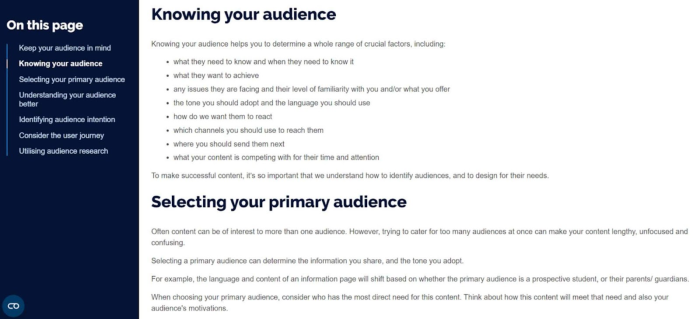
1. Understand Your Target Audience and Their Needs
Everything begins with insight. Parents and guardians are the primary decision-makers for K–12 education, so understanding what they value, whether it’s academic rigor, faith-based values, or community belonging, is essential. Avoid broad messaging that speaks to “everyone.” Instead, analyze your current families: Where do they live? What motivated their choice? What concerns drive their decision-making?
Many schools formalize this through personas, fictional yet data-driven profiles like “Concerned Parent Carol,” representing key audience segments. Surveys, interviews, and CRM data can help refine these personas to reveal motivations and needs.
Example: Newcastle University (UK). The university’s marketing team uses data and research to deeply understand prospective students. Newcastle’s internal content guide emphasizes identifying audience needs through methods like analytics, social media listening, surveys, and focus groups. This research informs content planning, ensuring communications solve audience problems and use the right tone and channels.
Once you know your audience, tailor your outreach accordingly. Working parents may prefer evening emails; international families may value multilingual content highlighting boarding life. Each message should reflect your school’s unique strengths and speak directly to what families care about most.
In short, marketing begins with knowing your families deeply and crafting messages that make them feel seen, understood, and inspired to choose your school.
2. Define and Promote Your School’s Unique Value Proposition
Once you know your audience, the next step is to define what truly makes your school stand out. In a competitive education landscape, clarity is power, and your Unique Value Proposition (UVP) is what helps families instantly understand why your school is the right choice.
Start by asking: “What do we offer that others don’t?” Your differentiators might be tangible (like an IB-accredited curriculum, advanced STEM facilities, or bilingual instruction) or emotional (a nurturing environment, strong moral foundation, or inclusive community). The key is to highlight the qualities that align with your audience’s values and can’t easily be replicated by competitors.
Look at what nearby schools emphasize, then find the white space. Finally, weave your UVP consistently through your website, tagline, visuals, and social media tone. A clear, authentic value proposition creates confidence and shows families not just what you offer, but why it matters.
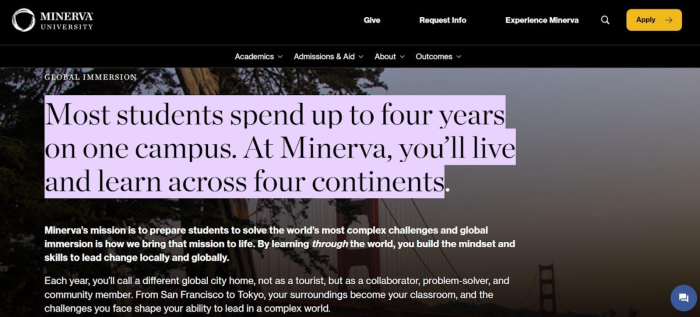
Example: Minerva University (USA). Minerva differentiates itself with a global immersion undergraduate program and an active learning model. The university clearly promotes this UVP: students live and study in seven cities on four continents over four years, rather than staying on one campus. Minerva’s website emphasizes that this global rotation and its innovative, seminar-based curriculum prepare students to solve complex global challenges. Each year in a new international city is not a travel experience but an integral part of academics, which Minerva markets as a unique offering in higher education.
3. Build a Robust Online Presence (Website, SEO, and Content)
Your school’s online presence is its digital front door, often the first impression prospective families have. A strong online foundation combines a polished website, smart SEO, and valuable content that informs, inspires, and converts.
Website Design & User Experience (UX) Your website should feel like a guided tour: beautiful, intuitive, and informative. Parents should quickly find essentials like admissions details, tuition, programs, and contact info. Use clean navigation, mobile-first design, and fast loading speeds to keep users engaged. High-quality visuals, such as campus photos, testimonial videos, or 360° virtual tours, bring your school to life. Consistent colors, logos, and tone across every page reinforce trust and ensure brand cohesion.
Search Engine Optimization (SEO) Even the best website can’t help if no one finds it. Use relevant keywords (e.g., “private school in Toronto,” “Catholic high school with IB program”) naturally in titles, headings, and meta descriptions. Create dedicated pages for programs and locations, optimize image alt text, and claim your Google Business profile to strengthen local SEO visibility.
Content Marketing Keep your site dynamic through regular updates via blog posts, student stories, and event recaps. Highlighting achievements and thought-leadership topics (like “How to Choose the Right Private School”) builds credibility and draws organic traffic.
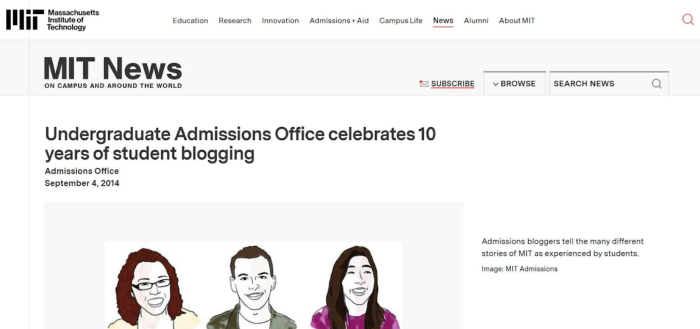
Example: Massachusetts Institute of Technology – MIT (USA): MIT’s Admissions Office hosts a famous student-written Admissions Blog that has become a pillar of its online presence. For over a decade, current MIT students have blogged candidly about campus life and academics, amassing thousands of posts read by prospective students worldwide. This blog strategy – focusing on transparency and real student voices – has paid off: the content generated millions of views, a robust engagement, and is often cited by applicants as influential in their college choice. MIT even curates a “Best of the Blogs” booklet and frequently analyzes blog traffic and feedback, using those insights to continually refine content and keep its website highly relevant to what prospective students want to know.
A well-designed, search-optimized, content-rich website isn’t just marketing; it’s proof of excellence.
4. Leverage Social Media and Digital Engagement
Social media is no longer optional. For private schools, it’s often the first place parents and students experience your community. Done right, it doesn’t just showcase your school; it builds lasting emotional connections.
Choose the Right Platforms Focus on where your audience spends time. For most schools, Facebook and Instagram are the anchors.
Facebook for community updates, parent groups, and event highlights.
Instagram for vibrant visuals and stories from daily campus life.
Schools serving older students or alumni can also explore TikTok, YouTube, or LinkedIn to reach new audiences.
Be Consistent and Purposeful Post regularly, at least a few times weekly, and plan around the school calendar. Use photos, short videos, or student/teacher takeovers to bring authenticity. Feature achievements, classroom moments, and cultural highlights to help families visualize their child’s experience.
Engage and Respond Social media is a dialogue, not a monologue. Reply promptly to comments, use polls or Q&As, and encourage user-generated content. Paid campaigns on Facebook and Instagram can further boost awareness, driving families to your website or open house events.
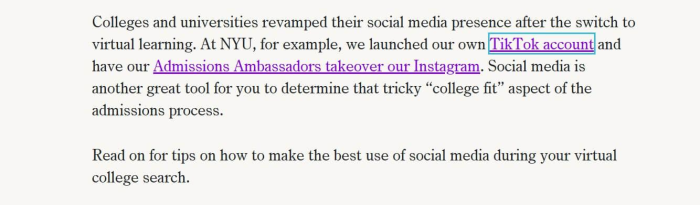
Example: New York University (USA). NYU’s admissions team expanded its digital reach by launching an official TikTok account and running student-led Instagram takeovers to showcase campus life. Current NYU students (Admissions Ambassadors) frequently create Instagram Stories and TikToks about dorm life, classes, and NYC activities, allowing prospects to see authentic student experiences. NYU actively encourages prospective students to engage – liking, commenting, or DMing questions – and monitors that feedback. This social strategy not only entertains (e.g., seniors doing TikTok dances) but also provides valuable peer-to-peer insights about “fit,” helping applicants feel more connected to the university culture.
A strong social presence humanizes your brand and turns followers into advocates.
5. Utilize Both Digital and Traditional Advertising Wisely
A balanced mix of digital and traditional advertising ensures your school reaches families online and in the local community. Each channel serves a distinct purpose.
Digital Advertising: Platforms like Google Ads and Facebook/Instagram Ads allow precise targeting by location, interests, and demographics. Search ads capture families actively looking for private schools (“private school near me”), while display and remarketing ads keep your brand visible even after visitors leave your site. For best results, pair strong ad copy with well-optimized landing pages. Email marketing is also a cost-effective channel for nurturing inquiries through newsletters and event updates.
Traditional Advertising: Local print ads, outdoor banners, and community events remain powerful for visibility. Direct mail campaigns and education fairs can connect you with parents in person, adding a personal touch that digital may lack. Track every campaign’s ROI and adjust accordingly.
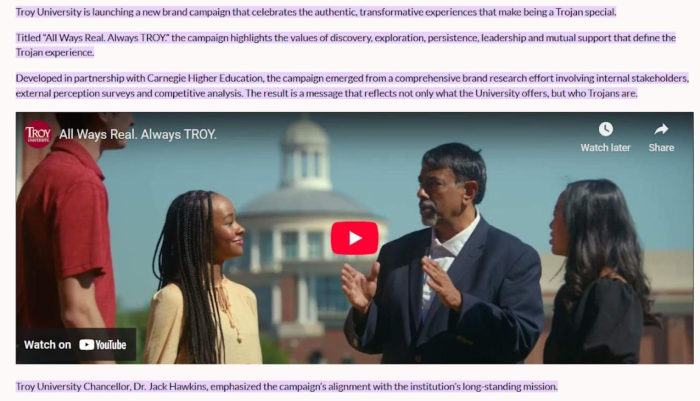
Example: In 2025, Troy University rolled out “All Ways Real. Always TROY,” a new brand campaign across a mix of traditional and digital channels. The integrated campaign includes a dynamic video commercial, print ads in publications, targeted online ads, extensive social media content, billboards in key markets, and even on-campus signage reinforcing the message. By deploying a cohesive theme on multiple platforms, Troy ensures its story of “authentic, career-focused” education reaches people wherever they are – whether scrolling online or driving past a billboard. (The campaign was informed by research and campus stakeholder input, and its multi-channel approach builds broad awareness while maintaining consistent branding.)
6. Emphasize Personal Connections: Tours, Open Houses, and Word-of-Mouth
Even in the digital age, enrollment decisions are deeply personal. Families may start online, but the final decision often comes down to how a school feels, its people, warmth, and community spirit. That’s why in-person experiences and authentic connections remain at the heart of private school marketing.
Tours and Open Houses: These events are your strongest conversion tools. Host open houses that showcase your facilities, programs, and culture. Include presentations, guided tours, and student or parent ambassadors to share authentic perspectives. Personal tours should be tailored to family interests, show relevant classrooms, introduce teachers, and follow up promptly afterward.
Word-of-Mouth and Community Engagement: Encourage satisfied parents, alumni, and students to share their experiences online and offline. Create ambassador programs or host informal meet-ups. Families trust real stories from peers more than polished ads, its important to nurture that organic advocacy.
Example:St. Benedict’s Episcopal School (USA). This private school in Georgia leverages parent word-of-mouth through an organized Parent Ambassador Program. Enthusiastic current parents serve as school ambassadors – they attend open houses (in person or virtual) to welcome and mentor new families, display yard signs in their neighborhoods, bumper stickers on cars, and share school posts on their personal social media to spread the word. To further encourage referrals, St. Benedict’s even offers a Family Referral Program: current families receive a tuition discount (10–15% off one child’s tuition) if they refer a new family who enrolls. These personal recommendations and community events create a warm, trust-based marketing channel that no paid advertisement can replace.
7. Monitor, Measure, and Refine Your Marketing Efforts
Marketing is an evolving process of observation, analysis, and improvement. The best-performing private schools treat marketing as a cycle: plan, execute, measure, and refine.
Track and Analyze Performance: Use tools like Google Analytics, Meta Ads Manager, or your CRM to monitor how families engage with your campaigns and website. Track metrics such as page visits, inquiries, conversion rates, and the most effective traffic sources. For example, if your admissions page gets plenty of views but few form completions, it may need stronger calls to action or a simpler layout.
Define and Review KPIs: Set measurable goals, like inquiry volume, open house attendance, or enrollment yield, and review them monthly or quarterly. Data-driven insights allow you to invest more in what works and cut what doesn’t.
Iterate and Adapt: Marketing trends shift quickly. Regularly test your messaging, visuals, and targeting strategies. Even small A/B tests on ads or email subject lines can lead to significant improvements over time.
Example:Drexel University (USA). Drexel invests heavily in data analytics to continually refine its marketing and enrollment strategies. The university established an Enrollment Analytics team dedicated to measuring what’s working and advising adjustments. This team analyzes prospect and applicant data, builds dashboards and predictive models, and shares actionable insights with admissions and marketing units. By using data visualization and machine-learning models (for example, predicting which inquiries are most likely to apply), Drexel’s marketers can focus resources on high-yield activities and tweak messaging or outreach frequency based on evidence. The goal is to enable fully data-driven decisions – Drexel explicitly ties this analytic approach to improving efficiency and effectiveness in hitting enrollment goals.
How to Create a Marketing Strategy for a School (Step-by-Step)
We’ve explored what effective school marketing entails. Now let’s unpack how to build a plan that actually works.
How to create a marketing strategy for a school? To create a marketing strategy for a school, set clear goals, analyze your audience and competitors, define your unique value proposition, choose effective marketing channels, implement campaigns consistently, measure performance using data and feedback, and refine tactics regularly for continuous improvement and enrollment growth.
Whether you’re starting from scratch or optimizing an existing strategy, a clear, step-by-step framework helps you move from ideas to measurable impact.
Step 1: Determine Your Goals
Start by defining what success looks like for your school. Without clear goals, marketing becomes guesswork. Use the SMART framework: Specific, Measurable, Achievable, Relevant, and Time-bound, to make goals actionable.
For instance:
Increase Grade 9 applications by 15% for the next school year
Boost awareness in new neighborhoods to attract 10 students from that area
Enhance perception of our arts program through digital storytelling campaigns
Each goal should have a metric. If you aim to “increase inquiries,” specify how many, by when, and through which channels. Concrete targets create accountability and make it possible to assess ROI later.
Step 2: Conduct a Situation Analysis
Before planning tactics, understand your current position. Conduct a SWOT analysis (Strengths, Weaknesses, Opportunities, Threats) to evaluate both internal and external factors.
Internal Assessment:
What is your brand reputation in the community?
Are your social media channels active and engaging?
Does your website effectively communicate your strengths?
External Assessment:
Is the local school-age population growing or declining?
Who are your competitors, and what are they emphasizing?
What economic, demographic, or policy shifts could impact enrollment?
For example, a strength could be high university placement rates; a weakness might be outdated branding; an opportunity could be a new housing development nearby; a threat might be a competing school opening next year.
Review past marketing data, too. Which campaigns generated the most inquiries? Did your open house attendance meet expectations? Insights from past efforts shape a more effective plan moving forward.
Step 3: Define Your Value Proposition and Key Messages
Your Unique Value Proposition (UVP) is the heart of your marketing strategy. It defines what makes your school distinct and why families should choose you.
Once identified, craft three to five key supporting messages. Example:
UVP: “We provide a holistic education that develops intellect and character.”
Key Messages:
Dual-curriculum integrating academics and character education.
Small class sizes for individualized attention.
Safe, inclusive community environment.
Commitment to innovation and creativity.
Decades-long legacy of academic excellence.
These pillars should guide every piece of communication, from your homepage copy to your social media captions. Make sure they align with your audience’s priorities. Involving key stakeholders, teachers, admissions staff, parents, and alumni ensures authenticity and internal alignment.
Step 4: Select Your Marketing Channels and Tactics
With messaging established, identify how you’ll deliver it. The best school marketing strategies blend digital and traditional approaches, tailored to your budget and bandwidth.
Digital Channels:
Revamp and optimize your website for clarity, SEO, and mobile responsiveness.
Create a content calendar for blogs, newsletters, and video storytelling.
Maintain consistent posting on key social platforms (e.g., Instagram, Facebook, YouTube).
Run targeted Google Ads and Facebook campaigns for open house registrations.
Traditional Channels:
Host community events, sponsor local activities, or participate in school expos.
Distribute branded print materials like brochures and banners.
Leverage alumni and parent networks for referral-based outreach.
Outline timelines and assign responsibilities. For instance, if the admissions team handles social posts while a vendor manages SEO, document it clearly. Prioritize what’s realistic, for example, executing three channels effectively beats juggling six poorly.
Tip: Always make sure your digital foundation (especially your website) is strong before investing in high-cost advertising. A great ad can’t compensate for a poor landing page.
Step 5: Launch and Implement the Campaign
This is where planning meets execution. Roll out initiatives systematically and track everything from day one.
Develop a month-by-month marketing calendar tied to admissions milestones. For example:
August: Update website content, design new visuals, and optimize SEO.
September: Launch “Back-to-School” awareness campaign and host the first open house.
October–November: Run paid social ads and distribute direct mailers.
January: Promote application deadlines through retargeting and email follow-ups.
To maintain consistency, use automation tools (like HubSpot or Hootsuite) to schedule posts, emails, and reminders. However, ensure automation still feels human; personalized responses matter.
Coordinate closely with admissions and faculty teams so inquiries are promptly followed up on. A well-executed campaign can fail if responses are delayed. Always be ready to scale operationally when interest spikes.
Step 6: Evaluate and Refine
Once campaigns have run for a few months or after a full admissions cycle, analyze outcomes against your original goals.
Ask:
Did applications or inquiries increase as projected?
Which channels drove the most qualified leads?
Were conversion rates consistent across the funnel (inquiry → visit → enrollment)?
Review quantitative data (Google Analytics, CRM reports, ad dashboards) and qualitative feedback (from parent surveys, open house attendees, or declined applicants).
Then refine your strategy accordingly. Maybe your direct mail campaign underperformed while Instagram ads overdelivered. Next year, you’ll reallocate the budget. Or perhaps your messaging around “academic rigor” resonated more than “extracurricular excellence,” lean into what’s connecting emotionally.
Treat underperforming tactics not as failures but as opportunities to learn and adapt. The most successful schools are agile; they evolve messaging, visuals, and targeting as they collect new insights.
Step 7: Maintain and Innovate (Ongoing)
Marketing is cyclical. Each year, repeat the process of reassessing goals, refreshing creative assets, and incorporating new ideas.
Innovation keeps your brand vibrant. Test emerging platforms (like TikTok or Threads), experiment with storytelling formats (student podcasts, short documentaries), or integrate automation and AI for efficiency. Ensure each new initiative aligns with your mission and audience preferences.
Document everything in a concise marketing strategy brief: a one-page summary outlining:
Goals and KPIs
Target audience profiles
Key messages
Marketing channels and timeline
Budget and resource plan
Sharing this internally keeps admissions, communications, and leadership aligned.
Creating a marketing strategy for your school is about clarity, structure, and alignment. By defining goals, analyzing your position, articulating your value, choosing the right channels, and refining based on results, your school can build a sustainable and measurable marketing system.
At HEM, we’ve experienced how following this structured approach outperforms those relying on ad-hoc efforts. The difference? A strategy built on data, storytelling, and intentionality, turning marketing from a task into a powerful growth engine for your institution.
Wrapping Up
Marketing a private or independent school is both an art and a science. It blends the emotional connection of storytelling with the precision of data-driven strategy. The most successful schools understand their audiences deeply, communicate their value clearly, and use modern tools to bring those stories to life.
In today’s evolving landscape of private education marketing, technology has created new opportunities, from SEO and social media to virtual tours and AI chatbots, yet the heart of school marketing remains the same: authentic human connection. A well-placed digital ad may spark interest, but it’s the warmth of a personal tour or a parent’s heartfelt testimonial that inspires trust and enrollment.
If you’re just beginning, focus on the fundamentals: know your audience, tell your school’s story authentically, and ensure every touchpoint, online and offline, reflects your values. With consistent, strategic communication, your school can build visibility, strengthen relationships, and attract the right families.
And remember, you don’t have to do it alone. Partnering with education marketing experts like Higher Education Marketing can help transform your strategy into measurable enrollment success.
Do you need help developing a results-driven private education marketing plan for your institution?
Struggling with enrollment?
Our expert digital marketing services can help you attract and enroll more students!
Frequently Asked Questions
Question: What is the role of marketing in schools?
Answer: Essentially, marketing in schools is about alignment; connecting what a school offers with what families seek. A strong marketing function doesn’t just fill seats; it sustains a mission. It ensures enrollment remains healthy, relationships stay strong, and the school continues to thrive long term.
Question: How to create a marketing strategy for a school?
Answer: To create a marketing strategy for a school, set clear goals, analyze your audience and competitors, define your unique value proposition, choose effective marketing channels, implement campaigns consistently, measure performance using data and feedback, and refine tactics regularly for continuous improvement and enrollment growth.
Question: What is marketing in education?
Answer: Put simply, marketing in education is about connection. It’s understanding what families value and communicating how your school meets those needs with clarity and authenticity. It’s a strategic process of shaping perception, building relationships, and inspiring trust in your institution’s promise.
School (in)Security is our biweekly briefing on the latest school safety news, vetted by Mark Keierleber. Subscribe here.
The top campus security story this week is the resignation of Iowa’s largest school district superintendent, who was detained by federal immigration authorities on allegations he was living and working in the U.S. without authorization.
In a “targeted enforcement operation” a week ago, Immigration and Customs Enforcement agents arrested Ian Roberts, a 54-year-old native of Guyana, who has led Des Moines Public Schools since 2023.
The fast-moving chain of events raises questions about why ICE agents specifically sought the arrest of the public official and the city’s first Black schools superintendent, whom federal officials said had a previously unreported final order of removal issued by an immigration judge on May 29. Yesterday, he was accused of federal firearm charges for possessing a gun at the time of his arrest.
The unraveling of Roberts’ career is also a story of purported deception. The school board, whose vetting practices have come under scrutiny, released a letter this week saying it is “also a victim,” after Roberts was accused of falsifying records about his immigration status and academic credentials.
Roberts, an Olympic runner for his native Guyana who came to the U.S. in 1999 on a student visa, previously served in leadership roles at school districts in Pennsylvania and Missouri and at a major charter school network.
A TikTok post led to the arrest of a Kennewick, Washington, 14-year-old who officials say had guns, a color-coded map of his high school and a manifesto outlining plans to carry out a campus shooting. | Tri-City Herald
In California, authorities say an anonymous tip thwarted a potential school shooting after a student posted “detailed threats” on social media including a “mapped-out plan.” | NBC News The Education Department announced it would withhold more than $65 million in federal grants to the New York City, Chicago and Fairfax, Virginia, school districts for upholding equity policies designed to support transgender and Black youth. | The New York Times
Campus speech at the forefront: More than 350 complaints have been submitted to the Texas education department against public school employees accused of publishing social media posts that praised the assassination of conservative activist Charlie Kirk. | Fort Worth Report
The Los Angeles Unified School District faces accusations that its social media policy, which allows educators to ban parents from campus for making threatening or racist online comments about school officials, violates the First Amendment. | LAist
‘Truly scandalous’: The Trump administration engaged in the “unconstitutional suppression of free speech” when federal immigration enforcement officials arrested and sought to deport international college students for their pro-Palestinian activism. | The Washington Post
A new PEN America report warns of a “disturbing normalization of censorship” in public schools where book bans have risen sharply in the last few years. The 1962 novel A Clockwork Orange by Anthony Burgess topped the list. | NPR
Lawrence, Kansas, school officials were accused of censoring high school journalists and intimidating their adviser in violation of state law after current and former students filed a federal lawsuit alleging the district’s use of a digital student surveillance tool violated their privacy and press freedom rights. | Student Press Law Center
The student activity monitoring tool Gaggle, which flags keywords like “kill” and “bomb,” “has helped our staff intervene and save lives,” the Lawrence district says. But students say the system subjected them to false allegations. | The Washington Post
The 74 throwback: Meet the gatekeepers of students’ private lives. | The 74
‘Places of care, not chaos’: California Gov. Gavin Newsom signed into law new rules that require federal immigration enforcement officers to show a warrant or court order before entering a school campus or questioning students. | EdSource
Minnesota’s red flag gun law, which allows authorities to confiscate firearms from people with violent plans, has been used to prevent school shootings but its use is inconsistent, an investigation found. | The Minnesota Star Tribune
A middle school boy from New York was arrested on allegations of catfishing classmates by impersonating a girl online, convincing male classmates to send him sexually revealing photographs and extorting them for cash or gift cards. | The New York Times
Sign-up for the School (in)Security newsletter.
Get the most critical news and information about students’ rights, safety and well-being delivered straight to your inbox.
The Trump administration plans to overhaul a student loan forgiveness program for employees at nonprofits that officials claim are engaged in “illegal activities” — a justification that could be used to target organizations that serve immigrants and transgender youth. | The Associated Press
A Michigan school district, where four elementary school girls said they were groped by a classmate on the playground, is accused of waiting eight days to report the incident to the police. | Lansing State Journal
We’ve seen before how the University of Southampton was founded by a bequest from Henry Robinson Hartley. Today we’re going to look at a college which grew out of the university, and then became part of another one.
Hartley died in 1850, but his bequest was not finally clear of the courts until 1858, and the town could then think how to create the institution he had suggested. The advice of the government was sought, and in April 1859 Professor Lyon Playfair – secretary to the Department of Science – proposed that the new institution should include a school of trade and navigation. His argument was reported in the Hampshire Advertiser on 15 May 1858:
Did the council listen to this advice? They did not. And so the Hartley Institute – the nascent University of Southampton – did not have a school of navigation.
Or not yet anyway. In 1909 Captain Gilchrist opened the South of England Navigation School to prepare students for the Board of Trade’s maritime examinations. And in 1932, the school – now known as Gilchrist’s Navigation School – was incorporated into University College Southampton as the Department of Nautical Training. At a celebratory luncheon with the Southampton Master Mariners’ Club, the university college principal Kenneth Vickers said that “it was preposterous to think that a university was going to teach a man his practical job when he got to it.”
The department taught the theoretical foundations of navigation and seamanship, enabling its students to progress to apprenticeships on merchant vessels and, in due course, to take the exams to become qualified second mates.
In the second world war the school continued to train sailors for the merchant marine, but also taught for the navies of the allied countries. It moved in 1942 to Warsash, a site further down the Solent, which was shared with a Royal Navy training site teaching the use of landing craft. (Fun fact: Royal Navy land bases are called HMS – HMS being His Majesty’s Ship. In this case the base was called HMS Tormentor.)
After the war HMS Tormentor was decommissioned, but its site and buildings were added to the school of navigation. And by the late 1950s new accommodation was built at the school, to replace the WW2 pre-fabs. And it is the design for this that you can see on the card.
In 1970 the school ceased to be part of the University of Southampton. My guess is that this was related to how technical education was funded: this would have been a move into local authority control. And in 1984 the school merged with the Southampton College of Technology, forming the Southampton Institute of Higher Education. And this in time became what is now Southampton Solent University, but more of that another time.
The school is now known as the Warsash Maritime Academy, and operates both from a city centre site and, I think, in part still from the waterside site at Warsash. There’s a fabulous site maintained by alumni which includes memories from former students – well worth a browse when you have a little time to spare.
The card was written and posted on Wednesday 18 May 1966. Very unusually, it is a typed message. A busy senior staff member, perhaps, who had access to secretarial support?
Literacy has always been the foundation of learning, but for middle school students, the stakes are especially high. These years mark the critical shift from learning to read to reading to learn.
When students enter sixth, seventh, or eighth grade still struggling with foundational skills, every subject becomes harder–science labs, social studies texts, even math word problems require reading proficiency. For educators, the challenge is not just addressing gaps but also building the confidence that helps adolescents believe they can succeed.
The confidence gap
By middle school, many students are keenly aware when they’re behind their peers in reading. Interventions that feel too elementary can undermine motivation. As Dr. Michelle D. Barrett, Senior Vice President of Research, Policy, and Impact at Edmentum, explained:
“If you have a student who’s in the middle grades and still has gaps in foundational reading skills, they need to be provided with age-appropriate curriculum and instruction. You can’t give them something that feels babyish–that only discourages them.”
Designing for engagement
Research shows that engagement is just as important as instruction, particularly for adolescents. “If students aren’t engaged, if they’re not showing up to school, then you have a real problem,” Barrett said. “It’s about making sure that even if students have gaps, they’re still being supported with curriculum that feels relevant and engaging.”
To meet that need, digital programs like Edmentum’s Exact Path tailor both design and content to the learner’s age. “A middle schooler doesn’t want the cartoony things our first graders get,” Barrett noted. “That kind of thing really does matter–not just for engagement, but also for their confidence and willingness to keep going.”
Measuring what works
Educators also need strong data to target interventions. “It’s all about how you’re differentiating for those students,” Barrett said. “You’ve got to have great assessments, engaging content that’s evidence-based, and a way for students to feel and understand success.”
Exact Path begins with universal screening, then builds personalized learning paths grounded in research-based reading progressions. More than 60 studies in the past two years have shown consistent results. “When students complete eight skills per semester, we see significant growth across grade levels–whether measured by NWEA MAP, STAR, or state assessments,” Barrett added.
That growth extends across diverse groups. “In one large urban district, we found the effect sizes for students receiving special education services were twice that of their peers,” Barrett said. “That tells us the program can be a really effective literacy intervention for students most at risk.”
Layering supports for greater impact
Barrett emphasized that literacy progress is strongest when multiple supports are combined. “With digital curriculum, students do better. But with a teacher on top of that digital curriculum, they do even better. Add intensive tutoring, and outcomes improve again,” she said.
Progress monitoring and recognition also help build confidence. “Students are going to persist when they can experience success,” Barrett added. “Celebrating growth, even in small increments, matters for motivation.”
A shared mission
While tools like Exact Path provide research-backed support, Barrett stressed that literacy improvement is ultimately a shared responsibility. “District leaders should be asking: How is this program serving students across different backgrounds? Is it working for multilingual learners, students with IEPs, students who are at risk?” she said.
The broader goal, she emphasized, is preparing students for lifelong learning. “Middle school is such an important time. If we can help students build literacy and confidence there, we’re not just improving test scores–we’re giving them the skills to succeed in every subject, and in life.”
Laura Ascione is the Editorial Director at eSchool Media. She is a graduate of the University of Maryland’s prestigious Philip Merrill College of Journalism.
At first, the question seemed simple: “Why do we go to school?”
I had asked it many times before, in many different districts. I’m a planner and designer specializing in K-12 school projects, and as part of a community-driven design process, we invite students to dream with us and help shape the spaces where they’ll learn, grow, and make sense of the world.
In February of 2023, I was leading a visioning workshop with a group of middle schoolers in Southern California. Their energy was vibrant, their curiosity sharp. We began with a simple activity: Students answered a series of prompts, each one building on the last.
“We go to school because …”
“We need to learn because …”
“We want to be successful because …”
As the conversation deepened, so did their responses. One student wrote, “We want to get further in life.” Another added, “We need to help our families.” And then came the line that stopped me in my tracks: “We go to school because we want future generations to look up to us.”
I’ve worked with a lot of middle schoolers. They’re funny, unfiltered, and often far more insightful than adults give them credit for. But this answer felt different. It wasn’t about homework, or college, or even a dream job. It was about legacy. At that moment, I realized I wasn’t just asking kids to talk about school. I was asking them to articulate their hopes for the world and their role in shaping it.
As a designer, I came prepared to talk about flexible furniture, natural light, and outdoor learning spaces. The students approached the conversation through the lens of purpose, identity, and intergenerational impact. They reminded me that school isn’t just a place to pass through — it’s a place to imagine who you might become and how you might leave the world better than you found it.
I’ve now led dozens of school visioning sessions, no two being alike. In most cases, adults are the ones at the table: district leaders, architects, engineers, and community members. Their perspectives are important, of course. But when we exclude students from shaping the environments they spend most days in, we send an implicit message that this place is not really theirs to shape.
However, when we do invite them in, the difference is immediate. Students are not only willing participants, they’re often the most honest and imaginative contributors in the room. They see past the buzzwords like 21st-century learning, flexible furniture, student-centered design, and collaborative zones, and talk about what actually matters: where they feel safe, where they feel seen, where they can be themselves.
During that workshop when the student spoke about legacy, other young participants asked for more flexible learning spaces, places to move around and collaborate, better food, outdoor classrooms, and quiet areas for mental health breaks. One asked for sign language classes to better communicate with her hard-of-hearing best friend. Another asked for furniture that can move from inside to outside. These aren’t requests that tend to show up on state-issued planning checklists, which are more likely to focus on square footage, capacity, and code compliance, but they reflect an extraordinary level of thought about access, well-being, and inclusion.
The lesson: When we take students seriously, we get more than better design. We get better schools.
There’s a popular saying in architecture: Form follows function. But in school design, I’d argue that form should follow voice. If we want to build learning environments that support joy, connection, and growth, we need to start by asking students what those things look and feel like to them — and then believe them.
Listening isn’t a checkbox. It’s a practice. And it has to start early, not once construction drawings are finalized, but when goals and priorities are still being devised. That’s when student input can shift the direction of a plan, not just decorate it.
It’s also not just about asking the right questions, but being open to answers we didn’t expect. When a student says, “Why do the adults always get the rooms with windows?” — as one did in another workshop I led — that’s not a complaint. That’s a lesson in power dynamics, spatial equity, and the unspoken messages our buildings send.
Since that day, about a year and a half ago, when I heard, “We want future generations to look up to us,” I’ve carried that line with me into every planning session. It’s a reminder that students aren’t just users of school space. They’re stewards of something bigger than themselves.
So if you’re a school leader, a planner, a teacher, or a policymaker, invite students in early. Make space for their voices, not just as a formality but as a source of wisdom. Ask questions that go beyond what color the walls should be. And don’t be surprised when the answers you get are deeper than you imagined. Be willing to let their vision shift yours.
Because when we design with students, not just for them, we create schools that don’t just house learning. We create schools that help define what learning is for. And if we do it right, maybe one day, future generations will look up to today’s students not just because of what they learned, but because of the spaces they helped shape.
Chalkbeat is a nonprofit news site covering educational change in public schools.
For more news on district and school management, visit eSN’s Educational Leadership hub.
Enrico Giori, Chalkbeat
Enrico Giori is a California-based planner and designer at Architecture for Education, or A4E, specializing in K-12 educational facilities. He focuses on agency-driven school design that promotes equitable and future-thinking learning environments.
Latest posts by eSchool Media Contributors (see all)
Ever since I first stepped onto the debate stage, I have been passionate about speech and debate. For the last three of my high school years, I have competed and placed nationally at major tournaments in Dallas, Los Angeles, Chicago, Atlanta and Las Vegas, among many others. Debate demands an incredible amount of research, preparation and practice, but those aren’t the biggest challenges for me.
I attend a public high school in California that lacks a formal debate program or coach, which has forced me to choose between quitting an activity I love and competing independently without any school support.
I chose the latter. And that means I prepare alone in the dark, navigate complex registration processes and, most importantly, pay hefty fees.
As many of us know, debate is an effective way to strengthen students’ comprehension, critical thinking and presentation skills. Debate allows students to explore ideas in a myriad of topics, from biotechnology to nuclear proliferation, and find their unique passions and interests.
Yet for many students, a lack of school support is a major entry barrier. It has turned debate into another private-school-dominated space, where private-school students receive access to higher quality research and on-the-spot coaching on argument structure and prose, like a football coach adjusting strategy on the sidelines. Additionally, most prestigious tournaments in the U.S. prohibit non-school-affiliated debaters like me from competing altogether.
These circumstances de facto prevent lower-income debaters from becoming successful in the activity. And that is why I believe that all schools should incorporate speech and debate classes into their core curriculums. Existing history and English teachers could act as debate coaches, as they do in many private schools. School districts could even combine programs across high schools to save resources while expanding access (Mountain View High School and Los Altos High School in California have pursued this strategy).
Over the past two decades, the debate community has engaged in efforts to democratize access to speech and debate through the creation of new formats (for example, public forum), local debate associations and urban debate leagues, among others.
However, many of these initiatives haven’t been successful. These newer formats, initially intended to lessen the research burden on debaters, have shifted toward emphasizing strict evidence standards and complex debate jargon. This shift has made debate less, not more, accessible, and led to more students from private schools — who were quickly able to out-prepare those from public schools — entering and dominating the competition.
Local debate associations and competitive leagues for neighboring schools have provided more students with opportunities to participate. Still, debate via these organizations is limited, as they don’t provide direct coaching to member schools or rigorous opportunities for students, and prohibit certain students and programs from competing.
Similarly, urban debate leagues (for example, the Los Angeles Metropolitan Debate League) have been incredibly successful in expanding debate access to lower-income and minority students; however, these programs are concentrated in major metropolitan cities, face opposition from some school districts and rely on donor funding, which can be uncertain.
In my debate rounds, I have analyzed pressing social problems such as global warming and economic inequality through a policymaking lens; in some rounds I defended increased wealth taxes, and in others I argued against bans on fossil fuels. Without debate, I wouldn’t be so conscious of the issues in my community. Now, as I enter college, I’m looking forward to continuing debate and leveraging my skills to fight for change.
Speaking of college, in the competition for admission to the most selective colleges, extracurricular involvement can be a deciding factor, and debate is an excellent way to stand out, at least for those students with proper support.
However, when students from rural and low-income communities lack access to the same opportunities as students from more metropolitan and higher-income communities, we risk exacerbating the educational achievement gap to our collective detriment.
In the meantime, debate tournaments should reduce entry barriers for nontraditional debaters and for students from public schools without coaches and extra support.
Without these initiatives, too many rural and low-income students will be excluded from an amazing activity, one that is especially important in today’s polarizing and divisive climate.
Aayush Gandhi is a student at Dublin High School. He is an avid writer and nationally ranked Lincoln-Douglas debater.
The Hechinger Report provides in-depth, fact-based, unbiased reporting on education that is free to all readers. But that doesn’t mean it’s free to produce. Our work keeps educators and the public informed about pressing issues at schools and on campuses throughout the country. We tell the whole story, even when the details are inconvenient. Help us keep doing that.
There’s more to being a diligent school board member than attending a couple of meetings a month.
Those meetings require preparation, research and one-on-one conversations with school leadership. There are school site visits. Many districts require regular board training. Sometimes there are spinoff committee meetings about parcel taxes or school nutrition. There’s also an expectation that board members attend events like football games, PTA meetings and retirement ceremonies. Meetings with parents and other constituents are a core part of the role, too.
For all of this, Woodland Joint Unified School District board president Deborah Bautista Zavala says she earns a stipend of $240 a month, minus taxes — the maximum allowed by the state for her district with just under 10,000 students.
“You don’t do it for money, but to improve the education of students,” said Bautista Zavala.
But the lack of money, she said, is a real problem for attracting and retaining qualified school board members who truly represent the community.
That could change if Gov. Gavin Newsom signs Assembly Bill 1390, which would raise the maximum monthly stipend for school board members in both school districts and county offices of education.
This would be the first time in over 40 years that school board members’ compensation has been reconsidered — and the measure comes at a time when school boards are grappling with financial deficits, consolidation, uncertainty about federal funding and potential school closures.
Proponents of the bill have argued that while school board members dedicate large amounts of time to their position, they are not compensated adequately. Currently, school board members can earn no more than $60 each month in small districts or up to $1,500 for the state’s largest districts.
There is also a clause in the current law that allows board member stipends to be raised by 5% each year beyond the maximum, but 7 out of 10 boards still have stipends at or below the maximum, according to Troy Flint, chief information officer for the California School Boards Association.
Raising school board compensation has been a longstanding issue for the California School Boards Association, which sponsored the bill, but it has become more pressing in the years since the pandemic, Flint said.
“The job is vastly more complex than it used to be,” said Flint. “It requires a strong knowledge of finance, an aptitude for community engagement, a working knowledge of educational theory and an ability to deal with culture wars and political issues.”
The role is at an inflection point: More than 6 out of 10 school board members did not run for reelection over the past three cycles, Flint said.
Legislative analysis referenced an EdSource article, which found that 56% of 1,510 school board races across 49 California counties did not appear on a local ballot in 2024, either because there was one unopposed candidate who became a guaranteed winner or because there were no candidates at all.
The bill’s author, Assemblymember José Luis Solache Jr., D-Lynwood, argues that increasing board members’ compensation could lead to bigger, more diverse candidate pools. School boards often attract retirees or other professionals with stable income and spare time. Low stipends put the job out of reach for those from working families or younger people who are already struggling to make ends meet, Solache said.
Solache would know: He began serving on the board for the Lynwood Unified School District starting in 2003, when he was 23 years old. He has since worked with other young elected officials to find ways to recruit young people into office. Solache sees this bill as a way to improve recruitment for an important community role.
“It’s an underpaid job. We compensate the president, senators, Assembly members, state senators,” Solache said. “Why can’t you compensate the school board members that have jurisdiction over your child’s education?”
Raising the stipends of elected officials can raise eyebrows in Sacramento, Solache said. The bill set the maximums by setting an amount between inflation since 1984, when rates were set, and what the maximum would have been if the boards had raised the rates 5% annually as allowed by law.
Maximums for board members in the smallest districts saw the greatest increase. Currently, the maximum for a board member at a school district with fewer than 150 students is $60 a month. Under this bill, that same board member could earn up to $600 monthly, which Solache said is more equitable.
But board members won’t necessarily see raises, even if Newsom signs it into law. The bill merely raises the ceiling for compensation. The decision to actually offer raises to school board members will happen at the local level, and that could be a tough sell given the budget constraints school districts are facing in the coming year.
“There’s no getting around that: that in a time of limited resources, adding money for board members is taking money away from other places,” said Julie Marsh, a professor at USC’s Rossier School of Education, who recently served as the lead author of a study analyzing the experiences of 10 school board members across the state.
“We need to just really keep in mind the demands of that role and the decisions that they’re making around the superintendent, the budgets for these places, the curricular decisions that are being made. And as a state, there’s been a lot put on these positions in terms of making really important decisions,” she said.
Bautista Zavala believes it will be tough to make the case to some of her fellow board members at Woodland Unified, which is in a community 20 miles northwest of Sacramento. The district of 9,500 students struggled to pass a facilities bond last November, despite facilities in dire need of improvement. The optics of board members giving themselves a raise could be tricky if they’re also negotiating with teachers or classified staff.
“You have to be strategic about bringing this forward,” she said.
She encourages board members to raise stipends to bring new voices to school boards. She says members who believe they don’t need a raise can donate the stipend.
Some people believe serving on a board is a civic duty, and compensation shouldn’t factor into the role, said Jonathan Zachreson, board member at Roseville City School District. But he said that’s not realistic for many people. He hopes that raising the stipends for board members will also mean raising the expectations for board members.
Zachreson is concerned that some boards outsource policymaking to groups, including the California School Boards Association, rather than doing in-depth research themselves to find a solution that works best for the community.
“It’s worth the time commitment to actually learn and not just rubber-stamp proposals,” said Zachreson.
But some believe there could be unintended consequences in raising the stipends of board members.
“The worst-case scenario, I think, from a superintendent’s point of view, would be if the increase in pay becomes attractive to the wrong kind of people, who want to micromanage the superintendent and want to be well compensated for that,” said Carl Cohn, a former superintendent of the Long Beach Unified School District and State Board of Education member.
Some boards are exempt
Some school districts and county boards of education are exempt from this model because they have their own local charter. This includes the Los Angeles Unified School District, the state’s largest school district with an $18.8 billion budget this academic year; it won’t be impacted by the bill should it become law. A separate LAUSD Compensation Review Committee outlines board members’ salaries — a strategy that Marsh said makes the district appear less self-serving.
In 2017, Los Angeles Unified school board members who didn’t work elsewhere received a 174% pay increase.
“With the increase in compensation in Los Angeles Unified, we saw candidates earlier in their careers, single parents, women of color, immigrants and others with similar lived experience to our students step up,” said board member Tanya Ortiz Franklin in a statement to EdSource. “I hope that will be the trend across the state and improve decision-making for California’s public schools.”
According to a 2023 committee resolution, Los Angeles Unified board members made $127,500 annually if they weren’t employed elsewhere and $51,000 if they had another source of income. And on July 1 until 2027, board members would receive a 1% annual increase — leading most recently to salaries of $128,775 and $51,510, depending on outside employment.
Meanwhile, compensation in the San Francisco Unified School District, currently $500 monthly for board members, is governed by the city and county and is also exempt. The board of supervisors must approve compensation for county board members in Alpine, San Benito and San Bernardino counties.
Beyond compensation
Increasing school board members’ compensation might help address issues such as poor recruitment and retention, Marsh said. But professional development and other non-financial support could go a long way, since board members come in with varying degrees of knowledge on data, governance and technology.
“With the rapidly changing context around us — whether that’s around the politics and the political climate and the divisiveness, or shifting technology — I think there’s a need to further support folks,” Marsh said.
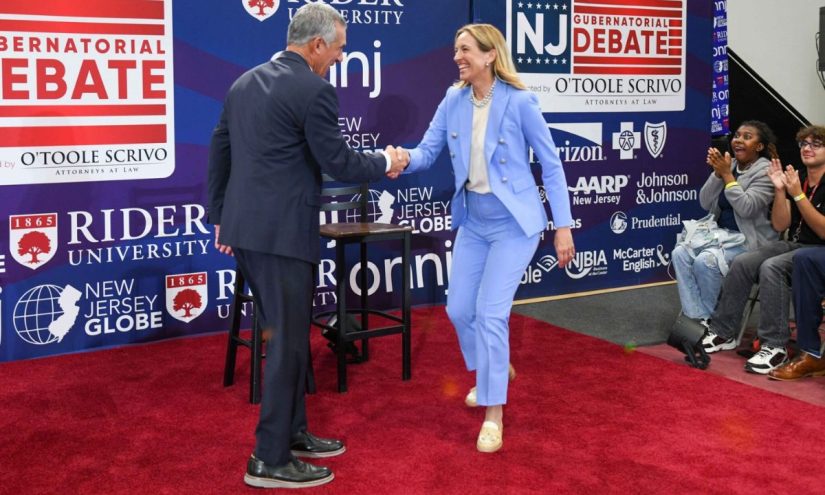
New Jersey’s gubernatorial candidates both want school districts to consolidate as a cost-saving maneuver, but they differ on whether the state should force districts to merge with their neighbors.
Rep. Mikie Sherrill, the Democratic gubernatorial nominee, said during Sunday’s gubernatorial debate that she would first incentivize mergers but added that compulsory consolidation was an option.
“I’d start by offering the carrot to help the areas that want to consolidate, but when there are areas that are not putting enough money into students, into educators, into the buildings, and then they are taking a lot of money in property taxes and from the state level, then we’ll have to start to look at compulsory movements,” Sherrill said.
Republican Jack Ciattarelli, a former assemblyman, likewise said he would seek to boost incentives and assistance to municipalities and school districts seeking mergers, but he pledged not to force them.
“I do not believe that our state government should force consolidation. That’s up to the locals,” he said. “But I’ll tell you what, if you do consolidate or you do regionalize, Governor Ciattarelli will help incentivize that to make it easier.”
Sherrill and Ciattarelli are vying to succeed Gov. Phil Murphy, a Democrat who cannot seek a third term in November.
Officials have long hailed school consolidation as a means of easing local property taxes by reducing duplicative administrative and facilities costs, but uptake has been slow.
New Jersey had 590 operating school districts during the 2024-2025 school year, according to state data, down from 599 in the 2020-2021 school year.
The number of non-operating districts — districts that have a board of education but send all their students to schools in outlying districts — fell from 17 to 16 over that same time period. Sherrill signaled those districts could be the first merged if she wins the governor’s race.
“We have some school districts who have the whole administrative cost, all of the buildings, and yet they’re not even running a K-12 school system, so we do need to merge some of these school districts,” she said.
Schools consume a majority of local property taxes — 52% of all those collected in 2024, according to property tax tables published by the Department of Community Affairs — and the more than $15.1 billion in school aid approved in the current state budget accounted for more than a quarter of all spending approved in the annual appropriations bill for the current July-to-June fiscal year. That total includes more than $4 billion in combined special education, transportation, and other categories of aid separate from the state’s school funding formula.
Ciattarelli suggested school vouchers — which allow property tax dollars to follow a student to a private school, a public school outside their district, or a charter school — could be a fix for ailing districts.
“When a school system is failing — and there’s some reasonable metrics that tell us whether or not a school system is failing — there’s got to be choice,” he said. “That choice comes in the form of vouchers. That choice comes in the form of charter schools.”
Because vouchers typically draw from school district funding, they could cause funding to decline at in-district public schools as students seek education elsewhere.
New Jersey lawmakers have considered compelling school district mergers or shared service agreements, but to date, such mergers have been entirely voluntary.
Murphy, who has generally favored school mergers, last year said he was “not wild about compulsory” consolidation, cautioning that home rule, a constitutional framework that gives local governments broad authority over the administration of school and other municipal services, could limit forced mergers.
A law he signed in 2022 created grants for districts to study whether consolidation was feasible, though only a handful of districts have explored such mergers since.
Cape May City Elementary School and West Cape May Elementary School are the latest to receive grants to explore a merger. Together, the two Cape May County schools have just 241 students.
New Jersey Monitor is part of States Newsroom, a nonprofit news network supported by grants and a coalition of donors as a 501c(3) public charity. New Jersey Monitor maintains editorial independence. Contact Editor Terrence T. McDonald for questions: [email protected].
This audio is auto-generated. Please let us know if you have feedback.
Dive Brief:
Facilitron is rolling out what it says is the first U.S. governance standard for community use of public school facilities, the digital facilities rental platform said Sept. 10.
The California-based company will debut the framework in San Diego this November at Facilitron University, its annual conference for school district leaders and facility managers.
The standard aims to align school facility use with districts’ mission and strategy, reduce legal risk, improve consistency and transparency across district operations, and ensure equitable access for community members and groups, the company says.
Dive Insight:
Facilitron provides facility rental and management support for some of the largest school districts in the U.S., including Florida’s Broward County Public Schools, Nevada’s Clark County School District and California’s San Diego Unified School District.
That broad reach helped the company design a governance framework that goes beyond school boards’ existing model policies to encompass administrative regulations, site manuals, renter terms and audit tools, the company says. It draws on data from more than 15,000 schools, many of which have outdated, inconsistent and unenforceable facility-use policies, “exposing where current systems fail,” according to the company.
“Every district on our platform has a data trail that tells a story,” Facilitron Chief Marketing Officer Trent Allen said in an email. “Even when data is missing — because poor policy and enforcement means a lot of facility use never gets documented — you can still see the problems, like a black hole bending light in its direction.”
Allen said many of those problems have a financial dimension. For example, many districts offer automatic subsidies for registered nonprofits, regardless of the actual public benefit the organization provides — so a national nonprofit with high participation fees gets effectively the same treatment as a grassroots group with a much smaller budget, Allen said.
Districts’ facility-use policies — and the state statutes enabling them — leave money on the table in other ways, like sweetheart deals for school employees, rates that remain static for years, and ambiguous language that discourages districts from tapping their facilities’ full value.
As an example, Allen said, some Tennessee districts interpret a vaguely worded state statute prohibiting “private profit” in school facility use to mean that only nonprofit organizations can rent them, creating a situation where “essentially every use becomes a subsidized use.” That leaves out the possibility that private companies could use the facilities for charitable or other purposes.
Additionally, many school boards give school administrators or facilities managers free rein to adjust or waive fees, or approve informal use outside the plain text of board policy, he said.
The upshot of all this, Allen added, is that larger districts forgo millions in potential revenue annually from facility rentals while creating conditions ripe for favoritism and inequity.
Once one group gets access under favorable terms, every similar group is usually given the same,” he said. “Suddenly the district is on the hook for hundreds of thousands of dollars. It quickly runs into the millions and it is never budgeted for.”
Facilitron says its national governance standard pushes back on the status quo by laying out detailed model school board policies and administrative regulations; a “modular policy toolkit” and site-level operations manual; a national terms and conditions template; and a “facility use audit framework,” which the company describes as “a diagnostic tool that reveals cost, risk and underperformance.”
The national governance standard also includes frequently asked questions, case studies and other resources for school boards.
“We require annual reporting, including an estimate of total subsidization. We make cost recovery the governing philosophy [and] move away from ‘nonprofit’ as the trigger for discounts, because that’s the wrong proxy for public benefit. And we separate policy into layers — board-level rules, administrative regulations, and site-level guidance — so principals aren’t left to invent their own rules,” Allen said.