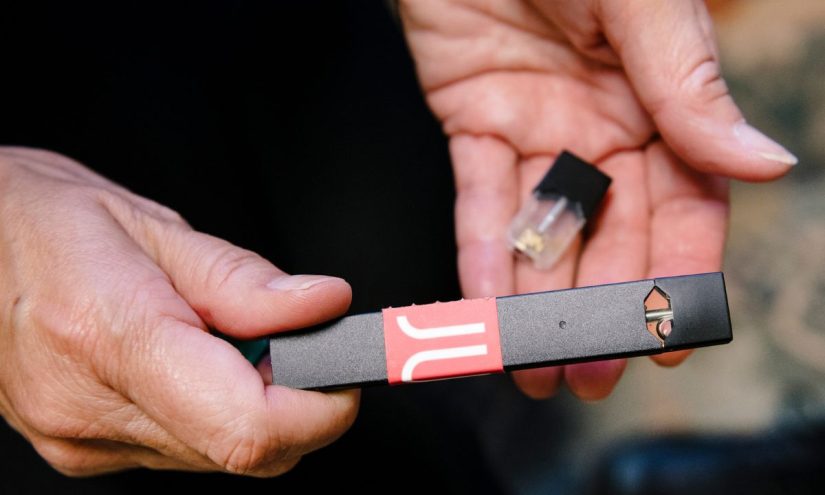
Alabama schools are set to implement a new system to prevent vaping by public school students in the coming academic year.
HB 8, sponsored by Rep. Barbara Drummond D-Mobile, requires the Alabama State Board of Education to create a model policy for local boards of education to adopt by November.
“[Drummond] wanted an anti-vaping law, so we were able to work with her on something that’s not too overwhelming for the districts, but they are all going to have an anti-vaping policy,” State Board of Education Superintendent Eric Mackey told members of the board in a meeting on Tuesday.
Under the proposed policy, students who are caught vaping once will have their parents contacted and students who are caught vaping twice will have to take a state approved vaping awareness, education and prevention class which includes a curriculum created in collaboration with the Drug Education Council.
The topics covered in the proposed curriculum presented to board members include health consequences, peer pressure, nicotine and addiction, resources to quit vaping and common misconceptions about vaping among others.
According to the Children’s of Alabama newsroom, the media branch for the Children’s of Alabama hospital, nearly 20% of high school students in 2023 said they had vaped.
Some board members at Tuesday’s meeting questioned the need for the vaping law.
“As an educator, parent and grandparent, I don’t quite understand the focus on this and bifurcating or separating from the other common concerns in every discipline policy,” said Wayne Reynolds, who represents District 8 on the board. “Why would you separate what you’re doing to a child caught vaping and contacting the parents than any other child in the discipline policy?”
District 1 Representative Jackie Zeigler raised concerns about children moving onto other drugs like Fentanyl and Xylazine or tranq and pushed for broader language in the law to prevent having to add resolutions to add other specific items such as marajuana into the law.
“I don’t think by labeling it does any justice,” she said. “We need to make it broader so these things fit into it so we don’t have to come back and say, ‘now we have [THC] gummies, and now we have vaping.’”
Mackey agreed that the law is more specific than most Alabama Department of Education policies, but because it’s the law they have to follow it and said the board is “being no more restrictive than the law requires.”
The Alabama State Board of Education will vote on the model policy for the law next month.
Alabama Reflector is part of States Newsroom, a nonprofit news network supported by grants and a coalition of donors as a 501c(3) public charity. Alabama Reflector maintains editorial independence. Contact Editor Brian Lyman for questions: [email protected].
That was the central message from Jessica Espinoza and Alice Opperman of Emerson Public Schools (NJ), who shared their decade-long journey implementing standards-based grading during their session at ISTELive+ASCD 2025.
What started as a deeply rooted effort to promote equity has grown into a districtwide, cross-curricular system that blends teacher voice, clarity for families, and support from the right tools.
Here’s what they learned along the way, and why they’re still learning.
3 huge takeaways for school leaders considering a shift to SBG
Clarity starts with fewer, better standards
In the early stages of their grading reform, Emerson tried to be comprehensive; too comprehensive, perhaps. Their first report card included nearly every New Jersey Common Core standard, which quickly became overwhelming for both teachers and families. Over time, they shifted to focusing on broader, more meaningful standards that better reflected student learning.
“So approximately 10 years ago, we started with a standard-based report card in grades K-6. Our report card at that time listed pretty much every standard we could think of. We realized that we really needed to narrow in on more umbrella standards or standards that really encapsulate the whole idea. We took away this larger report card with 50 different standards, and we went into something that was more streamlined. That really helped our teachers to focus their energy on what is really important for our students.” –Jessica Espinoza, Principal, Emerson Public Schools (NJ)
Lasting change doesn’t happen without teacher buy-in
Grading reform can’t succeed unless educators believe in it. That’s why Emerson made intentional space for teacher voice throughout the process; through pilots, surveys, honest conversations, and, most importantly, time. The district embraced a long-term mindset, giving teachers flexibility to experiment, reflect, and gradually evolve their practices instead of expecting instant transformation.
“We had some consultants sit with teams of teachers to work on these common scoring criteria. They were fully designed by teachers, and their colleagues had the chance to weigh in during the school year so that it didn’t feel quite so top-down…the teachers had such a voice in making them that it didn’t feel like we were taking their autonomy away.” –Alice Opperman, Director of Curriculum, Instruction & Technology, Emerson Public Schools (NJ)
Progress means nothing if families can’t follow it
Even with teachers aligned and systems in place, Emerson found that family understanding was key to making SBG truly work. While the district initially aimed to move away from traditional letter grades altogether, ongoing conversations with parents led to a reevaluation. By listening to families and adapting their approach, Emerson has found a middle ground, one that preserves the value of standards-based learning while making progress easier for families to understand.
“Five years ago, I would have said, ‘We will be totally done with points. We will never see a letter grade again. It’s going to be so much better.’ But talking to parent after parent has led us to this compromised place where we are going to try it a little bit differently to give the parents what they need in order to understand us, but also keep that proficiency, competency, mastery information that we feel is so valuable as educators.” –Alice Opperman, Director of Curriculum, Instruction & Technology, Emerson Public Schools (NJ)
Still evolving, and that’s the point
For Jessica and Alice, grading reform has never been about arriving at a perfect system (and certainly not achieving it overnight). It’s been about listening, learning, and improving year after year. Their message to other school leaders? There’s no one “right” way to do SBG, but there is a thoughtful, collaborative way forward.
Emerson’s story shows that when you prioritize clarity, trust your teachers, and bring families into the conversation, the result isn’t just a better report card.
It’s a better learning experience for everyone involved.
How the right grading solution supports Emerson’s SBG efforts
Emerson put in the work, but sustaining grading reform at scale is nearly impossible without the right tools to support teachers, track progress, and communicate effectively with families.
Streamlined standards Focus on the standards that matter most by building custom, district-aligned grading scales. The right platform makes it easy to group standards, apply scoring criteria, and visualize mastery over time.
Transparent communication Share clear, standards-aligned feedback with families directly in a platform. Teachers can provide timely updates, rubric explanations, and progress reports, all in one place.
Flexible grading tools Support teacher autonomy with multiple assessment types and scoring options, including points, rubrics, and mastery levels, all aligned to district-defined standards.
Not only is that 7 percentage points worse than the national average, but 48% represented a significant jump from pre-pandemic levels in 2019, when 36% of Oregon’s 4th graders tested below basic for reading.
The state’s latest reading scores are “disgraceful” and “unacceptable,” said Darcy Soto, director of learning acceleration at Portland Public Schools.
But unlike for the state at large, the Portland district has seen an increase — albeit a slight one of 1% — in reading scores since the pandemic, said Karla Hudson, program administrator for the district’s learning acceleration team. Still, Portland’s progress has been slow and incremental, she said, and less than 60% of the district’s students are proficient in reading.
“We have a lot of work to do,” Hudson said, which is why the 43,500-student district has zeroed in on providing high-impact tutoring.
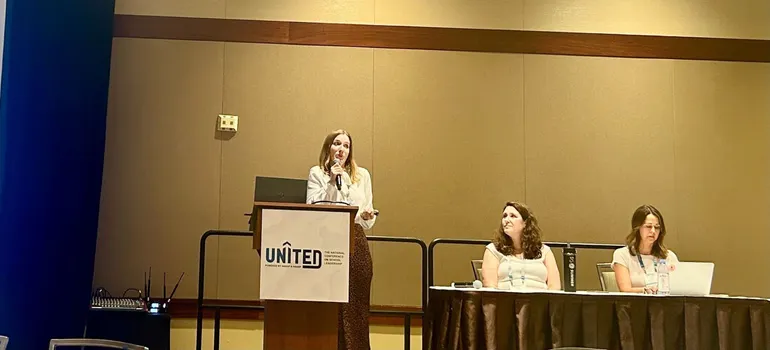
Joined by Stanford University’s Nancy Waymack, Soto and Hudson shared what Portland has learned from its efforts during a July 12 session at UNITED, the National Conference on School Leadership.
High-impact tutoring is a data-driven service that is embedded into the school day and uses consistent, well-supported tutors, said Waymack, director of research, partnerships and policy for Stanford University’s National Student Support Accelerator. The tutors use high-quality instructional materials and hold sessions at least three times a week in small groups of no more than four students, she said.
While teachers can be successful tutors, Waymack said, so too can community members like college students and retirees. Regardless, it’s important that students be able to build a relationship with their tutors, she said.
Data also plays a valuable role in tracking student progress throughout the tutoring, Waymack said. When tutoring occurs during school hours or shortly before or after class time, she said, research shows students are far more likely to attend sessions.
Years in the making
Portland began its early literacy tutoring program through a small after-school pilot initiative in 2021-22 at a few elementary schools for students in grades 3-5, said Soto. The pilot started to show “some really great outcomes,” she said, allowing the district to expand the program from 6 to 20 schools by the 2022-23 school year.
During those first two years, teachers were trained on the curriculum and paid for extended hours to tutor after school and. While that approach did improve students’ reading skills, Soto said, “it was very expensive” given teacher pay and the small student group size. This made the pilot difficult to scale to other schools.
As the tutoring program continued into the 2023-24 school year, the district began shifting to a more cost-effective model — especially as federal pandemic relief funds were sunsetting, Soto said.
By the 2024-25 school year, Soto said, the district used some of its last remaining Elementary and Secondary School Emergency Relief funds to partner with the Oregon Department of Education and Oregon State University to develop a free K-3 tutoring curriculum aligned with structured literacy instruction.
After successfully piloting the new curriculum in summer 2024, the district launched a $1.2 million program across 50 of its 58 elementary schools to serve over 1,200 students in 2024-25, Soto said. The program hired 152 tutors — mostly paraprofessionals — and was embedded during school hours during 30-minute blocks that didn’t interfere with core instruction.
Outcomes and what’s next
Portland attributes recorded a wide range of student outcomes to the tutoring program. One school saw an average growth of 91% on post-tutoring assessments, while another grew on average by just 18%, according to Soto.
The tutoring outcome data so far is “interesting and complex,” Soto said, but it still shows that the program is working.
However, as the district faces declining enrollment and big budget cuts, it has sought partnerships to keep it going, Hudson said. As a result, most tutoring for the 2025-26 school year will run through a community-based partner known as Reading Results with some in-house support and also a new AI literacy tutoring tool.
A majority of the funding will come from the district’s education foundation via a one-year, $1 million grant, Hudson said. The remaining funds will be from the state’s early literacy grant and a private foundation.
When the tutoring program gets underway in the new school year, Soto said her team will continue collecting feedback and data from participants. Sharing success stories, she noted, will help secure funding for the program’s future.
It also will be important to keep adjusting the model’s funding and structure as the district’s budget and capacity shift, Soto said.
When a crisis hits a school campus, communication can either save lives or contribute to chaos. Whether it’s a lockdown, severe weather, or a gas leak, the first moments matter most, and so does the ability to reach the right people instantly. For school leaders, this reality has turned the mass notification system for schools from a nice-to-have into a non-negotiable.
In today’s education landscape, safety isn’t just a responsibility; it’s an expectation. Parents demand it. Students rely on it. And legislation like the Jeanne Clery Act mandates it. From K-12 schools to sprawling universities, institutions are under growing pressure to prepare for emergencies. That means having a reliable, fast, and flexible way to communicate campus-wide emergencies across multiple platforms.
Mass notification systems (MNS) offer that capability. They enable school officials to send real-time alerts through text messages, emails, voice calls, desktop pop-ups, sirens, and public address systems, all from a single dashboard. But with so many systems available, selecting the right one can be overwhelming. Some platforms specialize in panic buttons and mobile alerts; others focus on layered communication and integrations with existing infrastructure.
The stakes are high, but the path forward doesn’t have to be murky. This guide will walk you through what a mass notification system is, why it matters for schools of all sizes, and how to evaluate your options with confidence.
Looking for an all-in-one student information and CRM solution tailored to the education sector?
Try the HEM’s Mautic CRM!
What Is a Mass Notification System for Schools?
So, what is a mass notification system for schools?A mass notification system for schools is a platform that enables institutions to quickly inform students, faculty, and staff about emergencies or critical situations.
These alerts, sent via SMS, email, voice calls, app notifications, and digital signage, can communicate anything from severe weather and campus lockdowns to service disruptions and safety instructions from one central platform. This ensures rapid, widespread communication during emergencies.
They integrate with existing infrastructure such as fire alarms, intercoms, and digital signage to ensure every possible communication pathway is covered.
Schools often turn to systems like Rave Alert, Everbridge, Alertus, and Intrado Revolution, among others. These platforms are designed specifically for emergencies, but what if you had a tool that could do that and more?
How Do Mass Notification Systems Work?
Most MNS platforms are cloud-based and integrate with school databases or SIS (student information systems). Here’s how they function:
Message Creation: Administrators draft a message through a web-based interface or mobile app.
Audience Segmentation: Messages can be sent to specific groups (e.g., staff, students, grade levels).
Multichannel Distribution: The system pushes the message across chosen channels simultaneously.
Acknowledgement and Tracking: Some systems allow recipients to confirm receipt, and administrators can track who received what.
Two-Way Communication: More advanced systems allow for replies and real-time updates.
Why MNS Is a Necessity, Not a Luxury
The need for several types of communication channels has made the need for timely notifications undeniable. In response, many universities adopted robust mass notification systems, and today, the Jeanne Clery Act mandates that all U.S. colleges maintain systems for timely warnings and emergency notifications.
In Canada, provinces like Ontario require school boards to implement emergency and lockdown procedures, which may include notification systems. Globally, ISO 22301 emphasizes communication strategies in business continuity planning, applicable to schools.
But this isn’t just a higher ed concern. K–12 schools face their own risks. And communication needs often extend beyond the campus to include parents and guardians.
Mass Notification Has Multiple Uses
Your mass notification system doesn’t have to be reserved for emergency use. It can and should be the most important part of your everyday communications strategy. Ensuring your mass notification system includes all of your main communications mediums like email newsletters, text messages, website alerts, and social media channels will allow you to do it all in one single platform, saving you time and streamlining your efforts.
Need to send your email newsletter, a text reminder, and a social media push all at once? There’s no reason you shouldn’t be able to do that using your mass communications system. Need to send a mobile app and website alert while you’re at it? You’ll save hours by having everything bundled in one mass notifications toolbox.
Think of it this way: your institution already collects valuable contact information, behavioral data, and engagement history through its CRM. That same infrastructure can power smarter alerting during a crisis. Instead of a generic campus-wide message, you could send tailored updates, like notifying only international students during a visa-related policy change, or alerting online learners about digital platform outages. It’s the intersection of immediacy and intelligence: delivering the right message to the right people, at exactly the right moment.
This synergy is especially relevant in higher education, where the line between operational communication and marketing is increasingly blurred. Institutions must build trust not just through promotional emails but also through reliable, timely updates that reassure students and their families. A CRM-integrated mass notification system supports both missions, emergency preparedness and ongoing relationship-building.
HEM’s Mautic CRM: Smarter Messaging in Every Scenario
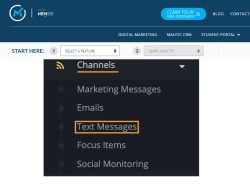
Mautic by HEM allows institutions to segment their contact lists by criteria such as program, campus, or enrollment stage, ensuring each person gets the right message at the right time. The platform also supports multi-channel outreach; staff can send automated emails and SMS messages, all from one centralized system.
With features like workflow automation to schedule campaigns and trigger communications (for instance, event invitations or follow-up messages), a CRM like this can unify both emergency notifications and routine marketing outreach. In practice, that means a school could broadcast critical alerts to affected individuals during a crisis and also manage day-to-day communications with students or customers, all through the same integrated system.
Key Features to Look For
How do you decide which system is right for your school? The key is to carefully evaluate each option’s capabilities against your institution’s needs. Below, we outline the key features to look for when choosing a mass notification system for schools, and how those features play out in practice at schools and universities.
1. Multi-Channel Delivery
Not everyone will be reached by the same medium, so your system should use multiple channels at once. At minimum, it must support SMS/text, email, and voice calls, since one person might see a text first while another picks up a phone call.
More advanced systems go further, triggering alerts over public address speakers, digital signage, desktop pop-ups, and mobile push notifications. Using multiple channels in parallel provides redundancy to ensure your message gets through. If cellular service is down or a phone is silenced, a desktop or PA alert might still reach them.
Example: Harvard University’s Everbridge-powered Harvard Alert blasts out texts, emails, and phone calls to students and staff simultaneously.
In a crisis, every second counts. The person sending the alert could be under extreme stress, so the interface must be very quick and simple to operate. Ideally, launching an alert should be as easy as pressing a single panic button.
Look for a system with an intuitive dashboard, pre-written templates, and minimal steps to send a message. If the process is too convoluted (requiring multiple logins or too many clicks), precious time will be lost.
One university learned this the hard way. It found that issuing an alert took nearly 30 minutes because staff had to activate separate systems for texts, emails, and PA announcements. Needless to say, that delay was unacceptable. The school eventually moved to a unified platform (the same Everbridge solution now used by the University of Michigan) so that one action triggers every channel at once.
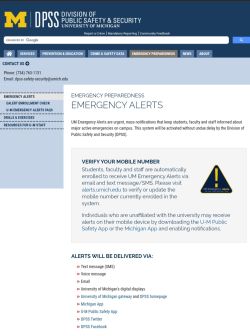
Example: The University of Michigan employs the U-M Emergency Alert system (via Everbridge) to issue real-time emergency messages to students, faculty, and staff.
Will the MNS play nicely with the technology your school already uses? The best platforms can plug into and leverage your existing infrastructure. For example, can it broadcast through your classroom intercoms and PA speakers, or trigger fire alarm strobes and door locks? Many schools have piecemeal safety tools that don’t automatically coordinate with each other. A strong notification system serves as the central hub to unify these.
Example: McGill University’s campus-wide alert system ties into multiple platforms already on campus, including a digital signage network (Omnivex), mass text/email alerts, and loudspeakers. This means one alert can simultaneously pop up on phones, computers, and PA systems across the university, rather than requiring separate actions for each.
Can you target alerts to specific groups or locations when needed? In some situations, you won’t want to blast everyone. The system should let you easily narrow the recipient list based on location or role.
For example, if a small chemical spill affects only the science building, you might alert just that building’s students and staff rather than the entire campus. Conversely, if you have multiple campuses, you may need to send a message only to one site. A good MNS supports both wide-area alerts and precise targeting.
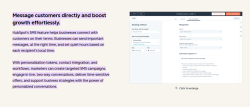
Example: Hubspot’s SMS features offer personalized tokens, contact integration, and workflows, allowing schools to create targeted SMS campaigns and engage in live two-way personalized conversations.
You need a system that works even when things go wrong. Ensure the provider’s network has redundant infrastructure (backup servers, multiple data centers) and built-in fail-safes if one communication mode fails.
For example, if text messages aren’t going through, can it automatically switch to another channel, like email or voice calls? On your side, plan for overlapping alert methods so there’s no single point of failure.
Example: HEM’s Mautic allows you to send notifications via text, email, and mobile app all at once, while the campus also uses sirens and PA announcements as backup.
In an emergency, communication shouldn’t be just one-way. It can be very useful to get feedback or confirmation from recipients and to empower people on the ground to initiate alerts. Some mass notification systems for schools allow two-way interaction. For instance, letting recipients click “I’m Safe” in a mobile app or reply to a text to give their status. This helps account for people and gather instant feedback from the scene.
Equally important is a panic-button capability. Many schools now provide staff with a mobile app or wearable panic button that lets them trigger an emergency alert or call for help with one touch.
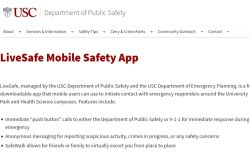
Example: University of Southern California’s emergency notification ecosystem is integrated with a smartphone safety application, known as the Trojan Mobile Safety App, powered by LiveSafe. This free downloadable app, managed by the USC Department of Public Safety and Emergency Planning, complements the TrojansAlert system by putting emergency assistance tools directly in users’ hands. Notably, the app includes a panic-alert feature in the form of one-touch emergency calling.
Consider the management and support aspects of the system. You’ll want to control who can send alerts (and to whom). Robust platforms allow role-based permissions. For instance, limiting campus-wide alerts to senior officials while enabling more localized alerts by authorized staff. This ensures alerts can be sent out quickly but still securely by the appropriate personnel.
Data security is critical as well: the system will hold contact info for your students and staff, so it must safeguard that data and comply with privacy laws (such as FERPA or GDPR). Additionally, evaluate the vendor’s customer support and training.
Emergencies can happen anytime, so 24/7 technical support is highly desirable. If an issue arises at 3 AM, you’ll want immediate help. A good provider will also help train your team so everyone knows how to use the system effectively before an emergency occurs.
Example: The University of Washington uses a Rave-powered UW Alert system to manage communications for its large campus community. With tens of thousands of students and employees, UW relies on the system’s strong admin controls to ensure only authorized officials can send out mass alerts, and on the vendor’s support to keep the platform running smoothly.
Prices vary. Some platforms bill per message or user, others charge flat annual fees. Don’t choose based solely on price. Focus on total value and required features, and check for educational discounts.
9. Scalability and Future-Proofing
As your school grows or tech evolves, your MNS should scale accordingly. Look for vendors with a proven track record of innovation and regular updates.
In a nutshell, what features should a good campus mass notification system include? A reliable campus notification system should have multi-channel messaging (SMS, email, phone, app alerts), easy integration with existing databases and software, real-time analytics and reporting, mobile accessibility, and role-based controls. Ideally, it should also allow for geotargeted alerts, two-way communication, and scheduled test alerts. These features help schools deliver timely, relevant updates during both emergencies and routine situations.
Why HEM’s Mautic CRM Is a Smart Choice for Mass Notification and Communication
Choosing a mass notification system is not just a technical decision: it’s a strategic one. That’s why many institutions are turning to HEM’s Mautic CRM, a powerful platform that blends emergency communication with everyday engagement, all in one intuitive system.
HEM’s Mautic isn’t just a marketing tool: it’s a communication hub designed for the complex needs of modern schools. Built specifically for educational institutions, it provides the flexibility and automation required to send the right message to the right person, at exactly the right moment, whether you’re dealing with an emergency or simply sending out a campus newsletter.
Unified Communication Across Channels
Mautic CRM allows schools to centralize their messaging efforts, supporting email, SMS, and in-app alerts from a single dashboard. In a crisis, that means no delays switching between systems, just fast, targeted communication when every second counts.
But its value extends beyond emergencies. With Mautic, you can schedule and automate routine announcements, manage event outreach, and nurture prospective students through personalized workflows, making it a powerful asset for both marketing and crisis response teams.
Segmentation and Personalization
The platform’s segmentation features let you target messages based on program, campus, enrollment stage, or any other custom criteria. This ensures your messages are always relevant, crucial when issuing alerts that may only apply to certain groups, buildings, or locations.
Need to notify only international students about a visa-related change? Or send an urgent weather alert to your downtown campus while leaving other sites unaffected? Mautic makes it easy.
Automation for Every Scenario
From workflow triggers to dynamic content, HEM’s Mautic helps schools automate communication with precision. For example:
Trigger follow-up emails after an info session
Send reminders about registration deadlines
Automate alerts for emergency drills or test scenarios
These workflows can be adapted for both emergency preparedness and ongoing communications, creating a seamless experience for students, faculty, and administrators alike.
Easy Integration and Expert Support
HEM’s CRM integrates with leading SIS and web platforms, enabling real-time syncing of contact data and activity tracking. That makes implementation smooth and ensures your alert system always has up-to-date recipient information.
And because it’s backed by HEM’s education marketing experts, you get more than just software; you get strategic onboarding, training, and long-term support tailored to your institution’s needs.
Ready to Future-Proof Your School Communication?
Whether you’re managing crisis alerts or student outreach campaigns, HEM’s Mautic CRMdelivers reliability, flexibility, and peace of mind. Join institutions that are redefining campus communication and doing it smarter.
Looking for an all-in-one student information and CRM solution tailored to the education sector?
Try the HEM’s Mautic CRM!
Frequently Asked Questions
Question:What is a mass notification system for schools? Answer: A mass notification system for schools is a platform that enables institutions to quickly inform students, faculty, and staff about emergencies or critical situations.
Question: What features should a good campus mass notification system include? Answer: A reliable campus notification system should have multi-channel messaging (SMS, email, phone, app alerts), easy integration with existing databases and software, real-time analytics and reporting, mobile accessibility, and role-based controls.
On stage, baton in hand, Rebecca Bryant Novak found her calling in the precarious. She says conducting an orchestra sometimes “feels like trying to do brain surgery on a conveyor belt. You don’t get to stop. You don’t get to pause and say, ‘Hold on, let me think.’” But that high-stakes intensity, the kind that crackles through a Brahms crescendo or explodes in a Mahler finale, is what drew her in. “I love that,” she says. “To conduct an orchestra once in your lifetime, much less dozens or hundreds of times, is just an enormous privilege.”
But behind the podium at the University of Rochester’s Eastman School of Music, one of the world’s premier conservatories, the peril Bryant Novak faced was not merely musical. In October 2023, she reported her doctoral program advisor and the director of orchestras, Neil Varon, for harassment. What followed, by her account and email correspondence describing the university’s own investigative findings, was a spiral of institutional dysfunction in which Eastman abandoned its own policies to retaliate against Bryant Novak for speaking out.
What began as a childhood dream — “I saved my babysitting money to buy tickets for me and my mom to go to St. Louis Symphony concerts,” she recalls — has now soured into a fight not merely for her academic degree but for her dignity, for institutional transparency, and for a measure of justice in an industry she loves.
A pianist by training, she fell for music director David Robertson’s conducting as a teenager in St. Louis, where she was captivated by his orchestra’s sound and force. “I loved the idea of being part of it,” she says. “As I look back at that person, she had no idea what she was getting into. But the draw was strong.”
Chasing the grueling dream of the podium was a particularly steep climb for a woman. “There have only been three women admitted to my program in over 20 years,” she says, referring to Varon’s conducting studio, which she estimates has accepted approximately 40 students during that time. “The resources are immense. So is the gender disparity. I mean, it’s extreme.”
Bryant Novak, a first-generation college graduate, said that upon arrival she felt “very much a fish out of water in the fancy music school scene.” Still, she was undeterred. “I said to myself, look, I won the audition. The orchestra voted, and I got an overwhelming orchestra vote. Everyone was thrilled about my being here.” She believed — naïvely, she now says — that the music would speak for itself. “Gender has nothing to do with this. My work stands on its own. So I was kind of in that mindset going in.”
Her optimism did not last.
I had jobs in this field before going back for my doctorate. I knew the scene. My actual experience is that staying silent doesn’t help you that much.
Bryant Novak claims that during one rehearsal, as she was conducting in front of about 60 students, Varon told her she was “Gibson impregnated,” a reference to her former teacher at the University of Cincinnati, Mark Gibson, with whom she had cut contact after completing her master’s degree. Bryant Novak’s history with Gibson was fraught with alleged maltreatment: she says she suffered “inappropriate behavior, including comments on [her] physical appearance” and “physical contact under the guise of instruction” that resulted in “lasting professional harm.”
Gibson and Varon were close professional contacts, and though Bryant Novak says Varon repeatedly noted Gibson’s problematic history and widely known reputation for abuse, she claims he “began referencing [her] history with Gibson as early as [her] audition.” According to Bryant Novak, Varon’s increasingly hostile and erratic behavior in class eventually forced her to end a conducting session with the orchestra, which typically lasted almost an hour, after just fifteen minutes.
In what she describes as a “damned if you do, damned if you don’t” calculation, Bryant Novak chose to report Varon. “I had jobs in this field before going back for my doctorate. I knew the scene,” she says. “There have been situations where I’ve stayed silent before, as in my master’s program studying with Mark Gibson. My actual experience is that staying silent doesn’t help you that much.”
Initially, she raised the alarm privately, requesting the administration limit her contact with Varon rather than filing a formal complaint. Her request was denied. Instead, Bryant Novak says Title IX coordinator John Hain suggested she transfer. “I remember asking, ‘How is that supposed to work?’ These programs are very competitive. They’re very small. It’s not like I’m getting my bachelor’s in history. How is this the solution? It was just not at all thought through.”
“I don’t think it’s an exaggeration to call it sabotage,” she said, after her final recital was stacked with outlandishly difficult material. (Smiley Photography)
“I got this whole lecture about how there’s no law against being a jerk. I’m like, ‘I’m aware of that.’” Worse, she adds, “They disclosed the report to [Varon]. They kind of wagged their finger at him and said ‘good luck’ to me. I was stunned.”
Faced with Eastman’s inaction, Bryant Novak used the only tool she had left — her voice. She wrote about the experience in a post on her Substack, The Queen of Wands, sharing conversations with administrators, naming names, and describing Eastman’s lack of support.
That’s when the retaliation began.
A senior administrator threatened her with a defamation lawsuit — the very same John Hain in charge of handling her Title IX complaint. Students who once applauded her presence grew cold. Some faculty offered quiet support but refused to speak publicly. “It got very bizarre,” she says. “Very, very weird.”
According to email correspondence between Rebecca and university officials, the University of Rochester — Eastman’s parent institution — conducted an investigation that concluded Varon had indeed violated their harassment policy and that Eastman had grossly mishandled her complaint. Despite this, rather than offering protection to Rebecca, Eastman remained intent on shielding its own faculty.
Tell Rochester to Stop Muzzling its Students
Take Action
Tell the University of Rochester: Reinstate Rebecca Bryant Novak, restore due process, and stop muzzling students into a culture of silence.
By the following semester, “there was some nastiness” from some of her fellow students in the orchestra. Her conducting opportunities were reduced. The faculty grew tight-lipped. She would walk into a room and people would stop talking. One tenured professor whispered to her that he’d written a letter of support but begged her not to tell anyone.
Meanwhile, Bryant Novak continued writing publicly about her experience on Substack. Her posts were measured, personal, and often devastating. Her first post, titled “My First Year at Eastman,” told the story of the initial incident and the process that ensued from her point of view. Another, titled “Cease and desist,” detailed John Hain’s defamation threat against her.
Then, however implausibly, things got worse.
In December 2024, the University of Rochester launched a second investigation, this time into Eastman’s continued mishandling of Bryant Novak’s complaint and the retaliation she alleged had taken place against her. That might seem like a reason to think things were finally looking up — except two weeks after Bryant Novak disclosed the second investigation in a Substack post, Eastman expelled her for a “lack of academic progress.”
According to Bryant Novak, this came despite Eastman’s prior confirmation that her academic plan and credits were sufficient in order to graduate. Worse, Eastman’s letter to Bryant Novak ended with a list of non-academic allegations: “misuse of University email systems,” “creating a hostile environment,” and “language that has been perceived as threatening violence.” All this was presented without detail or evidence. It was also described as not the actual cause of her dismissal, but worth “remark.” For her part, she sees it as a last-ditch attempt to discredit her. “The double standards were pretty intense,” she says. The school claimed there wasn’t much it could do to restrain Varon but, she says, “When it was time to expel me — boy, their hands were not tied.”
People assume we’ve moved past this stuff. But no, speech is still powerful. People are still afraid of it. And they’ll try to shut you up.
In a June 18 letter to the university, FIRE detailed how Eastman skipped every procedural safeguard required by their own academic progress policy: no warnings, no probation, no appeal. It doesn’t take a bloodhound to sniff out the pretext: just after Bryant Novak disclosed the second investigation on Substack, Eastman’s concerns about her suddenly became so acute that it bypassed the two-semester review process its own policy required before dismissal. FIRE lambasted the university for this egregious betrayal of due process and charged that the expulsion — taking place amidst baseless legal threats and conflicts of interest — was retaliation against Bryant Novak for speech Rochester’s policies protected.
Bryant Novak says it was Eastman itself that endangered her academic progress. After she reported his behavior, she says, “They let Neil [Varon] have control over my degree recital, which is the centerpiece of my degree. I mean, it was retaliatory. He put material on it that was outlandishly difficult — so much so that two guest faculty intervened and said, ‘This is not okay.’ One of them actually said directly to me, ‘That is a giant middle finger from him to you.’ I don’t think it’s an exaggeration to call it sabotage. They did ultimately change it, although you’re supposed to have up to a year to work on this. I was left with two months. And then they were trying to get me out the door. It was very, very clear they wanted me out in any way possible. They created a situation that was unsustainable.”
“There are consequences either way. There are consequences to yourself if you stay silent. There are consequences out in the world if you speak out.” (Smiley Photography)
The situation became so upsetting that she began seeing a university therapist. In her final semester, at the therapist’s request, she started going multiple times a week. “I was just kind of personally deteriorating,” Bryant Novak recalls. “I was honestly kind of having a breakdown.” She spent roughly a month working through her difficulties with her professors and her therapist, who was willing to offer the school documentation of her situation. In turn, Bryant Novak offered to submit that documentation to the school, but says that “a week later,” the school “responded with an expulsion letter.”
In the broader Eastman community, Bryant Novak was shunned by what she describes as a “cultish culture.” Online, including on FIRE’s own social mediaposts, her classmates have left comments smearing her reputation. Some think their interpersonal issues with Bryant Novak, or whatever shortcomings they see in her as a student or conductor, justify her expulsion.
But being unpopular does not cost you your rights. It does not strip you of due process protections. It does not neuter your expressive freedom.
Bryant Novak sees her case as part of a larger trend. This isn’t the first time Eastman has allegedly blacklisted a student for standing up against misconduct. And beyond its Rochester campus, other classical music artists have suffered similar fates for stepping forward. Bryant Novak has no illusions about the conservatoryculture she sees as responsible. “The culture’s awful. It just is,” she says. “Everybody knows it. But at the same time, the music is phenomenal.”
She references a case, documented in New York Magazine, in which an alleged rape victim and an ally were pushed out of the New York Philharmonic and bullied by their peers for speaking up while the accused perpetrators remained. “That story jolted me,” she says. “And now I’m living my own version of it. People assume we’ve moved past this stuff. But no, speech is still powerful. People are still afraid of it. And they’ll try to shut you up.”
Reflecting on it all, Rebecca says that though she is grateful for FIRE’s help, she found it hard to believe she needed it for something like this. “You know, I wasn’t in a Gaza protest. It wasn’t that. It was just saying: ‘Hey, harassment is bad. Can you stop?’ The fact that speaking out against harassment is controversial in this space? That says a lot.”
Still, Bryant Novak refuses to be silenced. In April, she submitted a 200-page complaint to the New York State Division of Human Rights under penalty of perjury. Believing sunlight is the best disinfectant, she is documenting everything and wants it all out in the open. “If there’s an online Neil Varon fan club,” she quips, “I think that’s good for us to know. Surface it all.”
As for her future? “I still want to conduct,” she says. “But more than that, I want a world where women can do this without fear.”
Pausing to think about it, she says, “There are consequences either way. There are consequences to yourself if you stay silent. There are consequences out in the world if you speak out. I prefer the consequences out in the world.”
Higher education institutions are increasingly acknowledging the importance of wellbeing in shaping meaningful and sustainable learning experiences. However, the wellbeing of students and staff is often treated as a separate or secondary issue, addressed through isolated initiatives rather than embedded into the fabric of university life.
I propose adopting a lifelong approach to wellbeing in education grounded in appreciating that schools and universities are not distinct spheres. Rather, they are stages on a continuous educational journey. The way we foster wellbeing in schools must inform, and align with, our practices in higher education.
Foundations for wellbeing
The foundations laid in schools play a crucial role in shaping how learners experience their transition into university. When educational environments nurture emotional resilience, social connection, and inclusive responses to academic pressures, learners arrive in higher education with a stronger base of support. In contrast, when wellbeing is not prioritised earlier in the educational journey, the structural and emotional demands of university life can amplify existing challenges. This underscores the need for continuity and care across the educational continuum, rather than placing responsibility on individuals to adapt alone.
In many school systems, wellbeing is increasingly recognised as integral to education. A holistic, strengths-based approach helps ensure that wellbeing is supported through curriculum design, teaching practices, and whole-school approaches and policies. Programmes focused on social and emotional learning are embedded, and collaboration across sectors – education, health, and community – creates a network of support that extends beyond the classroom.
In higher education, this picture is evolving. The work on wellbeing spearheaded by Universities UK in recent years has helped universities to become more attuned to the importance of wellbeing, yet academic culture often remains shaped by competitiveness, performance metrics, and output-driven models. This dynamic also influences schools in some contexts, particularly where high stakes testing and narrow accountability frameworks dominate. However, there tends to be greater acceptance within schools that wellbeing and learning are deeply interconnected.
In the university context, structural pressures, including institutional expectations and the demands of competitive academic cultures, continue to affect both students and staff, contributing to stress, burnout, and mental health difficulties. Although there is growing attention to student wellbeing in policy and strategy, support for staff wellbeing remains less visible, despite its clear influence on teaching quality and the wider learning environment. There is a need for a joined-up, systemic approach recognising the interdependence of student and staff wellbeing.
Whole institution approaches
A whole-university approach, as promoted by Universities UK, is a strategic, institution-wide commitment to embedding wellbeing into every dimension of university life, echoing the well-established whole-school model in many primary and secondary education systems. Just as whole-school approaches integrate wellbeing into teaching, leadership, curriculum, and engagement with families and communities, a whole-university approach ensures that wellbeing is not confined to support services or stand-alone initiatives. It becomes a shared responsibility, woven into the ethos, governance, and daily practices of the institution.
Rather than relying on reactive services, this model positions wellbeing as a core value that shapes leadership, curriculum, pedagogy, and institutional relationships. It calls for cultural transformation, redefining success to focus not solely on outcomes, but on flourishing. This includes embedding wellbeing in teaching and assessment, professional development, work-life balance, and inclusive, compassionate organisational values. It requires systems that promote flexibility, equity, and psychological safety as the norm.
Universities must be understood as ecosystems. When this ecosystem is well, everyone within it is more likely to thrive. This involves designing curricula that support engagement and wellbeing, adopting inclusive policies, and nurturing cultures of trust, care, and belonging in both academic and administrative contexts.
Higher education can also learn from the progress made in schools. Many school systems have already developed comprehensive frameworks for promoting wellbeing – such as the Health Promoting Schools model – which successfully embed wellbeing into governance, pedagogy, and wider school life. Higher education has much to gain from adapting these models to its own settings, helping to ensure continuity of support as learners move between sectors.
Embedding wellbeing through national frameworks
Aligning approaches across schools and universities creates a more cohesive experience for learners and reduces the sense of disorientation that often accompanies educational transitions. It also enables valuable exchange between sectors, where shared learning can lead to better outcomes for all.
Within this context, and especially given the significance of the transition from school to university, national leadership is essential in embedding wellbeing consistently across education systems. The move into higher education is more than a change of setting; it is a profound developmental shift, often marked by increased autonomy, identity exploration, and academic complexity. While this transition can be exciting, it also brings vulnerability and emotional strain. Maintaining wellbeing support across this bridge is therefore not optional; it is essential. Yet it is precisely at this stage that inconsistencies and gaps often emerge. National policies that intentionally bridge sectors can ensure wellbeing remains a continuous thread throughout a learner’s journey.
One crucial aspect of national leadership is the development of robust policy and strategy relating to wellbeing, both within institutions and at a broader, systemic level. Country-wide initiatives create coherence, consistency, and a shared vision – particularly important when seeking to strengthen the links between schools and universities. Ireland, for instance, has implemented a national policy and strategy around mental health that spans multiple sectors, not just education. This kind of joined-up approach exemplifies how public policy can help to sustain cultural change across the education system and beyond.
The wellbeing of our educational communities is not a peripheral concern. It is central to the very purpose of education. By embedding wellbeing across every level – through policy, pedagogy, leadership, and institutional culture – we not only support individuals to succeed, but also help to build resilient, compassionate institutions where everyone can flourish.
A torrent of controversy has erupted over the Trump administration’s decision to shutter the federal Department of Education. Critics howl that it will destroy public education in America. Supporters insist it will somehow make things better.
The only thing that’s clear is that our public education system is broken. It’s time for politicians to stop using education as a political football, with blue and red teams competing for control rather than sharing the responsibility to prepare our children for their futures.
The resulting chaos and confusion and rigid policies choke the joy out of learning and of working in our schools. Insufficient attention by leaders to education culture can result in fear and distrust, turf wars and a tendency to blame and make excuses for a lack of progress.
Such behaviors produce a toxicity that disables learning and disempowers leadership. Instead of increasing our nation’s economic prosperity, we’re deepening inequality, limiting opportunity and sadly wasting the potential of many children, on whose ability to thrive our country depends.
Poor work conditions, insufficient support, inadequate pay and limited career opportunities are among some of the reasons teachers are leaving and schools are struggling to attract top talent. Reductions in funding from the Great Recession through the present render our facilities dangerous in some instances and unwelcoming in others. Would you buy a house with barbed wire fencing and unkempt grounds that make you wonder whether the aim is to keep something out or in?
What should we do to change what is going on inside our schools?
We must first of all start working together to make our public schools great places to teach and learn.
Great places to work and learn are places that are well led, fueled by purpose and guided by shared, positive behaviors that advance learning goals and serve as “rules of the road” for how employees and students are expected to behave.
In great schools, employees, students and families are respected and valued. Leaders in great schools inspire their employees — all of them — to do more than they think they can. Employees align behind the purpose of enabling learning, which creates momentum and camaraderie for what they are working to attain together.
In great schools, leaders inspire their communities to join them in cheering for and supporting kids’ future successes. Families, no matter their socioeconomic status, feel a sense of belonging.
Problems are perceived as opportunities to get better, not sources of indiscriminate blame. Solutions are found by looking in the mirror first. External threats to learning, such as poverty or parents’ underemployment, are acknowledged and addressed. Schools don’t dodge their responsibility to educate all kids.
In great schools, kids are known by caring employees; they feel seen and heard and are deeply engaged and invested in their learning.
Every employee working in a great school district feels responsible for achieving the district’s mission, no matter whether they work inside or outside of the classroom.
When kids return after being absent, employees welcome them back, tell them they were missed and focus on catching them up. They do not judge the constraints of their families’ lives or mete out punishment as though missing school is a crime.
Great places to learn must also be great places to work. We must reframe our concept of schools as not just places where kids learn. Great places to work care about the needs of all the human beings in their care, including and especially their employees.
“To win in the marketplace, you must first win in the workplace,” Douglas R. Conant, former Campbell Soup Company CEO famously said. He knew what is becoming clearer within our public school systems — that unhappy, unfulfilled employees lead to high turnover, disengagement by students and staff and disaffected families turning to alternative educational offerings.
It is no secret that attracting and retaining top talent to work in our schools is increasingly difficult as employees seek more stability. Attracting younger workers is even more difficult.
Many of those who currently work in schools, especially teachers, are stressed, burned out and dissatisfied. Being stressed and burned out is not a normative experience; it’s a symptom of a weak culture, and an organizational problem to be solved. And employee turnover is no longer limited to teachers. There are increasing vacancies among principals, bus drivers and food service and facilities staff.
The quality of the experiences of employees working in our schools must be higher. Every point along the employee experience continuum, from applying for a job to choosing to leave, is an opportunity to deepen employee engagement and commitment to being a high performer.
We can fix what we have broken. Thinking differently about making our public schools great places to work and learn is a good place to start. No policy changes are required to demonstrate concern for the human beings the system employs and seeks to educate.
Etienne R. LeGrand is a thought leader, writer and culture-shaping strategist and adviser at Vivify Performance.
This story about school culture was produced by The Hechinger Report, a nonprofit, independent news organization focused on inequality and innovation in education. Sign up for Hechinger’s weekly newsletter.
The Hechinger Report provides in-depth, fact-based, unbiased reporting on education that is free to all readers. But that doesn’t mean it’s free to produce. Our work keeps educators and the public informed about pressing issues at schools and on campuses throughout the country. We tell the whole story, even when the details are inconvenient. Help us keep doing that.
ROCHESTER, N.Y., June 18, 2025 — The Foundation for Individual Rights and Expression is urging the University of Rochester to reinstate an Eastman School of Music student who was expelled after blowing the whistle on a professor who sexually harassed her.
The case lays bare a university system that moved quickly to protect itself at the expense of a student’s right to voice criticisms — even though an internal investigation found the professor responsible for violating the harassment policy.
“There was no due process or hearing,” the student, Rebecca Bryant Novak, said. “The university’s administrators were more concerned about protecting the faculty than adhering to their own rules and addressing bad behavior. They basically tried to destroy my career beyond all comprehension.”
Shortly into her first semester as a Ph.D. student in fall 2023, Bryant Novak complained about abusive behavior by a professor who she said would scream at students and make lewd, sexist comments.
After a yearlong investigation, a panel of faculty and administrators agreed that the professor had indeed violated Rochester’s harassment policy and that Eastman’s Title IX coordinator had grossly mishandled her complaint.
Despite all this, Eastman allowed the same school authorities to retain oversight of Bryant Novak’s academic trajectory — with one official telling her that the school restricted her performance times because of her complaint against the professor.
When Bryant Novak complained, Eastman did nothing. As a result of the alleged retaliation, Rochester opened a second investigation into Eastman’s mishandling of the situation in December 2024, and Bryant Novak publicly disclosed the university’s new investigation in a Substack article on Feb. 10.
Tell Rochester to Stop Muzzling its Students
Take Action
Tell the University of Rochester: Reinstate Rebecca Bryant Novak, restore due process, and stop muzzling students into a culture of silence.
Two weeks later, Eastman abruptly expelled Bryant Novak, citing a failure to make academic progress. In doing so, the school ignored its written policy that calls for students to be given ample notice if they are in danger of falling short of academic standards.
“Rebecca’s expulsion smacks of retaliation for speech that is explicitly protected by the university’s policy,” FIRE Program Counsel Jessie Appleby said. “This is a profound violation of her free speech rights and sends a chilling message to every student at Eastman.”
FIRE is calling on university President Sarah C. Mangelsdorf to immediately reinstate Bryant Novak and ensure that she is able to complete her doctorate under the oversight of Eastman faculty and officials who are not already subject to investigation for misconduct in her case.
“I hope that by taking a stand here, I can help force Rochester to extend the kinds of protections to other students that were denied to me,” Bryant Novak said.
The Foundation for Individual Rights and Expression (FIRE) is a nonpartisan, nonprofit organization dedicated to defending and sustaining the individual rights of all Americans to free speech and free thought — the most essential qualities of liberty. FIRE educates Americans about the importance of these inalienable rights, promotes a culture of respect for these rights, and provides the means to preserve them.
CONTACT:
Karl de Vries, Director of Media Relations, FIRE: 215-717-3473; [email protected]
This story was originally published by CalMatters. Sign up for their newsletters.
California’s schools and colleges receive billions in federal funding each year — money that President Donald Trump is threatening to terminate over the actions of one student. AB Hernandez, a junior from Jurupa Valley High School, is transgender, and on May 31 she won first- and second-place medals at the state track and field championship.
“A Biological Male competed in California Girls State Finals, WINNING BIG, despite the fact that they were warned by me not to do so,” Trump said in a social media post last week. “As Governor Gavin Newscum (sic) fully understands, large scale fines will be imposed!!!”
Despite this post and a similar threat a few days earlier to withhold “large-scale” federal funding from California, Trump lacks the authority to change the state’s policy toward transgender athletes without an act of Congress or a decision by the U.S. Supreme Court. And recent court cases suggest that Trump also may have a hard time withholding money from California.
California state law explicitly allows transgender students in its K-12 school districts to compete on the team that matches their preferred gender, but the Trump administration has issued multiple directives that restrict access to girls’ sports, including a letter last week from the U.S. Department of Justice telling high schools to change their policies.
On Monday, California Attorney General Rob Bonta sued the Justice Department over its letter, saying it had “no right to make such a demand.”
“Let’s be clear: sending a letter does not change the law,” said State Superintendent of Public Instruction Tony Thurmond in a statement to school districts. “The DOJ’s letter to school districts does not announce any new federal law, and state law on this issue has remained unchanged since 2013.” On Monday, Thurmond sent his own letter to the Trump administration, refuting its legal argument.
California receives over $2 billion each year for its low-income Title I schools, as well as over $1 billion for special education. At the college level, students receive billions in federal financial aid and federal loans. Even if Trump lacks the legal authority to change state law, he could still try to withhold funding from California, just like he tried with Maine. In February, Trump asked Maine Gov. Janet Mills if her state was going to comply with a presidential executive order — which is not a law — that directed schools to bar transgender girls from certain sports. Mills said she’d comply with “state and federal laws,” effectively rebuking the president.
The Trump administration has since tried to withhold funding from Maine, but legal challenges have prevented it.
The NCAA vs. California state law
Trump made banning transgender youth athletes a centerpiece of his 2024 presidential campaign, and it’s remained a focal point for his administration this year. Nationally, Americans increasingly support restrictions on transgender athletes, according to surveys from the Pew Research Center. Gov. Gavin Newsom, who last year signed legislation supporting trans students, spoke out against transgender athletes in a podcast this March, saying it was “deeply unfair” to allow transgender girls to compete in girls’ sports.
Female athletes with higher levels of testosterone or with masculine characteristics have long faced scrutiny, biological testing and disqualification. Debates about who gets to participate in girls’ or women’s sports predate the Trump administration — and Newsom — and policies vary depending on the athletic institution.
In 2004, the International Olympic Committee officially allowed transgender athletes to compete in the sport that aligned with their gender identity, as long as the athlete had sex reassignment surgery, only to change that policy in 2015 and require hormone testing. In 2021, the committee changed the policy again, creating more inclusive guidelines but giving local athletic federations the power to create their own eligibility criteria.
Across California, youth leagues, private sports leagues and other independent athletic associations all have their own policies. Some allow transgender women and men to participate; some restrict who can compete. Some require “confirmation” of a participant’s gender, such as a government ID or statements from health care professionals, while other associations take the athletes at their word.
California’s colleges and universities are not allowed to discriminate against transgender students but state law doesn’t provide any guidance beyond that. After the presidential executive order in February, the National Collegiate Athletic Association (NCAA), which independently regulates college sports, changed its rules, prohibiting transgender women from competing and putting colleges in a bind. Roughly 60 California universities are part of the NCAA, including almost all of the UC and many Cal State campuses. Community colleges, which represent the bulk of the state’s undergraduates, are not part of the NCAA.
“There’s a strong argument (the NCAA rules) could violate state law and federal equal protection,” said Elana Redfield, the federal policy director at UCLA’s Williams Institute, which studies LGBTQ+ issues.
Amy Bentley-Smith, a spokesperson for the California State University system, declined to comment about how the NCAA policy conflicts with state and federal regulations. She said the Cal State campuses abide by the NCAA rules — preventing transgender athletes from competing — while still following state and federal non-discrimination laws regarding trans students.
Stett Holbrook, a spokesperson for the University of California system, said the UC does not have a system-wide policy for transgender athletes. He did not respond to questions about whether the campuses abide by NCAA rules.
Unlike the NCAA, the California Community College Athletic Association allows transgender athletes to compete. A spokesperson for the association, Mike Robles, said he’s aware of the NCAA rules and the Trump administration’s priorities but he did not say whether the association will modify its own policy.
The U.S. Constitution is silent on trans students
In February, just days after the president’s inauguration and the executive order regarding transgender athletes, the U.S. Department of Education launched an investigation into San Jose State after a women’s volleyball player outed her teammate as transgender. The education department has yet to provide an update on that investigation.
With the Trump administration’s focus now on CA K-12 school districts, the legal debate has intensified. In its letter to the state’s public schools last week, Assistant U.S. Attorney General Harmeet Dhillon said allowing transgender girls to compete in girls’ sports is “in violation” of the Equal Protection Clause of the U.S. Constitution and asked schools to change their policies.
But the U.S. Constitution doesn’t say anything about transgender athletes, at least not explicitly.
Instead, Dhillon is offering an interpretation of the Constitution, “which doesn’t carry the full force of law,” Redfield said. The laws that do govern transgender athletes, such Title IX, aren’t clear about what schools should do, and the U.S. Supreme Court — the entity with the power to interpret federal law and the Constitution — has yet to decide on the matter.
That said, many lower level judges have already weighed in on whether the Constitution or Title IX law protects transgender students or athletes.“The preponderance of cases are in favor of trans plaintiffs,” Redfield said. “The federal government is contradicting some pretty strong important precedent when they’re making these statements.”
After Trump’s comments about AB Hernandez, the nonprofit entity that regulates high school sports, the California Interscholastic Federation, changed its policy, slightly. For the state’s track and field championship, the federation said it would implement a new process, whereby AB Hernandez would share her award with any “biological female” that she beat. All “biological female” athletes below Hernandez would also move up in ranking.
On May 31, Hernandez shared the first-place podium twice and the second-place podium once, each time with her competitors smiling supportively, the San Francisco Chronicle reported.
A spokesperson for the governor, Izzy Gardon, said that approach is a “reasonable, respectful way to navigate a complex issue without compromising competitive fairness.”
Our charter school, Westbrook Academy, has been serving middle and high school students in the South Los Angeles area for the past six years and stands as a beacon of opportunity for our community. With a student body comprising nearly 99 percent Black and Latinx individuals hailing from historically under-resourced communities, we confront the realities of poverty and the accompanying insecurities head-on.
Despite the odds, our 400 students consistently demonstrate remarkable resilience and a profound capacity for excellence. Our institution is supported by generous donors and funding sources. Operated and managed by the education nonprofit LA Promise Fund, which provides students with academic and enrichment opportunities that support our mission to spark passion, empower leadership, and prepare them for their chosen college and career paths.
At one point, our high school students were learning in a church because we didn’t have a traditional classroom set-up. We also lacked the equipment that a traditional high school might have. This changed when we moved into our forever home in South Gate, where an on-campus Empowerment Center serves as a modern, welcoming “student hub.”
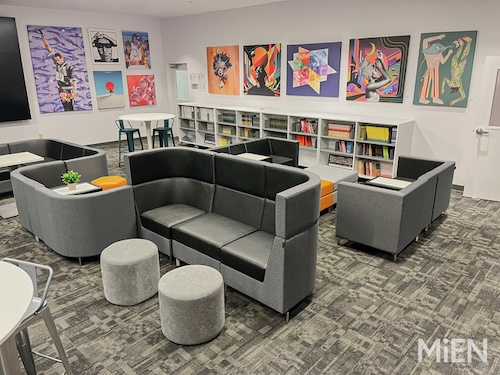
Designed and outfitted by MiEN and Meteor Education, the Empowerment Center is where kids go to hang out, collaborate, and/or participate in school club activities. The hub is also set up with two wellness rooms where students can go to debrief and disconnect from a long day or just the stresses of being a student. It’s there for the students’ use.
Here are the steps we took to create a space that consistently makes jaws drop and impresses parents who never thought their children would have access to such a warm, welcoming communal space on campus:
Add some flexibility into the process. Our original goal was to open the Empowerment Center’s doors in time for the 2023-24 school year, but getting it done the right way would require a bit more time. Our partners were willing to listen to us in terms of what we wanted to create, but within the realistic timelines. That was really cool.
Acknowledge the financial limitations. We largely relied on fundraising for this project and knew that some things just weren’t going to be realistic. To other schools in similar situations, I’d recommend staying flexible enough to hit the timelines and get all of the bases covered while keeping student needs in mind. We can have all the bells and whistles, but at the end of the day, if the car runs, the car runs. We know we can always add a new paint job later.
Get the right partners onboard early. As we went through the steps of designing the Empowerment Center, we learned a lot about architecture, planning, and construction. Through it all, having the right partners in its corner helped the school achieve its goals within budget and on time. It was really great to have our design and furniture partners sharing their best practices and other insights with us. We knew what we wanted to do, and a lot of the ideas came from our families and students. We just needed them to show us how we could get those ideas as close to reality as possible.
Make it personal. Special features we wanted in our Empowerment Center included a huge, interactive flatscreen TV that students, teachers, and guest speakers use to interact and work together. There’s also a large selection of donated books, the latest technology tools, and artwork that was personally selected by an art curation team. They were able to secure artists from the LA community to create and share visuals that our students are really familiar with. For example, some of the artwork spotlights female empowerment (i.e., with photos of authors like Octavia Butler) and the importance of acknowledging indigenous people. Everything in the hub is meant to spark curiosity.
Brace yourself for some jaw-dropping moments. At our ribbon-cutting ceremony last year, our parents’ jaws were on the floor. They just never thought these resources would be available to their kids. A lot of them grew with us being in the church and a co-located space, and then we asked them to trust us to deliver on our promise, and now we’re able to show that as the reward for supporting us. We feel really proud that our parents were just over the moon about it.
Hitting it out of the park
Reflecting on the process we put in place to get our modern student hub designed, built, and open for business, I can say that the end result is an engaging, collaborative space that can be used for hanging out, structured learning, or a little of both. I think we really hit the ball out of the park with this innovative space.
Student, teacher, and family feedback on the Empowerment Center has been extremely positive. Everyone loves it, and students are always excited to come and spend time in the modern, comfortable space that’s equipped with the technology and tools they need to be able to learn and engage.
Jade Stevens, LA Promise Fund and Westbrook Academy
Jade Stevens is the senior director of communications for the LA Promise Fund and Westbrook Academy in Los Angeles, CA.
Latest posts by eSchool Media Contributors (see all)