Tag: Science

  • Why should we care about cuts to funding for science education?

    Why should we care about cuts to funding for science education?

    Key points:

    The Trump administration is slashing the funding for new projects focused on STEM education and has terminated hundreds of grants focused on equitable STEM education. This will have enormous effects on education and science for decades to come.

    Meaningful science education is crucial for improving all of our lives, including the lives of children and youth. Who doesn’t want their child or grandchild or neighbor to experience curiosity and the joy of learning about the world around them? Who wouldn’t enjoy seeing their child making careful observations of the plants, animals, landforms, and water in their neighborhood or community? Who wouldn’t want a class of kindergartners to understand germ transmission and that washing their hands will help them keep their baby siblings and grandparents healthy? Who doesn’t want their daughters to believe that science is “for them,” just as it is for the boys in their classroom?

    Or, if those goals aren’t compelling for you, then who doesn’t want their child or grandchild or neighbor to be able to get a well-paying job in a STEM field when they grow up? Who doesn’t want science itself to advance in more creative and expansive ways?

    More equitable science teaching allows us to work toward all these goals and more.

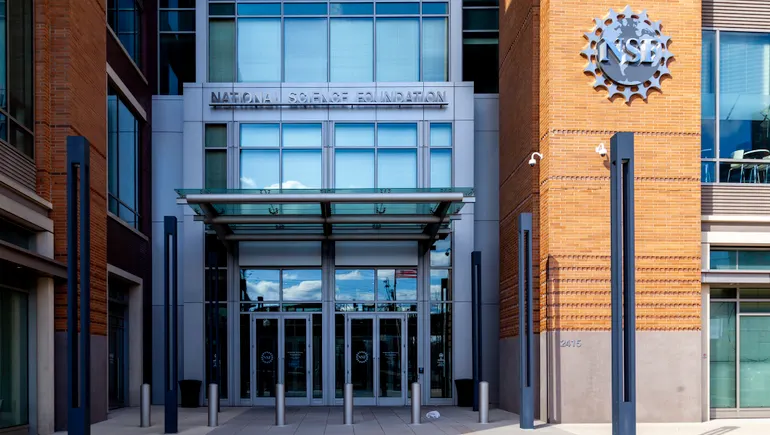
    And yet, the Department of Government Efficiency has terminated hundreds of grants from the National Science Foundation that focused squarely on equity in STEM education. My team’s project was one of them.  

    At the same time, NSF’s funding of new projects and the budget for NSF’s Education directorate are also being slashed.

    These terminations and drastic reductions in new funding are decimating the work of science education.

    Why should you care?

    You might care because the termination of these projects wastes taxpayers’ hard-earned money. My project, for example, was 20 months into what was intended to be a 4-year project, following elementary teachers from their teacher education program into their third year of teaching in classrooms in my state of Michigan and across the country. With the termination, we barely got into the teachers’ first year–making it impossible to develop a model of what development looks like over time as teachers learn to engage in equitable science teaching.

    You might care because not funding new projects means we’ll be less able to improve education moving forward. We’re losing the evidence on which we can make sound educational decisions–what works, for whom, and under what circumstances. Earlier NSF-funded projects that I’ve been involved with have, for example, informed the design of curriculum materials and helped district leaders. Educators of future teachers like me build on findings of research to teach evidence-based approaches to facilitating science investigations and leading sense-making discussions. I help teachers learn how they can help children be change-makers who use science to work toward a more just and sustainable world.  Benefits like these will be eliminated.

    Finally, you might care because many of the terminated and unfunded projects are what’s called NSF Early Career Awards, and CAREER program funding is completely eliminated in the current proposed budget. CAREER grants provide crucial funding and mentoring for new researchers. A few of the terminated CAREER projects focus on Black girls and STEM identity, mathematics education in rural communities, and the experiences of LGBTQ+ STEM majors. Without these and other NSF CAREER grants, education within these fields–science, engineering, mathematics, data science, artificial intelligence, and more, from preschool through graduate school–will regress to what works best for white boys and men.

    To be sure, universities have some funds to support research internally. For the most part, though, those funds are minimal. And, it’s true that terminating existing projects like mine and not funding new ones will “save” the government some money. But toward what end? We’re losing crucial evidence and expertise.

    To support all children in experiencing the wonder and joy of understanding the natural world–or to help youth move into high-paying STEM jobs–we need to fight hard to reinstate federal funding for science and science education. We need to use every lever available to us–including contacting our representatives in Washington, D.C.–to make this happen. If we aren’t successful, we lose more than children’s enjoyment of and engagement with science. Ultimately we lose scientific advancement itself.

    Latest posts by eSchool Media Contributors (see all)

    Source link

  • Congress Shows Resistance to Trump’s Science Budget Cuts

    Congress Shows Resistance to Trump’s Science Budget Cuts

    Researchers and the academic community may have reason to be hopeful about the future of federal funding. Early indications from the appropriations process suggest that both the House and Senate will diverge significantly from the president’s federal budget proposal for science and technology for the next fiscal year.

    In May, the White House released its budget proposal that aims to reduce federal research and development funding by nearly a quarter, according to an analysis from the American Association for the Advancement of Science. It also proposed eliminating funding for the National Endowment for the Humanities, the National Endowment for the Arts and the Institute of Museum and Library Services.

    Congress still has months of negotiations before the start of the next fiscal year on Oct. 1 but, so far, funding for science has received bipartisan support in appropriations meetings—though the House appears more willing to make significant cuts than the Senate.

    In a July 10 Senate Appropriations Committee meeting, legislators put forth a cut to the National Science Foundation (NSF) of only $16 million compared to the more than $5 billion proposed by Trump. Four days later, a House Appropriations Committee subcommittee suggested slashing $2 billion—less than half of Trump’s proposal.

    Alessandra Zimmermann, budget analyst and senior manager for the American Association for the Advancement of Science’s R&D Budget and Policy Program, highlighted in a statement the Senate’s proposal and noted that the House’s over 20 percent proposed cut to NSF is still “a much smaller decrease than the Administration’s initial request.”

    “This shows that there is bipartisan support for investing in basic research, and putting the U.S. on track for FY26,” Zimmermann said. “The story of the future of science is still being written, and we appreciate the strong support from Congress.”

    The House has also suggested increasing by $160 million funding for the Department of Energy’s Office of Science—rejecting the White House’s planned 14 percent cut. The House has floated cutting NASA’s Science Mission Directorate by $1.3 billion, or 18 percent, but that’s still better than Trump’s proposal to nearly halve that budget. The House also proposed $288 million for the Fulbright scholarship, a highly selective cultural exchange program that Trump had recommended eliminating.

    The White House didn’t respond to a request for comment Friday.

    Bipartisan Support for R&D

    Congressional Republicans have remained in lock step with the second Trump administration. Early grumbles about the One Big Beautiful Bill were silent when the House passed it into law July 3, cutting nearly $1 trillion from Medicaid, eliminating a loan program for graduate students and much more.

    Still, observers say there is reason for science and research communities to have some optimism that Republicans will step out of line on budget proposals.

    “Neither bill goes to the extreme of the president’s budget,” said Debbie Altenburg, vice president of research policy and advocacy at the Association of Public and Land-grant Universities. “We are pleased that both the House and the Senate have marked up bills that are above what the president called for.”

    She noted that Republicans, who want the federal government to have a smaller footprint, control Congress and the White House.

    “We will be lucky if we get that flat funding” that senators have proposed, she said.

    The House and Senate have to agree on a dozen appropriations bills to pass the federal budget by Sept. 30 or risk a government shutdown.

    “It’s a very tense political situation,” she said. “It will be hard for Congress to complete all of these bills by the end of September.”

    Roger Pielke, a senior fellow at the conservative American Enterprise Institute, noted that “this is not the first time that Congress, on science-technology policy issues, has pushed back on the Trump administration.” It happened during Trump’s first term. And, going back to the 1970s and ’80s, research and development “has been a strong bipartisan area of agreement.”

    “R&D money goes all over the country,” Pielke said. “… It does kind of have a built-in support structure.”

    He said the NSF, which focuses on basic research, may be more insulated from political fights than agencies such as the National Oceanic and Atmospheric Administration, which deals with climate science, and the National Institutes of Health, which deals with vaccines. The congressional appropriations committees haven’t yet indicated what they plan to do with Trump’s proposed 38 percent cut to the NIH.

    But, Pielke noted, “in this day and age, everything can be politicized.”

    ‘Scientific Supremacy’

    While House Republicans appear more willing to protect spending for science than the president, Democratic members of the Commerce, Justice, Science, and Related Agencies subcommittee have criticized the bill. Representative Grace Meng, a New York Democrat and the subcommittee’s ranking member, said a proposed cut to the NSF and NASA “disinvests in the scientific research that drives American innovation, technological leadership and economic competitiveness.”

    “As other countries are racing forward in space exploration and climate science, this bill would cause the U.S. to fall behind by cutting NASA’s science account by over $1.3 billion,” Meng said.

    Representative Rosa DeLauro, a Connecticut Democrat and ranking member of the full House Appropriations Committee, said the bill “continues Republicans’ senseless attacks on America’s scientific supremacy.”

    “They have fired hundreds of scientists, including scientists who monitor extreme weather and who advance our scientific goals in space,” DeLauro said, referencing the mass layoffs at federal research agencies. “Why on Earth are we forfeiting America’s scientific supremacy? What would you do differently if you were America’s adversary and wanted to undermine everything that made us a superpower?”

    In the Senate, where Republicans need Democratic support to get to 60 votes to pass their bill, proposed spending cuts have been more modest.

    Sen. Susan Collins, a Maine Republican who chairs the Senate Appropriations Committee, said during its July 10 meeting that the NSF and NASA appropriations bill “funds research in critical scientific and technological fields.” She said another appropriations bill “supports much-needed investments in agricultural research in animal and plant health that were requested by nearly every member in this room.”

    Sen. Patty Murray, a Washington state Democrat and ranking member of the Senate committee, said “these compromise bills offer a far better outcome for families back home than the alternatives of either the House or another disastrous CR [continuing resolution].”

    She cautioned, though, that rescissions legislation—like the bill passed by Congress last week that claws back $9 billion in foreign aid and public broadcasting funding–could undermine consensus on a budget.

    “We cannot allow bipartisan bills with partisan rescission packages,” she said, asking, “if we start passing partisan cuts to bipartisan deals, how are we ever supposed to work together?”

    Source link

  • New teachers’ impact on equitable science learning

    New teachers’ impact on equitable science learning

    Key points:

    New elementary teachers who promote equity in science are proving highly effective at engaging students, no matter their background, a new University of Michigan study shows.

    U-M researchers found that new educators are pioneering paths in science education by offering opportunities for scientific conversations, innovative learning strategies and encouraging children to become active participants in scientific exploration. 

    “When teachers are equipped to foster a more equitable and just learning environment in science, it not only enhances children’s understanding of scientific concepts but also empowers them to see themselves as scientists and to use science to address real-world issues that matter in their communities,” said Elizabeth Davis, a professor at U-M’s Marsal Family School of Education.

    “Beginning teachers use a range of effective strategies to work toward more equitable science teaching. They vary in their emphasis on opportunity and access, representation and identification, expanding what counts as science and engaging children as change-makers using science to support a better world. This variation highlights the multiplicity of entry points into this challenging work and shows these teachers’ many strengths.”

    The study, published in the General Proceedings of the 5th Annual Meeting of the International Society for the Learning Sciences 2025, also identified areas for growth: These teachers were less consistently likely to work to broaden what counts as science and to link science to social justice. 

    Davis and co-authors Jessica Bautista and Victoria Pérez Nifoussi said the study helps understand how different approaches to equity in science education can work together, potentially influencing future teacher training for improved K-12 science learning. 

    They emphasized the clear need for teacher educators and curriculum developers to provide more concrete examples and resources to help future teachers navigate complex, justice-oriented approaches to science.

    “All children deserve to experience the joy and wonder of the natural world, yet science is taught far less often than language arts or math in elementary schools,” Davis said. “Furthermore, many students are marginalized in science, including girls, students of color, children with learning differences and queer or gender nonconforming children.”

    Funding challenges impact long-term research

    The study is part of the U-M ASSETS research, a four-year longitudinal project that began in September 2023. Although it was intended to run for four years, the project, funded by the National Science Foundation, was terminated in its 20th month, just shy of two years from its start.

    “The termination of these NSF projects–focused on STEM education, and in particular equity in STEM education–is going to adversely affect science education and science for generations to come,” Davis said. 

    “We are seeking additional funds for this work. Regardless, we will continue to support the teachers who participate in this project and we’ll continue to collect and analyze data to the extent we’re able to do so.”

    The team is now working on characterizing the participants’ first year of teaching to assess how their approaches to equitable and just elementary science teaching align with and differ from their approaches during teacher education.

    This news release originally appeared on U-M’s news site.

    Latest posts by eSchool Media Contributors (see all)

    Source link

  • Senate Rejects Trump’s Cuts to NSF, Other Science Agencies

    Senate Rejects Trump’s Cuts to NSF, Other Science Agencies

    Andrew Harnik/Getty Images

    Signs that Congress intends to push back on the Trump administration’s wholesale slashing of federal budgets emerged during a Senate meeting Thursday that kicked off the annual appropriations process.

    Since January, the Trump administration has sought to significantly downsize the federal government via mass layoffs and spending cuts. Additionally, the administration has canceled grants and withheld funding despite laws that require agencies to spend money as directed by Congress.

    However, on Thursday a subcommittee that oversees the budgets for the Justice and Commerce Departments as well as related science agencies proposed only a small cut to the National Science Foundation budget next fiscal year—a far cry from the $5 billion reduction that President Donald Trump wants to see.

    Instead, NSF will get just over $9 billion, a $16 million cut, said Sen. Jerry Moran, the Kansas Republican who chairs the subcommittee. The bill also sends about $10 million more to the National Weather Service and boosts funding for National Aeronautics and Space Administration.

    Although the science funding received bipartisan support, a fight over funding for the new Federal Bureau of Investigations headquarters could tank the legislation. Sen. Chris Van Hollen, a Maryland Democrat and vice chair of the subcommittee, objected to the Trump administration’s decision to move the headquarters to another building in Washington, D.C., rather than moving forward with a plan approved during the Biden administration to build a facility in Maryland. (Congress previously appropriated money for a new headquarters and set the criteria for the site selection.)

    After the Senate appropriations committee approved an amendment on Thursday from Van Hollen related to the headquarters, some Republicans on the committee changed their vote on the legislation and the panel recessed instead of making a final decision on whether to advance it.

    “I think it’s sad that one issue is sinking a bill that was bipartisan,” said Sen. Susan Collins, a Maine Republican and chair of the full appropriations committee.

    Still, Van Hollen said earlier in the meeting that there was “a lot of good news” in the legislation.

    “We were able to make smart and targeted investments to help keep our community safe, keep our country safe, to advance U.S. leadership in science and innovation and to support growth and prosperity of the American economy. We were able to protect agencies and programs like NASA science and STEM, [the National Oceanic and Atmospheric Administration and] NSF.”

    Higher education groups and research advocacy organizations had warned that slashing NSF’s budget by more than half would be catastrophic and set U.S. research back by decades. The Trump administration sought to end funding for STEM training and NSF’s education programs and significantly reduce the money available for scholarships and postdoctoral fellowships.

    The committee didn’t release any other information about the budget bill such as the text or a summary, so it’s not clear what the line-item budget for NSF looks like. The available details come from what lawmakers said at Thursday’s meeting.

    Van Hollen and Moran said that NASA would get about $24.5 billion to boost space exploration, whereas the administration has requested $18.8 billion.

    The additional $10 million for the National Weather Service would go toward restaffing an agency that’s lost about 17 percent of its head count—or 600 employees—due to buyouts and layoffs. NWS’s parent agency, NOAA, lost about 11 percent of its staff. The Trump administration requested about $91 million more for NWS and to cut NOAA’s budget by about $1.8 billion.

    After the government imposed significant reductions in force across federal agencies, lawmakers wrangled over details in the proposal that ensure NWS has enough personnel to continue functioning. The bill requires the agency to be fully staffed, but it doesn’t specify what that means aside from requiring the agency have enough employees to fulfill its statutorily required mission. Sen. Brian Schatz, a Democrat from Hawaii, didn’t think that language was strong enough to protect NWS and wanted to set the minimum staffing levels at the number of employees as of Sept. 30, 2024.

    “My judgment and the judgment of a lot of people who work at the National Weather Service is that ‘to fulfill the statutory mandate’ gives a fair amount of room to assert that the current staffing levels and the current layoff process fulfills the statutory mandate,” he said. “It’s clear to me that this administration has already made the judgment that the National Weather Service has too many human beings.”

    Moran said he and Schatz shared the “same desire,” but he didn’t want to specify a number. Other Republicans pointed out that NWS staff has fluctuated over the years. In fiscal year 2024, the agency had about 4,300 full-time employees, according to budget documents. Republicans voted down Schatz’s amendment.

    Moran noted earlier in the meeting that the language in the budget bill should protect NWS employees from furloughs or future reductions in force and end a hiring freeze.

    “This bill protects key science missions that are fundamental to furthering our understanding of the Earth and better stewards of our natural resources, and supports critical programs, not only to drive discovery, but to safeguard the Earth from natural disasters,” Moran said.

    Congress has until Sept. 30 to pass the 12 appropriations bills that make up the federal budget or else the government could shut down. Democrats and some Republicans also want to use this process to reassert Congress’s authority in spending decisions.

    “The challenges we face and the threats to this very process are greater than ever before with the president and administration intent on ignoring the laws that we write and seizing more power for themselves,” said Sen. Patty Murray, a Democrat from Washington and vice chair of the appropriations committee.

    “But at the end of the day, I do believe these bills are all a good compromise starting point, delivering critical resources to continue key programs and make targeted new investments—rejecting some of the truly harmful proposed cuts by the president and steering clear of the extreme partisan policies he’s requested.”

    Source link

  • Release of NAEP science scores

    Release of NAEP science scores

    UPDATE: After this story was published, the Education Department issued a press release Monday afternoon, July 7, announcing that Matthew Soldner will serve as acting commissioner of the National Center for Education Statistics, in addition to his role as acting director of the Institute of Education Sciences. The job of statistics chief had been vacant since March and had prevented the release of assessment results.

    The repercussions from the decimation of staff at the Education Department keep coming. Last week, the fallout led to a delay in releasing results from a national science test.

    The National Assessment of Educational Progress (NAEP) is best known for tests that track reading and math achievement but includes other subjects, too. In early 2024, when the main reading and math tests were administered, there was also a science section for eighth graders. 

    The board that oversees NAEP had announced at its May meeting that it planned to release the science results in June. But that month has since come and gone. 

    Why the delay? There is no commissioner of education statistics to sign off on the score report, a requirement before it is released, according to five current and former officials who are familiar with the release of NAEP scores, but asked to remain anonymous because they were not authorized to speak to the press or feared retaliation. 

    Related: Our free weekly newsletter alerts you to what research says about schools and classrooms.

    Peggy Carr, a Biden administration appointee, was dismissed as the commissioner of the National Center for Education Statistics in February, two years before the end of her six-year term set by Congress. Chris Chapman was named acting commissioner, but he was fired in March, along with half the employees at the Education Department. The role has remained vacant since.

    A spokesman for the National Assessment Governing Board, which oversees NAEP,  said the science scores will be released later this summer, but denied that the lack of a commissioner is the obstacle. “The report building is proceeding so the naming of a commissioner is not a bureaucratic hold-up to its progress,” Stephaan Harris said by email.

    The delay matters. Education policymakers have been keen to learn if science achievement had held steady after the pandemic or tumbled along with reading and math. (Those reading and math scores were released in January.)

    The Trump administration has vowed to dismantle the Education Department and did not respond to an emailed question about when a new commissioner would be appointed. 

    Related: Chaos and confusion as the statistics arm of the Education Department is reduced to a skeletal staff of 3

    Researchers hang onto data

    Keeping up with administration policy can be head-spinning these days. Education researchers were notified in March that they would have to relinquish federal data they were using for their studies. (The department shares restricted datasets, which can include personally identifiable information about students, with approved researchers.) 

    But researchers learned on June 30 that the department had changed its mind and decided not to terminate this remote access. 

    Lawyers who are suing the Trump administration on behalf of education researchers heralded this about-face as a “big win.” Researchers can now finish projects in progress. 

    Still, researchers don’t have a way of publishing or presenting papers that use this data. Since the mass firings in mid-March, there is no one remaining inside the Education Department to review their papers for any inadvertent disclosure of student data, a required step before public release. And there is no process at the moment for researchers to request data access for future studies. 

    “While ED’s change-of-heart regarding remote access is welcome,” said Adam Pulver of Public Citizen Litigation Group, “other vital services provided by the Institute of Education Sciences have been senselessly, illogically halted without consideration of the impact on the nation’s educational researchers and the education community more broadly.  We will continue to press ahead with our case as to the other arbitrarily canceled programs.”

    Pulver is the lead attorney for one of three suits fighting the Education Department’s termination of research and statistics activities. Judges in the District of Columbia and Maryland have denied researchers a preliminary injunction to restore the research and data cuts. But the Maryland case is now fast-tracked and the court has asked the Trump administration to produce an administrative record of its decision-making process by July 11. (See this previous story for more background on the court cases.)

    Related: Education researchers sue Trump administration, testing executive power

    Some NSF grants restored in California

    Just as the Education Department is quietly restarting some activities that DOGE killed, so is the National Science Foundation (NSF). The federal science agency posted on its website that it had reinstated 114 awards to 45 institutions as of June 30. NSF said it was doing so to comply with a federal court order to reinstate awards to all University of California researchers. It was unclear how many of these research projects concerned education, one of the major areas that NSF funds.

    Researchers and universities outside the University of California system are hoping for the same reversal. In June, the largest professional organization of education researchers, the American Educational Research Association, joined forces with a large coalition of organizations and institutions in filing a legal challenge to the mass termination of grants by the NSF. Education grants were especially hard hit in a series of cuts in April and May. Democracy Forward, a public interest law firm, is spearheading this case.

    Contact staff writer Jill Barshay at 212-678-3595, jillbarshay.35 on Signal, or [email protected].

    This story about delaying the NAEP science score report was written by Jill Barshay and produced by The Hechinger Report, a nonprofit, independent news organization focused on inequality and innovation in education. Sign up for Proof Points and other Hechinger newsletters.

    The Hechinger Report provides in-depth, fact-based, unbiased reporting on education that is free to all readers. But that doesn’t mean it’s free to produce. Our work keeps educators and the public informed about pressing issues at schools and on campuses throughout the country. We tell the whole story, even when the details are inconvenient. Help us keep doing that.

    Join us today.

    Source link

  • The Meaning of July 4 to Political Science Teacher (opinion)

    The Meaning of July 4 to Political Science Teacher (opinion)

    Every year for the past 25 years, I have taught an intermediate-level undergraduate course at Indiana University Bloomington called The Declaration of Independence and the Meaning of American Citizenship. I love teaching this course, because it allows students to engage history by interpreting a rather simple text that is well recognized even if not necessarily well understood—and this tension between vague familiarity and real understanding makes the teaching fun.

    My basic approach to the topic and the course, outlined on the syllabus, has remained pretty fixed over the years:

    This class will pay special attention to the meaning of “America.” It will address serious questions about what it means to think “historically.” It will trace and analyze the many ways that the meanings of American citizenship have been contested since 1776, and it will do so through a focus on alternative interpretations of the Declaration of Independence, which has sometimes been called the “birth certificate of American democracy.”

    The Declaration is not the only important text in American political history. In particular, we will pay attention to its complex relationship to the U.S. Constitution, the other seminal “founding” document of the U.S. political system. But it is a very important touchstone for many important historical debates, and it is an even more important symbol of American political identity (which is why the late historian Pauline Maier referred to it as “American Scripture”).

    The Declaration is also a very instructive example of the fact that core political symbols, texts and principles can be interpreted in different ways and are often heavily contested. Such rhetorical contests play an important role in the evolution of democracy over time, as disenfranchised groups appeal to “foundational” texts, like the Declaration, to justify their demands for recognition and inclusion—and as those who oppose recognition and inclusion also sometimes draw upon the same texts, though in very different ways.

    In this course we will discuss how the Declaration has been a source of inspiration for activists and social movements seeking to democratize American society, and how it has also been used, differently, by opponents of democratization.

    As we will see, there is not one true “meaning” of the Declaration.

    But there are more and less nuanced, and more and less inclusive, interpretations of the Declaration. The primary goal of this course is to develop a historically and philosophically informed understanding of the Declaration—what it says, what it has meant, how it has justified many of the things most of us hold dear and some things many of us find revolting—and, by doing so, to nurture a more informed and reflexive understanding of contemporary American democracy. And because it is a course taught in a U.S. public university, to students most if not all of whom are citizens of the U.S., such an understanding has potentially significant implications for the way each of us thinks and acts as a citizen.

    The course was originally inspired by a chance encounter, many decades ago, with a fascinating anthology, published in 1976—the year of the Bicentennial—and edited by famed labor historian Philip S. Foner, entitled We, The Other People: Alternative Declarations of Independence by Labor Groups, Farmers, Woman’s Rights Advocates, Socialists, and Blacks, 1829–1975. This volume, as its title suggests, furnishes a wide range of texts to explore with students. Over the years, I have incorporated dozens of other texts, some modeled directly on the 1776 Declaration, others simply drawing heavily on it, including the speeches of a great many presidents, especially Lincoln.

    Central to the course are three famous speeches delivered by dissenters who were widely reviled in their time: Frederick Douglass’s 1852 “What to the Slave is the Fourth of July?”; Eugene V. Debs’s “Liberty,” given in 1895 upon his release from six months in prison for leading the 1894 Pullman strike; and Martin Luther King Jr.’s “I Have a Dream” speech, given at the August 1963 March on Washington for Jobs and Freedom.

    But the syllabus also includes speeches by Confederate leaders Jefferson Davis and Alexander Stephens; populist Tom Watson; and segregationist governor George C. Wallace. Elizabeth Cady Stanton’s “Declaration of Sentiments,” adopted in 1848 at the Seneca Falls Convention for women’s rights, plays an important role; so too the 1898 “White Declaration of Independence” published by white racists in Wilmington, N.C., who overthrew a multiracial city government and terrorized the Black community.

    The course is very historical, but also very contemporary, because July 4 comes every year, and because past historical struggles over the meaning of the Declaration continue to resonate in the present—and indeed are sometimes revived in the present.

    But in the coming year the course will be more relevant than ever, because President Donald Trump has made clear that he plans to turn the entire year leading up to next year’s 250th anniversary of the Declaration’s signing into a celebration of “American greatness”—and thus of himself.

    Back in May 2023, Trump released a campaign video promising what Politico described as “a blowout, 12-month-long ‘Salute to America 250’ celebration,” including “a ‘Great American State Fair,’ featuring pavilions from all 50 states, nationwide high school sporting contests, and the building of Trump’s ‘National Garden of American Heroes’ with statues of important figures in American history.”

    In his second week in office, Trump issued two executive orders centered on the Declaration. The first, “Celebrating America’s 250th Birthday,” announced that “it is the policy of the United States, and a purpose of this order, to provide a grand celebration worthy of the momentous occasion of the 250th anniversary of American Independence on July 4, 2026.” The other, “Ending Radical Indoctrination in K–12 Schooling,” mandated the termination of “radical, anti-American ideologies” and the re-establishment of a “President’s Advisory 1776 Commission” charged with promoting patriotic education.

    Trump has long laid claim to “the spirit of July 4, 1776.” In the final days of his first term, as the nation was overtaken by a wave of Black Lives Matter demonstrations protesting the police killing of George Floyd, he established his “1776 Commission,” which was intended to legitimate his increasingly repressive approach to the demonstrations and to energize his 2020 re-election campaign (the resulting report was also an explicit repudiation of The New York Times’ 2019 “The 1619 Project”).

    The commission and its hurriedly draftedThe 1776 Report” failed to help fuel Trump’s failing 2020 campaign. But its broader ideological mission—to inaugurate a MAGA-inflected cultural revolution in a second Trump term—was hardly defeated.

    The MAGA movement’s attempt to overthrow Joe Biden’s 2020 election— “Today is 1776,” tweeted MAGA congresswoman Lauren Boebert on Jan. 6, 2021, speaking for the thousands of “3 Percenters,” “Proud Boys” and assorted “patriot” groups that invaded the Capitol building—may have failed. But only temporarily. For Trump has returned to the White House with a vengeance and has commenced an ideological and economic assault on higher education, committed to “Restoring Truth and Sanity to American History” by purging society of “divisive narratives that distort our shared history.”

    Historical understanding and social criticism are out and national reverence is in.

    I cannot imagine a more exciting time to be teaching a course on the Declaration of Independence and the meaning of American citizenship.

    But I also cannot imagine a more challenging and indeed precarious time to do so.

    For the course—which does not seek to promote reverence or national pride or “American greatness”—is at odds with the prevailing spirit of the time, or at least its ascendant ideology.

    It seeks to promote historical understanding, based on serious historical scholarship, and a general appreciation for the complex ways that the Declaration has figured in debates and conflicts over the shifting meaning of American citizenship. The course refuses to ignore or whitewash the ways that patriotism and even the preamble of the Declaration itself have been mobilized to oppose the forms of inclusion, and democratization, that we now take for granted (like the abolition of chattel slavery, considered by Southern states to be such a despotic violation of slaveholder property rights that they seceded from the Union, and formed the Confederacy, by appealing to the Declaration’s “consent of the governed”).

    It also refuses to treat American history as the happy working out over time of a beneficent commitment to universal freedom that was embraced from the beginning by all Americans. For while certain universalist words were there from the beginning—coexisting with much less universalistic words, to be sure—a commitment to their universal application was most definitely not there from the beginning. That promise took decades and even centuries to be even haltingly redeemed, partially and in steps, due to the blood, sweat and tears of generations of brave activists—a process that continues to this day. And the fact that the Declaration’s words played such an important role in this contentious politics is the very reason why it is such a seminal text, one that deserves appreciation and celebration even as it is a human invention not above moral reproach or historical critique.

    In politics as in life, criticism, and not easy praise, is the sincerest form of flattery.

    As a professor, my approach to the course material is not partisan in any sense. I have no interest in changing the minds of any of my students, whatever they happen to think, except in the sense that all good teaching is about getting students to think more deeply and more regularly. In this sense, I seek to change the mind of every student, by engaging every student with historical materials, and ideas, and intellectual challenges, and by fostering a climate of respectful questioning and disagreeing in the classroom so that students can hear and listen to those with viewpoints different from their own. The pedagogy of higher education is not normal out in the world beyond the academy, though it would not be a bad thing if it were much more normalized than it currently is. That is why colleges and universities exist.

    All the same, we have arrived at a historical moment in the U.S., perhaps unlike any before, in which such education is considered partisan, and denounced as “indoctrination,” by a MAGA movement and a Trump administration obsessed with a closing of borders, and ranks, and minds, in the name of patriotic “unity” and “American greatness.”

    At a time when historical education is reduced to the celebration of national greatness, a historically serious course on the Declaration of Independence that treats it as a text to be critically engaged, not worshipped, might be considered subversive. Indeed, GOP-controlled state legislatures across the country, following the Trump administration’s lead, have instituted a wide range of measures designed to subject university teaching to heightened political scrutiny (in my own state of Indiana, vague “intellectual diversity” standards have been enacted into law, and Attorney General Todd Rokita has created a web portal, ominously named “Eyes on Education,” that encourages parents and teachers to report “objectionable” forms of teaching).

    The problem with such censoriousness is that, if taken seriously, it is hard to see how the Declaration is worth anything at all. None other than Frederick Douglass himself noted precisely this back in 1852: “There was a time when, to pronounce against England, and in favor of the cause of the colonies, tried men’s souls. They who did so were accounted in their day, plotters of mischief, agitators and rebels, dangerous men. To side with the right, against the wrong, with the weak against the strong, and with the oppressed against the oppressor! Here lies the merit, and the one which, of all others, seems unfashionable in our day. The cause of liberty may be stabbed by the men who glory in the deeds of your fathers.”

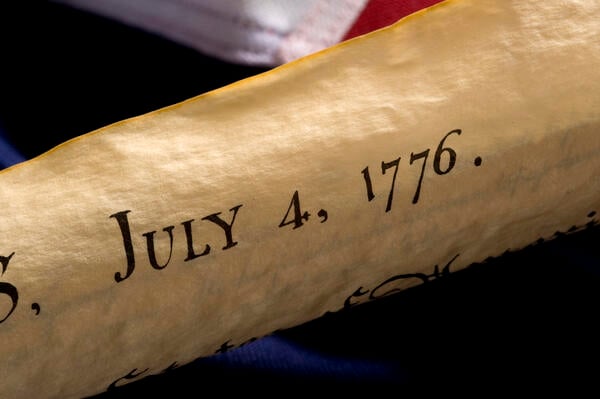
    Since July 4, 1776, the Declaration’s words have resonated at every moment when citizens have together sought to make the society, in the words of that other foundational text, the Constitution, “a more perfect union.” To dismiss the critical appropriation of the Declaration is to devalue both the text itself and the entire course of American history.

    This July 4, I will be reflecting on the historical and the contemporary meaning of the text whose publication Americans will celebrate, and gearing up to once again teach The Declaration of Independence and the Meaning of American Citizenship at a time when it could not be more relevant.

    Jeffrey C. Isaac is completing a book, entitled Defending Democracy’s Declaration, that challenges the ways that the MAGA movement is poised to weaponize the 250th anniversary of the signing of the Declaration of Independence. The James H. Rudy Professor of Political Science at Indiana University Bloomington, Isaac writes regularly on current affairs at his blog, Democracy in Dark Times, and at his new Substack dedicated to the forthcoming book, also named Defending Democracy’s Declaration.


    Source link

  • Ignite Reading Again Approved as 1:1 High-Dosage Early Literacy Tutoring Provider in Massachusetts

    Ignite Reading Again Approved as 1:1 High-Dosage Early Literacy Tutoring Provider in Massachusetts

    BOSTON — Ignite Reading — a Science of Reading-based virtual tutoring program serving students in 18 states nationwide — today announced its approval by the Massachusetts Department of Elementary and Secondary Education (DESE) to continue providing 1:1 high-dosage evidence-based literacy tutoring to K-3 students across the commonwealth.

    Massachusetts Governor Maura Healey’s administration called on her state to invest heavily in high-dosage tutoring (HDT) earlier this year, earmarking $25 million in her state budget proposal to help accelerate literacy growth, “complementing the more systemic, long-term improvement work” being supported under the administration’s five-year literacy improvement campaign, Literacy Launch.

    In its approval process, DESE evaluated Ignite Reading’s services to Massachusetts districts over the past three school years and approved the literacy company to again provide school districts and charter schools with tutoring that is focused on building foundational skills — including phonological awareness, phonics knowledge and decoding skills — to help students become independent fluent readers in the early grades.

    Since Ignite Reading first gained DESE approval during the 2022-23 school year:

    • 30 Massachusetts schools and districts have partnered with Ignite Reading to provide students with 15 minutes of daily, 1:1 virtual tutoring.
    • Ignite Reading’s tutor educators have delivered differentiated, evidence-based early literacy instruction to more than 7,800 Massachusetts students.
    • Researchers at Johns Hopkins University’s Center for Research and Reform in Education have followed approximately 2,000 Massachusetts 1st graders enrolled in the program. The quasi-experimental study found the number of students reading on benchmark increased 213% after a year of Ignite Reading tutoring. At the same time, the percentage of students who required intensive reading intervention decreased 55%. All student groups — including Black and Hispanic students, those with IEPs and Multilingual Learners — had equitable skills growth, and those meeting end-of-year reading benchmarks grew more than 125%.

    The Healey-Driscoll Administration recently announced that schools and districts in Massachusetts are invited to apply for high-dosage early literacy tutoring for K-3 students with 1st grade as the state’s top priority.

    “When we get kids reading proficiently by the end of 1st grade, we set them up for a lifetime of academic success,” said Ignite Reading CEO Jessica Sliwerski. “Our continued approval by DESE means we can keep delivering the intensive, personalized support that Massachusetts 1st graders need to learn to read on grade level and on time. We are honored to be able to continue to partner with Massachusetts districts to ensure all students can access the tools they need to succeed as readers.”

    For more information about Ignite Reading’s Massachusetts partnerships, visit https://info.ignite-reading.com/massachusetts.

    About Ignite Reading

    Ignite Reading is on a mission to ensure every student can access the tools they need to be a confident, fluent reader by the end of 1st grade. School districts nationwide depend on Ignite Reading’s virtual tutoring program to deliver literacy support at scale for students who need help learning to read. Our highly trained tutors provide students with 1:1 tutoring in foundational literacy skills each school day, helping them go from learning to read to reading to learn.

    A recent study by the Center for Research and Reform in Education at Johns Hopkins University found that Ignite Reading students across demographics — including students who are English Learners, Black, Hispanic, and those with Individualized Education Programs (IEPs) — achieve the same outstanding gains of more than 5 months of additional learning during a single school year.  For more information about Ignite Reading, visit www.ignite-reading.com.

    eSchool News Staff
    Latest posts by eSchool News Staff (see all)

    Source link

  • NIH Staff Lambaste Agency Head for Censorship of Science

    NIH Staff Lambaste Agency Head for Censorship of Science

    Jim Watson/AFP/Getty Images

    Hundreds of staff at the National Institutes of Health are publicly condemning the agency’s actions in recent months, including firing thousands of workers and canceling research grants for projects that don’t align with the Trump administration’s ideologies. 

    In a letter sent Monday morning to Jay Bhattacharya, the Trump-appointed NIH director who gained notoriety for his criticism of the NIH’s handling of the COVID-19 pandemic, more than 300 employees from across the agency called on him to deliver on his promise to embrace dissent, which he has called “the very essence of science.”

    “We are compelled to speak up when our leadership prioritizes political momentum over human safety and faithful stewardship of public resources,” states the letter, titled the Bethesda Declaration (Bethesda, Md., is the location of the NIH’s main campus) and modeled after Bhattacharya’s own Great Barrington Declaration, which condemned the NIH in 2020 for ignoring his calls to mostly cease pandemic-related precautions.

    “This censorship is incompatible with academic freedom, which should not be applied selectively based on political ideology.”

    In addition to accusing Bhattacharya of politicizing research, the letter published Monday also criticized the agency for “undermining” peer review, unilaterally capping indirect costs and firing NIH staff. 

    Bhattacharya is scheduled to appear before the Senate appropriations subcommittee today to discuss Trump’s proposal to cut $18 billion or about 40 percent from the NIH’s budget.

    Source link

  • The spending review is a critical moment for UK science and innovation

    The spending review is a critical moment for UK science and innovation

    A series of key government announcements over the coming weeks will set the direction of travel for research and innovation for years to come. Next week’s spending review will set the financial parameters for the remainder of this Parliament – and we shouldn’t expect this outcome to maintain the status quo, given this is the first zero-based review under a Labour government for 17 years.

    Accompanying this will be the industrial strategy white paper, which is likely to have a focus on driving innovation and increasing the diffusion and adoption of technologies across the economy – in which the UK’s universities will need to be key delivery partners. We can also expect more detail on the proposals in the immigration white paper, with implications for international student and staff flows to the UK.

    The outcome for higher education and research remains hard to call, but the government has sent early signals that it recognises the value of investment in R&D as crucial to transforming the UK’s economy. In a volatile fiscal environment, DSIT’s R&D budget saw a real-terms increase of 8.5 per cent for 2025–26 with protection for “core research” activity within this.

    Looking ahead to the spending review, the Institute for Fiscal Studies has pointed out that the fiscal envelope set by the Chancellor for capital spending – which is how R&D is classified – at the spring statement is significantly frontloaded. There is scope for increases in the early years of the spending review period and then real-terms declines from 2027–28. With such significant constraints on the public finances, it’s more essential than ever that the UK’s R&D funding system maximises efficiency and impact, making the best possible use of available resources.

    International comparisons

    Last month, the Russell Group published a report commissioned from PwC and funded by Wellcome which considered the experiences of countries with very different R&D funding systems, to understand what the UK might learn from our competitors.

    Alongside the UK, the report examined four countries: Canada, Germany, the Netherlands and South Korea, scoring them across five assessment criteria associated with a strong R&D system: strategic alignment to government priorities; autonomy, stability and sustainability; efficiency; and leveraging external investment. It also scored the countries on two measures of output: research excellence and innovation excellence.

    The analysis can help to inform government decisions about how to strike a balance between these criteria. For example, on the face of it there’s a trade-off between prioritising institutional autonomy and ensuring strategic alignment to government priorities. But PwC found that providing universities with more freedom in how they allocate their research funding – for example, through flexible funding streams like Quality-Related (QR) funding – means they can also take strategic long-term decisions, which create advantage for the UK in key research fields for the future.

    Over the years, QR funding and its equivalents in the devolved nations have enabled universities to make investments which have led to innovations and discoveries such as graphene, genomics, opto-electronics, cosmology research, and new tests and treatments for everything from bowel disease to diabetes, dementia and cancer.

    Conversely, aligning too closely to changing political priorities can stifle impact and leave the system vulnerable. PwC found that, at its extreme, a disproportionate reliance on mission-led or priority-driven project grant funding inhibits the ability of institutions to invest outside of government’s immediate priority areas, resulting in less long-term strategic investment.

    With a stretching economic growth mission to deliver, policymakers will be reaching for interventions which encourage private investment into the economy. The PwC report found long-term, stable government incentives are crucial in leveraging industry investment in R&D, alongside supporting a culture of industry-university collaboration. This has worked well in Germany and South Korea with a mix of incentives including tax credits, grants and loans to strengthen innovation capabilities.

    Getting the balance right

    The UK currently lags behind global competitors on the proportion of R&D funded by the business sector, at just over 58 per cent compared to the OECD average of 65 per cent. However, when considering R&D financed by business but performed by higher education institutions, the UK performs fifth highest in the OECD – well above the average.

    This demonstrates the current system is successfully leveraging private sector collaboration and investment into higher education R&D. We should now be pursuing opportunities to bolster this even further. Schemes such as the Higher Education Innovation Fund (HEIF) deliver a proven return on investment: every £1 invested in HEIF yields £14.8 in economic return at the sector-level. PwC’s report noted that HEIF has helped develop “core knowledge exchange capabilities” within UK HEIs which are crucial to building successful partnerships with industry and spinning out new companies and technologies.

    In a time of global uncertainty, economic instability and rapid technological change, investments in R&D still play a key role in tackling our most complex challenges. In its forthcoming spending review – the Russell Group submission is available here – as well as in the industrial strategy white paper and in developing reforms to the visa system, the government will need to balance a number of competing but interrelated objectives. Coordination across government departments will be crucial to ensure all the incentives are pointing in the right direction and to enable sectors such as higher education to maximise the contribution they can make to delivering the government’s missions.

    Source link

  • 16 states sue National Science Foundation over wide-reaching research cuts

    16 states sue National Science Foundation over wide-reaching research cuts

    Dive Brief:

    • Sixteen states sued the National Science Foundation on Wednesday over the agency’s cap on funding for research overhead and its mass termination of grants related to diversity, equity and other topics deemed verboten by the Trump administration. 
    • Plaintiffs allege both moves violate federal law and threaten major research projects and millions of dollars in federal funding at universities in their states. An NSF spokesperson declined to comment on the lawsuit. 
    • The suing states — nearly all of whom have Democrat attorneys general — asked a federal judge in New York to block NSF’s indirect cost cap and its April directive barring diversity-related grants.

    Dive Insight:

    On April 18, the science research agencywhich was founded in 1950 and had a budget of $9 billion last fiscal yearissued a statement announcing it would prioritize research focused on creating “opportunities for all Americans everywhere.” 

    “Research projects with more narrow impact limited to subgroups of people based on protected class or characteristics do not effectuate NSF priorities,” the agency said at the time.

    The same day, NSF began issuing mass termination notices for projects that seek to boost participation in scientific fields by “women, minorities, and people with disabilities,” according to Wednesday’s complaint. Studies on misinformation and environmental justice also received termination notices.

    The canceled projects include a University of Delaware study on post-traumatic stress disorder and suicidality among veterans; a new doctoral program in New Jersey promoting increased participation of underrepresented groups in science-related Ph.D.s; and a University of Oregon initiative providing some 20,000 students with learning experiences in computer science. 

    Later, in May, NSF moved to cap reimbursement for indirect research costs at 15% for all new grants issued to colleges. The cuts affect funding for equipment, administrative staff, laboratory construction and other expenses in research programs.

    The funding cap already sparked at least one other lawsuit, from a group of higher education associations.

    The change could bring steep financial and infrastructural damage to university research programs that the government relies on to advance knowledge and technology in the country, the state plaintiffs argued. 

    According to Wednesday’s lawsuit, the “vast majority” of university projects in the plaintiff states had negotiated indirect research rates between 40% and 60% with NSF. Those states’ “institutions will not be able to maintain essential research infrastructure and will be forced to significantly scale back or halt research, abandon numerous projects, and lay off staff,” the plaintiffs argued. 

    In both cases — the April directive and May indirect cost cap — the NSF violated law, the states said. 

    In the case of the April directive, the plaintiffs pointed to statutes that explicitly direct the agency to promote scientific participation among underrepresented groups in the U.S. 

    They further argue that the longstanding policy has worked, citing statistics showing that the number of women in science and engineering occupations or with related degrees doubled between 1995 and 2017. Participation in these fields by those from minority groups rose from 15% to 35% during the period. 

    The plaintiffs likewise argued that the indirect cost cap undermines a federal law directing the NSF to support basic scientific research and education programs.

    Under the Trump administration this year, the National Institutes of Health and the U.S. Department of Energy also both adopted similar 15% caps on overhead reimbursement. Courts have blocked both policies, though the cases are ongoing.

    Source link