International Ph.D. students and postdoctoral scholars drive a large share of the United States’ scientific research, innovation and global competitiveness. Yet these visa holders often face systemic barriers that limit their ability to build independent, fulfilling careers. Restricted access to fellowships and immigration constraints can stifle career agency, forcing the nation’s institutions to lose out on the very global talent they train to fuel discovery and progress.
Drawing from insights in our recently released book, Thriving as an International Scientist (University of California Press), this essay outlines key challenges that international scientists face and concrete steps universities, employers and scientific societies can take to enable their dynamic career success.
Systemic Barriers to Career Independence
The U.S. depends on international talent to sustain its scientific enterprise. In 2023, nearly 41 percent of Ph.D. students and 58 percent of postdocs in U.S. universities were visa holders, and international scholars made up 34 percent of Ph.D. graduates in 2022, an increase from just 11 percent in1977.
While U.S. universities still lead globally in training and employing a robust international scientific workforce, the recent anti-immigrant climate in the U.S. and growing global competition for STEM talent threatens this long-standing advantage. Two issues impacting international scientists stand out as particularly urgent: limited access to independent research fellowships and visa policies that restrict career flexibility.
Fewer fellowships lead to reduced agency. International scientists have access to fewer fellowships for supporting their independent research ideas. Data on primary sources of STEM doctoral student funding indicates 17 percent of international Ph.D. students relied primarily on fellowships, scholarships or dissertation grants in 2022, compared to 29 percent of their U.S. citizen and permanent resident peers. More than half of international Ph.D. students in science and engineering across U.S. universities relied on faculty-directed funding, through research assistantships, compared with just a third of domestic students (citizens and permanent residents).
This reliance limits their autonomy to define research directions or confidently pursue professional development and internship opportunities. As a result, only 22 percent of international Ph.D. graduates from U.S. universities committed to academic careers (excluding postdocs) in 2022, in part due to a significant lack in independent funding experience—a key qualification for faculty roles.
Visa constraints on career mobility. Visa regulations often confine international scientists to narrowly defined “research-related” roles in academia or industry. This restriction effectively locks them out of emerging career paths in the business of science, science policy, science communication, entrepreneurship, university administration and nonprofit leadership until they obtain permanent residency.
They are also disproportionately vulnerable to economic downturns or layoffs. Work visas typically allow a 60-day grace period to secure new employment and maintain legal immigration status, putting tremendous pressure on individuals and families. With rising costs and uncertainty surrounding H-1B work visas, employers may also hesitate to hire international scientists, compounding career instability for this essential segment of the STEM workforce.
Expand access to independent funding. Increase visibility of funding through databases such as Pivot and create matching fellowship opportunities from institutional, corporate and philanthropic sources that are open to noncitizens.
Track and leverage alumni outcomes. Analyze Ph.D. and postdoctoral career outcomes by citizenship and location in order to strengthen alumni mentorship and global networks for trainees.
Specialized professional development for Ph.Ds. Provide training in in-demand and holistic skills to address wicked problems, advance emerging technologies and foster knowledge of a range of careers for STEM Ph.D. holders.
Integrate career development into curricula. Embed professional development and career preparation within graduate and postdoctoral programs, rather than limiting them to extracurricular workshops, in order to encourage international scientists to participate.
Foster equitable access to internships. Simplify and expand opportunities for experiential learning by using the Curricular Practical Training path. Departments can offer internship courses through which students can use CPT or encourage them to incorporate insights from their internships into the dissertation. Creating more practical opportunities for students to broadly apply their research skills enables their success in getting work visas for diverse careers.
At Princeton University, one of us developed a specialized professional development series for international graduate students integrating creative design, intentional career planning, immigration literacy and strategies for global careers. This approach helps international scholars build resilience, community and agency in navigating complex systems and uncertain futures.
The Role of Scientific and Professional Societies
Scientific and professional societies hold powerful levers for nationwide systemic change. Through initiatives that foster advocacy, partnerships and innovation, they can amplify the impact of international scientists and shape more inclusive policies.
Diversify funding models. As scientific leaders reconsider how to continue funding STEM research including for graduate and postdoctoral programs at scale in the U.S. through convenings (e.g., by NASEM and UIDP), public-private-philanthropic partnerships must intentionally include considerations by and for international graduate students and postdocs in their planning and implementation.
Require professional development. Foundations and philanthropic funders can make career and professional development a standard component of fellowships and sponsored research grants, following the precedents set by the National Science Foundation and the National Institutes of Health.
Mobilize advocacy through data. Public-facing dashboards such as the NAFSA International Student Economic Value Tool and OPT Observatory from the Institute for Progress, demonstrate the economic and intellectual value of international scientists. These are powerful tools for storytelling, advocacy and policy change.
Encourage immigration innovation. Beyond ongoing legislative efforts like the bipartisan Keep STEM Talent Act aiming to support the U.S. STEM workforce, the philanthropic sector can also pilot creative solutions. For instance, Renaissance Philanthropy’s Talent Mobility Fund raises awareness of underutilized immigration pathways such as O-1 and J-1 visas, diversifying routes available for STEM researchers.
Employer Responsibility
Employers across all sectors—universities, for-profit industries and nonprofit organizations—have a shared responsibility to create transparent, informed hiring practices for visa holders. Too often, candidates are left to initiate uncomfortable sponsorship discussions during job interviews. Instead, hiring managers should proactively coordinate with human resources and legal teams before posting positions to determine sponsorship possibilities, costs and timelines. Even small changes, such as explicitly noting “visa sponsorship available” (or not available) in job descriptions, can make a significant difference in promoting fairness and equity in hiring.
Moving Forward: Shared Responsibility for Systemic Change
The ability of international scientists to thrive is not just a matter of ethics and fairness—it is a strategic imperative for the future of American science and innovation. Universities, scientific societies, funders and employers have a shared responsibility to participate in removing systemic barriers and expanding opportunities for international scientists in a variety of careers.
While large-scale policy change may take time, meaningful progress is possible through small, immediate steps:
Expanding access to independent funding and internships,
Increasing transparency through data, and
Fostering mentorship and advocacy networks.
By enabling international scientists to build dynamic, independent careers, we strengthen not only their futures but also the vitality and global leadership of the U.S. research enterprise.
Sonali Majumdar (she/her) is assistant dean for professional development in Princeton University’s Graduate School and author of Thriving as an International Scientist: Professional Development for Global STEM Citizens (October 2025, University of California Press). She is a member of the Graduate Career Consortium—an organization providing an international voice for graduate-level career and professional development leaders.
Adriana Bankston (she/her) is a strong advocate for the research enterprise andsupporting the next-generation STEM workforce and a former AAAS/ASGCT Congressional Policy Fellow in the U.S. House of Representatives. She contributed to a chapter inThriving as an International Scientiston systemic reforms and policy change in academia.
Join us for this informal chat about websites for academics in 2025. Some questions we cover:
What are your options for making your website?
What makes for the best website examples for academics?
How can I have a website fast (like today even)?
What should people prioritize when telling their story on their website?
What makes for the best portfolio websites (and what can go on them)?
Your contest co-hosts are back with another live to support your academic website project. Whether you’re a professor, researcher, scientist, postdoc, graduate student, independent scholar, you deserve space online.
Are you thinking about starting a podcast? I invited Dr. Anna Clemens to share her podcasting journey. We talk about how social media and online presence has changed for researchers in 2025. And, how storytelling can help people connect with your research in meaningful ways.
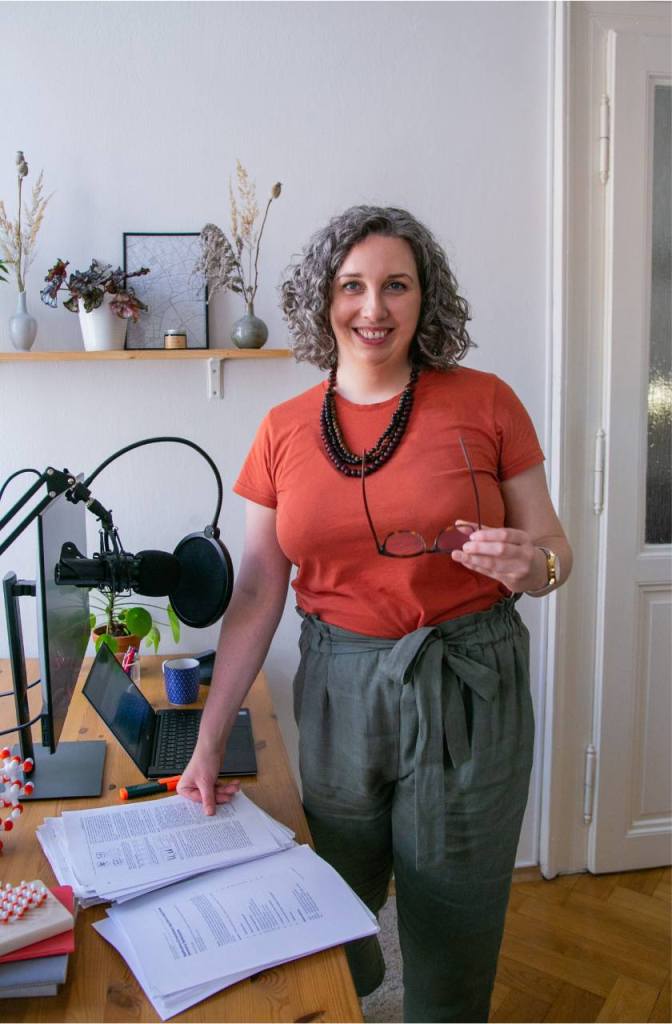
Dr. Anna Clemens is an academic writing coach who specializes in scientific research papers. She runs the Researchers’ Writing Academy, an online course where she helps researchers to get published in high-ranking journals without lacking structure in the writing process.
Jennifer van Alstyne: Hi everyone, this is Jennifer Van Alstyne. Welcome to the Social Academic Podcast. I’m here with Dr. Anna Clemens of the Researchers’ Writing Academy. Anna, I’m so happy to have you here today. First, because you’re my friend and we’ve been trying to do this for multiple years now. I’m so happy! And second because I want to share the program that you’ve created for scientists to help them write better. It’s actually something I’ve recommended to clients of mine, something clients of mine have participated in. So I wanted to share you with everyone who listens to the podcast. Would you please introduce yourself?
Dr. Anna Clemens: Yeah, of course. Thank you so much for having me. And I’m super excited. And it’s been such a joy having some of your clients in the program.
I run a program called the Researchers’ Writing Academy, where we help researchers, well, kind of develop a really structured writing process so they can get published in the journals they want to get published in. We kind of look a bit more toward top-tier journals, high-impact journals. But honestly, what we teach kind of helps you wherever you want to go.
I have a background in chemistry. So my PhD’s in chemistry and I transitioned into writing after that. So it’s a really fun way to be able to combine kind of my scientific knowledge with writing and helping folks to get published and make that all really time efficient.
Jennifer: Gosh, that’s amazing. I think that I did not have a lot of writing support when I was in grad school. And I really felt like even though I’m an excellent writer, like I’m a creative writer, like that’s what I went to school for.
Anna: You write poetry.
Jennifer: I write poetry and I think I’m a good academic writer, but I feel like I had to teach myself all of that. And it was a lot of correction after something was already submitted in order to bring it closer to what was actually publishable.
Anna: Right.
Jennifer: I lost so much time by not knowing things. So I love that you created a program to support people who maybe aren’t getting the training that they need to publish in those high impact journals.
Anna: Yeah, because that’s so common. Like, honestly, who gets good academic writing training? That’s really almost nobody.
I often see even people who do go on, do some kind of course of their university if they offer some kind of course. They’re often not really so focused on the things that I’m teaching, which is like a lot of storytelling and a lot like being efficient with your writing, like kind of the step by step. You kind of often know just like academic English, how do I sound good? And I think honestly, this is less important than knowing how to really tell a story in your paper and having that story be consistent and not losing time by all the like edits and rewrites, etc., that are so frustrating to do.
Storytelling for Researchers and Scientists
Jennifer: Hmm, you brought up storytelling. That’s really insightful.
As a creative writer, story is so important to the words that we create and how people can connect with them. Why is storytelling important for researchers?
Anna: Well, I think it’s because we’re all humans, right? So we just as humans, really need storytelling to be able to access information in the best way and to connect to that information and to kind of put it into the kind of frameworks that we have already in our minds.
This is what a lot of researchers really overestimate is like, your research is so incredibly specific, right? It’s so much, like that thing to you, it’s all like when you’re doing it, you’re like, of course you know every detail about it. And you just forget how little other people know. It’s even if they’re in the same field because we always think, “Oh, no, everyone knows what I know.” Also a bit this feeling of like, not quite realizing like, it’s also called like the experts curse I think, when you are an expert in something, and you don’t realize how little other people know. And you kind of undervalue what you know.
So anyway, if you really want your papers to be read, if you want to get published, you need to be able to, to make it accessible to like the journal editor, right? The peer reviewers, but also the readers later, they need to be able to understand the data in a way that makes sense to them. And I think that’s where storytelling comes in. Also, it really helps with structuring the writing process. Like honestly, if you think about storytelling first, the really nice side effect is your writing process will be a lot easier because you don’t have to go back and edit quite so many times.
Jennifer: Oh, that’s fascinating. So not only does it improve how the research is being communicated It improves the process of writing it too.
Anna: I think so. Yeah, because when you’re clear on the story, everything is clear in your head from the start. And you don’t need to kind of . . . I mean, when you write a paper for the first time, or even people who’ve written a few papers, they still sometimes start writing with the introduction. And it’s such a waste of time. Like they just start at the start, right? And then they end up like deleting all those paragraphs and all those words after when they actually have written so much that they then after a while understand the story that they want to tell. And instead, what I’m suggesting is like, define the story first. And I like guide people through how to do that.
Because I think the problem is you don’t really know how to do it when you don’t have like a framework for it. You have kind of the framework there from the start. So you know what the story is and you don’t have to kind of figure out the story while you’re writing. Instead, you know what the story is and the way I’m teaching it, I’m like giving people prompts so that it’s really easy to define the story because also story is really elusive, I think. Or we use it in this elusive way often when we like we kind of use it as like a throwaway term. Oh, yeah, you you should tell a story in your paper. And you go like, “Yeah, I guess. But what does that mean?” I’m trying to like give a definition for that. So that is like really clear. Okay?
Jennifer: I appreciate that. I think so many people aren’t sure what it means. And even if they think they know what it means, they don’t necessarily know how it applies to their scientific writing. So that’s really interesting.
Researchers’ Writing Academy
Jennifer: I want to talk about podcasts, but actually, since we’re already talking about program stuff right now, I’m curious about the format of your program because people who are listening to this may not be familiar with your work. And I want to make sure that they get to hear about all the cool things that they get if they join.
Anna: Yeah, the Researchers’ Writing Academy is very comprehensive.
Jennifer: Yeah, in a good way.
Anna: It’s almost hard to tell people about it because there’s so much in there. So, what people get is like, there’s an online course, we call it the journal publication formula, that’s like the step-by-step system, walks you through online lessons that you can watch, super short digestible lessons that walk you through step-by-step. So you can just write your paper alongside the lessons.
And then because we noticed that you really may want some help actually writing in your day to day work, right? Because we’re also incredibly busy. And then it’s just helpful to have some kind of accountability, some community, and that’s what we offer as well. So we do a lot of things around accountability and we have like, cowriting sessions, for example, where we meet, we have six now, six per week across time zones.
Jennifer: Wow, that’s amazing! So if you’re anywhere in the world, there’s a chance that one of those six times during the day will work for you. Oh my gosh, that’s so cool.
Anna: Yeah. I mean, they should work. I mean for Europe and the US, most of them will work. Or not, but it depends where in the US you are, etc. But even like a few in Australia, there’s at least one per week that will work for you depending on how long you want to stay up. Some people do, we have one client who comes, he likes to do writing after his kids are in bed. So he loves nine to 10pm, you know, like, yeah. So yeah, there’s a lot. And we do like, writing retreats every now and again, and writing sprints. So we like offer a lot of support around that. And we have like a really lovely community that are so supportive. Actually, I just talked to one member today, and she just got promoted to full professor.
Jennifer: Exciting
Anna: And she was like, “I couldn’t have done it without this community.” This was so like, valuable, not only getting the feedback on her article, but also, just knowing that like, there’s the support. And that’s really, I mean, that’s so lovely for me to hear, because this is honestly what I dreamed of. This is what I wanted to build. And it’s really nice knowing that people do, you know, really, not only reach career goals, but have a supportive community because academia can be a little toxic.
Jennifer: Yeah, yeah, there’s so many reports that have come out and said, mental health struggles, toxicity, it’s consistent. Yeah.
Anna: And honestly, writing plays a big part in that, because like, kind of the way we are normally not talking about writing. I think writing like, it’s, you sometimes see like, more seasoned academics. They sometimes are really good at writing and then act as if they have it all figured out, but not share their process. So you as like a novice writer think, “Shit, I should have figured it out. Like, why do I not know how this works?”
Jennifer: This is easy for them.
Anna: Yeah, exactly. The other day, someone said to me, “Yeah, I know this professor and he just writes his paper while I’m talking to him at a conference.” And I’m like, “Oh, okay, this is an interesting process.”
Jennifer: Wow. Like, it’s so clear in his brain that he can focus on that and a conversation at the same time. Fascinating.
Anna: Fascinating. And honestly, you don’t have to do that. But she kind of thought like, “This is who I have to be. This is how I have to do it.” That creates so much pressure. And yeah, writing just hits like, emotionally, it’s really hard, right? When we feel like we are procrastinating, when we have really low confidence in our writing and just feel really disappointed in ourselves because we’re like overly perfectionistic, can’t send stuff off, keep like, you know, refining sentences. It’s just really, really hard.
This is really why a community is so beautiful when we can all just open up about how hard it is and also give each other tips. Like, I just love when people, you know, share also what’s working for them. And like, down to little techniques. Like the other day, someone was sharing in the community about how they started having like their Friday afternoons as like a margin in their calendar. So, if they didn’t get, you know, to all the things they had done, if there was any derailing event, they still had like time on a Friday. A little hack like that, right?
That just like makes you more productive, makes you just honestly feel better about your work. Because we’re really tough on ourselves often. Like we’re really harsh and just, you know, having like a community that has this kind of spirit of being kind to yourself and working with your brain and not against it. Yeah, that’s really, really . . . that’s a really lovely place. Really supportive.
Jennifer: That sounds amazing. I’m curious about who should join your program because it sounds like it’s so supportive. It sounds like there’s community and accountability and training. So, I love all of that, but there’s probably some people who the program’s not right for. So, like, maybe who shouldn’t join and who should definitely join?
Anna: Yeah, that’s a good question. I mean, it is in terms of like career stage, it’s pretty open from PhD student up to professor. And we have all of those kind of career stages in the program. The biggest group is assistant professors, just so you know, like who you can expect to be in the program. And also the PhD students who are in there are often older. It’s really interesting. They’re often like second kind of career type students who maybe have, you know, chosen that path a little later in life. Just a little side note. It’s kind of interesting.
Jennifer: I think that makes so much sense because if I’m going back for like a PhD later on, I’m like, “I’m going to get all the support that I can to make the most of this time.” And joining a program like yours would make so much sense to me.
Anna: Yeah, they’re probably also busier most of the time because their parents or other stuff going on in their lives already.
Jennifer: Yeah, that’s what makes it easier to have time for like the life and the people that you care about because you already have these processes in place.
Anna: Yeah, yeah. So as to who shouldn’t join or who this wouldn’t be a good fit for, we don’t actually serve researchers in the humanities. So there’s this really science-based, social sciences included. And you know, physical sciences, life science, earth science, all the sciences we are super happy to have inside the program just because the general publication formula is super focused on just that type of research and really honestly quite focused on like original research papers, even though we have members who write review papers using it because honestly, the process isn’t very different. But we are like, just the examples, everything is from like original research papers. So just FYI.
Otherwise, I would say like we’re really super supportive and we don’t have like a lot of this like hustle culture, you know. This is all about, we don’t believe in like, having to wake up at 4am to have your whole three hour morning routine, including writing done, because a lot of us like have kids or have other kinds of commitments. So there is a lot of like kind of understanding that, you know, all of this has to work for real life. And not just for, I don’t know, people who have, yeah, men I guess who have a lot of support in the background traditionally, right? This is how research has been done. And yeah, even though we do have really lovely men in the program as well. So it’s not just women, but I guess this is kind of the approach that, yeah, we have in the community, in the academy.
Jennifer: I love that. So not hustle culture. More let’s learn these processes and have accountability together so that we can move towards this goal of publishing with kindness.
Anna: Yeah. It’s so funny, like this being kind. I mean, we often say like, “Be kind to yourself,” because sometimes we don’t achieve the goals we set, often we don’t achieve the goals we set ourselves, right? And what I always say is it’s a data point. Like, this was a really good data point this week, because just reflect on what happened. Oh, did your child get sick? Oh, there you go. So maybe you now need to have a process, what happens if my child gets sick? Because then, you can’t plan that, right? So you have to have, or it’s good to have in your kind of system, in your writing system, in your writing practice, that you account for that. Some kind of strategy, what you do when that happens. Or like, this took me a lot longer to complete, like, I thought I would get my introduction section done this week, but actually, I didn’t. Well, really good data point. Actually, maybe it takes you longer.
Look at how where you spend the time doing this section. This is really good to know for next time. Actually, maybe schedule one or two days more for this. So that’s kind of like the approach, the vibe that like is in there. So it’s not so, it’s not harsh.
Jennifer: Yeah, I like that vibe. That’s my kind of vibe.
Anna: Mine too. Yeah, mine too. And it really crystallized for me because I once was in a business coaching program where the vibe was really different. You probably remember me talking about this because I did tell you at the time, and it was so awful for me. And I really. . . but until then, it was really a bummer because I spent a lot of money on it.
Jennifer: And you’re like, “My community needs kindness and support for each other.
Anna: This was my big learning. Apparently, I needed to spend a lot of money to really have this like so, so clear that this is not for me. Like the bro-y culture is not for me. I need the kindness. Because otherwise, it doesn’t work. I don’t work like that if someone tells me I have to, I don’t know, have all these non-negotiables everyday.
Jennifer: Yeah, like change who you are.
Anna: Yeah, like you just have to do it. Like it’s just about the discipline. You know, I don’t think that works. I honestly don’t think it works in the long term. Like maybe you can force yourself for like a few months or years and then you’re burning out or something. Like, I just don’t see how this is a sensible approach.
Jennifer: No. And I remember at the time you mentioned that you felt burned out. Like you were being affected by the culture that you were experiencing. So creating a warm culture for people inside your program, the Researchers’ Writing Academy is wonderful. Everyone gets to benefit from your research.
Anna: Right? Yea!
Anna’s podcasting journey
Jennifer: So I want to chat a little bit about online presence because I mean, we met online, we mostly communicate online, but also like you have taken some actions this year in particular to have a stronger online presence through a new avenue, which is podcasting. I’m curious because when I started my podcast, it was like not very intentional. It was like, “Oh, I just better record this thing and like, it’s going to make it like a little more accessible than if it was just in writing.” And the podcast kind of evolved into a regular series after I had already decided to start it. Whereas you came in more with a plan, you had purpose, you had drive to do more episodes than I could imagine. And so what was it like to kind of get that spark of an idea that like, I want a podcast?
Anna: Yeah, I’ve had this, I mean, I had this desire for a long time. Many, many years. I always wanted to have a podcast.
Jennifer: Really?
Anna: Really because I listen to podcasts a lot. Like I’m really into them. And years ago, someone told me you would have such a good voice for podcasts. I was like, really? I don’t, because when you listen to your own voice, you’re like, “No, I don’t think so.” And I still don’t know whether this is really true, but I wanted to be more online. Like kind of, I wanted to have an online presence that wasn’t just social media.
Because honestly, I have such a weird relationship to social media, myself. It does like cognitively do something to my brain that isn’t always good, you know. Like hanging out there too much or getting sucked in, especially back on Twitter, now on Bluesky it’s a little bit like that too. There’s sometimes a lot of negativity. And I feel like people are too harsh, coming back to the being too harsh. I just can’t take it. Like, it’s not for me, but also just the fact that there’s just a lot going on there.
I wanted to be available to people somewhere else. And a podcast and I did actually simultaneously, like launch my podcast on YouTube as well. So it’s like a video podcast. That just made sense to me. Like, that just felt really aligned with what I like to consume, what I think my ideal clients like to consume. And where I also felt like I can like express myself, I guess, in a really good way. I mean, I do love writing, I do actually have a blog too. But it’s almost like when you have a blog, unless you’re like really, really good at SEO, which is a little hard in my niche, to be honest. Like nobody reads it, right? Unless you like amplify it through social media.
Jennifer: Actively sharing it. It’s its own marketing.
Anna: Yeah, yeah. So it’s still like social media connected. And I kind of wanted to have another avenue. Anyway, yeah. Talking also, I also like talking. So podcast made sense.
Jennifer: That’s amazing. When I started my podcast, it was kind of just like, you know, going on zoom and hitting record. What is your process like? Are there other people involved? What is the kind of behind the scenes for your podcast?
Anna: Yes, I have solo episodes. And I also have episodes with former clients or current clients actually, like members of the research as writing academy or alumni. And I also had one with one of my team members, our kind of client experience manager, Yvonne, where we talked about community. And I also had you on, right, as a guest expert. I think you’re the only guest expert actually we’ve had so far.
Jennifer: I feel so special. That’s amazing.
Anna: So yeah. The process for interviews, I would think of questions ahead of time. And we, for example, then chatted about the questions. This is also what I did with Yvonne. Just have a quick chat. I think both times it was written, like through Slack, just like, “Hey, does this make sense? Where do we want to go with this? Okay, maybe this should be a different discussion. Let’s focus on that.” And similar, actually, with the clients I interviewed. I would just send them a list of questions and be like,” Hey, you don’t need to prepare anything, but if you want to do” and then basically hop on and have a conversation and it’d be quite natural. And like this one where, you know, you don’t necessarily have to follow a script, you just go where it takes you.
For my solo episodes, it’s a little bit different where I do write an outline. And honestly, like, what surprised me was this took a lot of time. Even when I knew what I wanted to say, and maybe this is me being too perfect, too much of a perfectionist, because I would go back. So I’d write the outline, I would go back the next day or the day after I read it again and have more ideas. I’d be like, “No, no, this should be like this.” So, it took me a lot of time. But then also, I think the outlines got better and better and better. And then I was really, you know, proud of the episodes. I was like, “Yeah, I really expressed this, I think, in a good way.” Because what I did afterwards then is I took this transcript from that episode and turned those into a blog post.
Then with the blog post, I’m like, “Yeah, they’re really meaty. There’s so much in there.” Like, there’s so much longer than my other blog posts that were just blog posts without podcast episodes. So that was really interesting to me. Just like, you know, understanding I guess a little bit more about the process of writing or synthesizing ideas and concepts. And yeah, after the outline, I would record on my own, I would record the episodes with that outline like in front of me. So kind of a bullet point outline.
Jennifer: It sounds like your brain really likes the outlining process. And when you come back the second time, you have ideas to flush it out and tell the story even better. That’s really cool.
Anna: Yeah, it was honestly really fun writing those outlines. Because recording sometimes, especially in the beginning, was a little more stressful than I expected. It was shockingly stressful because I’m on video a lot. I thought it would be rather easy to record cause of my experience. And I think it would have been pretty easy if I just had done audio, but because I was also doing video, it felt a lot harder because it’s really hard to read an outline and look in the camera at the same time.
Jennifer: Oh yeah.
Anna: Like really, really hard. And I also couldn’t spend even more time like rehearsing the outline to the point where I didn’t need to look at it anymore. Like I didn’t feel like that made sense. And I was really struggling with that. And I was just like, being a little unhappy about it. Because when I talk, like when I’m like, I’m on a lot of calls, you know, inside the Academy, for example, or like interviews like this. And I find, for me it’s quite natural already to look at the camera. Like, I look at the camera a lot. But when I have an outline, you know, it’s like you do look at it. It was so hard. And actually, you helped me a lot with that.
Yeah, because I was sharing this, that I was really unhappy with my recordings because of, I wasn’t looking at the camera. And you said, “Well, look, so many people aren’t even recording video for that exact reason. And you’re putting something out that is less perfect than you hope will still be so useful to the people, to people watching it. Honestly, that doesn’t matter.” And then I was like, “Yeah, this is like perfectionism.” It was all right. I just wanted to have it perfect. And I had a different standard for myself. But I didn’t need to be there. Like I was just not there. And that was totally fine. It didn’t need to be quite as polished as I thought maybe it should be.
Jennifer: Yeah, and I think that we don’t give ourselves enough grace for like our first things, right? Like the first episodes, like the first launch of something new. Like, we want it to be really great because it’s new and because it represents us. But sometimes like, we’re just not there in terms of our own practice or our own skills, like something may need to build or improve for us to get to where we dream about being. And that’s okay. I really didn’t think, I didn’t have those negative feelings when I started my podcast, but so many of my clients and so many of the people that I’ve met along the way have talked about the first maybe five or six episodes being just such a struggle.
Looking at themselves on video, listening to themselves speak, doing the editing themselves. It brought up all of those feelings about like watching themselves and what it would be like for other people to watch them. But the truth is that like you are watching yourself and doing all of those things more than anyone else is. Like, if someone else is watching it, they may not even listen to or watch the entire thing. And if they are, maybe they’re doing something else, like cleaning up their room. You know, if it’s a podcast, it’s not something that people will always sit there and like stare at your face and look at everything you did that was wrong. That’s what we’re doing.
Anna: Yeah, yeah. Yeah. You’re so right.
Jennifer: For me, this year I have Sir Nic who does all of this kind of sound editing for me and he’s here in the virtual studio with us making sound levels all good. And then my husband Matthew does the video editing. So I don’t have to look at myself anymore or listen to myself. And it is so nice! It’s, oh my goodness, it’s such a relief for me to have those things off my plate. Do you have support on your team for podcast things or is it just the people who are working on, you know, the different kind of accountability coaching and things that are in the program?
Anna: Yeah, I did have support. So I outsource the editing, video and audio editing.
Jennifer: Love that.
Anna: I couldn’t have done it myself, honestly, like not so much. I mean, it takes a lot of time. I think people often underestimate just how much time this takes. And especially if you want the audio to be kind of good, you do want someone, an audio engineer I think. This was important to me to have like a decent microphone, decent audio. So I actually invested quite a lot in this space. I started recording in my former office. I’m not in there now anymore, but it had really high ceilings. So I put all these sound panels up, these like boards and I bought curtains that I now brought into this room as well to like reduce the echo. And that was just worth it to me. But yeah, I did have support. And then in-house, like on my team, my operations manager, she also helped me with the podcast. Like she would do a lot of like even reviewing episodes and suggesting maybe further edits. So I didn’t have to watch myself very much.
Jennifer: Oh, that’s great.
Anna: She would also take out little like clips from the episode that we then put on social media. Like as YouTube shorts, for example.
Jennifer: Yeah.
Anna: Yeah, so it was a really, really smooth process with a lot of support.
Jennifer: Yeah, getting support was something that I didn’t think my podcast deserved in the beginning, but now I feel like my listeners do. My listeners deserve that. If I can keep doing it for them, I’m going to. So I’m glad we got to chat about that because a lot of people are like, “Oh, I’m just going to go on Zoom and record.” And then maybe they’re surprised when the editing process is a lot longer. But also the first few episodes, if you’re starting something new like editing, like audio stuff, like even just being on video, it’s going to be hard. And it might not be as good as you want it to be at first, but it’s going to get better. It’s going to get better. Oh, before we… Oh, sorry. Go ahead.
Anna: No, no, no. I just said so true.
Social media for academics post-Elon
Jennifer: Well, I wanted to chat about the social media landscape and how things have been changing since Elon took over Twitter. I know you are on Bluesky now. I would love to hear a little bit about your experience of that platform.
Anna: Yeah, I’m on Bluesky now and I’m not on X or Twitter anymore. I mean, I do still have the account, but I don’t check it anymore. Some people are still finding me through there, though. That’s kind of interesting. I see it in my data, but I haven’t logged in in like months. Bluesky is very similar to Twitter, honestly, in the sense of the type of conversations that are happening there. But at least for me, there’s a lot less engagement than there was. And I’m actually wondering whether a lot of academics gave up on social media after Twitter went downhill, because there was this like really great academic community on Twitter through which I guess we met.
Jennifer: Yeah.
Anna: Back in the day. And I don’t see that happening on Bluesky. Bluesky does have a few other features, like additional features though that I really like. Like the way you can customize your feed a lot better. You can create those lists. So if you’re new to Bluesky, you can just like, there’s probably a list for researchers in your field.
“I struggle with writing a compelling story that is interesting outside of my field, yet doesn’t oversell my data.” ✍️
Jennifer: Yeah, like the starter packs and the different lists you could put together.
Anna: Exactly, starter packs. That’s what it’s called. Yeah. So you can just like hit follow all and you already have a feed full of people you want to have in your feed. And getting started is kind of really cool on Bluesky. I do think, I don’t know, something is different about the algorithm over there, but I’m not an expert. I don’t really know, but it feels like not as much things are like going viral per se.
Jennifer: Yeah.
Anna: Maybe a little more one to one.
Jennifer: Yeah. Oh, that’s really interesting. When I when I first joined Bluesky, which was much later than everyone else. It was really just last month. I found that it was very quiet. I connected with the people that were like the most talkative on Twitter. I hadn’t run Sky Follower Bridge or any of the tools to help me get connected yet because I wanted to see what the platform was like naturally. Like if someone was just signing up for the first time without having been on Twitter. And I was able to find people pretty easily. Like the people that I most often talked to or connected with, guests on The Social Academic, those kinds of things. But I wasn’t finding conversations. Like the people who I knew from social media weren’t talking all that much. They weren’t posting original content the way that they had on other platforms.
And when I did run Sky Follower Bridge and found all of the people from Threads, from X, etc. I realized that like so many people had accounts that they just hadn’t connected with people yet. Like they, you know, maybe started their account during the big X exodus and then they connected with 12 people because that’s who they found when they first got there. And when they didn’t find their community, it’s like maybe they stopped logging in. And I think that’s really normal for people. Like you’re going to look for the warmth in the conversations or just like the people talking and watching it, being able to see it without even participating in it. Like if you don’t see when you get there, it’s kind of like, “Well, why am I going to spend time in this space?” I had to do a lot more work than I expected in order to find the conversations. And I had to connect with a lot more people without knowing that they were going to follow me back. Like without that anticipation in order for me to feel connected. But once I did that, once I was following, like I follow like over a thousand people now, once I did that, it started to feel like old Twitter to me. Like the community and conversation. Yeah, there’s a lot of people who aren’t talking there, but I was just surprised how much effort it took to get to that feeling. More than other platforms for me.
Anna: Do you enjoy it now? Like the way you liked Twitter?
Jennifer: You know, I don’t think I really enjoy any one social media platform over another anymore. I feel like my relationship with creating content has changed a lot in that I found more ease and I found less pressure and I found like good processes that work for me. And because of that, I don’t spend a lot of time on social media. Like I’m not on there browsing for conversations the way that I think I did when I was on X. Like old Twitter, I liked spending time there and jumping into conversations. And now social media is more, I don’t intentionally put in my day as much anymore. That’s what it is. And I like that. I like how my relationship with social media has changed. But no, I haven’t gone back to how I engaged in old Twitter, I think. What about you?
Anna: That makes sense. Yeah, it’s similar for me, actually. I have to say I go through phases with it. So I do put out like content on several platforms like Threads, Bluesky and LinkedIn and then like YouTube as shorts. And I do go in and kind of check, does anyone comment? Like is anyone starting a conversation? I do this several times a week. But I don’t get sucked in as much anymore, if ever. Yeah, and I’m like super intentional about the time I spend there, I guess.
Jennifer: How are you intentional?
Anna: Well, I kind of set myself a timer as well.
Jennifer: Oh, like a literal timer.
Anna: So I don’t let myself like do more than, I don’t know, five minutes per platform.
Jennifer: Really?!
Anna: If there is like, of course, if there is comments, like actual, interesting conversations to join, I will, you know, override, but I’m really trying not to, not to get sucked in because it’s so easy for me. I don’t know. My brain is really-
Jennifer: That is really smart. I’ve never set a timer for that short amount of time. I’ll be like 30 minutes, you know, 30 minutes a day. Like if I’m going to have a timer maybe that’s what I would set it for. But five minutes is so much more specific, direct. That would wake my brain up. I should try something like that if I get sucked in again.
Anna: Yeah, I like it. I do like it. And because now I feel like the social media landscape for academics has changed in a way. They’re used to be, or for me they’re used to be just Twitter. I was basically just on Twitter and I didn’t really do anything on any other platform whereas now it’s a lot more spread out. And, I don’t know, there’s good and bad things about that. But now I feel like, “Okay, I need to spend time on LinkedIn. I need to spend on Blue Sky and on Threads.” So, you know, I just can’t spend like that much time anymore on just one platform. So it has to be kind of a bit more time efficient.
Jennifer: Okay, so you’re on Bluesky, Mastodon, YouTube, LinkedIn-
Anna: I’m not on Mastodon. Threads.
Jennifer: Not on Mastodon. Threads, LinkedIn and YouTube.
Where can people find your blog and your podcast? I want people to be able to get connected with you after this.
Anna: Thank you so much for that lovely conversation. And it was so fun finally being a guest on your show.
Jennifer: I’m so happy. Anna, I am so happy to have shared the Researchers’ Writing Academy with people because I really believe in your program. I believe in the process. And I know that you’re someone who goes in and updates things and improves them. And so I’ve always recommended the Researchers’ Writing Academy to professors. And I really encourage you if you’re listening to this to check it out.
Jennifer receives no monies or gift when you sign up for the Researchers’ Writing Academy or any of the other recommendations she shares on The Social Academic.
Dr Anna Clemens is an academic writing coach who specializes in scientific research papers. She runs the Researchers’ Writing Academy, an online course where she helps researchers to get published in high-ranking journals without lacking structure in the writing process.
Sign up for Anna’s free training on how to develop a structured writing process to get published in top-tier journals efficiently.
Devastating cuts to U.S. science under Donald Trump’s presidency have been made possible by a pervasive complacency that scientific achievements will always be celebrated, a leading American Nobel Prize winner has said.
Frances Arnold, who won the Nobel Prize in Chemistry in 2018 for her work on engineering enzymes, told an audience of young scientists in Germany that the “utter chaos” in U.S. politics of recent months, which has seen billions of dollars removed from scientific research, might be viewed in terms of a wider failure to communicate the value of scientific discovery.
“Never take for granted that scientific achievement is celebrated—we took it for granted, and for far too long, and we are paying the price,” Arnold told the June 29 opening ceremony of the Lindau Nobel Laureate Meeting, an annual conference that brings together Nobel laureates and early-career researchers.
“Instead of viewing science as the foundation of prosperity, as an investment in the future, it is being portrayed as a burden on taxpayers,” said Arnold, professor of chemical engineering at the California Institute of Technology.
The Trump administration has so far canceled at least $10 billion in federal grants on the grounds that they contravene its anti-DEI agenda, but further unprecedented cuts are in the pipeline; under Trump’s so-called Big Beautiful Bill, the National Science Foundation’s budget will be cut by 57 percent, by $5 billion, while the National Institutes of Health will see its support slashed by 40 percent, or $18 billion.
In an address given on behalf of 35 Nobelists attending the conference on the Swiss–Austrian border, Arnold said that this “concerted attack on the universities will drive many brilliant young scientists to Europe and other places,” adding, “I hope you will make the best use of this opportunity and give them a home.”
On the need for more effective communication of science’s benefits, Arnold, who chaired former U.S. president Joe Biden’s presidential council on science and technology for four years, said she hoped other nations would “learn the lesson that we are learning the hard way—that it is so important to convey the joy of science, the joy of discovery and the benefits to our friends and neighbors outside the academic laboratory.”
“They pay the bills but do not necessarily understand the benefits [of science]—it is up to us to explain that better.”
Arnold’s comments about the likely U.S. brain drain were also picked up by Germany’s science minister, Dorothee Bar, who told the conference that her government would make funds available in its high-tech strategy, due to be launched shortly, to attract international researchers.
“We are launching the One Thousand Minds Plus scheme to attract minds from across the world, including from the U.S.,” she said on the plans to divert some of the $589 billion technology and infrastructure stimulus plan toward recruiting global talent.
Appealing directly to disaffected U.S. researchers, Bar said, “You are always welcome here in Germany.”
This spring, the National Institutes of Health quietly began terminating programs at scores of colleges that prepared promising undergraduate and graduate students for doctoral degrees in the sciences.
At least 24 University of California and California State University campuses lost training grants that provided their students with annual stipends of approximately $12,000 or more, as well as partial tuition waivers and travel funds to present research at science conferences. The number of affected programs is likely higher, as the NIH would not provide CalMatters a list of all the cancelled grants.
Cal State San Marcos, a campus in north San Diego County with a high number of low-income learners, is losing four training grants worth about $1.8 million per year. One of the grants, now called U-RISE, had been awarded to San Marcos annually since 2001. San Marcos students with U-RISE stipends were often able to forgo part-time jobs, which allowed them to concentrate on research and building the skills needed for a doctoral degree.
The cuts add to the hundreds of millions of dollars of grants the agency has cancelled since President Donald Trump took office for a second term.
To find California campuses that lost training grants, CalMatters looked up known training grants in the NIH search tool to see if those grants were still active. If the grant’s award number leads to a broken link, that grant is dead, a notice on another NIH webpage says.
The NIH web pages for the grants CalMatters looked up, including U-RISE, are no longer accessible. Some campuses, including San Marcos, Cal State Long Beach, Cal State Los Angeles and UC Davis, have updated their own websites to state that the NIH has ended doctoral pathway grants.
“We’re losing an entire generation of scholars who wouldn’t have otherwise gone down these pathways without these types of programs,” said Richard Armenta, a professor of kinesiology at San Marcos and the associate director of the campus’s Center for Training, Research, and Educational Excellence that operates the training grants.
At San Marcos, 60 students who were admitted into the center lost grants with stipends, partial tuition waivers and money to travel to scientific conferences to present their findings.
From loving biology to wanting a doctoral degree
Before the NIH terminations, Marisa Mendoza, a San Marcos undergraduate, received two training grants. As far back as middle school, Mendoza’s favorite subjects were biology and chemistry.
To save money, she attended Palomar College, a nearby community college where she began to train as a nurse. She chose that major because it would allow her to focus on the science subjects she loved. But soon Mendoza realized she wanted to do research rather than treat patients.
At Palomar, an anatomy professor introduced her to the NIH-funded Bridges to the Baccalaureate, a training grant for community college students to earn a bachelor’s and pursue advanced degrees in science and medicine.
“I didn’t even know what grad school was at the time,” she said. Neither of her parents finished college.
The Bridges program connected her to Cal State San Marcos, where she toured different labs to find the right fit. At the time she was in a microbiology course and found a lab focused on bacteria populations in the nearby coastal enclaves. The lab was putting into practice what she was learning in the abstract. She was hooked.
“It just clicked, like me being able to do this, it came very easily to me, and it was just something that I came to be very passionate about as I was getting more responsibility in the lab,” Mendoza said.
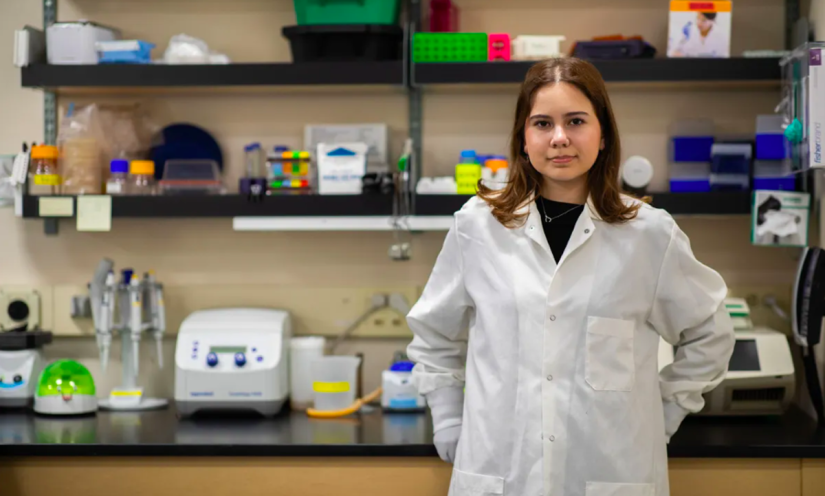
Marisa Mendoza, right, and Camila Valderrama-Martínez, left, get ready to demonstrate how they use lab equipment for their research work at Cal State San Marcos on May 6, 2025. Photo by Adriana Heldiz, CalMatters
From Palomar she was admitted as a transfer student to San Marcos and more selective campuses, including UCLA and UC San Diego. She chose San Marcos, partly to live at home but also because she loved her lab and wanted to continue her research.
She enrolled at San Marcos last fall and furthered her doctoral journey by receiving the U-RISE grant. It was supposed to fund her for two years. The NIH terminated the grant March 31, stripping funds from 20 students.
For a school like San Marcos, where more than 40% of students are low-income enough to receive federal financial aid called Pell grants, the loss of the NIH training awards is a particular blow to the aspiring scientists.
The current climate of doctoral admissions is “definitely at a point where one needs prior research experience to be able to be competitive for Ph.D. programs,” said Elinne Becket, a professor of biological sciences at Cal State San Marcos who runs the microbial ecology lab where Mendoza and other students hone their research for about 15 hours a week.
San Marcos doesn’t have much money to replace its lost grants, which means current and future San Marcos students will “100%” have a harder time entering a doctoral program, Becket added. “It keeps me up at night.”
Research is ‘a missing piece’
In a typical week in Becket’s lab, Mendoza will drive to a nearby wetland or cove to retrieve water samples — part of an ongoing experiment to investigate how microbial changes in the ecosystem are indications of increased pollution in sea life and plants. Sometimes she’ll wear a wetsuit and wade into waters a meter deep.
The next day she’ll extract the DNA from bacteria in her samples and load those into a sequencing machine. The sequencer, which resembles a small dishwasher, packs millions or billions of pieces of DNA onto a single chip that’s then run through a supercomputer a former graduate student built.
“Once I found research, it was like a missing piece,” Mendoza, a Pell grant recipient, said through tears during an interview at Cal State Marcos. Research brought her joy and consumed her life “in the best way,” she added. “It’s really unfortunate that people who are so deserving of these opportunities don’t get to have these opportunities.”
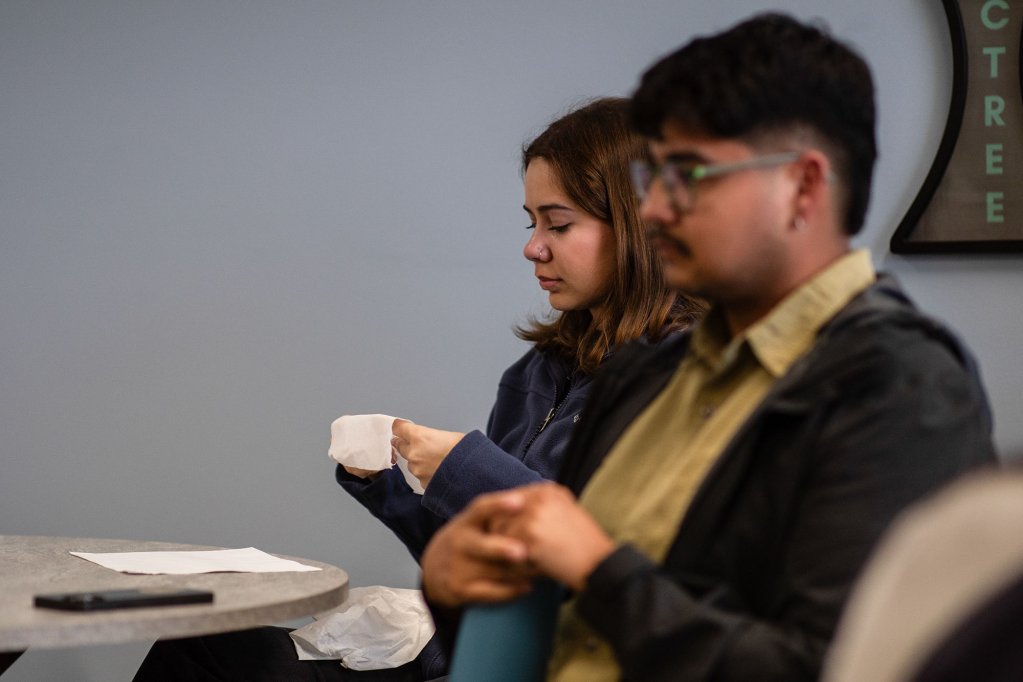
Student Marisa Mendoza gets emotional while she speaks about her research at Cal State San Marcos on May 6, 2025. Photo by Adriana Heldiz, CalMatters
The origins of the San Marcos training center date back to 2002. Through it, more than 160 students have either earned or are currently pursuing doctoral degrees at a U.S. university.
The grant terminations have been emotionally wrenching. “There had been so many tears in my household that my husband got me a puppy,” said Denise Garcia, the director of the center and a professor of biological sciences.
Garcia recalls that in March she was checking a digital chat group on Slack with many other directors of U-RISE grants when suddenly the message board lit up with updates that their grants were gone. At least 63 schools across the country lost their grants, NIH data show.
In the past four years of its U-RISE grant the center has reported to the NIH that 83% of its students entered a doctoral program. That exceeds the campus’s grant goal, which was 65% entering doctoral programs.
Mendoza is grateful: She was one of two students to win a campus scholarship that’ll defray much, but not all, of the costs of attending school after losing her NIH award. That, plus a job at a pharmacy on weekends, may provide enough money to complete her bachelor’s next year.
Others are unsure how they’ll afford college while maintaining a focus on research in the next school year.
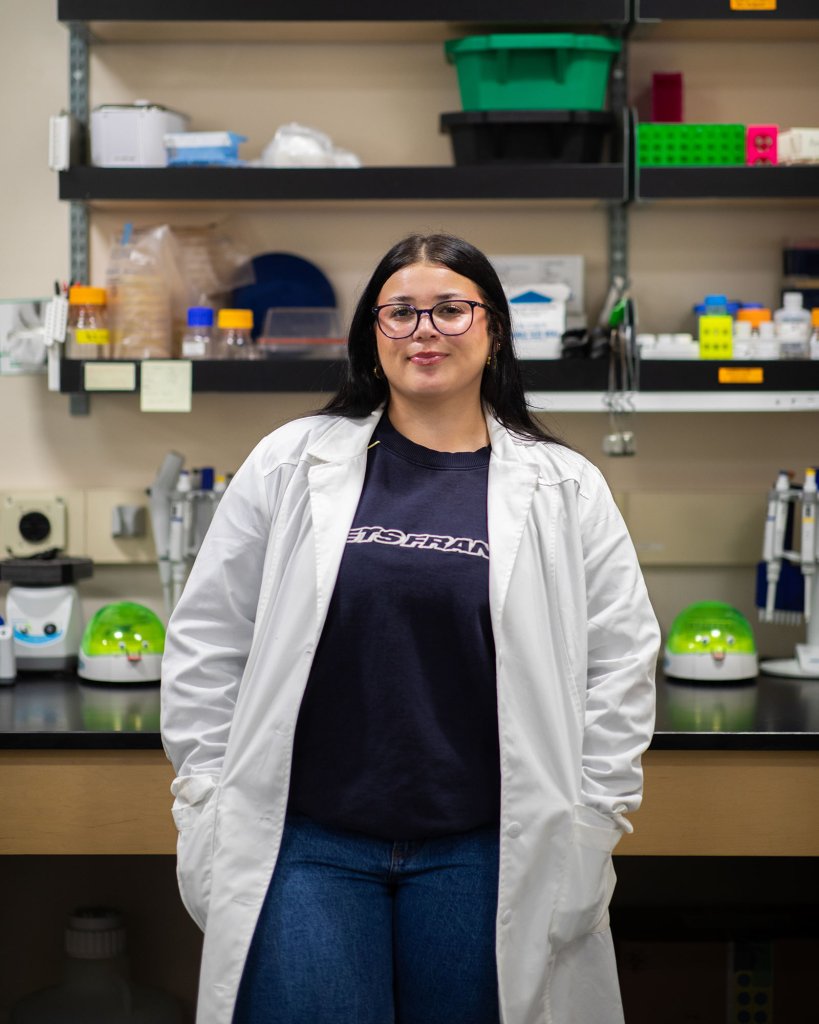
Student Camila Valderrama-Martínez in a lab at Cal State San Marcos on May 6, 2025. Photo by Adriana Heldiz, CalMatters
“You work so hard to put yourself in a position where you don’t have to worry, and then that’s taken away from you,” said Camila Valderrama-Martínez, a first-year graduate student at San Marcos who also earned her bachelor’s there and works in the same lab as Mendoza. She was in her first year of receiving the Bridges to the Doctorate grant meant for students in master’s programs who want to pursue a biomedical-focused doctoral degree. The grant came with a stipend of $26,000 annually for two years plus a tuition waiver of 60% and money to attend conferences.
She can get a job, but that “takes away time from my research and my time in lab and focusing on my studies and my thesis.” She relies solely on federal financial aid to pay for school and a place to live. Getting loans, often anathema for students, seems like her only recourse. “It’s either that or not finish my degree,” she said.
Terminated NIH grants in detail
These grant cancellations are separate from other cuts at the NIH since Trump took office in January, including multi-million-dollar grants for vaccine and disease research. They’re also on top of an NIH plan to dramatically reduce how much universities receive from the agency to pay for maintaining labs, other infrastructure and labor costs that are essential for campus research. California’s attorney general has joined other states led by Democrats in suing the Trump administration to halt and reverse those cuts.
In San Marcos’ case, the latest U-RISE grant lasted all five years, but it wasn’t renewed for funding, even though the application received a high score from an NIH grant committee.
Armenta, the associate director at the Cal State San Marcos training center, recalled that his NIH program officer said that though nothing is certain, he and his team should be “cautiously optimistic that you would be funded again given your score.” That was in January. Weeks later, NIH discontinued the program.
He and Garcia shared the cancellation letters they received from NIH. Most made vague references to changes in NIH’s priorities. However, one letter for a specific grant program cited a common reason why the agency has been cancelling funding: “It is the policy of NIH not to prioritize research programs related to Diversity (sic), equity, and inclusion.”
That’s a departure from the agency’s emphasis on developing a diverse national cadre of scientists. As recently as February, the application page for that grant said “there are many benefits that flow from a diverse scientific workforce.”
Future of doctoral programs unclear
Josue Navarrete graduated this spring from Cal State San Marcos with a degree in computer science. Unlike the other students interviewed for this story, Navarrete, who uses they/them pronouns, was able to complete both years of their NIH training grant and worked in Becket’s lab.
But because of the uncertain climate as the Trump administration attempts to slash funding, Vanderbilt University, which placed Navarrete on a waitlist for a doctoral program, ultimately denied them admission because the university program had to shrink its incoming class, they said. Later, Navarrete met a professor from Vanderbilt at a conference who agreed to review their application. The professor said in any other year, Navarrete would have been admitted.
The setback was heartbreaking.
Josue Navarrete at the Cal State San Marcos campus on May 6, 2025. Photo by Adriana Heldiz, CalMatters
“I’m gripping so hard to stay in research,” Navarrete said. With doctoral plans delayed, they received a job offer from Epic, a large medical software company, but turned it down. “They wanted me to be handling website design and mobile applications, and that’s cool. It’s not for me.”
Valderrama-Martinez cited Navarrete’s story as she wondered whether doctoral programs at universities will have space for her next year. “I doubt in a year things are going to be better,” she said.
She still looks forward to submitting her applications.
So does Mendoza. She wants to study microbiology — the research bug that bit her initially and brought her to San Marcos. Eventually she hopes to land at a private biotech firm and work in drug development.
“Of course I’m gonna get a Ph.D., because that just means I get to do research,” she said.
Both the National Science Foundation and the National Institutes of Health are slashing funding support for graduate students and early-career researchers as President Donald Trump continues dramatic federal budget cuts.
On Tuesday, Nature reported the NSF Graduate Research Fellowship Program awarded 1,000 fellowships—fewer than half of the record-setting 2,555 fellowship offers it made in 2023, and the second-smallest number of awards since 2008.
Prior to this year, the fellowship program’s stated goal was to “ensure the quality, vitality, and diversity of the scientific and engineering workforce,” though the Trump administration has since replaced the word “diversity” with “strength.”
Since 1952, the NSF’s fellowship program has funded more than 75,000 master’s and Ph.D. students pursuing science degrees. Fellows receive five years of funding, which includes a $37,000 annual stipend and the cost of tuition. The fellowships are highly competitive; of the more than 13,000 applicants who apply each year, only about 16 percent typically get an award. While the cuts made it even more competitive this year, a record 3,018 applicants also received “honorable mentions,” which don’t come with an award but can boost a CV nonetheless.
Over the past two weeks, the NIH has also canceled numerous institutional and individual training grants, including many that support scientists from underrepresented communities, according to The Transmitter.
The outlet reported that a chemistry professor at the University of Puerto Rico–Río Piedras Campus received a letter from the NIH terminating funding for the Undergraduate Research Training Initiative for Student Enhancement because the award “no longer effectuates agency priorities.”
That justification is now central to a federal lawsuit researchers and advocacy groups filed against the NIH last week, which among other points argues that the Department of Health and Human Services (the NIH’s parent agency) hasn’t yet adopted rules that would allow it to terminate an award for not effectuating agency priorities.
Other terminated NIH training programs, according to The Transmitter, include the Maximizing Access to Research Careers program, which funded undergraduate researchers; the Post-Baccalaureate Research Education Program; the Bridges to the Doctorate program, which trained master’s students; the Initiative for Maximizing Student Development, which supported graduate students; and the Institutional Research and Academic Career Development Award, which aided postdoctoral researchers.
The paper, which examined about 750 responses across two different studies, claims to be the first to identify factors associated with an increased likelihood of harassing scientists.
Researchers tested their theories by offering participants a bonus payment of 1 pound ($1.27), which they could gift to themselves or donate to the Union of Concerned Scientists, and by asking them to sign a petition against the harassment of scientists.
Out of the total of £359 ($455) offered, participants opted to donate £69.79 ($88). The study found that political ideology was the best predictor for who would donate, with right-wing individuals contributing less.
The paper also asked those taking part to express their aggression by sticking pins in a digital voodoo doll of a stereotypical scientist—an “old-age male with a lab coat and equipment.”
Participants were asked to “release negative energy” by clicking their mouse, with a higher number of “pins” indicative of more aggressive behavior. It found significant positive correlations with five variables—conspiracy mentality, science cynicism, relative deprivation, threat and attitudes toward harassment.
Lead author Vukašin Gligorić, a Ph.D. researcher in the Department of Psychology at the University of Amsterdam, said across the two studies, distrusting worldviews, political ideology and perception of threat were associated with more approving attitudes toward harassment of scientists.
In addition, perceiving scientists as threatening, as well as dark personality traits, such as psychopathy and narcissism, contributed to approving harm.
The paper concluded that highlighting reasons why people should trust scientists and not be threatened by them is the most promising way to counter such behavior.
And he said that changing these attitudes will be challenging, because scientists are viewed as part of the “establishment,” which many people around the world are dissatisfied with.
“To address this, I believe scientists should engage more directly with the public … rather than for private or corporate interests, which erode trust.
“Ultimately, people are cynical about the political and economic systems we live in, and they sometimes blame scientists as part of that system. Therefore, scientists should also be critical of and work to improve the system itself.”
Orders to freeze travel, meetings, communications and hiring at the National Institutes of Health—and all other agencies within the Department of Health and Human Services—has some federally funded researchers on edge just days into President Donald Trump’s second term.
Scholars say they’ve received emails canceling key meetings that determine which research projects to fund and they’re worried about how those and other disruptions could stall the billions of dollars in NIH-funded projects universities oversee.
“I suspect that folks outside the sciences don’t understand just how disruptive even a short delay in funding decisions can be,” Adam Forte, an associate professor of geology at Louisiana State University who runs his own lab, posted on BlueSky Thursday alongside numerous other concerned scholars. “This is how we lose huge amounts of scientific capacity, scientific capacity we as a collective have already invested huge amounts of time and money in, just lighting it on fire to watch the flames.”
If they leave, it’s not like there is much chance they’re coming back to that, or a similar position. That expertise is just gone as they are forced to move onto something else to pay the bills. A spectacular waste from a “short” delay in the machinery that funds science. 5/6
Some research policy experts say a pause is typical for the initial days of a new administration and that it’s too soon to tell whether this week’s order is a cause for concern. Others, however, are interpreting it as part of a larger message from Trump, who has repeatedly undermined scientific findings about COVID-19 and climate change and nominated Robert F. Kennedy Jr., who falsely claims there are no safe or effective vaccines, to lead the HHS.
While Kennedy, who previously vowed to enact mass layoffs at the NIH, and Trump’s other cabinet nominees await Senate confirmation, Trump has already issued a blitz of executive orders—including some that roll back diversity and environmental justice initiatives, as well as protections for federal workers and immigrants—since retaking the White House Monday. (In addition to those in HHS, all federal agencies are also under a hiring freeze.)
“It’s not unheard-of to see some things paused when a new administration takes over, but when we look at the whole package of language and executive orders that have come out this week, they’re all tied up together,” said Jennifer Jones, director of the Center for Science and Democracy at the Union of Concerned Scientists. “The goal is to intimidate, chill and create this exact sort of fear.”
A Communications Freeze
That fear for NIH-affiliated researchers came after Dorothy Fink, acting secretary of HHS, sent a memo Tuesday to all HHS division heads, including the directors of the NIH, the Centers for Disease Control and Prevention, and the Food and Drug Administration.
“As the new administration considers its plan for managing the federal policy and public communications processes, it is important that the President’s appointees and designees have the opportunity to review and approve any regulations, guidance, documents, and other public documents and communications (including social media),” explained the memo, which instructed agency employees to refrain from numerous forms of communications, including issuing grant award announcements and public speaking, until a presidential appointee can review them. The memo is in effect until Feb. 1.
An NIH spokesperson clarified to Inside Higher Ed via email that the restrictions apply to communication “not directly related to emergencies or critical to preserving health,” and that any “exceptions for announcements that HHS divisions believe are mission critical” will be made “on a case-by-case basis.”
On Wednesday, Glenda Conroy, a senior travel official for NIH, emailed NIH employees notifying them that all sponsored travel for HHS employees is also suspended until further notice.
Disruptions to Research
As of right now, all these restrictions mean that scheduled meetings have been canceled or postponed, including NIH study sections, which convene scientific experts to decide which projects to fund.
And university-affiliated researchers make up a sizable portion of the grant application pool. The $44 billion NIH is the largest federal research funding source for colleges and universities, which receive billions in NIH grants each year to support medical and other scientific research projects, including those that have advanced treatments for common diseases such as cancer and Alzheimer’s.
Chrystal Starbird, an assistant professor of biology and a cancer researcher at the University of North Carolina at Chapel Hill’s School of Medicine, had been planning for months to attend a study section next week where nearly 60 grants were set to be reviewed, but she got word a couple of days ago that it was canceled.
“Ultimately, the NIH will continue to function, so maybe it’s not a huge issue, but for the people being reviewed now it is,” she said. “None of those grants will be reviewed on time. The question is: How are they going to get all of us together again to review the grant?”
And rescheduling the study sections for weeks or months after the communication restrictions lift may disrupt certain ongoing projects.
“Some people may be using this funding to do research that may have more time pressure,” Starbird said, noting that clinical research typically adheres to strict patient-monitoring timelines. “We have to acknowledge that there’s already a significant impact from this pause.”
‘Too Soon to Assume’ Worst-Case Scenario?
Carrie Wolinetz, a science and health policy consultant who worked for the NIH between 2015 and 2023, said in an email that the communications freeze is similar to memos from previous transitions. Although she acknowledged that pausing study section meetings seems broader than previous transitions, it doesn’t strike her “as tremendously outside the norm of activities that might be paused while a new team is transitioning.”
And though it’s understandable that all of these restrictions are “causing anxiety,” she said it’s “too soon to assume that worst case scenario.”
“It becomes a concern if there is a long cessation of activity, of the sort you might experience if there was an extended government shutdown,” she said. “There is likely to be minimal impact in the short term—other than for folks who hopped on flights only to discover their meeting was cancelled, which I imagine was pretty irritating.”
But others caution that having such restrictions in place for even a short time could force people out of their jobs, create a talent void and potentially stall innovation.
“Even if this is short-lived bumpiness, the uncertainty in funding can have career-altering implications, especially for young scientists,” Erica Goldman, a former academic and director of policy entrepreneurship for the Federation of American Scientists, said in an email.
“If conferences or travel are canceled, for example, the inability to present new ideas and network with senior colleagues can have cascading effects,” she continued. “I’m reminded of the experiments, data, and professionals who left the field during COVID-19. Even temporary pauses can have lasting consequences.”