Tag: SCOTUS

  • Donor disclosure and campaign finance at SCOTUS

    Donor disclosure and campaign finance at SCOTUS

    The Institute for Free Speech’s Bradley Smith and Brett Nolan join the show to discuss two upcoming Supreme Court arguments involving donor disclosure (First Choice Women’s Resource Centers, Inc. v. Platkin) and political party contributions to candidates (National Republican Senatorial Committee v. FEC).

    The conversation also explores the broader landscape for political speech and campaign regulation, what legal battles may be next for the Supreme Court, and how both guests found their way into First Amendment advocacy.

    Timestamps:

    00:00 Intro

    01:32 What is the Institute for Free Speech?

    02:39 Personal paths into free speech work

    05:10 First Choice Women’s Resource Centers, Inc. v. Platkin

    32:08 NRSC v. FEC

    51:50 What’s next for campaign finance at SCOTUS?

    54:58 Outro

    Enjoy listening to the podcast? Donate to FIRE today and get exclusive content like member webinars, special episodes, and more. If you became a FIRE Member through a donation to FIRE at thefire.org and would like access to Substack’s paid subscriber podcast feed, please email [email protected].

    Source link

  • Berkeley Law Dean Urges SCOTUS to Be “Guardrail” for Democracy

    Berkeley Law Dean Urges SCOTUS to Be “Guardrail” for Democracy

    Carlos Avila Gonzalez/The San Francisco Chronicle/Getty Images

    PHILADELPHIA—The final speech at the Association of Public and Land-grant Universities’ annual conference this week dissected the Trump administration’s “financial assault” on universities and urged the Supreme Court to be a check on a president whom Congress hasn’t reined in.

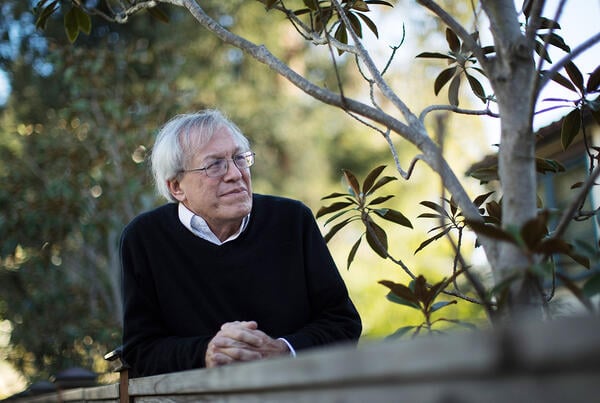
    Erwin Chemerinsky, dean of the University of California, Berkeley, School of Law and a constitutional scholar, also told the attendees of the APLU meeting that their institutions should be united against the administration’s attacks on higher ed.

    “The one thing we all learned on the playground is if you give in to a bully, it only makes it worse in the long term,” Chemerinsky said Tuesday, adding—to applause—that “it’s so important that institutions of higher education stand together at this moment and stand together for our shared missions.”

    The speech comes after multiple prominent universities, including a few public ones, refused to sign Trump’s proposed “Compact for Academic Excellence in Higher Education,” which asked them to give up significant autonomy in exchange for an unspecified edge in competitions for federal funds.

    It also follows legal victories against the administration’s grant cancellations. Litigation by UC researchers against Trump, the Department of Government Efficiency and other federal agencies and officials has restored more than $500 million in federal research grants, which the administration cut at UCLA after the Justice Department accused it of tolerating antisemitism during a spring 2024 pro-Palestinian protest encampment. Chemerinsky, who is Jewish, is representing the researchers in that litigation.

    Asked for comment, a White House official told Inside Higher Ed in an email, “UC Berkely clearly needs to make some changes – violence broke out on UC Berkeley’s campus just last night and they have failed to police antisemitism by tolerating an ‘unrelenting’ steam of antisemitic harassment toward Jewish students and faculty.”

    Even before the latest cuts, Chemerinsky estimated the Trump administration had already slashed close to $1 billion in funding for faculty and researchers across the UC system, a figure that he said was much higher than DOGE’s tally. The UC system didn’t confirm or deny this estimate or provide a more recent estimate Tuesday, saying the system was closed for Veterans Day.

    “I think the termination of grants that we’ve seen, whether it’s to researchers and faculty or to universities, is clearly illegal,” Chemerinsky said. But when it comes to “nonrenewal of grants in the future and funding in the future,” he added, the “government has far more discretion, and there it’s going to be much harder to bring legal challenges.”

    Chemerinsky also said federal funding cuts are just one of four financial vulnerabilities the administration has identified in universities: “they’re very dependent” on federal money, tuition, philanthropy and foreign students. Using his own institution as an example, he said Berkeley Law has an L.L.M., or master of laws, degree program that’s exclusively for foreign students and represents $20 million in its annual budget.

    He then expressed concern about how the Supreme Court has ruled on the administration’s actions, even beyond higher ed.

    “By my count, 39 matters have come to the Supreme Court since [Inauguration Day] Jan. 20, challenging actions of the Trump administration,” he said. “All are instances where the lower courts ruled against the Trump administration, and in 36 of 39, the Supreme Court has ruled in favor of the Trump administration.”

    Noting eight of the nine justices graduated from the law schools at either Harvard or Yale Universities (Amy Coney Barrett graduated from the University of Notre Dame), he said, “My optimistic self believes that the United States Supreme Court will stand up for higher education.” Chemerinsky added that since Congress hasn’t served as a check on the president, it’s up to the federal judiciary to uphold the laws and the Constitution.

    Fittingly, his speech took place at a Philadelphia hotel about a 15-minute walk from where the founders adopted the Constitution. APLU said more than 1,300 people attended this week’s three-day conference.

    “Ultimately, I believe the guardrail of our democracy has to be the courts and the Supreme Court,” Chemerinsky said. “If there is going to be a check on a president who has authoritarian impulses, it’s going to have to be from the restraints of the Constitution—and the only way we can enforce those is the courts.”

    Chemerinsky noted that “one characteristic of every authoritarian—or would-be authoritarian—rule is the way they go after universities. What we’ve seen in the last nine and a half months is unprecedented in American history.”

    He compared Trump’s actions to McCarthyism, the 1950s-era political persecution of faculty, government employees and others. But Chemerinsky pointed out that back then, “it wasn’t the president of the United States leading the attack on higher education,” and “there wasn’t the financial assault on universities.”

    “But the one thing that the McCarthy era should say to all of us is that history will judge us,” he said. “Twenty, 30, 50, 75 years from now, people will look back on us the way we look at university officials in the McCarthy era, and they will judge us as to whether we capitulated or whether we had courage.”

    Source link

  • Which Higher Ed Cases Will SCOTUS Take On?

    Which Higher Ed Cases Will SCOTUS Take On?

    As the Supreme Court begins its new term this week, legal experts predict that higher education will be a frequent subject for the justices. Yet only two college-related cases—both of which center on transgender rights—are currently listed on the main docket.

    That’s in large part because of a less formal but increasingly popular second list of cases known as the shadow docket.

    Historically, the shadow docket, also called the emergency docket, was used on rare occasions for just that—emergencies. In situations when the lack of a ruling from the highest court could lead to immediate, irreversible consequences, this alternate route allowed the justices to move quickly and issue an interim decision without going through traditional processes such as briefings, oral arguments or written opinions. But over the course of the past three administrations, use of this secondary docket has skyrocketed, creating a lack of predictability and an immense sense of uncertainty for the public.

    Normally, it can take months for a case’s petition to be processed, and then once a case is on the docket it can take even longer for it to be heard and ruled upon. This leaves the parties directly involved—and all who may be affected by the decision—time to prepare and create contingency plans for the potential outcomes. But when the shadow docket is used, cases can be introduced and receive a ruling in a matter of weeks, if not days, often without any explanation.

    Higher education institutions have already seen the repercussions this can have: Using the shadow-docket process, SCOTUS has overturned lower-court rulings on critical issues including the continuation of federal research funding and major cuts to staffing at the Department of Education.

    “Some of these are existential issues about whether universities can continue to function in the way in which they functioned for the past half century,” said former Brandeis University president Fred Lawrence, a higher education legal expert and distinguished lecturer at Georgetown Law. “If erring on the side of caution means shutting down your research operation, then you are unrecognizable to yourself. So it creates a very, very difficult situation for higher education to function.”

    While it remains unclear how and when various cases will reach the Supreme Court, Lawrence and others say they have a fairly good idea of what those cases will likely concern. Issues including visa policies for international students and scholars, First Amendment rights, academic freedom, and federal funding are likely to be on the line.

    Here’s a quick summary of the cases—on and off the main docket—that experts say colleges and universities should keep a close eye on.

    Transgender Athletes

    On the first day of his second term in office, President Donald Trump signed an executive order banning “gender ideology” and declaring that the government would only recognize two sexes, male and female. Less than a month later, he signed a second order banning transgender women from participating in women’s sports.

    For now, both declarations—and their implications for collegiate sports—are up for consideration by the highest court through two cases, West Virginia v. B.P.J and Little v. Hecox.

    Though the former concerns a transgender girl in high school and the latter a transgender woman at Boise State University, the cases are otherwise largely the same. Both involve runners who attempted to participate in track and cross-country but were barred from doing so by state law. And up until a little over a month ago, both were set to be heard before the court at some point this term.

    But on Sept. 2 Hecox filed a motion urging the Supreme Court to dismiss her case. In the six-page filing, Hecox’s lawyers explained that due to illness, her father’s recent passing and the “negative public scrutiny” stemming from the litigation, she no longer wished to participate in women’s sports, rendering the case moot.

    Still, given the court’s conservative supermajority and their penchant for siding with the Trump administration, some wonder if Hecox’s plea to the court is an attempt to avoid an unfavorable final decision. (Hecox won her case at both the district and circuit court levels.)

    Jill Siegelbaum, a former assistant general counsel at the Department of Education and now a partner at Sligo Law Group, said that she understands both the theoretical idea that Hecox could be fearing a loss and the more personal rationale for dismissing the case.

    “Every single attorney involved in that case is well aware of who is sitting on the court and the decisions that the court has recently made in the area of transgender rights,” she said. “But I can also say that on its own, simply the fear for her emotional, physical and mental health that would come from further publicity about this case … would certainly be, in my opinion, a reasonable basis for withdrawing.”

    So far, it’s unclear whether the court will respect Hecox’s request. But even if the case were dismissed, Siegelbaum and others said, West Virginia v. B.P.J., will almost certainly remain, eventually leading to a ruling on the same overarching issue—interpreting Title IX’s equal protection clause.

    Sarah Hartley, a partner and co-chair of the higher education team at BCLP, a law firm headquartered in St. Louis, stressed that regardless of the outcome, the ruling’s implications for colleges and universities could be influenced by what questions the justices ask and how they write their opinions.

    “Depending on how the decision is worded, it could have broader impacts than just sport. It could address bathrooms, locker rooms—any number of different things that Title IX and other antidiscrimination laws historically have protected,” she said.

    Hartley added that in her view, lack of access to even recreational activities could be a major blow to the mental health of an already “highly marginalized community.”

    “Imagine it affecting your club sports at universities or in high schools, or in gym class when there’s any sex segregation,” she said. “As someone who’s particularly concerned with the access to sport because of all the positive impacts it can have, I think the trickle-down effect … will be a big deal.”

    Shadow Docket

    Higher education legal experts are also keeping a close eye on the shadow docket, as well as on cases that were already addressed on the emergency docket, were sent back to the lower court and now are steadily working their way back up to the Supreme Court for a final merit ruling.

    Jessica Ellsworth, a partner at Hogan Lovells and adviser for the American Council on Education, said she thinks the shadow docket cases are the ones that have a “real impact” on higher education.

    She added that multiple stays have already been granted on issues like Trump’s ability to terminate congressionally appropriated funds, slash government agencies’ staffs and tighten immigration policies that affect college enrollment. In doing so, the Supreme Court blocked injunctions from the lower courts, allowing the Trump administration to carry out policies before the justices have fully analyzed the facts of the case, considered friend-of-the-court briefs or heard the arguments of each party.

    Moving forward, “I suspect that we will see First Amendment challenges make their way to the court related to ongoing efforts by the administration to force changes across universities and use threats of cutting off funding to compel those changes,” Ellsworth said. “As a result, it’s important for higher education to keep an eye on both the merits and emergency docket for the foreseeable future.”

    Hartley from BCLP noted that transgender rights issues are also on the shadow docket through the case Trump v. Orr, which weighs a transgender or nonbinary individual’s ability to obtain a passport that matches their gender identity. If this ruling is interpreted to extend to IDs beyond passports, it could lead to all kinds of inconsistency between gender presentation and government identification, creating significant hurdles for many university operations, she said.

    “You could see complaints that a student who’s male presenting is living in a female dorm, which could then give rise to invasive investigations and force a student to disclose things that they might want to make otherwise private,” she explained.

    And while any number of these cases could eventually make it back to the Supreme Court for a final ruling, Lawrence from Georgetown said it’s too soon to predict what will make the cut; just a week into the new term, “the Supreme Court has barely put together its docket for the year,” he said.

    But even if these issues do make it back for a full merit review, he added, it may be too late. So far, the Supreme Court has struck down the injunctions blocking Trump from carrying out his policies on every higher ed case that has reached the shadow docket. And in many cases, he said, doing that is like allowing a development company to tear down a historic home before a court has ruled on whether it sits on protected land. Even if the court eventually rules that the property should have been shielded, once the house is gone, it will be impossible to restore.

    “If you don’t provide that temporary remedy, then there may be no point to a remedy at all,” Lawrence explained.

    Source link

  • California Schools Brace for Fallout from SCOTUS Decision on Religious Rights – The 74

    California Schools Brace for Fallout from SCOTUS Decision on Religious Rights – The 74

    Two months after the U.S. Supreme Court granted public school parents the right to withdraw their children from materials and discussions on LGBTQ+ issues and other subjects that conflict with their “sincerely held religious beliefs,” conservative leaders in California are predicting schools will be swamped with opt-out demands. 

    That hasn’t happened yet, but attorneys agree that this latest escalation of the culture wars will likely cause turmoil, confusion, and years of litigation, largely because the court offered no guidance on how opt-out requests should be handled, how religious belief claims can or should be verified, and how schools should handle potential logistical issues.

    “There is a lot of trepidation about how to handle this issue in a way that is legally compliant and doesn’t trigger a backlash from one side of the issue or the other,” Troy Flint, a spokesperson for the California School Boards Association, told EdSource via email Saturday night.

    “Superintendents have concerns about how to make a fact-specific determination regarding parent requests, and we have heard of districts getting threats of litigation from both sides,” he said.

    LGBTQ+ advocates and defenders of the state’s progressive school standards are threatening discrimination lawsuits if opt-outs are granted, Flint said. Parents are threatening to sue if they aren’t granted immediately.

    In most districts, he added, leaders “are hesitant to address this publicly for fear of attracting more scrutiny and making the issue even more difficult to manage.”

    A leading academic on education law said that while the Supreme Court decision was based on parental objections to LGBTQ+ books and lessons, the religious opt-outs are likely to have a broader reach.

    “It is deeply misguided for people to believe that this case is only about LGBTQ+ and equality,” Yale Law School professor Justin Driver told EdSource. The decision “sweeps, given the prevalence of deeply felt religious objections, to lots of material,” he said.

    It could “affect everything from reading to science, to literature to history. It’s difficult to overstate the significance of the decision,” Driver said. “Some people think Bert and Ernie are gay. Is ‘Sesame Street’ now suspect?”

    California, for instance, requires students to learn the history of gay people fighting for civil rights and the story of the country’s first openly gay elected official, Harvey Milk. The San Francisco supervisor was assassinated in 1978 and posthumously awarded the Presidential Medal of Freedom by former President Barack Obama.

    Flint said that parents “in at least one district have hinted at trying to expand the opt-out requests to other types of instructional materials.” He did not identify those materials.

    Meanwhile, as school administrators ponder their next steps, firebrand social conservatives are seizing the moment that the nation’s highest court created.

    “There should be opt-outs. There are things that go against what God laid down,” pastor Angelo Frazier, of Bakersfield’s RiverLakes Community Church, said of what’s taught in California schools. 

    “It’s not education. It’s ‘You can touch me here.’ It’s very suggestive and inappropriate.” He said the ruling was a relief to frustrated parents in his congregation. “It gives them breathing room.”

    The leader of a Fresno-based Christian group, long involved in parental rights advocacy, said the state is no longer in charge of what children learn in school.

    The ruling shows that “parents are the ultimate determination of whose values get taught to the child,” said Greg Burt of the California Family Council. “We’re now in charge of deciding what we think is good and what we think is not good.”

    But as opt-outs begin to play out across California’s more than 10,000 public schools as the 2025-26 academic year opens, the only certainty from the case, Mahmoud v. Taylor, is that uncertainties abound — and may for years.

    They include:

    • Can or should parents file blanket opt-out requests stating they want their child removed from any and all instruction about LGBTQ+ topics, and leave school personnel to sort it out? Or should schools ask parents to review reading lists — often available online — and let parents flag those items to which they object? 
    • What do school leaders do with students whose parents opt them out of a class? Their class time still needs to be used for instruction. Where do they go?
    • Who watches or instructs the youngest of removed students, who can’t be left unsupervised? Some of the books cited in the Supreme Court case, including ones about a child’s favorite uncle marrying a man and a puppy getting lost at a Pride parade, are used in kindergarten and even transitional kindergarten classes.
    • Will school districts need to budget money to defend lawsuits from parents whose opt-out requests may be denied? 
    • Can parents even attempt to opt out their child from exposure to an LGBTQ+ teacher, or a teacher who displays a Pride flag in a classroom?

    Lawyers and academics interviewed for this story said that Justice Samuel Alito’s decision, joined by the court’s five other conservatives, offered little guidance on how opt-outs should work.  

    Mahmoud v. Taylor happened because the Montgomery County schools in suburban Maryland created an opt-out program to appease parents who objected to the teaching of LGBTQ+ materials on religious grounds. But the program ended in less than a year. Alito noted in his decision that school officials found that “individual principals and teachers could not accommodate the growing number of opt-out requests without causing significant disruptions to the classroom environment.” Parents then sued.

    Focusing largely on principles of religious freedom, Alito’s decision doesn’t specifically address how opt-outs might work given the Maryland situation, or how claims of a sincerely held religious belief might be evaluated. 

    The high court has long recognized the rights of parents to “direct the religious upbringing of their children,” he wrote, a principle at the case’s core.

    But in a dissenting opinion, Justice Sonja Sotomayor predicted opt-outs would cause “chaos for this nation’s public schools.”

    Giving parents the chance to opt out of all lessons and story times that conflict with their beliefs “will impose impossible administrative burdens,” Sotomayor wrote. It threatens the very essence of public education.

     “The reverberations of the court’s error will be felt, I fear, for generations.”

    Opting out in California

    Conservative groups in California opposed to LGBTQ+ themed teaching materials are generating letters and emails to school districts for parents to use to demand that school leaders proactively remove children from classes where there might be any mention of gay or transgender people, same-sex marriage and other related topics.

    A nonprofit Riverside County law firm, Advocates for Faith & Freedom, created one such letter, calling for children to be removed from any teaching involving “gender identity, the use of pronouns inconsistent with biological sex, sexual activity or intercourse of any kind, sexual orientation, or any LGBTQ+ topics” so parents can raise children “in the fear and knowledge of the Lord.”

    The letter gives principals 10 calendar days to respond in writing. Lack of a response “will be considered a denial” that will cause parents to “proceed accordingly.”  

    Erin Mersino, an attorney at the firm, said via email, “responses were just starting to come in,” and that it was too soon to discuss the letter’s effectiveness. Other groups are circulating at least four similar opt-out templates or email forms.  

    The 10-day response demand in the nonprofit’s letter “is insufficient in my opinion,” said Mark Bresee, a La Jolla attorney specializing in education law.

    Bresee also questioned if “a blanket, year-long ‘opt-out’ demand” is consistent with Alito’s decision, noting that the justice wrote that the “religious development of a child will always be fact-intensive. It will depend on the specific religious beliefs and practices asserted, as well as the specific nature of the educational requirement or curricular feature at issue.”

    It’s unclear how far and fast those letters are circulating. Some school officials said they have received a few opt-out notices.

    Conservative activist Brenda Lebsack, a Santa Ana Unified School District board member, said mass opt-out requests are unlikely to come until school districts themselves notify parents of the new right the court granted. “Opt-out forms should really be coming from the schools because if you’re getting opt-out forms from all these different law firms, and they’re all different, that could get really confusing,” she said. 

    At the Manteca Unified School District in San Joaquin County, Assistant Superintendent Victoria Brunn said late last week that only one “opt-out request has been received so far. She said the parents who made it were told it would be granted. 

    A spokesperson for the Turlock Unified School District in Stanislaus County said it had received a single inquiry about the opt-out process and created a standard form for requests, but that no requests had been received. Parents can either use the form or email a teacher, citing “specific instructional content” a student should not receive, according to a copy provided to EdSource.

    “Teachers can also provide notice of upcoming curriculum,” the spokesperson wrote in an email.

    At the Hope Elementary School District in Santa Barbara County, Superintendent Anne Hubbard created an opt-out form. As of Friday, it had been used once to opt out two children in the same family, she said. 

    Last week, the board of the 85-student Howell Mountain Elementary School District in Napa County canceled plans to create an opt-out form after community objections.

    “Howell Mountain Elementary respects and values the LGBTQ+ community. We will not be adopting any type of opt-out form that specifically targets LGBTQ+ curriculum,” Superintendent Joshua Munoz said in a statement. Instead, the district will remind parents annually that the right to opt out exists, but will not cite any specific curriculum.

    The Press Democrat reported that among those who spoke to the board was a St. Helena High School junior who’d attended Howell Mountain.

    “When I was in seventh grade, I realized that I liked girls,” she said. “In school, the times that we were taught about LGBTQ+ people would remind me that I was not alone. I was not a freak or an alien. I was just me. And I could still do anything I wanted in my life.”

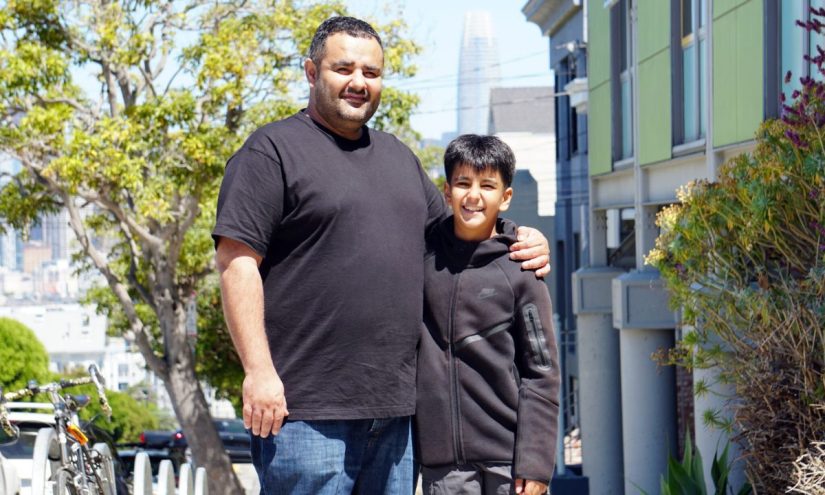
    In San Francisco, Mawan Omar, the parent of a sixth grader, told EdSource he intends to opt his son out of LGBTQ+ materials because the teaching contradicts his family’s Muslim faith.  

    Omar said his son, Hezma, objected on his own to an LGBTQ+ lesson in elementary school because it was contrary to what he had learned from the Holy Quran. “He just didn’t want to be around it because he knows our religion,” Omar said. After what he described as a dispute with the school’s principal, it was agreed informally that Hezma would be allowed to leave any classes involving similar materials.  

    Now, Alito’s decision, Omar said, is gratifying. “We knew all along we were right.”

    But Lebsack, who focuses on transgender issues and has formed an interfaith coalition primarily around them, said Alito’s decision isn’t enough.

    “I think Mahmoud versus Taylor is throwing us crumbs,” she said in an interview. “I mean, I’m grateful for it, but it needs to go much further than that.”

    Lebsack, a special education teacher and former Orange County probation officer, claimed the California Department of Education is ripe to be sued under the First and 14th amendments for “compelling public school students to accept and affirm extremist ideologies of unlimited gender identities” and for “bringing extremist forced teachings into K-12 public education.”

    Asked to respond to Lebsack’s assertion, a spokesperson for the state Education Department directed a reporter to guidance posted online about Alito’s decision. It states, in part, “The California Department of Education and California law continue to promote a safe, fair, and welcoming learning environment in all schools. It is important to note that Mahmoud does not invalidate or preempt California’s strong protections for LGBTQ+ youth from discrimination, harassment, and bullying.” 

    The goal: Banning books?

    Other conservatives said they see a path where Alito’s decision could lead to the removal of books and teaching they oppose by overwhelming schools with opt-outs to the point where the best option is to remove the materials.

    “If there are so many people who want to opt out of this curriculum, maybe we should stop teaching it,” said Julie Hamill, an attorney and president of the California Justice Center. School leaders, she said, should be reflecting on whether they are “doing something wrong as a district and educational entity. Those are questions that are not being asked right now. It’s very obvious that’s what needs to happen.”

    Sonja Shaw, a Chino Valley Unified School District board member running for state superintendent of public instruction in next year’s election, said she wants opt-outs to “overtax the system to where they just give up, and they stop teaching this stuff.”

    If so many opt-outs were filed that books are removed from curricula, that would help, said Burt of the California Family Council, which has urged parents to flood districts with opt-outs. “We’re advocating for good books in school, and we think these are bad books, so we’re not going to be sad if we see them go.”

    But an anti-censorship advocate said that would amount to book banning by a different name. 

    “I’m not at all surprised that this is their plan of attack,” Tasslyn Magnusson, senior adviser to the Freedom to Read team at PEN America, an anti-censorship group, said of conservative activists. “These are books about families. These are books about how we experience the world, and they’re beautiful and well written,” she said. “Remember that it’s important for kids to have a variety of materials in front of them that resonate with their lives and their experiences.”

    Another impact of the opt-outs will be how LGBTQ+ students and students from families with LGBTQ+ members will react when classmates leave and when teaching materials reflecting their lives are presented.

    That could make “a child feel they’re not only different, but that they’re not accepted or that they should be ashamed of the family that they have,” said Jorge Reyes Salinas,  a spokesperson for Equality California, a civil rights group. Although the opt-outs promise to be disruptive, he said, they won’t end the state’s use of an inclusive curriculum. “We’re talking about a very small population of parents that are ignorant and full of hate.”

    The presidents of California’s two largest teachers unions both said educators are not going to fold under pressure created by the high court’s decision.

    “The role of the public school is to help students develop the critical thinking skills and knowledge necessary to engage in a pluralistic democracy,” said Jeff Freitas, president of the California Federation of Teachers. “We cannot have individuals dictating what is the good of the public. It’s also important that our public schools avoid over-compliance and refuse to capitulate to the weaponization of this decision.”

    David Goldberg, president of the California Teachers Association, said that teachers “will obviously follow the law, but we want to make it clear to our members that there are other laws in California around kids’ ability to learn about their own identity, cultures, or all kinds of identities. We’re going to still honor kids’ ability to learn about their own identity and all kinds of identities.”

    Goldberg also said it would be a mistake for school administrators to place the burden of opt-outs on teachers. “Teachers are overwhelmed already, just getting through the curriculum,” he said. Opt-outs are “a compliance thing that districts are going to need to figure out.”

    The Scopes Monkey Trial

    The country has a long history of science clashing with religion.

    Driver, the Yale law professor, noted that in a 1987 decision, the U.S. Court of Appeals for the Sixth Circuit overturned a lower court that ruled fundamentalist Christians could remove their children from public school lessons that depicted women working outside the home, which they argued conflicted with their religious beliefs. 

    Now, following Alito’s decision in the Maryland case, the losing argument in that case could be successful, Driver said. “It seems to me the Mahmoud versus Taylor decision empowered these sorts of objections to potentially carry the day.”

    Alito’s decision also came 100 years after the landmark court case on the teaching of evolution in public schools — the epic clash of science versus religion known as the Scopes Monkey Trial that pitted legendary lawyers Clarence Darrow and William Jennings Bryan against each other. 

    Jennings, hired to prosecute a high school biology teacher, John Scopes, for teaching evolution against state law, won. But Tennessee’s Supreme Court later overturned Scopes’ conviction, ruling that a state law banning the teaching of evolution in public schools was unconstitutional.

    But it didn’t end the debate over teaching science in the face of religious beliefs, said Pepperdine University law and history professor Edward Larson, author of a Pulitzer Prize-winning book on the trial. When it ended, “school districts all over the country and some states banned the teaching of the theory of human evolution,” he said.

    Even when religious objections were later banned, “a series of state laws and local actions calling for balanced treatment of either teaching creation science, along with evolution, or later intelligent design” followed, Larson said. Several states, including Alabama, require disclaimers in biology books stating evolution “is just a theory,” he said.

    “The issue of evolution in public schools remains a flash point,” Larson said. “It has been for a hundred years, it still is today.”

    As the Alito decision plays out in the coming years, Larson said, “Schools may want to force people to provide all sorts of evidence” to prove their sincerely held religious beliefs. “But I’m thinking that most won’t feel it’s worth their time to get too engaged,” he added. 

    “That’s just inviting trouble.” 


    Get stories like these delivered straight to your inbox. Sign up for The 74 Newsletter

    Source link

  • SCOTUS Ruling Has “Bleak Implications” for Researchers

    SCOTUS Ruling Has “Bleak Implications” for Researchers

    Photo illustration by Justin Morrison/Inside Higher Ed | SDI Productions/E+/Getty Images

    Hope is fading that federally funded researchers whose grants were terminated by the National Institutes of Health earlier this year will be able to resume their work as planned.

    On Thursday, the United States Supreme Court ruled 5 to 4 that any legal challenges to the grant terminations should be litigated in the Court of Federal Claims, not the federal district court system they’ve been moving through for months.

    It’s the latest twist in federally funded researchers’ legal fight to claw back nearly $800 million in medical research grants—though accounting for the multiyear grants that the NIH is refusing to fulfill puts that figure closer to $2 billion—the NIH terminated for running afoul of the Trump administration’s ideological priorities. Many of the grants funded programs that advanced diversity, equity and inclusion initiatives and research projects focused on topics such as LGBTQ+ health, vaccine hesitancy and racial disparities.

    Researchers sued the NIH in April and got a win in June when a federal district court judge in Massachusetts ordered the agency to reinstate the grants immediately. Although the NIH has since reinstated many of those grants, Scott Delaney, an epidemiologist at Harvard University and former lawyer who’s been tracking grant cancellations, told Inside Higher Ed that after Thursday’s ruling those reinstated grants will “almost certainly” be re-terminated. If that happens, “I don’t think they’ll get their money back.”

    That’s in part because the Supreme Court said researchers will have to re-file their lawsuits in federal claims court, which generally doesn’t have the power to issue injunctive relief that could keep grant money flowing during the litigation process. And it could take months or even years for the claims court to decide if researchers are owed damages.

    “Nobody has that kind of time. The nature of research is that you can’t just stop and restart it many months later,” said Delaney. “Folks have already had to do that once and many aren’t able to—they’ve had to lay off staff and lost contact with study participants. This additional delay probably renders the research unviable going forward.”

    Trump ‘Always Wins’

    Delaney is among numerous experts and advocates who say the decision is both a blow to the scientific research enterprise and the latest evidence that the Supreme Court is inclined to interpret the law to favor the Trump administration’s whims.

    “Make no mistake: This was a decision critical to the future of the nation, and the Supreme Court made the wrong choice,” the Association of American Medical Colleges said in a statement. “History will look upon these mass NIH research grant terminations with shame. The Court has turned a blind eye to this grievous attack on science and medicine, and we call upon Congress to take action to restore the rule of law at NIH.”

    Jeremy Berg, who served as director of the National Institute of General Medical Sciences from 2003 to 2011, said in an email to Inside Higher Ed that while “many (but not all) grants from the lawsuits that had been terminated have been reinstated at this point,” the big question the Supreme Court’s ruling raises now “is whether NIH will start to re-terminate them.”

    Although a 5-4 majority did agree on Thursday that the district can review NIH’s reasoning for the terminations and kept in place a court order blocking the guidance that prompted the cancellations, Berg said the mixed ruling is “potentially very damaging” because redirecting the case to a different court means “the stay blocking the required reinstatements could go into effect.”

    He added that Justice Ketanji Brown Jackson’s dissent sums up his interpretation of the ruling’s implications. “This is Calvinball jurisprudence with a twist,” Jackson wrote. “Calvinball has only one rule: There are no fixed rules. We seem to have two: That one, and this Administration always wins.”

    That’s how Samuel Bagenstos, a professor of law and public policy at the University of Michigan and former general counsel to the Department of Health and Human Services, interpreted the decision, too.

    “The message the courts sent yesterday is very strong that they are going to let the Trump administration shut down the grants right now and remit grantees to the really uncertain process of going to the Court of Federal Claims and potentially getting damages in the future,” he said in an interview with Inside Higher Ed Friday.

    “But that’s really cold comfort for the grantees,” Bagenstos added. “If they can’t get the grants restarted right now, they probably can’t continue their research projects, and the prospect of maybe getting damages in the future doesn’t keep those research projects alive. It’s a bad sign for the entire research community.”

    The NIH is far from the only federal agency that has canceled federal research grants that don’t align with the Trump administration’s ideologies. The National Science Foundation, the Education Department and the National Endowment for the Humanities are all facing legal challenges in federal district courts after freezing or canceling grants.

    And the Supreme Court’s ruling on the NIH’s terminations has implications for those cases, as well.

    “The message seems to be pretty clear that if you have an ongoing grant that’s been terminated and you want to go to court to keep the money flowing, you’re out of luck,” Bagenstos said. “It’s got very bleak implications for all researchers who are depending on continuing the flow of federal grants.”

    Source link

  • SCOTUS Says NIH Doesn’t Have to Restore Canceled Grants

    SCOTUS Says NIH Doesn’t Have to Restore Canceled Grants

    iStock Editorial/Getty Images Plus

    The United States Supreme Court is allowing the National Institutes of Health to cut nearly $800 million in grants, though it left the door open for the researchers to seek relief elsewhere.

    In a 5-to-4 decision issued Thursday, the court paused a Massachusetts district court judge’s June decision to reinstate grants that were terminated because they didn’t align with the NIH’s new ideological priorities. Most of the canceled grants mentioned diversity, equity and inclusion goals; gender identity; COVID; and other topics the Trump administration has banned funding for. The district judge, in ruling against the administration, said he’d “never seen racial discrimination by the government like this.”

    Justice Amy Coney Barrett wrote that the district court “likely lacked jurisdiction to hear challenges to the grant terminations, which belong in the Court of Federal Claims,” with which Justices Clarence Thomas, Samuel Alito Jr., Neil Gorsuch and Brett Kavanaugh agreed.

    “The reason is straightforward,” Kavanaugh wrote. “The core of plaintiffs’ suit alleges that the government unlawfully terminated their grants. That is a breach of contract claim. And under the Tucker Act, such claims must be brought in the Court of Federal Claims, not federal district court.”

    The court’s emergency order came after more than a dozen Democratic attorneys general and groups representing university researchers challenged the terminations in federal court.

    “We are very disappointed by the Supreme Court’s ruling that our challenge to the sweeping termination of hundreds of critical biomedical research grants likely belongs in the Court of Federal Claims,” the American Civil Liberties Union, which is part of the legal team that is suing the NIH over the grant terminations, wrote in a statement Thursday evening. “This decision is a significant setback for public health. We are assessing our options but will work diligently to ensure that these unlawfully terminated grants continue to be restored.”

    Earlier this month, higher education associations and others urged the court to uphold the district court’s order, arguing that the terminations have “squandered” government resources and halted potentially lifesaving research.

    “The magnitude of NIH’s recent actions is unprecedented, and the agency’s abrupt shift from its longstanding commitments to scientific advancement has thrown the research community into disarray,” the groups wrote in an Aug. 1 brief. “This seismic shock to the NIH research landscape has had immediate and devastating effects, and granting a stay here will ensure that the reverberations will be felt for years to come.”

    Chief Justice John Roberts, who often sides with the conservative justices, joined liberal justices Ketanji Brown Jackson, Sonia Sotomayor and Elena Kagan in a dissent.

    “By today’s order, an evenly divided Court neuters judicial review of grant terminations by sending plaintiffs on a likely futile, multivenue quest for complete relief,” Jackson wrote. “Neither party to the case suggested this convoluted procedural outcome, and no prior court has held that the law requires it.”

    However, Barrett joined Roberts, Jackson, Sotomayor and Kagan in agreeing that the district court can review NIH’s reasoning for the terminations, and the justices kept in place a court order blocking the guidance that led to cancellations.

    “It is important to note that the Supreme Court declined to stay the District Court’s conclusion that the NIH’s directives were unreasonable and unlawful,” the ACLU said in a statement. “This means that NIH cannot terminate any research studies based on these unlawful directives.”

    Source link

  • SCOTUS Allows Mass Layoffs at Education Department

    SCOTUS Allows Mass Layoffs at Education Department

    Photo illustration by Justin Morrison/Inside Higher Ed | Tierney L. Cross/Getty Images | Matveev_Aleksandr and raweenuttapong/iStock/Getty Images

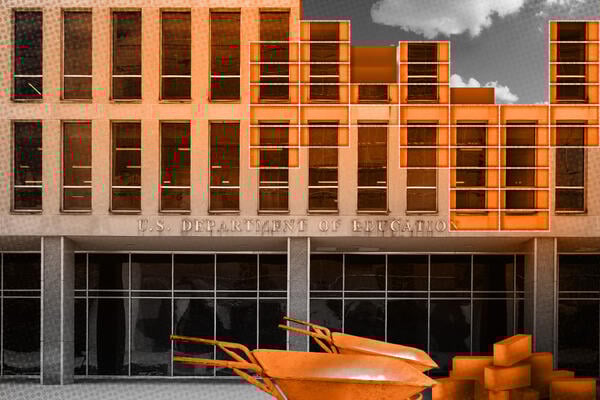
    The Supreme Court gave Education Secretary Linda McMahon the go-ahead Monday to proceed in firing half the department’s staff and transferring certain responsibilities to other agencies.

    The unsigned, one-paragraph order does not explain why a majority of justices decided to overturn a lower court injunction that an appeals court upheld. It did, however, explain that the injunction will remain blocked as lawsuits challenging mass layoffs at the department continue. The high court order represents a major step forward in President Donald Trump’s effort to dismantle the 45-year-old agency.

    “Today, the Supreme Court again confirmed the obvious: the President of the United States, as the head of the Executive Branch, has the ultimate authority to make decisions about staffing levels, administrative organization, and day-to-day operations of federal agencies,” McMahon said in a statement about the decision. The department will now “promote efficiency and accountability and to ensure resources are directed where they matter most—-to students, parents, and teachers.”

    The American Federation of Government Employees, the union representing the department’s staff, said the ruling was “deeply disappointing” and would allow the Trump administration to continue implementing an “anti-democratic” plan that is “misalign[ed] with the Constitution.” Sheria Smith, president of AFGE Local 252, added that just because McMahon can dismantle the department, that doesn’t mean she has to.

    “Let’s be clear,” Smith wrote, “despite this decision, the Department of Education has a choice—a choice to recommit to providing critical services for the American people and reject political agendas. The agency doesn’t have to move forward with this callous act of eliminating services and terminating dedicated workers.”

    The original ruling from a Maryland district judge required McMahon to reinstate more than 2,000 employees who were laid off in March. (As of July 8, 527 of those employees had already found other jobs.)

    Higher education policy advocates and laid-off staffers warned that the department was already struggling to keep up with the overload of civil rights complaints and financial aid applications. With half the workforce, they said, fulfilling those statutory duties would be nearly impossible.

    In addition to the layoffs, the lower court order prevented McMahon from carrying out Trump’s executive order to close the department to the “maximum extent appropriate and permitted by law.” Department officials later revealed in court filings that the order blocked a plan to send funding for career and technical education programs to the Department of Labor.

    The departments reached an agreement in May regarding the CTE programs, but neither said anything about it publicly. CTE advocates worry that putting Labor in charge of about $2.7 billion in grants could sow confusion and diminish the quality of these secondary and postsecondary career-prep programs. Others see the shift as the beginning of the end of the Education Department. Democrats in Congress have objected to the plan, which can now move forward.

    After news of the Supreme Court order dropped Monday, education policy experts sounded the alarm and took issue with the lack of explanation.

    “The president can’t close down ED by fiat but Congress and SCOTUS sure can facilitate it,” Dominique Baker, an associate professor of education and public policy at the University of Delaware, wrote on BlueSky.

    Daniel Collier, an assistant professor of higher education at the University of Memphis, also chimed in, asking, “Am I in the minority by believing that all SCOTUS rulings should have a well detailed and written rationale attached and there should be no exceptions?”

    The Supreme Court’s order included a scathing 18-page dissent from Justice Sonia Sotomayor. Justices Ketanji Brown Jackson and Elena Kagan joined in full. Sotomayor noted that the department plays “a vital role” in the nation’s education system by “safeguarding equal access” and allocating billions of dollars in federal funding. Knowing this, she added, “only Congress has the power to abolish the department.”

    “When the executive publicly announces its intent to break the law, and then executes on that promise, it is the judiciary’s duty to check that lawlessness, not expedite it,” Sotomayor wrote. “Two lower courts rose to the occasion, preliminarily enjoining the mass firings while the litigation remains ongoing. Rather than maintain the status quo, however, this court now intervenes, lifting the injunction and permitting the government to proceed with dismantling the department. That decision is indefensible.”

    Others, however, said the Supreme Court made the right call.

    “There is nothing unconstitutional about the executive branch trying to execute the law with fewer people, which is what the Trump administration is doing,” said Neal McCluskey, director of the Center for Educational Freedom at the Cato Institute, a libertarian think tank, who also contributed an opinion piece to Inside Higher Ed today. If the Trump administration wanted to eliminate the Department of Education unilaterally, he said, “It would have fired everyone. Not only did it not do that, but members of the administration have stated that it is ultimately Congress that must eliminate the department.”

    Source link

  • Trump Education Department Delays Return of Laid-Off Workers Over Logistics – The 74

    Trump Education Department Delays Return of Laid-Off Workers Over Logistics – The 74


    Get stories like this delivered straight to your inbox. Sign up for The 74 Newsletter
    Parking permits. Desk space. Access cards.

    Ordered to bring back roughly 1,300 laid-off workers, the U.S. Department of Education instead has spent weeks ostensibly working on the logistics. Meanwhile, the Trump administration wants the U.S. Supreme Court to decide they don’t have to restore those jobs after all.

    The legal argument over the job status of Education Department workers is testing the extent to which President Donald Trump and Education Secretary Linda McMahon can reshape the federal bureaucracy without congressional approval.

    The employees, meanwhile, remain in limbo, getting paid for jobs they aren’t allowed to perform.

    An analysis done by the union representing Education Department employees estimates the government is spending about $7 million a month for workers not to work. That figure does not include supervisors who are not part of the American Federation of Government Employee Local 252.

    “It is terribly inefficient,” said Brittany Coleman, chief steward for AFGE Local 252 and an attorney in the Office for Civil Rights. “The American people are not getting what they need because we can’t do our jobs.”

    McMahon announced the layoffs in March, a week after she was confirmed by the Senate, and described them as a first step toward dismantling the Education Department. A few days later, Trump signed an executive order directing McMahon to do everything in her legal authority to shut down the department.

    The Somerville and Easthampton school districts in Massachusetts, along with the American Federation of Teachers, other education groups, and 21 Democratic attorneys general sued McMahon over the cuts. They argued the layoffs were so extensive that the Education Department would not be able to perform its duties under the law.

    The layoffs hit the Office for Civil Rights, Federal Student Aid, and the Institute of Education Sciences particularly hard. These agencies are responsible for federally mandated work within the Education Department. By law, only Congress can get rid of the Education Department.

    U.S. District Court Judge Myong Joun agreed, issuing a sweeping preliminary injunction in May that ordered the Education Department to bring laid off employees back to work and blocked any further effort to dismantle or substantively restructure the department.

    The Trump administration sought a stay of that order, and the case is on the emergency docket of the Supreme Court, where a decision could come any day.

    In the administration’s request to the Supreme Court, Solicitor General John Sauer argued that the harms the various plaintiffs had described were largely hypothetical, that they had not shown the department wasn’t fulfilling its duties, and that they didn’t have standing to sue because layoffs primarily affect department employees, not states, school districts, and education organizations.

    Sauer further argued that the injunction violates the separation of powers, putting the judicial branch in charge of employment decisions that are the purview of the executive branch.

    “The injunction rests on the untenable assumption that every terminated employee is necessary to perform the Department of Education’s statutory functions,” Sauer wrote in a court filing. “That injunction effectively appoints the district court to a Cabinet role and bars the Executive Branch from terminating anyone.”

    The Supreme Court, with a conservative 6-3 majority, has been friendlier to the administration’s arguments than lower court judges. Already the court has allowed cuts to teacher training grants to go through while a lawsuit works its way through the courts. And it has halted the reinstatement of fired probationary workers.

    The Education Department did not immediately respond to a request for comment.

    Last week, Joun issued a separate order telling the Education Department that it must reinstate employees in the Office for Civil Rights. The Victims Rights Law Center and other groups had described thousands of cases left in limbo, with children suffering severe bullying or unable to safely return to school.

    Meanwhile, the Education Department continues to file weekly updates with Joun about the complexities of reinstating the laid-off employees. In these court filings, Chief of Staff Rachel Oglesby said an “ad hoc committee of senior leadership” is meeting weekly to figure out where employees might park and where they should report to work.

    Since the layoffs, the department has closed regional offices, consolidated offices in three Washington, D.C. buildings into one, reduced its contracts for parking space, and discontinued an interoffice shuttle.

    In the most recent filing, Oglesby said the department is working on a “reintegration plan.”

    Coleman said she finds these updates “laughable.”

    “If you are really willing to do what the court is telling you to do, then your working group would have figured out a way to get us our laptops,” she said.

    This story was originally published by Chalkbeat. Chalkbeat is a nonprofit news site covering educational change in public schools. Sign up for their newsletters at ckbe.at/newsletters.


    Get stories like these delivered straight to your inbox. Sign up for The 74 Newsletter
    Source link

  • Trump administration appeals pause on Education Department cuts to SCOTUS

    Trump administration appeals pause on Education Department cuts to SCOTUS

    This audio is auto-generated. Please let us know if you have feedback.

    UPDATE: June 6, 2025: The U.S. Department of Justice asked the U.S. Supreme Court on Friday for an immediate pause on a court order that the U.S. Department of Education reinstate nearly 1,400 employees fired during a mass workforce reduction in March. The Justice Department’s appeal calls the lower court’s order an “unlawful remedy” and says the injunction “causes irreparable harm to the Executive Branch.”

    Dive Brief:

    • A federal appeals court on Wednesday rejected the Trump administration’s motion for a stay in a lawsuit challenging the dismantling of the U.S. Department of Education, effectively halting — at least temporarily — efforts to reduce the agency’s workforce and transfer some education responsibilities to other federal departments.
    • The administration had argued it could still carry out the statutory requirements of the Education Department, even with a workforce cut in half. But the 1st U.S. Circuit Court of Appeals disagreed, saying it saw “no basis” that a lower court erred in concluding that task seemed “impossible.”
    • The ruling was the latest in a series of legal developments concerning Trump administration reforms at the Education Department. Trump, U.S. Education Secretary Linda McMahon and many Republican lawmakers are attempting to eliminate what they say is federal overreach and inefficiencies in education.


    Dive Insight:

    The lawsuit at the center of the ruling was filed in March by 20 Democratic-leaning states and the District of Columbia. They sued the Education Department, Trump and McMahon two days after the agency announced mass workforce reductions. That challenge was combined with a similar lawsuit from public school districts in Massachusetts and education labor unions. 

    A federal district judge last month issued a preliminary injunction halting the workforce reductions temporarily. That ruling also prohibited the Education Department from transferring management of the federal student loans portfolio and special education management and oversight to other federal agencies. 

    In Wednesday’s decision denying a motion for a stay, the three-judge panel said the Education Department has not shown “that the public’s interest lies in permitting a major federal department to be unlawfully disabled from performing its statutorily assigned functions.” 

    The Trump administration also argued that it is being forced to return staff whose services are no longer needed. The 1st Circuit, however, said its reading of the preliminary injunction shows no specific number or deadline for returning employees who were part of the reduction in force.

    “We do not see how complying with those aspects of the injunction imposes a burden on the government, no less one that is ‘extraordinary,’” the court said.

    Source link

  • Oklahoma religious charter remains blocked in SCOTUS split

    Oklahoma religious charter remains blocked in SCOTUS split

    This audio is auto-generated. Please let us know if you have feedback.

    The nation’s first religious public charter school will not be able to open its doors in Oklahoma after a 4-4 split in the U.S. Supreme Court on Thursday morning upheld the state supreme court’s ruling that blocked the school.

    The high court did not issue written opinions in the case.

    In its June 2024 ruling in St. Isidore of Seville Catholic Virtual School v. Drummond, a six-justice majority of the Oklahoma Supreme Court sided with state Attorney General Genter Drummond, writing that the virtual public charter school’s creation would violate the Oklahoma Constitution and the First Amendment’s Establishment Clause. St. Isidore was originally scheduled to open for the 2024-25 school year.

    Enforcing the St. Isidore Contract would create a slippery slope and what the framers’ warned against — the destruction of Oklahomans’ freedom to practice religion without fear of governmental intervention,” the Oklahoma court’s majority wrote in the decision.

    If the U.S. Supreme Court had ruled in favor of St. Isidore, the high-profile religious liberty case could have opened the door for a wave of other publicly funded religious schools. The split decision, however, leaves no national precedent on the question of whether religious schools can participate in public charter school programs without violating the First Amendment’s Establishment Clause.

    Justice Amy Coney Barrett recused herself from the case.

    St. Isidore is “disappointed” that the decision to block the school’s opening was upheld “without explanation” from the U.S. Supreme Court, said Archbishop of Oklahoma City Rev. Paul Coakley and Bishop of Tulsa Rev. David Konderla, in a joint statement Thursday.

    Given this latest ruling, Coakley and Konderla said they are exploring alternative options to offer a virtual Catholic education “to all persons” in Oklahoma and remain committed to parental choice in education.

    The Oklahoma Statewide Charter School Board, which initially approved St. Isidore’s contract in October 2023, will respect the Supreme Court’s authority following its split decision to uphold the Oklahoma Supreme Court’s ruling, said the board’s Executive Director Rebecca Wilkinson, in a Thursday statement.

    “The split decision of the court affirms this was indeed a complicated matter with a wide spectrum of views on the appropriate relationship between education, public funding, and religious institutions in our state and country,” Wilkinson said. “The Statewide Charter School Board remains committed to upholding our constitutional responsibilities and the highest standards of transparency and excellence. We will move forward in that vein, ensuring our policies and practices reflect both the rule of law and commitment to all students.”

    Drummond said in a Thursday statement that the Supreme Court’s decision is a “resounding victory for religious liberty and for the foundational principles that have guided our nation since its founding.”

    “I have always maintained that we must faithfully uphold the Constitution, even when it requires us to make difficult decisions,” Drummond said. “I will continue upholding the law, protecting our Christian values, and defending religious liberty — regardless of how difficult the battle may be.”

    Oklahoma Superintendent of Public Instruction Ryan Walters spoke out against the Supreme Court’s move, adding in a Thursday statement that he will always oppose “religious discrimination” and that all children in Oklahoma should be free to choose the best school to attend, whether that’s “religious or otherwise.”

    “Allowing the exclusion of religious schools from our charter school program in the name of 19th century religious bigotry is wrong,” Walters said in the statement sent by First Liberty Institute, a nonprofit law firm focused on First Amendment cases on religion.

    Still, it seems likely the issues involving the First Amendment’s religious clauses will eventually return to the U.S. Supreme Court, “perhaps in a case better suited for resolution,” said Thomas Jipping, a senior legal fellow in the Edwin Meese III Center for Legal and Judicial Studies at The Heritage Foundation, a national conservative think tank.

    While it may not be the last time the Supreme Court takes on a case over religious charter schools, “today’s outcome offers clarity for families and educators,” said Starlee Coleman, president and CEO of the National Alliance for Public Charter Schools, in a statement.

    About 8.1% of all public schools are charters. These schools serve 3.7 million enrolled students, of whom two-thirds are from low-income, Black or Latino communities, according to NAPCS.

    Source link