Tag: season

  • WEEKEND READING: Money’s Too Tight (to Mention) – Universities and students are on a knife edge as the party conference season and the new academic year kick off in earnest, by Nick Hillman (HEPI Director)

    WEEKEND READING: Money’s Too Tight (to Mention) – Universities and students are on a knife edge as the party conference season and the new academic year kick off in earnest, by Nick Hillman (HEPI Director)

    • As policymakers look ahead to the bigger party conferences and students and staff ready themselves for the new academic year*, HEPI Director Nick Hillman takes a look ahead. [* Except in Scotland, where it has already begun.]
    • Information on HEPI’s own party conference events is available here.

    Money’s Too Tight (to Mention)

    When the Coalition Government for which I worked tripled tuition fees for undergraduate study to £9,000 back in 2012, it was a big and unpopular change. But it represented a real increase in support for higher education that led to real increases in the quality of the student experience, with improvements to staffing, facilities and student support services.

    Because the fee rise shifted costs from taxpayers to graduates via progressive student loans, it enabled another fundamental change: the removal of student number caps in England. No longer would universities be forced to turn away ambitious applicants that they wanted to recruit. It was the final realisation of the principle that underlined the Robbins report of 1963: ‘courses of higher education should be available for all those who are qualified by ability and attainment to pursue them and who wish to do so.’ A higher proportion of students enrolled on their first-choice place. (It never ceases to amaze me how many people wish to return to a world in which your children and mine have unwarranted obstacles reimposed between them and attaining the degree they want.)

    But back in 2012, no one in their wildest dreams thought the new fee level would be frozen for most of the next decade and more. After all, the fee rise was implemented using the Higher Education Act (2004), which had enabled Tony Blair to introduce the current model of tuition fees, and the Blair / Brown Governments to raise fees each year without any fuss.

    Yet the political ructions caused by introducing £9,000 fees in 2012 made policymakers timid. Towards the end of the Conservatives’ time in office, Ministers bizarrely sought to make a virtue of their pusillanimity. Even as inflation was biting, the Minister for Higher Education (Rob Halfon) said raising fees was ‘not going to happen, not in a million years’.

    The result has been a crisis in funding for higher education institutions that has changed their priorities. Top-end universities have looked to increase their income via more and higher (uncapped) fees from international students – hardly surprising, when an international student taking a three-year degree is worth £69,000 a year more than a home student! They have also sought to tempt UK students away from slightly less prestigious institutions.

    Meanwhile, newer universities have been even more entrepreneurial. Limited in their ability to recruit lots of international students, they have instead shifted towards franchising, whereby other organisations pay them for the privilege of teaching their degrees.

    Universities in the middle have had a particularly tough time. Most notably, many universities originally founded in the expansionary post-Robbins environment are struggling today. (It has been suggested that the tie-up between Kent and Greenwich is partly borne of necessity.) Plus with no fees for home students, Scottish universities have been hurting even more than those elsewhere.

    Even though recruiting more people from overseas and large-scale franchising have helped some institutions to keep the wolf from the door, Ministers have condemned both. The UK Home Office want fewer international students and England’s Department for Education have promised new legislation to tackle the growth in franchising. (Six months ago, Bridget Phillipson wrote in the Sunday Times, ‘I will also bring forward new legislation at the first available opportunity to ensure the Office for Students has tough new powers to intervene quickly and robustly to protect public money’.)

    No British university has ever gone bust but, as financial advisers know, the past can be a sorry guide to the future. When asked, Ministers say they would accept the closure of a university or two. But a university is usually a big local employer, a big supporter of local civic life and a source of local pride – and money. Most have been built up from public funds.

    Closing a university would not just risk local upset. It would reduce confidence, including among those who lend to universities, and could even risk a domino effect, as people lose faith in the system as a whole, thereby putting the reputation of UK education at risk. So there are good reasons why, for example, Dundee University is currently being bailed out, even if it comes with a distinct whiff of moral hazard.

    Bills, Bills, Bills

    Students are hurting just as much as institutions. Contrary to the expectations of years gone by, the proportion of school leavers proceeding to higher education is barely rising. There is likely more than one cause, including negative rhetoric about universities from across the political spectrum and a false sense that degree apprenticeships for school leavers are plentiful.

    Perhaps most significantly, maintenance support for students is nothing like enough. There are three big problems.

    1. The standard maximum maintenance support in England is now worth a little over £10,000, which is just half the amount students need.
    2. Parents are expected to support their student offspring but they are not officially told how much they should contribute.
    3. England’s household income threshold at which state-based maintenance support begins to be reduced has not increased for over 15 years. At £25,000, it is lower than the income of a single-earner household on the minimum wage.

    As a result, according to the HEPI / Advance HE Student Academic Experience Survey, over two-thirds of students now undertake paid employment during term time, often at a number of hours that negatively affects their studies. These students are limited in their ability to take part in extra-curricular activities, for they are time poor as well as strapped for cash.

    An increase in maintenance support is long overdue, just as an increase in tuition fees for home students is long overdue. But we could also perhaps help students help themselves by providing better information in advance about student life. In particular, given the epidemic of loneliness among young people, we should remind them that you are more likely to be lonely if your room is plush but you do not have enough money left over for a social life than if your living arrangements are basic but your social life is lively.

    The Masterplan

    The Government came to office claiming to have a plan for tackling the country’s challenges. But more than a year on, the fog has not cleared on their plans for higher education. Patience is now wearing gossamer thin. As Chris Parr of Research Professional put it on Friday, ‘Still we wait.’ As far as we can discern from what we know, it seems universities will be expected to do more for less – on civic engagement, access and economic growth.

    Higher education institutions have made it clear, including through Universities UK’s Blueprint, that they are keen to play their part in national renewal. But it is not only the financial squeeze that limits their room for manoeuvre. Political chaos as well as the geography of Whitehall threaten the institutional autonomy that has been the key ingredient of UK universities’ success.

    Unlike in the past, there are different regulators, Ministers and Departments for the teaching and learning functions of universities on the one hand and their research functions on the other, meaning coordinated oversight is missing. The latest machinery of government changes risk another dog’s dinner, as ‘skills’ continue to bounce around Whitehall, newly residing for now (but who knows for how long) in the Department for Work and Pensions. Meanwhile, the Department for Science, Innovation and Technology is thought to have less regard for university-based research than for research conducted elsewhere, at least in contrast to the past.

    Moreover, each of the two Ministers with oversight of higher education institutions (Baroness Smith and Lord Vallance) are newly split across two Whitehall departments, with one foot in each. This sort of approach tends to be a recipe for chaos. (As I saw close up during my own time in Whitehall, split Ministers usually reside primarily in just one of their two departments, the one where their main Private Office is situated.) 

    The choice now is clear. If Ministers want to direct universities more than their predecessors, then they need to fund them accordingly. But if Ministers want universities to play to their own self-defined strategies in these fast-changing times, then they should reduce the barriers limiting their capacity to behave more entrepreneurially.

    Source link

  • 25 insights about what back-to-school season has in store

    25 insights about what back-to-school season has in store

    As the back-to-school season begins, educators and students alike are stepping into classrooms that look and feel increasingly different from just a few years ago. Technology is no longer just a supporting tool–it is a central part of how learning is delivered, personalized, and measured. From AI that helps teachers design lessons and personalize learning, to adaptive learning platforms that meet students where they are, education technology continues to evolve at a rapid pace.

    Innovation is at the forefront this year, with districts embracing tools that support academic growth, streamline workflows, and foster deeper engagement. AI-powered tutoring, immersive experiences, and tools that enhance collaboration are just a few of the technologies entering classrooms and lecture halls. These resources are not only helping educators save time but also are equipping students with critical thinking, problem-solving, and digital skills they will need for future careers.

    As schools balance new opportunities with challenges around implementation, equity, and data privacy, industry leaders and educators are offering valuable insights into what’s next. Teachers are sharing how these tools reshape day-to-day instruction, while technology providers are highlighting trends that will shape the coming year. Together, these perspectives paint a picture of a learning landscape that is both dynamic and adaptable, where innovation is guided by the shared goal of supporting student success.

    This back-to-school season, the conversation is not just about new devices or apps, but about how technology and thoughtful innovation can transform education for all learners–making 2025 a year of possibilities, progress, and promise.

    This school year, career and technical education (CTE) won’t just be an elective, but will be a priority. As more districts recognize the powerful outcomes tied to CTE, we’ll see a shift in graduation requirements to reflect what students actually need for their futures. That might mean rethinking four years of traditional math in favor of math courses that are career-aligned to specific career pathways. Administrators and superintendents are paying attention and for good reason. The data shows CTE not only boosts student outcomes, but also brings relevance back to learning.
    Edson Barton, CEO, YouScience

    Throughout my administrative experience, it has become increasingly evident that many educational preparation programs fall short in emphasizing the importance of fostering connection and relevance in learning from the student’s perspective. Too often, the pedagogical approach positions educators as drivers of a rigid, outdated instructional model, centered on the teacher in a highly directive role, rather than as reflective facilitators willing to ride alongside students on a learning journey. To shift this reality, I take every opportunity to embrace and share the practices promoted by PBLWorks, which offer a framework where students not only learn content and skills but do so in ways that are connected to their own interests and community. Through the Project Based Learning (PBL) methodology, learning becomes more personal, meaningful, and accountable, with expected learning products that showcase depth in student understanding and growth.  Every school-age child has personal experiences from which to make connections, and with PBL, we are better equipped to serve all children effectively. While traditional testing data has its own importance in driving strategic moves, the outcomes derived from the application of learning are immeasurable in their long-term impact on career readiness. In our MSAP Norwalk implementation, shifting the approach requires more than updating curriculum units, it also demands a redefinition of the educator’s role as a collaborative team member in the classroom. Educators must evolve into co-learners and creative engineers of dynamic, student-centered learning environments. They must become comfortable with uncertainty and confident in guiding student discovery. Such a workshop-like classroom environment is essential for authentic PBL, which demands both deep preparation and flexible facilitation. Here, success is defined not only by content mastery but also by the authentic application of knowledge and skills. Importantly to note, the teacher is also a learner in this dynamic process. Ultimately, quality teaching and learning is measured not by the delivery of instruction but by the evidence of student learning. As I have grown in my leadership and implementation of the PBL framework, the phrase “I taught it, but they didn’t get it” is beyond obsolete, replaced by a continuous cycle of reflection, refinement, and real-world, relevant outcomes. Learning is represented dually in personalized student exemplars and in improved results on high-stakes assessments.
    –Victor Black Ed.D., Magnet School Assistance Program (MSAP) Norwalk Project Director, Norwalk Public Schools, Connecticut

    Learning is fundamentally about meaning-making. It’s a dynamic human process that involves our whole selves. It involves the brain as well as emotions, attitudes and beliefs, relationships, environments, and contexts. AI can’t make meaning for you. If the AI makes the meaning for you, you haven’t learned anything–that is the core of distinguishing between what is useful AI that is going to advance learning, and what is hype that could actually be counterproductive and destructive to learning.
    – Auditi Chakravarty, CEO, AERDF

    Welcome to your teaching journey. As we begin the 2025-26 school year, I want to extend my heartfelt welcome to our new educators. Your passion and fresh perspectives are invaluable assets to our learning community. I encourage you to remember that teaching is about building relationships. Get to know each student, learn their interests, challenges and dreams. Strong connections create the trust necessary for meaningful learning. Don’t hesitate to lean on your colleagues and mentors. Teaching can feel overwhelming, but you’re never alone. Seek guidance, share resources and collaborate whenever possible. Be patient with yourself as you find your rhythm. Focus on progress, not perfection, and celebrate small victories along the way. Most importantly, never lose sight of why you chose this profession. You have the power to change lives, one student at a time.
    –Dr. Debra Duardo, Superintendent of Schools, Los Angeles County & Board Member, Association of Latino Administrators and Superintendents (ALAS)

    Hello, new teachers!  As a 32-year veteran of teaching, I vaguely remember those first few days and weeks, but I do remember being thoroughly overwhelmed. So, my first piece of advice is to find yourself a mentor who can help you navigate the waters. Second, think outside the box. Educational technology has exploded in the last few years and us old people can’t keep up. Find something that works and immerse yourself in it. May I make a suggestion? Creation over consumption. Let’s give an example. VR is amazing. You and your students can “visit” places that you would never be able to take them on a field trip. Awesome! Do it! But I have found that creating our own VR experiences by integrating ClassVR with tools like ThingLink or DelightEx brings a whole new level of engagement and understanding. My last piece of advice? Love it! Love those kids. They need you. Bond with your colleagues. You need each other.  You got this. I’m happy you’re part of the team.
    –Craig Dunlap, Blended Learning Teacher, Yealey Elementary School, Kentucky

    I began teaching 25 years ago, and thirteen years ago I was introduced to Project-Based Learning (PBL). From that moment, I “enrolled.” PBL is not just a strategy, it’s a mindset. It transformed not only my students, but also me as an educator. Through engaging in and witnessing PBL, I have learned that it changes the way students view their education and their place in school. They no longer see themselves as passive recipients of information, but as active learners with a voice, a purpose, and a sense of belonging. PBL builds their self-efficacy, ignites their curiosity, and turns learning into a lifelong journey. Because learning in PBL is authentic, engaging, and connected to real life, every student can access it, every student feels valued, and every student has the chance to succeed. Most importantly, every student has the opportunity to be seen and to see themselves reflected in their education, their classrooms, and their school community. And while my primary goal as an educator has always been my students, I must say that PBL also transforms teachers in deeply positive ways. Unlike a scripted, one-size-fits-all curriculum, PBL gives teachers full autonomy to design, to create, and to make learning relevant. It allows us to become problem-solvers, innovators, and true professionals. As PBL teachers, we model exactly what we want from our students. PBL isn’t about checking boxes; it’s about unleashing your craft as an educator and showing your students what authentic, meaningful work looks like. What I have come to believe, after years of teaching and leading, is that PBL is not just a method of instruction, it’s a way of seeing students, teachers, and learning itself. It is the path that allows students to fall in love with learning, and teachers to love their craft. And once you experience it, it’s hard to ever imagine teaching any other way.
    –Beth Furnari, Principal, P-TECH Norwalk in Norwalk Public Schools, Connecticut

    For new district administrators, don’t chase every shiny object. Education is full of vendors promising silver bullets. Anchor your decisions in what solves your district’s problems, not in what looks flashy. Additionally, remember to prioritize relationships over initiatives. People will follow your lead if they believe you value them, not just their output. When you prioritize relationships, oftentimes the initiatives naturally follow. For example, our district’s performing arts manager came to me with the idea of virtual set design knowing I’d be open to his ideas and willing to try something new.
    –Tim Klan, Administrator of Information and Instructional Technology, Livonia Public Schools, Michigan

    In today’s educational landscape, our instructional strategies must evolve to meet the needs of digital-native learners. While traditional resources have their place, we recognize that deep engagement often requires more immersive and interactive experiences. To bridge this gap, our school district has strategically implemented virtual reality (VR). For the past five years, our schools have been utilizing the ClassVR platform by Avantis. This technology has proven to be a powerful tool for transcending the physical limitations of the classroom. The moment students see the VR kits arrive, a visible excitement builds for the learning ahead. These curated experiences are not simply virtual field trips; they are pedagogical springboards that empower students to explore historical eras, global locations, and complex scientific concepts. Most importantly, VR provides a unique medium for fostering essential skills in observation, critical analysis, and content creation.
    –Kyle Kline, Director of Digital Learning, Twin Lakes School Corporation, Indiana

    In the 2025 to 2026 school year, we will see a greater push for ongoing, explicit instruction in foundational literacy skills for older students. Most students need ongoing, developmentally appropriate, explicit literacy instruction in upper elementary and middle school, but very few of them receive it. Most students in grades 4-8 do not receive explicit instruction for crucial foundational skills that older students need to develop, like decoding multisyllabic words. More often than not, teachers in grades 4-8 lack the resources, time, or training to provide explicit instructional support to help their students continue to grow as readers. Giving teachers what they need to support their students will certainly be part of the solution, along with more targeted interventions that provide support to students where they need it.
    – Rebecca Kockler, Executive Director, AERDF’s Reading Reimagined Program

    After decades of progress narrowing gender gaps in STEM, the pandemic may have set girls back significantly–and the gap is likely to grow wider unless schools and policymakers act quickly. New NWEA research reveals that pandemic-era setbacks hit middle school girls hardest in math and science, erasing decades of progress. With fewer girls now enrolling in 8th-grade Algebra–a key gateway to advanced STEM coursework–there’s a real risk that fewer young women will pursue STEM in high school, college, and careers. To reverse this trend, schools will need to closely monitor gender participation in key STEM milestones, expand access to advanced coursework, provide early interventions and academic supports, and examine classroom practices to ensure girls are being actively engaged and encouraged in math and science. Without these steps, the future STEM talent pipeline will be less diverse and less equitable.
    – Dr. Megan Kuhfeld, Director of Growth Modeling and Analytics, NWEA

    Reliable, longitudinal student data is critical to drive strategic action. As federal support for education research is scaled back and key data collection efforts remain uncertain, districts and states may find themselves without trusted information to guide decisions. In the absence of these investments, schools will need to rely more heavily on research organizations and data partners that can offer the longitudinal insight and analytical capacity schools need to understand where students are, where they’re headed, and how to support them. With academic recovery proving slower and more uneven than expected, schools need evidence-based insights to navigate this complex landscape. Expect a growing shift toward research-backed, nonpartisan data sources to fill the vacuum and support smarter, more equitable decision-making.
    – Dr. Karyn Lewis, Vice President of Research and Policy Partnerships, NWEA

    As cybersecurity becomes an increasing risk for K-12 districts this year, it’s more critical than ever that IT leaders establish a culture of security at the start of the school year. Schools are continuously working to maintain 1:1 technology without compromising user safety or straining budgets, and asset tracking and inventory management is an integral part of that process. With shrinking IT teams working to track thousands of devices across schools, having a centralized asset management system allows districts to avoid costly surprises and manage devices more efficiently. It helps them to monitor device location and application use, make targeted and data-backed incident response decisions, and identify assets potentially affected by a security breach. It also streamlines the inventory auditing process, which allows school IT teams to track and manage the maintenance and updating needs of deployed devices, both of which function to improve security. Cyberattacks are not only becoming more frequent, but more complex and it’s time for schools to safeguard their technology by investing in smarter, more resilient solutions that protect learning environments and support long-term success.
    Bill Loller, Chief Product Officer, Incident IQ

    As a new principal, your most important work is building relationships. That includes building and strengthening the trust with your staff, as well as your parents and families. Take the time to make those connections, to listen to people and get to know them. In Hawaii, we have a term “ahonui” which means “waiting for the right moment.” As a principal, you need to know when it’s the right time to act and when it’s the right time to listen. As a new leader, it’s natural to have a sense of urgency: You have a long list of things you want to do to help kids be safe and learn, but to do that you first need to honor what has been done so far. By getting to know the people who make up your school community you’ll learn how you can enhance it. To help build my relationship with my teachers, especially the new ones, we have an onboarding day the day before teachers report back. This is my chance to introduce them to some of the things that we have going on and the structures we have in place to support them as they teach. We introduce them to some tech tools that our school has that others don’t, like the AI-powered tutoring app SuperTeacher–but we try not to overload them because we understand that for a new teacher (or even a teacher who’s new to our school) it can be overwhelming if we just upload a lot of initiatives and must-dos and expectations. Instead, we get to know each other, and my vice principal and I share the theme we’ve come up with for each school year. Our theme for this year is “alu i ka hana me ke kuana’ike like,” which means “to join together in the work with a unified mindset.”
    – Derek Minakami, Principal, Kāneʻohe Elementary School, Honolulu, HI

    Through my years of teaching, I have found myself talking less and listening to students more. It’s important to make space for student voices to help create richer discussions and more meaningful learning experiences that connect to their own lives. At the same time, grounding those experiences in strong scientific practices ensures that learning is both engaging and rigorous. As a new school year begins, I encourage every teacher to connect the learning happening in your classroom to potential career paths and help students see the real-world impact of what they’re studying.
    –Mike Montgomery, Natural Resources Teacher, Littleton Public Schools EPIC Campus (recently featured in the “Building High-Impact CTE Centers: Lessons from District Leaders” e-book)

    Everyone is working with fewer resources this school year. As the number of bilingual and multilingual students continues to grow, it will be important for teachers to be creative and resourceful in how they are using those limited resources to support ELL students. For example, they can look outside their school for resources and partnership opportunities with businesses, non-profit associations and higher education institutions. They can also seek out grant funding that is specific for bilingual students. Multilingualism is a superpower, but English language learners face unique barriers that can put them at a disadvantage compared to their native-English-speaking peers. It is critical to continue to advocate for these students and be creative in finding ways to help them grow this superpower. Teachers: you will be key to ensuring shifting policy decisions and uncertain budgets don’t result in our most vulnerable students being left behind.
    –Ulysses Navarrete, Executive Director, Association of Latino Administrators and Superintendents (ALAS)

    As we begin this new academic year, I want to thank you for the incredible work you do each day to inspire and shape the minds of our students. In times when our nation–and especially Los Angeles–faces critical conversations about democracy and social justice, your role is more important than ever. Let us empower our students to think critically, question thoughtfully, and express their voices in meaningful ways–whether through essays, art, letters, or dialogue. Together, we have the opportunity to guide them toward becoming informed, compassionate, and courageous leaders who can influence the future. Your dedication matters, and the impact you make will be felt far beyond the classroom walls.
    –Ruth Perez, Ed.D., Deputy Superintendent, Los Angeles County Office of Education & Board Member, Association of Latino Administrators and Superintendents (ALAS)

    One thing we often hear from school districts is that after they purchase new technology, there is a lag in implementation. To ensure technology products improve teaching and learning in year one, I recommend district IT leaders work with companies that act as true partners with the district, offer built-in professional development, and provide opportunities for schools to learn best practices from each other. To help with adoption, districts can handle implementation in small increments to not overwhelm teachers, enlist classroom innovators who can lead the charge on integrating new technologies, and offer opportunities for teachers to learn from others who are implementing the technology.
    –Gillian Rhodes, Chief Marketing Officer, Avantis Education, creators of ClassVR

    Students learn best when they are engaged. My advice to new teachers is to find new, innovative ways to make learning relevant to real life. This will help students get more out of their lessons and prepare them for the world. Technology is a powerful way to do this. Providing immersive experiences such as through virtual or augmented reality can help teachers connect classroom concepts with real-world experiences. Whether it’s virtually touring ancient ruins, traveling through a blood vessel to learn about the circulatory system, or visiting a job site to learn about that career path–immersive experiences like these can help improve student-engagement and take instruction to the next level.
    –Gillian Rhodes, Chief Marketing Officer, Avantis Education, Creators of ClassVR

    While school safety conversations often focus on rare but severe emergencies, day-to-day medical incidents remain among the most frequent challenges schools face. From asthma attacks and allergic reactions to seizures, many medical emergencies occur away from the nurse’s office or outside traditional classrooms, making rapid response crucial. This school year, we will see the continued prioritization of real-time alert systems that enable immediate action in medical emergencies. Location-aware tools and mapping technology, such as the strategic placement of AEDs, help responders quickly locate life-saving equipment and reach incident scenes without delay. Since teachers and staff are often the first to respond, they need easy and accessible ways to summon help quickly.
    Dr. Roderick Sams, Chief Development Officer, CENTEGIX 

    Reading fluency is a foundational skill for lifelong learning, even more so in an ever-changing, technology-based world. As such, supporting students in developing their reading fluency goes beyond building in time for practice. It is important for new and experienced teachers alike to understand that students need access to high-quality, research-based curriculum; differentiated lessons and small groups; multi-level systems of support; and well-implemented, quality instructional technology. It is also important for teachers to implement a repertoire of strategies and tools to specifically support literacy development. While there is no substitute for a differentiated reading lesson taught using high-quality curriculum by a highly-qualified educator, instructional technology is an excellent resource to further support student learning! When implemented effectively, and paired with teacher-led lessons, instructional technology platforms allow teachers to track student growth in real time, provide differentiated supports that target the needs and goals of individual students, and extend learning beyond teacher-led lessons. In a world of staffing shortages, larger class sizes, and ever-changing demands on educators, instructional technology can be an excellent supplemental support to further student achievement and learning. Building fluent readers sets our students up for success far beyond the classroom, empowering them to continue to challenge themselves and grow into the future with confidence and skills to succeed in a society with careers and livelihoods that will surely look very different from what we now see.
    –Sam Schwartz, Associate Principal, La Causa Charter School, a Fluency Innovator Grant recipient

    As a science teacher, I believe there is no replacement for hands-on learning experiences, so I suggest starting each year with an activity where students make measurements using tools or items around the classroom. This way, once students are given access to data-collection sensors and probeware for scientific investigations throughout the year, they have a better understanding and appreciation for why we use the technology. When it comes to labs and measurements, even for inquiry-based experiments, teachers should always do their own dry run of the data-collection process first. This allows teachers to see any stumbling blocks in the collection process and have a data set to refer to during the class discussion. Also, a class set of data gives students a basis of comparison when they are looking at their own data-collection practices and it allows students who may have been absent or unable to collect data at the time to still engage in the analysis process.
    –Kathleen Shreve, Physics Teacher, Homestead High School, California & Member, Vernier Trendsetters Community

    There’s incredible untapped potential in the wealth of data that schools already collect. Districts are sitting on years of attendance patterns, assignment completion rates, and family engagement metrics–all of which could predict which students need support before they hit crisis mode. With federal benchmarks unreliable and new assessments being expensive, 2025-26 is going to be the year districts finally turn inward to the data they already have. The challenge isn’t collecting more information–it’s making existing data actionable for teachers and families.
    – Dr. Joy Smithson, Data Science Manager, SchoolStatus

    As a new teacher starting the school year, remember that you can’t pour from an empty cup. Take care of yourself first—set clear work hours, protect time for rest, and don’t feel guilty about saying no when needed. Building relationships with colleagues and families is important, but healthy boundaries make those connections stronger and more sustainable. Start small: be approachable, communicate clearly, and show consistency. When you balance self-care with professionalism, you’ll create space to thrive both inside and outside the classroom.
    –Betsy Springer, Instructional Coach, Gull Lake Community Schools & a Teacher Leader Impact Award winner

    High school attendance is in crisis, and it’s about to force the conversation we’ve been avoiding for decades. When nearly 30 percent of high schoolers are chronically absent, we’re seeing clear signals that many students need different pathways to engagement and success. The districts that survive this attendance crisis will be the ones brave enough to completely reimagine what high school looks like, with flexible schedules that let students apprentice during traditional school hours and partnerships with local employers who can show students why their education matters.
    – Dr. Kara Stern, Director of Education, SchoolStatus

    The start of every school year is charged with possibility, with students and educators alike bringing energy, curiosity, and the excitement of new connections. That momentum can be a powerful tool as schools work to strengthen their Project Based Learning (PBL) practices. The insight is simple: PBL succeeds when schools build a culture where questions are encouraged, collaboration is natural, and feedback is welcomed. Without that culture, projects risk becoming just activities or separating into silos. With it, PBL becomes transformative–helping students see themselves as capable learners and community members who are encouraged to ask what’s possible and empowered to act. My advice is to use the energy of the new year to establish that culture early. Invite students and teachers to share their thinking openly, model vulnerability by sharing your own work-in-progress, and normalize feedback as a gift. When we frame PBL not only as project-based learning, but as possibility, belonging, and love, we create the conditions where authentic learning thrives, and we sustain that momentum from the first day of school through the last.
    –Taya Tselolikhina, Director of District and School Leadership, PBLWorks

    Laura Ascione
    Latest posts by Laura Ascione (see all)

    Source link

  • AUCC Partners with Spike Lee for Third Season of Entertainment Industry Fellowship

    AUCC Partners with Spike Lee for Third Season of Entertainment Industry Fellowship

    Spike LeeThe Atlanta University Center Consortium has announced the launch of Season Three of the Spike Fellows at Gersh program, continuing its partnership with Oscar-winning director Spike Lee and The Gersh Agency to create pathways for students from historically Black colleges and universities into entertainment industry careers.

    Three students have been selected for this year’s cohort: Anwar Karim from Morehouse College, Denver Edmonds from Spelman College, and Miya Scaggs from Spelman College. The fellows were chosen based on grade point average, leadership experience, school involvement, creative work, and professional recommendations.

    The eight-week paid fellowship places students in New York or Los Angeles, where they complete rotations across different agency departments while receiving senior-level industry mentoring and participating in curated learning experiences and volunteer service projects.

    “The Spike Fellows Program continues to provide an invaluable experience and mentorship for our students who desire impact in the entertainment industry, both in front and behind the camera,” said Dr. Michael Hodge, Executive Director of the AUCC. “Each year, we see a new set of students immersed in the industry, becoming working professionals and aspiring entertainment leaders.”

    The program has achieved a 100 percent employment rate for participants, with alumni securing positions at major entertainment companies including Gersh, Netflix, Warner Brothers, and Range Media. One former fellow was inspired to pursue graduate studies at the University of Southern California’s film program.

    Beyond professional placement, the program provides comprehensive support for participants. A multi-year partnership with Ralph Lauren furnishes business attire for fellows, while networking opportunities include events like the inaugural Young Black Hollywood Mixer, which earned recognition from Deadline as one of the Best Red Carpet and Party Photos of 2024.

    The initiative targets undergraduate students from Clark Atlanta University, Morehouse College, and Spelman College who demonstrate interest in entertainment industry careers. The program aims to address equity gaps in entertainment by creating direct pathways for talented HBCU students to access industry opportunities.

    The Atlanta University Center Consortium, established in 1929, operates as a 501(c)(3) non-profit representing Clark Atlanta University, Morehouse College, Morehouse School of Medicine, and Spelman College. The organization describes itself as “the world’s oldest and largest association of historically Black colleges and universities.”

    The fellowship represents part of broader industry efforts to increase diversity in entertainment, particularly in behind-the-camera roles where representation has historically lagged. By partnering with established industry figures like Lee and agencies like Gersh, the program provides students with direct access to decision-makers and career-building opportunities typically difficult to access for underrepresented groups.

    Source link

  • Small College America Podcast Returns for a New Season – Edu Alliance Journal

    Small College America Podcast Returns for a New Season – Edu Alliance Journal

    Dean Hoke and Kent Barnds Relaunch Acclaimed Series to Explore the Future of Small Colleges

    Bloomington, Indiana – February 3, 2025 – Small College America, the podcast dedicated to exploring the strengths, challenges, and future of small colleges, is officially relaunching with a new season. The series is co-hosted by Dean Hoke, Managing Partner of Edu Alliance Group and former President/CEO of the American Association of University Administrators, and Kent Barnds, Executive Vice President for Strategy and Innovation at Augustana College in Rock Island, Illinois.

    Both Hoke and Barnds are passionate advocates for small colleges, having graduated from Urbana University (OH) and Gettysburg College (PA), respectively. Their personal experiences and professional expertise have shaped their commitment to highlighting the vital role these institutions play in American higher education.

    “The landscape for small colleges is shifting rapidly, and we believe now is the time to amplify the conversation about their future,” said Kent Barnds. ” Dean and I are both passionate advocates for these institutions because we’ve experienced firsthand the impact of a small college education.”  Dean Hoke stated, “The first season of Small College America confirmed that there is a deep need for dialogue about the opportunities and challenges facing these schools. With this new season, we aim to engage with higher education leaders to explore innovative strategies that will help small colleges not just survive but thrive in an evolving higher education environment.”

    The original four-part series first aired on January 10, 2023, and was hosted by Dean Hoke and Tom Davisson, who now serves as Charter Commissioner for the National Association for Academic Excellence (NAAE). The inaugural season featured insightful conversations with small college presidents, including:

    • Dr. Barry Ryan, Former President of Woodbury University (Burbank, California)
    • Stefanie Niles, President of Cottey College (Nevada, Missouri)
    • Ryan Smith, President of the University of Rio Grande and Rio Grande Community College (Rio Grande, Ohio)
    • Janelle Vanasse, President of Alaska Pacific University (Anchorage, Alaska)

    The new season of Small College America will continue its mission of bringing critical discussions to the forefront by interviewing higher education leaders, policy experts, and innovators. The podcast will delve into the evolving role of small colleges, their economic impact, innovative strategies for sustainability, and how they can continue to provide a highly personalized educational experience.

    Season Two will begin weekly on March 11th at 11AM Eastern. More details, including upcoming, will be announced soon.

    For updates, visit [Podcast Website] or follow Small College America on [Social Media Links].

    About the Hosts

    Kent Barnds is the Executive Vice President for Strategy and Innovation at Augustana College, where he has been a senior administrator since 2005. A recognized thought leader in enrollment management and institutional strategy, Barnds is deeply invested in the success of small colleges and the students they serve.

    Dean Hoke is Managing Partner of Edu Alliance Group, a higher education consultancy, and formerly served as President/CEO of the American Association of University Administrators (AAUA). With decades of experience in higher education leadership, consulting, and institutional strategy, he brings a wealth of knowledge on small colleges’ challenges and opportunities.

    ### END ###

    Source link

  • FIRE kicks off legislative season by opposing speech-restrictive AI bill

    FIRE kicks off legislative season by opposing speech-restrictive AI bill

    The legislative season is in full swing, and FIRE is already tackling a surge of speech-restrictive bills. We started with Washington’s House Bill 1170, which would require AI-generated content to include a disclosure.  

    FIRE Legislative Counsel John Coleman testified in opposition to the bill. In his testimony, John emphasized what FIRE has been saying for years, that the “government can no more compel an artist to disclose whether they created a painting from a human model as opposed to a mannequin than it can compel someone to disclose that they used artificial intelligence tools in creating an expressive work.” 

    Artificial intelligence, like earlier technologies such as the printing press, the camera, and the internet, has the power to revolutionize communication. The First Amendment protects the use of all these mediums for expression and forbids government interference under most circumstances. Importantly, the First Amendment protects not only the right to speak without fear of government retaliation but also the right not to speak. Government-mandated disclosures relating to speech, like those required under HB 1170, infringe on these protections and so are subject to heightened levels of First Amendment scrutiny. 

    FIRE remains committed to defending the free speech rights of all Americans and will continue to advocate against overbroad policies that stifle innovation and expression.

    Of course, as John stated, “Developers and users can choose to disclose their use of AI voluntarily, but government-compelled speech, whether that speech is an opinion or fact or even just metadata . . . undermines everyone’s fundamental autonomy to control their own expression.”

    In fact, the U.S. Court of Appeals for the Ninth Circuit (which includes Washington state) reiterated this fundamental principle just last year in X Corp. v. Bonta when it blocked a California law requiring social media platforms to publish information about their content moderation practices. Judge Milan D. Smith, Jr. acknowledged the government’s stated interest in transparency, but emphasized that “even ‘undeniably admirable goals’ ‘must yield’ when they ‘collide with the . . . Constitution.’”

    This principle is likely to put HB 1170 in significant legal jeopardy.

    FIRE statement on legislative proposals to regulate artificial intelligence

    News

    Existing laws and First Amendment doctrine already address the vast majority of concerns that legislators are seeking to address.


    Read More

    Another major problem with the policy embodied by HB 1170 is that it would apply to all AI-generated media rather than targeting a specific problem, like unlawful deceptive uses of AI, such as defamation. John pointed out to lawmakers that “if the intent of the bill is to root out deceptive uses of AI, this bill would do the opposite” by fostering the false impression that all AI-generated media is deceptive. In reality, AI-generated media — like all media — can be used to share both truth and falsehood. 

    Moreover, people using AI to commit actual fraud will likely find ways to avoid disclosing that AI was used, whether by removing evidence of AI use or using tools from states without disclosure requirements. As a result, this false content will appear more legitimate than it would in a world without the disclosures required by this bill because people will be more likely to believe that content lacking the mandated disclosure was not created with AI.

    Rather than preemptively imposing blanket rules that will stifle free expression, lawmakers should instead assess whether existing legal frameworks sufficiently address the concerns they have with AI. 

    FIRE remains committed to defending the free speech rights of all Americans and will continue to advocate against overbroad policies that stifle innovation and expression.

    Source link

  • Best Highlights of the Season

    Best Highlights of the Season

    Reading Time: 8 minutes

    It’s the most wonderful time of the year! The holiday season represents the perfect time to reflect on all that your school community has accomplished and celebrate it. What better way to reflect on the past year with your staff, students, and families than a highlight video?

    For years now, we’ve been compiling lists of our favorite holiday highlight videos from schools, sharing fun and compelling ideas that you can try to connect with your audience. Keep reading to discover the benefits of creating and distributing a holiday highlight video for your school and get inspiration from our list. Let’s get started! 

    Why Create a Holiday Highlight Video for Your School?

    Creating a holiday highlight video for your school this year can be a fun project but also a strategic way to strengthen your connection with your community, showcase your school’s unique culture, and leave a lasting impression during the festive season. Here’s why it’s worth the effort. 

    1. Build Stronger Community Connections

    A holiday highlight video allows you to bring your entire school community together. You highlight the collective spirit that defines your school by capturing moments from seasonal events, concerts, classroom celebrations, or volunteer initiatives. 

    Sharing these moments with parents, alumni, and local supporters creates a sense of belonging and pride, reinforcing that your school is a vibrant, supportive learning environment for students. 

    2. Showcase Your School’s Values and Culture

    What better way to showcase what makes your school unique than through a professionally crafted holiday highlight reel? A holiday video can encapsulate those values in action whether your school emphasizes creativity, inclusivity, or academic excellence. 

    It’s an opportunity to demonstrate how your students and staff embody the spirit of giving, kindness, and celebration during the holidays, making your school stand out to prospective families and partners.

    3. Engage Your Audience in a Memorable Way

    Videos are one of the most engaging forms of content, especially on social media. A holiday highlight video captures attention far more effectively than static posts or written updates. 

    By combining visuals, music, and heartfelt moments, your video can evoke emotion, spark joy, and encourage viewers to share it with others, amplifying your school’s reach and impact.

    4. Celebrate the Achievements of the Year

    The holiday season is a perfect time to reflect on the milestones your school has reached throughout the year. 

    A holiday highlight video can showcase achievements from sports teams, academic competitions, or memorable events. This celebrates success and motivates students, staff, and families to look forward to the opportunities ahead.

    5. Create a Lasting Keepsake

    A holiday highlight video can become a keepsake that students, parents, and staff can look back on for years. 

    These videos preserve memories of special moments that might otherwise be forgotten, becoming a cherished reminder of the holiday magic your school creates every year.

    6. Boost School Spirit and Morale

    For students and staff, a holiday highlight video can be a source of pride, reinforcing the positive energy and teamwork that make the school a great place to learn and work. It’s a morale booster that helps everyone end the year on a high note.

    Investing in a holiday highlight video this season isn’t just a creative endeavour—it’s a meaningful way to connect, celebrate, and share the heart of your school with your community. Whether you’re looking to attract new families, strengthen existing relationships, or simply spread holiday cheer, a video is the perfect way to make your school’s message resonate this holiday season.

    Wondering how to take your school’s digital marketing strategy to the next level with video content? Reach out to learn about our customized services. 

    How to Create a Holiday Highlight Video

    Now, you might be wondering: how do I create a holiday video? Be sure to check all of these boxes: 

    • Remember to plan ahead 
    • Involve your school community in the process
    • Use high-quality visuals and audio
    • Add a festive, celebratory touch 
    • Edit for quality and interest 
    • Share your school’s holiday video on multiple platforms

    What platforms are best for sharing a holiday video? Or, if we’re thinking of cost efficiency, what is the best app to create holiday videos for free? YouTube and TikTok are favorites among schools looking to use video content to communicate with their existing student body and boost enrollment due to their huge audiences and ease of use. 

    By planning thoughtfully, fostering collaboration, and putting a creative twist on your school’s holiday celebrations, you can create a video that delights your community and leaves a lasting impression. Now, for what you’ve been waiting for. Let’s see what schools all over the world have come up with.

    The University of Louisville – Get the Whole Community Involved 

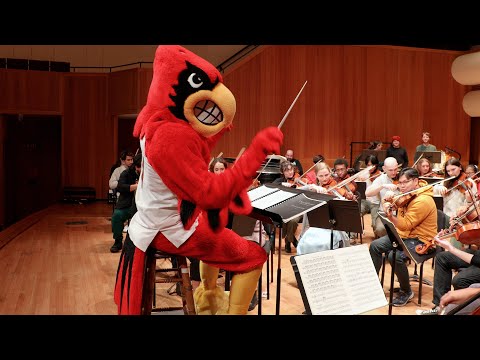
    The University of Louisville created a standout holiday video that resonated with its community. The star of the show? Their mascot Louie the Cardinal handed out Christmas cards to several members of the school community (Get it? Louie… Cardinal? We love a good pun!) The video wrapped up with a heartfelt holiday message from a school administrator, reflecting on the year’s achievements and sharing an inspiring outlook for 2025.

    The key to an impactful school holiday video is involving as many members of your community as possible. Why is that? First of all, the holiday season is all about coming together. Including students, staff, and faculty members is both an excellent way to celebrate and an effective way to showcase your close-knit community to current and prospective students. 

    Remember that a strong school community garners trust and credibility, and encourages online engagement which in turn broadens your reach, humanizes your brand, and instills a sense of pride. 

    YouTube videoYouTube video

    Source: University of Louisville | YouTube

    GSU Arts – Add a Creative Touch With Animation and Editing 

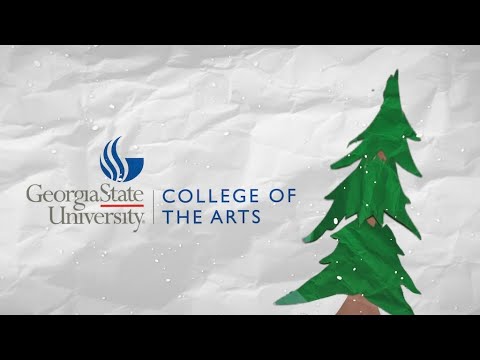
    True to its identity as an art school, Georgia State University College of the Arts has delighted its viewers with a festive animation project created by its own students and alumni.

    Your holiday video highlight does not have to be complicated–just a joy to watch. It’s an excellent idea to leverage the talent within your student body, providing students with the opportunity to add something to their resumes and encouraging them to do their best work. 

    YouTube videoYouTube video

    Source: GSU | YouTube

    University of Vermont – Foster Inspiration, Gratitude, and Excitement for the New Year

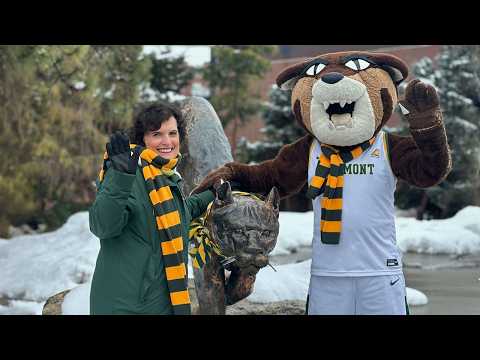
    This year, the University of Vermont went for a reflective, meaningful message, highlighting the positive impact that each department has on the planet. 

    Your school community members like to know that they are a part of something bigger than themselves. Give them a sense of belonging by reminding them of all the amazing things they can accomplish now as your students and in the future as graduates. 

    YouTube videoYouTube video

    Source: University of Vermont | YouTube

    Trent University – Remember to Infuse Some Holiday Magic!

    Trent University’s holiday video is full of holiday magic starring students and faculty members across various departments who open an enchanted book that sparkles brightly, creating a whimsical visual effect. 

    The use of a powerful slogan  – “Bright minds gather at Trent University” fits perfectly with the theme of the simple yet festive subject matter within the video. Remember that a little bit of effective video editing can create a magical holiday feel.

    YouTube videoYouTube video

    Source: Trent University | YouTube

    University of Toronto – Provide Some Needed Support During Exam Season

    Though holiday cheer is in the air, so is the stress of exam season. Here, the University of Toronto acknowledges this stress and provides a solution! This TikTok video features fellow students assembling Exam Ready Kits for stress-free studying.

    A video like this, particularly for post-secondary institutions, showcases a caring, supportive learning environment, which is appealing at any time of the year. Show how you care for the needs of students in your holiday highlight video. 


    @uoftstudentlife We’re stuffing, sorting, and prepping your FREE #ExamReadyUofT study kits to help you de-stress and thrive this exam season! Look out for our pop-up booths across campus starting next week 💙📚☕✏️ uoft.me/examreadyuoft Get ready to tackle your exams with everything you need in hand! [Text Description: Getting for exams? We’ve got you! Assembling your FREE Exam Ready Study Kits. Made with Care. Ready for you! Good luck on your exams!] #ExamReadyKit #uoft #uoftstudentlife #studentlife #universityoftoronto #lifeatuoft #uoftlife #utsg #uoftsg #uoftstgeorge #examseason #studyessentials #examde-stress #university ♬ Happy with ukeleles – Royaltyfreemusicforvideos

    Source: University of Toronto| TikTok

    Glenbard North High School – Share Highlights From Holiday Spirit Week

    Leading up to the holiday break, many schools, particularly K-12, invite staff and students to participate in holiday-themed spirit weeks. 

    Glenbard North made a short, fun TikTok video where students and a staff member introduced the themes of each day: cozy, candy cane coloured, family photo themed, Grinch vs. Whos, and festive. How fun! Try fun short videos like this on TikTok to create excitement. 

    @north.panthers Coming next week! #holidayseason #winterspiritweek #schoolpride #gift #santa ♬ original sound – Glenbard North

    Source: Glenbard North High School | TikTok

    University of Michigan – Highlight Holiday Events for a Good Cause

    The University of Michigan shared heartwarming highlights from their annual tree lighting ceremony. The guests of honour were the C.S. Mott Children’s Hospital’s ‘calendar kids’ who enjoyed special guest appearances from Batman and Captain Marvel. 

    Think about how your school gives back to the community and showcase that to demonstrate your commitment to making a positive impact as an institution. How fitting for the season of giving. 

    YouTube videoYouTube video

    Source: University of Michigan | YouTube

    McTavish High School – Give Students Something to Look Forward To! 

    The holidays are a time for celebration! Many schools host dances and events around this time. Make a fun video providing the details of your upcoming winter celebrations to give students something to look forward to. 

    In their video, McTavish High School provides essential event details in the video content and the description and creates hype around the upcoming dance with a high-energy mini-skit performed by students. 

    @mctavishstudentcouncil Marauders, we are having a Winter Wonderland Dance on December 5th 2024 from 7-9pm at École McTavish! Make sure to register and sign up for your friends from other schools in the learning commons before December 2nd! #studentcouncil #winterwonderland #fyp #trending #winterformal #emhs #schooldance ♬ original sound – McTavish Student Council

    Source: McTavish High School| TikTok 

    University of Bristol – Show off Your Holiday Decorations 

    Just the sight of a well-lit tree can elicit excitement for lovers of the holiday season. Have you been decorating on campus? If so, why not show it off? 

    This simple video by the University of Bristol puts their beautiful tree on display and encourages students to stop and appreciate the beauty of their campus in the winter time. Your holiday highlight video is the perfect opportunity not only to display your decorations but also to show off amenities on campus. Take advantage of this! 

    @uwebristol First snow on campus 🥹 #university #takeabreakfromscrolling #christmas2024 #snowday #campuslife #unicampus ♬ Im In Love Im Obsessed Rihanna x Casa Di Remix – CasaDi

    Source: University of West England Bristol | TikTok 

    University of Essex – Showcase the Diversity Within Your Community

    One of the most beautiful parts of the holiday season is learning about the many traditions kept across the world. 

    Particularly as a diverse school community like the University of Essex, highlighting the diversity of your student body can be a heartwarming and interesting way to celebrate as an institution. Try an authentic interview-style video like this one to learn more about the individuals that make your community special. 

    @uniofessex How are you celebrating Christmas or the New Year? Our students share a snippet of their traditions #UniversityofEssex #StudentLife #Traditions #Celebrate ♬ original sound – University of Essex

    Source: University of Essex | TikTok 

    The holiday season offers schools a unique opportunity to celebrate their community, showcase their values, and engage with their audiences in meaningful ways. Whether through heartfelt messages, creative animations, or exciting event highlights, a holiday video can capture the essence of your school while fostering pride and connection. 

    By drawing inspiration from the examples we went through and tailoring your approach to reflect your school’s spirit, you can create a memorable and impactful holiday highlight video that resonates with your students, staff, and families. Here’s to celebrating our achievements and setting the stage for another bright and inspiring year ahead! 


    Source link