Tag: Secretary

  • Why FIRE is suing Secretary of State Rubio — and what our critics get wrong about noncitizens’ rights

    Why FIRE is suing Secretary of State Rubio — and what our critics get wrong about noncitizens’ rights

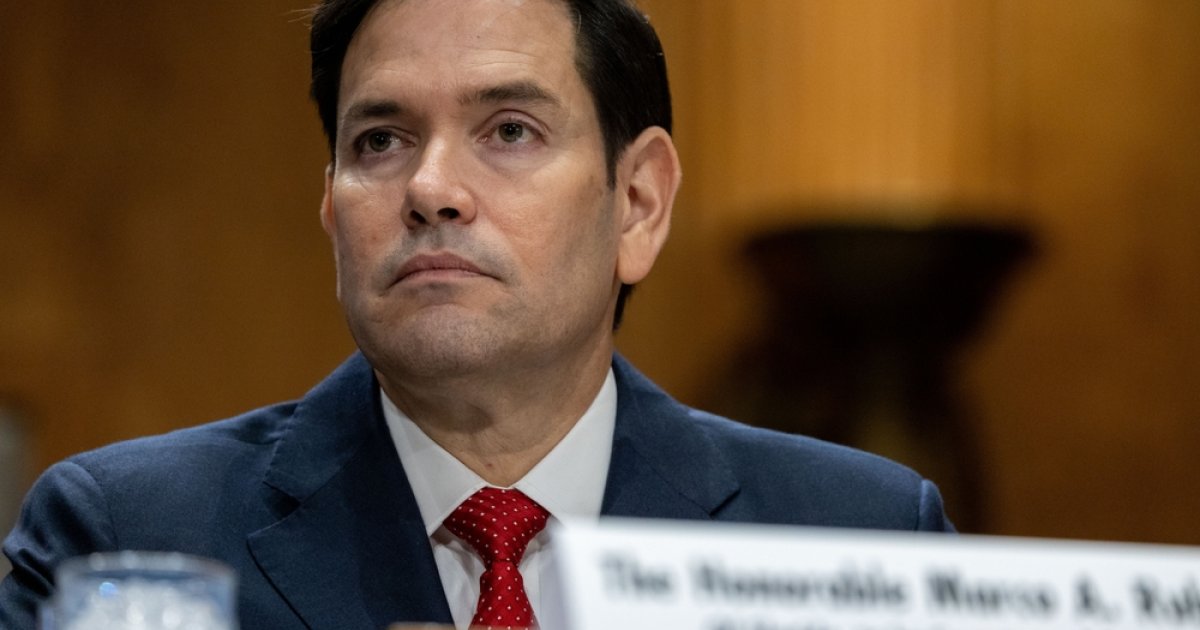
    FIRE is suing Secretary of State Marco Rubio to challenge two federal immigration law provisions that give him unchecked power to revoke legal immigrants’ visas and deport them just for speech protected by the First Amendment.

    And yes, we knew full-well we’d get blowback. You don’t exactly file a First Amendment lawsuit against a cabinet member without knowing it will be unpopular with parts of the American public.

    But for nonpartisan free speech defenders, that comes with the job.

    One of our plaintiffs is the student-run paper The Stanford Daily, where writers on student visas are turning down assignments related to the war in Gaza because they fear reporting on it could endanger their immigration status. We are also representing two legal noncitizens who engaged in pro-Palestinian speech and now fear being deported.

    Some of the questions we’ve received have been quite thoughtful. Others, however, are mistaken on the premises. So let’s clear the air.

    Happy to help, Obsequious Deacon. The First Amendment in the Constitution’s Bill of Rights prohibits the government from “abridging the freedom of speech,” without any distinction between citizens and aliens. If the U.S. government is acting against someone on U.S. soil, the Constitution applies.

    Remember, our liberties don’t spring from the kindness of government, but are inherent to each and every individual. The First Amendment presumes there is free speech, and is simply a restriction against government infringement of it. This recognition is what makes the American experiment exceptional and worth defending.

    This has been firmly established by the Supreme Court in a long line of cases. In Bridges v. Wixon (1945), the Court made clear that under the protection of the First Amendment, “Freedom of speech and of the press is accorded aliens residing in this country.”

    Or take it from Justices Antonin Scalia and Ruth Bader Ginsburg, who famously disagreed on a lot! Here they discuss how even immigrants not here legally (which isn’t the case in this lawsuit, where the plaintiffs are here on visas) enjoy the protection of the First Amendment.

    Additionally, in Yick Wo v. Hopkins (1886), the Court said the Equal Protection Clause of the Fourteenth Amendment applies to “all persons” in the country, not just citizens. In Plyler v. Doe (1982), the Court struck down a Texas law that denied public education to undocumented children, explaining that undocumented immigrants are still “persons” under the Constitution.

    The same goes for due-process protections. In Wong Wing v. United States (1896), the Court ruled that noncitizens accused of crimes are entitled to Fifth and Sixth Amendment protections, including due process and the right to a jury trial. And in Zadvydas v. Davis (2001) and Sessions v. Dimaya (2018), the Court has since affirmed that due process applies to everyone in the United States, including noncitizens.
    E_Strobel X post

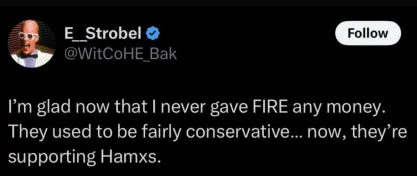
    We’ve never been conservative, liberal, or any other political label. We’re nonpartisan defenders of the First Amendment.

    Before we expanded our mission to defend free speech everywhere, we focused on college campuses where censorship, in recent decades, has overwhelmingly come from the left of the speaker. As a result, we often found ourselves challenging liberal administrators and defending the rights of conservative and moderate studentsprofessors, and speakers. But we don’t care about the viewpoint involved. FIRE’s motto is, “If it’s protected, we’ll defend it.”

    As for the claim that we support Hamas, defending someone’s right to speak is not the same as endorsing what they say. Defending the speech of ideological allies and opponents is the foundation of any principled defense of free expression.
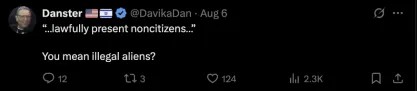
    Danster X post

    No. The terms “lawful” and “illegal” are opposites, of course. The “lawfully present noncitizens” mentioned first are legally allowed to be in the country while the “illegal aliens,” by definition, are not. That said, the First Amendment applies to everyone on U.S. soil. This is America, and you shouldn’t have to prove your citizenship before offering an opinion. 

    Think of it this way, would you be comfortable if a Democratic administration deported Canadian Jordan Peterson for his speech or a European student whose Ph.D. research concentrated on proving the Wuhan lab leak theory of Covid’s origins? We hope not.

    Mark W. Smith/#2A Scholar X post

    The censorship of noncitizens affects Americans, too. If international students and green-card holders have to censor themselves out of fear, we stand to lose many ideas as a result. Should John Oliver have been forced to censor his criticism of the Iraq War on The Daily Show before he became a U.S. citizen? Should British politician Nigel Farage have been prohibited from criticizing Joe Biden during last year’s Republican National Convention? Of course not, and Americans interested in hearing their perspectives would have been all the worse for it. 

    If you’re having a conversation with someone, you deserve to hear their full opinion, not one sanitized to avoid retaliation from government censors. And if the current administration’s actions don’t worry you, just imagine the other side wielding the same power.
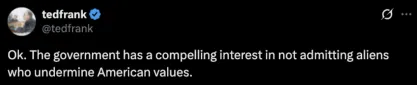
    tedfrank X post

    Bear in mind our lawsuit and this discussion are not about admitting noncitizens, the focus is throwing people who are already here legally out of the country for protected speech. As our preliminary injunction brief explained (check out footnote 7), the law has long distinguished the discretion afforded in determining whom to allow into the country from permissible considerations when attempting to deport someone legally here. Our client The Stanford Daily is suing Rubio because its noncitizen student writers are afraid to practice basic journalism for fear they could be deported. That’s not very American.

    Another problem here is there is not exactly universal agreement on what constitutes “American values.” Quite the contrary, it’s frequently been misused to silence dissent, which is ironic because the most fundamental of American values is to protect dissent in what increasingly seems to be the uniquely American belief that all people should be free to fully speak their minds.

    Source link

  • Nicholas Kent Sworn In as Under Secretary of Education

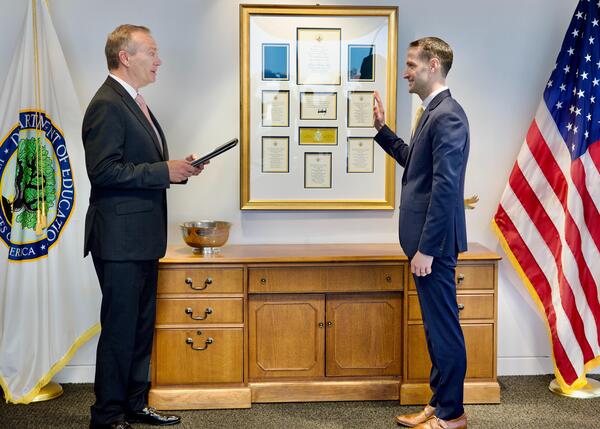
    Nicholas Kent Sworn In as Under Secretary of Education

    Nicholas Kent, a career higher education policy expert and now the Department of Education’s under secretary, has made his priorities for American colleges and universities clear—controlling student debt, building public trust and ensuring students experience a positive return on investment.

    “If colleges and other postsecondary institutions merit taxpayer investment, it is because they equip American citizens with the skills and knowledge needed to thrive in this rapidly-evolving economy,” he said in his first letter to the department’s staff. “The ‘higher education industrial complex’ must be shaken up by competition, accountability, and a future-focused mindset.”

    The letter was Kent’s first statement since being confirmed late Friday and sworn in early Monday morning. It is one of few times he has discussed what he plans to prioritize since President Trump nominated him to be the most senior official focused on postsecondary education in February.

    Over all, Kent’s missive elicited praise and caution from higher education experts.

    Some say his years of experience, combined with his resistance to the status quo, make him a prime appointee. Others worry that despite his promises of accountability and workforce development, he will focus more on the vitality of the market and less on consumer protection. Others still are encouraged simply by the fact that he’s focused on constructive regulation, not culture war–focused litigation.

    “I feel a little bit like a broken record, because I keep coming back to it, but it’s so refreshing to be talking about things like accountability, outcomes, value and career-aligned education pathways, compared to what we have been talking about for the last six months with this administration,” said Jon Fansmith, senior vice president for government relations at the American Council on Education. “Hopefully the confirmation of Nicholas Kent will help reorient the Trump administration toward productive policy outcomes.”

    A first-generation college student and Pell Grant recipient, Kent has spent the entirety of his career in higher education. Most recently, he served as deputy education secretary for Virginia governor Glenn Youngkin. But before that he advocated primarily for private institutions, working with both Career Education Colleges and Universities, which represents some for-profit colleges, and Education Affiliates, a for-profit college company that faced public scrutiny in 2013 after a whistleblower accused the company of fraud.

    Critics say Kent’s ties to for-profit colleges, which they see as predatory, should have disqualified him from the job. But Education Secretary Linda McMahon voiced confidence in him.

    His “technical expertise and vast experience in higher education will serve as an invaluable asset to the Department of Education team,” McMahon said in a statement Monday. “Not only will he work to fulfill President Trump’s vision for accreditation, accountability reforms, and more, but he will also be a great benefit to current and aspiring postsecondary students, faculty, and staff.”

    In his letter to department staff, Kent provided little granular detail, though he’s expected to say more at several upcoming rule-making sessions. He did speak generally on a few topics, like increasing access to alternative postsecondary pathways, protecting campus free speech and helping students feel empowered by their postsecondary options.

    “President Trump has entrusted me with a weighty task: to restore the greatness of American higher education and ensure that our taxpayer-supported colleges, universities, vocational schools, and other postsecondary programs are genuinely helping young Americans,” he wrote. “High school graduates should enter college with a clear direction. The taxpayer money spent on their education should have a direct impact on their ability to contribute to the workforce. [And] the federal government should be less focused on making legacy institutions ‘too big to fail’ and making students skilled enough to succeed.”

    Kent also reiterated a point which Trump and McMahon have been making since the earliest days of the chief’s second term in office: The Department of Education and its Office of Federal Student Aid are failing to properly manage student loans.

    “By no means should this Department administer a $1.7 trillion student loan portfolio—the fifth largest financial servicer in the country—that is 25 percent in default,” he said.

    Unlike McMahon and Trump, however, Kent did not explicitly reference moving loan services to a different agency or department, like the Small Business Administration or Treasury. That said, the tone of his letter made it clear he thinks that the current system must change.

    “Colleges should not be increasing their tuition each year, enabled by generous federal loan subsidies, without having to answer for their students’ outcomes,” Kent wrote.

    Some policy experts like Preston Cooper, a senior fellow at the American Enterprise Institute, a conservative think tank, said they were “thrilled” to see Kent confirmed and characterized his letter as “right on the mark.”

    Others, like Fansmith from ACE, weren’t quite as enthusiastic but still remained hopeful. He noted that while he likely won’t always agree with Kent on how to solve a problem, at least they will start on the same page and agree there is a problem that policy should be used to address.

    “Maybe my expectations are too high,” Fansmith said. But “the letter, in a lot of ways, is a positive sign in terms of what we have repeatedly wanted from this administration—which is engagement and working with the community around matters of policy to reform and improve the higher education system.”

    But Wesley Whistle, a project director for student success and affordability at New America, a left-leaning think tank, called the new under secretary’s view of public doubt in higher ed too narrow, his concerns about free speech unlicensed and his emphasis on accountability just rhetorical.

    “I respect that Mr. Kent brings personal experience as a first-generation Pell recipient. But will that truly guide his approach?” Whistle said. “They’ve gone after Harvard, Columbia and other elite schools and have launched investigations into many public colleges over DEI, but where has their oversight been in terms of protecting students from fraud and poor outcomes?”

    If the Trump administration really cares about improving student outcomes and holding colleges accountable, “they should make sure there is sufficient staff to properly oversee higher education and protect students and taxpayers,” he added. “It’s what students deserve and Americans want.”

    Source link

  • Senate Committee Approves Education Under Secretary Nominee

    Senate Committee Approves Education Under Secretary Nominee

    The U.S. Senate Committee on Health, Education, Labor and Pensions voted to approve Nicholas Kent as under secretary of education, the top job in the country for higher education policy and oversight, by a narrow 12-to-11 vote. The Senate will hold a final confirmation vote at a later date.

    Kent, a former Virginia deputy secretary of education, is a vocal critic of the Biden administration and a former lobbyist for for-profit colleges and trade schools. 

    His nomination earned a mix of support and concern from higher education associations and advocates, some of whom viewed it as a worrying harbinger of the Trump administration’s plans to reduce federal regulation and oversight of for-profit colleges and credential programs.

    Kent was advanced to a full vote with a tranche of six other cabinet nominees. A few organizations, including the American Federation of Teachers and the Institute for College Access and Success, expressed concern that there was no public hearing about Kent’s ties to for-profit institutions. In 2015 Kent’s then-employer, Education Affiliates, a company that operates dozens of for-profit colleges nationwide, settled a False Claims Act case brought by the Department of Justice for $2 million.

    Sen. Bernie Sanders, Independent of Vermont, voted no on Kent’s nomination Thursday morning, saying, “We should not be confirming a former lobbyist who represented for-profit colleges to oversee higher education.”

    Other organizations say Kent could shake up a regulatory framework they believe has stifled innovation. The American Association of Community Colleges wrote a letter supporting Kent, saying it believes he is committed to “ensuring statutory compliance and program integrity while decreasing administrative burdens and supporting innovation.”

    If confirmed, Kent will replace acting under secretary James Bergeron as the No. 2 education policy official in the country. 

    Source link

  • FSA Executive Retires and Acting Under Secretary Takes Over

    FSA Executive Retires and Acting Under Secretary Takes Over

    The responsibilities of acting under secretary James Bergeron doubled as the Department of Education announced Wednesday that he will not only oversee the regulatory duties related to higher ed but manage the entire Office of Federal Student Aid.

    Even in the wake of major layoffs, FSA remains the largest office in the department. It oversees the Free Application for Federal Student Aid, the allocation of Pell Grants and—at least for now—management of the $1.7 trillion student loan portfolio.

    FSA had been led for much of the last year by Denise Carter, who is now retiring after more than 30 years working in the federal government. Carter also served as acting education secretary earlier this year. The department didn’t say in the news release why Carter was retiring now; the agency has offered early retirement offers and buyouts as part of an effort to reduce the workforce.

    Carter said in the release she was grateful for the opportunity to serve her country.

    “As I move on, I hope we as a nation commit to ensuring every student has the support needed to achieve extraordinary educational outcomes,” Carter added. “The economic strength of our nation depends on their success.”

    Source link

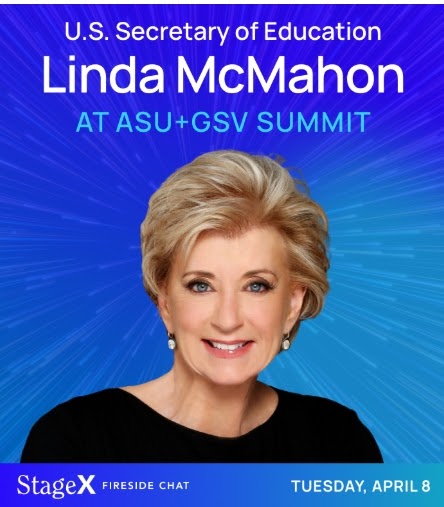
  • Secretary of Education Linda McMahon Scheduled for ASU+GSV Summit, April 8, 2025

    Secretary of Education Linda McMahon Scheduled for ASU+GSV Summit, April 8, 2025

    On April 8, 2025, US Secretary of Education Linda McMahon will give a fireside chat at ASU+GSV, an edtech conference held in San Diego, California.  

    President Trump has tasked McMahon with dismantling the federal agency that oversees federally funded K-12 and higher education programs. In less than two weeks she has done just that.  

    Half of ED’s staff have already been fired or taken a payout, and the $1.7T student loan portfolio is likely to be transferred to the US Treasury. 

    There is no word yet on whether there will be demonstrators at the conference, but we expect some form of vocal nonviolent resistance.  AFT President Randi Weingarten is also scheduled to appear.  

    Source link

  • Senate vote finalizes Linda McMahon as education secretary

    Senate vote finalizes Linda McMahon as education secretary

    Linda McMahon was narrowly confirmed along party lines as President Trump’s secretary of education in a 51-to-45 Senate vote late Monday afternoon and sworn in shortly after at the Department of Education building.

    All eyes are now on the White House as educators, policy experts and advocates anxiously wait to see if Trump will sign a controversial but highly anticipated executive order to abolish the very department McMahon has been confirmed to lead.

    The president and his allies have promoted the idea of dismantling the 45-year-old agency since the early days of his campaign for a second term, saying the department has grown too big and interferes in matters best left to local and state authorities.

    But the idea isn’t entirely new, nor would it be easy to implement. It would require legislative support, as the department’s existence is written into statute. Shuttering it would require a majority vote in both houses of Congress.

    “We can expect there to be a bit of a panic when the order comes out,” Emmanual Guillory, senior director of government relations at the American Council on Education, told Inside Higher Ed.

    It remains unclear to observers what mechanisms the Trump administration would use to close the department, however.

    “This will all depend on what dismantling the department truly means,” Guillory said. “I believe that the executive order would be somewhat broad, like we’ve seen [in the case of the diversity, equity and inclusion orders], and it will give the department the opportunity to refine the details.”

    Still, Trump has continued to promote the concept, and red states across the country have backed it. Chatter about the executive order began circling just days after he took office in January, and the plans were confirmed by multiple news sources in early February, though specifics were still unclear.

    Since the plans were leaked, Trump himself has publicly confirmed his intention to dismantle the department, although he did not disclose specific details on how he would do so.

    Guillory believes that much like when Republicans have tried to get rid of the department in the past, they will lack the congressional votes needed to officially do so. But Trump could keep the skeleton of the department and move its core functions elsewhere, he said.

    “Our thinking, because we’ve seen this before, is that likely a lot of the functionality of the department would get placed at other agencies, but we would be curious as to what functions would be terminated entirely,” he said. “That would cause the most concern for our members … Will those things simply be moved to another agency, or will some of those things not?”

    There are certain functions that are protected by the Higher Education Act of 1965, Guillory said. “The department legally would not necessarily be able to just terminate student aid programs, for example.” But he still worries the transition of oversight from one department to another may not be seamless.

    Shortly before the vote began on Monday, the Senate minority leader, Chuck Schumer of New York, made the Democrats’ stance on McMahon’s nomination clear.

    “Before colleagues vote on Linda McMahon’s nomination for secretary of education, they should remember a vote for Mrs. McMahon is a vote for draconian cuts to education … That’s why I am so proud that every Democrat will vote no,” he said.

    Other democratic lawmakers warned during floor comments on Thursday that McMahon’s confirmation, and the major department-level changes she’s backed, could risk the future of the department.

    Senator Gary Peters of Michigan said the country needs a secretary of education “who values and respects public education.”

    “Instead of working to protect funding,” he said, “she’s blatantly supported efforts to dismantle our education system.”

    For more background on what senators have said about McMahon, check out Inside Higher Ed’s live blog from her confirmation hearing, or read the five key takeaways.

    Senator Alex Padilla of California noted the cuts that have already been made to more than 100 departmental research contracts and countless nonpartisan career staff members.

    “They’re making it clear that this is just the beginning,” he said. “We could talk about Linda McMahon’s qualifications, or frankly lack thereof, but I’m not shocked, because President Trump isn’t looking for someone with the background or commitment to public education in America. He’s looking for someone to destroy it.”

    Although no Republicans commented Thursday, they voted unanimously to confirm McMahon in Monday’s vote (Republican senators Shelley Moore Capito of West Virginia and Cynthia Lummis of Wyoming were not present for the vote. Two Democrats were also absent). The majority leader, Senator John Thune of South Dakota, spoke in support of McMahon before the final confirmation.

    “Mrs. McMahon is an accomplished businesswoman and public servant,” he said. “I’m glad that Mrs. McMahon plans to work in a way that empowers those closest to the student, because they are in the best position to do what’s right for that student … I look forward to working with Mrs. McMahon to limit bureaucracy, empower state governments and let good teachers do what they’re best at.”

    Top Agenda Items

    Guillory expects McMahon to pick up accreditation policies as one of the first issues up for discussion.

    He also is expecting the new secretary to prioritize rethinking and potentially amending the financial value transparency and gainful-employment rule, a policy initiated by the Biden administration to better hold higher ed institutions accountable for students’ outcomes. A lawsuit was filed against the regulation in 2023, but federal judgment has been put on pause to allow the new administration’s Education Department to determine its position on the policy.

    It still remains unclear whether Trump will try to protect the gainful-employment rule or repeal it and drop the case, but Guillory has been encouraged by the line of communication between the department and higher ed leaders on the topic.

    “They’ve been really good about listening to and hearing from our members directly on some of the issues that they’ve experienced while they were reporting [financial transparency data] and they are really trying to get feedback on how can we make this better,” he said.

    Other topics of focus for McMahon will likely include expanded details on Trump’s enforcement of Title IX; his diversity, equity and inclusion orders; and the freeze of applications to income-driven repayment plans for student loans, Guillory said.

    Source link

  • McMahon confirmation as education secretary advances to full Senate

    McMahon confirmation as education secretary advances to full Senate

    This audio is auto-generated. Please let us know if you have feedback.

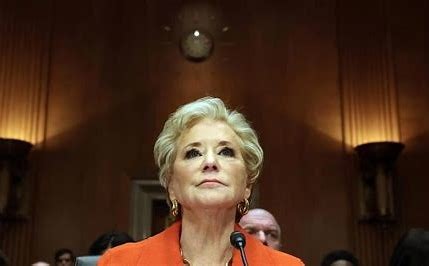
    Linda McMahon’s nomination for U.S. secretary of education advanced Thursday with the approval of the Senate Health, Education, Labor and Pensions Committee, which voted 12-11 along party lines.

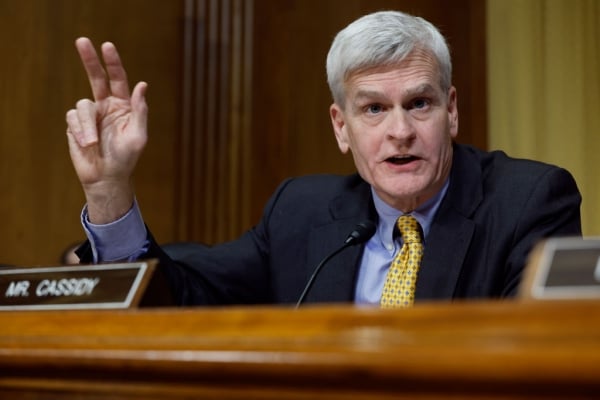
    “We need a strong leader at the department who will get our education system back on track, and Ms. McMahon is the right person for the job,” said HELP Chair Bill Cassidy, R-La., before the vote.

    McMahon appeared before the committee Feb. 13 for a 2 ½ hour confirmation hearing where she spoke of her priorities for expanding school choice and skills-based learning, providing more decision-making power to local schools and parents, and protecting students from discrimination and harassment. 

    She also talked about her openness to making sweeping changes at the U.S. Department of Education, including moving programs like special education oversight and civil rights investigations to other federal agencies.

    We are failing our students, our Department of Education, and what we are doing today is not working, and we need to change it,” McMahon said at the time. McMahon formerly served as administrator of the Small Business Administration for two years in President Donald Trump’s first administration. She was previously president and CEO of World Wrestling Entertainment.

    Trump and the temporary Department of Government Efficiency, or DOGE, have already made major alterations to Education Department activities, including by attempting to freeze funding to states, canceling research contracts, halting diversity, equity and inclusion funds and programming, and calling for the end of “radical indoctrination” in K-12 schools.

    Trump has also said his goal is to close the Education Department — a move that would need congressional approval. 

    At Thursday’s HELP executive session, which lasted about 15 minutes, Sen. Tim Kaine, D-Va., said he was opposing McMahon’s nomination. “I find areas of agreement [with McMahon], but I can’t vote for somebody who will willfully engage in the destruction of the very agency she wants to lead. That is disqualifying,” Kaine said.

    Ranking member Bernie Sanders, D-Vt., also voted against McMahon’s nomination and criticized what he said was a move toward an authoritarian society where “all power is resting in the hands of a few in the White House.”

    “It doesn’t really matter who the Secretary will be, because he or she will not have the power,” Sanders said.

    Sen. Markwayne Mullin, R-Okla., before voting in favor of the nomination, said U.S. education has fallen in global rankings. “If we really say we’re for the kids, then let’s try something drastic,” Mullin said. “Let’s actually make a change, because we’re doing nothing but going backwards, and our test scores haven’t improved since 1979. They’ve just continued to fall.”

    A full Senate vote on McMahon’s confirmation is forthcoming.

    Source link

  • Senate panel approves McMahon for education secretary

    Senate panel approves McMahon for education secretary

    Chip Somodevilla/Getty Images

    Linda McMahon’s bid to become the next education secretary moved forward Thursday after a Senate committee voted 12–11 along party lines to advance her nomination.

    At the preceding committee hearing on Feb. 13, Republicans of the Health, Education, Labor and Pensions Committee largely praised McMahon, saying they couldn’t think of a better person to lead the nation’s education system.

    They used their questions to ensure the nominee recognized that only Congress has the statutory power to carry out Trump’s plan to abolish the Education Department—to which she said, “Well, certainly President Trump understands that we will be working with Congress.” In addition to shutting down or reducing the size of the department, McMahon made clear at the hearing that she supports combating campus antisemitism, prohibiting trans women from participating in sports and eliminating diversity, equity and inclusion programs.

    Since the hearing, the Education Department released a sweeping Dear Colleague letter that directs colleges to end any race-based policies or programming in K-12 schools and colleges by Feb. 28. The letter, which targeted “every facet of academia,” has received significant pushback from the public but likely won’t affect McMahon’s confirmation.

    The committee’s vote advances McMahon’s confirmation to the Senate. The full Senate will now vote on McMahon’s nomination, likely in the next two weeks.

    Once formally recognized as secretary, McMahon will be an important arrow in Trump’s quiver, as she’s seen as dedicated to carrying out the president’s agenda, from abolishing the agency to stripping certain institutions of access to federal student aid when they do not align with his ideals.

    This story will be updated.

    Source link

  • Ed Secretary Nominee Signals Major Shake-Up for DEI, Civil Rights

    Ed Secretary Nominee Signals Major Shake-Up for DEI, Civil Rights

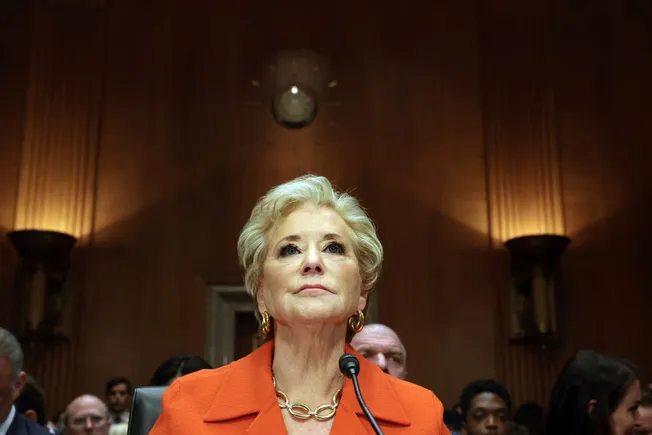
    In a Senate confirmation hearing that has sent ripples through the higher education community, Education Secretary nominee Linda McMahon acknowledgedLinda McMahon President Trump’s directive to potentially dissolve the Department of Education, while facing pointed questions about diversity initiatives and civil rights protections in education.

    During last Thursday’s hearing before the Senate Committee on Health, Education, Labor and Pensions (HELP), McMahon addressed concerns about the administration’s stance on diversity, equity, and inclusion (DEI) programs in educational institutions. When pressed by Sen. Chris Murphy (D-Conn.) about Trump’s executive order banning DEI programs, McMahon stopped short of providing clear guidance on the future of student cultural organizations and ethnicity-based clubs on campuses.

    The hearing revealed mounting concerns about student data privacy and program funding. Sen. Patty Murray (D-Wash.) highlighted that the Department of Government Efficiency (DOGE) has already gained access to “highly sensitive student data” and has begun withholding congressionally approved funding meant to support schools and students.

    Democratic senators expressed particular concern about the potential dismantling of the Education Department and its impact on civil rights enforcement and disability services in higher education. When questioned about relocating the Individuals with Disabilities Education Act (IDEA) to the Department of Health and Human Services, McMahon defended the potential move by citing declining performance scores despite nearly a trillion dollars in spending since the department’s establishment in 1980.

    McMahon did make several commitments during the hearing, including a pledge to maintain the Pell Grant program, which provides crucial financial aid to millions of college students. She also addressed the issue of antisemitism on college campuses, though specific plans for addressing this concern were not detailed.

    The hearing, which was interrupted multiple times by protesters advocating for public schools and trans students’ rights, highlighted the complex challenges facing the department. McMahon acknowledged that any significant changes to the department’s structure would require congressional approval, despite the president’s stated desire to eliminate it through executive action.

    While McMahon is expected to be confirmed by the GOP-controlled Senate, her hearing has raised significant questions about the future of federal oversight of higher education, particularly regarding civil rights enforcement and diversity initiatives. The HELP panel is scheduled to vote on advancing her nomination to the full Senate floor next Thursday.

    “It’s always difficult to downsize, it’s always difficult to restructure and reorganize in any department,” McMahon said during the hearing, addressing concerns about recent administrative leaves and firings at the department. “I think people should always be treated with respect.”

    For the higher education community, the hearing left several crucial questions unanswered, particularly regarding the future of diversity programs and civil rights protections. Sen. Murphy’s exchange about student cultural organizations highlighted the uncertainty facing many campus groups: “That’s pretty chilling. I think schools all around the country are going to hear that,” he noted after McMahon’s noncommittal response about the permissibility of ethnicity-based student clubs under the new DEI restrictions.

    Source link