Tag: Securing

  • Securing educational excellence may demand a new leadership compact

    Securing educational excellence may demand a new leadership compact

    When education leaders describe their institutions as being in “existential crisis” or on a “wartime footing,” you know that something important is happening.

    A new report, “Securing educational excellence in higher education at a time of change,” from Wonkhe and Advance HE, based on roundtable discussions with 11 institutional leaders, 15 principal fellows of Advance HE, and three student representatives held in March 2025, explores institutional interpretation of and responses to change, and asks what measures should be taken to secure educational excellence for what could be quite a different future.

    While institutions are understandably focused on managing their immediate pressures, with, in some cases, institutional survival at stake, sustainability means little without the long-term mission of inclusive, high-quality learning that prepares students for their future lives. While financial security would help, the changes higher education is navigating require a deeper consideration of how institutions make decisions, deploy expertise, and engage their communities.

    The report maps four critical tensions that leaders are navigating across the political, economic, social and technological domains: public trust versus sector autonomy; public good versus private return on investment; traditional academic community versus new student models; pace of technological change versus institutional capacity. A fifth tension emerges from this complex environment: a need for distributed leadership that allows for a deep knowledge of the issues versus clear lines of accountability for decisions. These tensions play out daily in everything that higher education institutions do.

    A wave of change

    In the political dimension, higher education is implicated in broader losses of confidence in institutions. Though not technically public services, universities occupy a distinctive position in British civic life: historically connected to the state, still partly publicly funded, yet operating with considerable autonomy. That hybrid status leaves higher education uniquely vulnerable to simultaneous public and policymaker scrutiny.

    Higher education institutions are not insulated from the broader political landscape. Student representatives in the research raised questions about institutional awareness: “Universities believe that students are exempt from the effects of public austerity…they believe we are creating a community of highly educated people, therefore they cannot fall for the tricks and stories that the media or certain political parties are trying to tell.”

    The economic tension is similarly complex. Universities are expected to deliver public benefits without reliable public funding, creating what one participant called a “competing interest” space where higher education struggles for resources against health and compulsory education. Meanwhile, students increasingly question whether their investment yields genuine value. “Students are being taught how to meet learning objectives, but they’re not being taught how to transfer the skills that they get during their time at university, or sometimes it feels like they’re not even being taught the skills that they need just by meeting the learning objectives,” one student representative observed.

    Principal fellows echoed some of this anxiety: “Students, particularly those from a widening participation background, can put generational money into getting an education which then doesn’t give them a job.” When the compact between investment and outcome seems to break down, trust may fracture, not just between students and institutions but also between society and the higher education project.

    Socially, traditional higher education campus communities are under pressure, with students increasingly time-poor, working to afford their studies, and many commuting rather than living on campus. Participants observed that many students approach higher education more transactionally – not necessarily because they’re mercenary, but possibly because they’re exhausted. As one principal fellow observed, “student” seems to have shifted from being a core identity to something people do alongside other things.

    Meanwhile, technology raises a host of strategic questions, not only in mustering the “right” response to generative AI but also in confronting how the pace of technological change reshapes the collective imaginary of how humans and machines interact in physical and digital spaces. This has implications for curriculum and pedagogy, equity and inclusion, and infrastructure and resources.

    Staff communities appear to have fractured, too. Professional services are “somewhere else in the university,” quick informal conversations have disappeared, and academics feel “fed up and tired and exhausted.” One principal fellow described what they saw as a vicious cycle: “We do not have communities in our universities anymore, and that then impacts the students as well…we don’t have engagement from the students. But also we don’t have engagement from the academics, because they’re in a mood all the time.”

    This fragmentation has strategic implications. When communities fragment, institutions may lose the collective capacity to sense problems, develop solutions, and sustain change. Everyone risks becoming reactive rather than proactive, protective rather than collaborative.

    Change as a capability

    Rather than seeking solutions or silver bullets, our conversations explored the institutional capabilities required to navigate these complex tensions and map out a sustainable way forward.

    One key insight emerging was about the diversity and richness of knowledge and expertise held within institutions that may not be routinely accessed in efforts to think about the future. Small executive teams may struggle to retain a grip on every aspect of the changing landscape or simply become bogged down in maintaining the day-to-day flow of decisions that keep institutions running. Under this kind of pressure, it might not be surprising that, as one principal fellow put it, “Leaders often talk too much and listen too little.”

    The report suggests leaders need to become curators of inclusive processes rather than authorities on every challenge. This would require the confidence to admit when situations are difficult and to seek help – a cultural shift that, if modelled from the top, could potentially reduce pressure on others to hide their struggles.

    Student representatives echoed this sense that efforts to consult or engage, if not well conceived, can sometimes be more alienating than empowering. One student leader suggested involving students in shaping the collective understanding of problems from the beginning, at which their experience and knowledge are most likely to make a meaningful contribution, rather than asking student representatives to comment on pre-developed expert solutions. The same principle could apply to higher education staff and stakeholders.

    There were also clear themes of the need for authenticity when professing an appetite for change and a pragmatic approach to resourcing it. Participants noted that institutions advertise for “innovators” and “change agents” but may not truly want them, or don’t adequately support them when they arrive. Change might require investment: stable contracts, professional development, and time for pedagogic innovation. “You can’t shift pedagogy if you don’t create time,” observed one principal fellow.

    In the technological domain, where there may be a belief that the issues are fundamentally about resourcing and retaining technical expertise, part of the question has to be about how technology reshapes staff and student experience and sustains or fragments human connection. One principal fellow observed that higher education’s “killer service” might be personal connection, not consumer-grade content production in an attention economy. However, delivering that would require investing in people, not just platforms.

    A question of purpose

    Among education leaders, there was a real recognition that higher education staff are “the most precious resource,” as one put it. Yet the changing landscape for higher education seems to be broadening the range of possible purposes for higher education, along with the range of stakeholders who feel entitled to a view about what educational excellence looks like.

    It is not hard to see how this changing dynamic can alienate academics working in disciplines who may perceive some of their core “knowledge stewardship” values and purposes as being under threat from political, economic, social, and technological changes in the external landscape driving different expectations of higher education.

    With an unknowable future, the answer is less about seeking certainties to cling to as about finding collective ways to navigate uncertainty. That might open up some uncomfortable propositions: that higher education’s purpose itself may need rearticulating; that trade-offs between competing goods must be explicitly managed; that excellent pedagogy might require resource investment even when budgets are tight; and that sustainable change may emerge more from dialogue than from executive decision-making.

    The full report repays careful reading, not just for its PEST analysis framework, which could help guide your own institutional conversations about change, but for the candour of participants grappling with genuine complexity. Higher education may face a “pivot point” – though the sector’s breadth, diversity, and expertise remain a considerable strength. Weathering the changes here right now and those on the horizon will depend to no small degree on institutional leadership capability to draw on that expertise to build a shared and collectively owned sense of educational excellence.

    This article is published in association with Advance HE. You can read and download the full Securing educational excellence at a time of change report here.


    Source link

  • Securing Nursing’s Future Amid Shortages

    Securing Nursing’s Future Amid Shortages

    The stubborn shortage of nurses has created abundant job opportunities, but barriers to entry and declining job satisfaction threaten efforts to improve recruitment and retention. What can nurses do for themselves and, in the process, help secure a better future for nursing?

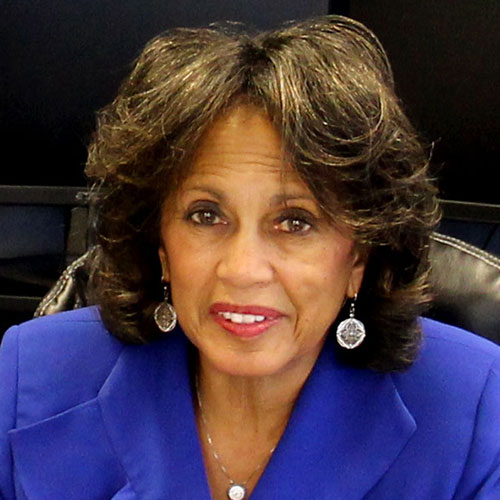
    Beverly Malone, Ph.D., RN, FAAN

    President and CEO, National League for Nursing

    With the stubborn nursing shortage, it is no wonder that job opportunities are abundant for anyone with a passion for healing to join America’s most trusted healthcare professionals. 

    How abundant? The Bureau of Labor Statistics projects an average of 194,500 job openings for registered nurses each year through 2033, a 6% growth rate, which exceeds the national average for all occupations. The wage outlook for RNs is also bright, with a median annual pay in May 2024 of $93,600, compared with $49,500 for all U.S. workers.

    Yet, for so many of us who have long championed the rewards of nursing, barriers to entry and workplace challenges thwart the best efforts of nursing leadership and public policy experts to recruit and retain a diverse, competent nursing workforce. The resulting shortage in nursing occupations is expected to continue at least through 2036, according to the latest findings by the Health Resources & Services Administration.

    Dismantling barriers to entry

    We must find ways to reverse the biggest barrier to entry: a nurse faculty shortage that strains the capacity of nursing education programs to admit more qualified applicants. With a master’s degree required to teach, 17% of applicants to M.S.N. programs were denied entry in 2023, according to the National League for Nursing’s Annual Survey of Schools of Nursing. 

    That same study revealed that 15% of qualified applicants to B.S.N. programs were turned away, as were 19% of qualified applicants to associate degree in nursing programs. At the same time, a shrinking number of clinical nurse educators in teaching hospitals, plus budget cuts to academic medical centers, have decreased the placement sites for nursing students to complete clinical requirements for their degrees and licensure. 

    Along with taking steps to address the gaps in the pipeline, we must improve retention by focusing attention on the issues that impede job satisfaction and accelerate retirements, which place even greater pressure on the nurses who remain. 

    Key to improving the work environment must be a serious commitment to empowering nurses with strategies and resources to battle conditions like burnout, bullying and violence, unacceptable staff-to-patient ratios, and communications breakdowns — all factors that nurses have cited as reasons for leaving the workforce.  

    Making legislative change

    Another strong avenue for change exists through legislative channels. Nurses at every level of experience can tap into the power of their voices by contacting federal and state lawmakers to influence public health and budgetary policies that support nursing workforce development. In our outreach to lawmakers, we can seek to help them craft bills that address nursing’s most pressing needs.

    In fact, the Title VIII Nursing Workforce Reauthorization Act of 2025 is just such a bill. This legislation would extend the federal programs that provide most of the financial support for the recruitment, education, and retention of nurses and nurse faculty. Reauthorizing these programs is vital to strengthening nursing education programs and preparing the next generation of nurses.

    Also, a year ago, a pair of bills was introduced in the House of Representatives aimed at curbing the nursing shortage. One sought to increase the number of visas available to foreign nurses who would be assigned to rural and other underserved communities throughout the country, where shortages are most acute. The other bill, the Stop Nurse Shortage Act, was designed to expand BA/BS to BSN programs, facilitating an accelerated pathway into nursing for college graduates.

    While both bills failed to gain passage into law in the last Congressional session, they could be reintroduced or included in other legislation in the future. Nurses must remain persistent and vigilant in pursuit of our vision for nursing’s future.

    Source link

  • Missouri governor signs legislation securing students’ rights to freely associate on campus

    Missouri governor signs legislation securing students’ rights to freely associate on campus

    Missouri has passed a law protecting the right of students to gather and speak on campuses across the state. On Wednesday, Missouri Gov. Mike Kehoe signed into law SB 160, which defends the freedom of student organizations to set leadership and membership requirements that are consistent with their beliefs. 

    Although the bill was later amended to include provisions unrelated to the student organization protections for which we advocated, the final law still marks a meaningful victory for students at Missouri’s public colleges and universities.

    The First Amendment guarantees the right to freely associate with others who share their beliefs — or not associate with those who don’t. FIRE has consistently opposed policies that force student groups to eliminate belief-based membership rules to gain official college recognition. As we said in March when Utah signed similar protections into law, it makes little sense, for example, “to force a Muslim student group to let atheists become voting members or for an environmentalist student group that raises awareness about the threats of climate change to allow climate change skeptics to hold office.”

    In a letter to Missouri’s legislature supporting SB 160, we explained that the right to associate freely extends to students at public universities and to the student organizations they form. The Supreme Court agrees, and has repeatedly upheld this principle, affirming in Healy v. James that public colleges cannot deny official recognition to student organizations solely based on their beliefs or associations. Similarly, in Widmar v. Vincent, the Court ruled that a public university violated the First Amendment by denying a religious student group access to campus facilities because of its religious beliefs.

    However, the Court’s decision in Christian Legal Society v. Martinez upheld the constitutionality of “all-comers” policies — requiring student organizations to accept any student as a member or leader, even those who oppose the group’s core beliefs. But the ruling applies only when such policies are enforced uniformly. In practice, universities often apply these policies selectively. For example, some religious organizations have been forced to accept members and leaders who do not share their faith, while secular groups have been allowed to set their own membership and leadership requirements without administrative intervention. 

    This selective enforcement results in viewpoint discrimination. SB 160 is meant to correct that imbalance. It states that schools cannot take any action against a student association or potential student association:

    (a) Because such association is political, ideological, or religious; 

    (b) On the basis of such association’s viewpoint or expression of the viewpoint by the association or the association’s members; or

    (c) Based on such association’s requirement that the association’s leaders be committed to furthering the association’s mission or that the association’s leaders adhere to the association’s sincerely held beliefs, practice requirements, or standards of conduct.

    With the enactment of this bill, Missouri joins a growing number of states strengthening protections for the First Amendment rights of student organizations on campus. 

    FIRE thanks Missouri lawmakers and Gov. Kehoe for affirming that students don’t shed their constitutional rights at the campus gates.

    Source link

  • Securing the Future: The case for Pension Reform in Post-92 Institutions

    Securing the Future: The case for Pension Reform in Post-92 Institutions

    • By Fiona Hnatow, Chief People Officer at the University of Portsmouth.

    In an era of mounting financial pressures across the UK higher education sector, the University of Portsmouth has not been immune to these difficulties. However, through considered efficiency programmes and an innovative approach to pension reform, we are emerging from the initial financial pressures into a stronger and sustainable position.  As one of the largest Post-92 institutions in the UK, the University plays a vital role in the local and national economy. With nearly 4,000 staff and 29,000 students, 6,000 of whom are international, the University is not only a major employer in the Solent region but also a hub of innovation, research and global engagement.

    In 2024 alone, the University contributed an impressive £1.4 billion to the UK economy, including £658 million in the Solent region and £505 million in Portsmouth, supporting over 8,800 jobs locally. These figures underscore the University’s critical role in regional development and its broader impact on the national landscape.

    By early 2023, it became increasingly clear that the UK higher education sector was heading towards a financial crisis. A combination of declining undergraduate and international student applications, rising utility and employment costs and inflexible pension obligations created a perfect storm, particularly for Post-92 universities.

    One of the most significant financial burdens facing these institutions is the Teachers’ Pension Scheme (TPS). Mandated by the Further and Higher Education Act 1992, Post-92 universities are required to offer TPS to all academic staff, with no option to opt out. In contrast, non-Post-92 institutions can offer alternative schemes, such as the Universities Superannuation Scheme (USS), which carry significantly lower employer contribution rates.

    As of April 2025, TPS employer contributions rose from 23.68% to 28.68%. This means that employing an academic on a £50,000 salary now costs Post-92 institutions nearly £9,000 more per year than their competitors. With further increases projected in 2026, the financial strain is only expected to intensify.

    The Reset Programme: A Strategic Pivot

    Recognising the urgency of the situation, the University of Portsmouth launched its ‘Reset’ programme in early 2023. This comprehensive initiative was designed to reduce both staff and non-staff costs, streamline operations and build a digitally enabled, efficient institution. The goal: to ensure both operational and financial sustainability in the face of unprecedented challenges.

    The Reset programme introduced a series of targeted workstreams over an 18-month period, including:

    • Creation of a staffing subsidiary (UASL) to employ new staff under a more affordable pension scheme.
    • Voluntary Severance Scheme to reduce the need for compulsory redundancies.
    • Enhanced vacancy management, filling only business-critical roles.
    • Non-pay budget reductions, including cuts to travel, training, printing, and consumables.
    • Removal of budget contingencies during annual planning.
    • Policy changes to limit professional accreditation and subscription costs.
    • Professional services reviews to centralise functions and reduce staffing levels.
    • Academic restructuring, including faculty mergers and rebalancing student/staff ratios.
    • Contracted services reviews to improve value for money.
    • Student retention initiatives to reduce withdrawals and protect tuition income.

    UASL: A Bold and Necessary Innovation

    In August 2024, the University launched University of Portsmouth Academic Services Limited (UASL), a wholly owned subsidiary created to employ new academic and professional services staff. While maintaining existing terms and conditions, UASL introduced a new Defined Contribution (DC) pension scheme through Aviva, offering a 12% employer contribution for permanent staff and 6% for casual staff. Additionally, the National Employment Savings Trust (NEST) scheme was introduced for casual workers, primarily students.

    This move was not taken lightly as the University recognises how important pensions are to attract and retain staff. However, it was essential to avoid the unsustainable costs associated with TPS and the Local Government Pension Scheme (LGPS). Importantly, all staff employed before August 2024 retained their existing pension arrangements, helping to maintain strong relationships with unions such as UCU and Unison.

    The TPS, and its statutory imposition on Post-92 providers, is a throwback to when institutions like the University of Portsmouth, as former polytechnics, were administered by their local authority. At the time, it made sense. But in the thirty years since we achieved full University status, it has become impossible to justify the retention of this outdated system. It is clear that those bodies responsible for setting and monitoring higher education funding, who are admittedly not known for their responsiveness, have failed to adapt to the realities of the higher education landscape. When vast swathes of the sector are faced with a worsening financial position, many of those being post-92 institutions, it is baffling that this outdated system remains to hinder determined efforts to manage institutional finances.

    The results have been significant. In 2024/25 alone, the University is on track to save over £1 million, with projected savings rising to £2.8 million in 2025/26 and £4.4 million in 2026/27. Moreover, the new pension schemes have proven attractive, particularly to early-career professionals, international staff, and those on lower salaries—groups that had previously opted out of TPS due to affordability concerns.

    Balancing Innovation with Risk

    While the creation of UASL has delivered substantial financial benefits, it has also introduced new challenges. Notably, Research England and UKRI have begun placing restrictions on the eligibility of subsidiary-employed academics for research funding and participation in the Research Excellence Framework (REF). This poses a significant risk to the University’s research ambitions and its ability to compete on a national and global scale.

    Despite these concerns, the University had to weigh the risks of innovation against the very real threat of insolvency. Without decisive action, the financial outlook would have been dire. In 2023/24, the University had budgeted for an income of £321 million but achieved only £304 million, resulting in a £9.2 million deficit—despite achieving £19.7 million in Resetsavings. For 2024/25, the budgeted income is £290.5 million, with a projected deficit of £2.9 million, inclusive of £24 million in planned savings.

    A Call for Sector-Wide Reform

    The University of Portsmouth’s experience is not unique. Many Post-92 institutions across the UK are being forced to consider similar measures, simply to remain viable. In Scotland, the government has stepped in to support institutions facing equivalent pension cost increases, highlighting the uneven playing field across the UK.

    The University is now calling on the Department for Education and the UK Treasury to reform elements of the Further and Higher Education Act 1992 that tie Universities to an outdated, restrictive and overly costly pension scheme and advocates for greater flexibility in pension arrangements. Such reform would allow institutions to manage their finances more effectively, attract and retain top talent, and avoid widespread job losses and regional economic disruption. Our view is that it is wholly unfair that the Government have subsidised schools and further education colleges in England to compensate for the rising cost of TPS, yet Higher Education Institutions have not.

    Conclusion: Leading Through Change

    The University of Portsmouth has demonstrated that with strategic foresight, bold decision-making, and a commitment to collaboration, it is possible to navigate even the most challenging financial landscapes. However, we continue to advocate that reform is urgently needed for the good of the sector as a whole, to ensure long-term sustainability.

    Source link