Tag: sell

  • Calif. College of Arts to Close, Sell Campus to Vanderbilt

    Calif. College of Arts to Close, Sell Campus to Vanderbilt

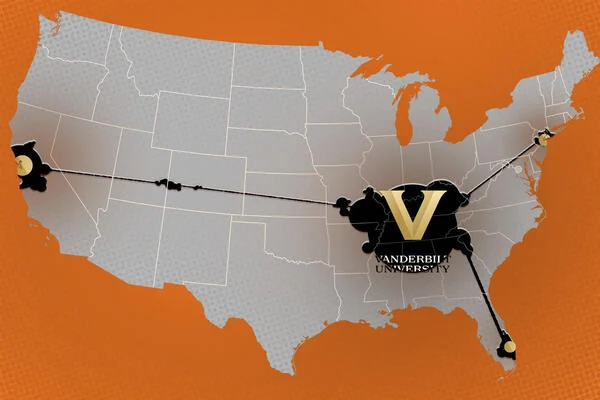
    Photo illustration by Justin Morrison/Inside Higher Ed

    California College of the Arts will close by the end of the 2026–27 academic year amid enrollment declines that have rendered its business model unsustainable, officials announced.

    But the Wednesday announcement at a press conference at San Francisco’s City Hall came with surprising fanfare. Though CCA is going away, Vanderbilt University is stepping in to purchase its campus, giving the private institution in Tennessee a foothold on the West Coast.

    Following the closure, Vanderbilt will assume ownership of the campus and “establish undergraduate and graduate programming, including art and design programs,” and maintain archival materials from the college, CCA president David C. Howse wrote in an announcement.

    The move comes after recent financial struggles for CCA, which laid off 23 employees in 2024 and closed other vacant positions to address a $20 million budget gap. While the private college raised nearly $45 million recently, those funds were evidently not enough to stave off closure. 

    CCA enrolled 1,308 students in fall 2024, according to recent federal data, down from a recent high of nearly 2,000 students in fall 2016.

    Officials have not made details of the transaction publicly available.

    Vanderbilt’s takeover of the San Francisco campus is the latest national push from the university, which has pursued an ambitious growth plan in recent years. Vanderbilt is currently leasing a campus in New York City and building another in West Palm Beach, Fla., as announced in 2024.

    Vanderbilt chancellor Daniel Diermeier told Inside Higher Ed last fall that the university was exploring a site in San Francisco and noted the booming artificial intelligence scene in the city was part of the appeal for a campus there.

    While at least 16 nonprofit institutions announced closure plans last year, California College of the Arts appears to be the first to do so in 2026, coming less than two weeks into the new year.

    Source link

  • How to Sell Your Stuff Like a Pro

    How to Sell Your Stuff Like a Pro

    Old pair of sneakers but still got some life in them? Hoodie that doesn’t fit anymore? Headphones in the back of your drawer collecting dust? Perfume you bought but actually…hate? 

    Sell it! It’s like they say, “one person’s trash is another person’s treasure”. So put an eye patch on and slap a parrot on your shoulder. Here are some hot tips to help you secure the gold bag!

    Step 1: List Your Item Online

    Channel your inner photographer 📸

    No one likes a blurry photo and no one likes just one photo. Providing multiple photos from different angles will more likely influence buyers to message. Videos also work wonders, especially for electronics to prove that they work! 

    Create your listing 🛍️

    Facebook Marketplace, Karrot, and Kijiji are the most popular platforms. They are all relatively the same, so explore the app/site and familiarize yourself with how it works. On Facebook, you can also join local groups to increase your odds of selling to someone close by.

    Be honest, hon 💯

    Don’t lie about the condition of the item. If it’s used, mention that it is used. Playing off an item as ‘new’ will only make the exchange awkward and, in the worst case scenario, they leave without buying it. Include the condition of the item in your listing description with clear photos showing any defects. Honesty is the best policy, bestie. Price accordingly. A half-used bottle of perfume should not be going close to retail price. But hey, cleaning a dirty item so you can price it slightly higher is totally valid. Include the size and measures where applicable!

    Be a smarty pants with that price 🤑

    Do your research. Search your item on the platform and see what it’s going for. If you live in an urban city, there might be a higher demand. Price your item around the same price or slightly lower if you want to sell it faster. Take the condition of the item into your pricing decision. If it’s BNIB (brand new in box), it should definitely go closer to retail price. Conversely, if it’s looking a little rough, knock 10-25% off what people are selling it for. If you’re offering to drop off, be transparent and add the cost of commute, gas and travel into the price (and the listing). You can also upcharge $10-20 on purpose to counter lowballers (so you end up selling for the price you want!)

    Step 2: Exchange Details

    Communicate clearly 🗣️

    When you’ve received a message from a potential buyer, answer any questions they might have. They may bargain with you, so decide if you’re willing to give that discount to sell the item quicker. Remind them of any defects or imperfections (a lot of people don’t actually read the listing description). Decide and agree on a meetup date and location, and check in on the day of. Exchange numbers only if you’re comfortable. If they are long-winded and not securing the deal, move on!

    Cash is king/queen 💵

    Deal with cash only and have some pocket change ready when trading. Make a note in your listing that you only accept cash and confirm it (with the item cost) in chat when discussing meetup details. It’s possible that they want an additional discount during the trade. Stand your ground and sell at the price you set. Frankly, the likelihood of them leaving just because they can’t get an additional $5 off is slim. 

    E-vade e-transfers 🙅🏻‍♀️

    E-transfers can take up to 30 minutes to process and sometimes even longer if auto-deposit is on. You don’t want to hand over the item unless the money is with you already. Plus, you also won’t need to share any personal info like your email address! The one exception will be if you’re offering to drop off the item, then have them e-transfer and deposit the money first before making the commitment. Nothing worse than a flake after you’ve made the distance!

    Step 3: The Trade

    Let’s meet there 📍

    At the end of the day, it’s a stranger and taking stranger danger precautions is smart. Meet up in a populated public area like a Tim Hortons at a major intersection or a subway station. Ask a friend to come with you for strength in numbers (especially if you’re dropping off a trade). For safety reasons, it’s best to avoid giving your home address for pickup. 

    5 stars, thumbs up, would trade again ⭐

    When trading, be friendly. It’s normal if they want to have a look at the item thoroughly. If it’s a BNIB, don’t let them open it unless you accept the money first. After the trade is done, give them a friendly reminder to give you a positive review. The more positive reviews on your profile, the more likely you’ll sell more in the future.

    Don’t give up 💪🏻

    “Hi, I’m interested in purchasing. Is it available?” … Then silence after you reply. You’re more likely to get non-responsive flakes than serious buying inquiries. Don’t give up, some items could take months to sell! But hey, you only have to post it once. The item can go back into storage until a trade happens. Lower the price once in a while if you’re not getting any bites.

    Hopefully, these tips will help you get started! But remember, no amount of reselling will help if you’re overspending. Budgeting and making smart financial decisions will always be important. Starting healthy finance habits as a student is the way to go! Check out some budgeting tips from our friends at CIBC here

    Student Life Network

    Student Life Network is your resource hub for all things school. We help you improve your grades, find the right school, reduce your debt, and line up your dream job.

    Source link

  • Bastyr University Plans to Sell Campus

    Bastyr University Plans to Sell Campus

    Cash-strapped Bastyr University is selling its campus in Washington State in an effort to stabilize its shaky finances, which landed the institution on show cause status with its accreditor earlier this year.

    Bastyr’s Board of Trustees approved a plan last week to list the campus for sale.

    The Washington campus is located on 50-plus acres outside Seattle; the university also maintains a site in San Diego. Officials wrote on a frequently asked questions webpage that the “sale of the [Washington] campus will restore financial health to our university, allow continued movement forward with our strategic plan and is intended to positively impact our accreditation status.”

    The FAQ page emphasized that selling the campus does not mean Bastyr is closing.

    Rather, “Financial infusion makes the university more stable and allows us to better weather the fluctuations of the academic environment should a crisis occur,” officials wrote. They also noted Bastyr “cannot afford to maintain and modernize the main campus building” and that “the university occupies less than 50% of its space, but must fund 100% of campus upkeep.”

    The FAQ indicated that either a full or partial sale of the campus is possible. 

    Despite the sale, a move will likely be years away; officials wrote on the FAQ page that Bastyr plans to lease the campus for “up to a few years to allow for a thoughtful and phased transition.”

    Source link

  • Would you sell your country to Trump?

    Would you sell your country to Trump?

    Greenland is three times the size of the U.S. state of Texas, making it the world’s largest island if you don’t count the continent of Australia.  

    It sits on critical rare earth minerals and fossil fuel reserves. Its retreating ice, due to global warming, is opening up new trade routes and longer shipping seasons

    No wonder U.S. President Donald Trump wants it for the United States. A purchase price would be steep. Based on past purchases of territory and Greenland’s economic potential, it is estimated that the price of Greenland could be anywhere between $12.5 billion and $77 billion. And he only has to convince the 56,000 people who live there that they would prosper under U.S. rule. 

    Greenland is a former Danish colony that still relies heavily upon Denmark for its economy.

    If Trump were able to buy it, he’d have to take it as is, and the country suffers from high rates of suicide, alcoholism and sexual abuse

    Is there art in the deal?

    A Google map of Greenland.

    Trump made an offer in December, called “absurd” by Danish Prime Minister Mette Frederiksen. It was the second time he broached this subject, having first spoken of it during the lead up to his first presidential term. 

    This time, he said he won’t rule out using economic or military force to buy the world’s biggest island based on the logic that Greenland is necessary for “national security and freedom” of the United States. Greenland and the United States are separated by about 2,289 kilometers (1,422 miles) of water between the two closest points — Grand Manan in the U.S. state of Maine and Nanortalik in Greenland.

    Much of the world has been laughing at Trump’s demand but it is no laughing matter for Denmark. This week, Danish Prime Minister Mette Frederiksen visited German Chancellor Olaf Scholz, French President Emmanuel Macron and NATO General Secretary Mark Rutte, to talk about strengthening the EU’s security and defence and to further prioritise the Arctic.

    In the meantime, Greenlanders are feeling their value to Denmark has risen.

    Greenland was a Danish colony until 1953, when it became a self-governing region of Denmark. This means that it has its own local government and two seats in the Danish parliament. The relationship also means that Greenlanders are citizens of the European Union, with the benefits that come with that. 

    A fractured relationship

    The relationship between Greenland and Denmark is still recovering from that colonial past. The majority of Greenlanders support full independence from Denmark despite its deep reliance on the Danish government. 

    Denmark is still responsible for Greenland’s foreign, security and defence policy, and provides Greenland an annual financial aid of DKK 3.9 billion (roughly €522 million), which makes up around 20% of Greenland’s gross domestic product. That’s the value of all the goods and services a country produces and it is used as a measurement of a nation’s economic health. 

    The scars of colonialism are still fresh for many Greenlanders. In 1953 Denmark allowed the forced relocation of an Indigenous population from the Dundas area in Greenland, for a U.S. military base. The Thule tribe had been semi-nomadic catchers in the Dundas area for thousands of years. Their relocation took place over just a few days. 

    Later, in the 1960s and 70s, Danish health authorities fitted thousands of Inuit women and girls the IUD contraceptive device, many without proper notification or consent. An investigation into the procedure suggests that its aim was to curb a growing population — which worked. Many of these women went on to suffer health issues due to the IUD. 

    Now Greenlanders are being told that their future is theirs to decide. 

    There’s green beneath the ice.

    What does Trump want with Greenland? 

    Greenland’s ice sheet covers nearly 80% of the country, which is losing mass at a rate of around 200 gigatonnes per year due to climate change. That seems like an incomprehensible amount. It is the equivalent of 200 billion metric tons or, according to NASA, if you could picture it, two million fully-loaded aircraft carriers. 

    Trump has framed his interest in Greenland as a matter of national security and freedom. By this, he points to the island’s strategic value: its untapped reserves of rare earth minerals and fossil fuels, as well as emerging trade routes enabled by retreating ice. 

    Greenland’s mineral reserves are largely untouched. The island harbors significant deposits of rare earth elements, essential for various high-tech applications, including electronics, renewable energy technologies and defence systems. 

    Owning Greenland would ease U.S. concerns over China’s dominance in the rare earth market, with China currently controlling 70–80% of the world’s critical rare earth minerals. Acquiring access to Greenland’s mineral reserves could serve to diversify and secure the U.S. supply chain, reducing reliance on Chinese exports. 

    Controlling the Arctic

    Exploiting Greenland’s mineral wealth still presents considerable challenges. The island’s harsh climate and limited infrastructure means large start-up costs for mining projects.

    Having control over new trade routes in the Arctic is also appealing, as well as having an expanded military presence in the region to monitor Russian navy vessels and nuclear submarines.  

    Is it possible to buy another country? 

    This isn’t the first time the United States has offered to buy Greenland. In 1946, President Harry Truman offered Denmark $100 million for the island. Denmark rejected the proposal but permitted the construction of the Pituffik Space Base which is responsible for missile warning systems and monitoring of satellites in space. 

    But for an exchange from Greenland to the United States to happen, both Denmark and Greenland would need to agree to the sale, with an Act on Greenland Self-Government stating that the people of Greenland have a right to self-determination.

    And right now, Greenlanders don’t want to be under anyone’s rule but their own

    The international news service Reuters reported 29 January that a poll commissioned by the Danish paper Berlingske, found that 87% of Greenlanders would turn down Trump’s offer and another 9% are undecided.

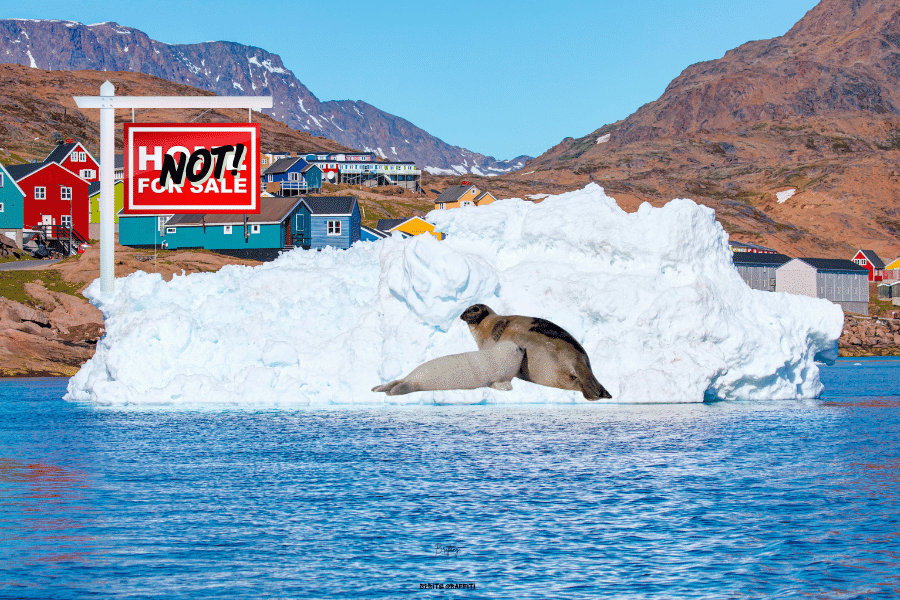
    But they’re not telling the United States to go away. While Greenland’s Prime Minister Mute Egede said that his country is not for sale, Greenlanders are open to cooperating with the United States on defence and exploration of its minerals

    And then there’s golf. With all that melting ice, maybe Trump is picturing a fabulous par-72 resort. Right now Greenland only has two courses. Just picture those sand traps on the edge of the Arctic. 


    Three questions to consider:

    1. How would the United States benefit from controlling Greenland?
    2. What’s Greenland’s relationship with Denmark?
    3. If you were a Greenlander, would you vote to become part of the United States? Why?



    Source link