Tag: Senate

  • Vice-chancellor pay and “quality of governance” to be scrutinised by Senate inquiry

    Vice-chancellor pay and “quality of governance” to be scrutinised by Senate inquiry

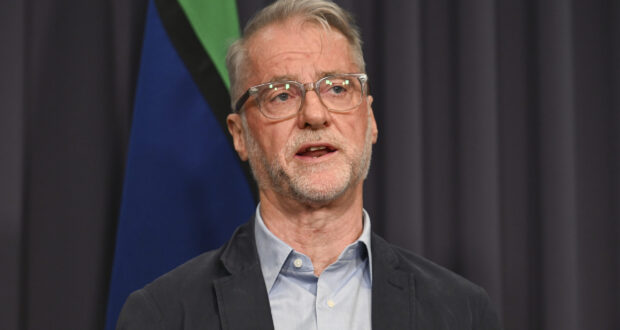
    Labor Senator Tony Sheldon is chair of the Senate Committee on Education and Employment. Picture: Martin Ollman

    Australia’s vice-chancellors will be questioned about their pay packages, instances of wage underpayment, and the use of external consultants in a new parliamentary inquiry into the quality of university governance.

    Please login below to view content or subscribe now.

    Membership Login

    Source link

  • Laken Riley Act passes Senate

    Laken Riley Act passes Senate

    The House is preparing to take up the Laken Riley Act later this week after the Senate passed the bill Monday, Politico reported.

    Twelve Democrats joined all of the higher chamber’s Republicans to vote for the immigration bill, named for a 22-year-old woman killed by an undocumented immigrant in Georgia last year. Immigration policy experts say the bill could have consequences for international students applying to study in the U.S.

    The bill would primarily force harsher detention policies for undocumented immigrants charged with crimes, but it also expands the power of state attorneys general, allowing them to sue the federal government and seek sweeping bans on visas from countries that won’t take back deportees. 

    The Department of Homeland Security has said the bill would require billions of dollars in additional funding to enforce.

    The legislation now goes back to the House, which passed a similar but not identical bill earlier this month. If it passes the House a second time, it would then land on President Donald Trump’s desk, providing an early win on one of his highest-priority issues, immigration.

    Source link

  • Senate Finance Committee Holds Hearing on Paid Leave – CUPA-HR

    Senate Finance Committee Holds Hearing on Paid Leave – CUPA-HR

    by CUPA-HR | November 14, 2023

    On October 25, the Senate Finance Committee held a hearing on federal paid leave. This comes as congressional Democrats and Republicans have shown interest in finding bipartisan consensus for a federal paid leave program. The hearing also provided policymakers and witnesses the opportunity to discuss the promise and drawbacks of paid leave proposals.

    Increasing employee access to paid leave was a primary focus of the hearing. Both sides of the aisle agreed that all workers will need to take leave during their careers without the obligation to juggle work requirements. Policymakers highlighted that 70 percent of Americans want national paid leave and that 72 percent of Americans who are not currently working cite caregiving and family responsibilities as the main reason. To address these issues, Democrats argued for a federally mandated paid leave program, while Republicans worried that a one-size-fits-all program could limit employer-provided paid leave options and be difficult to implement on a wide scale.

    Witnesses Describe Potential Benefits of Federal Paid Leave

    Some of the witnesses discussed the benefits of a federal paid leave program, concluding that better access to paid leave would benefit workers, employers and the economy. Jocelyn Frye, president of the National Partnership for Women & Families, stated that offering paid leave tends to benefit both workers and employers through increased labor force participation (both for women and generally), worker retention, and wage growth. Ben Verhoeven, president of Peoria Gardens Inc., added that investing in paid leave gave him better return on investment than his capital investments, as implementing paid leave increased business growth and employee retention and promotions.

    Objection to a One-Size-Fits-All Leave Program

    Despite these benefits, Elizabeth Milito, executive director of the National Federation of Independent Business’s Small Business Legal Center, said that employers would face trade-offs under a federal paid leave program. Milito argued that employers operating on the same amount of funds but under new federal benefit requirements would be obliged to provide paid leave as a benefit, leading to some employers being unable to provide higher compensation or other benefits like health insurance. Rachel Greszler, senior research fellow at The Heritage Foundation, said that in response to state paid leave programs, some companies choose to send workers to the state program first and then supplement the paid leave benefit to provide 100 percent wage replacement. This creates an administrative burden for the employee, who receives full wage replacement only if they participate in both paid leave programs.

    Republicans and their witnesses also said that a federal program would require flexibility and simplicity to be most effective. Milito and Greszler concurred that most small businesses do not have a qualified HR professional to deal with additional compliance needs. Greszler also stated that the biggest unintended consequence of a one-size-fits-all approach would be a rigid structure that does not work for most employees and businesses. She specified that a carve-out for small businesses or the ability to opt in to a federal program would be most appropriate.

    CUPA-HR continues to monitor for any updates on federal paid leave programs and will keep members apprised of any new developments.


    Source link

  • Senate Holds Markup of the Paycheck Fairness Act, Healthy Families Act and PRO Act – CUPA-HR

    Senate Holds Markup of the Paycheck Fairness Act, Healthy Families Act and PRO Act – CUPA-HR

    by CUPA-HR | June 28, 2023

    On June 21, the Senate Health, Education, Labor, and Pensions (HELP) Committee held a markup of three labor bills championed by Democrats: the Paycheck Fairness Act (S. 728), the Healthy Families Act (S. 1664), and the Protecting the Right to Organize (PRO) Act (S. 567). The three bills passed out of the committee by a vote of 11-10 along party lines, demonstrating the challenge these bills will face to be passed into law.

    Paycheck Fairness Act

    The Paycheck Fairness Act aims to address wage discrimination on the basis of sex. More specifically, the bill limits an employer’s defense that a pay differential is based on a factor other than sex, enhances non-retaliation prohibitions, prohibits employee contracts or waivers banning them from disclosing wage information, and increases civil penalties for violations of equal-pay provisions.

    Ranking Member Bill Cassidy (R-LA) introduced several amendments to the proposed Paycheck Fairness Act, including an amendment to substitute the text with the Wage Equity Act. ​​The Wage Equity Act would protect employers’ ability to use bona fide business-related factors other than sex to set workers’ compensation and allow workers to voluntarily disclose their prior salary histories when they choose to do so. The amendment was ultimately defeated by a vote of 9-12, with Sen. Rand Paul (R-KY) joining Democrats in voting against the amendment.

    Healthy Families Act

    The Healthy Families Act permits employees of businesses with 15 or more workers to accrue up to seven job-protected paid sick days each year to recover from an illness and provide care to a sick family member, among other health-related activities. For employers with 15 or fewer employees, the bill would allow employees to earn up to seven job-protected unpaid sick days each year to be used for the same purposes. Under the bill, workers would accrue one hour of sick leave for every 30 hours worked, with a cap of 56 hours that may be raised by the employer.

    Cassidy offered two amendments to the bill that would exempt employers from the requirements of the bill if they already offer paid sick leave that is at least as comprehensive as the seven-day requirement or if they are religious employers denying sick leave taken for reasons that violate their religious beliefs. Both amendments were struck down by Democrats.

    PRO Act

    The PRO Act is a massive labor reform bill designed to increase union density. The bill includes several provisions that would overhaul existing labor laws — including the National Labor Relations Act (NLRA), the Taft-Hartley Act, and the Labor-Management Reporting and Disclosure Act — and may impose burdens on both employers and employees. Such provisions include:

    • codifying the National Labor Relation Board (NLRB)’s Browning-Ferris Industries joint-employer standard;
    • imposing the “ABC test” into the NLRA for classifying employees, making it more difficult for workers to operate as independent contractors;
    • preempting state right-to-work laws that prevent forced unionization;
    • prohibiting arbitration agreements in employment contracts;
    • revoking attorney-client confidentiality for employers; and
    • facilitating secondary boycotts by barring claims against unions that conduct them.

    The PRO Act has been strongly criticized by congressional Republicans over the past several congressional sessions, and committee Republicans offered 35 amendments to modify the current text of the PRO Act. All 35 amendments were ultimately defeated when brought to a vote.

    Looking Ahead

    Despite the passage of these bills through the Senate HELP Committee, they are unlikely to be signed into law. Due to their partisan support, the bills are unlikely to garner enough support to bypass the 60-vote filibuster on the Senate floor and to be considered in the Republican-controlled House.

    CUPA-HR will keep members apprised of future developments on these bills.


    Source link

  • House Education and Workforce Committee and Senate HELP Committee Set for 118th Congress – CUPA-HR

    House Education and Workforce Committee and Senate HELP Committee Set for 118th Congress – CUPA-HR

    by CUPA-HR | February 7, 2023

    After a month in session, the U.S. House of Representatives and Senate are finalizing their committee and subcommittee membership rosters. Of particular significance are the House Education and the Workforce Committee and Senate Health, Education, Labor and Pensions (HELP) Committee, which have jurisdiction over higher education and many labor and employment issues, including overtime, paid leave, occupational safety and health and employment-based discrimination.

    House Education and the Workforce Committee and Subcommittees

    The House Education and the Workforce Committee will be comprised of 25 Republicans and 20 Democrats with Rep. Virginia Foxx (R-NC) serving as chairwoman and Rep. Bobby Scott (D-VA) serving as ranking member of the full committee. Both Foxx and Scott served as their party’s committee leader in the previous Congress when Democrats held the majority, but Foxx was notably able to secure a waiver granting her exemption from House Republican-imposed committee leadership term limits that would have prohibited her from serving a fourth consecutive term as Republican leader on the committee.

    Foxx has publicly stated her priorities for the committee, citing oversight of the Biden administration, Department of Labor and Department of Education as a top concern for the committee. Having previously taught at two institutions of higher education and served as president at Mayland Community College, Foxx also has a particular interest in higher education. With divided control of Congress and Democrat control of the Senate, however, it is unlikely that Foxx will be able to pass any meaningful legislation that would garner support from the Senate and the president.

    In addition to the full committee roster, the Education and the Workforce Committee has also finalized their subcommittee rosters.

    Subcommittee on Workforce Protections

    The Subcommittee on Workforce Protections has jurisdiction over issues relating to wages, hours of workers and overtime, including the Fair Labor Standards Act (FLSA); workers’ compensation, including the Family and Medical Leave Act (FMLA); issues relating to immigration and employment; and occupational safety and health, including the Occupational Safety and Health Administration (OSHA).

    Freshman Rep. Kevin Kiley (R-CA) will serve as chairman of the subcommittee and Rep. Alma Adams (D-NC) will serve as ranking member after serving as chair of the subcommittee last Congress. The subcommittee will made be up of six Republicans, including Glenn Grothman (R-WI), James Comer (R-KY), Mary Miller (R-IL) and Eric Burlison (R-MO), all who did not serve on the subcommittee in the previous Congress; and four Democrats, all who served on the subcommittee in the last Congress.

    Subcommittee on Higher Education and Workforce Development

    The Subcommittee on Higher Education and Workforce Development has jurisdiction over the following areas: postsecondary student assistance and employment services, and the Higher Education Act; postsecondary career and technical education, apprenticeship programs, and workforce development; and science and technology programs.

    Rep. Owen Burgess (R-UT) will serve as chairman of the Subcommittee on Higher Education and Workforce Development, while Rep. Frederica S. Wilson (D-FL) will serve as ranking member of the subcommittee after serving as chair of the subcommittee in the 117th Congress. The makeup of the subcommittee will include 13 Republicans, including Reps. Glenn Thompson (R-PA), Lloyd Smucker (R-PA), Nathaniel Moran (R-TX), John James (R-MI), Lori Chavez-DeRemer (R-OR), Erin Houchin (R-IN) and Brandon Williams (R-NY) as new members; and 11 Democrats, including Reps. Lucy McBath (D-GA), Gregorio Kilili Camacho Sablan (D-Northern Marina Islands) and Alma Adams (D-NC) as new members.

    Subcommittee on Health, Employment, Labor and Pensions

    The Subcommittee on Health, Employment, Labor and Pensions’ jurisdiction involves “matters dealing with relations between employers and employees,” including to the National Labor Relations Act (NLRA) and employment-related health and retirement security, such as pension, health and other employee benefits and the Employee Retirement Income Security Act (ERISA).

    The subcommittee will see Rep. Bob Good (R-VA) serve as chairman and Rep. Mark DeSaulnier (D-CA) serve as ranking member after previously serving as chair in the 117th Congress. The subcommittee will be composed of 12 Republicans, including Reps. James Comer (R-KY), Lloyd Smucker (R-PA), Michelle Steele (R-C), Aaron Bean (R-FL), Eric Burlison (R-MO), Lori Chavez-DeRemer (R-OR) and Erin Houchin (R-IN) serving as new members; and 10 Democrats, including Reps. Pramila Jayapal (D-WA), Jahana Hayes (D-CT), Ilhan Omar (D-MN) and Kathy Manning (D-NC) serving as new members.

    Senate Health, Education, Labor and Pensions Committee

    The Senate HELP Committee is the Senate counterpart to the House Education and the Workforce Committee. Chair Bernie Sanders (I-VT) will be replacing former Chair Patty Murray (D-WA), who is now the chair of the Senate Appropriations Committee, and Ranking Member Bill Cassidy (R-LA) will be replacing former Ranking Member Richard Burr (R-NC), who retired at the end of the 117th Congress. Democrats will have 11 members and Republicans will have 10 members on the committee. Subcommittees have not yet been finalized, though we expect to see membership lists soon.

    Sanders staffers have stated that, as chair, he will “focus on universal healthcare, lowering the cost of prescription drugs, increasing access to higher education and protecting workers’ rights on the job.” As previously mentioned, however, the divided Congress and Republican control of the House will likely prevent meaningful legislation from moving to President Biden’s desk for his signature.

    CUPA-HR will be monitoring committee activity and will keep members apprised of any major hearings or updates that come out of the committees.


    Source link

  • DOL Secretary Testifies in House and Senate Committee Hearings – CUPA-HR

    DOL Secretary Testifies in House and Senate Committee Hearings – CUPA-HR

    by CUPA-HR | June 22, 2022

    On June 14 and 15, the House Education and Labor Committee and Senate Appropriations Committee’s Subcommittee on Labor, Health and Human Services, Education, and Related Agencies held hearings on policies and priorities of the U.S. Department of Labor (DOL), as well as President Biden’s Fiscal Year 2023 Budget Request for DOL. In both hearings, Secretary of Labor Marty Walsh testified and answered questions about DOL’s regulations and actions, as well as potential future funding for programs under DOL.

    In both hearings, Walsh pointed to the accomplishments DOL has achieved during the Biden administration. He discussed efforts to increase the minimum wage for federal contractors to $15 and to protect workers’ organizing rights as some of the highlights of the department’s work during the Biden administration thus far. In addition to these accomplishments, he also called for increased funding and investments for workforce training and development.

    During the House committee hearing, Walsh was asked several questions about the anticipated overtime regulations. Rep. Mark Takano (D-CA) began his question period by restating his request for DOL to increase the minimum salary threshold to $82,732 by 2026, and asked Walsh his opinion on the current level and whether it was too high or low. Walsh responded saying he had no opinion on where the current level stands at this time, but that the department recently concluded listening sessions to hear from stakeholders about their opinions on updating the salary threshold. Additionally, Takano asked Walsh if there was a timeline of when the anticipated Notice of Proposed Rulemaking (NPRM) would be released for the overtime regulations, but Walsh responded that there was no set timeline at the time of the hearing.

    Many representatives and senators also discussed DOL’s workforce development and training programs. In the Senate hearing, Walsh explained that the current disconnect between youth and job openings is an opportunity for DOL to reach out and connect with those workers, better preparing them for the jobs available. Walsh also expressed his support for a wide range of apprenticeships in different, untraditional industries, and he stated DOL should partner with community colleges, existing workforce development programs, and other organizations to expand apprenticeships.

    CUPA-HR will keep members apprised of any developments that arise as a result of these hearings.


    Source link

  • IHEC Blog a project by David Comp: The Florida Senate

    IHEC Blog a project by David Comp: The Florida Senate

    Since February 2007, International Higher Education Consulting Blog has provided timely news and informational pieces, predominately from a U.S. perspective, that are of interest to both the international education and public diplomacy communities. From time to time, International Higher Education Consulting Blog will post thought provoking pieces to challenge readers and to encourage comment and professional dialogue.

    Source link