
Tag: Senator

  • Senator Who Banned DEI Set to Be Texas Tech Chancellor

    Senator Who Banned DEI Set to Be Texas Tech Chancellor

    In 2023, Texas became one of the first red states to institute a sweeping ban on diversity, equity and inclusion in public colleges and universities.

    Following pro-Palestinian protests and a police crackdown on an encampment at the University of Texas at Austin in 2024, the Texas Legislature this year passed another law restricting free speech on public campuses, including banning all expressive activities from 10 p.m. to 8 a.m.

    The Legislature also this year passed a wide-ranging bill that allows public college and university presidents to take over faculty senates and councils, prohibits faculty elected to those bodies from serving more than two years in a row, and creates an “ombudsman” position that can threaten universities’ funding if they don’t follow that law or the DEI ban.

    The lead author listed on all three laws is Sen. Brandon Creighton, chair of the Texas Senate education committee. Having overhauled higher ed statewide, he’s about to get the chance to further his vision at one large university system: On Thursday, the Texas Tech University System plans to name Creighton the “sole finalist” for the system chancellor and chief executive officer job.

    His hiring by the system’s Board of Regents—whose members are appointed by the governor with confirmation from the Senate—marks another example of a Republican politician in a large red state, namely Texas and Florida, being installed as a higher ed leader. The trend reflects an evolution in how Republicans are influencing public universities, from passing laws to directly leading institutions and systems. For universities, having a former member of the Legislature in the presidency can help with lobbying lawmakers, but it could also threaten academic freedom and risk alienating faculty.

    Creighton wasn’t the only, or even the highest-ranking, politician considered for the position, which historically pays more than $1 million a year. As The Texas Tribune earlier reported, Rep. Jodey Arrington, chair of the U.S. House Budget Committee and shepherd of the One Big Beautiful Bill Act, which affected higher ed nationwide, was also in the running. Unlike Creighton, Arrington has worked in higher ed—specifically as a vice chancellor and chancellor’s chief of staff in the Texas Tech system. Arrington, who didn’t provide Inside Higher Ed an interview, issued a statement Sunday congratulating Creighton.

    Faculty leaders offered a muted response to Creighton’s impending appointment. Neither the president of the Faculty Senate at the main Texas Tech campus, the president of the university’s chapter of the American Association of University Professors nor the state AAUP conference publicly denounced Creighton. In an emailed statement, the state conference said, “We have concerns about the future of academic freedom and shared governance in the Texas Tech University System given the positions Sen. Creighton has taken in the legislature.”

    “We hope that Texas Tech’s strong tradition of shared governance and academic freedom continues so that Texas Tech can thrive,” the statement said.

    Cody Campbell, the system board chair, said Creighton is “a fantastic fit with our culture and is clearly the best person for the job.” He added that he likes the higher ed legislation Creighton has passed. (Creighton was also lead author of a new law that lets universities pay athletes directly.)

    “He shares the values of the Texas Tech University System,” Campbell said. Both the system and the wider community of Lubbock, where the main Texas Tech campus is located, are “conservative,” he said.

    “We do not subscribe to the ideas around DEI and are supportive of a merit-based culture,” Campbell said, adding that Creighton is well positioned to continue the system’s growth in research, enrollment and academic standing.

    For Creighton, the job could come with a big payout. Retiring Texas Tech system chancellor Tedd L. Mitchell made $1.3 million in 2023, ranking him the 12th-highest-paid public university leader in the country, according to The Chronicle of Higher Education’s database. The system didn’t respond to Inside Higher Ed’s open records request for Mitchell’s current contract in time for this article’s publication, and Campbell told Inside Higher Ed Creighton’s pay is “yet to be determined.”

    “The contract or the compensation were never part of the discussion with any of the candidates,” Campbell said.

    Creighton didn’t provide Inside Higher Ed an interview or answer written questions. But he appeared to accept the position in a post on X.

    “Over the past six years, no university system in Texas has taken more bold steps forward,” he wrote. “Serving as Chairman of the Senate Education Committee and the Budget Subcommittee has been the honor of a lifetime—especially to help deliver that success for Texas Tech and its regional universities. I feel very blessed to have been considered for the role of Chancellor. There is no greater purpose I would consider than working to make generational changes that transform the lives of young Texans for decades to come.”

    Cowing Faculty Senates

    Campbell said he doesn’t recall whether Creighton and Arrington initially expressed interest in the position to the board or whether the board reached out to them. Dustin Womble, the board’s vice chair, declined to comment. Campbell said the board “actively recruited” some candidates.

    “There wasn’t really a formal application process, necessarily,” he said. But dozens of candidates across the country expressed interest in the “high-paying position” leading a large system, he said.

    The system says it has more than 60,000 students across five institutions and 20 locations, including one in San José, Costa Rica. The five institutions are Texas Tech (which has multiple campuses), Texas Tech Health Sciences Center (which also has multiple campuses), the separate Texas Tech Health Sciences Center El Paso, Angelo State University and Midwestern State University.

    Asked about Creighton’s lack of higher ed work experience, Campbell said that wasn’t unusual for system chancellors, contrasting the position with those of the presidents who lead individual institutions on a day-to-day basis.

    “Our past chancellor was a medical doctor, the chancellor before him was a state senator, the chancellor before him was a former U.S. congressman and a state politician; we’ve had businessmen in that position, we’ve had all different types of people,” Campbell said.

    Aside from serving in the Senate for a decade and the state House for seven years before that, Creighton is an attorney.

    Andrew Martin, the tenured art professor who leads the Texas Tech University main campus’s AAUP chapter, noted that “our chapter has actively opposed some of the legislation that Sen. Creighton has authored.”

    “Our hope now is that Sen. Creighton, in apparently assuming the role of chancellor, will spend time learning more about the campuses in the TTU System and will meet as many students, faculty [and] administrators on our campuses as possible to see how these institutions actually operate day in and day out,” Martin said. “I’m not sure how clear that’s been from his perspective as a lawyer and legislator.”

    Martin—who stressed that he was speaking for himself and colleagues he’s spoken to, but not on behalf of his university—said the AAUP is concerned with maintaining academic freedom for faculty and students, upholding tenure protections, and preserving the faculty’s role in determining curriculum, conducting research and exercising shared governance.

    When the Legislature passed Senate Bill 37—the Creighton legislation that, among other things, upended faculty senates—Creighton issued a news release saying, “Faculty Senates will no longer control our campuses.” He said his legislation “takes on politically charged academic programs and ensures students graduate with degrees of value, not degrees rooted in activism and political indoctrination.”

    Among other things, SB 37 requires university presidents to choose who leads faculty senates. Ryan Cassidy, a tenured associate librarian, was elected to lead the Texas Tech University main campus’s Faculty Senate before SB 37 took effect, and the institution’s president has allowed him to stay in that role.

    Asked about Creighton being named chancellor, Cassidy said, “I haven’t really had time to reflect on it.”

    Creighton’s bio on the Legislature’s website touts his conservative values outside of higher ed, too. “He has relentlessly hammered excessive taxation, pursued ‘loser pays’ tort reform, passed drug testing for unemployment benefits, stood up for Texas’ 10th Amendment rights and effectively blocked Obamacare’s Medicaid expansion,” the bio says.

    Martin said Texas Tech aspires to become a member of the Association of American Universities, a prestigious group of top research universities, of which UT Austin and Texas A&M University are already members. That would be hard if faculty are “marginalized,” he said.

    “You can’t get there without the huge investment of faculty,” he said.
    Source link

  • Senator Murray Blocks Trump Education Nominee as Funding Crisis Deepens

    Senator Murray Blocks Trump Education Nominee as Funding Crisis Deepens

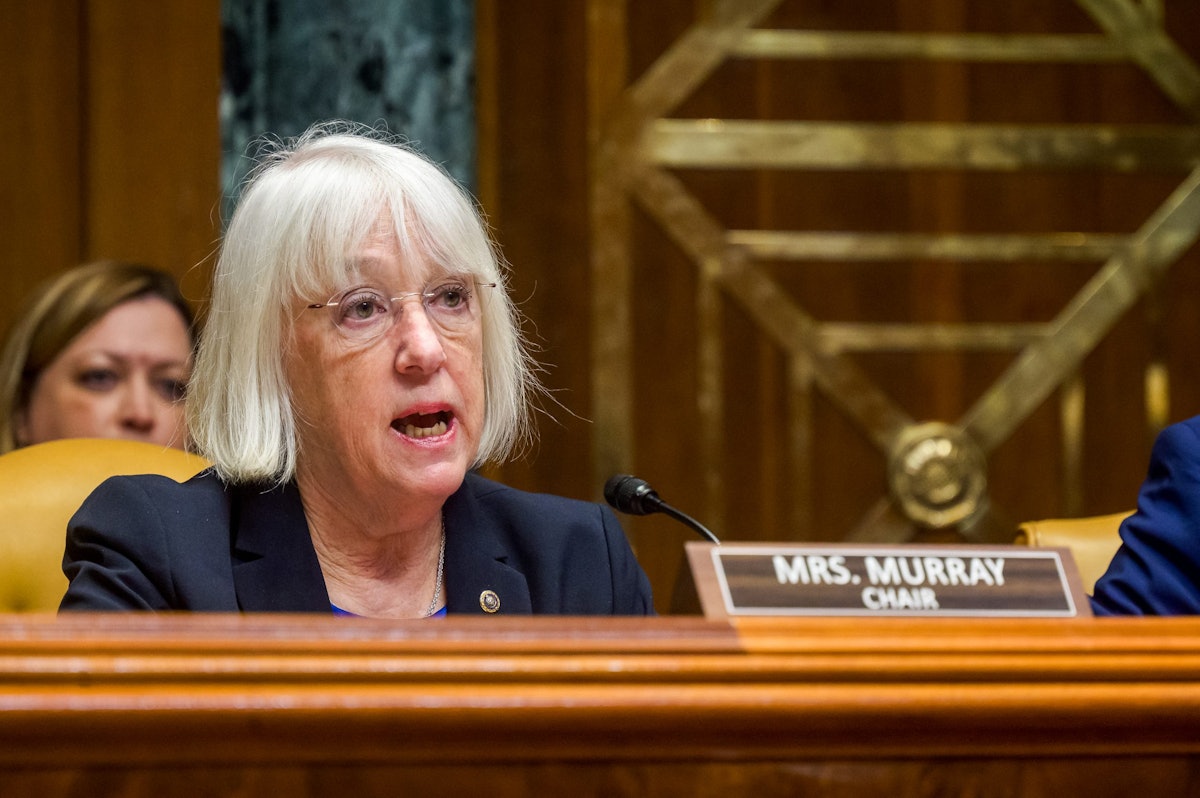
    U.S. Senator Patty Murray U.S. Senator Patty Murray (D-WA) has blocked the fast-track consideration of Mary Christina Riley, President Trump’s nominee to serve as Assistant Secretary for Legislation and Congressional Affairs at the Department of Education, as the administration continues to withhold nearly $7 billion in funding for K-12 schools and adult education programs nationwide.

    The move by Murray, Vice Chair of the Senate Appropriations Committee, forces Riley’s nomination to undergo full committee review rather than skipping directly to Senate floor consideration. The action comes just weeks before the new school year begins, with school districts across the country scrambling to address massive budget shortfalls created by the Trump administration’s funding freeze.

    “As schools nationwide scramble to figure out how many teachers they need to lay off and afterschool programs warn parents to make back up plans—all because President Trump is blocking over $6 billion in education funding he himself signed into law—there is no reason for any Department of Education nominee to skip committee consideration and get fast-tracked for confirmation,” Murray said in a statement.

    The senator’s parliamentary maneuver reflects growing Democratic frustration with the Trump administration’s decision to withhold funding that was previously approved by Congress. The administration notified states on July 1—the traditional deadline for fund distribution—that it was placing the money under review “given the change in Administrations.”

    The funding freeze affects six critical federal education programs that support teacher professional development, English language learning, after-school programs, and services for migrant children. The largest portion consists of $2.2 billion for Supporting Effective Instruction State Grants, which fund professional development and activities to improve teacher effectiveness.

    Twenty-four states and the District of Columbia have already filed a lawsuit against the Trump administration over the frozen funds, with California Attorney General Rob Bonta calling the move one with “no rhyme or reason” that came “abruptly” just weeks before the school year begins.

    The consequences are being felt immediately across the education landscape. The Afterschool Alliance warned that without the funds, “we will quickly see more children and youth unsupervised and at risk, more academic failures, more hungry kids, more chronic absenteeism, higher dropout rates, more parents forced out of their jobs, and a less STEM-ready and successful workforce.”

    The Trump administration’s Office of Management and Budget, led by Russell Vought, has suggested the funding freeze is part of an investigation into whether money has been used for what it calls a “radical leftwing agenda,” including scholarships for undocumented students or teachings on LGBTQ topics.

    Murray rejected these justifications, arguing that the administration has provided no clear explanation for the delay and no timeline for when funding might be released. Even some Republican senators have criticized the move, with Senator Susan Collins (R-Maine) telling Education Week she “strongly oppose[s] the administration’s decision to pause the delivery of education formula grant funding.”

    The funding freeze represents part of a broader Trump administration effort to reshape federal education policy. The administration’s proposed fiscal year 2026 budget would eliminate all six of the grant programs currently under review, as part of a 23 percent cut to domestic spending.

    Murray, a former teacher and longtime education advocate, has been a vocal critic of the administration’s education policies. She has previously blasted Trump’s plans to dismantle the Department of Education, calling the idea “terrible” and arguing that “Trump and Musk don’t know what it’s like to count on their local public school having the resources to get their kids the education they deserve.”

    The affected programs serve some of the nation’s most vulnerable student populations, including:

    • Supporting Effective Instruction State Grants (Title II-A) for teacher professional development
    • 21st Century Community Learning Centers (Title IV-B) for after-school programs
    • Student Support and Academic Enrichment Grants (Title IV-A) for STEM education and school mental health
    • English Language Acquisition (Title III-A) for English language learners
    • Migrant Education (Title I-C) for children of migrant workers
    • Adult Basic and Literacy Education State Grants for adult education programs.


    Source link

  • Julie Su’s Confirmation for DOL Secretary Uncertain as Senator Manchin Seeks Alternative Nominees

    Julie Su’s Confirmation for DOL Secretary Uncertain as Senator Manchin Seeks Alternative Nominees

    In the latest development on Julie Su’s contentious nomination for secretary of the Department of Labor (DOL), Sen. Joe Manchin (D-WV) appears unlikely to vote in favor of Su when her nomination reaches a floor vote in the Senate. Recent news reported that Manchin may be seeking alternative candidates for the position, though no names have been publicly revealed at this time. Given the current 51-49 Democratic majority in the Senate, however, Manchin’s potential opposition means Democrats cannot afford to lose any additional support for the nomination.

    The odds may be further stacked against Su as Sens. Krysten Sinema (I-AZ) and Jon Tester (D-MT) have yet to reveal whether they will support Su’s nomination. Although Manchin, Sinema and Tester all caucus with Democrats, they face reelection in 2024 in Republican-leaning states, leaving them in a precarious position as Republicans are seemingly united in opposing Su.

    Nomination Hearing and Committee Vote 

    On April 19, the Senate Health, Education, Labor, and Pensions (HELP) Committee held a hearing on Su’s nomination to serve as secretary of labor. During the hearing, Republicans and Democrats discussed Su’s performance as the secretary of California’s Labor and Workforce Development Agency (LWDA), including her involvement in the agency’s handling of COVID-19-related unemployment insurance payments. Republicans on the committee pointed to the widespread COVID-19 unemployment insurance (UI) fraud paid out by the state. On the other side of the aisle, Democrats defended Su’s record. With regard to the UI fraud, Democrats held that California’s statistics were low in comparison to other states.

    The hearing also focused on several key labor and employment issues that Su will work on as secretary of labor. On the topic of independent contractor classification, Republicans again focused on Su’s work at the LWDA, calling attention to her role in California’s Assembly Bill 5 law. The law establishes an ABC test, which is a three-pronged test used to classify workers as either employees or independent contractors. Republicans expressed concerns over whether Su would try to implement an ABC test through DOL regulations. In response, Democrats clarified that the ABC test is not included in the DOL’s new proposed rulemaking and that the DOL has previously stated that it lacks the legal authority to implement this test for classifying independent contractors.

    Another issue area raised by Republicans was that of joint employment. Although her support for the joint employment standard was questioned, Ranking Member Bill Cassidy (R-LA) testified that Su has committed to not pursue changes to the joint employer standard if she is confirmed. Su said she understands the importance of the franchising model, stating that there is no plan currently on DOL’s fall or upcoming spring regulatory agenda to change the standard. Notably, she did not say whether there would be a rulemaking on the joint employer issue after the upcoming spring regulatory agenda.

    A week after the hearing, the Senate HELP Committee voted to move Julie Su’s nomination to serve as secretary of labor out of committee and to a full Senate floor vote. The committee vote was divided along party lines, with 11 Democrats voting in favor and 10 Republicans voting against her nomination, foreshadowing the trouble she may face to be confirmed by the full Senate.

    Next Steps 

    Given Manchin’s likely opposition and the narrowly divided Senate, Su’s confirmation as secretary of labor by the full Senate is still uncertain. If Sinema or Tester also commits to opposing Su, Su will likely not have the votes to be confirmed. As a result, Senate Majority Leader Chuck Schumer (D-NY) has yet to announce when the vote on Su’s nomination will hit the Senate floor.

    In the meantime, Su will continue to serve as the acting secretary of labor in the absence of a person confirmed into that position. As a reminder, there are no limitations on the functions of an acting secretary, leaving Su with full authority over the DOL while her nomination is pending. That being said, anticipated rulemakings from DOL, such as the FLSA overtime rule and the independent contractor classification rule, may be held back from publication as a result of Su’s drawn-out nomination process.

    CUPA-HR will keep members apprised of any major personnel or regulatory updates from DOL.

    The post Julie Su’s Confirmation for DOL Secretary Uncertain as Senator Manchin Seeks Alternative Nominees appeared first on CUPA-HR.

    Source link