

Tag: Serve

  • Serve on a Council – CUPA-HR

    Serve on a Council – CUPA-HR

    Serve on a CUPA-HR Council

    Thank you for your interest in serving as a member of one of CUPA-HR’s councils. The application will be posted in early 2026.

    Members who volunteer to take on council roles help the association keep a finger on the pulse of opportunities and challenges for member engagement and the association’s chapters.

    CUPA-HR councils are created by the board of directors based on the association’s strategic priorities. Council members are given specific assignments, are expected to disseminate and accomplish work, and are accountable to and expected to follow the direction of the board of directors. CUPA-HR currently has two councils.

    Member Engagement Council

    The Member Engagement Council focuses on:

    • Reviewing and proposing enhancements to CUPA-HR’s member benefits
    • Engaging in CUPA-HR’s annual membership renewal campaign
    • Reaching out personally to long-time association members and new members
    • Supporting the development and presentation of content promoting association membership and benefits
    • Promoting association engagement and helping recruit leaders for the council
    • Helping CUPA-HR staff create and implement engagement activities for the annual and spring conferences

    The Council is led by a chair, chair elect and CUPA-HR’s senior vice president with guidance and support from CUPA-HR’s director of Member Engagement and manager of Member Engagement.

    Time Commitment

    • Three-year term
    • Monthly council video-conference calls (typically one hour in length)
    • Council work as assigned. This is a working council, so active engagement and commitment to help achieve anticipated outcomes are essential.
    Chapter Support Council

    The Chapter Support Council serves to provide encouragement and practical support to CUPA-HR’s 41 chapters.

    • Each council members will be assigned up to three CUPA-HR chapters to support.
    • Chapter support is tailored to meet the unique needs of each chapter. For chapters operating effectively, the assigned council member’s role emphasizes collaboration and resource-sharing, including facilitating connections between high-performing chapter leaders and those seeking guidance. For chapters requiring additional assistance, council members focus on addressing specific needs such as governance, programming, succession planning, or other operational priorities. This approach ensures that all chapters receive targeted support aligned with their current stage of development. Council members will also periodically travel to chapter events and board meetings to lead and facilitate program segments.
    • Council members will also help develop and deliver in-person content at the annual Association Leadership Program and virtual content for chapter leaders, such as onboarding.

    The council is led by a chair, chair elect and CUPA-HR’s senior vice president with guidance and support from CUPA-HR’s director of Member Engagement and manager of Leader Engagement.

    Time Commitment

    • Three-year term.
    • Monthly council video-conference calls (typically one hour in length).
    • Attendance at assigned chapters’ meetings, at least once per quarter depending on number of chapters assigned (usually a total of two to three hours per quarter).
    • Monthly chapter support calls for chapter leaders (typically one hour in length). Not all council members are required to attend every meeting. However, council members should attempt to attend as many as possible to help facilitate discussion, share ideas and perspectives, and prompt chapter leader participation for their assigned chapters.
    • Council work as assigned, including engagement with designated chapters. This is a working council, so active engagement and commitment to help achieve anticipated outcomes are essential.
    • Prepare and present content for chapter events (as requested and when schedule permits).

    Individuals will not be re-appointed to consecutive terms. It is intended that each council will include new and broad representation to encourage maximum involvement.

    Selection

    Criteria

    Applicants should meet the following criteria:

    • Active status as a CUPA-HR institutional representative, honorary life member, or retiree member
    • Demonstrated interest in and commitment to the mission of CUPA-HR
    • Emphasis on diverse representation of institution type, skills, interests, and needs of the council
    • Demonstrated expertise in the area of specialization being sought
    • If applicable, demonstrated prior involvement with CUPA-HR, CUPA-HR chapters, CUPA-HR committees, etc.
    • Support of employing institution to attend all meetings, in addition to other related activities as appropriate for the duration of council appointment
    • Demonstrated commitment to contribute the time, interest, ability and resources necessary to complete assignments promptly and professionally
    Selection Process
    1. Council member candidates should complete the electronic application no later than January 31. Information regarding council candidates is reviewed only by the council.
    2. In March each year, the council will consider the pool of candidates for vacant seats. Selection will be guided by the criteria above, as well as institutional and geographical representation on the council and the applicant’s commitments to various CUPA-HR committees or programs.
    3. At the spring meeting of the CUPA-HR Board of Directors will receive the council’s selections for approval.
    4. All applicants will be notified of the outcome by the chair of the council after the spring board meeting.

    Source link

  • Mobility Isn’t a Choice: How Higher Education Can Better Serve Military Learners

    Mobility Isn’t a Choice: How Higher Education Can Better Serve Military Learners

    This post is excerpted from a forthcoming book on learner mobility to be published in July 2025 by the American Association of Collegiate Registrars and Admissions Officers.


    Every few years, they pack up their lives, move across states—or oceans—and start over. New schools, new systems, new expectations.

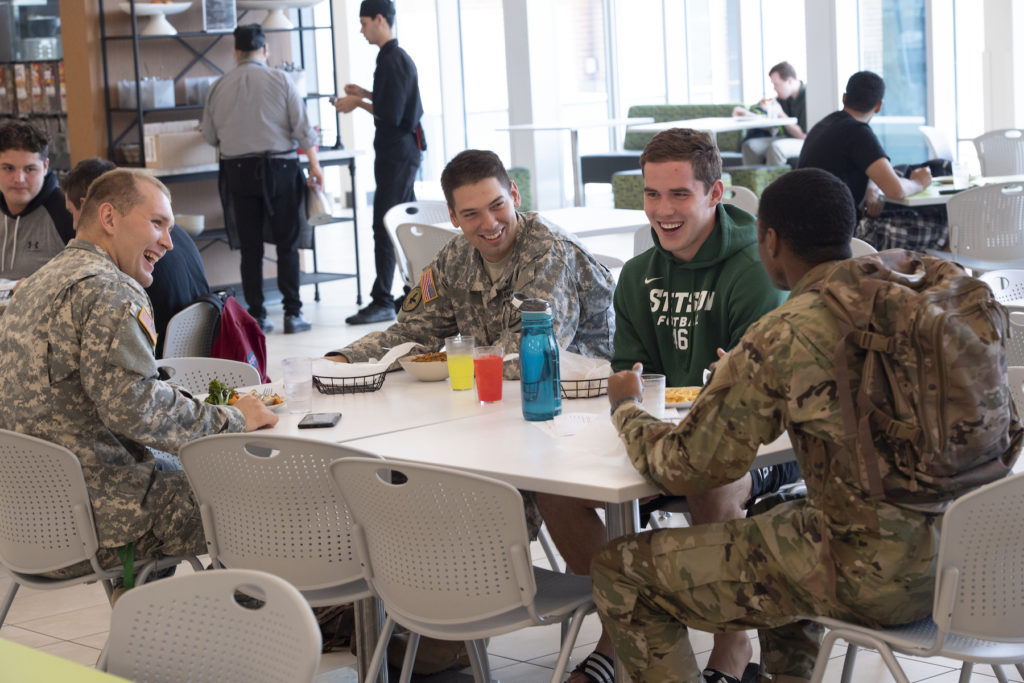
    For military learners, this isn’t a study abroad adventure or a career move; it’s a way of life. Yet while their reality is defined by mobility, too many of our systems in higher education still assume stability.

    Military learners make up about five percent of the undergraduate population—roughly 820,000 students nationwide. But they aren’t a monolith. They’re active-duty service members juggling college coursework with operational demands like exercises, surprise inspections, and even deployments. They’re veterans navigating civilian life, often in isolation, and often while supporting a family. They’re National Guard and reserve members wearing multiple hats that opposing forces demand they change on command. And they’re spouses and dependents navigating new colleges, mid-degree or mid-semester, again and again, with each relocation.

    Their stories are different, but the friction points are the same: staying on track academically while managing a life defined by mobility.

    Unlike traditional students, military learners don’t choose when or where they go—on orders, deployments, or other permanent or temporary service-related relocations. And each move can derail progress. Credits don’t transfer, residency rules reset, tuition costs spike, and financial aid doesn’t always follow the same logic. These students bring resilience, discipline, and lived experience into our classrooms, but higher education hasn’t fully adjusted to meet them where they are.

    The transfer tangle and financial aid maze

    One of the biggest hurdles is transfer credit. While articulation agreements—formal arrangements for transferring credits between institutions—do exist, they often don’t reflect the realities of military learners, especially when it comes to military training or nontraditional learning experiences. Some accumulate credits from multiple institutions, only to be told their new school won’t accept them.

    The result? Lost time, lost money, and unnecessary frustration.

    Add to that the patchwork of residency rules. Even when learners are stationed in a state under military orders, they may not qualify for in-state tuition. While states like Virginia and Florida have implemented inclusive policies, others continue to lag, turning mobility into a penalty as well as a reality.

    Financial aid adds another layer of complexity. Programs like tuition assistance and the GI Bill are essential, but they often fall short. Tuition assistance differs by branch and may not cover full tuition at private or out-of-state schools. The Post-9/11 GI Bill is a powerful benefit, but its eligibility rules and transfer limitations don’t always align with the unpredictable, stop-and-go nature of military life.

    What states and institutions are doing right

    There are promising models to build on. In Ohio, Military Transfer Assurance Guides standardize how public institutions accept military training as credit. Texas and New York offer additional tuition support for veterans, while Florida helps cover housing and textbook costs when GI Bill payments lapse between terms.

    At the institutional level, schools like Grand Valley State University, Syracuse University, and the City University of New York (CUNY) are raising the bar. Their “Veteran Promise” programs guarantee admission, recognize military training, and offer wraparound support tailored to military-connected students.

    That’s not charity—that’s what equity looks like. When institutions commit, military learners succeed.

    The power and promise of credit for prior learning

    Credit for prior learning (CPL) may be one of the most powerful—and underused—tools to support military learners, who bring extensive work and life experience to their postsecondary studies that can be translated into credit.

    CPL recognizes that learning happens outside the classroom: through military training, job experience, CLEP exams, or portfolio assessments. When applied effectively, it can shorten the path to graduation, reduce student debt, and boost confidence for learners who’ve already mastered real-world skills.

    Tools like ACE’s Military Guide help institutions apply CPL consistently and responsibly. But here’s the problem: CPL isn’t consistently communicated, awarded, or valued. In some cases, it’s limited to elective credits rather than core degree requirements, undermining its purpose.

    CPL isn’t just about transfer and awarding credit; it’s also about unlocking opportunity. Validated learning can, and should, play a role in admissions, satisfying prerequisites, waiving introductory or duplicative coursework, and advising military learners on the path that is best for them. When institutions fully embrace the broader utility of CPL, they open more doors for military learners to engage meaningfully with higher education from the very start of their journeys.

    To change that, institutions need more than buy-in—they need system-wide strategies. CPL should be central to transfer reform conversations, especially when supporting learners who are older, more experienced, and balancing school with work or caregiving.

    The role of advising and ecosystem support

    Too often, military learners don’t get the tailored advice they need. On-base education centers can be vital entry points, but they need stronger bridges to campus advising teams who understand military culture, CPL, and transfer systems. Institutions sometimes resist broader CPL use over concerns about revenue loss or academic rigor, while students are left unaware of opportunities due to poor communication or advising gaps. Aligning on-base education centers with well-trained campus advisors is one step forward; improving internal communication across departments is another.

    Student Veterans of America’s Success Hub, which includes the SVA Advising Center, supports all service members, veterans, and their families in making informed decisions about higher education opportunities and meaningful careers through the use of AI, success coaches, and expertise where the military, veterans, and higher education intersect.

    Organizations like NACADA are doing the work to improve professional development in this area, but we need deeper, sustained collaboration. Cross-sector partnerships between colleges, employers, and the U.S. Department of Defense are where real impact happens.

    Programs like Syracuse’s Onward to Opportunity and ACE’s Reimagining Transfer for Student Success illustrate what’s possible when higher education and workforce systems align.

    The BLUF, or Bottom Line Up Front

    Military learners aren’t asking for special treatment. They ask for systems to make sense for the lives they actually lead. With the right policy changes, institutional commitments, and collaborative frameworks, we can turn mobility from a barrier into a bridge.

    But we also need better data, better pathways, and a better understanding of what success looks like for these students—not just access, but degree completion and career readiness. Military learners aren’t an exception. They are the future of an inclusive, prepared, and resilient workforce.

    It’s time higher education met these students where they are because they’re already leading the way.


    If you have any questions or comments about this blog post, please contact us.

    Source link

  • President Biden Nominates Kalpana Kotagal to Serve as EEOC Commissioner – CUPA-HR

    President Biden Nominates Kalpana Kotagal to Serve as EEOC Commissioner – CUPA-HR

    by CUPA-HR | April 11, 2022

    On April 1, President Biden announced his intention to nominate Kalpana Kotagal to serve as a commissioner on the Equal Employment Opportunity Commission (EEOC). If confirmed, Kotagal would give the EEOC Democratic control for the first time under the Biden administration, as she would fill the seat currently held by Janet Dhillon, a Republican appointee whose term expires on July 1.

    Kotagal is currently a partner at Cohen Milstein Sellers & Toll and is a member of the firm’s civil rights and employment practice group and chair of their hiring and diversity committee. In her time with Cohen Milstein, she has worked on several high-profile cases, including:

    • a class action lawsuit representing over 69,000 female employees against Sterling Jewelers alleging gender discrimination and Equal Pay Act violations — a case that may reach the Supreme Court; and
    • a class action against AT&T Mobility Services in which the company’s sales representatives allege that the company’s attendance and late policy amounts to pregnancy discrimination and violates the Pregnancy Discrimination Act, Americans with Disabilities Act and Family and Medical Leave Act.

    Kotagal is also a co-author of the Inclusion Rider, which is a legal template that individuals in the entertainment industry can add to their contracts to demand diversity and inclusivity on projects. She and her co-authors drafted the rider and made it public so anyone in the industry can use it.

    In addition to her work with Cohen Milstein, Kotagal sits on the board of directors of A Better Balance, a nonprofit that litigates pregnancy discrimination claims and advocates for “supportive policies,” including paid sick, family and medical leave, fair scheduling and accessible, and quality childcare and education. She is also a board member for the Public Justice Foundation, a nonprofit focused on “high-impact lawsuits to combat social and economic injustice, protect the earth’s sustainability and challenge predatory corporate conduct and government abuses.”

    Kotagal is also a co-chair of the alumni advisory board on equity and inclusion at the University of Pennsylvania Law School, a member of the American Constitution Society Task Force on #MeToo in the legal profession, and serves on the advisory counsel of the People’s Parity Project, which focuses on reforming the legal system.

    CUPA-HR will monitor and keep members apprised of any updates to her nomination during the confirmation process.


    Source link