By Pete Moss, Business Development Director at Ellucian.
As resourcing pressures grow, the need for efficiencies in the UK higher education sector is well-known. Not only is every university reviewing its costs, systems and processes, but Universities UK too has set up a new Transformation and Efficiency Taskforce under Sir Nigel Carrington to accelerate solutions through collaboration.
The old adage, ‘don’t reinvent the wheel’ seems apt when thinking about shared services in UK higher education. In the USA, there is already a range of shared systems in operation in the university sector. While they differ on detail, they share the objective of saving money through strategies like systematisation, which can mean joining forces in a limited way, or full systems’ integration under one oversight. Forbes’ education writer, Derek Newton, explains in a report for education technology giant Ellucian, that ‘the benefits of system coordination or more complete integration are abundant and accessible, which helps explain the national trend in the direction of larger, more cohesive systems in higher education.’
Newton’s report, based on several weeks of interviews with US university experts and those going through change programmes, explores university systems’ consortia on the East and West coasts and everywhere in between, spanning private, non-profit and public institutions. Collaborations involve any or all of data sharing, regulation and compliance processes, course and resource management, procurement and cybersecurity. Even some competitor institutions have found ways to collaborate. The scale is eye-watering: California’s Community Colleges alone serve 2.1 million students, which is roughly the same size as the UK’s undergraduate population in its entirety.
Back in the UK, one voice which is critical to any efficiency drive is that of the Academic Registrar (AR). Most ARs lead teams at the coal face, delivering the best student experience that they can. Their insights are crucial to success both at an institutional and at a national level.
Ben Rogers, an experienced UK Academic Registrar, reflects below on the concept of collaborative models.
‘Higher education in the UK has been undergoing significant transformation. New initiatives, such as Degree Apprenticeships and Micro-credentials, have begun to reshape how institutions deliver education, particularly in terms of the skills and flexibility that they offer to more diverse and dynamic student body students as well as to employers.
Degree Apprenticeships combine academic study with workplace learning and require universities to collaborate closely with industry partners. Micro-credentials, on the other hand, offer short, targeted learning opportunities to individuals who want to upskill or reskill without committing to a full degree. Both models demand flexibility, responsiveness and innovation in educational delivery, all of which can be supported by a strong, unified IT infrastructure.
However, the current state of IT services in many UK universities is often bespoke and highly esoteric. Many institutions have their own systems which can lead to inefficiencies and inconsistent user experiences. The lack of standardisation often creates additional administrative burdens and can hinder new initiatives like the deployment of AI within their infrastructure.
This is where collaborative IT services can play a pivotal role. The concept of collaborative IT services refers to the practice of consolidating technology infrastructure, applications and support across multiple institutions.
The potential benefits of collaborative IT services for universities are significant. Firstly, collaborative IT services can provide a streamlined, consistent experience for students and staff. A centralised IT platform could allow students enrolled in Degree Apprenticeships to access both their academic materials and workplace-related resources through a single portal. Similarly, Micro-credential learners could benefit from a unified system that offers easy access to course content, assessment tools, and progress tracking, regardless of which institution or provider is delivering the learning.
Collaborative IT services can also enhance the flexibility and scalability of universities’ offerings. The rapidly changing nature of the job market, particularly in sectors such as technology, healthcare, and engineering, demands that universities are agile and can, for example, rapidly design and adopt new programmes. These systems can also help universities maximise their resources. By pooling their technology investments, universities can take advantage of economies of scale, leading to cost savings that can be reinvested. This is particularly important at a time of tightening budgets and has happened already in other parts of the world such as in the conglomerate universities in North America and Sweden.
However, the transition to new ways of working is not without its challenges. For many universities, particularly those with long-established IT systems, the process of moving to a shared infrastructure can feel like a monumental undertaking. But the challenges, whether at a technical, policy or behavioural level, can be overcome by a sensible change programme.
There are several steps that universities can take to ensure a successful transition. The first is to build strong relationships with the educational technology providers (especially providers with expertise in this area) to understand what is possible. The second is to build a strong case for change. Institutions must recognise that, to stay competitive and relevant in the face of new educational initiatives, they must embrace collaboration and innovation. Collaborative IT services offer the opportunity to enhance the student experience, streamline processes, save institutional money, and improve educational delivery. There is a strong rationale here to think about a future roadmap which brings all institutions up to speed over time.
The adoption of collaborative IT services in UK universities is a critical step towards realising the full potential of new educational initiatives. In the long run, collaborative IT services will not only improve the delivery of education but also contribute to the development of a more agile, adaptable, and future-ready higher education sector in the UK.’
While the US and UK higher education systems differ as outlined in HEPI’s report on the subject, they can still learn from one another when it comes to collaborative systematisation. Ultimately, they share the need to be efficient, agile, student and researcher-focused and ultimately the best that they can be.
Lucy Haire, Director of Partnerships at HEPI, also contributed to this piece.
Unless you’ve been living under a rock, readers are likely to be very aware of the current financial challenges facing universities across the UK.
The situation is no different in Scotland where several Scottish universities have reported an adjusted operating deficit position for academic year 2023–24 – although it’s important to note that this position can also reflect the stage of the institution’s investment cycle or actions being taken to restructure as well as reflecting the current year financial performance of an institution.
These are difficult times for the sector. But a silver lining, if there were one to be found, could be that challenging times present an opportunity to do things differently. Approaches that would have previously been deemed too complicated to undertake can find themselves on the table because they have the potential to drive essential efficiencies and promote sustainability.
Looming large
With 18 universities receiving Scottish Funding Council (SFC) core funding for research – “Scottish QR”, the Research Excellence Grant (REG) – the Scottish system is of the size and scale where SFC can regularly have discussions with every vice principal for research. These discussions help us better understand the state of play and the pressures and challenges being faced.
When we most recently spoke with vice principals, as you’d expect, financial sustainability loomed large. Challenges are having a real impact on how many institutions are considering their R&I activity.
One of the things we heard is that an increasing number of institutions are exploring sharing back-office services between institutions to create efficiencies.
This makes sense. Scotland is a small country with a largesse of universities, all of which undertake world-leading research as determined by the REF. We’re also a country of concentrated geography with many of our institutions focused in the same places.
While these are moves in the right direction for sustainability, there are benefits from things happening sooner rather than later, given that there’s no quick fix for university finances. Here SFC has a role to play, by helping catalyse activity.
The fund will allow Scottish universities to apply for funding to develop sustainable models and steps to implement sharing services, including but not limited to sharing tech transfer offices (TTOs) and research offices. It will allow:
The consolidation of existing distinct functions by replacing them with a single shared function.
Institutions with smaller research portfolios to work with larger institutions to gain access to expertise and capability that they don’t currently have.
The creation of shared capacity between groups of institutions where limited functions currently exist but new shared capability would drive efficiencies.
It will kick-start longer-term collaboration by supporting the initial costs of change, enabling institutions to navigate the difficult proof of concept stage and de-risk the exploration of new approaches in a financially constrained environment.
Our intention is to precipitate and fund a different way of working, investing in change which will enable the change to carry on.
A total of £3m will be available over academic years 2025–26 and 2026–27 with grants of between £250,000 and £750,000 on offer through open competition. Grants will help to promote system sustainability by supporting increased inter-institutional operational collaboration.
As well as promoting financial viability, where grants are focused on the sharing of technology transfer office (TTO) services, the fund will increase Scotland’s research commercialisation pipeline by expanding access to key facilities across institutions.
This provides an opportunity to further Scottish government innovation ambitions as outlined in the National Innovation Strategy. University research commercialisation is central to the strategy and ensuring that world-leading research from across all of Scotland’s universities can be successfully commercialised requires access to critical expertise. The UK government’s spin-out review, published in November 2023, also highlights the value of shared technology transfer expertise across universities.
And it’s not necessarily just about sharing research offices and TTOs – we’re interested in other proposals for sharing R&I services which meet our criteria.
Small but mighty
We’re under no illusions that the R&I Shared Services Collaboration Fund will solve or even make a significant dent in the financial challenges currently being faced by universities. No, doing that will require multi-factored activity across many stakeholders.
But we hope that this funding will go some way to promoting sustainability and making Scotland’s small but mighty research system function in a way that reflects the opportunities of scale and collaboration we have on our doorstep.
College administrators wear many hats to ensure their institutions thrive. Stakeholders expect them to be visionaries, budget stewards, tech experts, and student champions. However, wearing too many hats can hinder the ability to meet more strategic and forward-thinking institutional demands, effectively diluting leadership capacity and outcomes.
How can administrators remove some of those hats without losing control or spending more?
How can they guide their institutions to achieve better outcomes with fewer resources?
At the 2024 Collegis Education Summit, keynote speaker Dr. John Smith-Coppes, president of Joyce University, shared his advice for achieving higher ed excellence amid market paradigms, shifting learner expectations, and capacity constraints.
“Embrace your institutional superpower and then partner for expertise. You have to know what you are really good at, but also where you might need help. Having the bravery to objectively look at the brutal facts can take you from good to great. Keep this in mind: Your institution is perfectly designed to get the outcomes it’s getting.”
-Dr. John Smith-Coppes, President of Joyce University
Dr. Smith-Coppes is right. If you’re not getting the results you want, you have to shine a light on the operation and consider what adjustments or changes will better position your institution for desired outcomes.
To echo Dr. Smith-Coppes and answer the earlier questions, working with a strategic partner who has deep expertise in higher education shared services and can manage certain responsibilities more efficiently can get your institution closer to turning aspiration into reality. A true partnership is not about simply outsourcing tasks. Rather, it’s a strategic way to gain access to specialized knowledge, proven methodologies, and scalable resources, all while enabling administrators to focus on their core areas of expertise.
Mounting challenges facing higher ed leaders
When I talk to administrators, the conversation inevitably turns to the challenge of doing more with less. They consistently grapple with four key issues:
Budget Cuts: Funding is uncertain or shrinking, forcing them to rethink the allocation of resources.
Advancing Technology: Technology is rapidly evolving, leaving administrators to scramble after the next advancement or emerging capability.
Socioeconomic Pressures: With some questioning the value of postsecondary education, relevant programs with affordable tuition have never been more critical.
Employee Turnover: Retaining top talent is difficult, leaving critical gaps.
But none of these issues surprise us. On the contrary, Collegis Education has partnered with numerous public and private institutions of varying sizes and levels of brand recognition to address these challenges, uncovering advantageous pathways toward more sustainable and fruitful operations.
The results speak for themselves. Administrators gain more time to leverage their core strengths to elevate their institution’s mission and educational outcomes while actualizing a variety of clear benefits. Here is what Collegis Education continues to deliver for our shared-service partners.
Seven ways shared services in higher education deliver results
Institutions that leverage shared services experience benefits in a variety of key areas. Explore some of the most significant advantages:
1. Improved financial stability
Predictability and optimization are the key words here. With our solutions for technology management, enrollment management, and student services, institutions know exactly what to budget every year. At the same time, we find cost savings by getting a better return on technology investments, strategically decommissioning redundancies, and renegotiating contracts.
2. Enhanced operational efficiency
Is there a better way to reach an institution’s goals more efficiently? More often than not, the answer is yes. We help bring these opportunities to the surface by fully assessing the school’s infrastructure, technology, processes, and other operating procedures. This assessment denotes areas of excellence and points of failure as well as identifies where lag or waste exists. With these insights, we can identify and prioritize emerging opportunities to drive improvement. All this informs a multiyear roadmap that guides higher ed leaders on how to thoughtfully implement changes that engage key stakeholders to accelerate the change management cycle.
3. Objective perspective & best practices
We bring a unique perspective to our recommendations based on our work with other schools while protecting each school’s anonymity and uniqueness. This helps give you a baseline of how your school performs when compared to similar ones. Are you leading or lagging? As an unbiased third party, we offer fresh ideas backed by the knowledge of the results they have produced. It’s a great way to eliminate the “but this is how we’ve always done it” objection and gain buy-in from internal staff.
4. Risk mitigation & accountability
There’s rarely a higher ed situation we haven’t already dealt with at another institution. Our partners benefit from this experience, allowing them to proactively avoid operational and technical risks. They also benefit tremendously from having a partner who holds themselves accountable to quantifiable outcomes measured by agreed-upon service level agreements (SLAs). Together, these provide a lot of peace of mind when it comes to issues like cybersecurity, compliance, disaster recovery, and business continuity.
5. Specialized expertise without the overhead
Hiring and retaining experienced staff is challenging enough. Finding people with skill sets to leverage evolving technology capabilities like artificial intelligence (AI) is a whole other story. That’s why our partners rely on Collegis to provide the expertise that’s hard to find. We’re software-agnostic and implement solutions that are in the school’s best interest from a financial, operational, and strategic perspective without the need for full-time employees to manage them.
6. Data-enabled decision making with full transparency
Data at most institutions is stored in siloes, with limited stewardship and governance over its quality and consistency. However, many of the “data” solutions in the market today are complicated and difficult to implement and support.
This is why we built Connected Core, a scalable higher education industry cloud solution that integrates siloed data sets, systems, and applications to enable institutional intelligence. This proven approach and methodology for collecting, connecting, and activating institutional data eliminates data doubt and gives leaders the confidence to make quickly make strategic decisions with confidence.
7. Focus on core mission & educational outcomes
By outsourcing some functions, administrators can redirect resources and energy to what truly matters: student success. By reducing the number of hats they wear, leaders can instead focus on using the tools they have on hand to manage strategic initiatives that drive institutional growth.
Strategic delegation to yield better outcomes
Some leaders fear losing control through outsourcing, and rightfully so. Too many vendors tout “partnership” when, in fact, they are trying to build an unhealthy dependency that is not mutually beneficial.
That’s just not us. It fundamentally goes against our values and who we are as a company.
Our partnerships are built on collaboration and shared governance. Institutions set priorities, and all actions follow clear assessments, implementation plans, and progress reviews. Our partners gain greater control over technology, enrollment, and budgets. Control isn’t lost, but visibility and accountability are gained.
Shared-services models allow administrators to confidently offload specific responsibilities. Leveraging external expertise amplifies your internal strengths and empowers your leaders to focus on building and maintaining a thriving campus community.
But the first step is starting the conversation with the right partner.
Innovation Starts Here
Higher ed is evolving — don’t get left behind. Explore how Collegis can help your institution thrive.
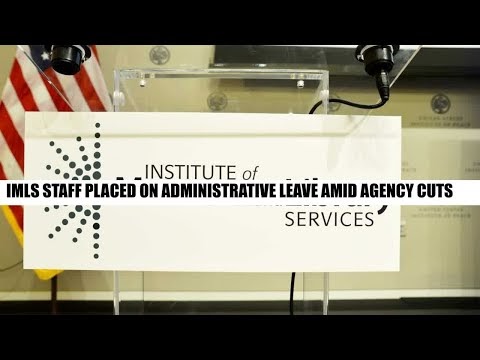
Keith E. Sonderling has been appointed as the acting director during this transition. Staff were notified via email about their 90-day paid leave, which included instructions to return government property and had their email accounts disabled.
IMLS is a small federal agency, with about 70 employees,
that awards grant funding to museums and libraries across the United
States. Last year it granted $266 million to support essential cultural institutions.
Achieving recognition for the significant contribution of professional services staff is a collaborative, cross-sector effort.
With HESA’s second consultation on higher education staff statistics welcoming responses until 3 April, AGCAS has come together with a wide range of membership bodies representing professional services staff across higher education to release a statement warmly welcoming HESA’s proposal to widen coverage of the higher education staff record to include technical staff and professional and operational staff.
By creating a more complete staff record, HESA aim to deliver better understanding of the diverse workforce supporting the delivery of UK higher education. AGCAS, together with AHEP, AMOSSHE, ASET, CRAC-Vitae, NADP and UMHAN, welcome these proposals. We have taken this collaborative approach because we have a common goal of seeking wider recognition for the outstanding contributions and work of our members in professional services roles, and the impact they make on their institutions, regions, graduates and students.
A matter of visibility
Since the 2019–20 academic year, higher education providers in England and Northern Ireland have had the option to return data on non-academic staff to HESA. However, this has led to a lack of comprehensive visibility for many professional services staff. In the 2023–24 academic year, out of 228 providers only 125 opted to return data on all their non-academic staff – leaving 103 providers opting out.
This gap in data collection has raised concerns about the recognition and visibility of these essential staff members – and has not gone unnoticed by professional services staff themselves. As one AGCAS member noted:
Professional service staff have largely remained invisible when reporting on university staff numbers. Professional services provide critical elements of student experience and outcomes, and this needs to be recognised and reflected better in statutory reporting.
This sentiment underscores the importance of the proposed changes by HESA, and the reason for our shared response.
Who is and is not
A further element of the consultation considers a move away from the term “non-academic” to better reflect the roles and contributions of these staff members and proposes to collect data on staff employment functions.
Again, we collectively strongly support these proposed changes, which have the potential to better understand and acknowledge the wide range of staff working to deliver outstanding higher education across the UK. The term non-academic has long been contentious across higher education. While continuing to separate staff into role types may cause issues for those in the third space, shifting away from a term and approach that defines professional services staff by othering them is a welcome change.
As we move forward, it is essential to continue fostering collaboration and mutual respect between academic and professional services staff. Challenging times across higher education can create or enhance partnership working between academic and professional services staff, in order to tackle shared difficulties, increase collaboration and form strategic alliances.
A better environment
By working in this way, we can create a more inclusive and supportive environment that recognises the diverse contributions of all staff members, ultimately enhancing outcomes for all higher education stakeholders, particularly students.
Due to the nature of our memberships, our shared statement focuses on professional services staff in higher education – but we also welcome the clear focus on operational and technical staff from HESA, who again make vital contributions to their institutions.
We all know that representation matters to our members, and the higher education staff that we collectively represent. HESA’s proposed changes could help to start a move towards fully and equitably recognising the vital work of professional services staff across higher education. By expanding data collection to include wider staff roles and moving away from the term “non-academic”, we can better understand and acknowledge the wide range of contributions that support the higher education sector.
This is just the first step towards better representation and recognition, but it is an important one.
This blog was first published in the Oxford Magazine No 475 (Eighth Week, Hilary term, 2025) and is reproduced here with permission of the author and the editor.
Rachel Reeds’ short but comprehensive book, Surviving and Thriving in Higher Education Professional Services: a guide to success(Routledge, 2025), is both an instruction manual for the ‘professionals’ it was written for and an illuminating account of what they do for the academics and students who benefit. However, Reeds is frank about what is sometimes described as ‘trench warfare’, a ‘tension’ between academics and ‘everyone else’, including differences of ‘perceived status’ among the staff of ‘higher education providers’.
Her chapters begin with a survey of the organisation of ‘UK higher education today’. Then comes a description of ‘job or career’ in ‘professional services’ followed by a chapter on how to get such a post. Chapter 4 advises the new recruit about ‘making a visible impact’ and Chapter 5 considers ‘managing people and teams’. The widespread enthusiasm of providers for ‘change’ and ‘innovation’ prompts the discussion in Chapter 6.
Reeds defines ‘Professional Services’ as replacing and embracing ‘terms such as administrators, non-academic staff or support staff’. In some providers there are not two but three categories, with ‘professional services’ sometimes described as ‘academic-related’ and other non-academics as ‘assistant’ staff. Some academics are responsible for both teaching and research but there may also be research-only staff, usually on fixed-term externally-funded contracts, which may be classified on the sameside of the ‘trench’ as academics. The ‘umbrella carriers’ of ‘middle management’ and ‘dealing with difficult things’ provide matter for Chapter 7. In Chapter 8 and the conclusion there is encouragement to see the task in broader terms and to share ‘knowledge’ gained. Each chapter ends with suggestions for further reading under the heading ‘digging deeper’.
The scope of the needs to be met is now very wide. Government-defined ‘Levels’ of higher education include Levels 4 and 5, placing degrees at Level 6, with postgraduate Masters at 7 and doctorates at 8. The Higher Education and Research Act of 2017 therefore includes what is now a considerable range of ‘higher education providers’ in England, traditional Universities among them, but also hundreds of ‘alternative providers’. Some of these deliver higher education in partnership with other providers which have their own degree-awarding powers, relying on them to provide their students with degrees. These all need ‘professional services’ to support them in their primary tasks of teaching and, in many cases, also research.
Providers of higher education need two kinds of staff: to deliver education and research and others to provide support for them. That was noticed in the original drafting of the Further and Higher Education Act of 1992 s.65, 2 (b) which approved the use of (the then significant) ‘block grant’ public funding for:
the provision of any facilities, and the carrying on of any other activities, by higher education institutions in their area which the governing bodies of those institutions consider it necessary or desirable to provide or carry on for the purpose of or in connection with education or research.
In what sense do those offering such ‘services’ constitute a Profession? The Professional Qualifications Act of 2022, awaiting consideration of amendments and royal approval, is primarily concerned with licence to practise and the arrangements for the acceptance of international qualifications. It is designed to set out a framework ‘whereby professional statutory regulatory bodies (PSRBs) can determine the necessary knowledge and experience requirements to work in a regulated profession (for example nursing or architecture)’. It will permit ’different approaches to undertaking’ any ‘regulatory activity’ so as ‘to ensure professional standards’This is not stated to include any body recognising members of the Professional Services of higher education. Nor does the Government’s own approved list of regulated professions.
The modern Professional Services came into existence in a recognisable form only in the last few decades.The need for support for the work of the ‘scholars’ got limited recognition in the early universities. When Oxford and Cambridge formed themselves as corporations at the beginning of the thirteenth century they provided themselves with Chancellors, who had a judicial function, and Proctors (Procuratores) to ensure that the corporation stayed on the right side of the law. The office of Registrar (Oxford) and Registrary (Cambridge) was added from the fifteenth sixteenth century to keep the records of the University such as its lists and accounts.
The needs to be met expanded towards the end of the nineteenth century. Oxford’s Registrar had a staff of five in 1914. The Oxford and Cambridge Universities Commission which framed the Act of 1923 recommended that the Registrar’s role be developed. The staff of Oxford’s Registrar numbered eight in 1930 and forty in 1958. By 2016 the Registrar was manager to half the University’s staff.
The multiplication of universities from the 1890s continued with a new cluster in the 1960s, each with its own body of staff supporting the academics. A body of University Academic Administrative Staff created in 1961 became the Conference of University Administrators in 1993. The resulting Association of University Administrators (AUA) became the Association of Higher Education Professionals (AHEP) in 2023. CUA traced its history back to the Meeting of University Academic Administrative Staff, founded in 1961. Its golden jubilees was celebrated in 2011 in response to the changing UK higher education sector. It adopted the current name in 2023.
This reflects the development of categories of such support staff not all of whom are classified as ‘Professional’. A distinction is now common between ‘assistant staff’ and the ‘professionals’, often described as ’academic-related’ and enjoying a comparable status with the ‘academic’.
The question of status was sharpened by the creation of a Leadership Foundation in Higher Education (LFHE) in 2004, merged with AdvanceHE in 2018. This promises those in Professional Services ‘a vital career trajectory equal to research, teaching and supporting learning’ and, notably, to ‘empower leaders at all levels: from early-career professionals to senior executives’ That implies that executive leadership in a provider will not necessarily lie with its academics. It may also be described as managerial.
Reading University identifies ‘role profiles’ of four kinds: ‘academic and research’; ‘professional and managerial’; support roles which are ‘clerical and technical; ‘ancillary and operational support’. The ‘professional and managerial’ roles are at Grades 6-8. It invites potential recruits into its ‘Professional Services’ as offering career progression at the University. The routes are listed under Leadership and Management Development; ‘coaching and mentoring’ and ‘apprenticeships’. This may open a ‘visible career pathway for professional services staff’ and ‘also form part of succession planning within a team, department or Directorate or School where team members showing potential can be nurtured and developed’.
Traditional universities tend to adopt the terminology of ‘Professional Services’. Durham University, one of the oldest, details its ‘Professional Services’ in information for its students, telling them that they will ‘have access to an extensive, helpful support network’. It lists eleven categories, with ‘health and safety’ specifically stated to provide ‘professional’ advice. York University, one of the group of universities founded during the 1960s, also lists Professional Services. These are ‘overseen by the Chief Financial and Operating Officer’ and variously serving Technology; Estates and Facilities; Human Resources; Research and Enterprise; Planning and Risk; External Relations; student needs etc. The post-1992 Oxford Brookes University also has its Professional Services divided into a number of sections of the University’s work such as ‘academic, research and estates’. Of the alternative providers which have gained ‘university title’ Edge Hill (2006) lists seven ‘administrative staff’, two ‘part-time’, one described as administration ‘co-ordinator’, one as a ‘manager’ and one as a ‘leader’.
Reeds’ study draws on the experience of those working in a wide range of providers, but it does not include an account of the provision developed by Oxford or Cambridge. Yet the two ancient English Universities have their own centuries-long histories of creating and multiplying administrative roles. The Colleges of Oxford and Cambridge similarly distinguish their ‘academic’ from their other staff. For example St John’s College, Oxford and Sidney Sussex College, Cambridge list more than a dozen ‘departments’, each with its own body of non-academic staff.
In Oxford the distinction between academics and ‘professional’ administrators is somewhat blurred by grading administrators alongside academics at the same levels. Oxford’s Registrar now acts ‘as principal adviser on strategic policy to the Vice-Chancellor and to Council’, and to ‘ensure effective co-ordination of advice from other officers to the Vice-Chancellor, Council, and other university bodies’ (Statute IX, 30-32). Cambridge’s Registrary is ‘to act as the principal administrative officer of the University, and as the head of the University’s administrative staff’ and ‘keep a record of the proceedings of the University, and to attend for that purpose’ all ‘public proceedings of the University’, acting ‘as Secretary to the Council.’
The record-keeping responsibility continues, including ‘maintaining a register of members of the University’, and ‘keeping records of matriculations and class-lists, and of degrees, diplomas, and other qualifications’. The Registrary must also edit the Statutes and Ordinances and the Cambridge University Reporter (Statute C, VI). The multiplication of the Registrary’s tasks now requires a body offering ‘professional’ services. ‘There shall be under the direction of the Council administrative officers in categories determined by Special Ordinance’ (Statute c, VI).
Oxford and Cambridge each created a ‘UAS’ in the 1990s. Both are now engaged in ‘Reimagining Professional Services’. Oxford’s UAS (‘University Administration and Services’, also known as ‘Professional Services and University Administration’) is divided into sections, most of them headed by the Registrar. These are variously called ‘departments’, ‘directorates’, ‘divisions’, ‘services’ and ‘offices’ and may have sub-sections of their own. For example ‘People’ includes Childcare; Equality and Diversity; Occupational Health; Safety; ‘Organisational Development’; ‘Wellbeing’ and ‘international Development’, each with its own group of postholders. This means that between the academic and ‘the traditional student support-based professional services’ now fall a variety of other tasks some leading to other professional qualifications, for example from the Chartered Institute of Personnel and Development, the Chartered Management Institute or in librarianship and technology.
Cambridge’s UAS (Unified Administrative Service), headed by its Registrary and now similarly extensive and wide-ranging, had a controversial beginning. Its UAS was set up in 1996 bringing together the Financial Board, the General Board, and the Registry. Its intended status and that of its proposed members proved controversial. Although it was described as ‘professional’, the remarks made when it was proposed in a Report included the expression of concerns that this threatened the certainty that the University was ‘academic led’. This prompted a stock-taking Notice published on 20 June 2001 to provide assurance that ‘the management of the University’s activities, which is already largely in the hands of academic staff, must also continue to be academic-led’ and that the ‘role of the administration is to support, not to manage, the delivery of high-quality teaching and research’. But it was urged that the UAS needed ‘further development both in terms of resourcing and of organization’. The opportunity was taken to emphasise the ‘professionalism’ of the service.
With the expansion of Professional Services has gone a shift from an assumption that this forms a ‘Civil Service’ role to its definition as ‘administrative’ or ‘managerial’. ‘Serving’ of the academic community may now allow a degree of control. Reeds suggests that ‘management’ is a ‘role’ while ‘leadership’ is a ‘concept’, leaving for further consideration whether those in Professional Services should exercise the institutional leadership which is now offered for approval.
In Cambridge the Council has been discussing ways in which, and with whom, this might be taken forward. On 3 June 2024 its Minutes show that it ‘discussed the idea of an academic leaders’ programme to help with succession planning by building a strong pool of candidates for leadership positions within the University’. It continued the discussion at its July meeting and agreed a plan which was published in a Notice in the Reporter on 31 July:
to create up to six new paid part-time fellowships each year for emerging academic leaders at the University, sponsored by the Vice-Chancellor. Each fellow would be supported by a PVC or Head of School (as appropriate) and would be responsible for delivering agreed objectives, which could be in the form of project(s).
‘In addition to financial remuneration’, the Fellows would each receive professional coaching, including attendance on the Senior Leadership Programme Level 3. Unresolved challenge has delayed the implementation of this plan so far.
The well-documented evolution and current review of Professional Services in Oxford and Cambridge is not included, but the story of Professional Services told in this well-written and useful book is illustrated with quotations from individuals working in professional services.
SRHE member GR Evans is Emeritus Professor of Medieval Theology and Intellectual History in the University of Cambridge.
In addition to having sufficient clinicians and trained professionals to support students in crisis, finding ways to deliver wellness support to students before they’re in crisis is critical.
One strategy is embedding mental health counselors into student spaces or academic departments. By integrating services into a physical location, such as a student center, clinicians can connect with students in informal and intentional ways, gaining their trust and supporting specific pockets of the campus community. Around 32 percent of college counseling centers employ an embedded clinician, according to a recent survey by the Association for University and College Counseling Center Directors.
In this episode of Voices of Student Success, host Ashley Mowreader spoke with Estevan Garcia, chief wellness officer at Dartmouth College, to learn more about public health approaches to mental health support on college campuses. Later, hear from Casey Fox, associate director of integrated services at the University of South Carolina, who leads the university’s integrated mental health program, about how efforts have scaled.
An edited version of the podcast appears below.
Inside Higher Ed: The focus on health and wellness is an ever-present and growing concern in higher education, as more institutions realize the potential that negative health and wellness can have on student retention and outcomes and their thriving throughout their college experience. We’ve seen more recently, mental health has grown as a concern; students are telling us that, national data is showing that.
I wonder if you can talk a little bit about the public mental health crisis that we’re seeing among young people, especially college students, and just this ever-growing need for more support and more resources to help our young people?
Estevan Garcia, Chief Wellness Officer at Dartmouth College
Dartmouth College / Katie Lenhart
Estevan Garcia: To think about where we are today, and a little bit about how we got here, as far as young adults, adolescents, teenagers as well, and the challenges around mental health, the way I look at this is probably, for the last 10-plus years, we’ve seen an increase in mental health concerns, an increase in depression, anxiety.
I’m a clinician; I work in emergency departments. And in about 2012, 2014 in that area, I started seeing children and young adults coming in in crisis with mental health crisis. This is not something that we saw before.
I tell folks all the time that I did not have a significant amount of training around emergent mental health crisis in children and young adults—even though my specialty is pediatric emergency medicine, which is this area where we take care of kids in the emergency department—and I say young adults, because we really do cover till about age 25.
So this was not looked at as a need for the training back then, and I trained in the ’90s up to about 2000, but then we saw this really increased need, I think, and most researchers believe that this coincides significantly with the use of a cellphone or the use of an iPhone, and the idea that social media has become so pervasive in everything that our children do.
That is something that we know is a contributor. There’s quite a bit of evidence that suggests that. So what we’ve understood, that we were in crisis for several years, we were starting to see these needs of our children, adolescents and young adults, and then the pandemic hit in 2020 and that really tipped us over.
The reason that happened, and we all understand this now, at the time, I was a public health practitioner and so really was an advocate of, “Let’s make sure we’re not spreading COVID. Let’s close those schools,” and do all of the things that we thought were the way we kept our kids safe and our faculty safe.
What happened is, any of those social connections that students had really dissipated during the pandemic. They were not allowed to be in school together. They weren’t allowed to even play outdoors. We were so worried about the pandemic. That was kind of the fraying of the social fabric that was supporting many of these kids.
So that’s when this really did peak, and what we’ve noticed since then—it wasn’t as if those students in college in 2020 to 2024, it’s over once they graduate. That’s not it at all. Because there were children in middle school who weren’t able to go to school. They were children in elementary school, those kids in high school that clearly impacted their ability to have social cohesion and support from peers.
And what we’ve seen in colleges now is there is a leveling off of the anxiety and depression numbers we were seeing—and that’s good news—since about 2021, 2022. And we’re hopeful that what that means is that we’re starting to see some correction here, but it’s still significant. There’s still a significant need. We’ve kind of returned to that pre-pandemic level of anxiety, depression and need, and that is ongoing. It’s across college campuses, whether you’re an Ivy League or you’re a community college. It’s across high schools, junior highs, and there’s real need for us to pay attention, to support students through this process and happy to talk about that some more, but that need is there. It’s real, and we need to really focus on how we address those needs.
Inside Higher Ed: We know from research also that sometimes college students who have the most need are not the ones accessing resources, as well. We see students from historically marginalized backgrounds, who may come from less resourced communities, feel more independent where like they can solve problems on their own.
I’m thinking of our first-gen students who are historically rewarded for being independent and solving their own problems, and then get to college and might not access those same resources. Providing access to support for these students with greater mental health concerns is a growing issue.
I wonder if you can talk about the clinician role in helping students break down those barriers to accessing mental health resources and understanding the role that they can have in their recovery and their support throughout college.
Garcia: I think it’s important to divide our efforts into two camps, or two ways of really approaching this.
You have individuals who have clinical needs, and at Dartmouth, that’s about 20, 25 percent, and those clinical needs are clinical diagnoses of anxiety or depression … and that is what we provide on campus and a bunch of different ways. I’m happy to address those.
In addition to that, I think we need to work with the rest of the student body from a preventative wellness approach, to make sure that they understand that they have access to wellness activities, to things that build resilience. It’s a toolbox or a tool kit of ways to manage daily stressors in life, failing a test, breaking up with a significant other, potentially loss of a family member—all of the things that they’re going to encounter, in addition to being in academics and being in college.
We need to build their portfolio of resources. That’s also, I think, very important in the way we approach this kind of mental health crisis, is to really look at it from a preventative lens.
So to your point about making sure that we are addressing the individual needs of communities, especially marginalized communities, potentially first-generation communities, I think it’s important to not paint this with a broad brush. We need to be individual, and we need to work with the individuals. We need to look at our individual groups and really understand what they need.
This is when we partner with our students: Our students are telling us what they need, and we can’t assume that they’re going to come to us; we need to come to them. We need to make sure that we’re embedding mental health resources where the students would access them and not [saying], “Come to the counseling center, and that’s when we’ll meet with you.”
One example that I give is our really integrating our ability to support students and their mental health in our athletic programs. And at Dartmouth—we call it DP2, it’s really our Dartmouth Peak Performance—and we are embedding within the varsity sports, but also our club sports intramurals. About 60, 65 percent of students participate in athletics at Dartmouth.
We are really trying to embed within those different systems supports that make it easy for a student to reach out and to talk to the coach, we then help the coach understand how to identify a student in need, what to do if they if they have higher needs, and [if] the coach and or the athletic trainer is comfortable managing, we do training and mental health first aid.
We also do something we call Campus Connect, that allows us to identify the resources for students, and then obviously they can engage my office if there are real concerns about students, that they’re afraid, that need immediate support, and we do that as well. So that is just one example of how we embed within the activities that students are doing every day that they may not think have a wellness component or have this potential counseling component, and they’re there.
Inside Higher Ed: I’m so glad that you bring up this network of supports for students, because there is no silver bullet when it comes to supporting student mental health, and every student’s needs are going to look a little different. It really does take a public health approach to addressing student needs, because they’re all different.
I want to go back to your example of athletics-embedded resources, because I think that’s a really interesting student population that we have where they’re very competitive, they’re driven, they’re engaged, they’re super involved on campus. And sometimes that can result in some of these challenges when it comes to juggling mental health and academics or their personal lives or things like that, and how those targeted resources can address those specific needs that those athletes might have compared to the general student population.
The benefit that it brings, one, to the students, but also to the practitioners who are working with them, and that intimate relationship that they get to cultivate with those athletes. So I wonder if you can just talk about that a little bit more, the relationship between how embedded resources are targeted but also personalized and intimate.
Garcia: For our athletes, and certainly our varsity athletes here, we do have a fairly robust set of offerings. There are two embedded psychologists that have expertise in sports psychology, embedded for the varsity teams and the varsity athletes.
But in addition to that, there are performance coaches, which is a different level of support, but focusing on what the needs are … You would understand that some athletes maybe need nutrition and sleep coaching and support. We have embedded nutritionists; we have sleep support. We have an entire module and support around leadership. So these are all areas across the campus that we’re offering to our athletes.
Initially, this was offered really to our varsity athletes, but as we’re growing our understanding of what our … intramural students participating in sports need, we’ve selected a couple of our really winning supports, and we’re going to be able to expand those in the future to the larger population of athletes on campus. That includes that leadership component, the sleep and nutrition and mental performance. Those are three areas that we will be then taking best practices from varsity athletes and expanding the trainings, the offerings and the supports to other athletes.
Then our ultimate goal is to be able to share these resources with any student on campus who is interested in learning in this way.
There is a direct link from, of course, from our sports psychologist to our overall counseling center. And if they believe someone needs more in-depth counseling, or if they’re identifying other concerns, maybe an eating disorder, we’re able to utilize our system of care here on campus to support the students that have those needs identified through the sports psychologists and performance coaches … and if they need, they’re then moved to our counseling center. We have a close relationship with Dartmouth Health, which is actually our health system here, even being in a rural location, and so we have access to experts across the field, and we’re able to engage with them as well, so that that really does tie in here.
Inside Higher Ed: Placing access where students are is one way to remove barriers to formal mental health care. Are there other strategies or interventions that you’re all considering when it comes to helping students move past the stigma of utilizing mental health resources?
Garcia: Interestingly enough, the stigma for college students is real. It’s still there. It’s probably more significant for male college students than female college students. But it’s clearly something that we see. We mentioned a little bit about marginalized groups and their use of mental health services. I will say one thing we’re proud of at Dartmouth is that our use of mental health services is the same for that 20, 25 percent, depending on the year, is [reflective] of all students. Our first-generation students or historically marginalized students do not utilize health services at a lower rate than anybody else here. We’re really proud about that.
We’ve made the idea of mental health services part of who you are. We’re integrating the idea of wellness into academics. I think that’s something that we forget. Oftentimes people feel like you can move it separate: You’re a student at one point, and then when you’re depressed, you’re not a student, or you’re not somebody who’s worried about the academics. And we clearly know that the pressures of academics for college students and being successful will impact them as well.
So certainly, I think it’s important to understand that you want to go back and you want to see where the students are and meet their needs. But one thing that I think is really important is the idea of peer support.
We have a mental health student union here on campus, and last year, they held a town hall for students, and … four individual students who had mental health concerns and diagnoses came forward and talked about those individual concerns they had and how they were able to receive the help they needed on campus, as well as through the networks, and really bringing forward the idea that it’s OK to have these conversations. They shouldn’t be talked about only in an office. They shouldn’t be talked about in whispers; we really do need to make it clear that if you have concerns or and need support, it’s here.
We train students to be peer advisers and peer supporters, and we do it in many different areas across campus, but that is also very important, because often students will go to a fellow classmate first before they come to us. And I think that’s really important to understand. Our peer supporters get good training. They’re not expected to be counselors. They’re expected to be a shoulder to lean on, and then they understand what the resources are and available on campus. So peer support is really important as well. And I think we need to continue to strengthen those engagements between students as well.
Inside Higher Ed: I’m so glad that that’s something that you touched on, because I think at Ivy institutions specifically, there can be a stereotype or a misconception that students are hypercompetitive. They are obviously high-achieving students, but that they are able to perform those interpersonal relationships and be vulnerable with each other about the struggles that they’re going through as well, I think really helps break down that barrier of “Everybody else is doing just fine, but I’m not,” or “I’m the only person who’s struggling with this” and really creates a community of care where students can lean on one another, and, like you said, be referred to more resources as they need.
The University of South Carolina is one institution that has designated embedded counseling supports as a focus for holistic student care. Casey Fox from Carolina shares more about the campus work.
Inside Higher Ed: When we talk about the integrated services program, what does that mean on a practical and logistical level?
Casey Fox, a licensed marriage and family therapist, professional counselor and professional counselor supervisor, as well as the associate director of integrated services at the University of South Carolina.
University of South Carolina
Casey Fox: Right now, we have integrated clinicians in four spaces across campus. We are a large urban campus, and we have a central hub where we provide our counseling services.
In 2022 we identified a space in the law school, so we embedded a clinician over there, and she has been there doing wonderful work since then, but we now have clinicians that are in three other spaces across campus. So we’ve got the First-Gen Center, we’ve also got Global Carolina, and then we’ve got an embedded clinician in the engineering and computing school.
The idea of integrated services is really just looking at the barriers to access. One of the pieces with that is, when you look at the central hub for coming over for services, a lot of students, depending on positionality, are not able to get to this location. Maybe it’s the parking, maybe it’s the gaps between their classes, maybe they don’t live on campus, and just even coming to that main space is difficult based on all of their competing values.
What we’ve looked at is ways that we can spread staff out in order to address that and remove some of those barriers, so that we’re welcoming students in some spaces that maybe they’re more likely to walk into.
Inside Higher Ed:You mentioned that you started with the law school, and that’s a population when it comes to embedded counseling I haven’t seen quite as much. We talk a lot about athletes or underrepresented minority students. What are some of those barriers for law school students that they’re not engaging at that central facility?
Fox: When we’re looking at the barriers for law school students, I think historically, if we look at the nature of what it is like to be in the law school and be a law student, there’s a lot of time in between courses that students are really just in that space studying.
But the other side of that, we’ve got students who, in many ways, are not traditional students anymore. Law school is not undergraduate, and so there’s a lot of things that are competing for time. There’s some law school students that are parents, there’s some law school students that have families that they attend to, and so coming over to the other side of campus for counseling services, I think can be really difficult.
But the other piece of that, not just time, but I think there’s some perceived stigma. I think that there’s a competitive nature to being a law school student, and with that, I maybe don’t want to say that I feel weak, or this idea that I need the support or help, because this is supposed to be stressful. Then there’s this perception, I think very often, of, like, “If I need any form of mental health resources or services, that must mean that I’m not doing well, or there’s something acutely wrong with me.”
I think what’s really beautiful about embedding someone in that space in particular, is that we’ve been able to do some of this wraparound care and mental health literacy, to really address, right, that, like, “Hey, it’s really normative to need these services.” Our embedded clinician there has become a part of that team and unit, and it’s really normalized what it means to have a conversation with someone in the world of mental health, what it means to maybe acknowledge that mental health has multifaceted layers, and that there’s a lot of areas around prevention. Like, if I’m feeling overwhelmed, maybe I need to talk to somebody to develop some coping strategies so that I can better manage this, so that it doesn’t become something that is maybe acute or pervasive.
Inside Higher Ed: I love the relational element of integrated counseling services, because, like you’ve mentioned, it’s not just that one-on-one time. They’re also not omnipresent, but very present in those spaces, and can build relationships. I wonder if you can talk about that element and how that also decreases barriers to access.
Fox: The relationship part is one of my favorite parts. I am over in the First-Gen Center, and I love the relationships that I’m building, not just with the students in those spaces, but also with any faculty or staff member.
What’s really important to acknowledge is, if we look at students, if we look at faculty and staff, I think everyone genuinely cares about the Carolina community and wants to support each other, but sometimes we don’t know how. I think with faculty staff as well, there’s a lot of things that are competing for our time and energy, and if we feel like maybe we don’t have that skill set, we might not know how to navigate a difficult conversation or sit with a student in distress.
So the relationship building, in particular, for me feels so important, because I’m able to then become a friendly face that students are like, “OK, I chatted with her about the cookies she brought in, and so now I’m feeling a little overwhelmed, and maybe I can go and chat with her about this thing that I’ve never shared with anyone.”
Really similarly with faculty and staff, where they want to help students, but maybe are feeling like they’re not sure how. If they know me, if they’ve met me and had a conversation with me, they are much more likely to say, “Casey, I’d like to consult with you,” which is a significant part of an embedded clinician’s role is: to offer space to consult.
The other piece that I talk about a lot is we consult with a lot of students who actually are wanting to care for friends—sometimes family, too—but friends that are students here. I have people who come in and they’re like, “I’m really worried about my roommate, and I don’t know what to do. I don’t think I need counseling. But can I talk to you about what’s available to me or how I navigate this?” I love that preventative component of this. Not only are we building relationships with a lot of stakeholders and campus partners, but we’re actually out there with students, and I think experiencing, too, some of the emerging needs and really paying attention to some of the specific components of what it means to be a law school student or engineering student.
Yesterday, I was at a career fair for the engineering students, and I watched people walk around, and I thought to myself, “This is really intimidating, right?” I think even being in those spaces, and getting a feel for what that might be like for students allows for me to walk into a space feeling more informed and navigating that with that student.
Inside Higher Ed: There’s obviously benefits to the student, and like you mentioned, the faculty and staff by having you be present in these spaces, but for you as a clinician as well, it helps build your knowledge of what those student needs might be, and gives you an ear to the ground on campus. Can you talk a little bit more about that?
Fox: I believe that is part of our role. We are looking at, what are the trends, what are the themes? Law school students in particular, something our clinician has done there, has named that like during different parts or stages of the semester, there’s things that I want to home in on because students are really focusing hard on all the things they have to do. Some of their courses are comprehensive exams that can be really stressful. There are initiatives that are put in place to provide support and care with awareness of how that structure academically maybe looks different than other structures.
Another, I think, really important piece to acknowledge is that our embedded clinician law school is aware and privy to information on, what does the bar [association] need? Another barrier right is that sometimes people are like, “Well, if I do come in for counseling, is that going to be reported to the bar? Am I not going to be able to then sit for the bar—like, what are the implications of this?”
Our embedded clinician knows the ins and outs of that, knows how to walk students through that and to offer care and comfort around “Hey, like, this is a normative experience, and this is how this process looks, and this is what you need from me,” so that students can get the care they need without feeling that worry on the front side that really is misinformed. Like, “Oh, I can’t do this, because if I do this, then it’s going to mean this thing,” but without that information, or somebody really speaking to that, like, on the ground, I don’t know how students would know otherwise.
Inside Higher Ed: We’ve talked a little bit about how having somebody in the ecosystem with relationships can benefit students and that access, but I also wonder the physical element of just being in student spaces like the first-gen center, and how that can create relationships and, again, remove that barrier to access. Can you talk about the physical environment as well?
Fox: It’s a different environment. Our central hub is part of our health center, and so students feel sometimes, “If I walk into the health center, that means I’m going for this thing that I need.” So whether I’m not feeling well, or I’m going in for therapy, or whatever they might be coming to this space for, and I think it’s really important, when we’re in these communities with students, what we’re doing is we’re not only saying this is really normative and becoming a part of just the culture of that space, but we’re also building relationship and connection for them to feel like they can broach a conversation.
The First-Generation Center in particular is a living-learning community, so there’s a lot of students who live in that space. So I’ll sit in the lobby sometimes with students, and they’re playing board games, or they’re just hanging out in that space eating pizza, and I’m chatting with them again, not even about anything mental health connected, but just being a face and someone that they can maybe feel connected to and feel willing to then come and talk to.
I try to open that up all the time, of, like, if you ever need something from me, if you ever want to talk about anything you might be experiencing, if you have questions, if you’re not sure how to navigate something, let me know what I can do to support you. And again, I think the difference is that’s a really different environment. They’re really comfortable, they’re lounging, they’re eating pizza, or they’re coming to me and saying, “I don’t know if I want to talk to you, but I saw you had cookies,” and I’m like, “Take a cookie. You don’t have to talk to me. I ask nothing of you, other than for you to know that I’m here and I care.” And I think that has been really powerful in itself.
Inside Higher Ed: I think taking those baby steps to understand what mental health services could look like or could feel like is so important for students, especially who might have never engaged with those services previously, or have a misconception of what that looks like and what that means for them. So that’s wonderful that you get to do that.
When it comes to identifying groups that are receiving embedded counselors, how does the university go about that process? Or what are some of those priorities when it comes to identifying where to place counselors?
Fox: We are continuing to develop that process. Moving forward, I think that the demand will continue for this resource.
The law school identified an interest and has a significant amount of care and the mental health of the students there, so it makes a lot of sense that that was our first launching of an embedded clinician. And the other ways that we’ve identified is looking at maybe students that we want to pay a lot of attention to around retention, so wanting to be really on purpose with what we offer, wanting to have somebody who can really advocate for and speak to that.
I think there’s a lot of assumptions we make about the time students want to be seen. If we were to look at just freshman students, there’s this idea of like, well, they want to be seen in the evenings. We often will base some of what we navigate in a counseling center on information that doesn’t maybe comprehensively link to all needs. I think identifying that there’s some unique needs, there’s some unique needs in being an engineering and computing student, and so that has been how we’ve navigated it thus far, is really looking at like, again, we want to retain these people. We want to offer support.
Honestly, the other piece of what we’ve done has been based on this awareness from faculty and staff that have shared, like, “You know what? I think that we maybe need this.” I also want to acknowledge that a lot of these requests are coming from the departments or units themselves, which I feel is really powerful, because for me, that shows this culture of care that is within those units or schools. I really love that. I know engineering, right, like, they really want us in that space, and I can say the same for all of these locations, but we’re welcomed. There’s a lot of care around mental health and sustainable well-being for students, and that is coming from everyone that is working in those units. That feels really powerful, that ask of, like, “I really want to support these students in these spaces, and I’m aware of these unique needs.”
It has been this concerted effort that we’ve made, not just with counseling [services], because this wasn’t necessarily coming from our end. I think that that’s really important to acknowledge these requests [that] were coming from these departments or units or colleges, and that is a really powerful piece, too, where then they’re showing their care for their students.
I have a lot of love for that idea, or concept of, like, not only are we showing up and offering what I believe to be really good-quality care and concern for students, but for them to know that my college, or this part of my identity, cares so much about me being here, that they’re advocating and pushing for a clinician to be in this space, I feel like even just that sets a standard of just welcoming conversation around needs.
Inside Higher Ed: It also seems like the only way to really create these successful partnerships is to be in community with the faculty and staff and really have that trust and relationship. National data has told us that faculty and staff see these issues, but being able to make that partnership and bridge that gap is so critical. So it’s wonderful that you all have that community of care that is able to do that successfully.
If you had to give advice to a practitioner who is looking to get either into this space by finding an embedded counselor to work alongside, or a clinician who’s interested in becoming an embedded counselor, what sort of insight or advice would you give?
Fox: I think as an embedded counselor, we are wearing many hats, and so I think that you have to enjoy wearing many hats. My role shifts so much. Of course, there’s my associate director piece of what I do. But outside of that, I am sitting in spaces where I’m doing one-on-one counseling. I am then walking into [student] tabling [events]. I am walking into maybe some strategic group spaces where we’re looking at some really targeted intentional workshops based on different needs for the population. I’m sitting in these spaces with our stakeholders where I’m, like, talking about what we’re doing and advocating for that and mingling.
Throughout my day, I love that variety, and I think if, you know, somebody were to say, “Would this be something I would want to do?” I would ask that question of, “Do you think that you would enjoy wearing many hats and maybe being in multiple spaces throughout the day?” I boogie around campus. I’m in several places throughout a day as well.
The other piece is this love or care for mental health literacy. I have been at this university for going on seven years, and anyone who knows me here laughs when I say mental health literacy, because it is like something I’ve said a million times since I’ve been here. I love the idea of mental health literacy, the idea that every person who is employed by the University of South Carolina is a critical piece of all students’ sustainable well-being. If I can change that for faculty and staff or a student caring for another student, or student caring for themselves, that feels so incredible to me. This awareness that I can influence not only the individual I’m sitting with, but influence a college or unit or the system in a really meaningful, sustainable way. Anyone who loves that idea of mental health literacy and informing and educating all campus partners on that, this would be a really interesting role that they would probably enjoy.
Historically, some of the data has shown us that these positions at times have led to some feelings of maybe being siloed or separated from the main center, and there’s something really magical about our main center. I love being in that space, because I can consult with all my colleagues that I just think are wonderful and are doing such great work.
When you’re in embedded sites, it makes so much sense, and I’ve worked really hard to do this since I’ve taken on the associate director role of checking in with my embedded staff to make sure that I’m attending to their needs. I don’t want them to feel alone. I want them to feel supported and cared for. But I think when you’re out there and you’re wearing so many hats, and you’re transitioning so much throughout the day, that can be hard to even know to ask for that or when to ask for that. Then you’re also building the relationship with the faculty and staff and the spaces you’re in. And so again, how much of my time and energy do I have to then shift gears for this other need? So I think there has to be a lot of intentionality in how we care for staff in these spaces.
But I am really excited about our move. My position is new, and so we’ve not had anyone in this space, and so that I’m meeting with the staff in those spaces, we’re meeting collectively. We’re meeting individually, and I’m working really intentionally, to make sure that they’re feeling the support and care that you would feel if you were in this main center.
Inside Higher Ed: We’ve talked a little bit about [how] your position is new, and there’s a lot of new things happening on campus when it comes to embedded in integrated counseling. But is there anything else new we haven’t talked on that you want to share?
Fox: I think, over all, embedded counseling is a really important initiative, and I’m really happy that the University of South Carolina is looking at ways that we can expand this. We are looking at a variety of options. I don’t know that there’s a one-size-fits-all [approach].
I’ve talked to so many wonderful people doing the role that I’m doing at other universities across the U.S., trying to inform myself of what some of these best practices are and what I’ve learned. I keep showing up the table saying, “I don’t know that there’s a one-size-fits-all.”
There’s so many nuanced components to what it means to be in some of these spaces and to do this work—what we’re going to do in the School of Computing and Engineering is very different than what we’re going to do in a first-gen center. I have really appreciated getting to maybe understand the flexibility that we need to have, and how we view this.
I think the University of South Carolina is holding a lot of care for this idea that we want to care for all of Carolina, and we want to be really strategic in how we do that. I believe as we move forward, we will continue to be able to collect some really good data that shows the benefit of this.
I speak a lot to the piece of prevention, and I love this idea of “let me have a conversation with someone before this becomes so problematic that now I’m feeling it physically in my body, let me know that it’s really normal that during final exams, I am just really struggling and I’m feeling overwhelmed.”
I think one of the things that embedded clinicians are really able to do in these spaces is normalize a whole lot of concerns for students, faculty and staff, and then really highlight, too, like, the mental health awareness component of when do we need to have some conversations and just care for each other, and when does somebody need therapy? I think that’s a really powerful thing that we need to address as we move forward, that I think embedded is going to be a part of, is really acknowledging that.
The statement that’s come out a lot is we could never hire enough people to meet the need, and I think that what we’re doing is trying to acknowledge that we’re aware of the needs. How can we normalize, how can we offer skills? How can we offer all of these things on the front side, so that students can feel empowered and equipped to navigate what they need for themselves, and to trust that when they do need a higher level of response or more individualized services, or one on one, that they can trust in the care that they will receive, but also trusting in their capacity to care for self when they can, or trusting that I could also have a conversation with a faculty member or staff member? Because all of the University of South Carolina cares about the Carolina community.
College administrators know that technology can be a powerful tool for improving operations and boosting student success. However, given the rapid pace of technological change and the shrinking pool of qualified IT professionals, getting a real return on IT investments can be a major challenge.
While change can seem daunting, IT outsourcing can significantly improve overall IT management and strategic focus while mitigating risk and reducing cost. It’s about more than just maintaining IT infrastructure and operations –– it’s about using technology strategically to create better student experiences and drive institutional success.
One of the primary concerns I hear from administrators is the perceived complexity of moving to an outsourced IT model. Such a move impacts people, processes, and technology – so if not managed thoughtfully, unintended consequences could occur.
However, a well-structured transition plan significantly simplifies the process and minimizes risk to business operations during the transition. At Collegis, we employ a phased approach, starting with a thorough assessment of an institution’s current IT ecosystem, including resources, processes, financials, systems, infrastructure, projects, operations, etc. This assessment forms the foundation of a customized transition plan designed around the institution’s unique needs, outlining each step – from stabilization and standardization to technology optimization and, finally, transformation.
A key element of our approach is the stabilization phase, where we address immediate pain points and ensure that systems are secure and able to support day-to-day operations with no disruptions. This initial phase creates the foundation from which to build on and, ultimately, a level of confidence that sets the stage for longer-term improvements.
By breaking the transition into manageable phases and providing clear communication throughout the process, we alleviate much of the anxiety associated with change. Instead of a big “lift and shift,” the multi-year transition plan means current systems and processes continue to be supported. Administrators often express relief once they understand our structured approach and how it addresses their specific needs.
For example, our managed IT services solution for Saint Francis University involved stabilizing the core technology and infrastructure, standardizing expectations through strong IT governance (including installing a virtual CIO), and optimizing business processes and infrastructure for increased efficiency. This identified $200,000 in budgetary waste that was able to be reallocated toward technology upgrades.
Cost is, of course, a major factor in any IT outsourcing decision. Administrators are understandably concerned about the financial implications of outsourcing.
Studies show that many higher education institutions spend more than 75% of their IT budgets on basic support and technology maintenance. This is partially due to the technology debt that accrues after years of neglect and a lack of the precise skill sets needed to address deficiencies and create more efficient and effective operations. Just think of the impact technology could make if schools could reduce this amount by 25%+ and reallocate these dollars to improving student experiences or driving institutional cost savings.
Outsourcing can free up these valuable financial resources, enabling institutions to focus on projects that drive growth and enhance the student experience. Collegis partners typically experience:
Predictable budgeting: We offer all standard IT management services through a clear and transparent fixed fee mutually determined for the life of the partnership so institutions know exactly what they spend for IT management every year. There are no surprises.
Access to top IT talent: While Collegis goes out of its way to assess existing staff and rebadge those who have the needed skill sets and cultural fit, we also bring a team of more than 185 IT professionals to our partnerships, ensuring schools have access to the right skillsets at the right time.
Better contract negotiations: Schools benefit from Collegis’s expertise in IT contract negotiations and cross-institutional expertise during all technology contract negotiations. We have long-term relationships with third-party vendors and can negotiate from a position of strength because we support dozens of similar institutions.
Lower cybersecurity costs: We handle network, application, and data security, reducing a school’s need for additional resources or security solutions. Our partnerships have also helped many schools successfully stabilize or even reduce their cybersecurity insurance premiums.
Elimination of consulting fees: Our model also eliminates the need for expensive consultants to fill staffing gaps or deliver strategic projects.
Most schools find that an IT managed services partnership with Collegis either saves them money or is cost-neutral. Our economies of scale enable us to provide expert services at a lower cost than most institutions could achieve in-house. Plus, we provide clear service level agreements (SLAs) to ensure accountability.
Beyond cost savings, outsourcing can also improve ROI by ensuring technology investments deliver their intended value. By leveraging the expertise of a dedicated IT partner, institutions can optimize their systems and ensure they are getting the most out of their technology investments.
Some administrators worry about losing control when they outsource IT. They’re concerned about relinquishing oversight of critical systems and data. However, a well-designed outsourcing agreement includes clear governance structures and communication channels, ensuring they retain control.
One way we’ve addressed this concern is by establishing a steering committee for IT governance that includes representatives from the institution’s leadership and fosters collaboration and shared decision-making.
Data security is paramount, and we understand the sensitivity of institutional data. We are a SOC 2-compliant organization that undergoes regular external audits to ensure the security and integrity of the data we manage.
Our dedicated information security officers (CISOs) work closely with each institution to implement best practices and address any security concerns. We also proactively monitor systems for potential threats, leveraging our experience working with multiple institutions to identify and mitigate risks before they escalate.
Outsourcing IT management in higher education can be a game-changer for institutions looking to navigate the complexities of the evolving IT landscape. Working with a partner that focuses on open communication, a phased approach to transitioning, a stronger cybersecurity posture, and leveraging your technology’s true potential can eliminate concerns about complexity, cost, and control while enabling schools to achieve strategic goals.
Finally, when considering IT outsourcing, institutions cannot underestimate the importance and value of cultural fit. Finding a partner who shares your values and can be trusted to run a critical function for your institution is just as important as any of the other considerations I’ve highlighted above.
— Kim Fahey, CEO Collegis Education
Innovation Starts Here
Higher ed is evolving — don’t get left behind. Explore how Collegis can help your institution thrive.
“The Turkish young, sitting at the centre of Europe and Asia, are true globalists. Their appetite for winning on the international stage is a delight to watch,” said Akshay Chaturvedi, CEO of Leverage Edu announcing the news that the edtech firm, which specialises in study abroad services, will be launching its services in Türkiye.
“To fuel those dreams, we are incredibly excited to launch LeverageTürkiye — starting with our AI tools for counsellors, the Leverage Edu consumer app for students, Student-ops 360 for partners, and a line-up of special exclusive products tailored to meet that ‘education to career’ arc.”
With over 50,000 Turkish students pursuing higher education abroad in 2024 – a number that continues to climb – the country has emerged as a critical player in the global education landscape.
Leverage Edu CEO and founder, Akshay Chaturvedi with Ali Can Cirak, regional manager, business development.
Factors fuelling this growth include Türkiye’s youthful population, where more than 50% of its citizens are under 30, and an increasing demand for globally recognised degrees in fields such as engineering, medicine, and business.
The Turkish young, sitting at the centre of Europe and Asia, are true globalists Akshay Chaturvedi, Leverage Edu
“Türkiye represents a very dynamic opportunity, just given where it sits on our planet,” said Chaturvedi. “As a country with a vibrant young population and increasing global mobility, it not only offers immense potential for growth but also serves as a bridge linking two of the most dynamic educational ecosystems in the world – the East and the West – hence an important first-level brick on top of which we’d like to build much more.”
To support its Turkish students and partners, Leverage is deploying a dedicated team on the ground in Türkiye, including a country manager to oversee operations and drive business success in the region. Additionally, several university representative desks will be dedicated to Turkish students.
In the coming months, Leverage’s ancilllary services Fly Finance and Fly Homes will also be available in Türkiye.
“We are committed to creating many win-wins, for students and institutions alike,” Chaturvedi added.
This blog builds on my presentation at the BERA ECR Conference 2024: at crossroads of becoming. It represents my personal reflections of working in UK higher education (HE) professional services roles and simultaneously gaining research experience through a Masters and Professional Doctorate in Education (EdD).
Professional service roles within UK HE include recognised professionals from other industries (eg human resources, finance, IT) and HE-specific roles such as academic quality, research support and student administration. Unlike academic staff, professional services staff are not typically required, or expected, to undertake research, yet many do. My own experience spans roles within six universities over 18 years delivering administration and policy that supports learning, teaching and students.
Traversing two tracks
In 2016, at an SRHE Newer Researchers event, I was asked to identify a metaphor to reflect my experience as a practitioner researcher. I chose this image of two train tracks as I have often felt that I have been on two development tracks simultaneously – one building professional experience and expertise, the other developing research skills and experience. These tracks ran in parallel, but never at the same pace, occasionally meeting on a shared project or assignment, and then continuing on their separate routes. I use this metaphor to share my experiences, and three phases, of becoming a professional services researcher.
Becoming research-informed: accelerating and expanding my professional track
The first phase was filled with opportunities; on my professional track I gained a breadth of experience, a toolkit of management and leadership skills, a portfolio of successful projects and built a strong network through professional associations (egAHEP). After three years, I started my research track with a masters in international higher education. Studying felt separate to my day job in academic quality and policy, but the assignments gave me opportunities to bring the tracks together, using research and theory to inform my practice – for example, exploring theoretical literature underpinning approaches to assessment whilst my institution was revising its own approach to assessing resits. I felt like a research-informed professional, and this positively impacted my professional work, accelerating and expanding my experience.
Becoming a doctoral researcher: long distance, slow speed
The second phase was more challenging. My doctoral journey was long, taking 9 years with two breaks. Like many part-time doctoral students, I struggled with balance and support, with unexpected personal and professional pressures, and I found it unsettling to simultaneously be an expert in my professional context yet a novice in research. I feared failure, and damaging my professional credibility as I found my voice in a research space.
What kept me going, balancing the two tracks, was building my own research support network and my researcher identity. Some of the ways I did this was through zoom calls with EdD peers for moral support, joining the Society for Research into Higher Education to find my place in the research field, and joining the editorial team of a practitioner journal to build my confidence in academic writing.
Becoming a professional services researcher: making the tracks converge
Having completed my doctorate in 2022, I’m now actively trying to bring my professional and research tracks together. Without a roadmap, I’ve started in my comfort-zone, sharing my doctoral research in ‘safe’ policy and practitioner spaces, where I thought my findings could have the biggest impact. I collaborated with EdD peers to tackle the daunting task of publishing my first article. I’ve drawn on my existing professional networks (ARC, JISC, QAA) to establish new research initiatives related to my current practice in managing assessment. I’ve made connections with fellow professional services researchers along my journey, and have established an online network to bring us together.
Key takeaways for professional services researchers
Bringing my professional experience and research tracks together has not been without challenges, but I am really positive about my journey so far, and for the potential impact professional services researchers could have on policy and practice in higher education. If you are on your own journey of becoming a professional services researcher, my advice is:
Make time for activities that build your research identity
Find collaborators and a community
Use your professional experience and networks
It’s challenging, but rewarding, so keep going!
Charlotte Verney is Head of Assessment at the University of Bristol. Charlotte is an early career researcher in higher education research and a leader in within higher education professional services. Her primary research interests are in the changing nature of administrative work within universities, using research approaches to solve professional problems in higher education management, and using creative and collaborative approaches to research. Charlotte advocates for making the academic research space more inclusive for early career and professional services researchers. She is co-convenor of the SRHE Newer Researchers Network and has established an online network for higher education professional services staff engaged with research.