Tag: sets

  • Why empowering students sets the best course for future success

    Why empowering students sets the best course for future success

    Key points:

    When middle school students make the leap to high school, they are expected to have a career path in mind so their classes and goals align with their future plans. That’s a tremendous ask of a teenager who is unaware of the opportunities that await them–and emerging careers that have yet to exist.

    Mentors, parents, and educators spend so much time urging students to focus on their future that we do them a disservice by distracting them from their present–their passions, their interests, their hobbies. This self-discovery, combined with exposure to various career fields, fuels students’ motivation and serves as a guidebook for their professional journey.

    To meet their mission of directing every student toward an individualized post-secondary plan, schools need to prioritize recognizing each student’s lifestyle goals. That way, our kids can find their best-fit career and develop greater self-awareness of their own identity.

    Give students greater autonomy over their career exploration

    The most problematic aspect of traditional career-readiness programs is that they’re bound so tightly to the classes in which a student excels.

    For example, a high schooler on a technology track might be assigned an engineer as a mentor. However, that same student may also possess a love for writing, but because their core classes are science-based, they may never learn how to turn that passion into a career in the engineering field, whether as a UX writer, technical editor, or tech journalist. 

    Schools have the opportunity to help students identify their desired lifestyle, existing strengths, and possible career paths. In Aurora Public Schools in Nebraska, the district partnered with our company, Find Your Grind, an ESSA Tier 2 validated career exploration program, to guide students through a Lifestyle Assessment, enabling them to discover who they are now and who they want to become. Through this approach, teachers helped surface personalized careers, mentors, and pathway courses that aligned with students’ lifestyle goals.

    Meanwhile, in Ohio, school districts launched Lifestyle Fairs, immersive, future-ready events designed to introduce students to real-world career experiences, industry mentors, and interactive learning grounded in self-discovery. Hilliard City Schools, for example, welcomed more than seventh-grade students to a Lifestyle Fair this past May

    Rather than rely on a conventional booth-style setup, Hilliard offered interactive activations that centered on 16 lifestyle archetypes, including Competitor, Explorer, Connector, and Entrepreneur. The stations allowed students to engage with various industry leaders and participate in hands-on activities, including rocket launch simulations and creative design challenges, to ignite their curiosity. Following the Fair, educators reported increased student engagement and a renewed enthusiasm for learning about potential career paths.

    Create a fluidity path for future success

    According to the World Economic Forum, by 2030, 97 million jobs will be displaced by AI, significantly impacting lower-wage earners and workers of color. At the same time, 170 million new jobs are expected to be created, especially in emerging fields. By providing students more freedom in their career exploration, educators can help them adapt to this ever-changing 21st-century job market.

    Now is the time for school districts to ensure all students have access to equitable career planning programs and work to close societal disparities that hinder professional opportunities. Instead of setting students on a predetermined pathway toward a particular field–which may or may not exist a decade from now–educators must equip them with future-proof and transferable core skills, including flexibility, initiative, and productivity, in addition to job-specific skills. As the job market shifts, students will be prepared to change direction, switch jobs, and pivot between careers. 

    In Hawaii, students are taking advantage of career exploration curriculum that aligns with 21st-century career and technical education (CTE) frameworks. They are better prepared to complete their Personal Transition Plans, which are required for graduation by the state, and have access to micro-credentials that give them real-world experience in different industries rather than one particular field.

    For decades, career planning has placed students in boxes, based on what the adults in their lives expect of them. Ensuring every child reaches their full professional potential means breaking down the barriers that have been set up around them and allowing them to be at the center of their own career journey. When students are empowered to discover who they are and where they want to be, they are excited to explore all the incredible opportunities available to them. 

    Latest posts by eSchool Media Contributors (see all)

    Source link

  • A government running out of road still sets the economic weather for higher education

    A government running out of road still sets the economic weather for higher education

    For a party that it’s become fashionable to criticise for failing to have prepared for power, Labour has in fact set an awful lot of ambitious policy machinery into motion over the last 16 months.

    There’s barely been a month go by without some large-scale reform to how the country is governed, organised, and understood as a sum of diverse parts and competing pressures, and we’ve had our work cut out thinking through the implications of each for the higher education sector: from devolution to industrial strategy, from health reform to an explicit tying together of skills and migration (which has barely got started yet), from a new communities strategy to belatedly moving skills policy to the Department for Work and Pensions.

    Whatever your views on the merits and mechanics of these, and the many other initiatives that different departments have launched, they are all downright interesting – and pose a plethora of questions for how higher education fits in and demonstrates value.

    But all need time. The overall ambitions of devolution are still on their starting blocks as councils pitch their ideas for new geographies; the industrial strategy was explicitly badged as bearing fruit in 2035; the NHS workforce plan that should really have been alongside the 10-year health plan has been delayed to the spring – and so on and so on. No-one involved in pulling together all these long-term reforms did so under the assumption that all the pieces would be in place within one parliamentary term.

    Yet here we now are, with the commentariat consensus being that both Keir Starmer and Rachel Reeves are toast, and public sentiment pointing emphatically in that direction as well – though this is not to say the party cannot regain momentum under a new leader. The sector is already asking questions about how to prepare for a Reform government (as discussed in the most recent instalment of our new HE Influence newsletter, I should mention).

    The post-16 white paper presented a somewhat upbeat vision of what the government would like higher education’s role to feel like across the country, but was weaker on any kind of immediate reform, proposing instead that traditionally glacial changes to research funding, a piece-by-piece strengthening of the Office for Students’ remit, and putting FE, HE and business in the same room would do much of the heavy lifting, given time and goodwill.

    All this feels like a recipe for the sector to retreat to more comfortable home territory over the next few years, fighting battles over the international student levy, the size of teaching grants, and the shape of the REF, and gradually giving up on pushing for a central role in the government’s overall vision for the country, given the increasing probability that dreams like a planned and unswerving industrial strategy will all be swept away in 2029.

    Quite what’s to be done about all this is a question for another day – with the Budget looming on Wednesday, and admittedly still three and a half years in office remaining for Labour, the other thing that’s worth reflecting on is quite how much the choices the Chancellor makes around tax, public spending, debt, and general macroeconomics will determine the success – or otherwise – of higher education institutions in England over the next few years. These big tickets items all impact the sector deeply, however much the temptation might be to throw one’s hands up in the air, snipe about a “tax” on overseas recruitment, and start looking at what opposition parties can be convinced of.

    Labour on labour

    There’s a pretty strong case to be made for the most consequential policy decision for universities since Labour came to power being the decision to hike employer national insurance contributions in last autumn’s budget. Clearly it has cost universities a small fortune, and the move also sucked up a sizeable slice of the government’s various funding “boosts” for schools and FE colleges – and the NHS and elsewhere – leaving less putative generosity to go around.

    But perhaps most importantly of all, the ENICs rise has decimated the labour market for young people – in the court of public opinion at least – by making new hires and part-time workers more expensive, all while AI is supposedly making them obsolete.

    The result is that university graduates – and the institutions ever more judged on those graduates’ success – are seen to be in a right old state. The Guardian was the latest to take a run at this last week, with tales of qualified grads banging their heads against the job application wall, accompanied by analysis from the paper demonstrating that almost half of all jobs lost since Labour came to power were among the under-25s. Down in the small print we see that this is driven almost entirely via reduced employment of 16- and 17-year-olds, but the vibes aren’t good, even if less hyperbolic analysis from the likes of the Institute of Student Employers and Prospects Luminate paints merely a concerning, rather than cataclysmic, picture.

    The sad fact is that, longer term, this deluge of negative publicity about the value of a degree – alongside a necessary tailing off of the supposed “graduate premium” as a viable sector talking point as the minimum wage heads ever up – will inevitably move from being fodder for anti-HE journalists to actually driving changes in young people’s decision-making (even if a tight jobs market in the short-term often pushes graduates back towards postgraduate study) and scar the sector’s ability to make its case for its value.

    The result is that keeping a watchful eye on Labour’s economic moves around the costs associated with employment – both on Wednesday and beyond – has become a matter of some importance for higher education. Further increases in the national living wage over the next few years, lower-profile changes to business taxation, and even wildcards like any surprise revenue-raising changes to the growth and skills levy, all hold the possibility of making this problem worse. All while leading to higher costs for universities and making it harder for students to work alongside their studies, despite this being ever more necessary.

    Pound in pocket

    Rachel Reeves finally taking the plunge with an income tax rise, as a good proportion of the Labour backbenches were calling for, seems to have definitively fallen off the table for the Budget – with a handful of consequences worth noting for the sector.

    First, it will almost certainly mean that future spring and autumn statements will be equally fraught, as the Treasury fails to leave clear blue water between its spending plans and its spending rules. By not maintaining a sensible “headroom”, public finances will remain permanently at the mercy of external shocks and OBR downgrades, and we’ll probably be back here in less than six months’ time wondering what levers will need to be pulled. At least at some point in the Parliament, said levers will end up being haircuts to departmental budgets rather than new taxes or further borrowing.

    Following on from this, the use of a basket of smaller revenue-raising measures to partially fill the gap left by not raising income tax increases the likelihood that this shortfall gets filled by employment-related measures – that is, all the issues we’ve been over above, which have serious consequences for universities as large employers who are not quite in the public sector (as may be the case this week if rumoured changes to salary sacrifice rules go ahead).

    And the other effect that an income tax rise would have achieved, which the “smorgasbord” approach will not to the same extent, is bringing down inflation.

    Inflation is arguably the most serious financial threat that higher education institutions face. Even if many within the sector, both in internal conversations and public pronouncements, are often quite happy to let audiences believe that measures like the dependants ban are what’s most responsible for blowing a hole in HE finances, the fundamentals weren’t sound even before the post-pandemic recruitment glut.

    While tuition fees and maintenance loans in England (and, at least for one year, Wales) are now linked to inflation, or more precisely to inflation forecasts – Office for Budget Responsibility predictions on Wednesday will set the levels for 2026–27 – the idea of any measures to compensate for all the shortfalls baked in over several years of rocketing price rises appears to have been permanently nixed.

    And it’s worth bearing in mind that the index link does not mean that either student maintenance or teaching funding will actually keep pace with inflation in the coming years. For one thing, OBR forecasts have repeatedly underestimated inflation, and there’s no corrective mechanism in the system. For student maintenance, even if predictions come true, other features of the system mean that the average, rather than maximum, maintenance loan continues to be worth less each year.

    For teaching funding, it’s important to stress that Labour has in no way committed to keeping the overall package inflation-proofed. While tuition fees are the major part here, other elements such as high-cost subject funding took a real-terms tumble this year, and no-one is predicting that the reforming the Strategic Priorities Grant means upward movement on how much it’s worth – the reverse is far likelier, given DfE’s commitments elsewhere.

    University staff have had a decade or more of below inflation pay rises, and there doesn’t seem any serious capacity or appetite among higher education employers to do fundamental work here – the year-on-year squabbles will continue, and high levels of inflation over the coming years will eat further into staff remuneration and the attractiveness of higher education careers.

    And inflation-linked rises in tuition fees will also change applicant behaviour. One thing we’ll start getting a sense of on Wednesday will be the likelihood of when fees will cross the (supposedly) psychologically important barrier of £10,000. Back in March, the OBR was expecting RPIX to run at 2.7 per cent in Q1 2027, and 2.8 per cent in Q1 2028, which would lead to tuition fee caps of around £9,790 in 2026–27 and around £10,065 in 2027–28. We won’t know for certain until autumn 2026, but the picture will start to come into focus.

    Now the significance of fees being materially above, rather than roughly equal to, £10k is perhaps overstated. But DfE isn’t really sure – it has reportedly commissioned modelling on how students will respond to rises, but the results aren’t due until the spring.

    All in all, there’s a whole host of reasons why Budget decisions and their effect on inflation, as well as the OBR forecasts themselves, have become heavily intertwined with the future behaviour and wellbeing of higher education staff and students.

    Gilt trips

    Perhaps the most overlooked publication of the last few years for really understanding how the Treasury thinks about higher education is the Institute for Fiscal Studies analysis of how the interplay between interest rates and Treasury gilts affect the cost of student loans.

    In a nutshell, it costs far more for the government to borrow than it used to (the 15-year gilt yield has continued to rise since the IFS did its sums in January 2024), and so it’s very reluctant to allow for too much expansion in the student loan book – it’s a far cry from when the broad strokes of student finance were put in place by the coalition government, and this was basically thought of as free money.

    This goes a long way to explain why the government is so reticent to use the student loan book in any radical way – and thus we see things like a real-terms freeze in tuition fees being presented as if it’s an almost saint-like act of generosity to the sector, or the foundering of DfE’s tepid-but-probably-genuine desire to properly boost maintenance loans.

    We’re waiting for the specifics (hopefully) of maintenance grant implementation on Wednesday, but the cost of government borrowing feels like it has played a role in the last year of behind-the-scenes policy deliberations here. In the run-up to last autumn’s Budget, there was plenty of speculation, and government nods to the press, about the potential for movement on the overall maintenance package and grants in particular. Clearly the battle with the Treasury was lost, and DfE was told to come up with an alternate source of funding – hence the international student levy. What we don’t yet know is to what extent grants will replace, rather than supplement, loans – if what we see is a switch from one to the other, the expense to the public purse of borrowing is a likely primary driver, especially given the hidden costs associated with annual tuition fee rises. While the sector isn’t really getting any more money in real terms, this isn’t to say that the government’s finances are not being stretched by indexing fees.

    What this all means is that, unfortunately, the sector needs to keep an eye on the gilts market. The supposed flip-flop on raising income tax has already done some damage here, and the government repeatedly needing to borrow more than it expected to is another issue. There’s a wider question of perceived government competence around balancing the books that drives behaviour too – confidence is in short supply as it is, and it will get worse if the Starmer era implodes. This all equates to longer-term uncertainty about the use of the student loan book.

    Even if you’ve given up on the Labour government in its current form, and are pinning hopes on a future government being more receptive to calls for support and investment in both universities and students, Number 10 and the current Treasury team are still setting the economic weather. While much of the sector will be waiting for the moment Rachel Reeves stops speaking on Wednesday to see the fee levy policy paper – assuming there is one, and the can doesn’t get kicked – there are many reasons to think the wider public finances are a much more important determinant of the future of higher education. And it’s one that isn’t painting a particularly cheery picture at the moment.

    Source link

  • Eviction sets single mom on a quest to keep her kids in their schools

    Eviction sets single mom on a quest to keep her kids in their schools

    by Bianca Vázquez Toness, The Hechinger Report
    November 18, 2025

    This story was produced by the Associated Press and reprinted with permission.

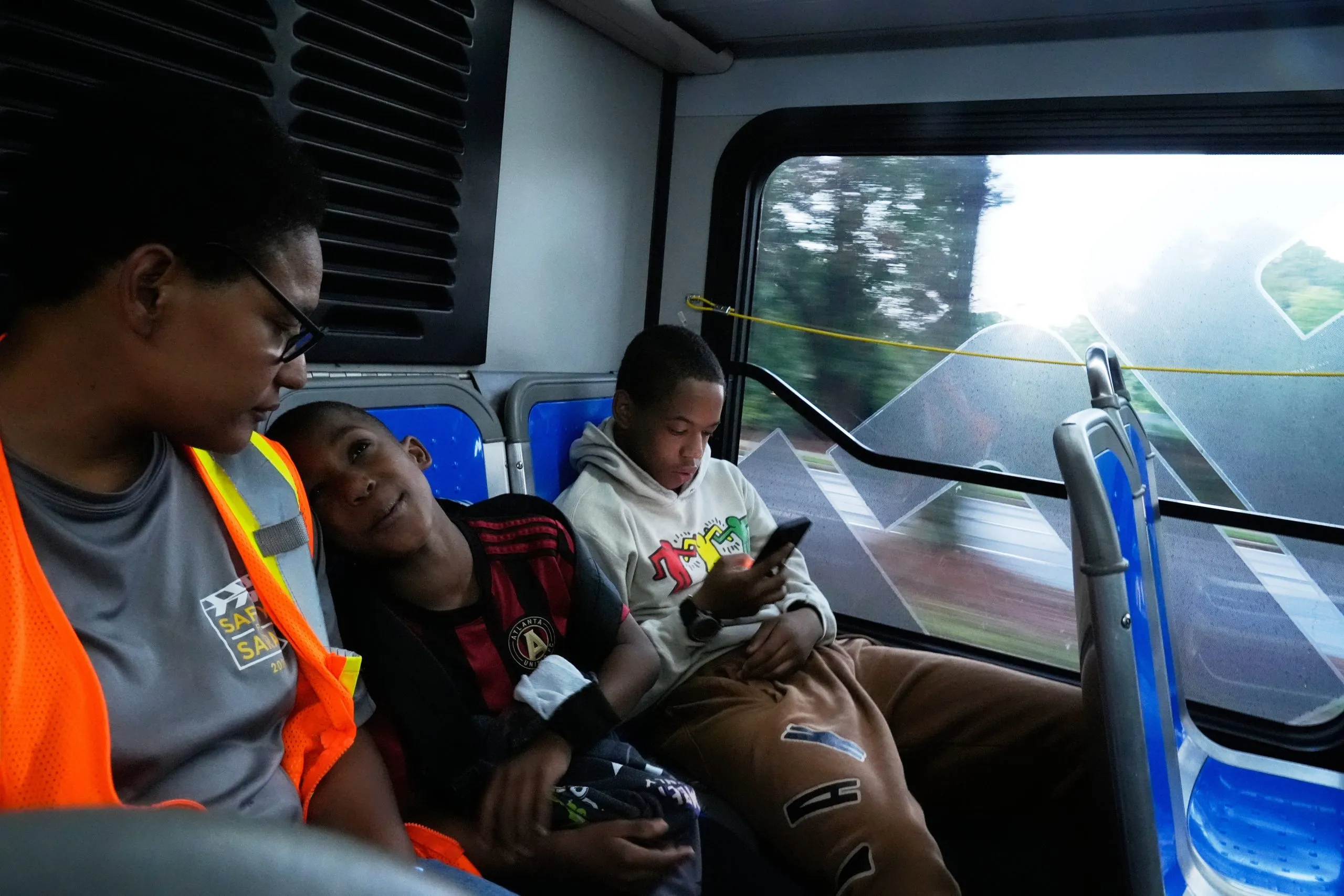
    ATLANTA — It was the worst summer in years. Sechita McNair’s family took no vacations. Her younger boys didn’t go to camp. Her van was repossessed, and her family nearly got evicted — again.

    But she accomplished the one thing she wanted most. A few weeks before school started, McNair, an out-of-work film industry veteran barely getting by driving for Uber, signed a lease in the right Atlanta neighborhood so her eldest son could stay at his high school.

    As she pulled up outside the school on the first day, Elias, 15, stepped onto the curb in his new basketball shoes and cargo pants. She inspected his face, noticed wax in his ears and grabbed a package of baby wipes from her rental car. She wasn’t about to let her eldest, with his young Denzel Washington looks, go to school looking “gross.”

    He grimaced and broke away.

    “No kiss? No hugs?” she called out.

    Elias waved and kept walking. Just ahead of him, at least for the moment, sat something his mother had fought relentlessly for: a better education.

    The link between where you live and where you learn

    Last year, McNair and her three kids were evicted from their beloved apartment in the rapidly gentrifying Old Fourth Ward neighborhood of Atlanta. Like many evicted families, they went from living in a school district that spends more money on students to one that spends less.

    Thanks to federal laws protecting homeless and evicted students, her kids were able to keep attending their Atlanta schools, even though the only housing available to them was in another county 40 minutes away. They also had the right to free transportation to those schools, but McNair says the district didn’t tell her about that until the school year ended. Their eligibility to remain in those schools expired at the end of last school year.

    Still wounded by the death of his father and multiple housing displacements, Elias failed two classes last year, his freshman year. Switching schools now, McNair fears, would jeopardize any chance he has of recovering his academic life. “I need this child to be stable,” she says.

    Related: Become a lifelong learner. Subscribe to our free weekly newsletter featuring the most important stories in education.

    With just one week before school started, McNair drove extra Uber hours, borrowed money, secured rental assistance and ignored concerns about the apartment to rent a three-bedroom in the Old Fourth Ward. At $2,200 a month, it was the only “semi-affordable” apartment in the rapidly gentrifying ward that would rent to a single mom with a fresh eviction on her record.

    On Zillow, the second-floor apartment, built in 2005, looked like a middle-class dream with its granite countertops, crown molding and polished wood floors. But up close, the apartment looked abused and held secrets McNair was only beginning to uncover.

    The first sign something was wrong came early. When she first toured the apartment, it felt rushed, like the agent didn’t want her to look too closely. Then, even as they told her she was accepted, the landlord and real estate agent wouldn’t send her a “welcome letter” laying out the agreement, the rent and deposit she would pay. It seemed like they didn’t want to put anything in writing.

    When the lease came, it was full of errors. She signed it anyway. “We’re back in the neighborhood!” she said. Elias could return to Midtown High School.

    But even in their triumph, no one in the family could relax. Too many things were uncertain. And it fell to McNair — and only McNair — to figure it out.

    The first day back

    Midtown is a high school so coveted that school administrators investigate student residency throughout the year to keep out kids from other parts of Atlanta and beyond. For McNair, the day Elias returned to the high school was a momentous one.

    “Freedom!” McNair declared after Elias disappeared into the building. Without child care over the summer, McNair had struggled to find time to work enough to make ends meet. Now that the kids were back in class, McNair could spend school hours making money and resolving some of the unsettled issues with her new apartment.

    McNair, the first person in her family to attend college, studied theater management. Her job rigging stage sets was lucrative until the writers’ and actors’ strike and other changes paralyzed the film industry in 2023. The scarcity of work on movie sets, combined with her tendency to take in family and non-family alike, wrecked her home economy.

    The family was evicted last fall when McNair fell behind on rent because of funeral expenses for her foster daughter. The teen girl died from an epileptic seizure while McNair and everyone else slept. Elias found her body.

    McNair attributes some of Elias’s lack of motivation at school to personal trauma. His father died after a heart attack in 2023, on the sidelines of Elias’s basketball practice.

    On his first day back at school this August, Elias appeared excited but tentative. He watched as the seniors swanned into school wearing gold cardboard crowns, a Midtown back-to-school tradition, and scanned the sidewalk for anyone familiar.

    If Elias had his way, his mom would homeschool him. She’s done it before. But now that he’s a teenager, it’s harder to get Elias to follow her instructions. As the only breadwinner supporting three kids and her disabled uncle, she has to work.

    Elias hid from the crowds and called up a friend: “Where you at?” The friend, another sophomore, was still en route. Over the phone, they compared outfits, traded gossip about who got a new hairdo or transferred. When Elias’s friend declared this would be the year he’d get a girlfriend, Elias laughed.

    When it was time to go in, Elias drifted toward the door with his head down as other students flooded past.

    The after-school pickup

    Hours later, he emerged. Despite everything McNair had done to help it go well — securing the apartment, even spending hundreds of dollars on new clothes for him — Elias slumped into the backseat when she picked him up after class.

    “School was so boring,” he said.

    “What happened?” McNair asked.

    “Nothing, bro. That was the problem,” Elias said. “I thought I was going to be happy when school started, since summer was so horrible.”

    Of all of the classes he was taking — geometry, gym, French, world history, environmental science — only gym interested him. He wished he could take art classes, he said. Elias has acted in some commercials and television programs, but chose a science and math concentration, hoping to study finance someday.

    After dinner at Chick-fil-A, the family visited the city library one block from their new apartment. While McNair spoke to the librarian, the boys explored the children’s section. Malachi, 6, watched a YouTube video on a library computer while Derrick, 7, flipped through a book. Elias sat in a corner, sharing video gaming tips with a stranger he met online.

    Related: Schools confront a new reality: They can’t count on federal money 

    “Those people are learning Japanese,” said McNair, pointing to a group of adults sitting around a cluster of tables. “And this library lets you check out museum passes. This is why we have to be back in the city. Resources!”

    McNair wants her children to go to well-resourced schools. Atlanta spends nearly $20,000 per student a year, $7,000 more than the district they moved to after the eviction. More money in schools means smaller classrooms and more psychologists, guidance counselors and other support.

    But McNair, who grew up in New Jersey near New York City, also sees opportunities in the wider city of Atlanta. She wants to use its libraries, e-scooters, bike paths, hospitals, rental assistance agencies, Buy Nothing groups and food pantries.

    “These are all resources that make it possible to raise a family when you don’t have support,” she said. “Wouldn’t anyone want that?”

    Support is hard to come by

    On the way home, the little boys fall asleep in the back seat. Elias asks, “So, is homeschooling off the table?”

    McNair doesn’t hesitate. “Heck yeah. I’m not homeschooling you,” she says lightly. “Do you see how much of a financial bind I’m in?”’

    McNair pulls into the driveway in Jonesboro, the suburb where the family landed after their eviction. Even though the family wants to live in Atlanta, their stuff is still here. It’s a neighborhood of brick colonials and manicured lawns. She realizes it’s the dream for some families, but not hers. “It’s a support desert.”

    As they get out of the car, Elias takes over as parent-in-charge. “Get all of your things,” he directs Malachi and Derrick, who scowl as Elias seems to relish bossing them around. “Pick up your car seats, your food, those markers. I don’t want to see anything left behind.” Elias would be responsible for making the boys burritos, showering them and putting them to sleep.

    McNair heads out to drive for Uber. That’s what is necessary to pay $450 a week to rent the car and earn enough to pay her rent and bills.

    But while McNair is out, she can’t monitor Elias. And a few days after he starts school, Elias’s all-night gaming habit has already drawn teachers’ attention.

    “I wanted to check in regarding Elias,” his geometry teacher writes during the first week of school. “He fell asleep multiple times during Geometry class this morning.”

    Elias had told the teacher he went to bed around 4 a.m. the night before. “I understand that there may be various reasons for this, and I’d love to work together to support Elias so he can stay focused and successful in class.”

    A few days later, McNair gets a similar email from his French teacher.

    That night, McNair drives around Atlanta, trying to pick up enough Uber trips to keep her account active. But she can’t stop thinking about the emails. “I should be home making sure Elias gets to bed on time,” she says, crying. “But I have to work. I’m the only one paying the bills.”

    Obstacles keep popping up

    Ever since McNair rented the Atlanta apartment, her bills had doubled. She wasn’t sure when she’d feel safe giving up the house she’d been renting in Clayton County, given the problems with the Atlanta apartment. For starters, she was not even sure it was safe to spend the night there.

    A week after school started in August, McNair dropped by the apartment to check whether the landlords had made repairs. At the very least, she wanted more smoke detectors.

    She also wanted them to replace the door, which looked like someone had forced it open with a crowbar. She wanted a working fridge and oven. She wanted them to secure the back door to the adjoining empty apartment, which appeared to be open and made her wonder if there were pests or even people squatting there.

    But on this day, her keys didn’t work.

    She called 911. Had her new landlords deliberately locked her out?

    When the police showed up outside the olive-green, Craftsman-style fourplex, McNair scrolled through her phone to find a copy of her lease. Then McNair and the officer eyed a man walking up to the property. “The building was sold in a short sale two weeks ago,” he told McNair. The police officer directed the man to give the new keys to McNair.

    Related: The new reality with universal school vouchers: Homeschoolers, marketing, pupil churn

    The next day, McNair started getting emails from an agent specializing in foreclosures, suggesting the new owners wanted McNair to leave. “The bank owns the property and now you are no longer a tenant of the previous owner,” she wrote. The new owner “might” offer relocation assistance if McNair agreed to leave.

    McNair consulted attorneys, who reassured her: It might be uncomfortable, but she could stay. She needed to try to pay rent, even if the new owner didn’t accept it.

    So McNair messaged the agent, asking where she should send the rent, and requested the company make necessary repairs. Eventually, the real estate agent stopped responding.

    Some problems go away, but others emerge

    Finally, McNair moved her kids and a few items from the Jonesboro house to the Atlanta apartment. She didn’t allow Elias to bring his video game console to Atlanta. He started going to bed around 11 p.m. most nights. But even as she solved that problem, others emerged.

    It was at Midtown’s back-to-school night in September that McNair learned Elias was behind in most of his classes. Some teachers said maybe Midtown wasn’t the right school for Elias.

    Perhaps they were right, McNair thought. She’d heard similar things before.

    Elias also didn’t want to go to school. He skipped one day, then another. McNair panicked. In Georgia, parents can be sent to jail for truancy when their kids miss five unexcused days.

    McNair started looking into a homeschooling program run by a mother she follows on Facebook. In the meantime, she emailed and called some Midtown staff for advice. She says she didn’t get a response. Finally, seven weeks after the family’s triumphant return to Midtown, McNair filed papers declaring her intention to homeschool Elias.

    It quickly proved challenging. Elias wouldn’t do any schoolwork when he was home alone. And when the homeschooling group met twice a week, she discovered, they required parents to pick up their children afterward instead of allowing them to take public transit or e-scooters. That was untenable.

    Elias wanted to stay at home and offered to take care of McNair’s uncle, who has dementia. “That was literally killing my soul the most,” said McNair. “That’s not a child’s job.”

    Hell, no, she told him — you only get one chance at high school.

    Then, one day, while she was loading the boys’ clothes into the washing machine at the Atlanta apartment, she received a call from an unknown Atlanta number. It was the woman who heads Atlanta Public Schools’ virtual program, telling her the roster was full.

    McNair asked the woman for her opinion on Elias’s situation. Maybe she should abandon the Atlanta apartment and enroll him in the Jonesboro high school.

    Let me stop you right there, the woman said. Is your son an athlete? If he transfers too many times, it can affect his ability to play basketball. And he’d probably lose credits and take longer to graduate. He needs to be in school — preferably Midtown — studying for midterms, she said. You need to put on your “big mama drawers” and take him back, she told McNair.

    The next day, Elias and his mother pulled up to Midtown. Outside the school, Elias asked if he had to go inside. Yes, she told him. This is your fault as much as it’s mine.

    Now, with Elias back in school every day, McNair can deliver food through Uber Eats without worrying about a police officer asking why her kid isn’t in school. If only she had pushed harder, sooner, for help with Elias, she thought. “I should have just gone down to the school and sat in their offices until they talked to me.”

    But it was easy for her to explain why she hadn’t. “I was running around doing so many other things just so we have a place to live, or taking care of my uncle, that I didn’t put enough of my energy there.”

    She wishes she could pay more attention to Elias. But so many things are pulling at her. And as fall marches toward winter, her struggle continues. After failing to keep up with the Jonesboro rent, she’s preparing to leave that house before the landlord sends people to haul her possessions to the curb.

    As an Uber driver, she has picked up a few traumatized mothers with their children after they got evicted. She helped them load the few things they could fit into her van. As they drove off, onlookers scavenged the leftovers.

    She has promised herself she’d never let that happen to her kids.

    Bianca Vázquez Toness is an Associated Press reporter who writes about the continuing impact of the pandemic on young people and their education.

    The Associated Press’ education coverage receives financial support from multiple private foundations. AP is solely responsible for all content. Find AP’s standards for working with philanthropies, a list of supporters and funded coverage areas at AP.org.

    This <a target=”_blank” href=”https://hechingerreport.org/she-wanted-to-keep-her-son-in-his-school-district-it-was-more-challenging-than-it-seemed/”>article</a> first appeared on <a target=”_blank” href=”https://hechingerreport.org”>The Hechinger Report</a> and is republished here under a <a target=”_blank” href=”https://creativecommons.org/licenses/by-nc-nd/4.0/”>Creative Commons Attribution-NonCommercial-NoDerivatives 4.0 International License</a>.<img src=”https://i0.wp.com/hechingerreport.org/wp-content/uploads/2018/06/cropped-favicon.jpg?fit=150%2C150&amp;ssl=1″ style=”width:1em;height:1em;margin-left:10px;”>

    <img id=”republication-tracker-tool-source” src=”https://hechingerreport.org/?republication-pixel=true&post=113392&amp;ga4=G-03KPHXDF3H” style=”width:1px;height:1px;”><script> PARSELY = { autotrack: false, onload: function() { PARSELY.beacon.trackPageView({ url: “https://hechingerreport.org/she-wanted-to-keep-her-son-in-his-school-district-it-was-more-challenging-than-it-seemed/”, urlref: window.location.href }); } } </script> <script id=”parsely-cfg” src=”//cdn.parsely.com/keys/hechingerreport.org/p.js”></script>


    Source link

  • Shutting Women Out of Preferred Courses Sets Them Back

    Shutting Women Out of Preferred Courses Sets Them Back

    Getting shut out of a preferred course can have lasting negative effects on incoming female students, a recent working paper found.

    The paper, published by the National Bureau of Economic Research, tracked first-year students at Purdue University who couldn’t take their first-choice classes in 2018 because of a surge in enrollment. Incoming students had to rank their course preferences; 49 percent got into all the courses they wanted, but 51 percent were shut out of a course.

    The study found that female students locked out of a course were 7.5 percent less likely to graduate within four years than women who got to take their desired courses. Their cumulative college GPAs were also slightly lower—by 0.05 points—than those of female students who took their preferred classes their first semester. Women locked out of a course were 5 percent less likely to major in STEM fields and even earned about 3.5 percent less in salary after they graduated, compared to female students who took their top-choice courses their first year.

    The working paper found no statistically significant effects on male students.

    “Our estimates suggest that reducing course shutouts, particularly for STEM courses, can be an effective way to improve female-student outcomes,” co-author Kevin Mumford, an associate dean and professor at Purdue’s Mitch Daniels School of Business, told The Wall Street Journal.

    Source link

  • DOJ sets sights on George Washington University

    DOJ sets sights on George Washington University

    This audio is auto-generated. Please let us know if you have feedback.

    The U.S. Department of Justice on Tuesday accused George Washington University of being “deliberately indifferent” to harassment of Jewish, American-Israeli and Israeli students and faculty. 

    The Justice Department, in an agency notice, cited a pro-Palestinian encampment on GWU’s University Yard for two weeks during the spring 2024 term. The District of Columbia Metropolitan Police Department cleared the encampment on May 8, arresting nearly three dozen people in the process. 

    About a week earlier, MPD had refused the university’s request to clear the encampment, and Police Chief Pamela Smith said the department had no plans to remove the demonstrators as long as they were peaceful. When police eventually cleared out the encampment, MPD cited a “gradual escalation in the volatility of the protest.”

    The Justice Department has now accused GWU of violating Title VI, which bars federally funded institutions from discriminating on the basis of race, color or national origin. 

    GWU is the latest university under fire from the Trump administration for allegedly not doing enough to protect students and employees from antisemitism. 

    These accusations are often followed by threats that colleges will lose vast swaths of their federal funding unless they adopt sweeping policy changes. Some Jewish lawmakers have accused President Donald Trump of weaponizing antisemitism to attack colleges

    The Trump administration is looking to negotiate with GWU, as it has with other institutions in its crosshairs. The notice of violation states that the Justice Department is offering to enter a “voluntary resolution agreement” with the university. 

    In the notice, the Justice Department alleges GWU leaders were deliberately indifferent to several incidents. 

    It says one Jewish student described “being surrounded, harassed, threatened, and then ordered to leave the area immediately by antisemitic protesters.” In another instance, the notice says a Jewish student holding up an Israeli flag near the encampment was surrounded by protesters who had linked arms “for the purpose of restricting the Jewish student’s movements.”

    In a public statement on Tuesday, GWU said it is reviewing the Justice Department’s notice. 

    “GW condemns antisemitism, which has absolutely no place on our campuses or in our civil society,” the university said in the statement. “Moreover, our actions clearly demonstrate our commitment to addressing antisemitic actions and promoting an inclusive campus environment by upholding a safe, respectful, and accountable environment.”

    The Trump administration recently hit the University of California, Los Angeles with similar accusations. 

    In late July, the Justice Department alleged that UCLA had also violated civil rights law. Like with GWU, Trump administration officials pointed to a pro-Palestinian encampment erected in the spring 2024 term that university officials cleared after about a week. 

    The Trump administration quickly suspended $584 million in federal funding, a move that brought University of California system leaders to the negotiating table in hopes of restoring the money. 

    However, UC President James Milliken said in a statement on Aug. 6 that the funding cuts “do nothing to address antisemitism” and accused the Trump administration of ignoring both the system and UCLA’s efforts to combat antisemitism. 

    Just two days later, the Justice Department proposed a settlement with the university — a whopping $1 billion penalty

    Milliken issued a quick and blunt rebuke. “As a public university, we are stewards of taxpayer resources and a payment of this scale would completely devastate our country’s greatest public university system as well as inflict great harm on our students and all Californians,” he said in an Aug. 8 statement.

    Source link

  • DfE sets out the detail on the free speech act

    DfE sets out the detail on the free speech act

    In some ways, there’s little that’s new in the Department for Education’s Command Paper on the future of the Higher Education (Freedom of Speech) Act 2023.

    Over 30 pages or so, it basically puts some meat on the bones of the two announcements made by Secretary of State Bridget Phillipson – the one from last Summer where the act’s implementation was paused, and the one from January which discussed the plan in outline to partially repeal.

    This isn’t the first Command Paper from DfE on the issue – back in 2021, then Secretary of State Gavin Williamson’s effort was a fairly heavily ideological compendium of Telegraph stories and Policy Exchange talking points – picking up everything from cancel culture to students being encouraged “to report others for legal speech”.

    This run at things tends to deftly avoid all of that. It’s about as technical as you can get, with pretty much all of the critique justifying the approach based on workability and burden. Even that “sources close to the Secretary State” quote from last Summer on the Act representing some sort of “hate speech charter” is missing in action here – with the only discussion on harassment surrounding the ban on non-disclosure agreements.

    That’s either savvy politics from a government keen to douse down culture war flames, or a hostage to fortune when OfS’ particular approach to the balancing act between free speech and EDI at some stage comes back to bite – with ministers caught in the middle.

    And we’re off

    We already knew that the government had decided to commence the duties on providers regarding freedom of speech and academic freedom, as set out in Section 1 of the Act. The regulations were made on 28 April 2025, the duties come into force on 1 August 2025, and we got some actual (if controversial) guidance from OfS on 19 June.

    These include requirements for providers to take reasonably practicable steps to secure freedom of speech within the law for staff, members, students, and visiting speakers, as well as protecting academic freedom for academic staff. The Command Paper is keen to point out that the expanded definition of academic freedom will be retained, protecting academic staff from suffering adverse employment consequences solely based on their opinions or ideas.

    Ditto Section 2 of the Act, which covers constituent institutions of providers. DfE says that its decision ensures that constituent institutions such as colleges, schools, or halls within universities (for example, the individual colleges at Oxford and Cambridge) are subject to the same obligations as their parent HE providers.

    It says that the clarification was particularly important to put beyond doubt that these constituent institutions cannot avoid the freedom of speech duties that apply to the main institution – although to the extent to which you see these things as a see-saw, that does mean that Oxbridge Colleges will each be able to maintain their own free speech code of practice, while it’s the central university that will hold a central responsibility for the harassment and sexual misconduct duty as of 1 August.

    Given that Oxbridge colleges tend to be fiercely guarded about their autonomy and independence, that harassment duty and features like its “single source of information” were going to be interesting enough – but given that OfS’ free speech guidance repeatedly mentions harassment considerations when making decisions on free speech, you can see how some astonishing complexity and internal conflict could be coming further down the track.

    It’s also worth noting in passing that while DfE seems keen to put Oxbridge colleges’ direct duties beyond doubt, there’s nothing in here on transnational education – which as we noted in the commentary on OfS’ guidance, is asserted to be outside of the scope of the Act without anything in the way of meaningful justification.

    The other thing in this section is DfE’s pride at extending the non-disclosure agreement ban OfS was already putting in place for harassment and sexual misconduct cases to bullying. It quotes campaigns like “Can’t buy my silence”, but of course doesn’t explain to students why silence can be bought over other types of complaint.

    Yes yous

    The original version of the Bill proposed regulating students’ unions directly – although notably, the SUs of those constituent colleges were to have been exempted on the basis that the college exercises sufficient control.

    Pretty much by accident, that did mean that an FE union whose College was on the register and in receipt of OfS funding was going to be expected to bear all of the complex legal duties and issue a Code of Practice – even if it was unincorporated and run entirely by FE (rather than HE) volunteers.

    So entirely sensibly, there’s confirmation that the government has decided to repeal sections 3 and 7 of the act in their entirety, which would have imposed the direct freedom of speech duties and given OfS regulatory powers over them.

    The workaround is the one that’s been in place since 1994 – regulating SUs through their provider. The rationale for repeal centres on concerns that SUs can lack the financial resources, regulatory capacity, and legal expertise to handle complex duties, that monetary penalties or damage awards could severely impact their ability to provide services and support to students, and the government recognised that SUs are already regulated as charities by the Charity Commission, which oversees their compliance with legal duties including furthering educational purposes through enabling discussion and debate.

    So instead of direct regulation, the government has decided to adopt our proposal from 2021 – the government will expect providers to take reasonably practicable steps to ensure their students’ unions follow codes of practice, which is what already happens over a whole range of issues. Some will see that as an attack on autonomy, others a charter for avoidance – sensible people will see this as the approach that will work.

    Or at least it should work, were it not for the fact that OfS seems to be requiring universities (and therefore by proxy their SUs) to adopt an approach to the balance between free speech and harm that is not legally compliant. More on that in our commentary on OfS’ guidance, suffice to say that SUs at the sharp end of some of the tensions may end up resolving that what OfS might have told them to do is not what they actually should do on a given issue.

    Complainants will be able to complain about the reasonably practicable steps thing – DfE civil servants may have forgotten that the Education Act 1994 also sets up some statutory complaints requirements on SUs themselves, which involve provider review. The other odd bit is that DfE’s amendments to the Act will require providers to set out in their Code of Practice how their students’ union will ensure that affiliation is not denied to any student society on the grounds of its lawful policy or objectives, or the lawful ideas or opinions of its members.

    That goes slightly further than the compliance already expected of SUs as charities over protected beliefs, and extends (very slightly) an existing provision in the Education Act 1994 that the procedure for allocating resources to groups or clubs should be fair and should be set down in writing and freely accessible to all students. It’ll cause conflict at the edges – students do expect to be able to vote on things, and votes can be problematic – but overall this all makes sense.

    Tort a lesson

    You might remember the controversy over the statutory tort – the thing that would have allowed staff, students, and external speakers to bring civil claims against HE providers, constituent institutions, or students’ unions for breaches of their freedom of speech duties.

    The government’s rationale for repealing that bit centres on concerns about its potentially harmful effects on the higher education sector – a chilling effect on freedom of speech that might make institutions more risk-averse about inviting challenging or controversial speakers due to fear of litigation. And so given judicial review, employment tribunals, the OIA complaints scheme for students, and the forthcoming enhanced OfS complaints scheme are all alternatives, plus the financial burden of potential legal costs, it’s gone.

    That all pretty much matches Lords speeches opposed to the Tort at the end of 2022 – this we might expect this to re-emerge as a flashpoint when all of this finds its “appropriate legislative vehicle”.

    This section also says that the government is also concerned that the threat of legal proceedings might lead institutions to prioritise protecting hateful or degrading speech over the interests of those who feel harassed or intimidated – an interesting idea given that both hateful and degrading speech can still be within the law, or at least OfS’ interpretation of it.

    Complaints chaos

    As expected, the Office for Students is going to be stripped of the ability to hear complaints from… students over academic freedom and freedom of speech.

    To be fair, the sensible rationale there is that the Office of the Independent Adjudicator (OIA) is a well-established route that is recognised and understood by students and providers – and that approach will prevent students being baffled about who to approach, or worse, arbitrary categories that had the potential to take a wide-ranging complaint and insist on it being sliced up.

    That won’t remove the potential problem of students on one end of the see-saw and staff on the other each making complaints about the same issue – or OfS and OIA potentially making different judgements. There’s also the prospect that OfS and OIA will handle things at a different pace, and while OfS was proposing to allow a complaint to roll in without exhausting internal procedures, OIA usually needs a Completion of Procedures letter.

    It’s all very well asking the OIA to look at OfS’ guidance, but presumably there’s some risk that the OIA will look at the way OfS is defining free speech within the law and have representations made to it that disagree. Wales would feel pretty aggrieved if OfS’ particular interpretation was imposed on it via OIA’s dual country coverage, and presumably it would be wild for the OIA to say one thing about an incident in Wales and another in England.

    It all feels like the two bodies are being asked to get in a room and talk – on that, DfE just points at Section 63 of HERA (OfS may co-operate with others where appropriate) and says you two should talk. It might strengthen it if needs be.

    DfE also says that it will ask OfS to consider and then set out in requirements or guidance what fit for purpose internal complaints processes for academic freedom look like, although you could just as easily ask the OIA to build something into its Good Practice Framework.

    The other aspect here is that the legislation will switch from OfS having a power rather than a duty to consider complaints under its scheme. DfE says that will enable it to prioritise, for example, the most serious complaints or complaints on issues affecting the whole sector.

    The expectation is that “OfS and Dr Ahmed” will be transparent, independent and neutral in how they prioritise consideration of those complaints – notwithstanding the position-taking evident in the guidance already, that presumably points to some sort of criteria for folk to fight about.

    Lurking in the background of all that is academic freedom – in its consultation on the complaints scheme, OfS pointed at the Higher Education and Research Act and said “the Act will require us to consider every complaint that is capable of being referred under the scheme. It does not preclude us from considering matters of academic judgement.”.

    The OIA of course can’t look at such matters – and with “duty” switched to “power”, we’re going to need OfS to take a view on whether it will do things for staff and speakers that the OIA won’t be able to do for students.

    Foreign funding

    The one policy area where an announcement was pending was section 9 of the legislation, related to OfS’ monitoring of overseas funding to providers with an eye to assessing the extent to which such funding presents risks to freedom of speech and academic freedom. This measure is not currently in force.

    When Bridget Phillipson updated Parliament on Labour’s plans in January, it was the one area where a decision was not announced:

    I will take more time to consider implementation of the overseas funding measures. I remain fully committed to tackling cases of interference by overseas Governments, and the wider measures in the Act will further strengthen our protections. However, I want to ensure that any new reporting requirements for providers add value without being overly burdensome. We continue to work at pace with the sector on the wider implementation of the Foreign Influence Registration Scheme. My officials are working across Government and with the sector to review our response, and I will confirm my final decision in due course.

    Now we get a decision of sorts – and that decision is to continue to keep this under review, and introduce “alternative mitigations to support HE providers to improve international due diligence.”

    For a long time under the last government, the response to any and all bugbears that commentators and politicians had with universities’ and students’ relationships with other countries – ranging from overreliance on international students from certain countries, to research collaborations in weapons technology, to transnational repression, to the activities of Confucius Institutes and Chinese student associations – was that this would all be sorted out through the twin approach of the free speech act and the Foreign Influence Registration Scheme (FIRS). Labour has instead taken the approach that the latter needs to be implemented first.

    FIRS will come into effect on 1 July – we reviewed its implications for the sector back in April – and the policy paper promises to assess what comes out of it. FIRS, we are told, will provide “greater visibility of foreign state influence in the UK,” and information disclosed will be shared with DfE and OfS where relevant, allowing for pattern recognition as well as the prevention of specific threats.

    The alternative – that is, additional – mitigations mentioned above include asking the Office for Students to “consider the value of an explicit regulatory expectation” around due diligence on international partnerships. There’s also work on possible codes of practice and best practice sharing.

    The caveat here is that as FIRS is implemented:

    …it may demonstrate that further reporting on financial or other international arrangements would be beneficial to improve the identification and mitigation of these risks. As a result, we will keep the overseas funding provisions in the act under review in the event that, during FIRS implementation, evidence indicates further transparency reporting is necessary.

    But it feels that the government has come down on the side of listening to the sector about avoiding burden and duplication and, as the paper says, “minimising diversion of resources away from teaching and research.”

    There’s an interesting table on pages 24 and 25 of the command paper, perhaps anticipating criticism over the wait-and-see approach. The table lists all the different measures (ATAS, export controls, harassment duties, financial monitoring, national security act powers) that are already in place to mitigate against “foreign interference”, even without implementing OfS’ new powers.

    (In this context it’s worth briefly noting that Monday’s industrial strategy announced that the government will consult on updating the definitions of the 17 areas of the economy subject to mandatory notification under the National Security and Investment Act, to ensure that they remain “targeted and proportionate”. This could – potentially – see a slight loosening of the areas of research collaboration where higher education institutions need to notify and get approval from the government.)

    Equality impacts

    Finally, there’s a very odd section at the end of the command paper that describes and comments on an Equality Impact Assessment that DfE has, for some mysterious reason, not actually published.

    One of the sections might give us a clue as to why:

    Expanding these duties may lead to more open expression of views which could have a negative impact on those who currently face elevated levels of lawful but offensive comments related to their protected characteristics. They could also potentially lead to increased unlawful harassment against groups with specific protected characteristics.

    It’s almost as if DfE doesn’t want to publish a document that makes the legislation Phillipson is progressing sound like a “Tory hate charter” after all.

    It all partly depends on how OfS plays its duty – again, see the article on the meaning of free speech within the law – but you’d also have to assume that the detail is pretty bleak, and/or offers up all of the remaining fine lines and rhetorical contradictions being dumped on universities to navigate. The tort might be gone, but all of that complexity very much remains.

    Source link

  • Trump Sets Demands Harvard Must Meet to Regain Federal Funds

    Trump Sets Demands Harvard Must Meet to Regain Federal Funds

    The Trump administration presented Harvard University with a letter Thursday outlining “immediate next steps” the institution must take in order to have a “continued financial relationship with the United States government,” The Boston Globe reported and Inside Higher Ed confirmed.

    The ultimatum came just three days after the president’s Joint Task Force to Combat Anti-Semitism notified the university it had been placed under review for its alleged failure to protect Jewish students and faculty from discrimination. If the case follows the precedent set at other universities, Harvard and its affiliate medical institutions could lose up to $9 billion in federal grants and contracts if they do not comply.

    Sources say the move is driven less by true concern about antisemitism on campus than by the government’s desire to abolish diversity efforts and hobble higher ed institutions it deems too “woke.” This week alone, the administration has retracted funds from Brown and Princeton Universities. Before that, it targeted the University of Pennsylvania and Columbia University and opened dozens of civil rights investigations at other colleges, all of which are ongoing.

    Many of the task force’s demands for Harvard mirror those presented to Columbia last month, including mandates to reform antisemitism accountability programs on campus, ban masks for nonmedical purposes, review certain academic departments and reshape admissions policies. The main difference: Columbia’s letter targeted specific departments and programs, while Harvard’s was broader.

    For example, while the letter received by Columbia called for one specific Middle Eastern studies department to be placed under receivership, Harvard’s letter called more generally for “oversight and accountability for biased programs [and departments] that fuel antisemitism.”

    Inside Higher Ed requested a copy of the letter from Harvard, which declined to send it but confirmed that they had received it. Inside Higher Ed later received a copy from a different source.

    Some higher education advocates speculate that the Trump administration’s latest demands were deliberately vague in the hopes that colleges will overcomply.

    “What I’ve learned from various experiences with higher ed law is that it’s unusual to be general in legal documents,” said Jon Fansmith, senior vice president of government relations and national engagement for the American Council on Education. Trump’s “open-ended” letter “starts to look like a fishing expedition,” he added. “‘We want you to throw everything open to us so that we get to determine how you do this.’”

    But conservative higher ed analysts believe the demands—even when broadened—are justified.

    “Many of these are extremely reasonable—restricting demonstrations inside academic buildings, requiring participants and demonstrations to identify themselves when asked, committing to antidiscrimination policies, intellectual diversity and institutional neutrality,” said Preston Cooper, a senior fellow at the American Enterprise Institute.

    Still, he raised questions about how certain mandates in the letter will be enforced.

    “When you see this in the context of the federal government trying to use funding as a lever to force some of these reforms, that’s where one might raise some legitimate concern,” he said. “For instance, trying to ensure viewpoint diversity is a very laudable goal, but if the federal government is trying to … decide what constitutes viewpoint diversity, there is a case to be made that that is a violation of the First Amendment.”

    What Does the Letter Say?

    The demands made of Harvard Thursday largely target the same aspects of higher ed that Trump has focused on since taking office in January.

    Some center on pro-Palestinian protests, like the requirements to hold allegedly antisemitic programs accountable, reform discipline procedures and review all “antisemitic rule violations” since Oct. 7, 2023.

    Others focus on enforcing Trump’s interpretation of the Supreme Court’s 2023 ruling on affirmative action; the university must make “durable” merit-based changes to its admissions and hiring practices and shut down all diversity, equity and inclusion programs, which the administration believes promote making “snap judgments about each other based on crude race and identity stereotypes.”

    The letter was signed by the same three task force members who signed Columbia’s demand letter: Josh Gruenbaum, commissioner of the Federal Acquisition Service; Sean Keveney, acting general counsel for the Department of Health and Human Services; and Thomas Wheeler, acting general counsel for the Department of Education.

    The most notable difference in Harvard’s letter is that the task force is demanding “full cooperation” with the U.S. Department of Homeland Security. That department and its Immigration and Customs Enforcement agency have been arresting and revoking visas from international students and scholars who, the government says, are supporting terrorist groups by participating in pro-Palestinian protests.

    Will Harvard Capitulate?

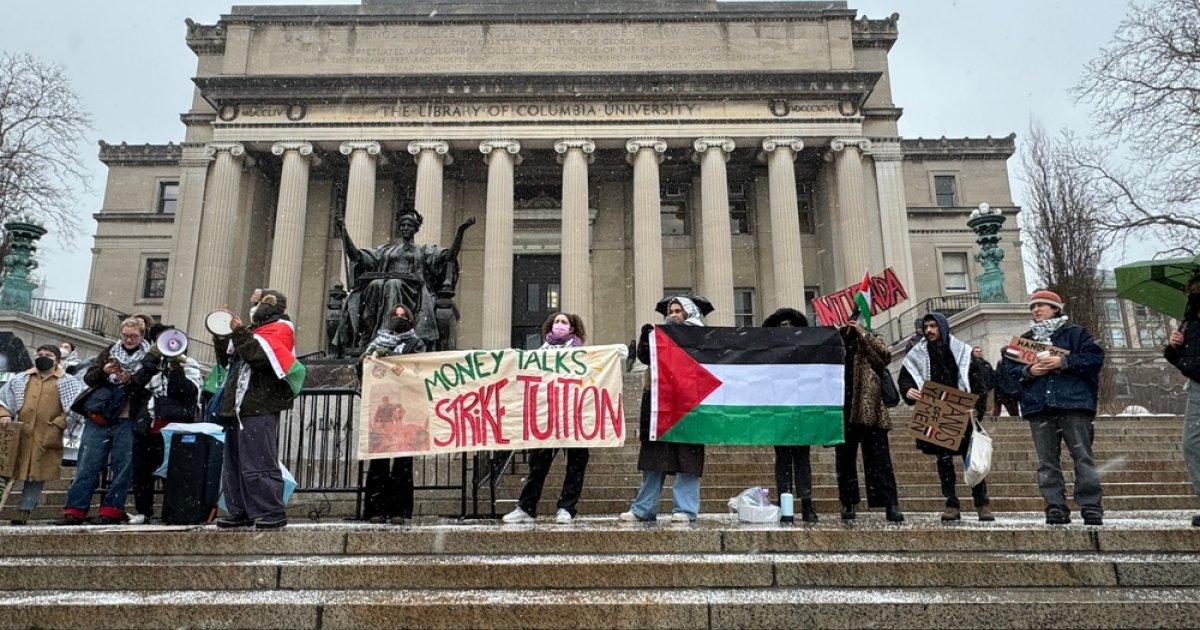
    Harvard already appears to be taking steps to comply. On Wednesday, the university put a pro-Palestinian student group on probation. The week before, a dean removed two top leaders of the Center for Middle Eastern Studies, which has been accused of biased teaching about Israel.

    A letter to the campus community from university president Alan Garber also suggested capitulation is likely.

    “If this funding is stopped, it will halt life-saving research and imperil important scientific research and innovation,” Garber wrote following the task force’s review. “We will engage with members of the federal government’s task force to combat antisemitism.”

    But Fansmith noted such actions may not be enough to predict whether Harvard will fully acquiesce to the Trump administration’s demands.

    “If you look at all of these institutions over the last two years, they’ve been making a number of changes in policies, procedures, personnel and everything else,” he said. “And a lot of that was happening and was at pace before this administration took office and started sending letters.”

    Harvard was one of the first three universities that the House Committee on Education and the Workforce grilled about antisemitism on campus in December 2023. Shortly after, then-president Claudine Gay—the first Black woman to lead Harvard—resigned. The university has since been working to make changes at the campus level.

    Both Fansmith and Cooper pointed to Trump’s mandates regarding curriculum as the most likely to face opposition, as was the case at Columbia.

    A little over a week after the Trump administration laid out its ultimatum, Columbia capitulated and agreed to all but one demand: The university refused to put its department of Middle Eastern studies into receivership, a form of academic probation that involves hiring an outside department chair. Instead, it placed the department under internal review and announced it would hire a new senior vice provost to oversee the academic program.

    “You need to be making sure that Jewish students are not subject to harassment,” Cooper said. But “where that crosses the line is if the federal government is telling the universities … ‘this is how you have to appoint somebody to put an academic department into receivership,’ as was the original demand made of Columbia.”

    Regardless of how Harvard responds, one thing seems likely: There are more funding freezes to come.

    “A lot of folks were expecting Columbia to file a legal challenge, and when that didn’t happen, that might have emboldened the administration a bit to go after some of these other institutions,” Cooper said. But sooner than later, “one of these institutions might say, ‘We’re not going to make the reforms.’”

    “I don’t have a great guess as to which institution that will be,” he added, “but I would expect we probably will see a lawsuit at some point.”

    Source link

  • Columbia caves to feds — and sets a dangerous precedent

    Columbia caves to feds — and sets a dangerous precedent

    Today Columbia University announced policies to address government demands after the Department of Health and Human Services, the Department of Education, and the U.S. General Services Administration canceled $400 million in federal grants and contracts, alleging an anti-Semitic hostile environment at the school. The following statement can be attributed to FIRE Lead Counsel Tyler Coward.


    The federal government abandoned its existing process to brow-beat Columbia — and Columbia folded. 

    Higher education reform shouldn’t resemble a shakedown. Colleges and universities shouldn’t be bullied into accepting speech-restrictive demands because the government dangles a $400 million check over an institution’s head. Any changes made as a result of this flawed process are inherently suspect.

    FIRE is looking into the steps Columbia pledged to take in response to government demands, and their implications for free speech and academic freedom. But one stands out instantly: Columbia crafted its own definition of anti-Semitism that is vague and sweeping enough that it will imperil speech otherwise protected by the First Amendment. 

    The federal government shouldn’t pressure any college, private or public, to censor speech critical of any country. 

    Shaking under government pressure, Columbia crumbled. If Columbia — with its immense resources and influence — can’t stand up to government demands that threaten free speech, what are other colleges to do?

    Behavior that gets rewarded gets repeated. Free speech and academic freedom are worth fighting for. FIRE will stand with any institution willing to stand up for itself. 

    Source link