A federal judge on Thursday denied the U.S. Department of Education’s request for an 18-month extension to decide borrower defense claim decisions due by the end of January, according to lawyers representing the borrowers.
The affected borrowers belong to the last of three groups covered under a landmark 2022 settlement with the Education Department to resolve a class-action lawsuit that accused the agency of stonewalling borrower defense applications. Under that agreement, the borrowers were set to receive automatic relief if the agency didn’t decide their cases by Jan. 28.
U.S. District Judge William Alsup declined to provide any extension on claims filed by borrowers who attended one of 151 institutions that the Education Department previously said had strong indications of engaging in “substantial misconduct.” For other borrowers, Alsup extended the deadline for the Education Department to resolve their cases to April 15.
Dive Insight:
The Sweet v. McMahon lawsuit, originally filed in 2019 during the first Trump administration, accused the Education Department of improperly delaying decisions on borrower defense to repayment claims. The program provides debt relief to borrowers who were defrauded by their colleges.
Three years later, under the Biden administration, the Education Department struck a settlement that promised either timely decisions or automatic relief to three separate groups of borrowers.
The agency said it would automatically clear debts for the first group, roughly 200,000 borrowers who attended one of 151 colleges listed by the Education Department. In court documents, the Education Department said that “attendance at one of these schools justifies presumptive relief” because the institutions had strong signs of misconduct.
The second group is composed of borrowers who didn’t attend one of those colleges. The Education Department promised to make decisions for them by certain dates depending on when those borrowers applied for relief — or automatic relief if it didn’t meet those deadlines.
The majority of those borrowers have had their claims approved, with only a small share still pending, according to a court filing earlier this month.
The last group is composed of those who filed borrower defense applications after the Education Department had already struck the settlement but before it received final approval. That group is composed of roughly 207,000 people who filed over 251,000 claims following the settlement’s announcement.
Alsup denied granting any extension to the Education Department for borrowers in that group who attended the agency’s list of 151 colleges. Around 80% of borrower defense applications filed by the last group involve one of those institutions, according to the Project on Predatory Student Lending, a legal nonprofit representing the borrowers. The remainder will face a roughly 2 and ½ month delay.
“The Court sent a clear message today: borrowers deserve fair, timely decisions, not years of uncertainty,” Eileen Connor, president and executive director of PPSL, said in a statement Thursday.“This is a critical victory for people who have waited far too long for justice and relief, but this case isn’t over.”
The Education Department is still “evaluating the impact of the order,” Ellen Keast, the agency’s press secretary for higher education, said in a Friday email.
“We remain committed to doing the right thing for students, families, and taxpayers,” Keast said.
The Education Department asked for the delay in early November, projecting that it still would not have reached decisions on roughly 193,000 borrower defense applications from the final group by the Jan. 28 deadline. The agency argued it didn’t have the resources it needed to adjudicate the group’s claims and had seen “staffing dwindle at the time when resources for postclass adjudication are most needed.”
The Education Department has cut roughly half of its staff under President Donald Trump, who signed an executive order in March for the agency to close by the “maximum extent appropriate and permitted by law.”
The final group in the settlement has a total outstanding loan balance of $11.8 billion, according to the agency’s court filing. The Education Department said it had issued decisions on roughly 54,000 borrower defense applications for the group by October, and it had denied roughly half of them.
This audio is auto-generated. Please let us know if you have feedback.
Dive Brief:
The U.S. Equal Employment Opportunity Commission has opened the claims process for current and former Columbia University employees who believe they experienced harassment due to their Jewish faith or ancestry, Israeli national origin, or due to objecting to or complaining about such harassment, EEOC announced Thursday.
EEOC Chair Andrea Lucas reiterated the Trump administration’s commitment to fighting antisemitism, commended Columbia for providing a “robust” claims fund and encouraged employees who may have been affected to file a claim.
The July settlement was “the largest EEOC public settlement in nearly 20 years for any form of discrimination or harassment” and “the largest EEOC settlement for victims of anti-semitism to date, as well as the most significant EEOC settlement for workers of any faith or religion,” the agency previously said.
Dive Insight:
EEOC created a website, eeoccolumbiasettlement.com, for those seeking to file claims. The settlement class includes those employed by Columbia between Oct. 7, 2023, and July 23, 2025, who believe they experienced antisemitic discrimination, harassment or retaliation during that period. EEOC will have sole discretion in determining eligibility and the amount awarded to successful claimants.
Claimants have until June 2, 2026, to submit a claim.
The settlement marked a major win for the Trump administration’s EEOC, which in March vowed to “hold accountable universities” for hostile-work conditions it said arose for Jewish workers in the wake of the Oct. 7, 2023, attack on Israel.
Lucas in June 2024 filed the Commissioner’s Charge that led to the agency’s investigation of antisemitism, EEOC noted in a press release. In April, various outlets reported that faculty members at Columbia and the affiliated Barnard College had begun receiving text messages from the agency asking whether they were Jewish or Israeli.
Columbia voluntarily resolved the charges “as part of a broader agreement with the Trump administration” and in order to avoid an extended dispute, EEOC said in July. The university did not admit liability.
The Trump administration has put extensive pressure on universities to change policies and make deals or risk losing millions in federal funding. Columbia’s $21 million settlement with EEOC was part of a broader deal that also included a $200 million, three-year payout to the federal government, as well as the provision of applicant demographic data, closer evaluation of foreign students and other requirements. In exchange, the Trump administration restored $400 million in canceled federal grants.
Brown University, Cornell University, Northwestern University, University of Pennsylvania and University of Virginia have likewise entered into deals with the administration. They have included dropping certain DEI practices; aligning policies for sports, housing and other sex-segregated spaces with President Donald Trump’s executive order on sex and gender; and conducting climate surveys to evaluate the experience of Jewish people on campus.
While only the Columbia deal so far has involved EEOC, the agency has continued to investigate other institutions. In November, EEOC asked a Pennsylvania district court to force Penn to comply with a subpoena requesting information in an ongoing investigation into bias against Jewish employees. A response to that request is still pending.
This audio is auto-generated. Please let us know if you have feedback.
Dive Brief:
The U.S. Department of Education is asking a federal judge for an 18-month extension to decide borrower defense claims from students who were promised decisions by January — or automatic relief if their cases aren’t resolved by then.
The nearly 200,000 borrowers still awaiting decisions are covered by a landmark 2022 settlement that promised automatic debt relief or timely decisions based on when borrowers filed claims and what institutions they attended.
The Project on Predatory Student Lending, a nonprofit legal firm representing the borrowers, urged the judge overseeing the case to reject the Education Department’s request for an extension. “It is time for the Department to hold to its commitments and move this Settlement to its final phase,” the group said in a Nov. 21 court filing.
Dive Insight:
The settlement in the Sweet v. McMahon case stems from a class-action lawsuit filed during the first Trump administration that accused the Education Department of stonewalling decisions on applications for borrower defense to repayment, a federal program that provides debt relief to students defrauded by their colleges.
The settlement divided borrowers into three groups.
It granted automatic relief to the first group, which was composed of roughly 200,000 borrowers who attended one of the 151 colleges listed by the department. The list was dominated by for-profit institutions, including both large chains that had shuttered and still-operating colleges.
The second group was promised timely decisions, or automatic relief if the Education Department didn’t meet certain deadlines. The agency told the court earlier this year it had resolved many of those cases, and will provide another update in December.
And the last group — which is now facing a potential delay — is composed of the 207,000 people who filed over 251,000 borrower defense claims after the settlement had been struck but before it received final court approval.
The Biden administration’s Education Department promised to make timely decisions on their cases — or else provide automatic relief to them by Jan. 28 of next year. Now, the department under President Donald Trump is requesting to move that deadline back to July 2027.
In a Nov. 6 court filing, the agency said it lacked the resources to quickly issue decisions on such a large pool of applications.
“The Department has not received the resources that are needed to adjudicate post-class applications — Congress repeatedly ignored requests for funding to increase staffing to the levels the Department deemed necessary to fully implement the settlement,” the agency said, adding that its Federal Student Aid office “has instead seen staffing dwindle at the time when resources for postclass adjudication are most needed.”
Trump signed an order to close the Education Department to the “maximum extent appropriate and permitted by law” and has asked Congress to reduce its funding.
The Education Department has cut its staff roughly in half under Trump and moved to outsource its programs to other federal agencies without first seeking congressional approval — a move some say could be a violation of the law.
The department said it is now adjudicating about 1,500 borrower defense applications each month for the final settlement group. As of Oct. 31, it had issued decisions on almost 54,000 of the final group’s applications.
It projected that roughly 193,000 borrower defense applications covered by the settlement would still lack decisions by the January deadline. Those borrowers’ outstanding loan balances total $11.8 billion, the Education Department said in court documents.It also said about half of the group’s borrower defense claims have so far been denied.
In a statement Wednesday, Under Secretary of Education Nicholas Kent the Trump administration is requesting more time so taxpayers aren’t “burdened with discharges for ineligible borrowers.”
“Although the Department has complied with the Court’s deadlines in good faith, the upcoming January deadline is unreasonable,” Kent said. “Without adequate time to review each outstanding borrower defense case, taxpayers could be forced to shoulder $6 billion in windfall discharges for ineligible borrowers, based on the Department’s current adjudication patterns.”
In response to the Education Department’s request, lawyers for the borrowers slammed the department’s request.
“Less than 12 weeks before the deadline, the Department reveals that not only is it behind schedule to meet that deadline, it never had a prayer of meeting the deadline,” they said. “Out of more than 251,000 Post-Class applications, it has adjudicated fewer than 54,000 — barely one-fifth.”
Kentucky Attorney General Russell ColemanThe U.S. Department of Justice and the Kentucky Council on Postsecondary Education have reached a preliminary settlement agreement that would end the state’s policy of offering in-state tuition rates to undocumented students who graduate from Kentucky high schools.
The agreement comes after the DOJ filed a federal lawsuit in June challenging Kentucky’s practice of extending in-state residency status—and the accompanying lower tuition rates—to any student who completes high school in the state, regardless of immigration status. The Justice Department argued this policy creates unequal treatment by providing financial benefits to undocumented immigrants while denying the same rates to U.S. citizens living in other states.
“No state can be allowed to treat Americans like second-class citizens in their own country by offering financial benefits to illegal aliens,” Attorney General Pamela Bondi said in announcing the federal lawsuit.
The legal challenge reflects broader federal immigration enforcement priorities under the Trump administration, which has issued executive orders aimed at preventing undocumented immigrants from accessing taxpayer-funded benefits or preferential treatment in government programs.
Kentucky’s Republican Attorney General Russell Coleman has supported the federal position, arguing that state policy conflicts with federal law prohibiting undocumented immigrants from receiving college benefits unless identical benefits are available to all U.S. citizens. In July, Coleman urged the Council on Postsecondary Education to voluntarily withdraw the regulation rather than pursue costly litigation.
“The federal government has set its immigration policy, and the Council must regulate in accordance with it,” Coleman wrote to the CPE. “To that end, I urge the Council to withdraw its regulation rather than litigate what I believe will be, and should be, a losing fight.”
Under the tentative settlement terms, the Kentucky Council on Postsecondary Education has acknowledged that its tuition policy violates federal law and agreed to terminate it immediately. However, the agreement remains pending approval from U.S. District Court Judge Gregory Van Tatenhove in the Eastern District of Kentucky.
The Kentucky case mirrors a similar federal challenge resolved earlier this year, when Texas reached a settlement with the DOJ over comparable in-state tuition policies for undocumented students.
The Mexican American Legal Defense and Educational Fund (MALDEF), a prominent Latino civil rights organization, has filed a motion seeking to intervene in the Kentucky lawsuit on behalf of affected students. The motion remains under judicial review. MALDEF was previously denied intervention rights in the parallel Texas case.
The policy change could significantly impact college affordability for undocumented students who have spent their formative years in Kentucky’s educational system. In-state tuition rates are typically substantially lower than out-of-state rates, making higher education more accessible for students from families with limited financial resources.
This story was originally published by CalMatters. Sign up for their newsletters.
More than 250,000 students in Los Angeles Unified will be eligible for extra tutoring, summer school and other academic help after the district settled a class-action lawsuit alleging that its remote learning practices during the pandemic were discriminatory.
The settlement, filed in Los Angeles County Superior Court, was announced Wednesday by the law firm representing families who said their children fell disastrously behind during the Covid-related school shutdown in 2020-21.
“After five years of tireless advocacy on behalf of LAUSD students and families, we are proud to have secured a historic settlement that ensures students receive the resources they need to thrive,” said Edward Hillenbrand, a partner at the law firm Kirkland & Ellis. “This critical support will help pave the way for lasting educational equity.”
Los Angeles Unified had no comment on the case because the settlement has yet to be approved by the court. A hearing is set for December, although the settlement goes into effect immediately.
During the COVID-19 pandemic, Los Angeles and nearly every other school district in California closed for in-person learning from March 2020 through fall 2021. Students attended classes virtually, and most fell behind academically. Test scores statewide plummeted after schools reopened. Chronic absenteeism soared.
In fall 2020, a group of families whose children were languishing during remote learning sued Los Angeles Unified, saying the district wasn’t doing enough to ensure students were receiving an adequate education.
One parent, Akela Wroten Jr., said that his second-grade daughter was behind before the pandemic and became even more lost during remote learning. She struggled with reading and never got the extra attention she needed because teachers weren’t assessing her progress.
Another parent, Vicenta Martinez, said her daughter didn’t get any instruction in spring 2020, in part because she never received logon information for remote instruction and the school never followed up. When she finally did access remote classes, the lessons were short and teachers offered little feedback.
“LAUSD’s remote learning plan fails to provide students with even a basic education and is not preparing them to succeed,” the lawsuit alleged.
The suit singled out an agreement between the district and its teachers union that said teachers would only be required to work four hours a day, wouldn’t have to give tests and weren’t required to deliver live lessons — their lessons could be asynchronous, or recorded beforehand. In addition, the agreement said the district wouldn’t evaluate or monitor teachers during that time.
United Teachers Los Angeles supports the settlement, saying it provides more assistance for students while leaving teachers’ “hard-won contractual rights” intact and avoiding “unwarranted judicial interference” in the district.
The union also noted that student test scores have recovered significantly since the pandemic..
The plaintiffs argued that the district’s policies discriminated against low-income, Black, Latino, disabled and English learner students, because those were the students least likely to have adequate support to succeed in remote learning. Those student groups also comprise the vast majority of students in the district, the nation’s second-largest.
The settlement requires the district to offer a host of academic support, including summer school and after-school tutoring, to the 250,000 students who were enrolled in L.A. Unified during the pandemic and are still with the district. Among those students, 100,000 who are performing below grade level will be eligible for 45 hours of one-on-one tutoring every year through 2028.
“This is a critical juncture – and it’s essential you live the values Harvard teaches and not make a deal with the Trump administration that cedes the university’s autonomy in unconstitutional or unlawful ways,” states the August 1 letter.
Signed by 15,068 alumni, faculty, researchers, staff and other supporters, the letter criticises settlements made by Columbia and Brown, which signatories warn “represent a dangerous capitulation that risks eroding the foundation of American higher education”.
“As Harvard rightly argued in court in its lawsuit, the unconstitutional demands being made by this administration represent a blatant encroachment on academic freedom and university autonomy,” it continues.
Last month, Columbia became the first institution to settle with Trump over allegations of antisemitism on campus, paying the administration $221m in return for settling various civil rights and employment claims and restoring $400m in terminated funding.
Soon after, Brown University followed suit, reaching its own deal with the administration over similar disputes about DEI admissions practices and access to student data.
Harvard, having the largest endowment of any global university, has been the only one to challenge the White House in the courts, though recent rumours have suggested a $500m deal between Harvard and the government could be in the making.
The letter’s message is clear: “Do not give in.”
It calls on university leadership to uphold Harvard’s independence and reject political interference and punitive action, ensuring that admissions hiring, employment and disciplinary processes do not treat student and staff differently based on their political views.
The signatories recommend the establishment of a structure for the university to directly engage with the Harvard community about policy changes impacting them, urging Harvard to use its financial resources to “protect and honour” their livelihoods and education.
“Protect students, faculty, researchers and staff, especially those with international status, from any intrusions of privacy, unwarranted immigration action, and attacks on their constitutionally protected rights and freedoms,” it continues.
At this moment of national reckoning, Harvard must demonstrate that our values, integrity, and freedom are not for sale
Harvard alumni
The letter warns of the “chilling effect” that a settlement would have on the Harvard community and beyond.
Holding the line is critical for campuses across the US, for those that benefit from the research and scholarship of the university, and for the “foundational role that independent higher education plays in our democracy,” it argues.
“At this moment of national reckoning, Harvard must demonstrate that our values, integrity, and freedom are not for sale.”
Since mid-April, the Trump administration has launched multiple attacks on Harvard for allegedly failing to root out antisemitism on campus and failing to hand over international students’ records, among other accusations.
The university is fighting the government on multiple fronts in the courts, including defending its right to enrol international students, which the administration has repeatedly tried to revoke.
The university has publicly stood by its 7,000 international students, who make up over 27% of Harvard’s student body and come from nearly 150 different countries.
Amid broader attacks on higher education and severe visa challenges, colleges across the country are bracing for a major decline in international students this fall, with “conservative” estimates of a potential 30-40% decline.
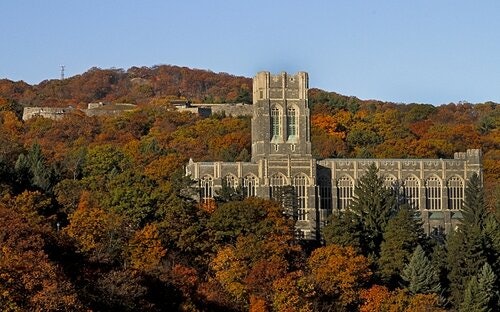
United States Military Academy at West Point Students for Fair Admissions (SFFA) announced this week that it has reached a settlement agreement with the U.S. Department of Justice that will permanently end the consideration of race and ethnicity in admissions at the United States Military Academy at West Point and the United States Air Force Academy.
The agreement, approved at the highest levels of the Department of Defense, establishes four key requirements for both academies: applying no consideration of race or ethnicity in admissions decisions, maintaining no race-based goals or quotas, shielding race and ethnicity information from admissions personnel, and training staff to adhere to merit-only standards.
The policies will take effect immediately and apply to all future admissions cycles, according to the settlement terms.
The settlement represents a significant policy reversal from the Biden administration’s previous position defending race-conscious admissions at military service academies. Earlier this year, under President Trump’s Executive Order 14185, the Department of Defense determined that race-based admissions at military academies are not justified by military necessity and do not advance national security, cohesion, or readiness.
The Department formally abandoned its earlier position that a “compelling national security interest in a diverse officer corps” justified race-based policies, marking a sharp departure from decades of military diversity initiatives.
The agreement follows SFFA’s earlier litigation against the U.S. Naval Academy, where the organization successfully challenged similar race-conscious admissions practices.
Under the settlement terms, litigation against West Point and the Air Force Academy will be dismissed with prejudice, with each side bearing its own legal costs. The agreement preserves SFFA’s right to challenge any future changes to these policies.
“This is an historic day for the principle of equal treatment under the law at our nation’s military academies,” said Edward Blum, president of SFFA. “Together with the Naval Academy case earlier this year, this agreement ensures that America’s critically important military service academies will admit future officers based solely on merit, not skin color or ancestry.”
The settlement comes amid ongoing national debates over affirmative action policies following the Supreme Court’s 2023 decision in Students for Fair Admissions v. Harvard, which effectively ended race-conscious admissions at civilian colleges and universities.
Military service academies had previously been considered potentially exempt from that ruling due to national security considerations and the unique mission of training military officers. However, the Trump administration’s policy shift has eliminated that distinction.
The agreement affects two of the nation’s most prestigious military institutions. West Point, founded in 1802, and the Air Force Academy, established in 1954, collectively graduate approximately 2,000 new military officers annually.
The Trump administration’s landmark settlement with Columbia University threatens the institution’s independence and academic freedom, higher education experts say. Many warn that the agreement marks a threat not only to higher education, but also to democracy at large.
The agreement, announced Wednesday, comes after Columbia faced months of intense pressure from the White House to address alleged antisemitism on campus and agree to a number of demands. It’s the latest example of how this administration is pushing the boundaries of its authority to secure changes that conservatives have long sought in higher ed.
In the end, Columbia agreed to comply with the government’s extensive demands while forking over more than $200 million to unlock $400 million in federal grants.
Education Secretary Linda McMahon celebrated the long-anticipated deal as an example of “commonsense reform,” saying in a statement that Americans have “watched in horror” for decades as the most esteemed campuses were occupied by “anti-western teachings and a leftist groupthink.”
“Columbia’s reforms are a roadmap for elite universities that wish to regain the confidence of the American public by renewing their commitment to truth-seeking, merit and civil debate,” she added. “I believe they will ripple across the higher education sector and change the course of campus culture for years to come.”
But some higher education faculty, legal experts and free speech advocates say the settlement is unlawful, pointing to the quick investigation, vague allegations and unprecedented way federal funds were retracted before Columbia had a chance to appeal. Some went as far as to compare the executive actions to past power grabs by authoritarian leaders in countries like Hungary, Turkey and Brazil.
The very real danger is that if elite institutions choose to submit to the authority of the Trump administration, the whole rest of the industry will follow.”
Kevin Carey, vice president of education and work at New America
Columbia’s capitulation “represents the upending of a decades-long partnership between the government and higher education in which colleges and universities nevertheless retained academic freedom, institutional autonomy and shared governance,” said Lynn Pasquerella, president of the American Association of Colleges and Universities. “It signals a rise in authoritarian populism in which higher education is positioned as the enemy in a fight against corrupt, inefficient and elite institutions that are out of touch with the needs of the working class.”
A federal taskforce convened to combat antisemitism first presented the university with the sweeping list of demands in March. The decision was simple: comply or permanently lose the federal funds that were frozen a week prior. The Ivy League institution agreed a week later to nearly all of the president’s demands. But the funds remained frozen.
McMahon and other Trump administration officials signed the agreement with Columbia.
Brendan Smialowski/AFP/Getty Images
Though Columbia was on the “right track,” McMahon and other task force members said the university had a long way to go. While talks with Columbia continued, the task force turned its focus to Harvard University and made similar demands. The Crimson, however, rejected the task force’s mandates and sued after it froze more than $2.7 billion in federal funds.
Many higher education leaders say that Columbia had a choice and chickened out. But regardless, they add, Trump’s ultimatum amounted to extortion.
“Whether you applaud or despise the terms of the deal, the way in which the government is operating, and getting universities like Columbia to make these deals is fundamentally coercive,” said David Pozen, a constitutional law professor at Columbia. “Therefore, it poses a significant threat to the future of higher education as well as the rule of law.”
Pozen and others fear that this will only further embolden Trump to take similar strikes at more institutions.
“The very real danger is that if elite institutions choose to submit to the authority of the Trump administration, the whole rest of the industry will follow,” said Kevin Carey, vice president of education and work at New America, a left-leaning think tank. “It will be like a stack of dominoes one falling after the other.”
Chilling First Amendment Rights
The Trump administration has said the measures taken against Columbia were necessary to address antisemitism on the campus as officials accused the university of failing to protect Jewish students and later said Columbia violated federal civil rights law.
As part of the settlement, Columbia is paying $21 million to address allegations that Jewish employees faced discrimination. The agreement also requires the university to hire a student liaison to support Jewish students.
But the settlement goes beyond antisemitism and focuses on unrelated campus policies. For example, starting in paragraph 16, the administration says that Columbia students cannot reference race in admissions essays and mandates that the university must provide annual data showing both rejected and admitted students broken down by racial demographics, grade point averages and test scores.
When campuses like Columbia and Harvard allowed antisemitism to run amok, the consequences were going to follow. The chickens had come home to roost.”
Frederick Hess, director of education policy studies at the American Enterprise Institute
The settlement also requires similar data concerning the admission of international students, bans the participation of transgender women in female sports and calls for Columbia to establish a process to ensure that all students “are committed to the longstanding traditions of American universities, including civil discourse, free inquiry, open debate, and the fundamental values of equality and respect.”
In Carey’s view, by buckling to the Trump administration, Columbia surrendered its identity as a private institution—and so would any other university that follows suit.
“The essence of an independent university is deciding who is part of your academic community, and Columbia University has surrendered that,” he said, referring to the admissions provisions.
Will Creeley, legal director of the Foundation for Individual Rights and Expression, said that, in addition to admission practices, this settlement and its “blatant disregard for federal law” will upend academia’s core commitment to fostering First Amendment rights.
“The reforms themselves require Columbia students to commit to laudable values like free inquiry and open debate,” Creeley wrote in an email to Inside Higher Ed. “But demanding students commit to vague goals like ‘equality and respect’ leaves far too much room for abuse, just like the civility oaths, DEI statements, and other types of compelled speech FIRE has long opposed.”
Michael Thaddeus, a Columbia math professor and president of the faculty union chapter, said though administrators insist they won’t allow the government to interfere, that assurance doesn’t mean such acts won’t occur.
“Students and scholars at American universities must be free to think and speak their minds,” he wrote in a statement to Inside Higher Ed. “The settlement … risks imperiling this freedom.”
Ditching Due Process
Beyond the terms of the settlement itself, education advocates are primarily concerned with the process used to reach the agreement, which they said didn’t follow procedural norms.
Pozen, the Columbia law professor, outlined in a blog post Wednesday night how the task force bypassed nearly all statutory requirements of such an investigation.
This administration must return to following the rule of law.”
Ted Mitchell, president of the American Council on Education
Past administrations, Pozen explained, have pushed the boundaries of regulation, utilizing more guidance letters and fewer formal rule-making sessions with public comment. But even those enforcement strategies consisted of policies that applied to all institutions and were based on thorough investigations, not rushed accusations, he added.
“The means being used to push through these reforms are as unprincipled as they are unprecedented,” Pozen wrote. “Higher education policy in the United States is now being developed through ad hoc deals, a mode of regulation that is not only inimical to the ideal of the university as a site of critical thinking but also corrosive to the democratic order and to law itself.”
Conservative higher education experts who support the administration’s approach acknowledged that it lacked due process, but also argued that Columbia deserved the stipulations and financial penalty it faced.
“When campuses like Columbia and Harvard allowed antisemitism to run amok, the consequences were going to follow,” said Frederick Hess, director of education policy studies at the American Enterprise Institute, a right-leaning think tank. “The chickens had come home to roost.”
Hess added that the Trump administration was not the first to “short circuit” regulatory processes, citing the Biden administration’s loan forgiveness campaign and Obama’s use of the gender equity law, Title IX, to combat sexual assault as examples.
“We live in a time when concern for legal requirements and norms is increasingly dismissed across the political spectrum,” so to chastise one administration for skipping steps and not the other is problematic, he said. “I continue to be deeply troubled every time [the procedural statutes] are broken. But you cannot have asymmetrical expectations for the parties in these kinds of debates.”
Shifting the Political Paradigm
While a few figures, including former Harvard president and treasury secretary Lawrence Summers, applauded the resolution, many faculty members and higher education leaders expressed fear that their institutions could be next.
Columbia’s reforms are a roadmap for elite universities that wish to regain the confidence of the American public by renewing their commitment to truth-seeking, merit and civil debate.”
Education Secretary Linda McMahon
Kirsten Weld, a history professor and president of the Harvard faculty union chapter, said she is “very concerned” and rejects any suggestion that Columbia’s settlement should be a “blueprint” for her own institution’s negotiations.
“This is about deploying the coercive power of the federal government to dictate to universities, faculty, and students what they should teach, research, and learn, on ideological grounds,” she wrote in an email to Inside Higher Ed. “It is a dangerous abuse of federal regulatory and civil rights enforcement authority to obtain … what it would otherwise be unable to mandate through proper legislative channels.”
Ted Mitchell, president of the American Council on Education, also suggested via email that “this cannot be a template for the government’s approach to American higher education.”
This administration “reached a conclusion before an investigation and levied a penalty without affording Columbia due process—that is chilling,” he wrote. “This administration must return to following the rule of law.”
But many policy experts are doubtful that will happen any time soon.
When looking beyond just Harvard and Columbia, one thing becomes clear, said Dominique Baker, an associate professor of education and public policy at the University of Delaware, the president is inciting an “outright attack” on higher education, and he has no plans of slowing down.
From the political ousting of University of Virginia president James Ryan to the legislative termination of countless academic programs in Indiana with little to no faculty input, Baker identified one defining thread: curtailing the power of democratic institutions.
“We are in a very dangerous time, both for U.S. higher education, but more importantly for our country,” she explained. “These types of outright attacks on colleges and universities are typically the moves of autocrats and dictators, often seen as signs of authoritarian takeovers.”
She later added, “if one wanted to overthrow our constitutional republic, these are the types of moves you would make.”
With a 22-page document and $221 million fine, Columbia University ended its months-long battle with the Trump administration that included accusations of civil rights violations, an accreditation review and a funding freeze that disrupted research and forced layoffs.
The settlement agreement, announced Wednesday night, will force changes to admissions, disciplinary processes and academic programs. In exchange, Columbia should get about $400 million in federal research funding back. The seemingly unprecedented deal will also see the federal government close investigations into alleged failures to police antisemitism on campus. (Despite the settlement, Columbia has not admitted to any allegations of wrongdoing but has acknowledged reforms were needed.)
Critics have decried the agreement as a concession to authoritarian demands imposed for political control, while supporters have argued reforms are necessary at Columbia after a pro-Palestinian encampment in spring 2024 and subsequent protests disrupted campus life.
Although Trump officials purportedly began their crusade against Columbia in an effort to address campus antisemitism, officials’ comments indicate that conservative politics also factored into the settlement.
“This is a monumental victory for conservatives who wanted to do things on these elite campuses for a long time because we had such far left-leaning professors,” Education Secretary Linda McMahon said in a FOX Business interview following the settlement announcement.
The Trump administration has made clear that this agreement will serve as a roadmap for its dealings with other universities, including Harvard. Much of the agreement reflects what the administration had demanded of Columbia in March, but other provisions—such as a requirement to turn over admissions data and scrutinize international student enrollment—are new and reflect demands sent to other universities.
Here’s what is in the agreement and what it means for Columbia.
Funding Streams Restored
Columbia will see at least a partial restoration of federal research funds.
The federal government will restore grants terminated by the Department of Health and Human Services and National Institutes of Health. However, grants terminated by the Department of Education “and other terminated contracts are excluded from this provision,” according to the agreement.
Columbia will be eligible for future grants, contracts, and awards “without disfavored treatment.”
Columbia acting president Claire Shipman emphasized that the agreement was about much more than $400 million, telling CNN on Thursday that federal scrutiny imperiled $1.3 billion a year.
“There are many headlines about $400 million dollars. This is really access to billions of dollars in future funding. And it’s not just money for Columbia. I mean, this is about science. It’s about curing cancer. Cutting edge, boundary breaking science that actually benefits the country and humanity,” she said, emphasizing the deal “reset” Columbia’s relationship with the government.
Closure of Investigations
The agreement will close pending investigations or compliance reviews related to potential violations of Title VI of the Civil Rights Act of 1964, which prohibits discrimination based on race or national origin. That includes a probe by the U.S. Equal Employment Opportunity Commission into the treatment of Jewish employees at Columbia. Of the $221 million settlement, $21 million will go toward the EEOC complaint.
However, the Trump administration noted in the agreement that the deal does not affect “in any way EEOC’s right to bring, process, investigate, litigate, or otherwise seek relief in any charge filed by individual charging parties or third parties that may later be filed against Columbia.”
Protest Restrictions
Columbia will maintain policies announced in March that deem protests inside of academic buildings and related spaces to be a “direct impediment” to the university’s academic mission.
“Such protests in academic buildings, and other places necessary for the conduct of University activities, are not acceptable under the Rules of University Conduct because of the likelihood of disrupting academic activities,” part of Columbia’s settlement with the federal government reads. All protest activity will be subject to university anti-discrimination and anti-harassment policies.
Prohibitions on masks announced in March will also remain in place.
Education Secretary Linda McMahon has said Columbia’s “unlawful encampments and demonstrations” deprived Jewish students of learning opportunities.
Mary Altaffer-Pool/Getty Images
Student Life Changes
The agreement codifies changes to disciplinary processes announced in March, such as placing the University Judicial Board under the Office of the Provost who reports to the president. Students previously served on the board, but now, it will be restricted to faculty and staff members.
The university president will make the final determinations on appeals cases.
Columbia will also add a student liaison “to further support Jewish life and the wellbeing of Jewish students on campus” who will advise administrations on issues such as antisemitism.
DEI Ban
Diversity, equity and inclusion initiatives, a frequent target of the Trump administration, are also included in the agreement. The deal bars Columbia from maintaining “programs that promote unlawful efforts to achieve race-based outcomes, quotas, diversity targets, or similar efforts.”
Per the agreement, Columbia will be required to provide reports “summarizing its compliance with this obligation” and to ensure that university programs do not “promote unlawful DEI goals.”
Changes to Admissions
The agreement emphasizes merit-based admissions and bars Columbia from giving preference to applicants due to “race, color, or national origin.” It also prevents Columbia from using personal statements, diversity narratives or references to race “to introduce or justify discrimination.”
Columbia will also be required to submit admissions data to the federal government on both rejected and admitted students, including demographic details and standardized test scores.
International applicants at Columbia will also be subject to additional scrutiny with the agreement dictating that the university “undertake a comprehensive review of its international admissions processes and policies.” That review is designed to ensure those applicants are “asked questions designed to elicit their reasons for wishing to study in the United States.”
Columbia is also required to provide details of “all disciplinary actions involving student visa-holders resulting in expulsions or suspensions, and arrest records that Columbia is aware of” to the extent that is permissible under the Family Educational Rights and Privacy Act.
Columbia also agreed to examine its business practices and decrease its financial dependence on international students.
CHUYN/iStock Unreleased/Getty
Program Reviews
Maintaining a senior vice provost to provide greater administrative oversight of Middle East studies (and other regional programs), as initially announced in March, is also part of the agreement.
That official will conduct reviews of programs such as the Institute for Israel and Jewish Studies; Middle Eastern, South Asian, and African Studies; the Middle East Institute; and various other programs, according to the agreement. Those reviews are intended to ensure programs are “comprehensive and balanced” and include “all aspects of leadership and curriculum.”
But some faculty members have expressed skepticism about additional administrative scrutiny.
Michael Thaddeus, president of the Columbia chapter of the American Association of University Professors, wrote in an emailed statement that the agreement poses threats to academic freedom at U.S. universities.
“Columbia’s insistence that it will not allow the government to interfere in appointments, admissions, or curriculum is welcome. Yet the creation of a monitor, charged with scrutinizing our admissions data and our Middle Eastern studies department, opens the door to just such interference,” Thaddeus said.
Resolution Monitor
As part of the deal, a third-party resolution monitor will police the agreement.
Bart Schwartz, co-founder of Guidepost Solutions and former Chief of the Criminal Division of the United States Attorney’s Office for the Southern District of New York, will serve in that role.
The agreement will allow the resolution monitor to access campus for assessment purposes.
Asked if Columbia believed the Trump administration would live up to its side of the agreement and if it had obtained any assurances, a university spokesperson did not provide a statement but instead pointed Inside Higher Ed to language in the agreement on dispute resolution.
That section noted opportunities for arbitration “if either party reasonably believes that the other is in violation of the terms of this agreement,” including reporting obligations outlined in the deal.
Hiring Requirements
The deal also places restrictions on university hiring processes.
Columbia’s agreement will bar the use of “personal statements, diversity narratives, or any applicant reference to racial identity as a means to introduce or justify discriminatory practices in hiring or promotion.” Other unspecified “indirect methods or criteria that serve as a substitute for race conscious hiring or promotion practices” are also prohibited per the deal.
Columbia is required to submit data on hiring and promotion practices to the resolution monitor.
Codifying and Introducing Changes
While some elements of the agreement are new, other parts simply codify prior changes. For example, changes to disciplinary processes, and greater administrative oversight of Middle East studies (and other regional programs) already announced in March are now codified in the deal.
David Pozen, a Columbia law professor who has argued that “the agreement gives legal form to an extortion scheme,” noted while some of the deal was foreshadowed, other parts go beyond what was previously announced.
Some provisions “are novel and don’t track what was already said in March,” Pozen said. “There’s language, for example, about all-female locker rooms and sports teams in paragraph 20. I don’t believe that has any antecedent and just seems like a new anti-trans provision. So, it’s a mix of memorialization, extension and innovation in what Columbia has conceded.”
On July 24, 2025, Columbia University announced that it reached an agreement with the Trump administration to restore federal funding that was revoked over allegations of its handling of anti-Semitism on campus. As part of the deal, Columbia will pay a fine and change numerous campus policies related to campus protests, including restrictions on demonstrations and new disciplinary procedures.
The following statement can be attributed to FIRE Legal Director Will Creeley.
FIRE sounded the alarm months ago about the administration’s blatant disregard for federal law in its response to allegations of discrimination at Columbia. Yesterday’s agreement can’t be separated from the unlawful pressure campaign that produced it.
The reforms themselves require Columbia students to commit to laudable values like free inquiry and open debate. But demanding students commit to vague goals like “equality and respect” leaves far too much room for abuse, just like the civility oaths, DEI statements, and other types of compelled speech FIRE has long opposed.