

Tag: SFFA

  • Tennessee and SFFA sue over funding for Hispanic-serving institutions

    Tennessee and SFFA sue over funding for Hispanic-serving institutions

    This audio is auto-generated. Please let us know if you have feedback.

    Dive Brief:

    • The state of Tennessee and Students for Fair Admissions sued the U.S. Department of Education Wednesday over allegations the agency’s decades-long practice of designating federal grant funding for Hispanic-serving institutions is unconstitutional.
    • The plaintiffs argued that the department’s eligibility requirements for HSI grants are discriminatory and undercut opportunities for all students, including those who are Hispanic and attend colleges that aren’t HSIs. To qualify as an HSI, a college must be nonprofit and enroll a full-time undergraduate student body that is at least 25% Hispanic.
    • Asserting that all colleges serve Hispanic students, Tennessee and SFFA are asking the federal court to strike down the HSI grant program’s ethnicity-based requirements and allow all institutions to apply for the grants “regardless of their ability to hit arbitrary ethnic targets.”

    Dive Insight:

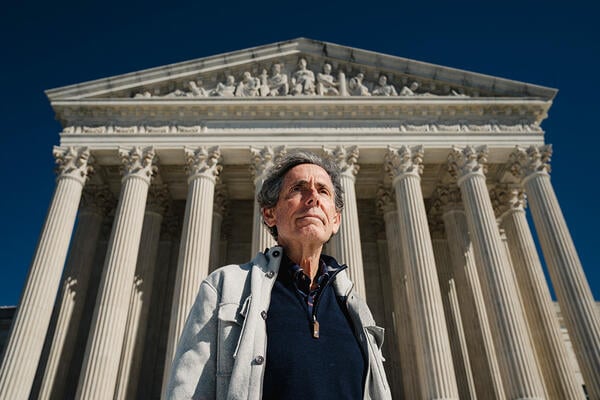
    Edward Blum, president of SFFA, said the advocacy organization is suing to ensure equal opportunity for all, not “denying opportunity to any racial or ethnic group.” SFFA successfully challenged race-conscious admissions before the U.S. Supreme Court, getting the practice banned in 2023.

    “This lawsuit challenges a federal policy that conditions the receipt of taxpayer-funded grants on the racial composition of a student body,” Blum said in a statement Wednesday. “No student or institution should be denied opportunity because they fall on the wrong side of an ethnic quota.”

    HSI is a designation first established in 1992 as part of the Higher Education Act, and the federal government began distributing funds to qualifying institutions three years later.

    The Education Department’s HSI division exists to distribute grant funding to “expand the educational opportunities for Hispanic Americans and other underrepresented populations,” according to its website.

    Though a majority of states have at least one HSI, the institutions are clustered in areas with higher Hispanic populations.

    Seven states — California, Texas, New York, Illinois, Florida, New Mexico and New Jersey — and Puerto Rico are home to 81% of HSIs, according to an analysis of federal data by the Hispanic Association of Colleges and Universities.

    The Hispanic and Latino population is one of the fastest-growing minority groups in the country. In 2023, 65.2 million Hispanic and Latino people lived in the U.S., accounting for nearly a fifth of the population. The Hispanic population is expected to grow to roughly a quarter of the U.S. population by 2060, according to federal data.

    In Tennessee, Hispanic students made up just over 8% of undergraduates in the 2023-24 academic year, according to HACU. The state has just one HSI — Southern Adventist University, a private nonprofit

    No public Tennessee college qualifies for HSI funding, despite all serving some population of Hispanic students, state officials said in Wednesday’s lawsuit. This puts public college students at a disadvantage and harms the institutions, they argued.  

    Tennessee Attorney General Jonathan Skrmetti alleged that the HSI grant system “openly discriminates against students based on ethnicity.”

    “The HSI program perversely deprives even needy Hispanic students of the benefits of this funding if they attend institutions that don’t meet the government’s arbitrary quota,” he said in a Wednesday statement.

    Both Skrmetti and Blum invoked the 2023 Supreme Court ruling on race-conscious college admissions in their statements. Blum argued the court “made clear” that federal funding practices like the HSI grant program are “patently unconstitutional.”

    That interpretation of diversity-focused federal funding has yet to be tested judicially. The high court’s 2023 decision only addressed admissions practices. But since then, conservative policymakers and those opposed to diversity initiatives have sought to apply it to a wide range of college affairs, including scholarships and diversity programs for students.

    Now, they are turning their attention to a long-standing federal program through this lawsuit, filed in U.S. District Court in Tennessee.

    The Education Department did not immediately respond to a request for comment Thursday. 

    However, the department under Trump has already sought to apply the Supreme Court’s 2023 ruling against Harvard University and the University of North Carolina to diversity, equity and inclusion efforts at federally funded institutions. In February, the agency threatened to pull all funding from colleges and K-12 schools that considered race in their programs and policies. 

    The department quickly faced lawsuits over the guidance, and it issued a Q&A “to provide clarity” the following month. The document softened the agency’s initial stance, though officials still struck a strident tone. Regardless, a federal judge in April blocked the Education Department from enforcing either document.

    On the first day of his second term, President Donald Trump issued an executive order repealing a Biden-era initiative aimed at boosting educational access via Hispanic-serving institutions. Among several goals, that program sought to expand the educational capacity of Hispanic-serving institutions through federal support. 

    Trump’s order — which revoked dozens of Biden-era executive actions — described the repealed policies as a move to “restore common sense” in the federal government.
    Source link

  • SFFA president on affirmative action ban’s growing impact

    SFFA president on affirmative action ban’s growing impact

    Edward Blum isn’t quite a household name. But at the American Enterprise Institute in Washington, D.C., he’s a minor celebrity.

    The conservative think tank has played host to an array of high-profile politicos, pundits, journalists and businesspeople over the years: Bill Gates, Mike Pence, Jordan Peterson, the Dalai Lama. Blum, who took affirmative action to the U.S. Supreme Court in 2023 and won, spoke at the institute earlier this month about his decades of legal activism.

    It was something of a homecoming for the president of Students for Fair Admissions, who lives in Florida but has been a visiting fellow at AEI since 2005. It was also, in many ways, a victory lap.

    Since the court ruled in his favor in Students for Fair Admissions v. Harvard and the University of North Carolina, Blum’s vision of what he calls a “colorblind covenant in public policy” has been ascendant, and in the new Trump administration, Blum’s zealous opposition to race-conscious programs has become a domineering force driving education policy.

    Over the weekend, the Education Department’s Office for Civil Rights issued a letter outlining an expansive interpretation of the SFFA ruling and its plans to enforce a ban on all race-conscious programming in higher ed; colleges that don’t comply in 14 days could lose their federal funding. During her confirmation hearing Thursday, Education Secretary nominee Linda McMahon said ending “race-based programming” would be a priority if she were confirmed.

    Blum, who spoke with Inside Higher Ed before the OCR letter was published, believes that affirmative action has long been unpopular—winning the public relations battle, he said, was “the easiest part of my job.” Still, he said the political, legal and cultural backlash against affirmative action and DEI over the past few years was affirming. In Trump’s Washington, Blum, who fought the courts unsuccessfully for decades, feels like an insider at last.

    “It’s gratifying for those of us who have labored in this movement to see that now, rather than these policies being whispered about as unfair and illegal, there’s a full-throated cry against them,” he said.

    The Trump administration’s adoption of Blum’s views on race in higher ed has also prompted another wave of backlash from Blum’s many critics, who say his work is undoing decades of progress toward racial equality and integration.

    During his AEI session, Blum was asked about his own views on racial diversity on college campuses, constitutional law notwithstanding. He rejected the premise outright.

    “The question implies that someone’s skin color is going to tell me something very fundamental about who they are as an individual. I don’t believe that’s the case,” Blum said. “Your skin color, the shape of your eyes, the texture of your hair tells me nothing about who you are. For some people, being on a campus with racial diversity is important … There are others that don’t seem to care about that.”

    From Outsider to Agenda Setter

    Blum has railed against race-conscious admissions for two decades. A former businessman in Houston, Blum, who has no law degree, founded the legal defense fund Project on Fair Representation in the mid-2000s. He challenged Texas’s reinstatement of race-based admissions in the second Fisher v. the University of Texas case; the case went to the Supreme Court but was ultimately defeated in 2016 when justices ruled that the university’s admission practices were constitutional.

    Now, he’s not alone. A corps of public interest law groups has sprung up to litigate the SFFA decision in higher ed at prestigious law firms, on Wall Street and beyond. This month, a brand-new public interest legal group filed a lawsuit against the University of California system accusing it of secretly using racial preferences in admissions, citing increases in Black and Hispanic enrollment at its most selective colleges.

    Blum said SFFA isn’t passing the buck and is committed to challenging universities on their compliance with the law, but a groundswell of efforts has lightened his load.

    “The SFFA decision has energized the public interest law apparatus,” Blum said. He predicted that under Trump, the Education Department will also play a bigger role in investigating institutions for their compliance with the affirmative action ban. That forecast appears to be coming true with Friday’s Dear Colleague letter, though the agency still has to enforce the directive, a complicated prospect considering its broad scope.

    Edward Blum (left) at the American Enterprise Institute on Feb. 5, with moderator Frederick Hess.

    Blum supports the intensifying attacks on DEI and said that with more state laws forbidding spending on diversity and equity programs, there’s room for legal work to ensure colleges aren’t spending on “DEI by another name.”

    But despite the high-profile political implications of his work, he doesn’t see himself as a political actor. In the late 1990s, he ran a failed congressional campaign in Houston, but the thought of running for office now evokes “overwhelming negative emotions.” And he’s careful to draw a line between his legal advocacy work and the anti-DEI crusades of conservative lawmakers.

    “There is a 20-foot wall between the political people in the movement and the public interest groups,” he said.

    ‘A Forever Endeavor’

    Blum is not finished suing colleges over affirmative action, or at least those he believes could be flouting the law. He’s particularly interested in selective colleges that reported similar or higher rates of Black and Hispanic enrollment this year, such as Yale, Duke and Princeton—a sure sign, he believes, that they’ve been “cheating.” SFFA has a “vibrant role to play,” he added, in holding them to account.

    “So many of us are befuddled and concerned that in the first admissions cycle post-SFFA, schools that said getting rid of affirmative action would cause their minority admissions to plummet didn’t see that happen,” he said.

    When asked if recent expansions to financial aid offerings at these universities could account for the change, Blum was circumspect. He’s not opposed to economically progressive admissions initiatives; he calls Rick Kahlenberg, a liberal proponent of “class-based affirmative action,” a like-minded friend. But he said the onus was on colleges to prove that’s the source of their continued racial diversity. He also said that geographic diversity initiatives would be unconstitutional if they only applied to “Harlem and the South Side of Chicago, and not also rural Missouri and northern Maine.”

    Since the Supreme Court ruling, experts, college administrators and lawyers have debated whether the SFFA decision applies to race-conscious scholarships, internships and precollege programs as well as admissions. In the months after the ruling, attorneys general in Ohio and Missouri issued orders saying it did, and some colleges have begun to revise racial eligibility requirements on scholarships. At the same time, scholars and lawyers said implementing changes to nonadmissions programs amounted to overreach from state lawmakers and institutions alike.

    Blum doesn’t actually believe the decision itself extends to those programs. He does think they’re illegal—there just hasn’t been a successful case challenging them yet.

    “I haven’t really made myself clear on this, which is my fault, but the SFFA opinion didn’t change the law for those policies” in internships and scholarships, he said. “But those policies have always been, in my opinion, outside of the scope of our civil rights law and actionable in court.”

    He’s still looking for a case that could enshrine his view in the law—two weeks ago McDonald’s settled a lawsuit he filed against their Latino scholarship program, putting that one out of contention. But he said that for the most part, in the wake of the SFFA decision, colleges have proactively altered or ended those programs themselves.

    “Even if the ruling didn’t apply directly, it’s had this cascading effect,” he said.

    That effect, Blum said, has spread to cultural and corporate institutions as well as higher ed, contributing to a general chilling effect on what he views as unconstitutional racial preferences in American society. It’s a major turnaround, he acknowledged, from the ubiquity of DEI initiatives and racial reckoning just five years ago after the murder of George Floyd.

    While he’s relishing in the legal, political and cultural victory of his crusade, he’s not resting on his laurels.

    “There are no permanent victories in politics,” Blum said, loosely quoting Winston Churchill. “The same applies to legal advocacy. This is a forever endeavor.”

    Source link