Tag: shakeup

  • An assessor’s perspective on the Office for Students’ TEF shake-up

    An assessor’s perspective on the Office for Students’ TEF shake-up

    Across the higher education sector in England some have been waiting with bated breath for details of the proposed new Teaching Excellence Framework. Even amidst the multilayered preparations for a new academic year – the planning to induct new students, to teach well and assess effectively, to create a welcoming environment for all – those responsible for education quality have had one eye firmly on the new TEF.

    The OfS has now published its proposals along with an invitation to the whole sector to provide feedback on them by 11 December 2025. As an external adviser for some very different types of provider, I’m already hearing a kaleidoscope of changing questions from colleagues. When will our institution or organisation next be assessed if the new TEF is to run on a rolling programme rather than in the same year for everyone? How will the approach to assessing us change now that basic quality requirements are included alongside the assessment of educational ‘excellence’? What should we be doing right now to prepare?

    Smaller providers, including further education colleges that offer some higher education programmes, have not previously been required to participate in the TEF assessment. They will now all need to take part, so have a still wider range of questions about the whole process. How onerous will it be? How will data about our educational provision, both quantitative and qualitative, be gathered and assessed? What form will our written submission to the OfS need to take? How will judgements be made?

    As a member of TEF assessment panels through TEF’s entire lifecycle to date, I’ve read the proposals with great interest. From an assessor’s point of view, I’ve pondered on how the assessment process will change. Will the new shape of TEF complicate or help streamline the assessment process so that ratings can be fairly awarded for providers of every mission, shape and size?

    Panel focus

    TEF panels have always comprised experts from the whole sector, including academics, professional staff and student representatives. We have looked at the evidence of “teaching excellence” (I think of it as good education) from each provider very carefully. It makes sense that the two main areas of assessment, or “aspects” – student experience and student outcomes – will continue to be discrete areas of focus, leading to two separate ratings of either Gold, Silver, Bronze or Requires Improvement. That’s because the data for each of these can differ quite markedly within a single provider, so it can mislead students to conflate the two judgements.

    Diagram from page 18 of the consultation document

    Another positive continuity is the retention of both quantitative and qualitative evidence. Quantitative data include the detailed datasets provided by OfS, benchmarked against the sector. These are extremely helpful to assessors who can compare the experiences and outcomes of students from different demographics across the full range of providers.

    Qualitative data have previously come from 25-page written submissions from each provider, and from written student submissions. There are planned changes afoot for both of these forms of evidence, but they will still remain crucial.

    The written provider submissions may be shorter next time. Arguably there is a risk here, as submissions have always enabled assessors to contextualise the larger datasets. Each provider has its own story of setting out to make strategic improvements to their educational provision, and the submissions include both qualitative narrative and internally produced quantitative datasets related to the assessment criteria, or indicators.

    However, it’s reasonable for future submissions to be shorter as the student outcomes aspect will rely upon a more nuanced range of data relating to study outcomes as well as progression post-study (proposal 7). While it’s not yet clear what the full range of data will be, this approach is potentially helpful to assessors and to the sector, as students’ backgrounds, subject fields, locations and career plans vary greatly and these data take account of those differences.

    The greater focus on improved datasets suggests that there will be less reliance on additional information, previously provided at some length, on how students’ outcomes are being supported. The proof of the pudding for how well students continue with, complete and progress from their studies is in the eating, or rather in the outcomes themselves, rather than the recipes. Outcomes criteria should be clearer in the next TEF in this sense, and more easily applied with consistency.

    Another proposed change focuses on how evidence might be more helpfully elicited from students and their representatives (proposal 10). In the last TEF students were invited to submit written evidence, and some student submissions were extremely useful to assessors, focusing on the key criteria and giving a rounded picture of local improvements and areas for development. For understandable reasons, though, students of some providers did not, or could not, make a submission; the huge variations in provider size means that in some contexts students do not have the capacity or opportunity to write up their collective experiences. This variation was challenging for assessors, and anything that can be done to level the playing field for students’ voices next time will be welcomed.

    Towards the data limits

    Perhaps the greatest challenge for TEF assessors in previous rounds arose when we were faced with a provider with very limited data. OfS’s proposal 9 sets out to address this by varying the assessment approach accordingly. Where these is no statistical confidence in a provider’s NSS data (or no NSS data at all), direct evidence of students’ experiences with that provider will be sought, and where there is insufficient statistical confidence in a provider’s student outcomes, no rating will be awarded for that aspect.

    The proposed new approach to the outcomes rating makes great sense – it is so important to avoid reaching for a rating which is not supported by clear evidence. The plan to fill any NSS gap with more direct evidence from students is also logical, although it could run into practical challenges. It will be useful to see suggestions from the sector about how this might be achieved within differing local contexts.

    Finally, how might assessment panels be affected by changes to what we are assessing, and the criteria for awarding ratings? First, both aspects will incorporate the requirements of OfS’s B conditions – general ongoing, fundamental conditions of registration. The student experience aspect will now be aligned with B1 (course content and delivery), B2 (resources, academic support and student engagement) and part of B4 (effective assessment). Similarly, the student outcomes B condition will be embedded into the outcomes aspect of the new TEF. This should make even clearer to assessors what is being assessed, where the baseline is and what sits above that line as excellent or outstanding.

    And this in turn should make agreeing upon ratings more straightforward. It was not always clear in the previous TEF round where the lines between Requires Improvement and even meeting basic requirements for the sector should be drawn. This applied only to the very small number of providers whose provision did not appear, to put it plainly, to be good enough.

    But more clarity in the next round about the connection between baseline requirements should aid assessment processes. Clarification that in the future a Bronze award signifies “meeting the minimum quality requirements” is also welcome. Although the sector will need time to adjust to this change, it is in line with the risk-based approach OfS wants to take to the quality system overall.

    The £25,000 question

    Underlying all of the questions being asked by providers now is a fundamental one: How we will do next time?

    Looking at the proposals with my assessor’s hat on, I can’t predict what will happen for individual providers, but it does seem that the evolved approach to awarding ratings should be more transparent and more consistent. Providers need to continue to understand their education-related own data, both quantitative and qualitative, and commit to a whole institutional approach to embedding improvements, working in close partnership with students.

    Assessment panels will continue to take their roles very seriously, to engage fully with agreed criteria, and do everything we can to make a positive contribution to encouraging, recognising and rewarding teaching excellence in higher education.

    Source link

  • Ed Secretary Nominee Signals Major Shake-Up for DEI, Civil Rights

    Ed Secretary Nominee Signals Major Shake-Up for DEI, Civil Rights

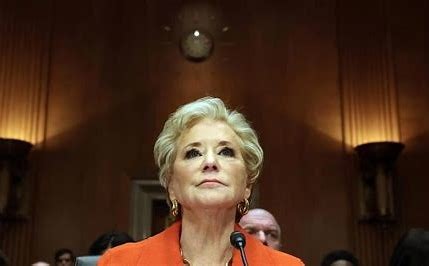
    In a Senate confirmation hearing that has sent ripples through the higher education community, Education Secretary nominee Linda McMahon acknowledgedLinda McMahon President Trump’s directive to potentially dissolve the Department of Education, while facing pointed questions about diversity initiatives and civil rights protections in education.

    During last Thursday’s hearing before the Senate Committee on Health, Education, Labor and Pensions (HELP), McMahon addressed concerns about the administration’s stance on diversity, equity, and inclusion (DEI) programs in educational institutions. When pressed by Sen. Chris Murphy (D-Conn.) about Trump’s executive order banning DEI programs, McMahon stopped short of providing clear guidance on the future of student cultural organizations and ethnicity-based clubs on campuses.

    The hearing revealed mounting concerns about student data privacy and program funding. Sen. Patty Murray (D-Wash.) highlighted that the Department of Government Efficiency (DOGE) has already gained access to “highly sensitive student data” and has begun withholding congressionally approved funding meant to support schools and students.

    Democratic senators expressed particular concern about the potential dismantling of the Education Department and its impact on civil rights enforcement and disability services in higher education. When questioned about relocating the Individuals with Disabilities Education Act (IDEA) to the Department of Health and Human Services, McMahon defended the potential move by citing declining performance scores despite nearly a trillion dollars in spending since the department’s establishment in 1980.

    McMahon did make several commitments during the hearing, including a pledge to maintain the Pell Grant program, which provides crucial financial aid to millions of college students. She also addressed the issue of antisemitism on college campuses, though specific plans for addressing this concern were not detailed.

    The hearing, which was interrupted multiple times by protesters advocating for public schools and trans students’ rights, highlighted the complex challenges facing the department. McMahon acknowledged that any significant changes to the department’s structure would require congressional approval, despite the president’s stated desire to eliminate it through executive action.

    While McMahon is expected to be confirmed by the GOP-controlled Senate, her hearing has raised significant questions about the future of federal oversight of higher education, particularly regarding civil rights enforcement and diversity initiatives. The HELP panel is scheduled to vote on advancing her nomination to the full Senate floor next Thursday.

    “It’s always difficult to downsize, it’s always difficult to restructure and reorganize in any department,” McMahon said during the hearing, addressing concerns about recent administrative leaves and firings at the department. “I think people should always be treated with respect.”

    For the higher education community, the hearing left several crucial questions unanswered, particularly regarding the future of diversity programs and civil rights protections. Sen. Murphy’s exchange about student cultural organizations highlighted the uncertainty facing many campus groups: “That’s pretty chilling. I think schools all around the country are going to hear that,” he noted after McMahon’s noncommittal response about the permissibility of ethnicity-based student clubs under the new DEI restrictions.

    Source link

  • Accreditors brace for Trump’s promised higher ed shakeup

    Accreditors brace for Trump’s promised higher ed shakeup

    This audio is auto-generated. Please let us know if you have feedback.

    WASHINGTON — On the 2024 campaign trail, then-presidential candidate Donald Trump accused the nation’s faculty of being “obsessed with indoctrinating America’s youth” and declared, “The time has come to reclaim our once great educational institutions from the radical Left.”

    His administration’s “secret weapon” in this conflict would be the accreditation system for colleges and universities. 

    “When I return to the White House, I will fire the radical Left accreditors that have allowed our colleges to become dominated by Marxist maniacs and lunatics,” he said in a July 2023 campaign video. “We will then accept applications for new accreditors who will impose real standards on colleges once again and once and for all.”

    Earlier this week, officials and professionals from the accreditation system that Trump vowed to upend met in Washington, D.C., for the Council for Higher Education Accreditation’s annual conference to discuss the major topics facing the sector — not least among them being the second Trump administration that took office a week earlier.

    Along with the wholesale replacement of accreditors that Trump promised, plenty of other aspects of accreditation work could change under the new administration and with a Republican majority in Congress. Here is a look at some of the big political and policy questions under discussion. 

    Working with a new Education Department

    The U.S. Department of Education recognizes accreditors, which in turn vet and accredit institutions, rendering them eligible for Title IV federal financial aid, such as student loans and Pell Grants. 

    That makes the department’s relationship with accreditors of paramount importance to the latter group, and it would make the department the agent for enacting Trump’s policies. 

    “There will be — and we don’t know the scope of it yet — efforts to use accreditors to advance the administration’s policies, particularly around areas of DEI,” Jon Fansmith, senior vice president of government relations and national engagement at the American Council on Education, said during a panel Wednesday.

    One of Trump’s campaign pledges was to remove “all DEI bureaucrats” from higher education. As a senator, Trump’s vice president, JD Vance, introduced a federal bill last year that would have barred accreditors from enacting DEI requirements at colleges. A bill with a similar aim passed the House last year, but died in committee in the Senate. 

    With the change in administration will come a new Education Secretary. Fansmith described Trump’s pick to head the Education Department, Linda McMahon, as “pragmatic.” He also said her stint as head of the Small Business Administration during Trump’s first term went “remarkably smoothly.”

    “There are reasons to think that where she has weighed into the [higher ed] policy space, there’s opportunities to work with her,” Fansmith added.

    As for Trump’s stated desire to eliminate the department altogether? “Spoiler, the department won’t be abolished,” Fansmith said. 

    Jan Friis, CHEA’s senior vice president for government affairs, pointed out that the first bill proposing the elimination of the Education Department so far during the current House of Representatives term had no cosponsors. 

    Further attacks on DEI

    Colleges across the country have faced a Republican-led crusade against their diversity, equity and inclusion efforts over the past few years — and those attacks are only poised to grow stronger under the Trump administration. 

    On the first full day of his presidency, Trump issued an executive order calling for agencies to identify organizations, including colleges with endowments worth over $1 billion, for potential investigations into their DEI work. 

    The mounting backlash against DEI means that higher education leaders will have to frame “compelling narratives” about their equity work to help people see what they’re doing and why, Debra Humphreys, vice president of strategic engagement at Lumina Foundation, told conference attendees Tuesday.

    “How do we talk about all of that work in a way that more people can understand?” Humphreys said. “That’s become harder.”

    That’s because people who hear words like “equity” and “inclusion” often fall into two camps, Humphreys said.

    Source link