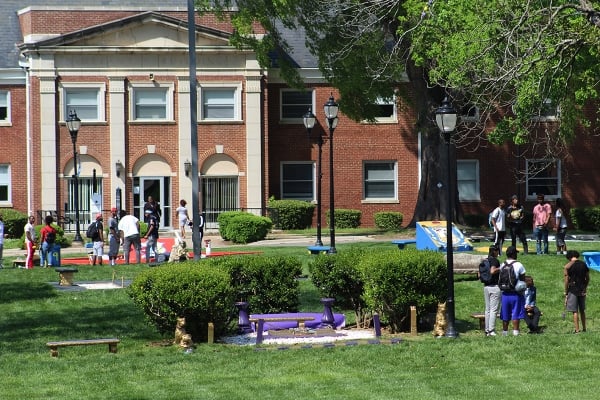
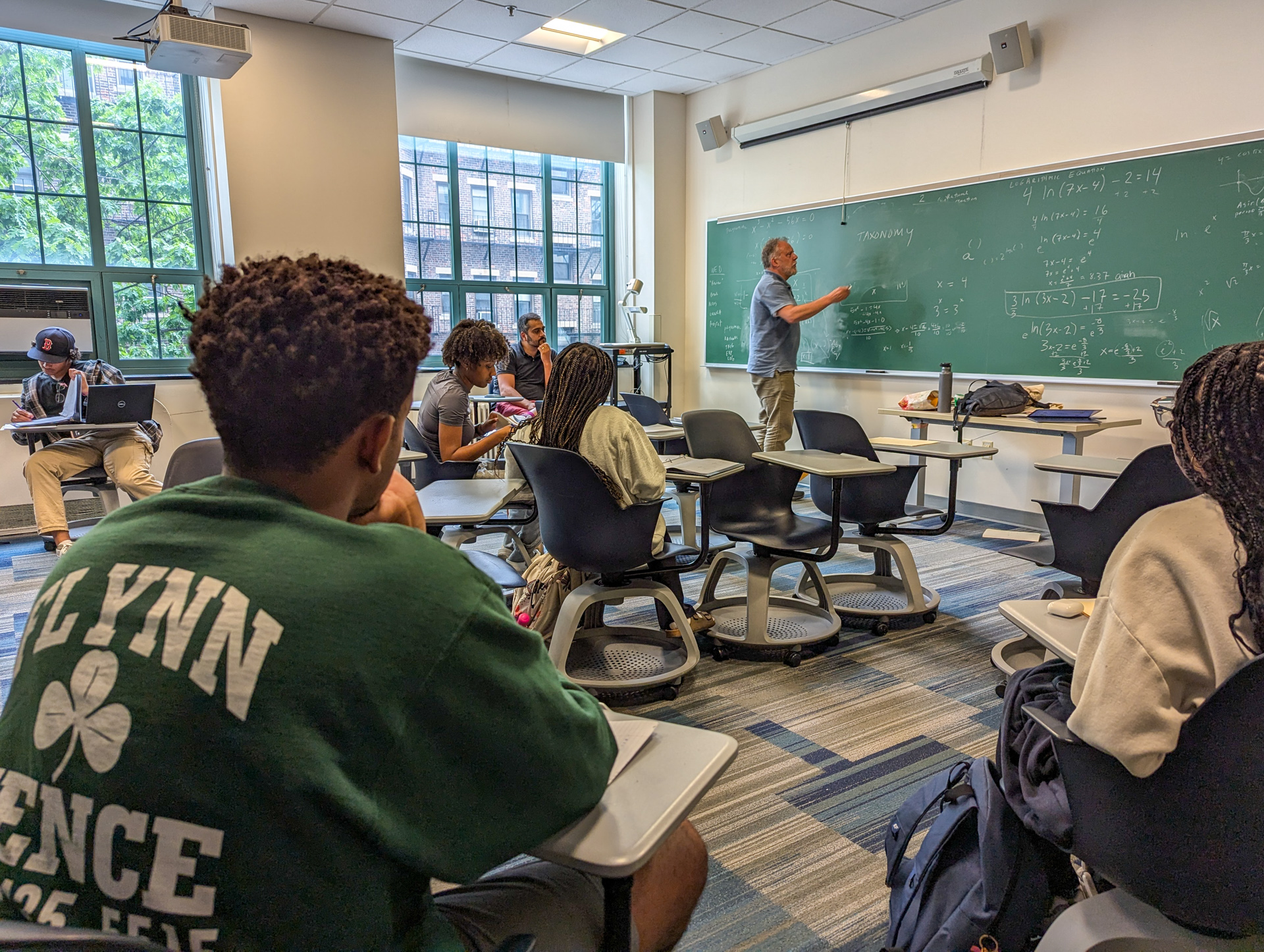
However, Verjanis Peoples, the interim president of Saint Augustine’s University, and board chair Sophie Gibson wrote in a letter to the Education Department that several provisions of the proposed compact are not “compatible with the statutory mission and federal mandate under which HBCUs operate.” Those include restrictions on the use of race in admissions or for financial support.
“As noted in our institutional analysis, such provisions would unintentionally force HBCUs to choose between compliance and survival, a position that is neither feasible nor consistent with congressional intent,” wrote Peoples and Gibson in a letter posted by Fox News.
Other requirements that raise concerns include a cap on international students and a five-year tuition freeze. “Without mission-sensitive accommodations, these sections risk unintended consequences that would impede our ability to serve students effectively,” they added.
Saint Augustine’s has struggled in recent years amid declining enrollment and financial challenges. The university had 175 students as of October 2024; more recent enrollment figures aren’t available. Late last year, Saint Augustine’s lost its accreditation, though a federal court overturned that decision. Classes were held online this fall.
The 158-year-old university is the first HBCU to show interest in the compact, which would require colleges to make a number of changes to their policies and practices in exchange for potential benefits such as an edge in federal grant competitions. The Trump administration first invited nine universities to give feedback on the document, and none in the group decided to sign on. Since the proposal was made public in early October, several universities have rejected it, arguing the federal funding should be based on merit—not adherence to a president’s priorities.
The administration has initially aimed to finalize the compact by Nov. 21, but that deadline has reportedly been extended.
Peoples and Gibson wrote that they support the compact’s goal to strengthen academic excellence, accountability and transparency in higher ed, and they see alignment between Saint Augustine’s historic mission and the administration’s proposal.
Despite their other reservations, “Saint Augustine’s University remains eager to participate as a constructive partner and early-engagement institution,” they wrote. They asked the department to work with HBCUs to shape a final agreement that upholds “both the letter and spirit of the Compact while safeguarding our statutory purpose.”
For educators, using artificial intelligence in the classroom only makes sense if they have a real say in its development.
Building on expert experience
This summer, the American Federation of Teachers and its New York City affiliate, the United Federation of Teachers, announced a $23 million partnership with Microsoft, OpenAI, and Anthropic to establish a first-of-its-kind teacher institute for artificial intelligence: the National Academy for AI Instruction.
“Technology is routinely weaponized against us,” said UFT President Michael Mulgrew. “We were not going to sit by and watch that happen again. This initiative allows us to take control of AI in the education sphere and develop it for and by educators.”
While the physical plant will take 12–18 months to build, the academy has already started hosting its first series of AI workshops, introducing attendees to tools to help teachers plan, manage their workload, and meet student needs more effectively. Teachers received guidance on writing AI prompts and discussed ethics and the responsible use of AI.
“The academy is saying to teachers: You bring expertise to the classroom. You bring high-value pedagogy to the classroom,” said Rob Weil, Chief Executive Officer of the Academy. “We want you to use that pedagogy and expand that pedagogy, and there are resources you can use to make your expertise better. This is not about replacing your expertise; it’s about expanding your expertise.”
AI use influenced by teachers
Workshops this fall will engage educators in 200 New York City schools and then extend to educators in AFT union affiliates across the country. Organizers said the content will deepen as educators gain experience. And while supporting the exploration of AI, the AFT and the UFT were clear that neither organization endorsed specific AI tools or platforms.
Iolani Grullon, a teacher at P.S. 4 in Manhattan who attended two sets of AI workshops this summer, said AI could be “a game changer” for educators.
“This is where things are going,” Grullon said. “If we resist, we’re only going to make our lives harder. We need to be part of the conversation, learn how to use these tools, and influence their next iteration. We are the voice of the classroom. We know what educators and students need. And if these tools can streamline planning and paperwork, it allows for more time to build relationships with students.”
“It does not replace the human component,” Grullon said. “You need to see my face. You need to hear me say, ‘Great job!’ or ‘Let’s try this again’ or ‘Are you OK?’”
For the first time in more than a decade, confidence in the nation’s colleges and universities is rising. Forty-two percent of Americans now say they have “a great deal” or “quite a lot” of confidence in higher education, up from 36 percent last year.
It’s a welcome shift, but it’s certainly not time for institutions to take a victory lap.
For years, persistent concerns about rising tuition, student debt and an uncertain job market have led many to question whether college was still worth the cost. Headlines have routinely spotlighted graduates who are underemployed, overwhelmed or unsure how to translate their degrees into careers.
With the rapid rise of AI reshaping entry-level hiring, those doubts are only going to intensify. Politicians, pundits and anxious parents are already asking: Why aren’t students better prepared for the real world?
But the conversation is broken, and the framing is far too simplistic. The real question isn’t whether college prepares students for careers. It’s how. And the “how” is more complex, personal and misunderstood than most people realize.
Related: Interested in innovations in higher education? Subscribe to our free biweekly higher education newsletter.
What’s missing from this conversation is a clearer understanding of where career preparation actually happens. It’s not confined to the classroom or the career center. It unfolds in the everyday often overlooked experiences that shape how students learn, lead and build confidence.
While earning a degree is important, it’s not enough. Students need a better map for navigating college. They need to know from day one that half the value of their experience will come from what they do outside the classroom.
To rebuild America’s trust, colleges must point beyond course catalogs and job placement rates. They need to understand how students actually spend their time in college. And they need to understand what those experiences teach them.
Ask someone thriving in their career which part of college most shaped their success, and their answer might surprise you. (I had this experience recently at a dinner with a dozen impressive philanthropic, tech and advocacy leaders.) You might expect them to name a major, a key class or an internship. But they’re more likely to mention running the student newspaper, leading a sorority, conducting undergraduate research, serving in student government or joining the debate team.
Such activities aren’t extracurriculars. They are career-curriculars. They’re the proving grounds where students build real-world skills, grow professional networks and gain confidence to navigate complexity. But most people don’t discuss these experiences until they’re asked about them.
Over time, institutions have created a false divide. The classroom is seen as the domain of learning, and career services is seen as the domain of workforce preparation. But this overlooks an important part of the undergraduate experience: everything in between.
The vast middle of campus life — clubs, competitions, mentorship, leadership roles, part-time jobs and collaborative projects — is where learning becomes doing. It’s where students take risks, test ideas and develop the communication, teamwork and problem-solving skills that employers need.
This oversight has made career services a stand-in for something much bigger. Career services should serve as an essential safety net for students who didn’t or couldn’t fully engage in campus life, but not as the launchpad we often imagine it to be.
We also need to confront a harder truth: Many students enter college assuming success after college is a given. Students are often told that going to college leads to success. They are rarely told, however, what that journey actually requires. They believe knowledge will be poured into them and that jobs will magically appear once the diploma is in hand. And for good reason, we’ve told them as much.
But college isn’t a vending machine. You can’t insert tuition and expect a job to roll out. Instead, it’s a platform, a laboratory and a proving ground. It requires students to extract value through effort, initiative and exploration, especially outside the classroom.
The credential matters, but it’s not the whole story. A degree can open doors, but it won’t define a career. It’s the skills students build, the relationships they form and the challenges they take on along the way to graduation that shape their future.
As more college leaders rightfully focus on the college-to-career transition, colleges must broadcast that while career services plays a helpful role, students themselves are the primary drivers of their future. But to be clear, colleges bear a grave responsibility here. It’s on us to reinforce the idea that learning occurs everywhere on campus, that the most powerful career preparation comes from doing, not just studying. It’s also on us to address college affordability, so that students have the time to participate in campus life, and to ensure that on-campus jobs are meaningful learning experiences.
Higher education can’t afford public confidence to dip again. The value of college isn’t missing. We’re just not looking in the right place.
Bridget Burns is the founding CEO of the University Innovation Alliance (UIA), a nationally recognized consortium of 19 public research universities driving student success innovation for nearly 600,000 students.
The Hechinger Report provides in-depth, fact-based, unbiased reporting on education that is free to all readers. But that doesn’t mean it’s free to produce. Our work keeps educators and the public informed about pressing issues at schools and on campuses throughout the country. We tell the whole story, even when the details are inconvenient. Help us keep doing that.
Assistant Minister for Citizenship, Multicultural Affairs and International Education Julian Hill was promoted by Prime Minister Anthony Albanese after the May election. Picture: Jason Edwards
An international education framework will shape the “next phase of maturity” of the Albanese government’s vision of a quality-first, managed-growth tertiary education sector.
Please login below to view content or subscribe now.
In the midst of a global crisis in social relations, spiralling levels of harassment, scapegoating and online and interpersonal hostility have become routine, especially for members of minoritised and stigmatised communities.
As microcosms of wider society, university spaces are not immune to these social, cultural and political tensions. Yet the ways prejudices play out in higher education often go under-explored. As a result, many students feel unsafe and unsupported at a time when multiple points of crisis have exposed student communities to a heightened risk of harassment.
In response to these mounting pressures, the OfS has emphasised the urgent need for action. From August 2025, new requirements will compel institutions to actively address harassment and sexual misconduct. However, current discussions too often overlook the full spectrum of harassment. Non-sexual forms of hostility—such as racist, disablist, homophobic, and transphobic harassment—frequently remain at the periphery of institutional priorities.
Our current research, due to be completed in July 2027, addresses this gap. It takes an inclusive, victim-centred approach to examining all forms of harassment. By investigating the barriers students face in accessing effective support and understanding their lived experiences of violence, microaggressions, and exclusion, the study will generate critical insights to help universities create truly safe and supportive environments.
The importance of self-definition
A crucial aspect of this research is that harassment cannot, and should not, be narrowly defined by institutional standards or legislation alone. This is why allowing students to define what constitutes as harassment to them is so important.
Self-definition acknowledges that students are best placed to interpret the behaviours that harm them, informed by their unique identities, cultural contexts, and lived experiences.
This approach moves beyond rigid, exclusionary notions of who experiences harassment and in what form. It acknowledges the subjective and often complex nature of harassment and fosters empathy and inclusivity. For instance, a seemingly minor microaggression may carry significant emotional weight for a student facing intersecting disadvantages. Equally, behaviours such as online victimisation, sustained name-calling, or subtle exclusion may not fit traditional definitions of harassment, yet they can deeply impact an individual.
Our 2020 pilot study at the University of Leicester embraced this framework of self-definition. Students identified more than a dozen identity characteristics as a motivating factor in their victimisation. Amongst some of the more often discussed identity characteristics, students spoke about how their political views, subcultural status, accent, dress and appearance, and their status as a mature student were also reasons they felt they were targeted.
The emotional, behavioural and educational impacts of targeted harassment were diverse, far-reaching and profoundly damaging to their student experience.
Self-definition does not mean abandoning clear policies or legal obligations. Instead, it complements existing frameworks by placing student voices at the centre of institutional responses. By understanding often ‘hidden’ and under-acknowledged forms of harassment, universities can build more holistic, evidence-based systems to support victims. For instance, reporting systems should allow students to disclose harassment that targets multiple aspects of their identity – for example, a student who is both Black and gay, or a student who is Muslim and disabled. Staff training can then focus on recognising these nuanced impacts, ensuring that responses are handled with cultural sensitivity and empathy.
Working across institutions
Sector-wide progress has been hindered by fear of reputational damage, a culture of conservatism, and, in some cases, a continued denial of the problem entirely. Where reliable research on harassment within HE exists, it generally focuses on one particular institution or just a single form of harassment. Our approach is different.
We are working across five participating higher education institutions (HEIs) in England, purposefully selected for their very different geographical locations, student demographics and institutional profile. By working cross-institutionally and through our continued collaborations with OfS and Universities UK, we can maximise the impact of our findings and shift the narrative surrounding harassment and sexual misconduct. Rather than being perceived as an issue confined to a handful of “bad apple” universities, this approach acknowledges that such problems exist across the sector and require a unified response.
This technique should also help to reduce fears of reputational damage, as it frames the issue as a systemic challenge rather than a localised failure. It also fosters a culture of accountability and continuous improvement, showing that universities are committed to addressing misconduct comprehensively rather than reacting defensively after incidents occur.
Working with a range of HEIs in this way allows us to produce a suite of student-informed resources that can be tailored to individual HEIs. The insights gained from our research will not merely reflect existing challenges; they offer a roadmap for compliance with OfS conditions and for creating transformative, lasting change. By prioritising inclusivity and evidence, institutions can fulfil their obligations while fostering safer, more equitable spaces for all students.
To find out more, please reach out to the research team at [email protected]
As a campaigner focusing on gender-based violence within higher education, I am extremely concerned about the consequences for trans and non-binary people of the recent Supreme Court judgement on the meaning of “sex” in the Equality Act 2010.
Crucial work is being done by trans activists and their allies to challenge this judgement, including a proposed judicial review. In the meantime, the Equality and Human Rights Commission (EHRC) has been consulting on its guidance, and higher education institutions are discussing the implications of the judgement.
Given that any further legal case will take some time to come to fruition, it is crucial that decisions being made around trans and non-binary people’s access to spaces within higher education are informed by good quality evidence.
This evidence – which comes from a wide range of international studies, as outlined below – shows clearly that trans and non-binary people face much higher risks in relation to sexual harassment and assault than cis people, both men and women. This fact is entirely missing in the consultation version of the guidance.
My response to the consultation has outlined these issues. But this point needs to be taken into account by all HEIs currently considering how to implement the Supreme Court judgement. This piece aims to give evidence and wording to help staff to do so.
For example a survey of over 43000 students in Australia published in 2022 found that trans students were more than twice as likely as cis women to have been subjected to sexual violence in the past year, and also significantly more likely to be subjected to sexual harassment, as detailed in the figure below.
In addition, non-binary and trans people may often experience sexual harassment that intersects with harassment on the basis of their gender identity. For example, in a large national survey of sexual harassment and violence in Ireland with responses from 7901 students, 45% of non-binary students described being subjected to sexualised comments related to their gender identity.
Toilets have been identified as a particularly risky space for trans and non-binary children at school.
A recent US study analysed a survey of 3673 transgender and nonbinary US adolescents in grades 7 to 12. They found that – while trans and non-binary students were already more likely to experience sexual assault than cis students – this risk was increased by a large amount where they are not allowed to use toilets that match their self-identified gender (this included policies where trans and non-binary students had to use alternative facilities such as staff bathrooms).
Transgender boys and girls, as well as nonbinary students assigned female at birth, whose restroom and locker room use was restricted, were more likely to have experienced sexual assault in the past 12 months compared with those without restrictions and the largest increased risk (149%) was among transgender girls.
This study – with an unusually large sample of trans and non-binary students from across the US – shows the significantly heightened risk that trans and non-binary youth are subjected to sexual assault as a result of bathroom usage policies.
This is not a negligible amount of risk. The study’s focus on youth is particularly important – in the UK context, more than a third (35 per cent) of trans and non-binary people report having started transitioning by age 18 and two-thirds (67 per cent) by age 25. Therefore, schools and higher education institutions are a key site where trans and non-binary people’s safety needs to be considered.
These research findings are not currently reflected in the EHRC guidance, as outlined below.
How the EHRC guidance needs to change
At points in the current (consultation) version of the EHRC guidance, women’s “safety” is used as a justification for providing single-sex services for cis women only. For example, in point 13.3.4:
When considering the benefits of offering a separate or single-sex service, the service provider (including a person providing a service in the exercise of public functions) should think about whether women’s safety, privacy and / or dignity would be at risk in the service if it was shared with men.
Considered in light of the evidence presented above, it is concerning that women’s safety is discussed but there is no mention of the safety of trans and non-binary people. Trans and non-binary people face the greatest risk to their safety and dignity (as sexual harassment is by definition a violation of dignity) if compared to the current practice where trans women use women-only facilities.
Trans and non-binary people’s safety is significantly more compromised by the use of single sex spaces than cis women’s. But the guidance is entirely silent on the risks that trans and non-binary people face if single-sex spaces are limited to cisgendered women and men respectively.
Similarly, section 13.5 discusses “relevant considerations when deciding whether the exclusion of trans people from a separate or single-sex service is a proportionate means of achieving a legitimate aim” but does not mention trans and non-binary people’s increased risk of sexual harassment and assault.
Throughout the guidance, where arguments are made about considering cis women’s safety or perceived safety in relation to single-sex services, the same arguments also need to be made – and indeed are heightened – in relation to trans and non-binary people. This means that HEIs, in considering provision of single-sex spaces, must also consider the ways in which trans and non-binary people’s risk of sexual assault and harassment is heightened when they are excluded from spaces that match their gender identity.
HEIs considering their provision of space could draw on the finding from the US study of trans and non-binary high school students, discussed above. This study found that offering alternative provision trans and non-binary students, for example whereby they would use the staff toilets (which are single toilets) instead of the student toilets, still correlated with increased risk of sexual assault for trans and non-binary students.
Harassment on the basis of gender reassignment
The other area that the EHRC guidance needs to consider more carefully is the risk of harassment on the basis of gender reassignment. In 13.5.6 the consultation version of the guidance discusses the circumstances that might be considered when making decisions on trans or non-binary people’s use of single sex spaces. The relevant text reads (trigger warning: transphobia):
13.5.6 A legitimate aim for excluding a trans person from a separate or single-sex service for their own biological sex might be to prevent alarm or distress for other service users. Whether it is reasonable to think that the presence in that service of the trans person will cause alarm or distress will depend on all the circumstances, including the extent to which the trans person presents as the opposite sex. For this reason, a service provider (including a person providing a service in the exercise of public functions) should only consider doing this on a case-by-case basis. [my emphasis]
The suggestion that service providers should consider “the extent to which the trans person presents as the opposite sex” as part of their consideration of circumstances on a case-by-case basis is highly problematic.
This suggestion seems to invite harassment on the basis of gender reassignment, i.e. service providers are invited to pass judgement on whether a trans person “passes” or not; as this judgement is being made on a case-by-case basis, the service providers are required to assess the gender presentation of a particular individual.
This is likely to have the effect of creating an intimating, hostile, degrading, humiliating or offensive environment – i.e. harassment on the basis of gender reassignment – for the person being considered. Furthermore, judgements about how a person of any sex should “present” also puts other groups at risk such as butch cis women and femme cis men, and I could not find any mention of intersex people throughout the consultation.
Implications for higher education institutions
The high prevalence of sexual violence and harassment faced by trans and non-binary students is particularly relevant in light of the Office for Students’ new regulatory requirements for higher education institutions to address harassment and sexual misconduct.
Firstly, this regulation includes the requirement to address harassment on the basis of gender reassignment, so the example identified above would contravene the OfS requirements. Second, the regulatory requirements state that each provider will need to understand its student population and the extent to which its students may be likely to experience harassment or sexual misconduct in order to properly address these issues
As such, higher education institutions in England have obligations under the new regulations to ensure that any steps they take following the Supreme Court judgement take into account the heightened risk of sexual harassment and violence faced by trans and non-binary students (and indeed staff).
Next steps
In considering any steps in response to this judgement, HEIs would do well to consider this guide from Gendered Intelligence. Drawing on a legal opinion from the Good Law Project, they make a distinction between single sex spaces or services, i.e. those designated for a group of people (women or men) using the (new) Equality Act 2010 definition of sex; and single gender spaces or services designated for a group of people (women or men) that are trans inclusive. As they note:
…there is no automatic individual or collective right to ‘single sex’ provision or spaces’ under the Equality Act; this is only justifiable when it is a ‘proportionate means of achieving a legitimate aim’.
HEIs also have obligations under the Public Sector Equality Duty (PSED) which aims to eliminate discrimination, advance equality of opportunity, and foster good relations. This duty of course applies to all protected characteristics and therefore the evidence presented above of trans and non-binary people’s increased risk of sexual harassment and assault should be considered within PSED implementation. The fundamental point is that “a service for all women does not have to say that it is a single sex provision.”
It’s important to note that this opinion is likely to be significantly more progressive than those produced by HEIs’ own legal advisers, assuming the latter are primarily concerned with protecting the institution against legal risk. Nevertheless, this means there is a significant amount of space for activism; this judgement reveals how provision of single-sex or single-gender services is a political choice that depends in a large part on the relative power of different voices or groups in arguing their case.
However, for staff who are attempting to navigate this terrain via policy, a further crucial consideration is put forward by Gendered Intelligence:
a policy must be implementable and the very act of writing a policy and considering its implementation will establish that taking a trans exclusionary approach around single sex services and spaces will prove to be impossible in practice. Conversely, taking a trans inclusive approach is more practical and workable in reality.
This is because “there is no evidence or documentation that anyone can provide that proves definitively that they are cisgender. It would not only be pointless to try, but potentially highly intrusive and inappropriate”. It could be that the practicalities end up guiding policy implementation as much as the legal or political arguments.
Taken as a whole, the Supreme Court judgement, and the EHRC’s interpretation of it, risks making trans and non-binary people even more unsafe by revealing their identities when it may not be safe to do so, and by creating a climate where targeting them for abuse on the basis of their identities is more acceptable. As a result, the figures given above on the prevalence of sexual violence and harassment against trans and non-binary people are likely to grow even larger.

As debates continue about the value of degrees, and the role of universities in society and the future economy, understanding graduate outcomes is more important than ever.
Yet much of the current discussion – and policymaking – is shaped by narrow metrics, which over-focus on graduate earnings.
This approach overlooks many of the ways graduates contribute to society and distorts our understanding of the value of different subjects.
The right SHAPE
The British Academy represents SHAPE disciplines; social sciences, humanities and arts for people and the economy. SHAPE graduates develop crucial skills like critical thinking, creativity and problem solving. These skills help them contribute to tackling many of today’s most pressing challenges, from climate change to the ethical deployment of AI.
However, we wanted to know more. How do they use these skills? What do SHAPE graduates do after university? How can we best measure the full breadth of their contribution to the UK economy and society? And do we have the data to address these questions comprehensively?
To help provide answers, the British Academy has launched a new data-rich policy resource, Understanding SHAPE Graduates, which illustrates exactly how SHAPE graduates contribute to the UK economy and society. The toolkit consists of an interactive data dashboard, a series of key findings drawn from the data, and a policy briefing contextualising the measurement of graduate outcomes.
SHAPE graduates and the economy
The toolkit offers several myth-busting insights into SHAPE graduate activity, some of which we will outline here. Importantly, it challenges the narrative that SHAPE graduates have weak labour market prospects, showing that their employment rates are strong: 87 per cent of SHAPE graduates were in work in 2023, compared to 79 per cent of non-graduates with level 3 qualifications and 88 per cent of STEM graduates.
SHAPE graduates also earn significantly more than non-graduates, with an average real hourly wage of £21 in 2023 – £5 higher than the average for those with at least two A levels or equivalent. And you can increasingly find them working in the UK’s fastest growing sectors; between 2010 and 2022, the top three sectors by GVA growth – manufacturing; transport and communication; and professional, scientific and technical services – saw growing numbers of SHAPE graduates. These sectors are outlined in the Government’s Industrial Strategy green paper, and SHAPE graduates comprised 52.8 per cent of the graduate workforce in all of them combined in 2023, up from 45.8 per cent in 1997.
They are also well represented in the UK’s most productive regions. In 2023, SHAPE first-degree graduates accounted for 71 per cent per cent of the graduate workforce in London, 64 per cent in the North West and 58 per cent in the South East of England – the three regions with the highest GDP levels that year.
What the data doesn’t show
While the Academy’s policy toolkit marks a step forward, it also highlights the limitations of current graduate data. For example, while broad categories like SHAPE and STEM are useful, they can mask significant variations between disciplines.
The toolkit uses the Labour Force Survey (LFS) and the Longitudinal Education Outcomes (LEO) dataset. Most significantly, both LEO and LFS focus primarily on earnings and employment. This narrow lens misses non-financial aspects of graduate impact – such as contributions to public life, wellbeing, culture, and civic engagement – which are especially important in understanding the SHAPE disciplines.
Limitations in longitudinal graduate data also present specific challenges. Response rates to the LFS have declined in recent years, affecting its robustness, particularly for smaller cohorts like doctoral graduates. And the LEO dataset, which offers rich England-only data by tracking individuals from education into the labour market, has its own knowledge gaps. For example, LEO does not distinguish between full-time and part-time work, making it harder to interpret earnings data, especially for female graduates who are more likely to work part-time due to caregiving responsibilities. LEO also struggles to fully capture self-employed graduates, including freelancers in the creative industries and other sectors, due to its reliance on PAYE data.
Looking ahead, the HESA Graduate Outcomes Survey (which replaced the Destination of Leavers from Higher Education (DLHE) survey in 2018) offers promise. Over time, it will offer increasingly longitudinal insights to help us deepen our understanding, and it is encouraging to see that HESA is already exploring non-financial measures of graduate activity. We plan to incorporate these into future work.
Starting the conversation
The Understanding SHAPE Graduates toolkit shows that SHAPE graduates are vital to the UK economy. As we approach the government’s Comprehensive Spending Review and await the publication of its refreshed Industrial Strategy, we must remember that the UK’s future success depends on drawing talent from across all disciplines.
We want to continue exploring how we capture non-financial outcomes, to reflect the full value of a university education.
At the British Academy, we will continue to champion the diverse and vital contributions that SHAPE graduates make across society and the economy. We look forward to working with the sector to develop better data, better metrics, and better understanding.
This audio is auto-generated. Please let us know if you have feedback.
NEW ORLEANS — “It doesn’t matter what I brought to the table in terms of preparation. In the eyes of some, I’m just gonna be ill-equipped.”
That sentiment, expressed by Denver Public Schools Superintendent Alex Marrero, sums up the double standards he says education leaders of color face regularly.
“Double standards are so, so, so real, and you all need to accept that,” Marrero told a packed session this month at the annual conference of AASA, The School Superintendents Association.
“Hopefully during our time, that shifts. But once you realize that’s the reality, you’ll be well-equipped to navigate the turbulent waters that, again, were not designed for us to succeed as scholars, much less leading organizations like ours,” said Marrero, who has led DPS since 2021 and is the district’s third superintendent since 2018.
Just 200 — or roughly 40% — of the nation’s 500 largest school districts, the superintendencies are held by leaders of color, according to 2024 data from ILO Group’s Superintendent Research Project. Furthermore, only 72 — or 14% — of those school superintendents are women of color.
During two March 7 AASA conference sessions, Black and Latino leaders from eight districts nationwide shared their challenges and experiences, as well as insights on what helped them reach their position — and what keeps them going. Here are three takeaways.
Identity matters
Martha Salazar-Zamora, superintendent of Texas’ Tomball Independent School District, demonstrated how she sometimes changes her speech depending on who she’s speaking with.
“I learned that, at times, I am Martha Salazar-Zamora, and there are times where I’m Martha Salazar-Zamora,” she said, dropping her accent the second time she spoke her name. “If you understand that, you understand that. And if you don’t, you maybe never will.”
Known as code-switching, this is the practice of adjusting one’s language, mannerisms or appearance to fit a social context or environment for the comfort of others or to achieve a desired outcome. And it’s something leaders of color might navigate, particularly if they’re the first non-White person to hold a role.
“I knew when I had to be who I had to be. I knew why I had to be, whether it was an interview, whether it was whatever it might be, an introduction,” said Salazar-Zamora.
That doesn’t mean, however, that a superintendent’s identity has to be left at the door. Avis Williams, who resigned as superintendent of Louisiana’s NOLA Public Schools in November, shared the benefit that comes with embracing the idea of having students of color see someone who looks like them.
“When I go to schools, I love it when little girls are like, ‘My hair is like yours.’ Yes, baby, it is,” said Williams. “Some of them will google me, and it’s like, ‘She wore Afro puffs!’”
These can seem like small details, but seeing a leader who looks like them conveys to students, “Anything you see that I have done, you can do that and more,” said Williams. “We have to make sure that we can bring our whole selves into the role in order to really live out that truth.”
As a superintendent in Oregon’s Gresham-Barlow School District from 2017 to 2021 , Katrise Perera was the only Black woman district leader in the state, she said. “In my second year, we had another Black superintendent, a male.”
One specific memory from that superintendency still resonates for her. Once a week, she would read to elementary school classes, and children could sit where they wanted. Eventually, her communications team pointed out to her that in most photos, students of color were sitting close to her in the front.
“They were gathering around me. I still get chills to this day,” said Perera, now superintendent of Texas’ Lancaster Independent School District.
“When it comes to kids, you’re gonna get all of me,” she concluded.
Relationships — and allies — are key
Who you know and the relationships you build can make the difference in climbing professional ladders. LaTonya Goffney, superintendent of Texas’ Aldine Independent School District, told another AASA session how support from White and male allies helped her rise to district leadership.
“It’s about time for men to pave the way for women to be able to do this job,” Goffney said.
Among the nation’s 500 largest school districts, just 30% were led by women, and only 14% are women of color, according to data released by ILO last year.
Goffney attained her first superintendency in 2008 in rural Coldspring, Texas. A middle school principal at the time, Goffney was about nine years into her career as an educator.
Goffney said a mentor who was a White man visited her middle school and said, “You need to apply.” This was followed by a local church pastor, also a White man, stopping by her school and encouraging her to apply.
Though the board initially had someone else in mind, Goffney said that these relationships — as well as those she built during the interview process — helped her get across to the board that as someone who grew up in the community, she understood it and would be ready on day one.
“I had people who believed in me — and again, didn’t look like me,” said Goffney.
A similar story held true five years later, when Goffney moved to the superintendency of Texas’ Lufkin Independent School District. When you’re doing great work, people call, she said, and another mentor who was a White man encouraged her to pursue the top spot in a larger district.
Her initial interview for Lufkin, which the district’s search firm had labeled just a “courtesy interview,” led to a second round, and eventually her hiring as the district’s first Black superintendent — a distinction Goffney has held in all three districts she has led.
“It’s important to be connected and be exposed,” said Goffney.
Engaging the community makes a difference
Getting into a top leadership position is one thing, but engaging the community and having them understand where you’re coming from is crucial for longevity, said speakers in both sessions.
Mark Bedell oversaw Kansas City Public Schools for six years before becoming superintendent of Maryland’s Anne Arundel County Public Schools in 2022. When he started at Kansas City in 2016, the system was in its 16th year of being unaccredited, he said, and the average tenure of the 27 superintendents before him was 1.8 years.
People told him the situation was so bad that he would be “run out” of the district in two years or would leave on his own, he said. But Bedell ended up being the school system’s longest tenured superintendent in over 50 years. And his team — several of whom are also now superintendents elsewhere, he said — ultimately restored accreditation to the district for the first time in 20 years.
“When I interviewed and did my first press conference in Kansas City, I told folks, ‘My job is to come here and help give some hope to a community that was completely hopeless,’” said Bedell. The community, he recounted, faced such systemic issues as racism, lack of affordable housing and violence.
“The permanence of hopelessness was like nothing I’d ever seen,” said Bedell.
“And I said, ‘But we’re going to give these people hope, because not only am I going to live in the city, I’m going to enroll my kids into this school district.’”
This, he said, let the community understand that he was committed to moving the district forward for their children, as well.
There are four types of individuals that superintendents hear from in any community, said Denver’s Marrero. They include those who know how to navigate the system, those with connections that can help them get a direct meeting, those who are elected or in positions of privilege they can leverage, and those who are “loud or obnoxious” enough to be heard.
While it requires little effort to hear from these groups and they shouldn’t be ignored, Marrero said it’s also crucial to hear from everyone else. “That parent who says, ‘I’m always invisible.’ Or that one who’s afraid to speak up, because if you speak up — especially during these times — you may get shipped out.”
It’s important to gather the wants and needs of those often unheard voices and weigh them equally with the others. Incorporating all those voices in your strategic planning, said Marrero, is “the ultimate cheat code.”
“What I’ve been able to prove to my community is that, one, I’m not afraid of — as the saying goes — taking one on the chin, and I’m not afraid of making tough decisions,” said Marrero.
Actor Tony Danza discusses how he helps shape the stars — and generally good people — of tomorrow through his youth program.
Before becoming an entertainer, you were a teacher. How did that experience influence your perspective on the role of arts in education?
Teaching has influenced my thinking about kids and what they need. As a society, I think we have abdicated some responsibility for nurturing our children, and we have work to do. It’s been wonderful to be a part of The Stars of Tomorrow Project, which focuses on youth development through performance and allows them to discover the world and the tools to navigate it. It uses the art of acting to help students develop while mentoring and nurturing them in safe spaces. We provide young people places to express themselves while developing into productive world citizens and tomorrow’s leaders.
What kinds of skills does arts education help young people build, beyond just the ability to perform?
We have a slogan at the program, and we try to live by it: “When you teach a kid how to act, you teach a kid how to act!” If you think about it, most of the media — music, TV, movies, websites, and apps — that young people consume are often concerned with the self. Acting makes you be part of something bigger than yourself. It teaches you to be present, to look people in the eye, to speak clearly — all things you need to be successful in life. The program is a life program.
We make good actors. We have one from the program on Broadway right now; his name is Daniel Hernandez. I am so proud. But we also try to make good people.
Many students face self-doubt when pursuing a career in the arts. What advice do you have for those who are passionate but hesitant?
I have something that helps me, and it’s what I tell young actors: You have to truly believe that no one can do what you can do. You can’t do what Timothée Chalamet can do, but he can’t do what you can do. You have to really believe it and then not get in your own way.
How has your own teaching background influenced the way you advocate for arts education?
I have been performing now for 50 years, and before that, I used to put myself on the line in the boxing ring. My only regret is that I didn’t start in the arts when I was younger. It has transformative powers. We’ll have a kid come to the class, and all it takes is a short time before he or she is saying, “I have to support my ensemble!” The Stars of Tomorrow Project works!