Tag: Shaping

  • 2024 Shaping Australia award winners announced

    2024 Shaping Australia award winners announced

    The Future Builder award winners. Picture: UA

    Researchers who developed coffee ground-infused concrete, a rust disease cure for wheat crops and an intellectual-disability friendly playground took home a Universities Australia Shaping Australia award on Tuesday night.

    Please login below to view content or subscribe now.

    Membership Login

    Source link

  • Shaping Future Healthcare Leaders: The Journey of Mielad Ziaee

    Shaping Future Healthcare Leaders: The Journey of Mielad Ziaee

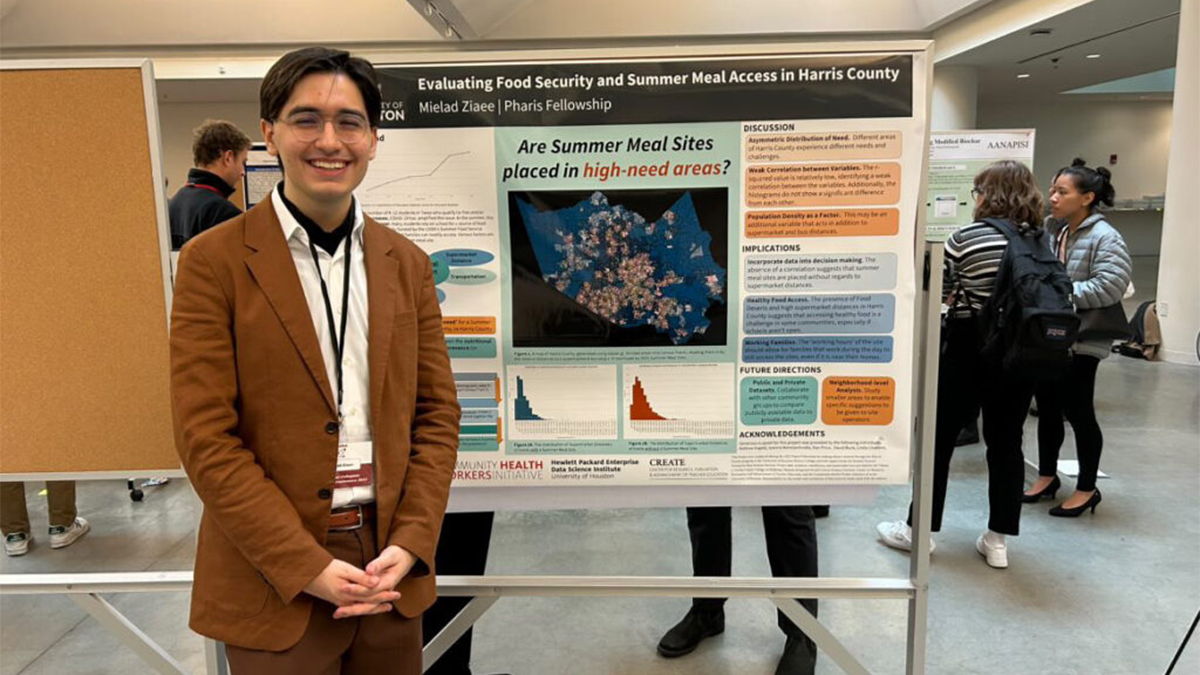
    Mielad Ziaee

    Healthcare is constantly evolving, and the future of the industry depends on the next generation of skilled professionals who are prepared to lead with knowledge, innovation, and compassion. Organizations like HOSA-Future Health Professionals play a critical role in shaping these future healthcare leaders by providing students with the resources, experiences, and mentorship needed to thrive in various medical and health-related careers.

    HOSA is an international student organization dedicated to empowering young people who are passionate about healthcare. Through leadership development, competitive events, networking opportunities, and hands-on learning experiences, HOSA helps students build the essential skills they need to succeed in the medical field. Members engage in real-world healthcare scenarios, gain exposure to public health initiatives, and develop professional competencies that set them apart in their future careers.

    Mielad Ziaee

    Alumni and Former International Executive Council Member, HOSA-Future Health Professionals

    One such success story is Mielad Ziaee, a Marshall Scholar, Truman Scholar, public health advocate, and innovator. Ziaee’s parents immigrated from Iran to the United States to manifest a new life. Their resilience and perspective deeply influenced his understanding of community, determination, and health from an early age. Before hitting the labs of prestigious institutions, Ziaee joined HOSA as a high school freshman thanks to their support. He saw it as a promising steppingstone to engage in his healthcare aspirations.

    “I really wanted to hit the ground running with HOSA. It was so empowering to have [an organization] created for students interested in healthcare, where we could all sort of geek out together,” Ziaee recalled.

    Climbing the ranks

    His two advisors, Angela Vong and Zenia Ridley, provided mentorship and guidance to immerse Ziaee in all HOSA could offer. His leadership journey quickly unfolded — from member to area officer, to Texas state officer, and eventually, to serving on HOSA’s International Executive Council. His tenure coincided with the challenges of the COVID-19 pandemic. Finding creative ways to engage members across middle school, high school, and college in virtual settings connected the dots between leadership and innovation.

    “Being part of the ‘COVID generation’ was both challenging and inspiring,” Ziaee shared. “It taught me how to build community and how that community can enact change.”

    Ziaee’s experiences ignited a passion for research, where he found the intersection of policy, public health, technology, and community engagement. In particular, food insecurity has become a focal point of his academic work.

    “I’m a proud Houstonian. I go to the University of Houston, so one of the biggest challenges that my community faces is food insecurity,” Ziaee said. “I work with our Data Science Institute to try to understand both technological and community-based cultural approaches to food insecurity. A lot of the skills I learned in HOSA, like Zoom calls or identifying key problems and addressing them, are the same things I do in my research — just different vocabulary.”

    Gaining global experience

    Ziaee will continue his study of public health as a Marshall Scholar at the University of Edinburgh this fall. He beamed with excitement as he described studying at an institution that nurtured scientific legends such as Charles Darwin and Alexander Graham Bell and exploring Scotland’s unique healthcare system.

    “Edinburgh, specifically, is where they did the Dolly the Sheep experiment, which is super cool,” Ziaee said. “It’s very interesting as an American to see how they’re doing things [in Scotland], and to hopefully bring that back and promote policy innovation here in public health.”

    Reflecting on his journey, Ziaee underscores the importance of seizing opportunities and embracing HOSA as more than just an organization. As Ziaee embarks on this next chapter, his story exemplifies how HOSA-Future Health Professionals and strong family values can shape a life of innovation and impact. Following in his footsteps, his younger sister has now joined HOSA, continuing the family’s commitment to making a difference in healthcare.

    “The connections and experiences you gain will inspire and guide you for years to come. It’s one of the main constants in my life,” he said.

    Ziaee’s journey highlights that HOSA is more than just a steppingstone — it’s a foundation for lifelong growth, leadership, and meaningful connections. For students aspiring to make a difference in healthcare, organizations like HOSA offer an unparalleled opportunity to gain real-world experience, develop leadership skills, and join a network of like-minded individuals committed to improving health outcomes worldwide.

    To join this inspiring legacy, become part of the HOSA alumni network today at www.hosa.org/alumni.

    Source link

  • The Power of Storytelling: Women Shaping Leadership and Change

    The Power of Storytelling: Women Shaping Leadership and Change

    By Dr Monika Nangia, Academic Registrar and Director of Student & Academic Services at Durham University.

    In a world increasingly aware of the value of diversity, the role of women in leadership is more critical – and undervalued – than ever. Despite encouraging strides, women, particularly women of colour, continue to face systemic barriers to advancement. This is a story of resilience, inequity, and hope.

    The conversation around diversity and inclusion is urgent, and storytelling has emerged as one of the most potent tools to address these challenges. It connects us on a human level, fosters empathy, and confronts biases. At its best, storytelling is transformational.

    In my career, I have witnessed the transformative power of storytelling in ushering in meaningful change. The stories we carry as women – of resilience, determination, and overcoming barriers – are far more powerful than any statistic or corporate policy. These personal narratives, shared boldly, have the potential to inspire, to challenge, and to reshape how we think about leadership.

    Why We Need Women in Leadership

    The benefits of gender-diverse leadership are unequivocal. According to Deloitte’s Global Human Capital Trends, organisations with inclusive cultures achieve 2.3 times higher cash flow per employee, 1.4 times more revenue, and are 120% more capable of meeting financial targets. Diverse boards, particularly those with greater gender and ethnic representation, also demonstrate better resilience and crisis management – evident during the COVID-19 pandemic.

    But beyond numbers lies the human impact. Women leaders bring ‘cognitive diversity’, which accelerates learning and performance in complex and uncertain situations. Their leadership fosters a sense of belonging, improves employee engagement, and reduces turnover.

    Yet, despite the clear advantages, women remain underrepresented at every level of leadership.

    The “Broken Rung” and Barriers to Progress

    The journey to leadership for women is fraught with challenges. The ‘broken rung’ effect—where women are less likely than men to be hired or promoted into entry-level managerial roles – creates a bottleneck that compounds over time. For every 100 men promoted to manager, only 81 women make the same leap, with even fewer opportunities for women of colour.

    Racial inequalities exacerbate this gap. McKinsey’s 2020 report highlights that women of colour face the steepest drop-off in career advancement at the transition from middle to senior management. Cultural expectations and resistance to authority further hinder their progress.

    These systemic inequities are reflected starkly in higher education. According to the HEPI Report 2020, Mind the Gap: Gender differences in HE, while women now constitute 55% of university staff in the UK, they occupy only 29% of vice-chancellor roles. Among professors, women account for 29.7%, but Black women make up less than 1%.

    The Power of Storytelling

    Stories have a unique ability to amplify voices, challenge biases, and inspire inclusivity. Neuroscience tells us that engaging narratives release oxytocin in the brain, promoting empathy and altruistic behaviour. More than data or policy, storytelling humanises diverse experiences and catalyses change.

    I’ve seen firsthand how storytelling transforms workplaces. Women leaders who share their personal journeys of resilience and ambition inspire others to envision new possibilities. Their stories break down preconceived notions, fostering an inclusive mindset that leads to behavioural change.

    One colleague who spoke candidly about her experience being the only woman of colour in a senior leadership team. She described how, despite excelling in her role, her authority was often questioned, and she had to work twice as hard to gain the same respect as her peers.

    Her story resonated deeply, not just because of the challenges she faced, but because of the hope and strength she embodied. By sharing her experience, she is creating a ripple effect – encouraging others to speak up, address inequities, and push for change.

    Storytelling is also about accountability. In fact, it is far more important to confront the untold stories, the contributions of women whose voices have been silenced or overlooked. This is especially true for women of colour, whose experiences often fall at the intersection of gender and race-based inequities.

    Mending the ‘Broken Rung’

    A combination of stories like hers, with corresponding datasets as evidence, expose the structural barriers that continue to hold women back. The ‘broken rung’ is a vivid example of this.

    Another story that sticks with me is from a woman in higher education, who spoke about being overlooked for a leadership role despite being the most qualified candidate. She later discovered that her ambition had been perceived as ‘sharp-elbowed’ and intimidating – a stark contrast to how her male counterparts were described.

    Hearing her story compelled me to reflect on how ambition in women is often misinterpreted, reinforcing stereotypes that undermine their credibility. At a recent workshop, a senior leader shared her journey of overcoming immense personal and professional obstacles to lead a major organisational transformation. Her authenticity and vulnerability moved the room, sparking conversations about resilience, leadership, and the need for systemic change.

    Building a Legacy of Inclusive Leadership

    The path to inclusive leadership requires intentionality. It means addressing both visible and invisible barriers, from hiring practices to cultural attitudes. The stories we share today will shape the leadership landscape of tomorrow. As women, we have the opportunity – and the responsibility – to use our narratives to drive change.

    Organisations with diverse leadership teams outperform their peers not just financially but also in innovation and problem-solving. The evidence is clear: diversity is not just a moral imperative – it is a strategic advantage. But the true value of diversity goes beyond metrics. It’s about creating workplaces where everyone feels they belong, where their contributions are valued, and where they can thrive.

    Source link

  • Shaping higher education for commuter students

    Shaping higher education for commuter students

    For the first time, there are now more commuter students in the UK – students who continue to live at home whilst studying, rather than relocating to attend university – than traditional residential students.

    Surprised? You’re not alone. My research on commuter students suggests that even commuter students themselves don’t realise that there are others like them. In common with most of those who shape higher education pedagogy, policy, practices and plans for the future, they believe that they are a minority, an anomaly, inconsistent with the (presumed) majority of “normal,” residential students.

    The sector is increasingly waking up to the needs and experiences of commuter students, supported by the inclusion of commuters in the Office for Students Equality of Opportunity Risk Register in England – Emma Maslin has explored this further on the site.

    It is essential, for students, higher education institutions and the future viability of our sector, that we increase awareness of commuter students – who they are and what they need – and that we reshape higher education provision for this growing cohort.

    Students will benefit from a better experience and outcomes. Institutions will benefit from higher retention, league table position and therefore recruitment. The sector as a whole will benefit from greater financial stability and clear evidence to the government that we are meeting their priorities and truly expanding access and improving outcomes for non-traditional students.

    Who commutes – and why?

    Commuter students are diverse. However, there is a strong correlation between being a non-traditional student – those targeted by widening participation initiatives – and being a commuter student.

    This is because many of the reasons that students have historically been unable or unwilling to enrol in higher education are the same as those that make them unable or unwilling to relocate. These include affordability, being first in family to higher education, from a low-participation neighbourhood, having caring or family commitments, over 25. Commuters are also likely to be in employment, be home owners, to be studying part time, at lower-tariff universities. Finally, my research suggests that commuter students are more likely to be local students, not long-distance learners.

    This said, commuting isn’t always about widening participation. It is likely that the undersupply of student accommodation and resultant increasing prices, alongside the cost-of-living crisis, are encouraging traditional students to remain at home. There is also evidence to suggest that international and postgraduate students are more likely to be commuters, both key target markets for UK higher education institutions.

    Relocation as a predictor of success

    But why does this matter? Data tell us that commuter students have a poorer experience throughout the student lifecycle. Choice of institution, access to learning, resources, support and extra-curricular activities, are all restricted. Commuters are less able to engage with in-person learning activities and are isolated from their learning community.

    They feel less a sense of belonging, more a sense of burden. In consequence, commuter students have lower attainment, continuation and graduate outcomes than their residential counterparts.

    In part, this is because higher education has been designed without consideration of the need to travel. Pedagogy, policy and processes have historically been and continue to be shaped around residential students. Assessments, extracurricular activities, facilities, learning and wellbeing support, teaching activities, timetabling—all continue to be premised on the residential model, structured for the residential student, provided at a time and in a place that assumes that students live on or near to campus.

    What next?

    The first step is to see our commuters. Count them, to make them count. Make them visible, not only to decision makers and practitioners, but also to each other. Provide information for commuters, before, during and after application. Create a sense of belonging, building community through awareness, acceptance and actions such as repurposing unused parts of the estate, for commuter students – a common room, sleeping areas.

    Next, review all policies for accessibility, with particular focus on timetabling, attendance, learning and teaching, support services and skills development.

    Make changes where necessary, enabling students to maximise access, whilst minimising travel. Rethink in-person learning and make attendance worth it. Consider online learning, but avoid hybrid learning and include on-commute learning options.

    Myth busting

    For commuter students, access to learning isn’t just about distance. It’s not even just about transport. We need to look at the acceptability, accessibility, affordability and availability of transport. However, we also need to recognise that access and participation are also about students’ activities, responsibilities and relationships, outside of the classroom.

    The data tell us that our commuter students are struggling to adapt to pedagogy, policies and practices that are based on the assumption that they will relocate to attend university. Our ability to adapt our provision to their needs is likely to be key to the future sustainability of many of our institutions, if not the sector as a whole.

    This article is the first in our series on commuter students where we’ll explore their student journey and what support institutions and the sector can provide to enhance their experience. If you’d like to get involved in the series, we’d welcome further contributions, email [email protected] to pitch us an article.

    Source link

  • Top 8 Disruptive Trends Shaping Higher Ed in 2025

    Top 8 Disruptive Trends Shaping Higher Ed in 2025

    The coming year promises to be transformative for higher education as institutions find new ways to manage enrollment targets, operating costs, and shifting student expectations. Several existing and emerging trends have the potential to alter the higher ed landscape as we know it in 2025.

    Disruption isn’t necessarily a bad thing. It often leads to innovation and more efficient ways to meet the needs of students, faculty, and administrators. The good news is we have the tools and the know-how to address these challenges head-on. Institutions focused on building foundational capabilities in the coming months are best positioned to leverage technology effectively and position themselves for continued success.

    Here are the trends I predict will significantly impact higher ed this year and what we can do to take advantage of them.

    1. More Urgent Digital Transformation Plans
      Institutions need access to valid, reliable, and meaningful data to operate effectively. Thousands of schools still rely on proprietary, on-premise student information systems (SIS) with fragmented data sources, which limits their ability to make data-enabled decisions. Given that migrating to cloud-based solutions can take 18+ months, it’s important for schools to start the process now. Although the process is difficult given the significant change management associated with large cloud migrations, it will enable them to operate more efficiently and compete more effectively. I anticipate we’ll see SIS cloud migrations at the top of the priority lists at many institutions.
    2. Heightened Focus on Cybersecurity
      Cyber attackers have targeted higher education for years because they know they are a rich source of student and institutional data and the digital infrastructures at most schools are outdated. Hackers continue to find new ways to access networks and data, especially as the number of connected devices and applications swells. Institutions need to stay vigilant to cyber threats while also complying with various data privacy laws. I count 18 states with privacy regulations in addition to U.S. federal and European Union requirements. It’s an extremely complex situation only made more difficult by the shortage of cybersecurity professionals, especially at smaller schools. In 2025, institutions will focus on automating network security protocols and finding outside resources to augment their security capabilities.
    3. Expanded Use of Shared Services
      Smaller schools need access to the same technology and technical expertise as larger schools, just on a reduced scale with a more limited budget. I anticipate that smaller schools will seek strategic partners to manage critical IT and other specialized services to support data access, reliability, and usability. It’s a smart way to reduce costs while maintaining essential day-to-day services, enhancing security protocols, and being prepared for technology advancements.
    4. Continuation of Mergers and Acquisitions
      Financial pressures and the threat of closures will continue to drive acquisitions of some smaller schools. Mergers create significant challenges to combine the data, applications, and systems of the two institutions. However, the benefits to both sides are worth it in streamlining operations, retaining existing students, and growing enrollment. Given the breadth and depth of our functional and technical expertise, we can help schools to navigate the challenges and drive positive results.
    5. Adoption of Data-Enabled Technologies
      As institutions embrace digital transformation, they build out the foundation needed to take advantage of data-enabled technologies such as artificial intelligence (AI). With the initial hype of AI behind us, I anticipate in 2025 that schools will start to deploy AI-enabled solutions that feed off rich data sources to personalize recruitment efforts, improve retention, invigorate online classes, and predict demand for course offerings, as a few examples.
    6. Refinement of Enrollment and Retention Strategies
      The declining number of high school graduates and international enrollments continues to intensify the effort to recruit and retain students. I expect to see schools expand how they leverage data to personalize recruitment campaigns, target secondary audiences (such as adult learners and transfer students), and nurture existing students. The success of this strategy relies heavily on having the right infrastructure in place to support centralized data access, emerging technologies, and analytic tools.
    7. Shift to Career-Focused and Flexible Learning Opportunities
      Like changing recruitment and retention methods, institutions will continue to adapt their academic programs to meet the evolving needs of the workforce. They will highlight outcomes based on data about job placement rates, alumni success stories, and collaborations with area businesses to illustrate tangible benefits. They will evaluate current course offerings and pivot when it makes sense to expand hybrid learning models, professional development programs, and skill-based credentials. This effort may involve launching new programs in high-demand fields, such as data science and cybersecurity, or retooling existing programs to incorporate emerging technologies.
    8. Consolidation of Ed-tech Solution Providers
      Many higher education software and service providers have discussed how they could combine forces to serve colleges and universities better. I think we’ll see M&A activity pick up over the next two years. These consolidations will further the need for institutions to standardize business processes and accelerate cloud migrations as legacy systems will eventually become unsupported.

    I’m excited about the positive impact these eight trends might make in 2025. Higher education institutions that prioritize foundational improvements by aligning their data, technology, and talent are best suited to successfully address mounting challenges like demographic shifts and affordability concerns.

    I can’t wait to see how schools that adopt AI and predictive analytics are able to improve decision-making and enhance student experiences. However, the real breakthrough will come from integrating systems and breaking down data silos. Institutions that invest in building these foundational capabilities will be better positioned to leverage emerging technologies, drive measurable outcomes, and fulfill their mission to support lifelong learners.

    — Kim Fahey, CEO Collegis Education

    Innovation Starts Here

    Higher ed is evolving — don’t get left behind. Explore how Collegis can help your institution thrive.

    Source link