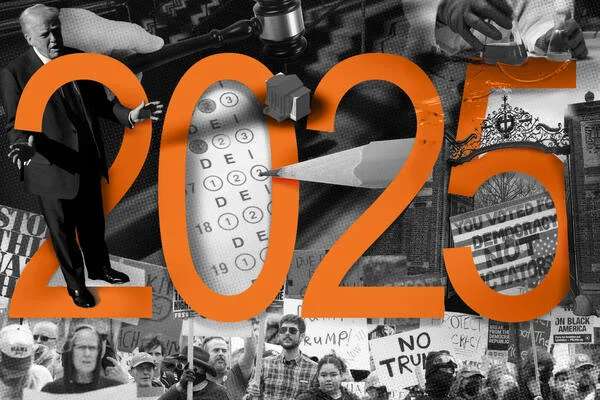
It’s been a whirlwind year for higher ed—and for Inside Higher Ed. Yes, we rigorously covered President Donald Trump’s unprecedented attacks on higher education, and our readers seemed to appreciate our efforts; according to my (unscientific) analysis of our readership statistics, about 70 percent of our most-read articles this year were about the Trump administration.
But we’ve also found time, somehow, to keep up with our bread-and-butter higher education stories: how technology is changing college campuses, institutions’ financial struggles, academic freedom and free speech issues, student success, college costs and the value of a degree, the continued rise of career and technical programs, and even a few intriguing scandals.
To look back at the work we’ve done over this tumultuous year, we asked the members of our editorial team to share one of their favorite stories published this year. These are stories that may have flown under the radar, highlight a reporter’s unique strengths, or push the boundaries of what a higher ed news story can be. But most importantly, they’re stories that helped our readers make sense of the changing higher ed landscape during a year that was unlike any other.
Josh and Kathryn’s investigation into a network of fake college websites built using generative AI, to me, represents the particular strengths of the small but mighty IHE newsroom. While a couple of the faux institutions had been flagged by officials, it was Josh’s curiosity and close attention to his beat that prompted his digging, which uncovered dozens more fake schools and the fake accreditors that endorsed them. The double-byline teamwork made the depth of reporting in this story possible while the newsroom simultaneously continued to churn out the news of the day.
In this story, Johanna looked at how one of most feared, criticized and occasionally, celebrated developments to upend higher education in recent years—generative AI—is changing how faculty teach and assess students. She spoke to a number of professors who are requiring handwritten assignments to ensure that students don’t use ChatGPT or other AI tools to cheat their way through class. The story is lively, timely and illuminating; it includes the voices of an array of faculty members and experts who share nuanced perspectives about the pros and cons of reverting to traditional handwritten assessments to evaluate students in the age of AI.
One of Ryan’s many talents as a reporter is being able to take a hot topic in news coverage and deeply report on it to add layers of context, insight and inquiry that could otherwise be overlooked or misunderstood. This piece is exemplary of this type of reporting, peeling past the horror of Charlie Kirk’s murder to investigate what it means to be a figure of civil discourse.
This story cut through the well-worn conservative/liberal debates about what should be taught in higher ed and showed a truth that has been raising eyebrows across the political spectrum: New College of Florida was spending “more than 10 times per student what the other 11 members of the State University System spend, on average” and politicians were likely discussing closing it behind the scenes. The article also had great quotes, including a faculty member calling NCF’s approach to recruitment “kind of like a Ponzi scheme” and a former administrator saying “academically, Richard [Corcoran] is running a Motel 6 on a Ritz-Carlton budget.”
The editors at Inside Higher Ed have a running joke that deferred maintenance is my favorite topic because I get excited when the issue of crumbling brick facades or broken elevators comes up. I’m not a facilities nerd. I just agree with what F. King Alexander told Colleen Flaherty about deferred maintenance for this piece: “This is a huge issue that presidents have to deal with that nobody’s talking about.” The sector has rightly spent 2025 following the Trump administration, college closures and leadership controversies, but Colleen’s story is my favorite because it adds nuance to the conversations about higher ed’s financial health and is a reminder that too many colleges are one leaky roof away from closure. It’s also got a killer headline.
As the Trump Administration began revoking student visas, the indefatigable Ashley Mowreader worked to identify which institutions and how many students were affected, resulting in a widely-read map that was cited in legal filings and by numerous other publications. Inside Higher Ed tracked 1,800-plus students who lost their F-1 or J-1 status as the Trump administration cracked down on immigration. Our reporting helped contextualize the federal government’s broadside against international students and the many subsequent lawsuits via reporting that informed and illuminated and resulted in one of our (deservedly) most-read pieces of 2025.
Charlie Kirk’s killing called for a deep, nuanced look at the movement he created, and that’s exactly what Kathryn delivered in this story. The feature was beautifully written and richly detailed. It took Turning Point USA students’ grief seriously while also drawing on a range of scholarly perspectives to add balance and provide context about the movement’s present and future. The story also offered valuable framing for our ongoing coverage about the ways the aftermath of Kirk’s shooting roiled campuses in the months that followed.
This piece from Jessica helped to illuminate how another federal agency was applying pressure to colleges and universities and what’s at stake for higher ed more broadly. Her reporting came after the Department of Justice played a role in the resignation of Jim Ryan, who was president of the University of Virginia and faced questions from federal investigators about how he handled diversity, equity and inclusion efforts on campus. The timely story took readers beyond the news of the day and behind the scenes into the tactics of the second Trump administration.
Sara’s story on the effort to preserve the history of HBCUs was timely, well-reported and beautifully written. It featured so many voices and presented HBCUs as institutions that illuminate the complexities of America’s history at a time when the federal government is moving to sanitize it. Her story showed how HBCUs are integral to telling the story of Black America and why it’s an important story to preserve. The historical photos put it over the top.
No one in the history of hitting the ground running has ever hit the ground running quite like Emma Whitford did when she came on as Inside Higher Ed’s faculty reporter this past September. Since then, Emma, who had previously worked at IHE from 2019 to 2022, has covered near daily clashes between faculty and administrators with persistence, precision and clarity. This story about verbal policies banning professors from teaching about gender identity in Texas perfectly encapsulates her incredible ability to root out the truth of complex controversies. From there, she continued to follow this story for weeks as more information came out about the nature of the ban and as faculty questioned the legitimacy of the verbal policy. The saga also demonstrates conservative leaders’ continued efforts to erode academic freedom, which has been a significant theme for the past several years and will surely continue into 2026.
This was a great scoop that Josh gathered by going back to the basics of journalism and making a public records request. And as someone who completed a bachelor’s degree while working part-time for Investigative Reporters and Editors, I’m a sucker for any story rooted in FOIA. He took an event that was making headlines throughout Florida and across the country and advanced the story, giving readers a behind-the-scenes look at which universities were striking agreements with the Trump administration and how.
We were supposed to avoid federal policy pieces due to the onslaught of those this year. But assuming that guidelines are more like suggestions, I have to go with this edition of After the First 100 Days, our weekly federal policy news roundup, by singular news editor Katherine Knott. Back in April, when the newsletter was still called the First 100 Days, the White House was targeting higher ed with such speed and force that it was unnervingly unclear how far things would go. Then came Day 88—or, as Katherine wrote—what “will be remembered as the week that Harvard said no and higher ed started to fight back.” It was a crucial moment for higher ed in 2025, and Katherine’s weekly analyses have otherwise become crucial reading for me. After the 100 Days is an IHE membership perk but I promise this isn’t a sales ploy, hence the gift link!
The Public Health Resonance Project at the University of Hawaiʻi at Mānoa collaborated with a talented artist to create illustrations to better share their research. Have you incorporated art into your research communications?
The Public Health Resonance Project at the University of Hawai‘i at Mānoa “amplifies unique attributes and deep connections across regionally and culturally relevant physical activities for health promotion and community wellness, locally and globally.”
Art and illustration can enhance how you share your research. Collaboration between the Public Health Resonance Project and a talented artist included feedback from the whole team to ensure the illustrations were culturally relevant to the research. “It was necessary.”
This episode features
Dr. Tetine Sentell, co-lead of the Project and Chin Sik & Hyun Sook Chung Endowed Chair in Public Health Studies at the University of Hawaiʻi Mānoa
Esme Yokooji, a graduate student in Public Health and social media coordinator for the Project
The episode on Art and Design to Share Your Research Story felt so special. It’s the 1st time these collaborators have all come together on video 🎧🎙️✨
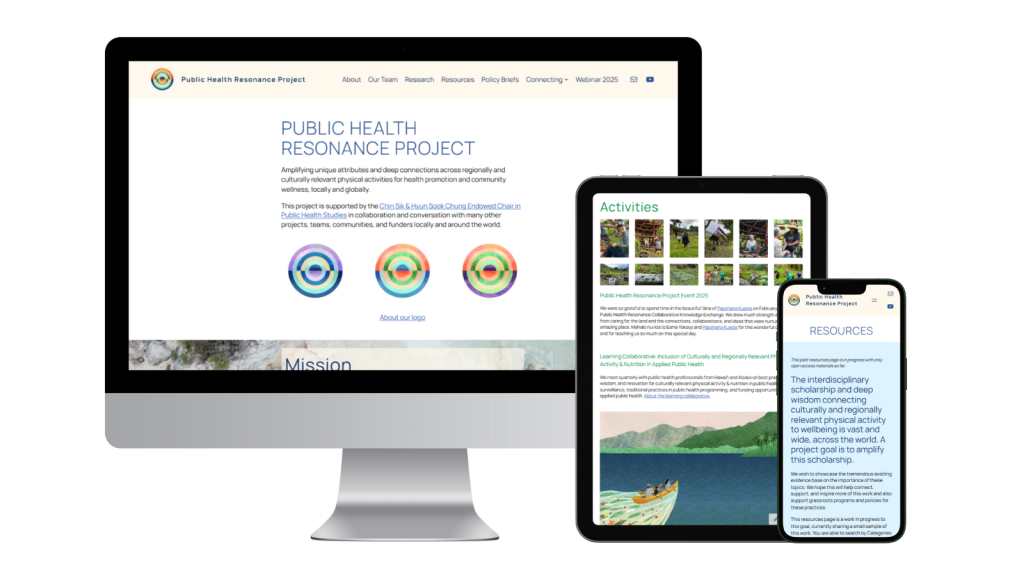
I love that I got to design their website and bring us together for this conversation. We talk about the research, art, and share 3 beautiful new illustrations with you.
There’s many ways to be more visual with your research such as data visualization, illustration, comics, science art, photography, video. I love that the PH Resonance Project found an artistic partner in Sunnu Rebecca Choi.
I hope this video inspires you. Save this post for later. You may not have 32m 5s to watch or listen today. But save it even if you just have a hint of ‘I want art for my research’ and you’re unsure how you’ll get there.
A dream I have is that more research groups, labs, and centers invest in collaborating with talented artists like Rebecca. These partnerships can help people around the world engage with (and share) research that’s meaningful to them. And also I love art.
Omg if this post (or the video) inspires you to reach out to an artist about working together? Please share it with me, I would love that! 🥹
Behind-the-scenes
Before we dive into the interview, I have a quick story to share with you about recording. Or, you can skip right to the interview.
My computer crashed right in the middle of our recording 💻😱
I’m freaking out. My desktop computer light is blinking red at me like a danger sign. When I try to cycle the computer on the fan goes crazy.
The podcast episode going live today? There was a moment there I thought it wasn’t gonna happen. When I finally made it back on, maybe 10 minutes later, I was delighted to find my guest happily chatting away. When I went back to watch the recording, they were so cute. “Oops! Looks like our host has dropped off,” and then right back to their conversation about art and research.
We were able to complete our recording. But this episode needed a bit more.
We had high resolution art to share. There was a story in there that needed attention to bring out 🎨✨️
And thank goodness I sought help. I soon learned my own audio/video? Parts of my solo video were unusable. Super lagged.
Luckily, I have a talented husband I’ve been teaming up with for his professor dad’s art focused YouTube channel. I love that Matthew can help.
The video is finally ready for you. Thank you!
Technical problems may happen 💯
Have you worried about something going wrong with your computer too? Things may go wrong with tech, but I hope it doesn’t for you! 🫶
Every time something goes wrong, I get anxious about my own unsurity of what comes next. People are often kind and understanding. When I’m the one experiencing technical issues, it feels like a huge deal and inconvenience to people. I have to remind myself: When I’m on the other side of that? I always understand. It’s super relatable. I can’t envision myself getting mad, angry, or hurt but someone else’s technical glitch. If your computer crashes in the middle of our meeting, I’ll totally get it too.
I wanted to share this story with you because for a moment there? It felt like this podcast episode may not happen. But it did. We made it happen. I’m so happy / relieved. I’m proud to share it with you 👋😄
The special 2024 logo was designed by Sunnu Rebecca Choi.
Tetine: Rebecca, we love you so much. I’m so excited to meet you in real life.
Rebecca: Thank you. I was really looking forward to meet you guys, all.
Tetine: You’re like our artistic hero, so it’s so fun to have an opportunity to do this. Thank you, Jennifer for making it happen.
Jennifer: Wait, Tetine. How did you first find Rebecca? How did you first connect?
Tetine: Oh yeah, so I have it in my slides.
Jennifer: Oh, you do? Okay. Show me your slides.
Yeah, yeah yeah! As a team, this is kind of our first time all meeting live and I’m so excited that we’re all here together. Tetine, why don’t you start us off. Would you please introduce yourself and tell people a little bit about your research?
Tetine: Sure. Aloha. I’m Tetine Sentell. I’m a Professor here at the University of Hawaiʻi at Mānoa in Public Health. I’m the department chair of public health and I am one of the co-founders of the Public Health Resonance Project, which is a really exciting, interdisciplinary, collaborative synthesis of literature, engagement with literature, dissemination of literature project we’ve been doing now for several years that this team has assembled as part of, and I’m just been so grateful to be part of that. And it’s really about sharing opportunities for strength-based public health promotion, especially around culturally and regionally relevant physical activity and how that’s meaningful to people as individuals, as families, as communities, and as collectives.
Jennifer: What are some examples of those culturally relevant activities? Just so people have an idea.
Tetine: So in Hawaiʻi, some examples would be hula, spearfishing, outrigger canoe paddling, for instance. And then of course, in many other places there are resonance and activities from culturally relevant dance, folk dances, regional relevant dances, practices in the water, practices in the land.
Jennifer: Esme, would you introduce yourself?
Esme: Sure. My name is Esme Yokooji. I’m a Master’s of Public Health student at UH Mānoa, and I am the graduate research assistant on this project. I’m in the NHIH or Native Hawaiian and Indigenous Health specialty at UH. And, in my free time, I am someone who participates in these activities. I do Okinawan dance. I like to volunteer in ʻĀina doing things like Kalo planting and just conservation and restoration work in our natural habitats here in Hawaiʻi. That’s what initially drew me to this project is just the real life connection and seeing how community engages with these things. So mahalo for having us.
Jennifer: Rebecca, you are coming here from London. This is fun. London, Hawaiʻi, and I’m in San Diego. Rebecca, tell me a little about your journey as an artist.
Rebecca: Hi, my name is Sunnu Rebecca Choi. I’m an illustrator and printmaker based in London, but I’m originally from South Korea, lived in Canada and United States and now ended up in London somehow. And then I used to be a fashion designer in New York and Toronto, but then I decided to change my career, become an illustrator. Right now I’m specializing in editorial illustration as well as children’s book illustration, mostly focusing editorial illustration wise, mostly focusing on medical scientific as well as psychologies. And I work with a lot of different university magazines as well.
Jennifer: Thank you. So everyone listening knows, I did design the website [for the Public Health Resonance Project]. I had so much fun doing this project because there are so many visual elements to all of those activities and to the people who are engaging with them. This is about people.
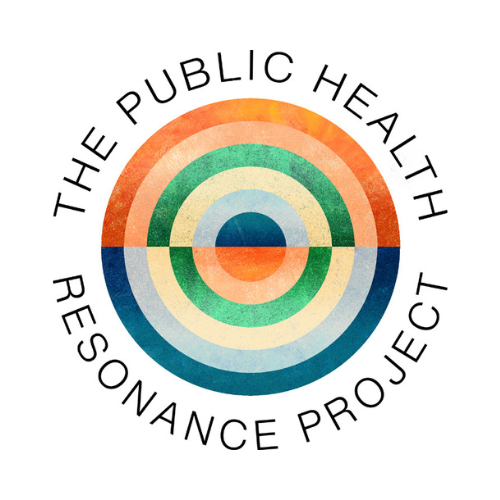
Tetine: I am so happy to be here because we’ve been working on this international, collaborative project for so many years, and one of the things we really wanted to do was make it so beautiful and really make it so it could be disseminated and shared in ways that inspire and engage and delight people. And so I developed this logo as we began consolidating and thinking about disseminating in collaboration with some partners, and in particular with my husband and all who helped build it. So thank you, Craig. It was a meaningful logo. We felt it was really important. I have this slide here to really show we were inspired by the Hawaiian colors and the deep ocean from the shore to the sunset, and really thinking about the levels of influence and the social ecological model, which is our theoretical influence in the background from a public health perspective and thinking about the ripple effects and the waves that grow and build and move across. And really thinking about the place to connect the project and the connections and the links, the ripples, the reflections.
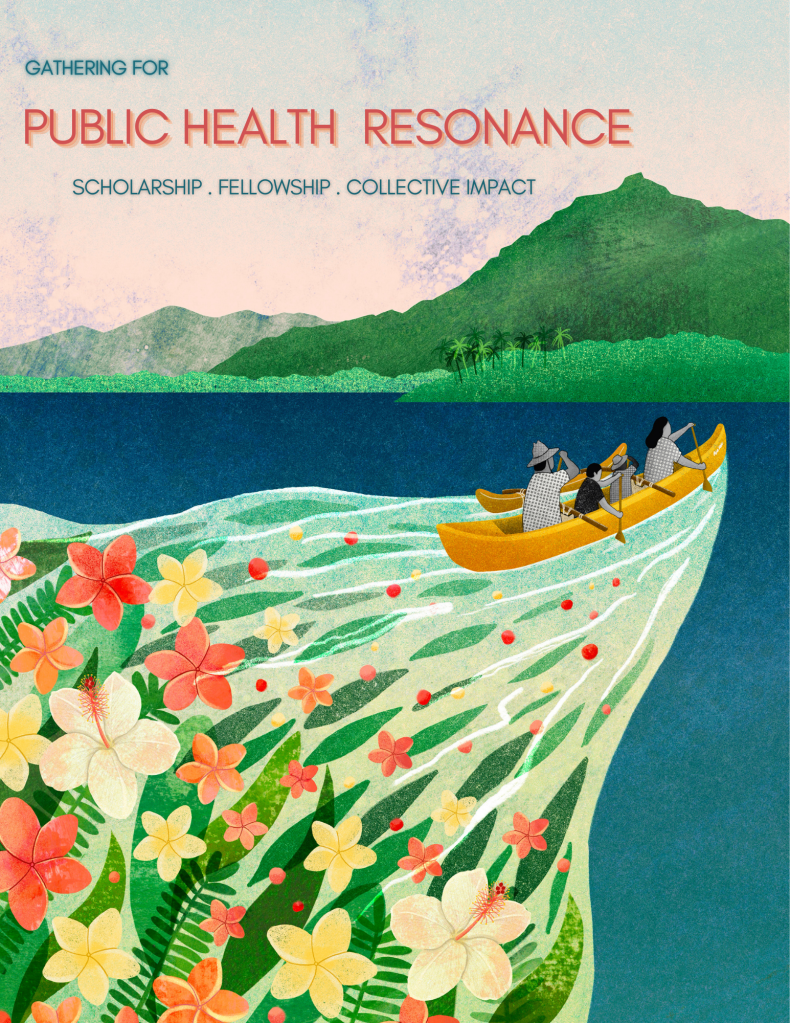
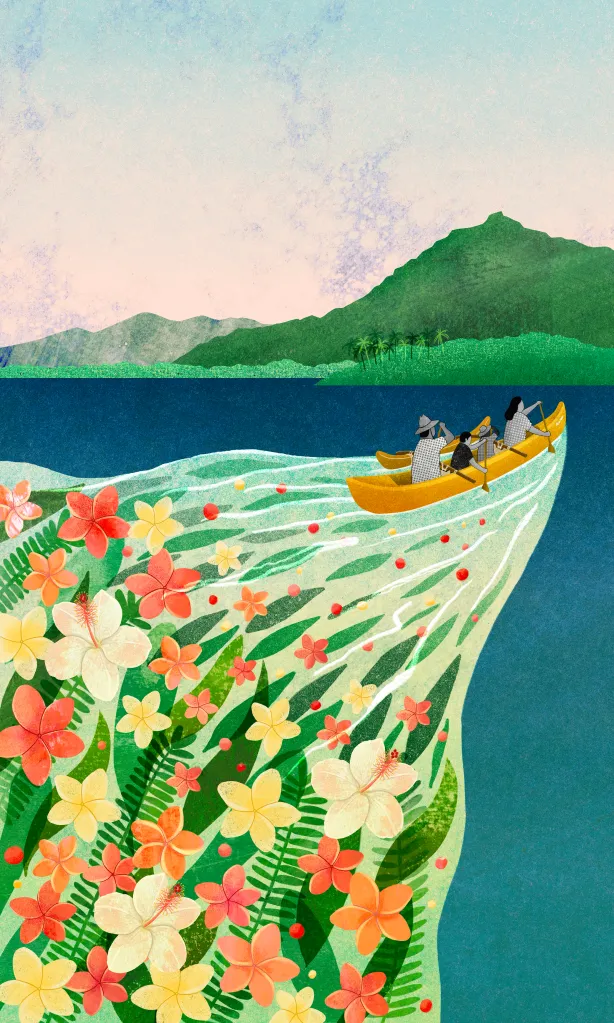
We had this endowed chair and this opportunity, and so I was really reflecting and thinking about this and this absolutely beautiful art came in my alumni magazine. Can you see how beautiful that is? It’s so pretty. I even have the one I pulled out of my alumni magazine and it was Rebecca’s artwork and it was so beautiful and it really had the feeling of what we were thinking about of these reflections, of these perspectives. You can see it has a lot of depth and story to the artwork as well as just being so peaceful and beautiful and meaningful. And so that’s how I found the artwork and had no idea how to engage with artwork or what to do in this particular way if it was contractable through a university through our funds. But anyway, just cold emailed through the link in the website and she has a beautiful website if you’ve seen it. And through that started a conversation that has just been really so fruitful and so exciting and just I’m so honored to be part of this. And in collaboration also with Esme and others who’ve really helped support and build the artwork into spaces that we can use it for all the things we wanted to do.
Jennifer: That is amazing. I’m so happy that we had a chance to hear that kind of origin story because I feel like there’s so many possibilities that we just don’t know exist as researchers, as academics, even as artists. What can we do to better connect and help shape our ideas together? Rebecca, how did you feel when Tetine first reached out? Is this a kind of project that you’ve done in the past?
Rebecca: No, actually it was really interesting because I haven’t really worked with other universities before. So was it, what university?
Tetine: Middlebury.
Rebecca: Yeah, Middlebury Magazine. That was my first alumni magazine that I worked with, university. And then when Tetine emailed me I was like, “Oh, I actually didn’t know it was released already.” That’s how I knew that magazine has been issued. Yeah, so that was really interesting. And then since then I’ve been working with a lot of universities in United States, so that opened a new opportunity for me as well.
Jennifer: And so I’m curious Tetine, what about art helps bring the community together? Why invest in this kind of visual element?
Tetine: Of course, art inspires us, engages us, pulls us in, makes us think, is important to us as humans, as people in the world. But I also think in academia we do a lot of intricate, thoughtful, engaged practices and activities that often are not accessible because they’re deep inside words and publications, sometimes even behind paywalls. And I think there is a lot of intricacy and story in even peer-reviewed academic journal papers, much less the smaller summaries of them. View open access resources from the PH Resonance Project.
And so it just felt like this was such an opportunity relative to the work, work now, to disseminate and to share it, to think about how it’s helpful, how it’s good for mental health, how it’s engaging, how it’s good for physical health, how it’s good for strength. All that was sort of built in the background of how to share out, this was so important to disseminate in communities and to people. And then with that joy, right. This is a strength-based activity. It’s a thing that brings people together, makes them happy, makes them joyful, connect with each other. And I think that’s one of the things art can do. It felt like such a nice synergy and such an amazing opportunity to really tie all those things together.
Jennifer: You brought up joy, and that’s something that I really get not just from the beautiful illustrations that have been customized to represent different activities that the project is researching, but also in the new version of the logo, in the thoughtfulness of how it all comes together through, you have created brochures, event flyers, like physical things and materials to help people engage in person. And that artwork also creates that same warmth and feeling online. Rebecca, I’m curious about your process working on what feels like something really representative of community. What was that process like for creating the artwork for this project?
Rebecca: The process-wise, whenever I receive a brief, I start with the research. Understanding how each activity is carried out, what equipment is used, and learning about the cultural context, from coding to landscapes. And that process helped me make the imagery as accurate and respectful as possible. Also, every time I create the illustration, my goal was to highlight public health at the community level, showcasing people coming together, whether it’s a mother and a child, a family, or a wider community group. I wanted the artwork to capture the moment and that sense of connection and shared care. I believe illustration has the power to bring people closer and help them resonate more deeply with the subject matter. And I think that was my main goal in creating those illustrations. Usually, when I’m working on the brief, I come up with three different concepts or ideas for each illustration.
Whenever, if I’m working on the canoe activity, I come up with three different composition or concept or focusing on something different for each illustration for the client to choose from. And that’s how I start creating the art. And then once we decide which concept we are going to go with and then I go render the illustration, my rendering process is quite interesting because I’m a printmaker as well. I create all the textures using printmaking techniques, either monoprinting, etching, or any kind of things that I can get hands on and I scan them in. And then in terms of the final illustration, I use Procreate on iPad and then bring all the textures together on iPad. So it’s a mix of digital and analog process.
Tetine: That’s why it’s so tactile. It’s like you can really feel it even through the internet. It’s really beautiful that way.
Esme: I felt the same way though. When I first saw the illustrations, I was like, “Oh, it’s almost like it’s painted on washi paper.” Like watercolor on washi. It’s so beautiful.
Rebecca: I will sometimes use the watercolor and washi or, accurate. So in my studio I have bunch of papers with all different kinds of textures and colors, which I can just use on any kind of illustration.
Esme: That’s so cool.
Tetine: It is. It’s so beautiful. I just love how it all works together and it really has such a feeling about it. Your work is so specifically you, but then you’re also using it so collaboratively to share other people’s vision, which is not an easy thing to do, I think as an artist, and I really appreciate the collaborativeness with which you’ve approached this, these. The first one as the initial one, as thinking about how to share and showcase what we were trying to do. And then very specifically in a regional context and an actual, it’s a specific way, it’s a specific bay you’re coming into and the landscape like you mentioned, and the practice and the movement and the arms, and then really thinking about who is in the canoe and what they’re wearing. And then as we have thought about it for the other resonating activities, to be willing and offer the opportunity for us to really be in collaborative conversation, even as the artwork is pretty far along to be like, “Oh no, we’ve gotten comments from our community members that this isn’t correct or we need to fix this.” I’m just so grateful for that.
Rebecca: Yeah, it was really, really interesting learning process for me as well because I knew about, briefly know about samba or Tongan, but I didn’t really specifically know about their clothing or how it works and how the body moves, things like that. So for me, it was a really, really good opportunity to learn about different activities as well.
Tetine: And I think that’s actually, exactly the project. In the sense that each one has not only resonance across, but these unique, very specific pieces of engagement, the land with the ocean with movements particular, with stories and songs and clothing from the community and care. And so the opportunity to showcase that and to showcase that very specifically about, in place for people doing it with each other as families and as communities, not specifically as, not as a show, but as a practice in community. And that has been really important. And as we share and tell the story of the artwork, that’s a really important piece of the, of our sharing of what you’ve been doing as well. Aloha.
Esme: I also want to say, Rebecca. I used to work in Heʻeia at the fish pond that kind of portrays that bay. And it was so funny because when we had the first kind of in-person activity, it actually took place in Heʻeia, but in the back of the valley. And it was so wonderful because when we showed the work to the people that are participating, they’re like, “Oh, that’s, Heʻeia, that’s here. They were able to instantly recognize from the art. And I think that, even people that weren’t affiliated with the project, were interested and curious. And I think the art was a big draw, seeing a place, recognizing it, feeling properly represented. So I just wanted to say thank you for that. That was so wonderful.
Rebecca: Yeah, also thank you for all the feedback that Tetine gives. Also, all our illustrations were reviewed by experts and that’s how we can actually get a correct imagery and then representative of the place as well.
Tetine: Yeah, and I’ll just say the funders of this, the endowed chair that I hold that has allowed this opportunity, it’s from a family enterprise and it’s all been in the background. I mentioned my husband helping with this. There’s a lot of family connections because Mele [Look], my beloved colleague who has done this project with me, certainly has helped connect to some of the cultural and regional experts, but in particular on the Heʻeia ridgeline, her husband Scott is a geologist, and he was like, “This ridge line is not correct. You have to go down. It happens like this, not like that.” And he drew a line for the ridge line so it was proper. That’s the level of detail and actually cultural consultation and regional consultation that’s been possible through this collaborative project.
Jennifer: It sounds like a lot of people were involved in the art making, and that’s something that’s probably really unexpected for folks who are listening to this. So it was the two of you as well as it sounds like experts?
Tetine: Yeah, yeah yeah. As Rebecca mentioned, we had the brief, we have a conversation, and then she would send three sort of options of things. And then those three options we would run by people who practice those activities, who work in the region, who engage in the practice. That certainly included my colleague Mele, who’s been part of this all along in every way, but also, exactly, people who paddle for the paddling one, people who participate in wild skating for the ones you’ll see in a minute we’ll talk about, and people who do samba, people who do Tongan dance. And so exactly this. So out of the three that we’ve chosen one to go with, and that one is really prioritized. Community, that it’s about being with family or being with others to do practices that bring people joy together, collaboratively in their real lives. That this is about, sometimes they are ceremonies at a wedding or at a party with a community, but they’re not about a show. They’re about a practice together in community.
And so that’s always been the background of the activities we’ve been showcasing. But then from those and from the one we’ve chosen, then she does a more developed artwork. And then from that more developed artwork, that’s where we really are like, okay, well this color or this clothes or this line or this is not how the arm would be, or this is not the exact proper direction of the canoe relative to the shoreline. That level of detail has been really important and part of the iterative conversation. And then we go back to consult and come back. So it’s a very iterative process.
Jennifer: When you started the project, did you know how long it would take to produce art using all of this feedback?
Tetine: For me, that is kind of how the process of most of the work that I do works, where there’s a lot of, we work a lot with community and in practice and public health is about that. I would say for me, not a surprise, but I did feel really bad for Rebecca. I felt it was a lot to ask the artist to engage in sort of the academic consultation process at that level of detail. But she was a really good sport about it.
Rebecca: It was very interesting because I also, I do longer projects or shorter projects. Usually the book projects are very long. Sometimes it lasts from three months minimum to one year or more than one year. But then editorial projects usually ends within two weeks. I think this project was in between, I guess.
Jennifer: I appreciate that. And for folks who are listening, if you’re considering working with an artist asking about their timeline, but also considering who you need to bring into the conversation for that art is helpful upfront so that you can talk about it together.
Tetine: Could I just add to that exact thing, which is that because of this project being so specific about culture and place and about those practices, it was vital and we couldn’t have done it otherwise. Because if the artwork for the practice doesn’t make sense to the people participating, we shouldn’t do that artwork at all, right? And so that was built into this. I could imagine other scenarios where you wouldn’t need quite such level of detail because maybe you’d be talking about just a feeling or something to connect with this, but this was so vital that we have that level of detail
Jennifer: Esme, as someone who is using the art to create flyers and other kinds of, I would say marketing materials, but is it marketing materials?
Esme: Well, I would say my background is also in organizing, and that was where I had most of my social media, video editing experiences actually in making, for lack of a better word, propaganda. But kind of trying to inculcate people and inform them, somewhat a combination of educational materials. And I think the goal of this project is, Tetine spoke on, is just to shine a light and a spotlight on these different activities, on these different researchers, on the work that they’re doing and its value. I think for me, what I’ve really enjoyed about being a part of this team is how much Tetine specifically stresses the importance of cultural competence and humility. And I think that understanding how specific everything is, understanding how tailored it is, really conceptualizing who our audience is, who’s going to be benefited by our materials, is something that’s really important to me, specifically being in Native Hawaiian and Indigenous Health. Because I think having more culturally tailored interventions or even having more culturally tailored messaging, having artwork that is accurate that people can recognize, that immediately draws them in I think is really valuable and important. It’s been truly really fun, honestly, to make materials and just experiment with the different kinds of things, whether it’s making a video intro or editing a logo for a flyer or collaborating on a poster or any manner of things. It’s been a joy.
Jennifer: Tetine, what would you like folks to know about, okay, there’s so many people out there who are like, “I do want a website. I do want to have beautiful artwork for my events. I do want these things, but I don’t know if it’s worth my time as the PI [Principal Investigator].” You are the decision maker here. And so I’m curious, what made you know that this was worth it for you in terms of your energy?
Tetine: Yeah, I mean, I think it is a conundrum of academic practice these days actually. This how we engage in the PR of the work we do in a sort of dissemination campaign. Generally, people do so much valuable work that they don’t [promote] because of their own demands of academia. They don’t have the time, capacity, support system to help be sharing that out. I guess I would advocate not for this to be something that individuals need to do only because it isn’t something an individual can do only. I was able to pull this together by the amazing collaboration, by being fortunate to have, hold this endowed chair and being senior enough in my own career that the publication process or grant making process was not the only thing I really needed to prioritize relative to my own goals of my academic, what I wanted to do with my career.
And so it has been actually a joy and an honor to be part of this collaboration, to keep building it, to keep growing it, to engage in sharing it out. Like as Esme is saying and dissemination materials might be one of the terms I might want to use for some of the things we’re doing to think about how we’re sharing out and why. What we want to do is think about how to build in the opportunity for innovative ways in which we showcase the work we do in academia and in art being one of the fundamental ways in which we can share out. And then the art being collateral, like Esme is mentioning and we’ve talked about. And that, Jennifer, is one of the great skills that you hold is how we share out the beautiful work that an artist achieves in collaboration with us, like Rebecca is doing. Then in YouTube and LinkedIn, or in community, and handouts and flyers. How do we do that? That’s certainly not something we learn in graduate school, but in the background is all this important work that deserves to be showcased.
Jennifer: Ah, wonderful. Are there slides that you did not share that you want to be sure to get into the video? Is there anything else that we should be sure to talk about today?
Esme: Only that I think from what I’ve experienced, because a lot of what I do specifically focuses on Indigenous Health and what did this Project was specifically trying to reach and elevate and focus on communities that have historically been marginalized, experienced disparity. But coming from the perspective of how is culture a source of strength, how is connectivity to land and to heritage a source of strength? And I think that using art is something that reinforces that message because a lot of times Indigenous Arts and Traditions, whether it’s storytelling or even hula, is considered an art form as well as a physical activity has been marginalized. So using art as a means to tell these stories and amplify these messages feels so right and is a source of resonance for me anyway. And engaging in this work.
Rebecca: So much of this project, the process was about discovery for me as well. Through this collaboration, I learned so much about the diverse cultural backgrounds behind each brief. And also me as a Korean Canadian based in London, I have so much different cultural diversity within me as well. So it was really valuable experience for me to work on those illustrations and artistically it also encouraged me to explore new colors and compositions that I never used before as well. So finding ways to express not just the activities itself, but the joy and vitality that shines through them while highlighting the connection between people, community and nature, was really, really enjoyable working on this brief.
Jennifer: Well, I’m very excited for the art to come. I’ve never had such beautiful art packaged, ready for me to consider for a website design. I felt really honored to be able to work with the thoughtfulness that I could tell everyone who was involved with this project put into the creation of these art pieces. And there’s new ones that I guess they’re maybe going to be premiered on this video if they’re not on the website first, and I’m very excited to share them with all of you. So Tetine, let’s do your slides.
Tetine: This was the beautiful artwork we talked about before that I was inspired by. And then this is exactly like, to showcase both the artwork itself and then the artwork, the initial one we’ve been talking about so much, the one, the paddling, the outrigger canoe paddling one, you can see the family, you can see Heʻeia in the background. And then you can also see how we used the artwork as a piece of the story we were telling, which was that we were doing various gatherings over the world, essentially, last year. And that we were thinking about, this was something, we had note cards, we had a poster, we had small business card size handouts to really share and tell the story about what we were doing. So the new artwork includes resonances specifically with this one. This is based in Hawaiʻi and our community here. And then we wanted to really think about how this resonated in other places.
So this is wild skating in Scandinavian lands. And we had feedback, for instance, specifically here in this one about the trees that actually from our Swedish colleagues said no one would ever go out without a helmet. And so we put a helmet on the child because we were like, that makes sense. That’s the cultural practice. Same with the backpack and the way she’s holding her poles. That the backpack, they were like, we’d never go out into the wilderness without some sort of backpack or something to be safe. So again, really thinking about how communities engage in these practices in real life versus what you might see on a tourist brochure. That was really important to us. Again, you can see the mom and her child. And then really, dance is a really important culturally and regionally relevant community, relevant practice, again, all over the world.
And so dance, a lot of the research is in dance specifically for so many different pieces of staving off dementia, Parkinson’s, community wellness, mental health. And so here we have our Tongan dance example we talked about earlier, and the samba dance example with input, in collaboration from colleagues from Tonga and Brazil, specifically talking about what this might look like in practice and what this might be like. And so for instance, in the samba one, at first we had these very elaborate headdresses and activities and our colleagues said, well, certainly we do that in Carnival and something, but that’s not what you would see in a community. That’s a special event for a different type of piece. And so if you want to think about how people would do these practices in real life, in community, it would be more casual like this. And same, we talked a lot about in the Tongan example about the clothes, what that might look like, how people would be engaged, what would be respectful, what would be expected, that this is a bit of a dressy event, but also a family event and what that might look like and how the arms are, the stories being told with the hands and the arms and the motions and what music would be relevant.
You can see in the background a lot of those conversations. The last thing I just wanted to highlight is, as we talked about earlier, we have different logos to go with each one. Because the resonance is across, and the first one really started with the Hawaiian sunset and colors. And then you can see these colors in the background are from some of these other places as well. So highlighting that resonance across that, we really want to think about the colors and the schemes, in terms of people’s communities and specific places. Which is to share, we really talked about this, and I know I think Jennifer, you have an example, but just how we’ve been able to engage in our own activities and practices using this artwork because of Esme’s skillset as well. And because of the capacities and the conversations, including with you, Jennifer, and the website. How to share out and showcase the conversations we’ve had with so many wonderful experts across the globe. And this really is just such a tremendously collaborative project. And so that’s really been a great joy of this project as well, is how to all the strengths and experiences and skillsets that people bring to the table together, really thinking about where we showcase that and how to do that in the most beautiful, respectful, exciting, engaging way possible.
Jennifer: Yay. Thank you so much for recording this with me. I feel like you were all so excited to talk that it really is going to make for an engaging episode for people, and I really hope that it inspires other folks to consider collaborating with an artist or even reaching out to Rebecca because you’re such a valuable resource for people. I love how much attention that you give to not just what needs to be communicated, but who it’s communicating with and who needs to be involved in the process. It’s just beautiful. Thank you all for being here today. Yeah. Anything else before we wrap up?
Tetine: No, but thank you, Jennifer. You’re a great visual communicator also, and I’m just really grateful for all the expertise you’ve brought to the story of the Public Health Resonance Project and the capacity to share it out as well. Those are skillsets I didn’t have and didn’t have access to either, and really have been grateful for that as well. Just thank you and again, for bringing us all together for this great opportunity. This is a great joy. It’s been a great joy to meet and a great joy to meet Rebecca, to have Esme here, who’s just been a joy as well. And Jennifer, thank you for all that you do for us as well. You also are a great joy!
A special thank you to my husband, Dr. Matthew M. Pincus, for his editing and storytelling support with this episode. If you need help with a video, reach out to him at [email protected]
US News & World Report released its latest ranking of public elementary schools. The results exposed the key component to student success, even if the topmost schools approached it in vastly different ways.
For New York City, Lower Lab, an Upper East Side Gifted & Talented school was ranked number one by US News. Also in the top 10 were four citywide G&T programs. Each school exclusively accepts students who have been designated as “gifted.”
Rounding out the top 10, however, are Success Academy – Bushwick and Success Academy – Bensonhurst, public charter schools that accept students by lottery, while also prioritizing English Language Learners (ELL).
On the surface, these schools couldn’t be more different. Number one, Lower Lab, has only 13% of students qualifying for Free or Reduced Price Lunch (FRL), and 1% ELLs. Number 10, Success Academy Charter School – Bensonhurst, conversely, has 65% of its students qualifying for free or reduced price lunch, and 26% who are English language learners.
But the selective G&T schools and the unscreened charter schools have one characteristic in common: An expectation that their students can succeed.
At the end of the year, the “students that were chosen were more likely to make larger gains in their academic performance,” with those “7-8 years old gaining an average of 10 verbal IQ points.”
This study concluded that “when teachers expected certain children would show greater intellectual development, those children did show greater intellectual development.”
At the G&T schools, teachers have every reason to believe their students are capable of performing at the highest levels.
Parents have seen this firsthand.
“I strongly believe that when teachers are told their students are gifted, they begin to treat them as gifted — and this changes everything,” asserts mom Natalya Tseytlin. “In a gifted classroom, if a student struggles, teachers don’t assume it’s because of laziness or inability; they respond with patience and extra attention. In a regular class, that student might not receive the same support or challenge, because the teacher sees the child as average.
Tseytlin said her son started his first grade gifted and talented program with limited English skills. But because his teacher offered consistent support and believed in him, he excelled.
“Today he is performing at the same level as his peers,” she said.
“I don’t think the expectations at (my child’s) G&T school are so high that only gifted kids can meet them,” another parent, who only asked to be identified as M.K. opined. “Regular schools don’t ‘push’ kids enough to reach their potential. Those G&T schools that do push, get results because most kids are capable of this level of learning without being ‘gifted.’ If teachers treat students as capable, students will indeed meet expectations.”
The belief that all students can perform at a “gifted” level is sacrosanct at Success Academy.
“Success Academy is Gifted for All,” CEO Eva Moskowitz affirms. “When adult expectations are high, our scholars — mostly low-income, Black and Hispanic — can meet the highest academic standards.”
The same is true at Harlem Academy, a kindergarten through 8th grade private school for students whose potential might otherwise go unrealized.
“It’s tough to decouple the influence of high-quality programming from high expectations,” concedes Head of School Vinny Dotoli, “but authentically challenging students is central to the ethos of our school. When great teachers set ambitious goals and provide the structure and support to reach them, it almost always makes a lasting difference in student achievement.”
Parents with children in schools where high expectations aren’t the norm would love to see changes.
“I have a daughter in a dual language program in East Harlem,” Maria McCune relates. “A neighbor who used to attend our school changed his daughter to a G&T program at another school in East Harlem. He immediately noticed a difference in the quality of instruction and in his daughter’s performance (MUCH improved). I participate in my daughter’s School Leadership Team and I have seen the apathy teachers there exhibit. It is concerning. When I tried to provide feedback about improving the educational experience, teachers/staff often became defensive. It is this that leads me to want to pursue G&T for my daughter.”
For Tiffany Ma, the solution is obvious. “Our second grader that transferred into G&T writes much neater and does her homework much more happily since she’s in an environment where academics and homework is valued by other classmates and parents. We should expand G&T programs. It’s regular programming that shouldn’t exist.”
Yet New York City seems headed in the opposite direction. Mayor-Elect Zohran Mamdani has vowed to get rid of elementary school G&T programs that begin in kindergarten. He would wait until students enter third grade, even though the research referenced above specifically mentioned children 7 and 8 years of age( i.e. second graders), as being the biggest beneficiaries of high expectations. He is against charter schools, as well.
This move would lower the academic standards and expectations of all schools, which deeply concerns parents like McCune. She fears “Children like my daughter may be left as collateral damage of an educational experience that falls short of setting them up for significant academic success.”
The top schools in NYC have repeatedly demonstrated that high expectations are key to helping all students reach their full potential.
We need more such schools, be they public G&T, charter, or private. And more teachers who believe in all our kids.
Did you use this article in your work?
We’d love to hear how The 74’s reporting is helping educators, researchers, and policymakers. Tell us how
by Laura Pappano, The Hechinger Report November 6, 2025
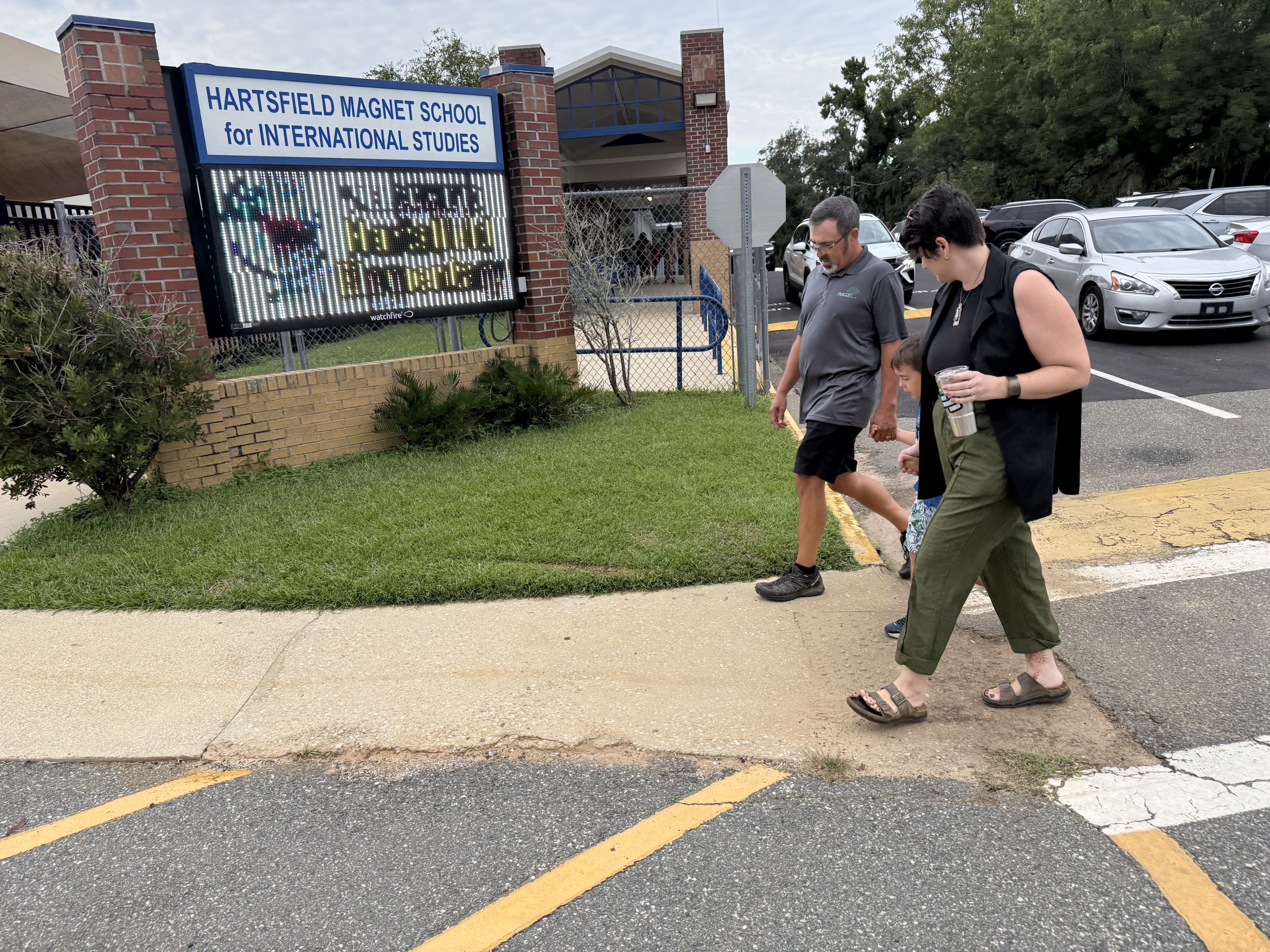
TALLAHASSEE, Fla. — As principal of Hartsfield Elementary School in the Leon County School District, John Olson is not just the lead educator, but in this era of fast-expanding school choice, also its chief salesperson.
He works to drum up enrollment by speaking to parent and church groups, offering private tours and giving Hartsfield parents his cell phone number. He fields calls on nights, weekends and holidays. With the building at just 61 percent capacity, Olson is frank about the hustle required: “Customer service is key.”
It’s no secret that many public schools are in a battle for students. As school started in Florida this August, large districts, including Hillsborough, Miami-Dade and Orange, reported thousands fewer students, representing drops of more than 3 percent year over year. In Leon County, enrollment was down 8 percent from the end of last year.
Part of the issue is the decline in the number of school-age children, both here and across the country. But there’s also the growing popularity of school choice in Florida and elsewhere — and what that means for school budgets. Leon County’s leaders anticipate cutting about $6 million next year unless the state increases its budget, which could mean reduced services for students and even school closures.
Other Florida school districts are also trimming budgets, and some have closed schools. As districts scramble for students, some are hiring consulting firms to help recruit, and also trying to sell seats in existing classes to homeschoolers. There is also the instability of students frequently switching schools — and of new charter or voucher schools that open and then shut down, or never open at all as promised.
Two years after the Florida Legislature expanded eligibility for school vouchers to all students, regardless of family income, nearly 500,000 kids in the state now receive vouchers worth about $8,000 each to spend on private or home education, according to Step Up For Students, the nonprofit that administers the bulk of the scholarships. And Florida’s Tax Credit Scholarship, created in 2001 to allow corporations to make contributions to private school tuition, is the model for the new federal school voucher program, passed this summer as part of Republicans’ “one big, beautiful bill.” The program, which will go into effect in 2027, lets individuals in participating states contribute up to $1,700 per year to help qualifying families pay for private school in exchange for a 1:1 tax credit.
“We are in that next phase of public education,” said Keith Jacobs of Step Up For Students, who recruits public school districts to offer up their services and classes on its educational marketplace. “Gone are the days when a government institution or your zoned neighborhood school had the authority to assign a child to that school.”
Related: Become a lifelong learner. Subscribe to our free weekly newsletter featuring the most important stories in education.
That’s a problem for Leon County Schools, which boasts a solid “B” rating from the state and five high schools in the top 20 percent of U.S. News’ national rankings. The district, located in the Florida panhandle, serves a population of around 30,000 students, 44 percent of whom are Black, 43 percent white and 6 percent Hispanic.
“There’s just not enough money to fund two parallel programs, one for public schools and one for private schools,” said Rocky Hanna, the Leon County Schools superintendent.
Over the past few years, the Legislature has increased state and local funding for charter schools and created new rules to encourage more to open. (Charter schools are public schools that are independently operated; the Trump administration recently announced a $60 million increase in charter school funding this year, along with additional competitive grants.)
But vouchers are the big disrupter. The nonprofit Florida Policy Institute projects annual voucher spending in Florida will hit $5 billion this year. In Leon County, money redirected from district school budgets to vouchers has ballooned from $3.2 million in 2020-21 to nearly $38 million this academic year, according to state and district figures. Enrollment in local charter schools has also ticked up, as has state per-pupil money directed to them, from $12 million to $15 million over that time.
As a mark of how the landscape is shifting, Step Up For Students is now helping districts market in-person classes to homeschoolers on the group’s Amazon-like marketplace to fill seats and capture some money. Jacobs said Osceola County put its entire K-12 course catalog on the site. A year of math at a Miami elementary school? It’s $1,028.16. And just $514.08 for science, writing or P.E.
“A student can come take a class for nine weeks, for a semester, for a year,” said Jacobs, adding that 30 districts have signed on. They are thinking, he said, “if we can’t have them full-time, we have them part-time.”
Leon County is considering signing on, said Hanna, “to basically offer our courses à la carte.” It could be a recruitment tool, said Marcus Nicolas, vice chair of the county’s school board. “If we give them an opportunity to sniff the culture of the school and they like it, it could potentially bring that kid back full-time.”
Because of his shrinking budget, Hanna is looking at cuts to IT, athletics, arts, counselors, social workers and special tutors for struggling students, along with exploring school closings or consolidations.
Another challenge: With more school options, a growing number of students are leaving charters or private schools and enrolling in the district mid-year. Yet state allocations are based on October and February enrollment counts.
Last year, 2,513 students — about 8 percent of Leon County’s district enrollment — entered after February. “Those are 2,500 students we don’t receive any money for,” Hanna said at an August school board meeting.
Public schools do a lot well, but have been slow to share that, said Nicolas. “We got lazy, and we got complacent, and we took for granted that people would choose us because we’re the neighborhood school,” he said.
Even as more parents choose private voucher schools, it’s not necessarily easy for them to determine if those schools are performing well. Although Florida State University evaluates the state’s Tax Credit Scholarship program, its report lags by about two years. It includes an appendix with voucher schools’ test scores, but there is no consequence for low performance. And scores cannot be compared, because even though schools must test students in grades 3 to 10, the schools pick which test to give.
The result, said Carolyn Herrington, director of the Education Policy Center at Florida State University, who has written some of the evaluation reports, is that “the only real metric here is parent satisfaction,” which she said “is not sufficient.”
Yet many parents like the idea of school choice. According to a poll released last month by EdChoice, a school choice advocacy group, just over half of all Americans and 62 percent of parents broadly favor school vouchers.
Mother Carrie Gaudio, who attended the local charter school her parents helped to found, was surprised when her son Ross visited Hartsfield Elementary, a Title I school that serves a high percentage of low-income households — and loved it.
Before enrolling him, however, she and her husband, Ben Boyter, studied the enrollment situation. The school was under capacity, but they noticed more students coming each year.
“We felt like if they ended up having to close a school it wouldn’t be one that’s had continual increases in enrollment,” she said, and added, “it’s a real bummer that you have to consider that, that you can’t just consider, ‘Are these people kind? Is my kid comfortable here? Do we feel safe here?’”
Indeed, a school that a parent chooses one year may close the next.
That’s what happened last year to Kenia Martinez. Since fall 2022, her two sons had attended a charter school run by Charter Schools USA, among the largest for-profit charter operators in the state. Last spring, she learned from a teacher that the school, Renaissance Academy, was shutting down.
Previously named Governor’s Charter Academy, Renaissance recently received a “D” grade, and saw enrollment fall from 420 students in 2020-21 to 220 last year. It also ran deficits, with a negative net position of $1.9 million at the end of the 2023-24 school year, according to the most recent state audit report. It closed last May.
The school building was to re-open as Tallahassee Preparatory Academy — a private school — which was advertised on its website as a STEM school for “advanced learners” that would charge a fee, ranging from $1,500 to $3,200, in addition to the money paid through a voucher.
The school was to be run not by Charter Schools USA but by Discovery Science Schools, which operates several STEM charter schools in the state. The deal revealed a possible exit strategy for faltering charters: conversion to a private voucher school that gets state money, but without the requirement of state tests, grades or certified teachers — in other words, without accountability.
Yet as this school year began, the building remained dark. The parking lot was vacant. There was no response to the doorbell, or to emails or phone calls made to the contact information on the new school’s website. Discovery Science Schools’ phone number and email were not in service, and emails to founder Yalcin Akin and board president David Fortna went unanswered. A Charter Schools USA spokesperson, Colleen Reynolds, wrote in an email that “CUSA is not involved with the building located where the former Renaissance Academy Building stands” and did not provide additional clarification on why state audit reports indicate otherwise.
The Leon County School Board fiercely debated whether to sue Charter Schools USA for access to the building and its contents, which had been funded with taxpayer dollars. But school board members dropped the idea after learning that the building had a large lien, the result of how financing was crafted through Red Apple Development, the real estate arm of Charter Schools USA. Hanna was frustrated that for-profit companies benefited from taxpayer dollars — but still owned the assets.
When Renaissance announced it was closing, a friend of Martinez’s suggested her family apply for vouchers, which covered the full cost of attendance for her two sons at the Avant Schools of Excellence, a private Christian school with campuses in Tallahassee and Florida City.
The school takes vouchers (along with a school scholarship) as full payment, although its website lists tuition and fees at $22,775 per year. Martinez liked that the school is Christian, and small. None of their friends from Renaissance Academy are there. Martinez drives them 30 minutes each way, every day.
The Tallahassee building that houses Avant was previously home to at least two charter schools. (One lasted a month.) Since the campus opened three years ago, said Donald Ravenell, who co-founded Avant with his wife, enrollment has jumped from 55 to 175.
Ravenell, who on a recent weekday wore a red and blue tie (school colors are red, white and blue), attributed the school’s success to a focus on faith (“We talk about God all the time”) and the aim of preparing each student to be “a successful citizen and person.”
Like Olson at Hartsfield, he well understands this is a competitive marketplace. He wants his school to be known for offering a quality product, which he underscored by drawing a comparison to fried chicken.
“I have nothing against Chester’s Chicken,” said Ravenell, referring to the quick-service chain sold in gas stations and rest stops. But he expects Avant to reach for more: “We want to be Chick-fil-A.”
Contact editor Caroline Preston at 212-870-8965, via Signal at CarolineP.83 or on email at [email protected].
This <a target=”_blank” href=”https://hechingerreport.org/universal-vouchers-have-public-schools-worried-about-something-new-market-share/”>article</a> first appeared on <a target=”_blank” href=”https://hechingerreport.org”>The Hechinger Report</a> and is republished here under a <a target=”_blank” href=”https://creativecommons.org/licenses/by-nc-nd/4.0/”>Creative Commons Attribution-NonCommercial-NoDerivatives 4.0 International License</a>.<img src=”https://i0.wp.com/hechingerreport.org/wp-content/uploads/2018/06/cropped-favicon.jpg?fit=150%2C150&ssl=1″ style=”width:1em;height:1em;margin-left:10px;”>
This audio is auto-generated. Please let us know if you have feedback.
Dive Brief:
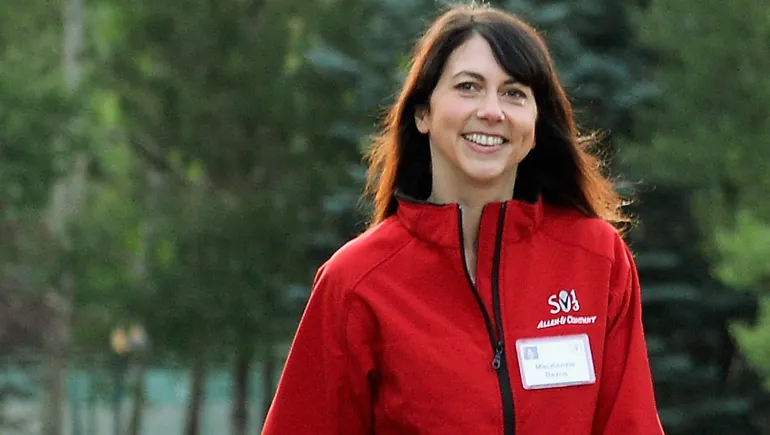
Eight historically Black colleges and universities have received a total of $387 million in unrestricted donations from billionaire philanthropistMacKenzie Scottsince mid-October.
On Sunday, Howard University, in Washington, D.C., revealed it had received an $80 million gift from Scott, with $17 million earmarked for its medical school. The following day, Spelman College, a women’s HBCU in Georgia, said Scott had donated $38 million.
Both colleges, along with most of the six other HBCUs, previously received multimillion dollar donations from Scott during her first round of higher education giving in 2020. Each described their gift as one of the biggest — if not the largest — in their history.
Dive Insight:
In 2019, the same year Scott divorced Amazon founder Jeff Bezos, she signed the Giving Pledge, a pact directed at the world’s wealthiest people to donate more than half their wealth.
“I have a disproportionate amount of money to share,” Scott, one of the richest women in the world, wrote in her pledge statement at the time. “And I will keep at it until the safe is empty.”
She still has quite a ways to go. As of this week, Bloomberg estimated Scott’s net worth at $42 billion — up from $39.4 billion last November.
Scott is now in the midst of another significant round of donations, and the notably private donor acknowledged the attention it would attract in a rare online statement last month.
“When my next cycle of gifts is posted to my database online, the dollar total will likely be reported in the news,” she said in an Oct. 15 blog post. But she characterized that amount as “a vanishingly tiny fraction” of the hundreds of billions of dollars in annual charitable giving in the U.S. each year “that we don’t read about online or hear about on the nightly news.”
Her most recent spate of HBCU donations include:
Scott also donated $70 million in September to UNCF, the largest private scholarship provider for minority students in the U.S. The organization, which counts 37 private HBCUs as members, said the money would go to bolstering the long-term financial health of those colleges.
In 2020, Scott donated over $800 million to colleges, focusing much of the funding on HBCUs. In addition to their high-dollar value, her gifts stood out because they were unrestricted, and she did not appear to have a personal relationship with the recipients.
The Council for Advancement and Support of Education found that unrestricted contributions to surveyed colleges increased by nearly a third in fiscal 2021 compared to the year before, attributing much of that growth to Scott.
By early 2023, she had donated at least $1.5 billion to roughly six dozen colleges, with an emphasis on minority-serving institutions like HBCUs.
Foundations disproportionately give less to HBCUs compared to similar non-HBCUs, and public HBCUs have historically been underfunded by the government.
From 2015 to 2019, foundations donated a combined $5.5 billion to the eight Ivy League institutions, compared to $303 million for 99 HBCUs, according to a 2023 study. That worked out to the average Ivy League institution receiving 178 times more foundation funding than the average HBCU.
And a 2023 analysis from the Biden administration found that land-grant HBCUs in 16 states missed out on over $12 billion from 1987 to 2020 due to state underfunding.
Five years out from Scott’s first donations, research suggests those funds may help boost enrollment and retention.
A 2021 analysis of the 23 HBCUs that received a total of $560 million from Scott in 2020 found that their median new student enrollment was more than 300 students higher than HBCU counterparts that did not receive funding. Their retention rates were an average of 15% higher as well.
Colleges have reported using the money in a variety of ways.
Spelman, for example, received $20 million from Scott in 2020. Of that, $11 million went to the college’s endowment, and $1.1 million went to its Social Justice Scholars program, a spokesperson told The Atlantic Journal-Constitution. In addition, every student that year received a $3,500 scholarship. The remainder of the gift went to technology upgrades, academic programming and other improvements, the spokesperson said.
Beyond adding to a college’s coffers directly, a large dollar donation can help raise an institution’s profile.
Clark Atlanta saw a “catalytic impact” to its fundraising efforts thanks to Scott’s $15 million donation in 2020, college President George French Jr. told AJC before the latest round of donations became public.
Seven in 10 college students say most or nearly all students on their college campus feel welcomed, valued and supported, according to a July 2025 survey by Inside Higher Ed and Generation Lab.
The data, collected from over 260 two- and four-year colleges across the country, paints a relatively rosy picture of students’ sentiments on campus this fall against the backdrop of free speech restrictions, tense protests and cutbacks to programs that serve students from racial minorities.
While respondents indicated the average student is welcome at their institution, they were less confident about whether they themselves fit in academically or socially.
Fewer than one-third of respondents said they have an “excellent” or “above average” sense of social belonging on campus; 42 percent reported “average” feelings of belonging. Additionally, 38 percent of students said they had an “excellent” or “above average” sense of academic fit at their institution, while just under half said they had an average sense of academic fit.
Survey data also pointed to positive sentiments about personal and academic inquiry. When asked how encouraged and supported they felt to explore different perspectives and challenge their beliefs, a majority of students indicated they feel “somewhat” (45 percent) or “very” supported (35 percent) on campus.
A Warm Welcome
Campus climate, or the perception of how much respect and inclusion students feel on campus, is tied to learning; research shows that students who face discrimination are less likely to succeed academically. Research has also found that students of color are less likely than their white peers to report feeling at home at college.
Inside Higher Ed’s Student Voice survey found minor variance among racial groups in reporting a generally positive campus climate. White students (75 percent) and Asian American or Pacific Islander students (73 percent) were most likely to indicate “most” or “nearly all” students are welcome on campus, compared to Hispanic (71 percent) or Black (68 percent) respondents. Seventy percent of “other” students, which Generation Lab classifies as students of two or more races or who come from outside the U.S., had positive reviews on campus climate.
Adult and two-year students were more likely to say nearly all students are welcome on campus (24 percent) than the average respondent (20 percent), which could reflect the diverse student bodies at two-year institutions and the preferences of adult learners to enroll in two-year or online institutions.
By comparison, students who had considered leaving college were less likely to say “most” or “nearly all” students are welcomed (64 percent) compared to all respondents (73 percent) or students who had never considered dropping out (77 percent).
Three percent of survey respondents wrote in other responses, indicating they completed their classes online and therefore could not speak to the campus climate.
Academic Success and Belonging
The survey also asked students to rank their own sense of social belonging and academic fit on a scale of poor to excellent.
Across racial demographics, Asian American and Pacific Islander (AAPI) students were most likely to rate their social belonging as high (33 percent), followed by white and international students (30 percent each), Black students (25 percent), and Latinos (22 percent).
On academic fit, white students had the highest ratings; 43 percent of respondents said their fit was “excellent” or “above average,” followed by AAPI (42 percent), Black students (33 percent) and Latino students (30 percent).
Students who had considered leaving college were much more likely than their peers to report they had a “poor” sense of belonging (15 percent versus 6 percent).
First-generation students were more likely to rate their sense of academic fit and social belonging as “below average” or “poor” (17 percent and 37 percent, respectively) compared to their continuing-generation peers (13 percent and 28 percent).
DEI Cutbacks
Inside Higher Ed’s survey also asked students whether federal actions to limit diversity, equity and inclusion have impacted their experiences. The most popular response was “no real impact on my experience” (37 percent), and a handful of students wrote in that they anticipated greater impact after returning to campus this fall. This view held across racial groups, with the greatest share of respondents saying it hasn’t impacted their experience.
About 20 percent of students said the changes to DEI on campus have “somewhat negatively impacted my experience” and 16 percent indicated “I don’t feel impacted, but my peers have been negatively impacted.”
Nonbinary students were most likely to say it’s severely negatively impacting their experience (39 percent).
Ten percent of respondents said they are somewhat or significantly impacted in a positive manner by the changes.
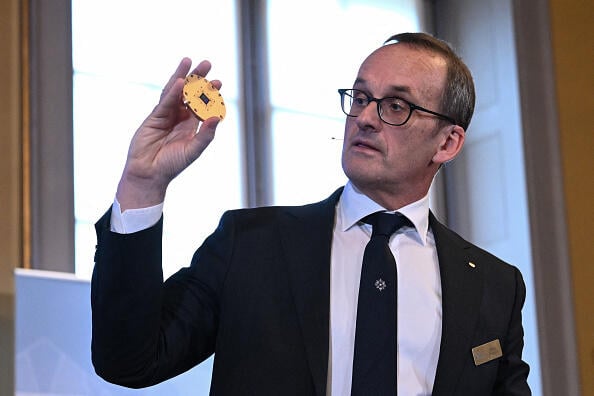
Three academics affiliated with U.S. universities have been awarded the 2025 Nobel Prize in Physics “for the discovery of macroscopic quantum mechanical tunnelling and energy quantisation in an electric circuit,” the Royal Swedish Academy of Sciences announced Tuesday morning.
British physicist John Clarke, a professor of experimental physics at the University of California, Berkeley; French physicist Michel Devoret, professor emeritus of applied physics at Yale and a professor at the University of California, Santa Barbara; and John Martinis, also a physics professor at UCSB, will share the nearly $1.2 million prize.
They won for performing a series of experiments using an electronic circuit made of superconductors, which can conduct a current with no electrical resistance, demonstrating “that quantum mechanical properties can be made concrete on a macroscopic scale,” according to the announcement.
“It is wonderful to be able to celebrate the way that century-old quantum mechanics continually offers new surprises. It is also enormously useful, as quantum mechanics is the foundation of all digital technology,” said Olle Eriksson, chair of the Nobel Committee for Physics.
A new report from the Center for American Progress and the Thurgood Marshall College Fund shows that historically Black colleges and universities receive a disproportionately low percentage of federal research and development funding.
While HBCUs make up roughly 3 percent of all four-year higher ed institutions, they’ve received less than 3 percent of R&D funding since at least 2010, according to the report. In recent years, between 2018 and 2023, they were awarded less than 1 percent of R&D expenditures.
Some agencies have given HBCUs a relatively high proportion of R&D funding, including the Department of Education, the Small Business Administration and the Department of Agriculture, which has required allotments for land-grant HBCUs. But the two federal agencies that award the most R&D funding annually, the Department of Health and Human Services and the Department of Defense, have doled out especially low shares of those funds to HBCUs; in 2023, they awarded 0.54 percent and 0.40 percent, respectively. Meanwhile, 17 of the 43 federal agencies that supply research funding didn’t give HBCUs any R&D funds at all that year.
Sara Partridge, associate director of higher education policy at CAP and co-author of the report, said both Republicans and Democrats have sought to address inequities in R&D funding, but their efforts have been insufficient.
“In order to support these key drivers of scientific achievement and upward mobility, we need federal policymakers to commit to measurable benchmarks for the share of funds awarded to these institutions,” she said in a press release.
Landscape, a College Board tool for providing colleges with information about the educational environment of an applicant’s high school and neighborhood based on publicly available information, has been discontinued, the organization announced this week.
“As federal and state policy continues to evolve around how institutions use demographic and geographic information in admissions, we are making a change to ensure our work continues to effectively serve students and institutions,” College Board wrote in the short announcement.
Geographic recruitment has come under fire from the Trump administration. Attorney General Pamela Bondi, in a memo declaring various diversity, equity and inclusion initiatives unconstitutional, said that recruiting from specific areas or neighborhoods could be unlawful when it’s being done as a proxy for race. Experts have said that doing so is not a standard practice for universities.
Jon Boeckenstedt, a longtime enrollment manager, criticized the decision to discontinue Landscape in a post on LinkedIn.
“I’m no fan of College Board of course … but I thought Landscape was a good and thoughtful product,” he wrote. “Now, it’s going away. You don’t have to be Wile E. Coyote to figure out why. Someone in DC has suggested it’s too close to ‘race based admissions’ (a thing that does not exist) and ‘it’d be a shame if something happened to your company.’ Or their lawyers rolled over voluntarily.”
Edward Blum, the founder of Students for Fair Admissions, the group that successfully challenged affirmative action at the Supreme Court, lauded the decision.
“Since the 2023 Supreme Court opinion in our Harvard and UNC cases, Students for Fair Admissions raised has concerns that Landscape was little more than a disguised proxy for race in the admissions process. We are gratified that this problematic tool will no longer be used to influence who is and who is not admitted to America’s colleges and universities,” he wrote in a statement. “This decision represents another important step toward ensuring that all students are treated as individuals, not as representatives of a racial or ethnic group.”
Federal agencies say that research at American universities contributes to the country’s national security and colleges need to guard against foreign threats.
Warning American colleges and universities about increasing foreign threats to research, a group of federal intelligence agencies and the Education Department released new guidance this week outlining how the institutions can better protect themselves.
For example, the 40-page “Safeguarding Academia” bulletin in part encourages colleges and researchers to be transparent about who else is involved in a research project, noting that failing to disclose foreign collaborations could lead to sanctions. The agencies urged researchers to do their due diligence on any potential collaborators and outlined other cybersecurity best practices.
“Protecting the integrity of U.S. research—while fostering international collaboration—is critical to maintaining a robust and secure research ecosystem,” the bulletin states. “Striking this balance is essential to preserving academic freedom, safeguarding researchers’ lifework, and ensuring that innovation continues to thrive in a secure and principled manner.”
James Cangialosi, the acting director at the National Counterintelligence and Security Center, added in a statement that while American colleges conduct research key to the country’s global competitiveness and national security, “foreign adversaries are increasingly exploiting the open and collaborative environment of U.S. academic institutions for their own gain.”
“Today’s bulletin highlights this evolving security threat and provides mitigation strategies that academic institutions can implement to better protect their research, their institutions, as well as their staff and students,” Cangialosi said. “With the new school year starting, it’s critical to get these materials in the hands of academic institutions now.”