Tag: Shifts

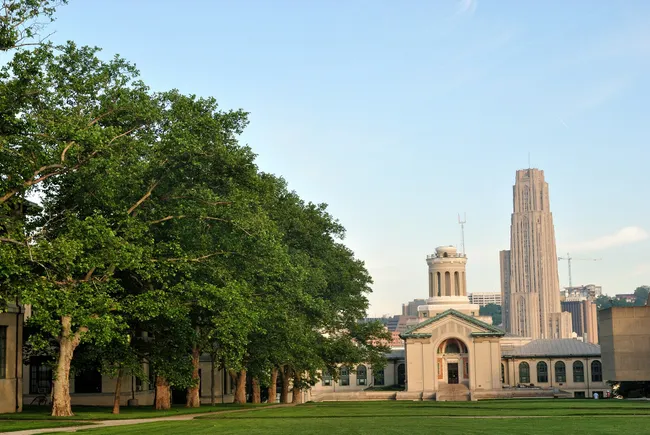
  • Carnegie Mellon lays off 75 employees at engineering institute amid federal funding shifts

    Carnegie Mellon lays off 75 employees at engineering institute amid federal funding shifts

    This audio is auto-generated. Please let us know if you have feedback.

    Dive Brief:

    • Carnegie Mellon University has laid off 75 employees in its Software Engineering Institute as it wrestles with disruptions to federal funding, according to a community message Wednesday from Vice President for Research Theresa Mayer.
    • Mayer tied the cuts — which amount to 10% of SEI’s workforce — to the engineering institute’s “unique financial structure as a federally funded research and development center as well as the shifting federal funding priorities that are shaping the research landscape.”
    • Carnegie Mellon as a whole is in a “strong financial position” for fiscal 2026, university President Farnam Jahanian said in August, noting that the Pittsburgh institution cut its expenses by $33 million.

    Dive Insight:

    Jahanian said in an August community message that Carnegie Mellon is poised to get through the current fiscal year without a deficit, which is more than some of its peer institutions can say. 

    But the university faces stiff financial headwinds — and what its president described as “existential challenges” — from the Trump administration’s disinvestment in scientific and academic research. 

    To tighten its budget, Carnegie Mellon has paused merit raises, reduced nonessential expenditures, limited new staff and faculty hiring, and has reduced staff in certain units through voluntary retirements and employee reductions.  

    In the August message, Jahanian described “signs of a marked decline in the pipeline of new federal research awards nationally and at Carnegie Mellon.” He added that university officials expect more cutbacks in federal agencies’ research budgets under a Republican-led Congress. 

    The university’s Software Engineering Institute, which Mayer described as integral to Carnegie Mellon’s overall research enterprise, is one of the institution’s biggest recipients of federal research funding. Sponsored by the U.S. Department of Defense, SEI develops new technologies and studies complex software engineering, cybersecurity and AI engineering problems, in large part to advance the strategic goals of federal agencies. 

    The institute took in $148.8 million in grants and contracts revenue in fiscal 2024. 

    Prior to this month’s job cuts, officials at the institute took “extensive steps to avoid this outcome, including implementing cost-saving measures in recent months,” Mayer said Wednesday. “Despite these efforts, SEI was unable to reallocate or absorb costs, so staff reductions were unavoidable.”

    Along with a slackening grant pipeline, Jahanian’s August message pointed to the possibility of reduced funding for research overhead costs. 

    The Trump administration has sought to unilaterally cap reimbursement rates for indirect research costs at 15% across multiple agencies, though these policies have been blocked by courts

    Carnegie Mellon is a plaintiff in one of the lawsuits that led to the 15% cap being permanently blocked at the National Institutes of Health, though the Trump administration has appealed the ruling. The university is also represented in lawsuits against other agencies through its membership in the Association of American Universities. 

    If a 15% cap were implemented on research overhead, that would create an additional $40 million annual shortfall for Carnegie Mellon, according to Jahanian. Indirect research costs include overhead expenses such as laboratories and support staff. 

    Beyond federal funding woes, Jahanian also noted in August that Carnegie Mellon’s projected $365 million in graduate tuition revenue for the current fiscal year is about $20 million short of initial estimates due to “lower-than-expected enrollment.”

    While Jahanian didn’t offer reasons for the shortfall, he did note that going forward Carnegie Mellon was examining its balance of undergraduate to graduate and international to domestic students to “ensure long-term stability.”

    Other universities have experienced major declines in their international enrollment amid the Trump administration’s disruptions to the visa approval process and aggressive immigration policies. 

    Officials at DePaul University, in Chicago, said recently that new international graduate student enrollment fell by 62% year over year this fall, contributing heavily to a budget crunch at the institution. 

    One group has predicted that international enrollment could drop by as much as 150,000 students this fall. 

    In recent years, Carnegie Mellon’s enrollment has grown, as has its graduate student ranks. Between 2018 and 2023, overall enrollment increased 11.2% to 15,596 students and graduate enrollment grew 11.7% to 8,307 students.

    Source link

  • US-based TOEFL scorers “shut out” of ETS shifts, petition claims

    US-based TOEFL scorers “shut out” of ETS shifts, petition claims

    • Petition from ETS scorers takes issue with shifts being handed to offshore colleagues, claiming that such decisions are often taken last minute.
    • Concerns raised over new scorers not having English as a first language – which ETS says does not matter so long as the scorer has the correct expertise.
    • ETS defends “strategic decision” to look beyond the US for some of its scorers, saying this reflects the global nature of its business.

    “Over the past several months, ETS has stopped assigning shifts to US-based rates and scoring leaders without any clear or honest explanation,” states the petition

    “There has been a quiet transition to a completely offshore rater pool, with scoring for the TOEFL Speaking section now handled almost entirely out of India. US raters – many of whom have supported this work for over a decade – have been ghosted,” it claims.  

    According to speaking raters and leaders interviewed by The PIE News, shifts for US-based raters and scoring leaders started reducing in December 2024 and have all but dried up, though employees are still asked each month to submit their availability.  

    But according to the testing giant, scoring staff were informed in December 2024 of the expansion of ETS’s scoring capabilities beyond the US, including being told that the shift “could result in a reduction of scoring hours for US-based raters”.  

    “This change reflects our effort to meet international demand more effectively and leverage a broader, global pool of qualified scoring professionals,” an ETS spokesperson told The PIE 

    And yet, employees have complained of a lack of transparency from ETS: “Those who complained to HR or Scheduling receive either silence or vague boilerplate responses citing ‘global strategy’ or ‘volume’”, the petition states.  

    According to Teri Anglim, a scoring leader who has worked for TOEFL since 2006: “The email that came in December was well crafted… they said they were going to be including global raters and that some would see their shifts increase and others would decrease”.  

    “Come February, lots of raters would email me and say they were only scheduled for five days out of the month, some having registered their availability for every day,” said Anglim.  

    “Come March, they might get 10 days for the month, but a day and a half before their shift, they’d get an email saying that half of their shifts were cancelled,” she explained.  

    Several employees have echoed similar frustrations over shifts being cancelled at the eleventh hour.

    Speaking to The PIE anonymously, another scoring leader explained it was their understanding that “ETS still sends out availability requests every month and actually confirms one or two shifts at most, only for them to be cancelled at the last minute”.  

    “Because I work for other programs, I’m getting scheduled for them but not for TOEFL. ETS essentially wants to keep our pool of workers ‘on-call’ to the side, just in case,” they said.  

    By Anglim’s accounts, shifts for US test raters had all but dried up in April, though test scorers training the new global raters continued receiving shifts.  

    In May, the number of raters on each scoring leader’s roster was increased, with experienced leaders finding it difficult to keep up with the increased monitoring.

    “It’s humanly impossible to keep tabs on 24 people who are novices at scoring,” said Anglim, who became concerned that mistakes could slip through the cracks.  

    And yet, by June, Anglim was assigned six shifts for the whole month and saw three of them cancelled: “That was the end of TOEFL for us, the scoring leaders,” she said.  

    It’s not diverse, it’s certainly not equitable, and it’s not inclusive

    Teri Anglim, TOEFL scoring leader

    The petition is demanding that ETS provides a “clear, honest explanation of how shifts are being assigned”, as well as detailed accounts of how many US raters have received shifts since April and the ratio of US raters and the new global pool.  

    The scoring leader speaking to The PIE anonymously said they were “devastated to no longer be a part of a program [they] helped build 20 years ago… ETS used to be a great side income, but it’s mere pittance now.” 

    “[ETS] basically told us last fall that we would be training our replacements – they didn’t word it quite like that, but we all knew our days were numbered at that time.”

    Since many raters work part-time for ETS, they say they have had to rely on other jobs and pick up shifts elsewhere since the reductions.  

    “At this point in my life, I do get social security, and I’m looking for other remote jobs,” said Anglim, who holds a BA from Arizona State University and two MA degrees from the University of Texas Arlington.  

    Beyond the personal impact on employees, Anglim said she was concerned about the standard of the new scorers, with the petition claiming that the scoring of the TOEFL Speaking section is “now handled almost entirely out of India”. 

    Anglim, who trained many of the new scorers, said: “I have nothing against the raters in India – I liked working with them – though I was concerned about non-native English speakers marking the test without other people.” 

    “How can a company like the Educational Testing Service (ETS) promote DEI when having scorers only from one place is not diverse, it’s certainly not equitable, and it’s not inclusive,” she said.  

    For its part, ETS has countered the claims, stressing that new raters are given the same “rigorous” training as existing ones and that it is irrelevant whether or not English is their first language.

    Anglim recalled a case when she was reviewing the scores given to a test-taker from Germany, whose English was “impeccable” – “his vocabulary was better than I use”, she said – though he was scored two out of four for delivery.  

    In that incident, Anglim initiated a score change, but she said she was worried that individuals who have taken the test since January could be “collateral damage” of the new pool of scorers.  

    The TOEFL exam is primarily used to measure the English proficiency of test takers applying to English speaking universities in the UK, Canada, the US, Australia and New Zealand, among a few others.

    Out-of-work US-based raters fear that moving the test scoring offshore will lead to a loss of raters who instinctively know the nuances of the English language that can affect score outcomes.

    What matters is expertise, not where someone was born or what their first language was

    ETS

    Alongside a “commitment to transparency, accountability and professional respect” for its employees, the petition’s signatories want an “acknowledgment that the rater and scoring leader roles are now being filled exclusively from India”.  

    The scoring leader speaking anonymously also said they were “concerned about the integrity of the test”, fearing “it will be compromised due to raters and leaders who aren’t fully proficient in English”.  

    “My interactions with some raters over the years and with these specific ‘global raters’ left me wondering how thoroughly ETS had vetted their language abilities. 

    “I fear that TOEFL will die once US universities get wind of this shift and also if scores end up being inaccurate, leading to difficulties or even failure for international students,” they said.  

    Responding to the claims, an ETS spokesperson said that the integrity of the TOEFL would “always be [its] highest priority”.

    “All of our raters, whether English is their first or learned language, go through the same rigorous training, qualification process, and continuous monitoring to ensure scores are fair, accurate, and consistent.

    “What matters is expertise, not where someone was born or what their first language was and our diverse community of raters reflects exactly that.”

    ETS leadership have not formally responded to the petition or addressed the 342 signatories or their demands.

    Speaking to The PIE, an ETS spokesperson said the company had “a growing global customer base and a business that continues to evolve to meet the needs of learners, institutions, and partners worldwide.  

    “In response to these changing demands, we made the strategic decision in late 2024 to expand our scoring capabilities beyond the US. 

    “This shift allows us to better serve a global testing population, increase operational flexibility, and uphold the quality and efficiency our customers expect.” 

    It told The PIE: “We are grateful to the many raters and scoring leaders in the US who have supported TOEFL over the years and helped establish the standards we maintain today.  

    “ETS remains committed to treating all members of our scoring community with respect and to communicating transparently as we continue to adapt in an increasingly globalised education landscape.”

    Source link

  • New Data Highlights Demographic Shifts in College Admissions Prior to Enrollment

    New Data Highlights Demographic Shifts in College Admissions Prior to Enrollment

    Title: College Enrollment Patterns Are Changing. New Data Show Applicant and Admit Pools Are Too.

    Authors: Jason Cohn, Bryan J. Cook, Victoria Nelson

    Source: Urban Institute

    Since 2020 the world of higher education has changed drastically. Higher education has seen the effects of COVID-19, the end of race-conscious admissions, significant delays in student awards from the new FAFSA, and changing federal and state policy towards DEI.

    The Urban Institute, in collaboration with the Association of Undergraduate Education at Research Universities, University of Southern California’s Center for Enrollment Research, Policy, and Practice, and in partnership with 18 institutions of higher education aimed to fill data gaps seen in potential shifts in racial demographic profiles of students who applied for, were admitted to, and enrolled in four-year IHEs between 2018-2024.

    The data analysis found that trends in applicant, admit, and enrollee profiles varied greatly by race and ethnicity. Despite differences in data trends, all IHEs found an increase in the number of students who chose not to disclose their race or ethnicity in 2024.

    The analysis found substantial changes to Black applicant, admit, and enrollee data. Among Black students at selective institutions (defined by an acceptance rate of below 50 percent) there were differences between 2023 and 2024 of the share of applicants (8.3 percent to 8.7 percent) and admits (6.6 percent to 5.9 percent). This is contrasted further due to the differences between the share of Black applicants and admits between 2021 to 2023, which stayed relatively consistent.

    The analysis took note of a change in trends for White students as well. White students represented the only student group that consistently made up a larger share of admits than applicants (six to nine percentage points larger); despite the fact that White students demonstrated a consistent decrease in applicant, admit, and enrollee groups since 2018.

    The analysis concludes that ultimately more data is needed at every point in the college admissions process. Enrollment data gives limited insight into the very end of the process and if more data is gathered throughout a student’s journey to college, then we can better grasp how all different types of students are interacting with higher education.

    Read the full report here.

    —Harper Davis


    If you have any questions or comments about this blog post, please contact us.

    Source link

  • How market shifts are impacting Chinese agencies

    How market shifts are impacting Chinese agencies

    Since the pandemic, China has experienced a surge in new study abroad companies, particularly in Tier 2 and Tier 3 cities. Consultancies such as Bonard and Sunrise have each confirmed a notable increase in new agency incorporation these past several years.

    However, the total number of students has not recovered as expected post-Covid. This, coupled with the emergence of international education programs in the market, such as foundation courses and 2+2 programs in the public and private sector, has meant that many established study abroad agents are struggling to survive due to rising management costs.

    Consequently, the market looks challenging, increasing the difficulty of student recruitment for foreign institutions that traditionally rely on agencies.

    Challenges for established agencies

    This rapid market expansion has presented challenges for even well-established agencies. Many are struggling to adapt to the changing dynamics. For instance, a prominent agency reported that many of their counsellors are earning minimal salaries due to declining client numbers and difficulties in securing new business. This highlights the increasing pressure on agencies to remain competitive in this rapidly evolving market.

    Fundamentally, the challenges for established agencies arise from cost and revenue pressures. Costs include tax, venue, human resources, and promotions, with human resources and promotion being the most critical.

    Agencies need professional personnel to maintain service standards and capacity in the labour-intensive study abroad industry. Promotion methods have changed rapidly in the past five years. Social media platforms and short-form video platforms have gained prominence, often becoming more important than search engines and other traditional methods.

    Fundamentally, the challenges for established agencies arise from cost and revenue pressure

    Furthermore, these new marketing channels tend to favour personal profiles over organisational accounts. This is largely due to the platforms’ recommendation algorithms. Moreover, many counsellors are not comfortable appearing on camera, despite possessing extensive experience and professional knowledge, they lack the skills and topics to capture audience attention.

    On the revenue side, acquiring customers is even more difficult than in the pre-Covid period. Customers are becoming more price-sensitive and are increasingly willing to work with smaller study abroad studios for personalised services.

    The impact of enhanced information accessibility

    The rise of digital platforms has fundamentally altered the information landscape for prospective students. With readily available information on social media platforms such as WeChat, Redbook, and TikTok, students and parents are now empowered to conduct independent research on universities, read reviews, and even connect with current students.

    This increased access to information has lessened the reliance on traditional agency channels. In some cases, agents also find themselves competing with university marketing and recruitment teams who support students directly.

    The rise of master agents and aggregators

    In response to these market shifts, many established agencies have transitioned to the “master agent” or “aggregator” model. This involves acting as intermediaries between universities and smaller agencies, facilitating student recruitment while generating additional revenue streams. However, this model presents challenges for universities, particularly those with lower rankings.

    Mingze Sang clarifies” “I would refer to aggregators as international university resource-holders or platforms.” Aggregators have existed in China for a while. However, the “risen” aggregators are often new agencies with strong connections to some foreign educators, enabling them to offer special programs. Some aggregators take the stance: “Every university is welcome on my platform. It’s up to you whether you can attract students.”

    The number of agencies and agents is increasing, while the number of students is not growing at the same rate. Therefore, the market is transforming into a resource-driven one.

    Aggregators have existed in China for a while. However, the “risen” aggregators are often new agencies with strong connections to some foreign educators, enabling them to offer special programs

    Currently, many parents and students in China are seeking the best outcomes with the least investment. Consequently, those with strong connections to well-ranking universities and who can provide special programs to students are highly sought after. Regarding the traditional aggregators in China, who have been present for at least 15 years, the competition is even more fierce than among agencies. They are struggling with issues such as commission percentages and counselling services, and are focused on survival rather than growth.

    Evolving student and parent priorities

    The priorities of Chinese students and parents have also undergone significant evolution. While university rankings were once the primary determinant, factors such as career prospects, student experience, and the quality of life in the chosen city are now gaining greater importance. This necessitates a more nuanced and student-centric approach to recruitment.

    Sang observes that the priorities of parents and students are employment after graduation. University rankings remain a key factor influencing their employment decisions. With foreign enterprises departing China and private companies facing challenges, parents often favour employers “in the system,” such as state-owned enterprises, hospitals, and universities. University ranking is crucial for standing out in a competitive job market. Furthermore, parents increasingly inquire about graduation requirements and the difficulty level of graduation.

    Student motivations

    Economic factors are influencing student choices in China. Post-Covid economic challenges have increased demand for international courses offered locally. These programs, offering global qualifications without the necessity of overseas travel, are attractive to many. Transnational education (TNE) programs are becoming more selective, enhancing their reputation and attracting students seeking high-quality international education experiences.

    As Sang notes: “Excellent students are seeking top universities with specialised majors. Average students are seeking top universities regardless of majors. Below average students are seeking degrees, prefer to go abroad as late as possible, and desire special, safe, and affordable services.”

    How universities can navigate the market

    Foreign institutions hoping to maintain a strong presence in China must evolve with the market. The traditional reliance on agencies is no longer sufficient. Instead, universities must:

    • Explore new opportunities beyond agency recruitment, diversifying their approach to attract Chinese students through multiple channels.
    • Invest in TNE partnerships, including 2+2 programs, foundation courses, and collaborations with Chinese universities, which provide direct access to students without heavy reliance on agencies.
    • Develop strong institutional collaborations with international schools in China, positioning themselves as trusted higher education pathways for students already enrolled in globally focused secondary education.
    • Leverage digital spaces effectively by producing compelling, authentic content that speaks directly to students and parents.
    • Enhance student experiences to attract and retain international talent.
    • Embrace innovation through virtual campus tours, interactive Q&A sessions, and personalised communication.

    Sang concludes: “For those well-ranking universities, such as the Australian Group of Eight, focus on ranking, maintain reasonable commissions, and be strict on graduation but not overly harsh on enrolment.

    “For those lower-ranking universities, spend more time engaging with Chinese colleges and universities; as there are thousands of them in China, be flexible when dealing with universities, and rely on a bit of luck.”

    Source link

  • Bunker Hill Cancels Study Abroad Amid Federal Policy Shifts

    Bunker Hill Cancels Study Abroad Amid Federal Policy Shifts

    Bunker Hill Community College is canceling its summer study abroad programs in response to Trump administration immigration policies, WBUR reported.

    “Our first priority in any Study Abroad experience is the safety of our students and staff,” read a statement from the community college to WBUR. “With the changes in national immigration policy and enforcement that have emerged over the last several weeks, including the prospect of renewed travel restrictions, the College will redirect this year’s exploration and learning to U.S.-based sites.”

    The community college planned to send about 60 students to Costa Rica, Ghana, Japan, Kenya and Panama for two-week educational programs between May and July. The decision to cancel the trips came after news reports that the Trump administration is considering a travel ban on dozens of countries.

    Biology professor Scott Benjamin, who’s led the Costa Rica trip since 2002, told WBUR that college leaders were concerned for international students who planned to go on these trips. International students make up 7 percent of the college’s student body.

    “The school was just very worried about the probably remote, but still potential possibility that we could go away and come back, and a student couldn’t come back into the country,” Benjamin told the news outlet.

    Source link