Charlie Kirk was shot during an event at Utah Valley University today. Details of the incident are still unfolding.
Political violence is never an acceptable response to speech. Free speech allows us to settle our differences peacefully and is essential to a free and democratic society.
Our thoughts are with Charlie Kirk and his family.
This audio is auto-generated. Please let us know if you have feedback.
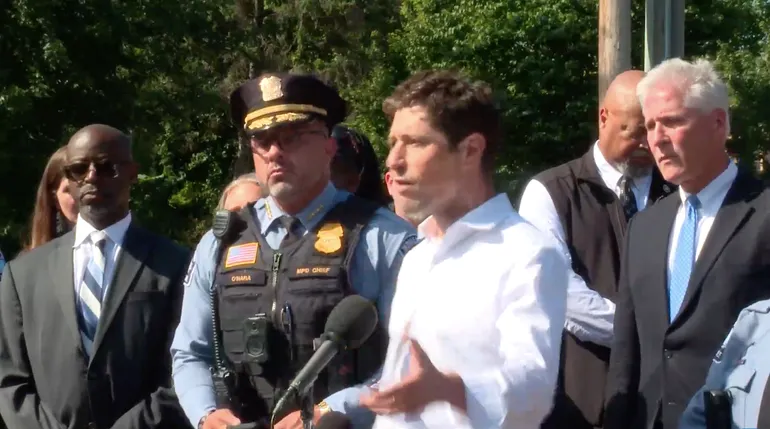
Two children — ages 8 and 10 — are dead and 17 other people injured at a Minneapolis Catholic school after an active shooter opened fire Wednesday morning. Fourteen of the 17 injured are children, two of whom are currently in critical condition, according to the Minneapolis Police Department.
The tragedy took place during the first week of classes for Annunciation School, a private pre-K-8 Catholic school with a little over 390 students, according to the National Center for Education Statistics. It occurred while dozens of children were attending religious mass at Annunciation Church, said Minneapolis Police Chief Brian O’Hara during a Wednesday press briefing.
During the event, the shooter barricaded some doors to the church from the outside to keep students from leaving as he shot at children and churchgoers from outside the building, through the windows. O’Hara said a smoke bomb was found at the scene.
That kind of “frontal assault” style attack at a school is “relatively rare” according to David Riedman, a school shooting expert who manages the K-12 School Shooting Database. A similar style of attack was seen at the Virginia Tech shooting in 2007, he said.
“Most school shootings are insider attacks (current students) who commit a surprise attack when they are already inside the building,” said Riedman in a Wednesday analysis sent via email.
It is unknown whether the shooter — who was in his early 20s and appears to have died by suicide during the attack — was a former employee or student of the school, said O’Hara.
“Don’t just say this is about thoughts and prayers right now. These kids were literally praying.” said Minneapolis Mayor Jacob Frey during the Wednesday press event. “They should be able to go to school or church in peace without the fear or risk of violence, and their parents should have the same kind of assurance.”
The Annunciation Church shooting is the 146th at a K-12 school so far in 2025, according to Riedman’s count.
“These school shootings happen in all sizes of communities and in rural, suburban, and urban areas,” he said.
School shootings reached all-time highs three years in a row between the 2021-22 to 2023-24 school years, according to Riedman’s K-12 School Shooting Database, which tracks anytime a gun is brandished with intent or when a bullet hits school property. The 2024-25 school year then saw a 22.5% decrease in school shootings compared to the prior school year.
There were 254 total school shooting incidents in 2024-25, compared to the nearly 330 school shooting incidents in each of the school years between 2021-22 and 2023-24.
This audio is auto-generated. Please let us know if you have feedback.
Last month’s mass shooting in New York City, like every mass shooting incident, is yet another wake-up call to education leaders and school safety experts about how to better protect their buildings and therefore the students and staff inside. This story, from our sister publication Facilities Dive, provides insight into how commercial facilities operators are responding, with takeaways for the education sector.
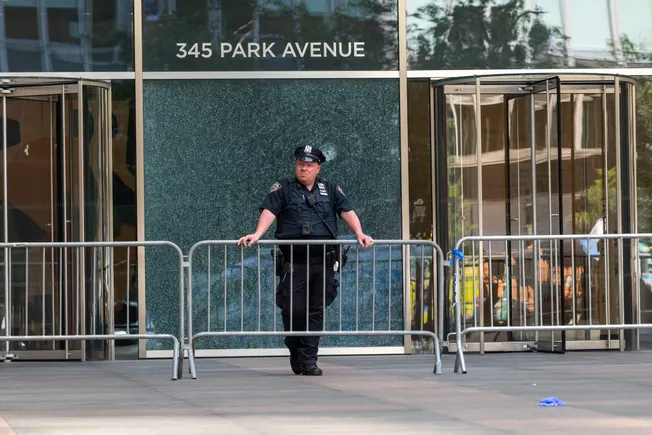
The mass shooting that took place in Midtown Manhattan last month, which resulted in the deaths of a police officer and three others, puts a spotlight on how building operators can protect occupants in the face of armed assailants. The incident makes clear that access control is a critical factor, but not all access systems are the same, security specialists say.
Prior to the assailant entering the office skyscraper’s lobby and beginning his attack, cameras at 345 Park Avenue flagged the approaching gunman as a potential threat, Reuters reported.
A still frame of closed circuit television footage the outlet obtained, time-stamped just over a minute before police received the first emergency call about the shooting, shows a man holding an assault-style rifle at his side. The photo shows a yellow box around the figure generated by the building’s security system, which analyzes live video feeds for threats requiring instant action. The system was supposed to alert guards at the front security desk, a former federal official told Reuters.
Protecting building occupants in the case of an emergency starts with access control, especially in the case of an active shooter, according to Josh Sullivan, chief operating officer of the ALIVE Active Shooter Survival Training Program, which shares best practices with organizations on responding to threats.
“Access control and the physical security measures in place can prevent a lot of things from happening in the first place,” Sullivan said. “There are multiple ways. No. 1, they have systems out there, like the one that was in place [at 345 Park Avenue] that just didn’t get used properly.”
Software is available that can connect to cameras, identify threats and lock down access controls, doors and other systems, Sullivan said. The software can also notify local authorities or call 911.
“Those things save valuable time,” he said. In some cases, the software automatically provides the security system login to the emergency dispatchers, who can provide it to the first responders, giving them “access to the camera’s live feed, more plans and to where things are in the building.”
The technology is only part of the equation, however, Matthew Dumpert, global leader of enterprise security risk management at financial and risk advisory firm Kroll, told Reuters. “It takes significant resources, alarms to notify people [and] training to recognize it,” he said.
Considering the rate of active threats today, allocating those resources and having a plan is increasingly important for facilities managers, Sullivan says.
The OSHA general duty clause says that employers must take reasonable actions to ensure the safety of employees or guests from recognized hazards that are “likely to cause death or serious physical harm.”
“An active shooter, unfortunately in today’s world, is a common hazard,” Sullivan said. “It’s No. 3 overall in any workplace as the cause of injury or death. In healthcare and education, it’s No. 1.”
Stagnant technologies leave gaps in security
Many organizations use access control technologies that are outdated, improperly configured or insecure, according to Tina D’Agostin, CEO of Alcatraz AI, a company that provides facial authentication hardware and software solutions to enterprise clients.
“When you look at what is deployed today, 90% of it is still badges and proximity cards,” said D’Agostin, noting that the first access card technology was released in 1983, with little innovation since. “Imagine using a TV or phone from the ’80s. That’s essentially what we’re doing in access control. In no other area of life would that be allowed to happen.”
Among their weaknesses, these cards can be easily cloned, she said.
Facility managers might want to look at other technologies, including mobile technologies and biometric-based systems, she said. Each has its pros and cons, she said.
Among their cons, mobile devices are carried, just like an access card, so they can be lost, and using biometrics requires a trade-off between friction and convenience, she said.
Separate from these issues is the problem of tailgating, where unknown actors follow authorized employees or occupants into a space, bypassing access controls.
Tailgating is the No. 1 cause of a security breach, and it’s usually not very elaborate, D’Agostin said. “It’s a courteous human being holding the door open for someone who is unauthorized that goes in to be a bad actor,” she said. “All the other technologies do not protect against that. If you have a technology at the door, and someone holds that door open, the whole system is defeated.”
Going forward, building operators should treat active shooter threats as seriously as they do fire evacuations and other safety matters, Sullivan said.
“If they even touch on [active threat situations] at all, it’s very minimal,” he said. “Most companies out there don’t touch on — or don’t touch enough on — the active threat space. The workplace violence space needs to really [be taken] seriously.
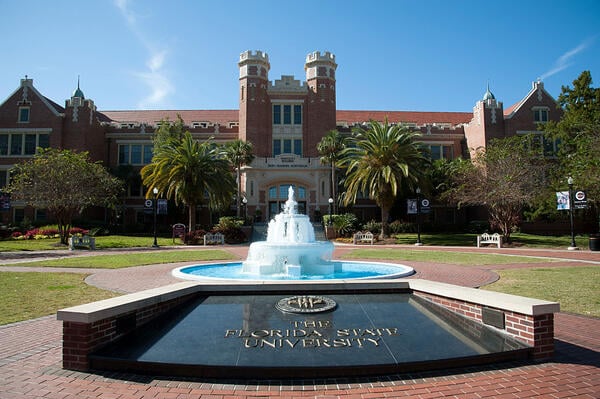
One suspect has been taken into custody after a shooting that left two victims dead and six injured at Florida State University’s student union on Thursday, law enforcement officials said in a press briefing.
The suspect, who was identified as Phoenix Ikner, a 20-year-old FSU student and the son of a school resource deputy with the Leon County Sheriff’s Department, has also been hospitalized. He was shot by police after he “did not comply with commands,” according to Tallahassee Police Department chief Lawrence E. Revell.
The two deceased victims were not students, Revell said, but he couldn’t share any other information about the victims’ identities.
FSU president Richard McCullough called this a “tragic day for Florida State University” at the briefing.
“We’re working to support the victims, the families and everyone affected,” he said.
FSU students and employees received an emergency notification at 12:02 p.m. to shelter in place due to an active shooter near the campus’s student union. According to Revell, FSU campus police arrived on the scene “almost immediately” after the shooting began just before noon. Other local law enforcement agencies, including the Federal Bureau of Investigation’s Jacksonville field office and its Tallahassee suboffice, were involved in the response to the shooting. The Tallahassee police will lead the investigation.
Over three hours later, police notified the campus that they had “neutralized the threat” but asked the public to continue avoiding the student union and the surrounding area. Students were advised to remain indoors except to walk to their dorms or the designated reunification point.
Revell said the handgun Ikner used was his mother’s former service weapon. The suspect also had a shotgun with him, Revell said, but it was unclear if he had used it. Revell said the police did not yet know of any motive for the shooting and that Ikner had invoked his right not to speak with police.
At the press briefing, McCullough said he had just returned from visiting the victims in the hospital.
“Right now our top priority is safety and well-being for all the people on our campus,” he said.
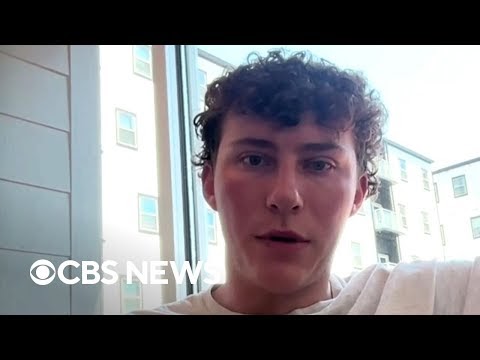
One FSU junior, McKenzie Heeter, told NBC that the assailant shot at her with what she thought was a rifle as she was exiting the student union with her lunch just before noon, but he missed. He then returned to his car and retrieved a handgun and shot another individual, at which point Heeter began running away from the student union and back to her apartment.
“It was just me and like three other people that noticed at first, but we were walking in the opposite direction away from the union, so we started running. I just told everybody that I could see, stay away from campus,” she told NBC.
Another group of about 40 individuals avoided the shooter by locking themselves in a bowling alley in the student union’s basement, The Tallahassee Democrat reported.
Classes at FSU are canceled through Friday, and athletic events are canceled through the end of the weekend.
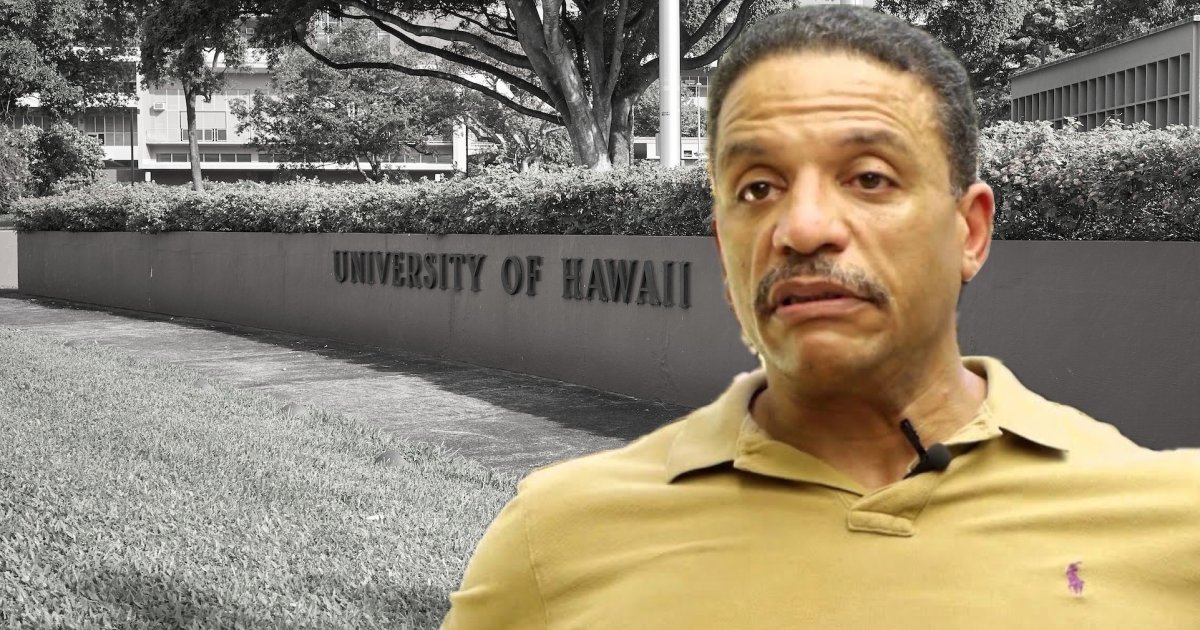
Those concerned that law schools are shying away from teaching some areas of law to avoid controversy just got more reasons to worry, this time courtesy of the University of Hawai’i at Manoa and its absurd treatment of law professor Kenneth Lawson.
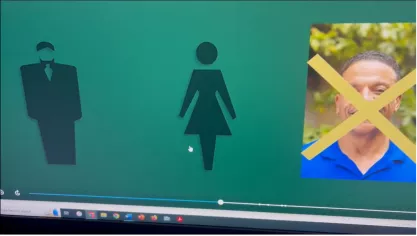
Lawson, an accomplished faculty member at UH, used a simple hypothetical to teach the idea of “transferred intent,” a legal concept invoked when a defendant intends to harm one person, but ends up harming a second person instead. As is common in law school, Lawson offered a hypothetical to convey this idea: Imagine if a dean at his institution tried to shoot another dean, missed, and hit Lawson instead.
Here’s a screenshot from part of his lesson:
Those who have been to law school will understand that using campus figures to illustrate hypotheticals is not at all unusual, and is intended to add a bit of levity and grounding to what can be pretty esoteric topics.
But when an anonymous student filed a complaint, calling the hypothetical “extremely disturbing” and citing the context of some shootings near the university’s campus, administrators summoned Lawson to a meeting near the end of last semester. Though they acknowledged he had not violated any university policy, they nevertheless mandated that he remove the thought experiment from a posted video of the class — or they would change it for him.
The ability of administrators to forcibly alter course materials is positively ripe for abuse.
Lawson hadn’t thought twice about including the example, and had been using the example for years, not simply because it wasn’t unusual but because the protections of academic freedom give faculty wide latitude in determining how to approach controversial or potentially difficult material. When Lawson refused to alter the video of his presentation, given that he had not violated any policy, and using the hypothetical was well within his academic freedom rights, administrators just went on the school’s online curriculum system, where faculty submit presentations, to make the changes themselves.
Remember: these changes were being made because, supposedly, some found a hypothetical of campus figures being shot to be disturbing. So this is what the administration came up with.
You will note that there is still a campus figure on that slide, and it’s the person who was (hypothetically) shot: Professor Lawson. Only the deans have been removed. It seems that at UH, some hypothetical victims are more equal than others.
There’s no denying that this is silly, and many will be tempted to chalk it up as just more campus craziness. But there’s a disturbing wrinkle here, which is that the ability of administrators to forcibly alter course materials is positively ripe for abuse. The university’s administrators have granted themselves unilateral authority to interfere with faculty teaching decisions, despite the fact that UH is a public institution bound by the First Amendment, which views academic freedom, which protects that right, as a “special concern.” If administrators can “memory hole” bits and pieces of curricula they don’t like, even when it violates no rule, where does it stop?
UH still has an opportunity to do the right thing. It’s easy, too — all it has to do is step back and let faculty teach, and save the video editing for film class.
FIRE wrote the university on Dec. 13, urging it to reverse course and restore Lawson’s original hypothetical. The university responded in early January, declining to substantively engage with our concerns or detail specific issues with our argument. Lawson, and all UH students, deserve better. As our second letter states:
FIRE’s concerns are only amplified by the fact that this alleged capitulation to sensitivity is occurring in a law school. To receive a proper education in the law, students will inevitably encounter difficult topics like sexual assault, homicide, physical assault, domestic violence, and may be faced in school and in their careers with descriptions of personal injuries far more graphic than those in Lawson’s hypothetical. Where do UH administrators draw the line regarding their interference in faculty instruction if they feel free to operate under a nebulous standard of protecting students from “disturbing and harmful” material?
Lawson has submitted a grievance about the situation, so UH still has an opportunity to do the right thing. It’s easy, too — all it has to do is step back and let faculty teach, and save the video editing for film class.