Tag: shut

  • Shut your app: How Uncle Sam jawboned Big Tech into silencing Americans

    Shut your app: How Uncle Sam jawboned Big Tech into silencing Americans

    This prepared statement was delivered before the U.S. Senate Committee on Commerce, Science, and Transportation on Oct. 29, 2025.


    Chairman Cruz, Ranking Member Cantwell, and honorable members of the Committee,

    Good morning, and thank you for the opportunity to testify today. My name is Will Creeley, and I am the legal director of FIRE — the Foundation for Individual Rights and Expression, a nonpartisan nonprofit dedicated to defending the rights of all Americans to free speech and free thought, the essential qualities of liberty.

    I’ve spent nearly 20 years defending the First Amendment rights of speakers from every point on the ideological spectrum. At FIRE, we have one rule: If speech is protected, we’ll defend it.

    Typically, the censorship we fight is straightforward: The government punishes a speaker for saying things the government doesn’t like. That’s a classic First Amendment violation, a fastball down the middle. Unfortunately, that kind of textbook censorship isn’t the only way government actors silence disfavored or dissenting speech.

    FIRE Legal Director Will Creeley testifies before the Senate Commerce Committee on Oct. 29, 2025.

    Far too often, government officials from both sides of the partisan divide engage in “jawboning” — that is, they abuse the actual or perceived power of their office to threaten, bully, or coerce others into censoring speech. This indirect censorship violates the First Amendment just as surely as direct suppression.

    What is jawboning? And does it violate the First Amendment?

    Indirect government censorship is still government censorship — and it must be stopped.


    Read More

    This isn’t new law. The First Amendment’s prohibition against coerced censorship dates back decades, to the Supreme Court’s 1963 ruling in Bantam Books v. Sullivan. In that case, the Court confronted a Rhode Island state commission that sent threatening letters, “phrased virtually as orders,” to booksellers distributing “objectionable” titles — with follow-up visits from police, to ensure the message had been received.

    The Court held the commission’s “operation was in fact a scheme of state censorship effectuated by extra-legal sanctions; they acted as an agency not to advise but to suppress.” And in the decades since, courts have consistently heeded Bantam Books’ call to “look through forms to the substance” of censorship, and to remain vigilant against both formal and informal schemes to silence speech.

    But government officials regularly abuse their power to silence others, so the lesson of Bantam Books bears repeating. And in deciding National Rifle Association of America v. Vullo last year, the Supreme Court unanimously and emphatically reaffirmed it.

    In Vullo, New York State officials punished the NRA for its views on gun rights by threatening regulatory enforcement against insurance companies that did business with the group and offering leniency to those who stopped. New York’s backdoor censorship was successful — and unlawful.

    This regulatory carrot-and-stick approach was designed to chill speech, and the Court reiterated that “a government official cannot do indirectly what she is barred from doing directly: A government official cannot coerce a private party to punish or suppress disfavored speech on her behalf.”

    A government official cannot do indirectly what she is barred from doing directly.

    To be sure, the government may speak for itself, and the public has an interest in hearing from it. But it may not wield that power to censor. As Judge Richard Posner put it: The government is “entitled to what it wants to say — but only within limits.” Under no circumstances may our public servants “employ threats to squelch the free speech of private citizens.”

    So the law is clear: Government actors cannot silence a speaker by threatening “we can do this the easy way or we can do this the hard way,” as the chairman of the Federal Communications Commission did last month. Nevertheless, recent examples of jawboning abound: against private broadcasters, private universities, private social media platforms, and more. The First Amendment does not abide mob tactics.

    Despite the clarity of the law, fighting back against jawboning is difficult. Targeted speakers can’t sue federal officials for monetary damages for First Amendment violations, removing a powerful deterrent. And as a practical matter, informal censorship is often invisible to those silenced.

    That’s particularly true in the context of social media platforms, as demonstrated by another recent Supreme Court case, Murthy v. Missouri.

    Jawboning betrays our national commitment to freedom of expression.

    Murthy involved coercive demands by Biden administration officials to social media platforms about posts related to Covid-19, vaccines, elections, and other subjects, resulting in the suppression of speech the administration opposed. But the Court held the plaintiffs lacked standing to sue, because the causal link between their deleted posts and the administration’s pressure wasn’t sufficiently clear.

    Murthy illustrates a severe information disparity: Users whose speech is suppressed have no way to know if government actors put their thumb on the scale. Only the government and the platforms have that knowledge, and usually neither want to share it. 

    That’s why FIRE authored model legislation that would require the government to disclose communications between federal agencies and social media companies regarding content published on its platform, with limited exceptions. But transparency is not enough. Federal officials must be meaningfully deterred from jawboning, and held accountable when they do.

    Jawboning betrays our national commitment to freedom of expression. Congress should take action to stop it.

    Thank you for your time. I welcome your questions.

    View FIRE’s full testimony with briefs before the U.S. Senate Committee on Commerce, Science, and Transportation on October 29, 2025

    Source link

  • US-based TOEFL scorers “shut out” of ETS shifts, petition claims

    US-based TOEFL scorers “shut out” of ETS shifts, petition claims

    • Petition from ETS scorers takes issue with shifts being handed to offshore colleagues, claiming that such decisions are often taken last minute.
    • Concerns raised over new scorers not having English as a first language – which ETS says does not matter so long as the scorer has the correct expertise.
    • ETS defends “strategic decision” to look beyond the US for some of its scorers, saying this reflects the global nature of its business.

    “Over the past several months, ETS has stopped assigning shifts to US-based rates and scoring leaders without any clear or honest explanation,” states the petition

    “There has been a quiet transition to a completely offshore rater pool, with scoring for the TOEFL Speaking section now handled almost entirely out of India. US raters – many of whom have supported this work for over a decade – have been ghosted,” it claims.  

    According to speaking raters and leaders interviewed by The PIE News, shifts for US-based raters and scoring leaders started reducing in December 2024 and have all but dried up, though employees are still asked each month to submit their availability.  

    But according to the testing giant, scoring staff were informed in December 2024 of the expansion of ETS’s scoring capabilities beyond the US, including being told that the shift “could result in a reduction of scoring hours for US-based raters”.  

    “This change reflects our effort to meet international demand more effectively and leverage a broader, global pool of qualified scoring professionals,” an ETS spokesperson told The PIE 

    And yet, employees have complained of a lack of transparency from ETS: “Those who complained to HR or Scheduling receive either silence or vague boilerplate responses citing ‘global strategy’ or ‘volume’”, the petition states.  

    According to Teri Anglim, a scoring leader who has worked for TOEFL since 2006: “The email that came in December was well crafted… they said they were going to be including global raters and that some would see their shifts increase and others would decrease”.  

    “Come February, lots of raters would email me and say they were only scheduled for five days out of the month, some having registered their availability for every day,” said Anglim.  

    “Come March, they might get 10 days for the month, but a day and a half before their shift, they’d get an email saying that half of their shifts were cancelled,” she explained.  

    Several employees have echoed similar frustrations over shifts being cancelled at the eleventh hour.

    Speaking to The PIE anonymously, another scoring leader explained it was their understanding that “ETS still sends out availability requests every month and actually confirms one or two shifts at most, only for them to be cancelled at the last minute”.  

    “Because I work for other programs, I’m getting scheduled for them but not for TOEFL. ETS essentially wants to keep our pool of workers ‘on-call’ to the side, just in case,” they said.  

    By Anglim’s accounts, shifts for US test raters had all but dried up in April, though test scorers training the new global raters continued receiving shifts.  

    In May, the number of raters on each scoring leader’s roster was increased, with experienced leaders finding it difficult to keep up with the increased monitoring.

    “It’s humanly impossible to keep tabs on 24 people who are novices at scoring,” said Anglim, who became concerned that mistakes could slip through the cracks.  

    And yet, by June, Anglim was assigned six shifts for the whole month and saw three of them cancelled: “That was the end of TOEFL for us, the scoring leaders,” she said.  

    It’s not diverse, it’s certainly not equitable, and it’s not inclusive

    Teri Anglim, TOEFL scoring leader

    The petition is demanding that ETS provides a “clear, honest explanation of how shifts are being assigned”, as well as detailed accounts of how many US raters have received shifts since April and the ratio of US raters and the new global pool.  

    The scoring leader speaking to The PIE anonymously said they were “devastated to no longer be a part of a program [they] helped build 20 years ago… ETS used to be a great side income, but it’s mere pittance now.” 

    “[ETS] basically told us last fall that we would be training our replacements – they didn’t word it quite like that, but we all knew our days were numbered at that time.”

    Since many raters work part-time for ETS, they say they have had to rely on other jobs and pick up shifts elsewhere since the reductions.  

    “At this point in my life, I do get social security, and I’m looking for other remote jobs,” said Anglim, who holds a BA from Arizona State University and two MA degrees from the University of Texas Arlington.  

    Beyond the personal impact on employees, Anglim said she was concerned about the standard of the new scorers, with the petition claiming that the scoring of the TOEFL Speaking section is “now handled almost entirely out of India”. 

    Anglim, who trained many of the new scorers, said: “I have nothing against the raters in India – I liked working with them – though I was concerned about non-native English speakers marking the test without other people.” 

    “How can a company like the Educational Testing Service (ETS) promote DEI when having scorers only from one place is not diverse, it’s certainly not equitable, and it’s not inclusive,” she said.  

    For its part, ETS has countered the claims, stressing that new raters are given the same “rigorous” training as existing ones and that it is irrelevant whether or not English is their first language.

    Anglim recalled a case when she was reviewing the scores given to a test-taker from Germany, whose English was “impeccable” – “his vocabulary was better than I use”, she said – though he was scored two out of four for delivery.  

    In that incident, Anglim initiated a score change, but she said she was worried that individuals who have taken the test since January could be “collateral damage” of the new pool of scorers.  

    The TOEFL exam is primarily used to measure the English proficiency of test takers applying to English speaking universities in the UK, Canada, the US, Australia and New Zealand, among a few others.

    Out-of-work US-based raters fear that moving the test scoring offshore will lead to a loss of raters who instinctively know the nuances of the English language that can affect score outcomes.

    What matters is expertise, not where someone was born or what their first language was

    ETS

    Alongside a “commitment to transparency, accountability and professional respect” for its employees, the petition’s signatories want an “acknowledgment that the rater and scoring leader roles are now being filled exclusively from India”.  

    The scoring leader speaking anonymously also said they were “concerned about the integrity of the test”, fearing “it will be compromised due to raters and leaders who aren’t fully proficient in English”.  

    “My interactions with some raters over the years and with these specific ‘global raters’ left me wondering how thoroughly ETS had vetted their language abilities. 

    “I fear that TOEFL will die once US universities get wind of this shift and also if scores end up being inaccurate, leading to difficulties or even failure for international students,” they said.  

    Responding to the claims, an ETS spokesperson said that the integrity of the TOEFL would “always be [its] highest priority”.

    “All of our raters, whether English is their first or learned language, go through the same rigorous training, qualification process, and continuous monitoring to ensure scores are fair, accurate, and consistent.

    “What matters is expertise, not where someone was born or what their first language was and our diverse community of raters reflects exactly that.”

    ETS leadership have not formally responded to the petition or addressed the 342 signatories or their demands.

    Speaking to The PIE, an ETS spokesperson said the company had “a growing global customer base and a business that continues to evolve to meet the needs of learners, institutions, and partners worldwide.  

    “In response to these changing demands, we made the strategic decision in late 2024 to expand our scoring capabilities beyond the US. 

    “This shift allows us to better serve a global testing population, increase operational flexibility, and uphold the quality and efficiency our customers expect.” 

    It told The PIE: “We are grateful to the many raters and scoring leaders in the US who have supported TOEFL over the years and helped establish the standards we maintain today.  

    “ETS remains committed to treating all members of our scoring community with respect and to communicating transparently as we continue to adapt in an increasingly globalised education landscape.”

    Source link

  • After the Los Angeles fires, Beverly Hills shut out students whose school burned

    After the Los Angeles fires, Beverly Hills shut out students whose school burned

    LOS ANGELES — After the Palisades Fire destroyed her son’s high school, Shoshanha Essakhar found herself among the thousands of Los Angeles County parents wondering what to do.

    “I was thinking, ‘Oh my God, we’re going to be doing Zoom for the next God knows how long,’” said Essakhar. “It was a lot of fear, a lot of uncertainty.”

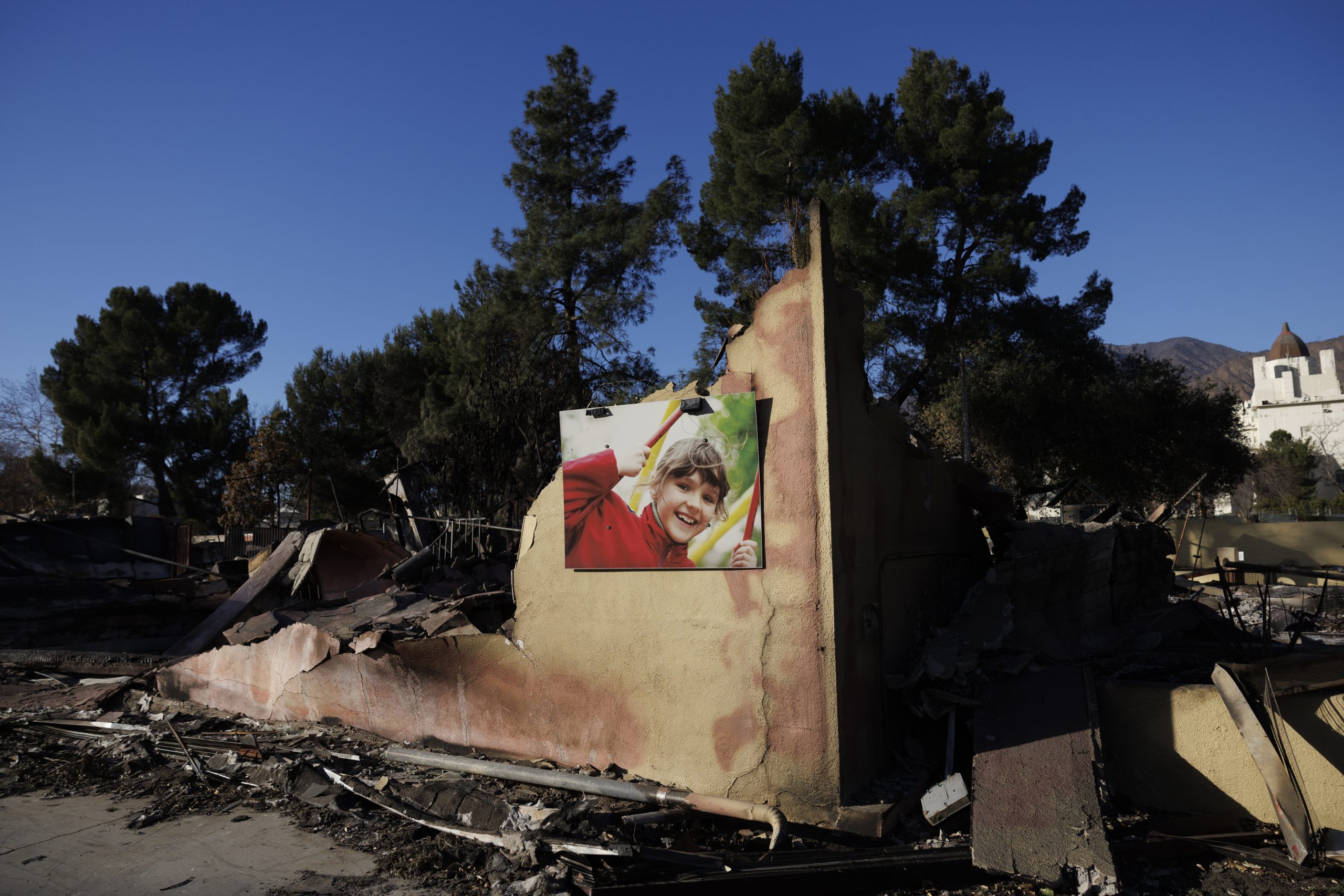
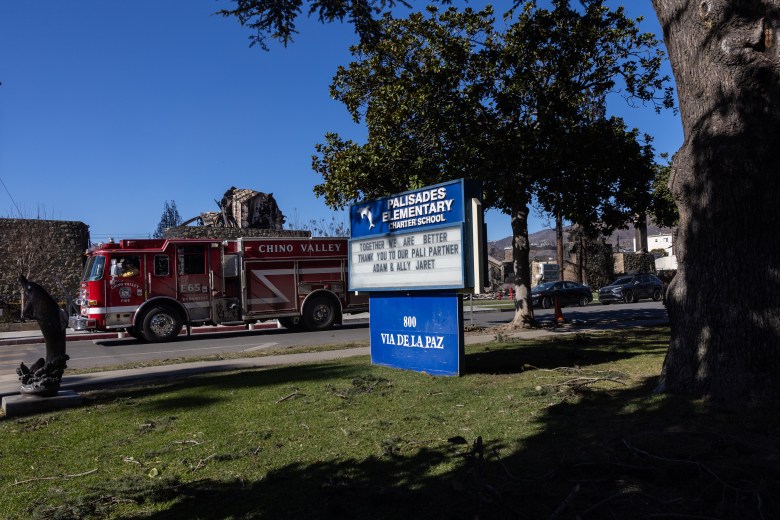
    The fire devastated Palisades Charter High School, where Essakhar’s son was a ninth grader, as well as two elementary schools in the Los Angeles Unified School District. The Eaton Fire, which broke out around the same time in early January, severely damaged or destroyed six school facilities in Pasadena Unified School District. Together, the fires disrupted learning for more than 725,000 kids and displaced thousands of students from their schools, their homes or both.

    For Essakhar, a potential solution came by way of an executive order California Gov. Gavin Newsom signed Jan. 14. For students in Los Angeles County schools affected by the fires, the order paused, through the remainder of the school year, the requirement that a student live within their school district’s boundaries. That meant she could enroll her son at nearby Beverly Hills High School, where another parent she shared carpool duties with was also enrolling her child. She quickly completed the necessary paperwork.

    But roughly a week later, Beverly Hills Unified School District abruptly stopped accepting students displaced by the fires, closing the door on Essakhar’s son and dozens of other students who expected to spend the semester at Beverly Hills High.

    “As a mom, you try to do your best for your child, but it got so unpleasant,” Essakhar said. Beverly Hills school leadership said it could not afford to accept additional students, nor did it need to: Students who lost their school but whose homes were still intact did not need their help.

    Related: Become a lifelong learner. Subscribe to our free weekly newsletter featuring the most important stories in education.

    The dispute between Beverly Hills Unified School District and some Palisades parents raises questions that school districts across the U.S. increasingly must grapple with as wildfires and other extreme weather events become more common because of climate change: What does a school district owe its neighbors after a major disaster?

    For Beverly Hills Unified, the answer was admitting 47 students before pausing enrollment over concerns that a surge of newcomers midyear would siphon resources from the district’s 3,000-plus existing students.

    “You’ve got a community where a lot of those folks lost their homes, and half lost their school but their homes weren’t impacted,” said Los Angeles Unified School District board member Nick Melvoin, whose district includes Palisades Charter High School. Like Beverly Hills, its students are predominantly from affluent backgrounds.

    Newsom’s order was an attempt at a fix: It urged districts to “extend every effort to support and facilitate the enrollment of students displaced by the fires.” Lori Peek, director of the Natural Hazards Center at the University of Colorado, Boulder, which focuses on the societal effects of disasters, said it “provided the necessary flexibility that disaster survivors really need, because their circumstances are so diverse.”

    In Beverly Hills, school board members resisted the order. Beverly Hills is one of the few “basic aid” districts in the state, meaning it collects more in local property tax revenue than an annual funding target set by the state, which is based on average daily attendance and other factors. Most districts fall short of the target, and the state makes up the difference.

     The January fires in Southern California disrupted learning for more than 725,000 students. Credit: Jason Armond / Los Angeles Times via Getty Images

    At a series of meetings in January and February, Beverly Hills school board members argued that the district couldn’t absorb additional students without harming those already enrolled. While other school districts see increased funding from increased attendance, that’s not true for basic aid districts like Beverly Hills.

    Board members also questioned whether students who lost their schools, but not their homes, such as Essakhar’s son, should be considered affected by the fire and able to enroll. Board members told district administration that they believed only students whose homes were destroyed should qualify.

    Not so, said Melissa Schoonmaker with the Los Angeles County Office of Education, which provided guidance to the county’s school districts on implementing the order. “It’s not that they had to lose their home or be evacuated, it could be a broad range of impacts,” she said.

    Eighty-seven families were left in limbo: They had completed all of their pre-enrollment steps and were just awaiting class assignments, Assistant Superintendent Laura Collins-Williams told the board on Feb. 3. Dozens more were interested in enrolling.

    Related: 109 degrees on the first day of school? In some districts, extreme heat is delaying when students go back

    Board members supported making this pause permanent.

    “Going forward we are closed to any enrollment that comes right now as a result of a student going to Pali who has not been displaced from their home but would like to come to Beverly Hills because they don’t want to go on Zoom,” board President Rachelle Marcus said at the meeting, referring to Palisades Charter.

    Essakhar, who lives in Brentwood, a Los Angeles neighborhood roughly halfway between Beverly Hills and the Pacific Palisades, called the entire process traumatic.

    She gave up on finding an in-person school option for her son, settling instead for Zoom through Palisades Charter. “Honestly, I didn’t want to go through the experience again,” she said. Plus, most of his friends who left Palisades Charter had enrolled at Beverly High. “Being with your group of friends is different than sending my kid alone to some other school to transition in the middle of the year after the fires on his own,” said Essakhar. 

    Another Palisades Charter parent, Negeen Ben-Cohen, was initially optimistic that the school would quickly secure a temporary campus. But as the weeks went by, she started considering other options for her ninth grader.

    “It was mostly about keeping my son in a healthy social environment, and not isolated at home,” said Ben-Cohen. “Covid already showed that with the amount of learning loss and how much kids fell behind during Zoom.”

    Like Essakhar, Ben-Cohen filled out all the necessary paperwork to enroll her son and was told she would hear soon about his class placements. Then enrollment was paused.

    “They shut the door in our faces. And that was after the kids got their hopes up, they think that they’re going to be able to go in-person, they think they’re going to be able to start with their friends,” said Ben-Cohen. 

    Related: Want to learn more about how climate change is affecting education? Sign up for our newsletter.

    At board meetings, parents and students expressed similar outrage.

    “Beverly had the opportunity to extend a hand when we needed it the most but instead they turned around and slammed the door in our faces,” said Kylie Abdi, a senior at Palisades Charter, at a Feb. 11 meeting.

    “We do not even want to get an education in a school that kicks others while they are down, you have lost the opportunity to teach your students how to be there for each other,” said another Palisades student, junior Rosha Sinai, calling the board “selfish.”

    Jason Hasty, the interim superintendent of Beverly Hills Unified School District, said in an interview that enrolling any more than 47 students would have strained the district’s resources and required hiring more teachers — although he acknowledged that his district is better funded than most.

    “We get more money than the state formula because of the way we’re funded. That is a fact. Also what is a fact is on July 1 of every year, we set a budget … based on the students we are projecting to have,” Hasty said.

    State Sen. Ben Allen, who represents both the Pacific Palisades and Beverly Hills areas, said that Beverly Hills would be compensated for taking in displaced students, although the details are still being worked out. 

    “We’re going to have their backs and that they’re going to be fully compensated for any students that they take in,” he said.

    Hasty said the district has been “in direct discussion” with Allen’s office, but “until we are sure that those funds are materializing and will be provided,” the pause on enrollment under the executive order (which expires at the end of the school year) remains in place. The district continues to enroll students who move to Beverly Hills or who are eligible under the McKinney-Vento Act, said Hasty. That legislation provides protections for students who are homeless, which is defined as “individuals who lack a fixed, regular, and adequate, nighttime residence.”

    Related: Universal prekindergarten is coming to California — bumpy rollout and all

    Nearby Santa Monica-Malibu Unified School District is also a basic aid district, but it interpreted the order “to mean that any student who wants to come here can come here right now,” said Gail Pinsker, the district’s chief communications officer. So far, the district has enrolled more than 140 students, with about 200 enrollment requests still being processed. The influx of students prompted the district to combine some elementary classes and hire a new high school teacher, Pinsker said.

    Three months after Palisades Charter High School burned, students remain on Zoom. The school just finalized plans to use an old department store building in downtown Santa Monica about 20 minutes southeast of the high school as its temporary campus. In-person instruction should resume sometime after the school’s spring break in mid-April, according to Palisades Charter High School.

     Palisades Elementary Charter School, which was devastated by the wildfires in January. Credit: Jason Armond / Los Angeles Times via Getty Images

    Allen, the state senator, said the episode shows the need for a policy for compensating basic aid districts that take in displaced students to make the process smoother after future disasters.

    Also helpful would be a website listing districts accepting affected students, said Peek, the University of Colorado researcher.

    Lessons from the Los Angeles fires could inform policymaking elsewhere, she added. “They’re going to need it sooner rather than later, as other disasters continue to unfold across the country.”

    Contact editor Caroline Preston at 212-870-8965, on Signal at CarolineP.83 or via email at [email protected].

    This story about the Los Angeles fires was produced by The Hechinger Report, a nonprofit, independent news organization focused on inequality and innovation in education. Sign up for the Hechinger newsletter.

    The Hechinger Report provides in-depth, fact-based, unbiased reporting on education that is free to all readers. But that doesn’t mean it’s free to produce. Our work keeps educators and the public informed about pressing issues at schools and on campuses throughout the country. We tell the whole story, even when the details are inconvenient. Help us keep doing that.

    Join us today.


    Source link