Tag: shuttered

  • Advocates warn of risks to higher ed data if Education Department is shuttered

    Advocates warn of risks to higher ed data if Education Department is shuttered

    by Jill Barshay, The Hechinger Report
    November 10, 2025

    Even with the government shut down, lots of people are thinking about how to reimagine federal education research. Public comments on how to reform the Institute of Education Sciences (IES), the Education Department’s research and statistics arm, were due on Oct. 15. A total of 434 suggestions were submitted, but no one can read them because the department isn’t allowed to post them publicly until the government reopens. (We know the number because the comment entry page has an automatic counter.)

    A complex numbers game 

    There’s broad agreement across the political spectrum that federal education statistics are essential. Even many critics of the Department of Education want its data collection efforts to survive — just somewhere else. Some have suggested moving the National Center for Education Statistics (NCES) to another agency, such as the Commerce Department, where the U.S. Census Bureau is housed.

    But Diane Cheng, vice president of policy at the Institute for Higher Education Policy, a nonprofit organization that advocates for increasing college access and improving graduation rates, warns that shifting NCES risks the quality and usefulness of higher education data. Any move would have to be done carefully, planning for future interagency coordination, she said.

    “Many of the federal data collections combine data from different sources within ED,” Cheng said, referring to the Education Department. “It has worked well to have everyone within the same agency.”

    Related: Our free weekly newsletter alerts you to what research says about schools and classrooms.

    She points to the College Scorecard, the website that lets families compare colleges by cost, student loan debt, graduation rates, and post-college earnings. It merges several data sources, including the Integrated Postsecondary Education Data System (IPEDS), run by NCES, and the National Student Loan Data System, housed in the Office of Federal Student Aid. Several other higher ed data collections on student aid and students’ pathways through college also merge data collected at the statistical unit with student aid figures. Splitting those across different agencies could make such collaboration far more difficult.

    “If those data are split across multiple federal agencies,” Cheng said, “there would likely be more bureaucratic hurdles required to combine the data.”

    Information sharing across federal agencies is notoriously cumbersome, the very problem that led to the creation of the Department of Homeland Security after 9/11.

    Hiring and $4.5 million in fresh research grants

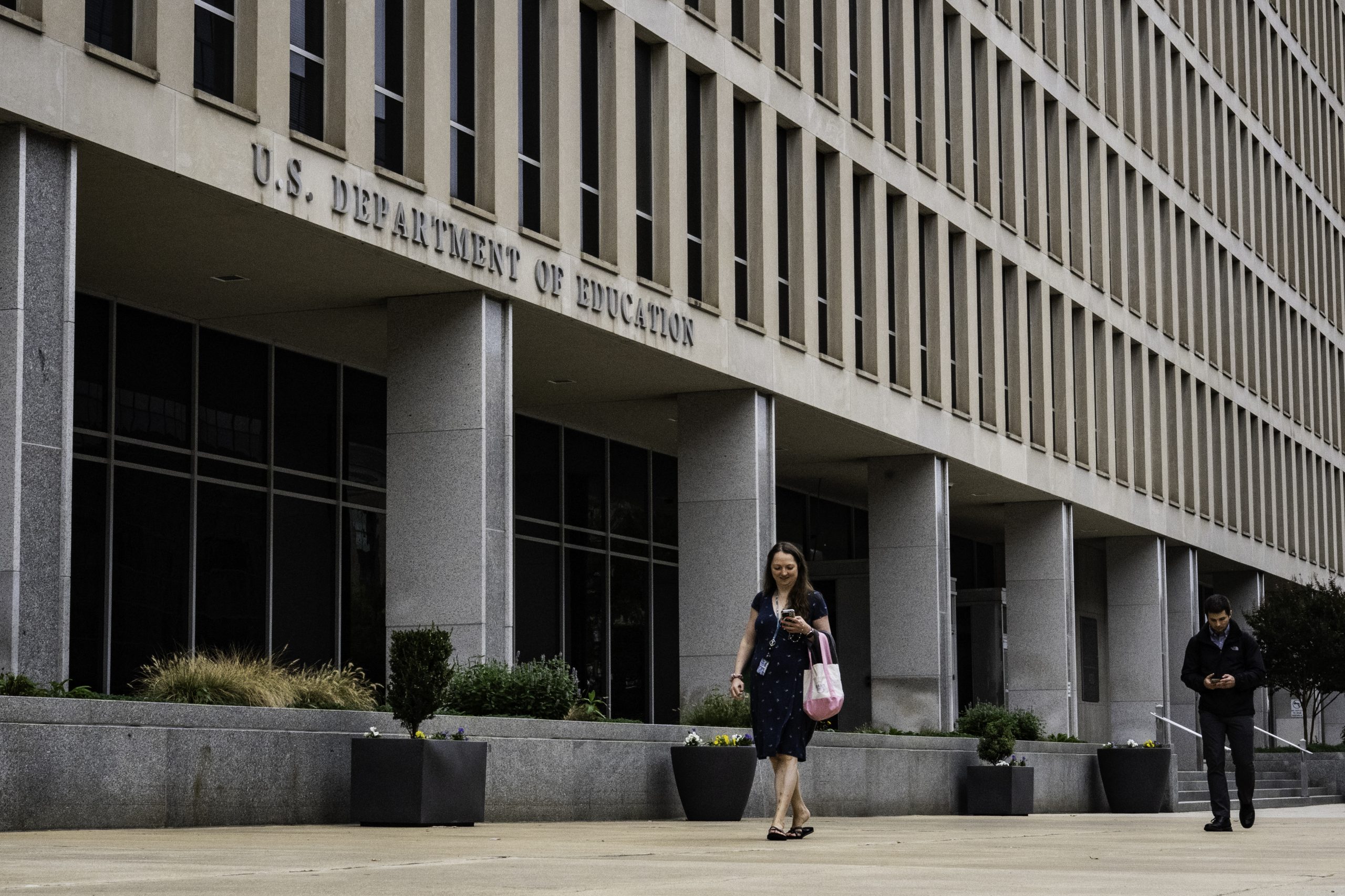
    Even as the Trump administration publicly insists it intends to shutter the Department of Education, it is quietly rebuilding small parts of it behind the scenes.

    In September, the department posted eight new jobs to replace fired staff who oversaw the National Assessment of Educational Progress (NAEP), the biennial test of American students’ achievement. In November, it advertised four more openings for statisticians inside the Federal Student Aid Office. Still, nothing is expected to be quick or smooth. The government shutdown stalled hiring for the NAEP jobs, and now a new Trump administration directive to form hiring committees by Nov. 17 to approve and fill open positions may further delay these hires.

    At the same time, the demolition continues. Less than two weeks after the Oct. 1 government shutdown, 466 additional Education Department employees were terminated — on top of the roughly 2,000 lost since March 2025 through firings and voluntary departures. (The department employed about 4,000 at the start of the Trump administration.) A federal judge temporarily blocked these latest layoffs on Oct. 15.

    Related: Education Department takes a preliminary step toward revamping its research and statistics arm

    There are also other small new signs of life. On Sept. 30 — just before the shutdown — the department quietly awarded nine new research and development grants totaling $4.5 million. The grants, listed on the department’s website, are part of a new initiative called, “From Seedlings to Scale Grants Program” (S2S), launched by the Biden administration in August 2024 to test whether the Defense Department’s DARPA-style innovation model could work in education. DARPA, the Defense Advanced Research Projects Agency, invests in new technologies for national security. Its most celebrated project became the basis for the internet. 

    Each new project, mostly focused on AI-driven personalized learning, received $500,000 to produce early evidence of effectiveness. Recipients include universities, research organizations and ed tech firms. Projects that show promise could be eligible for future funding to scale up with more students.

    According to a person familiar with the program who spoke on background, the nine projects had been selected before President Donald Trump took office, but the formal awards were delayed amid the department’s upheaval. The Institute of Education Sciences — which lost roughly 90 percent of its staff — was one of the hardest hit divisions.

    Granted, $4.5 million is a rounding error compared with IES’s official annual budget of $800 million. Still, these are believed to be the first new federal education research grants of the Trump era and a faint signal that Washington may not be abandoning education innovation altogether.

    Contact staff writer Jill Barshay at 212-678-3595, jillbarshay.35 on Signal, or [email protected].

    This story about risks to federal education data was produced by The Hechinger Report, a nonprofit, independent news organization focused on inequality and innovation in education. Sign up for Proof Points and other Hechinger newsletters.

    This <a target=”_blank” href=”https://hechingerreport.org/proof-points-risks-higher-ed-data/”>article</a> first appeared on <a target=”_blank” href=”https://hechingerreport.org”>The Hechinger Report</a> and is republished here under a <a target=”_blank” href=”https://creativecommons.org/licenses/by-nc-nd/4.0/”>Creative Commons Attribution-NonCommercial-NoDerivatives 4.0 International License</a>.<img src=”https://i0.wp.com/hechingerreport.org/wp-content/uploads/2018/06/cropped-favicon.jpg?fit=150%2C150&amp;ssl=1″ style=”width:1em;height:1em;margin-left:10px;”>

    <img id=”republication-tracker-tool-source” src=”https://hechingerreport.org/?republication-pixel=true&post=113283&amp;ga4=G-03KPHXDF3H” style=”width:1px;height:1px;”><script> PARSELY = { autotrack: false, onload: function() { PARSELY.beacon.trackPageView({ url: “https://hechingerreport.org/proof-points-risks-higher-ed-data/”, urlref: window.location.href }); } } </script> <script id=”parsely-cfg” src=”//cdn.parsely.com/keys/hechingerreport.org/p.js”></script>

    Source link

  • A shuttered government was not the lesson I hoped my Texas students would learn on a trip to Washington D.C

    A shuttered government was not the lesson I hoped my Texas students would learn on a trip to Washington D.C

    After decades serving in the Marine Corps and in education, I know firsthand that servant leadership and diplomacy can and should be taught. That’s why I hoped to bring 32 high school seniors from Texas to Washington, D.C., this fall for a week of engagement and learning with top U.S. government and international leaders.  

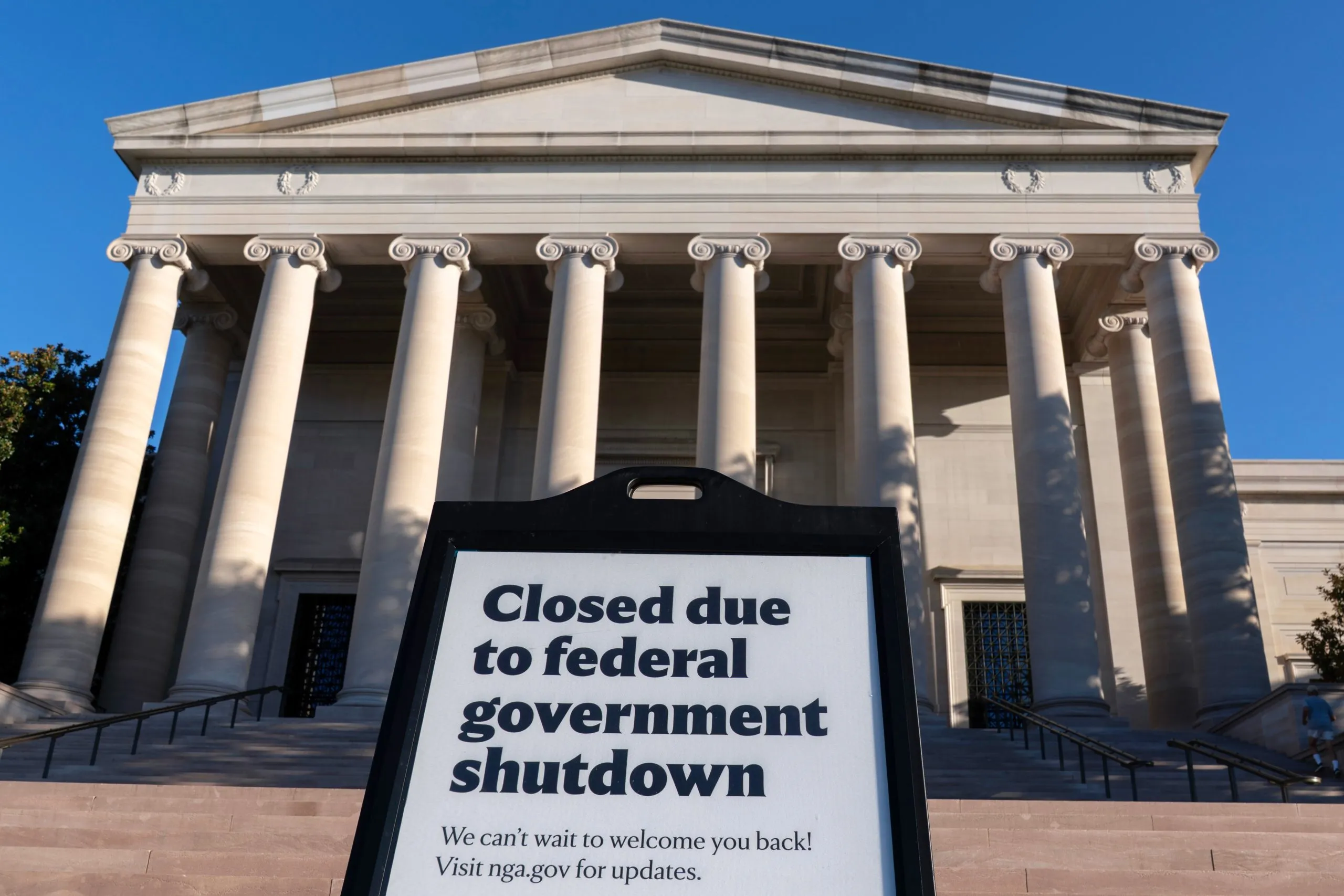
    Instead of open doors, we faced a government shutdown and had to cancel our trip. 

    The shutdown impacts government employees, members of the military and their families who are serving overseas and all Americans who depend on government being open to serve us — in businesses, schools and national parks, and through air travel and the postal service.  

    Our trip was not going to be a typical rushed tour of monuments, but a highly selective, long-anticipated capstone experience. Our plans included intensive interaction with government leaders at the Naval Academy and the Pentagon, discussions at the State Department and a leadership panel with senators and congressmembers. Our students hoped to explore potential careers and even practice their Spanish and Mandarin skills at the Mexican and Chinese embassies.  

    The students not only missed out on the opportunity to connect with these leaders and make important connections for college and career, they learned what happens when leadership and diplomacy fail — a harsh reminder that we need to teach these skills, and the principles that support them, in our schools. 

    Related: A lot goes on in classrooms from kindergarten to high school. Keep up with our free weekly newsletter on K-12 education.  

    Senior members of the military know that the DIME framework — diplomatic, informational, military and economic — should guide and support strategic objectives, particularly on the international stage. My own time in the Corps taught me the essential role of honesty and trust in conversations, negotiations and diplomacy. In civic life, this approach preserves democracy, yet the government shutdown demonstrates what happens when the mission shifts from solving problems to scoring points.  

    Our elected leaders were tasked with a mission, and the continued shutdown shows a breakdown in key aspects of governance and public service. That’s the real teachable moment of this shutdown. Democracy works when leaders can disagree without disengaging; when they can argue, compromise and keep doors open. If our future leaders can’t practice those skills, shutdowns will become less an exception and more a way of governing. 

    Students from ILTexas, a charter network serving over 26,000 students across the state, got a lesson in failed diplomacy after the government shutdown forced cancellation of their long-planned trip to the nation’s capital. Credit: Courtesy International Leadership of Texas Charter Schools

    With opposing points of view, communication is essential. Bridging language is invaluable. As the adage goes, talk to a man in a language he understands, that goes to his head. Speak in his own language, that goes to his heart. That is why, starting in kindergarten, we teach every student in our charter school network English, Spanish and Mandarin Chinese.  

    Some of our graduates will become teachers, lawyers, doctors and entrepreneurs. Others will pursue careers in public service or navigate our democracy on the international stage. All will enter a world more fractured than the one I stepped into as a Marine. 

    While our leaders struggle to find common ground, studies show that nationally, only 22 percent of eighth graders are proficient in civics, and fewer than 20 percent of American students study a foreign language. My students are exceptions, preparing to lead in three languages and through servant leadership, a philosophy that turns a position of power into a daily practice of responsibility and care for others.  

    Related: COLUMN: Students want more civics education, but far too few schools teach it 

    While my students represent our ILTexas schools, they also know they are carrying something larger: the hopes of their families, communities and even their teenage peers across the country. Some hope to utilize their multilingual skills, motivated by a desire to help the international community. Others want to be a part of the next generation of diplomats and policy thinkers who are ready to face modern challenges head-on.  

    To help them, we build good habits into the school day. Silent hallways instill respect for others. Language instruction builds empathy and an international perspective. Community service requirements (60 hours per high school student) and projects, as well as dedicated leadership courses and optional participation in our Marine Corps JROTC program give students regular chances to practice purpose over privilege. 

    Educators should prepare young people for the challenges they will inherit, whether in Washington, in our communities or on the world stage. But schools can’t carry this responsibility alone. Students are watching all of us. It’s our duty to show them a better way. 

    We owe our young people more than simply a good education. We owe them a society in which they can see these civic lessons modeled by their elected leaders, and a path to put them into practice.  

    Eddie Conger is the founder and superintendent of International Leadership of Texas, a public charter school network serving more than 26,000 students across the state, and a retired U.S. Marine Corps major. 

    Contact the opinion editor at [email protected].  

    This story about the government shutdown and students was produced by The Hechinger Report, a nonprofit, independent news organization focused on inequality and innovation in education. Sign up for Hechinger’s weekly newsletter.  

    The Hechinger Report provides in-depth, fact-based, unbiased reporting on education that is free to all readers. But that doesn’t mean it’s free to produce. Our work keeps educators and the public informed about pressing issues at schools and on campuses throughout the country. We tell the whole story, even when the details are inconvenient. Help us keep doing that.

    Join us today.

    Source link