Tag: Side

  • Side hustles, moonlighting, resting actors, and multiple jobholding in creative work

    Side hustles, moonlighting, resting actors, and multiple jobholding in creative work

    How do creatives sustain their careers?

    We used large UK datasets to map how careers work in creative occupations, showing how having a second job is twice as prevalent in key creative jobs than occupations; mixing creative and non-creative jobs is normal, especially outside London; and having a non-creative main job and a creative “side hustle” rarely leads to a single full-time creative job.

    Having multiple jobs isn’t a stepping-stone into full-time creative work. It is how creatives sustain their careers.

    Who has two jobs?

    We used the UK Labour Force Survey (2015–2021) to look at occupational and social patterns, and Understanding Society (2011–2019) for longitudinal transitions. We used the DCMS definition of creative occupations, rather than industries (so graphic designers working in retail are in, accountants working in theatres are out). We also developed a typology of multiple jobholding: portfolio (both jobs creative); main creative (creative main job plus a non-creative second job); side creative (non-creative main job plus a creative second job).

    We found that having a second job is almost twice as common for core creative workers, (arts/culture production such as music, performance, visual arts, publishing, museums/libraries, film/TV/photo) compared to the rest of the workforce (6.8 per cent, against 3.5 per cent) but less common (3.2 per cent) for non-core creative jobs (advertising, architecture, crafts, design, IT). Some roles are extreme outliers, with relatively high proportions of actors (14 per cent) and musicians (12.8 per cent) having second jobs.

    These proportions are higher than the general workforce, but they are also lower than popular discourse might suggest. This might be explained by how the data is collected (both jobs need to have been worked at during the same, specified, week). Even with this note of caution, the demographic patterns of multiple jobholding, and changes over time, give important insights into creative careers.

    The type of second job held by people whose first job is creative is important. For those with second jobs, 38 per cent of those jobs are in other core creative occupations- true “portfolio” work. A further 27.5 per cent of those jobs are professional but non-creative roles, especially teaching and corporate training. And 25.5 per cent are non-creative, non-professional roles, for example retail, hospitality and admin roles.

    Even more notable was the size of the core creative workforce whose creative occupation was a second job: there are far more people with a non-creative first job and core creative second job (about 113,000 per year) than there are core creatives with a second job (about 54,000 per year). In other words, where people have two jobs, creative work is more often the add-on rather than the main job.

    What other characteristics have an impact?

    Our analysis compared multiple jobholders to creatives with a single job, and found that combining creative and non-creative work is significantly more likely outside London. Outside the capital, sustaining a purely creative main job looks harder, and mixing jobs is more common.

    Portfolio workers are more likely to be graduates and to come from non-middle class backgrounds than are single-job creatives. Side creatives are much more likely to be employees (rather than self-employed) in their main job, suggesting that it is more about balancing income volatility than it is about enjoying the freedom of self-employment. However, main creatives are less likely to be employees—reflecting the prevalence of self-employment in core creative roles. And side creatives are more likely to be men.

    Part-time work signals both constraint and choice: creatives in multiple jobs are more likely to work part-time because they couldn’t find full-time work—but also more likely to say they didn’t want full-time, suggesting both labour market scarcity and preferences are in play.

    Covid changed things, but did not totally overturn these patterns. In 2021 the share of workers making their living only from creative jobs fell, while main and side creative patterns increased—consistent with pandemic disruption pushing creatives to diversify.

    Does a creative side-job turn into a creative main job?

    After one year, portfolio and main creatives are somewhat more likely to move to a single creative job (45 per cent and 39 per cent, respectively) than to remain in their dual-job pattern (31 per cent and 36 per cent). Side creatives mostly remain side creatives – they rarely report a single creative job after a year. After three years, the pattern hardens: side creatives are still the least likely to have moved into a single creative job. Dual-jobholding looks like a strategy for persisting with a creative career rather than transitioning fully to a single creative job.

    Policymakers should understand that dual jobholding is an endemic and long-lasting feature of creative work. It needs to be incorporated into “good work” policies, rather than removed completely from the creative economy. It can be an important counterbalance to income volatility associated with creative projects.

    This research also has implications for one of the common measures of success for graduates, which specifies a good, skilled, full-time job. Creative occupations are counted as skilled, but the LFS analysis shows how difficult it is to find full time creative work, and that creative work is highly likely to be hidden behind primary employment in a less-skilled occupation. This means that in various places, including regulatory outcomes and league tables, there is a likelihood of positive outcomes for creative graduates being under-reported.

    At the same time, policy must address the inequalities associated with creatives and second jobs. For example, the chances of making a living solely from creative work outside London are substantially lower, and London-centric career pathways are unrealistic for many during a cost-of-living crisis.

    For many creatives, multiple jobholding isn’t a stepping stone on the way to a single steady role, it’s their actual career. It should not be understood as a failure to “achieve” a single creative job. It is a pragmatic but unequal employment pattern, which needs to be accounted for in industrial strategies.


    Source link

  • Neurodiverse leadership is a quality issue for universities, not a side project 

    Neurodiverse leadership is a quality issue for universities, not a side project 

    Author:
    Imran Mir

    Published:

    This guest blog was kindly authored by Imran Mir, Campus Head and Programme Lead, Apex College Leicester 

    Leadership in higher education is often measured by indicators such as retention rates, research outputs and league table positions. These are important, but leadership is far deeper than numbers. Growing up with autism and then becoming a leader in higher education has shaped how I approach leadership. Being neurodiverse means I see situations differently, notice patterns others may miss, and feel deep empathy with students and colleagues who are often invisible in our systems. 
     
    This is why neurodiverse leadership must be treated as a quality issue. Universities are rightly talking more about inclusive curriculum design and student support, but these conversations rarely extend to who sits at the decision-making table. Representation in leadership is not about tokenism. It is about ensuring the sector benefits from different ways of thinking, which is vital for quality, resilience and innovation.

    Why neurodiverse leadership matters

    According to the University of Edinburgh 2024, in the UK, one in seven people are neurodiverse. Advance HE 2024 report shows leadership teams in higher education remain overwhelmingly homogenous. This lack of representation is not just an issue of fairness, it is also a missed opportunity for innovation. Research by Deloitte 2017 shows that neurodiverse teams can be up to 30 per cent more productive in tasks requiring creativity and pattern recognition. Universities are currently facing challenges in relation to funding and digital disruption, and they will need this kind of productivity and resilience more than ever. 
     
    Further, Made By Dyslexia 2023 claims that one in five people are dyslexic, many of whom bring excellent problem-solving and communication skills. These strengths align with what is expected in leadership roles, where complex challenges and clear communication are requirements. Yet recruitment and promotion processes can often filter out people who think or communicate differently. 
     
    Austin & Pisano, 2017 adds that neurodiverse leaders frequently demonstrate empathy and adaptability. These qualities are imperative in higher education as institutions are trying their best to meet diverse student needs, respond to rapid change and rebuild trust in their systems. Without neurodiverse leadership, universities risk reinforcing the very barriers which they are trying to eradicate. 

    Lessons for higher education leaders

    From my own experience, I have learned three lessons that apply directly to leadership in higher education. 
     
    The first lesson is the power of clarity. Neurodiverse staff and students excel when expectations are clear. As a leader, I have seen first-hand that communicating with clarity in strategy documents, policies and day-to-day interactions builds trust in the academic institution. Research on organisational effectiveness suggests that clear communication consistently improves outcomes across diverse teams  
     
    The second lesson is valuing flexibility. Traditional recruitment, professional development and promotion systems seem to reward conformity. This is a missed opportunity because neurodiverse teams will bring innovation and productivity benefits. Strong leaders can change this by adopting flexible approaches such as task-based interviews, blended assessments that combine written, oral and practical elements, and CPD which takes into consideration various communication styles. 

    The third lesson is role modelling openness. For years I believed that revealing my autism would be seen as a weakness. In reality, sharing my story has made me a stronger leader. It has encouraged colleagues to be open about their own experiences and helped students feel less isolated. Austin & Pisano 2017 show that when leaders model vulnerability and authenticity, it strengthens organisational culture and increases trust across teams. 

    A quality issue, not a side project

    These lessons outline why neurodiverse leadership should not be viewed as a side project. Quality frameworks such as the Office for Students’ conditions and the QAA Quality Code are built on assumptions of fairness, reliability and inclusivity. If leadership itself is not inclusive, then the credibility of these frameworks is undermined. If the voices of the one-in-seven neurodiverse people are not present in leadership, then universities are failing to reflect the diversity of the communities they are trying to serve.  
     
    Neurodiverse leadership will strengthen governance, enhances decision-making and ensures policies reflect the diversity of the student body. It is a direct contributor to educational quality, not an optional extra.

    Conclusion

    As someone working in higher education, I know these lessons are transferable across the sector. But they feel especially urgent now, as universities face funding pressures, digital disruption and growing student expectations. In such times, leaders who think differently are not optional. They are essential. 
     
    Neurodiverse leadership is not about meeting quotas. It is about strengthening quality. The sector cannot afford to waste talent or exclude perspectives that could help it adapt and thrive. If universities want to remain resilient, they must recognise that diversity of thought at the leadership table is just as important as diversity in the classroom. At its heart, this is about shaping the future of higher education in a way that is inclusive, innovative and sustainable. 

    Source link

  • Building a Course from Scratch: When Time is Not on Your Side – Faculty Focus

    Building a Course from Scratch: When Time is Not on Your Side – Faculty Focus

    Source link

  • Building a Course from Scratch: When Time is Not on Your Side – Faculty Focus

    Building a Course from Scratch: When Time is Not on Your Side – Faculty Focus

    Source link

  • ALP 2024: Higher Ed Challenges, HR Opportunities, and a Side of Kansas City BBQ – CUPA-HR

    ALP 2024: Higher Ed Challenges, HR Opportunities, and a Side of Kansas City BBQ – CUPA-HR

    by CUPA-HR | July 31, 2024

    The road home may have been a bit bumpy (thanks, CrowdStrike), but the two days CUPA-HR leaders spent in Kansas City at the annual Association Leadership Program (ALP) were packed with opportunities to smooth the way for higher ed HR in the year ahead.

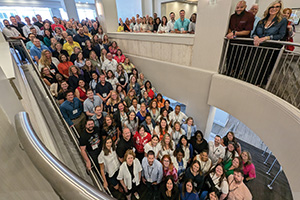
    On July 18-19, leaders from CUPA-HR’s national, region and chapter boards; cohorts from the Ignite and Emerging CUPA-HR Leaders programs; team members from the CUPA-HR national office; and key corporate partners gathered to discuss higher ed HR challenges, share successes, learn from one another, and build relationships. Here are some of the takeaways from this year’s event:

    • To be relevant and effective, higher education HR leaders must partner with their presidents and other campus leaders to connect their work to the institution’s mission and priorities and to understand current and emerging challenges for higher education.
    • CUPA-HR chapters are knocking it out of the park when it comes to creating information-packed programs to support higher ed HR professionals at the local level.
    • The key to creating and sustaining inclusive campus communities is to focus on processes, policies, and learning opportunities that mitigate bias and promote belonging and civil discourse for all. CUPA-HR resources are available to support this work!
    • Gender gaps in leadership positions persist. To expand the pipeline for leadership positions to include more women, start by reviewing promotion processes and criteria to mitigate bias and by training decision makers to recognize bias.
    • CUPA-HR higher ed workforce data is second to none, and the Research Center is an excellent source of high-level data to support workforce planning.
    • To promote civility and build authentic relationships in the workplace, speaker Alonzo Kelly emphasized the importance of:
      • Entering conversations with humility
      • Keeping in mind that your information may not be wrong, but may be incomplete
      • Being direct and kind
    • “A mistake repeated is a decision.”
    • CUPA-HR leaders lead because they are drawn to service, they are lifelong learners, and they value the friendships they’ve formed and the support they receive from the CUPA-HR community.
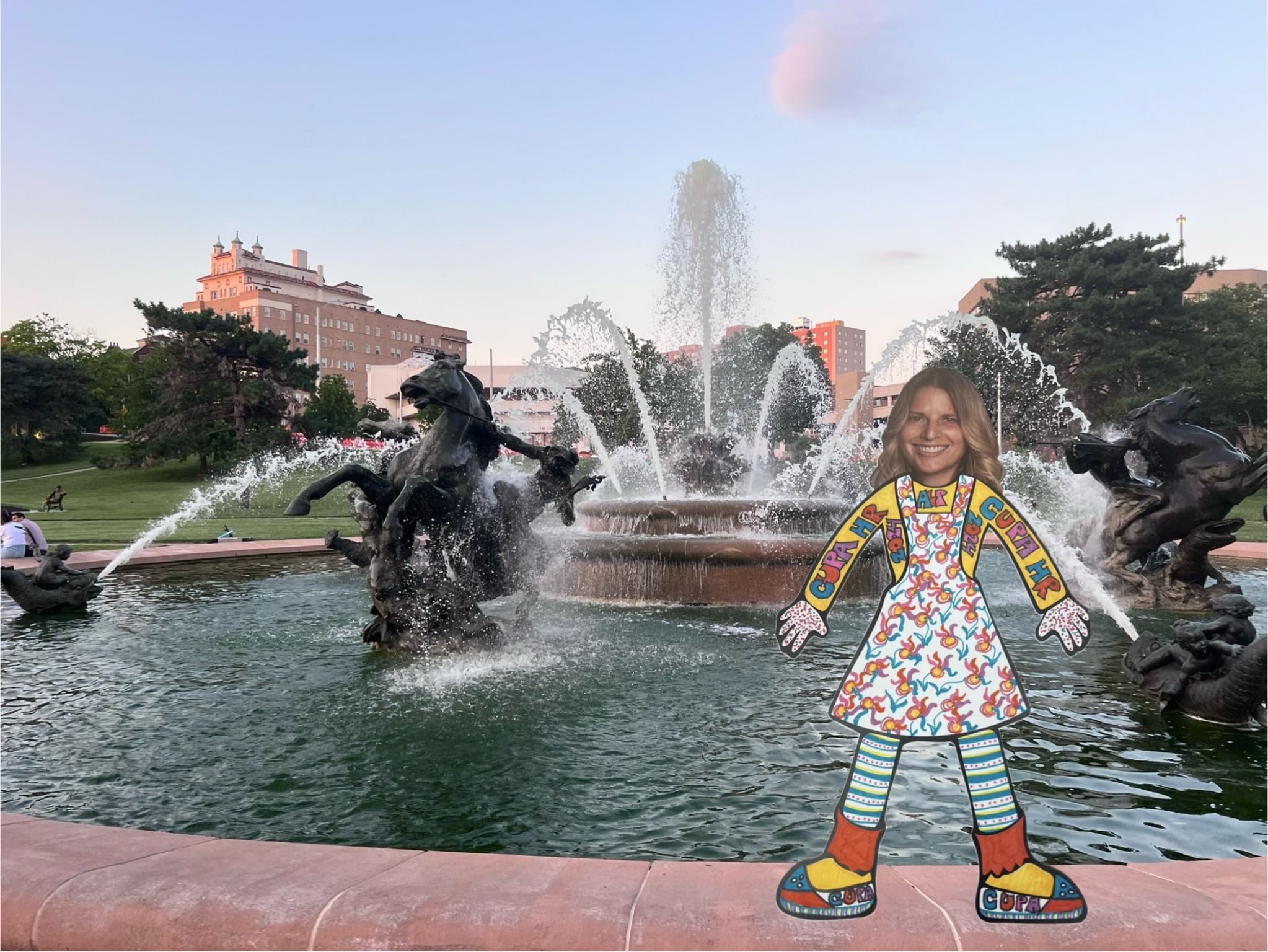
    • Roamin' Robyn paper doll standing by a fountain in a Kansas City ParkYou can take CUPA-HR with you wherever you go — especially if you have a Roamin’ Robyn to keep you company. Think “Flat Stanley,” but featuring CUPA-HR’s board chair, Robyn Salvo! (Thanks to Joanne Santarelli for the awesome photo!)

    Interested in Taking Your Professional Development Further?

    CUPA-HR’s volunteer leaders have committed to advancing the profession and the mission of CUPA-HR. They understand the complexities of higher ed HR, and they want to enhance the knowledge and skills they need to lead their institutions into the future.

    Are you ready to take that next step in developing your leadership skills, shaping the profession, and gaining one-of-a-kind access to successful practices and HR professionals from across the country? Then CUPA-HR leadership — in a chapter, at the region level, or even on the national board of directors — might be right for you. Learn more about how you can get involved.


    Source link