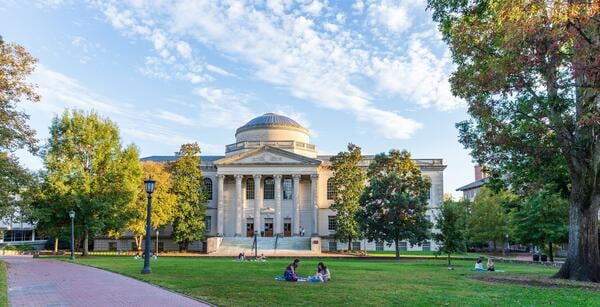
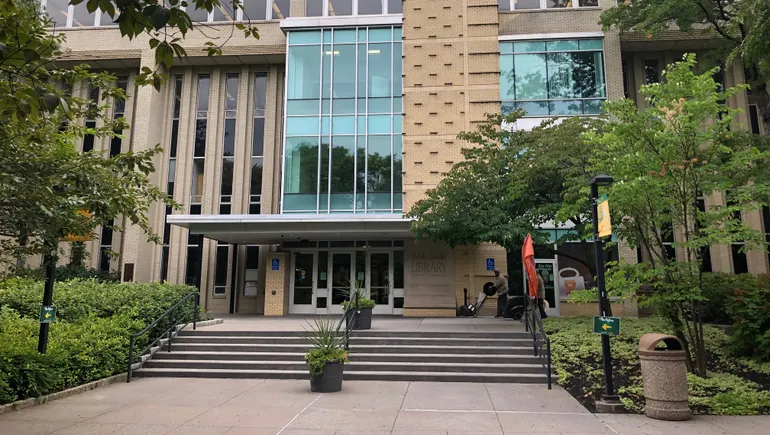
The University of North Carolina at Chapel Hill made clear Friday that it won’t sign the federal “Compact for Academic Excellence in Higher Education” that has been extended to all institutions after seven of the original nine universities invited rejected the offer, WRAL reported.
Last month the Trump administration floated a plan for preferential treatment on federal funding in exchange for universities overhauling admissions and hiring practices, freezing tuition for five years, capping international enrollment at 15 percent, and making various other concessions that many critics have warned will undermine academic freedom.
UNC Chapel Hill chancellor Lee Roberts said Friday that while the university has not received a formal invitation from the Trump administration, he is not interested in the arrangement.
“There are some parts of the compact that we are already doing and there are some parts that would be difficult or impossible,” Roberts said in a faculty council meeting, according to WRAL. “There’s no way we can sign the compact as written and we don’t plan to.”
Invitations to the compact were initially sent to Brown University, Dartmouth College, the Massachusetts Institute of Technology, the University of Arizona, the University of Pennsylvania, the University of Southern California, the University of Texas at Austin, the University of Virginia and Vanderbilt University. All but two declined—Vanderbilt said it would provide feedback and Texas has yet to offer a public response.
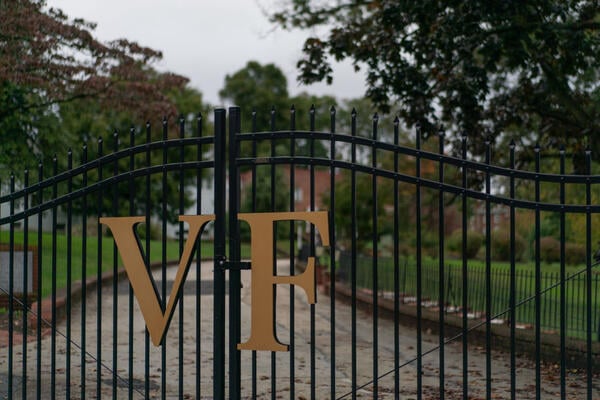
Multiple others also announced pre-emptive rejections after the initial invitation went out, including Emory University, Pennsylvania State University, Syracuse University and the University of Kansas. So far, only two institutions have announced intentions to sign the compact: New College of Florida and Valley Forge Military College in Pennsylvania.
President Donald Trump extended the invitation to all colleges after initial rejections from institutions that objected to provisions in the compact that would limit academic freedom.
The compact would require universities to suppress criticism of conservatives on campus, cap international enrollment at 15 percent, freeze tuition, overhaul admissions and hiring practices, and make various other changes in return for preferential treatment on federal research funding.
Now Valley Forge, a private two-year college in Pennsylvania, wants in on the compact.
“Participation in the Compact would provide valuable opportunities for collaboration, shared learning, and continuous improvement. We are particularly eager to contribute to discussions on leadership education, student resilience, and pathways from two-year programs to four-year institutions,” officials wrote to the Education Department. “These are areas in which Valley Forge has developed effective practices and measurable outcomes that could benefit peer institutions.”
Universities in the initial invitation were all research-focused, and the appeal from U.S. Education Secretary Linda McMahon emphasized the benefits of signing on, which would include “allowance for increased overhead payments where feasible, substantial and meaningful federal grants, and other federal partnerships.”
It is unclear how Valley Forge, which does not have a research focus, would benefit. The college is also much smaller than the first invitees, enrolling 86 students in fall 2023, according to federal data.
Valley Forge is now the third institution to publicly express interest in signing the compact since the invitation was expanded, following Grand Canyon University and New College of Florida.
This audio is auto-generated. Please let us know if you have feedback.
Dive Brief:
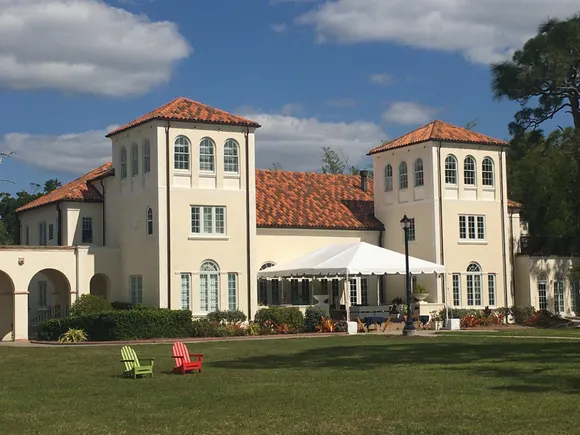
New College of Florida has publicly volunteered to be the first institution to adopt the Trump administration’s higher education compact.
The institution — which has undergone a right-wing transformation since 2023 at the direction of Republican Gov. Ron DeSantis — said in a news release Monday that it would “happily be the first” to formally embrace President Donald Trump’s vision for higher education.
Most universities directly offered the compact have rejected the sweeping proposal, which promises priority for federal grants in return for implementing far-reaching policies favored by the administration.
Dive Insight:
At the beginning of October, Trump administration officials outlined a potential deal that it first brought to nine major research universities.
In return for special consideration in research and other federal funding, the universities were asked to implement a wide-ranging slate of policies. Those included a five-year tuition freeze, a standardized test requirement for applicants, an institutional position of neutrality on political and social events, and a commitment to potentially dissolve units deemed anti-conservative.
Seven of the universities rejected the compact outright. Two others, Vanderbilt University and the University of Texas at Austin, have yet to formally accept or reject the deal. In October, Trump appeared to open the compact up to all colleges via a social post. At least three other institutions have declined the compact since.
Many of the rejecting institutions cited concerns about academic freedom and independence. But NCF said Monday that it has already implemented policies reflecting many of the principles in the compact. The college has nixed diversity, equity and inclusion efforts, dismantled its gender studies department, and eliminated “discrimination in admissions.”
Before 2023, NCF had a reputation as a LGBTQ+ friendly campus and one of the most progressive institutions in the state. But that year, DeSantis appointed a new slate of trustees at the liberal arts college, kicking off a turbulent transformation into a conservative model of public education.
The governor publicly advocated for a vision for NCF as a “Hillsdale of the South,” referring to Hillsdale College in Michigan, a conservative Christian institution.
The American Association of University Professors’ governing council voted unanimously in 2024 to sanction NCF over noncompliance with the faculty group’s standards for shared governance.
The AAUP called NCF’s changes an “unprecedented politically motivated takeover” citing findings from its 2023 report on political interference in higher ed in Florida. At NCF that included course changes, tenure decisions and faculty dismissals following DeSantis remaking of NCF’s board, according to the report.
“The board of trustees and administration thoroughly restructured the college’s academic offerings without meaningful faculty involvement and denied academic due process to multiple faculty members during their tenure applications and renewals,” the AAUP said in announcing the censure.
More recently, Republican state lawmakers and DeSantis have reportedly eyed an expansion of NCF, which could include diverting other public institutions’ resources to NCF’s control.
For its part, the college said Monday that it has reformed around principles such as merit and free thought.
“We have no affirmative action or DEI, and we have been building a campus where open dialogue and the marketplace of ideas are at the forefront of everything we do,” said NCF President Richard Corcoran, formerly the Republican speaker for the Florida House and the education commissioner under DeSantis.
Initially, the Trump administration offered the compact to research powerhouses that take on large numbers of federal contracts, such as the Massachusetts Institute of Technology, University of Southern California and UT-Austin.
The smaller NCF only reported $381,509 in federal grants in fiscal 2024.
This audio is auto-generated. Please let us know if you have feedback.
Dive Brief:
California Gov. Gavin Newsom on Thursday threatened to pull state funding from colleges that signed a proposed compact from the Trump administration seeking to impose sweeping policy changes in return for priority in research funding.
“If any California university signs this radical agreement, they’ll lose billions in state funding,” Newsom said in a statement. “California will not bankroll schools that sell out their students, professors, researchers, and surrender academic freedom.”
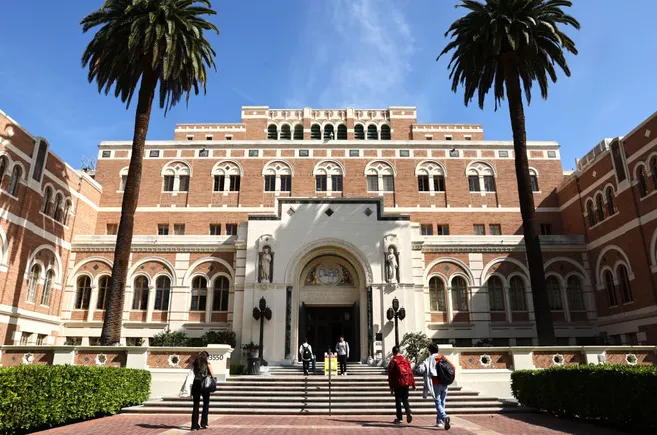
First reported by the Wall Street Journal, federal officials offered the compact to the University of Southern California and eight other high-profile research universities this week.
Dive Insight:
Since taking office, President Donald Trump and his administration have waged a legal and financial campaign against colleges in an effort to transform them ideologically. It comes after Trump on the campaign trail described colleges as “dominated by Marxist maniacs and lunatics” and full of academics “obsessed with indoctrinating America’s youth.”
With the compact, the administration has gone from using mainly sticks — typically in the form of civil rights investigations and canceled research grants — to using carrots as a means of pushing institutions to make reforms.
The Trump administration offered to prioritize colleges for research grants and other funding if they agree to give the government unprecedented control over internal institutional decisions and governance.
That includes:
Taking a position of institutional neutrality on events that don’t directly impact the college.
Committing not to consider race, gender, religion and other characteristics “explicitly or implicitly” in admissions. (The compact would grant exceptions for religious and single-sex institutions to limit admissions based on religious belief and gender, respectively.)
Conducting broad, public assessments of the viewpoints of employees and students.
Changing governance structures and potentially dissolving or taking over departments that “purposefully punish, belittle, and even spark violence against conservative ideas.”
Adopting policies that recognize “academic freedom is not absolute” and prevent “discriminatory, threatening, harassing, or other behaviors that abridge the rights of other members of the university community.”
Capping international undergraduate enrollment at 15% of the broader student body while screening out “students who demonstrate hostility to the United States, its allies, or its values.”
Freezing tuition for five years.
Requiring applicants to take standardized tests such as the SAT.
Committing to using “lawful force” and “swift, serious, and consistent sanctions” to handle protests that “delay or disrupt class instruction or disrupt libraries or other traditional study locations.”
The compact would also require colleges with endowments worth $2 million or more per student to waive tuition for students studying hard sciences, though the memo didn’t define the field.
Along with USC, eight other colleges received the administration’s memo detailing the compact: the University of Arizona, Brown University, Dartmouth College, Massachusetts Institute of Technology, the University of Pennsylvania, the University of Texas, Vanderbilt University and the University of Virginia.
The compact has drawn alarm and stern rebukes throughout the higher education world.
“College and university presidents cannot bargain with the essential freedom of colleges and universities to determine, on academic grounds, whom to admit and what is taught, how, and by whom,” the American Association of Colleges and Universities said in a statement Friday.
Denise Forte, president and CEO of the policy analysis and advocacy organization EdTrust, described the compact in a statement as an “existential threat to all institutions of higher learning and the latest example of the federal government overexerting its power to intimidate colleges and universities viewed as ideological enemies.”
In a joint statement Thursday, top leaders of the American Association of University Professors and the American Federation of Teachers described the compact as offering preferential treatment “in exchange for allegiance to a partisan ideological agenda” and said that it “stinks of favoritism, patronage, and bribery.” They urged all governing boards and administrators to reject the agreement.
American Council on Education President Ted Mitchell in an interview with The New York Times described the compact as a power play “designed to divide the higher education community.”
And then there is Newsom, who has been among the most vocal Democrats opposing Trump, especially since the president sent the National Guard into Los Angeles this summer, a move that a judge later ruled illegal.
In a press release, Newsom’s office described the compact as tying access to federal research funding to “radical conservative ideological restrictions on colleges and universities.” The governor also specifically threatened to “instantly” pull colleges’ eligibility for Cal Grants, a form of state aid for students from low- and middle-income families.
USC on Friday confirmed it had received and was reviewing the administration’s letter, but the university did not offer further comment.
Most of those institutions have remained quiet about their plans, if any, to sign or reject the agreement. A leader from one, however, voiced enthusiastic openness to the compact.
In a widely shared statement, Kevin Eltife, chair of the University of Texas Board of Regents, said that the system was “honored” that its flagship in Austin was selected among the nine to receive the compact.
“We enthusiastically look forward to engaging with university officials and reviewing the compact immediately,” said Eltife, a former Republican state senator.
New Jersey City University has signed a definitive agreement to become part of nearby Kean University, the institutions announced in a joint press release Wednesday.
The agreement — approved unanimously by both universities’ governing boards — is subject to accreditor approval by the Middle States Commission on Higher Education as well as by state and federal regulators. Officials expect the merger to be completed by July.
Once complete, NJCU will become “Kean Jersey City.” The two public institutions signed a letter of intent to merge in May after recent years of financial and governance turmoil at NJCU.
Under the merger terms, Kean will take on NJCU’s assets and liabilities. It will also honor NJCU students’ academic credits, need-based financial aid commitments and merit scholarships if they transition to Kean. Once they do, students will pay Kean’s tuition and fee prices, which amounted to $15,300 for full-time undergraduate students in the 2025-26 academic year.
A steering committee will oversee the next steps of the merger, including the complicated work of academic and operational integration, as well as navigating regulatory and governmental reviews.
As part of the agreement, NJCU students will gain access to Kean’s student services, clubs and organizations after the merger.
As for student sports, the agreement establishes a separate advisory committee to look at athletic programming at NJCU post-merger. The university currently competes in more than a dozen NCAA Division III sports, including men’s basketball, women’s softball, and men’s and women’s volleyball and track and field. The committee is expected to make its final report to Kean’s president in December.
As part of the fiscal 2026 state budget, New Jersey lawmakers lined up $10 million for Kean to help fund its merger with NJCU. The money is to help with feasibility studies, planning and legal work as the two institutions integrate.
NJCU’s board voted in March to pursue a merger with Kean. The move came after years of financial distress followed by recovery and turnaround work led by Andrés Acebo, who joined NJCU as interim president in January 2023 before being named permanent president this September.
About six months prior to his appointment, NJCU had declared a financial emergency. Declining enrollment and funding shortfalls led the university to increase scholarships, add academic programs, and spend more on student services and real estate expansions. Those moves failed to turn enrollment around and “instead served to dramatically increase NJCU’s expenses,” New Jersey’s comptroller said in 2023.
But by fall 2024, Fitch Ratings lifted the NJCU’s outlook from negative to stable, with analysts citing “significant progress toward achieving fiscal balance despite continued pressure on student enrollment.” The improvements were the product of both state aid and cost cutting at the institution.
In fall 2023, NJCU’s student headcount stood at 5,833 students, down 27% from 2018 levels, according to federal data. By fall 2024, the university’s total enrollment fell another 6% year over year, though first-year, full-time students grew by 3% and transfers surged 28%, NJ.com reported.
In a statement Wednesday, Acebo said the merger with Kean represents “a significant milestone in a process designed to secure the future of our institution and the communities we have proudly served for nearly a century.”
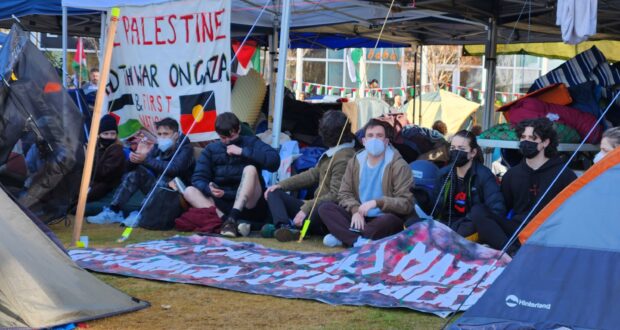
Last year, there were multiple protest encampments and other actions by groups of students on Canadian university campuses regarding the Israeli-Palestinian conflict.
Please login below to view content or subscribe now.
“[There is a] deeply troubling notion that anyone who dares to report unfavorable facts about a presidential candidate is engaged in ‘sabotage’ (as opposed to, say, contributing to the free exchange of information and ideas that makes our democracy possible).” – David McCraw (New York Times lawyer)
While some liberals are busy pissing in the free speech pot with their PC campus cancel culture campaigns, some conservatives do likewise with their compliant support of Trump’s anti-free speech crusade.
Mind you, this is not any equivalence dodge but rather further proof of Nat Hentoff’s damnatory maxim, “free speech for me — but not for thee.”
I continue to be amazed by the fact that so many so-called free speech supporters in the conservative and even libertarian camps are cowardly silent when Trump and his sycophantic serfs (e.g., his Attorney General candidate) make it abundantly clear that they intend to wage censorial war on their political opponents.
ABC’s $15 million+ settlement
Before I say more about anti-free speech Trumpsters, let me say a few words about ABC’s $15 million settlement (replete with an apology and another $1 million for attorneys’ fees) in the Trump defamation case involving George Stephanopoulos. ABC News agreed to pay that amount toward Donald Trump’s presidential library.
Warranted or not, ABC’s settlement has drawn criticism. For example:
Alejandro Brito, lawyer for Donald Trump.
Joyce Vance: “I’m old enough to remember — and to have worked on — cases where newspapers vigorously defended themselves against defamation cases instead of folding before the defendant was even deposed. . . . That, by the way, includes defamation cases brought by candidates for the presidency.”
Stephen Rohde: “I think the reasoning behind Judge Altonaga’s denial of ABC’s Motion to Dismiss was flawed and ABC should have sought appellate review before paying Trump’s non-existent ‘Presidential Library’ $15 million and his lawyers another $1 million. I think on the witness stand Stephanopoulos would have impressed the jury that he genuinely believed the defamation verdict meant that Trump had raped Carroll. Even before it got to the jury, ABC would have had a good motion for a nonsuit under NYT v Sullivan that Trump failed to prove Stephanopoulos subjectively possessed ‘knowledge of falsity’ or acted in ‘reckless disregard of the truth.’ And ABC’s lawyers would have a field day cross-examining Trump on his entire sordid past in order to show that his reputation as a sexual abuser, liar, and convicted felon was hardly damaged by this one broadcast.”
Five possible reasons for ABC’s settlement
Though ABC was represented by Nathan Siegel and Elizabeth McNamara (Davis Wright Tremaine), it is well to remember that while settlement agreements can be those urged by counsel, they are ultimately decided by the client even if their counsel urges otherwise. In other words, in the Trump case, counsel and client may have agreed on settling or disagreed, and the client’s wishes prevailed. However that might be, the following reasons might explain why ABC opted to settle:
Fear of what discovery might reveal: Here, the concern would have to do with the possibility of making public damning e-mails or other communications that showed an animus towards Trump and/or a certain recklessness in how ABC conducted itself.
Desire to shield Stephanopolous from deposition and/or cross-examination at trial: The concern here may have been that Stephanopolous might be dangerously vulnerable during discovery or at trial when pressed by Trump’s lawyer (Alejandro Brito).
Fear of a potential hostile Florida jury: Trying a case before a South Florida jury could be dangerous given the possibility of sympathy towards Trump and/or the possibility of Dominion-sized damages (unlikely though still possible).
Best time to settle: After U.S. Magistrate Judge Lisette M. Reid ordered Trump to be deposed, ABC might have figured that this was the best time to cut a deal with the plaintiff and cut its losses.
Desire to placate Trump moving forward: Here, fear of retribution going forward might have also played a role in ABC’s decision to settle.
Going forward: Media on the run
While not compliant in duplicitous ways, some in the media world are nonetheless guarded in how to proceed in Trump times.
For example, “The news media is heading into this next administration with its eyes open,” said Bruce Brown, executive director of the Reporters Committee for the Freedom of the Press. “Some challenges to the free press may be overt, some may be more subtle,” Brown said. “We’ll need to be prepared for rapid response as well as long campaigns to protect our rights — and to remember that our most important audiences are the courts and the public.”
That said, consider the following:
Libel Lawsuits on the rise: “During the presidential campaign, Trump sued CBS News [for $10 million] for the way it edited an interview with opponent Kamala Harris. At his news conference, Trump said he was expecting to file a lawsuit against the Des Moines Register in Iowa for publishing results of a poll shortly before the election that suddenly had him behind Harris. He said that amounted to ‘fraud and election interference.’”
Licensing Threats: “Over the past several weeks, lawyers for Mr. Trump and two of his most high-profile nominees — Pete Hegseth, the potential defense secretary, and Kash Patel, whom Mr. Trump has picked to run the F.B.I. — warned journalists and others of defamation lawsuits for what they had said or written.”
“Look, the law is very clear,” Brendan Carr [Trump’s pick for the FCC] told CNBC on Dec. 6. “The Communications Act says you have to operate in the public interest. And if you don’t, yes, one of the consequences is potentially losing your license. And of course, that’s on the table. I mean, look, broadcast licenses are not sacred cows.” Carr has said his FCC will take a close look at a complaint regarding a CBS 60 Minutes interview with Kamala Harris before the election. Trump criticized the editing of the interview and said that “CBS should lose its license.”
[ . . . ]
The Carr FCC and Trump administration “can hassle the living daylights out of broadcasters or other media outlets in annoying ways,” said Andrew Jay Schwartzman, who is senior counselor for the Benton Institute for Broadband & Society.
Seizing Journalists’ Records: “News organizations are worried that a Justice Department policy that has generally prohibited prosecutors from seizing the records of journalists in order to investigate leaks will be reversed, and are already urging journalists to protect their work. ‘If you have something you don’t want to share with a broader audience, don’t put it on the cloud,’ ProPublica’s [Jesse] Engelberg said.”
Ending Support for Public Radio and TV: “Sen. John Kennedy of Louisiana recently introduced a bill that would end taxpayer funding for public radio and television, a longtime goal of many Republicans that may get momentum with the party back in power.”
Testing the Boundaries of Current Defamation Law: “‘There’s been a pattern and practice for the past couple of years of using defamation litigation as a tactic to harass or test the boundary of case law,’ said Ms. [Elizabeth] McNamara, who represented ABC News and Mr. Stephanopoulos but was speaking in general.”
The $1 million donations came gradually — and then all at once.
Meta. Amazon. OpenAI’s Sam Altman. Each of these Silicon Valley companies or their leaders promised to support President-elect Donald J. Trump’s inaugural committee with seven-figure checks over the past week, often accompanied by a pilgrimage to Mar-a-Lago to bend the knee.
The procession of tech leaders who traveled to hobnob with Mr. Trump face-to-face included Sundar Pichai, Google’s chief executive, and Sergey Brin, a Google founder, who together dined with Mr. Trump on Thursday. Tim Cook, Apple’s chief executive, shared a meal with Mr. Trump on Friday. And Jeff Bezos, the founder of Amazon, planned to meet with Mr. Trump in the next few days.
[ . . . ]
With their donations, visits and comments, they joined a party that has already raged for a month, as a cohort of influential Silicon Valley billionaires, led by Elon Musk, began running parts of Mr. Trump’s transition after endorsing him in the campaign.
A group of TikTok users filed a separate application on Monday afternoon, also asking the court to block enforcement of the law.
Social media giant TikTok and its parent company, ByteDance, on Monday asked the justices to block a federal law that would require TikTok to shut down in the United States unless ByteDance can sell off the U.S. company by Jan. 19. Unless the justices intervene, the companies argued in a 41-page filing, the law will “shutter one of America’s most popular speech platforms the day before a presidential inauguration.”
The request came three days after a federal appeals court in Washington turned down a request to put the law on hold to give TikTok time to seek review in the Supreme Court. A panel made up of judges appointed by Presidents Barack Obama, Donald Trump, and Ronald Reagan explained that the companies were effectively seeking to delay “the date selected by Congress to put its chosen policies into effect” — particularly when Congress and the president had made the “deliberate choice” to “set a firm 270-day clock,” with the possibility of only one 90-day extension.
Congress enacted the law, the Protecting Americans from Foreign Adversary Controlled Applications Act, earlier this year, and President Joe Biden signed it on April 24. The law identifies China and three other countries as “foreign adversaries” of the United States and bans the use of apps controlled by those countries.
TikTok, which has roughly 170 million users in the United States and more than a billion worldwide, ByteDance, and others filed challenges to the law in the U.S. Court of Appeals for the District of Columbia Circuit.
Related
Oklahoma Settlement protects journalists’ right to cover education officials
Oklahoma City, OK — After officials blocked reporters from attending state government proceedings, Oklahoma’s oldest television station has now secured a major victory for press freedom, reaching a settlement that ensures its reporters will have full access to state education meetings and officials. The win also includes a court-ordered permanent injunction that bars officials from ever repeating the behavior that led to the lawsuit.
The agreement resolves the First Amendment lawsuit filed by the Institute for Free Speech and local counsel Robert “Bob” Nelon of Hall Estill on behalf of three reporters and their employer, the owner of Oklahoma City television station KFOR-TV, against Oklahoma Superintendent of Public Instruction Ryan Walters and Press Secretary Dan Isett. The settlement guarantees KFOR equal access to State Board of Education meetings, press conferences, and other media events.
“This settlement vindicates the fundamental principle that government officials cannot declare themselves the arbiters of ‘truth,’ or pick and choose which news outlets cover their activities based on how favorable the reporting is,” said Institute for Free Speech Senior Attorney Charles “Chip” Miller. “The First Amendment protects the right of journalists to gather and report news, even — or especially — when the coverage scrutinizes government officials and holds them accountable to the public.”
The agreement requires the Oklahoma State Department of Education to restore KFOR’s access to board meetings, press conferences, and media events. It also mandates KFOR’s inclusion in all press distribution lists and advance notifications of department activities. Additionally, the department agreed to re-establish a media line for journalists to attend board meetings.
‘So to Speak’ podcast: Whittington on academic freedom
“Who controls what is taught in American universities — professors or politicians?”
Yale Law professor Keith Whittington answers this timely question and more in his new book, “You Can’t Teach That! The Battle over University Classrooms.” He joins the podcast to discuss the history of academic freedom, the difference between intramural and extramural speech, and why there is a “weaponization” of intellectual diversity.
Keith E. Whittington is the David Boies Professor of Law at Yale Law School. Whittington’s teaching and scholarship span American constitutional theory, American political and constitutional history, judicial politics, the presidency, and free speech and the law.
Stephen Solomon on ‘Revolutionary Dissent’
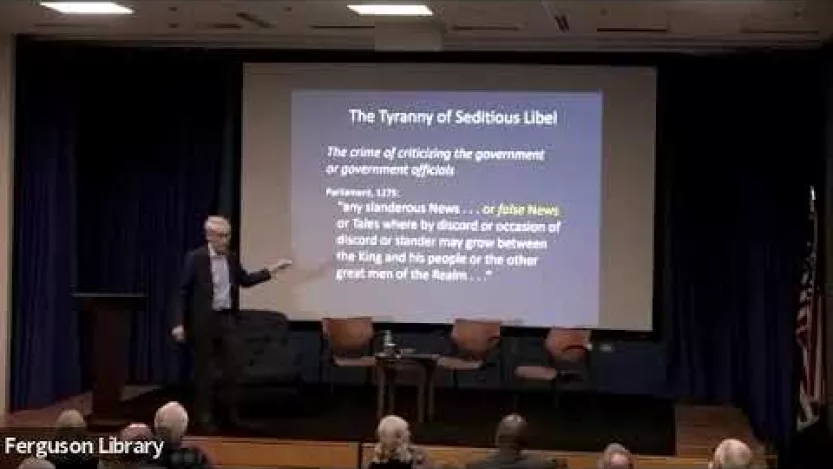
What persuaded our nation’s founders to reject the British laws that made it a crime to criticize government officials and, instead, guarantee freedom of speech and press? NYU Professor and First Amendment Watch editor Stephen Solomon told the story of the protests and controversy that led to the First Amendment in a recent talk at The Ferguson Library in Stamford, CT.
2024-2025 SCOTUS term: Free expression and related cases
Cases decided
Villarreal v. Alaniz(Petition granted. Judgment vacated and case remanded for further consideration in light of Gonzalez v. Trevino, 602 U. S. ___ (2024) (per curiam))
Murphy v. Schmitt (“The petition for a writ of certiorari is granted. The judgment is vacated, and the case is remanded to the United States Court of Appeals for the Eighth Circuit for further consideration in light of Gonzalez v. Trevino, 602 U. S. ___ (2024) (per curiam).”)
This article is part of First Amendment News, an editorially independent publication edited by Ronald K.L. Collins and hosted by FIRE as part of our mission to educate the public about First Amendment issues. The opinions expressed are those of the article’s author(s) and may not reflect the opinions of FIRE or Mr. Collins.