Tag: Skepticism

  • Tuition Discounts Fuel Higher Ed Skepticism

    Tuition Discounts Fuel Higher Ed Skepticism

    Tuition discounting is a tactic private colleges have long used to control a primary revenue stream. But over the past decade, an increasingly precarious financial picture—driven in part by stagnating state funding and tuition caps—has pushed public institutions to adopt tuition-discounting policies, too.

    According to an issue brief from the Strada Education Foundation, the share of first-time, full-time undergraduates receiving institutional grant aid at public four-year institutions increased from 49 percent to 62 percent between 2014–15 and 2021–22. The average discount rates increased from 24 percent to 31 percent over the same period.

    Strada argued in the brief that tuition discounting sows confusion about the real cost of college among students and their parents. The practice also fuels increased public skepticism about the value of a college degree. It warned that growing financial uncertainty for public higher education could make the problem worse.

    “State postsecondary budgets soon may face new strains stemming from federal actions, demographic shifts, and broader fiscal pressures,” the brief said. “Without intentional alignment between states and institutions, this environment could drive even more aggressive tuition discounting in the years ahead—further complicating cost transparency for students, public missions, and the perceived value of education.”

    Tuition discounts allow institutions to maintain financial stability and recruit academically strong or underrepresented students who may be enticed by a big discount presented as a scholarship. However, increases in merit-based aid can “favor wealthier or out-of-state students at the expense of low-income, in-state residents,” according to Strada’s brief.

    “These practices also leave students, families, and citizens confused and without a transparent understanding of the cost of higher education,” the report said, noting that low-income and first-generation college students are especially vulnerable to uncertainty around tuition prices. “As the debate over the value of postsecondary education continues, exaggerated prices and confusion over actual costs weigh heavily on public trust and whether ‘college is worth it.’” 

    The report recommends a set of guiding principles to address tuition discounts:

    • Transparency and clarity for families;
    • Alignment between state and institutional aid;
    • Regular assessment of aid strategies;
    • Ensuring discounting supports public mission and access goals, not just revenue; and
    • Avoiding blunt, one-size-fits-all approaches.
    Source link

  • Despite Skepticism, Parents Still Prioritize Four-Year College for Their Kids – The 74

    Despite Skepticism, Parents Still Prioritize Four-Year College for Their Kids – The 74


    Get stories like this delivered straight to your inbox. Sign up for The 74 Newsletter

    Six out of 10 parents hope their child will attend college, according to a new survey by Gallup and the Lumina Foundation.

    The survey, conducted in June, comes out at a time when the value of a college degree is the subject of public debate.

    “We hear all this skepticism of higher education,” said Courtney Brown, vice president of impact and planning for the Lumina Foundation, which advocates for opportunities for learning beyond high school available to all. “We hear the narrative that people don’t value it.” 

    Just last month, the results of a Gallup poll showed that confidence in higher education among Americans has been falling over the last decade.

    But the results of actually asking what parents want for their own children, Brown said, are striking. This is the first survey that Gallup has specifically asked parents for their views on the topic.

    “When it comes down to it, it’s pretty clear that parents hope their children get a college degree,” Brown said.

    Brown has found that parents’ biggest concerns about higher education tend to be the cost, whether it leads to a job, or increasingly, whether it is political.

    This may explain why community colleges were a popular option among parents who responded. Community colleges tend to have a much lower sticker price than four-year colleges, and there is a greater emphasis on job credentials. Roughly 1 out of 5 parents of varying backgrounds said that they would like to see their child enroll at a community college. 

    But there were some notable differences in the survey among parents, depending on their own level of education, but especially their political orientation.

    The strongest narratives against higher education come from the Republican Party. That is reflected in the responses, Brown noted.

    Greater differences emerged around whether students should enroll in a four-year college immediately after high school; 58% of college graduates and 53% of Democrats preferred sending their children straight to a four-year college, compared to 27% of Republicans and 30% of parents without a college degree.

    Republicans are more likely to say that their children should go straight into the workforce or job training or certification, followed by independents and those without a college degree. Other options include taking time off or joining the military. 

    But overall, 4 out of 10 parents want to see their child attend a four-year college or university, making it the most popular option by far. This is something that comes up repeatedly in surveys about higher education.

    “We see that people value four-year [degrees],” Brown said. “We see that people have trouble accessing it and have some concerns about the system, but they do greatly value it.”

    The survey also measured the preferences of non-parents. It asked respondents to think about a child in their life, whether a nephew or niece, grandchild or family friend under 18 who has not graduated from high school. Responses were remarkably similar: 55% said they wanted this child to attend either a four-year or two-year college, compared to 59% of parents.

    This story was originally published by EdSource.


    Get stories like these delivered straight to your inbox. Sign up for The 74 Newsletter

    Source link

  • DEI Skepticism Threatens to Derail Japan’s Gender Equity Push

    DEI Skepticism Threatens to Derail Japan’s Gender Equity Push

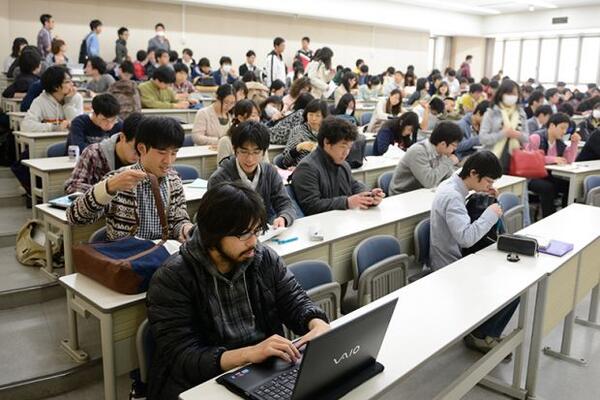
    Japan needs to admit that long-running efforts to address gender inequality in higher education aren’t working, experts say, with antidiversity sentiment spreading from the U.S. and threatening to gain traction.

    Despite government policies spanning nearly two decades, women remain severely underrepresented across Japanese universities, particularly in science, technology, engineering and mathematics fields.

    As of 2022, women made up just 26.7 percent of faculty nationwide and fewer than half of all students, with even starker disparities in senior academic roles and male-dominated disciplines.

    Sayaka Oki, a professor at the University of Tokyo, described the situation as “terrible.”

    “Gender equality doesn’t really exist here,” she added.

    As of 2022, only 11 percent of professors at Oki’s university were female, with particularly low representation in engineering. In undergraduate programs in physics and engineering, women typically make up only about 15 percent of the student population.

    “The gender imbalance starts at the student level and gets worse in higher positions,” she said. The university has launched repeated initiatives that have attempted to address the problem and has reported that it has “steadily increased the number of women in faculty positions.”

    Since 2006, Japan’s government has implemented a “goal and timetable” policy aimed at increasing women researchers in natural sciences, setting numerical hiring targets every five years.

    However, these targets have remained largely unchanged because the proportion of women earning doctoral degrees—the main feeder for research roles—has not significantly increased.

    Ginko Kawano, professor of gender equality at Kyushu University, said that, “after nearly two decades, the policy has not produced significant results, and it appears we are now at a turning point in terms of policy design.”

    Kawano noted recent government encouragement for universities to adopt admission quotas for women in STEM to improve applicant numbers.

    Yet “while this sends a positive message that women are welcome in these disciplines, it is unlikely to serve as a fundamental solution to the underlying issues,” she said.

    She also acknowledged strong opposition from students and faculty: “Institutions that choose to introduce this system should clearly explain the reasoning behind it.

    “At the same time, it is crucial for university faculty to have access to the information and knowledge necessary to evaluate the merits and drawbacks of such quotas.

    “For example, they should be aware of the historical exclusion of women from science, and recognize the persistent bias that suggest[s] women are not suited for STEM fields—biases that continue to shape the choices women feel able to make,” Kawano said.

    Adding to the complexity is a political environment increasingly wary of diversity initiatives.

    Kawano warned that antidiversity sentiment similar to that in the U.S. could gain traction in Japan, although opposition to gender equality policies has existed independently for years.

    Akiyoshi Yonezawa, professor of higher education in the Global Strategy Office at Tohoku University, highlighted demographic pressures pushing universities toward diversity.

    “Since around 1990, the number of 18-year-olds has continuously declined and is expected to continue until at least 2040,” he said.

    In response, women and international students have been framed as essential for sustaining Japan’s knowledge economy.

    Yonezawa criticized how diversity initiatives in Japan are often framed: “DEI initiatives in Japanese universities and society tend to be promoted as a ‘catch-up’ Western mindset rather than intrinsic value formation through daily experience. This makes DEI activities in Japan’s higher education fragile in the long term when faced with controversy.”

    Institutional barriers also persist. Oki described how her university’s collegial governance system complicates efforts to implement top-down diversity policies and secure funding, which often comes with centralized control conditions.

    “To access the fund, we’re required to adopt a more top-down management style,” she said. “That’s difficult because our university traditionally follows a collegial governance model.”

    Oki agreed that there was a risk that international developments had made the situation potentially more difficult—particularly in the U.S., where things like the ban on affirmative action had made colleagues “more cautious about what might happen here.”

    Source link