Tag: Skills

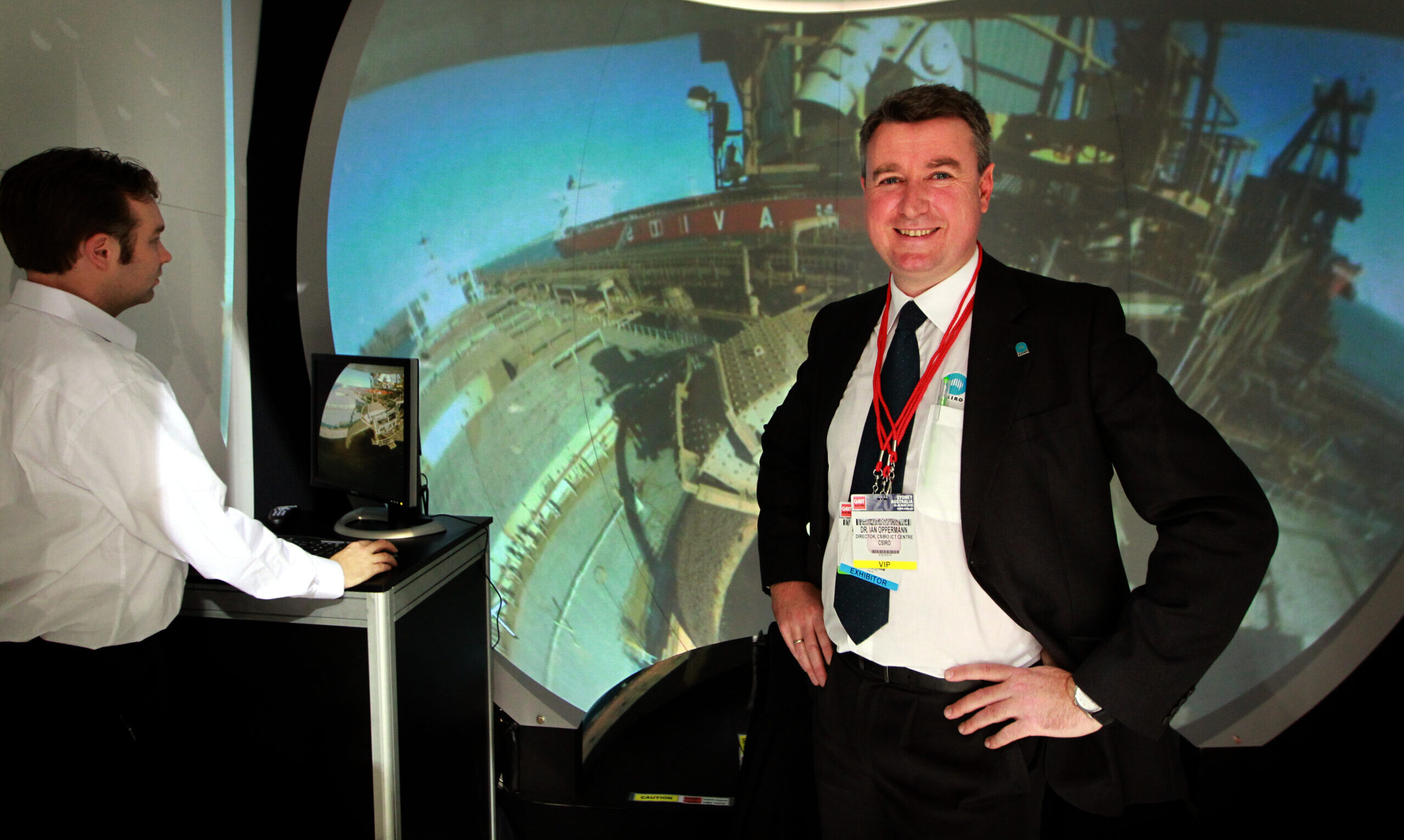
  • Ian Oppermann on skills passports – Campus Review

    Ian Oppermann on skills passports – Campus Review

    Ian Oppermann is in charge of digital ID for the federal government and an Associate Industry Professor of engineering and IT at the University of Technology Sydney.

    Please login below to view content or subscribe now.

    Membership Login

    Source link

  • Universities Teaching Wisdom Skills 2030

    Universities Teaching Wisdom Skills 2030

    As with the prior column, this week’s thesis evolves out of the Zoom keynote to the Rethink AI Conference, sponsored in part by the International Academy of Science, Technology, Engineering and Management and hosted by the ICLED Business School in Lagos, Nigeria. Thanks again to the chair of the International Professors Project, Sriprya Sarathy, and the conference committee for making my presentation possible.

    Virtually all aspects and positions at universities will be touched by the transformation. The changes will come more rapidly than many of us in higher education are accustomed to or with which we are comfortable. In large part, the speed will be demanded by employers of our learners and by competition among universities. Change will also strike directly at the nature of what and how we teach.

    It is not that we have seen no change in teaching over the years. Notably, delivery systems, methods and modes of assessment, and related areas have been subject to significant changes. Anthony Piña, Illinois State University’s chief online learning officer, notes that online learners surpassed 50 percent in 2022 and continue to rise. However, deeper changes in the nature of what we teach have progressed as technology has influenced what employers are seeking.

    Building knowledge has been the mantra in higher education for many centuries. The role of the university has been to build knowledge in learners to make them “knowledgeable.” Oxford Languages and Google define knowledge most concisely as “facts, information, and skills acquired by a person through experience or education; the theoretical or practical understanding of a subject.”

    The emphasis on facts and information has taken a somewhat changed role with the advent of technologies over recent decades. Notably, the World Wide Web with the advent of the first browser, Mosaic, in 1993 provided instant access to unprecedented volumes of information. While familiarity with key facts and information remains paramount, the recall and synthesis of facts and information via the web can be performed nearly as quickly and more thoroughly than the human brain in most instances. In a sense the internet has become our extended, rapid-access, personal memory. Annual global web traffic exceeded a zetabyte for the first time in 2015. A zetabyte is 1,000 exabytes, one billion terabytes or one trillion gigabytes. This year, it’s expected to hit 175 ZB.

    More recently, we have seen a surge in professional certificates offered by higher education. As Modern Campus reports,

    “Every professional needs upskilling in order to maintain a competitive edge in the workforce. Keeping ahead of the latest skills and knowledge has become more crucial than ever in order to align with evolving market demands. Although traditional degree programs have long been the standard solution, certificate programs have gained popularity due to their ability to offer targeted, accelerated skill development.”

    However, agentic AI is just now emerging. It is different than the prompt to answer generative AI in that agentic AI can include many workforce skills in its array of tools. In fact, working and collaborating with agentic AI will require an advanced, integrated skill set, as described by the Global Skills Development Council:

    “In the fast-paced, digitally driven world, agentic AI is at the forefront of demanding new human competencies. While intelligent agents retain a place in daily life and work, individuals should transition to acquire agentic AI skills to thrive in the new age. These skills include, but are not limited to, working with technology, thinking critically, applying ethical reasoning, and adaptive collaboration with agentic AI systems. Such agentic AI skills empower one to consciously engage in guiding and shaping AI behaviors and outcomes rather than passively receiving and adapting to them. If one has agentic AI skills, they can successfully lead businesses, education, and creative industries in applying agents for innovation and impact. As such, re-dedicating ourselves to lifelong learning and responsible use of AI may prove vital in retaining humanity at the core of intelligent decision-making and progress. Without such competencies, professionals risk being bypassed by technologies they cannot control or understand. A passive attitude creates dependency on AI outcomes without the skill to query or improve them. Adopting agentic AI competencies equips individuals with the power to drive innovation and ensure responsible AI integration in the workplace.”

    The higher-level skills humans will need as described by the Global Skills Development Council are different from many of the career-specific skills that universities now provide in short-form certificates and certification programs. Rather, I suggest that these broad, deep skills are ones that we might best describe as wisdom skills. They are not vocational but instead are deeper skills related to overall maturity and sophistication in leadership, vision and insight. They include thinking critically, thinking creatively, applying ethical reasoning and collaborating adaptively with both humans and agentic AI.

    Agentic AI can be trained for the front-line skills of many positions. However, the deeper, more advanced and more cerebral skills that integrate human contexts and leadership vision are often reflective of what we would describe as wisdom rather than mere working skills. These, I would suggest, are the nature of what we will be called upon to emphasize in our classes, certificates and degrees.

    Some of these skills and practices are currently taught at universities, often through case studies at the graduate level. Integrating them into the breadth of the degree curriculum as well as certificates may be a challenge, but it is one we must accomplish in higher education. Part of the process of fully embracing and integrating AI into our society will be for we humans to upgrade our own skills to maintain our relevance and leadership in the workplace.

    Has your university begun to tackle the topics related to how the institution can best provide relevant skills in a world where embodied, agentic AI is working shoulder to shoulder with your graduates and certificate holders? How might you initiate discussion of such topics to ensure that the university continues to lead in a forward-thinking way?

    Source link

  • What does the post-16 education and skills white paper say about access and participation?

    What does the post-16 education and skills white paper say about access and participation?

    Author:
    Charlotte Armstrong

    Published:

    This blog was authored by Charlotte Armstrong, Policy Manager at HEPI.

    It is the second blog in HEPI’s series responding to the post-16 education and skills white paper. You can find the first blog here.

    Despite the post-16 education and skills white paper devoting an entire sub-section to ‘Improving Access and Participation’, the genuine challenges facing students receive minimal attention. The skills agenda within the Government is so strong that the paper frames students, and the student experience, in terms of their potential future contribution to the economy and regional growth. This results in little attempt to understand and address the student experience and the very real challenges that students are currently facing.

    A shift to the skills agenda

    The Lifelong Learning Entitlement (LLE) takes up several bullet points within this section of the paper. In fact, the decision to categorise the LLE under the heading of access provides an interesting insight into the Government’s broader approach to access and participation. Considering the LLE as a subsection of this initiative reframes the focus of access from entrance to higher education to employment outcomes and progression throughout a person’s life. This shift is an idea repeated throughout the white paper that dovetails with the Government’s skills agenda. It indicates that the Government views higher education as a means to add future value to the economy and a tool through which its Industrial Strategy can be furthered. This approach leaves little room for those subjects and disciplines that fall outside the strategy, let alone for learning for its own sake.

    Both modular LLE courses and the newly announced maintenance grants (as announced within the white paper, and previously at the Labour Party Conference) are available only to those studying courses that link to the Government’s wider Industrial Strategy. As may be easily guessed, this results in a list of subjects that largely dovetail with the science and technology sectors – arts and humanities subjects don’t get a look in. Tying maintenance grants to the study of pre-approved science subjects risks disincentivising students from low-income backgrounds from pursuing arts and humanities subjects – potentially entrenching bias and elitism within this sector, as well as furthering the narrative of ‘Mickey Mouse degrees’. As the costs of studying at university continue to rise, some prospective students will struggle to justify studying the subject of their choice if it means losing out on access to maintenance grants. Many of these excluded subjects are already in crisis – as the HEPI / Duolingo report The Language Crisis: Arresting Decline demonstrates, undergraduate enrolments in ‘Language & Area Studies’ have decreased by 20% in five years. Disincentivising students from taking these courses will surely only deepen this crisis further.

    These criticisms do not mean the LLE and the reintroduction of maintenance grants are bad policies. The latter is a particularly welcome development that has long been campaigned for by HEPI and the National Union of Students. However, the limited nature of their current form limits the positive impact they could otherwise have. While there is no current clarification on the precise threshold that will be placed on access to maintenance grants, the Government’s lack of movement on the parental income thresholds within the student finance system likely means only a very small number of students will be eligible.

    When first announcing this policy at the Labour Party conference, Education Secretary Bridget Phillipson claimed that the reintroduction of maintenance grants would ensure students spent their time at university ‘learning or training, not working every hour God sends’. This perhaps suggests that maintenance grants will be available in addition to, not instead of, the maintenance loan for those eligible students, although we keenly await the detail which will be outlined by the Chancellor in the upcoming Budget. However, this doesn’t solve the deepening financial crisis facing a large number of students in higher education – many of whom simply will not be eligible for the new maintenance grants.

    HEPI’s research into the Minimum Income Standard for Students highlights how the current maximum maintenance loan covers just half of the costs faced by freshers. Furthermore, the parental income threshold for eligibility for the maximum loan is currently so out of touch that a student from a household with a single parent earning just above the minimum wage will not be eligible for the maximum loan. The Government has sought to highlight that maintenance loans will increase in line with forecast inflation for every academic year, but this is merely a continuation of the current policy and will not address the financial crisis that many students face. Plus, forecast inflation tends to be lower than actual inflation. Similarly, the promise that care leavers will automatically become eligible to receive the maximum rate of loan is also a reiteration of a policy already in place. Care leavers (and estranged students) are classified as independent and therefore are eligible for the maximum loan. To reiterate, this maximum loan covers only half of the costs these students will face while at university.

    Postgraduate access

    The inclusion of postgraduate access in the white paper is a welcome addition – and an unsurprising one when considering how this white paper has framed access in terms of career progression and skills. However, once more, the inclusion of postgraduate students within access goals falls short due to a failure to address the root causes of the widening crises for home postgraduate students in England. Postgraduate taught tuition fees now exceed the maximum postgraduate loan – meaning that a student has used up their entire loan before even considering their cost of living.

    Instead of engaging with this, the paper encourages providers to include postgraduate study in their Access and Participation Plans (APP). This is, in itself, a positive development; however, without addressing the financial barriers faced by many prospective postgraduate students, this inclusion will have very limited impact.

    The access and participation section of the post-16 education and skills white paper provides an insight into how this Government conceives of these issues. However, the focus on students as future employees paints a worrying picture of a Government that is more concerned with next steps than with higher education itself.

    Source link

  • Skills and employability: embedding to uncovering

    Skills and employability: embedding to uncovering

    Author:
    Claire Toogood

    Published:

    • The blog below was kindly authored for HEPI by Claire Toogood, Research and Strategic Projects Manager at AGCAS.
    • Elsewhere, Nick Hillman, HEPI’s Director, has responded to the Post-16 Education and Skills White Paper in a piece for Times Higher Education.

    In recent years, UK higher education has made significant strides in embedding employability into the curriculum. From frameworks and toolkits to strategic initiatives, the sector has embraced the idea that employability is not an add-on, but a core element and outcome of any academic course. Yet, as the new Uncovering Skills report reveals, embedding is only part of the story. A future challenge, and significant opportunity for impact, lies in helping students uncover, recognise, and articulate the skills they are already developing.

    This project, led by AGCAS and supported by Symplicity, draws on three national datasets, including focus groups, event survey data, and applications to the inaugural Academic Employability Awards. It builds on foundational work such as Kate Daubney’s concept of “Extracted Employability” which reframed employability as something inherent in academic learning, not externally imposed. Alongside sector-wide efforts like the AGCAS Integrating Employability Toolkit and Advance HE’s embedding employability framework, and institutional contributions like Surfacing Skills and Curriculum Redefined at the University of Leeds, Daubney’s work lays the groundwork for a more inclusive and intentional approach to employability.

    The latest findings from the Uncovering Skills project suggest that visibility, confidence, and perceived relevance remain major barriers. Students often struggle to recognise the value of their informal experiences (such as part-time work, caring responsibilities, and volunteering) and they can lack the language to describe these in employer-relevant terms. As one focus group participant noted, ‘Students often think if it’s not linked to their degree then it is not relevant.’ Another added, ‘They disregard skills gained from everyday life – like being a parent or managing during Covid.’. To resolve this, reflection is critical, but it is inconsistently supported across higher education. Time-poor students tend to engage only when prompted by immediate needs, such as job applications. ‘Reflection from the student perspective doesn’t become a need until they’ve got an interview,’ said one participant. Others highlighted that ‘self-reflection and deeper knowledge of skills is where students fall down… poor preparation in earlier education is a factor.’.

    The report also highlights that some student cohorts face compounded challenges. International students, disabled students, and those from widening participation backgrounds require tailored and targeted support to uncover and express their strengths. Institutional collaboration with career development experts is essential, yet reflections from careers professionals involved in the project show that they are not always included in curriculum design, and staff who champion employability often lack recognition, no matter where they are employed within their institution.

    Technology, including AI, offers new possibilities, but also risks encouraging superficial engagement if not used intentionally. ‘Rather than learning what these skills are and having to articulate them, they just abdicate that responsibility to AI,’ warned one contributor. Another observed that students are ‘superficially surfing through university – not as connected to skills development’. The Uncovering Skills report includes a series of case studies that explain how careers professionals and academic staff at ACGAS member institutions are tackling these multiple challenges.

    So, what needs to change?

    The report makes six recommendations:

    1. Make skills visible and recognisable: Use discipline-relevant language and real-world examples to help students connect academic learning to transferable skills.
    2. Support students to uncover skills across contexts: Validate informal and non-traditional experiences as legitimate sources of skill development. Embed reflection opportunities throughout.
    3. Equip staff to facilitate skills recognition: Provide training, shared frameworks, and recognition for staff supporting students in uncovering and articulating their skills.
    4. Use technology to enhance, not replace, reflection: Promote ethical, intentional use of AI and digital tools to support self-awareness and skill articulation.
    5. Tailor support to diverse student needs: Design inclusive, flexible support that reflects the lived experiences and barriers faced by different student cohorts.
    6. Foster a culture of skill recognition across the institution: Embed uncovering skills into institutional strategy, quality processes, and cross-functional collaboration.

    The report includes a call to action, stressing that it is time to build on excellent work to embed and integrate employability by fully supporting students to uncover and articulate their skills. This includes ensuring that all students can equitably access the tools, language, and support they need to succeed. It must include the creation of environments where students feel confident recognising and expressing their skills, whether from academic settings, extra-curricular spaces, or lived experiences; championing equity by validating all forms of learning. It also means investing in staff development and cross-functional collaboration.

    Uncovering skills is a shared responsibility, and a powerful opportunity, to transform how students understand themselves, their experiences and learning, and their future.

    Source link

  • The post-16 pivot: why higher education needs to lean into the skills revolution

    The post-16 pivot: why higher education needs to lean into the skills revolution

    This blog was kindly authored by Dr. Ismini Vasileiou, Associate Professor at De Montfort University.

    The government’s new Post-16 Education and Skills White Paper reframes how the UK prepares people for work, learning, and life. It promises a simpler, more coherent system built around quality, parity of esteem, and progression – introducing new V-Levels, reforming Level 3 and below qualifications, and setting out clearer routes into higher education and skilled employment.

    Within it there is an unmistakable message for universities: higher education is no longer a separate tier but a partner in a joined-up skills ecosystem.

    This direction of travel strongly echoes the recommendations of the Cyber Workforce of the Future white paper, which called for a unified national skills taxonomy, stronger coordination between education and employers, and consistent frameworks for developing technical talent. The government’s post-16 reforms, though broader in scope, now seeks to achieve at system level what the cyber sector has already begun to pilot.

    Reimagining pathways: from fragmentation to flow

    At the heart of the White Paper lies the ambition to create “a seamless system where every learner can progress, without duplication or dead ends.” The proposed V-Levels for 16-19-year-olds aim to sit alongside A-Levels, replacing hundreds of overlapping technical qualifications and creating a nationally recognised route into both higher technical and academic study.

    Reforms to Level 2 and entry-level qualifications will introduce new “Foundation Programmes” that build essential skills and prepare learners for work or further study. Alongside these, stepping-stone qualifications in English and Mathematics will replace automatic GCSE resits, acknowledging that linear repetition has failed to deliver progress for many young people.

    The emphasis on simplified, stackable routes reflects the very principles behind the Cyber Workforce of the Future model, which proposed interoperable learning pathways connecting schools, further education, higher education, and industry within a single skills continuum. What began as a sector-specific call for alignment in cyber is now being written into national policy.

    Higher education’s new context

    The White Paper links post-16 reform directly to the Industrial Strategy and to Skills England’s mission to align learning with labour-market demand. For universities, several themes stand out:

    • Progression and parity: Higher education is expected to work together with further education and employers to ensure that learners completing V-Levels and higher technical qualifications can progress seamlessly into Level 4, 5, and 6 provision.
    • Higher Technical Qualifications (HTQs): The expansion of HTQs in growth areas such as AI, cyber security, and green technology positions universities as key co-developers and deliverers of technical education.
    • Quality and accountability: The Office for Students will have powers to limit recruitment to poor-quality courses and tie tuition-fee flexibility to demonstrable outcomes, reinforcing the need for robust progression and employability data.
    • Lifelong learning and modularity: The commitment to the Lifelong Learning Entitlement demands interoperability of credits across further education and higher education – another concept long championed in the cyber-skills ecosystem.

    Taken together, these reforms require universities to move beyond disciplinary silos and become brokers of opportunity – enabling flexible, lifelong learning rather than simply delivering three-year degrees.

    From strategy to delivery: lessons from cyber that can scale

    The Cyber Workforce of the Future paper provides a live example of how the government’s post-16 vision can be delivered in practice. Its framework rests on three transferable pillars:

    1. Unified skills taxonomy – mapping qualifications and competencies against occupational standards to create a common language for education and industry.
    2. Education – industry bridge – aligning curriculum design and placements to real-world demand through structured partnerships between universities, FE colleges, and employers.
    3. Inclusive pipeline development – embedding equity and access by designing pathways that work for diverse learners and career changers, not just traditional entrants.

    These principles are not unique to cyber; they represent a template for how any technical or digital field can align with the White Paper’s objectives. The challenge now is scaling this joined-up approach nationally across disciplines – from advanced manufacturing to health tech and green energy.

    Six priorities for universities

    1. Redefine admissions and progression routes
      Recognise new qualifications such as V-Levels and HTQs as rigorous, valued entry points to higher education.
    2. Co-design regional skills ecosystems
      Partner with futher education colleges, local authorities, and industry to map regional growth sectors and align provision accordingly.
    3. Develop flexible, modular curricula
      Build stackable learning blocks that learners can access and re-enter throughout their careers under the Lifelong Learning Entitlement.
    4. Co-create with employers
      Move from consultation to collaboration, embedding placements, apprenticeships, and micro-credentials that reflect labour-market demand.
    5. Support learner transition
      Provide structured academic and digital-skills support for students from vocational or stepping-stone routes.
    6. Measure outcomes transparently
      Track progression, attainment, and employability by qualification route to evidence value and inform continuous improvement.

    Opportunities and risks

    The White Paper’s success will depend on genuine partnership between universities, further education providers, and employers. Without coordination, the new structure could replicate old hierarchies – leaving V-Levels or technical routes seen as second-tier options. Similarly, tighter regulation must not deter universities from widening participation or admitting learners who require additional support.

    The cyber-skills sector demonstrates what can work when these risks are managed: clear frameworks, shared standards, and collaborative delivery that bridges academic and technical domains. Replicating this across disciplines will require sustained investment and policy stability, not short-term pilots.

    A new social contract for tertiary education

    The Post-16 Education and Skills White Paper represents a genuine reset for tertiary education – one that values technical excellence, lifelong learning, and regional growth alongside academic achievement.

    Its goals mirror those already embedded within the Cyber Workforce of the Future initiative: building a national system where education and employment are continuous, mutually reinforcing stages of one journey. The cyber model shows that when universities act as integrators –  connecting further education, employers, and government – policy ambitions translate into measurable workforce outcomes.

    What began as a sector-specific experiment can now serve as a blueprint for system-wide reform. If universities across all disciplines embrace this pivot, they can help turn the White Paper’s vision into reality – a cohesive, agile, and inclusive skills ecosystem ready for the future economy.

    Source link

  • Podcast: Skills White Paper special

    Podcast: Skills White Paper special

    This week on the podcast we get across the Westminster government’s post-16 white paper – its headline target of two-thirds of young people in higher-level learning by 25, the plan to index the undergraduate fee cap to inflation (with TEF-linked eligibility), the maintenance package holding to the status quo, and a push for institutional specialisation via research funding alongside changes to access, participation, and regulation.

    We ask whether these levers add up – will automatic indexation and selective controls actually stabilise university finances while widening opportunity, or do TEF-conditioned fee rises, classroom-based foundation year limits, and OfS expansion risk new “cold spots”, tighter choice, and a tougher deal on student maintenance?

    Plus we discuss the proposed international student levy and quid-pro-quo on quality; tougher franchising rules and agent oversight; a “statement of expectations” on student accommodation; governance and TPS pressures; and much much more.

    With Debbie McVitty, Editor, Wonkhe, David Kernohan, Deputy Editor, Wonkhe, Jim Dickinson, Associate Editor, Wonkhe, Michael Salmon, News Editor, Wonkhe, and presented by Mark Leach, Editor-in-Chief, Wonkhe.

    What is in the post-16 education and skills white paper for higher education?

    You can subscribe to the podcast on Apple Podcasts, YouTube Music, Spotify, Acast, Amazon Music, Deezer, RadioPublic, Podchaser, Castbox, Player FM, Stitcher, TuneIn, Luminary or via your favourite app with the RSS feed.

    Source link

  • What is in the post-16 education and skills white paper for higher education?

    What is in the post-16 education and skills white paper for higher education?

    The government’s post-16 education and skills white paper is jointly fronted by the Department for Education, Department for Science, Innovation and Technology, and Department for Work and Pensions – and is accordingly ambitious in scope.

    Spanning proposals to address the number of NEET young people to widening access to postgraduate study, the plans break down into three key areas: joining up skills and employment throughout the system including through Skills England and funding reform; reforms in the further education/college sector; and reforms in the higher education sector. It’s the last of these we are concerned with here.

    The headlines

    Introducing the white paper in the House of Commons, Secretary of State for Education Bridget Phillipson announced the critical information many have been waiting for: a commitment to increase tuition fees and maintenance loans by predicted inflation for the next two years, and to legislate to make the fee increase automatic in future.

    The white paper arrives against the backdrop of the government’s new target for two-thirds under-25 participation in higher-level learning, but that target itself is fundamentally about the stuff the government has been talking about from the beginning: tackling skills shortages to support growth; and offering more, and broader, opportunities for post-16 education and training.

    Within all of that higher education emerges as a critical “strategic asset” – but nevertheless in need of reform, summed up as follows:

    Our ambition is to have a more sustainable, more specialised and more efficient sector, better aligned with the needs of the economy.

    In practice, if the government were to have its way (and that’s a big if) the outcome would be a fair bit of sector consolidation, with a more stratified sector incorporating fewer highly research-active institutions, operating within a regional ecosystem in which different types of institutions coordinate around an education offer that remains competitive in terms of subject and qualification choice, but attentive to regional skills needs.

    What’s missing, arguably, is the heavy policy lifting to make that real. As the text of the white paper suggests:

    The changes outlined here mark the beginning of a journey. We want to continue working with the sector to consider how best we can support greater specialisation in the future.

    Critically, what is not included here is anything on the pointier end of financial sustainability ie management of institutional insolvency or a special administration regime – the working assumption is that autonomous institutions will be able to identify opportunities to innovate, whether individually or in collaboration. That may be true, but while the risks of specialisation outweigh the prospective rewards, the government can encourage all it wants, but institutions will most likely continue to recruit to the courses that they believe there is a market for.

    What there does appear to be is a generalised vote of confidence in the Office for Students (OfS) – no proposals to tear up the Higher Education and Research Act here. In fact, when the parliamentary schedule allows, OfS is set to get more powers, particularly to crack down on low quality – and will now become the regulator for all provision at level 4 and above. Critically, OfS’ definition of quality will be given teeth both in the form of permission – or otherwise – to increase fees or issue restrictions on growth in student numbers.

    All together now

    In terms of strategic ambition, there are five objectives for the sector: economic growth, a high quality experience, national capability via specific research and skills development, regional impact, and an increase in international standing. International, these translate into global standing, nationally to government goals on growth, security and skills, regionally to meeting skills needs through collaboration, and at provider level, to specialisation and efficiency.

    Providers are challenged to:

    specialise in areas of strength within a more collaborative system, with clearer roles for teaching- and research-intensive institutions with areas of specialist advantage, and stronger access and participation.

    The argument is that too many providers are trying to sustain too broad a base of offering to the same student demographics rather than focusing on their core strengths. From the outset, however, it is clarified that higher education providers are autonomous and “it is not for government to impose these changes.” So institutions will be encouraged to innovate, to specialise and to collaborate rather than obliged to, with OfS tasked with working out what might help.

    The sting in the tail, however, is that the government intends to use research funding to drive some of this differentiation in the form of a “more strategic distribution of research activity,” which essentially means concentrating research funding which will have the knock-on impact that those who lose out will be obliged to revise their business models.

    In theory this could mean greater efficiency in the research system with better cost recovery, and more sharing of grants, facilities, and equipment. The idea here is because of the close relationship between research and teaching specialisation in one will drive specialisation in the other. And, just to be sure, providers are asked to align incentives for academics for research excellence and teaching excellence and to diversify recognition for research performance to include mentoring, peer review, commercialisation activities and public engagement.

    Sustainable footing

    That commitment to inflationary fee and maintenance loan rises – baked in for the first two years, with the intent to make it automatic in the longer term via legislation when parliamentary time allows – covers all provision with the exception of classroom-based foundation years – these will stick at £5,670 through 2026–27 and 2027–28 at least.

    There’s a big caveat – future fee uplifts will be conditional on providers achieving a “higher quality threshold” via the OfS’ quality regime. This isn’t spelled out, but it is reasonable to assume given the recent consultation that this might be new TEF silver and gold.

    The long-standing debate on full cost recovery appears to be tilting in support of costs, which the paper recognises “may result in funding a lower volume of research but at a more sustainable level.” The ask for providers here is effective collaboration and shared resources (again), and a commitment to to cost grants accurately. There’s a wider interest in improving research grant cost recovery alongside this – mostly stuff we already know about (equipment funded at 80 per cent of costs, a higher capital equipment threshold, confirmation that matched funding from providers is not required for UKRI) but there’s also wider research into costs (including on the sustainability of PhD programmes) underway.

    Dual support will remain (QR funding will stay), but there will be a modification of what the government expects in return – the idea for research generally is to stick to three priorities: curiosity-driven, delivering government priorities (missions, the industrial strategy), and targeted commercialisation and scale up support. There’s more on streamlining bureaucracy, including improvements to the way the Transparent Approach to Costing (TRAC) is used for assurance.

    A single line says the government will seek to “better understand concerns” about the Teacher’s Pension Scheme, which is used in providers formerly in local government control and where costs are rising well beyond the capacity of institutions to address them (which the government already knows).

    But again, there’s pro for the quid, in the form of expectations of higher education institutions to deliver efficiency.

    We knew that government was worried about HE governance and its general capability to deliver strategic change and sustainable operating models, and so the white paper confirms, with signals that OfS will consult on strengthening its condition of registration on governance, and endorsement of the current Committee of University Chairs governance review, which will strengthen its (voluntary) Code of Governance.

    There’s a note of thanks to the UUK Efficiency and Transformation Taskforce, endorsement of plans to develop an efficiency maturity model, and a wish to see more visibility for good collaboration practice (hats off to N8 and the Midlands Innovation partnership).

    In turn, the government will help make the Student Loans Company more efficient, foster closer relationships between OfS and UKRI on regulation and the delivery of the broader strategic aims of government, and strengthen OfS financial monitoring of the sector. OfS will be delivering a reformed regulatory framework that is focused on “driving out pockets of poor performance.”

    Access and student experience

    Much of the section on access and participation is taken up with reiterating student finance arrangement – LLE, targeted grants – but there is also a basket of other ideas and proposals, including reform to OfS’ approach to access and participation to be (even) more risk-based, consideration of patterns of PhD participation and access to postgraduate study, and notes on student accommodation, harassment, the extension of the mental health taskforce for another year with a new student support champion, and the existing funding to tackle antisemitism.

    Higher education cold spots and contextual admissions will be the main topics of conversation at a task and finish group to be chaired by University of Derby vice chancellor Kathryn Mitchell bringing together sector experts, charities, OfS, and UCAS.

    There is a recap of the details of the Lifelong Learning Entitlement, with an emphasis that available provision will expand beyond the priority areas in future. As has been widely acknowledged, this removes the distinction between full and part-time study – it will be possible to study multiple courses and modules at the same time. And there is a reminder that even if you have used up your (four year full-time) allocation, there will still be money available for priority courses.

    On that, there are some indications about the relationship between the LLE and the Growth and Skills Levy – the former will allow students to draw down loans to take modular courses at level 4 or above, particularly in FE colleges, while the latter will allow employer funding for “short courses.” Curiously, the only mention of apprenticeships is in relation to a new form of short course provision dubbed “apprenticeship units” designed to tackle critical skills shortages, tacit confirmation, perhaps, that the apprenticeship model may be too unwieldy and too challenging to scale to deliver on those critical areas at the pace required.

    Finally – first announced in 2010 – there is movement on creating an Alternative Student Finance scheme for those who are unable or unwilling to participate in the main scheme (primarily those individuals who consider themselves subject to Sharia law), which will launch “as soon as possible” after the introduction of the Lifelong Learning Entitlement (LLE) in January 2027.

    About growth

    The strategic priorities grant (which is the bits of OfS funding that currently include the stuff on high-cost subjects) will be reformed – as highlighted in the last grant letter to OfS, and with the groundwork on data collection achieved via the reforms to HESES.

    Those of a certain vintage will recall the ability for students to leave their degree with a certificate (L4) after year one and a diploma (L5) after year two – there’s a consultation pending on making student support for traditional (level 6) degrees conditional on doing something similar. A part of the hope here is allowing transferability between providers, though there is nothing on facilitating this kind of transfer (something that English higher education has traditionally struggled with). This comes alongside the established focus on levels 4 and 5 in higher technical qualifications (HTQs) – the twist here is that OfS will be able to bestow HTQ awarding powers in the same way it does degree awarding powers (or, cynically, foundation degree awarding powers) – with the designation process for HTQ courses becoming more flexible.

    Providers get “clearer expectations” around involvement in Local Skills Improvement Plans (LSIPs), which will cover technical skills needs between levels 4 and 8. This will be supported by a market-monitoring function within Skills England which will spot gaps between supply and demand nationally and locally.

    There’s a restatement of some research announcements in this bit – the protection of overall funding, access to horizon europe, and the protection of curiosity-driven research (UKRI gets a strategic objective year), work with public sector research establishments, and the increase to the maximum stipend.

    On commercialisation and scale-up, some UKRI funding will pivot towards government priorities (as in the industrial strategy) and a rethink of the way innovation funding is used to drive growth. And universities are encouraged to develop civic plans that align with their strengths and priorities.

    Finally in this section we get some lines on international standing – again this is mostly restatement of stuff like the Global Talent Visa reforms, but adding a hint of a refresh to the International Education Strategy. Recruitment must be sustainable and not put providers at undue risk, and there will be tighter enforcement of visa approvals via strengthening requirements on universities.

    Quality

    Teaching quality remains a core agenda, with the paper noting that:

    Among students who found their university experience worse than they had expected, teaching quality was among the most commonly cited reasons. Improving transparency about course quality is essential.

    The government will “consider options” to increase the capacity of OfS to conduct quality investigations, with the hoped-for outcome being that it can respond more rapidly to identified risks. Again, when parliamentary time allows, OfS will gain additional powers to intervene in cases of low quality, including imposing limitations on student numbers.

    The plans consulted on last year, which would make larger franchise providers register with OfS in order to access funding, will go ahead – while OfS will prioritise franchise investigations ahead of getting strengthened statutory powers to intervene “decisively” on this issue including stronger powers of entry, and the ability to make interim sanctions. And there’s more to come on tackling abuse of the system by recruitment agents – sharpening up access to student finance, and reinforced investigative powers for OfS.

    White papers traditionally include a section on improving applicant information, and this one is no different: the government welcomes the offer rates and historic grades on UCAS, and wants to add graduate outcomes information and completion rates from Discover Uni to what is on offer there.

    The time-honoured system of external examiners – where academics from elsewhere assure the quality and standards of provision at a provider – is up for debate, with an evidence base being built on the “effectiveness or otherwise” of this approach to feed into an OfS programme of reform that will also include employer views as part of a wider look at degree awarding powers.

    And there’s a progress 8 style measure (basically something akin to learning gain) in the offing, with the government and OfS working together on this.

    Finally in this section, a section on freedom of speech on campus summarises the changes made to the measures in the Higher Education (Freedom of Speech) Act, adding a note on the tension between these duties and a right not to be threatened, harassed, or intimidated.

    What happens now

    There’s a lot to digest in this white paper, with a lot of the proposals themselves requiring extensive action and further development – and we’ve not even covered the broader post-16 skills plans here, such as the new V levels. What’s missing though is a defined legislative agenda or timescale – indeed, this is not a traditional white paper in that it is not presented for public consultation at all. In that sense it is closer to what the Labour manifesto originally promised, which was a comprehensive post-16 education strategy, and it’s probably in that vein it should be read.

    With that in mind, it’s probably best to view the overall direction of travel as locked in – assuming this government can stick around long enough to realise some of its ambitions in practice. But there is still a great deal of work to be done to put flesh on the bones of these various proposals – and while some of these plans may go against the traditional sector grain, figuring out how to make them work in practice offers an opportunity to look again at what bits of higher education are critical to preserve – and what hitherto sacred cows can safely be allowed to slide into obscurity.

    Join the authors and the rest of Team Wonkhe at the Festival of Higher Education on 11-12 November in London where we’ll be digesting the government’s agenda for HE alongside a multitude of sector experts and commentators. Find out more and book your ticket here. 

    Source link

  • How districts help students gain real-life skills

    How districts help students gain real-life skills

    This audio is auto-generated. Please let us know if you have feedback.

    WASHINGTON — In Illinois’ Lake Forest School Districts 67 and 115, educators are incorporating real-life skills — such as adaptability, critical thinking, communication and other 21st century competencies — into their curricula in efforts to help students succeed in K-12 and beyond.

    The work is emphasized through activities like a blog for families and educators on resilience and growth mindset and a Portrait of a Learner construct that describes the competencies students need to demonstrate in addition to academic excellence.

    These real-life skills are “not nice to haves. They are musts,” said Matthew Montgomery, who is superintendent of both districts. “They are as important as a rich foundational experience of mathematics or the classics in literature. We cannot treat them as soft skills anymore.”

    Montgomery, along with about 150 other district leaders, educators, researchers and neuroscientists gathered last week at a Real Skills for Real Life Summit to discuss what host AASA, The School Superintendent Association called the “new basics for learning.”

    Speakers told the summit attendees that incorporating development of these skills into the school day must be intentional, collaborative and driven by student input. The work is rooted in building a sense of belonging and compassion, as well as encouraging students to take safe risks, they said.

    “Kids want to be listened to and they want to be heard. They want to be respected, connected, and they want to feel cared for. They want to have fun,” said Ryan Rydzewski, communications officer at The Grable Foundation, a nonprofit focused on children’s successful development. 

    Speakers and attendees offered practical ways schools can hone real-life skills in students, including:

    • Add joy and laughter into learning moments. 
    • Model and normalize making mistakes.
    • Offer students choice in how they engage in learning and how they demonstrate their knowledge.
    • Help teachers understand their own executive functioning skills and growth mindsets.
    • Guide students through holding themselves accountable for their choices.

    Mary Helen Immordino-Yang, a professor of education, psychology and neuroscience at the University of Southern California, said real-life skills like self awareness, curiosity, executive functioning, agency and relationship-building are critical to a student’s learning process.

    “We in education systems traditionally think of academic knowledge and scholarly knowledge as being separate from the experience of being a person — and psychologically and, it turns out, neurologically, that is not correct,” Immordino-Yang said.

    Rydzewski acknowledged that the work to build real-life skills can be hard and complex. Montgomery agreed, saying the Portrait of a Learner used in the Lake Forest districts is consistently being reexamined and improved upon based on student needs. The districts’ partnerships with students, families, educators, board members and others are imperative to this work, he said.

    “We do not have it figured out,” Montgomery said. “I actually hope I never have it figured out, because that means there’s no work to do, but we are getting closer to defining what we are trying to work on and what matters to us.”

    Source link

  • Joining The Dots: Skills, regeneration, funding systems and Barrow-in-Furness. 

    Joining The Dots: Skills, regeneration, funding systems and Barrow-in-Furness. 

    This HEPI blog was kindly authored by Professor Julie Mennell, Vice-Chancellor of the University of Cumbria, and Martin Williams, Chair of the University of Cumbria. 

    Barrow-in-Furness, now in the county of Westmorland and Furness, exemplifies the Government’s approach to stimulating regeneration and growth. Considerable public money is being committed, and the University of Cumbria, as the local university, is deeply involved. We are proud of what we and others are trying to do and confidently expect that many benefits will result. But our involvement also reminds us how national systems, such as student financial support, cannot currently flex to support a nationally-mandated priority – and makes us wonder whether it is time for a little experimentation.   

    The Government’s reasons for focusing on Barrow are clear. Undoubtedly the town is in need of regeneration; its current health and education outcomes make depressing reading. However, Barrow is also the only place in the country where BAE Systems manufactures the nuclear-powered submarines, which are crucial to Britain’s national and global defence strategy. With a volatile international situation, these craft are in demand, and the order books at the Barrow shipyard are full for decades to come. Constructing nuclear submarines is a highly technical, labour-intensive business, and the company and its suppliers urgently need to grow and upskill their workforces. However, the local Furness population is ageing, and for decades, employers there have struggled to attract and retain skilled workers. To grow, Barrow has to improve its ‘liveability’ – in other words, a big regeneration effort.   

    Because the submarine programme is a national priority, Government has been prepared to intervene directly to support this goal. It has invested £220 million, coordinated by a Board chaired by a former Cabinet Secretary. Their recently published 10 Year Plan recognises the interconnectedness of what needs to happen, covering health, transport, education, skills, housing, environment and leisure. It is ambitious, but not unrealistic, given the underpinning demand from a large, profitable company and its associated supply chains. The Government’s recent Defence Industrial Strategy document quotes Team Barrow as a model on which to build.   

    The University of Cumbria has been deeply involved in the development of this Plan. We sit on the Team Barrow Delivery Board and will contribute to everything the Plan seeks to achieve. We are already BAE Systems’ main supplier of project managers, via degree apprenticeships. We train the nurses and healthcare workers that the town will need, and from this year, our new Medical School means we can provide a wider range of practitioners. We can produce the teachers to improve the schools, and the artists and environmental scientists to enhance Furness’s natural and cultural landscapes.    

    We can and will do more. This month the University opens a new campus, supported by Town Deal money, right next to the shipyard on Barrow Island. With BAE Systems, we are now creating new courses based there in mechanical engineering and computer science. There will be a new Doctoral Training Centre and Innovation Hub to develop and test potentially viable new products and processes and to attract more PhD-level skills into Furness. There is potential for even closer working with the local FE Colleges. We are investing, and we want to invest, and the public purse is supporting that investment. 

    But this is the supply side. Will it be enough to attract students and researchers at the speed and in the numbers that are wanted?        

    In a demand-led higher education system, this is primarily a matter for universities. We have to convince students to enrol. If they don’t come, our income will be directly affected. The onus is on us to sell our offerings, and on potential employers to give extra support to students if they think that is worthwhile.    

    Fair enough, but should that be the whole story in this case? The courses are being created in response to a Government goal. The faster the recruitment to these courses, the quicker the effect on the supply of local skills. We know there are barriers to overcome. It isn’t accidental that Barrow is currently a higher education cold spot. A lot of Barrovians come from families that believe university courses are not for them. BAE Systems are offering generous scholarships and paid placements for local students, but mindsets don’t change quickly. And how many people from outside the region will instinctively encourage their children or friends to consider a course in Barrow in Furness, offered by the University of Cumbria? Barrow is a remote and superficially not very attractive town. The University of Cumbria isn’t in ‘the Russell Group’. A new course, by definition, won’t appear in the Times league tables and won’t yet have employment outcomes (although as a university, we rank top in Northwest England on this measure). We believe they will be good quality courses, offering excellent prospects in the jobs market, but it will take time to establish their reputation.  

    The whole rationale behind the Barrow Rising programme is that Government intervention is needed if Barrow is to become what the country needs it to be. However, the Government’s Higher Education funding system offers no incentives for students to overcome their possible preconceptions. There is a ‘level playing field’ of student choice; any course, anywhere, attracts the same support. 12 years of this model has demonstrated its results. Students tend to play safe and favour longer-established, higher-prestige institutions. A perfectly sensible approach for them to take. But might the public interest right now be better served by a playing field that could be tilted slightly in favour of, for example, engineering courses in Barrow?   

    Fiddling with funding systems is tricky and prone to unintended consequences. Nevertheless, Barrow is a small place, of particular interest to Government and facing some particular challenges. It would surely be useful to the Government to know whether targeted financial incentives, nudging students towards strategically important courses in particular places, made a difference to behaviours. If successful, the approach could be applied to a few other selected priority areas or courses.   

    This would be a new step, but this Government has signalled it wants to think imaginatively in support of growth. With a higher education policy document expected in the autumn, is there space to experiment with a more strategic use of a tiny piece of the huge student finance budget? 

    Source link

  • Higher Education must help shape how students learn, lead and build the skills employers want most

    Higher Education must help shape how students learn, lead and build the skills employers want most

    For the first time in more than a decade, confidence in the nation’s colleges and universities is rising. Forty-two percent of Americans now say they have “a great deal” or “quite a lot” of confidence in higher education, up from 36 percent last year.  

    It’s a welcome shift, but it’s certainly not time for institutions to take a victory lap. 

    For years, persistent concerns about rising tuition, student debt and an uncertain job market have led many to question whether college was still worth the cost. Headlines have routinely spotlighted graduates who are underemployed, overwhelmed or unsure how to translate their degrees into careers.  

    With the rapid rise of AI reshaping entry-level hiring, those doubts are only going to intensify. Politicians, pundits and anxious parents are already asking: Why aren’t students better prepared for the real world?  

    But the conversation is broken, and the framing is far too simplistic. The real question isn’t whether college prepares students for careers. It’s how. And the “how” is more complex, personal and misunderstood than most people realize.  

    Related: Interested in innovations in higher education? Subscribe to our free biweekly higher education newsletter. 

    What’s missing from this conversation is a clearer understanding of where career preparation actually happens. It’s not confined to the classroom or the career center. It unfolds in the everyday often overlooked experiences that shape how students learn, lead and build confidence.  

    While earning a degree is important, it’s not enough. Students need a better map for navigating college. They need to know from day one that half the value of their experience will come from what they do outside the classroom.  

    To rebuild America’s trust, colleges must point beyond course catalogs and job placement rates. They need to understand how students actually spend their time in college. And they need to understand what those experiences teach them. 

    Ask someone thriving in their career which part of college most shaped their success, and their answer might surprise you. (I had this experience recently at a dinner with a dozen impressive philanthropic, tech and advocacy leaders.) You might expect them to name a major, a key class or an internship. But they’re more likely to mention running the student newspaper, leading a sorority, conducting undergraduate research, serving in student government or joining the debate team.  

    Such activities aren’t extracurriculars. They are career-curriculars. They’re the proving grounds where students build real-world skills, grow professional networks and gain confidence to navigate complexity. But most people don’t discuss these experiences until they’re asked about them.  

    Over time, institutions have created a false divide. The classroom is seen as the domain of learning, and career services is seen as the domain of workforce preparation. But this overlooks an important part of the undergraduate experience: everything in between.  

    The vast middle of campus life — clubs, competitions, mentorship, leadership roles, part-time jobs and collaborative projects — is where learning becomes doing. It’s where students take risks, test ideas and develop the communication, teamwork and problem-solving skills that employers need.  

    This oversight has made career services a stand-in for something much bigger. Career services should serve as an essential safety net for students who didn’t or couldn’t fully engage in campus life, but not as the launchpad we often imagine it to be. 

    Related: OPINION: College is worth it for most students, but its benefits are not equitable 

    We also need to confront a harder truth: Many students enter college assuming success after college is a given. Students are often told that going to college leads to success. They are rarely told, however, what that journey actually requires. They believe knowledge will be poured into them and that jobs will magically appear once the diploma is in hand. And for good reason, we’ve told them as much. 

    But college isn’t a vending machine. You can’t insert tuition and expect a job to roll out. Instead, it’s a platform, a laboratory and a proving ground. It requires students to extract value through effort, initiative and exploration, especially outside the classroom.  

    The credential matters, but it’s not the whole story. A degree can open doors, but it won’t define a career. It’s the skills students build, the relationships they form and the challenges they take on along the way to graduation that shape their future. 

    As more college leaders rightfully focus on the college-to-career transition, colleges must broadcast that while career services plays a helpful role, students themselves are the primary drivers of their future. But to be clear, colleges bear a grave responsibility here. It’s on us to reinforce the idea that learning occurs everywhere on campus, that the most powerful career preparation comes from doing, not just studying. It’s also on us to address college affordability, so that students have the time to participate in campus life, and to ensure that on-campus jobs are meaningful learning experiences.  

    Higher education can’t afford public confidence to dip again. The value of college isn’t missing. We’re just not looking in the right place. 

    Bridget Burns is the founding CEO of the University Innovation Alliance (UIA), a nationally recognized consortium of 19 public research universities driving student success innovation for nearly 600,000 students. 

    Contact the opinion editor at [email protected]. 

    This story about college experiences was produced by The Hechinger Report, a nonprofit, independent news organization focused on inequality and innovation in education. Sign up for Hechinger’s weekly newsletter. 

    The Hechinger Report provides in-depth, fact-based, unbiased reporting on education that is free to all readers. But that doesn’t mean it’s free to produce. Our work keeps educators and the public informed about pressing issues at schools and on campuses throughout the country. We tell the whole story, even when the details are inconvenient. Help us keep doing that.

    Join us today.

    Source link