Public perceptions of college have been declining over the past decade, but the role of postsecondary education as a training ground for the workforce remains clear, according to employer surveys.
Recently published data from the U.S. Chamber of Commerce and College Board found that a majority of hiring managers say high school students are not prepared to enter the workforce (84 percent) and that they are less prepared for work than previous generations (80 percent).
Similarly, a survey from DeVry University found that 69 percent of employers say their workers lack the skills they need to be successful over the next five years.
The trend line highlights where higher education can be responsive to industry needs: providing vital skills education.
Methodology
DeVry’s survey, fielded in summer 2025, includes 1,511 American adults between the ages of 21 and 60 who are working or expect to work in the next 12 months, and 533 hiring managers from a variety of industries.
The Chamber of Commerce report was fielded between May 20 and June 9 and includes responses from 500 hiring managers at companies of all sizes.
Cengage’s State of Employability includes responses from 865 full-time hiring managers, 698 postsecondary instructors and 971 recent college graduates. The study collected data in June and July.
Investing in education: Nine in 10 respondents to the Chamber of Commerce’s survey indicated that trade school graduates and four-year college graduates with industry-recognized credentials were prepared to enter the workforce. About three-quarters said college graduates without industry-recognized credentials were prepared for the workforce.
According to Devry’s data, three-fourths of hiring managers believe postsecondary education will continue to be valuable as the workplace evolves over the next five to 10 years.
A 2025 report from Cengage Group found that 71 percent of employers require a two- or four-year degree for entry-level positions, up 16 percentage points from the year prior. However, only 67 percent of employers said a degree holds value for an entry-level worker—down from 79 percent last year—and fewer indicated that a college degree remains relevant over the span of a career.
The Chamber of Commerce’s survey underscored the role of work-based learning in establishing a skilled workforce; just under half of employers said internships are the top way for students to gain early-career skills, followed by trade schools (40 percent) and four-year colleges (37 percent). This echoes a student survey by Strada Education Foundation, in which a majority of respondents indicated paid internships had made them a stronger candidate for their desired role.
However, fewer than two in five hiring managers said it’s easy to find candidates with the skills (38 percent) or experience (37 percent) they need. In DeVry’s survey, hiring managers identified a lack of skilled workers as a threat to productivity at their company (52 percent), with one in 10 saying they would have to close their business without skilled talent.
Looking to the future, 80 percent of the hiring managers DeVry surveyed said investing time and money in education is worthwhile in today’s economy; a similar number said education would advance a worker’s professional career as well.
Needed skills: Nearly all hiring managers said they’re more likely to hire an entry-level employee who demonstrates critical thinking or problem-solving abilities, compared to a candidate without those skills. Ninety percent consider effective communication skills a top quality in an applicant.
DeVry’s survey showed that skills have impact beyond early career opportunities; 70 percent of employers said durable skills are a deciding factor in promotions, with critical thinking (61 percent), self-leading (50 percent) and interpersonal communication (50 percent) as the top skills needed for the future.
A majority of educators polled by Cengage said postsecondary institutions should be responsible for teaching industry-specific skills, with 60 percent placing the onus on instructors and 10 percent on campus advisory services or programs. Employer respondents said they expect recent graduates to bring job-specific technical, communication and digital skills to the table when hired.
The Chamber of Commerce survey underscored a need for early education, with 97 percent of respondents saying high school courses should teach professional career skills. Even so, 87 percent of respondents still believe work experience is more valuable than formal education.
Do you have a career-focused intervention that might help others promote student success? Tell us about it.
As students and teachers prepare for a new school year, it’s important to remember that success in the classroom isn’t just about academics; it’s about supporting the whole child. From motor skills and posture to organization, focus, and sensory regulation, the right strategies can make the learning process smoother and more enjoyable for everyone.
While occupational therapy (OT) is often associated with special education, many OTs like me use and share the supportive tips and tools described below in general education settings to benefit all learners. By integrating simple, classroom-friendly strategies into daily routines, teachers can help students build independence and confidence and see long-term success.
Motor skills
One of the most crucial areas to address is motor skills. Many children entering kindergarten have not yet fully mastered tasks such as cutting or forming letters and shapes correctly. Simple strategies can encourage independence, such as using a “scissor template” taped to a desk to guide proper finger placement or offering verbal cues like “thumbs up” to remind children how to hold the tool correctly. Encouraging the use of a “helper hand” to move the paper reinforces bilateral coordination.
For writing, providing small pencils or broken crayons helps children develop a mature grasp pattern and better handwriting skills. Posture is equally important; children should sit with their feet flat on the floor and their elbows slightly above the tabletop. Adjustable desks, sturdy footrests, or non-slip mats can all help. Structured warm-up activities like animal walks or yoga poses before seated work also prepare the sensory system for focus and promote better posture while completing these tasks.
Executive function
Equally important are executive function skills–organization, planning, and self-regulation techniques–that lay the foundation for academic achievement. Teachers can support these skills by using visual reminders, checklists, and color-coded materials to boost organization. Breaking larger assignments into smaller tasks and using timers can help children manage their time effectively. Tools such as social stories, behavior charts, and reward systems can motivate learners and improve impulse control, self-awareness, and flexibility.
Social-emotional learning
Social-emotional learning (SEL) is another vital area of focus, because navigating relationships can be tricky for children. Social-emotional learning helps learners understand their emotions, express them appropriately, and recognize what to expect from others and their environment.
Traditional playground games like Red Light/Green Lightor Simon Says encourage turn-taking and following directions. Structured programs such as the Zones of Regulation use color-coded illustrations to help children recognize their emotions and respond constructively. For example, the “blue zone” represents low energy or boredom, the “green zone” is calm and focused, the “yellow zone” signals fidgetiness or loss of control, and the “red zone” reflects anger or frustration. Creating a personalized “menu” of coping strategies–such as deep breathing, counting to 10, or squeezing a stress ball–gives children practical tools to manage their emotions. Keeping a card with these strategies at their desks makes it easy to remember to leverage those tools in the future. Even something as simple as caring for a class pet can encourage empathy, responsibility, and social growth.
Body awareness
Body awareness and smooth transitions are also key to a successful classroom environment. Some children struggle to maintain personal space or focus during activities like walking in line. Teachers can prepare students for hall walking with warm-up exercises such as vertical jumps or marching in place. Keeping young children’s hands busy–by carrying books rather than using a cart–also helps. Alternating between tiptoe and heel walking can further engage students during key transitions. To build awareness of personal space, teachers can use inflatable cushions, small carpet squares, or marked spots on the floor. Encouraging children to stretch their arms outward as a guide reinforces boundaries in shared spaces as well.
Sensory processing
Supporting sensory processing benefits all learners by promoting focus and regulation. A sensory-friendly classroom might include fabric light covers to reduce glare, or subtle scent cues used intentionally to calm or energize students at different times. Scheduled motor breaks during transitions–such as yoga stretches, pushing, pulling, or stomping activities–help reset the sensory system. For students with higher sensory needs, a “calming corner” with mats, pillows, weighted blankets, and quiet activities provides a safe retreat for regaining focus.
The vital role of occupational therapists in schools
Employing OTs as full-time staff in school districts ensures these strategies and tools are implemented effectively and provides ongoing support for both students and educators alike. With OTs integrated into daily classroom activities, student challenges can be addressed early, preventing them from becoming larger problems. Skill deficits requiring more intensive intervention can be identified without delay as well. Research demonstrates that collaboration between OTs and teachers–through shared strategies and co-teaching–leads to improved student outcomes.
Wishing you a successful and rewarding school year ahead!
Linda Rini, OTD, MS, OTR/L, CLC, Touro University School of Health Sciences Occupational Therapy Program
Linda Rini, OTD, MS, OTR/L, CLC, is an assistant professor in the Touro University School of Health Sciences Occupational Therapy Program.
Latest posts by eSchool Media Contributors (see all)
This week on the podcast we examine the Office for Students’ proposed overhaul of England’s quality system, as radical reforms seek to integrate the Teaching Excellence Framework with minimum standards and give TEF some serious teeth.
Plus we discuss the government’s long-awaited “Hillsborough law” as the Public Office (Accountability) Bill imposes new duties of candour on universities, and examine the machinery of government changes that have seen apprenticeships policy and Skills England transferred from the Department for Education to Pat McFadden’s expanded Department for Work and Pensions.
With Andrea Turley, Partner at KPMG, Shane Chowen, Editor at FE Week, Debbie McVitty, Editor at Wonkhe and presented by Jim Dickinson, Associate Editor at Wonkhe.
Amid the UK’s ongoing cost of living crisis and wider economic instability, equipping students with the skills they need to enter the workforce is more urgent than ever. The recent HEPI Policy Note10 trends that will change higher education encapsulates this focus on skills development, arguing that skills development will be the foremost area of value for students, preparing them for modern employment. Employability has become a central concern, not only for students but also for universities, incentivised through league tables and recruitment strategies to demonstrate clear outcomes for graduates.
One under-recognised but vital resource in meeting this challenge is the growing group of teaching-focused academics, those appointed on education-centred or ‘teaching and scholarship’ contracts. In Politics and International Relations (IR), this group has expanded significantly over the past two decades. A recent British Academy report found that around 20% of new academic posts in Politics and IR are now teaching track roles.
These colleagues are often at the forefront of pedagogic innovation, transforming assessment design, refining marking practices, and integrating technology in ways that directly enhance student learning. Their work is central to helping students develop the transferable, applied skills that employers demand.
Innovating for Employability
One key area of innovation is the diversification of assessment formats. By moving beyond traditional essays and exams, students are given the opportunity to experiment with different ways of communicating ideas, developing critical skills aligned with real-world careers. This diversification of assessment formats also addresses the diversity of the student body in contemporary HE. There is no longer a typical student, and as such we need to increase the range of typical assessments.
At the University of York, Jeremy Moulton and Chris Featherstone offer ‘optionality in assessment’. Jeremy gives students the choice between writing a traditional essay or a policy report, bridging academic and applied outputs. Similarly, Chris enables students to choose between blogs or policy reports, allowing them to explore formats akin to journalism or content creation. This element of student choice encourages self-reflection and strategic skill development. Some students choose to strengthen familiar skills, while others test themselves in unfamiliar formats.
Artificial intelligence (AI) is a key challenge for universities, students and employers alike. With reports that 4 out of 5 students admit to using AI in their studies, this is a huge area for higher education. Addressing the challenge that AI has levelled at the sector, Jillian Terry will be one of the first cohort of LSE AI and Education Fellows, developing a strategy for embedding and fully integrating generative AI tools into students’ experiences of learning, researching, and collaborating in the sector-leading interdisciplinary module LSE100.
Meanwhile, at King’s College London, Dr Hillary Briffa has worked to reform how diverse assessment types are marked. As a ‘rubric champion’ within the Faculty of Social Science and Public Policy, she is helping to design assessment criteria that accommodate non-traditional outputs, such as podcasts and policy briefs, while maintaining academic rigour.
Enhancing Teaching Through Research
Teaching and scholarship (T&S) staff are not only innovating in assessment but also contributing to the scholarship of teaching and learning itself. At the University of Leeds, Dr Madeleine Le Bourdon and Dr Louise Pears have conducted research on the role of social media in teaching Politics. Their findings have shaped teaching practices within the School of Politics and International Studies (POLIS), and they have also led workshops to share insights with colleagues across the discipline. Dr Le Bourdon is also leading international research into ethical approaches to global university partnerships, further demonstrating the leadership roles T&S staff are increasingly taking on.
The ASPIRE Network
To promote and connect these efforts, we established the ASPIRE Network—a community for teaching-focused academics in Politics and IR. We believe that the teaching track makes a vital contribution to educational excellence, enhancing student experience, attainment, and graduate outcomes.
ASPIRE exists to share best practices, support professional development, and advocate for the recognition of teaching and scholarship colleagues across UK higher education. But we also seek to go further, calling for structural changes in how universities support and promote teaching track staff, and urging policymakers to better value the contributions these colleagues make to student success and institutional performance.
Empowering the Teaching Track
Despite their growing presence and impact, teaching track academics often face structural barriers to progression, limited access to research funding, and a lack of visibility in institutional decision-making. If universities are serious about improving student outcomes, enhancing graduate employability, and delivering high-quality teaching, they must do more than simply acknowledge these contributions. They must actively empower teaching-focused staff. This includes creating clear promotion pathways, offering equal recognition in strategic planning, and ensuring that reward structures value pedagogic innovation on par with research achievements. The ASPIRE network is working to address this need, advocating for improvements in progression, recognition, and reward for ‘teaching track’ academics in Politics and IR, but more is needed sector-wide. Empowering the teaching track is not just a matter of fairness; it is essential for sustaining excellence in UK higher education.
Conclusion
In a sector facing financial pressures, political uncertainty, and heightened expectations around graduate employability, we cannot afford to overlook the contributions of teaching-focused academics. Their work is not peripheral, it is central to ensuring that students leave university not just with knowledge, but with the skills, confidence, and flexibility they need to thrive.
This HEPI blog was kindly authored by Rebecca Collins, Director, Sustainability and Environment Research and Knowledge Exchange Institute, University of Chester and Santiago Poeira Ribeiro, student in Natural Sciences (Physics), University of Chester.
UK universities are currently grappling with a perfect storm of disruptors: financial challenges, ambivalence from national policymakers, and, increasingly, from prospective students as they question what a university education really offers them. At the same time, the employment landscape is weathering its own storms, including those driven by accelerating technological change (particularly AI), concerns about skills deficits, geopolitical turbulence, and equivocation about whether or not this net zero business is here to stay. UK Government response to these challenges has most recently taken the form of Skills England’s analysis of the skills requirement across ten priority sectors and the promise of a new industrial strategy from 2026-27 that connects these requirements to reforms of the higher education system.
UK higher education thus seems to be quite good already at cultivating green skills for graduates, and across a wide range of subject areas. How, then, does this map onto the very varied definitions of green skills that have emerged from different sectors? The proliferation of reports concerned with this topic has not (yet) resulted in a clear, unified definition. Rather, this tends to be determined by who is doing the defining. Considering the different definitions and concepts prioritised by different institutions, we propose that these intersecting concerns can ultimately be distilled into three main types of green skill:
Technical skills: particularly those needed to accelerate decarbonisation; concentration of this need in industries such as manufacturing, transportation, utilities and infrastructure.
Green-enabling skills: otherwise known as soft or transferable skills, including systems thinking, communication, collaboration, critical thinking, adaptability.
Values-based skills: such as environmental awareness, climate justice, democratic engagement, cultural sensitivity.
Whilst definition 1 skews towards STEM subjects (as well as forms of technical expertise developed through other forms of learning, such as apprenticeships or vocational training), definitions 2 and 3 are within the purview of many other subjects commonly studied at undergraduate level, particularly within the arts, humanities and social sciences.
It is a timely moment to be reflecting on the relationship between how skills deficit narratives are framed by some corners of industry and government, and how universities position their offer in response. It feels like every academic in UK higher education has a story about recent, current or imminent institution-wide curriculum transformation. Whilst the rationales presented for these varies, one of the stronger narratives concerns ensuring students develop competencies that are fit for the future, respond directly to regional, national or global skills needs, and give students the vocabulary to articulate how the former meets the latter. As such, curriculum transformation presents an opportunity to think about how universities frame their offer, not just to prospective students but equally to the sectors those students might move into as skilled graduates.
Further, whilst driven by a range of factors, curriculum transformation presents the opportunity to articulate the role of all subjects studied in higher education, and all types of higher education providers, to contribute to the skills needed for an economy resilient to the socio-political shocks that will inevitably be invoked by environmental crises. There is a role for university leaders to be much bolder in articulating the value of all subjects – STEM and the arts, humanities, social sciences, and everything in between – and the green skills they cultivate. Now is the moment to consider how the promise of higher education might speak to or work with other agendas concerned with ensuring environmentally and socially sustainable and inclusive economies, regionally, nationally and globally. University leaders have a central role to play in advocating for a national higher education system where diversity – of student, skill and subject area – is not just celebrated as a buzzword but is demonstrated to be an essential part of a thriving, resilient and sustainable society.
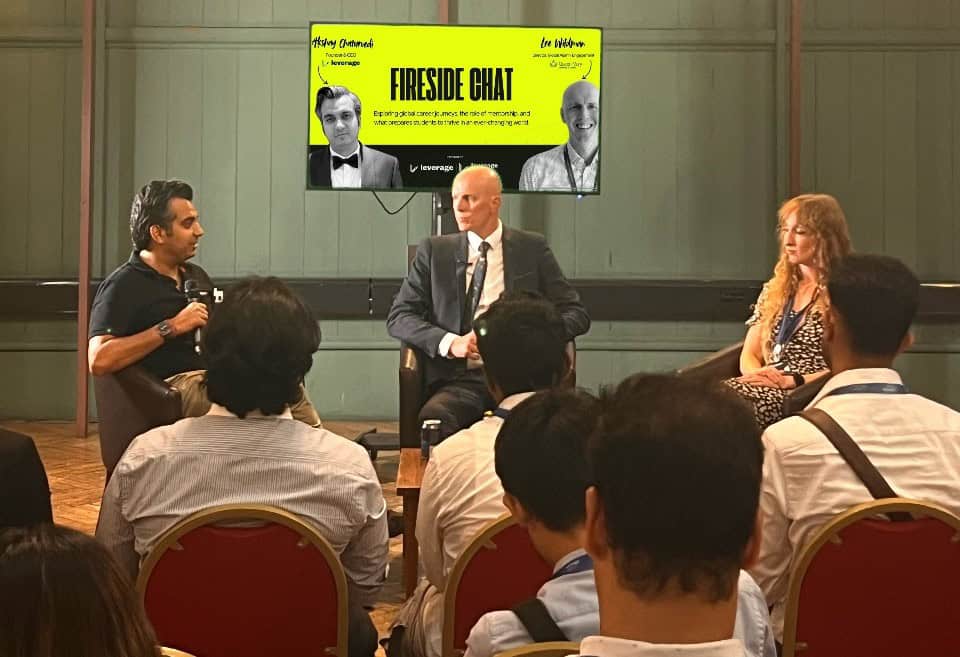
More than 600 international students studying across the UK came together at Queen Mary University of London last month for the second edition of Leverage Careers Day.
While a record 758,855 international students were enrolled in UK higher education in 2022/23, a 12% rise on the previous year, rising employer uncertainty, growing graduate anxiety, and an increase in job scams have made students more cautious in their professional choices.
The event saw students, who are now exploring opportunities in AI, data science, marketing, finance, and more, connect with top employers and industry leaders, to network, explore career pathways, and gain valuable career advice.
“We saw a remarkable breadth of interest from students across a range of disciplines, with data science and AI standing out as clear frontrunners. Many were especially drawn to AI-layered roles in marketing, creative industries, finance, and healthcare,” Akshay Chaturvedi, founder and CEO, Leverage, told The PIE News.
“At the same time, digital marketing and content strategy sparked strong interest of their own, driven by rising opportunities in the digital economy. Beyond these, students also gravitated towards specialized tracks for example in biotechnology, luxury management, automobile design, and culinary arts.”
For many international students, a successful career has long been the ultimate benchmark of achievement, and in the UK, standing out is crucial, with a sponsored job often seen as the true return on their significant investment in tuition and living costs.
Moreover, with over a quarter of UK employers unaware of the Graduate Route – which allows international students to work sponsor-free for up to two years but is set to be reduced to 18 months under the May 2025 immigration white paper and tied more closely to skill-based jobs – understanding the realities of today’s hiring market has become increasingly important.
“Employers aren’t just looking for textbook skills anymore — they’re looking for forward-thinking talent who can bring innovation to the table,” explained Lee Wildman, director, global engagement, Queen Mary University of London, who joined a fireside chat on mentorship, global exposure, and the skills needed in an ever-evolving world, alongside Chaturvedi and Rhianna Skeetes, international careers consultant at QMUL.
“What ideas do you have to take an organisation to the next level? Be prepared to sell yourself – not just in terms of what you’ve learned, but in terms of how you think.”
What excites me most is seeing students ask better, sharper questions about their careers – not just what job they’ll get, but how they’ll grow, how they’ll lead, and how they’ll stand out
Akshay Chaturvedi, Leverage
Adaptability was also highlighted as the “strongest tool in a student’s back pocket” by Jennifer Ogunleye, B2B communications lead at Google, who delivered a keynote urging students to look beyond job titles, and academic credentials, and focus on building a personal brand.
“There isn’t always a straightforward route into tech or any industry today – even those who were most in demand just a year ago are having to pivot,” noted Ogunleye.
“What matters more than ever is your personal brand: What are you passionate about beyond your job title? That’s what sets you apart from AI, from competition, from volatility.”
The event also brought together organisations such as Publicis Groupe, Reed Recruitment, Hyatt Place, Ribbon Global, and GoBritanya, which offered insights into student accommodation services across the UK and Ireland, giving students exposure to careers across creative, corporate, hospitality, and FinTech sectors.
The Westminster and Holborn Law Society also provided guidance to aspiring legal professionals on navigating local and international career pathways.
“Students today aren’t satisfied with just ‘getting a job’ anymore. They’re actively chasing careers that offer international mobility, cross-border exposure, and long-term growth,” stated Chaturvedi.
“That’s a significant shift, and quite refreshing so, given how only a few years back stability was often the top priority. Now, they want to thrive in industries that are constantly evolving every single day, with technology, globalization, and new market needs at play.”
Higher education stakeholders have noted that math anxiety can hold students back from pursuing some disciplines or major programs, but a new analysis from Gallup finds that young Americans over all place less importance on math skills compared to the general population.
While over half of all Americans rate math skills as “very important” in their work (55 percent) and personal (63 percent) lives, only 38 percent of young people (ages 18 to 24) said math skills are very important in their work life and 37 percent in their personal life, according to a December survey of 5,100 U.S. adults.
The survey highlights generational divisions in how math skills are perceived, with adults older than 55 most likely to see math as very important compared to younger adults, and Gen Z least likely to attribute value to math skills.
To Sheila Tabanli, a mathematics professor at Rutgers University, the low ratings point to a lack of perceived connection between math skills and career development, despite the clear correlation she sees.
Tabanli said it can be hard to convince many Gen Z and Alpha students that math content is necessary for their daily lives, in part because access to information is so convenient and they can perform calculations on their phones or online.
“We need to transition from focusing too much on the concept, the domain, the content—which we do love as math people, otherwise we wouldn’t be doing it for a living—but students don’t see that connection [to employable skills],” Tabanli said.
When asked how important math skills were for the majority of the U.S. workforce, 40 percent of young adults rated having math skills as very important—the lowest rating of nine skills evaluated, including reading, language, technology and leadership, according to Gallup.
Young people also rated the importance of math skills for the general workforce, as compared to their own lives, the lowest of all age cohorts. Adults ages 55 to 64 (71 percent) and 65 and older (68 percent) were most likely to say math is a very important skill for the general workforce.
Most career competencies that colleges and universities teach, such as those by the National Association for Colleges and Employers, focus on broader skills—including critical thinking, leadership, communication and teamwork—as essential for workplace success. Math can teach students how to solve problems and engage with difficult content, which Tabanli argues are just as important for an early-career professional.
One reason a young adult might not rate math skills highly is because many students face undue math anxiety or a skepticism about their own ability to do math, falling into the belief that they’re not “math people,” Tabanli said.
In response, Tabanli believes professors should help students apply computational skills to their daily lives or link content to other classes to encourage students to invest in their math learning. While this may be an additional step for a faculty member to take, Tabanli considers it a disservice to neglect this connection.
Professors can also strive to make themselves and the content more human and approachable by sharing information about their lives, their careers and why they’re passionate about the subject, Tabanli said.
A new DESSA screener to be released for the Fall ‘25 school year–designed to be paired with a strength-based student self-report assessment–accurately predicted well-being levels in 70 percent of students, a study finds.
According to findings from Riverside Insights, creator of research-backed assessments, researchers found that even students with strong social-emotional skills often struggle with significant mental health concerns, challenging the assumption that resilience alone indicates student well-being. The study, which examined outcomes in 254 middle school students across the United States, suggests that combining risk and resilience screening can enable identification of students who would otherwise be missed by traditional approaches.
“This research validates what school mental health professionals have been telling us for years–that traditional screening approaches miss too many students,” said Dr. Evelyn Johnson, VP of Research & Development at Riverside Insights. “When educators and counselors can utilize a dual approach to identify risk factors, they can pinpoint concerns and engage earlier, in and in a targeted way, before concerns become major crises.”
The study, which offered evidence of, for example, social skills deficits among students with no identifiable or emotional behavioral concerns, provides the first empirical evidence that consideration of both risk and resilience can enhance the predictive benefits of screening, when compared to strengths-based screening alone.
In the years following COVID, many educators noted a feeling that something was “off” with students, despite DESSA assessments indicating that things were fine.
“We heard this feedback from lots of different customers, and it really got our team thinking–we’re clearly missing something, even though the assessment of social-emotional skills is critically important and there’s evidence to show the links to better academic outcomes and better emotional well-being outcomes,” Johnson said. “And yet, we’re not tapping something that needs to be tapped.”
For a long time, if a person displayed no outward or obvious mental health struggles, they were thought to be mentally healthy. In investigating the various theories and frameworks guiding mental health issues, Riverside Insight’s team dug into Dr. Shannon Suldo‘s work, which centers around the dual factor model.
“What the dual factor approach really suggests is that the absence of problems is not necessarily equivalent to good mental health–there really are these two factors, dual factors, we talk about them in terms of risk and resilience–that really give you a much more complete picture of how a student is doing,” Johnson said.
“The efficacy associated with this dual-factor approach is encouraging, and has big implications for practitioners struggling to identify risk with limited resources,” said Jim Bowler, general manager of the Classroom Division at Riverside Insights. “Schools told us they needed a way to identify students who might be struggling beneath the surface. The DESSA SEIR ensures no student falls through the cracks by providing the complete picture educators need for truly preventive mental health support.”
The launch comes as mental health concerns among students reach crisis levels. More than 1 in 5 students considered attempting suicide in 2023, while 60 percent of youth with major depression receive no mental health treatment. With school psychologist-to-student ratios at 1:1065 (recommended 1:500) and counselor ratios at 1:376 (recommended 1:250), schools need preventive solutions that work within existing resources.
The DESSA SEIR will be available for the 2025-2026 school year.
This press release originally appeared online.
eSchool Media staff cover education technology in all its aspects–from legislation and litigation, to best practices, to lessons learned and new products. First published in March of 1998 as a monthly print and digital newspaper, eSchool Media provides the news and information necessary to help K-20 decision-makers successfully use technology and innovation to transform schools and colleges and achieve their educational goals.
This HEPI Blog post was kindly authored by Huw Morris, Honorary Professor of Tertiary Education, IoE, UCL’s Faculty of Education and Society and Richard Watermeyer, Professor of Education, University of Bristol.
Introduction
It is a year since the Labour Government was elected with a commitment to produce a post-16 skills and higher education White Paper by Summer 2025. In this article, we look at how changes in the UK’s economy and politics since July 2024 have altered what is likely to be in this policy statement and what might happen despite it.
What has happened over the last twelve months?
Last September, the Minister of State for Skills, Jacqui Smith, drew attention to the enormous economic challenges and tough choices facing the Government, but stressed the administration’s commitment to a mission-led approach to create a new era of opportunity and economic growth within a fairer society for everyone. Two months later the Secretary of State for Education, Bridget Phillipson, wrote to vice chancellors outlining the Government’s expectation that universities will:
expand access and improve outcomes for disadvantaged students;
make a stronger contribution to economic growth;
play a greater civic role in local communities;
raise teaching standards; and
deliver sustained efficiency and reform.
There were also subsequent calls for more effective higher education leadership, strong governance and a new business model for the sector. To support these changes, ministers provided an increase in the undergraduate home tuition fee of £285/year and an uplift to the maximum maintenance loan support of £414. For those concerned with institutional finances, this uplift in income was more than matched by higher costs due to increases in employers’ national insurance contributions, reductions in foundation year fees, withdrawal of level 7 apprenticeship funding and reduced capital allocations, among other things. To deal with these changes, most universities have sought to increase their international student recruitment and classroom-based home undergraduate students, as well as higher margin postgraduate provision. For some of the institutions denied these opportunities because of their market position the alternative has been to expand their franchise operations and transnational education and/or to reduce costs. As figure 1 illustrates, these changes in funding and activity have produced some significant changes in forecasts for the money flowing to colleges, independent training providers and universities.
Figure 1: Funding and Orientation Matrix
Looking at the balance between areas of activity which enhance prestige and those that support widening participation, when combined with those that are funded publicly or privately, reveals some big changes. The increase in undergraduate home student tuition fees has not been enough to stem the decline of overall funding from foundation years, postgraduate courses and research grants. The balance in government funding has shifted from these areas of activity towards schools, further education and apprenticeship provision. Meanwhile, although funding from private sources for international students taught in the UK and for transnational education overseas has expanded, UKRI funding for individual institutions has declined due to increases in the number of grant applications from a wider range of institutions and a larger number of researchers leading to a halving of the success rate compounded by changes to the treatment of what was and is now again EU research funding.
Meanwhile, the impact of universities and colleges on local communities has been a tale in two parts. The annual Higher Education / Business Community Interaction survey reveals small increases in business start-ups and spinouts as well as partnerships with small firms, but measures of the impact on local economies is more difficult to demonstrate. These issues are less pronounced with apprenticeship providers and further education colleges where local community engagements are key to engaging adult part-time learners.
The Government has fared poorly in opinion polls over the last twelve months due to concern about the cost of living, immigration and the state of public services. This has prompted challenges from the political right and left. This is not confined to questions about tax, immigration and public spending, it has also extended to concerns about the role of universities and support for other forms of post-16 education. Across the voting population, recent private opinion polling has revealed that just over half of the electorate are questioning, sceptical or openly hostile to the role of universities in their communities. University research as an area of activity is poorly understood and where there is an appreciation of this activity, it is not automatically seen as meeting real-world needs. Meanwhile, among the leadership of many major civic and corporate organisations, universities are seen as profit-driven and not working in the public interest. In short, there is a lack of an emotional and relational connection between universities, local communities and national leaders.
It has been argued that university leaders need to respond to these adverse public perceptions by stating the virtues of higher education and research more clearly and advocating for universities more often. Pursuing this approach, it is argued, will open the door to greater trust, less regulation and improved funding. More recently, it has been argued that public opinion has changed to such an extent since the Covid pandemic that this approach will not work and there is now a need, quoting Robbie Burns, for university staff “to see ourselves as others see us”, before considering how best to respond. The priorities of these others are likely to become more visible over the summer months as they question the evidence of university contribution and those who champion the current arrangements in the wake of this year’s home and international student recruitment rounds.
The Autumn party conference season begins with the Liberal Democrats in Bournemouth (20 to 23 September), Labour in Liverpool (27 to 1 October), the Green Party in Bournemouth (3 to 5 October) and the Conservatives in Manchester (5 to 8 October). In today’s world of multi-party politics and jostling to define the public policy agenda, it is also important to note that the Reform Party conference will take place in Birmingham (5 to 6 September). Meanwhile, “Your Party”, the new left-wing party led by Jeremy Corbyn and Zarah Sultana, has not given a formal indication of its plans for an inaugural conference, but it seems likely that there will be events in early Autumn..
The conference season is normally a time when parties outline what is planned or hoped for in the future. Governments are not supposed to announce new initiatives outside of the House of Commons, and although they occasionally do, they are rebuked by the Speaker of the House of Commons, as the Secretary of State for Education and Chancellor of the Exchequer have found out in recent months. This year is likely to be more difficult than usual as pressures on the public purse raise questions about tax changes in the Autumn budget and raise the spectre of changes to expenditure plans to meet the Government’s spending rules and to provide for defence, health and welfare commitments.
Any post-16 education announcements are likely to be especially difficult because of the competition with other parties. The Reform party has promised to eliminate interest on student loans and to extend loan repayment periods (a graduate tax in all but name), as well as removing student loans for medical and STEM students and writing off the loans of long-serving NHS workers. There are also proposals to invest more in apprenticeships and technical education with an increase in publicly funded training courses.
Similar proposals were made by the Green Party in their 2024 General election manifesto with commitments echoing the 2019 Labour Party manifesto to scrap tuition fees, restore maintenance grants and increase investment in skills and lifelong learning. Meanwhile, for completeness, the Liberal Democrats pledged to improve financial support for disadvantaged students by reintroducing maintenance grants, in part modelled on the arrangements introduced by the Liberal Democrat minister, Kirsty Williams, while she oversaw higher education for the Welsh Government (2016-2021). These promises of increased spending on student maintenance are likely to be attractive to many young voters and particularly newly enfranchised 16–18-year-olds. These promises can also be made by parties that believe they are unlikely to find themselves in government in 2026. The problem for university leaders and staff with these proposals is that while they will help students, they won’t help institutions to pay their bills, except perhaps for students’ halls of residence.
What could possibly go wrong?
Increased strain on university finances and growing pressure on the public purse, combined with demands for improved student maintenance funding, create a difficult context if anything unexpected goes wrong with the income and expenditure of individual institutions. These challenges have been added to by the publication of nine major Government strategy and policy papers with implications for post-16 education and training.
The five missions that the Government was elected to pursue have been added to by a plan for the NHS, an Immigration White Paper, five critical technologies, six milestones, seven chapters in the Get Britain Working white paper, the eight priority sectors in the industrial strategy white paper, the nine regions identified in the national infrastructure plan and 10 priority skills sectors identified by Skills England. All of these plans have local dimensions that are being developed with the 12 established Mayoral Strategic Authorities and 12 new regional bodies outlined in plans for devolution to 44 English regions which will combine with 38 Local Skills and Improvement Plans (LSIPs). The complexity associated with these arrangements means that there will, in practice, have to be some simplification.
It is reassuring to see this energy and commitment to change, but it is also a cause of concern that it is not clear how the various plans and governance arrangements will join up within Whitehall and across the regions. This may not be a problem in the largest city regions of Greater Manchester, Liverpool, London, North East, West Midlands and West Yorkshire. However, it is likely to be more of an issue in the less developed Mayoral regions of Cambridgeshire and Peterborough, the East Midlands, Sheffield, South Yorkshire, Tees Valle and West of England, not to mention the other 22 yet to be reorganised regions of the UK covering 50% of the population.
The challenges of developing joined-up plans are likely to become problems if the reputational and financial risks being experienced by cash-strapped colleges, independent training providers and universities materialise. Among universities 43% are currently forecasting a deficit and the most recent published figures for further education colleges in 2022/3 revealed a figure of 37%. As recent experience with the University of Dundee has illustrated, the short-term direct costs can exceed £100m, and the longer-term indirect costs are even greater. These additional costs are likely to be substantial as national regulators, regional officials and local providers wrestle with the challenge of developing the capacity, capability and courage needed to align provision with employer demand as well as student interest.
With low economic growth, high inflation and challenges to reductions in government expenditure and without additional funding for student maintenance and living expenses, it is difficult to see how universities will widen participation for students from lower socio-economic backgrounds. Without more funding for courses in the areas of skill shortage that underpin the eight industrial sectors and the requirements of the NHS and National Infrastructure Plan, it is difficult to see how local skills needs will be met and the improvements in productivity and economic growth achieved. Teaching quality might be maintained by a lower-paid and increasingly casualised workforce, but will the efficiency and effectiveness of institutions improve without support for the local coordination and rationalisation of activity?
What might be in the Post-16 and Higher Education White Paper?
Now that the anticipated publication of the Post-16 and Higher Education White Paper has been delayed until the Autumn it seems likely that it will be timed to coincide with the Budget in November. This Indian Summer schedule is needed to gain some certainty about the future funding position and associated changes to tax and spending decisions. So, what might be in the White paper? At present the following five strands of activity seem most likely.
Widening participation and progression
Proposals for the development of regional education and skills pathways to support the introduction of the credit and modular funding arrangements that will be needed with the Lifelong Learning Entitlement in January 2027. Proposals for consultation on how institutions could be required to introduce bursary and scholarship arrangements if they fail to meet regionally agreed targets for widening participation and progression.
International students
Proposals for consultation on how the 6% international student levy will be used to pay for the upskilling of domestic learners, rebalancing of funding towards institutions that have not recruited international students and underwriting of the costs of structural adjustments.
Local Skills and Productivity
Outline of how Local Skills Improvement Plans will be developed by Skills England to ensure that Mayoral Strategic Authorities and other regional bodies have tools to influence education provision to respond to the 10 skills priorities and 5 critical technologies while meeting the needs of local employers and communities. This might include local independent careers, advice and guidance arrangements of the sort developed in Greater Manchester.
Quality and Standards
Announcement of the provisional findings from an internal review of the standards and regulations applied by the Office for Students including tightened controls over franchise and transnational education arrangements.
Efficiency, effectiveness and exit
Changes to Competition and Market Authority guidance on regional institutional cooperation. The introduction of an insolvency and regime for higher education institutions to parallel arrangements for further education colleges and independent apprenticeship providers. This to include formal mechanisms for restructuring loans or similar transitional finance arrangements.
What is currently missing from these arrangements is a multi-year agreement on fees and funding or a plan for supporting English regions that are not part of the current plans for devolution. All major post-16 White papers in the past have included an explicit or tacit exchange of support for the UK economy locally and nationally with an agreement on longer-term funding and finance. To achieve this realistically in the future will require guidance on how regional and institutional leadership and governance will be aligned with national plans. The UK’s devolved governments and a few established Mayoral Strategic Authorities have mechanisms to bring colleges and universities together to discuss their plans and the opportunities for alignment. In many instances these arrangements span more than one MSA or its equivalent. Most of the other regions lack these arrangements and will need support to develop local officials, senior managers and governing bodies. Most importantly what should these groupings do if one or more institutions in their patch fail?
There is little appetite among the UK’s political parties and government departments for an independent review of higher education because of concern about the time this would take and the loss of control it would entail. However, the risks associated with current economic constraints and political polarisation pose substantial risks for local communities and regional economies in general and for the students and staff in individual institutions in particular. The summer months provide a useful time to reflect on these challenges and to consider how genuinely transformational change can be led and managed within city regions and rural combined authorities. For universities, further education providers and independent training providers and their representatives, this should involve more than improving their public affairs and relations and should consider how local and regional forms of organisation can be developed.
Building on a career with impact, Chartarra Joyner continues to embody a sense of purpose to become an even stronger leader in academia.
Chartarra JoynerJoyner is assistant vice chancellor, budget and planning, at North Carolina Agricultural and Technical State University (NC A&T). She oversees the administration, analysis and strategic management of the university’s $470 million budget. As head of the budget and planning team, she is responsible for compliance and fiscal integrity while managing the comprehensive budget and reporting process.
Having attended Fisk University as an undergraduate, where she studied accounting, Joyner appreciates working at a Historically Black College and University but admits that a career in academia happened unexpectedly. After graduating from college, she spent more than a decade working in fi nancial services. Her last position before NC A&T was as a senior business analyst clinical services at HCA Healthcare, noting that her diverse background enables her to bring a unique lens to higher education.
“In my positions, I led cross-functional teams, cost reduction strategies and other process improvement initiatives,” she says. “All this combined experience helps me. I started out in accounting, but most of my roles then progressed, and I found a love for operational excellence and process-improvement initiatives.”
When her family moved to Greensboro, North Carolina, she planned to be a stay-at home mother but realized that was not where her strengths lie. Twelve years ago, she took on a contract assignment at NC A&T, which evolved into a full-time position. While the industry was different, she saw the move as a natural progression. Joyner has been in her current position since 2016. Because NC A&T is a large employer in Greensboro, her work has had a positive impact on the local economy.
“I was able to apply my skills and experience in financial strategies,” Joyner says. “I wanted to help assist with the educational access for students as well as equity for those students. NC A&T has a lot of fi rst-generation college students. This is what brought me and made me stay in academia. It’s been fulfilling to see the student success stories that resulted from the strategic financial leadership decisions made here at the university.”
NC A&T initiated a “bring your child to work” program, and her three children have all experienced the campus and seen her busy at work. Then, as part of their coursework in school, there were assignments where they described what she does.
“Children’s natural curiosity, they just ask questions,” she quips. Joyner is a third generation college graduate—stretching back to her grandmother (also an HBCU graduate)—and her second oldest son is fourth generation, having graduated from NC A&T. While higher education is the norm in her family, she thrives in an environment where first-gen students are able to flourish. She says that in her current role, she is able to mentor students and other professionals and contribute to the larger mission of the university.
“I value thought leadership,” she says. “There’s a lot of collaboration in academia and there is continuous learning, which aligns with my personal mission and my core values. It also gives me the opportunity to make an impact through student support and developing our future global leaders. [At NC A&T] we have over 14,000 students that we have an impact on every day who are future global leaders.
“I found a place where I can lead strategically and contribute to the larger mission of the university and the global community,” she adds. “What is meaningful to me is having an impact on the students to ensure that the students have the resources and support needed. [We’re] helping to produce engineers, doctors, lawyers and other professions… and the cooperative extension programs we do with the community and the research.”
With the goal of becoming a chief business officer (CBO), Joyner applied for the National Association of College and University Business Officers (NACUBO) Fellows Program and was recently selected to take part in the highly competitive immersive leadership development program. The NACUBO program will help her refine her leadership skills and deepen her ability to communicate complex financial information. This includes aligning resources with institutional goals, developing flexible budget models and exploring diversified revenue streams. Due to current university priorities, she has postponed her participation until next year.
As part of her work at NC A&T, Joyner has chaired and participated in strategic committees and spearheaded initiatives in staff development, operational efficiency and implementation of best practices to support long-term financial planning and institutional effectiveness.
She describes her career trajectory as building a diverse portfolio that has helped her grow and lead at the executive level.
“I want to create a path for other people, drive innovation while effectively managing resources of the institution,” Joyner says with confidence. “I also hope to contribute to national conversations on equity, sustainability and operational excellence for higher education. Ultimately, my goal is to make a lasting impact.”