You’ll often hear two words come up in advising sessions as students look ahead to college: match and fit. They sound interchangeable, but they’re not.
Match refers to what colleges are looking for from students. It’s mostly determined by admissions requirements such as GPA and test scores, and in some cases, other criteria like auditions, portfolios, or athletic ability. Fit is more of an art than a science; it refers to what the student is looking for in a college, including personal preferences, social and cultural environment, financial factors, and academic offerings. When we talk to students about college fit, it’s an opportunity for them to ask themselves whether they like what a certain institution offers beyond being admitted.
In the college admissions process, both terms matter. A strong match without a good fit can leave a student disengaged and negatively affect their chances of graduating from college. Nearly a quarter of undergraduate freshmen drop out before their second year, and it seems likely to me that a lot of these cases boil down to bad fits. On the other hand, a great fit that isn’t a match could be difficult for admission in the first place, and if a student is admitted anyway, the rigorous coursework they encounter might be more than they’re ready for. To maximize postsecondary success, advisors, families, and students alike should fully understand the difference between match and fit and know how to approach conversations about each of them.
Match: Reach, target, and solid
As I’ve worked with advisors over the years, one of the best ways we’ve found to guide students on match is using the categories of “Reach,” “Target,” and “Solid” schools. We can determine which schools belong to what category using the data that colleges share about the average incoming GPAs and test scores of admitted classes. Typically, they report weighted GPAs and composite test scores from the middle 50 percent of accepted applicants, i.e., from the students who fall anywhere from the 25th to 75th percentile of those admitted.
Reach: These are schools where admission is less likely, either because a student’s test scores and GPA are below the middle 50 percent or because the school traditionally admits only a small percentage of eligible applicants.
Target: These are schools where either GPA or test scores fall in the middle 50 percent of admitted students.
Solid: These are schools where students are well within the middle 50 percent for both GPA and test scores.
Building a balanced college list across these categories is essential in the college planning process. Often, I see high-achieving students over-index on too many Reach schools, which may make it hard for them to get accepted anywhere on their list, simply because their preferred schools are ultra-selective. Meanwhile, parents and guardians may focus heavily on fit and overlook whether the student actually meets the college’s admission criteria. Advisors play a key role in keeping these data-informed conversations grounded with the goal of a balanced list of college options for students to pursue.
The importance of early planning
Timing matters. In general, if you meet with students early enough, conversations about fit are productive, but if you’re meeting with students for the first time in their senior year, the utmost priority should be helping them build a balanced list. Ideally, we want to avoid a situation where a student thinks they’re going to get into the most competitive colleges in the country on the strength of their GPA and test scores, only to find out that it’s not that easy. If advisors wait until senior year to address match, students and families may already have unrealistic expectations, leading to difficult conversations when options are limited.
On the other hand, we would stress that although GPA is the factor given the most weight by admissions offices, there are ways to overcome match deficits with other elements of a college application. For instance, if a student worked part-time to support their family or participated in co-curricular activities, colleges using holistic review may see this as part of the student’s story, helping to balance a GPA that falls outside the typical range. These experiences highlight a student’s passions and potential contributions to their chosen major and campus community. We don’t want students to have unrealistic expectations, but we also shouldn’t limit them based on numbers alone.
In any case, advisors should introduce both match and fit concepts as early as 9th grade. If students have a specific college in mind, they need to be aware of the match requirements from the first day of freshman year of high school. This allows students to plan and track academic progress against requirements and lets families begin exploring what kind of environment, resources, and financial realities would make for the right fit.
Fit: A personal process
Once match is established, the next step is making sure students ask: “What do I want in my college experience?” The answers will involve a wide range of factors:
Institutional type: Public or private? Small liberal arts college or large research university?
Academic considerations: What majors are offered? Are there study abroad programs? Internship opportunities?
Student life: What is the student body like? What kind of extracurriculars, sports, and support services are offered? Are there fraternities and sororities? What is the campus culture?
Affordability: What financial aid or scholarships can I expect? What is the true net cost of attendance?
Outcomes: What a student hopes to gain from their postsecondary experience, including specific degrees or credentials, career preparation, financial benefits, personal growth, and skill development.
Fit also requires conversations within families. I’ve found that open communication can reveal misunderstandings that would otherwise falsely limit students’ options. Sometimes students assume their parents want them close to home, when in fact, parents just want them to find the right environment. Other times, families discover affordability looks very different once they use tools like free cost calculators. Ongoing dialogue about these topics between advisors, students, and families during the high school years helps prepare for better decisions in the end.
Bringing it all together
With more than 4,000 colleges and universities in the U.S. alone, every student can find a college or university that aligns with their goals and abilities. Doing so, however, is both an art and a science. Advisors who help families focus on both dimensions, and start the conversation early, set students up to receive those treasured acceptance letters and to thrive once they arrive on campus.
For school districts developing their proficiency in postsecondary readiness factors, like advising, there is an increasing amount of support available. For one, TexasCCMR.org, has free guidance resources to strengthen advising programs and other aspects of college and career readiness. While Texas-focused, many of the insights and tools on the site can be helpful for districts across the country in building their teams’ capabilities.
Donald Kamentz, Contigo Ed
Donald Kamentz is a skilled facilitator and education consultant utilizing his diverse experiences in both non-profit management and K-12 education to help organizations best serve all student populations. As the Founder and CEO of Contigo Ed, Donald Kamentz brings his over 30+ years of diverse experiences and passion for working in the postsecondary access and success arenas. He has been a member of both the National Association of College Admission Counseling (NACAC) and the Texas Association for College Admission Counseling (TACAC) since 1999.
Latest posts by eSchool Media Contributors (see all)
By Pete Moss, Business Development Director at Ellucian.
‘Pouvez-vous s’il vous plaît me dire où se trouve la gare?’ – this is the extent that a colleague of mine can remember from his Introductory French module that he completed as part of a computing degree in the late 90s. That institution’s attempt at the time to embed flexibility and cross-curriculum choice to help students develop skills out of their discipline to help with employability. ‘It was easier to pass than the programming courses’ was the authentic feedback that my colleague gave in retrospect, but they did at least have the choice to expand their learning experience and gain some broader foundational skills. That institution, however, has long abandoned much of that flexibility, largely due to the apparent complexity of administration.
That is not to say that there are not fantastic examples of employability related skills initiatives across the sector, but the recent policy landscape (not least the Skills England Sector evidence on the growth and skills offer) and ever-present national growth agenda are now firmly putting the spotlight on the role of HE in this area. The if element of HE holding that key role in the skills agenda is widely held, but now the thorny problem of how must be addressed. Technology advancements, specifically AI, will play a contributory factor in how institutions can remove barriers that caused institutions to reduce flexibility in the past, but what of the wider considerations?
To explore this topic further I asked Ben Rodgers, an experienced academic registrar and AHEP consultant, for his views on the topic:
In today’s fast-moving global economy, the value of a university education is increasingly measured not just by academic achievement, but by the employability of graduates. Employers are no longer looking solely for degrees, they’re looking for skills: digital fluency, critical thinking, communication, and technical know-how that align with the needs of their industries. Meanwhile, universities are under pressure to demonstrate that their programmes deliver real-world value. The challenge is clear: how do we bridge the gap between what is taught and what is needed?
This is where technology can make a transformative difference. At the forefront of this change is a new wave of AI-powered innovation designed to bridge the gap between academic programmes and real-world skill demands. These emerging technologies can analyse curricula, extracting the skills embedded within them and mapping those against labour market data to identify areas of alignment and gaps.
Crucially, they work in both directions; institutions can see what skills a course develops, while students or employers can start with a desired competency like coding or digital marketing and trace back to the programmes that build those capabilities.
It is the kind of innovation that higher education has long needed. For too long, the link between the classroom and the workplace has been inconsistent or poorly articulated. Universities may know they are delivering valuable learning, but haven’t always had the means to evidence that value in terms that resonate with employers and prospective students. These technologies bring much-needed clarity, offering structured and data-informed ways to demonstrate how academic learning contributes directly to employment readiness.
A Game-Changer for the Lifelong Learning Entitlement (LLE)
This kind of technology becomes even more important as the UK rolls out the Lifelong Learning Entitlement (LLE). The LLE is set to reshape the educational landscape by allowing individuals to access student finance for short courses, modular learning and skills-based development over the course of their lives. This shift away from traditional three-year degrees opens new possibilities, but also new challenges.
How will learners know which modules to pick? How will they know what skills they need for the job they want or even the job they haven’t yet imagined? With the support of emerging AI-driven tools, learners can begin to reverse-engineer their career goals. Want to become a Data Scientist? These systems can help identify which combinations of modules across a university lead to that destination. Interested in project management? The technology can pinpoint where those skills are taught, and which courses offer them. It’s like having a careers advisor, curriculum guide, and labour market analyst all in one—offering personalised insights that connect educational choices with professional ambitions.
This sort of capability is vital if LLE is to be more than just a funding mechanism. It needs to be supported by intelligent infrastructure that empowers learners to make informed choices. Otherwise, there’s a risk that modular study becomes a confusing patchwork of disconnected learning.
Towards a Shared, Inter-University Skills Ecosystem
Now imagine if we took this even further. What if a skills platform were adopted not just by individual institutions but as a shared framework across regions or even nationally? In this model, students in Glasgow, Cardiff, Birmingham, or Belfast could see the skills they need for local job markets and be directed to the institutions offering them. This would create a more agile, responsive, and learner-centred education system. Universities wouldn’t just be competing with each other; they’d be collaborating to build a broader skills ecosystem.
The scale of opportunity here is significant and growing fast. Consider this: if every individual in the workforce has access to around £1,800 in personal development funding each year, the cumulative potential across a university’s learner base is vast. Multiply that by hundreds or thousands of learners, and you’re looking at a transformative funding stream that’s currently underutilised.
This is not just an opportunity for students, it’s a strategic imperative for institutions. By enabling individuals to build relevant, targeted skills, universities position themselves as essential engines of workforce development, driving economic resilience at local, regional, and national levels. It’s a win-win: empowered learners, future-ready graduates, and sustainable new revenue for the sector.
Of course, this requires a shift in thinking from institutional autonomy to inter-institutional alignment. But the benefits are compelling: more efficient use of public funding, stronger regional economies, and better outcomes for students.
Making Programme Design More Purposeful
Beyond helping students choose what to study, this technology also has the power to influence what universities choose to offer. If data consistently shows that a particular programme has little connection to current or emerging job markets, it is worth investigating. It does not mean the course should be cut. There may be academic or social reasons to preserve it, but it does mean the institution is equipped with the intelligence needed to make informed decisions.
It also invites a more purposeful approach to curriculum design. Are we including this module because it is pedagogically valuable, or because it’s always been there? Are we assessing this way because it builds a skill, or because it is the easiest to administer? When you can map outcomes to employment skills, these questions become easier to answer.
Moreover, it provides a compelling framework for conversations with students, parents, and policy-makers about the value of university education. It shows that we are listening to what the world needs and responding with academic rigour and strategic intent.
Global Potential, Local Application
The skills gap is not just a UK issue; it’s a global one. The World Economic Forum reports that nearly half of all workers (66 per cent) will need reskilling by 2030. Universities worldwide are grappling with how to stay relevant in an era of automation, AI and constant disruption. Emerging AI tools offer the potential for a globally shared skills taxonomy that could, with appropriate localisation, apply anywhere.
Conclusion
As universities continue to evolve, their role as engines of economic and social mobility becomes more important than ever. To fulfil that role, we must ensure that what we teach aligns with what the world needs. That does not mean turning every degree into job training, but it does mean being thoughtful, strategic, and transparent about the skills our programmes provide.
Emerging technologies offer an exciting glimpse into a more connected, skills-aware future. They empower students to take greater control of their learning, help universities refine and align their programmes and ensure that the promise of Higher Education translates into meaningful, real-world opportunities.
After all, education is a journey. It’s time the map caught up.
Big changes are coming to how families pay for college — and some colleges will need to get creative. New Parent PLUS loan caps ($20K/year, $65K total) mean schools where parents used to borrow six figures, or 50%+ of families relied on these loans will need to rethink their financial strategies. That includes several art schools and HBCUs — institutions that have long opened doors for talented students. While the full impact is still unfolding, this could spark new conversations about affordability, access, and better support for families. Change is never easy — but it can lead to smarter, more sustainable solutions for students and schools alike.
Today’s prospective students aren’t waiting for a glossy brochure to arrive in the mail. They’re researching schools on their phones between classes, watching campus tours on YouTube, and chatting with peers online to compare experiences. They’re digital-first and impatient, and expect the same seamless experience from a college as they would from Netflix or Amazon.
To stand out in this noisy, fast-moving environment, your enrollment marketing needs to work smarter. That means shifting away from static promotions and embracing data-driven, student-centric strategies that guide each prospect from curiosity to commitment.
Here’s how you can make that happen: 10 tactics that schools across North America (and beyond) are using to win the attention, trust, and enrollment of today’s students.
Struggling with enrollment?
Our expert digital marketing services can help you attract and enroll more students!
1. Understand Your Audience (Better Than They Expect)
The best enrollment marketing strategies begin with deep audience insight. Not the surface-level kind (like age ranges or postal codes), but real, behavior-based understanding.
Instead of just collecting names at events or counting clicks on a landing page, take the time to analyze what your audience is doing. Are they spending five minutes reading your nursing program page but bouncing quickly from your homepage? Is there a spike in traffic after you post student testimonials on Instagram? These are the clues that shape smart decisions.
Tools like Google Analytics, HubSpot, or Slate reveal exactly where prospects engage and where they drop off. Segmenting audiences based on their actions, rather than assumptions, lets you personalize outreach that feels meaningful. If a student explores your hospitality program at 11:00 p.m. from another time zone, your strategy should reflect that interest and context.
Personalization builds a connection. And connection drives conversion.
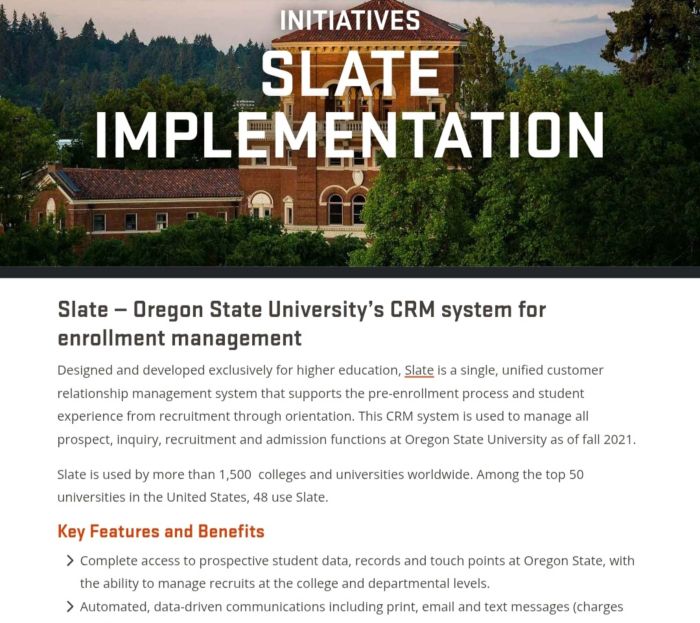
Example: Oregon State University implemented a modern CRM (Slate) to segment and personalize outreach. OSU filters prospective students by interests, major, and location to trigger automated, tailored communications (email, text, print) for each segment. With this approach, Oregon State University ensures that prospects receive information relevant to them. For example, engineering-minded students get content on OSU’s tech programs, improving engagement and application conversion.
2. Turn Your Website Into a Top-Performing Recruiter
Think of your website as your lead admissions counselor. It works 24/7 and never forgets a prospect’s name, if it’s built right.
A compelling site doesn’t just list programs. It creates an experience. Navigation should be intuitive, especially on mobile, where the majority of users browse. Application deadlines should never be more than one click away. Program benefits should be clear, outcomes measurable, and support services obvious.
Equally important is online visibility. Students won’t land on your site if it isn’t optimized for search. That means including the phrases they’re typing into Google: “Best business diploma in Vancouver” or “Top graphic design college Canada.” A steady stream of blog content around these themes builds your authority and search rankings over time.
Don’t underestimate local search either. Schools that claim their Google Business listing and keep it updated with reviews, photos, and FAQs tend to show up higher in local results, right when families are deciding which campuses to visit.
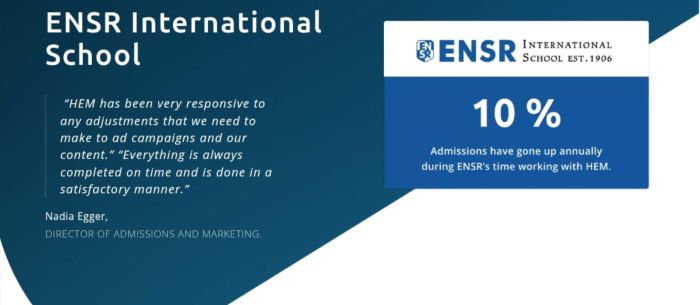
Example: ENSR partnered with HEM to revamp its website for better usability and search visibility. Targeted SEO optimizations (including multilingual content and Google Ads campaigns) were implemented to attract more qualified traffic. ENSR also improved site speed and navigation. As a result, the school saw a 10% year-over-year increase in admissions, clear evidence that an optimized, easy-to-find website translates into more student enrollments.
How can schools use SEO to reach more prospective students? Schools can use SEO by optimizing their website and content with keywords students search for, like program names or “colleges near me.” Creating informative blog posts, improving site speed, and using clear navigation help boost search rankings, making it easier for prospects to find and explore the school online.
3. Meet Students Where They Scroll
Social media is no longer just a promotional tool; it’s where brand trust is built. And guess what? Students don’t want picture-perfect posts. They want a glimpse into real student life: the awkward, the inspiring, and everything in between.
How do social media platforms help attract prospective students? Social media platforms help attract prospective students by showcasing authentic campus life, student stories, and academic highlights where students already spend time. Targeted ads and engaging content build awareness, answer questions, and create emotional connections that encourage students to explore programs and take the next step toward applying.
The most effective schools blend behind-the-scenes campus life, student takeovers, and authentic voices with strategic, paid campaigns. Engagement is key. Answer comments, reply to DMs, and ask questions. Your presence shouldn’t just be felt; it should be responsive.
And when a student visits your site but doesn’t apply? A retargeting ad reminding them about a scholarship deadline can bring them back with a purpose.
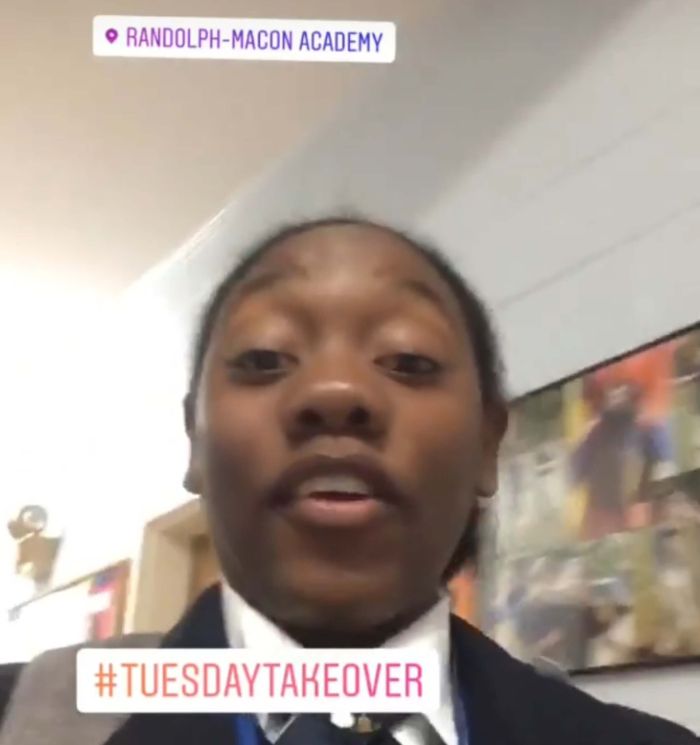
Example: Randolph-Macon Academy utilizes student-driven social media takeovers and campaigns to humanize its brand. For example, on “Takeover Tuesdays,” R-MA students run the school’s Instagram Stories, giving followers a genuine day-in-the-life look at campus life. These peer perspectives resonate with prospective students and parents. R-MA also shares posts on LinkedIn celebrating achievements (like its seniors earning $16 million+ in scholarships) to boost credibility. By strategically targeting content on platforms like Instagram, Facebook, and LinkedIn, R-MA expands its reach and builds trust with specific audiences.
Campus visits are powerful but not always possible. Virtual tours bridge that gap beautifully when done right.
Why are virtual tours important for school admissions marketing? Virtual tours are important because they let prospective students explore campus facilities, culture, and student life from anywhere. They provide a first-hand experience that builds familiarity and trust, especially for international or remote students who can’t visit in person, helping them feel more confident about applying.
The most compelling virtual experiences go beyond slideshows or still images. They immerse visitors in 360° visuals of your labs, residences, lounges, and dining halls. Add narration, clickable maps, and interactive hotspots to create a sense of discovery.
Want to make it even more engaging? Offer live tours hosted by current students. Answer questions in real-time. Make the conversation two-way. This kind of hybrid interaction not only informs, but it also builds comfort and connection.
Gamifying the experience with small touches like hidden easter eggs or quizzes can boost session time, making students stay longer and remember more.
Example: Eastern New Mexico University: In January 2025, ENMU launched an upgraded 360-degree interactive virtual tour of its campus, in partnership with a virtual tour platform. The tour lets prospective students anywhere in the world explore campus landmarks at their own pace with panoramic views and clickable info points. New interactive stops even feature current students sharing their experiences via video, and users can access photos and descriptions of traditions at each location. This immersive virtual experience makes viewers feel “like they are on campus,” even if they cannot visit in person.
Nothing conveys emotion, trust, and energy quite like video. That’s why it’s the top-performing format across all platforms.
Students use video to explore, compare, and decide. A 30-second clip showing campus energy can hook them, while a three-minute video of a student explaining why they chose your school can tip the scales.
The best videos aren’t always the most polished. Often, it’s the realness that lands, the quiet moment in a dorm room, a laugh during class, a genuine answer about overcoming a challenge. When current students tell their story on camera, it resonates far more than scripted promos ever could.
And don’t stop with publishing. Upload to YouTube (the second largest search engine in the world), share snippets on social media, and embed videos in your emails or on your site. It keeps your message moving, even when you’re not.
Example: The Academy of Applied Pharmaceutical Sciences regularly produces short videos featuring student success stories and hands-on training highlights. These testimonials and “day in the life” videos are shared on AAPS’s website and social channels, providing an authentic glimpse into student outcomes. AAPS also posts video content of alumni in their new careers or students in lab classes, which personalizes the school’s message.
6. Be There Instantly with Smart Chatbots
Picture this: a student is exploring your program page at 10:45 p.m. They want to know if scholarships are still open, but your office is closed.
This is where chatbots shine. When used effectively, they answer FAQs, guide students to relevant pages, and even collect lead info for follow-up, all in real time.
Today’s best bots go beyond text. They can speak multiple languages, schedule tours, and connect students with human counselors. They’re not a replacement for your staff. They’re the frontline, making sure no interest goes cold.
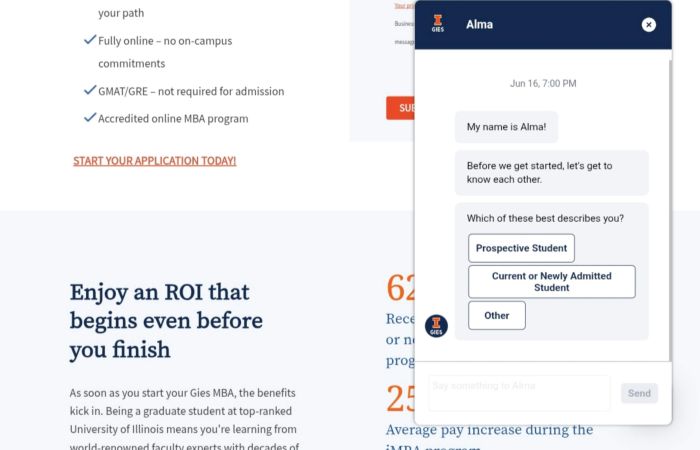
Example: The University of Illinois Gies College of Business deployed an AI chatbot named “Alma” on its online MBA program website to handle common questions and nurture leads. The chatbot was built with a no-code AI platform and programmed to answer prospective students’ free-text questions about the program, provide key information (e.g., deadlines, curriculum), and even collect contact info for follow-up.
Your school can say it’s great. But it means more when others say it for you.
Prospective students read reviews before making decisions. That’s true whether they’re buying shoes or choosing a college. A few well-placed, authentic reviews from happy students or parents can tip the scale in your favor.
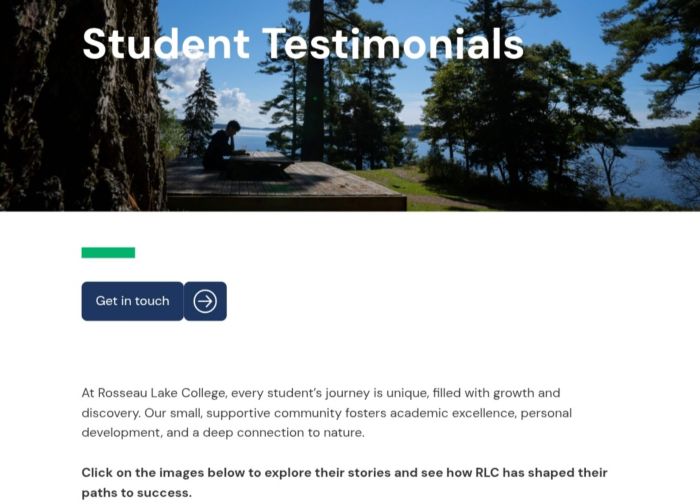
Example: Rosseau Lake College actively highlights student and parent testimonials on its official site to manage its online reputation. RLC’s admissions section features a dedicated “Student Testimonials” page with quotes, stories, and even videos from current students and recent graduates.
Make it easy for your community to share their voice. Follow up after tours or events with a simple request for feedback. Prompt graduating students to reflect on their journey. And most importantly, respond graciously to both praise and criticism.
Highlight these testimonials in your marketing materials, emails, and website. Some schools even have dedicated pages that feature alumni quotes, rankings, and outcomes all in one place.
Example: Discovery Community College leverages Google reviews and social media to boost its reputation. When the college receives a glowing review online, the marketing team amplifies it; for instance, Discovery CC shared a student’s 5-star Google review on Instagram with a thank-you message.
When you let your results speak for themselves, people listen.
8. Nurture With Purpose: Email and Text Messaging
Email isn’t outdated. It’s just misused.
Too often, schools blast the same generic message to every lead. But with marketing automation tools like HubSpot or Slate, you can do better. Much better.
Send personalized messages based on actual behavior. If someone downloaded a course calendar, send a follow-up series about faculty highlights, career paths, or student testimonials from that program. If a student clicked a scholarship link but didn’t apply, follow up with a helpful guide or checklist.
Text messages are the perfect complement: fast, direct, and effective. Use them for urgent nudges like deadline reminders or event RSVPs. But be respectful. Less is more when it comes to texting.
9. Host Webinars That Educate and Inspire
Done right, webinars are student recruitment gold. They let students interact with faculty, hear from alumni, and ask real questions, all from the comfort of home.
Think beyond the program overview. What are students anxious about? Admissions essays? Career prospects? Financial aid? Offer sessions that solve these problems, not just sell solutions.
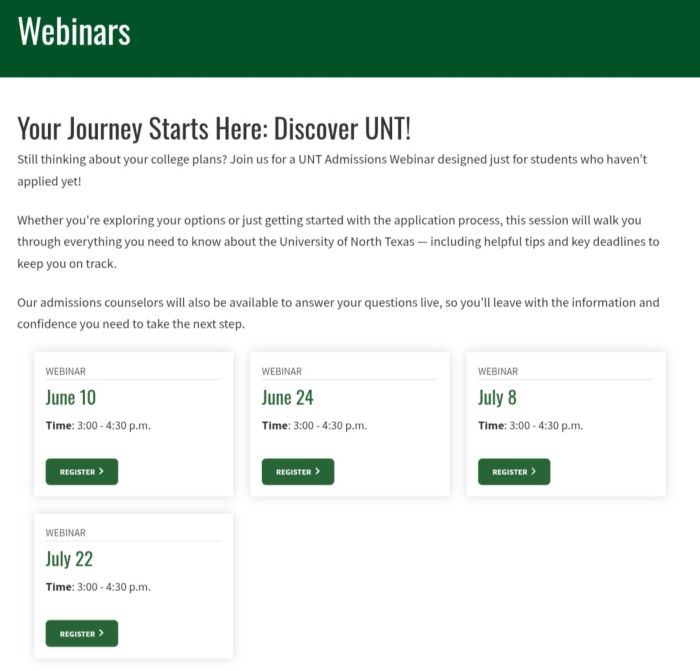
Example: The University of North Texas runs themed Admissions Webinars for targeted audiences of students who haven’t yet applied. UNT invites high schoolers to sign up for sessions like “Why UNT? & How to Apply,” where recruiters walk through programs, campus life, and the application process via Zoom.
Live Q&As make these events feel dynamic. A student asking a question and getting an answer in the moment, that’s engagement. That’s trust.
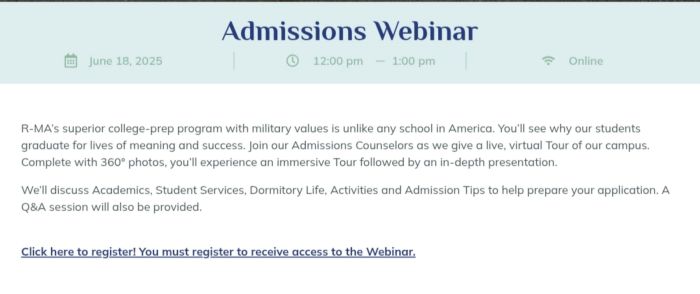
Example: Randolph-Macon Academy hosts regular live webinars for prospective families as part of its recruitment strategy. During these virtual info sessions, R-MA’s admissions counselors present an overview of the school, share up-to-date facts, and then open the floor for Q&A. They often incorporate a live virtual campus tour within the webinar. This format has been effective in converting attendees to applicants – families get to interact directly with staff and students from home, addressing any doubts in real time.
And once the event ends, the content lives on. Recordings become lead magnets. Clips fuel your social strategy. Recaps can power blog posts. Every webinar is a long-term asset when you plan it right.
10. Showcase What Comes After: Alumni Success
Prospective students are investing time and money. What they want to know is simple: “Will it pay off?”
Highlighting alumni outcomes is one of the most persuasive things you can do. Share job placement rates, grad school acceptances, average salaries, whatever metrics tell the story of success.
Even more powerful are personal stories. The alum who launched a startup. The student who landed a dream internship. The graduate who returned to school to mentor others. These aren’t just achievements, they’re proof points.
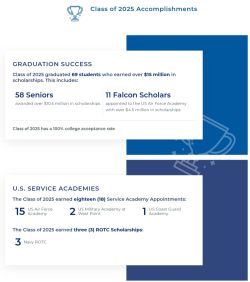
Example: Randolph-Macon Academy publicizes its alumni and student success outcomes as a core part of marketing. R-MA’s communications showcase statistics like 100% college acceptance and millions in scholarships earned by each graduating class. In 2025, R-MA proudly shared that its 69 seniors collectively secured over $10.5 million in scholarships for college. Alumni success stories (military academy appointments, leadership roles, etc.) are featured on the school blog and newsletters.
Some schools use interactive alumni maps to show where grads are working across the globe. Others run weekly spotlight stories on social or newsletters. However you do it, make sure it’s easy for prospects to imagine their own future in the successes of those who came before.
When you say, “Here’s where our grads go, and here’s how we help them get there,” the value of your school becomes real.
Enrollment Marketing Is Not About Tactics. It’s About Trust.
Each of these enrollment strategies works on its own. But when you combine them into a cohesive enrollment plan, powered by data and driven by empathy, you don’t just generate interest. You build relationships.
From a student’s first Google search to their final enrollment decision, every interaction matters. So make them count. Use tools like CRMs to track engagement. Align marketing with admissions. And most importantly, keep the student experience at the center of it all.
Because in today’s world, enrollment isn’t about volume. It’s about value. Give your prospects content that answers questions, support that feels personal, and stories that inspire. Do that, and the results will follow.
Need help building your enrollment marketing plan?
HEM offers expert services tailored to higher education institutions across Canada and beyond.Contact us today to learn more.
Struggling with enrollment?
Our expert digital marketing services can help you attract and enroll more students!
Frequently Asked Questions
Question: How do social media platforms help attract prospective students?
Answer: Social media platforms help attract prospective students by showcasing authentic campus life, student stories, and academic highlights where students already spend time. Targeted ads and engaging content build awareness, answer questions, and create emotional connections that encourage students to explore programs and take the next step toward applying.
Question: Why are virtual tours important for school admissions marketing?
Answer: Virtual tours are important because they let prospective students explore campus facilities, culture, and student life from anywhere. They provide a first-hand experience that builds familiarity and trust, especially for international or remote students who can’t visit in person, helping them feel more confident about applying.
Question: How can schools use SEO to reach more prospective students?
Answer: Schools can use SEO by optimizing their website and content with keywords students search for, like program names or “colleges near me.” Creating informative blog posts, improving site speed, and using clear navigation help boost search rankings, making it easier for prospects to find and explore the school online.
Is your child cheating if they’re turning to AI for help with college applications? The answer isn’t clear-cut. When used thoughtfully, AI can save time, help with organization, and spark creativity. But if misused, it can easily backfire and risk your child’s college dreams.
Kevin Krebs
Founder & Managing Director, HelloCollege
Most people are familiar with ChatGPT, but there are a host of tools to support the admissions process, including platforms to explore colleges aligned with specific interests (AdmitYogi), keep application tasks organized (Trello), and find scholarships based on career aspirations (BigFuture).
The biggest risk? Relying on AI to write application essays. These essays are your student’s opportunity to demonstrate something about their values, perspective, and character — things that grades and test scores can’t capture.
Bottom line — don’t ask a machine to write a human story.
Originality is key, and no matter how advanced generative AI gets, it will never capture the quiet pride of walking away from a captain position on the robotics team to pursue a true passion for journalism — or the growth that came from navigating the space between your Indian heritage and Western traditions.
Most colleges are aware of AI-generated writing and have started using tools like GPTZero and Turnitin to spot it, so over-relying on technology is a good way to have an application flagged or even disqualified. Bottom line — don’t ask a machine to write a human story.
Instead, it’s best to use AI at the beginning and end of the process for idea generation, as a sounding board or for minor edits — never for writing full paragraphs, sentences, or even phrases. Your child might try prompts like: “Generate a list of questions to help me explore my values,” “Scan my essay for places where I could add more specific details,” or “Is it clear how I grew as a person from this experience?”
While there’s no replacement for the human touch of an expert, AI tools can help students refine their ideas and polish their writing.
AI can be a powerful tool in college admissions, but only when the student stays firmly in the driver’s seat. The best applications come from creativity, originality, and personal perspective — things no algorithm can replicate.
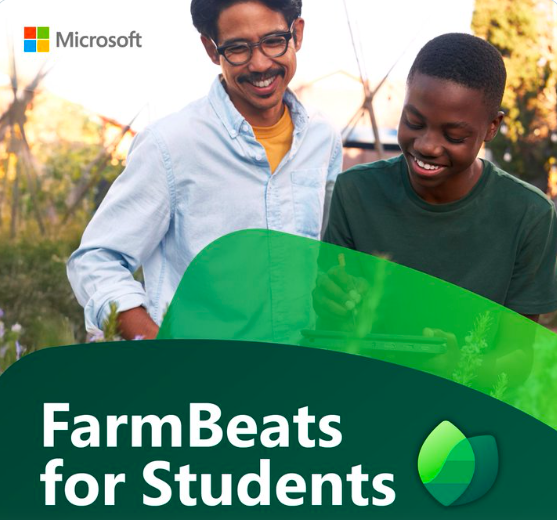
Microsoft Corp. and the National FFA Organization on Tuesday announced the national expansion of FarmBeats for Students, a cutting-edge educational program integrating smart sensors, data science and artificial intelligence (AI) to teach precision agriculture in classrooms. Starting today, FFA teachers and students throughout the United States, including FFA chapters in 185 middle and high schools, will receive a classroom set of FarmBeats for Students kits free of charge. The kits include ready-to-use sensor systems along with curriculum for teachers and are designed for classrooms of all kinds; no prior technical experience is required.
More and more farmers are adopting advanced technology, including automating systems such as tractors and harvesters and using drones and data analysis to intervene early against pests and disease, to maximize crop yield, optimize resource usage, and adjust to changing weather patterns. Gaining hands-on experience with machine automation, data science and AI will help American agricultural students remain competitive in the global market.
Using the FarmBeats for Students kits and free curriculum, students build environmental sensor systems and use AI to monitor soil moisture and detect nutrient deficiencies — allowing them to understand what is happening with their plants and make data-driven decisions in real time. Students can adapt the kit to challenges unique to their region — such as drought, frost and pests — providing them with practical experience in tackling real-world issues in their hometowns.
“Microsoft is committed to ensuring students and teachers have the tools they need to succeed in today’s tech-driven world, and that includes giving students hands-on experience with precision farming, data science and AI,” said Mary Snapp, Microsoft vice president, Strategic Initiatives. “By teaming up with FFA to bring FarmBeats for Students to students across the country, we hope to inspire the next generation of agriculture leaders and equip them with the skills to tackle any and all challenges as they guide us into the future.”
“Our partnership with Microsoft exemplifies the power of collaboration in addressing industry needs while fostering personal and professional growth among students,” said Christine White, chief program officer, National FFA Organization. “Supporting agricultural education and leadership development is crucial for shaping the next generation of innovators and problem solvers. Programs like this equip students with technical knowledge, confidence and adaptability to thrive in diverse and evolving industries. Investing in these young minds today sets the stage for a more sustainable, innovative and resilient agricultural future.”
In addition, teachers, students or parents interested in FarmBeats for Students can purchase a kit for $35 at this link and receive free training at Microsoft Learn.
Any educator interested in implementing the FarmBeats for Students program can now access a new, free comprehensive course on the Microsoft Educator Learn Center, providing training on precision agriculture, data science and AI, allowing teachers to earn professional development hours and badges.
FarmBeats for Students was co-developed by Microsoft, FFA and agriculture educators. The program aligns with the AI for K-12 initiative guidelines; Agriculture, Food and Natural Resources career standards; Computer Science Teachers Association standards; and Common Core math standards.
For more information about FarmBeats for Students, visit aka.ms/FBFS.
Kevin is a forward-thinking media executive with more than 25 years of experience building brands and audiences online, in print, and face to face. He is an acclaimed writer, editor, and commentator covering the intersection of society and technology, especially education technology. You can reach Kevin at [email protected]
Lumio by SMART Technologies, a cloud-based learning platform that enhances engagement on student devices, recently announced a new feature for its Spark plan. This new offering integrates AI Assist, an advanced tool designed to save teachers time and elevate student engagement through AI-generated quiz-based activities and assessments.
Designing effective quizzes takes time—especially when crafting well-balanced multiple-choice questions with plausible wrong answers to encourage critical thinking. AI Assist streamlines this process, generating high-quality quiz questions at defined levels in seconds so teachers can focus on engaging their students rather than spending time on quiz creation.
More News from eSchool News
HVAC projects to improve indoor air quality. Tutoring programs for struggling students. Tuition support for young people who want to become teachers in their home communities.
Almost 3 in 5 K-12 educators (55 percent) have positive perceptions about GenAI, despite concerns and perceived risks in its adoption, according to updated data from Cengage Group’s “AI in Education” research series.
Our school has built up its course offerings without having to add headcount. Along the way, we’ve also gained a reputation for having a wide selection of general and advanced courses for our growing student body.
When it comes to visual creativity, AI tools let students design posters, presentations, and digital artwork effortlessly. Students can turn their ideas into professional-quality visuals, sparking creativity and innovation.
Ensuring that girls feel supported and empowered in STEM from an early age can lead to more balanced workplaces, economic growth, and groundbreaking discoveries.
In my work with middle school students, I’ve seen how critical that period of development is to students’ future success. One area of focus in a middle schooler’s development is vocabulary acquisition.
For students, the mid-year stretch is a chance to assess their learning, refine their decision-making skills, and build momentum for the opportunities ahead.
Middle school marks the transition from late childhood to early adolescence. Developmental psychologist Erik Erikson describes the transition as a shift from the Industry vs. Inferiority stage into the Identity vs. Role Confusion stage.
Art has a unique power in the ESL classroom–a magic that bridges cultures, ignites imagination, and breathes life into language. For English Language Learners (ELLs), it’s more than an expressive outlet.
In the year 2025, no one should have to be convinced that protecting data privacy matters. For education institutions, it’s really that simple of a priority–and that complicated.
If Bill Schluter had his way, cellphones would be banned five days a week. Schluter is head of Tatnall Upper School, a private high school in the U.S. state of Delaware. He wants cellphones out of school.
As increasing numbers of young people seem tied to their phones, researchers have found correlations between cellphone use and cases of depression, anxiety, cyberbullying and decreasing attention span.
A 2019 study by the nonprofit organization Common Sense found that 84% of teenagers in the United States already possess a cellphone.
Psychologist Jean Twenge, in her 2017 book “iGen“, wrote that increased phone use by teenagers directly correlates to a recent increase in adolescent anxiety, depression and inability to focus.
Teens themselves, though, think cellphones have a place in the classroom — if used responsibly and with permission.
“I noticed people use them a lot in math class when they forget their calculator,” said Tatnall student Camille Johnson. “If their math teacher allows them to pull out their phone just for the calculator portion, they use it for that as long as you know they’re not being silly and going on other apps. We had a physics lab the other day where we were needing to use it to record our lab.”
Social media replaces human connections
Research also suggests that a hybrid class model that integrates technology into classwork, such as Teach to One or Google Classroom, leads to successful test scores as it personalizes the learning journey.
Twenge found that phones hinder teenagers’ ability to socially engage with each other. Schulter agreed. “Your ability to talk to each other, hear each other and have productive conversations is lessened with cellphones,” he said.
Twenge also found that the recent rise of technological advancements of cellphones and the COVID-19 pandemic encouraged teenagers to shut themselves in and only engage with their devices, as social media has replaced other forms of entertainment such as magazines and books. This leads to a wired, smartphone-dominant society, causing a significant spike in teenage mental health problems.
A June 2024 Pew Research Center survey shows that 72% of public school teachers report that phones are a major distraction in class and make learning less effective. And a March 2024 report from Thorn, a nonprofit organization that works to fight online sexual abuse of children and teens, emphasized a disturbing increase in the creation and distribution of AI-generated child pornography.
The report said that with its ease of use, almost anyone can generate intimate deepfake images of others, whether it be of someone they know or a stranger. Child predators or children interested in their peers can create these pictures with the click of a button.
These images are commonly used in “sextortion”, a form of extortion in which the creator or owner of the photos threatens to publicly release them if the victim refuses their demands.
Abuse of technology
Schluter recalled a story about a local and reputable school in which a male student used AI to superimpose nude pictures of his female classmates from the shoulder up to distribute online, resulting in chaos among the school board. “Board members of the school have resigned and everybody’s at each other’s throats,” he said.
In recent years, schools have responded to the cell phone issue. In many states across the country, such as California, New York, Maine and Pennsylvania, school districts have been able to limit the usage of cell phones among students, whether that be a phone-free day or an outright ban.
My high school, The Tatnall School, has implemented phone-free Wednesdays into the school week, forbidding students from having a cellphone in sight anytime during the day.
Schluter said that another local high school has banned smartphones five days a week.
“They started right off the school year with having a couple days in the school year, and then within a month, they had gone to a cellphone free policy at the school in its entirety, and it’s working great from all sources,” he said.
Resistance to phone bans
Many students, and parents, aren’t entirely on board with banning phones, even one day a week. “It just so happens that every single Wednesday, I’m like, oh my gosh, I need to do something really quick, and I can’t have my phone,” Johnson said.
She admitted that without a phone people learn to be more present in the moment. “But I don’t believe in completely banning them,” she said.
Other students noted that the cellphone policy has caused some problems. Some use their phones as keys to their cars, for example, and having their phones confiscated makes that difficult. Some students have have seen teachers collecting phones from students even when they were simply outdoors during lunch.
Many parents are concerned that smartphone bans limit communication between them and their children, fearing they cannot contact them during an emergency. With a disturbing number of recent school shootings, this fear is understandable. To dampen parents’ worries, school faculty assure them that communication between parent and child will most likely be unnecessary if school safety precautions are followed.
“If we’re cellphone free, the school would, if we do a good job of maintaining our safety precautions for the school, we would be a safe environment,” Schluter said.
Finding a happy medium
Naturally, parents still worry for their child’s safety and desire to keep constant contact, even if it’s a simple text that tells them that their child is safe.
While many educators and some parents believe that phones only impair learning and have no place in a productive academic environment, others argue that the correct classroom model can allow cellphones to enhance education.
Consider online programs such as Duolingo or Google Classroom. These apps prove that technology can be effectively integrated into lesson plans to teach new skills while indulging the attachment young people have to phones and capturing their attention, a precious resource. If teachers worry about students using their cellphones for non-academic purposes, they can employ programs to restrict access to certain websites or apps.
So what is the best best course of action to solve this problem? While the issues related to cellphones prove problematic, many believe that phones aren’t necessarily the root cause. The spike in cellphone usage may merely be an effect of the issues often associated with them.
“Cellphones may be a symptom and not the cause of the shift, but the two are very interrelated,” Schluter said.
Bans are only as effective as their enforcement and only encourage some teens to find ways around the bans. And despite teachers’ efforts to hold students responsible for their actions, this is also not a guaranteed fix.
Perhaps the best solution is a happy medium. Schools can allow teachers to create their own classroom phone policies and punish as they see fit. Or they can limit cell phone use while establishing specific areas or periods when people can be on their phones.
No matter which solution is most effective, technology is improving, and social media and smartphones are on track to become increasingly prevalent in our lives.
“High school education has changed in huge ways in the past 30 or 40 years, and cellphones have been have been part of that,” Schluter said. “But I’m curious to know, not how we get back to the way things were in the 1990s necessarily, but to an atmosphere where students are more engaged.”
Three questions to consider:
1. Why do many schools trying to ban students’ use of phones?
2. In what ways can phones by used responsibly in a class?
Introduction: How Educational Technology Promotes Green Campuses
Sustainability is now a requirement, not a slogan, especially concerning educational institutions given the tremendous environmental impact of paper-based systems! Textbooks and administrative paperwork from colleges and institutions contribute to worldwide paper consumption. Panic not, the good news is that technology and smart campus energy management is making a difference.
Universities may encourage sustainability by using innovation that eliminates waste, conserves energy, and optimizes resources. With the correct tools, becoming green may become the norm. Creatrix Campus’s educational innovations in the form of smart campus energy management are turning campuses into eco-friendly centers while improving efficiency.
Benefits of Educational Technologies for Eco-friendly Campus Management
Paperless Classrooms and Administration
Reducing paper waste is a simple but effective way for institutions to become green. Paperwork is massive in conventional classrooms and administrative systems due to the proliferation of various forms of paper-based documentation. However, campuses may reduce paper use, simplify operations, and save time by moving digital!
Paperwork is a thing of the past with cloud-based tools for resource optimization that manage student work, grades, and attendance. With a few clicks, students may turn in their work online, instructors can digitally grade and comment, and attendance can be kept tabs. In addition to enhancing efficiency, all of this helps save environment. On top of that, everything is well-organized and simple to find, which simplifies administrative duties.
Controlling Energy Consumption Using Intelligent Devices
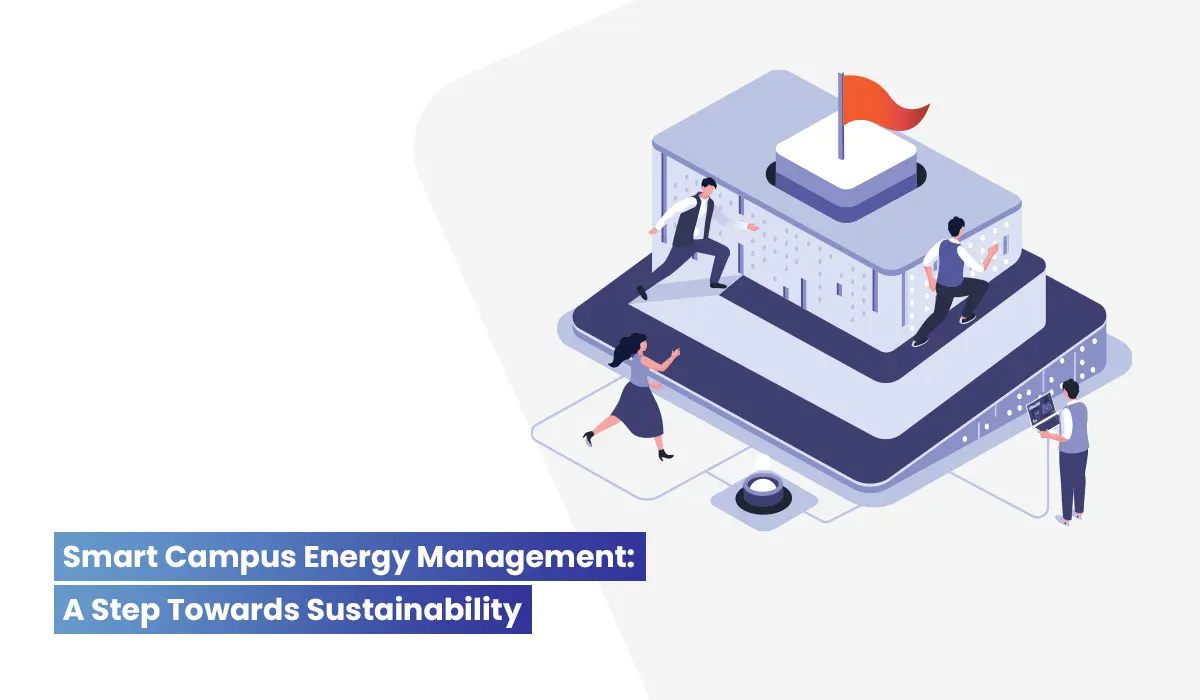
Energy regulation is crucial to a sustainable campus. Smart campus energy management have increased university energy efficiency. Smart meters, IoT devices, and cloud-based energy management software can analyze energy usage, identify inefficiencies, and reduce carbon footprint on campuses.
According to a new study out of the National Renewable Energy Laboratory, campuses can save 30% on their energy bills by implementing smart campus energy management solutions. Colleges can significantly reduce their energy use by installing smart lighting, HVAC systems, and energy-efficient equipment.
Additionally, facilities staff may reduce waste and promote eco-friendly practices across the board by making smarter decisions on energy usage based on data-driven insights. It’s about more than just cutting costs; it’s about making a better, more sustainable future for generations to come.
Learn to Reduce Carbon Footprint Online
More than just a convenient way to attend classes, online learning changes the atmosphere. Universities may substantially reduce travel by going digital, reducing traffic, carbon emissions, and cars on the road. Online education reduces carbon footprints by up to 90% compared to on-campus instruction, according to The Global e-Sustainability Initiative.
But it’s not just about travel cuts! Online learning minimizes the need for environmentally harmful paper books, handouts, and other materials! Students get to access course materials instantaneously from anywhere, saving resources and giving the planet a respite.
Students can get degrees from home while protecting the environment—a win-win!
Sustainable Resource Management
Building a green campus requires efficient resource management. AI and IoT-powered smart campus energy management systems are changing how universities measure and optimize resource use. Educational institutions may now make smarter judgments about water, electricity, paper, and plastic to reduce waste and save money.
Real-time data and predictive analytics helped institutions employing smart campus energy management systems cut energy use by 15% reports The International Energy Agency. It’s not just about turning off lights in empty classrooms—it’s about using energy-hungry equipment sparingly and conserving water in dorms and cafeterias.
Cloud-based technologies and AI-powered analytics help colleges improve their sustainability initiatives and achieve lasting impact! Understanding how and when resources are used helps institutions reduce waste, save money, and promote sustainability.
Environment Awareness
Environmental knowledge is crucial to creating tomorrow’s leaders on campuses. Sustainability in the curriculum and green campus projects can teach students to be eco-friendly. This approach may even help students become environmental activists.
According to a National Environmental Education Foundation research, 79% of students think their institutions should address sustainability, and 67% prefer to work for green companies. University environmental awareness programs teach lifelong habits and educate students to take responsibility for their ecological footprint.
Remote Collaboration Encouragement
Carbon footprint reduction doesn’t require face-to-face interaction. Virtual classrooms and cloud-based technology let students and teachers communicate anytime, anywhere, minimizing travel and meetings. Trust us, remote collaboration for group tasks or faculty discussions saves time, cuts travel emissions, and makes their workspace more flexible and sustainable.
Remote work and collaboration tools reduce travel and their organization’s environmental effect, according to 60% of McKinsey respondents.
Data-driven Sustainability Planning
Sustainability requires educated decisions, not just good intentions. Data helps higher eds design better, more customised sustainability plans. Leveraging AI and IoT for green campus operations aids to analyze real-time energy, waste, and resource allocation data to improve.
According to a Gartner report, 70% of organizations utilizing data analytics have improved their sustainability initiatives, from waste reduction to energy optimization. Same with universities. Educational technologies let institutions track success, identify areas for development, and make long-term environmental decisions. Data-driven sustainability is a game-changer, not a buzzword.
Conclusion
University greening can jump forward with technology. Sustainable, eco-friendly education is possible through paperless classrooms in universities, smart campus energy management, and online learning. By using cloud-based tools for resource optimization, institutions lower their environmental footprint and inspire future leaders.
Is your organization ready to impact? Greening your campus is easy with Creatrix Campus and its creative solutions. Connect with us.
You’ve got this idea in your head that learning is just for the young. That somehow, because you’ve crossed an invisible threshold of time, your ability to grow has diminished.
But that’s not true. The truth?
Learning has no expiration date. Growth is unlimited—if you choose it.
If you’re over 30 and thinking about going back to school, learning a new skill, or changing careers, you might have some limiting beliefs that are holding you back.
These beliefs aren’t facts.
They’re stories you’ve been telling yourself for years—stories that keep you stuck, small, and afraid to take action. But here’s the good news: you can rewire your mind, break free from these false narratives, and set powerful goals that put you on the path to success.
Let’s shatter these mental barriers and replace them with unstoppable momentum.
Limiting Beliefs and SMART Goals for Students Over 30
30. “I’m too old to learn.”
The problem isn’t your age—it’s your mindset.
If you believe learning is only for the young, it’s because society has conditioned you to think that way. Maybe you were told that school was for kids, or that adults can’t absorb information as quickly. The effect? You hesitate to sign up for that course, procrastinate on picking up that book, and let your comfort zone shrink.
But here’s the truth: your brain is capable of growth at any age. Neuroplasticity—the brain’s ability to adapt and form new connections—doesn’t shut off at 30, 40, or even 70. The solution? Shift your identity from someone who “missed their chance” to someone who is a lifelong learner.
SMART Goals to Overcome This Belief
Specific: Enroll in one online or in-person course within the next month.
Measurable: Complete at least one lesson or chapter per week.
Achievable: Choose a subject you’re genuinely interested in to stay motivated.
Relevant: Align your learning with a skill that benefits your career or personal growth.
Time-bound: Finish the course within three months and apply what you learn immediately.
29. “I’ll never be as good as younger students.”
This belief stems from comparison, and comparison is the thief of progress.
If you’re constantly measuring yourself against younger students who might grasp concepts faster or have more energy, you’re setting yourself up for frustration.
The effect? You feel discouraged before you even begin, convinced that you’ll always be behind. But here’s what you need to understand: success isn’t a race, and mastery isn’t about age—it’s about consistency.
The solution? Stop competing with others and start competing with yourself. Focus on progress, not perfection.
SMART Goals to Overcome This Belief
Specific: Track your personal improvement by journaling your learning progress weekly.
Measurable: Set a goal to improve by at least 10% in a specific area (e.g., test scores, typing speed, fluency in a language) within three months.
Achievable: Break down skills into manageable chunks and celebrate small wins.
Relevant: Focus on skills that directly enhance your personal or professional life.
Time-bound: Commit to reviewing your progress every month and adjusting your approach as needed.
28. “It’s too late to start over.”
This belief is rooted in fear—fear that you’ve invested too much time in one path to pivot, fear that others will judge you, fear that you won’t succeed.
The effect? You stay stuck in a situation that no longer fulfills you, convincing yourself that it’s “too late” while years keep passing by. But here’s the truth: every successful person you admire took a leap at some point.
The solution? Reframe starting over as an opportunity, not a setback. Instead of focusing on what you’re leaving behind, focus on what you’re gaining—new skills, new possibilities, and a future you’re excited about.
SMART Goals to Overcome This Belief
Specific: Research at least three career paths, degrees, or certifications that align with your interests within the next two weeks.
Measurable: Have informational interviews with at least two professionals in your desired field within the next month.
Achievable: Choose one small step, like enrolling in a beginner-level course or attending an industry event, within six weeks.
Relevant: Ensure the new path aligns with your long-term personal and financial goals.
Time-bound: Set a deadline to make a concrete decision and take action within three months.
27. “I don’t have the time to go back to school.”
The real issue isn’t time—it’s priorities.
You tell yourself you’re too busy, but if you audit your schedule, you’ll see hours lost to social media, TV, or tasks that don’t move you forward. The effect? You put off your education for “someday,” which never comes. But here’s the truth: you don’t need endless free time to succeed—you need better time management.
The solution? Shift from “I don’t have time” to “I will make time.” Learning can fit into your life if you create a plan and stick to it.
SMART Goals to Overcome This Belief
Specific: Identify and eliminate at least one time-wasting habit within the next week.
Measurable: Dedicate a minimum of 30 minutes per day to studying or skill development.
Achievable: Use micro-learning techniques, such as listening to audiobooks during commutes or studying in short, focused bursts.
Relevant: Align study time with your peak productivity hours and daily schedule.
Time-bound: Stick to this routine for the next 90 days, then reassess and adjust.
26. “I won’t be able to keep up with the workload.”
This belief comes from a fear of failure—of being overwhelmed, falling behind, and proving yourself right that you “can’t do it.”
The effect? You hesitate to even start, or if you do, you self-sabotage by procrastinating or avoiding challenges. But here’s the truth: success isn’t about doing everything at once—it’s about mastering the art of prioritization and consistency. The solution? Stop focusing on the entire mountain and start focusing on the next step.
You don’t need to finish everything in one day; you just need to build momentum.
SMART Goals to Overcome This Belief
Specific: Break down your coursework or learning material into weekly, manageable goals.
Measurable: Complete at least one key assignment, chapter, or study session per week.
Achievable: Use productivity techniques like the Pomodoro method (25-minute focus sessions) to avoid burnout.
Relevant: Ensure your study plan aligns with your learning pace and lifestyle.
Time-bound: Maintain a consistent study routine for the next 60 days, then reassess and refine.
25. “I don’t have enough money to go back to school.”
Money is a real challenge, but the bigger problem is the belief that a lack of funds equals a lack of options.
The effect? You rule out education before even exploring financial aid, scholarships, or alternative learning paths. But here’s the truth: there are countless ways to learn and advance your career without massive debt. The solution?
Get strategic. Research funding options, seek out free or low-cost courses, and remember—education is an investment, not an expense.
SMART Goals to Overcome This Belief
Specific: Identify at least five scholarship, grant, or financial aid options within the next month.
Measurable: Apply for at least three funding opportunities within the next 60 days.
Achievable: Explore alternative learning options like MOOCs (Massive Open Online Courses) or employer-sponsored training programs.
Relevant: Focus on education that aligns with your career goals and has a strong return on investment.
Time-bound: Secure a financial plan for your education within the next three months.
24. “I was never good at writing essays, so I’ll struggle now.”
This belief is rooted in past academic experiences—you might have received poor grades, struggled with structuring your thoughts, or been told you weren’t a “good writer.”
The effect? You convince yourself that essay writing is an insurmountable skill, leading to avoidance, procrastination, or self-doubt. But here’s the truth: writing is not an innate talent—it’s a skill that improves with practice and structure.
The solution? Instead of seeing essay writing as a test of intelligence, approach it as a formula you can master step by step.
SMART Goals to Overcome This Belief
Specific: Learn a simple essay structure (introduction, body, conclusion) within the next two weeks.
Measurable: Write one short (300-500 word) practice essay every week for the next two months.
Achievable: Use writing aids like outlines, templates, and AI writing tools for guidance.
Relevant: Focus on topics that align with your coursework or personal interests to stay engaged.
Time-bound: Review and refine your essays over 60 days, tracking improvements in clarity and structure.
23. “I don’t know where to start when writing an essay.”
The blank page can feel paralyzing, making essay writing seem like an impossible task. The effect? You either spend hours staring at an empty document, or worse, rush through your essay at the last minute with little confidence in the final result. But here’s the truth: the hardest part of writing is getting started, and the key to overcoming this is to break the process into small, manageable steps. The solution? Instead of trying to write a perfect essay in one sitting, start with brainstorming, then an outline, then a rough draft.
SMART Goals to Overcome This Belief
Specific: Spend 15 minutes brainstorming ideas before writing any essay.
Measurable: Create an outline before writing at least three essays over the next month.
Achievable: Follow a step-by-step essay writing process (brainstorm, outline, draft, edit).
Relevant: Apply this method to actual assignments or practice essays to build confidence.
Time-bound: Implement this structured writing approach for the next 90 days and track improvements in speed and clarity.
22. “I don’t have a big enough vocabulary to write well.”
Many people believe that great writing requires fancy words and complex sentences, but this is a myth. The effect? You second-guess your word choices, feel insecure about your writing, and sometimes overcompensate by using words you don’t fully understand, making your essays sound unnatural. But here’s the truth: clear, concise writing is more powerful than complex vocabulary. The solution? Focus on learning and using new words naturally rather than forcing them into your writing. Strong essays are built on clarity, not complexity.
SMART Goals to Overcome This Belief
Specific: Learn five new academic words each week and use them in sentences.
Measurable: Incorporate at least three newly learned words into every essay.
Achievable: Use a vocabulary journal or flashcards to reinforce new words.
Relevant: Focus on words commonly used in academic writing rather than obscure terms.
Time-bound: Track vocabulary improvement over three months and assess its impact on your writing.
21. “I don’t know how to structure my essays properly.”
If your essays feel unorganized or lack flow, it’s likely because you were never taught a clear structure. The effect? Your arguments feel scattered, making your writing harder to follow, which can lead to lower grades or frustration with the writing process. But here’s the truth: essay structure follows predictable patterns, and once you master them, writing becomes much easier. The solution? Learn a reliable essay structure, like the five-paragraph model, and practice organizing your thoughts before writing.
SMART Goals to Overcome This Belief
Specific: Learn and apply the basic essay structure (introduction, body paragraphs, conclusion) to every essay.
Measurable: Write at least three structured practice essays within the next month.
Achievable: Use templates or outlines to ensure logical organization.
Relevant: Apply structured writing techniques to assignments that impact your academic progress.
Time-bound: Assess improvements in essay clarity and coherence after 60 days of structured writing.
20. “I’ve never been good at studying, so I won’t do well now.”
This belief comes from past experiences—maybe you struggled in school, crammed at the last minute, or never developed effective study habits. The effect? You assume that no matter how hard you try, you won’t retain information or perform well on exams, leading to self-sabotage or procrastination. But here’s the truth: studying is a skill, and like any skill, it can be learned and improved. The solution? Shift your focus from effort to strategy—by using proven study techniques, you can dramatically improve your retention and performance.
SMART Goals to Overcome This Belief
Specific: Experiment with at least three different study techniques (active recall, the Feynman technique, or spaced repetition) over the next month.
Measurable: Track which method helps you retain information best by testing yourself after each session.
Achievable: Start with short, focused study sessions (30-45 minutes) to avoid burnout.
Relevant: Apply these techniques to real coursework or exam preparation.
Time-bound: Evaluate study effectiveness after 30 days and refine your approach.
19. “I get distracted too easily to focus on studying.”
With phones, social media, and life responsibilities, it’s easy to feel like focus is impossible. The effect? You sit down to study but end up scrolling your phone or doing something else entirely, leading to frustration and wasted time. But here’s the truth: focus isn’t about willpower—it’s about creating the right environment and using strategies that help you stay on track. The solution? Set up distraction-free study sessions, use time-blocking techniques, and train your brain to concentrate in short bursts.
SMART Goals to Overcome This Belief
Specific: Create a dedicated study space free of distractions within the next week.
Measurable: Use the Pomodoro technique (25 minutes of focused work, 5-minute breaks) for at least three study sessions per week.
Achievable: Install website blockers or put your phone in another room while studying.
Relevant: Focus on eliminating distractions that directly interfere with study efficiency.
Time-bound: Maintain distraction-free study sessions for the next 60 days and assess improvements in focus.
18. “I can’t remember what I study, so there’s no point in trying.”
This belief stems from ineffective study techniques—you might be reading passively, cramming, or relying on rote memorization without truly understanding the material. The effect? You feel frustrated when information doesn’t stick, leading to discouragement and avoidance of studying altogether. But here’s the truth: memory is trainable, and using the right techniques can drastically improve retention. The solution? Move from passive reading to active learning—use recall, summarization, and teaching methods to reinforce what you study.
SMART Goals to Overcome This Belief
Specific: Use active recall by summarizing key concepts from memory after each study session.
Measurable: Test yourself on the material at least twice before each exam or assignment deadline.
Achievable: Implement spaced repetition by reviewing notes on a structured schedule (e.g., after 1 day, 1 week, 1 month).
Relevant: Apply memory techniques to subjects that require strong recall, like exams or presentations.
Time-bound: Track improvements in retention over the next 90 days by comparing test performance.
17. “I don’t know how to take effective notes.”
Many people think note-taking is just about copying information, but without structure or strategy, notes become overwhelming and ineffective. The effect? You spend time writing but struggle to understand or recall the material later, making studying feel pointless. But here’s the truth: good notes should simplify, organize, and highlight key concepts. The solution? Use structured note-taking methods like the Cornell Method, mind mapping, or summarization to make notes clear and useful.
SMART Goals to Overcome This Belief
Specific: Learn and test at least one structured note-taking method over the next two weeks.
Measurable: Review and refine notes after every class or study session.
Achievable: Keep notes concise by summarizing key points instead of writing everything verbatim.
Relevant: Apply structured note-taking to subjects where organization helps most (e.g., complex topics, essay writing).
Time-bound: Track improvements in comprehension and recall over the next 60 days.
16. “I don’t know how to manage my time effectively for studying.”
This belief comes from feeling overwhelmed—you juggle work, family, and responsibilities, so studying often gets pushed aside. The effect? You either cram at the last minute or avoid studying altogether, leading to stress and poor retention. But here’s the truth: time isn’t the problem—how you structure it is. The solution? Create a study schedule that works with your lifestyle, using time-blocking and prioritization to ensure steady progress.
SMART Goals to Overcome This Belief
Specific: Develop a weekly study schedule that includes dedicated time slots for learning.
Measurable: Study for at least five hours per week, broken into manageable sessions.
Achievable: Use a planner or digital calendar to track and adjust study sessions as needed.
Relevant: Align study time with peak focus hours (e.g., early morning or late evening).
Time-bound: Maintain this routine for 30 days, then evaluate and refine based on effectiveness.
15. “I always procrastinate when it comes to studying.”
Procrastination isn’t laziness—it’s often a response to overwhelm, perfectionism, or fear of failure. The effect? You delay studying until the last minute, leading to rushed work, high stress, and lower performance. But here’s the truth: breaking procrastination requires momentum, not motivation. The solution? Start with small, easy tasks to build consistency and use accountability techniques to stay on track.
SMART Goals to Overcome This Belief
Specific: Use the “two-minute rule” to start study sessions with a small, manageable task.
Measurable: Begin at least three study sessions per week with a five-minute warm-up (e.g., reviewing notes).
Achievable: Set mini-deadlines for assignments to avoid last-minute cramming.
Relevant: Apply anti-procrastination techniques to high-priority subjects first.
Time-bound: Stick to this approach for the next 60 days and track procrastination patterns.
14. “I don’t have the discipline to study consistently.”
This belief comes from the idea that discipline is something you either have or you don’t—but that’s not true. The effect? You rely on motivation, which fades, and when you inevitably skip a study session, you feel like a failure and give up altogether. But here’s the truth: discipline is a muscle that grows with consistent effort. The solution? Start small, build habits, and make studying part of your routine rather than something you force yourself to do.
SMART Goals to Overcome This Belief
Specific: Set a fixed time for studying each day, treating it like an appointment.
Measurable: Stick to a minimum of 20 minutes of study per day for the next 30 days.
Achievable: Start with short sessions and gradually increase study time as the habit builds.
Time-bound: Review and refine study discipline after 60 days to improve long-term commitment.
13. “I always forget what I study after a few days, so why bother?”
Forgetting isn’t a sign of failure—it’s a natural part of how memory works. The effect? You feel discouraged, assume you’re “bad at learning,” and stop putting in the effort. But here’s the truth: forgetting is part of the learning process, and the key to retention is using spaced repetition and active recall. The solution? Instead of cramming, review information in spaced intervals to reinforce memory.
SMART Goals to Overcome This Belief
Specific: Use spaced repetition by reviewing material 1 day, 1 week, and 1 month after learning it.
Measurable: Create and review summary notes for each subject at least once per week.
Achievable: Use flashcards or self-quizzing methods to reinforce key concepts.
Relevant: Apply memory techniques to high-priority subjects where retention matters most.
Time-bound: Implement these strategies for 90 days and track improvement in recall.
12. “I’m just not a naturally smart person.”
This belief stems from a fixed mindset—the idea that intelligence is something you’re born with, rather than something you develop. The effect? You hesitate to challenge yourself, avoid difficult subjects, and reinforce the belief that effort won’t change anything. But here’s the truth: intelligence grows with learning and practice. The solution? Shift to a growth mindset by embracing challenges and seeing effort as a pathway to improvement.
SMART Goals to Overcome This Belief
Specific: Read one book or article about growth mindset within the next month.
Measurable: Write down one learning success per week to track progress.
Achievable: Reframe failures as learning experiences and reflect on them.
Relevant: Focus on progress rather than perfection in your studies.
Time-bound: Commit to tracking mindset shifts for the next 60 days.
11. “I need to be perfect at studying, or I’ve failed.”
Perfectionism kills progress. The effect? You set unrealistic expectations, fear mistakes, and end up either overworking yourself or avoiding studying altogether. But here’s the truth: progress beats perfection every time. The solution? Aim for consistency, not flawlessness, and learn to embrace mistakes as part of growth.
SMART Goals to Overcome This Belief
Specific: Complete each study session with the goal of learning, not perfection.
Measurable: Set a “good enough” study standard (e.g., 80% comprehension) rather than 100%.
Achievable: Allow yourself to submit assignments even if they aren’t “perfect.”
Relevant: Focus on steady improvement rather than flawless performance.
Time-bound: Track and celebrate small wins for the next 90 days to build confidence.
10. “Going back to school won’t be worth it financially.”
This belief comes from the fear that the time and money spent on education won’t lead to better job opportunities. The effect? You hesitate to invest in yourself, worrying that you’ll end up in the same financial position or worse. But here’s the truth: education, when strategically chosen, increases earning potential and career mobility. The solution? Focus on skills and credentials with strong job market demand, and treat learning as an investment, not an expense.
SMART Goals to Overcome This Belief
Specific: Research at least five career paths that align with your studies and have strong earning potential.
Measurable: Identify at least three industry certifications or skills that increase job prospects.
Achievable: Enroll in a program with a high graduate employment rate.
Relevant: Focus on education that directly leads to a career or financial growth opportunity.
Time-bound: Develop a career advancement plan within the next six months.
9. “I’ll never make as much money as people who started their careers earlier.”
This belief stems from comparison—you see younger professionals moving up in their careers and assume you’re permanently behind. The effect? You feel discouraged before even trying, limiting your ambition and financial potential. But here’s the truth: success isn’t linear, and many late starters build highly successful careers by leveraging their life experience. The solution? Focus on building skills that set you apart, rather than competing with someone else’s timeline.
SMART Goals to Overcome This Belief
Specific: Identify and develop one high-value skill that increases earning potential.
Measurable: Apply for at least three new job opportunities or promotions in the next six months.
Achievable: Leverage work experience and transferable skills when job hunting.
Relevant: Choose career paths where experience and expertise matter more than age.
Time-bound: Increase income through upskilling or new opportunities within one year.
8. “I’ll be stuck paying off student loans forever.”
Student debt is a real concern, but the belief that it will ruin your financial future keeps you from making smart, strategic investments in your education. The effect? You avoid opportunities that could increase your earning potential, staying stuck in a lower-income position. But here’s the truth: debt should be approached strategically, not fearfully. The solution? Seek out scholarships, grants, employer tuition assistance, and repayment strategies that minimize long-term financial burden.
SMART Goals to Overcome This Belief
Specific: Research and apply for at least five scholarships or tuition assistance programs.
Measurable: Create a repayment strategy based on projected earnings within the next three months.
Achievable: Limit loans to only what is necessary and prioritize low-interest options.
Relevant: Ensure educational costs align with realistic earning potential.
Time-bound: Have a concrete financial plan in place before enrolling in a program.
7. “I’m too old to build wealth from a new career.”
This belief is based on the idea that wealth-building requires starting young, but financial success is about strategy, not just time. The effect? You avoid investing in yourself because you assume you won’t see results quickly enough. But here’s the truth: many successful professionals and entrepreneurs built wealth later in life by making smart career shifts and financial decisions. The solution? Focus on high-return skills, career growth, and smart financial planning.
SMART Goals to Overcome This Belief
Specific: Develop a long-term financial plan that includes savings, investments, and career growth.
Measurable: Increase income by at least 10% in the next year through career advancements or side income.
Achievable: Build financial literacy by reading one book or taking a course on wealth-building.
Relevant: Focus on careers or businesses with strong earning potential.
Time-bound: Have a five-year financial growth strategy in place within the next six months.
6. “I won’t be able to balance school, work, and family.”
This belief stems from the fear that adding education to an already full schedule will lead to burnout or failure. The effect? You avoid enrolling in courses or feel overwhelmed before even starting. But here’s the truth: millions of working adults successfully juggle school, work, and personal responsibilities by using time management strategies. The solution? Prioritize, delegate, and set clear boundaries to ensure all areas of life stay manageable.
SMART Goals to Overcome This Belief
Specific: Create a weekly schedule that includes study time, work, and personal commitments.
Measurable: Dedicate at least 5–10 hours per week to coursework without sacrificing essential responsibilities.
Achievable: Use planning tools like digital calendars or task management apps.
Relevant: Ensure study plans align with long-term career and life goals.
Time-bound: Maintain a balanced schedule for 90 days and reassess workload.
5. “I’m afraid I won’t finish what I start.”
This fear often comes from past experiences of quitting or struggling with commitment. The effect? You hesitate to enroll in school or start a new course, assuming you’ll fail before you even begin. But here’s the truth: finishing isn’t about willpower—it’s about setting clear, actionable goals and following through. The solution? Break large goals into small, achievable steps and celebrate progress along the way.
SMART Goals to Overcome This Belief
Specific: Set milestone goals for each phase of your coursework.
Measurable: Complete at least 80% of assignments on time each semester.
Achievable: Use accountability partners or study groups for motivation.
Relevant: Focus on programs that genuinely interest and benefit you.
Time-bound: Review and adjust study habits every 60 days to stay on track.
4. “I’ll feel out of place as an older student.”
This belief comes from the assumption that classrooms and learning spaces are dominated by younger students. The effect? You avoid engaging fully, miss networking opportunities, and feel isolated. But here’s the truth: adult learners are a growing part of education, and your experience is an asset. The solution? Embrace your role as a lifelong learner and seek out communities of like-minded adult students.
SMART Goals to Overcome This Belief
Specific: Connect with at least one other adult learner in your course.
Measurable: Participate in discussions or study groups at least once per week.
Achievable: Reach out to professors or mentors for support.
Relevant: Engage with networking opportunities that align with your career goals.
Time-bound: Build meaningful academic connections within the first 90 days of enrollment.
3. “I don’t have the confidence to succeed in an academic setting.”
Lack of confidence comes from years of self-doubt or past struggles with school. The effect? You hesitate to ask questions, seek help, or challenge yourself academically, reinforcing the cycle of self-doubt. But here’s the truth: confidence isn’t something you have—it’s something you build through action. The solution? Start small, acknowledge progress, and seek support when needed.
SMART Goals to Overcome This Belief
Specific: Set a goal to speak up in class discussions or ask one question per week.
Measurable: Complete at least one challenging assignment outside of your comfort zone.
Achievable: Use positive reinforcement techniques, such as tracking small wins.
Relevant: Focus on growth rather than comparison with others.
Time-bound: Build confidence through academic engagement over the next 60 days.
2. “I don’t know if this will actually change my life.”
This belief comes from doubt—doubt in yourself, in the process, and in the impact education can have. The effect? You hesitate to commit fully, treating learning as an experiment rather than a transformation. But here’s the truth: education opens doors, but only if you walk through them with purpose. The solution? Define clear personal and career outcomes, and actively seek ways to apply what you learn.
SMART Goals to Overcome This Belief
Specific: Identify and write down three ways this education will improve your life.
Measurable: Take one tangible action each month to apply new knowledge (networking, skill-building, job applications).
Achievable: Set a realistic vision for how this education will support your goals.
Relevant: Align studies with a career or personal growth path that excites you.
Time-bound: Track and reflect on changes in opportunities and mindset over one year.
1. “What if I fail?”
Fear of failure is the biggest barrier to success. The effect? You hesitate to try, afraid of embarrassment, wasted time, or proving negative beliefs about yourself true. But here’s the truth: failure isn’t the opposite of success—it’s part of the process. The solution? Redefine failure as learning, take calculated risks, and commit to growth no matter the outcome.
SMART Goals to Overcome This Belief
Specific: Set a goal to take one academic or professional risk in the next three months.
Measurable: Reflect on each challenge and write down what you learned.
Achievable: Normalize mistakes by reframing setbacks as learning experiences.
Relevant: Focus on long-term success rather than short-term struggles.
Time-bound: Commit to continuous learning and self-improvement for one year.
Conclusion
Limiting beliefs are just that—beliefs, not facts. They hold you back from opportunities, growth, and the future you deserve. But the moment you decide to challenge them, everything changes. The question isn’t whether you’re too old, too late, or too behind—it’s whether you’re willing to take action despite those fears. Because success isn’t about age, background, or talent—it’s about the commitment to keep moving forward.
Now, the only thing left to ask yourself is: What’s my first step?
Dr. Chris Drew is the founder of the Helpful Professor. He holds a PhD in education and has published over 20 articles in scholarly journals. He is the former editor of the Journal of Learning Development in Higher Education. [Image Descriptor: Photo of Chris]