Families across urban and developing towns are going beyond conventional definition of education, facilitating change in the Indian education system. The focus has shifted from academic success to quality education, international exposure, and overall growth that prepare the future generation for a globally interconnected world.
A few decades ago, families were typically larger; with primary focus was on basic education and job security. With a progressive mindset, today’s nuclear families are engaged investing in premium schooling, digital learning, and global opportunities that enhance their children’s competitiveness.
This transformation signifies a profound mindset. Today’s students and parents both think beyond geographical boundaries and basic qualifications. They meticulously evaluate international opportunities that enhance academic excellence, long-term career goals, and global relevance.
Dining table conversations revolve around questions such as:
Which destination offers the best return on educational investment?
What scholarship or post-study work opportunities are available?
Which academic pathway leads to sustainable and globally recognised careers?
Studying abroad have risen because of limited domestic seats, global exposure and highly paid career prospects. However, rising costs, currency risks and stricter visa rules of some countries are shifting preferences toward value destinations – Europe and Asia. Intellectual families now prioritise financial planning, ROI and strong support systems.
Today’s students and parents both think beyond geographical boundaries and basic qualifications
With these rapidly growing aspirations, need for reliable, ethical, and expert guidance has become paramount. This is an area where Landmark Global Learning Limited has established a distinct reputation. With extensive experience and deep understanding of international education system, Landmark provides transparent, personalised, and result-oriented guidance tailored for every candidate. The services range from course selection and financial planning to visa support, and pre-departure orientation ensures students received quality education and long-term success.
Simultaneously, India’s international education and recruitment landscape is also witnessing a paradigm shift. The focus has moved beyond volume-driven enrolments to meaningful outcomes and majorly student well-being. Both universities and agencies emphasise authenticity, transparency, and tailored support. Indian students are exploring the UK, Canada, and Australia to emerging hubs across Europe and Asia.
As global connections strengthen, this shift is vital to understand. India’s growing middle class, wider digital access, and strong respect for education are transforming how international institutions connect with and respond to Indian students. In recent years, more Indian students are choosing to study overseas. As per the Ministry of External Affairs, over 1.8 million Indian students are abroad in 2025, compared to around 1.3 million just two years earlier.
Nowadays, students are not only pursuing degrees, but they are also cultivating skills and mindsets that align with a rapidly changing borderless world. In such moments, trusted partners such as Landmark Global Learning Limited are instrumental in making a difference.
By providing organised support, genuine mentorship, and a transparent path to quality international education, Landmark connects aspirations with guidance. For thousands of young Indians, it represents more than overseas study; it signifies assurance, opportunity, and the conviction that global education is not a privilege but an achievable goal.
About the author: Jasmeet Singh Bhatia is the founder and director of Landmark Immigration, with over 18 years of experience in international education and immigration consulting. A trusted study visa expert and PR strategist, he has mentored thousands of students in achieving their academic and career goals abroad. Known for his principle-based approach and strong industry partnerships, he continues to shape global futures through personalised guidance and strategic insight.
Why Higher Ed Institutions Should Use Annual Reviews to Refocus Their Strategy
Organizational development principles teach us that long-term, sustainable change is achieved through making data-driven decisions, continuously learning and adjusting, and intentionally planning for growth. Which is why an annual review of your existing higher education programs and operations is an essential step in the process for building your institution’s success.
Skipping a review in the planning process puts your institution at risk of repeating mistakes and missing crucial opportunities due to an outdated approach.
In every area and at every level, institutions benefit from looking back at data from the previous year for clues into what adjustments are needed for improvement. From holding project retrospectives and conducting marketing audits to tracking enrollment trends and having individual performance check-ins, regular rituals that facilitate reflection on what’s working and what isn’t encourage continuous growth.
Similarly, creating an annual review process for your degree programs empowers your institution to assess its efficiency while using data-driven insights to build a strategic road map for the future.
Change starts from within. The best way to achieve growth is by being honest about where you are now and where you want to be. At Archer, we go through a robust discovery process with our partner institutions to understand the unique challenges and opportunities their online programs and the institutions themselves face in today’s dynamic higher ed landscape.
Common Pitfalls in Strategy Resets
Strategy resets often simply recycle old plans instead of applying lessons learned. Contrary to what you may think, plans built on evidence from the past are much easier to implement and keep on track than recycled plans. Here are three common pitfalls your institution should avoid when planning for the future.
Pitfall #1: Following Assumptions Over Evidence
When leaders fail to connect data and insights from past performance to future goals, important trends are missed and errors are doomed to be repeated. Analyzing available metrics and assessing risks ultimately leads to more intelligent plans that can increase enrollment and support positive student outcomes. Marrying your intuition and insights with data makes for a stronger strategy.
Pitfall #2: Allowing Siloed Departments to Slow Progress
Honest assessments across functional areas only happen when teams work together. Every corner of the university should be represented in the review process; marketing, information technology, enrollment, financial aid, the registrar, faculty, administration, and leadership all need to be aligned.
This is hard work, but you can start by finding ways to collaborate with a department that you work with regularly and then expand that collaboration to other departments. Look for more opportunities throughout the year for better cross-departmental communication and collaboration.
Pitfall #3: Limiting Plans to the Near Future Without Considering the Bigger Picture
Institutions should prevent letting their short-term tactics override their long-term goals. When you tie your institutional goals to your departmental goals, you create a natural flow of work and have an easier time communicating your successes up the chain of command. By regularly reviewing their goals and assessing if their work is on track or needs revisiting, teams are able to course-correct when necessary — before reaching the end of the year.
Using Postmortem Frameworks for Smarter Growth
Fortunately, there are plenty of techniques that can be used to create an effective review process. Postmortem meetings, data analysis, planning worksheets, and open communication can fuel an insightful retrospective.
When approached with the intent to learn from the past and find areas for improvement, a postmortem meeting offers a crucial opportunity for an organization to reflect on its progress. In postmortem meetings, individuals and teams consider how successful a project or period of time was and pinpoint what to change moving forward. Risk assessments are also particularly useful to help teams prepare for possible enrollment and market shifts in the future.
By harnessing the power of analytics reporting and postmortem agreements, teams can co-create realistic road maps that connect their vision with the institution’s operational capacity. Getting buy-in from all departments by engaging them in cooperative planning gives everyone the chance to discuss their team’s areas of strength and the areas where additional support may be needed.
Institutions that follow Archer’s Good, Better, Best framework are able to get a clear view of where they currently stand and what they should prioritize next to achieve consistent growth.
Key Takeaways
Avoid common strategy reset pitfalls by first taking account of where you are now and then determining where you want to be.
By leveraging data, collaboration, and iterative improvement strategies, institutions use proven organizational development techniques to stay competitive.
Postmortems, planning tools, and governance help leaders sustain their institution’s progress.
Let Archer Support Your Year-in-Review Process
Institutional growth requires a tailored approach, and the path looks different for every organization. At Archer Education, we understand that deep discovery, organizational development, sufficient investment, best-in-class technology, and a laser focus on the student experience are essential.
Are you ready to expand your institution’s online program offerings, elevate your student enrollments, future-proof your teams, or all of the above? Then allow the talented Archer team to support your institution by helping you establish a year-in-review process and uncover new possibilities for sustainable growth.
If you’d like to learn more, contact our team and explore our technology-enabled strategy marketing, enrollment, and retention services today.
Across higher education, student support systems are often built for institutions, not for students. As a result, many learners encounter a maze of disconnected services that feel reactive, impersonal, or inaccessible. For students already balancing work, caregiving, and financial pressures, this fragmentation can be the difference between staying enrolled and stopping out.
As Chief Academic Officer, I’ve seen how crucial it is to align support structures with academic goals and student realities. Institutions must move beyond piecemeal solutions and instead design holistic ecosystems that prioritize student experience, equity, and completion from the start. That means leveraging data, embracing design thinking, and fostering cross-campus collaboration.
Where fragmentation undermines student outcomes
Many institutions approach support through isolated units: advising, student success, IT, and academic departments each operating in silos. The result is a disjointed experience for students, where important information is delayed or missed altogether. Without a unified view of the student journey, opportunities for early intervention or personalized support fall through the cracks.
This fragmentation disproportionately affects students from historically underserved backgrounds. When support isn’t accessible or timely, those with less institutional knowledge or fewer resources are more likely to disengage.
Disconnected systems can lead to:
Missed early warning signs
Delayed or generic interventions
Frustration from navigating multiple systems
Lower retention and completion rates
It’s not enough to offer services. It’s crucial to ensure those services are connected, visible, and tailored to real student needs.
In my experience, when institutions treat student support as a set of tasks rather than a strategic function, it limits their ability to make meaningful progress on equity and completion. Students shouldn’t have to navigate a patchwork of websites, offices, and policies to get the help they need. They deserve a system that anticipates their challenges and responds in real time.
What a connected, learner-first ecosystem looks like
A modern support ecosystem begins with data. Institutions need to unify data from across the student lifecycle (from admissions to advising to classroom performance) to create a comprehensive view of each learner. With integrated platforms, faculty and staff can access timely insights to guide interventions and support decisions.
At Collegis, we’ve seen how data-powered ecosystems — supported by platforms like Connected Core® — drive measurable improvement in retention and equity. But technology alone isn’t enough. Data needs to be paired with personalization. That means using predictive analytics to identify students at risk and deliver outreach that is relevant, proactive, and human.
It’s not about automation replacing connection. It’s about enabling the right kind of connection at the right time.
I often ask, “Are support systems designed for students or around them?” A learner-first ecosystem doesn’t just meet students where they are academically. It considers their time constraints, personal responsibilities, and evolving goals. It removes barriers rather than creating new ones.
Key elements of a connected ecosystem include:
Unified, actionable student data
Proactive, personalized interventions
Support that reflects real student lives
24/7 digital services and hybrid options
Flexible course scheduling, hybrid advising models, and round-the-clock support aren’t just conveniences. They’re equity tools that recognize the unique needs of today’s student body.
Using design thinking to reimagine support systems
Design thinking offers a powerful framework for this work. It starts with empathy — understanding the lived experience of students and mapping the friction they encounter in navigating institutional systems. From there, you can co-create solutions that reflect students’ realities, prototype interventions, and iterate based on feedback and outcomes.
I’ve found this approach invaluable for aligning innovation with mission. It brings together diverse voices (students, faculty, advisors, technologists) to build support systems that are not just efficient, but equitable.
Design thinking allows us to move beyond assumptions. Instead of designing around legacy processes or internal structures, we start with real student stories. This helps us ask better questions and arrive at more inclusive answers.
It’s not just about solving problems—it’s about solving the right problems.
The role of academic leadership in cross-campus collaboration
No single office can transform student support in isolation. It requires a coalition of academic, technical, and operational leaders working in sync. Academic affairs plays a central role in this work, bridging the gap between pedagogy and operations.
In my experience, success begins with a shared vision and clear metrics:
What are we trying to improve?
How will we measure progress?
From there, we build alignment around roles, resources, and timelines. Regular communication and an openness to iteration keep the momentum going.
One of the most powerful things academic leaders can do is model cross-functional thinking. When we approach student success as a collective responsibility, we shift the culture from reactive to proactive. And when data is shared across departments, everyone can see the part they play in helping students succeed.
Turning strategy into action
At Collegis, we’ve partnered with institutions to bring student-centered strategies to life:
Our Connected Core data platform enables the kind of integration that underpins personalized support.
Our deep higher education experience ensures solutions align with academic priorities.
We believe in the power of aligning strategy with execution. We don’t just talk about transformation. We build the infrastructure, train the teams, and help institutions scale what works. From data strategy to digital learning design, we act as an extension of our partners’ teams.
This work is about more than improving services. It’s about advancing equity, accelerating completion, and fulfilling our mission to support every learner.
Designing for what matters most
If we want better outcomes, we have to start with better design. That means asking not just what services you offer, but how and why you deliver them. It means shifting from reactive support to intentional, data-informed ecosystems that center the student experience.
By embracing design thinking, unifying your systems, and working across traditional boundaries, you can build the kind of support that today’s learners deserve and tomorrow’s institutions require.
Student success shouldn’t depend on luck or persistence alone. The most impactful institutions are those that view support not as a service, but as a strategy — one that helps every student reach their full potential.
Let’s talk about how to design smarter student support together.
Innovation Starts Here
Higher ed is evolving — don’t get left behind. Explore how Collegis can help your institution thrive.
Across higher education, the conversation about digital transformation has shifted from connection to capability. Most universities are digitally connected, yet few are digitally mature
The challenge for 2026 and beyond is not whether institutions use technology, but whether their systems and partnerships enable people and processes to work together to strengthen institutional capacity, learner outcomes, and agility.
Boundless Learning’s 2025 Higher Education Technology and Strategy Survey underscored this transition: 95 per cent of leaders said education management partners are appealing, and one in three described them as extremely so. Yet preferences are changing: modular, fee-for-service models now outpace traditional revenue-sharing arrangements, signalling a desire for flexibility and control.
Leaders also identified their top digital priorities: innovation enablement (53 per cent), streamlined faculty workflows (52 per cent), and integrated analytics (49 per cent). In other words, universities are no longer chasing the next platform; they want systems that think.
Why systems thinking matters
That idea is central to Suha Tamim’s workAnalyzing the Complexities of Online Education Systems: A Systems Thinking Perspective. Tamim frames online education as a dynamic ecosystem in which a change in one area, such as technology, pedagogy, or management, ripples through the whole. She argues that institutions need a “systems-level” view connecting the macro (strategy), meso (infrastructure and management), and micro (teaching and learning) layers.
Seen this way, technology decisions become design choices that shape the culture and operations of the institution. Adopting a new platform is not just an IT project; it influences governance, academic workload, and the student experience. The goal is alignment across those levels so that each reinforces the other.
Boundless Learning’s Learning Experience Suite (LXS) embodies this approach. Rather than adding another application into an already crowded environment, LXS helps institutions orchestrate existing systems; linking learning management, analytics, and support functions into a cohesive, secure, learner-centred framework. It is a practical application of systems thinking: connecting data flows, surfacing insights, and simplifying faculty and learner experiences within one integrated ecosystem.
From outsourcing to empowering
The shift toward integration also reflects how universities engage external partners. Jeffrey Sun, Heather Turner, and Robert Cermak, in the American Journal of Distance Education, describe four main reasons universities outsource online programme management:
Responding quickly to competitive pressures
Accessing upfront capital
Filling capability gaps
Learning and scaling in-house
Their College Curation Strategy Framework shows that institutions partner with external providers not just to cut costs, but to build strategic capacity. Yet the traditional online programme management (OPM) model anchored in long-term revenue-share contracts has drawn criticism for limited transparency and loss of institutional control.
Our own data suggest that this critique is reshaping practice. Universities are moving from outsourcing to empowerment: seeking education-management partners who enhance internal capability rather than replace it. This evolution from OPMs to Education Management Partners (EMPs) marks a decisive turn toward collaborative, capacity-building relationships.
The Learning Experience Suite fits squarely within this new model. It is not an outsourced service but a connective layer that enables institutions to manage their digital ecosystems with greater visibility and confidence, while benefiting from enterprise-grade integration and security. It exemplifies partnership as a mechanism for capability development, a move from vendor management to shared strategic growth.
From fragmentation to fluency
Many institutions remain caught in what might be called digital fragmentation. According to our survey, nearly half of leaders cite data silos, disconnected platforms, and inconsistent learner experiences as obstacles to progress. These are not isolated technical issues; they are systemic barriers that affect pedagogy, governance, and institutional trust.
Tamim’s framework describes such misalignment as a state of “disequilibrium.” Overcoming it requires coordinated action across levels, strategic clarity from leadership, adaptive management structures, and interoperable tools that make integration intuitive. The objective is to move from digital accumulation to digital fluency: an environment where technology amplifies, rather than fragments, institutional purpose.
Learning Experience Suite was designed precisely to address this. By connecting data across systems, enabling real-time analytics, and ensuring accessibility through a mobile-first design, it allows institutions to build coherence and confidence in their digital operations.
Building partnerships
The next phase of higher education technology will be defined not by the tools universities choose but by the quality of their partnerships. As scholars like Sun have cautioned, outsourcing core academic functions without transparency can erode autonomy. Conversely, partnerships grounded in shared governance, open data, and aligned values can strengthen the academic mission.
For Boundless Learning, this is the central opportunity of the coming decade: to reimagine partnership as co-evolution. Universities, platforms, and providers function best as interconnected actors within a wider learning system, each contributing expertise to advance learner success and institutional resilience.
When viewed through a systems lens, the key question is no longer whether universities should outsource, but how they orchestrate. The challenge is to combine the right mix of internal capability, external expertise, and interoperable technology to achieve measurable impact.
That, ultimately, is what digital maturity requires and what the Learning Experience Suite was designed to deliver.
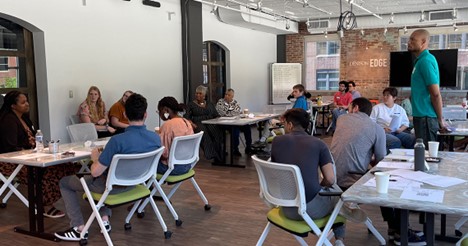
How Denison Edge partnered with Collegis to clarify brand identity, launch a content strategy, and rebuild its website to drive user growth.
Denison Edge, an initiative by Denison University, equips students, graduates, and professionals with in-demand, industry-relevant skills through stackable micro-credentials. To support ambitious enrollment goals and elevate its brand presence, Denison Edge turned to Collegis Education for strategic marketing support and a digital refresh. With a small internal team and big aspirations, Denison Edge sought to better articulate its value proposition and reach more prospective learners through a high-performing, content-rich website.
The Challenge
Denison Edge needed to amplify registrations for its non-credit programming while refreshing its brand presence to reflect its forward-thinking approach. The organization faced key limitations:
Limited internal marketing capacity
Lack of a cohesive brand voice
Outdated website UX and SEO
Urgent need to launch new high-demand programs in finance, marketing, analytics, and AI
Together, these challenges underscored the need for a strategic partner to help Denison Edge scale effectively and stand out in a competitive market.
The Solution
Collegis delivered a set of tailored services to expand visibility, support program growth, and enhance digital experience:
Brand Voice Workshop Facilitated an on-site session with university stakeholders to define a clear, compelling brand voice, behavior, and tone — establishing the foundation for all future communications.
Content Strategy Developed a comprehensive content roadmap, including a new blog, article templates, writing guide, and SEO-informed article concepts to empower internal marketing teams.
Website Strategy and Optimization Conducted in-depth UX and SEO audits pre- and post-launch, guiding the redevelopment of the Denison Edge website. The rebuilt site now delivers a seamless experience tailored to prospective learners and employers.
The Results: Stronger Presence, Measurable Growth
Within four months of relaunching the website, Denison Edge experienced marked improvements in site traffic and user engagement:
+21% YoY increase in total users
+16% YoY growth in sessions and new users
96% increase in Rental Space page traffic
1,284 sessions on new Registration page
310 sessions on new Business Immersion page
The top-performing pages — including Programs and Homepage — also achieved +16% YoY growth, confirming the success of the site redesign and content strategy.
Ashley Nicklay
Sr. Director – Student Lifecycle, Collegis Education
The Takeaway: Strategy and Storytelling Drive Digital Success
The Denison Edge case study illustrates the impact of aligning brand clarity, content strategy, and digital design. Through partnership with Collegis, Denison Edge built the foundation for ongoing growth — positioning itself as a leader in flexible, career-focused education.
Transform Your Digital Presence with Collegis
Want to grow visibility and enrollment for your programs? Contact Collegis to explore how brand and digital strategy can help you lead with confidence.
Let’s Start Writing Your Success Story
See what’s possible when strategy, creativity, and execution come together. Partner with Collegis to turn your challenges into outcomes worth sharing.
Facing challenges in enrollment, retention, or tech integration? Seeking growth in new markets? Our strategic insights pave a clear path for overcoming obstacles and driving success in higher education.
Unlock the transformative potential within your institution – partner with us to turn today’s roadblocks into tomorrow’s achievements. Let’s chat.
Even as in-person classes return post-pandemic, online courses haven’t gone away. In fact, many students still opt for online learning because of the flexibility it offers. But one thing is clear: not all online courses are created equal, and one of the biggest differences lies in something many instructors overlook: the course webpage.
Whether you’re using Brightspace, Canvas, or Moodle, how you design your course webpage can make or break your students’ experience. Based on our systematic review of recent studies on online learning and student satisfaction, here’s what we learned—and how you can apply it in your own teaching.
Why Course Webpages Matter More Than You Think
Students form impressions about your course page in less than a second (Lindgaard et al., 2006). If it’s cluttered, confusing, or bland, you might lose them before they even start the first lecture.
We reviewed research involving over 1,600 university students from seven countries. Across the board, students reported that a course webpage’s ease of use, usefulness, and visual appeal significantly influenced their satisfaction and engagement (Lazard & King, 2020; Younas et al. 2021).
How We Did the Research
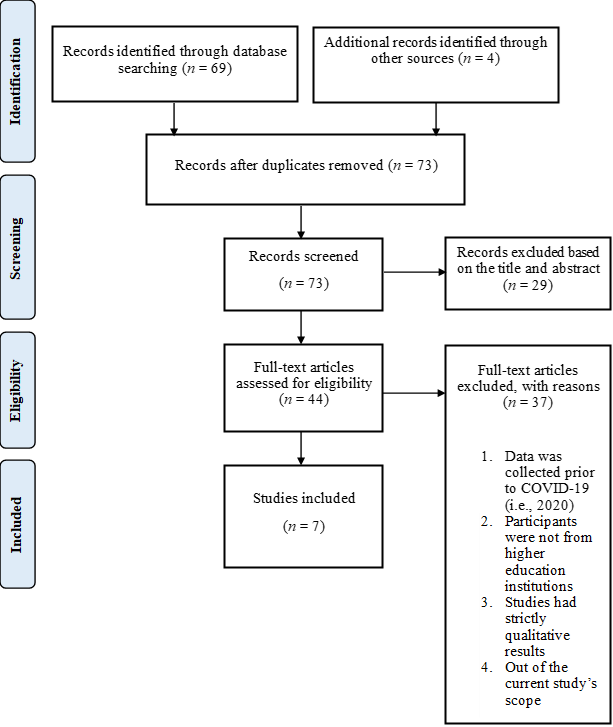
To better understand what works in online course webpage design, we conducted a systematic review following PRISMA guidelines. Here’s what that looked like:
Databases searched: LearnTechLib, Omni (Carleton University), and reference lists from relevant papers
Keywords: “COVID,” “website,” “online learning,” and “pedagogy”
Inclusion criteria: Peer-reviewed, quantitative studies from 2020–2023, focused on higher education
Total included: 7 studies, 1,614 participants across Australia, China, South Africa, Lebanon, Pakistan, Malaysia, and the U.S.
Figure 1. PRISMA Flow Diagram for the Course Webpage Design Search
Practical Tips for Smarter Course Design
Below are research-based, practical tips instructors can use—that don’t require you to be a web designer. These ideas are easy to implement and can make a big difference.
1. Make Navigation a No-Brainer
Think of your course webpage like your storefront. If people can’t find what they need, they won’t stick around. This makes your life as an instructor harder: you will get more students with last-minute requests for accommodations, as well as students struggling with procrastination.
Use a consistent layout, organize materials by weeks or modules, and give each section clear, descriptive titles. Students should never have to hunt for a syllabus or lecture slides (Bachman & Stewart, 2011; Plous, 2000). I found that having a hyperlink directly on the first page of the course website, helped reduce the amount of student emails on syllabus-related questions (a joy).
Pro tip: Use drop-down menus and collapsible folders to reduce visual clutter.
2. Keep It Clean and Simple
Visual overload is real. Too many colours, clashing fonts, or random clipart can be overwhelming. Stick to a minimalist design with just enough contrast and white space to guide the eye. Use consistent font styles and colours to help students focus (Lazard & King, 2020).
Students reported feeling more satisfied when they could personalize their learning environment—for example, setting their own notification preferences or receiving automatic updates about grades and deadlines (Younas et al., 2021). If your platform allows it, show students how to use these features. Most announcement tools allows you to include the student’s name in the communication by using the code: {firstname} (e.g., Brightspace: https://community.d2l.com/brightspace/kb/articles/6105-automatically-customize-course-content-using-replace-strings). I cannot count the number of students who said they appreciated this customization of information.
Protip: Include a quick walkthrough video or FAQ page on how to customize settings.
4. Build Trust Through Transparency
Technology glitches can tank your credibility fast. Provide assessment submission confirmations, test your hyperlinks, and use clear, timely communication to reduce student anxiety (Hsu et al., 2022).
Protip: Create a “Tech Check” page with test links and troubleshooting steps.
From Theory to Practice: A Usability Framework
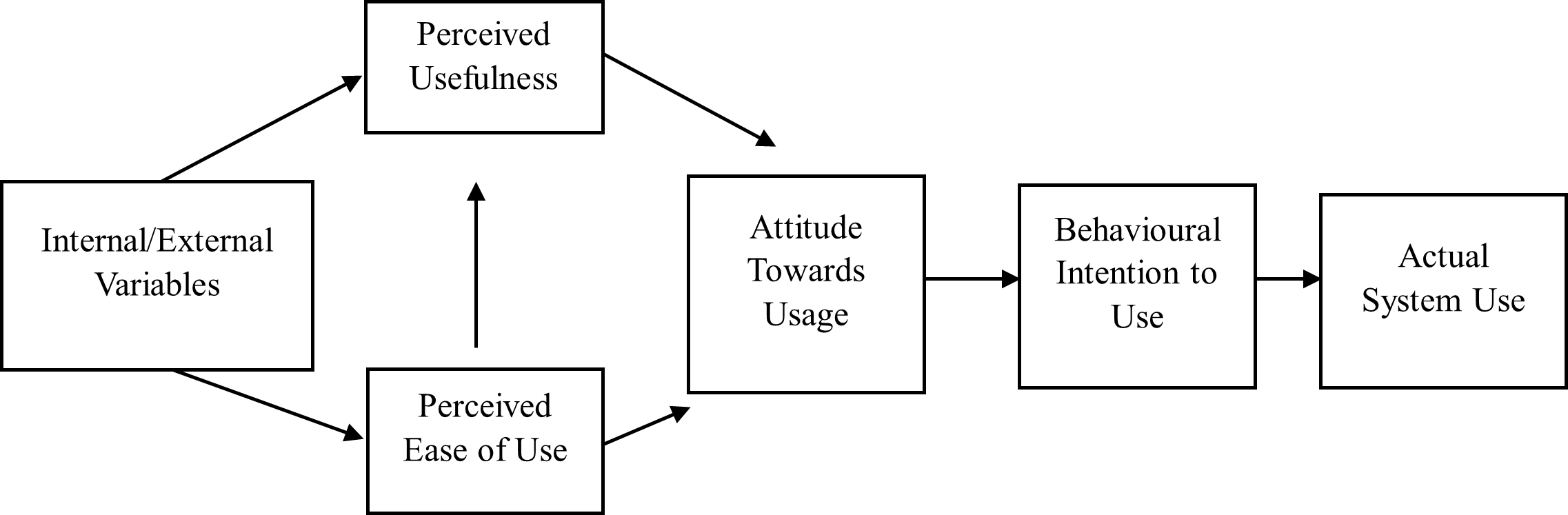
Our review supports the Technology Acceptance Model (TAM): a course site is more likely to be used—and liked—if students find it both easy to use and useful (Davis, 1989).
Figure 2. Adapted from “The Technology Acceptance Model (TAM) and its Application to the Utilization of Mobile Learning Technologies,” D. G. Mugo, K. Njagi, B. Chemwei, and J. O. Motanya, 2017, British Journal of Mathematics & Computer Science, 20, p. 4 (DOI: 10.9734/BJMCS/2017/29015). In the public domain.
But we also found that students valued more than just functionality. Our systematic review supported features like customization, organization, and aesthetic appeal as beneficial to student use of the course website (which contributed to higher grades and completion rates).
Quick Design Checklist
Feature
Example
Research Support
Clear navigation
Weekly modules, labeled folders
Bachman & Stewart, 2011
Aesthetic simplicity
Balanced colour palette, consistent fonts
Lazard & King, 2020
Customization
Notification settings, adaptable layout
Younas et al., 2021
Confirmation of actions
Email receipt of submissions
Hsu et al., 2022
Mobile compatibility
Testing on phones and tablets
Plous, 2000
Collaborate with Your Students
Want the best feedback on your course webpage? Ask your students. Mid-semester feedback surveys or co-design sessions can go a long way in improving usability (Yoshida & Thammetar, 2021). I have benefited from undergraduate student input, and these translated to higher ratings for my courses.
Bottom Line: Thoughtful Design = Better Learning
Course webpage design isn’t just about looking polished—our systematic review suggests it’s a key factor in student satisfaction and learning success. Students are more likely to engage when the site is:
Adaptable to their needs
Regularly maintained and updated
So we, as instructors, need to spend some time fine-tuning our websites. The good news is that once you do this for one course, many platforms offer cloning or importing, which makes it easy to transfer your work from one course to another.
If you’re feeling stuck, reach out to your campus teaching and learning centre, look at exemplars, or co-create the website with students. You don’t have to do it alone.
Dr. Kelly M. Babchishin is an assistant professor at Carleton University who specializes in forensic psychology. She teaches large undergraduate and graduate courses, many of which use online or hybrid formats.
Emma J. Holmes is a graduate student and teaching assistant at Carleton University (Department of Psychology). Emma is supported in part by funding from the Social Sciences and Humanities Research Council and the Ontario Graduate Scholarship.
Alexis G. Hinkson was an undergraduate student (Department of Psychology) at Carleton University and is now completing her law degree at the University of Ottawa. Alexis has served as a teaching assistant and was hired by Kelly Babchishin to assist her in course design and provided the student perspective.
References
Bachman, C. M., and C. Stewart. 2011. “Self-Determination Theory and Web-Enhanced Course Template Development.” Teaching of Psychology 38 (3): 180–88. https://doi.org/10.1177/0098628311411798.
Davis, F. D. 1989. “Perceived Usefulness, Perceived Ease of Use, and User Acceptance of Information Technology.” MIS Quarterly 13 (3): 319–40. https://doi.org/10.2307/249008.
Hsu, P. S., E. M. Lee, and T. J. Smith. 2022. “First-Year Instructor’s Designing and Teaching an Online Undergraduate Engineering Course during the COVID-19 Epidemic.” Journal of Computers in Mathematics and Science Teaching 41 (3): 215–43.
Lazard, A. J., and A. J. King. 2020. “Objective Design to Subjective Evaluations: Connecting Visual Complexity to Aesthetic and Usability Assessments.” International Journal of Human-Computer Interaction 36 (1): 95–104. https://doi.org/10.1080/10447318.2019.1606976.
Lindgaard, G., G. Fernandes, C. Dudek, and J. Brown. 2006. “Attention Web Designers: You Have 50 Milliseconds to Make a Good First Impression.” Behaviour & Information Technology 25 (2): 115–26. https://doi.org/10.1080/01449290500330448.
Younas, A., C. M. N. Faisal, M. A. Habib, R. Ashraf, and M. Ahmad. 2021. “Role of Design Attributes to Determine the Intention to Use Online Learning via Cognitive Beliefs.” IEEE Access 9: 94181–94202. https://doi.org/10.1109/ACCESS.2021.3093348.
Yoshida, M., and T. Thammetar. 2021. “Education between GovTech and Civic Tech.” International Journal of Emerging Technologies in Learning 16 (4): 52–68. https://doi.org/10.3991/ijet.v16i04.18769.
Let’s be real. AI tools like ChatGPT showed up in higher ed like that one student who joins the Zoom session with their mic off, camera off, and still somehow takes over the discussion. Whether we were ready or not, AI is in the room. And if you’re teaching online, you’ve probably already seen it at work in discussion posts, essays, or that strangely perfect email.
Instead of panicking or pretending it’s not happening, we’ve got a better option. We can help students learn how to use AI responsibly, because it’s not going away. Honestly, some of them are relying on it more than we realize (Colvard 2024).
If you’re going to teach with AI, you’ve got to know what it can (and can’t) do. I’m talking about tools like ChatGPT, Grammarly, QuillBot, or even Microsoft Copilot. Give yourself a little “playtime” with them. Open one up and ask it to write a discussion post. Then see what it gets right and what falls flat.
Ask yourself: – How might a stressed-out student use this tool to survive my course? – Where does it help, and where does it start doing too much of the thinking?
Once you understand how AI might tempt students, you’re better equipped to teach them how to use it well.
Step Two: Don’t Just Allow AI, Teach It
Telling students “don’t cheat” isn’t enough. They need to know what responsible AI use actually looks like. That means we have to talk about it early, often, and clearly. In one recent Faculty Focus article, Holbeck (2025) recommends teaching students prompting skills to foster critical thinking.
Here are some easy ways to build AI literacy into your course: – Syllabus Tip: Add a simple statement explaining how AI tools can (or can’t) be used. – Quick Start Assignment: Ask students to explore an AI tool and reflect on what it’s good for and where it falls short. – Reflect and Revise: Let them submit an AI draft and a revised version, plus a reflection on what they changed and why.
By teaching them how to work with AI instead of around it, we create better thinkers, not just better writers.
Step Three: Use AI to Lighten Your Load
Let’s face it. Online teaching is no walk in the park. Between grading, discussion boards, and endless emails, your plate is full. AI can help, but only if we use it smartly. Online instructors report using AI for feedback and discussion prompts (Mora and Semingson 2023).
Here’s how I’ve used it: – Weekly Announcements: I use AI to draft a message, then tweak it with my voice. – Rubrics and Prompts: Need something fast? AI can give you a rough draft to build from. – Translations or Simplified Content: Great for students who need extra support. – Quiz Questions: AI can help generate practice questions based on your content.
The key? You’re still the guide. AI is just the assistant.
Step Four: Teach with Real-Life Scenarios
Want to show students what smart AI use looks like? Try this:
Scenario
Tool
Instructor Strategy
Struggling with clarity
Grammarly
Use for grammar and structure
Overwhelmed with research
Chat GPT
Use it to narrow topics, not write the full paper
Studying for quizzes
Quizlet
Generate flashcards or summaries
Time and project management
ChatGPT
Create a schedule or timeline, not to do the work
You can also give them an activity where they compare a human-written and AI-written response. Let them spot the differences. It’s eye-opening. Lam (2025) found that students are using generative AI not just for writing, but for visual content and presentations—tools that could empower creativity with proper guidance.
Step Five: Set the Boundaries
Students need clarity, not fear. Make your expectations simple and direct. Here’s an example:
AI Use Policy: In this course, you can use AI tools to help brainstorm, organize your thoughts, or check your grammar. But your final work must reflect your own thinking and voice. Submitting something entirely written by AI is considered academic dishonesty.
Set the tone early, and students will know where the line is. In fact, Hans (2025) argues for a values-based approach to GenAI—teaching students what’s appropriate and why.
Lead the Way, Don’t Chase the Problem
AI isn’t the enemy of education. Misuse is. Online instructors have a real opportunity to teach students how to think critically about the tools they use. We don’t have to be tech experts, just open-minded guides.
When we show students how to use AI responsibly, we’re preparing them for a world where these tools will be everywhere. It’s not about control. It’s about confidence.
Let’s meet this moment with clarity, creativity, and a whole lot of common sense.
Dr. Joel Greene is a higher education consultant, psychology instructor, and former Director of Student Engagement, with experience leading online learning strategies across multiple campuses. Her work focuses on student success, equity-minded leadership, and innovative teaching in digital spaces.
References
Colvard, Nicholas B. “Artificial Intelligence: The Rise of ChatGPT and Its Implications.” Faculty Focus, May 2024.
Hans, Heather. “A Values-Based Approach to Using Gen AI.” Faculty Focus, June 11, 2025.
Holbeck, Rick. “Helping Students Develop AI Prompting Skills for Critical Thinking.” Faculty Focus, June 27, 2025.
Lam, Aileen Wanli. “How Students Use Generative AI Beyond Writing.” Faculty Focus, June 4, 2025.
Mora, Rebecca, and Sam Semingson. “Promoting AI-Enhanced Performance in the Online Classroom.” Faculty Focus, April 2025.
Let’s be real. AI tools like ChatGPT showed up in higher ed like that one student who joins the Zoom session with their mic off, camera off, and still somehow takes over the discussion. Whether we were ready or not, AI is in the room. And if you’re teaching online, you’ve probably already seen it at work in discussion posts, essays, or that strangely perfect email.
Instead of panicking or pretending it’s not happening, we’ve got a better option. We can help students learn how to use AI responsibly, because it’s not going away. Honestly, some of them are relying on it more than we realize (Colvard 2024).
If you’re going to teach with AI, you’ve got to know what it can (and can’t) do. I’m talking about tools like ChatGPT, Grammarly, QuillBot, or even Microsoft Copilot. Give yourself a little “playtime” with them. Open one up and ask it to write a discussion post. Then see what it gets right and what falls flat.
Ask yourself: – How might a stressed-out student use this tool to survive my course? – Where does it help, and where does it start doing too much of the thinking?
Once you understand how AI might tempt students, you’re better equipped to teach them how to use it well.
Step Two: Don’t Just Allow AI, Teach It
Telling students “don’t cheat” isn’t enough. They need to know what responsible AI use actually looks like. That means we have to talk about it early, often, and clearly. In one recent Faculty Focus article, Holbeck (2025) recommends teaching students prompting skills to foster critical thinking.
Here are some easy ways to build AI literacy into your course: – Syllabus Tip: Add a simple statement explaining how AI tools can (or can’t) be used. – Quick Start Assignment: Ask students to explore an AI tool and reflect on what it’s good for and where it falls short. – Reflect and Revise: Let them submit an AI draft and a revised version, plus a reflection on what they changed and why.
By teaching them how to work with AI instead of around it, we create better thinkers, not just better writers.
Step Three: Use AI to Lighten Your Load
Let’s face it. Online teaching is no walk in the park. Between grading, discussion boards, and endless emails, your plate is full. AI can help, but only if we use it smartly. Online instructors report using AI for feedback and discussion prompts (Mora and Semingson 2023).
Here’s how I’ve used it: – Weekly Announcements: I use AI to draft a message, then tweak it with my voice. – Rubrics and Prompts: Need something fast? AI can give you a rough draft to build from. – Translations or Simplified Content: Great for students who need extra support. – Quiz Questions: AI can help generate practice questions based on your content.
The key? You’re still the guide. AI is just the assistant.
Step Four: Teach with Real-Life Scenarios
Want to show students what smart AI use looks like? Try this:
Scenario
Tool
Instructor Strategy
Struggling with clarity
Grammarly
Use for grammar and structure
Overwhelmed with research
Chat GPT
Use it to narrow topics, not write the full paper
Studying for quizzes
Quizlet
Generate flashcards or summaries
Time and project management
ChatGPT
Create a schedule or timeline, not to do the work
You can also give them an activity where they compare a human-written and AI-written response. Let them spot the differences. It’s eye-opening. Lam (2025) found that students are using generative AI not just for writing, but for visual content and presentations—tools that could empower creativity with proper guidance.
Step Five: Set the Boundaries
Students need clarity, not fear. Make your expectations simple and direct. Here’s an example:
AI Use Policy: In this course, you can use AI tools to help brainstorm, organize your thoughts, or check your grammar. But your final work must reflect your own thinking and voice. Submitting something entirely written by AI is considered academic dishonesty.
Set the tone early, and students will know where the line is. In fact, Hans (2025) argues for a values-based approach to GenAI—teaching students what’s appropriate and why.
Lead the Way, Don’t Chase the Problem
AI isn’t the enemy of education. Misuse is. Online instructors have a real opportunity to teach students how to think critically about the tools they use. We don’t have to be tech experts, just open-minded guides.
When we show students how to use AI responsibly, we’re preparing them for a world where these tools will be everywhere. It’s not about control. It’s about confidence.
Let’s meet this moment with clarity, creativity, and a whole lot of common sense.
Dr. Joel Greene is a higher education consultant, psychology instructor, and former Director of Student Engagement, with experience leading online learning strategies across multiple campuses. Her work focuses on student success, equity-minded leadership, and innovative teaching in digital spaces.
References
Colvard, Nicholas B. “Artificial Intelligence: The Rise of ChatGPT and Its Implications.” Faculty Focus, May 2024.
Hans, Heather. “A Values-Based Approach to Using Gen AI.” Faculty Focus, June 11, 2025.
Holbeck, Rick. “Helping Students Develop AI Prompting Skills for Critical Thinking.” Faculty Focus, June 27, 2025.
Lam, Aileen Wanli. “How Students Use Generative AI Beyond Writing.” Faculty Focus, June 4, 2025.
Mora, Rebecca, and Sam Semingson. “Promoting AI-Enhanced Performance in the Online Classroom.” Faculty Focus, April 2025.
For public school districts across Florida and much of the country, employee benefits–particularly health insurance–are among the largest and fastest-growing budget line items. But too often, decision-makers in these districts manage benefits with incomplete information, little visibility into vendor practices, and limited tools for addressing escalating costs.
Part of the problem is the complexity of the healthcare delivery system itself. The supply chain encompasses numerous moving parts, making cost drivers challenging to identify. While not intentional, school districts need to both educate and empower their agents and their team of specialists to peel back the layers that create added costs. Districts must also be willing to look inward.
One of the real secrets to cost containment is transparency. A committed school district that wants to take control of its program must first understand its strengths and weaknesses, then fill gaps with specialists who can uncover hidden costs–an ongoing, vigilant effort that reveals the actual sources of waste and inefficiency. These efforts include transparent procurement and optimizing deal tension, as well as pharmacy contract negotiation, claims repricing, claims redirection, and more. Only then can districts make informed, strategic decisions that control costs and improve outcomes.
The cost of opaque processes
The result is a system that too often lacks meaningful transparency. School boards are presented with insurance renewals but not the data behind cost increases, insights into why claims costs are as they are, or guidance on how to contain them. Carriers field calls from district employees, but little to no reporting is returned to help the district understand what’s driving service demand. Without actionable data and intelligence, many districts default to passive renewals, accepting annual rate hikes without a clear strategy to contain costs or improve the employee experience.
Building a foundation for smart decision‑making
It doesn’t have to be this way. True transparency–in procurement, data, and intelligence–is not just a matter of regulatory compliance; it’s the foundation for smarter decision-making, better benefits engagement, and long-term cost control. When school districts gain access to previously unavailable data and unfiltered insights into how their benefits programs are performing, they can better serve their educators and protect their budgets.
One example is call utilization data. Many school boards have no visibility into how often–and why–their employees contact their insurance carriers. Without this insight, they may not realize, for instance, that a large number of calls could pertain to prescription benefit confusion–something they could address through targeted employee education or plan redesign. Transparency in that data enables the district to act rather than react. It transforms benefits management from a cycle of guesswork into a proactive strategy, where decisions are driven by real needs rather than assumptions.
Beyond call utilization, pharmacy and provider network fees can quietly escalate into six- or seven-figure losses if not monitored. Pharmacy contracts in particular demand negotiation by seasoned experts who understand the contractual nuances and levers that drive real savings. Ideally, a benefits partner will have a pharmacy benefits consultant or Doctor of Pharmacy on staff to review contracts and formularies line by line. Likewise, provider network claims and therapies must be benchmarked against competitive pricing. Transparency in these areas unleashes competition, and competition drives costs down.
Operationalizing and incentivizing transparency leads to cost containment
When a school district commits to operationalizing and incentivizing transparency, it can start to regain control of its costs. This process begins with examining the bigger picture of why and how the health-delivery supply chain can be leveraged or disintermediated to produce better outcomes. District leaders realize they have the power to effect change. Superintendents, HR, and finance departments can work in unison to embed transparency by empowering and incentivizing their benefits consultants to focus on solutions that reduce the district’s costs. This includes aligning agent compensation models with the district’s cost-containment roadmap.
Equally important is how this transparency gets operationalized. Most small- to mid-sized school districts don’t have the staff or resources to analyze claims trends, facilitate wellness programs, or manage a complex benefits ecosystem. That’s why some are turning to outside partners to act as an extension of their internal team–not just as benefits brokers but as collaborative advisors who help design, implement, and maintain smarter benefits strategies. The difference is night and day: Instead of a transactional approach focused solely on renewals, these partners bring a year-round, data-driven mindset to benefits administration.
Reclaiming control through radical transparency
Ultimately, it’s about control. For too long, many public entities have ceded control of their benefits strategy to intermediaries operating behind closed doors. Radical transparency flips the script. It empowers school districts to take ownership of their benefits programs to lower costs and improve outcomes for the people they serve.
That change doesn’t happen overnight. It starts with asking better questions:
Do we receive actionable data on employee engagement and utilization, and are we using it to drive measurable change?
Is our procurement process fully competitive and transparent, or are outdated practices perpetuating the status quo?
Do we have the tools and thought leadership from our broker to act on these insights?
Is our broker delivering transparent, cost-containment strategies, and are those solutions proven to reduce expense?
Are we empowered by a partnership structured around ROI?
Are we incentivizing our broker and vendor partners to prioritize ROI, transparency and ongoing savings?
Is our internal team contributing to transparency, data analysis and ROI? If not, what organizational changes are needed?
The answers may be uncomfortable, but they’re necessary for reclaiming control. And in today’s fiscal climate, where every dollar matters and expectations for good governance are higher than ever, doing what’s always been done is no longer good enough.
Transparency is more than a buzzword. It’s a path to fiscal responsibility, employee trust, and strategic clarity. And for public school districts facing mounting healthcare costs, it may be the smartest investment they can make.
Jonathan Jallad, Acentria Public Risk, a Foundation Risk Partners Company
Jonathan Jallad is the Vice President, Sales Leader at Acentria Public Risk, a Foundation Risk Partners Company.
Latest posts by eSchool Media Contributors (see all)
For HR professionals in higher education, workforce planning has evolved into a strategic discipline. Filling positions is no longer enough — leaders must anticipate talent needs, support professional growth and align development opportunities with institutional goals. A well-designed needs assessment gives HR teams the insight to take action with confidence and create lasting impact.
In the CUPA-HR webinar, Survey Says! Using HR Data and AI to Maximize Analysis of Needs, presenters from Harvard University’s Center for Workplace Development shared how their team designed and executed a large-scale, data-informed, AI-supported needs assessment. The goal? To better understand learning needs and create targeted strategies for professional growth across a decentralized institution.
Here are the key takeaways from their process.
Start With a Strategic Why
Before sending a single survey question, clarify what you’re hoping to learn — and why it matters.
At Harvard, the team began their needs assessment with a clear objective to understand learning and development needs across various employee groups as part of a larger workforce strategy. This meant designing a survey aimed at uncovering more than surface-level training needs, asking instead: What do our employees really need to grow and thrive in their roles?
Their advice to other HR teams is to anchor your assessment in your institution’s strategic goals and organizational context. Let that “why” guide your survey design from the start.
Design a Survey That Reflects Your Workforce
A successful needs assessment is tailored to the specific population it serves rather than one-size-fits-all.
Harvard’s workforce includes individual contributors, supervisors and executives across many schools and units. Their team created targeted questions for each group and pre-populated some responses using data from their HRIS system to reduce survey fatigue and improve accuracy.
Make sure your questions are relevant to different audience segments, and use the data you already have to streamline the experience for respondents.
Boost Participation Through Targeted Communications
Even the best survey won’t produce results without strong participation. Driving engagement was one of the biggest challenges for Harvard, as it is for many institutions. Their team addressed this by securing leadership support, crafting targeted communications and clearly communicating the value of the survey to employees.
To boost response rates on your own campus, consider using champions across departments, timing your outreach thoughtfully and explaining how the data will be used to benefit staff.
Use AI Thoughtfully to Analyze Large Data Sets
If your survey includes open-ended responses, you’ll likely end up with more data than you can quickly process — especially if your institution is large. This is where AI can help.
Harvard’s team used a combination of AI tools to analyze thousands of comments and identify themes. But they stressed that the human element remained critical. They invested time in crafting the right prompts, testing outputs and verifying results before presenting them to stakeholders.
Their approach to AI offers an important lesson: AI can accelerate analysis and bring fresh insights, but it’s not a shortcut. You need to build a process that includes human judgment, data verification and transparency.
Integrate HR Data for Deeper Insights
One of the most impactful decisions the Harvard team made was linking survey responses to existing HR data. This allowed them to connect learning needs to specific job roles, departments and demographics — enabling more targeted follow-up and planning.
By incorporating HRIS data, they were also able to personalize survey questions and reduce respondent burden. That integration enhanced both the quality of their data and their ability to act on it.
If you’re planning a survey, consider how existing HRIS data can be used to sharpen your questions and deepen your analysis.
Turn Results Into Action
The final — and perhaps most critical — step is using what you’ve learned.
At the time of the webinar, the Harvard team was in what they described as the “where are we now” stage and had begun implementing some of the recommendations from their survey analysis. They emphasized the importance of translating results into practical strategies that support learning and development, talent mobility and organizational effectiveness.
To do the same on your campus, be sure to:
Share key findings transparently with stakeholders.
Identify priority areas for development or investment.
Use insights to shape programming, leadership development or change management strategies.
Embrace Experimentation and Continuous Learning
The Harvard team acknowledged that this process wasn’t perfect — and that was okay. They embraced experimentation, learned from trial and error, and remained open to improving their approach as they went.
Their experience is a reminder that innovation in higher ed HR — especially when integrating AI — is a journey. Don’t be afraid to pilot new tools and adjust your process.
Watch the Webinar Recording
Interested in learning more about Harvard’s process? The full webinar recording and slide deck are available here.