Tag: social

  • Social media can benefit college students with disabilities

    Social media can benefit college students with disabilities

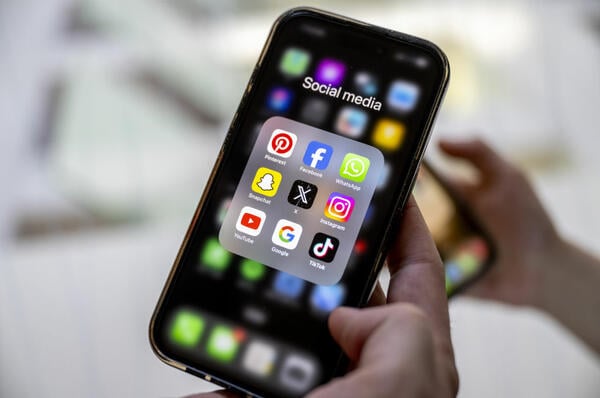
    College students often have a complicated relationship with social media, with a large number of learners active on multiple social media platforms but also aware of the negative mental health consequences social media can have.

    Teens receive hundreds of notifications on their phones every day, with over half of one study’s participants receiving more than 237 notifications per day. Nearly one in five teens say they’re on YouTube or TikTok almost constantly, according to a 2023 survey from Pew Research.

    A May 2024 Student Voice survey by Inside Higher Ed found one-third of respondents indicated social media was one of the biggest drivers of what many call the college mental health crisis.

    A recent study authored by a group of researchers from Michigan State University and published in the Journal of Contemporary Issues in Education evaluates how students with disabilities interact on social media and build social capital.

    Researchers found disabled students—including those with autism, anxiety, attention-deficit and/or hyperactivity disorder—were more likely to seek out new relationships and engage in active social media posting, which can advance connectedness and relationships among learners.

    The background: While social media can offer users social supports, such as promoting a sense of belonging during times of transition or crisis, it also poses risks for young people, including cyberbullying and online harassment, according to the study.

    Previous studies show youth with disabilities experience higher rates of cyberbullying compared to their peers, but students with disabilities are also more likely to report they receive social support through social media, which could be tied to the social isolation they can experience in person.

    Existing literature often focuses on the negative effects of social media for young adults with disabilities, but it is not known if there are differences between the experiences of those with and without disabilities and their social media habits.

    “Understanding different learners’ experiences with social media could help college faculty, special education professionals, and counselors not only consider using social media to create more welcoming and supportive learning environments but also how they might play a role in building individual learner’s capacity for positive digital participation,” researchers wrote.

    Methodology: Researchers conducted a survey of college undergraduates in the U.S. with and without disabilities in fall 2021, collecting data on social media use, social capital and psychological well-being. In total, 147 students responded to the survey.

    From this sample, researchers selected five individuals with and five individuals without disabilities to participate in semistructured interviews. Participants were matched based on social media habits and demographic factors, such as gender.

    Results: Through postsurvey interviews with 10 students, researchers learned that while both groups of students engage on social media for personal entertainment and to stay connected with people in their social circles, students with disabilities were more likely to say they used social media to initiate and grow relationships.

    All five participants without disabilities used Snapchat to interact with friends or keep in touch with loved ones in an informal manner, and all participants used Instagram to stay up-to-date with their peers.

    Among the five participants with disabilities, students reported using more social media platforms individually, and these learners were more likely to use TikTok (which in fall 2021 first hit one billion monthly active users compared to Instagram’s then-two billion users) compared to their peers. Students reported using TikTok for watching videos, sharing humor with their friends or participating in larger community building, including professional learning networks or cosplaying.

    Students without disabilities were more likely to say social media made no difference on their relationships or that it positively impacted their relationships by allowing them to stay in touch over geographical distances or other barriers.

    Similarly, all students with disabilities said social media assisted with their relationships, allowing them to connect with new people, expand their community and help manage their disabilities by connecting with others.

    Some respondents with disabilities said they felt more confident to engage with strangers in a safe way online and that social media was an avenue to find like-minded people they wouldn’t ordinarily interact with, allowing them to build new relationships. This was a unique trend to students with disabilities; those without were more likely to say they use social media to engage with people they already had relationships with.

    Students with disabilities may have greater challenges with in-person socialization, which researchers theorize makes social media particularly important for these learners, who also said they’re more likely to post on social media versus passively scroll.

    Interacting with others in the disability community and breaking stigma around disability was another theme in conversations with disabled students. These interactions could be with peers who share their disability or from medical professionals or support groups who provide new information.

    One limitation to the research was social desirability bias, or respondents’ tendency to answer questions in a way that would please researchers, meaning students underreport undesirable behaviors. The sample included only female and nonbinary students, which creates further limitations to the data.

    Put in practice: Researchers offered some suggestions for how educators can utilize this data to create a more inclusive learning environment, including:

    • Integrating social media into the classroom. While some digital learning platforms have forums for community building, such as a discussion board, these platforms can be less accessible than traditional social media platforms.
    • Facilitating personalized learning environments. Higher education leaders can consider ways to use social media to create formal and informal learning experiences in and around courses. These learning environments can also include methods for peer communication and connection, helping make learning more collaborative.
    • Engaging on social media themselves. Self-disclosure by professors can help build relationships in the classroom and enhance learning, but instructors must weigh safety, privacy and other legal boundaries in their social media usage. This could be one way to model positive social media usage for students, including how to have productive interactions with others.

    In the future, researchers see opportunities for analysis of design, implementation and evaluation of social media interventions for connection among students with disabilities, such as peer mentoring programs, online support groups or digital storytelling. There should also be consideration of the long-term effects of social media use on students’ mental health and well-being.

    Get more content like this directly to your inbox every weekday morning. Subscribe here.

    Source link

  • Social mobility is about to die – and university won’t help

    Social mobility is about to die – and university won’t help

    In 1994, the year that HESA was born and we started to count those with degrees from former polytechnics in the stats, about 225,000 full-time home-domiciled students graduated with a first degree in the UK.

    Today the Russell Group enrols about 350k. Funny that those who say too many people go to university tend to stay tight lipped about that part of the sector’s “dilution”.

    Ten years later, then funding council boss Howard Newby said:

    [T]he English—and I do mean the English—do have a genius for turning diversity into hierarchy and I am not sure what we can do about that, to be quite honest. It is very regrettable that we cannot celebrate diversity rather than constantly turning it into hierarchy.

    The switch of circa 125,000 students from poly to university in the early 90s was one of the signature moments of the status/sorting panic that has accompanied the expansion of higher education over time.

    The story runs something like this. Access to university has never been evenly distributed across the social-economics. And having a degree seems to bestow upon graduates socio-economic advantages.

    So over the long-run, rather than doing the hard yards of making entry distribution fairer – which, whatever method is used, necessarily involves saying “no” to some who think they have a right to go – the easier thing has always been to say “yes” and expand instead.

    Hence when in 2018 OfS had a choice between Option 1:

    …it obviously couldn’t persuade ministers to front out Option 1. So everyone let Option 2 happen instead – only without the money to support it. And now look at the mess we’re in.

    Option 2 – whether applied to the whole sector or just the elite part – creates a problem for those who enjoy the relative rarity of the signalling. The signal is less powerful, partly because there are few who look back on their time at university and think “maybe if it was truly meritocratic I wouldn’t have made it in”.

    It also ought to be expensive to expand – so over time both universities and their students are instead expected to become more and more efficient, or fund participation through future salary contributions to pay for the expansion.

    And if overall participation levels off, Option 2 applied just to the elite part of the sector yanks students away from everywhere else – with huge geographical and social consequences along the way.

    There is a human capital upside of mass participation. The better educated the population, the more inventive and healthy and happy and productive it will be in general. But without other actions, that doesn’t address the relative inequalities of getting in or getting on.

    Onwards and upwards

    The phrase “social mobility” doesn’t actually appear in the 2024 Labour Manifesto – but it’s lurking around in the opportunity mission as follows:

    We are a country where who your parents are – and how much money they have – too often counts for more than your effort and enterprise… so breaking the pernicious link between background and success will be a defining mission for Labour.

    Good luck with that. Part of the question for me that surrounds that is the scale of that challenge insofar as it concerns higher education – and what is coming soon in the stats that will make that easier or harder.

    For the past few decades, different iterations of the “efficiencies” needed to massify – which focussed largely on the transfer of the costs of participation from state to graduate – have had three core features designed to reconcile the expansion and efficiency thing with the goals of social mobility before, during and after HE:

    • Initiatives (a mix of sticks and carrots, inputs and outcomes and getting in v getting on) aimed at broadening the characteristics of those getting in into higher education
    • No upfront participation costs via loans to students for maintenance and tuition – so being in it felt “equal”
    • Loan interest and income-contingent repayment arrangements designed to redistribute some of the relative economic success to the less successful

    Taken together, the idea has been that accessing the signalling benefits will be easier via expansion and fairness fixes; that the experience itself resembles the “school uniform” principle of everyone having a fairly similar experience; and then that those who reap the economic rewards shoulder the biggest burden (and in that a burden a bit bigger than it actually cost) in paying for it all.

    You tackle inequality partly through opportunity, and partly through outcomes – the rich pay more both than others and more than the actual cost. So central was redistribution to the design of the fee and loan system in the last decade that the government announced and formally consulted on a plan for early repayment mechanisms to stop people on high incomes being able to “unfairly buy themselves out of this progressive system”.

    But a decade on, the government is in a real bind. The initiatives aimed at broadening the characteristics of those enrolling into higher education look much less impactful than just expanding – especially in “high tariff” providers.

    The cost of living – especially for housing – is wrecking the “school uniform” principle unless we were to loan students even more money – which has its… costs.

    And having reduced interest on student loans to inflation – paid for by a longer loan term – it’s hard to think of a more politically toxic move than slapping it back on, however redistributive it will look on an excel sheet.

    A bigger mountain to climb

    That all exacerbates the social mobility challenge. Students cluster into the Russell Group because that group of providers now has the same “meaning” for the press and parents that “university” had prior to 1992.

    Whether in the Russell Group or not, the differential student experiences of haves and have-nots (both inside and outside of the curriculum) will show up both in their actual skills and what they can “sell” to employers. And the most successful graduates from the most attractive-sounding universities will pay less for university across their lifetime, while everyone else will pay more.

    In a way though, even thinking about social mobility or the redistributive graduate contribution scheme in terms of relative lifetime salary is the biggest problem of all. Because given what’s coming, it really should be the least of our worries.

    Since Tony Blair increased tuition fees to £3,000, above-inflation house price growth has delivered an unearned, unequal and untaxed £3 trillion capital gains windfall in Britain. 86 per cent above inflation house price growth over the past 20 years has delivered capital gains on home owners’ main residences worth £3 trillion – now a fifth of all wealth in Britain.

    The value of household wealth stood at around three times the value of national income throughout the 1960s and 1970s – but since the 1980s, the rate at which households have accumulated wealth has accelerated, outpacing the growth in national income, so that the stock of household wealth was estimated to be 7.6 times GDP at the end of 2020.

    Wealth matters. For those who have accumulated it, it provides a better ability to absorb shocks to income, easier access to lower-cost credit, and facilitates investment in significant assets such as housing. But it’s not equally held.

    Wealth is about twice as unequal as the income distribution, and because growth in wealth is outpacing growth in household income it is harder for those currently without it to accumulate it, and enjoy the same benefits outlined above – because as the value of assets rise relative to income, it becomes harder for someone to “save” their way up the wealth distribution.

    The least wealthy third of households have gained less than £1,000 per adult on average, compared to an average gain of £174,000 for the wealthiest ten per cent. Gains have been largest in London, where on average people have gained £76,000 since 2000, and smallest in the North East of England, with an average gain of just £21,000.

    As Robert Colville points out in The Times:

    We have come to realise that what is really dividing our society, as that £5.5 trillion starts to cascade down the generations, is not the boomers’ greed but their love.

    There’s an age aspect to the inequality – those aged 60+ have seen the biggest windfalls at around £80,000 on average – compared to an average of less than £20,000 for those under 40 years of age. But that age aspect also points to something hugely important that’s coming next – because eventually, those older people will die – and who they transfer their wealth to, and what it’s invested in, will matter. Because not only does wealth inequality dwarf wage inequality, it also predicts and drives it.

    Student transfers

    Here thanks to the Resolution Foundation we can see how intergenerational transfers (both gifts and inheritances) will become increasingly important during the century, as older households disperse their wealth at death via inheritances. It estimates that those transfers are set to double over the next 20 years as the large baby-boomer cohort move into late retirement – and it is likely that more wealth will be dispersed by these households while they are alive through gifts.

    And it’s when that ramps up that the interaction with any tuition fee system that will really start to matter.

    Since 2015/16, DfE figures for England tell us that between 10.1 and 13.6 per cent of entrants at Level 6 have self-funded. Some of that will be PT/CPD type activity, some of it students running out of SLC entitlement, and some not drawing down debt for religious reasons – but most will be people who can just afford it.

    Of course what a fixed-ish percentage hides a bit is the number growth – if HE participation has been growing “at the bottom” of the social-economics, a fixed-ish percentage means that more on equivalent incomes are paying upfront. In 2022/23, a record 54,700 entrants were marked up as “no award or financial backing”.

    In the original £9,000 fees system, it made little sense to opt-out of student loans – because the vast majority never paid it back in full by design. But now with a cheaper (in real terms) tuition fee, a frozen repayment threshold and an extended term of 40 years, the calculation has changed – suddenly it makes much more sense to avoid the debt if you can.

    And so given that paying for your younger relatives’ tuition fees represents a way of investing some of that inheritance in way that avoids inheritance tax, we’d have to assume that unchecked, not only will richer graduates in the loan scheme get a much better lifetime deal than they did a few years ago, more and more won’t be in the scheme at all.

    (The green line is the system we had for most of the last decade – the grey line the system the Conservatives slipped past everyone on their way out).

    Even if every penny of an inheritance was drained away on paying for HE upfront, if we compare two graduates – one with 40 years of graduate repayments ahead of them, and one without, it doesn’t take long to clock how impossible social mobility becomes for otherwise notionally equal graduates.

    Then assume that those getting their fees and costs paid for them while they’re a student are clustered into the Russell Group and its signals already – and lay on top of that the fact that those without a windfall coming are more likely to be those with a pretty thin “student experience” and so without the skills or cultural capital to cheat the socio-economic odds, and you pretty quickly need to give up and go home.

    The problem that that all leaves is pretty significant – partly because wealth inequality is already more stratified than income, partly because it drives the type and value of HE experience a student might have, and partly because HE participation has a much better track record at delivering salary gains and salary redistribution than it does at delivering wealth gains or wealth redistribution.

    Put another way, it might be a rite of passage, and it might be good to have a better educated population, but without the prospect of it delivering social mobility, it will lose both real and symbolic value.

    Hierarchy or diversity?

    So in reverse order, what can be done? On the way out, if there must be a graduate contribution system, not only does it have to return to attempting to redistribute from the richest to the poorest, it has to do so by expecting a fair chunk of that boomer windfall to fund some redistribution.

    An above inflation interest rate has to return – and upfront fee payers shouldn’t be able to just buy a better education for themselves, as they can in the US – they should be expected to contribute more into the pot for everyone’s benefit. Higher fees, but only for for upfront payers – DfE needs to dust off that consultation from the last decade, and fast.

    During, we’ll need to redouble efforts to re-establish at least a notional run at the school uniform principle – carefully calibrating student income and experience to return to a baseline where everyone experiences something similar.

    Some of that is about reducing the costs of participation rather than loaning more money to meet them, some is about defining a contemporary student experience so that those who need to work can do so with dignity while extracting educational value, and those that don’t are expected to. It’s also about a credit system that recognises the educational value of extracurricular activity – so that everyone has time to take part in it.

    Then on the way in, we need more mixing – we do need Scenario 1 to return as a much tougher target.

    As well as that, the clustering up the league tables as a way of avoiding harder questions about access in our elite institutions almost certainly needs to stop. Taken to its logical conclusion, in a couple of decades there will only be 24 universities left (and in the minds of the press and parents, we’re arguably already there) – but if Labour facilitates only 19 cities having students and graduates in them, both it and everywhere else is doomed.

    Labour, in other words, has to start saying no:

    • It could say “no” to current university growth altogether, letting further education grow to soak up demand as polytechnics did when universities were capped in the 80s;
    • It could say “no” to any more university growth in current locations, allowing expansion into other places with all the economic and social benefits that would bring;
    • It could say “no” to any more “residential” places at universities, causing colleges and universities to become more comprehensive as they rush to make commuting more normal;
    • Or it could say “no” to “low value” courses, on the assumption that supply and then demand will flow into “high value” ones – if, of course, it could find a credible way of differentiating between the two.

    Part of the balancing act to choking off clustering is one other thing that should matter to Labour. The scandal isn’t that applicant X can’t quite get into the Russell Group with 3 A*s. It’s that we still have a system that somehow writes off the student and the university they attend if they don’t.

    Making it much more attractive to commute (coupled with a domestic Erasmus), talking up not just alternatives to university but universities that aren’t the Russell Group, abolishing the archaic degree classification system, ripping up all the quality systems that have singularly failed to “assure” the press and the public that quality can be found elsewhere, and forcing through some institutional subject specialisms (and obvious vocational excellence) within the system would all help.

    Do all of that, and maybe one day, a senior figure in HE might be able to claim that mass higher education – and all the rich benefits it brings – both survived and thrived because it finally found a way to celebrate diversity rather than forever turning it into hierarchy.

    Source link

  • A virtual reality, AI-boosted system helps students with autism improve social skills

    A virtual reality, AI-boosted system helps students with autism improve social skills

    Key points:

    This article and the accompanying image originally appeared on the KU News site and are reposted here with permission.

    For more than a decade, University of Kansas researchers have been developing a virtual reality system to help students with disabilities, especially those with autism spectrum disorder, to learn, practice and improve social skills they need in a typical school day. Now, the KU research team has secured funding to add artificial intelligence components to the system to give those students an extended reality, or XR, experience to sharpen social interactions in a more natural setting.

    The U.S. Office of Special Education Programs has awarded a five-year, $2.5 million grant to researchers within KU’s School of Education & Human Sciences to develop Increasing Knowledge and Natural Opportunities With Social Emotional Competence, or iKNOW. The system will build on previous work and provide students and teachers with an immersive, authentic experience blending extended reality and real-world elements of artificial intelligence.

    iKNOW will expand the capabilities of VOISS, Virtual reality Opportunity to Integrate Social Skills, a KU-developed VR system that has proven successful and statistically valid in helping students with disabilities improve social skills. That system contains 140 unique learning scenarios meant to teach knowledge and understanding of 183 social skills in virtual school environments such as a classroom, hallway, cafeteria or bus that students and teachers can use via multiple platforms such as iPad, Chromebooks or Oculus VR headsets. The system also helps students use social skills such as receptive or expressive communication across multiple environments, not simply in the isolation of a classroom.

    IKNOW will combine the VR aspects of VOISS with AI features such as large language models to enhance the systems’ capabilities and allow more natural interactions than listening to prerecorded narratives and responding by pushing buttons. The new system will allow user-initiated speaking responses that can accurately transcribe spoken language in real-time. AI technology of iKNOW will also be able to generate appropriate video responses to avatars students interact with, audio analysis of user responses, integration of in-time images and graphics with instruction to boost students’ contextual understanding.

    “Avatars in iKNOW can have certain reactions and behaviors based on what we want them to do. They can model the practices we want students to see,” said Amber Rowland, assistant research professor in the Center for Research on Learning, part of KU’s Life Span Institute and one of the grant’s co principal investigators. “The system will harness AI to make sure students have more natural interactions and put them in the role of the ‘human in the loop’ by allowing them to speak, and it will respond like a normal conversation.”

    The spoken responses will not only be more natural and relatable to everyday situations, but the contextual understanding cues will help students better know why a certain response is preferred. Rowland said when students were presented with multiple choices in previous versions, they often would know which answer was correct but indicated that’s not how they would have responded in real life.

    IKNOW will also provide a real-time student progress monitoring system, telling them, educators and families how long students spoke, how frequently they spoke, number of keywords used, where students may have struggled in the system and other data to help enhance understanding.

    All avatar voices that iKNOW users encounter are provided by real middle school students, educators and administrators. This helps enhance the natural environment of the system without the shortcomings of students practicing social skills with classmates in supervised sessions. For example, users do not have to worry what the people they are practicing with are thinking about them while they are learning. They can practice the social skills that they need until they are comfortable moving from the XR environment to real life.

    “It will leverage our ability to take something off of teachers’ plates and provide tools for students to learn these skills in multiple environments. Right now, the closest we can come to that is training peers. But that puts students with disabilities in a different box by saying, ‘You don’t know how to do this,’” said Maggie Mosher, assistant research professor in KU’s Achievement & Assessment Institute, a co-principal investigator for the grant.

    Mosher, a KU graduate who completed her doctoral dissertation comparing VOISS to other social skills interventions, found the system was statistically significant and valid in improving social skills and knowledge across multiple domains. Her study, which also found the system to be acceptable, appropriate and feasible, was published in high-impact journals Computers & Education and Issues and Trends in Learning Technologies.

    The grant supporting iKNOW is one of four OSEP Innovation and Development grants intended to spur innovation in educational technology. The research team, including principal investigator Sean Smith, professor of special education; Amber Rowland, associate research professor in the Center for Research on Learning and the Achievement & Assessment Institute; Maggie Mosher, assistant research professor in AAI; and Bruce Frey, professor in educational psychology, will present their work on the project at the annual I/ITSEC conference, the world’s largest modeling, simulation and training event. It is sponsored by the National Training & Simulation Association, which promotes international and interdisciplinary cooperation within the fields of modeling and simulation, training, education and analysis and is affiliated with the National Defense Industrial Association.

    The research team has implemented VOISS, available on the Apple Store and Google Play, at schools across the country. Anyone interested in learning more can find information, demonstrations and videos at the iKNOW site and can contact developers to use the system at the site’s “work with us” page.

    IKNOW will add resources for teachers and families who want to implement the system at a website called iKNOW TOOLS (Teaching Occasions and Opportunities for Learning Supports) to support generalization of social skills across real-world settings.

    “By combining our research-based social emotional virtual reality work (VOISS) with the increasing power and flexibility of AI, iKNOW will further personalize the learning experience for individuals with disabilities along with the struggling classmates,” Smith said. “Our hope and expectation is that iKNOW will further engage students to develop the essential social emotional skills to then apply in the real world to improve their overall learning outcomes.”

    Latest posts by eSchool Media Contributors (see all)

    Source link

  • VICTORY: District court blocks Texas social media law after FIRE lawsuit

    VICTORY: District court blocks Texas social media law after FIRE lawsuit

    AUSTIN, Texas, Feb. 7, 2025 — After a lawsuit from the Foundation for Individual Rights and Expression and Davis Wright Tremaine, a district court today stopped enforcement of a Texas law that would have blocked access to broad categories of protected speech for minors and forced websites to collect adults’ IDs or biometric data before they can access social media sites.

    Northern District of Texas Judge Robert Pitman granted FIRE’s motion for a preliminary injunction against provisions of the Securing Children Online through Parental Empowerment Act (SCOPE Act) requiring content monitoring and filtering, targeted advertising bans, and age-verification requirements, ruling that these measures were unconstitutionally overbroad, vague, and not narrowly tailored to serve a compelling state interest.

    “The court determined that Texas’s law was likely unconstitutional because its provisions restricted protected speech and were so vague that it made it hard to know what was prohibited,” said FIRE Chief Counsel Bob Corn-Revere. “States can’t block adults from engaging with legal speech in the name of protecting children, nor can they keep minors from ideas that the government deems unsuitable.”

    The SCOPE Act would have required social media platforms to register the age of every new user. Platforms would have been forced to track how much of their content is “harmful” to minors and, once a certain percentage is reached, force users to prove that they are 18 or older. In other words, the law would have burdened adults who wanted to view content that is fully legal for adults, serving as an effective ban for those who understandably don’t trust a third-party website with their driver’s license or fingerprints.

    The law also required websites to prevent minors from being exposed to “harmful material” that “promotes, glorifies, or facilitates” behaviors like drug use, suicide, or bullying. That definition was far too vague to pass constitutional muster: whether speech “promotes” or “glorifies” an activity is inherently subjective, and platforms had testified that they would be forced to react by censoring all discussions of those topics.

    Today’s ruling should serve as yet another warning to states tempted to jump on the unconstitutional bandwagon of social media age verification bills.

    “At what point… does alcohol use become ‘substance abuse?’” asked Judge Pitman in his ruling. “When does an extreme diet cross the line into an ‘eating disorder?’ What defines ‘grooming’ and ‘harassment?’ Under these indefinite meanings, it is easy to see how an attorney general could arbitrarily discriminate in his enforcement of the law.”

    FIRE sued on August 16 on behalf of three plaintiffs who use the Internet to communicate with young Texans and keep them informed on issues that affect them. A fourth plaintiff, M.F.,  is a 16-year-old rising high school junior from El Paso who is concerned that Texas is blocking his access to important content.

    Lead plaintiff Students Engaged in Advancing Texas represents a coalition of Texas students who seek to increase youth visibility and participation in policymaking.

    Nope to SCOPE: FIRE sues to block Texas’ unconstitutional internet age verification law

    Press Release

    Texans browsing your favorite websites, beware. If the state has its way, starting next month, the eyes of Texas may be upon you.


    Read More

    “Young people have free speech rights, too,” said SEAT Executive Director Cameron Samuels. “They’re also the future voters and leaders of Texas and America. The SCOPE Act would make youth less informed, less active, and less engaged on some of the most important issues facing the nation.”

    Earlier, Judge Pitman enjoined the content moderation requirements while ruling on a separate lawsuit from the Computer & Communications Industry Association and Netchoice. Judge Pitman ruled in August that Texas “cannot pick and choose which categories of protected speech it wishes to block teenagers from discussing online.”

    “This is a tremendous victory against government censorship, especially for our clients—ordinary citizens—who stood up to the State of Texas,” said Adam Sieff, partner at Davis Wright Tremaine. “The Court enjoined every substantive provision of the SCOPE Act we challenged, granting even broader relief than its first preliminary injunction. We hope this decision will give other states pause before broadly restricting free expression online.”

    Texas lawmakers perhaps could have predicted today’s ruling. Age verification laws have been enjoined by courts across the country in states like CaliforniaArkansasMississippiOhio, and even initially in Texas, in another law currently before the Supreme Court for review.

    “Today’s ruling should serve as yet another warning to states tempted to jump on the unconstitutional bandwagon of social media age verification bills,” said Corn-Revere. “What these laws have in common is that they seek to impose simplistic one-size-fits-all solutions to address complicated problems.” 


    The Foundation for Individual Rights and Expression (FIRE) is a nonpartisan, nonprofit organization dedicated to defending and sustaining the individual rights of all Americans to free speech and free thought — the most essential qualities of liberty. FIRE educates Americans about the importance of these inalienable rights, promotes a culture of respect for these rights, and provides the means to preserve them.

    CONTACT:

    Alex Griswold, Communications Campaign Manager, FIRE: 215-717-3473; [email protected]


    Source link

  • The case for social action

    The case for social action

    As social action charity Student Hubs closes on 31 January 2025, we have spent the past six months creating resources, toolkits and a report which advocates for growing student social action within universities: we want to share an overview of our case and legacy to the higher education sector.

    Student Hubs was developed by students in 2007, growing across England and Wales to deliver volunteering, events, conferences, training programmes and in-curricular activities. We reached 20,000 students across 10 Hub locations, including engaging 1,200 community organisations and over 16,000 community members. In 2023-24 our activities represented over 8,000 hours contributed to social issues across Bristol, Birmingham, Cambridge, London and Southampton. We are keen for universities to step up to meet the vast gap we will be leaving within the sector.

    A Government definition in 2016 framed social action as ‘people coming together to help improve their lives and solve the problems that are important in their communities’. Our ‘Case for Social Action’ looks through the lens of Education Secretary Bridget Phillipson’s call to the sector in November 2024 outlining what the Labour Government expects universities to achieve moving forward. We summarise how social action can meet these agendas in practice.

    ‘Expanding access and improving outcomes for disadvantaged students’

    Through social action there are opportunities to meet both the needs of young people and our current students, which we saw through delivering tutoring, school clubs, Saturday activity days, library and community-based activities and in-school workshops. We have seen first-hand how social action activities meet university agendas on access, student employability and civic engagement.

    Speaking about Libraries Plus, where students provided tutoring support in libraries in Southampton, our student coordinator Sahiba from the University of Southampton shared:

    Libraries Plus is an extremely rewarding and enriching project. At the start of term, a volunteer who is an international student was wary about their English speaking skills: by the end of term, they let me know how much their confidence and social skills had bloomed … parents constantly let me know how pleased they were with the project and how valuable the tutoring had been for their children, who just needed that little bit of extra help to unlock their full potential.

    Civic roles and economic growth

    Students need to play a much bigger part in universities delivering knowledge exchange, research and civic engagement activities. In our 2022-23 impact data, 71% of partners agreed that working with the Hub had positively changed their perceptions of university students, and 86% agreed that working with the Hub had given them a sense of connection to the student community. In a landscape where ‘only 10% of respondents listed more funding for universities as a priority’ in polling conducted by Public First prior to the 2024 general election, universities need to build stronger relationships with the public and share their expertise and resources.

    For students, engaging with local organisations and community members enriches the in-curricular experience. In 2020-21, Dina, an International Business student at Kingston University, took part in a module that Student Hubs delivered in partnership with academics as part of our Community Engaged Learning approach, which embedded real-life briefs with socially impactful organisations. Dina consulted for a local organisation on adapting their marketing, programmes and outreach to engage a wider community of users in the Greater London area. She said:

    It has been extremely beneficial, mainly because it has given me practical experience in learning more about different cultures. The fact that in this case my team and I were able to deal with issues related to the module whilst being able to communicate with the client directly helped to make a lot of theories and topics come into practice. It has been very inspirational to work directly with a community partner as it allowed me to actually understand the reality behind how some members of society are being integrated and given me insight into details to take into consideration in a professional environment to communicate with clients with confidence and competence.

    Through this module, the partner organisation received research and recommendations they could implement in their local activities: an example of free knowledge exchange and capacity which the Voluntary, Community and Social Enterprise (VCSE) sector vitally needs right now. Student social action, facilitating staff volunteering for trusteeships and governorships and partnership activities which fill the funding the VCSE sector is struggling to achieve from elsewhere are all ways in which universities can support their regions to make genuine change. Speaking as a charity ourselves that is closing, we urge universities to do more to support these local organisations and integrate them into the university experience.

    University reform

    Embedding civic activities and social action, alongside the necessity for universities to reform, presents the opportunity to streamline and prioritise what the university experience means. This includes how the community is integrated into teaching, learning and extracurriculars and how graduate skills are embedded into all facets of university life. Social action should be fun, social and engaging, designed to inspire and develop students into individuals with the skills to make change. Our student and graduate cohorts are facing deep systemic social issues which they are desperate to face, but are struggling to know how to do so amidst balancing their commitments for study, work and making connections with their peers and place.

    Social action can provide the space to do this and more for students and communities: what is needed is the long-term investment in our cause by universities themselves, now that Student Hubs are no longer there to champion student social action.

    You can read Student Hubs’ ‘The Case for Social Action’ report here and access Student Hubs’ collected toolkits and resources for universities here and at the Civic University Network website from February 2025 onwards.

    Source link

  • Oklahoma Bills Would Restrict Student Cellphone Use, Social Media, Sex Ed – The 74

    Oklahoma Bills Would Restrict Student Cellphone Use, Social Media, Sex Ed – The 74


    Get stories like this delivered straight to your inbox. Sign up for The 74 Newsletter

    OKLAHOMA CITY — Oklahoma lawmakers filed hundreds of bills affecting education for the next legislative session.

    Oklahoma Voice collected some of the top trends and topics that emerged in legislation related to students, teachers and schools. The state Legislature will begin considering bills once its 2025 session begins Feb. 3.

    Bills would restrict minors’ use of cellphones and social media

    A poster reads, “bell to bell, no cell” at the Jenks Public Schools Math and Science Center on Nov. 13. The school district prohibits student cellphone use during class periods. (Nuria Martinez-Keel/Oklahoam Voice)

    As expected, lawmakers filed multiple bills to limit student cellphone use in public schools, an issue that leaders in both chambers of the Legislature have said is a top priority this year.

    The House and Senate each have a bill that would prohibit students from using cellphones during the entire school day. Some Oklahoma schools already made this a requirement while others allow cellphone access in between classes.

    After encouraging all districts to establish cellphone restrictions, Gov. Kevin Stitt visited multiple schools in November that have done so.

    Senate Bill 139 from Education Committee vice chair Sen. Ally Seifried, R-Claremore, would require all districts to ban students from accessing their cellphones from the morning bell until dismissal, and it would create a $2 million grant program to help schools enact phone-free policies.

    Legislation from a House leader on education funding, Rep. Chad Caldwell, R-Enid, would prohibit student cellphone use while on school premises.

    Multiple bills target children’s social media use. Sen. Kristen Thompson, R-Edmond, aims to ban social media accounts for anyone under 16 with SB 838 and, with SB 839, to deem social media addictive and dangerous for youth mental health. 

    A bill from Seifried would outlaw social media companies from collecting data from and personalizing content for a minor’s account, which a child wouldn’t be allowed to have without parent consent

    SB 371 from Sen. Micheal Bergstron, R-Adair, would require districts to prohibit the use of social media on school computers or on school-issued devices while on campus. SB 932 from Sen. Darcy Jech, R-Kingfisher, would allow minors or their parents to sue a social media company over an “adverse mental health outcome arising, in whole or in part, from the minor’s excessive use of the social media platform’s algorithmically curated service.”

    School chaplain bill reemerges

    Multiple lawmakers have refiled a bill seeking to enable religious chaplains to counsel students in public schools. A version of the controversial bill passed the House last year but failed in the Senate.

    Its original author, Rep. Kevin West, R-Moore, refiled it as House Bill 1232. Sen. Shane Jett, R-Shawnee, and Sen. Dana Prieto, R-Tulsa, filed similar school chaplain bills with SB 486 and SB 590.

    More restrictions suggested for sex education, gender expression

    Another unsuccessful bill returning this year is legislation that would have families opt into sex education for their children instead of opting out, which is the state’s current policy.

    Students wouldn’t be allowed to take any sex education course or hear a related presentation without written permission from their parents under SB 759 from Prieto, HB 1964 from Danny Williams, R-Seminole, and HB 1998 from Rep. Tim Turner, R-Kinta.

    Sen. Dusty Deevers, R-Elgin, would have any reference to sex education and mental health removed from health education in schools with SB 702.

    Prieto’s bill also would exclude any instruction about sexual orientation or gender identity from sex education courses. It would require school employees to notify a child’s parents before referring to the student by a different name or pronouns.

    Other bills similarly would limit students’ ability to be called by a different name or set of pronouns at school if it doesn’t correspond to their biological sex.

    Deevers’ Free to Speak Act would bar teachers from calling students by pronouns other than what aligns with their biological sex or by any name other than their legal name without parent consent. Educators and fellow students could not be punished for calling a child by their legal name and biological pronouns.

    Rep. Gabe Woolley, R-Broken Arrow, filed a similar bill.

    No public school could compel an employee or volunteer to refer to a student by a name or pronoun other than what corresponds with their sex at birth under SB 847 from Sen. David Bullard, R-Durant, nor could any printed or multimedia materials in a school refer to a student by another gender.

    Corporal punishment in schools

    Once again, Oklahoma lawmakers will consider whether to outlaw corporal punishment of students with disabilities. State law currently prohibits using physical pain as discipline on children with only the most significant cognitive disabilities.

    In 2020, the state Department of Education used its administrative rules to ban corporal punishment on any student with a disability, but similar bills have failed to pass the state Legislature, drawing frustration from child advocates.

    Sen. Dave Rader, R-Tulsa, was an author of last year’s bill to prohibit corporal punishment of students with any type of disability. He filed the bill again for consideration this session.

    HB 2244 from Rep. John Waldron, D-Tulsa, would require schools to report to the Oklahoma State Department of Education the number of times they administer corporal punishment along with the age, race, gender and disability status of the students receiving it. The state Department of Education would then have to compile the information in a report to the Oklahoma Commission on Children and Youth.

    Oklahoma Voice is part of States Newsroom, a nonprofit news network supported by grants and a coalition of donors as a 501c(3) public charity. Oklahoma Voice maintains editorial independence. Contact Editor Janelle Stecklein for questions: [email protected].


    Get stories like these delivered straight to your inbox. Sign up for The 74 Newsletter

    Source link

  • Introducing The Edge, a Breakthrough SEL and Life Skills Curriculum for Middle and High School Students

    Introducing The Edge, a Breakthrough SEL and Life Skills Curriculum for Middle and High School Students

    Los Angeles, CA — As students navigate an increasingly complex world defined by artificial intelligence, social media, and rapid technological change, the need for essential life skills has never been greater. The Edge, an innovative, research-based social-emotional and life skills curriculum, creates a dynamic and effective learning environment where middle and high school students can build the social-emotional and life-readiness skills needed to succeed in school, relationships, and life. 

    Designed in collaboration with educators and aligned with the CASEL framework, The Edge is the first curriculum to meet educators’ demands for high-quality instructional materials for SEL and life-skills readiness. The curriculum helps students cultivate communication, problem-solving, and self-awareness, as well as essential life skills like entrepreneurship, negotiation, financial literacy, and networking, to boost their academic abilities.

    “The Edge represents a paradigm shift in education,” says Devi Sahny, Founder and CEO of The Edge and Ascend Now. “It’s not just about helping students excel academically—it’s about helping them understand themselves, connect with others, and develop the resilience to face life’s challenges head-on.”

    By combining bite-sized lessons with project-based learning, The Edge creates a dynamic and effective learning environment with ready-to-use, adaptable resources educators use to help students develop both hard and soft skills. Its advanced analytics track student progress whilesaving valuable preparation time. Designed to enable educators to adapt as needed, the curriculum is flexible and requires minimal preparation to support all learning environments—asynchronous and synchronous learning, even flipped learning.

     Key highlights include:

    • Integrated Skill Framework: A robust curriculum featuring 5 pillars, 24 essential skills, and 115 modules, blending SEL with employability and life skills such as negotiation, financial literacy, and digital literacy, all aligned with CASEL, ASCA, and global educational standards.
    • Educator-Friendly Design: With over 1,000 customizable, MTSS-aligned resources, The Edge saves teachers time and effort while allowing them to adapt materials to meet their unique classroom needs.
    • Hard Skill Development Meets SEL: By engaging in activities like entrepreneurship, critical thinking, and leadership training, students develop technical proficiencies while enhancing communication, empathy, and resilience.
    • Real-Time Analytics: Advanced data tools provide administrators with actionable insights into student progress, enabling schools and districts to measure outcomes and improve program alignment with educational goals.
    • Compelling Content. The curriculum features engaging content that integrates the latest insights from learning sciences with professional writing from skilled authors affiliated with SNL, Netflix, and HBO Max. This combination guarantees that the material is educationally solid, relevant, and thought-provoking.

    The Edge immerses students in real-life, complex scenarios that challenge them to think critically, collaborate effectively, and apply social-emotional learning (SEL) to everyday situations. For example, one lesson about conflict resolution uses an actual problem that Pixar faced when allocating resources for new movies. 

    Early adopters of The Edge have reported remarkable results. The Edge was used by rising high school seniors during a three-week summer college immersion program (SCIP) at Georgetown University, which prepares high school students from underserved backgrounds to apply for college. At the end of the program, 94% reported learning important skills, and 84% said they discovered something new about themselves.

    ABOUT THE EDGE

    The Edge is the latest innovation from Ascend Now US, dba The Edge, a US-based education startup committed to increasing both college and career readiness for all students.  Sahny founded The Edge in the US after building and scaling Ascend Now Singapore, which has provided personalized academic and entrepreneurship tutoring to over 10,000 students and 20+ international schools over the last decade. 

    eSchool News Staff
    Latest posts by eSchool News Staff (see all)

    Source link

  • How Spokane Public Schools is helping kids engage in real life

    How Spokane Public Schools is helping kids engage in real life

    Key points:

    Social media has connected kids like never before, but what they get in likes and shares, they lose in real, meaningful engagement with their peers and classmates. Lunch hours are spent hunched over smartphones, and after-school time means less sports and more Snapchat.

    The adverse effects of this excessive screen time have significantly impacted students’ social- emotional health. Forty-one percent of teens with the highest social media usage struggle with mental health issues, and between 2010 and 2020, anxiety among adolescents skyrocketed by 106 percent.

    At Spokane Public Schools (SPS), educators and administrators are reversing the side effects of social media by re-connecting with students through school-based extracurricular activities. Through its transformative Engage IRL (Engage in Real Life) initiative, the district is encouraging kids to get off their devices and onto the pickleball court, into the swimming pool, and outside in the fresh air. With more than 300 clubs and sports to choose from, SPS students are happier, healthier, and less likely to reach for their smartphones.

    An innovative approach to student engagement

    Even before the pandemic, SPS saw levels of engagement plummet among the student population, especially in school attendance rates, due in part to an increase in mental health issues caused by social media. Rebuilding classroom connections in the era of phone-based childhoods would require district leaders to think big.

    “The question was not ‘How do we get kids off their phones?’ but ‘How do we get them engaged with each other more often?’” said Ryan Lancaster, executive director of communications for SPS. “Our intent was to get every kid, every day, involved in something positive outside the school day and extend that community learning past the classroom.” 

    To meet the district’s goal of creating a caring and connected community, in 2022, school leaders formed a workgroup of parents, community members, coaches, and teachers to take inventory of current extracurriculars at all district schools and identify gaps in meeting students’ diverse interests and hobbies.

    Engaging with students was a top priority for workgroup members. “The students were excited to be heard,” explained Nikki Otero Lockwood, SPS board president. “A lot of them wanted an art club. They wanted to play board games and learn to knit. No matter their interests, what they really wanted was to be at school and be connected to others.”

    Working with community partners and LaunchNW, an Innovia Foundation initiative focused on helping every child feel a sense of belonging, SPS launched Engage IRL–an ambitious push to turn students’ ideas for fun and fulfillment into real-life, engaging activities.

    Over the past two years, Engage IRL has been the catalyst for increasing access and opportunities for K-12 students to participate in clubs, sports, arts activities, and other community events. From the Math is Cool Club and creative writing classes to wrestling and advanced martial arts, kids can find a full range of activities to join through the Elite IRL website. In addition, five engagement navigators in the district help connect families and students to engagement opportunities through individual IRL Plans and work with local organizations to expand programming.

    “All day, every day, our navigators are working to break down barriers and tackle challenges to make sure nothing gets in the way of what kids want to be involved in and engaged in,” said Stephanie Splater, executive director of athletics and activities for SPS. “For example, when we didn’t have a coach for one of the schools in our middle school football program, our navigators mobilized for really good candidates in a short amount of time just from their personal outreach.”

    In only two years, student engagement in extracurriculars has nearly doubled. Furthermore, according to Lancaster, since the Engage IRL launch, SPS hasn’t experienced a day where it dipped below 90 percent attendance. 

    “That’s an outlier in the past few years for us, for sure, and we think it’s because kids want to be at school. They want to be engaged and be part of all the cool things we’re doing. We’ve had a really great start to the 2024-2025 school year, and Engage IRL has played a huge role.”

    Engage IRL also helped SPS weather student blowback when the district launched a new cell phone policy this year. The policy prohibits cell phone use in elementary and middle school and limits it to lunch and periods between classes for high school students. Because students were already building personal connections with classmates and teachers through Engage IRL, many easily handled social media withdrawal.

    Creating opportunities for all kids

    Key to Engage IRL’s success was ensuring partnerships and programs were centered in equity, allowing every child to participate regardless of ability, financial or transportation constraints, or language barriers.

    Establishing a no-cut policy in athletics by creating additional JV and C teams ensured kids with a passion for sports, but not college-level skills, continued to compete on the court or field. Partnering with Special Olympics also helped SPS build new unified sports programs that gave children with disabilities a chance to play. And engagement navigators are assisting English language learners and their families in finding activities that help them connect with kids in their new country.

    For Otero Lockwood, getting her daughter with autism connected to clubs after years of struggling to find school activities has been life-changing.

    “There are barriers to finding community for some kids,” she shared. “We know kids with disabilities are more likely to be underemployed as adults and not as connected to the community. This is something we have the power to do that will have a lasting impact on the children we serve.”

    Through Engage IRL, SPS has redefined student engagement by expanding access and opportunity to 6,000 students across 58 schools. In just two short years, the district has seen attendance increase, student wellness improve, and dependence on smartphones diminish. By continuing to listen to the needs of students and rallying the community to partner on out-of-school activities, Spokane Public Schools is successfully fostering the face-to-face connections every child needs to thrive.

    Latest posts by eSchool Media Contributors (see all)

    Source link

  • Social Security Offsets and Defaulted Student Loans (CFPB)

    Social Security Offsets and Defaulted Student Loans (CFPB)

    Executive Summary

    When
    borrowers default on their federal student loans, the U.S. Department
    of Education (“Department of Education”) can collect the outstanding
    balance through forced collections, including the offset of tax refunds
    and Social Security benefits and the garnishment of wages. At the
    beginning of the COVID-19 pandemic, the Department of Education paused
    collections on defaulted federal student loans.
    This year, collections are set to resume and almost 6 million student
    loan borrowers with loans in default will again be subject to the
    Department of Education’s forced collection of their tax refunds, wages,
    and Social Security benefits.
    Among the borrowers who are likely to experience forced collections are
    an estimated 452,000 borrowers ages 62 and older with defaulted loans
    who are likely receiving Social Security benefits.

    This
    spotlight describes the circumstances and experiences of student loan
    borrowers affected by the forced collection of Social Security benefits.
    It also describes how forced collections can push older borrowers into
    poverty, undermining the purpose of the Social Security program.

    Key findings

    • The
      number of Social Security beneficiaries experiencing forced collection
      grew by more than 3,000 percent in fewer than 20 years; the count is
      likely to grow as the age of student loan borrowers trends older.

      Between 2001 and 2019, the number of Social Security beneficiaries
      experiencing reduced benefits due to forced collection increased from
      approximately 6,200 to 192,300. This exponential growth is likely driven
      by older borrowers who make up an increasingly large share of the
      federal student loan portfolio. The number of student loan borrowers
      ages 62 and older increased by 59 percent from 1.7 million in 2017 to
      2.7 million in 2023, compared to a 1 percent decline among borrowers
      under the age of 62.
    • The total amount
      of Social Security benefits the Department of Education collected
      between 2001 and 2019 through the offset program increased from $16.2
      million to $429.7 million
      . Despite the exponential increase in
      collections from Social Security, the majority of money the Department
      of Education has collected has been applied to interest and fees and has
      not affected borrowers’ principal amount owed. Furthermore, between
      2016 and 2019, the Department of the Treasury’s fees alone accounted for
      nearly 10 percent of the average borrower’s lost Social Security
      benefits.
    • More than one in three
      Social Security recipients with student loans are reliant on Social
      Security payments, meaning forced collections could significantly
      imperil their financial well-being.
      Approximately 37 percent of the
      1.3 million Social Security beneficiaries with student loans rely on
      modest payments, an average monthly benefit of $1,523, for 90 percent of
      their income. This population is particularly vulnerable to reduction
      in their benefits especially if benefits are offset year-round. In 2019,
      the average annual amount collected from individual beneficiaries was
      $2,232 ($186 per month).
    • The physical well-being of half of Social Security beneficiaries with student loans in default may be at risk.
      Half of Social Security beneficiaries with student loans in default and
      collections skipped a doctor’s visit or did not obtain prescription
      medication due to cost.
    • Existing minimum income protections fail to protect student loan borrowers with Social Security against financial hardship.
      Currently, only $750 per month of Social Security income—an amount that
      is $400 below the monthly poverty threshold for an individual and has
      not been adjusted for inflation since 1996—is protected from forced
      collections by statute. Even if the minimum protected income was
      adjusted for inflation, beneficiaries would likely still experience
      hardship, such as food insecurity and problems paying utility bills. A
      higher threshold could protect borrowers against hardship more
      effectively. The CFPB found that for 87 percent of student loan
      borrowers who receive Social Security, their benefit amount is below 225
      percent of the federal poverty level (FPL), an income level at which
      people are as likely to experience material hardship as those with
      incomes below the federal poverty level.
    • Large
      shares of Social Security beneficiaries affected by forced collections
      may be eligible for relief or outright loan cancellation, yet they are
      unable to access these benefits, possibly due to insufficient
      automation or borrowers’ cognitive and physical decline.
      As many as
      eight in ten Social Security beneficiaries with loans in default may be
      eligible to suspend or reduce forced collections due to financial
      hardship. Moreover, one in five Social Security beneficiaries may be
      eligible for discharge of their loans due to a disability. Yet these
      individuals are not accessing such relief because the Department of
      Education’s data matching process insufficiently identifies those who
      may be eligible.

    Taken together,
    these findings suggest that the Department of Education’s forced
    collections of Social Security benefits increasingly interfere with
    Social Security’s longstanding purpose of protecting its beneficiaries
    from poverty and financial instability.

    Introduction

    When
    borrowers default on their federal student loans, the Department of
    Education can collect the outstanding balance through forced
    collections, including the offset of tax refunds and Social Security
    benefits, and the garnishment of wages. At the beginning of the COVID-19
    pandemic, the Department of Education paused collections on defaulted
    federal student loans. This year, collections are set to resume and
    almost 6 million student loan borrowers with loans in default will again
    be subject to the Department of Education’s forced collection of their
    tax refunds, wages, and Social Security benefits.

    Among
    the borrowers who are likely to experience the Department of
    Education’s renewed forced collections are an estimated 452,000
    borrowers with defaulted loans who are ages 62 and older and who are
    likely receiving Social Security benefits.
    Congress created the Social Security program in 1935 to provide a basic
    level of income that protects insured workers and their families from
    poverty due to situations including old age, widowhood, or disability.
    The Social Security Administration calls the program “one of the most
    successful anti-poverty programs in our nation’s history.”
    In 2022, Social Security lifted over 29 million Americans from poverty,
    including retirees, disabled adults, and their spouses and dependents.
    Congress has recognized the importance of securing the value of Social
    Security benefits and on several occasions has intervened to protect
    them.

    This
    spotlight describes the circumstances and experiences of student loan
    borrowers affected by the forced collection of their Social Security
    benefits.
    It also describes how the purpose of Social Security is being
    increasingly undermined by the limited and deficient options the
    Department of Education has to protect Social Security beneficiaries
    from poverty and hardship.

    The forced collection of Social Security benefits has increased exponentially.

    Federal
    student loans enter default after 270 days of missed payments and
    transfer to the Department of Education’s default collections program
    after 360 days. Borrowers with a loan in default face several
    consequences: (1) their credit is negatively affected; (2) they lose
    eligibility to receive federal student aid while their loans are in
    default; (3) they are unable to change repayment plans and request
    deferment and forbearance; and (4) they face forced collections of tax refunds, Social Security benefits, and wages among other payments.
    To conduct its forced collections of federal payments like tax refunds
    and Social Security benefits, the Department of Education relies on a
    collection service run by the U.S. Department of the Treasury called the
    Treasury Offset Program.

    Between
    2001 and 2019, the number of student loan borrowers facing forced
    collection of their Social Security benefits increased from at least
    6,200 to 192,300.
    That is a more than 3,000 percent increase in fewer than 20 years. By
    comparison, the number of borrowers facing forced collections of their
    tax refunds increased by about 90 percent from 1.17 million to 2.22
    million during the same period.

    This exponential growth of Social Security offsets between 2001 and 2019 is likely driven by multiple factors including:

    • Older
      borrowers accounted for an increasingly large share of the federal
      student loan portfolio due to increasing average age of enrollment and
      length of time in repayment.
      Data from the Department of Education
      (which is only available since 2017), show that the number of student
      loan borrowers ages 62 and older, increased 24 percent from 1.7 million
      in 2017 to 2.1 million in 2019, compared to less than 1 percent among
      borrowers under the age of 62.
    • A larger number of borrowers, especially older borrowers, had loans in default.
      Data from the Department of Education show that the number of student
      loan borrowers with a defaulted loan increased by 230 percent from 3.8
      million in 2006 to 8.8 million in 2019. Compounding these trends is the fact that older borrowers are twice as likely to have a loan in default than younger borrowers.

    Due
    to these factors, the total amount of Social Security benefits the
    Department of Education collected between 2001 and 2019 through the
    offset program increased annually from $16.2 million to $429.7 million
    (when adjusted for inflation).
    This increase occurred even though the average monthly amount the
    Department of Education collected from individual beneficiaries was the
    same for most years, at approximately $180 per month.

    Figure 1: Number of Social Security beneficiaries and total amount collected for student loans (2001-2019)

    Source: CFPB analysis of public data from U.S. Treasury’s Fiscal Data portal. Amounts are presented in 2024 dollars.

    While the total collected from
    Social Security benefits has increased exponentially, the majority of
    money the Department of Education collected has not been applied to
    borrowers’ principal amount owed. Specifically, nearly three-quarters of
    the monies the Department of Education collects through offsets is
    applied to interest and fees, and not towards paying down principal
    balances.
    Between 2016 and 2019, the U.S. Department of the Treasury charged the
    Department of Education between $13.12 and $15.00 per Social Security
    offset, or approximately between $157.44 and $180 for 12 months of
    Social Security offsets per beneficiary with defaulted federal student
    loans. As a matter of practice, the Department of Education often passes these fees on directly to borrowers.
    Furthermore, these fees accounted for nearly 10 percent of the average
    monthly borrower’s lost Social Security benefits which was $183 during
    this time.
    Interest and fees not only reduce beneficiaries’ monthly benefits, but
    also prolong the period that beneficiaries are likely subject to forced
    collections.

    Forced collections are compromising Social Security beneficiaries’ financial well-being.

    Forced
    collection of Social Security benefits affects the financial well-being
    of the most vulnerable borrowers and can exacerbate any financial and
    health challenges they may already be experiencing. The CFPB’s analysis
    of the Survey of Income and Program Participation (SIPP) pooled data for
    2018 to 2021 finds that Social Security beneficiaries with student
    loans receive an average monthly benefit of $1,524.
    The analysis also indicates that approximately 480,000 (37 percent) of
    the 1.3 million beneficiaries with student loans rely on these modest
    payments for 90 percent or more of their income,
    thereby making them particularly vulnerable to reduction in their
    benefits especially if benefits are offset year-round. In 2019, the
    average annual amount collected from individual beneficiaries was $2,232
    ($186 per month).

    A
    recent survey from The Pew Charitable Trusts found that more than nine
    in ten borrowers who reported experiencing wage garnishment or Social
    Security payment offsets said that these penalties caused them financial
    hardship.
    Consequently, for many, their ability to meet their basic needs,
    including access to healthcare, became more difficult. According to our
    analysis of the Federal Reserve’s Survey of Household Economic and
    Decision-making (SHED), half of Social Security beneficiaries with
    defaulted student loans skipped a doctor’s visit and/or did not obtain
    prescription medication due to cost.
    Moreover, 36 percent of Social Security beneficiaries with loans in
    delinquency or in collections report fair or poor health. Over half of
    them have medical debt.

    Figure 2: Selected financial experiences and hardships among subgroups of loan borrowers

    Bar graph showing that borrowers who receive Social Security benefits and are delinquent or in collections are more likely to report that their spending is same or higher than their income, they are unable to pay some bills, have fair or poor health, and skip medical care than borrowers who receive Social Security benefits and are not delinquent or in collections.

    Source: CFPB analysis of the Federal Reserve Board Survey of Household Economic and Decision-making (2019-2023).

    Social Security recipients
    subject to forced collection may not be able to access key public
    benefits that could help them mitigate the loss of income. This is
    because Social Security beneficiaries must list the unreduced amount of
    their benefits prior to collections when applying for other means-tested
    benefits programs such as Social Security Insurance (SSI), Supplemental
    Nutrition Assistance Program (SNAP), and the Medicare Savings Programs.
    Consequently, beneficiaries subject to forced collections must report
    an inflated income relative to what they are actually receiving. As a
    result, these beneficiaries may be denied public benefits that provide
    food, medical care, prescription drugs, and assistance with paying for
    other daily living costs.

    Consumers’
    complaints submitted to the CFPB describe the hardship caused by forced
    collections on borrowers reliant on Social Security benefits to pay for
    essential expenses.
    Consumers often explain their difficulty paying for such expenses as
    rent and medical bills. In one complaint, a consumer noted that they
    were having difficulty paying their rent since their Social Security
    benefit usually went to paying that expense.
    In another complaint, a caregiver described that the money was being
    withheld from their mother’s Social Security, which was the only source
    of income used to pay for their mother’s care at an assisted living
    facility.
    As forced collections threaten the housing security and health of
    Social Security beneficiaries, they also create a financial burden on
    non-borrowers who help address these hardships, including family members
    and caregivers.

    Existing minimum income protections fail to protect student loan borrowers with Social Security against financial hardship.

    The
    Debt Collection Improvement Act set a minimum floor of income below
    which the federal government cannot offset Social Security benefits and
    subsequent Treasury regulations established a cap on the percentage of
    income above that floor.
    Specifically, these statutory guardrails limit collections to 15
    percent of Social Security benefits above $750. The minimum threshold
    was established in 1996 and has not been updated since. As a result, the
    amount protected by law alone does not adequately protect beneficiaries
    from financial hardship and in fact no longer protects them from
    falling below the federal poverty level (FPL). In 1996, $750 was nearly
    $100 above the monthly poverty threshold for an individual.
    Today that same protection is $400 below the threshold. If the
    protected amount of $750 per month ($9,000 per year) set in 1996 was
    adjusted for inflation, in 2024 dollars, it would total $1,450 per month
    ($17,400 per year).

    Figure
    3: Comparison of monthly FPL threshold with the current protected
    amount established in 1996 and the amount that would be protected with
    inflation adjustment

    Image with a bar graph showing the difference in monthly amounts for different thresholds and protections, from lowest to highest: (a) existing protections ($750), (b) the federal poverty level in 2024 ($1,255), (c) the amount set in 1996 if it had been CPI adjusted ($1,450), and (e) 225% of the FPL under the SAVE Plan ($2,824).

    Source: Calculations by the CFPB. Notes: Inflation adjustments based on the consumer price index (CPI).

    Even if the minimum protected
    income of $750 is adjusted for inflation, beneficiaries will likely
    still experience hardship as a result of their reduced benefits.
    Consumers with incomes above the poverty line also commonly experience
    material hardship. This suggests that a threshold that is higher than the poverty level will more effectively protect against hardship.
    Indeed, in determining an income threshold for $0 payments under the
    SAVE plan, the Department of Education researchers used material
    hardship (defined as being unable to pay utility bills and reporting
    food insecurity) as their primary metric, and found similar levels of
    material hardship among those with incomes below the poverty line and
    those with incomes up to 225 percent of the FPL.
    Similarly, the CFPB’s analysis of a pooled sample of SIPP respondents
    finds the same levels of material hardship for Social Security
    beneficiaries with student loans with incomes below 100 percent of the
    FPL and those with incomes up to 225 percent of the FPL.
    The CFPB found that for 87 percent of student loan borrowers who
    receive Social Security, their benefit amount is below 225 percent of
    the FPL.
    Accordingly, all of those borrowers would be removed from forced
    collections if the Department of Education applied the same income
    metrics it established under the SAVE program to an automatic hardship
    exemption program.

    Existing options for relief from forced collections fail to reach older borrowers.

    Borrowers
    with loans in default remain eligible for certain types of loan
    cancellation and relief from forced collections. However, our analysis
    suggests that these programs may not be reaching many eligible
    consumers. When borrowers do not benefit from these programs, their
    hardship includes, but is not limited to, unnecessary losses to their
    Social Security benefits and negative credit reporting.

    Borrowers who become disabled after reaching full retirement age may miss out on Total and Permanent Disability

    The
    Total and Permanent Disability (TPD) discharge program cancels federal
    student loans and effectively stops all forced collections for disabled
    borrowers who meet certain requirements. After recent revisions to the
    program, this form of cancelation has become common for those borrowers
    with Social Security who became disabled prior to full retirement age. In 2016, a GAO study documented the significant barriers to TPD that Social Security beneficiaries faced.
    To address GAO’s concerns, the Department of Education in 2021 took a
    series of mitigating actions, including entering into a data-matching
    agreement with the Social Security Administration (SSA) to automate the
    TPD eligibility determination and discharge process.
    This process was expanded further with new final rules being
    implemented July 1, 2023 that expanded the categories of borrowers
    eligible for automatic TPD cancellation. In total, these changes successfully resulted in loan cancelations for approximately 570,000 borrowers.

    However,
    the automation and other regulatory changes did not significantly
    change the application process for consumers who become disabled after
    they reach full retirement age or who have already claimed the Social
    Security retirement benefits. For these beneficiaries, because they are
    already receiving retirement benefits, SSA does not need to determine
    disability status. Likewise, SSA does not track disability status for
    those individuals who become disabled after they start collecting their
    Social Security retirement benefits.

    Consequently,
    SSA does not transfer information on disability to the Department of
    Education once the beneficiary begins collecting Social Security
    retirement.
    These individuals therefore will not automatically get a TPD discharge
    of their student loans, and they must be aware and physically and
    mentally able to proactively apply for the discharge.

    The
    CFPB’s analysis of the Census survey data suggests that the population
    that is excluded from the TPD automation process could be substantial.
    More than one in five (22 percent) Social Security beneficiaries with
    student loans are receiving retirement benefits and report a disability
    such as a limitation with vision, hearing, mobility, or cognition.
    People with dementia and other cognitive disabilities are among those
    with the greatest risk of being excluded, since they are more likely to
    be diagnosed after the age 70, which is the maximum age for claiming
    retirement benefits.

    These
    limitations may also help explain why older borrowers are less likely
    to rehabilitate their defaulted student loans. Specifically, 11 percent
    of student loan borrowers ages 50 to 59 facing forced collections
    successfully rehabilitated their loans, while only five percent of borrowers over the age of 75 do so.

    Figure
    4: Number of student loan borrowers ages 50 and older in forced
    collection, borrowers who signed a rehabilitation agreement, and
    borrowers who successfully rehabilitated a loan by selected age groups

    Age Group Number of Borrowers in Offset Number of Borrowers Who Signed a Rehabilitation Agreement Percent of Borrowers Who Signed a Rehabilitation Agreement Number of Borrowers Successfully Rehabilitated Percent of Borrowers who Successfully Rehabilitated
    50 to 59 265,200 50,800 14% 38,400 11%
    60 to 74 184,900 24,100 11% 18,500 8%
    75 and older 15,800 1,000 6% 800 5%

    Source: CFPB analysis of data provided by the Department of Education.

    Shifting demographics of
    student loan borrowers suggest that the current automation process may
    become less effective to protect Social Security benefits from forced
    collections as more and more older adults have student loan debt. The
    fastest growing segment of student loan borrowers are adults ages 62 and
    older. These individuals are generally eligible for retirement
    benefits, not disability benefits, because they cannot receive both
    classifications at the same time. Data from the Department of Education
    reflect that the number of student loan borrowers ages 62 and older
    increased by 59 percent from 1.7 million in 2017 to 2.7 million in 2023.
    In comparison, the number of borrowers under the age of 62 remained
    unchanged at 43 million in both years.
    Furthermore, additional data provided to the CFPB by the Department of
    Education show that nearly 90,000 borrowers ages 81 and older hold an
    average amount of $29,000 in federal student loan debt, a substantial
    amount despite facing an estimated average life expectancy of less than
    nine years.

    Existing exceptions to forced collections fail to protect many Social Security beneficiaries

    In
    addition to TPD discharge, the Department of Education offers reduction
    or suspension of Social Security offset where borrowers demonstrate
    financial hardship.
    To show hardship, borrowers must provide documentation of their income
    and expenses, which the Department of Education then uses to make its
    determination.
    Unlike the Debt Collection Improvement Act’s minimum protections, the
    eligibility for hardship is based on a comparison of an individual’s
    documented income and qualified expenses. If the borrower has eligible
    monthly expenses that exceed or match their income, the Department of
    Education then grants a financial hardship exemption.

    The
    CFPB’s analysis suggests that the vast majority of Social Security
    beneficiaries with student loans would qualify for a hardship
    protection. According to CFPB’s analysis of the Federal Reserve Board’s
    SHED, eight in ten (82 percent) of Social Security beneficiaries with
    student loans in default report that their expenses equal or exceed
    their income.
    Accordingly, these individuals would likely qualify for a full
    suspension of forced collections. Yet the GAO found that in 2015 (when
    the last data was available) less than ten percent of Social Security
    beneficiaries with forced collections applied for a hardship exemption
    or reduction of their offset.
    A possible reason for the low uptake rate is that many beneficiaries or
    their caregivers never learn about the hardship exemption or the
    possibility of a reduction in the offset amount.
    For those that do apply, only a fraction get relief. The GAO study
    found that at the time of their initial offset, only about 20 percent of
    Social Security beneficiaries ages 50 and older with forced collections
    were approved for a financial hardship exemption or a reduction of the
    offset amount if they applied.

    Conclusion

    As
    hundreds of thousands of student loan borrowers with loans in default
    face the resumption of forced collection of their Social Security
    benefits, this spotlight shows that the forced collection of Social
    Security benefits causes significant hardship among affected borrowers.
    The spotlight also shows that the basic income protections aimed at
    preventing poverty and hardship among affected borrowers have become
    increasingly ineffective over time. While the Department of Education
    has made some improvements to expand access to relief options,
    especially for those who initially receive Social Security due to a
    disability, these improvements are insufficient to protect older adults
    from the forced collection of their Social Security benefits.

    Taken
    together, these findings suggest that forced collections of Social
    Security benefits increasingly interfere with Social Security’s
    longstanding purpose of protecting its beneficiaries from poverty and
    financial instability. These findings also suggest that alternative
    approaches are needed to address the harm that forced collections cause
    on beneficiaries and to compensate for the declining effectiveness of
    existing remedies. One potential solution may be found in the Debt
    Collection Improvement Act, which provides that when forced collections
    “interfere substantially with or defeat the purposes of the payment
    certifying agency’s program” the head of an agency may request from the
    Secretary of the Treasury an exemption from forced collections.
    Given the data findings above, such a request for relief from the
    Commissioner of the Social Security Administration on behalf of Social
    Security beneficiaries who have defaulted student loans could be
    justified. Unless the toll of forced collections on Social Security
    beneficiaries is considered alongside the program’s stated goals, the
    number of older adults facing these challenges is only set to grow.

    Data and Methodology

    To
    develop this report, the CFPB relied primarily upon original analysis
    of public-use data from the U.S. Census Bureau Survey of Income and
    Program Participation (SIPP), the Federal Reserve Board Board’s Survey
    of Household Economics and Decision-making (SHED), U.S. Department of
    the Treasury, Fiscal Data portal, consumer complaints received by the
    Bureau, and administrative data on borrowers in default provided by the
    Department of Education. The report also leverages data and findings
    from other reports, studies, and sources, and cites to these sources
    accordingly. Readers should note that estimates drawn from survey data
    are subject to measurement error resulting, among other things, from
    reporting biases and question wording.

    Survey of Income and Program Participation

    The
    Survey of Income and Program Participation (SIPP) is a nationally
    representative survey of U.S. households conducted by the U.S. Census
    Bureau. The SIPP collects data from about 20,000 households (40,000
    people) per wave. The survey captures a wide range of characteristics
    and information about these households and their members. The CFPB
    relied on a pooled sample of responses from 2018, 2019, 2020, and 2021
    waves for a total number of 17,607 responses from student loan borrowers
    across all waves, including 920 respondents with student loans
    receiving Social Security benefits. The CFPB’s analysis relied on the
    public use data. To capture student loan debt, the survey asked to all
    respondents (variable EOEDDEBT): Owed any money for student loans or
    educational expenses in own name only during the reference period. To
    capture receipt of Social Security benefits, the survey asked to all
    respondents (variable ESSSANY): “Did … receive Social Security
    benefits for himself/herself at any time during the reference period?”
    To capture amount of Social Security benefits, the survey asked to all
    respondents (variable TSSSAMT): “How much did … receive in Social
    Security benefit payment in this month (1-12), prior to any deductions
    for Medicare premiums?”

    The public-use version of the survey dataset, and the survey documentation can be found at: https://www.census.gov/programs-surveys/sipp.html

    Survey of Household Economics and Decision-making

    The
    Federal Reserve Board’s Survey of Household Economics and
    Decision-making (SHED) is an annual web-based survey of households. The
    survey captures information about respondents’ financial situations. The
    CFPB relied on a pooled sample of responses from 2019 through 2023
    waves for a total number of 1,376 responses from student loan borrowers
    in collection across all waves. The CFPB analysis relied on the public
    use data. To capture default and collection, the survey asked all
    respondents with student loans (variable SL6): “Are you behind on
    payments or in collections for one or more of the student loans from
    your own education?” To capture receipt of Social Security benefits, the
    survey asked to all respondents (variable I0_c): “In the past 12
    months, did you (and/or your spouse or partner) receive any income from
    the following sources: Social Security (including old age and DI)?”

    The public-use version of the survey dataset, and the survey documentation can be found at https://www.federalreserve.gov/consumerscommunities/shed_data.htm  

    Appendix
    A: Number of student loan borrowers ages 60 and older, total
    outstanding balance, and average balance by age group, August 2024

    Age Group Borrower Count (in thousands) Balance (in billions) Average balance

    60 to 65

    1,951.4

    $87.49

    $44,834

    66 to 70

    909.8

    $39.47

    $43,383

    71 to 75

    457.5

    $18.95

    $41,421

    76 to 80

    179.0

    $6.80

    $37,989

    81 to 85

    59.9

    $1.90

    $31,720

    86 to 90

    20.1

    $0.51

    $25,373

    91 to 95

    7.0

    $0.14

    $20,000

    96+

    2.8

    $0.05

    $17,857

    Source: Data provided by the Department of Education.

    The endnotes for this report are available here

    Source link

  • Bridging borders in knowledge: the internationalisation of Chinese social sciences

    Bridging borders in knowledge: the internationalisation of Chinese social sciences

    by Márton Demeter, Manuel Goyanes, Gergő Háló and Xin Xu

    The dynamics of Chinese social sciences are shifting rapidly. As policies aim to balance domestic priorities with global integration, the interplay between China’s academic output and its international reception highlights critical challenges and opportunities. In a recent study published in Policy Reviews in Higher Education, we analyzed 8,962 publications by the top 500 most productive China-affiliated scholars in Economics, Education, and Political Science between 2016 and 2020.

    Uneven impacts across disciplines

    Our analysis reveals that most Chinese-authored works in these disciplines are published in Western-edited journals. Political Science publications often focus on China-specific topics, creating what may be interpreted as intellectual silos.

    By contrast, Economics stands out for its significant global impact, with Chinese scholars’ publications frequently outpacing the citation rates of their Western peers. Meanwhile, Education and Political Science publications from China generally attract fewer citations compared to those from the U.S., U.K., and Germany.

    Why does Economics perform so well? The field’s emphasis on data-driven, globally relevant research – addressing topics like economic policy, market dynamics, and financial crises – positions it effectively within international discourse. Substantial funding and resources further strengthen Economics’ visibility and impact.

    In contrast, Education often highlights region-specific practices that may resonate less with a global audience, while Political Science is constrained by political sensitivities and limited opportunities for broad international collaboration.

    Patterns of collaboration

    Collaboration offers another perspective of Chinese academia’s strengths and limitations. Scholars in Economics and Education often engage in diverse partnerships, with strong connections to both Western and Asian institutions. In contrast, Political Science remains more insular, with most co-authorships occurring within mainland China. This inward focus may restrict the field’s integration into global academic conversations.

    At an institutional level, hybrid collaborations – combining domestic and international partnerships – highlight China’s strategic approach to bridging local and global aspirations. However, the predominance of Western collaborators, particularly from the United States, underscores a continued reliance on established academic hubs.

    The duality of “siloed internationalisation”

    A significant finding of our study is the duality evident in Political Science research: while these publications often appear in international journals, their focus on China-specific issues reflects a form of “scientific nationalism”. This approach limits their global engagement, confining them to niche scholarly communities rather than positioning them as contributors to broader, international dialogues.

    The “international in format but national in essence” approach underscores a broader challenge for Chinese academia. It must navigate the tension between adhering to global visibility standards while championing non-Western perspectives and priorities.

    Policy and practical implications

    Our findings also carry critical implications for policymakers, institutions, and global academic networks. For China, fostering more diverse collaborations – beyond traditional Western partners – can reduce overreliance on dominant paradigms and contribute to a more equitable global knowledge production system. Initiatives with an emphasis on partnerships with Asia-Pacific, Africa, and Eastern Europe, could play a key role in reshaping these dynamics.

    We believe that, for the global academic community, greater inclusivity requires deliberate efforts to decenter Western paradigms. Platforms that ensure equitable participation and strategies to protect collaborations from geopolitical tensions are vital for sustaining open and impactful scientific exchange.

    Looking forward

    The field of Economics exemplifies how targeted investment and international integration can amplify visibility and impact. To replicate this success in Education and Political Science, expanding international collaboration and addressing thematic silos are essential. At the same time, global academic networks must also embrace diverse perspectives to ensure that voices from regions like China enrich rather than merely adapt to dominant discourses.

    Importantly, in an era of geopolitical uncertainty, research can serve as a vital conduit for mutual understanding and collaboration. By prioritising equitable partnerships and sustaining global dialogue, we can work toward a more inclusive and, therefore, more resilient academic ecosystem.

    Our study offers practical guidance for addressing the challenges of internationalization in Chinese social sciences, providing valuable tools for scholars, institutions, and policymakers working to advance global knowledge production.

    For more details, explore our full paper:

    Demeter, M, Goyanes, M. Háló, G and Xu, X (2024) ‘The Internationalisation of Chinese Social Sciences Research: Publication, Collaboration, and Citation Patterns in Economics, Education, and Political Science’ https://doi.org/10.1080/23322969.2024.2438240.

    Márton Demeter is a Full Professor at the University of Public Service, Budapest at the Department of Social Communication, and he is the Head of Department for Science Strategy. He has extensively published on academic knowledge production in communication studies and beyond.

    Manuel Goyanes serves as Associate Professor of Research Methods at Universidad Carlos III de Madrid. His interdisciplinary work revolves around theoretically designing, and empirically testing, cutting-edge quantitative and qualitative methodological procedures to scientifically address challenging aspects of social science inquiry 

    Gergő Háló, an assistant professor at the National University of Public Service Budapest, specialises in socio-critical studies of geopolitical and gender inequalities in science, academic performance, research assessment frameworks, and higher education policies.

    Xin Xu is a Departmental Lecturer in Higher/Tertiary Education at the Department of Education, University of Oxford, and the deputy director of the Centre for Skills, Knowledge, and Organisational Performance (SKOPE). Her research focuses on tertiary education and the research on research.

    Author: SRHE News Blog

    An international learned society, concerned with supporting research and researchers into Higher Education

    Source link