Tag: Society

  • Therapists Can’t Fix What Society Broke (Steven Mintz)

    Therapists Can’t Fix What Society Broke (Steven Mintz)

    On a recent flight, a small child in the row behind me shrieked with piercing intensity. The passenger beside me leaned over and whispered, with assurance, “He’s autistic.”

    Neither of us knew the child. What we had was a familiar modern reflex: reaching immediately for a diagnostic label.

    Yet the scene likely had simpler explanations. Any parent knows toddlers often melt down. They have immature nervous systems, poor emotional regulation, and lack the linguistic tools to express their discomfort.

    Air travel makes this exponentially worse: altitude pressure that feels like a drill behind the eardrum, bright lights, crowding, disorientation, loss of routine, confinement in an airplane seat, and helpless parents who cannot walk, rock, or soothe as they ordinarily would.

    In such a setting, a screaming child isn’t a clinical puzzle. He or she is a human being overwhelmed by an environment for which their developmental stage is simply unsuited.

    But what struck me wasn’t the child’s distress—it was my fellow passenger’s interpretive leap. We now default to pathology. Behaviors that earlier generations would have recognized as overtiredness, frustration, temperament, or physiological misery are now reframed as sensory processing issues, spectrum behaviors, and emotional dysregulation.

    A century ago, William James or Émile Durkheim would have been baffled by our eagerness to see ordinary distress as a clinical symptom. They assumed a different relationship between individuals and their environments. They looked first to situational explanations, developmental stages, social settings, and institutional pressures—not to internal pathology.

    The classical social theorists were exquisitely attuned to context. They understood that behavior is produced not just by minds but by milieus; not only by individual traits but by social expectations, institutional routines, physical environments, and cultural frames.

    They would have asked: What was the situation? What were the constraints? What was the child’s developmental stage? What stresses shaped the parents’ responses? Why do modern societies interpret certain behaviors this way?

    Those are the questions we increasingly fail to ask.

    The Classroom Mirror

    I see this reflex every semester. Many students arrive with formal diagnoses—ADHD, social anxiety, depression, autism spectrum traits—and often understand these labels as central to their identity.

    I don’t doubt these conditions are real for many. But far more often than we acknowledge, their struggles stem less from an intrinsic disorder than from a structural mismatch between who they are and the environments we place them in.

    Large lecture halls; nonstop digital distraction; relentless assessment; pressure to perform perfectly; overcrowded advising systems; erosion of in-person community; feeling constantly watched and perpetually behind—these aren’t symptoms of personal pathology. They’re central to how colleges are currently designed. They generate anxiety, cognitive overload, disconnection, and inadequacy in perfectly healthy young adults.

    Yet in a culture where we no longer know how to talk about situational or structural problems, students understandably look inward. What earlier generations might have described as exhaustion, loneliness, discouragement, confusion, or developmental turbulence is now interpreted as a disorder to be treated.

    We diagnose individuals when the real problem lies in the systems, structures, and expectations surrounding them. Classical social theorists understood something we’ve forgotten—that human beings cannot be separated from the worlds they inhabit, and what looks like personal failure is often the predictable result of social arrangements, institutional pressures, and cultural transformations.

    Many problems we treat as individual psychology are, in fact, social. What feels personal is often produced by institutions, expectations, and culture.

    The Lost Questions

    There’s a paradox at the heart of contemporary social analysis. We have more data than ever—surveys tracking happiness, studies measuring loneliness, algorithms predicting behavior, and neuroscience mapping the brain. We can quantify anxiety rates, document declining social trust, and measure screen time to the second.

    Yet for all this empirical precision, we seem less able than earlier generations to explain why wealthy, free, technologically advanced societies produce so much unhappiness, alienation, and despair.

    Classical social thinkers—from roughly the 1880s through the 1950s—understood something we’ve forgotten. They grasped that modernity wasn’t simply adding new goods (wealth, freedom, and technology) to human life while leaving fundamentals unchanged. It was dissolving the very frameworks, rituals, and structures that had given life meaning, connection, and purpose.

    Modernity was a package deal, and the price of its benefits was the loss of much that made life livable.

    Contemporary social science has largely abandoned this tragic sensibility. We analyze discrete variables—income inequality, screen time, political polarization—without attending to deeper structural transformations that generate these symptoms.

    We prescribe technical fixes—better mental health services, regulated social media, and reformed institutions—without recognizing that problems run deeper than any policy intervention can reach.

    The classical thinkers knew better. They understood that modernity’s discontents weren’t bugs to be fixed but features of the system itself.

    What the Classics Saw

    A core insight runs through the writings of Weber, Durkheim, Simmel, Tönnies, Polanyi, and others: modern life systematically dissolves the dense webs of meaning, obligation, and continuity that structured pre-modern existence. This dissolution wasn’t avoidable—it was the necessary condition for everything modernity promised.

    Tönnies on the Shift from Community to Society

    Ferdinand Tönnies’s distinction between gemeinschaft (community) and gesellschaft (society) captures what changed. Gemeinschaft described life organized around kinship, locality, tradition, and unreflective bonds that made people part of something larger than themselves. You didn’t choose your village, extended family, place in the social order, or obligations to neighbors. These were given, woven into existence’s fabric.

    Gesellschaft described modern life organized around contract, choice, rational calculation, and instrumental relationships. You choose your career, residence, and associations. Relationships are voluntary, revocable, and organized around mutual benefit rather than organic solidarity. This brought enormous gains in freedom and opportunity. But it also meant nothing was given, everything was optional, all relationships were contingent rather than fixed.

    The real loss wasn’t some sentimental yearning for village life. It was the disappearance of what Robert Nisbet called “intermediate institutions”—the extended families, congregations, civil associations, unions, and community networks that once connected individuals to one another and gave daily life structure, support, and meaning.

    Church, guild, neighborhood, extended family, and craft tradition weren’t just social organizations but ontological anchors. They provided identity, purpose, standards of excellence, and narratives connecting past to future. When they dissolved or became voluntary lifestyle choices rather than unchosen obligations, something irreplaceable was lost.

    Durkheim on Anomie

    Émile Durkheim argued that people need moral frameworks—not in the sense of strict rules or puritanism, but shared expectations that help us decide what goals are reasonable and what counts as “enough.” Without those external standards, our desires have no limits; we keep wanting more without knowing why or to what end.

    This breakdown of guiding norms is what Durkheim meant by anomie. It’s not just chaos or “normlessness.” It’s the collapse of the social structures that tell us how to measure success, how to live a meaningful life, and where to direct our ambitions. When those frameworks erode, people feel unmoored—driven by endless wants but with no sense of direction or satisfaction.

    In the pre-modern world, Durkheim argued, people lived inside thick webs of meaning that helped them understand who they were, what counted as a good life, and when enough was enough. These frameworks came from many places: religious teachings about one’s duties, craft traditions that defined good work, sumptuary rules that kept status competition in check, seasonal rhythms that shaped time, and life-cycle rituals that marked major transitions.

    These systems could certainly be restrictive, but most people experienced them as simply the way life worked—structures that offered direction, limits, and shared expectations.

    Modernity dismantled many of these frameworks in the name of individual freedom and social mobility. Suddenly, people could aspire to anything and reinvent themselves entirely. But with old limits gone, desires multiplied. If you can always become more, achieve more, accumulate more, how do you ever know when you’ve done enough? What tells you that you are successful, secure, or “on track”?

    The result wasn’t pure liberation. It was a new kind of burden: wanting without an obvious endpoint, striving without clear measures, comparing yourself endlessly to others with no shared standard to anchor the process.

    This helps explain why so many people today feel anxious despite rising living standards. Wealth can meet basic needs, but it also fuels comparison—and modern life has stripped away many of the boundaries that once contained those comparisons. In achievement-driven cultures, where people set their own goals and judge themselves against constantly shifting internal standards, nothing ever feels sufficient.

    Weber’s Iron Cage

    Max Weber’s concept of rationalization captured another major shift in modern life: institutions stopped being guided by tradition, shared judgment, or moral purpose and instead became organized around efficiency, calculation, and technical control.

    Decisions that once involved human judgment increasingly followed rules, metrics, and procedures. This made institutions more predictable and effective—but also more rigid and impersonal.

    Modern life came to be shaped by what Weber called instrumental rationality: finding the most efficient means to a given end. Bureaucracies, markets, legal systems, and scientific institutions operate this way. The result was extraordinary productivity and administrative capacity. But it also stripped institutions of meaning and moral depth.

    Weber called this disenchantment. The world no longer appeared as a moral or spiritual order. It became a set of problems to manage, resources to optimize, and processes to streamline.

    His metaphor of the iron cage captured the paradox: we built rational systems to serve human needs, but those systems now constrain us. Bureaucratic procedures, market incentives, and technological imperatives keep operating even when they undermine human flourishing. Individuals become replaceable “human resources,” valued for their functions rather than their purposes.

    Simmel on Metropolitan Life

    Georg Simmel’s 1903 essay “The Metropolis and Mental Life” reads uncannily like a diagnosis of smartphone culture. Simmel argued that modern city life bombards people with constant sensory and social stimuli. To cope, the urban mind develops a protective numbness—a “blasé attitude”—marked by detachment, indifference, and a shrinking capacity to feel surprise or deep emotion.

    Urbanites, he wrote, become more calculating because their social world is crowded with brief, superficial interactions. When you have to navigate countless encounters each day, you evaluate people quickly, in instrumental terms. The result is thinning of relationships: less depth, less intimacy, fewer truly authentic exchanges. The emotional and cognitive energy required for rich connection is already spent fending off overstimulation.

    If you swap “metropolis” for “social media,” Simmel’s analysis becomes even more resonant. The endless feed, the pressure to maintain hundreds of shallow ties, the constant performance of the self, the transformation of attention and emotion into metrics—these conditions supercharge the very defenses Simmel described. We become numb to protect ourselves, then wonder why so little feels meaningful anymore.

    Polanyi’s Great Transformation

    Karl Polanyi’s The Great Transformation (1944) argued that the 19th century’s most radical innovation wasn’t the market—markets had existed for millennia—but the idea of a market society, where land, labor, and money themselves became commodities. This meant pulling these “fictitious commodities” out of the social relationships that once governed them and treating them instead as items to be priced, traded, and regulated entirely by the market.

    The result dissolved an older emphasis on reciprocity and the notion of a moral economy. Labor became a commodity to be bought and sold rather than a social relationship with obligations on both sides. Land became real estate to be traded rather than patrimony connecting generations. Social relationships became transactions rather than obligations. This created enormous wealth and flexibility. It also destroyed the social fabric that had made life meaningful.

    Polanyi’s key insight was that markets must be politically created and enforced. The “free market” required aggressive state intervention to break up common lands, abolish traditional rights, force people into wage labor, and override local customs limiting commodification. And once created, markets generated such social upheaval that societies repeatedly tried to protect themselves through counter-movements: labor unions, social insurance, land reform, and financial regulation.

    Contemporary debates about the gig economy, social safety nets, and the commodification of previously non-market domains (education, healthcare, relationships) still work through Polanyi’s problematic. We keep discovering that some things don’t work well as pure commodities—they need embedding in social relationships and moral frameworks. But market society’s logic keeps pushing toward total commodification.

    The Anthropological View

    Classical anthropologists—Malinowski, Benedict, Lévi-Strauss—understood that pre-modern societies weren’t simply primitive versions of modern ones, but operated according to different logics. They were organized around ritual, symbol, myth, and kinship rather than instrumental rationality and individual choice.

    Rituals weren’t quaint customs but mechanisms for managing life’s fundamental transitions and uncertainties. Birth, maturity, marriage, death—each required ritual marking to integrate individual experience into collective meaning. Seasonal cycles, agricultural rhythms, and religious calendars organized time as qualitatively different moments rather than homogeneous units to be optimized.

    Modernity systematically dissolved these meaning-making structures. We still have transitions, but we lack rituals adequate to mark them. We have time, but it’s homogeneous—Monday differs from Sunday only in what we’re scheduled to do. We have choices, but we lack the frameworks that once made choices meaningful rather than arbitrary.

    Selfhood as Social

    George Herbert Mead, Charles Cooley, and Erving Goffman understood that selfhood isn’t individual but social—it emerges from interaction, from taking on roles, from seeing ourselves through others’ eyes. The self is fundamentally dialogical, constituted through relationships rather than prior to them.

    This matters because modernity’s hyperindividualism misunderstands how selfhood actually works. We imagine autonomous individuals choosing identities from an infinite menu. But selves require stable social mirrors—enduring relationships and communities that reflect us back to ourselves consistently over time. When social life becomes fluid, optional, and temporary, selfhood itself becomes unstable and fragmented.

    Goffman argued that everyday life works much like a stage. We are all performers who must read cues, manage impressions, maintain face, negotiate interactions, and avoid embarrassment. And this requires constant emotional and cognitive effort.

    However, this work becomes exponentially harder when social roles are unclear, when we move among many different audiences (family, coworkers, online strangers), and when norms shift rapidly.

    No wonder anxiety is epidemic. We’re constantly performing for audiences whose expectations we can’t know, managing impressions across incompatible contexts, lacking the stable roles that once made social interaction navigable.

    Even though thinkers like Durkheim, Weber, Simmel, Polanyi, and Goffman sometimes overstated the contrast between “traditional” and “modern” life, their core insights remain indispensable. They identified pressures built into modern society—pressures we still feel every day.

    Why We Forgot

    If these thinkers diagnosed our condition so accurately, why did their insights fade from view?

    1. Disciplinary tunnel vision: The classic theorists read widely—history, philosophy, psychology, anthropology—and tried to make sense of society as a whole. Today’s social sciences reward narrow specialization. We have far fewer attempts to pull the pieces together into a coherent picture of how modern life works.

    2. The dominance of individual-based explanations: Much contemporary research, especially in economics and psychology, explains social problems as the sum of individual choices. That approach misses what the classics understood: that social structures—institutions, norms, incentives—shape what individuals can see, desire, or do. You can’t explain burnout, loneliness, or inequality only by analyzing individuals.

    3. Faith in technical fixes: Durkheim and Weber believed modernity involved tragic tradeoffs: more freedom but less stability, more efficiency but less meaning. It’s easier to believe that social problems just need better policy, better design, better apps. The classics remind us that some tensions aren’t solvable; they’re intrinsic parts of the modern condition.

    4. The retreat from big-picture thinking: After the 1960s, large theoretical systems fell out of fashion—often for good reasons. But the pendulum swung too far. We became wary of ambitious accounts of how society works. The result: many brilliant micro-studies but fewer frameworks to make sense of the whole.

    What We Might Relearn

    Returning to classical social theory is about recovering a way of thinking contemporary social science has largely abandoned: structural, historical, synthetic, attuned to modern life’s trade-offs and tragic dimensions.

    We need to follow their example, and:

    Understand problems as structural, not individual: The therapeutic turn treats unhappiness, anxiety, and alienation as individual psychological problems requiring individual solutions—therapy, medication, mindfulness. The classics understood these as social problems rooted in structural transformations. When Durkheim analyzed suicide, he showed it had social rates that varied systematically. Suicide was individual, but its causes were social. Similarly today: anxiety and depression have individual manifestations, but their epidemic proportions reflect structural conditions.

    Recognize trade-offs: The classics saw that you couldn’t have individualism without anomie, rationalization without disenchantment, urban sophistication without blasé indifference. Contemporary discourse often assumes we can have everything—complete individual freedom and strong communities, endless innovation and cultural continuity. The classics suggest we can’t.

    Recover a sense of history: The classic thinkers understood something we often forget: modern life is not just “human nature with gadgets.” It’s the result of specific historical changes that dissolved older ways of organizing family life, work, religion, politics, and even the self.

    Attend to what can’t be quantified: The classics understood that the most important social realities—meaning, purpose, moral order, authentic community—resist quantification. This doesn’t mean they’re not real, just that they can’t be captured by the metrics contemporary social science favors.

    Think about institutions as meaning-making structures: Modern social science often analyzes institutions in narrowly functional terms—schools educate, markets allocate, courts resolve disputes. The classic social theorists saw something deeper: institutions don’t just serve individuals; they form them. They shape our expectations, our aspirations, and even our sense of who we are. They teach us what to value, how to behave, and what kinds of lives are possible.

    Making Sense of Our Moment

    The classical social thinkers help explain phenomena contemporary frameworks struggle with:

    Why Wealth Doesn’t Bring Happiness: Economics assumes that more resources mean more satisfaction. But the classic thinkers saw something different: when moral limits collapse and wants become endless, no amount of wealth brings peace.

    Why Freedom Feels Like a Burden: We tend to imagine freedom as pure gain—more choice, more autonomy, more control. The classics remind us that freedom without structure is exhausting. When every commitment is optional, when identities must be invented rather than inherited, and when nothing outside us provides guidance, choice stops feeling liberating and starts feeling overwhelming.

    Why Community Keeps Falling Apart: Modern policies try to “build community” through programs, initiatives, and apps. The classics understood that real community doesn’t come from design. It comes from shared obligations, common rituals, unchosen relationships, and continuity over time.

    Why Technology Makes Things Worse, Not Better: We keep expecting technology to fix loneliness or rebuild connection. But when technology is built on market incentives and the logic of efficiency, it amplifies the very problems we hope it will solve.

    Why Institutions Keep Failing Us: Everywhere we look, institutions feel brittle, ineffective, or hollow. Our reflex is to demand better rules, stronger incentives, more oversight. But the classics point to a deeper issue: institutions designed mainly for efficiency and productivity can’t also provide identity, purpose, or belonging.

    Living in Modernity’s Ruins

    The classical social theorists don’t give us easy fixes because they knew that none exist. They understood that we cannot slip back into pre-modern forms of community, cannot simply unwind the rationalization that organizes modern life, and cannot restore the thick, taken-for-granted social structures that modernity dissolved.

    But what they can give us is clarity: clarity about what has been lost, about why our deepest problems endure despite extraordinary technical progress, and about which tensions are woven into the very fabric of modern life rather than amenable to policy tinkering or therapeutic intervention.

    This might seem pessimistic, but there is a kind of liberation in it. If we stop expecting technical fixes to repair what are really cultural contradictions, we may finally learn to cultivate more realistic expectations—and more sustainable forms of flourishing.

    And this is where a different kind of hope enters. While we cannot reenchant the world by wishing away modernity’s disenchantment, we can reenchant it through the things that only human beings can make: through art and music, through literature and ritual, through acts of creativity and meaning-making, through humanistic inquiry that deepens understanding, through scientific investigation that expands wonder, and through social scientific insight that clarifies the forces shaping our lives.

    These are not substitutes for the old frameworks; they are the means of creating new ones.

    The classical social thinkers help us see our moment with uncommon clarity because they stood close enough to modernity’s birth to witness both what was gained and what was lost. They watched the great transformation unfold and grasped its full scope in ways that are hard for us, living inside it, to perceive.

    Recapturing their wisdom will require us to recover their tragic sensibility, their structural understanding, and their recognition that modernity’s benefits and costs come bound together.

    We are richer, freer, healthier, and longer-lived than any previous generation. We are also more anxious, more isolated, more unmoored, and less certain of what makes life meaningful. The classics saw that these aren’t contradictions but two sides of the same coin.

    Understanding this won’t magically make us happy. But it might help us confront our condition honestly—and perhaps learn to reenchant a disenchanted world in the only ways that remain open to us: through imagination, creativity, inquiry, and the hard-earned clarity of seeing things as they really are.


    Source link

  • The Society for Research into Higher Education in 2005

    The Society for Research into Higher Education in 2005

    by Rob Cuthbert

    In SRHE News and Blog a series of posts is chronicling, decade by decade, the progress of SRHE since its foundation 60 years ago in 1965. As always, our memories are supported by some music of the times.

    In 2005 Hurricane Katrina hit the Gulf Coast in the USA, and a Kashmir earthquake in Pakistan killed 86,000. In London 52 people died in the 7/7 suicide bombings; Jean Charles de Menezes, wrongly suspected of being a fugitive terrorist, was killed by London police officers. Labour under Tony Blair won its third successive victory in the 2005 UK general election, George W Bush was sworn in for his second term as US President, and Angela Merkel became the first female Chancellor of Germany. Pope John Paul II died and was succeeded by Pope Benedict XVI. Prince Charles married Camilla Parker Bowles. YouTube was founded, Microsoft released the Xbox 360, the Superjumbo Airbus A380 made its first flight and the Kyoto Protocol officially took effect. There was no war in Ukraine as Greece won the Eurovision Song Contest 2005 in Kyiv, thanks to Helena Paparizou with “My Number One” (no, me neither). In a reliable barometer of the times the year’s new words included glamping, microblogging and ransomware. And the year was slightly longer when another leap second was added.

    Higher education in 2005

    So here we are, with many people taking stock of where HE had got to in 2005 – suddenly I see. Evan Schofer (Minnesota) and John W Meyer (Stanford) looked at the worldwide expansion of HE in the twentieth century in the American Sociological Review, noting that: “An older vision of education as contributing to a more closed society and occupational system—with associated fears of “over-education”—was replaced by an open-system picture of education as useful “human capital” for unlimited progress. … currently about one-fifth of the world cohort is now enrolled in higher education.”

    Mark Olssen (Surrey) and Michael A Peters (Surrey) wrote about “a fundamental shift in the way universities and other institutions of higher education have defined and justified their institutional existence” as different governments sought to apply some pressure. Their 2005 article in the Journal of Educational Policy traced“… the links between neoliberalism and globalization on the one hand, and neoliberalism and the knowledge economy on the other. … Universities are seen as a key driver in the knowledge economy and as a consequence higher education institutions have been encouraged to develop links with industry and business in a series of new venture partnerships.”

    Åse Gornitzka (Oslo), Maurice Kogan (Brunel) and Alberto Amaral (Porto) edited Reform and Change in Higher Education: Analysing Policy Implementation, also taking a long view of events since the publication 40 years earlier of Great Expectations and Mixed Performance: The Implementation of Higher Education Reforms in Europe by Ladislav Cerych and Paul Sabatier. The 2005 book provided a review and critical appraisal of current empirical policy research in higher education with Kogan on his home territory writing the first chapter, ‘The Implementation Game’. At the same time another giant of HE research, SRHE Fellow Michael Shattock, was equally at home editing a special issue of Higher Education Management and Policy on the theme of ‘Entrepreneurialism and the Knowledge Society’. That journal had first seen the light of day in 1977, being a creation of the OECD programme on Institutional Management in Higher Education, a major supporter of and outlet for research into HE in those earlier decades. The special issue included articles by SRHE Fellows Ron Barnett and Gareth Williams, and by Steve Fuller (Warwick), who would be a keynote speaker at the SRHE Research Conference in 2006. The journal’s Editorial Advisory Group was a beautiful parade of leading researchers into HE, including among others Elaine El-Khawas, (George Washington University, Chair), Philip Altbach (Boston College, US), Chris Duke (RMIT University, Australia), Leo Goedegebuure (Twente), Ellen Hazelkorn (Dublin Institute of Technology), Lynn Meek (University of New England, Australia), Robin Middlehurst (Surrey), Christine Musselin (Centre de Sociologie des Organisations (CNRS), France), Sheila Slaughter (Arizona) and Ulrich Teichler (Gesamthochschule Kassel, Germany).

    I’ve got another confession to makeShattock had been writing about entrepreneurialism as ‘an idea for its time’ for more than 15 years, paying due homage to Burton Clark. The ‘entrepreneurial university’ was indeed a term “susceptible to processes of semantic appropriation to suit particular agendas”, as Gerlinde Mautner (Vienna) wrote in Critical Discourse Studies. It was a concept that seemed to break through to the mainstream in 2005 – witness, a survey by The Economist, ‘The Brains Business’ which said: “America’s system of higher education is the best in the world. That is because there is no system … Europe hopes to become the world’s pre-eminent knowledge-based economy. Not likely … For students, higher education is becoming a borderless world … Universities have become much more businesslike, but they are still doing the same old things … A more market-oriented system of higher education can do much better than the state-dominated model”. You could have it so much better, said The Economist.

    An article by Simon Marginson (then Melbourne, now Oxford via UCL), ‘Higher Education in the Global Economy’, noted that “… a new wave of Asian science powers is emerging in China (including Hong Kong and Taiwan), Singapore and Korea. In China, between 1995 and 2005 the number of scientific papers produced each year multiplied by 4.6 times. In South Korea … 3.6 times, in Singapore 3.2. … Between 1998 and 2005 the total number of graduates from tertiary education in China increased from 830,000 to 3,068,000 ….” (and Coldplay sang China all lit up). Ka Ho Mok (then Hang Seng University, Hong Kong) wrote about how Hong Kong institutional strategies aimed to foster entrepreneurship. Private education was booming, as Philip Altbach (Boston College) and Daniel C Levy (New York, Albany) showed in their edited collection, Private Higher Education: a Global Revolution. Diane Reay (Cambridge), Miriam E David and Stephen J Ball (both IoE/UCL) reminded us that disadvantage was always with us, as we now had different sorts of higher educations, offering Degrees of choice: class, race, gender and higher education.

    The 2005 Oxford Review of Education article by SRHE Fellow Rosemary Deem (Royal Holloway) and Kevin J Brehony (Surrey) ‘Management as ideology: the case of ‘new managerialism’ in higher education’ was cited by almost every subsequent writer on managerialism in HE. 2005 was not quite the year in which journal articles appeared first online; like many others in 2005 that article appeared online only two years later in 2007, as publishers digitised their back catalogues. However by 2005 IT had become a dominant force in institutional management. Libraries were reimagined as library and information services, student administration was done in virtual learning environments, teaching was under the influence of learning management systems.

    The 2005 book edited by Paul Ashwin (Lancaster), Changing higher education: the development of learning and teaching, reviewed changes in higher education and ways of thinking about teaching and learning over the previous 30 years. Doyenne of e-learning Diana Laurillard (UCL) said: “Those of us working to improve student learning, and seeking to exploit elearning to do so, have to ride each new wave of technological innovation in an attempt to divert it from its more natural course of techno-hype, and drive it towards the quality agenda.” Singh, O’Donoghue and Worton (all Wolverhampton) provided an overview of the effects of eLearning on HE andin an article in the Journal of University Teaching Learning Practice.

    UK HE in 2005

    Higher education in the UK kept on growing. HESA recorded 2,287,540 students in the UK in 2004-2005, of whom 60% were full-time or sandwich students. Universities UK reported a 43% increase in student numbers in the previous ten years, with the fastest rise being in postgraduate numbers, and there were more than 150,000 academic staff in universities.

    Government oversight of HE went from the Department for Education (DfE) to the Department for Education and Employment (DfEE), then in 2001 the Department for Education and Skills (DfES), which itself would only last until 2007. Gillian Shepherd was the last Conservative Secretary of State for Education before the new Labour government in 1997 installed David Blunkett until 2001, when Estelle Morris, Charles Clarke and Ruth Kelly served in more rapid succession. No party would dare to tangle with HE funding in 1997, so a cross-party pact set up the Dearing Review, which reported after the election. Dearing pleaded for its proposals to be treated as a package but government picked the bits it liked, notably the introduction of an undergraduate fee of £1000, introduced in 1998. Perhaps Kelly Clarkson got it right: You had your chance, you blew it.

    The decade after 1995 featured 12 separate pieces of legislation. The Conservative government’s 1996 Education (Student Loans) Act empowered the Secretary of State to subsidise private sector student loans. Under the 1996 Education (Scotland) Act the Scottish Qualifications Authority replaced the Scottish Examination Board and the Scottish Vocational Education Council. There was a major consolidation of previous legislation from the 1944 Education Act onwards in the 1996 Education Act, and the 1997 Education Act replaced the National Council for Vocational Qualifications and the School Curriculum and Assessment Authority with the Qualifications and Curriculum Authority.

    The new Labour government started by abolishing assisted places in private schools with the 1997 Education (Schools) Act (an immediate reward for party stalwarts, echoed 20 years later when the new Labour government started by abolishing VAT relief for private schools). The 1998 Education (Student Loans) Act allowed public sector student loans to be transferred to the private sector, which would prompt much subsequent comment and criticism when tranches of student debt were sold, causing unnecessary trouble. The 1998 Teaching and Higher Education Act established General Teaching Councils for England and Wales, made new arrangements for the registration and training of teachers, changed HE student financial support arrangements and allowed fees to rise to £3000, passing narrowly after much Parliamentary debate. The 1998 School Standards and Framework Act followed, before the 2000 Learning and Skills Act abolished the Further Education Funding Councils and set up the Learning and Skills Council for England, the National Council for Education and Training for Wales, and the Adult Learning Inspectorate. The 2001 Special Educational Needs and Disability Act extended provision against discrimination on grounds of disability in schools, further and higher education.

    The 2004 Higher Education Act established the Arts and Humanities Research Council, created a Director of Fair Access to Higher Education, made arrangements for dealing with students’ complaints and made provisions relating to grants and loans to students in higher and further education. In 2005 in the Journal of Education Policy Robert Jones (Edinburgh) and Liz Thomas (HE Academy) identified three strands – academic, utilitarian and transformative – in policy on access and widening participation in the 2003 White Paper which preceded the 2004 Act. They concluded that “… within a more differentiated higher education sector different aspects of the access discourse will become dominant in different types of institutions.” Which it did, but perhaps not quite in the way they might have anticipated.

    John Taylor (then Southampton) looked much further back, at the long-term implications of the devastating 1981 funding cuts, citing Maurice Kogan and Stephen Hanney (both Brunel) “Before then, there was very little government policy for higher education. After 1981, the Government took a policy decision to take policy decisions, and other points such as access and efficiency moves then followed.”.

    SRHE and research into higher education in 2005

    With long experience of engaging with HE finance policy, Nick Barr and Iain Crawford (both LSE) boldly titled their 2005 book Financing Higher Education: Answers From the UK. But policies were not necessarily joined up, and often pointed in different directions, as SRHE Fellow Paul Trowler (Lancaster), Joelle Fanghanel (City University, London) and Terry Wareham (Lancaster) noted in their analysis, in Studies in Higher Education, of initiatives to enhance teaching and learning: “… these interventions have been based on contrasting underlying theories of change and development. One hegemonic theory relates to the notion of the reflective practitioner, which addresses itself to the micro (individual) level of analysis. It sees reflective practitioners as potential change agents. Another relates to the theory of the learning organization, which addresses the macro level … and sees change as stemming from alterations in organizational routines, values and practices. A third is based on a theory of epistemological determinism … sees the discipline as the salient level of analysis for change. … other higher education policies exist … not overtly connected to the enhancement of teaching and learning but impinging upon it in very significant ways in a bundle of disjointed strategies and tacit theories.”

    SRHE Fellow Ulrich Teichler (Kassel) might have been channelling The Killers as he looked on the bright side about the growth of research on higher education in Europe in the European Journal of Education: “Research on higher education often does not have a solid institutional base and it both benefits and suffers from the fact that it is a theme-base area of research, drawing from different disciplines, and that the borderline is fuzzy between researchers and other experts on higher education. But a growth and quality improvement of research on higher education can be observed in recent years …”

    European research into HE had reached the point where Katrien Struyven, Filip Dochy and Steven Janssens (all Leuven) could review evaluation and assessment from the student’s point of view in Evaluation and Assessment in Higher Education:“… students’ perceptions about assessment significantly influence their approaches to learning and studying. Conversely, students’ approaches to study influence the ways in which they perceive evaluation and assessment.” Lin Norton (Liverpool Hope) and four co-authors surveyed teachers’ beliefs and intentions about teaching in a much-cited article in Higher Education: “… teachers’ intentions were more orientated towards knowledge transmission than were their beliefs, and problem solving was associated with beliefs based on learning facilitation but with intentions based on knowledge transmission.” Time for both students and teachers to realise it was not all about you.

    SRHE had more than its share of dislocations and financial difficulties in the decade to 2005. After its office move to Devonshire Street in London in 1995 the Society’s financial position declined steadily, to the point where survival was seriously in doubt. Little more than a decade later we would have no worries, but until then the Society’s chairs having more than one bad day were Leslie Wagner (1994-1995), Oliver Fulton (1996-1997), Diana Green (1998-1999), Jennifer Bone (2000-2001), Rob Cuthbert (2002-2003) and Ron Barnett (2004-2005). The crisis was worst in 2002, when SRHE’s tenancy in Devonshire Street ended. At the same time the chairs of SRHE’s three committees stepped down and SRHE’s funds and prospective income reached their lowest point, sending a shiver down the spine of the governing Council. The international committee was disbanded but the two new incoming committee chairs for Research (Maria Slowey, Dublin City University) and Publications (Rosemary Deem, Royal Holloway) began immediately to restore the Society’s academic and financial health. SRHE Director Heather Eggins arranged a tenancy at the Institute of Physics in 76 Portland Place, conveniently near the previous office. From 2005 the new Director, Helen Perkins, would build on the income stream created by Rosemary Deem’s skilful negotiations with publishers to transform the Society’s finances and raise SRHE up. The annual Research Conference would go from strength to strength, find a long-term home in Celtic Manor, and see SRHE’s resident impresario François Smit persuade everyone that they looked good on the dancefloor. But that will have to wait until we get to SRHE in 2015.

    Rob Cuthbert is editor of SRHE News and the SRHE Blog, Emeritus Professor of Higher Education Management, University of the West of England and Joint Managing Partner, Practical Academics. Email [email protected]. Twitter/X @RobCuthbert. Bluesky @robcuthbert22.bsky.social.

    Author: SRHE News Blog

    An international learned society, concerned with supporting research and researchers into Higher Education

    Source link

  • Should a society pay for sins of the past?

    Should a society pay for sins of the past?

    The Church of England announced in January that it would pledge £100 million to address the past wrongs of its historic links with the colonial-era slave trade.

    The acknowledgment by Justin Welby, the Archbishop of Canterbury, that it was “time to take action to address our shameful past” was a sign of a growing focus on reparations for the sufferings of slavery some two centuries after it began to be outlawed.

    At issue is the question of whether states, institutions and even individuals, whose predecessors and ancestors profited from trans-Atlantic slavery, owe a debt to the descendants of those who were forced to endure it.

    Up to 12 million enslaved Africans are estimated to have been forcibly shipped across the Atlantic from the 16th and 19th centuries by European colonisers.

    The now independent countries of the Caribbean and Africa that emerged from the colonial era have long pressed for an apology and restitution from those societies that were enriched by the trade.

    Slavery and civil rights

    In the United States, those pressuring for reparations to be paid to the descendants of slaves have highlighted the continuing economic and social pressures on many Black Americans, a century and a half after the institution of slavery was formally abolished.

    The U.S. debate has led to political controversy over who should receive reparations, with some campaigners in California pressing for potentially life-changing pay-outs to individual descendants of those exploited well into the post-slavery era. In January, Los Angeles County agreed to pay $20 million for a beach that was seized from a Black family in the 1920s and returned to their heirs this summer.

    Wider attention to the issue was spurred in part by the aftermath of the murder of George Floyd, an African-American man, by a white police officer in Minneapolis in 2020.

    His death galvanised the Black Lives Matter movement and prompted widespread demonstrations that spread from the U.S. to more than 60 countries.

    Within weeks of Floyd’s murder, anti-racism protestors in the UK had toppled the statue of Edward Colston, a 17th-century Bristol merchant and slave trader who, until then, was barely known outside his home city. Other monuments to those said to have profited from the trade were also targeted.

    One factor in the wider public’s previous ignorance of Colston and others might be that the history of the slave era had traditionally been taught in Britain and elsewhere from the perspective of the positive legacy of white abolitionists such as William Wilberforce, rather than on the perpetrators of slavery.

    Restitution now for sins of the past

    The issue of reparations — should they be paid and, if so, to whom? — raises important moral and philosophical questions.

    Should modern generations pay for the crimes of their ancestors, while others are compensated for wrongs they did not personally suffer? Even the Christian Bible is ambivalent about whether the sins of the father should be visited on the son.

    In the midst of the wider theoretical debate, however, some people have already made up their own minds.

    This month [Eds: February], the family of BBC correspondent Laura Trevelyan announced they would pay £100,000 in reparations for their ancestors’ ownership of more than 1,000 enslaved Africans on the Caribbean island of Grenada.

    They also planned to visit the now independent state of Grenada to issue a public apology.

    Trevelyan and her relatives had been unaware of the slavery connection until her cousin, John Dower, uncovered it in 2016 while working on the family’s history.

    Can equity be achieved without reparations?

    Dower acknowledges the role of George Floyd’s death and the Black Lives Matter campaign in raising the profile of the reparations debate. But he says it was the publication of a database of slaveowners by University College London that led to the revelation of his own family’s connection.

    He told News Decoder the world continued to live with the legacy of slavery. Dower is a resident of Brixton, a London neighbourhood that attracted Caribbean immigrants from the 1950s.

    “I see the effects of slavery every day of the week in terms of people’s lives and job prospects,” Dower said.

    Laura Trevelyan meanwhile acknowledges she is a beneficiary of the activities of her ancestors of which she had previously been unaware. “If anyone had ‘white privilege’, it was surely me, a descendant of Caribbean slave owners,” the London Observer quoted her as saying.

    “My own social and professional standing nearly 200 years after the abolition of slavery had to be related to my slave-owning ancestors, who used the profits to accumulate wealth and climb up the social ladder.”

    From individual action to a societal response

    Dower said he hoped the family’s contribution would act as an example. “We are giving according to our means. And it will be going to educational funding. We are talking about mentorship and knowledge exchange.”

    The actions of individuals may indeed put pressure on others linked to the slave trade.

    The government of Barbados is reported to have been in touch with the multimillionaire British Conservative MP Richard Drax, whose ancestors were among the prime movers behind the slave-based sugar economy on the Caribbean island.

    He still owns a plantation in Barbados as well as the 17th-century Drax Hall that local politicians want to turn into an Afro-centric museum.

    Barbados and other states in the Caribbean Community (Caricom) have long been campaigning for the payment of reparations from former colonial powers and the institutions that profited from slavery.

    It now seems that individuals might set a trend that politicians and institutions would be obliged to follow.

    The reparations debate remains a live one. It raises potentially divisive issues of Black and white identity that already feed the so-called culture wars. In the light of economic turmoil, it can also spur the rhetoric of those who oppose reparations on the grounds that ‘charity begins at home’.

    Those arguing for reparations perhaps have one trump card in their hand. One community was indeed compensated when the era of trans-Atlantic slavery ended. It was the slaveowners themselves.

    Money that should perhaps have gone to the victims of the slave trade went, instead, to those who had profited from their labours.


    Questions to consider:

    1. Should modern generations pay for the crimes of ancestors who owned slaves?

    2. Should people be compensated for wrongs done to their families long before they were born?

    3. If reparations are paid, should they go to individuals; governments; or to institutions that might foster greater inter-community understanding?


    Source link

  • The Society for Research into Higher Education in 1995

    The Society for Research into Higher Education in 1995

    by Rob Cuthbert

    In SRHE News and Blog a series of posts is chronicling, decade by decade, the progress of SRHE since its foundation 60 years ago in 1965. As always, our memories are supported by some music of the times.

    1995 was the year of the war in Bosnia and the Srebrenica massacre, the collapse of Barings Bank, and the Oklahoma Bombing. OJ Simpson was found not guilty of murder. US President Bill Clinton visited Ireland. President Nelson Mandela celebrated as South Africa won the Rugby World Cup, Blackburn Rovers won the English Premier League. Cliff Richard was knighted, Blur-v-Oasis fought the battle of Britpop, and Robbie Williams left Take That, causing heartache for millions. John Major was UK Prime Minister and saw off an internal party challenge to be re-elected as leader of the Conservative Party. It would be two years until D-Ream sang ‘Things can only get better’ as the theme tune for the election of New Labour in 1997. Microsoft released Windows 95, and Bill Gates became the world’s richest man. Media, news and communication had not yet been revolutionised by the internet.

    Higher education in 1995

    Higher education everywhere had been much changed in the preceding decade, not least in the UK, where the binary policy had ultimately proved vulnerable: The Polytechnic Experiment ended in 1992. Lee Harvey, the long-time editor of Quality in Higher Education, and his co-author Berit Askling (Gothenburg) argued that in retrospect:

    “The 1990s has been the decade of quality in higher education. There had been mechanisms for ensuring the quality of higher education for decades prior to the 1990s, including the external examiner system in the UK and other Commonwealth countries, the American system of accreditation, and government ministerial control in much of Europe and elsewhere in the world. The 1990s, though, saw a change in the approach to higher education quality.”

    In his own retrospective for the European Journal of Education on the previous decade of ‘interesting times’, Guy Neave (Twente) agreed there had been a ‘frenetic pace of adjustment’ but

    “Despite all that is said about the drive towards quality, enterprise, efficiency and accountability and despite the attention lavished on devising the mechanics of their operation, this revolution in institutional efficiency has been driven by the political process.”

    Europe saw institutional churn with the formation of many new university institutions – over 60 in Russia during 1985-1995 in the era of glasnost, and many others elsewhere, including Dublin City University and University of Limerick in 1989. Dublin Institute of Technology, created in 1992, would spend 24 years just waiting for the chance[1] to become a technological university. 1995 saw the establishment of Aalborg in Denmark and several new Chinese universities including Guangdong University of Technology.

    UK HE in 1995

    In the UK the HE participation rate had more than doubled between 1970 (8.4%) and 1990 (19.4%) and then it grew even faster, reaching 33% by 2000. At the end of 1994-1995 there were almost 950,000 full-time students in UK HE. Michael Shattock’s 1995 paper ‘British higher education in 2025’ fairly accurately predicted a 55% APR by 2025.

    There had been seismic changes to UK HE in the 1980s and early 1990s. Polytechnic directors had for some years been lobbying for an escape from unduly restrictive local authority bureaucratic controls, under which many institutions had, for example, not even been allowed to hold bank accounts in their own names. Even so, the National Advisory Body for Public Sector HE (NAB), adroitly steered by its chair Christopher Ball (Warden of Keble) and chief executive John Bevan, previously Director of Education for the Inner London Education Authority, had often outmanoeuvred the University Grants Committee (UGC) led by Peter Swinnerton-Dyer (Cambridge). By developing the idea of the ‘teaching unit of resource’ NAB had arguably embarrassed the UGC into an analysis which declared that universities were slightly less expensive for teaching, and the (significant) difference was the amount spent on research – hence determining the initial size of total research funding, then called QR.

    Local authorities realised too slowly that controlling large polytechnics as if they were schools was not appropriate. Their attempt to head off reforms was articulated in Management for a Purpose[2], a report on Good Management Practice (GMP) prepared under the auspices of NAB, which aimed to retain local authority strategic control of the institutions which they had, after all, created and developed. It was too little, too late. (I was joint secretary to the GMP group: I guess, now it’s time, for me to give up.) Secretary of State Kenneth Baker’s 1987 White Paper Higher Education: Meeting the Challenge was followed rapidly by the so-called ‘Great Education Reform Bill’, coming onto the statute book as the Education Reform Act 1988. The Act took the polytechnics out of local authorities, recreating them as independent higher education corporations; it dissolved the UGC and NAB and set up the Universities Funding Council (UFC) and the Polytechnics and Colleges Funding Council (PCFC). Local authorities were left high and dry and government didn’t think twice, with the inevitable progression to the Further and Higher Education Act 1992. The 1992 Act dissolved PCFC and UFC and set up Higher Education Funding Councils for England (HEFCE) and Wales (HEFCW). It also set up a new Further Education Funding Council (FEFC) for colleges reconstituted as FE corporations and dissolved the Council for National Academic Awards. The Smashing Pumpkins celebrated “the resolute urgency of now”, FE and HE had “come a long way” but Take That sensibly advised “Never forget where you’ve come here from”,

    Crucially, the Act allowed polytechnics to take university titles, subject to the approval of the Privy Council, and eventually 40 institutions did so in England, Wales and Scotland. In addition Cranfield was established by Royal Charter in 1993, and the University of Manchester Institute of Science and Technology became completely autonomous in 1994. The biggest hit in 1995 actually named an HE institution and its course, as Pulp sang: “She studied sculpture at St Martin’s College”. Not its proper name, but Central St Martin’s College of Art and Design would have been tougher for Jarvis Cocker to scan. The College later became part of the University of the Arts, London.

    The Conservative government was not finished yet, and the Education Act 1994 established the Teacher Training Agency and allowed students to opt out of students’ unions. Debbie McVitty for Wonkhe looked back on the 1990s through the lens of general election manifestos:

    “By the end of the eighties, the higher education sector as we know it today had begun to take shape. The first Research Assessment Exercise had taken place in 1986, primarily so that the University Grants Committee could draw from an evidence base in its decision about where to allocate limited research funding resources. … a new system of quality assessment had been inaugurated in 1990 under the auspices of the Committee of Vice Chancellors and Principals (CVCP) …

    Unlike Labour and the Conservatives, the Liberal Democrats have quite a lot to say about higher education in the 1992 election, pledging both to grow participation and increase flexibility”

    In 1992 the Liberal Democrats also pledged to abolish student loans … but otherwise many of their ideas “would surface in subsequent HE reforms, particularly under New Labour.” Many were optimistic: “Some might say, we will find a brighter day.”

    In UK HE, as elsewhere, quality was a prominent theme. David Watson wrote a famous paper for the Quality Assurance Agency (QAA) in 2006, Who Killed What in the Quality Wars?, about the 1990s battles involving HE institutions, QAA and HEFCE. Responding to Richard Harrison’s Wonkhe blog about those quality wars on 23 June 2025, Paul Greatrix blogged the next day about

    “… the bringing together of the established and public sector strands of UK higher education sector following the 1992 Further and Higher Education Act. Although there was, in principle, a unified HE structure after that point, it took many more years, and a great deal of argument, to establish a joined-up approach to quality assurance. But that settlement did not last and there are still major fractures in the regime …”

    It was a time, Greatrix suggested, when two became one (as the Spice Girls did not sing until 1996), but his argument was more Alanis Morrissette: “I wish nothing, but the best for you both. I’m here, to remind you of the mess you left when you went away”.

    SRHE and research into higher education in 1995

    SRHE’s chairs from 1985-1995 were Gareth Williams, Peter Knight, Susan Weil, John Sizer and Leslie Wagner. The Society’s administrator Rowland Eustace handed over in 1991 to Cynthia Iliffe; Heather Eggins then became Director in 1993. Cynthia Iliffe and Heather Eggins had both worked at CNAA, which facilitated a relocation of the SRHE office from the University of Surrey to CNAA’s base at 334-354 Gray’s Inn Road, London from 1991-1995. From the top floor at Gray’s Inn Road the Society then relocated to attic rooms in 3 Devonshire St, London, shared with the Council for Educational Technology.

    In 1993 SRHE made its first Newer Researcher Award, to Heidi Safia Mirza (then at London South Bank). For its 30th anniversary SRHE staged a debate: ‘This House Prefers Higher Education in 1995 to 1965’, proposed by Professor Graeme Davies and Baroness Pauline Perry, and opposed by Dr Peter Knight and Christopher Price. My scant notes of the occasion do not, alas, record the outcome, but say only: “Now politics is dead on the campus. Utilitarianism rules. Nationalisation produces mediocrity. Quangos quell dissent. Arid quality debate. The dull uniformity of 1995. Some students are too poor.”, which rather suggest that the opposers (both fluent and entertaining speakers) had the better of it. Whether the past or the future won, we just had to roll with it. The debate was prefaced by two short papers from Peter Scott (then at Leeds) on ‘The Shape of Higher Education to Come’, and Gareth Williams (Lancaster) on ‘ Higher Education – the Next Thirty Years’.

    The debate was followed by a series of seminars presented by the Society’s six (!) distinguished vice-presidents, Christopher Ball, Patrick Coldstream, Malcolm Frazer, Peter Swinnerton-Dyer, Ulrich Teichler and Martin Trow, and then a concluding conference. SRHE was by 1995 perhaps passing its peak of influence on policy and management in UK HE, but was also steadily growing its reach and impact on teaching and learning. The Society staged a summer conference on ‘Changing the Student Experience’, leading to the 1995 annual conference. In those days each Conference was accompanied by an edited book of Precedings: The Student Experience was edited by Suzanne Hazelgrove (Bristol). One of the contributors and conference organisers, Phil Pilkington (Coventry), later reflected on the prominent role of SRHE in focusing attention on the student experience.

    Research into higher education was still a small enough field for SRHE to produce a Register of Members’ Research Interests in 1996, including Ron Barnett (UCL) (just getting started after only his first three books), Tony Becher, Ernest Boyer, John Brennan, Sally Brown, Rob Cuthbert, Jurgen Enders, Dennis Farrington, Oliver Fulton, Mary Henkel, Maurice Kogan, Richard Mawditt, Ian McNay, David Palfreyman, Gareth Parry, John Pratt, Peter Scott (in Leeds at the time), Harold Silver, Maria Slowey, Bill Taylor, Paul Trowler, David Watson, Celia Whitchurch, Maggie Woodrow, and Mantz Yorke.  SRHE members and friends, “there for you”. But storm clouds were gathering for the Society as it entered the next, financially troubled, decade.

    If you’ve read this far I hope you’re enjoying the musical references, or perhaps objecting to them (Rob Gresham, Paul Greatrix, I’m looking at you). There will be two more blogs in this series – feel free to suggest musical connections with HE events in or around 2005 or 2015, just email me at [email protected]. Or if you want to write an alternative history blog, just do it.

    Rob Cuthbert is editor of SRHE News and the SRHE Blog, Emeritus Professor of Higher Education Management, University of the West of England and Joint Managing Partner, Practical Academics. Email [email protected]. Twitter/X @RobCuthbert. Bluesky @robcuthbert22.bsky.social.


    [1] I know this was from the 1970s, but a parody version revived it in 1995

    [2]National Advisory Body (1987) Management for a purpose Report of the Good Management Practice Group  London: NAB

    Author: SRHE News Blog

    An international learned society, concerned with supporting research and researchers into Higher Education

    Source link

  • Top Hat and the First Nations Caring Society Award 2025 Shannen’s Dream Scholarships

    Top Hat and the First Nations Caring Society Award 2025 Shannen’s Dream Scholarships

    TORONTO – August 1, 2025 – Top Hat, the leader in student engagement solutions for higher education, is proud to announce the 2025 recipients of the Shannen’s Dream Scholarship, presented in partnership with the First Nations Child & Family Caring Society. As lead sponsor, Top Hat is funding two $10,000 and two $5,500 scholarships, awarded to First Nations students pursuing post-secondary education in recognition of their academic excellence and outstanding contributions to their communities.

    Scholarship recipients were selected based on outstanding academic performance and a demonstrated track record of promoting health, wellbeing, and equity within their communities. Whether through mentorship, health advocacy, or cultural revitalization, these individuals are already acting as important agents of change.

    “We are deeply inspired by all that these individuals have accomplished so early in their lives. They are community builders, advocates, and future leaders with enormous potential,” said Maggie Leen, CEO of Top Hat. “It’s an honor to play even a small part in helping them achieve their dreams of higher education and go even further.”

    Named in honor of Shannen Koostachin, a courageous youth from Attawapiskat First Nation who led a national campaign for equitable education, the Shannen’s Dream Scholarship celebrates Indigenous students who exemplify resilience, leadership, and a commitment to social change.

    What makes the scholarship unique is its “pay-it-forward” requirement. Each recipient is expected to make a fair and measurable contribution to the Shannen’s Dream campaign or a related First Nations initiative. Previous pay-it-forward campaigns have included creating a guide to help students navigate the medical school application process, hosting talks and workshops on Shannen’s Dreams, and establishing an online database of scholarships for Indigenous youth.

    “Shannen believed in the power of education to change lives and communities. Each of this year’s recipients carries that vision forward, not only through their academic efforts, but through their leadership and service,” said Cindy Blackstock, Executive Director of the First Nations Child & Family Caring Society. “We are proud to celebrate these remarkable students and grateful to Top Hat for helping to make the Shannen’s Dream Scholarship a reality for more First Nations youth.”

    Meet the 2025 Shannen’s Dream Scholarship Recipients

    Zoe Quill, a member of Sapotaweyak Cree Nation with ties to Wuskwi Sipihk First Nation, holds a BSc in Genetics from the University of Manitoba and will be attending the Max Rady College of Medicine for Fall 2025. She is a published researcher and 2024 Manitoba Indigenous Youth Achievement Award recipient, and is committed to advancing Indigenous health and representation in care.

    Mercedes Stemm, a proud Mi’kmaw woman from Natoaganeg First Nation, is a second-year medical student at the University of Manitoba. With a BSc in Neuroscience and minor in Indigenous Studies, she co-created Indigenous admissions pathways and launched a national mentorship program supporting future Indigenous medical students.

    Syndel Thomas Kozar, from One Arrow First Nation, is completing a Double Honours in Indigenous Studies and Women’s and Gender Studies at the University of Saskatchewan. A community advocate, Kozar holds leadership roles in youth and arts organizations, with work focused on cultural reclamation, and empowering Indigenous youth through storytelling.

    Ruby O’Tennadzahe, a Dene woman from Northlands Denesuline First Nation, will begin the Bachelor of Nursing program at Red River College Polytechnic in Fall 2025. A former Health Care Aide, she brings clinical experience and a strong focus on holistic, culturally grounded care for Indigenous youth.

    About Shannen’s Dream Scholarship

    The Shannen’s Dream Scholarship was established to assist First Nations youth with the financial burdens of post-secondary education. The scholarship honors Shannen Koostachin, whose advocacy for safe and comfortable schools for First Nations students ignited a nationwide movement. This scholarship aims to continue her legacy by empowering First Nations students to achieve their educational aspirations. To learn more, please visit www.fncaringsociety.com.

    About Top Hat

    As the leader in student engagement solutions for higher education, Top Hat enables educators to employ evidence-based teaching practices through interactive content, tools, and activities in in-person, online and hybrid classroom environments. Thousands of faculty at more than 900 North American colleges and universities use Top Hat to create meaningful, engaging and accessible learning experiences for students before, during, and after class. To learn more, please visit tophat.com.

    Source link

  • Want a better society? Teach kids how to be exemplary citizens

    Want a better society? Teach kids how to be exemplary citizens

    This audio is auto-generated. Please let us know if you have feedback.

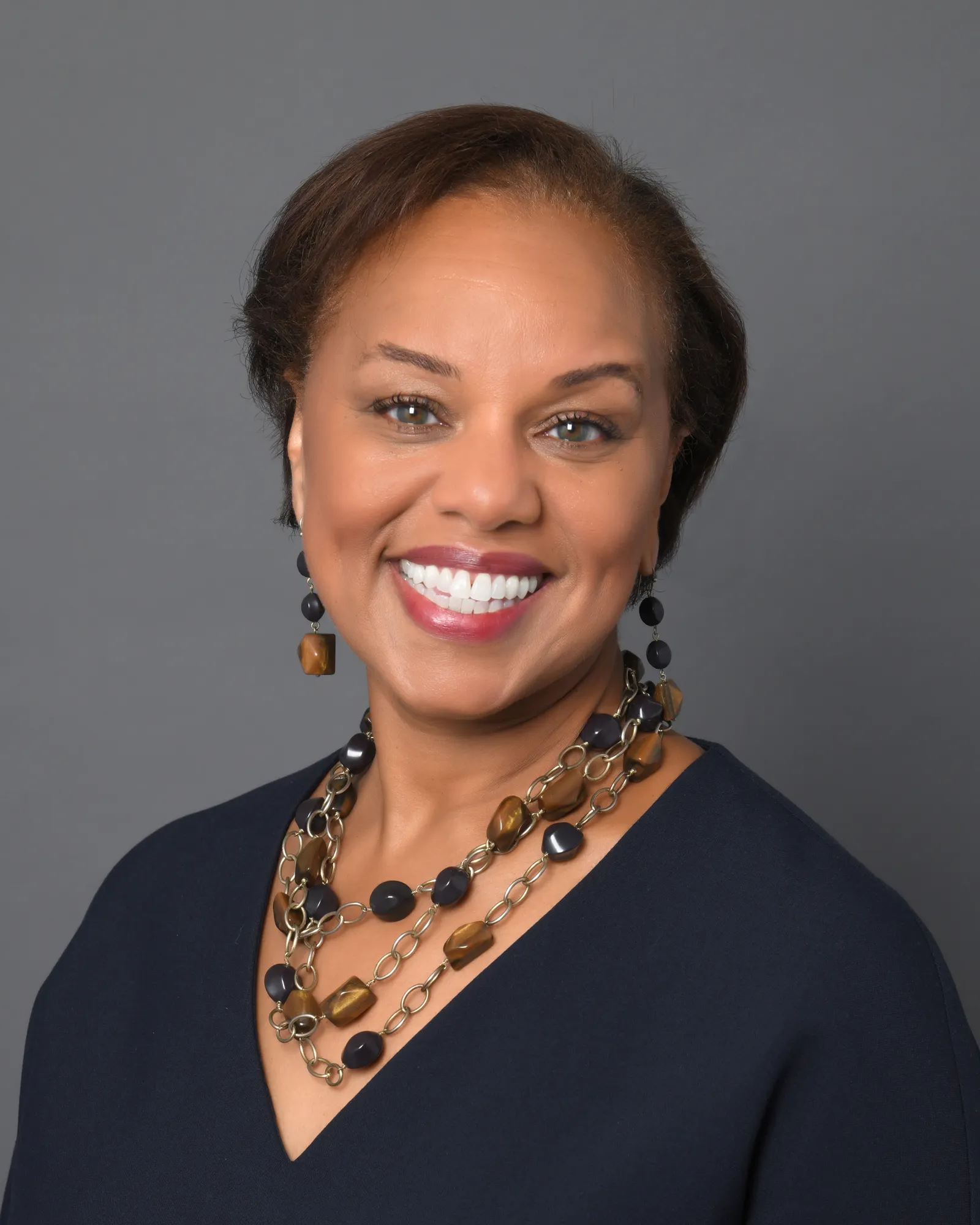
    Autumn Adkins Graves is head of school of St. Anne’s-Belfield School, an age 2 through grade 12 independent school in Charlottesville, Va.

    We adults have lost our way.

    We need to figure out how to right the ship for our children — the sooner, the better.

    As an educator and independent school leader, I can speculate about how we got here, but that doesn’t matter as much as how we collectively fix the broken infrastructure.

    One place to start is by teaching students how to be exemplary citizens — the kind of people who focus on making the world a better place, not just on their own self-interests.

    This is a headshot of Autumn Adkins Graves, head of school of St. Anne’s-Belfield School in Charlottesville, Va.

    Autumn Adkins Graves

    Permission granted by Autumn Adkins Graves


    Of course, this raises a chicken-egg conundrum. To raise outstanding citizens, do we begin by rethinking how we teach important subjects and lessons? Or is it more important to challenge students to think holistically, apply their lessons in a broader context, and envision a world — one they can help shape — beyond the year 2025?

    The answer is both.

    The task is enormous. After all, we have to teach students how to thrive in an ever-changing world, a society that we may not completely understand ourselves.

    On another level, basic civics lessons can — and should be — woven more explicitly into curricula.

    On a fundamental level, that means teaching students how to work together in teams — whether academic, athletic or performing arts.

    Selflessness should be in, while selfishness should be on the way out. We’ve become a society of “me,” not “we.” We are now a country of people who value the highlight dunk reel over passing up a shot for a teammate, and we are indirectly teaching that “me first” mindset to our students.

    True leadership isn’t always about being in charge or being credited as No. 1. Sometimes, it’s about supporting a team, pushing a shared vision forward, and finding contentment in playing a small but vital role in a team effort.

    There’s real value in contributing to something bigger than oneself, even without the title or limelight. If we can shift that mindset and rethink that paradigm, we’ll be making positive strides.

    At a larger level, it also means educating students about how decisions and laws are established, not just in the three branches of the federal government but also at the state and local levels.

    A student needs to realize why it matters to stay abreast of current events and the importance of participating in democracy.

    Nearly 64% of people voted in the last presidential election, but far fewer voted in off-year or local elections. Yet those are the elections that impact people and communities the most.

    Moreover, because so many people avoid voting, too many young people don’t know how the government works in America or feel apathetic to the incremental changes that occur at the local level.

    Rather than seeing elected officials as public servants, they identify officeholders as political figures or, even worse, career politicians or celebrities — people who are only interested in making decisions to ensure victory in their reelection campaign rather than determining what is best for their constituents in the short or long run.

    Also, it is time to tweak the way we teach media literacy: Too many students accept TikTok and Instagram posts at face value without considering the source or weighing the credibility of the content creator.

    Moreover, schools can empower students to solve issues instead of getting stuck on identifying problems.

    Too frequently, we fixate on what’s broken instead of creating a better way. Rather than pointing fingers, shifting the focus can make a difference. When students learn to be solution-makers, not just problem-identifiers, they lower their toxic anxiety levels and instead set themselves up to succeed in tomorrow’s world.

    As educators, shaping students to think like exemplary citizens means adjusting our approaches so we enable students to build confidence in their abilities to apply their understanding in a “real-world” context.

    Things won’t change today, this month, this year or even this decade. But by beginning with the end in mind — with a resolve that society can be full of exemplary citizens — we can start on the right path.

    Source link

  • Editorial: The Society for Research into Higher Education in 1985

    Editorial: The Society for Research into Higher Education in 1985

    by Rob Cuthbert

    In SRHE News and Blog a series of posts is chronicling, decade by decade, the progress of SRHE since its foundation 60 years ago in 1965. As always, our memories are supported by some music of the times (which had improved somewhat after the nadir of 1975).

    In 1985 Ronald Reagan became the US President, which seemed improbable at the time, but post-Trump now appears positively conventional – that joke isn’t funny any more. Reaganomics fuelled the present US multi-$trillion national debt; it was the era of supply-side economics. President Reagan was of course popular with UK Prime Minister Margaret Thatcher. She was by then at her peak after the 1982 Falklands War restored her own popularity, helping her in 1985 to bring an end to the miners’ strike and to ride out riots in Handsworth in Birmingham and Broadwater Farm in London.

    Vodafone enabled the first commercial mobile phone call in the UK; the BBC micro was the computer of choice for schools. Beverley Hills Cop was one of the top movies in 1985, with Eddie Murphy featured by the Pointer Sisters as they sang “I don’t wanna take it any more”, a 1980s theme song for some in universities. Globalism was in vogue; everybody wants to rule the world. International pop stars came together to sing We are the world in January and then perform at the Live Aid concert at Wembley in July with Queen’s legendary showstopping performance. Nintendo prepared to conquer the world with the launch of Super Mario, but global multinationals took a hit with one of the biggest marketing blunders ever, as Coca-Cola changed its formula, released New Coke in April, then went back to the original less than three months later.

    Higher education in 1985

    Global HE had its own marketing and governance issues after what Guy Neave (then UCL, now Twente) described as a period of consolidation from 1975 to 1985:

    “ … it was during this decade … that these systems assumed the level of dealing with mass higher education … By the late 1980s or 1990s … there are certain countries which anticipate participation rates in higher education of over 30% (Neave, 1984a). Highest amongst them are Denmark and Finland with 40% of the appropriate age group, the Federal Republic with 35% and France with 33%. … In effect, transition to mass higher education gave rise to additional bodies to control, monitor and hold accountable a sector of increasing significance in government social expenditure. Such intermediary agencies stand as a response to the advent of mass higher education, not an anticipation of it.”

    This was prescient: who’s gonna tell you things aren’t so great? Later Paul Windolf (Heidelberg) would take a very long view in his comparative analysis of Cycles of expansion in higher education 1870-1985 in Higher Education (1992:23, 3-19): “For most countries the data confirm the theory of ‘status competition’ (perverse effects): universities expand particularly fast during times of an economic recession … The human capital theory is not confirmed by this longitudinal analysis.” However human capital theory dominated policy thinking in many parts of the world, especially the UK, as Adam Matthews (Birmingham) argued in his blog for Wonkhe on 12 June 2024:

    “Despite so much adversarial and ideologically polarised politics in the 1980s domestically and internationally, we do find consensus around higher education and universities. Growth was still on the agenda. As the country found itself economically struggling, teaching and research was seen as the solution rather than the problem, particularly around research findings being applied to real world issues.”

    UK HE in 1985: a ferment of planning

    In that decade of consolidation after 1975, in the UK no new universities were created until the 1980s. By 1985 there were just two: the University of Buckingham and the University of Ulster. Expansion of UK HE in the 1980s was driven by the polytechnics, especially after the UGC’s unevenly distributed and dramatic financial cuts of 1981. The universities and UGC had tried and failed to protect the so-called ‘unit of resource’, the level of funding per full-time equivalent (FTE) undergraduate student, and the UGC’s established pattern of quinquennial funding had been reluctantly abandoned. Neave noted that:

    “Strictly speaking, university finance in the United Kingdom did not involve change to the basic unit of resource, an issue raised only under dire economic pressure in the period following the 1981 reductions in university budgets. Nor was the abandonment of quinquennial funding a response to mass higher education per se, so much as to the country’s parlous economic status.”

    The UK economy and HE were in Dire Straits: there was no money for nothing. The rapid expansion of the polytechnics, driving down costs, was the dominant influence on policy. A National Advisory Body for Local Authority Higher Education (NAB) had been set up on 1 February 1982 to advise the Secretary of State for Education and Science on matters relating to academic provision and the approval of advanced courses, reconstituted as the National Advisory Body for Public Sector Higher Education (PSHE) from 1 February 1985. In 1985 there were 503,000 students in PSHE in Great Britain, of whom 214,000 were part-time. Universities had 291,000 full-time and 114,000 part-time students. PSHE in England included 29 polytechnics, 30 major colleges, 21 voluntary colleges, and 300 others. In Wales there was one polytechnic, 7 major colleges and 16 others. The Further Education Act 1985 gave more powers to local authorities, who still governed the whole of PSHE, to supply goods and services, especially teaching and  research, through educational institutions.

    Clive Booth, principal private secretary to the Secretary of State for Education and Science since 1975, later to become Director of Oxford Polytechnic, foretold government policy in 1987, reviewing HE planning since 1965 in Higher Education Quarterly:

    “The development of a planning body for public sector higher education in England has created the potentiality for an integrated planning approach to university and non-university higher education.”

    Booth had been involved in the production of a series of significant DES papers: the 1978 Report of the Working Group on the Management of Higher Education in the Maintained Sector (the Oakes Report); in 1981 Higher Education in England outside the Universities: Policy, Funding and Management, a consultative document; and finally the 1985 Green Paper The Development of Higher Education into the 1990s. We saw the present, he saw the whole of the Moon.

    The Green Paper followed the notorious Jarratt Report of 1985, which sent shock waves through the university sector. Paul Greatrix (Nottingham), a long-serving Registrar and Secretary, wrote on his Wonderful (and Frightening) World of HE blogmuch later that:

    “Looking back from 2015, some of these observations and recommendations do seem quite tentative. But in 1985 they were dynamite. After the extraordinary and unprecedented cuts of 1981 and Keith Joseph’s unsuccessful approach to introduce fees in 1984 this seemed like another attack on universities.”

    The widespread view in UK HE at the time was, in the words of the Style Council, “You don’t have to take this crap”, but the policy walls did not come tumbling down. Greatrix cited Geoffrey Alderman’s acerbic review of Malcolm Tight’s 2009 book Higher education in the United Kingdom since 1945 for Times Higher Education:

    “… to my mind one of the most damaging inquiries into higher education over the last half-century was the Jarratt report … a mischievous and malevolent investigation (which, inter alia, popularised if it did not invent the notion that students are “customers”, which foisted on the sector the delusion that factory-floor “performance indicators” are entirely suited to a higher-education setting, and which led to the abolition of academic tenure and the concomitant triumph of managerialism in the academy) … Jarratt was self-inflicted. The inquiry was not a government creation. It was established by the Committee of Vice-Chancellors and Principals. … Jarratt was betrayal from within.”

    For Greatrix:

    “Looking back these do not look like the proposals filled with malevolence or mischief. Many of these changes were inevitable, most were long overdue, a lot would have happened in any case. … From today’s viewpoint it looks more like that what Jarratt offered were some pointers and directions in this strange new terrain.”

    With the benefit of hindsight it can be argued that in 1985 UK universities were unduly concerned, perhaps even obsessed, with what might have been lost from a supposed ‘golden age’ of autonomy. But nothing is so good it lasts eternally. The wreckage of the Titanic was finally located in 1985, another lost cause once assumed unsinkable. Universities were, like Bonnie Tyler, holding out for a hero, but Tina Turner was right, after the 1981 cuts: “Out of the ruins, out from the wreckage, can’t make the same mistake this time”.

    The Green Paper, still Green and not White, announced by Secretary of State Keith Joseph in May 1985, came as the preliminary conclusion to this ferment of planning. He said in Parliament that “… it is vital for our higher education to contribute more effectively to the improvement of the performance of the economy. This is not because the Government place a low value on the general cultural benefits of education and research or on study of the humanities.” But HE mostly heard only the first sentence, and thought we were on the road to nowhere, rather than seeing the opportunities. The Thatcher White Paper Higher Education: Meeting the Challenge would not appear until 1987, and NAB and the UGC would  survive only until 1988. REO Speedwagon captured the mood: Can’t fight this feeling any more.

    SRHE and research into higher education in 1985

    The chairs of SRHE from 1975-1985 included some great names: Lewis Elton (Surrey) 1977-78, Gareth Williams (Lancaster, later London Institute of Education) 1978-80 (and 1986-88), Donald Bligh (Exeter) 1980-82, David Warren-Piper (London Institute of Education) 1982-84, and Michael Shattock (Warwick, later London Institute of Education/UCL) 1984-86. The outstanding highlight of the decade was a major review into higher education organised by the Society. As Gareth Williams wrote:

    “With the help of a substantial grant from the Leverhulme Trust, the Society for Research into Higher Education set up a comprehensive programme of study into the future of higher education which I directed. The aim of the programme was not to undertake new research but rather to focus recent research findings and the views of informed people on the major strategic options likely to be available to higher education institutions and policy making bodies in the 1980s and 1990s.”

    The programme ran from 1980 to 1983 and led to nine themed reports, an overall review and a final report. SRHE had, in Michael Shattock’s words:

    “… established itself as an important voice in policy. It was addressed by higher education Ministers (William Waldegrave 1982, Peter Brooke 1983), at an SRHE/THES Conference on the Green Paper by Sir Keith Joseph the Secretary of State, in 1985. Most unusually it received a visit from the former Prime Minister, Edward Heath, in February 1983 who wished to seek the Society’s advice about higher education.”

    SRHE might have hoped like Madonna to be Into the Groove policywise, but the Prime Minister had a list of questions which were more about living in a material world:

    • To what extent (if any) has the balance between disciplines been inappropriate for Britain’s economic needs?
    • How far should the labour market determine the shape of higher education?
    • Are research and teaching indivisible in higher education if standards are to be maintained?
    • Is it better to have a few research institutions or many, given financial constraints?
    • Is the binary line appropriate?
    • Are the links between HE and industry poor by comparison with other major countries?
    • What are the merits of shorter courses – two years liberal arts followed by two years vocational?”

    Shattock observed:

    “The interest of these questions is both the extent to which the issues were addressed and answered in the Leverhulme Programme and the fact that their underlying assumptions formed the basis of the 1985 Green Paper. It was clear that the Society was at the sharp end of discussions about the future policy.”

    The Leverhulme findings were perhaps just too balanced for the times – can’t get there from here. Shattock as SRHE chair initiated an Enquiry on ‘Questions of Quality’ which became the theme of SRHE’s 1985 annual conference, and one of SRHE’s founders, Graeme Moodie (York), edited a 1986 bookStandards and Criteria in Higher Education. Shattock also established the influential SRHE Policy Forum, a seminar involving leading academics, civil servants and HE managers which met five times a year under the alternate chairmanship of Michael Shattock and Gareth Williams. 

    Nevertheless it was not long after 1985 that a special meeting of SRHE’s Council at the FE Staff College received a report, probably from its administrator Rowland Eustace, saying: “general knowledge and understanding of the Society remains relatively low in higher education despite attempts over recent years to give the Society a higher profile”. Perhaps still a little out of touch, hoping for glory days, still running up that hill, hoping or even believing that things can only get better.

    Rob Cuthbert is editor of SRHE News and the SRHE Blog, Emeritus Professor of Higher Education Management, University of the West of England and Joint Managing Partner, Practical Academics. Email [email protected]. Twitter/X @RobCuthbert.

    Author: SRHE News Blog

    An international learned society, concerned with supporting research and researchers into Higher Education

    Source link

  • The Society for Research into Higher Education in 1975

    The Society for Research into Higher Education in 1975

    by Rob Cuthbert

    Only yesterday

    I’ve been walking these streets so long: in the SRHE Blog a series of posts is chronicling, decade by decade, the progress of SRHE since its foundation 60 years ago in 1965. As always, our memories are supported by some music of the times, however bad it might have been[1].

    Is this the real life?

    Some parts of the world, like some parts of higher education, were drawing breath after momentous years. The oil crisis of 1973-74 sent economic shocks around the world. In 1975 the Vietnam war finally ended, and the USA also saw the conviction of President Richard Nixon’s most senior staff John MitchellBob Haldeman and John Ehrlichman, found guilty of the Watergate cover-up. Those were the days when the Washington Post nailed its colours to the mast rather than not choosing sides, and in the days when the judicial system and the fourth estate could still expose and unseat corrupt behaviour at the highest levels. Washington Post editor Katharine Graham supported her journalists Woodward and Bernstein against huge establishment pressure, as Tammy Wynette sangStand by your man. How times change.

    Higher education in the UK had seen a flurry of new universities in the 1960s: Aston, Brunel, Bath, Bradford, City, Dundee, Heriot-Watt, Loughborough, Salford, Stirling, Surrey, the New University of Ulster, and perhaps most significant of all, the Open University. All the new UK universities were created before 1970; there were no more in the period to 1975, but the late 60s and early 1970s saw the even more significant creation of the polytechnics, following the influential 1966 White Paper A Plan for Polytechnics and Other Colleges. The Times Higher Education Supplement, established in 1971 under editor Brian Macarthur, had immediately become the definitive trade paper for HE with an outstanding journalistic team including Peter (now Lord) Hennessy, David Hencke and (now Sir) Peter Scott (an SRHE Fellow), later to become the THES editor and then VC at Kingston. THES coverage of the polytechnic expansion in the 1970s was dominated by North East London Polytechnic (NELP, now the University of East London), with its management team of George Brosan and Eric Robinson. They were using a blueprint created in their tenure at Enfield College, and fully developed in Robinson’s influential book, The New Polytechnics – the People’s Universities. NELP became “a byword for innovation”, as Tyrrell Burgess’s obituary of George Brosan said, developing an astonishing 80 new undergraduate programmes validated by the Council for National Academic Awards, created like SRHE in 1965. Burgess himself had been central to NELP’s radical school for independent study and founded the journal, Higher Education Review, working with its long-time editor John Pratt (an SRHE Fellow), later the definitive chronicler of The Polytechnic Experiment. In Sheffield one of the best of the polytechnic directors, the Reverend Canon Dr George Tolley, was overseeing the expansion of Sheffield Polytechnic as it merged with two colleges of education to become Sheffield City Polytechnic.

    As in so many parts of the world the HE system was increasingly diverse and rapidly expanding. In Australia nine universities had been established between 1964 and 1975: Deakin, Flinders, Griffith, James Cook, La Trobe, Macquarie, Murdoch, Newcastle, and Wollongong. The Australian government had taken on full responsibility for HE funding as Breen (Monash) explained, and had even abolished university fees in 1974, which Mangan’s (Queensland) later review regarded as not necessarily a good thing. How times change.

    In the USA the University of California model established under president Clark Kerr in the 1960s dominated strategic thinking about HE. Berkeley’s Martin Trow had already written The British Academics with AH Halsey (Oxford) and was about to become the Director of the Centre for Studies of Higher Education at Berkeley, where his elite-mass-universal model of how HE systems developed would hold sway for decades.

    In the UK two new laws, the Sex Discrimination Act 1975 and the Equal Pay Act 1970, came into force on 29 December, aiming to end unequal pay of men and women in the workplace. In the USA the Higher Education Act 1972 with its Title IX had been a hugely influential piece of legislation which prohibited sex discrimination in educational institutions receiving federal aid. How times change. Steve Harley’s 1975 lyrics would work now with President Trump: You’ve done it all, you’ve broken every code.

    You ain’t seen nothing yet

    Some things began in 1975 which would become significant later. In HE, institutions that had mostly been around for years or even centuries but started in a new form included Buckinghamshire College of Higher Education (later Buckinghamshire New University), Nene College of Higher Education (University of Northampton), Bath Spa University College, Roehampton, and Dublin City University. Control of Glasgow College of Technology (Glasgow Caledonian University) transferred from Glasgow Corporation to the newly formed Strathclyde Regional Council. Nigeria had its own flurry of new universities in Calabar, Jos, Maiduguri and Port Harcourt.

    Everyone knew that “you’re gonna need a bigger higher education system” as the blockbuster hit Jaws was released. 1975 was the year when Ernő Rubik applied for a patent for his invention the Magic Cube, Microsoft was founded as a partnership between Bill Gates and Paul Allen, and Margaret Thatcher defeated Edward Heath to become leader of the Conservative Party. Bruce Springsteen was already ‘The Boss’ when Liz Truss was Born to run on 26 July; she would later briefly become a THES journalist and briefly Shadow Minister for Higher Education, before ultimately the job briefly as boss. 1970s terrorism saw a bomb explode in the Paris offices of Springer publishers: the March 6 Group (connected to the Red Army Faction) demanded amnesty for the Baader-Meinhof Group.

    Higher education approaching a period of consolidation

    Guy Neave, then perhaps the leading continental European academic in research into HE, later characterised 1975-1985 as a period of consolidation. In the UK the government was planning for (reduced) expansion and Labour HE minister Reg Prentice was still quoting the 1963 Robbins Report in Parliament: “The planning figure of 640,000 full-time and sandwich course students in Great Britain in 1981 which I announced in November is estimated to make courses of higher education available for all those who are qualified by ability and attainment to pursue them and who wish to do so. It allows for the number of home students under 21 entering higher education in Great Britain, expressed as a proportion of the population aged 18, to rise from 14% in 1973 to 17% in 1981. … the reductions in forecast higher education expenditure in the recent Public Expenditure White Paper are almost entirely attributable to the lower estimate of prospective student demand.” Government projections of student numbers were always wrong, as Maurice Kogan (Brunel) might have helped to explain – I thought by now you’d realise. 1975 was the year when Kogan, a former senior civil servant in the Department of Education and Science, published his hugely influential Educational Policy-making: A Study of Interest Groups and Parliament.

    In the US the Carnegie Commission on Higher Education, founded ten years earlier under Clark Kerr, was in full pomp and published Demand and Supply in United States Higher Education. Two giants of sociology, Seymour Martin Lipset and David Riesman, wrote essays on ‘Education and Politics at Harvard’. How times change.

    Research into higher education

    Academics were much in evidence in novels; 1975 saw Malcolm Bradbury’s The History Man, David Lodge’s Changing Places, and Colin Dexter‘s first Inspector Morse novel Last Bus to Woodstock, and higher education was becoming established as a field of study. Dressel and Mayhew’s 1974 US-focused book reviewed by Kellams (Virginia) in the Journal of Higher Education, and published by the then-ubiquitous HE publishers Jossey-Bass in San Francisco saw ‘the emergence of a profession’. Nevertheless much research into HE was still appearing in mainstream education rather than HE journals, even in the USA. Tinto (Columbia) reported his synthesis of research on ‘dropout’ (as it was called then) in HE in the Review of Educational Research, and DI Chambers wrote about a major debate in China about higher education policy in an article in Comparative Education.

    Michael Shattock’s history of the SRHE in its earlier years pulled no punches about the limited achievements and reach of the Society:

    “By 1973, when the university system was in crisis with the collapse of the quinquennial funding system, it was clear that the Society was significantly failing to meet the ambitious targets it had started out with: it held annual conferences but attendance at 100 to 120 ensured that any surplus was low. It had successfully launched the valuable Research into Higher Education Abstracts but its … monographs, … while influential among specialists did not command a wide readership. The Society appeared to be at a crossroads as to its future: so far it had succeeded in expanding its membership, both corporate and individual, but this could easily be reversed if it failed to generate sufficient activity to retain it. Early in 1973 the Governing Council agreed to hold a special meeting … and commissioned a paper from Leo Evans, one of its members, and Harriet Greenaway, the Society’s Administrator … The “Discussion Paper on the Objectives of  the Society” … quoted the aims set out in the Articles of Association “to promote and encourage research in higher education and related fields” and argued that the Society’s objectives needed to be broadened.  … The implied thrust of the paper was that the Society had become too narrow in its research interests and that it should be more willing to address issues related to the development of the higher education system.”

    In the end the objectives were expanded to include concern for the development of the HE sector, but the Society’s direction was not wholly settled, according to Shattock. Moreover: “Both in 1973-74 and 1974-75 there was great concern about the Society’s continued financial viability, and in 1976 the Society moved its premises out of London to the University of Surrey where it was offered favourable terms.” (Someone Saved My Life Tonight). In 1976 Lewis Elton of Surrey, one of SRHE’s founders, would become Chair of the Society when the incumbent Roy Niblett suffered ill health. It was the same year that the principal inspiration for the foundation of SRHE (as Shattock put it), Nicholas Malleson, died at only 52. SRHE’s finances were soon back on an even keel but It would be more than 25 years before they achieved long-term stability.

    Rob Cuthbert is editor of SRHE News and the SRHE Blog, Emeritus Professor of Higher Education Management, University of the West of England and Joint Managing Partner, Practical Academics. Email [email protected]. Twitter/X @RobCuthbert.


    [1] The top selling single of 1975 was Bye Bye Baby by the Bay City Rollers, and the Eurovision Song Contest was won by Ding-a-Dong. The album charts were dominated by greatest hit albums from Elton John, Tom Jones, The Stylistics, Perry Como, Engelbert Humperdinck and Jim Reeves. I rest my case. As always, there were some exceptions.

    Author: SRHE News Blog

    An international learned society, concerned with supporting research and researchers into Higher Education

    Source link

  • The Benefits of Professional Society Involvement (opinion)

    The Benefits of Professional Society Involvement (opinion)

    Back in 2001, when I first attended university, I didn’t join any student organizations, clubs or professional societies. I was busy with classes, after all, and didn’t know what benefit they could provide me anyway. What possible value would becoming a SACNAS member offer? Some clubs even required a membership fee!

    Now I know better. Professional societies are a critical, often overlooked way of building your network, strengthening your résumé and finding professional development opportunities outside classes. As discussed in a 2020 Developmental Biology article titled “Professional societies can play a vital role in career development,” professional societies offer conferences, workshops, virtual seminars and free resources to members and, in many cases, nonmembers.

    These resources provide learning opportunities across multiple categories, including professional development, career deep dives and leadership training. My own organization, the Genetics Society of America, offers the Leadership Dialogue Series organized by our early-career scientists, seminars in languages other than English and workshops on different types of careers and topics related to accessibility in STEM. Each of these events represents an opportunity not just for our community to learn about a new career, skill or research topic, but also provides CV and résumé boosts to our event organizers, whose volunteerism powers GSA’s ability to offer these resources.

    Speaking for myself, when I returned to school in 2010, I joined groups that aligned with my career and professional goals: building a support community via a Society for Advancement of Chicanos/Hispanics and Native Americans in Science membership, building a professional community via a Graduate Student Association and Association for Women in Science membership, learning more about science writing opportunities via a National Association of Science Writers membership, and connecting with fellow mycologists via a Mycological Society of America membership.

    As a transfer student with a previous degree, I was also inducted into the Tau Sigma National Honor Society. Now, as a career development professional, I am an active member and volunteer for the Graduate Career Consortium. All these memberships helped guide me to the career I have today and have opened numerous opportunities for collaborations, event organizing, volunteer work and personal career development. I can say without any hesitation that my membership with GSA, MSA and NASW led me directly to the position I have now, and collectively my society memberships keep me informed of current developments in higher education, professional development opportunities, and my own field of genetics.

    As you scan each professional society’s page, note the many conferences, professional development programs and job postings each of these memberships gives you access to. You may not be in a position to invest in more than one professional society, and that’s perfectly fine! Choosing one specific society as your “home” and focusing your volunteer efforts and involvement in this specific society is a wonderful way to build your network; connect with other like-minded professionals; collaborate in organizing high-value, marketed events; and learn the inner workings of a professional society.

    Choosing your society of interest might seem daunting. Here are some tips to help you navigate this choice and select the best society to fit your needs:

    • Cost: Determine how much you can budget each year for a membership. You may need to save up to afford this cost at a future date, so keep track of membership renewal times. Check with your adviser, lab or department to see if they would be able and willing to pay for one professional society membership as part of your graduate studies. Many societies offer lower rates for students. Also check for low-income waivers—many societies offer discounts or waivers due to economic hardship.
    • Field-specific societies: If you’re a physicist, the American Physical Society makes more sense to join than GSA. A social worker should join a society such as the National Association of Social Workers. Whatever your field, there’s a professional society that serves your community! If you’re not sure what your field’s societies are, ask your adviser and other faculty. You can also ask an AI tool to compile a list, with links to check sources, using this prompt: “Create a table for scientific societies based in the United States which serve [YOUR FIELD] academics. The columns should be society name, website, upcoming conferences and membership cost for a graduate student member.” For example, using this prompt with “history” as the field, I received the following results from OpenAI’s ChatGPT:

    Here is a table of prominent U.S.-based scientific societies that serve history academics, including their websites, upcoming conferences and graduate student membership costs:

    Society Website Upcoming Conference(s) Graduate Student Membership Cost
    American Historical Association (AHA) historians.org AHA 2026 Annual Meeting, Jan. 8–11, 2026, Chicago Not specified
    Organization of American Historians (OAH) oah.org 2025 OAH Conference on American History, April 3–6, 2025, Chicago $51/year
    American Catholic Historical Association (ACHA) achahistory.org 105th Annual Meeting, Jan. 3–5, 2025, New York, N.Y. $20/year
    Social Science History Association (SSHA) ssha.org 2025 Annual Conference, Nov. 20–23, 2025, Chicago $30/year
    Society for the History of Technology (SHOT) historyoftechnology.org 2025 Annual Meeting, Oct. 9–11, 2025, Esch-sur-Alzette, Luxembourg Not specified
    World History Association (WHA) thewha.org 34th Annual Meeting, June 26–28, 2025, Louisville, Ky. Not specified

    Please note that membership costs and conference details are subject to change. For the most accurate and up-to-date information, it’s best to visit the respective society’s official website.

    You can see that not every result includes a cost, but because I have the website, I can quickly check and find that the American Historical Association offers a one-year student membership for $42 and update my table accordingly. Since two of the conference dates listed on the table have already passed, I can also easily update the information for the Organization for American History and the American Catholic Historical Association to reflect the planned 2026 conference dates and locations.

    • Attend a conference: Talk to your adviser about attending a conference offered by the professional society you’re interested in. Many societies offer travel fund awards that you can apply for if your adviser is not able to support your attendance.
    • Check out the organization’s professional development opportunities: If the society has an early-career program or committee, apply to become a member! These programs are an excellent way to get your name out to a large number of colleagues and build your network, as the early-career students you work with will become your professional colleagues who step into academia, industry and beyond with you.
    • Be strategic in your involvement: Decide how much time you’re willing to invest each month in a volunteer opportunity and guard your time diligently. Burnout is a fast way to turn a positive experience into a negative drag on your time, so approach each opportunity as a large project and add more only if you have the time. You don’t want to become known for bailing out on multiple collaborative volunteer opportunities!

    When thinking about which professional society you should join, make sure you’re choosing the society that aligns with both your career goals and personal needs, and that offers you the best opportunities for your investment. Talk with your adviser to see if there’s a society they recommend and begin your professional society journey early to maximize this resource as you move forward in your career.

    Jessica M. Vélez is the senior manager of engagement, community building and professional development for the Genetics Society of America. She earned her Ph.D. in energy science and engineering from the University of Tennessee, Knoxville, in 2020, and was awarded the National GEM Fellowship during her graduate studies.

    Source link

  • Editorial: 60 Years of the Society for Research into Higher Education

    Editorial: 60 Years of the Society for Research into Higher Education

    by Rob Cuthbert

    Yesterday

    Issue No 60 of SRHE News appears by happy coincidence in the 60th year since the Society for Research into Higher Education was established (“all my troubles seemed so far away”). Reminiscences can often be reinforced by the musical soundtrack of the time, as ours will be. Many readers of SRHE News and Blog weren’t born in 1965, but let’s not allow such small obstacles to deflect us, when everybody knows the tunes anyway. Here are a few reminders of how things were 60 years ago, in 1965.

    (I Can’t Get No) Satisfaction

    As the Rolling Stones sang: “I tried, and I tried, and I tried and I tried, I can’t get no satisfaction”, the message resonated with 30,000 potential HE students who could not get admitted to higher education in UK universities in 1965, with only 50,000 places available. Only about 4% of the rising cohort of 18 year olds won admission to the 25 universities in existence in 1965. Most people left school at 15; the school-leaving age was only raised to 16 in 1971.

    The Robbins Report two years earlier had punctuated, but not initiated, the accelerating expansion of demand and need for more higher education, reflected in the 1960s with the creation of the new plateglass universities, including Kent and Warwick in 1965. Robbins had proposed a new breed of scientific and technological universities but these were not established; development relied instead on the organic growth and expansion of the colleges already in existence. That growth was significantly helped and supported by the new Council for National Academic Awards (CNAA), created in 1965 to begin the validation of degree courses outside universities.

    In a Parliamentary debate in December 1965 Lord Robbins aimed to set at rest the ‘more means worse’ argument championed by Kingsley Amis:

    “On the occasion of our last debate, the two leading issues discussed were the question of numbers and the question of the machinery of government. On the first of these issues, whether the expansion proposed by the Committee on Higher Education involved a lowering of entry standards, I think it may be said that discussion is at an end. Even The Times newspaper, which is not over-given to retraction, has had to admit that its accusations in this respect rested on misapprehension; 1250 and the latest figures of qualified persons coming forward show, without a doubt, what our Committee always emphasised: that its estimates were on the low side rather than on the high.”

    Continuing rapid expansion allowed more and more 18-year-olds to join: “I’m in with the in-crowd, I go where the in-crowd goes”. This was before fees; students had grants they didn’t have to repay, with their real value still rising (they peaked in 1968): boomers could happily sing with The Who about My Generation.

     We Can Work It Out

    The non-university colleges would first become polytechnics, following the 1966 White Paper A Plan for Polytechnics and Other Colleges, written by civil servant Toby Weaver. Secretary of State for Education Tony Crosland promoted the new policy idea of the binary system (“Try to see it my way”) in his seminal Woolwich speech in April 1965, but Crosland had been mainly occupied with the comprehensivisation of secondary schools. DES Circular 10/65 was the first of a series which dealt with the issue of comprehensivisation, as Harold Wilson’s Labour government asked local education authorities to submit plans for reorganising their schools on comprehensive lines. It was the first major schools reform since Butler’s 1944 Education Act under Prime Minister Winston Churchill, who died in 1965.

    Expansion of HE was substantially driven by the colleges, still very much part of the local authority sector. The polytechnics would increasingly chafe at the bureaucratic controls of local authorities but it would be more than 20 years before the 1988 Education Reform Act ripped the polytechnics out of the local authority sector. In 1965 the replacement of the London County Council by the Greater London Council was big news for the expanding HE sector, especially because it entailed the creation of the Inner London Education Authority, responsible for no fewer than five of the 30 polytechnics, and a range of other specialist HE institutions. Nowadays that kind of restructuring would barely merit a mention in Times Higher Education, which itself was not even a glint in the eye of Brian Macarthur, the first editor of the Times Higher Education Supplement, not launched until 1971.

    I Can’t Explain

    The colleges to become polytechnics would soon be calling for ‘parity of esteem’ (“Got a feeling inside – can’t explain”). Although ‘poly’ would eventually be replaced in the vernacular by the execrable but inescapable ‘uni’, some features of the HE system proved extremely persistent. League tables had not yet made an appearance but would soon become not only persistent but pernicious. Some things, like HE hierarchies of esteem, seem to be always with us, just as Frank Herbert’s mediocre scifi novel Dune, first published in 1965, has recently seen yet another movie remake.

    A World of Our Own

    In contrast David Lodge, professor of English Literature at Birmingham University, would go from strength to strength, writing about what he knew best – “we’ll live in a world of our own”. 1965 was before his campus trilogy, rated by some as the best novels ever about university life, but in 1965 he did write about a PhD student, in The British Museum Is Falling Down. In the same year Philip Larkin, still only halfway through his twenty years’ service as Librarian at the University of Hull, was awarded the Queen’s Gold Medal for Poetry.

    It’s Not Unusual

    For those whose memory is punctuated by sporting events there was still a year to wait before England’s triumph in the football World Cup, which sadly was unusual, indeed unique. A more usual hierarchy of football esteem began in 1965 with Liverpool’s first ever win in the FA Cup, and an era ended with Stanley Matthews’ final game in the English First Division. Tom Jones began his own era of success in 1965 with his first No 1 hit, It’s Not Unusual.

    Eve of Destruction?

    US president Lyndon Johnson announced the Great Society in his State of the Union address in January 1965, but Martin Luther King marched in Selma and  Montgomery. The first American troops arrived in Vietnam, and a Students for a Democratic Society demonstration against the war drew 25,000 people in Washington. Student protests, too, are always with us (”The Eastern world, it is exploding”).

    How sweet it is

    Dorothy Hodgkin had won the Nobel Prize for Chemistry just a year earlier, and in 1965 she was made a member of the Order of Merit. The Social Science Research Council was established in 1965. It was later renamed the Economic and Social Research Council in an early skirmish in the culture wars, precipitated by Keith Joseph as Education Secretary under Prime Minister Margaret Thatcher – who had been taught by Dorothy Hodgkin at Somerville College, Oxford.

    Act naturally

    The field of research into higher education was sparsely populated in 1965, but for the founders of the Society for Research into Higher Education it was a natural development to come together. The learned society they created has, in the 60 years since then, grown into an internationally-oriented group of researchers, dedicated to every kind of research into a global HE system which could scarcely have been dreamed of, but would surely have been celebrated, by SRHE’s founders. Let’s hang on, to what we’ve got.

    The Society has planned a range of activities to celebrate its platinum anniversary, including a series of blogs reflecting on changes to higher education during those 60 years. If you would like to contribute to the series (Help! I need somebody) please contact [email protected].

    Rob Cuthbert is editor of SRHE News and the SRHE Blog, Emeritus Professor of Higher Education Management, University of the West of England and Joint Managing Partner, Practical Academics. Email [email protected]. Twitter/X @RobCuthbert.

    Author: SRHE News Blog

    An international learned society, concerned with supporting research and researchers into Higher Education

    Source link