Back in 2001, when I first attended university, I didn’t join any student organizations, clubs or professional societies. I was busy with classes, after all, and didn’t know what benefit they could provide me anyway. What possible value would becoming a SACNAS member offer? Some clubs even required a membership fee!
Now I know better. Professional societies are a critical, often overlooked way of building your network, strengthening your résumé and finding professional development opportunities outside classes. As discussed in a 2020 Developmental Biology article titled “Professional societies can play a vital role in career development,” professional societies offer conferences, workshops, virtual seminars and free resources to members and, in many cases, nonmembers.
These resources provide learning opportunities across multiple categories, including professional development, career deep dives and leadership training. My own organization, the Genetics Society of America, offers the Leadership Dialogue Series organized by our early-career scientists, seminars in languages other than English and workshops on different types of careers and topics related to accessibility in STEM. Each of these events represents an opportunity not just for our community to learn about a new career, skill or research topic, but also provides CV and résumé boosts to our event organizers, whose volunteerism powers GSA’s ability to offer these resources.
Speaking for myself, when I returned to school in 2010, I joined groups that aligned with my career and professional goals: building a support community via a Society for Advancement of Chicanos/Hispanics and Native Americans in Science membership, building a professional community via a Graduate Student Association and Association for Women in Science membership, learning more about science writing opportunities via a National Association of Science Writers membership, and connecting with fellow mycologists via a Mycological Society of America membership.
As a transfer student with a previous degree, I was also inducted into the Tau Sigma National Honor Society. Now, as a career development professional, I am an active member and volunteer for the Graduate Career Consortium. All these memberships helped guide me to the career I have today and have opened numerous opportunities for collaborations, event organizing, volunteer work and personal career development. I can say without any hesitation that my membership with GSA, MSA and NASW led me directly to the position I have now, and collectively my society memberships keep me informed of current developments in higher education, professional development opportunities, and my own field of genetics.
As you scan each professional society’s page, note the many conferences, professional development programs and job postings each of these memberships gives you access to. You may not be in a position to invest in more than one professional society, and that’s perfectly fine! Choosing one specific society as your “home” and focusing your volunteer efforts and involvement in this specific society is a wonderful way to build your network; connect with other like-minded professionals; collaborate in organizing high-value, marketed events; and learn the inner workings of a professional society.
Choosing your society of interest might seem daunting. Here are some tips to help you navigate this choice and select the best society to fit your needs:
Cost: Determine how much you can budget each year for a membership. You may need to save up to afford this cost at a future date, so keep track of membership renewal times. Check with your adviser, lab or department to see if they would be able and willing to pay for one professional society membership as part of your graduate studies. Many societies offer lower rates for students. Also check for low-income waivers—many societies offer discounts or waivers due to economic hardship.
Field-specific societies: If you’re a physicist, the American Physical Society makes more sense to join than GSA. A social worker should join a society such as the National Association of Social Workers. Whatever your field, there’s a professional society that serves your community! If you’re not sure what your field’s societies are, ask your adviser and other faculty. You can also ask an AI tool to compile a list, with links to check sources, using this prompt: “Create a table for scientific societies based in the United States which serve [YOUR FIELD] academics. The columns should be society name, website, upcoming conferences and membership cost for a graduate student member.” For example, using this prompt with “history” as the field, I received the following results from OpenAI’s ChatGPT:
Here is a table of prominent U.S.-based scientific societies that serve history academics, including their websites, upcoming conferences and graduate student membership costs:
34th Annual Meeting, June 26–28, 2025, Louisville, Ky.
Not specified
Please note that membership costs and conference details are subject to change. For the most accurate and up-to-date information, it’s best to visit the respective society’s official website.
You can see that not every result includes a cost, but because I have the website, I can quickly check and find that the American Historical Association offers a one-year student membership for $42 and update my table accordingly. Since two of the conference dates listed on the table have already passed, I can also easily update the information for the Organization for American History and the American Catholic Historical Association to reflect the planned 2026 conference dates and locations.
Attend a conference: Talk to your adviser about attending a conference offered by the professional society you’re interested in. Many societies offer travel fund awards that you can apply for if your adviser is not able to support your attendance.
Check out the organization’s professional development opportunities: If the society has an early-career program or committee, apply to become a member! These programs are an excellent way to get your name out to a large number of colleagues and build your network, as the early-career students you work with will become your professional colleagues who step into academia, industry and beyond with you.
Be strategic in your involvement: Decide how much time you’re willing to invest each month in a volunteer opportunity and guard your time diligently. Burnout is a fast way to turn a positive experience into a negative drag on your time, so approach each opportunity as a large project and add more only if you have the time. You don’t want to become known for bailing out on multiple collaborative volunteer opportunities!
When thinking about which professional society you should join, make sure you’re choosing the society that aligns with both your career goals and personal needs, and that offers you the best opportunities for your investment. Talk with your adviser to see if there’s a society they recommend and begin your professional society journey early to maximize this resource as you move forward in your career.
Jessica M. Vélez is the senior manager of engagement, community building and professional development for the Genetics Society of America. She earned her Ph.D. in energy science and engineering from the University of Tennessee, Knoxville, in 2020, and was awarded the National GEM Fellowship during her graduate studies.
Issue No 60 of SRHE News appears by happy coincidence in the 60th year since the Society for Research into Higher Education was established (“all my troubles seemed so far away”). Reminiscences can often be reinforced by the musical soundtrack of the time, as ours will be. Many readers of SRHE News and Blog weren’t born in 1965, but let’s not allow such small obstacles to deflect us, when everybody knows the tunes anyway. Here are a few reminders of how things were 60 years ago, in 1965.
As the Rolling Stones sang: “I tried, and I tried, and I tried and I tried, I can’t get no satisfaction”, the message resonated with 30,000 potential HE students who could not get admitted to higher education in UK universities in 1965, with only 50,000 places available. Only about 4% of the rising cohort of 18 year olds won admission to the 25 universities in existence in 1965. Most people left school at 15; the school-leaving age was only raised to 16 in 1971.
The Robbins Report two years earlier had punctuated, but not initiated, the accelerating expansion of demand and need for more higher education, reflected in the 1960s with the creation of the new plateglass universities, including Kent and Warwick in 1965. Robbins had proposed a new breed of scientific and technological universities but these were not established; development relied instead on the organic growth and expansion of the colleges already in existence. That growth was significantly helped and supported by the new Council for National Academic Awards (CNAA), created in 1965 to begin the validation of degree courses outside universities.
In a Parliamentary debate in December 1965 Lord Robbins aimed to set at rest the ‘more means worse’ argument championed by Kingsley Amis:
“On the occasion of our last debate, the two leading issues discussed were the question of numbers and the question of the machinery of government. On the first of these issues, whether the expansion proposed by the Committee on Higher Education involved a lowering of entry standards, I think it may be said that discussion is at an end. Even The Times newspaper, which is not over-given to retraction, has had to admit that its accusations in this respect rested on misapprehension; 1250 and the latest figures of qualified persons coming forward show, without a doubt, what our Committee always emphasised: that its estimates were on the low side rather than on the high.”
Continuing rapid expansion allowed more and more 18-year-olds to join: “I’m in with the in-crowd, I go where the in-crowd goes”. This was before fees; students had grants they didn’t have to repay, with their real value still rising (they peaked in 1968): boomers could happily sing with The Who about My Generation.
The non-university colleges would first become polytechnics, following the 1966 White Paper A Plan for Polytechnics and Other Colleges, written by civil servant Toby Weaver. Secretary of State for Education Tony Crosland promoted the new policy idea of the binary system (“Try to see it my way”) in his seminal Woolwich speech in April 1965, but Crosland had been mainly occupied with the comprehensivisation of secondary schools. DES Circular 10/65 was the first of a series which dealt with the issue of comprehensivisation, as Harold Wilson’s Labour government asked local education authorities to submit plans for reorganising their schools on comprehensive lines. It was the first major schools reform since Butler’s 1944 Education Act under Prime Minister Winston Churchill, who died in 1965.
Expansion of HE was substantially driven by the colleges, still very much part of the local authority sector. The polytechnics would increasingly chafe at the bureaucratic controls of local authorities but it would be more than 20 years before the 1988 Education Reform Act ripped the polytechnics out of the local authority sector. In 1965 the replacement of the London County Council by the Greater London Council was big news for the expanding HE sector, especially because it entailed the creation of the Inner London Education Authority, responsible for no fewer than five of the 30 polytechnics, and a range of other specialist HE institutions. Nowadays that kind of restructuring would barely merit a mention in Times Higher Education, which itself was not even a glint in the eye of Brian Macarthur, the first editor of the Times Higher Education Supplement, not launched until 1971.
The colleges to become polytechnics would soon be calling for ‘parity of esteem’ (“Got a feeling inside – can’t explain”). Although ‘poly’ would eventually be replaced in the vernacular by the execrable but inescapable ‘uni’, some features of the HE system proved extremely persistent. League tables had not yet made an appearance but would soon become not only persistent but pernicious. Some things, like HE hierarchies of esteem, seem to be always with us, just as Frank Herbert’s mediocre scifi novel Dune, first published in 1965, has recently seen yet another movie remake.
For those whose memory is punctuated by sporting events there was still a year to wait before England’s triumph in the football World Cup, which sadly was unusual, indeed unique. A more usual hierarchy of football esteem began in 1965 with Liverpool’s first ever win in the FA Cup, and an era ended with Stanley Matthews’ final game in the English First Division. Tom Jones began his own era of success in 1965 with his first No 1 hit, It’s Not Unusual.
US president Lyndon Johnson announced the Great Society in his State of the Union address in January 1965, but Martin Luther King marched in Selma and Montgomery. The first American troops arrived in Vietnam, and a Students for a Democratic Society demonstration against the war drew 25,000 people in Washington. Student protests, too, are always with us (”The Eastern world, it is exploding”).
Dorothy Hodgkin had won the Nobel Prize for Chemistry just a year earlier, and in 1965 she was made a member of the Order of Merit. The Social Science Research Council was established in 1965. It was later renamed the Economic and Social Research Council in an early skirmish in the culture wars, precipitated by Keith Joseph as Education Secretary under Prime Minister Margaret Thatcher – who had been taught by Dorothy Hodgkin at Somerville College, Oxford.
The field of research into higher education was sparsely populated in 1965, but for the founders of the Society for Research into Higher Education it was a natural development to come together. The learned society they created has, in the 60 years since then, grown into an internationally-oriented group of researchers, dedicated to every kind of research into a global HE system which could scarcely have been dreamed of, but would surely have been celebrated, by SRHE’s founders. Let’s hang on, to what we’ve got.
The Society has planned a range of activities to celebrate its platinum anniversary, including a series of blogs reflecting on changes to higher education during those 60 years. If you would like to contribute to the series (Help! I need somebody) please contact [email protected].
Rob Cuthbert is editor of SRHE News and the SRHE Blog, Emeritus Professor of Higher Education Management, University of the West of England and Joint Managing Partner, Practical Academics. Email [email protected]. Twitter/X @RobCuthbert.
Elon Musk will remain a fellow of the Royal Society after a meeting to discuss revoking his association with the U.K.’s most prestigious science organization ended without any disciplinary action being taken against the world’s richest man.
More than 150 fellows met at the world’s oldest scientific society on March 3 to discuss a proposal to expel the controversial Tesla and X boss, who was elected to the U.K. academy in 2018 for his services to science and technology.
Two leading scientists have already resigned their fellowships over Musk’s fellowship in light of what they believe are several clear breaches of the academy’s code of conduct, including his spearheading of radical cuts to U.S. research funding and his polemics against public figures such as Labour MP Jess Phillips, whom he labeled a “rape genocide apologist.”
More than 3,400 scientists and academics have also signed an open letter expressing their dismay at the lack of action by the Royal Society.
However, the meeting appeared to end with no decision on Musk’s fellowship.
In a statement released after the meeting, the Royal Society explained that “fellows agreed on the need to stand up for science and for scientists around the world in the face of the growing challenges science faces.”
“Concern was expressed, in particular, about the fate of colleagues in the U.S. who are reportedly facing the prospect of losing their jobs amid threats of radical cutbacks in research funding,” it added.
No specific mention was made of the motion to expel Musk in the statement, although the society “agreed to look at potential further actions that might help make the case for science and scientific research and counter the misinformation and ideologically motivated attacks on both science and scientists.”
“Fellows, over 150 of whom attended tonight’s meeting, were united in the need for the society to step up its efforts to advocate for science and scientists at a time when these are under threat as never before and yet at the same time have never been more necessary for humanity at large,” it added.
This week the Nobel laureate Geoffrey Hinton added his backing for Musk’s removal, stating that he “should be expelled from the British Royal Society. Not because he peddles conspiracy theories and makes Nazi salutes, but because of the huge damage he is doing to scientific institutions in the U.S. Now let’s see if he really believes in free speech.”
Musk responded, “Only craven, insecure fools care about awards and memberships. History is the actual judge, always and forever. Your comments above are carelessly ignorant, cruel and false. That said, what specific actions require correction? I will make mistakes, but endeavor to fix them.”
The inauguration ceremony for Donald Trump was interesting to watch for several reasons, but the Battle Hymn of the Republic caught my ear. Whilst the song has cultural connections for Americans, its explicit religiosity and commitment to truth seems at odds with modern sensibilities. Rather than truth, recent political history, eg Johnson, Trump, Brexit and Covid-19 (anti)vaccination, has shone a light on our post-truth society, where, as Illing (2018) notes, there is a disappearance of ‘shared standards of truth’. In such a society politics shifts from being the discussion of ideas or even ‘what works’ to a play for the emotions of the majority. A context within which Michael Gove, an early adopter, was able to label a raft of educational luminaries ‘the blob’ (see Garner, 2014).
Whilst this is/might be irritating and socially disabling, I want to argue that it is also both deleterious to educational research and that its roots lie some 250 years ago.
Pring (2015) argued that what makes educational research distinctly educational is its intention to improve educational practice. So, research about education is not sufficient to qualify as educational research; educational research intends to change educational practice for the good of learners (and often wider society). This requires several activities including shared dialogues between researchers, practitioners and other stakeholders with common ways of talking about education and common standards of truth (see Davies, 2016). An environment of post-truth undermines such possibilities, as I hope will become clearer as I explore the roots of the present malaise.
The roots lie around 1744 or just before, signalled by Vico’s New Science, or at least in the 18th century, where MacIntyre (1987) places the last foothold of the ‘educated public’ – and it is in MacIntyre that I ground the argument here. MacIntyre (1985) presents a historically informed account of the decline of ethical discourse and, on a more positive note, what is required for its restoration. Here I fillet that account for the resources I need for my purposes (see Davies, 2003, Davies, 2013 for more detailed reviews). He argues that ethical discourse has undergone a series of transformations, led by philosophers but now part of the public zeitgeist, causing a situation in which people believed there was no reasonable basis on which to resolve ethical disagreements.
Here, I identify just three key elements of the argument. Firstly, naïve relativism, the (false) view that because people disagree on a matter then, necessarily, there must be no rational means to resolve the disagreement. Secondly, MacIntyre identifies three, non-rational approaches to decision making: (i) personal taste, (ii) achieving the goals of the system of which one is a part, or (iii) through interpersonal agreement. These are embedded, MacIntyre claims, in our social activities and institutions. Thirdly, that these give rise to a distinctive form of political engagement, protest. In protest different sides shout their differing views at each other knowing both that their views will not change the views of their opponents nor that their opponents’ views will change their views.
When we see ‘toddler’ behaviour from politicians, it is a focus on personal taste and the tantrums that emerge when these are frustrated. What reasons, they might say, do others have to frustrate what I want, for no such reasons can exist. When we see claims that the democratic process must be followed, we are seeing a commitment to achieving the goals of the system; what else can be done? We regularly see examples of protest, often mistakenly seen as ‘facing down’ a critique of one’s behaviour. The views of others only count if they have some reasons for their views that might be better than mine. But for those embracing the obviousness of naïve relativism this cannot happen, rather protests (against Johnson, Trump, and others) are just attempts to make them feel bad. Such attempts must be resisted through and because of bravado.
How do the politician and policymaker operate in such an environment? Bauman (2000) offers a couple of practical conceptions consistent with MacIntyre’s critique. Firstly, Bauman draws attention to the effect of having no rational basis for decision making: it is increasingly difficult to aggregate individual desires into political coherent movements. Traditional political groupings on class, gender and race are dissolving (which is certainly a feature of the 2024 US election analysis). It matters less why you want to achieve something; it is just that we can have interpersonal agreement on what we claim we want to achieve. Secondly, Bauman talks of decision making as reflecting the ‘script of shopping’, we buy into things – friendship groups, lifestyles, etc – and as suddenly no longer do so when they do not satisfy our personal desires. Whilst this may seem overly pessimistic, Bauman and MacIntyre are identifying the unavoidable direction of human societies towards this already emergent conclusion.
Politicians and policymakers play, therefore, in this world of seeking sufficient co-operation to build a political base – to get elected and to get policies through. They do this by getting individuals to buy into the value of specific outcomes (or more often to stop other awful outcomes). They are not interested why individuals buy in, nor do they try to develop a broader consensus. There are no rational foundations, and any persuasive tactic will do, with different tactics deployed to influence different people. This scattergun approach is more likely to hit the personal desires of the maximum number of people.
Where does this leave the educational researcher seeking to influence educational policy and practice based on their research endeavours? At best, we might become the chosen instrument of a policymaker to persuade others – but only if our research agrees with their pre-existing desires. Truth is not the desired feature, just the ability to be persuasive.
But what if truth does matter, and we want to take seriously our moral responsibilities to support educational endeavours that are in the interests of students? There are four things we can do.
Understand the situation. It is not just that the political environment is hostile to research, it does not see facts as a feature of policy and practice development.
Decide if we want to be educational researchers or policymakers. The former means potentially less engagement, impact, and status, perhaps walking away from policymaking as more ethically defensible than staying to persuade using simulacra of evidence.
Get our own house in order. We have too many conferences which provide too little time to discuss fundamental differences between researchers, with so many papers that we are only speaking to people with whom we more or less agree. The debates are over minutiae rather than significant differences. Dissenting voices tend to go elsewhere and move on to different foci rather than try and get a foot in the door. Bluntly, our academic system is already shaped by the same post-truth structures that have given rise to Trump, Johnson, et al (and no doubt most of us could identify our equivalents of them). Although we will never speak with one voice and will, I hope, always embrace fallibility, getting the house in order will enable us to model what rational dialogue and truth seeking can achieve in identifying how educational policy and practice can be enhanced. Of course, we should value each other’s contributions, but not confuse value with valid (it is just another form of naïve relativism).
Find some allies who accept a similar account of the decline of reason from amongst politicians and policymakers and work out how we start to make educational research not only relevant but influential.
Richard Davies leads the MA Education Framework programmes at the University of Hertfordshire. His research interests include philosophical issues in higher education. He is a co-convenor of the Academic Practice Network at SRHE.
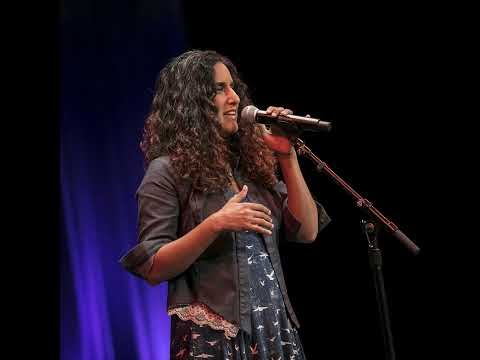
We are told that our personal health is our individual responsibility based on our own choices. Yet, the biological truth is that human health is dependent upon the health of nature’s ecosystems and our social structures. Decisions that negatively affect these larger systems and eventually affect us are made without our consent as citizens and, often, without our knowledge. Dr. Rupa Marya, Associate Professor of Medicine at UC San Francisco, and Faculty Director of the Do No Harm Coalition (https://www.donoharmcoalition.org/) , says “social medicine” means dismantling harmful social structures that directly lead to poor health outcomes, and building new structures that promote health and healing.
Accountability and time management are valuable skills in graduate school
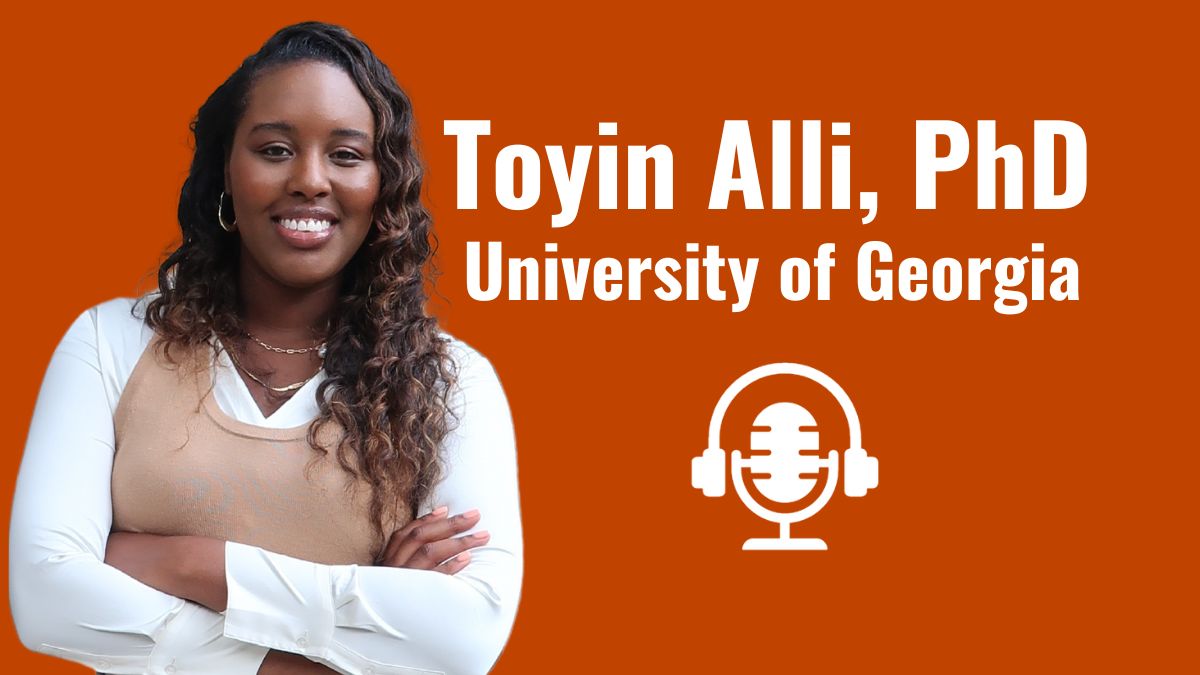
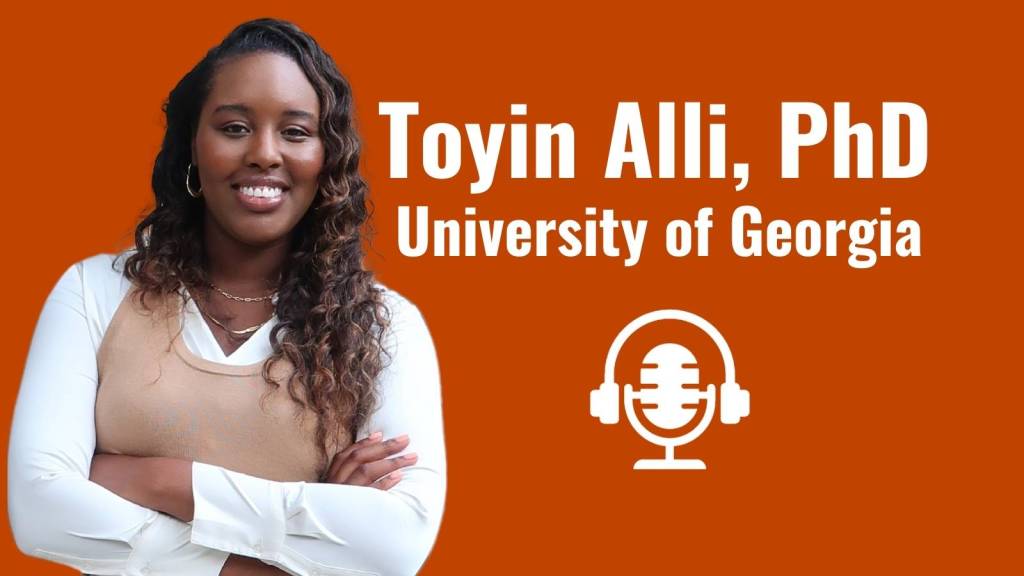
Toyin Alli, PhD of the University of Georgia helps students inside and out of the classroom. She loves teaching math, it’s her dream job. She’s also making greater impact with her business, The Academic Society LLC, which helps students succeed in grad school.
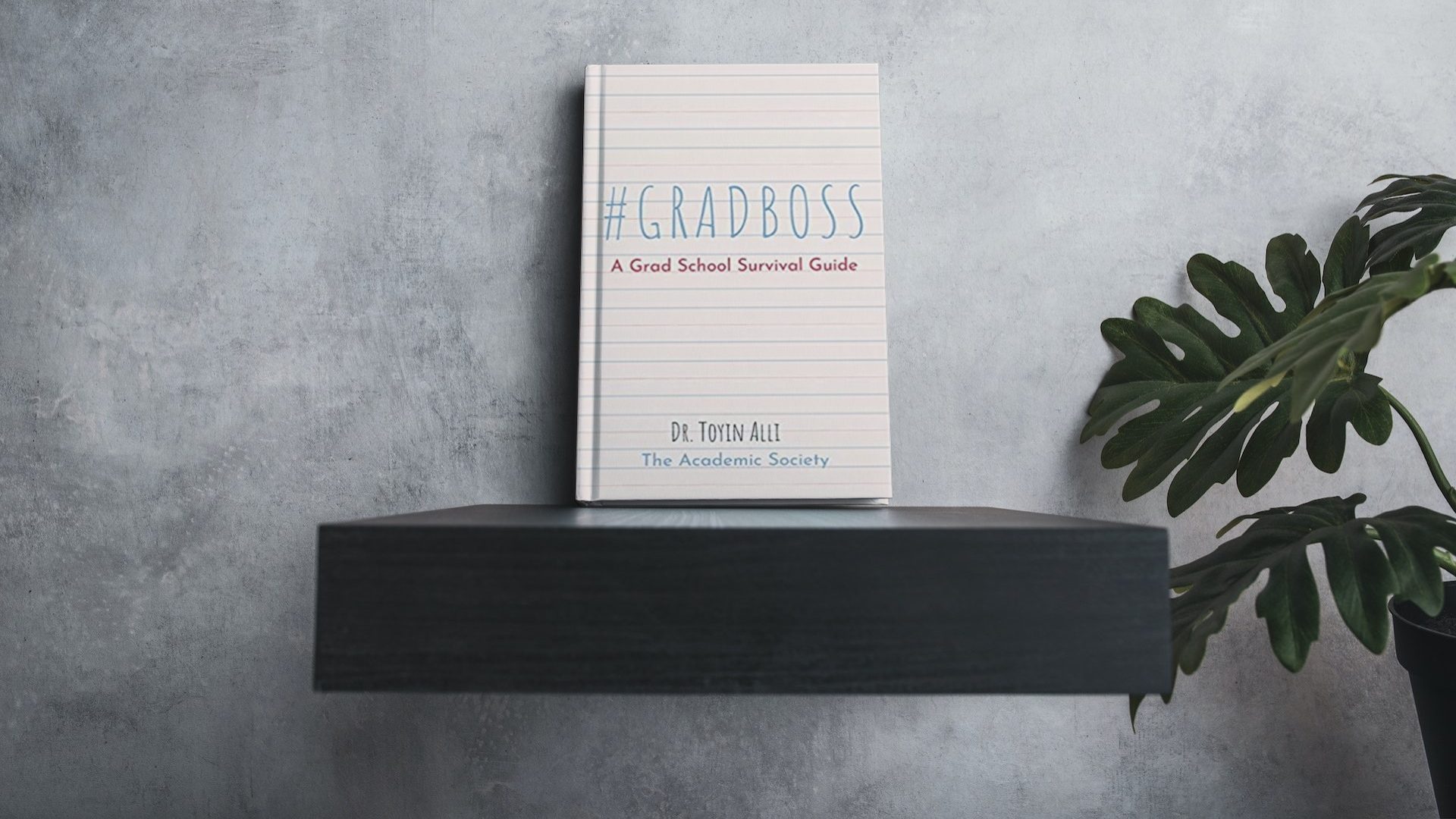
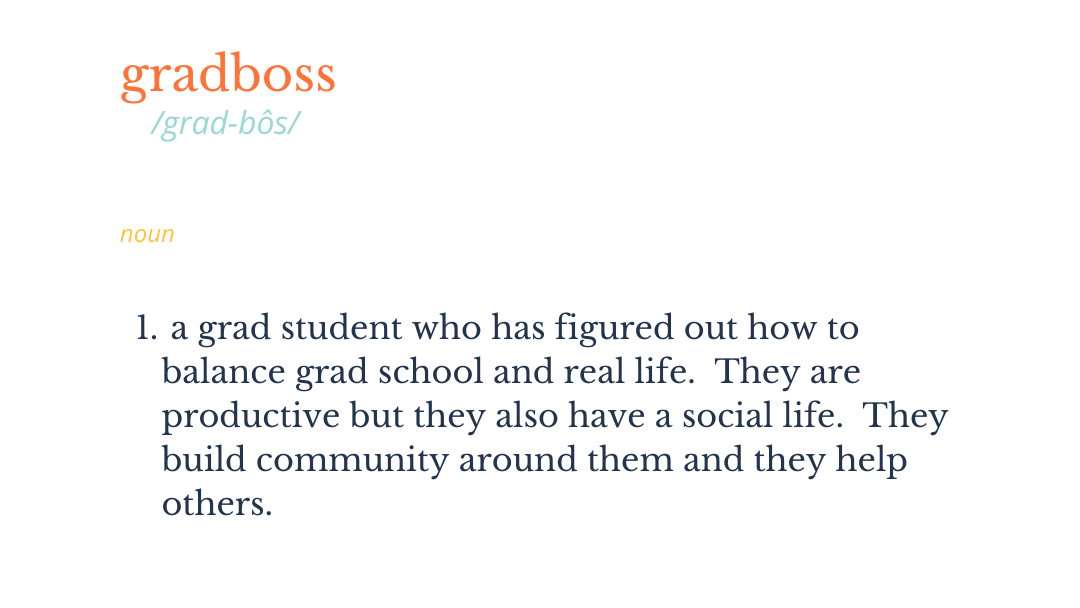
In this featured interview, Toyin talks about her book, #GradBoss: A Grad School Survival Guide. Inspired by graduate students in her Facebook community, Toyin wrote this handbook in 6 weeks during coworking sessions! The book is packed full of advice and stories about grad school.
We also talk about YouTube, and Toyin’s love for teaching.
Jennifer: Hi everyone. This is Jennifer van Alstyne. Welcome to The Social Academic.
Today, I’m talking with Dr. Toyin Alli, a senior lecturer at the University of Georgia. Toyin, I’m so excited to have you on The Social Academic, and to feature you. Would you mind introducing yourself?
Toyin: So I am Toyin Alli. I’m so excited to be here. Thank you for inviting me.
I am a senior lecturer at the University of Georgia. I’m a teaching faculty member, so I do a lot of teaching, meet with a lot of students.
My go-to is those introductory level math classes where I can show students who believe that they’re not good at math, that they can be great at math.
Jennifer: That would be me [raises hand laughing].
Toyin: And they can enjoy it. That’s my personal challenge I have every semester.
On top of being a senior lecturer, I also run my own business called The Academic Society, where I help graduate students with time management and productivity. I also have a consultancy where I help other academics with their businesses. And setting up systems so that they can have a semester approved business that runs while they’re super busy in the semester.
Jennifer: Oh, my gosh, that is so much stuff. It’s amazing that you’re making it all work. You’re a teacher. You’re helping graduate students actually navigate their time in grad school. And you’re helping other academics who are wanting to start businesses like yours.
You must be good at time management, otherwise you wouldn’t have time for it all. I think it’s great that you’re helping other people with that too.
Jennifer: I love how open you are in your bio on your website about how grad school kicked your butt. And how time management and productivity made such a difference for you. I’d love for you to talk more about that and maybe your book, #GradBoss.
Toyin: Graduate school is definitely an interesting experience and journey. A lot of people have negative thoughts associated with grad school.
Once I really got the hang of grad school, it actually became great. I ended up having a great experience in grad school, which a lot of people do not.
What I found was, it’s really like that underlying soft skill that makes grad school so different. It’s the time management and productivity skills that we aren’t taught grad school, but we’re expected to just do. Those time management and productivity skills, they’re underlying everything. Those are the things that help you actually have time to do your research while you’re
Teaching classes
Taking classes
Going to seminars
Presenting
All that stuff
What I found from graduate students–and even myself when I was a graduate student– it’s very overwhelming. And there’s a lot to do. It’s hard to figure out what to do first. When you’re struggling to figure out what to do first, it kind of just paralyzes you. You kind of do nothing, and that’s where the procrastination happens. That’s where the burnout happens. I really like to jump in and help students figure out what to do first, and how to manage all of that.
When I started graduate school, I thought I was pretty prepared [laughs], because I did undergraduate research. My mom has a PhD. She told me about grad school. But something about experiencing it was just completely different. I had to learn that my undergraduate study habits were just not going to suffice in grad school.
I learned that other students were actually spending time before class doing readings [laughs], and that’s not something I ever had to do in undergrad. It was learning how to make time for those things that I’m not used to putting in my schedule, figuring out what my priorities should be as a grad student. Once I figured that out, and once I figured out how to learn math–which is funny–that’s when I really got a handle on grad school.
In my 1st semester of grad school, I took a class called Topology. It was something that I had never even heard of in undergraduate school. That class was just so foreign to me. I didn’t do the best. I’m sure I would have passed the class, but my professor ended up giving me an Incomplete [grade].
Next semester, in the Spring, I had to meet with him every single week and prove theorems on the board from that class. Every single week. There were tears involved. But in that process, I learned, “Oh, this is how you learned math.” From then on, I knew exactly how much time I needed to spend in my classes. I knew what I needed to do to actually understand what was going on, how much time I needed to allot for my homework.
Once I figured that out, I feel like everything was just unlocked for me. While grad school was still a lot of work, I enjoyed the experience.
Jennifer: I think that it’s really interesting because I see a lot of people on social media especially, talking about how they wish they had parents who went to grad school and who’d experienced some of that. Or, maybe who were academics themselves, to be able to highlight some of that hidden curriculum once you get to grad school. It’s the things that most people just don’t know about grad school.
What I’m hearing from you is that even though your mom had a PhD, there were still a lot of things that you had to learn. That you had to teach yourself and you had to figure out how to do. And it sounds like that one-on-one attention from the professor who gave you that Incomplete provided you some of those resources to be able to replicate that in other areas of your grad school life. It’s a really interesting story. So thank you so much for sharing that with me.
Is that something you talk about in your book, #GradBoss?
Toyin: Oh, yeah. So I have a book called #GradBoss: A Grad School Survival Guide where I share my experiences in grad school: the things I learned, the failures that I went through in grad school. As well as the 10 things that you should know before going to grad school (and even after you started grad school).
Things to remind yourself about:
Time management
How to make friends
Imposter syndrome
Failure in grad school
I talk about all of that in the book. And I also share my stories as well as other grad student stories.
Jennifer: Oh, that’s great. I think that book would be so helpful for people. I wish that I had it when I was in grad school, because I felt like a lot of the areas you just talked about were things that I struggled with. Or, maybe I had more anxiety about that than I thought my friends did. Having a guide or some kind of handbook would have been so helpful for me. If you’re a grad student reading this, please get #GradBoss.
Now, when did you write that book? What inspired you to actually put words on paper?
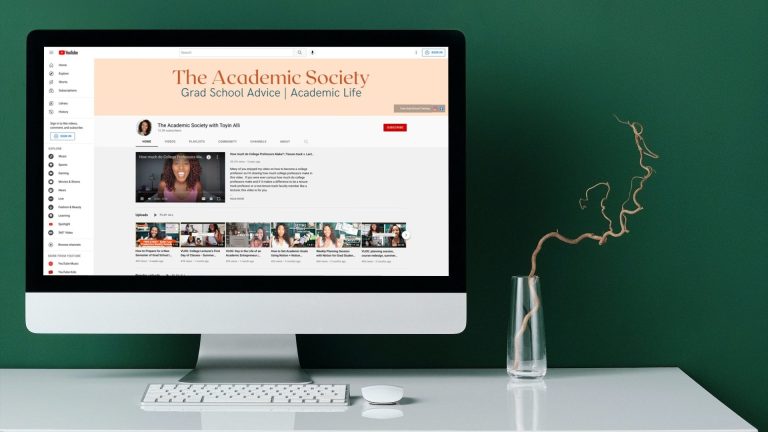
Toyin: I have a YouTube channel called The Academic Society with Toyin Alli, and I have been sharing videos about time management and grad school stories, things like that.
I also had a community on Facebook for graduate students under the same name, where I help graduate students. Something I learned about grad students is they’re reading all the time.
Jennifer: Mmhmm [affirmative]. [Laughs.]
Toyin: I’m a mathematician. And I will say the reading was very minimal. It was mostly practicing problems, working things out. When I got to the research portion, then I would read papers. But math papers are so short, like 6-7 pages. They’re very short. Yeah, [laughs].
Jennifer: That’s short! Yeah.
Toyin: When talking to all these grad students, they’re telling me how much they’re reading. And I’m creating video content. I was like, “I should probably try to meet them where they are.” They’re already reading. Maybe I could put my knowledge into a book.
So I posted in my Facebook group, “Hey, I’m thinking about writing a book about surviving grad school. Does that sound like a good idea? Would you read it? And what would you want me to talk about?”
And they’re all like, “Oh my goodness. Yes, I would love a book. Here are the things I want you to talk about.” They listed about 10 things, and those became the 10 chapters in my book.
Jennifer: So that was really inspired by the people who you were already working with, who were already in your community, and who already needed your help. And they actually helped outline the topics and ideas that you wrote in the book.
I love that! I love that it was inspired by social media. That’s so cool.
Toyin: I know!
I realize I didn’t answer your question. When did I write it? I believe it was the summer of 2018. Or maybe it was the summer of 2019.
But something that I talk a lot about for grad students in grad school is you don’t want to do this alone. You don’t want to be isolated. And it really helps to have accountability. I’ve noticed that the difference between making a plan and actually following through is the accountability.
Jennifer: Mmhmm [affirmative].
Toyin: Whenever I set to do a task, I’m going to try to build in the accountability.
I’d never written a book before. I’m not a writer. I don’t call my myself a writer even though I guess I am because I wrote a book.
Jennifer: Yeah, you’re a writer!
Toyin: But I was like, the only way I’m gonna do this is if I have people along for the journey. I had this program that’s now called Focus, but at the time it was called Productivity Accelerator. I was like, “Anybody doing some writing over the summer? Anybody working on their thesis, dissertation writing, publishing papers? Do you wanna write with me?”
I actually got grad students involved. We would sit on Zoom for hours each day. We would talk about our goals. We would use the Pomodoro technique and write for about 45 minutes, chat, write for another 45 minutes.
I wrote the whole book in about 6 weeks in the summer, mostly with other graduate students.
Jennifer: Wow! In those coworking writing sessions. That is awesome. And Pomodoros that was something that works for you. And they worked for everyone else because everyone can follow this same kind of timeline doing these smaller, shorter tasks.
Wow, that’s so cool. And you got it done in only 6 months, that’s amazing!
Toyin: Six weeks!
Jennifer: What? Six weeks, is that what you said? [Laughs], I lengthened that. That’s incredible. So six weeks brought you #GradBoss, and that was inspired by graduate students who were in your community. And written with graduate students in that same kind of virtual space and while you’re talking about your goals and everything in six weeks. That is such a cool story. I’m glad I asked about that.
Jennifer: You talked a little bit about how social media is something you use for your community, but what does your online presence look like? Like what social media platforms are you on? Do you have a website? What is your online presence?
Toyin: Yes, I do have a website. I started with the website, as a home base for my brand. That’s where I would put my blog posts back when I was writing regular blog posts. I would create freebies or lead magnets–I would create some type of value for my audience in exchange for their email address. I would say my website and my email newsletter, those were what I built up first.
Then I remembered a dream that I had back when I started grad school. I started grad school in 2016. I loved YouTube. YouTube was everything for me. I watched all kinds of videos, learned about
How to do my hair
My makeup
What to wear
All of the things
When I first started grad school, I was like, “I really wanna be a YouTuber.” But I had this YouTube channel called YouTube University, where it would just be me trying to follow YouTube tutorials and do things. But then my mom shared my videos to everyone she knew, and I got so embarrassed. I was like, “No, I’m not doing this again.”
Jennifer: That’s so funny. She probably shared them cuz she was really proud of you. You were like, “No mom, what are you doing?” [Laughs].
Toyin: What’s funny is I have a YouTube channel now. I think the difference is my YouTube channel now is something that I believe in. I would push past being embarrassed because I know that what I’m telling people would actually be helpful for them. Being able to help someone overcomes that feeling of wanting to shrink and hide. I’m a very introverted and shy person, [laughs]. You wouldn’t guess that I have a YouTube channel.
After I started my website and newsletter, I was like let me do this YouTube thing. About 6 months later in 2017, I started my YouTube channel. I would post a YouTube video every single week. That is where I’m the most consistent.
Then, I occasionally post on Instagram.
Jennifer: I love that. It sounds like all of the places that you’ve brought yourself into that online space have been reactionary in the sense that you wanted a place to host your brand, to hold your blog posts. Then you wanted a YouTube channel because you wanted to explore that. Then you created a YouTube channel that was for a specific audience.
It seems very much like an organic process of finding new places that you wanted to spend time and create content for. And very audience driven as well, like you wanted to create things for specific people, is that right?
Toyin: Oh yeah. Definitely very audience driven.
At first as a mathematician, I assumed that I could only help graduate students who were like math or science, because that’s what I knew. I didn’t go to grad school for English, or humanities, social sciences. I didn’t really know about those programs. But when I was making my videos and blog posts for the STEM students, I had people in the humanities and social sciences saying, “Oh my gosh, this is so helpful. I wish I knew this.”
What people were wanting to learn from me was not discipline specific. It was about time management. It was about organization. It was about productivity. Those principles can be used anywhere. Now, I always encourage students to figure out what works for them and just leave everything else that doesn’t work. Some things I say may work best for mathematicians, but you can probably tweak it to work for a psychologist.
Yeah, I very much just followed what my audience wanted from me. It wasn’t just grad school in general, it was time management and productivity.
Then as I grew my business, people started asking, “Well, how are you doing this business thing and being a lecturer at the same time?” So here I am, business consultant for academics. It’s just naturally progressed as my audience grew.
Jennifer: Oh, I just love that. It sounds like maybe YouTube was your favorite social media platform. It’s something that you were watching a lot and then you created a channel because you enjoyed creating videos for, is that right?
Toyin: Very much so, yes.
Jennifer: What do you like most of about YouTube? You said you were getting makeup tutorials and all sorts of stuff you were learning. Was learning an important aspect of watching YouTube videos for you?
Toyin: Yeah, I think so. I think because I’m very much an introvert. But I’m also an Enneagram 5. If you know Enneagram 5’s, we’re investigators. We love information. We like to know all the information. Whenever I’m learning something, I am just feeling joy.
My friends make fun of me because I will sit and watch these video essays that people do on YouTube. I don’t know if you’ve seen them, but they’re like 2-8 hour videos on YouTube where they deep dive, have thesis statements about pop culture.
Jennifer: What?!
Toyin: Yes. I recently watched one on the Vampire Diaries. Like nothing even serious. But they deep dive into each of the characters, into the storylines, and different seasons. What made them work? I’m just fascinated by that.
Jennifer: Teenage me would’ve been mind-blown over this because I loved L.J. Smith books when I was in middle school and high school. This was before they were re-released, before the Vampire Diaries was a TV show. So middle school me would’ve been all over the 8 hour video discussion of that. That’s so great. I didn’t know there were such long videos on YouTube.
My interviews are like 40 minutes to an hour max. That seems really long. I worry, “Oh my gosh, no one’s gonna watch the entire thing.” But people do. And then they email me and they’re like “This was so helpful!”
Now I’m hearing that even longer videos are performing well. That people are creating this new type of essay, like video essay content. That’s so fascinating.
Toyin: I love it. I love it so much.
The long ones I do it takes me a few days to watch it all, but I always go back. It’s almost like getting a peek into someone else’s brain, watching YouTube videos and how they format the video, how they choose to share the information. I just find that fascinating. I find it somehow easy for me to just sit in front of a camera and share my thoughts. Cause it’s still being introverted–I’m in a room alone talking.
Jennifer: Yeah.
Toyin: But I don’t know. I feel like my video presence is nice. People respond well to me on video. I enjoy consuming that type of content.
Jennifer: Yeah, that’s really interesting. I talk with professors often about encouraging them to do a little video for their website. Or, a little video for social media. When I was watching 15 Minutes of Shame, the documentary about Monica Lewinsky on HBO Max, one of the professors who was interviewed said that even seeing someone’s facial expressions for a few seconds makes a difference for how people understand us as people. How they can connect with us emotionally because of those facial expressions. And how before that, people don’t seem like real people. So I’m always telling people, even if you can do a short video where you’re just saying hi, it can make a really big difference for people who are coming to meet you.
What it sounds like is that even though you’re an introverted person, kind of like me, that being on video ended up being something that was comfortable for you. Maybe not incredibly comfortable at the beginning if you were embarrassed with your mom sharing those videos. But eventually you found the comfort level that encouraged you to create more content for your audience, and create that channel. I love that you shared all that with me. Even your anxiety in the beginning, when you first created the YouTube University channel.
Online presence, a way to impact more than just my school
Jennifer: Now, you’re a lecturer. You’re helping grad students, new faculty members with your side business. Why is sharing your message online important to you? Why is it helpful for you?
Toyin: Yeah, I think it’s just a way to impact more than just my school.
Jennifer: Mmhmm [affirmative].
Toyin: When I’m teaching, in my school, we have a big research university. But I’m part of the small class size initiative. Most of my classes have 19 students or less. I’m reaching very few students at a time, which is great for teaching. But there’s a world of people who have no idea about what grad school is all about.
Being able to hear as many stories about grad school as possible has to be helpful. I’m happy to share my perspective as a woman, as a black woman, as a black woman who’s a mathematician. Like what was that experience like for me?
I think people find comfort in hearing just different perspectives on things, and not just the one perspective on things.
Jennifer: Absolutely. I think that seeing different perspectives, especially for graduate students who are just coming into their programs…Seeing someone who looks like you, who has the success and the confidence that you have to run these multiple businesses, and be teaching, and doing all the things, and having this book.
Seeing that it is possible makes a big difference for graduate students. Seeing someone who looks like you in that space, probably makes them feel much more comfortable. I know I would have felt more comfortable learning from someone like you. Absolutely.
Toyin: Thank you. Yeah. Even my students in the classroom, they appreciate me being there. I’ll get emails from students like, “You’re the 1st black professor I’ve had,” or, “You’re the 1st black math teacher I’ve ever had.”
And I was like, “Wow.” I think it is important that I’m there, like it exists. And if you wanna do it too, you can.
Jennifer: That’s why you still teach. Right? You have a successful business, but you want to still teach. Why is teaching important to you?
Toyin: Oh my gosh. I love it so much. It is literally my dream job. I feel so much joy and so much fulfillment from teaching. I can’t imagine doing anything else.
It’s very interesting that you say that because I do have a business that is profitable. I was speaking to my accountant and she was like, “So, when are you gonna quit your job? Because do you think if you taught less, you would make more with your business?” I was like, “Probably, but I love it.”
Part of the reason for my business consultancy is we’ve worked so hard to become academics, to get the PhD, to get the master’s degree. It took a lot of sacrifice to do that. On the other side of it, I want to actually enjoy the life that I work for. What I see a lot with academics is they get their job, and then it’s just like grad school 2.0. They’re just like working, working, working. Living just for academia, and not for yourself.
I feel very blessed to have chosen a career that fulfills me and makes me happy. It doesn’t really feel super draining. It doesn’t feel like, “Oh my gosh, I can’t wait to get away.” It’s something that I’m excited to do every single day.
But I also have this other life that’s outside of academia. That actually fuels me and makes me even more excited to go back to the classroom.
Jennifer: Ooh, I can hear your enthusiasm. I can sense it in your voice. And in your face, I mean, you look so happy talking about it. I can tell that you told your accountant, “No, I’m not quitting my job, I’m happy as a teacher.” I think that that’s amazing and your students get so much out of it. That’s excellent.
Now tell me more about The Academic Society. How can graduate students who are listening to this get involved? How can they get some help with their productivity and their time management?
Toyin: The first place I like to send people is the YouTube channel. You can go to The Academic Society with Toyin Alli. Just type in The Academic Society, you’ll find it. And I have playlists about time management, about my teaching blogs, and all of that.
Jennifer: Oh my gosh, incoming grad students, sign up for that. It’s going to be super helpful.
Toyin: Yes. And it’s basically, I’ve noticed, you know, there are some things that students don’t realize about academia and about grad school.
Jennifer: Mmhmm [affirmative].
Toyin: I wanna let them know what it is before they get started so they can prepare themselves. Signing for anything on my website is a way to get involved with the newsletter.
Then also joining my community on Facebook. If you’re on Facebook, I have a Facebook group called The Academic Society for grad students. Students are in there asking questions, chatting it up, meeting new people inside of that group every single day.
Jennifer: Oh, I love that. I will include the links so people can be sure to join your Facebook group, sign up for your mailing list, and check out those YouTube videos. I think it’s gonna be so helpful for graduate students. And that’s incoming graduate students, and if you’re in grad school and you know you can benefit from some of these skills, be sure to check out those videos. I know it will help you.
Understand why you do the things you do
Jennifer: Toyin, is there anything else you’d like to add before we wrap up?
Toyin: I would just like to say, it’s super important to understand why you’re doing the things you’re doing. Because that fuels you. It gives you the motivation.
I heard someone say, “I just wanna go to grad school so I can get those three letters, PhD.”
I was like, “Uh-oh, that’s not enough.” Grad school is a lot, and you’re gonna need something a little bit more than just wanting fancy letters behind your name. There’s a reason why you wanna do this.
I always encouraged students to get deeply connected to why they want to do this. Why they wanna go to grad school. Why they wanna be an academic. And to talk about it with others because it’s a great connection point. It can help motivate you and fuel you to help you keep going when it gets tough.
Jennifer: It sounds like it can help you make more informed decisions. No one’s telling you not to go to grad school or to do a different program or to, to get better with your goals. But talking to other people can encourage you in new ways that you might not have even thought of yet.
I know that talking with other people in grad school was massively helpful for me. I met a lot of people online who helped me not only choose what classes were gonna be most beneficial, but they helped me with actually talking to professors and standing up for myself when I needed it.
If I didn’t have community and grad school, I definitely would not have been as successful. And I wish that I had the productivity and time management skills that you were teaching, because I think that could’ve been really helpful to me. I am a procrastinator and I know it [laughs].
That kind of action based and accountability based thing that you were talking about grad students, if you’re listening, sign up for that mailing list and check out those videos, because it’s going to be so helpful for you. Be sure to get your copy of #GradBoss. Pick up your copy of that handbook to help you get through that first year of graduate school.
Toyin, I’m so glad you joined me for this interview. How can people get in touch with you afterwards? What’s your handle on social media?
Toyin: I am on Instagram @TheAcademicSociety_. That’s where all the grad school stuff is. But if you are already an academic and possibly thinking about having your own business, I talk about more personal stuff and more business-y stuff @DrToyinAlli.
Jennifer: Great! Thanks for sharing that with me Toyin, and have a great rest of your day. This has been an awesome interview.
Toyin Alli (@TheAcademicSociety_) is a McNair Scholar who received her PhD in Mathematics from the University of Alabama. She is now a full time Senior Lecturer at the University of Georgia. Toyin started The Academic Society LLC to help graduate students succeed in grad school through time management, productivity, and self-care. She reaches thousands of grad students through her digital programs, online social platforms, YouTube channel, and website.