CHICAGO, IL (GLOBE NEWSWIRE) —Otus, a leading provider of K-12 student data and assessment solutions, has been awarded a prestigious Gold Stevie® Award in the category of Customer Service Department of the Year at the 2025 American Business Awards®. This recognition celebrates the company’s unwavering commitment to supporting educators, students, and families through exceptional service and innovation.
In addition to the Gold award, Otus also earned two Silver Stevie® Awards: one for Company of the Year – Computer Software – Medium Size, and another honoring Co-founder and President Chris Hull as Technology Executive of the Year.
“It is an incredible honor to be recognized, but the real win is knowing our work is making a difference for educators and students,” said Hull. “As a former teacher, I know how difficult it can be to juggle everything that is asked of you. At Otus, we focus on building tools that save time, surface meaningful insights, and make student data easier to use—so teachers can focus on what matters most: helping kids grow.”
The American Business Awards®, now in their 23rd year, are the premier business awards program in the United States, honoring outstanding performances in the workplace across a wide range of industries. The competition receives more than 12,000 nominations every year. Judges selected Otus for its outstanding 98.7% customer satisfaction with chat interactions, and exceptional 89% gross retention in 2024. They also praised the company’s unique blend of technology and human touch, noting its strong focus on educator-led support, onboarding, data-driven product evolution, and professional development.
“We believe great support starts with understanding the realities educators face every day. Our Client Success team is largely made up of former teachers and school leaders, so we speak the same language. Whether it’s during onboarding, training, or day-to-day communication, we’re here to help districts feel confident and supported. This recognition is a reflection of how seriously we take that responsibility and energizes us to keep raising the bar,” said Phil Collins, Ed.D., Chief Customer Officer at Otus.
Otus continues to make significant strides in simplifying teaching and learning by offering a unified platform that integrates assessment, data, and instruction—all in one place. Otus has supported over 1 million students nationwide by helping educators make data-informed decisions, monitor progress, and personalize learning. These honors reflect the company’s growth, innovation, and steadfast commitment to helping school communities succeed.
About Otus
Otus, an award-winning edtech company, empowers educators to maximize student performance with a comprehensive K-12 assessment, data, and insights solution. Committed to student achievement and educational equity, Otus combines student data with powerful tools that provide educators, administrators, and families with the insights they need to make a difference. Built by teachers for teachers, Otus creates efficiencies in data management, assessment, and progress monitoring to help educators focus on what matters most—student success. Today, Otus partners with school districts nationwide to create informed, data-driven learning environments. Learn more at Otus.com.
eSchool Media staff cover education technology in all its aspects–from legislation and litigation, to best practices, to lessons learned and new products. First published in March of 1998 as a monthly print and digital newspaper, eSchool Media provides the news and information necessary to help K-20 decision-makers successfully use technology and innovation to transform schools and colleges and achieve their educational goals.
Washington, D.C.– CoSN today announced that the Mid-America Association for Computers in Education ( MACE) and the Nebraska Chapter of the Consortium for School Networking ( CoSNE) have been approved by the CoSN Board of Directors as official State Chapters. CoSN State Chapters play a crucial role in advancing the organization’s mission at the local level. These chapters provide a platform for education technology leaders to collaborate, share best practices and advocate for innovative solutions in their regions. Through networking events, professional development opportunities and policy influence, CoSN State Chapters empower members to drive impactful change in their school districts.
MACE is a nonprofit corporation dedicated to advancing educational technology by fostering collaboration, sharing best practices and supporting educators in the effective use of technology. The organization works to enhance education through responsible use of hardware and software, engage with industry partners to establish technical standards, and connect professionals in the field. CoSNE was established by the Nebraska Association of Technology Administrators ( NATA), along with a group of Nebraska K-12 chief technology officers, chief information officers and technology directors in smaller districts/regions — or not previously associated with NATA. CoSNE is advancing the focus on policy advocacy, professional development, and engagement with state and national entities to advance educational technology leadership and best practices for every K-12 technology leader across Nebraska.
More News from eSchool News
Simply put, AI can do a lot–it can personalize learning, help students expand on ideas for assignments, and reduce time spent on administrative tasks, freeing up educators to spend more time on instruction.
A recent survey found that 88 percent of U.S. parents believe AI is essential to their children’s education, but most aren’t even sure whether the technology is being used in their child’s classroom.
As AI becomes more widespread in education, more than half of high school students (56 percent) polled think it can go a long way in reducing math anxiety, a new global survey shows.
Teachers often seem to have eyes in the back of their heads. They respond to a murmured question in a class full of conversation. They can tell if someone’s skipping class a floor away by reading faces in the room.
While digital literacy has become an aspirational cornerstone of modern education, the exponential growth of data-driven decision-making across industries reveals critical gaps that demand a stronger focus on data literacy.
Teaching K-12 coding without computers may seem like a daunting task, but it can be a powerful way to introduce students to the fundamental concepts of computer science and problem-solving without the distraction of technology.
The most effective way for students to learn career-ready skills in fields such as advanced manufacturing and robotics is by applying these skills in the context of authentic projects and real-world scenarios.
In the Future of Jobs 2025 report, the World Economic Forum predicts that 60 percent of jobs will require upskilling or retraining, or they’ll be threatened. The skills we have today may not keep us secure for long.
Middle and high school counselors juggle overwhelming caseloads, expanded mental health duties, and additional administrative burdens–all of which limit their ability to provide individualized support for students.
When Adrienne Staten’s fellow teachers first started talking about using artificial intelligence tools in their classrooms, Staten was not on board.
In my classroom, I frequently encounter students expressing their opinions: “How is this relevant to the real world?” or “Why should I care? I will never use this.” This highlights the need for educators to emphasize real-world applications across all subjects.
As an educator, I consistently strive to illustrate the practical applications of geography beyond the classroom walls. By incorporating real-world experiences and addressing problems, I aim to engage students and encourage them to devise solutions to these challenges. For instance, when discussing natural resources in geography, I pose a thought-provoking question: “What is something you cannot live without?” As students investigate everyday items, I emphasize that most of these products originate from nature at some point, prompting a discussion on the “true cost” of these goods.
Throughout the unit, I invite a guest speaker who shares insights about their job duties and provides information related to environmental issues. This interaction helps students connect the dots, understanding that the products they use have origins in distant places, such as the Amazon rainforest. Despite it being thousands of miles away, I challenge students to consider why they should care.
As students engage in a simulation of the rainforest, they begin to comprehend the alarming reality of its destruction, driven by the increasing demand for precious resources such as medicines, fruits, and beef. By the conclusion of the unit, students will participate in a debate, utilizing their research skills to argue for or against deforestation, exploring its implications for resources and products in relation to their daily lives. This approach not only enhances their understanding of geography but also creates a real-world connection that fosters a sense of responsibility toward the environment.
Creating a foundation to build upon
Engaging in academic discussions and navigating through academic content is essential for fostering a critical thinking mentality among students. However, it is often observed that this learning does not progress to deeper levels of thought. Establishing a solid foundation is crucial before advancing toward more meaningful and complex ideas.
For instance, in our geography unit on urban sprawl, we start by understanding the various components related to urban sprawl. As we delve into the topic, I emphasize the importance of connecting our lessons to the local community. I pose the question: How can we identify an issue within the town of Lexington and address it while ensuring we do not contribute to urban sprawl? Without a comprehensive foundation, students struggle to elevate their thinking to more sophisticated levels. Therefore, it is imperative to build this groundwork to enable students to engage in higher-order thinking effectively.
Interdisciplinary approaches
Incorporating an interdisciplinary approach can significantly enrich the learning process for students. When students recognize the connections between different subjects, they gain a deeper appreciation for the relevance of their education. According to Moser et. al (2019), “Integrative teaching benefits middle-level learners as it potentially increases student engagement, motivation, and achievement. It provides learners with the opportunity to synthesize knowledge by exploring topics and ideas through multiple lenses.” This method emphasizes the importance of making meaningful connections that deepen students’ comprehension. As they engage with the content from different perspectives, students will apply their learning in real-world contexts.
For instance, principles from science can be linked to literature they are studying in English class. Similarly, concepts from physics can be applied to understand advancements in medical studies. By fostering these connections, students are encouraged to think critically and appreciate the interrelated nature of knowledge.
Incorporating technology within classrooms
In today’s digital world, where technology is readily accessible, it is crucial for classroom learning to align with current technological trends and innovations. Educators who do not incorporate technology into their teaching practices are missing an opportunity to enhance student learning experiences. In my class, I have students explore their designated area using Google Earth, which we previously outlined. Each student selected a specific region to concentrate on during their analysis. This process involves identifying areas that require improvement and discussing how it can benefit the community. Additionally, we examine how these changes can help limit urban sprawl and reduce traffic congestion.
We have moved beyond the era of relying solely on paper copies and worksheets; the focus now is on adapting to change and providing the best opportunities for students to express themselves and expand their knowledge. As Levin & Wadmany (2014) observe, “some teachers find that technology encourages greater student-centeredness, greater openness toward multiple perspectives on problems, and greater willingness to experiment in their teaching.” This highlights the necessity for teachers to evolve into facilitators of learning, acting as guides who support students taking ownership of their learning.
Strategies for implementation
1. Start with the “why”: Teachers should critically consider the significance of their instructional approaches: Why is this method or content essential for students’ learning? Having a clear vision of the desired learning outcomes enables educators plan effectively and what instructional strategies to use. This intentionality is crucial.
2. Use authentic materials: Incorporating meaningful text that involves real-world concepts can significantly enhance students’ engagement. For instance, in social studies class discussing renewable energy can lead to academic discussion or projects where students research about local initiatives in their community.
3. Promote critical thinking: Encourage students to engage in critical thinking by asking open-ended questions, creating opportunities for debates to challenge their ideas, and urging them to articulate and defend their viewpoints.
4. Encourage collaboration: Students excel in collaborative learning environment, such as group projects and peer reviews where they can engage with their classmates. These activities allow them to learn from each other and view different perspectives.
5. Provide ongoing feedback: Providing constructive feedback is essential for helping students identify their strengths and areas for improvements. By having planned check-ins, teachers can tailor their instruction to ensure that they are meeting the academic needs of individual students.
References
Levin, T., & Wadmany, R. (2006). Teachers’ Beliefs and Practices in Technology-based Classrooms: A Developmental View. Journal of Research on Technology in Education, 39(2), 157–181. https://doi.org/10.1080/15391523.2006.10782478
Moser, K. M., Ivy, J., & Hopper, P. F. (2019). Rethinking content teaching at the middle level: An interdisciplinary approach. Middle School Journal, 50(2), 17–27. https://doi.org/10.1080/00940771.2019.1576579
Skyler Stoll, Middle School Teacher, South Carolina
Skyler Stoll is a graduate student at the University of South Carolina and is a 7th grade social studies teacher in South Carolina.
Latest posts by eSchool Media Contributors (see all)
Charlotte, NC —Discovery Education, the creators of essential K-12 learning solutions used in classrooms around the world, today announced a host of exciting product updates during a special virtual event led by the company’s Chief Product Officer Pete Weir. Based on feedback from the company’s school-based partners, these updates make teaching and learning even more relevant, engaging, and personalized for users of Discovery Education products.
Among the enhancements made to Discovery Education Experience, the essential companion for engaged K-12 classrooms that inspires teachers and motivates students, are: teachers and motivates students, are:
Improved Personalized Recommendations for Teachers: With thousands of resources in Experience, there is something for every classroom. The new Core Curriculum Complements feature in Experience automatically surfaces engaging resources handpicked to enhance school systems’ core curriculum, simplifying lesson planning and ensuring tight alignment with district priorities. Additionally, Experience now offers educators Personalized Content Recommendations. These content suggestions made to individual teachers are based on their unique profiles and preferences, or what is frequently used by other educators like them.
An Enhanced AI-Powered Assessment Tool: Originally launched in 2024, this tool is the first in a new suite of AI-powered teaching tools currently under development, and it empowers educators to create high-quality assessments using vetted resources right from within Experience. Educators can now more easily customize assessments according to reading level, question type, Bloom’s Taxonomy, and more – ensuring optimal learning experiences for students. Educators can also review and tailor the questions and, once ready, export those questions into a variety of formats.
A New Career Exploration Tool for All Discovery Education Experience Users: Career Connect – the award-winning tool that connects K-12 classrooms with real industry professionals – is now accessible to all Discovery Education Experience users. With this new feature, classrooms using Experience can directly connect to the professionals, innovations, and skills of today’s workforce. Furthermore, Experience is now delivering a variety of new career pathway resources, virtual field trips, and career profiles – building career awareness, inviting exploration, and helping students prepare for their future.
A newly enhanced Instructional Strategy Library: To elevate instruction and better support teachers, Discovery Education has enhanced its one-stop-spot for strategies supporting more engaging, efficient, and effective teaching. The improved Instructional Strategy Library streamlines the way educators find and use popular, research-backed instructional strategies and professional learning supports and provides connected model lessons and activities.
Also announced today were a host of improvements to DreamBox Math by Discovery Education. DreamBox Math offers adaptive, engaging, and scaffolded lessons that adjust in real time to personalize learning so that students can build confidence and skills at their own pace. Among the new improvements to DreamBox Math are:
Major Lesson Updates: Based on teacher feedback, Discovery Education’s expert curriculum team has updated DreamBox Math’s most popular lessons to make them easier for students to start, play, and complete successfully. Students will now encounter lessons with updated scaffolding, enhanced visuals, greater interactivity, and added context to ground mathematical concepts in the curriculum and the world they live in.
A New Look for Middle School: Middle school students will encounter a more vibrantly colored and upgraded user interface featuring a reorganized Lesson Chooser whose intuitive design makes it easy to identify teacher-assigned lessons from their personalized lesson options. Additional updates will follow throughout the year.
New Interactive Curriculum Guide: Discovery Education has strengthened the link between DreamBox Math and school systems’ core instruction with an Interactive Curriculum Guide. Educators can now explore the breadth and scope of DreamBox content by grade and standard to locate, preview, and play lessons, increasing familiarity with lessons, and enhancing targeted instruction. The DreamBox Math team will continue to make updates to standards and curriculum alignments throughout the year.
To watch a replay of today’s special event in its entirety, and to learn about additional updates to Discovery Education’s suite of K-12 solutions, visit this link.
“Discovery Education understands teachers’ sense of urgency about closing the achievement gaps highlighted by recent NAEP scores,” said Pete Weir, Discovery Education’s Chief Product Officer. “In response, we accelerated the development and deployment of what has traditionally been our ‘Back-to-School’ product enhancements. The stakes for our students have never been higher, and Discovery Education is dedicated to putting the highest-quality, most effective resources into teachers and students’ hands as soon as possible.”
eSchool Media staff cover education technology in all its aspects–from legislation and litigation, to best practices, to lessons learned and new products. First published in March of 1998 as a monthly print and digital newspaper, eSchool Media provides the news and information necessary to help K-20 decision-makers successfully use technology and innovation to transform schools and colleges and achieve their educational goals.
It’s National Apprenticeship Week. Today on the HEPI blog, you can read about how University Alliance members are using healthcare degree apprenticeships to address workforce shortages: click here to read.
Or carry on reading to hear from Viggo Stacey at QS about how the researchers at Swansea University are solving contemporary problems like potholes with cutting-edge research.
By Viggo Stacey, International Education & Policy Writerat QS Quacquarelli Symonds.
Drivers in England and Wales encounter an average of six potholes per mile, and damage sustained from them cost drivers an average of £460 in 2024. One estimate put the cost of potholes to the UK economy at £14bn last year.
Research published last week by Swansea University provides a real solution to this critical problem. Adding plant spores to bitumen will create a self-healing road surface that can extend its lifespan by 30%.
This speaks directly to the Secretary of State for Education’s five key priorities for reform of the higher education system – that universities should play a great civic role in their communities.
Local communities and businesses need to benefit fully from the work of higher education institutions, Bridget Phillipson wrote to the sector in November last year and as Debbie McVitty recently covered over at Wonkhe. This research will help individual drivers, councils across the country and UK industry.
But another thing that is so exciting about this discovery is where it came from. Swansea University, on the south coast of Wales and an institution whose Vice Chancellor in the last week has said higher education in Wales is facing ‘the toughest [financial] position that we’ve been in’, is showing what its academics are capable of, given the right resources.
And that leads to the second place where this research originated.
One of those involved is Dr Jose Norambuena-Contreras, a Senior Lecturer in Swansea’s Department of Civil Engineering, originally from Chile, while Dr Francisco Martin-Martinez is a Lecturer at King’s College London’s Chemistry Department who hails from Spain.
It is also notable that this news came out on the day that Keir Starmer became the first UK prime minister to join a gathering with EU leaders since Brexit.
While rejoining the EU’s single market is firmly off the cards, a deal on youth mobility is an obvious open goal. Some 57% of voters recently backed a scheme for the under 30s, in addition to polling last year finding 58% thinking a scheme is a good idea.
The UK Science and Tech Secretary, Peter Kyle, rightly met with EU counterparts in January to push to turbo-charge UK-EU science and technology links in a bid to tackle shared global challenges.
Potholes in the UK might just be a small part of the UK’s challenge. But as Norambuena-Contreras puts it, it’s a ‘very sexy topic’ that British people like to talk about. If researchers can continue to identify problem areas that resonate with local communities and industry, they’ll be on to a winner.
International talent is, and will continue to be, key to solving crises across the UK. If only researchers at the country’s top business schools were empowered to find solutions to filling higher education’s financial gaps in the same way as others can for potholes.
Jessica Turner, CEO at QS Quacquarelli Symonds, commented:
The UK’s universities are not just centres of learning—they are engines of economic transformation and real-world problem-solving.
Research from the University of Bristol released this week – showing that it contributed £1.13 billion to the West of England economy in 2022/23 – is just one example of that.
Swansea University’s ground-fixing research is a perfect example of how higher education drives innovation with tangible benefits for communities, industries, and the economy,” Turner added.
As the QS World Future Skills Index highlights, the UK is a global leader in academic readiness and future workforce skills. To sustain this momentum, continued investment in universities is essential—not just to address today’s challenges but to shape the solutions of tomorrow.
In the education industry, cloud-based technologies are driving a major revolution. Over 70% of colleges use cloud solutions to streamline operations and cut expenses as they balance budgets. Recent studies show that institutions that have adopted Cloud based higher education management solutions have seen an average reduction of 30% in reduce operational costs in higher educations, enabling them to reinvest in areas that enhance the student experience and drive academic success.
Keeping on budget while managing admissions, money, HR, and learning systems is no small task. Often caught handling costly, ineffective, error-prone fragmented systems are IT teams are assigned. Still, there is a smarter road forward. Higher education management solutions housed on clouds are meant to streamline your life. These tools are meant to combine all those disparate systems, automate tedious chores, and clear the mess of documentation. Consider it your default method for simplifying university processes.
In this blog, we’ll dive deep into how cloud based higher education management solutions are optimizing university operations, enabling smarter decision-making, and unlocking efficiencies that were once unimaginable with legacy systems.
Cloud based higher education management solutions: why?
Cloud technology is improving campus operations, including:
Automating and removing paper workflows saves institutions up to 30%.
Efficiency: Real-time data and better cooperation boost productivity.
Scales smoothly: A rise in students? Program expansion? Your needs shape cloud systems.
Upgraded Security: Multi-factor authentication, encryption, and compliance safeguard data.
Disjointed Systems Breakup
Even the most efficient teams can be slowed by obsolete technologies and paper processes. To reduce redundancies and streamline operations, cloud solutions combine these systems into a single, easy platform. IT teams can focus on strategic innovations instead of segregated platform troubleshooting.
Future-Ready Change
Agility and resilience are essential for the future of higher education. Enabling seamless scalability, strengthening cybersecurity measures, and fostering innovation, cloud-based systems guarantee that your institution remains at the forefront. Not only do these solutions address current challenges, but they also establish your campus as a leader in adapting to the constantly changing educational landscape.
Improving Efficiency with Creatrix Campus Cloud-Based Solutions
Creative Campus provides a complete solution for your university. The automation of financial operations and real-time course registration are meant to simplify and improve your work.
The platform’s easy design and customized modules let you solve campus issues. Because it’s cloud-based, Creatrix Campus integrates across departments, fosters collaboration, and supports growth without costly infrastructure updates.
As we welcome a new year, educators and industry leaders are excited to discover the biggest education trends for 2025. The past few years have been characterized by fresh and innovative solutions for learning, as well as transformative, technology-forward approaches to education.
Each year, we like to look ahead and anticipate the biggest upcoming education trends. There are many topics education professionals can expect to be at the center of the conversation in 2025–from new perspectives on artificial intelligence for education to the emergence of nontraditional school models amid an increasingly competitive enrollment environment.
For 2025, schools and districts are focused on making learning more engaging for students, creating a more positive environment for educators, and transforming school culture to meet the diverse needs of the school community. As schools work to accomplish these goals, we expect to see an expansion of AI and other emerging technologies in the classroom, enhanced professional development and support for teachers, and more individualized learning opportunities for students.
Here are five of the biggest education trends for 2025:
1. Nontraditional school models
Everything from career opportunities, technology, and the world around us has changed significantly over the past decade, yet the traditional model of public schools in the U.S. has remained largely unchanged for generations. As this industrial-age school model persists, many students feel bored and disengaged with their learning.
When the COVID-19 pandemic caused school interruptions in 2020, many families decided it was time to pivot to new and nontraditional learning opportunities for their children. Since 2019, over 1 million students–the equivalent of one student from every class in the country–have left the conventional classroom to seek out different educational approaches and more innovative learning environments. The National Center for Education Statistics projects that public schools, including public charter schools, will lose an additional 2.4 million students by 2031.
Today’s students desire more individualized learning approaches, which empower them to use their creativity, explore their passions, and engage with their peers in more collaborative ways. In 2025, we will see a greater emergence of nontraditional school models that center student engagement, collaboration, and creativity, and prepare learners to graduate into a continually-evolving workforce.
Some of these emerging nontraditional education models include microschools, online and hybrid learning programs, and project-based or student-led schools, as well as long-established nontraditional school programs such as homeschooling, Montessori, and career and technical education schools. In 2025, we also anticipate that public schools will step up to meet the diverse needs of students through innovative approaches, mirroring some of the elements of these nontraditional school models in order to maintain enrollment, enhance engagement, and equip students with applicable career-ready skills.
2. Expanded use of AI in education
As we predicted last year, artificial intelligence (AI) has become prevalent in the educational space, and this emerging technology shows no sign of stopping its rapid growth as we make our way into 2025. This year, we expect the conversation around AI to shift, reflecting a more widespread acceptance of the technology as a beneficial tool to enhance education and productivity.
In 2025, schools will continue to integrate more AI into the curriculum, guiding students to use it appropriately to enhance their learning. Many schools and districts have already developed formal AI school policies and modified student codes of conduct to ensure safe, effective, and ethical use of AI tools in the classroom.
Furthermore, many educators are now taking the initiative to incorporate AI tools into their lesson plans to help students build familiarity with the technology. Introducing students to AI in a safe and controlled environment enables them to learn how to use it effectively and ethically. Equipping students with foundational skills in AI is already regarded as an essential skill set for college and many careers.
Because AI is a fairly new technology for everyone, including educators, we anticipate that more schools will implement AI professional development opportunities this year, enabling teachers to deliver more effective AI instruction. Some schools are also beginning to employ AI tools for administrative productivity, which will require training and guidance to ensure educators and staff can successfully integrate these tools into their work.
3. Targeted support for educators
Over the past five years, many districts have been focused on allocating Elementary and Secondary School Emergency Relief (ESSER) funding to implement new educational programs and tools, support student wellbeing, and overcome learning loss. Now that the final ESSER deadline has passed, 2025 will see schools and districts shift their attention to providing targeted support directly to educators.
With all of the new technology, refreshed learning spaces, and updated curriculum districts have recently introduced, professional development is essential to ensure effective implementation of these enhancements. In 2025, schools will incorporate new professional development programs that empower educators to foster engaged learners. By providing the tools and resources teachers need to be successful, schools can help educators improve their productivity and attain professional goals, while still keeping teacher wellbeing as a top priority.
Teachers are the primary influencers of the K-12 educational experience, so supporting educators is a holistic approach that benefits the entire school community. To address rising workloads, schools will implement new tools and strategies to support teacher efficacy and wellbeing. Some schools are even piloting automated and AI-powered technologies to take repetitive and administrative tasks off teachers’ plates, freeing up invaluable time for them to connect with students and focus on teaching.
Additionally, districts have begun to recognize the importance of a healthy work-life balance, as many teachers have left the profession over the past several years. In 2025, districts will continue to explore ways to cultivate a more positive job experience for teachers. Teachers want solutions for student behavioral issues, more attentive leadership teams, and more manageable workloads. Schools will work to improve these matters, while maintaining aspects of the job teachers value most, including school culture, opportunities for professional learning and certifications, and STEM and arts programs.
4.A focus on school and district culture
With a growing list of education options, students and their families are seeking out learning environments that not only provide high-quality curriculum and resources, but also align with their values and prioritize school-home communication. In this increasingly competitive enrollment environment, cultivating a positive culture and connected school community are the qualities that make schools stand out.
Funding and resources are directly related to the number of students at each school, so cultivating an inviting school culture is key. In 2025, schools and districts will take time to refine their school brand in order to attract and maintain students. School leaders will focus on creating more opportunities to engage with students and families, implementing new communications tools, initiatives, and events that bring the school community together.
In the past few years, some K-12 administrators have piloted mobile teaching stations to increase their visibility and daily impact throughout their school. We anticipate more school leaders will embrace this approach in 2025, enabling them to build stronger relationships with students and teachers. By working from mobile workstations, administrators can directly engage with students and staff, making face-to-face connections on a daily basis. Frequent positive interactions with school leadership help students, teachers, and families stay engaged with the school community, promoting a culture of connection and support.
5. Universal design for learning
Today’s students are making more choices about how and where they want to learn than ever before. Universal design for learning (UDL) promotes achievement among diverse student bodies by giving each student access to resources and environments that help them learn. Accessibility goes far beyond ADA compliance, and schools are recognizing this through the application of UDL across the learning experience. Understanding the diverse needs of students is crucial for creating learning experiences that are inclusive and supportive.
In 2025, UDL will be at the center of creating comfortable and engaging learning environments that accommodate all students’ needs. For instance, more schools are implementing sensory spaces, ensuring neurodiverse learners have a safe and comfortable space to self-regulate throughout the school day. These spaces don’t just serve neurodivergent students–all students benefit from having areas at school that are dedicated to supporting wellbeing.
As in previous years, accessibility and equity will continue to be prominent topics in 2025, but the conversation will pivot to focus on ways UDL can positively impact curriculum. UDL emphasizes providing students with multiple, flexible types of engagement, different ways of presenting information, and multiple ways to demonstrate their understanding in the classroom. This practice supports students who are neurodivergent and/or experience learning challenges, but also improves the learning experience for neurotypical students.
Dr. Christina Counts, MiEN Environments
Dr. Christina Counts, VP of Education at MiEN Environments, is a proven leader with over 17 years of experience transforming learning spaces. Her background includes roles as a teacher, district leader, school administrator, and innovative learning designer. She currently leads a team supporting schools transitioning to flexible, collaborative, student-centered environments. Dr. Counts holds a doctorate in K-12 Educational Leadership, is National Board certified, and an Accredited Learning Environment Planner (ALEP).
Latest posts by eSchool Media Contributors (see all)
Q: What is the university’s mandate behind this role? How does it help align with and advance the university’s strategic priorities?
A: First of all, thank you for the opportunity to share more about this exciting new position. I’m thrilled about the potential of this role and the chance to welcome a new colleague to the Center for Academic Innovation—an extraordinary organization that I care deeply about—who will join us in shaping the future of education.
The inaugural chief education solutions officer (CESO) is pivotal to CAI’s mission to collaborate across campus and around the world to create equitable, lifelong educational opportunities for learners everywhere. By helping CAI deliver offerings that are learner-centered, research-driven, scalable and sustainable, the CESO will directly support the University of Michigan’s Vision 2034, particularly the impact area of life-changing education.
This role is designed for a dynamic leader ready to solve organizational learning and workforce development challenges while driving growth through innovative, impactful solutions. By developing scalable and sustainable educational models, the CESO will ensure U-M remains at the forefront of lifelong learning and talent development on a global scale.
The CESO is not just about executing current strategies—it’s a leadership role charged with helping to forge a bold new path for education. By addressing emerging trends like workforce transformation, AI and the growing demand for upskilling, this role will help learners and organizations thrive in a rapidly evolving world. The CESO’s work will empower learners and position U-M as a leader in education innovation for generations to come.
Q: Where does the role sit within the university structure? How will the person in this role engage with other units and leaders across campus?
A: The CESO will report directly to me in my capacity as the founding executive director of the Center for Academic Innovation and will be an additional key member of the senior leadership team at CAI. This role sits at the intersection of education innovation, strategic partnerships and business development, ensuring seamless collaboration between external stakeholders and CAI’s internal teams.
The CESO will work closely with units that already engage with industry and organizational partners and schools and colleges across campus that extend their reach through innovative programs and initiatives. Through these collaborations, the CESO will help identify and deliver innovative solutions to meet workforce development needs and support sustainable partnerships with organizations looking to support their current and future employees in a rapidly changing economy.
For example, the CESO might work with a school to design a custom program for an industry partner, collaborate with units across campus to expand U-M’s impact in key markets, help an organization to effectively utilize Michigan Online offerings or integrate CAI’s expertise into new initiatives that benefit learners and organizations alike. This role is about connecting ideas, people and resources to drive impact. By aligning CAI’s innovative capabilities with partner needs, the CESO ensures U-M’s resources create transformative outcomes both on campus and beyond.
Q: What would success look like in one year? Three years? Beyond?
A: Success in this role is all about creating momentum—whether by building early partnerships, driving measurable growth or laying the groundwork for transformative initiatives. Here’s what we envision at each stage of this journey:
In one year: The CESO will have established a strong foundation for growth by building early partnerships with industry leaders, meeting key growth targets and launching initial programs that deliver measurable value for learners and organizations. This first year is about setting the stage—building relationships, aligning CAI’s capabilities with external needs and creating momentum for the future. Importantly, the CESO will work alongside a really talented senior leadership team. Year one is also about creating strong connections within this group, building trust and finding ways to support each other.
In three years: The CESO will have significantly scaled CAI’s impact, with a portfolio of partnerships that reflect innovative, sustainable approaches to workforce development and lifelong learning. Internally, we’ll see streamlined systems for managing partnerships, delivering programs and providing exemplary relationship support. Externally, CAI will be recognized as a trusted leader in educational solutions that address real-world challenges through highly relevant programs that build on interdisciplinary breadth of excellence.
Beyond three years: Long-term success means driving transformative innovation in education—at both the individual and organizational levels. The CESO’s work will have deepened CAI’s reputation for empowering learners everywhere while also positioning U-M as a leader in lifelong learning and workforce development. The legacy of this role will be an ecosystem of partnerships and programs that inspire and uplift learners across the globe.
At every stage, success in this role is about creating meaningful, lasting impact for learners and partners. That said, I’m looking to hire a colleague who will not only embrace this vision of success but also challenge it—pushing us to explore uncharted possibilities and reach new heights we haven’t yet imagined.
Q: What kinds of future roles would someone who took this position be prepared for?
A: The CESO role is an incredible opportunity for someone looking to advance their career in business development, partnership leadership or workforce innovation—whether within higher education or in related industries.
This role provides direct experience in managing high-impact partnerships, driving revenue growth and designing innovative learning solutions for diverse audiences. It’s a unique combination of strategic thinking, relationship management and educational innovation that builds a strong foundation for future leadership roles.
The skills developed in this position—including expertise in lifelong learning, workforce transformation and sustainable business growth—are highly transferable to roles in education, industry or even global organizations. Whether leading similar initiatives at another institution or shaping workforce strategies for a global enterprise, the CESO will leave this role with the tools to make an even bigger impact.
This position enhances vital leadership skills, such as building trust with stakeholders, navigating complex organizational challenges and creating scalable solutions. It’s a perfect launchpad for individuals ready to shape the future of education at the intersection of academia and industry.
Joining this team means stepping into a vibrant, forward-thinking environment where your contributions will be valued, your ideas will have impact and you’ll have the space to grow, innovate and truly make a difference.
I’m truly excited to welcome a dynamic new partner to our team—could it be you?
COSTA MESA, Calif. — BenQ, an internationally renowned provider of visual display and collaboration solutions, today announced that Marian High School in Omaha, Nebraska, selected and installed two BenQ LK936ST 4K HDR short-throw golf simulator projectors for its golf sim Golf Training Lab at the Marian Athletic Center. In 2024, the Marian girls’ golf team became the undefeated Nebraska State Champions in Class A golf. Designed to help analyze and improve the golfers’ swings and give them the ability to practice in all weather conditions, the Marian Golf Training Lab provides the girls’ high school and junior teams with an immersive and realistic golf course environment. Based on research and recommendations from golf simulation experts, Marian High School chose the BenQ LK936ST for its exceptional color accuracy, powerful brightness, and maintenance-free operation.
Head Coach Robert Davis led the effort to build the Golf Training Lab, which includes two golf simulator bays featuring Carl’s Place 16×10 impact screens and ProTee VX launch monitors. Seeking a high-performance projector that could deliver realistic course visuals, bright images in a well-lit environment, and long-term, maintenance-free operation, Davis consulted with golf simulator manufacturers and reviewers. After thorough research, BenQ’s LK936ST emerged as the top choice.
“Our athletes benefit from an experience that’s as close as you can get to being on an actual course,” said Davis. “When we pull up courses, you can see distinct leaves on the trees. That level of realism not only makes training more effective but also more enjoyable.”
The BenQ LK936ST’s 4K UHD resolution, combined with BenQ’s exclusive Golf Mode, ensures a highly detailed, true-to-life golfing experience. Its 5,100 lumens of brightness allow it to perform exceptionally well in the Marian Athletic Center’s brightly lit environment, ensuring clear visuals even without dimming the lights. Additionally, its short-throw lens and advanced installation tools — such as digital shrink, lens shift, and keystone correction — allow for a flexible and seamless setup within the limited space of the simulator bays.
“The golf simulation market has grown rapidly as more schools, athletes, and enthusiasts seek ways to improve their game year-round,” said Bob Wudeck, senior director of business development at BenQ America Corp. “With the LK936ST, we’ve provided everything a golf simulator needs to deliver a truly immersive experience. Its 4K resolution, high brightness, and laser-powered color accuracy ensure that golfers can see every detail with precision, whether it’s the grain of the greens or the clear blue sky. By combining these features, we’ve created a projector that meets the high standards required for today’s golf training environments.”
The BenQ LK936ST is engineered to provide a truly immersive and precise golf simulation experience, making it an ideal choice for Marian High School’s Golf Training Lab. With a 4K UHD resolution powered by Texas Instruments’ DLP chip technology, it delivers razor-sharp visuals and a stunning 3,000,000:1 contrast ratio, which allows for enhanced graphics and a lifelike recreation of the world’s top golf courses. Its exclusive Golf Mode, designed specifically for golf simulation, reproduces the vivid greens and brilliant blues of fairways and skies, offering 92% of the Rec. 709 color gamut for true-to-life color accuracy. This unprecedented visual fidelity helps golfers maintain their focus and engagement, simulating real-world conditions to perfect their game.
In addition to its color and image quality, the LK936ST is designed to excel in challenging environments. The projector’s short-throw lens (0.81-0.89) and 1.1x zoom capacity make it easy to install outside of the swing zone, projecting a large image without casting shadows on the screen. Digital shrink, offset, lens shift, keystone correction, and corner fit provide advanced installation flexibility, enabling perfect alignment with the screen, even in tight or unconventional spaces like garages, basements, or smaller training rooms.
Built for long-lasting, maintenance-free operation, the LK936ST features a sealed IP5X-rated dustproof optical engine, eliminating the need for filter changes and ensuring optimal performance even in dusty environments. Its laser light source guarantees 20,000 hours of use with consistent color and brightness, far outlasting traditional lamp-based projectors. The projector also offers instant power-up without the need for warm-up or cool-down times, allowing golfers to jump straight into their training. With multiple HDMI inputs and networking options, it integrates easily with other entertainment or training components, making it a versatile centerpiece for not only golf simulations but also home theater and gaming setups.
More information on the BenQ LK936ST 4K HDR short-throw golf simulator projector is available at bit.ly/3na585n.
About BenQ America — Business & Education Solutions The No. 1 selling global projector brand powered by TI DLP technology, according to Futuresource, the BenQ digital lifestyle brand stands for “Bringing Enjoyment and Quality to Life,” fusing ease of use with productivity and aesthetics with purpose-built engineering. BenQ is a world-leading human technology and professional solutions provider serving the enterprise, education, and entertainment markets. To realize this vision, the company focuses on the aspects that matter most to users, redefining traditional technology with innovative capabilities that increase efficiency, enhance learning, and amplify entertainment — all while ensuring a healthy, safe, and intuitive user experience. BenQ’s broad portfolio of professional installation solutions includes digital, laser, and interactive projectors; premium flat panels; and interactive large-format displays that take visual enjoyment to new heights in corporate offices, classrooms and lecture halls, and home theaters. The company’s products are available across North America through leading value-added distributors, resellers, and retailers. Because it matters. More information is available at www.BenQ.com.
All trademarks and registered trademarks mentioned herein are the property of their respective owners.
eSchool Media staff cover education technology in all its aspects–from legislation and litigation, to best practices, to lessons learned and new products. First published in March of 1998 as a monthly print and digital newspaper, eSchool Media provides the news and information necessary to help K-20 decision-makers successfully use technology and innovation to transform schools and colleges and achieve their educational goals.
As a school striving to broaden its reach, you likely already understand the importance of personalized communication to attract and retain students. That may sound like a lot of work because, without the right tools, it certainly can be. Fortunately, our team, with over fifteen years of experience working closely with educational institutions, has developed specialized solutions that address key challenges faced by schools looking to streamline their processes and boost enrollment.
HEM’s custom-built solutions—Mautic by HEM, a powerful Customer Relationship Management (CRM) and marketing automation system, and HEM’s Student Portal, an all-in-one Student Information System (SIS)—offer the tools you need to manage your admissions and student engagement efforts seamlessly. Let’s explore how you can give yourself the gift of efficiency this holiday season with these systems!
Simplify student management and boost recruitment efficiency!
Transform your student portal experience. Get a FREE HEM-SP demo today.
Understanding CRMs and How They Benefit Your Institution
What is a CRM and how can it benefit educational institutions? A CRM, or Customer Relationship Management system, is a platform that helps organizations manage and analyze customer interactions and data throughout the customer lifecycle.
For educational institutions, a CRM is essential in managing prospective student relationships, tracking their progress through the admissions funnel, and keeping detailed records of interactions. At its core, a CRM enables schools to create personalized experiences for prospective students, allowing them to engage in meaningful ways at every stage of their journey.
Mautic by HEM, our tailored CRM for educational institutions leverages the open-source marketing automation platform Mautic to deliver a seamless experience designed specifically for the education sector. With features like lead segmentation, automated workflows, custom reporting, and multichannel marketing, Mautic by HEM empowers schools to enhance their lead management and marketing efficiency.
By segmenting contacts based on their stage in the admissions process, program of interest, or geographical location, your institution can ensure that each prospect receives targeted messages that are more likely to result in conversions.
Reach out to us for a demo to see how Mautic can boost efficiency for your school’s marketing campaign!
Mautic by HEM: Supercharge Your Lead Management and Marketing
Mautic by HEM goes beyond a standard CRM, combining powerful customer relationship management with advanced marketing automation to help you maximize your student recruitment efforts.
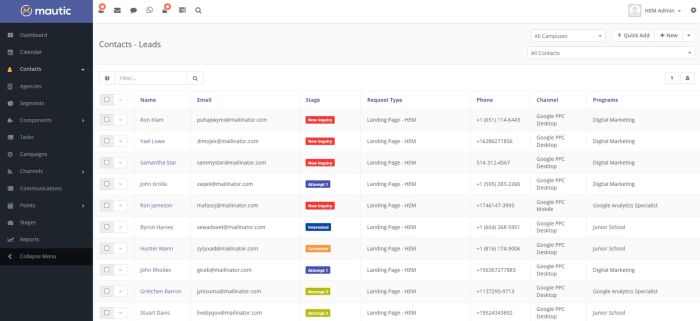
Mautic makes it easy to manage a large number of prospective students by allowing you to segment, organize, and follow up with prospects efficiently. By automating workflows and assigning follow-up tasks, your team can manage their workload better, ensuring that each prospect receives timely attention.
Source: Mautic | HEM
Example: Do you see how centralizing prospect information helps you track the effectiveness of your campaigns and determine the next step in the enrollment funnel? Here, prospects are categorized by their current stage in the enrollment process, their program of interest, the channel through which they first interacted with your institution, and what sort of contact they are. That’s all the information you need to craft an appropriate and compelling follow-up message tailored to each unique responsibility. Mautic helps you with that part too!
In addition, Mautic by HEM’s marketing automation tools enable you to scale up your email marketing, create dynamic landing pages, design forms, and automate workflows. This allows your institution to maintain a high level of personalized engagement with prospects across multiple channels, thereby improving your reach and effectiveness in digital recruitment.
The solution’s custom reporting features also give you detailed insights into your admissions pipeline. With Mautic by HEM, you can monitor productivity, track lead progress, and evaluate channel performance, which will help you refine your approach and allocate resources to high-impact activities.
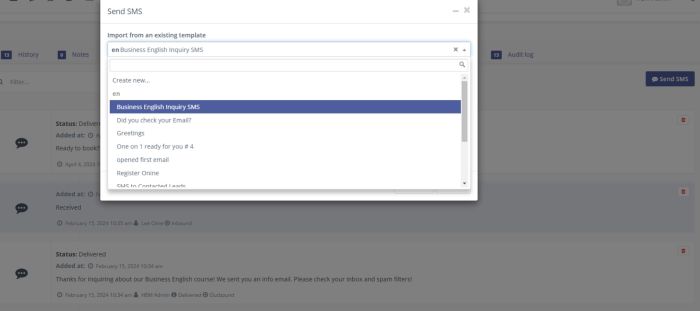
Ensuring timely follow-up is essential for converting leads to students, and Mautic by HEM enables automated SMS and email follow-ups, allowing you to communicate with leads through their preferred channels. Whether it’s sending reminders, booking meetings, or making calls, Mautic by HEM has the tools your team needs to maintain a consistent communication flow.
Source: Mautic | HEM
Example: Viewing the contact history for each prospect lets you know how they prefer to communicate. In addition to other vital data such as name and contact information, you can craft a highly personalized message such as the SMS pictured above.
Finally, Mautic by HEM also helps your team manage their daily tasks and workload. With integrated calendars, workflow assignments, and productivity tracking, your staff can stay organized and focused on what matters most—building relationships and driving enrollments.
Why You Need an SIS for Your School
Now, what is a Student Information System (SIS)?Student Information System software is designed to manage student data from application through graduation. An SIS handles everything from enrollment and class scheduling to academic records and financial management. This centralized database makes it easy for staff to track student progress and streamline administrative tasks.
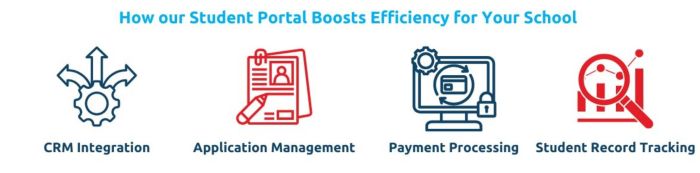
HEM’s Student Portal integrates CRM and SIS functionalities to provide an all-in-one admissions and student management platform. Tailored to meet the demands of educational institutions, the portal includes tools for application management, payment processing, and student record tracking. This integrated solution enables institutions to centralize and simplify operations, allowing your staff to focus on building meaningful relationships with prospective and current students.
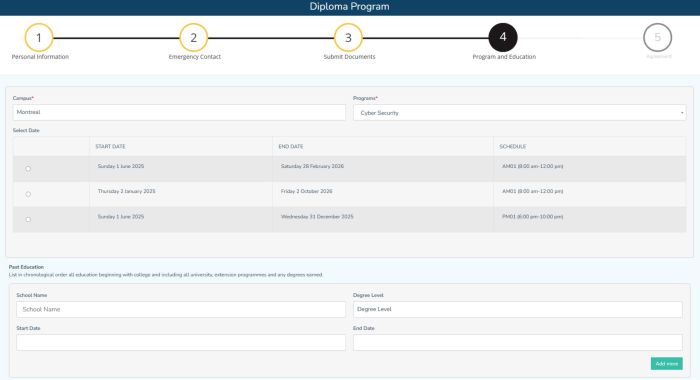
HEM’s Student Portal takes SIS integration to a new level, offering an all-encompassing admissions and student management system designed specifically for educational institutions. The Student Portal simplifies the application process, offering a virtual admissions assistant that guides students from start to finish. Students can inquire, apply, pay, and even enroll through an easy-to-use interface.
Source: Student Portal | HEM
Example: A customized Student Portal will guide students through your application process from initial form submission to payment in a user-friendly format as pictured above.
Customizable forms and a centralized management system make it easy for your staff to track applications, ensuring nothing falls through the cracks. Additionally, the portal seamlessly integrates with Mautic by HEM, allowing you to manage marketing and admissions in one place. By streamlining communication and automating workflows, this system supports your institution’s goals for efficiency and high-quality engagement with prospective students.
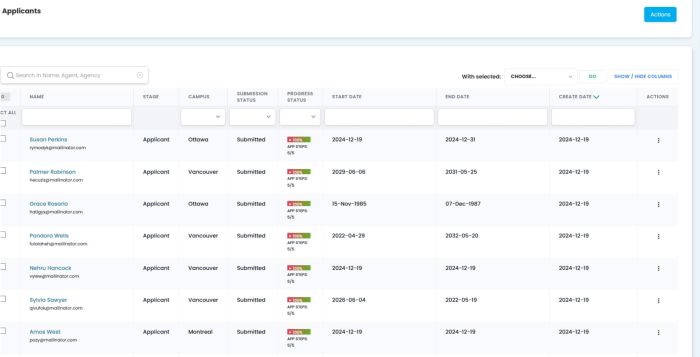
The Student Portal allows for comprehensive data management, tracking all aspects of student data from initial inquiry to graduation. With detailed records and customizable reports, your team can monitor application status, manage payment processing, and keep detailed academic records, providing staff with a complete view of each student’s journey.
Source: Student Portal | HEM
Example: Here, you can see our centralized application management system. See all incoming applications and determine which applications were started and not completed. In addition, the Student Portal platform allows you to track prospects based on name, program, whether they’ve been sent an invoice, and whether that invoice has been paid. This information is valuable as it clarifies the next step for each contact.
Furthermore, the portal’s quote builder tool allows prospective students to calculate program costs, offering them a transparent view of financial requirements. This provides clarity and builds trust, making it easier for students and their families to plan for the financial aspects of their education.
Designed to improve efficiency across all departments, the Student Portal facilitates better collaboration by centralizing data and providing tools for managing projects and tracking progress. This comprehensive approach allows staff to work towards strategic institutional goals, fostering a collaborative environment that drives both student success and institutional growth.
Experience the HEM Advantage: Efficiency
Mautic by HEM and the HEM Student Portal offer transformative CRM and SIS solutions that empower educational institutions to work smarter, not harder. By combining lead management, marketing automation, admissions tracking, and student data management, HEM’s tools create a cohesive system designed to meet the unique needs of schools. That’s what we accomplished for Micheal Vincent Academy.
Founded by Tally B. Hajek, a multi-talented recording artist and makeup artist, and her husband Michael Vincent, a renowned celebrity photographer, MVA teaches around 350 students annually. Each student gains expert instruction and builds a professional portfolio, launching them toward successful careers in beauty and media.
MVA sought an organized, streamlined solution to manage its student recruitment efforts, and they found the answer in Mautic by HEM. This customized CRM software, specifically tailored for educational institutions, allows MVA to efficiently automate its marketing efforts and seamlessly follow up with prospective students.
Transformative Results for a Thriving Institution
With Mautic, MVA’s team can now easily track and manage leads. The CRM’s powerful reporting tools give the academy a clear view of each lead’s journey through the admissions process. Staff can track the progress of every prospective student, monitor recruitment team activities, and measure productivity—all crucial for a private institution focused on cost-effective outreach. Furthermore, the lead-scoring feature in Mautic enables the recruitment team to identify and prioritize high-value leads, allowing MVA to concentrate on students who are genuinely interested and likely to succeed within the academy’s creative programs.
As Tally Hajek highlights, the organizational capabilities of Mautic are essential to building meaningful connections with prospective students. “We value connections with prospective students, but connections cannot happen without organization,” she explains. The system enables her team to foster relationships with students who are both committed and well-suited to the academy’s professional and artistic environment.
Moreover, HEM’s attentive and supportive customer service has made the partnership especially rewarding. “We love working with the HEM team,” says Hajek. “We feel like they really understand us and want us to succeed.” With HEM’s customized solutions, MVA has significantly increased staff efficiency in student recruitment, giving their team the tools to excel in a competitive educational market and helping the academy continue to thrive as a leader in beauty and media education.
Imagine a system that handles every step of the student journey—engaging prospective students, nurturing leads, simplifying applications, and supporting students through their academic journey—all from a single platform. HEM is dedicated to providing solutions that help you enhance recruitment, boost enrollment, and offer the seamless digital experience that students expect.
To see how Mautic and the HEM Student Portal can transform your institution, request a demo today and discover the possibilities of giving yourself the gift of efficiency.
Give Yourself the Gift of Efficiency
This holiday season, give your institution the ultimate gift: the power to work smarter, not harder. HEM’s custom-built solutions, including Mautic CRM and the HEM Student Portal, are designed to streamline your operations and boost your team’s effectiveness.
From managing prospective student leads to enhancing engagement and improving communication, these tools empower your staff to focus on what truly matters—building connections and driving success.
Simplify student management and boost recruitment efficiency!
Transform your student portal experience. Get a FREE HEM-SP demo today.
FAQ
Question: What is a CRM and how can it benefit educational institutions?
Answer: A CRM, or Customer Relationship Management system, is a platform that helps organizations manage and analyze customer interactions and data throughout the customer lifecycle.
Question: What is a Student Information System (SIS)?
Answer: Student Information System software is designed to manage student data from application through graduation.