
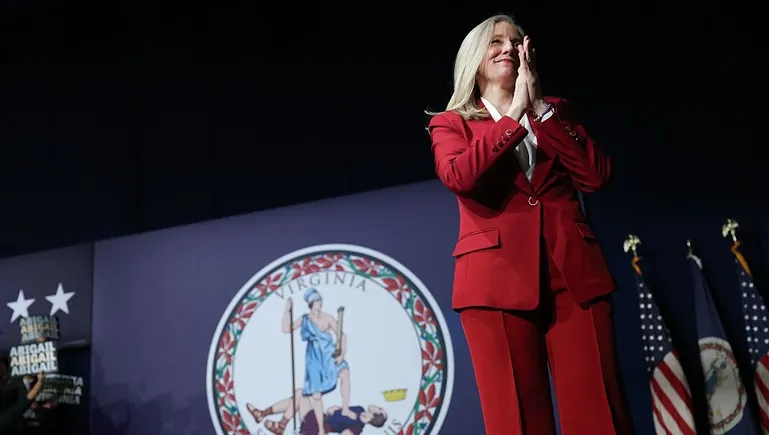
Tag: Spanberger

  • Spanberger urges UVA to pause presidential search until she takes office

    Spanberger urges UVA to pause presidential search until she takes office

    This audio is auto-generated. Please let us know if you have feedback.

    Dive Brief:

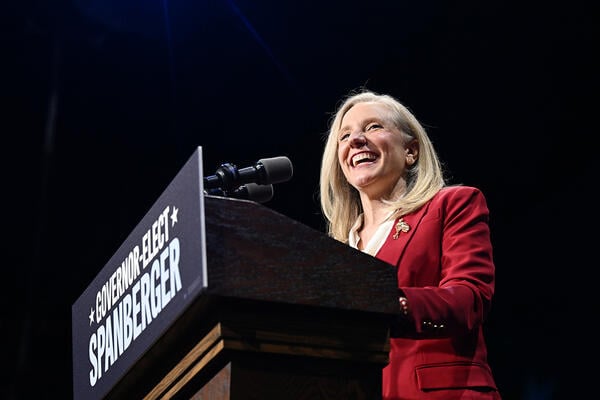
    • Virginia Gov.-elect Abigail Spanberger is calling on the University of Virginia’s governing board to hold off on naming a new president or selecting finalists for the role until she takes office in January.
    • Over the past six months, UVA’s Board of Visitors has “severely undermined the public’s and the University community’s confidence” in its ability to act transparently and in the best interests of the state flagship, Spanberger said in a Wednesday letter to board leaders.
    • Spanberger, a Democrat and an alumna of UVA, said five appointees to the board “failed to achieve confirmation” by the Virginia Assembly as law requires. That raises concerns about the legitimacy of any decisions made by the current board, as it isn’t “fully constituted,” she argued.

    Dive Insight:

    UVA’s governing board has been in a state of flux since June. Outgoing Gov. Glenn Youngkin, a Republican, is in the midst of a fight with Virginia’s Democrat-controlled Senate committee over his selections for several public college boards, including UVA.

    The committee rejected eight of Youngkin’s appointments in June, but the governor instructed them to begin serving anyway. In July, a judge ruled that those eight board appointees for UVA, George Mason University and Virginia Military Institute could not serve on those boards. An appeal from outgoing Virginia Attorney General Jason Miyares is before the Virginia Supreme Court.

    Democratic lawmakers similarly rejected another round of Youngkin appointees in August, bringing the total number of board seats under contention at Virginia public colleges to nearly two dozen.

    At UVA, five appointees are in legal limbo. 

    Because of this, “the Board is not fully constituted and its composition is now in violation of statutory requirements in crucial respects, further calling into question the legitimacy of the Board and its actions,” Spanberger said in her letter.

    UVA’s board currently has 12 voting members, well above the five it requires for a quorum. The university did not immediately respond to questions Thursday. 

    The governor-elect advised the board to pause its presidential search until it is “at full complement and in statutory compliance, adding that would entail her appointing new members and the General Assembly approving them.  

    In turn, Spanberger pledged to make her appointments to the UVA board “quickly upon my swearing in.”

    UVA formed a special committee in July to select a new president following the abrupt departure of its former leader, Jim Ryan, less than a month earlier. 

    Ryan, who originally planned to leave the role at the end of the 2025-26 academic year, stepped down early amid reports of a pressure campaign orchestrated against him by the U.S. Department of Justice. The DOJ had been probing UVA’s diversity, equity and inclusion efforts, which expanded following the deadly 2017 Unite the Right rally on the university’s campus and Ryan’s inauguration as president a year later.

    In his resignation announcement, Ryan said he wouldn’t challenge the Trump administration out of concern that attempting to keep his job would cost UVA research funding and student aid, as well as put international students at risk.

    UVA said in November that in-person interviews for Ryan’s replacement would take place late this month.

    Spanberger in her letter Wednesday criticized Ryan’s ouster as “a result of federal overreach” and noted that it went unchallenged by UVA’s board members.

    That lack of response, she argued, among other actions taken by the board over the last six months, has resulted in a “loss of confidence” in the governing body. She cited no confidence votes from both the UVA faculty senate and the university student council in July and August, respectively.

    In October, UVA struck a deal with the DOJ to formally close the agency’s investigations over its DEI work by 2028. In return, the university agreed to several changes, including adopting the DOJ’s contentious anti-DEI guidance and making quarterly compliance reports.

    Because the deal doesn’t include a financial penalty, it did not require a formal vote from the board, the university said in an FAQ.

    Leaders of Virginia’s Democratic-controlled Senate have called for a legal audit of the agreement, questioned its constitutionality and labeled it “a fundamental breach of the governance relationship” between the university and the state.

    Last month, the Trump administration also offered the research university a separate deal — preferential access to federal research funding in exchange for enacting several wide-ranging and unprecedented conditions. UVA ultimately declined the compact, as did six other colleges to which the administration initially offered it.
    Source link

  • Spanberger Calls on UVA to Pause President Search

    Spanberger Calls on UVA to Pause President Search

    Virginia governor-elect Abigail Spanberger has called on the University of Virginia to pause its presidential search until she takes office in January and appoints new members to the Board of Visitors.

    In a Wednesday letter to board leaders, Spanberger wrote that she was “deeply concerned” about recent developments at the state flagship, citing “the departure of President Jim Ryan as a result of federal overreach.” Ryan stepped down amid federal investigations into diversity, equity and inclusion practices at UVA. The board later reached an agreement with the U.S. Department of Justice to pause those investigations.

    Spanberger argued that the government’s interference “went unchallenged by the Board” and has “severely undermined” public confidence in its ability to “govern productively, transparently, and in the best interests of the University.”

    Spanberger also pointed to recent votes of no confidence in the board by both the UVA Faculty Senate and the Student Council. Given those concerns and the hobbled state of the board, which is missing multiple members after state Democrats blocked Republican governor Glenn Youngkin’s appointments, Spanberger called for a pause until her own picks are confirmed by the General Assembly.

    “The benefits of selecting a new president with a full, duly-constituted Board are clear,” the governor-elect wrote in her letter to board leaders. They include making the search process and decision credible and “removing any concern that the Board’s actions are illegitimate due to a lack of authority,” she wrote.

    So far, UVA has been noncommittal in its public response.

    “University leaders and the Board of Visitors are reviewing the letter and are ready to engage with the Governor-elect and to work alongside her and her team to advance the best interests of UVA and the Commonwealth,” spokesperson Brian Coy wrote to Inside Higher Ed by email.

    Spanberger is the latest state Democrat to clash with the UVA Board of Visitors, which is stocked with GOP donors and political figures. While politics have long been at play on Virginia’s boards, Youngkin’s appointments have represented a dramatic rightward shift, prompting pushback as Democrats have blocked recent nominations.

    (A legal battle over the state of those appointments is currently playing out; the Virginia Supreme Court heard oral arguments in the case last month but has yet to issue a decision.)

    Democrats have turned up the temperature on UVA in recent months, demanding answers about the agreement with DOJ and Ryan’s resignation and accused the board of giving in to “extortionate tactics.” Now, following an election that saw Democrats take the governor’s office and broaden their majority in the General Assembly, Spanberger will likely have political capital to reshape higher education at the state level as she sees fit—barring intervention from the federal government.

    Spanberger, the first woman elected governor of Virginia, is a UVA alumna.

    The governor-elect’s call to pause UVA’s presidential search prompted immediate pushback from the Jefferson Council, a conservative alumni group that has won influence with Youngkin, who appointed the group’s co-founder Bert Ellis to the board before removing him for his combative behavior.

    The organization argued in a statement that in 2022 a Democratic-appointed board “quietly extended” Ryan’s contract through 2028—even though it did not expire until 2025—without “Governor Youngkin having an opportunity to appoint one Board member.” They wrote that “the Board’s action was clearly intended to ensure Ryan’s tenure” beyond Youngkin’s term. (Governors in Virginia may not serve consecutive terms.)

    The group also defended the search committee and process.

    “In contrast, the current UVA presidential search committee, the most extensive and diverse in University history, was lawfully formed by the Board and has been operating since July 2025, working diligently through meetings and interviews. To suddenly ask the BOV to wait to choose a president is a bold act of political legerdemain representing a total historical double-standard,” the Jefferson Council wrote.

    However, faculty members have a different view of the search committee.

    In an Aug. 10 letter, the UVA chapter of the American Association of University Professors accused the board of shortchanging faculty by limiting their seats on the presidential search committee. The group wrote that the committee “is dominated by current and former members of the [Board of Visitors] and administrators,” with faculty members composing less than a quarter of the committee. Additionally, they noted that none of those members “were selected by the faculty.”

    Spanberger’s insistence that UVA pause its presidential search bears similarities to ways other governors have sought to influence leadership decisions before they took office, such as Jeff Landry in Louisiana. Shortly after his election in late 2023, the Republican governor called on the University of Louisiana system to hold off on hiring Rick Gallot, a former Democratic state lawmaker, as its next president.

    Landry said he wanted to make sure their visions for the system aligned. Ultimately, despite the pause, Gallot was hired as system president after meeting with Landry before he took office.

    Source link