Tag: speak

  • More College Leaders Speak Out Against Trump’s Compact

    More College Leaders Speak Out Against Trump’s Compact

    More universities are signaling opposition to the Trump administration’s compact for higher education, which would require institutions to make changes to their policies and practices in order to receive an unspecified edge in grant funding.

    In comments to faculty groups and student journalists, a handful of university leaders have made clear that they won’t sign on to the compact in its current form. But those comments don’t amount to a formal rejection of the agreement, several university spokespeople told Inside Higher Ed. Each said that because their institution hasn’t been formally asked to sign, they haven’t officially considered the administration’s proposal.

    For instance, at Miami University in Ohio, Provost Chris Makaroff told the University Senate that “right now, there is no appetite to even consider joining it,” according to the Miami Student.

    “The administration is totally against it in every way possible, and probably the only way that it would possibly go through is if somehow or another, they threaten to cut off all funding to the university,” Makaroff added.

    When asked about those comments and whether that constituted a rejection, Seth Bauguess, the university’s senior director of communications, noted that Miami wasn’t part of the first group of universities asked to sign, so “therefore we have not formally considered it.”

    When the administration initially invited nine universities to give feedback on the document, Trump officials sent each institution a signed cover letter and a copy of the agreement. Another three universities were invited to an Oct. 17 White House meeting to discuss the compact.

    Beyond those overtures, President Donald Trump wrote on social media platform he owns, Truth Social, that universities that prefer to “return to the pursuit of Truth and Achievement” are “invited to enter into a forward looking Agreement with the Federal Government to help bring about the Golden Age of Academic Excellence in Higher Education.” Officials, speaking on condition of anonymity, told media outlets that the post was an invitation to all colleges to sign on to the compact.

    So far, nearly a dozen universities have publicly rejected the deal, and White House officials are reportedly planning to update the document in response to the feedback from universities. Only New College of Florida has said that it’s ready to sign, though it hasn’t yet been formally asked. The White House hasn’t said how interested universities can join, but officials have threatened the federal funding of institutions that don’t sign the compact.

    Jon Fansmith, senior vice president for government relations and national engagement at the American Council on Education, said the mixed messages from universities likely stem from “the general confusion around how the administration is handling this.”

    “Even the statement by New College raises the question of how would anyone actually sign up if they wanted to?” he said, adding that the compact’s terms don’t appear to be final and there’s no form or website where colleges and universities can go to sign it.

    Fansmith said he’s not surprised that some campus leaders are seeking to make their concerns clear while not definitively turning down something they haven’t been offered.

    “Why pick an unnecessary fight?” he said.

    The growing cohort of presidents and leaders speaking out about the compact includes Arizona State University president Michael Crow, who told the State Press on Oct. 24 that the compact is no “longer a viable thing” and that he’s “been trying to guide people in a different direction.”

    Crow was invited to the Oct. 17 White House meeting to discuss the compact, which also included representatives from Dartmouth College, the University of Arizona, the University of Kansas, the University of Texas at Austin, the University of Virginia, Vanderbilt University and Washington University in St. Louis. After that meeting, an ASU spokesperson said the university was engaging in dialogue with Trump’s team.

    After the State Press published its interview with Crow, Inside Higher Ed followed up to see if “no longer a viable thing” meant “no.”

    “It’s important to note that ASU has not been asked to sign the Compact for Academic Excellence in Higher Education,” an ASU spokesperson responded. “So we can’t be ‘reviewing’ or ‘negotiating’ or ‘weighing’ it. ASU has long been a voice for change in higher education, something the university has been pushing for more than 20 years. If the administration looks for new and innovative approaches to serve the needs of the country, ASU is likely one to be consulted. President Crow is happy to share his vision for the future of higher education with anyone, if asked, whether they’re students, parents, alums, members of the public, or the administration.”

    But some universities, including Emory and Syracuse, have chosen to reject the compact before receiving a formal ask. And on Thursday, University of Kansas provost Barbara Bichelmeyer told The Kansan, “Fundamentally, there’s no way, with the compact as it is written and sent out to other institutions, that KU could sign that.”

    Bichelmeyer also noted that KU wasn’t asked to sign the compact.

    Brendan Cantwell, a higher education professor at Michigan State University, said there’s no reason for colleges to say no at this moment.

    “The basic tenet of college administration is don’t make a decision until you have to,” he said. “No one is forcing their hand right now … and they don’t want to antagonize the administration, particular donors or state officials. If I wasn’t explicitly invited, I wouldn’t explicitly decline to participate.”

    Cantwell added that the president’s social media post and other communications from Trump officials have created a lot of ambiguity, and institutions are using that to their advantage.

    “What the president has said, by saying that anyone can apply, but not specifically inviting anyone beyond the 12, has created an opportunity for campuses to message ‘no’ to students and ‘not yes’ to everyone else,” he said.

    Source link

  • ‘Make Sure They Speak English’ is Fed’s Only Responsibility to U.S. Kids – The 74

    ‘Make Sure They Speak English’ is Fed’s Only Responsibility to U.S. Kids – The 74


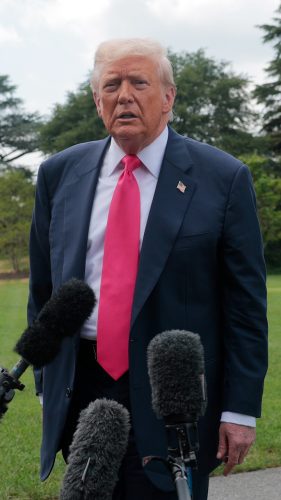
    Speaking to reporters on Tuesday, President Donald Trump said ‘little tiny bit of supervision’ is all that’s needed for education.


    Source link

  • To speak or not to speak: Universities face the Kalven question

    To speak or not to speak: Universities face the Kalven question

    In the wake of the Trump administration’s extralegal attack on Harvard University, which is essentially an attempted government takeover of a private school, the importance of academic freedom and institutional independence is clearer than ever. Had Harvard meekly complied with the demands in the hopes of maintaining its funding, it would’ve set a dangerous precedent for political interference in higher education. 

    Enter the Kalven Report: the north star for institutions striving to foster academic freedom. Crafted by the University of Chicago in response to Vietnam-era foment, the report warns that a university, though it may have the constitutional right to speak about unrelated political issues, should not take an official stance on these issues because of the chilling effect it has on the ability of university community members to discuss and debate amongst themselves.

    But it allows for two exceptions. First, when it comes to threats to the university’s very mission and values of free inquiry, the Kalven report explains, “it becomes the obligation of the university as an institution to oppose such measures and actively to defend its interests and its values.” Second, when university ownership of property, its receipt of funds, its awarding of honors, or its membership in other organizations is at issue, the university is likewise entitled to defend itself.

    Both exceptions apply to Harvard.

    There is no standard by which an “exceptional” threat to the university can be determined. Instead, that is up to the university’s administration to determine. Kalven stresses that “it must always be appropriate, therefore, for faculty or students or administration to question whether in light of these principles the University in particular circumstances is playing its proper role.” 

    But by issuing a statement at all, the university risks chilling the speech of those who wish to question it.

    The decision by many universities to sign a “Call for Constructive Engagement” statement, published in April as a response to government pressure, may likewise be deemed an appropriate response by virtue of the Kalven exceptions. Yet, the question remains: was it wise to do so?

    By issuing a statement at all, the situation risks chilling the speech of those who may disagree.

    Developed by college and university leadership in conjunction with the American Association of Colleges and Universities, the statement urges opposition to “undue government intrusion in the lives of those who learn, live, and work on our campuses” and rejects “the coercive use of public research funding.” It is signed by over 650 institutional leaders and counting.

    And while the signatories explicitly affirm their “commitment to serve as centers of open inquiry where . . . faculty, students, and staff are free to exchange ideas . . . without fear of retribution,” they cannot escape the fact that their willingness to make an institutional statement risks undermining that commitment to open inquiry. After all, there are undoubtedly many people on those 650 campuses who agree, either in whole or in part, with the Trump administration’s efforts.

    The Kalven report issues a “heavy presumption” against making statements, “however appealing or compelling” the social or political value in question may be. This is partly because there is no escaping the question of who will decide which situations qualify as exceptional — there is no standard set by Kalven, simply the distinction of an “exceptional” circumstance. By issuing a statement at all, the situation risks chilling the speech of those who may disagree.

    There are other actions an institution can take to protect itself. Remaining neutral does not mean the university cannot advocate for itself against unconstitutional action. Nothing in the Kalven Report requires colleges to submit to unlawful action that merits a lawsuit. But when an institution adopts a statement on behalf of all its members, this stifles dissent and free inquiry because to question university statements then becomes tantamount to questioning the very values of that institution. This, in turn, negatively impacts students’ education. As J.S. Mill famously argued in On Liberty, “The only way in which a human being can make some approach to knowing the whole of a subject, is by hearing what can be said about it by persons of every variety of opinion.”

    Indeed, in many cases, schools that have signed the letter don’t always uphold the values of free speech internally.

    For example, Columbia University signed the Constructive Engagement letter — and ranks second-to-last on FIRE’s Free Speech Rankings. Its faculty have experienced pushback from university administrators in response to their scholarship for decades, from the 2001 case of George Fletcher to the 2024 case of Adbul Kayum Ahmed. Nearly half (48%) of Columbia faculty think academic freedom on their campus is “not at all” or “not very” secure. Signing an open letter does little to improve the situation.

    To preserve a culture of open debate and expression, colleges and universities must have the courage to defend their principles on campus and in court.

    Another signatory to the statement, University of Pennsylvania has recently illustrated why statements aren’t an all-purpose solution but are instead an invitation for side-taking. The university faced significant backlash after it began to offer statements deemed inadequate in the weeks following October 7, including those by President Liz Magill and by members of Penn’s Board of Trustees.

    In response to a displeased alumnus, administrators released a slew of institutional statements, putting even more daylight between themselves and anything resembling institutional neutrality. Concerns over antisemitism eventually led to Magill’s resignation and the Pennsylvania House of Representatives withholding $31 million in state funding from Penn’s veterinary school. Finally in September, then-interim President J. Larry Jamson declared Penn would no longer issue statements in response to social and political events.

    Penn’s policy shift was a good call, even if it took a lot to get there. Modeling Kalven, Penn made a carve-out by promising not to comment on any more issues “except for those which have direct and significant bearing on University functions.” The only problem is that that loophole was on full display weeks ago when Penn signed the Constructive Engagement letter. Penn is once again speaking with its institutional voice by way of signature, finding itself aligned with a stance that is by nature political.

    To preserve a culture of open debate and expression, colleges and universities must have the courage to defend their principles on campus and in court. It is therefore worth considering whether signing the AACU statement was a smart move or an instance of political posturing that may end up doing more harm than good.


    Dinah Megibow-Taylor is a FIRE intern and a rising second-year at the University of Chicago.

    Source link

  • Speak up, get expelled: the Eastman way

    Speak up, get expelled: the Eastman way

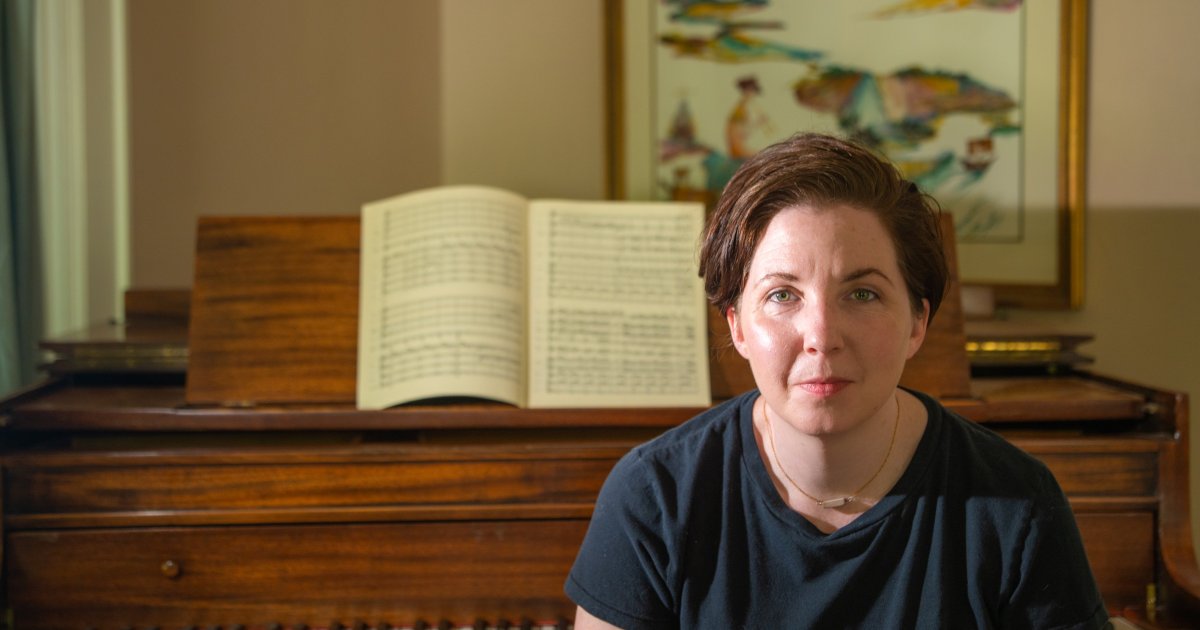
    During her first semester pursuing a doctorate in conducting at the University of Rochester’s Eastman School of Music, Rebecca Bryant Novak reported sexual harassment by Professor Neil Varon and asked that the school limit her contact with Varon. But Senior Associate Dean and Title IX Coordinator John Hain rejected her request. According to Bryant Novak, Hain said the school trusted Varon — because he’s faculty — and told her to consider transferring somewhere else. 

    In May 2024, Bryant Novak published their exchange on her Substack. Hain’s response? He threatened her with a defamation lawsuit.  

    So she reported Hain’s handling of the complaint to the university’s administration and, after a yearlong investigation, the university determined Varon had indeed violated its harassment policy — and that Eastman had badly mishandled Bryant Novak’s complaint. 

    Yet Eastman allowed Varon to retain oversight of Bryant Novak’s academic trajectory. It restricted her performance times, allowing her to avoid him but costing her conducting opportunities. When she protested, Eastman did nothing. 

    Running out of options, Bryant Novak once again escalated her complaint about Eastman’s alleged retaliation to the University of Rochester, Eastman’s parent institution. The university launched a second investigation of Eastman in December 2024. 

    In February, Bryant Novak wrote about it on her Substack. Days later, Eastman expelled her. 

    The school cited Bryant Novak’s supposed failure to make academic progress in its expulsion letter. Yet Eastman completely disregarded its own policy regarding academic progress reviews. Apparently, just days after she took her complaints public, Eastman’s alleged concerns about Bryant Novak suddenly became so acute that it felt it needed to just go ahead and entirely skip over the two-semester review process required by its own policies before dismissal. 

    Bryant Novak got no warning. No appeal. And the range of allegations Eastman cited for her expulsion didn’t even meet the criteria to put a student on warning status, let alone dismiss them. FIRE has plenty of experience in investigating cases, but one does not need to be Sherlock Holmes to figure out what was going on with Eastman and Bryant Novak.

    Today, FIRE wrote a letter to the University of Rochester, urging it to reinstate Bryant Novak: 

    Eastman’s failure to follow its own policy in any respect, the temporal proximity of Bryant Novak’s dismissal to her public disclosure of Rochester’s investigation, and Eastman’s contentious history with Bryant Novak — including Hain’s lawsuit threat against Bryant Novak and the conflict of interest inherent in allowing Hain’s direct report, Ardizzone, to retain authority over Bryant Novak’s academic standing — all strongly suggest that Bryant Novak’s dismissal was retaliation for speech explicitly protected by Rochester policies.

    The University of Rochester is a private institution, which means that unlike public universities, it is not a government actor obligated to uphold constitutional free speech rights. Nevertheless, it promises students protection for their speech — including protection from retaliation for complaining about harassment. 

    But no one protected Bryant Novak. When she spoke out about harassment, Eastman retaliated. When she protested the retaliation, Eastman expelled her. Let’s tell the University of Rochester to reinstate Bryant Novak and provide her the due process it promises all its students. 

    Eastman tried to make her story an example. Instead, it should be a rallying cry.

    Source link

  • College parents speak out in new survey: Weekly updates, mental health info and more access needed

    College parents speak out in new survey: Weekly updates, mental health info and more access needed

    As colleges nationwide double down on enrollment, retention, and student success strategies, one key voice is becoming harder to ignore: the family. According to the 2025 Current Families Report released by CampusESP, families want more updates, more access, and more say in the college journey, and they’re increasingly dissatisfied when they don’t get it. In addition, when parents do receive the information they need to support their student, research shows significant gains in student yield and retention.

    The survey, conducted across 81 colleges and universities and with more than 32,000 parents and supporters of current students, is the most comprehensive look at family engagement to date. And the findings are impossible to miss.

    Mental health, money, and mentorship

    Nearly half of all parents talk to their student daily, with the number jumping to over 60% for low-income and first-generation households. These families aren’t just chatting about weekend plans — they’re offering support on mental health (53%), academic advice (57%), and student life (69%).

    “Parents aren’t bystanders — they’re active advisors,” says the report. “And they need the right tools to guide their students.”

    Communication expectations are high

    A staggering 77% of families want to hear from their student’s college weekly or more, up 12% in just four years. While email is still the go-to channel, the demand for text messaging is surging, especially among Black, Hispanic, low-income, and first-gen families.

    However, a gap remains: 48% of families prefer text, but only 28% of colleges offer it.

    Trust wavers without transparency

    Families are becoming more skeptical about the return on their tuition investment. Only 59% say college is worth the cost — a sharp drop from 77% the year before. Their #1 request? More info on career services and job placement, which ironically ranked lowest in satisfaction.

    Families want in, but feel left out

    Even when they receive a high number of communications from their student’s college, families still feel sidelined. Just 46% are satisfied with their opportunities to get involved on campus, down from 63% last year. And only 30% feel they have good ways to connect with other families.

    Yet the desire is there: 38% want to be more involved, and 22% say they’re more likely to donate to their student’s college than their own alma mater.

    Financial aid frustration runs deep

    Navigating costs is a pain point. 59% say it’s hard to pay for college, and only 25% found financial aid information easy to understand.

    And with confusion comes attempts at self-education. Nearly half of families rely on their student’s login to access key financial records—posing serious data privacy concerns.

    The report confirms what many enrollment leaders have long suspected: families aren’t just part of the support system — they are the support system. The challenge for institutions? Reaching them with the right information, in the right format, at the right time.

    “Family engagement isn’t optional — it’s a strategic advantage,” the report concludes.

    Download the full 2025 Current Families Report from CampusESP to explore the findings and access actionable strategies for turning family influence into institutional success.

    Source link

  • So to Speak: The Free Speech Podcast

    So to Speak: The Free Speech Podcast

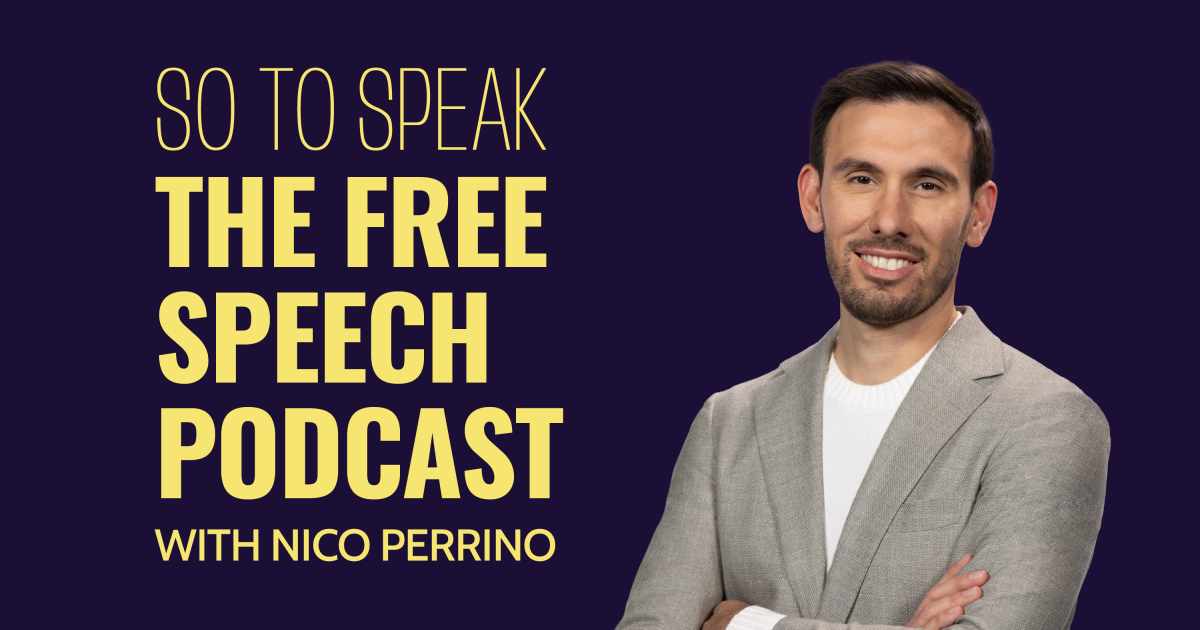
    So to Speak: The Free Speech Podcast takes an uncensored look at the world of free expression through the law, philosophy, and stories that define your right to free speech. Hosted by FIRE’s Nico Perrino.

    New episodes post every other Thursday.

    Source link

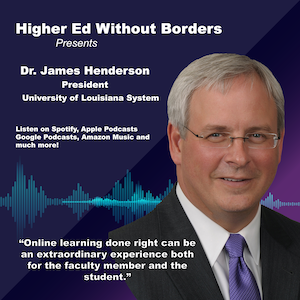
  • Higher Ed Without Borders speak with President Jim Henderson of the University of Louisiana System – Edu Alliance Journal

    Higher Ed Without Borders speak with President Jim Henderson of the University of Louisiana System – Edu Alliance Journal

    On this podcast episode of Higher Ed Without Borders co-hosted by Edu Alliance Founders Dr. Senthil Nathan and Dean Hoke speak with Dr. Jim Henderson, President of the University of Louisiana System.

    Dr. James Henderson, President of the University of Louisiana System, a multi-university campus system with an enrollment of approximately 90,000 students. Prior to being appointed as President of the System, Dr. Henderson served as President of Northwestern State University.  He is a native of Shreveport Louisiana. He received his Master’s in Administration from the University of West Florida, and his Doctor of Management degree from the University of Maryland – University College.

    In an October 2021 newspaper article in the Acadiana Advocate, Dr. Henderson’s wife Tonia discussed her husband and love of learning. “Jim has “gone through a lot of schooling” during their marriage and he is a constant reader. He earned his master’s and doctorate while they were married. He also has routinely taken coursework where available — he oftentimes takes Massive Open Online Courses, or MOOCs — most recently one in Irish literature. “He’s always trying to learn new things,” she said.

    His penchant for lifelong learning made an impact on their three children; only the youngest lives at home now. She says she gets inspired by watching him use his time so well. He allots time for work, family, and his own study.”

    Senthil and Dean discussed with Dr. Henderson about the university system and his views on education and leadership.

    Comments and Suggestions:

    Higher Ed Without Borders would love to hear your ideas for future topics and guests. Connect with Dr. Senthil Nathan or Dean Hoke on LinkedIn. You can also visit the Edu Alliance website. To hear the entire series please subscribe to Higher Ed Without Borders on your preferred podcast platforms such as Apple, Spotify, or Google. The podcast is sponsored by Edu Alliance, an education consulting firm located in Bloomington Indiana, and Abu Dhabi, United Arab Emirates.

    We assist higher education institutions worldwide on a variety of mission-critical projects. Production support was provided by White Rabbit Printing and Design.

    If your organization wants to know more about how Edu Alliance can best serve you, please contact either Dean Hoke or Dr. Senthil Nathan.

    Source link